







Abstract
Aboriginal and Torres Strait Islander languages can be seen as an integral aspect of cultural health. While colonisation has had devastating effects upon Indigenous languages, communities are increasingly reclaiming their languages, as a means to cultural preservation, community wellbeing and healing. Currently, there are no tools that specifically measure the potential positive impacts of language revival on the wellbeing of Indigenous peoples. This article brings together two broad constructs, social and emotional wellbeing and language reclamation, and describes an approach to developing a survey instrument to measure the relationship between Indigenous languages and wellbeing. With an emphasis on decolonising approaches to research, it steps out the key activities undertaken to develop the Indigenous Language and Wellbeing Survey. This article highlights the importance of addressing Aboriginal and Torres Strait Islander research priorities. It also shows how qualitative material can guide the development of a quantitative survey in mixed-methods research.
Keywords
Introduction
Aboriginal and Torres Strait Islander health and wellbeing are often conceptualised holistically, inclusive of feelings of connectedness to Country, culture, ancestry and spirituality, community, family, mind and emotions and body (Gee et al., 2014). From this perspective, Aboriginal and Torres Strait Islander health is not just physical but also includes the social, emotional, cultural and spiritual wellbeing of individuals and whole communities. Cultural health and wellbeing are entwined within these holistic concepts: This holistic concept [of health] does not merely refer to the “whole body” but in fact is steeped in the harmonised inter-relations which constitute cultural wellbeing. These inter-relating factors can be categorised as largely spiritual, environmental, ideological, political, social, economic, mental and physical. Crucially, it must be understood that when the harmony of these interrelations is disrupted, Aboriginal ill health will persist. (Swan & Raphael, 1995, p. 19)
Aboriginal and Torres Strait Islander cultural factors are increasingly recognised as contributors or determinants of health and wellbeing within non-Indigenous scientific literature (Finlay et al., 2021; Lowitja & Institute, 2014, 2020; Salmon et al., 2019). Cultural determinants of health are those that “promote a strength-based perspective, acknowledging that stronger connections to culture and country build stronger individual and collective identities, a sense of self-esteem, resilience, and improved outcomes” (Lowitja Institute, 2014, p. 2). A number of cultural domains have been identified as enhancing Aboriginal and Torres Strait Islander health and wellbeing, including connection to Country; Indigenous beliefs and knowledges; Indigenous languages; family, kinship and community; cultural expression and continuity; self-determination and leadership (Salmon et al., 2019). In this way, Aboriginal and Torres Strait Islander languages may be viewed both as an aspect of cultural health and as a determinant of wellbeing (Sivak et al., 2019).
Indigenous languages
More than 250 distinct languages with 500 to 800 dialects were spoken in Australia prior to European settler colonisation in 1788, making the continent and its islands one of the most linguistically diverse places on earth (McKay, 2011; Walsh, 2007). Beyond use for interpersonal communication, the languages of Indigenous cultures hold sophisticated and detailed cultural and historical knowledge, which is transferred from one generation to the next through ceremony, song, stories and dance (Biddle & Swee, 2012). In addition, Indigenous languages hold intricate and detailed understandings of planetary systems, medicine, geography and ecology. Aboriginal and Torres Strait Islander languages also frame the social context indicating an individual’s position and role, their ancestral heritage, authority and responsibilities, and spiritual rights and responsibilities to land (Simpson & Wigglesworth, 2018).
Colonisation has had, and continues to have, devastating effects on Indigenous languages across the globe (Flood & Rohloff, 2018). Within Australia, the impacts of colonisation and assimilation policies have resulted in many communities losing connection with their ancestral languages. As colonial violence, introduced diseases and forcible displacement of people from their Country progressively affected communities of Aboriginal and Torres Strait Islander people, both population numbers and local languages began to decline, sometimes rapidly (Amery, 2016; Crowley, 2007). Later, as government policies sought to assimilate Aboriginal and Torres Strait Islander people into colonial settler society, Aboriginal and Torres Strait Islander languages were banned from schools by the Commonwealth Government; in church-run missions and government reserves children were forbidden from and punished for using their languages (Bell, 2013; Mahboob et al., 2017). The forced removal of Aboriginal and Torres Strait Islander children from their families and communities, now recognised as the Stolen Generations (Haebich, 2000; Wilson, 1997), resulted in substantial physical displacement, cultural disruption and legacies of intergenerational trauma, including widespread loss of fluency in ancestral or childhood languages. Thus, rather than simply fading away as English diffused across the continent and its neighbouring islands, Aboriginal and Torres Strait Islander languages were actively silenced (Bracknell, 2020a). It was not until the 1970s that the public and institutional denigration of Aboriginal and Torres Strait Islander languages began to subside (Calma, 2009).
Today, around 120 Aboriginal and Torres Strait Islander languages are still spoken in some capacity, with considerable variation in use around the country, ranging from daily communication in one or more ancestral languages to communities with no active speakers of ancestral languages (Marmion et al., 2014; McKay, 2011). Although only around a dozen languages are documented as remaining strong, in terms of being taught to children from birth and having active speakers across all generations (Marmion et al., 2014), language revival has become increasingly prevalent in Australia since the 1970s (Zuckermann & Walsh, 2011). There are three types of processes on the language revival continuum: (1) reclamation is the revival of a language that is no-longer spoken, (2) revitalisation is the revival of a severely endangered language, and (3) reinvigoration is the revival of an endangered language that still has a high percentage of children speaking it (Zuckermann, 2020). Examples of these processes from around Australia include the revival of the following Aboriginal languages: Barngarla (Zuckermann et al., 2019), Gamilaraay (Smith et al., 2017), Wiradjuri (Anderson, 2010), Kaurna (Amery, 2016), Noongar (Bracknell, 2020b) and the reconstruction of Tasmanian Aboriginal language, Palawa Kani (Berk, 2017), among others.
For Indigenous peoples globally, language revival is more than simply learning a second language; it is an active form of colonial resistance and assertion of presence and identity. As Lowe (2011) expresses, Engagement, however tentative, in language learning is based on an assertion of an unbroken cultural connectedness to ancestral knowledge, of a desire to avow an authentic Aboriginal identity in the face of mounting cultural atomisation, of giving voice to the uniqueness of Aboriginal languages, the knowledge embedded within it, and to honour the keepers of language whose efforts to keep this knowledge alive are a testament to the resilience and struggle against the continued onslaught of colonisation. (p. 21)
By strengthening connections to cultural heritage, the language revival process can be empowering for individuals and communities, enhancing feelings of pride and wellbeing (Sivak et al., 2019).
Social and emotional wellbeing
The term social and emotional wellbeing has been utilised to represent a strengths-based, multifaceted Indigenous concept that recognises the enduring and negative consequences of colonisation and subsequent government policies, as well as the social, political and historical contributors to Aboriginal and Torres Strait Islander health and wellness (Dudgeon et al., 2017). While there have been some tools developed to measure mental health and social and emotional wellbeing, existing instruments often fail to adequately account for holistic understandings of health (Le Grande et al., 2017) or collectivist conceptions of wellbeing (Butler et al., 2019). Furthermore, the majority of tools that have been used with Indigenous populations focus on psychopathology and psychological distress rather than strengths, and frequently lack input from Indigenous people in their development (Newton et al., 2015).
Recent reviews of instruments for assessing social and emotional wellbeing (Newton et al., 2015) and health-related quality-of-life (Angell et al., 2016) in Indigenous populations have emphasised the importance of grounding assessment tools within culturally valid understandings of health and wellbeing. A collection of perspectives on wellbeing across Indigenous populations has reiterated the importance of wellbeing, highlighting the need to capture the complexity in its measurement, including an understanding that the “perceptions of wellbeing cannot be separated from context, which includes place, and their spiritual connection to the land” (Fleming & Manning, 2019, p. 89). To date, the work of Yap and Yu has sought to develop methods and definitions of health and wellbeing in collaborative partnership with Aboriginal communities (Yap & Yu, 2016). Brown et al. (2013) has undertaken mixed-method approaches with Aboriginal men in Central Australia to adapt the patient health questionnaire 9 (PHQ-9), a depression screening instrument. Emerging studies make use of collaborative methodologies merging stories and numbers to develop the Interplay Wellbeing Framework (Cairney et al., 2017), and more recently, the Mayi Kuwayu Project (Jones et al., 2018) baseline survey has embedded items such as cultural practice and expression, to further understandings of Aboriginal and Torres Strait Islander wellbeing. As Angell and colleagues (2016) comment, researchers must ensure that the tools are relevant to Indigenous populations, based on domains that are important to . . . these groups and their conceptions of health, and are informed by the values and preferences of Indigenous people themselves. (p. 2176)
Currently, there are no tools that specifically measure the impacts of language use or reclamation on the wellbeing of Aboriginal and Torres Strait Islander people in Australia.
For the purpose of this article and the project described, we broadly conceptualise and define social and emotional wellbeing according to that proposed by Gee et al. (2014); a holistic, multidimensional construct of health and wellbeing, in which Aboriginal and Torres Strait Islander peoples, families and communities are shaped by connections to body, mind and emotions, family and extended kinship systems, community, culture, land and spirituality. Importantly, these connections are influenced by broader level social, political, historical and cultural determinants. Within this understanding of social and emotional wellbeing, the individual self is viewed from a collectivist perspective, inseparable from and embedded within, family and extended kinship and community networks (Gee et al., 2014).
Language and wellbeing
Where research has sought to explore the relationship between Indigenous languages and wellbeing, largely the focus has been on the negative impacts of language loss. In Canada, lack of conversational knowledge in native languages was shown by Hallett and colleagues to have a strong correlation with youth suicide (Hallett et al., 2007). Similarly, in Australia, the loss of Indigenous languages has been associated with high levels of acculturative stress in children living in regional settings (Zubrick et al., 2005). While there is evidence of a link between the loss of Aboriginal and Torres Strait Islander languages and poor wellbeing outcomes in Indigenous populations, there is a growing acknowledgement of the protective and positive impacts of knowing and learning Indigenous languages (Walsh, 2018). For example, performing a cross sectional regression analysis of data from the 2014 to 2015 National Aboriginal and Torres Strait Islander Social Survey, Dinku and colleagues found that speaking an Aboriginal or Torres Strait Islander language was significantly associated with greater cultural attachment and participation, social connectedness and positive emotional wellbeing (Dinku et al., 2020).
Despite these promising indications, limited research to date has sought to identify the potential psychological benefits that may derive from language reclamation, and to date there has been no systematic study of the impact of language revival on mental health and wellbeing. This article brings together two broad constructs, social and emotional wellbeing and language revival, and describes the processes involved in the development of an assessment tool to measure and better understand the relationship between Indigenous language reclamation and wellbeing. With an emphasis on decolonising approaches to research, it steps out the key activities involved in developing the Indigenous Language and Wellbeing Survey.
Methods
The development of the Indigenous Language and Wellbeing Survey is part of a 5-year project funded by the National Health and Medical Research Council, which aims to systematically assess the social and emotional wellbeing impacts of language reclamation in South Australia. It is being undertaken in collaboration with Barngarla language-group communities in Eyre Peninsula, who presently are involved in reclaiming their language and had been involved in pilot language revival activities prior to this project. This project was approved by the Aboriginal Health Research Ethics Committee of South Australia (AHREC 04-17-708; 04-18-768) and the University of Adelaide Human Research Ethics Committee (H-2017-085; H-2019-066).
The overarching programme has the following four main objectives: (1) to further develop, deliver and evaluate language reclamation activities; (2) to better understand the positive impacts of pilot language reclamation activities through semi-structured interviews with participants; (3) to review, adapt and develop quantitative methods for assessing mental health and social and emotional wellbeing in relation to language reclamation; and (4) to assess language use and social and emotional wellbeing within the South Australian Aboriginal and Torres Strait Islander population. This article presents the processes and outcomes of objective 3, developing methods to assess social and emotional wellbeing, namely, the development of an Indigenous Language and Wellbeing Survey.
Decolonising methodologies
Methodologically, this project is framed within an Indigenous research paradigm (Kurtz, 2013; Rix et al., 2019; Ryder et al., 2020). As such, it aims to embody an approach that “respects and honors Indigenous ways of knowing, being, and doing through using methods that are informed by, resonate with, and are driven and supported by Indigenous peoples” (Rix et al., 2019, p. 254). By centring the experiences of Aboriginal and Torres Strait Islander people, as well as maintaining regular communication and engagement with participating communities to both seek guidance and provide updates regarding research progress, the project applies an Indigenous methodology; that is, “a methodology where the approach to, and undertaking of, research process and practices take Indigenous worldviews, perspectives, values and lived experience as their central axis” (Walter & Suina, 2019, p. 234).
In particular, this project also aligns with the South Australian Aboriginal Health Research Accord (Wardliparingga Aboriginal Health Equity Unit, 2014), which provides nine principles for undertaking research appropriately within South Australian Aboriginal communities: priorities, involvement, partnerships, respect, communication, reciprocity, ownership, control and research translation. Furthermore, this article makes explicit a number of methodological features that allow the quality of this research with Aboriginal and Torres Strait Islander people to be assessed from an Indigenous perspective (Harfield et al., 2020).
Project governance and leadership
The study is overseen by the Barngarla Language Advisory Committee (BLAC) which was first established to guide the pilot language reclamation programme that predated this project. Members of BLAC have been involved in designing and implementing the research project, which arose in response to community reflections on the importance of language reclamation for individual, family and community wellbeing. In partnership with researchers from the South Australian Health and Medical Research Institute and University of Adelaide, Barngarla (an Aboriginal people of the Port Lincoln, Whyalla and Port Augusta areas, South Australia) communities are guiding this work as they simultaneously seek to reclaim their ancestral language. The remainder of the research team also represents extensive understandings of the lived reality and experiences of Aboriginal and Torres Strait Islander peoples: three of the four chief investigators, three of the five associate investigators and the three research assistants are Aboriginal, while non-Indigenous team members include two linguists, one community psychiatrist, a senior research fellow and the study coordinator.
Results
To demonstrate its collaborative partnership approach, this section presents the following key steps within the process of developing the Indigenous Language and Wellbeing Survey: initial qualitative work to identify the health and wellbeing impacts of communities’ involvement in language reclamation; preparation of draft questions by identifying domains of impact, reviewing existing psychometric tools, selecting and refining wellbeing items, and preparing questions regarding use of and attitudes towards Indigenous languages; community review of draft questions; and consensus building and confirmation of the Indigenous Language and Wellbeing Survey.
Preliminary qualitative research
The development of the Indigenous Language and Wellbeing survey was directly informed by the results of an earlier phase of the project, involving detailed qualitative research with Barngarla community members who had taken part in pilot language reclamation activities prior to the commencement of the study (Zuckermann & Walsh, 2014). While full details regarding the qualitative component are presented elsewhere (Sivak et al., 2019), a brief summary is presented here for context. Interview participants were asked to describe their experiences and observations regarding how any existing community language reclamation activities had affected the health and wellbeing of themselves, their families and their communities. The interview questions took a broad definition of health and wellbeing that prompted around physical, mental, emotional, social and cultural aspects of health, but was fundamentally left open to the participants to determine and define in their own ways. The main themes emerging from interviews with Barngarla people about the wellbeing impacts of language reclamation pertained to experiences and expressions of connectedness; in particular, connections to spirit and ancestors, Country, culture, family and kinship, community, mind and emotions, and self. The initial deductive analysis of interviews aligned with six of the seven themes of a Social and Emotional Wellbeing Framework from an Aboriginal and Torres Strait Islander perspective (Gee et al., 2014), which is presented in Figure 1.
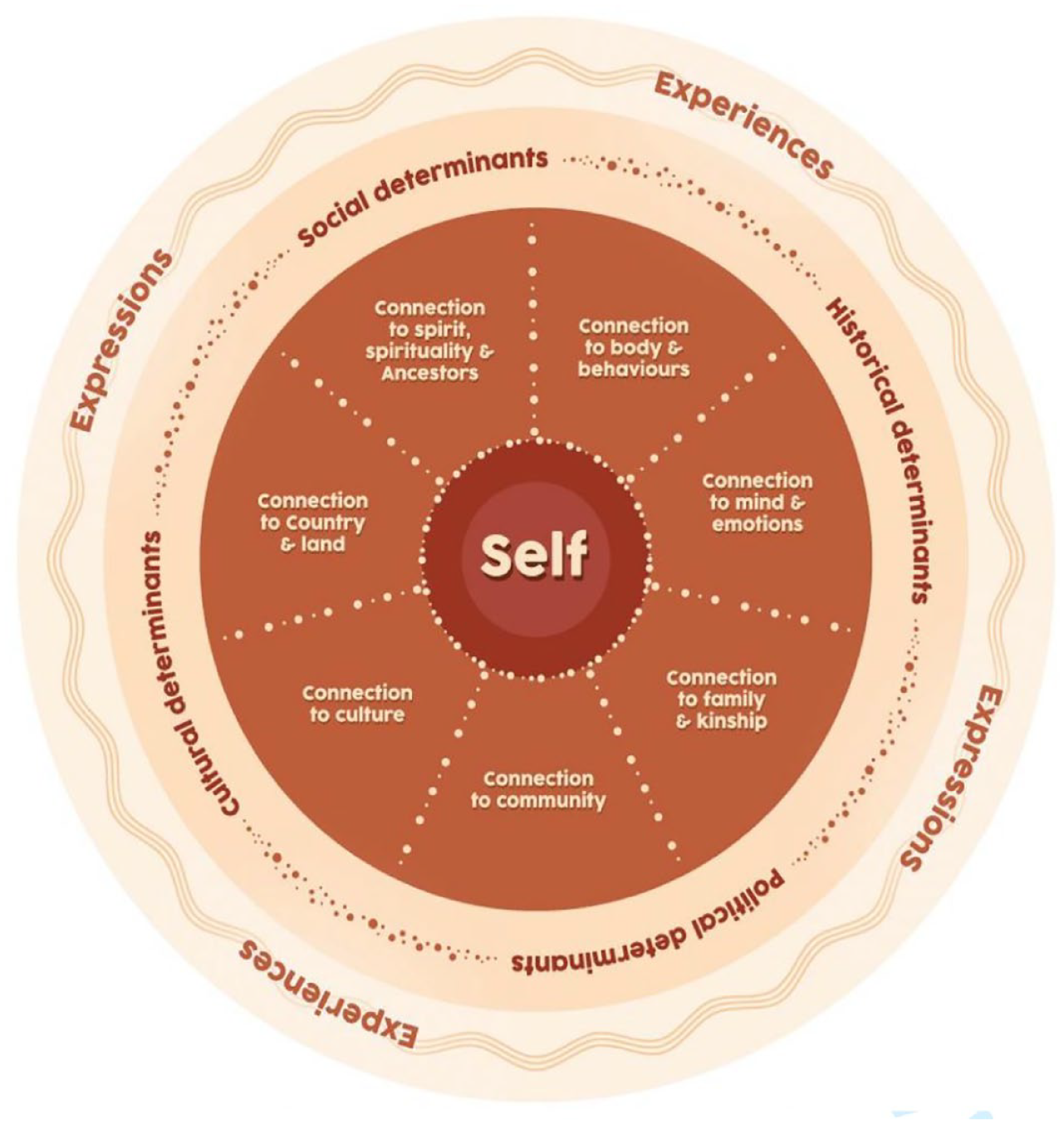
Social and emotional wellbeing from an Aboriginal and Torres Strait Islander perspective (adapted from Gee et al., 2014).
By actively utilising the findings from this qualitative component of the study, the team was able to develop a quantitative assessment tool that reflects key components of language-related wellbeing from a community perspective. The qualitative findings became a reference for decision making about survey domains and items. In combination with formal community input into and critical review of the survey during its development, this strategy of grounding the quantitative tool in findings from qualitative research represents a rigorous community-informed method for survey development.
Developing draft questions
The process of identifying, selecting and reviewing draft survey items involved several key stages, including identifying appropriate domains of impact; reviewing existing tools used for measuring social and emotional wellbeing; selecting and refining items from these instruments; and adapting or creating questions regarding language use and attitudes. A subgroup of the larger investigator team, including those with psychological and psychometric expertise, as well as community research associates and the project team, met through a series of meetings to identify and refine potential wellbeing questions prior to community review.
The process began by reanalysing the qualitative data with a view to identifying measurable domains of impact, followed by a review of existing tools that measure these domains. Individual items that reflected the findings from the qualitative material were compiled for review and selection by the subgroup, in preparation for subsequent review of the draft questionnaire by the collaborating communities. Mindful of the need for cultural and emotional safety when seeking to explore mental health and social and emotional wellbeing with Aboriginal and Torres Strait Islander populations, the preparation of the draft survey to be reviewed by community took a trauma-informed approach (Goodwin & Tiderington, 2020; Roche et al., 2020). Key principles at this stage were to give priority to tools developed by or validated with Indigenous populations, as well as to items framed in a strength-based manner.
In our earlier publication (Sivak et al., 2019), we described how reengaging with Indigenous languages enhanced people’s feelings of connectedness, especially to spirituality, Country, culture, community, family and emotions. To translate these themes from the qualitative research findings into measurable domains of impact, the team reanalysed the qualitative data, noting the ways in which people spoke about social and emotional wellbeing when sharing their experiences with language reclamation. For example, “resilience” featured in many of the stories people told in relation to their experiences with language reclamation. Interviewees described personal, familial and community resilience in a range of ways, such as observing how the resilience of individuals, families or communities may draw on or reflect their connections to ancestry, Country and culture, as shown in the interview quote below: So, I think your heritage and culture, and your identity, is something that—especially nowadays when people struggle with their health and wellbeing—the power of who you are and where you come from, and just the resilience that your people went through in maintaining their heritage, their culture, just in fighting to still be alive today is so powerful. So, there’s a lot of strength that comes through so many generations. (Sivak et al., 2019, p. 8)
With reference to expressions such as this, as well as other examples within the interview data, resilience was identified as an element of people’s social and emotional wellbeing that was enhanced through their involvement with language reclamation by strengthening their feelings of connectedness to culture, Country, ancestry, community, mind and emotions; thus resilience was identified as a key psychometric domain for the survey, as highlighted in Figure 2.
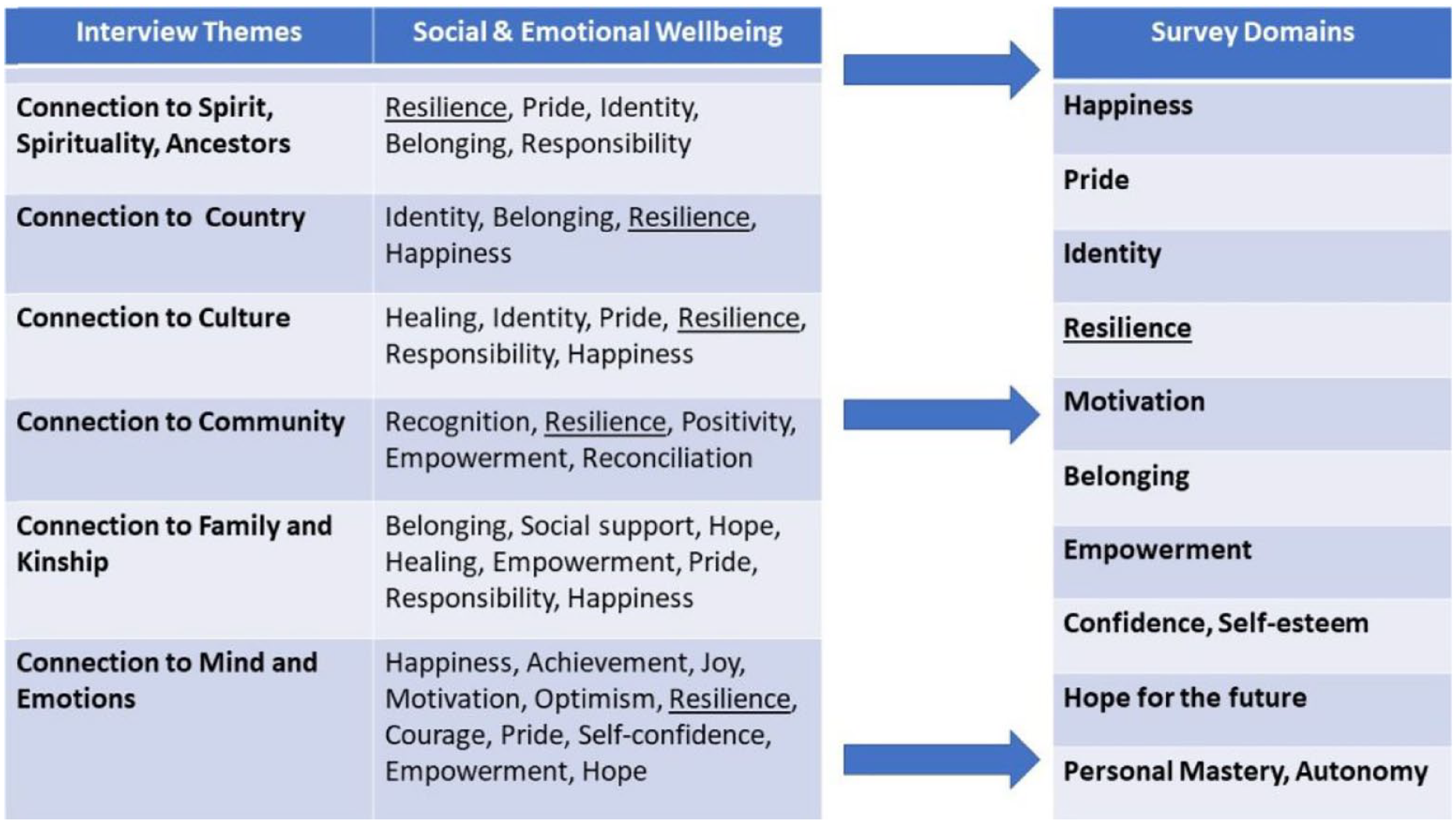
Interview themes refined to social and emotional wellbeing domains of impact.
The domains of impact that emerged most strongly from the interview material included happiness, pride, identity, resilience, motivation, belonging, empowerment, confidence and self-esteem, hope for the future, personal mastery, autonomy and control. Identification of these key psychometric domains shaped the subsequent review of existing tools used for measuring various aspects of social and emotional wellbeing.
Potential assessment tools relating to these domains of impact were identified through a literature review, with the goal of finding tools or items reflecting the key aspects of wellbeing that emerged from the interview findings. This varied literature included longitudinal explorations of stress (Pearlin et al., 1981), the development of assessments for life skills (Rosen et al., 2001) and quality of life (WHOQOL Group, 1995), validation of behavioural screening tools (Goodman, 1997) or specific tools for use with Aboriginal and Torres Strait Islander populations (Brown et al., 2013; Haswell et al., 2010; Thomas et al., 2010), outcomes measurement in Indigenous mental health consumers (Trauer & Nagel, 2012), as well as various clinical or epidemiological research studies (Wing et al., 1998). The formal review of the literature was supplemented with expert advice from study investigators to identify assessment tools and questionnaires that may not yet have been published. Most categories identified through the interviews were represented within four of the tools reviewed: the adapted PHQ-9 (Brown et al., 2013); Aboriginal Resilience and Recovery Questionnaire (ARRQ); Growth and Empowerment Measure (GEM; Haswell et al., 2010); and Pearlin Mastery Scale (Pearlin et al., 1981). However, some questions within the tools such as the Pearlin Mastery Scale were reframed from a deficit to a strength’s focus, while others were re-worded to better reflect the experiences of community members.
From the review of existing tools, the project team began to select individual items or subscales that aligned with the constructs defined through the qualitative interview data. Proposed items were compiled into a table, which showed the source of the item, which domain it pertained to and how it aligned with the interview material (Table 1). Progressive iterations of this table were used to guide discussion and decision making during the series of meetings with the psychometrics team, which was tasked with preparing an appropriate selection of questions to be subsequently reviewed by community members.
Selective example showing domains, supporting quotes, proposed items and item sources.
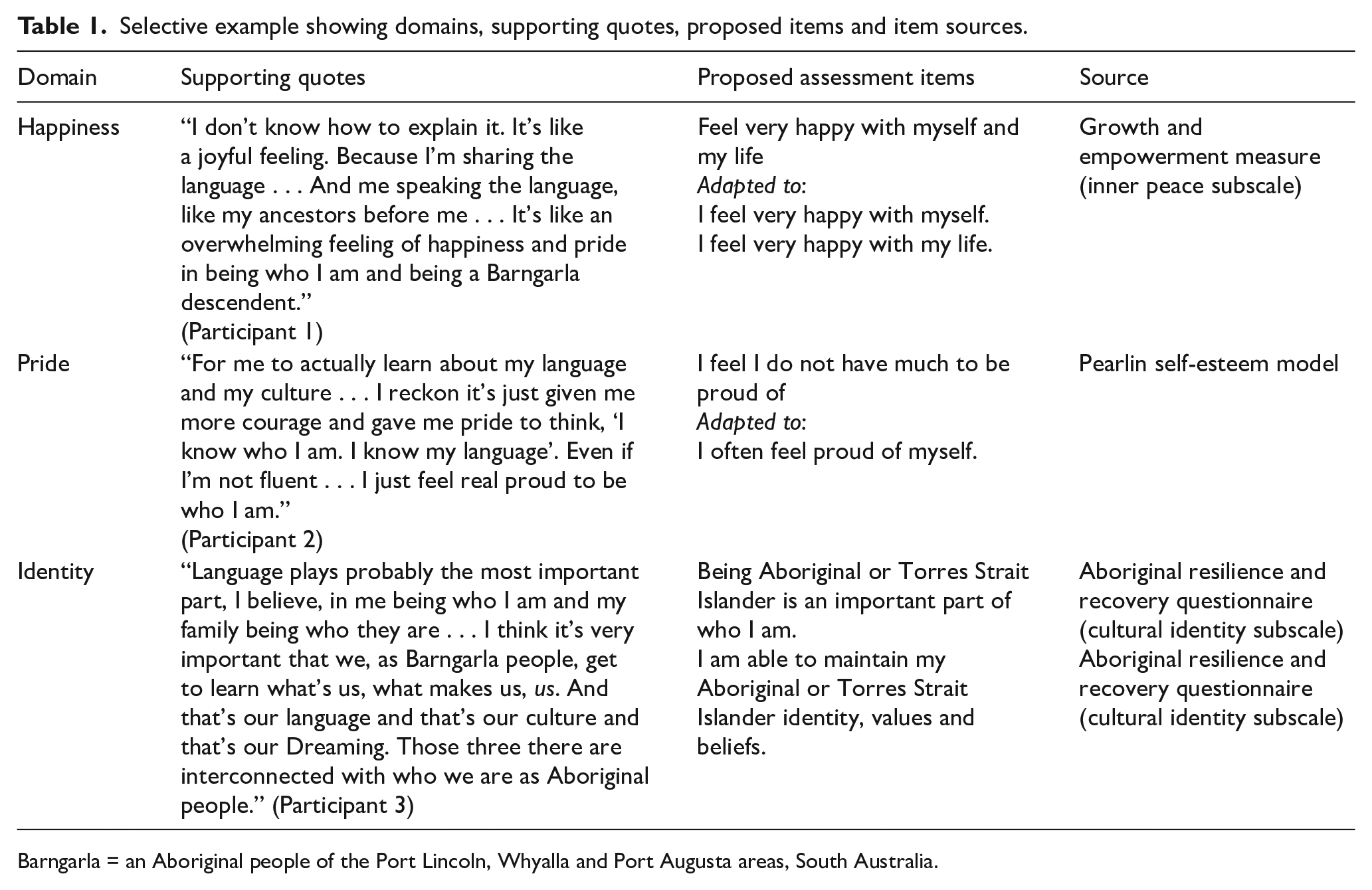
Barngarla = an Aboriginal people of the Port Lincoln, Whyalla and Port Augusta areas, South Australia.
One of the key discussion topics that arose when selecting possible items for inclusion in the survey included the importance of framing questions in positive, strengths- based rather than negative, deficit language. This resulted in the modification of some items. For example, questions such as There is little I can do to change many of the important things in my life or I feel I do not have much to be proud of (Pearlin et al., 1981) either were removed in favour of more positively worded items or were adapted to a more positively worded statement. Other discussion topics included the importance of splitting some items into two separate questions; for example, I feel very happy with myself and my life (Haswell et al., 2010) becomes two items, I feel very happy with myself and I feel very happy with my life. This was particularly important in the context of innate or external factors influencing people’s wellbeing. Some of these examples are shown in Table 1, which illustrates how the selection of items relates to the domains from the qualitative findings.
Several subscales from the Aboriginal Resilience and Recovery Questionnaire (ARRQ) are composed of items relating to aspects of connectedness that are not often measured in other tools. For example, the cultural identity subscale includes items such as the following: “I am proud to be Aboriginal or Torres Strait Islander”; “Being Aboriginal or Torres Strait Islander is an important part of who I am”; “I am able to maintain my Aboriginal or Torres Strait Islander identity, values and beliefs.” Similarly, subscales regarding community connection, social support and spirituality were included to ensure that the broader conceptions of social and emotional wellbeing that were reflected in the qualitative narrative were represented within the draft survey questions. Thus, the development of the wellbeing portion of the draft questionnaire involved a series of teleconferences, during which the team first identified then refined the number of proposed questions from more than 120 to 55 items, prior to being prepared for community review of the survey questions.
The language component of the survey aimed to gauge several aspects of participants’ experiences with and beliefs about both their own and other Aboriginal and Torres Strait Islander languages, including language exposure, past and present language use, participation or interest in language-related activities, and beliefs and attitudes about Indigenous languages. With reference to the interview data, the team was especially mindful of the experiences of those who had been forcibly removed from their families as children and forbidden to use their language—as well as their children, grandchildren and great-grandchildren, who continue to experience the ongoing impacts of this within their families. The effect of the Stolen Generations upon both language use and social and emotional wellbeing was a strong motivator for some people to re-engage with their language to reclaim their heritage and culture. Mindful also of the broad range of Indigenous language use in South Australia where some people speak one or more Aboriginal languages in addition to English, the survey also needed to accommodate this wide breadth of experience.
One strategy for identifying potential questions for the language portion of the survey was to review the Second National Indigenous Languages Survey (NILS2), which had been developed for and used with diverse language groups around the country. Its Language Attitude Survey component provided a starting point for selecting items that could reflect the diverse experiences of interview participants within our collaborating communities. For example, we adapted questions 26 to 29 from Section Two of NILS2, which ask about the language with which a person most strongly identifies, whether they grew up on the country where this language is from, how well they speak this language, and whether they speak it more or less often than when they were younger. Questions 37 to 41 of Section Three of NILS2 were adapted and deepened with questions from the ARRQ to ascertain participants’ thoughts and feelings about how important their language is to themselves, their community and family members, their satisfaction with their current ability to speak their language, and interest in learning more. Questions regarding language activities that participants either had taken part in previously or would be interested in if they were available, drew both on Q47 from NILS2 and examples of language activities described in the interview material. In this way, the preparation of questions for community review sought to be appropriate for diverse experiences, while simultaneously honouring the experiences shared during the qualitative phase of this study.
Community review of draft questions
Once the study team prepared a selection of items, the draft questions were then presented to and reviewed by community collaborators in a full day workshop held in two regional locations with approximately 15 participants per location. The primary aim of these workshops was to seek community input about the draft questions to ensure face validity, cultural appropriateness, understandable response categories, suitable brevity and the ability for participants to self-complete with minimal guidance. The workshops also became an opportunity to re-familiarise community members with the study, update them on its progress and seek community-level permission to proceed with the next set of project activities. Overall, face validity, the degree to which a question relates to the domain or construct it intends to measure, appeared high, with community members recognising the relationship between the qualitative findings and the types of questions being proposed. Suggested changes proposed during the community workshops included removing, rewording or adding new questions.
In summary, the draft questionnaire proceeded through a facilitated focus group process with community collaborators to clarify local idioms of distress and strength, maximise the conceptual coverage, enhance a holistic understanding of the constructs, and ensure the cultural appropriateness of tools, their items and response categories (Vogt et al., 2004). The suggested changes from both workshops were then collated for final review by the psychometrics team, which was responsible for reconciling any contradictions or mal-alignment and finalising the survey questions.
Consensus: Indigenous Language and Wellbeing Survey
The final Indigenous Language and Wellbeing Survey comprises the following three main parts: (1) demographics, (2) language use and attitudes, and (3) social and emotional wellbeing (Supplemental Material 1). The very brief demographic part asks about residential history, education and employment, noting that things like education, employment and where people live might affect the languages people are exposed to and their ability to attend language-related activities.
The language part of the survey has three sections. The first explores participants’ exposure to and use of the Aboriginal or Torres Strait Islander language with which they most strongly identify, while the second asks similar questions regarding knowledge and use of other Aboriginal and Torres Strait Islander languages. These sections include both open ended and single or multi-item response question formats. The third section focuses on beliefs and attitudes about Indigenous languages, such as beliefs regarding the importance of using, learning or teaching one’s own language and attitudes about learning other Aboriginal and Torres Strait Islander languages. Responses for the seven items in this section apply a five-point Likert-type scale from strongly agree to strongly disagree.
The social and emotional wellbeing part of the survey comprised five sections, with questions clustered around the following domains: (1) happiness, hope, meaning and motivation; (2) family support, social support, belonging; (3) resilience; (4) pride, recognition, identity; and (5) empowerment, mastery and control. As described earlier, these domains were identified through the analysis of people’s experiences of reclaiming language. In this part, survey participants are asked to rate from one to five how each of the strength-based questions describes them and the way that they are with their family, community and culture, using the following five-point Likert-type scale, adapted from the Aboriginal Resilience and Recovery Questionnaire: (1) “not at all”; (2) “a little”; (3) “somewhat”; (4) “a fair bit”; and (5) “a lot.” The administration of the survey instrument is enabled for different modes of delivery including online, through telephone interview or face-to-face delivery with members of the research team.
Prompts throughout the survey emphasise that there are no right or wrong answers, that the survey seeks honest reflections upon how people have been feeling, their experiences, beliefs and perceptions. Furthermore, headings within some sections remind participants that while questions may bring up feelings or memories, they are encouraged to take their time and are reminded that they may choose not to answer any questions with which they feel discomfort.
Discussion
Despite the significant disruption to culture and ways of life brought about by colonisation and subsequent policy approaches such as assimilation, Aboriginal and Torres Strait Islander cultural expressions have evolved and are still practised today. Aboriginal and Torres Strait Islander people and communities are actively reclaiming their ancestral languages in a multitude of ways, from the development of resources such as language dictionaries, poetry and books, to the incorporation of language into smart phone and tablet applications.
A national appetite for the reclamation and sharing of Aboriginal and Torres Strait Islander languages is also evident through national conferences such as the Puliima Indigenous Language and Technologies conference, which hosted over 600 delegates from Australia and abroad in 2019. Increasingly, the importance of Indigenous languages is being recognised at international levels, as this excerpt from the United Nations report on the International Year of Indigenous Languages shows, “Recognition and respect for Indigenous languages are essential to life, wellbeing, and participation in all socio-cultural, educational, political, economic, environmental, and other domains” (UNESCO, 2019, p. 7).
This article describes an approach to developing a survey tool to measure the relationship between Indigenous languages and wellbeing by illustrating the process by which qualitative data can guide the development of quantitative tools in mixed-methods research. In this way, it responds to assertions that “Instruments used to measure the wellbeing of Indigenous Australians should contain dimensions relevant to Indigenous people, and be informed by their own values and preferences” (Butler et al., 2019, p. 139). Future analyses arising from implementation of this survey instrument will provide unique understanding on Indigenous language and wellbeing within the Australian context, and in addition, these findings will aid understandings of the instrument’s transferability for other Indigenous communities.
Conclusion
This article describes the process and outcome of reviewing, adapting and developing methods to quantitatively measure the social and emotional wellbeing impacts of language use and revival with Aboriginal and Torres Strait Islander people in Australia. The Indigenous Language and Wellbeing Survey is of particular relevance to Aboriginal and Torres Strait Islander communities seeking to overcome the negative impacts of language loss and social and emotional issues facing them in contemporary Australia. Ultimately, this project aims to support and advocate for the preservation, protection and promotion of rights and freedoms of Aboriginal and Torres Strait Islander people to use, develop, celebrate and sustain traditional culture, language and ways of life. This article shows how qualitative material can guide the development of a quantitative survey in mixed-methods research. The implementation of the Indigenous Language and Wellbeing Survey will contribute to the emerging evidence base on potential positive impacts of language use or revival on the wellbeing of Indigenous people in Australia or elsewhere.
Supplemental Material
sj-docx-1-aln-10.1177_11771801231194650 – Supplemental material for Developing the Indigenous Language and Wellbeing Survey: approaches to integrating qualitative findings into a survey instrument
Supplemental material, sj-docx-1-aln-10.1177_11771801231194650 for Developing the Indigenous Language and Wellbeing Survey: approaches to integrating qualitative findings into a survey instrument by Leda Sivak, Seth Westhead, Graham Gee, Michael Wright, Alan Rosen, Stephen Atkinson, Emmalene Richards, Jenna Richards, Harold Dare, Ngiare Brown, Ghil’ad Zuckermann, Michael Walsh, Natasha J Howard and Alex Brown in AlterNative: An International Journal of Indigenous Peoples
Footnotes
Acknowledgements
The authors thank the Barngarla Language Advisory Committee and all Barngarla community members, with particular gratitude to those who participated in interviews and continue to share their experiences and reflections on the importance of language and wellbeing with the study team. They also acknowledge Courtney Hammond for her support and guidance throughout this project.
Authors’ note
Declaration of conflicting interests
The authors declared no potential conflicts of interest with respect to the research, authorship, and publication of this article.
Funding
The authors disclosed receipt of the following financial support for the research, authorship, and publication of this article: Department of Health, Australian Government—National Health and Medical Research Council (APP1129796).

Supplemental material
Supplemental material for this article is available online.
Glossary
Barngarla a South Australian Aboriginal language; an Aboriginal people of the Port Lincoln, Whyalla and Port Augusta areas, South Australia
Gamilaraay an Aboriginal language of New South Wales
Kaurna a South Australian Aboriginal language
Noongar a Western Australian Aboriginal language
Palawa Kani a Tasmanian Aboriginal language
Wiradjuri an Aboriginal language of New South Wales
References
Supplementary Material
Please find the following supplemental material available below.
For Open Access articles published under a Creative Commons License, all supplemental material carries the same license as the article it is associated with.
For non-Open Access articles published, all supplemental material carries a non-exclusive license, and permission requests for re-use of supplemental material or any part of supplemental material shall be sent directly to the copyright owner as specified in the copyright notice associated with the article.
