






Abstract
State sanctioned removal of Australian Aboriginal children from family, culture, and country has had harmful and traumatic effects on the Survivors of this process and their children. Known as the Stolen Generations, children were detained in government settlements and church missions and stripped of Aboriginality. This article explores ways that a virtual reality reconstruction of mission environments may be implemented to memorialise and commemorate Survivor experience that avoid narratives of victimhood and destructive post-colonial overlays on their stories of survival. Our project is to develop a virtual reality model of Carrolup-Marribank Mission in Western Australia as a living digital memorial for use by Survivors and their families to help address their displacement and loss of culture and identity. This article shows how virtual reality may be a potent didactic tool to convey difficult histories as well as a purveyor of powerful stories that contest stereotyped perceptions of Aboriginal people.
Introduction
The confinement of Aboriginal children in church-run missions, their removal from family, community, and culture, and denial of their Aboriginality has had far-reaching harmful effects on Survivors and their descendants, marked by trauma, social discord, ill health, crime, and addiction (Australian Institute of Health and Welfare, 2016). In 2019, more than 33,600 Aboriginal and Torres Strait Islander people were Stolen Generation Survivors and 27,200 of these were over 50 years old. As a result of child removal, Survivors are plagued with a freight of physical and mental health problems. Their traumas are passed on to their descendants so that an estimated 40,000 Aboriginal people of all ages are affected by epigenetic and developmental trauma histories (Australian Institute of Health and Welfare, 2021).
As Stephanie Gilbert (2019) writes, the term Stolen is a calculated act of self-naming to emphasise a particular and complex Aboriginal identity (p. 227). In a “deliberate process of disturbing or disrupting the ‘stolen body’ is ‘gendered and sexualized by [the] legislation and its processes’” (Gilbert, 2019, p. 228). The destructiveness of the system of child removal was comprehensive and has led to serious health issues now faced by adults who were taken as children. Colonialisation engendered health issues are shared by colonialised Indigenous people. For example, Rolleston et al. (2020) point out the effect of colonisation on Māori (Indigenous peoples of New Zealand) health and advocate health interventions that come from a Māori worldview and are not dominated or overridden by Western health approaches (p. 134). In a similar vein, the approaches taken in this research are those that try to take account of Aboriginal worldviews and place Stolen Generation Survivors at the centre of the project where they are “not observers but immersed in the project, its conception conducts and desired outcomes” (Tiwari & Stephens, 2020a, p. 252).
The role of missions in Western Australia’s past looms large in the history of Aboriginal and non-Aboriginal history. Settler societies such as the Swan River Colony—the British settlement in Western Australia—were part of the British project to colonise parts of the world, establishing new territories, new markets and evangelising the British way in foreign lands. In general, settler societies, such as that at Swan River, imposed unequal relationships with those whose lands they took, most often with the intended removal of the Indigenous—especially if the Indigenous resisted. In short, “the primary motive for elimination is not race (or religion, ethnicity, grade of civilization, etc.) but access to territory. Territoriality is settler colonialism’s specific, irreducible element” (Wolfe, 2006, p. 388). The genocidal tendencies of settler societies are reflected in the attempts by non-Indigenous Western Australians, through legislation, to control Aboriginal populations and ultimately “breed white natives” (Neville, 1947, p. 75). The Western Australian Aborigines Act 1905 was the instrument of government control over Aboriginal lives that also enshrined the Chief Protector of Aborigines with the powers to remove children from parents and place them into institutional care. The Chief Protector who had the most far-reaching effect on Aboriginal lives in Western Australia was Auber Octavius Neville—or Neville the devil as he is known in some Aboriginal circles—who held the post from 1915 to 1940. For Neville, racial absorption was the key to ridding Australia of Aboriginals (Tiwari et al., 2019). Part-Aboriginal children were particularly targeted for removal to missions and Native settlements to be isolated from the pernicious influences of camp life, family, culture, and language and to ultimately enter White society as domestics and farm hands. Neville’s aims to incarcerate and to deny Aboriginal children their history, country, and culture are arguably genocidal. Conditions at the government settlements and missions where children were sent varied from a relatively benign paternalism to trauma landscapes of neglect, sexual abuse, and violent racism.
Missions are profoundly ambivalent as places that are home despite being also sites of pain and loss. This article explores affective and innovative ways of commemorating the mission experiences by using a virtual reality (VR) environment. We ask the following questions: how can former mission sites be commemorated in ways that give Aboriginal people agency over their history and avoid being trapped in narratives of victimhood or despair and destructive post-colonial narratives; what are the culturally appropriate ways of Aboriginal commemoration that give meaning to Survivor experiences; and can these considerations be effectively translated to a VR environment and if so, how? Answering these questions may help meet an important need for Survivor communities to reclaim and control their cultural heritage, and eventually contribute to healing the wounds inflicted by destructive histories between Aboriginal and non-Aboriginal people.
To help achieve our aims for this proposed project, researchers from the Curtin research organisation Missions Connect worked in partnership with the Western Australia Stolen Generations Aboriginal Corporation (WASGAC), an organisation that supports the needs of individuals and families adversely affected by separation policies. Work commenced to develop the VR environment as a living digital memorial for Western Australian Carrolup-Marribank Mission (1915–1988) Survivors and their families by addressing questions of displacement, loss of culture, language, and identity. The VR of Carrolup-Marribank is part of an ongoing project to render other Western Australian mission sites in a VR environment in partnership with Survivors. These include Wandering Mission (1944–1979), Moore River-Mogumber (1918–1951, 1951–1974), Gnowangerup Mission (1926–1973), Mount Margaret Mission (1921–1975), Jigalong Mission (1947–1969), and Beagle Bay Mission (1895–1976). As explained elsewhere in this article, the project has origins in a plan by WASGAC to physically restore Carrolup-Marribank and other missions as Aboriginal healing centres. This project foundered through lack of funding for reconstruction and issues preventing access to some sites. There were also difficulties related to many Survivors who could not travel to the mission sites through ill health. The use of VR was seen by WASGAC and Curtin University to sidestep access problems and to provide reconstructed versions of missions that had disappeared.
While much has been written on the Stolen Generations and their experience, we believe this project to place this experience into a historical digitally reconstructed VR environment is unique.
Carrolup-Marribank was originally the government-run Carrolup Native Settlement (1915–1922 and 1932–1950). It was taken over by the Baptist Union in 1952 and renamed Marribank. It closed as a mission in 1976 although it remained church controlled until 1988. Survivors tend to be known by the era in which they were in care at the place—hence Carrolup Survivors or Marribank Survivors and the joint nomenclature Carrolup-Marribank. The term Survivors is one used extensively by the former children in care who make up the members of the WASGAC to describe their status as surviving the mission system. The capitalisation of the term Survivor is regarded as a mark of respect. However, not all Aboriginal people agree, for example, the Kimberly Stolen Generations Corporation tend to use mission kids rather than Survivor to denote status.
The established premise that kin and country are essential to Aboriginal and Torres Strait Islander peoples’ well-being (Rose, 1996) made it important for the commemoration strategies to be approached through the strengthening of personal, familial, and communal identities using place-based practices. Within this conceptual framework of memory-place-identity, the research was conducted in four structured stages focused on place, identity, materiality, and evaluation. The project engaged with eight survivor or family member stories through yarning and workshops (Figure 1) and involved the digitisation of the collated stories and audio-visual materials for the mission VR. The completed VR was publicly exhibited and feedback from the Survivors, their families, and other Indigenous and non-Indigenous participants was analysed and incorporated along with the project’s other findings into our strategy for culturally appropriate and viable ways of commemorating the mission experiences of Stolen Generations Survivors.
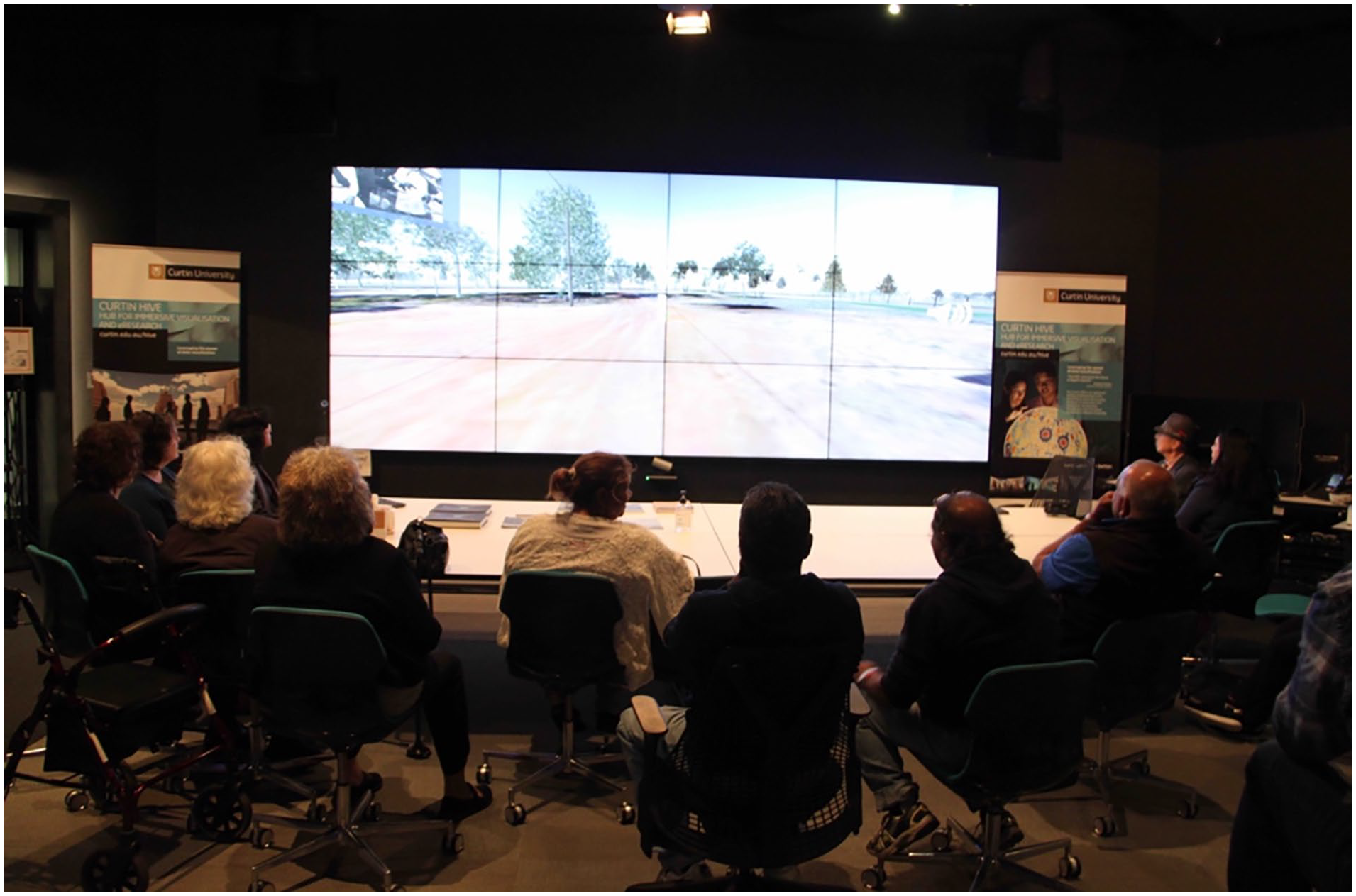
Survivor workshop for viewing and editing the VR model at the Curtin Hub for Immersive Visualisation and eResearch (HIVE) (Missions Connect, 2022).
Aboriginal memory and commemoration
Memory is an essential aspect of commemorations—the will to remember a particular place or event or both. Commemoration marks a place or significant site that has been invested with meaning and represents the heritage of an individual or group. These are places where “people connect physically and emotionally” (McDowell, 2016, p. 38). In this context, notions of ownership, belonging, or not belonging are bound up with the creation of identity linked to a place. Missions are significant sites where memory is inscribed into the site through a “will to remember” by Survivors that attaches memory to place (Nora, 1989, p. 7). This is a process that mediates between story and environment reinforcing significance and meaning. Narrative is a cultural tool that, to a large extent, is recognised as able to translate effectively across cultural divides, having “messages about the nature of a shared reality” (White, 1980, p. 6). Furthermore, as Wertsch and Billingsley (2011) observe, “remembering occurs with the help of various cultural tools” and by far the most effective mnemonic tool is narrative (p. 31).
On the other hand, Phillips and Buna (2018) are suspicious of narrative as it is often applied to Aboriginal peoples and research. They characterise narrative as something that intellectualises and specifies structure and methods to understand memory. Story is something that has been devalued in academic debate about the worth and nature of narrative. In their view, story is the “communication of what it means to be human” and that it is the “everyday language used by peoples across cultures and ages classes, disciplines and sectors” (Phillips & Buna, 2018, p. 4). Phillips and Buna (2018) privilege storying over narrative as a more intimate and personal “act of making and re-making meaning” (p. 7). Storying sets up an intimate and responsive space where there are tellers and listeners who engage in a living and active process of meaning making and collective ownership (Phillips & Buna, 2018). They escalate the status of story to an act that recovers voices from “silenced margins” and presents it as a living oral archive (Phillips & Buna, 2018, p. 43). Through the stories told by Survivors, voice and agency is given to them that re-establishes their connections with the place and gives them agency over an environment over which they had little control as children. However, it is important to keep in mind that stories occupy and are inscribed into a place—they are simply not added to an VR environment.
Martin Nakata (2012) says that while the archive is important for Aboriginal people, it is not enough to construct a sense of what it is to be Aboriginal. He supports the view that official records should be annotated with counter readings, from family members and others who know family histories, to personalise the impersonal. The Indigenous community “requires as many stories to be known as possible in order to appreciate the diversity of Indigenous experience” (Nakata, 2012, p. 103). In the mission, VRs the voices of Survivors speak back to the archive as a type of annotation which often runs counter to the stock official narrative, personalising and memorialising their experience in story.
Lorina Barker (2010) notes that in using Aboriginal oral histories she taps into “the millennia long tradition of oral storytelling as the way that Aboriginal people’s history and culture knowledge has and continues to be conveyed” (p. 185). Aboriginal stories are person oriented; they are a crucial part of an Aboriginal worldview and the transmission of knowledge and culture—an “interrelatedness of story, practice and culture” (Klapproth, 2004, p. 77). The control over stories is important, especially if the knowledge of the place is to be free from the often paternalistic and justifying post-colonial histories that overlay mission sites. Here, Survivor stories are a type of truth-telling, a witnessing that offers a commemoration of individual and collective experience. Margo Neale and Lynn Kelly (2020) confirm that for Aboriginal people, history and culture are inseparable and that “the term ‘history’ is interchangeable with the term story . . . but story carries more weight in the Aboriginal world as history does in the Western world” (p. 39). In Aboriginal culture, there is no knowledge without memory so the VR mission site, embedded with the stories that inhabit these places, is an archive that passes knowledge to others. Stories for embedding in the VR Missions can be obtained individually or through yarning, which is a particular Aboriginal method of transmission of stories and culture. Yarning provides a culturally safe, respectful, and relaxed space to share knowledge and stories, and it is a method that is used in this project for Survivors’ truth-telling (Geia et al., 2013). But stories and experience like that of Survivors’ truth-telling is “difficult knowledge” as Devorah Britzman (2000, p. 49) argues. It is difficult in the knowledge of the loss of ethical conduct—the capacity of a society “to do less harm” and “how this incapacity leads to the loss of individual lives” (Britzman, 2000, p. 49). In other words, it is difficult knowledge that harm was inflicted on children, and it is difficult knowledge that a society could inflict them.
Commemoration fosters historical consciousness and can provide meaning and healing for traumatic events. The social impact of commemoration is mediated through practices that heal and give meaning to Aboriginal trauma. Our intention was to develop the Carrolup-Marribank VR in collaboration with Stolen Generation Survivors as a type of living memorial; an immersive commemorative space that provides a dynamic environment, informed by Aboriginal storying, which has high potential to impact public understanding of the Stolen Generations’ story by allowing users to “discover, explore, visualize, and manipulate the content, leading to knowledge creation and new insights” (Bekele et al., 2018, p. 21).
Alison Atkinson-Phillips (2019) estimates that memorials “devoted to lived experience” are a relatively new phenomenon and that there has been a surge of 80 survivor memorials of all kinds since the 1990s (p. 5). These include the effects of colonisation on Indigenous people, child migrants, war, natural disasters, abuse of children in institutions, and homophobia. Of these, 24 relate to the Stolen Generations (Atkinson-Phillips, 2018). In the context of the present project, ways that the traumatic experiences of the Stolen Generations have been commemorated include formats where Survivors have publicly shared their own stories, such as exhibitions as well as public art and design installations with a preference for natural elements and landscape. Indigenous people create their own ways to memorialise the pasts that are appropriate to them, and these may or may not feature European styles of memorialisation. Aboriginal memorialisation increasingly incorporates notions of reconciliation, usually revolving around harmony and unity, but attempts are often criticised as perpetuating “assimilationist views of reconciliation” (Murphy, 2017, p. 37). Memorials need to allow Survivors to regain their past on their terms.
A memorial is a mnemonic, a complex expression of remembrance, mourning, and loss that serves popular and political purposes in association with selective remembering and forgetting. It can work on individual and community levels and is an entity kept alive and meaningful through constant use. In a nutshell, a memorial serves as a “constantly re-energised repository of socially and politically relevant traditions and identity which serves to mediate between the everyday lives of individuals” (Erőss, 2017, p. 21). As places of memory and mediation, memorials also have an educative role linked to Stolen Generations purposes of remembering and commemoration.
Power has a role in these traditions and practices, and commemoration is contingent on who has power over the memory being commemorated. Commemoration practices exist in the settings of the everyday often as living memorials in contrast to ceremonially and theatrically fixed monuments. These “use space as a mediator and stress the importance of social practice in remembrance” (Erőss, 2017, p. 21). Here, commemoration is in the rituals and acts of everyday life as testament to those remembered. For example, living memorials exist as memorial buildings, fountains, parks, or even cities. VR mission environments can be regarded as living memorials where meaning and identity are mediated by Survivors and their families, and embedded with the social practices of storytelling, remembrance, and the production of identity.
The project
This project was focussed on the Carrolup–Marribank mission site located on a bend in the Carrolup River in the Great Southern of Western Australia approximately 280 km south of Perth. It was initially established as the government-run Carrolup Native Settlement in 1915 to care for Aboriginal children but closed in 1922. It reopened in 1939 under the assimilationist policies of the Aborigines Department and the then Commissioner for Native Affairs Auber O. Neville. In the late 1940s, it became noted for the artwork that children produced, exhibited, and sold internationally (Tiwari et al., 2019). By the 1950s, government policy had changed from managing its own settlements to funding church missions to care for Aboriginal children (Tiwari & Stephens, 2020a). Under these policies, the site was given over to the Baptist Union and run as a mission which occupied the site from 1952 until 1988. For a brief while after, the place functioned as a centre for Aboriginal arts, but it has been largely abandoned and has seriously deteriorated physically since closure (Tiwari et al., 2019).
The project was originally conceived as a physical rehabilitation of the mission to be used as an Aboriginal Healing Centre. These are places that utilise recognised strategies for healing Stolen Generation people. Mission sites were seen as apposite places to provide healing programmes. Unfortunately, many Survivors have trouble accessing these sites due to ill health restricting travel and there are political issues to do with ownership that also stymied a restoration programme. Physical reconstruction was also a bridge too far given accelerating deterioration of these places and the inability to raise enough funding for their restoration. The project then turned to VR as an alternative platform, using a digitally reconstructed virtual environment to help Stolen generation Survivors and their families in their healing process. An advantage of VR is that it can provide a historically accurate rendition of the mission environment overlaid with the memory and stories of Survivors. Not only can it be used as a healing tool, but it also attaches memory firmly to place and provides a powerful setting and didactic tool for non-Indigenous people to understand the trauma associated with these places.
We acknowledge that a virtual place is no match for experience of the actual place. In a VR three-dimensional environment, our brains are tricked into belief in its reality—although a VR lacks touch, taste, and smell. However, in this instance, VR has the advantage of being able to produce environments long lost to the predations of time and be able to present these remotely to participants, in a culturally safe and controlled environment. VR reconstructions—like physical environments—are affective environments that trigger emotions and they create meaning “through a mutual, dynamic, and visceral relationship with people” (Tiwari & Stephens, 2020b, p. 81). Here, technology and place collaborate where “digital objects have a power of affect somewhat similar to the real object” (Cameron, 2010, p. 61). In this context—while the VR mission place is digital and not real—the stories of Survivors offer real impact in an environment they now control. The VR mission gives voice and identity to Survivors by placing them at the centre of the project and in control of what stories are told, and how and where they are told, ensuring they have control over the VR landscape.
The project team comprised indigenist and Aboriginal researchers from diverse backgrounds with long involvement in Stolen Generation affairs and studies. Expertise includes architecture, space psychology, heritage, placemaking, Indigenous culture, and Stolen Generations trauma. This team adopted an approach where the centrality of the role of the Aboriginal partner organisation was emphasised in deciding what elements are to be researched and what procedures would be utilised during this process, as outlined in the Australian Code for the Responsible Conduct of Research (National Health and Medical Research Council, 2018). University Ethics clearance was also obtained that included culturally safe management practices.
Accordingly, WASGAC, the Aboriginal partner in this project, played a key role through an Advisory Group (AG), which included two registered Aboriginal members of the Stolen Generations along with other WASGAC representatives. AG guided the co-design processes in the project for Participatory Action Research (PAR) that commits to social transformation, power-sharing, and collaboration in the research; and honours the lived experience and knowledge of the participants and community involved (Evans et al., 2009). The team worked with the AG to invite eight Survivors to collaboratively develop stories and knowledge, and map these into the VR. The selection of Survivors was guided by the AG—with due consideration to kinship and family groups, gender, sexuality, and was inclusive of the age span of the Stolen Generations which is 50 to 94 years old. Survivor descendants supplied a supportive role and narrated experiences transmitted by their parents and grandparents. A strength-based approach using yarning, lived maps creation, and storytelling was used to ensure Aboriginal control.
To address the research questions, the project was organised in four stages. Two workshops on developing stories around place, identity, and materiality were conducted and followed by an exhibition—the Limen Exhibition—at the State Library WA (2021–2022) in Perth that tested the commemorative function of the VR memorial and helped gather feedback on the VR model. Workshops strived to be culturally safe spaces conducted with the help of Aboriginal library staff and with WASGAC supplying cultural guidance. The WASGAC provided an Aboriginal perspective and the governance needed for this project, including guidance and management of trauma triggers and counselling for Survivors if this arose. Problems of re-traumatisation were not reported by those who viewed or participated in the project. However, the issue of re-traumatisation through engagement with the VR remains a concern and the subject of a separately funded project at Curtin University.
The following describes the four stages of the project and the activities they held. The workshops were preceded by archival research—including government files, historical photographs, and plans to understand historical contexts and supply a ground for Survivor memory in the reconstruction of the mission in VR. The limitations on our approach—besides that of a “not real” environment discussed above—lie in the amount of archival material we were able to access and the ability of Survivors to remember details about the placement of buildings and smaller details about materials and objects such as furniture. The conduct of group yarning sessions, however, helped, and when shown the VR memories were triggered and consensus reached on details about the environment.
The project stages—place, identity, and materiality—were meant to collectively address aspects of the research questions previously posed. These included Aboriginal agency over their history by giving them a voice often counter to national storylines and experience commemorated in a culturally appropriate environment, controlled by Survivors, and effectively translated into a VR environment.
Stage 1: place
Workshop 1 (W1) focused on the construction of maps by the Survivors based on their lived experiences. Mental maps unravel and make visible the intangible world of experience (Tiwari, 2010). Each Survivor’s lived map was expected to differ depending on the way place was lived and experienced (Figure 2).
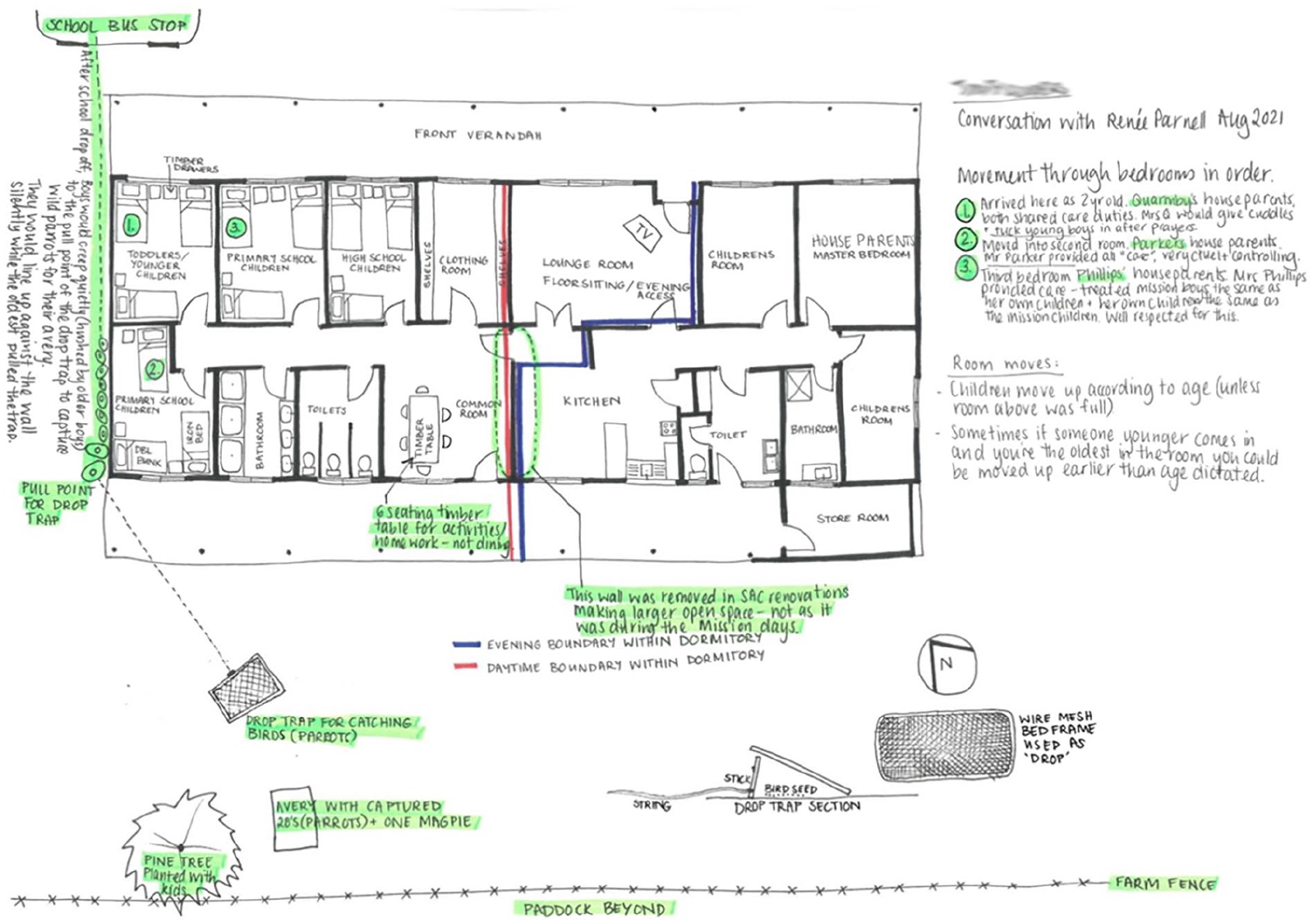
Lived map formalised by Renee Parnell, for confirmation yarn with Survivor, 2021; memories and stories added (Missions Connect, 2021a).
The construction of such lived maps in this project relied on yarning as a method—an essential part of traditional Aboriginal storytelling. Yarning circles are important collective ways of respectfully preserving and sharing cultural and other knowledge. Survivors yarned as they remembered Carrolup-Marribank, the position of buildings and places and their personal journeys triggering memories along the way. It is envisaged that such storytelling aids in stitching time and place together by oscillating between presenting knowledge of space and spatialising practice. Participants were also invited to use or bring along visual materials in W1 and Workshop 2 (W2). The notion of a visual language holds particular significance within Indigenous culture and Indigenous research, as exemplified by the work of Indigenous researcher Dr Lynn Lavallée and her concept of Anishnaabe (a group of culturally related Indigenous peoples, Great Lakes region, Canada, and USA) Symbol-Based Reflection (ASBR) (Lavallée, 2009). ASBR places a strong emphasis on the symbolic interpretation of cultural materials. ASBR recognises the power of symbols, such as songs, stories, paintings, and drawings, in giving participants a voice to share their strengths, concerns, thoughts, ideas, and issues. These symbols helped in connecting the Survivors to the place where the maps they produced did not simply represent but were constructive in the way they revealed their lived experience. It was essential to include these maps, along with the archival data of the mission site, to faithfully recreate the mission within the VR environment, providing an authentic perspective of these places as experienced by mission children.
Stage 2: identity
W2 took Survivors through their own lived maps incorporated into the VR following W1. Survivors were shown the VR and with Aboriginal leadership, yarning proceeded about its accuracy and effectiveness. Survivors had control over what goes into and what must be removed from the VR—including stories. There was sometimes discussion over the removal of places in the VR as the memories contained in them were too painful. In this process, Survivors established their identity and experience as mission children as well as Survivors of the mission system through control over the VR and what material they were prepared to share.
Stage 3: materiality
This stage explored the materiality of storytelling and its implications for the construction of the VR as a digital memorial and addressed the issue of rendering the information collated from W1 and W2 into the developing VR. Moreover, we also expected that the affective matter of storytelling would need to be further unpacked by excavating from the past those artefacts, relics, articles, and objects that were present at the mission site, and which were closely tied to Survivors’ memories. Examples of some of the associated questions that arose and needed to be addressed: How do we render the survivor stories about certain trees, or objects like faucets and furniture? How can these objects, observations, and their significance be translated into the VR? How can the sensoriality of storytelling—for example, sound—be used as an aid to memory and translated in the VR?
Stage 4: evaluation
This stage focused on assessment of the proposed commemoration strategies. This included a meeting with Survivors before the exhibition for a further assessment and endorsement of the VR following amendments requested in workshop 2. The VR digital memorial along with a physical installation—the Limen Exhibition—was launched as an exhibition installation at the State Library WA. The event was attended by Survivors, their family members, and other Indigenous and non-Indigenous groups (Figures 3 and 4).
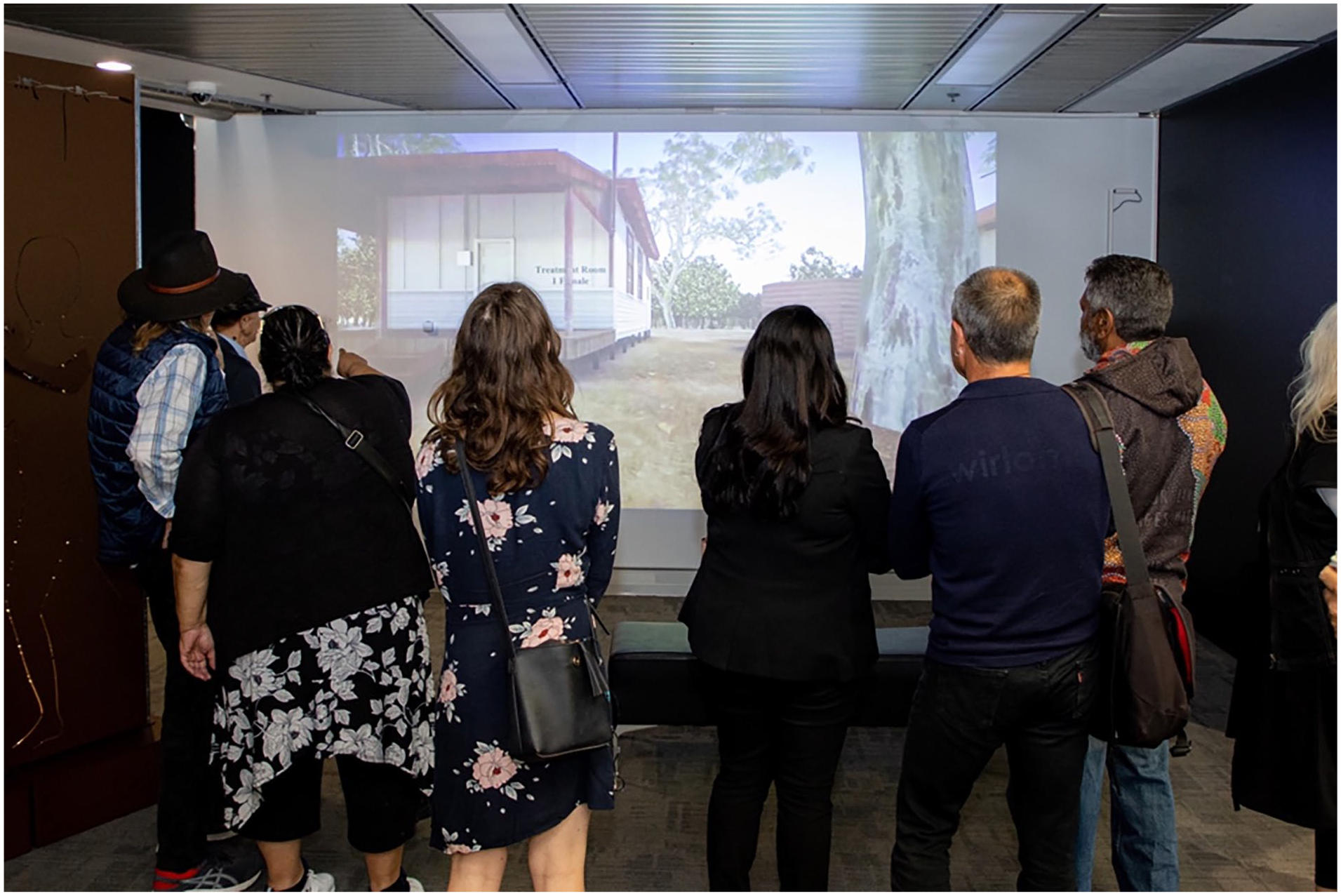
Indigenous community preview of Limen Exhibition (Missions Connect, 2021b).
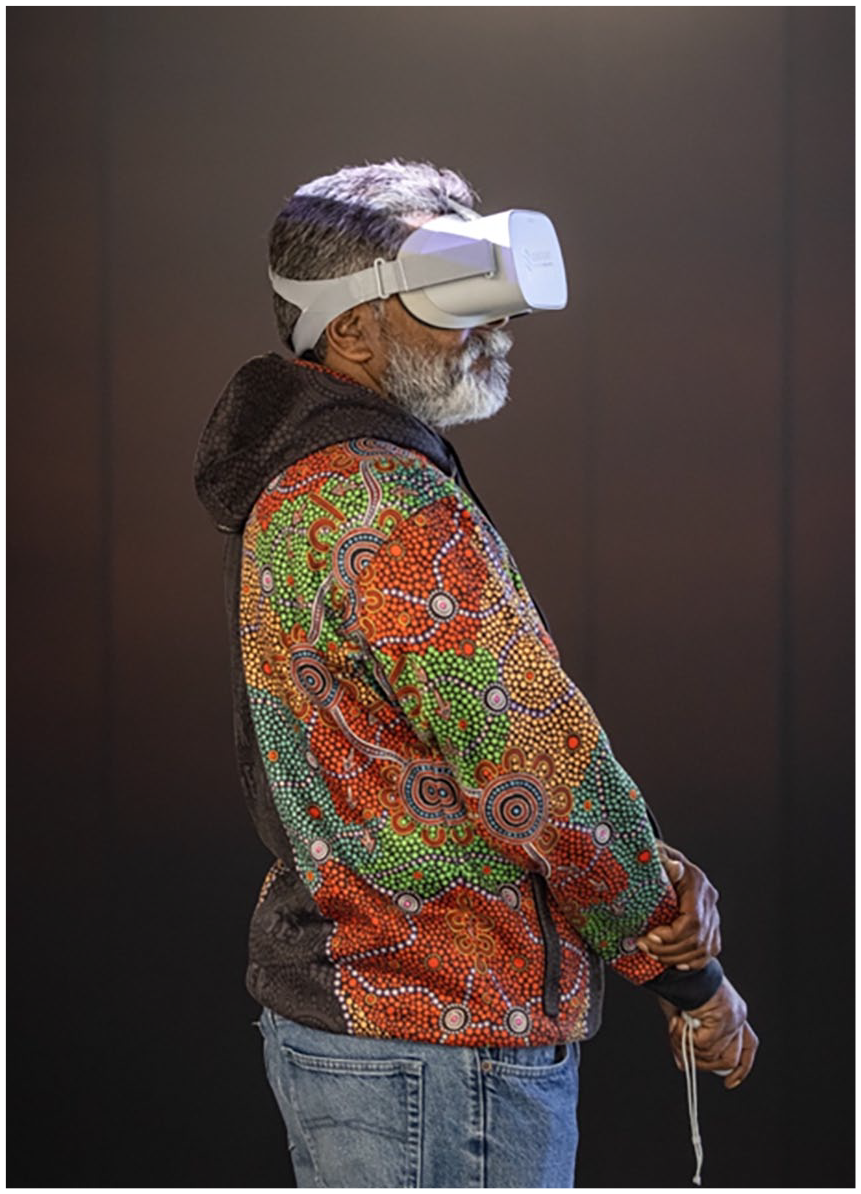
Survivor using VR (virtual reality) headset (Missions Connect, 2021b).
The Limen Exhibition ran at the venue for a period of 3 months. Seventy-eight feedback surveys (13 Indigenous, 9 Survivors, 56 non-Indigenous) were conducted with representation of gender and age. The questions explored covered: (a) Intersections of place, identity, and memory—raised in Stages 1 and 2, in Aboriginal ways of commemoration; (b) Effectiveness of the VR living memorial in embodying the affective and material aspects of storytelling. The data was synthesised and analysed using Survey Monkey. The survey included questions such as: Did the exhibition change your understanding about the impact Mission life and or institutionalisation had on the life of Survivors and their families in any way? Questions were as simple, clear, and direct as possible and researchers were made available to help if necessary. Questions were also as open as possible and could invoke further discussion if participants—particularly Survivors or family—wished. Comments that follow in the next section relate either to the above survey conducted in conjunction with the exhibition or to personal comments about the VR from Survivors.
Discussion
Our research questions at the beginning of the project were as follows: how can former mission sites be commemorated in ways that give Aboriginal people agency over their history and avoid their being trapped in narratives of victimhood or despair and destructive post-colonial narratives; and what are the culturally appropriate ways of Aboriginal commemoration that give meaning to Survivor experiences? As mentioned earlier, project stages collectively aimed to address these questions.
The process of constructing a VR mission is highly dependent on Survivor memory and their generosity and courage in participating and sharing their experience. With Survivor input, the VR maps and traces lived experiences. Storying is a key aspect of the power of the VR to share personal and collective experience and privileges the voices of Aboriginal people. The power of storying and voice is not surprising given that storytelling is an essential medium in both Aboriginal and other cultures to understand the world and as previously discussed—in Aboriginal culture—stories carry more weight than history. Here, storytelling is also emotional and carries the traces of trauma in relating Survivor experience in their own words. Many felt that the VR could be extended and improved with more stories and allow a more unfettered and interactive exploration of the VR environment and the stories it tells. Others emphasised that regardless of accuracy and stories, the VR was still uninhabited. “The VR and buildings are not the Mission, we are the Mission, the kids are the Mission, and that is what will always be missing from the model” (Survivor A, man, 57 years old).
By and large, Survivors and Aboriginal people felt that the VR was truthful in conveying the physical environment, an essential element if memory was to be firmly fixed to place and be impactful. It is highly probable that this was due to the Survivors having control over their own stories in the VR environment. This confirms the approach of the project to use a PAR method and Yarning methods to help ensure Survivors had as much control as possible over the creation and preservation of VR environment, so they could establish their identity through the VR mission environment. Aboriginal comments on the VR also touched on its educative potential by suggesting it could be repeated in other regions and countries and that it could be enriched by collecting and presenting even “More stories to showcase” (Participant 13, Indigenous, 25–35 years old). Non-Aboriginal visitors who viewed the VR also saw its educative value “I grew up with kids like this at my school but never really understood or had it explained to me” (Participant 39, non-Indigenous, 55–65 years old).
While the VR remains a work in progress and can be improved, the emotional feel of the mission environment, Survivors experiences, and the ultimate effects on their lives of being in care were conveyed to Indigenous and non-Indigenous participants. Comments on the emotional power of the VR included the following. “The different mediums used to share deeply personal stories of trauma and survival” (Participant 45, non-Indigenous, 35–45 years old). “Hearing the stories of survival in the Survivors’ own words made the experience very real and emotional” (Participant 31, Indigenous, 45–55 years old).
In the above context, the VR commemorates the mission experience of Survivors, the long-lasting impact on their lives and well-being, and conveying to others, the violence and trauma of abuse, losing culture, language, and cultural identity. Survivors’ identity is, to a large extent, founded in the mission as a type of homeland infused with its contradictory emotions of affection and loathing. But through the strategies of placing Survivors at the centre of decision making about the construction and presentation of the VR missions, there is also a strengthening of personal, familial, and community identity though place-based practices.
In societies that have experienced violence, individuals may return to places to revisit and “perhaps work through, their contradictory emotions associated with feeling haunted by the past, including fear, anger, guilt, shame, sadness, longing, and unease” (Till, 2005, p. 9). In our project of rehabilitating Wandering mission site as healing centre, as previously mentioned, some Survivors, returning to the mission for the first time since leaving it as children, were visibly affected by the environment and needed both physical and emotional support. Others engaged with the landscape and spaces with apprehension. However, all were willing to tell their experiences and stories of their time as children at the Mission. As one Marribank survivor remarked of the Marribank VR, It’s sad seeing buildings taken away, knocked down, erasing all the memory. It’s good we are doing stuff like this VR. Looking at how the place was. Trying to look at the history. For some people it was their whole life, some people were there from childhood, other people were born there—it’s part of you, it is in your soul and makeup. (Survivor B, man, 56 years old)
In the sometimes-traumatic stories we heard about Survivors’ life at the missions, there were direct correlations between their experience of spaces and locations and the flow of remembering. Here, the “experience of memory” emerged from “specific scenes or settings, as much as time periods or stories” (Reavey, 2017, p. 107). The VR as a digital memorial links Survivors to the land, to re-connect them to country with a sense of control that was absent when they were there as children.
As Nordstrom (1997) observes, violent encounters are “a profoundly personal event” which are “fundamentally linked to processes of self-identity and the politics of personhood” (p. 4). The memories—of being taken away from the family, of the loss of culture and language, of the personal and intergenerational trauma and conflict of what followed, and of the resilience shown by the Survivors—have influenced the continual creation, recreation, and transmission of identity stories. These have been shaped at various levels, from the personal to the national in the case of the Stolen Generations Survivors but a large gap currently exists between these levels. It is important to decolonise identity stories in order to bridge this gap and move a step closer towards reconciliation by placing the Survivor memories within the national domain. This was achieved through giving the Survivors a platform to voice an identity and re-establish their Aboriginality.
Comments from Survivors and family suggested that: “The model could be shown to other Aboriginal audience throughout the Perth metro area. Maybe this will give strength to other Survivors to tell their story and start their healing process. Also, children of Survivors to heal intergenerational trauma” (Participant 1, 40–50 years old). “I believe it will give them a clear picture of how Marribank was set up and with our stories it brings them close to reality as we can get” (Survivor A, man, 57 years old): Nice to be able to tell about what happened in the mission and what happened after we left. It wasn’t pleasant, we were forced to be there. How we survived and how we relate as brothers and sisters in the Mission. (Survivor C, female, 80–90 years old)
These personal, familial, and communal identity stories within the VR memorial also aim to strengthen connections to family, community traditions, and cultural practices. Voicing personal stories, sharing, and knowing about others’ stories help in personal and collective confrontation of the past, helping to reduce “guilt and places the blame for social and economic problems outside of the individual” (Archibald, 2006, p. 42).
A companion of difficult knowledge is difficult history which, as Epstein and Peck (2018) observe, refers to the type of violence that the marginalised are subjected to from dominant groups “that incorporate contested painful and/or violent events” (p. 1). These sorts of histories are central to a national narrative although not often recognised by political elites, involve collective or state sanctioned violence, and “tend to refute broadly accepted versions of the past or stated national values” (Gross & Terra, 2018, “Defining difficult history” section, Criterion 2). So, the histories and knowledge contained in the mission VR are valuable as a didactic tool that supplies a voice and power to the marginalised and a challenge to current stereotyped perceptions of Aboriginal people. Histories that are often drowned out by positive portrayals of the development of Australia as a nation and inconsistent with the violence by which much of this was achieved. These VR stories reinforce Survivor identity as voices no longer marginalised and stories and places that demand national recognition and memorialisation.
Conclusion
Missions are places important to the national story as a foil to official narratives that gloss over violence and romanticise the frontier and the development of Australia. Henry Reynolds (2021) observes that, even to the present, Australians have still to come to terms with the settlement of Australia as a violent invasion and a massive land theft. While recognition of country is one thing, original sovereignty is another matter altogether and the resulting frontier wars and massacres that followed settlement need to be commemorated—especially on our national war memorials (Reynolds, 2019). A truth-telling regime such as that provided by the VR mission platform is important to recognise the origins of our nation in violence and provide a national storyline that meaningfully comes to grips with difficult histories.
While the Stolen Generation is only one part of the story of Aboriginal dispossession, it is also one with considerable effect. As previously mentioned, child removal policies affect approximately 40,000 Aboriginals and Torres Strait Islanders nationally (Australian Institute of Health and Welfare, 2021). Missions stand at the epicentre of the ethnically based removal of Aboriginal and Torres Strait Islander from parents, culture, and country and the resulting cost to their health and future. At the core of the removal policies and incarceration of children was racism revealing that Australia’s laws and pretensions of equality are flawed and historically contingent.
The Carrolup–Marribank mission VR provides a voice for Aboriginal Survivors to tell their story in a PAR-oriented structure that places them at the centre of the project, potentially avoiding narratives of victimhood and paternalism on their histories. Through storytelling methods such as yarning, the Survivor experience is embedded in the VR missions as truth-telling and healing. Aboriginal control over what stories are told and where they are told help to ensure that their voice has impact as it is attached to place—even if that place is virtual. As previously discussed, limitations on the approach include that VR is not real and lacks sensory experiences such as touch and smell. The approach also relies on the memory of Survivors and the availability of documents from which to construct an accurate model of the mission. Also, re-traumatisation of Survivors revisiting remains an issue that is currently being addressed by separate study by WASGAC and Curtin University. While comments on the VR by Aboriginal and non-Aboriginal are not all positive, they do indicate that the VR has beneficial impact and has potential to help families and the public understand and confront the difficult histories related by Survivors.
In this project, Indigenous leadership is provided by WASGAC, the organisation that represents Stolen Generation Survivors in Western Australia. This organisation also chairs the Healing Centres Steering Committee that provides an Aboriginal oversight of the project including cultural protocols and safety. Curtin University provides the support needed to ensure the project meets academic standards. While the VR is constructed from archival material, Survivor memory is key to the production and Survivors provide “memory maps” of their stories of mission life and intimate details of the environment that are used to render the VR as accurate as possible. Survivor stories are imbedded into the VR under Survivor control. Each VR mission is subject to Survivor review several times during production where they have control over what is, or is not, shown or heard.
This project shows that it is possible to provide a platform for Stolen Generation truth-telling that fixes memory to place in a viable emotive and healing landscape that also has resonance with non-Aboriginal people, thus promoting the process of reconciliation.
Footnotes
Acknowledgements
We acknowledge the immeasurable contribution of the Survivors and their families, without whom this project would not have happened. We thank them for their bravery, for the trust they placed in our team, by sharing stories that were not easy to discuss, and for the gift they have given to subsequent generations in allowing this history to be recorded and shared.
Authors’ note
 ). Kim was the inaugural Western Australian of the Year in 2012, is a member of the West Australian Writers Hall of Fame, and in 2022 was recognised as a WA State Cultural Treasure. He is currently Curtin University Distinguished Professor in the School of Media, Creative Arts and Social Inquiry at Curtin University.
Declaration of conflicting interests
The authors declared no potential conflicts of interest with respect to the research, authorship, and publication of this article.
Funding
The authors disclosed receipt of the following financial support for the research, authorship, and publication of this article: BHP Billiton through the Carrolup Centre for Truth Telling Grant.
Glossary
Anishnaabe a group of culturally related Indigenous peoples, Great Lakes region, Canada and USA
Māori Indigenous peoples of New Zealand