







Abstract
This study explores and documents the traditional architecture of the Poumai Naga tribe (an Indigenous group in Northeast India). It seeks to uncover the underlining principles that governs their architectural practices and the role of architecture in sustaining cultural heritage. The research employs multidisciplinary approach combining ethnographic fieldwork, architectural documentation, and cultural analysis. Through ethnographic research and architectural analysis, this study reveals that Poumai Naga architecture is characterized by sustainable building practices using locally available materials. The architecture is intricately linked to the natural landscape, with designs that optimize ventilation, lighting, and structural stability based on Indigenous knowledge passed down through generation. However, despite the rich traditional architectural practices, there has been a noticeable shift towards modernism. Ultimately, the evolving architecture reflects as a dynamic interplay between tradition and modernity, highlighting their ability to adapt while striving to maintain their cultural roots in the phase of contemporary influences.
Introduction
Folk architecture refers to traditional building styles developed over time within specific communities, typically without formal training. It uses locally available materials such as wood, bamboo, stone, clay, or thatch and reflects the cultural, environmental, and social needs of its people. Examples include log cabins in North America (Proud, 1986), igloos in the Arctic (Patricia, 1980), and adobe houses in the Southwest United States and Latin America (McHenry, 1984). Scholars define folk architecture as traditional or vernacular architecture (Brunskill, 1965; Marshall, 1997) as well as artefacts (Heath, 2003; Wells, 1986). However, according to Roberts, “Folk architecture may be said to be traditional architecture. It is concerned with all traditional aspects of building; the shape, sizes, and layouts of buildings of all kinds, such as dwellings, barns, sheds, and craft shops; the materials used and the tools and techniques of building; the sites chosen and the placement of various buildings on the site; and the use to which buildings and various parts of buildings were put” (Roberts, 1972). Likewise, Oliver, a prominent architectural historian, defines folk architecture as “architecture that is based on the needs and traditions of a particular society or culture, and which reflects the customs, beliefs, and values of that culture” (Oliver, 1987).
The Indigenous folk architecture of India is rich and varied, reflecting the diverse cultures, climates, and landscapes of the country. The traditional houses of Kerala play a vital role in reflecting the local climate and lifestyle, with architecture that promotes ventilation and natural cooling. Bhunga houses in Gujarat designed a circular house to withstand earthquakes, featuring thick walls and conical thatch roofs. Toda Huts are used by the Toda tribe of Tamil Nadu designed in curved, barrel-shaped huts with arched entrances, built without nails. These huts are integral to their traditional way of life and social structure. Warli House of Maharashtra uses mud and cow dung to build a simple, rectangular houses with walls often adorned with Warli art, a traditional form of tribal painting. The art depicts daily life, nature, and rituals, serving as a means of storytelling and cultural expression. Naga Architecture of Northeast India design communal longhouses and morungs (dormitories), often adorned with cultural motifs and carvings. Houses serve as centres for social and cultural activities, reflecting the customs and beliefs of the Naga people.
Among the Nagas, the Poumai Naga tribe has a unique folk architecture that reflects their cultural heritage, environmental adaptation, and traditional practices. A Poumai traditional house is generally constructed with locally available materials and have some specific characteristics such as liveable houses with economical to maintain, climate adaptive designed with weather, termite proof, with pleasing traditional design and many other advantages. As similarly described by Al-Ghalib and Al-Assadi “traditional house is a historic building that has architectural, aesthetic, historic, documentary, archaeological, economic, social and even political and spiritual or symbolic values; but the first impact is always emotional, for it is a symbol of our cultural identity and continuity a part of our heritage” (Al-Ghalib & Sadiq Al-Assadi, 2018). As such, it is very important to study Poumai traditional house as one of the cultural heritages which should be preserved.
Materials and methods
The Poumai Naga is a community predominantly inhabiting the Senapati district of Manipur, though there are villages that fall in the Nagaland state, situated in the north eastern part of India, see Figure 1 indicating the location of the study area. Poumai Naga is a major Naga tribe with a population of 1,79,189 as per 2011 census; and 10,000 in Phek district, Nagaland. The Poumai villages wholly cover three Sub-Divisions namely, Paomata, Purul, and Chilivai. It is believed that they were migrated to their present place from Manchuria, Indonesia and the Philippines at different waves in different ways through Burma and China and Tibet (Nuh, 2002). They are God loving as well as God fearing and believe in the existing of supreme deities both benevolent and malevolent who control the universe. They practised headhunting in the past as gaining the social status and for the ritual purpose was the primary aim behind headhunting. Their main occupation is agriculture and are mostly self-sufficient as they are subsistence farmers. Dormitory system or commonly known as morung serves as the most important multifaceted institution where they learn necessary skills to face the challenges of life.
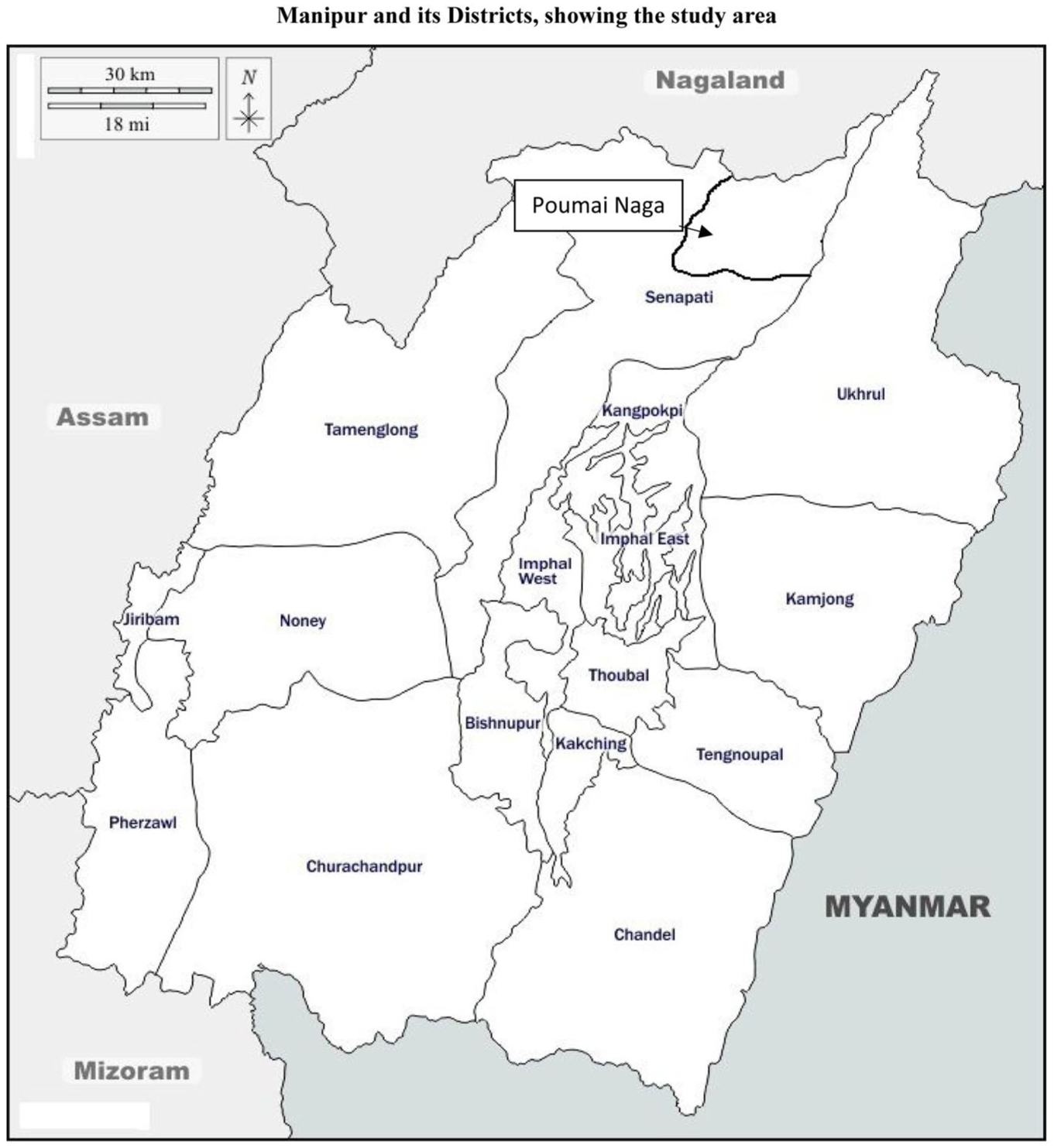
Study area map. https://d-maps.com/m/asia/india/manipur/manipur47.pdf
The main objective of this study was to explore on the Indigenous knowledge of folk architecture of the Poumai community and preserve the traditional knowledge and cultural values. The study also aims to uphold the traditional knowledge in the field of vernacular architecture. Furthermore, available literatures have been reviewed to get additional information about the study. The process of collecting data involve using semi-structured interview through interrogation and discussions with the gaonburas (village elders). In order to know about the house construction process and its cultural values, participant observation method and an in-depth interview was also used in a story telling mode. A survey was undertaken with the folk architects from various villages of the Poumai community in phases. In the first phase covering three villages namely—Koide, Phuba and Saranamai beginning from September till December 2019, while the second phase was from November to December 2021 at Phaibung and Tungjoy village. Most of the interviewees has more than 10 years’ experience working on persevering in folk architecture and there were only male interviewees. Those villages were chosen for the study due to availability and prevalence of rich resources and cultural practices. Another aspect is that they are the oldest villages with more traditional knowledge. The most knowledgeable traditional builders and village chieftain were chosen for the interview. During the interview, respondents were asked about the structure of house, materials used and the type of houses. For conducting field study, the tools used by the researcher includes diary for note-taking and digital camera for capturing pictures, audio and video recordings. In addition, secondary data on Folk Architecture of Kentucky (Montell & Morse, 1976) and Podhale (Baniowska-Kopacz, 2014) provided ideas regarding the folk architecture in the global context.
The research employed semi-structured interviews, in-depth interviews, and surveys to comprehensively document the folk architecture of the Poumai Naga tribe. Each methodology played a distinct role in strengthening the research’s documentation aspect. Semi-structured interviews are used to systematically gather information from gaonburas (village elders) and traditional builders about architectural techniques, materials, and cultural significance. It provided standardized yet flexible responses on construction methods, material sourcing, and symbolic meanings, for example buffalo skulls as status symbols. In-depth interviews were employed in the form of storytelling mode to explore oral histories, rituals, and intangible knowledge, for example the spiritual significance of rahchi or the feast of merit ceremonies. This method helps in revealing cultural narratives behind architectural elements, for example meifii (hearth) as a symbol of home. Moreover, it also preserved Indigenous terminology, for example chikai (house horn), hapeitai (buffalo-head carvings), that might otherwise be lost. The survey method enables the study to quantify material use, structural patterns, and socioeconomic influences, for example house size correlating with wealth. It mapped typologies of houses, that is Maisouchi, Chiveichi, Mavechi) and their distribution. In addition, it highlighted modernization threats, for example replacement of wild-vine bindings with nails, thatch with tin roofs. The blended approach safeguarded both tangible, construction techniques, and intangible, oral traditions, heritage. This multi-method strategy ensured a robust, culturally sensitive documentation of Poumai folk architecture, addressing gaps in prior literature while emphasizing the tribe’s environmental adaptation and cultural identity.
Studying Poumai Naga architecture is important because it offers a deep understanding of the tribe’s cultural identity, traditional values, and sustainable way of living. The architectural styles of the Poumai people are not just about shelter, they reflect their beliefs, social structures, and close ties with nature. Their homes and community spaces are built using locally available materials like wood, bamboo, and stone, following techniques that are well adapted to the hilly terrain and climate of Northeast India. These structures often include symbolic carvings, stone platforms, and communal spaces that hold social and spiritual significance. As modernization and urbanization increasingly threaten these traditional practices, studying and documenting Poumai architecture becomes essential for preserving Indigenous knowledge for future generations. It also contributes to academic fields like ethno-architecture, anthropology, and sustainable design, offering valuable lessons on how architecture can be both culturally meaningful and environmentally responsible.
Results
Building materials
The Poumais’ has a rich tradition of using locally sourced and sustainable materials for their dwellings. Their building practices are deeply intertwined with the natural environment, utilizing resources such as bamboo, wood, thatch, mud, and stone. These materials not only provide structural integrity but also reflect the tribe’s harmonious relationship with nature. The construction techniques of the Poumai Naga people are well adapted to the region’s climate and terrain, ensuring durability and comfort in their homes.
The fundamental building materials in most of the Poumai house construction is timber obtained from chahsii (champa), vaosii (bonsum), vaisii (Indian cedar), chesii (oak), bahsii (chestnut), pahsii (alder), shisii (cinnamon), kuhsii (walnut) and phesii (oak) (Government of Manipur, n.d.) which are used as pillar, roof-holder post, wooden plank, house horn and wall. It is not the accessibility of wood alone that made them choose lumber as their best material. But wood carving practices has significant cultural values to people of the community. Building a stone or brick house was not practised due to less availability of resources as well as lack of knowledge for construction. Bamboo is another distinguishing feature in which Poumai uses for roof holder as well as walls which are made of wild bamboo. For roof, thatch-grass is used which includes ngaiche (big thatch), ngaihih (small thatch), hruvao (hay). Wild-vines replacing nails for binding the walls and roofing.
Structure of the house
The Poumai traditional house is built in one storey on the ground with the bare earth generally levelled shaping the flooring. It is made of wooden posts, split and plaited bamboo walls, thatch or hay and wooden plank that are used for roofing. Some of the houses are designed narrating about the success and achievement of headhunting cultural practices. The houses are generally rectangular in shape and the size varies from 5 to 10 yards in breadth and 20 to 30 yards in length as shown in Figure 2. However, the size depends on the wealth and social status of the owner. The houses are laid out along streets and sidewalks and have kitchen gardens in the backyards. The type of construction and fashion of the house slightly vary from village to village, and household to household. However, in the interior structure there are slightly different depending on the wealth and social status of the owner.
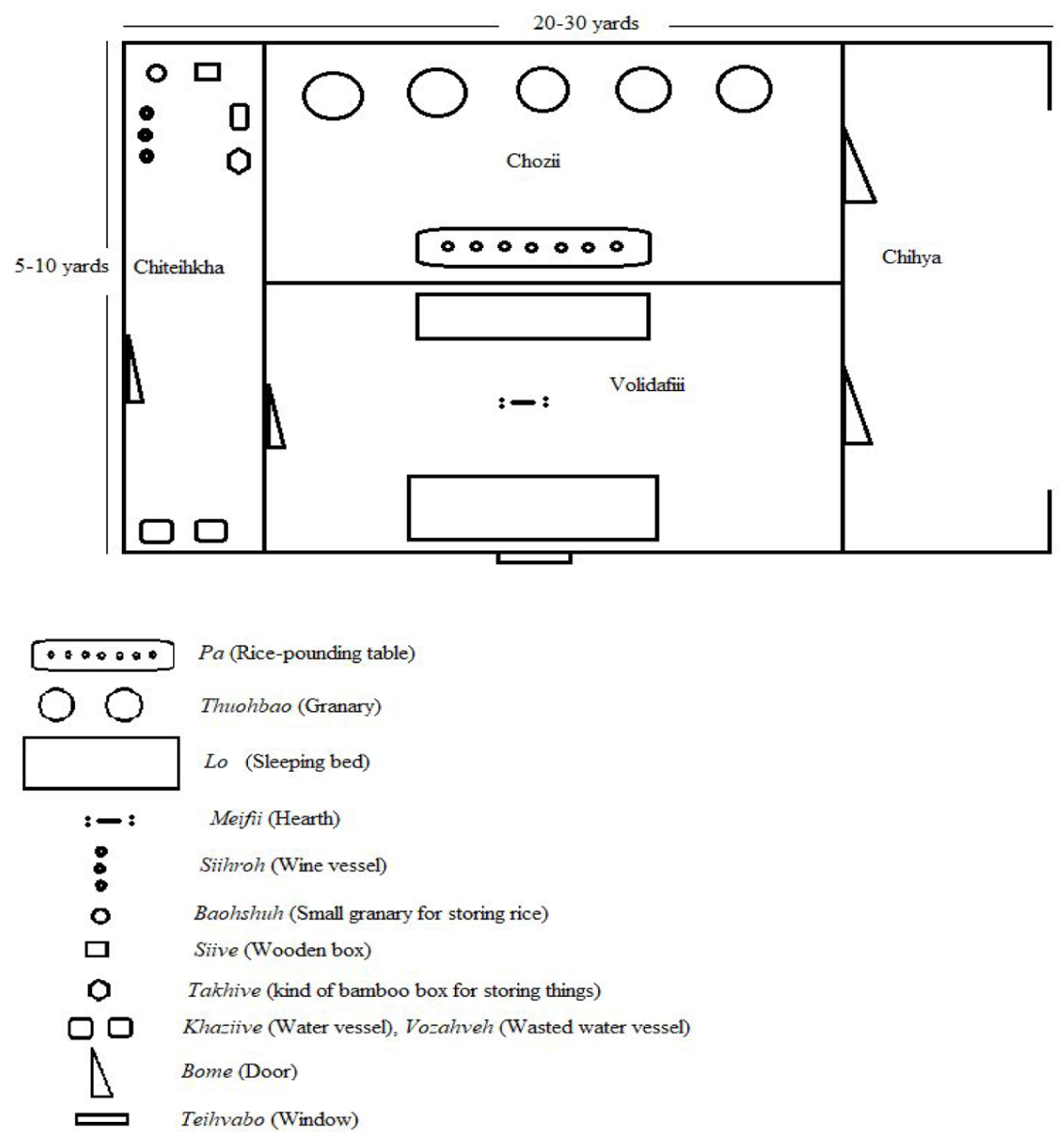
House structure.
In general, each house is composed of three parts or compartments with two central doors. It has bome telao (smaller door on left) and bome dulao (bigger door on the right) which are in the front of the house and some of them have chiteibome (small back door). Partition is made in the middle of the house from chihya (front veranda) till the most back room known as pahlai. Bome telao, which is the smaller door as compared to that of bome dulao leads to volidafii (family hall), serving multifarious purpose. This room serves as bed-room, kitchen and recreation room of the family where the family members receive guests, friends, outsiders, etc. In the middle of volidafii room is meifii (hearth or fireplace), and on the left corner is lodu (bigger bed), whereas, on the right corner is lotai (smaller bed). Bome dulao, the bigger door leads to chozii (barn). In the right side of the corner is place with thoubao (granary) line up and on the left corner is pa (rice-pounding table). In addition, domesticated animals including pigs, dogs, chickens and ducks are kept in this space. Some ritual ceremonies were done in this room by making a new hearth nearby the front pillar.
Animals’ skulls like buffalo and cow’s head are placed on the wall of riihaiko (partition wall between chiteikha and the two front rooms) in the form of decoration. In one side of the corner is siihroh (wine vessel), khaziive (water vessel), and vozahveh (wasted water vessel) while on the other corner is takhive (kind of bamboo box for storing things), siive (wooden box), and baohshuh (small barn for storing rice and other things). In the middle of the room there is another hearth of fireplace for cooking and making rice-beer. In this room some of the families have a small back door known as chiteibome. On the other hand, the chihya which is not actually a room but entrance of the house with 5 feet to 10 feet is extended for some domestic animals to be kept such as cows and buffalos. In the chihya pigeons and sparrow make their nest and it is believed that if sparrow make nest in the house, it will prevent them from facing calamities such as burning of house. It is also believed that it will bring good fortune and honour to the house. Besides that, split fire-woods are also kept in one of the corners to protect from rain.
The hearth or fireplace which is called meifii denote a significant concept in trying to understand a traditional house. Meifii is generally refer to a home place or household which expresses the warmness and comfortability as the fire in the hearth keeps the house warm. Thus, it is a must for every Poumai to have a meifii as it indicates an essential component of a home.
Usually, it is set in the centre of the volidafii where smoke rises to the smoke hole in the roof. The hearth is prepared by placing thaochuh (three stones) which enable to let stand in the triangular shape as shown in Figure 3. Thaochuh are not an ordinary stone, chupho (soft-reddish stone) is the only stone that they used to make thaochuh for making a meifii and they replaced the stones every year in the month of August. Over the hearth, racks are suspended from the roof, which provide natural preservation to food materials. It is also used for drying paddy during the rainy seasons.
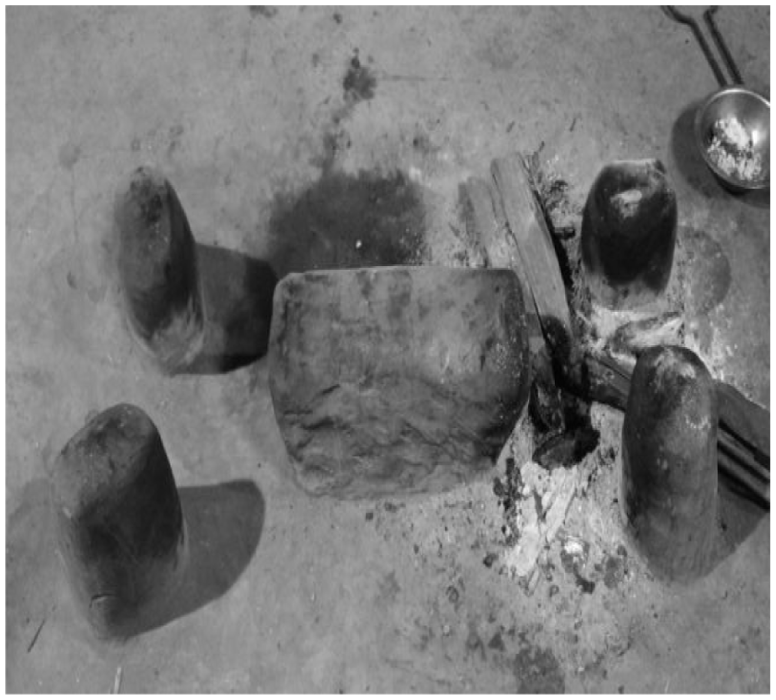
Meifii (Hearth).
Types of houses and ways of construction
Generally, various type of houses can be found among the Poumai Nagas, namely, Rahchi (abode of God), Maisouchi (house of general people), Chikaichi (horn house) or Chiveichi (house of the feast and merit), Mavechi (chieftain’s house) or Reihpeihchi (house of human head), Khechizii (bachelors’ dormitory) or morung; and Chipao (hut).
Rahchi: Rahchi literally means the house of deity or the dwelling place of God or deity. Every village of the Poumai Naga has rahchi, which is built by the side of the village. They built rahchi at the arrival to their new found land with the conviction that God should be given the first priority before anyone or anything else. It is a small hut lightly constructed with thatch and twigs, which is shown in Figure 4. It is eco-friendly as the thatch and twigs used get decomposed and fertilized the soil. It is said that, whenever the Poumai Naga ancestors shifted to a new found village, it was their belief and also an obligatory practice that the first thing to do is construct the dwelling place of God. Rahchi is renovated every year in the month of thounii (January) by the village chief along with some village elders. Constructions of any house in the village begins only after the renovation of the deity dwelling place. It is believed that rahchi should be safeguarded from any form of destruction lest the destruction of it provoke god’s anger and lead to the devastation of the whole village.
Maisouchi: It is the most common type of house among the Poumai community as this type of house are meant for the people with general social status. Construction of maisouchi begins after the renovation of rahchi which fall in the month of January. Houses are rather simple specimens of architectural art and well adapted to the climate as shown in Figure 5. The roof is gable ended and ridge pole, where the thatched roof on either side slope down towards the ground. The eaves are lowered to a height of 3 to 4 feet off the ground.
Chiveichi or Chikaichi: Chiveisou, literally means construction of chiveichi. Chiveichi is only allowed to be constructed by the families who have performed the requisite social genna of zhosou (feast of merit). The main philosophy of the “feast of merit” is to get honour and status in the society.
The house decoration is basically the skull of buffaloes and frontal plank with buffaloes’ head engraved on it or replica of buffaloes’ head called hapeitai (frontal plank engraved with buffaloes’ head), which is a symbol of honour. After completing the first three stages of “feast of merit” the host family obtain approval from the village chief. The young men of the village go out to select trees for making hapeitai and chikai (horn of the house) Figure 6, while the host husband and wife stood and wait until they receive the news that the trees had been safely cut down.
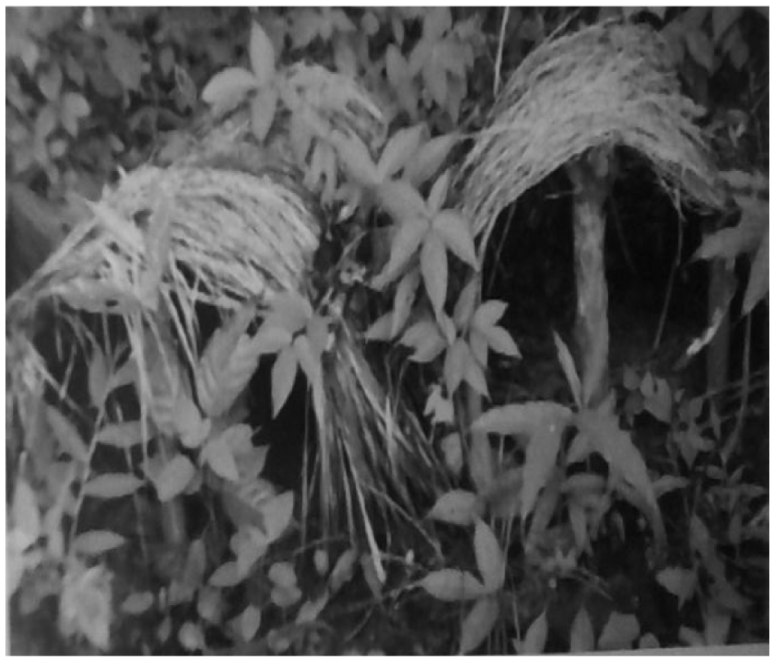
Rachi (Abode of God).
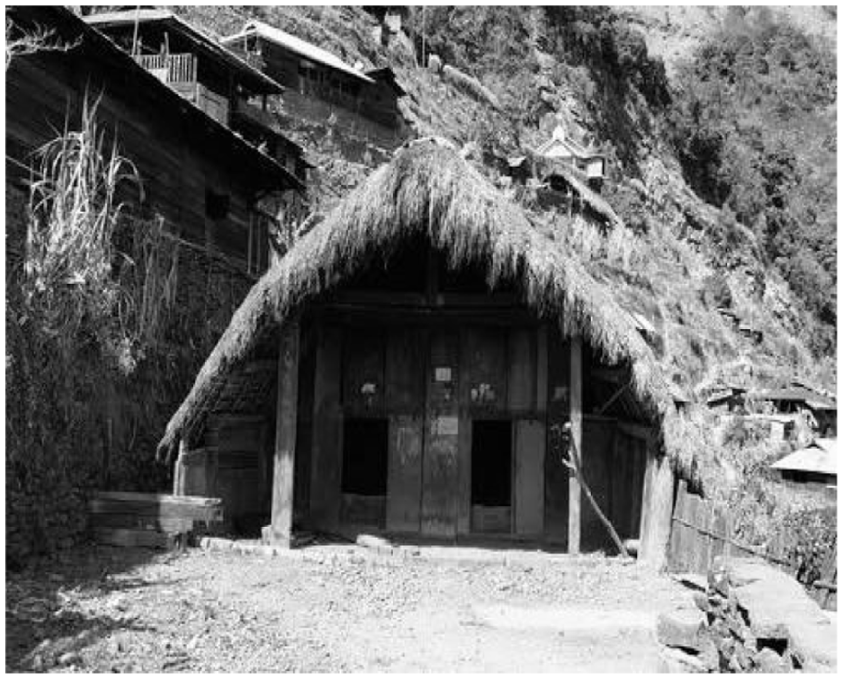
Maisouchi (House of general people).
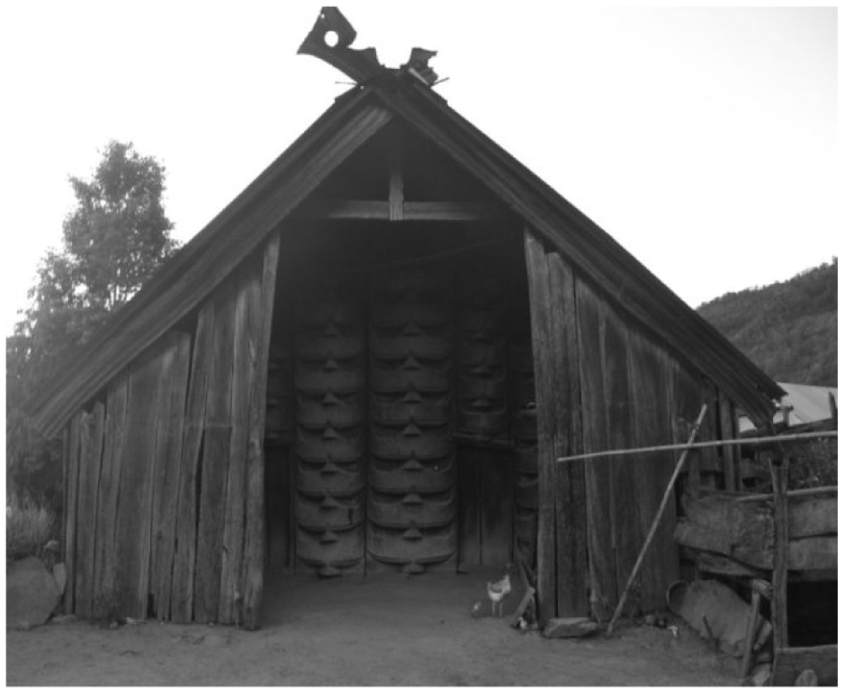
Chiveichi (Horn house).
Some items are only meant for ritual purpose for particular occasions. For instance, the house is constructed by the guidance of the priest or elders who makes ritual by constructing rahchi for the whole villagers who will be constructing house in that particular year. The different usage of the techniques differentiates the distinction of the Poumai culture in homogeneous society with others.
4. Mavechi or Reihpeihchi: The chieftain’s house is normally situated in the middle of the village, facing towards east where the sun rises. The whole villagers of men folk would help in constructing the chieftain’s house. It is constructed in the month of April, when villagers have less engagement in their agricultural work. On a fixed date, men folk gather and divide the work to search the construction materials like timbers, wild-vines, wooden planks and thatches. Before felling the tree for taihtoutsii (middle frontal plank) and timber for chikai (house horn), they guarded by making fire beside the tree throughout the night until early morning, or set a fire at dawn to guard the tree so that no bird would fly over it. The concern priest initiates first in felling the tree. Several figures were carved out of the lumber such as; buffalo head, human head, horse head, tiger head and full human figure which carries symbolic meaning as shown in Figure 7.
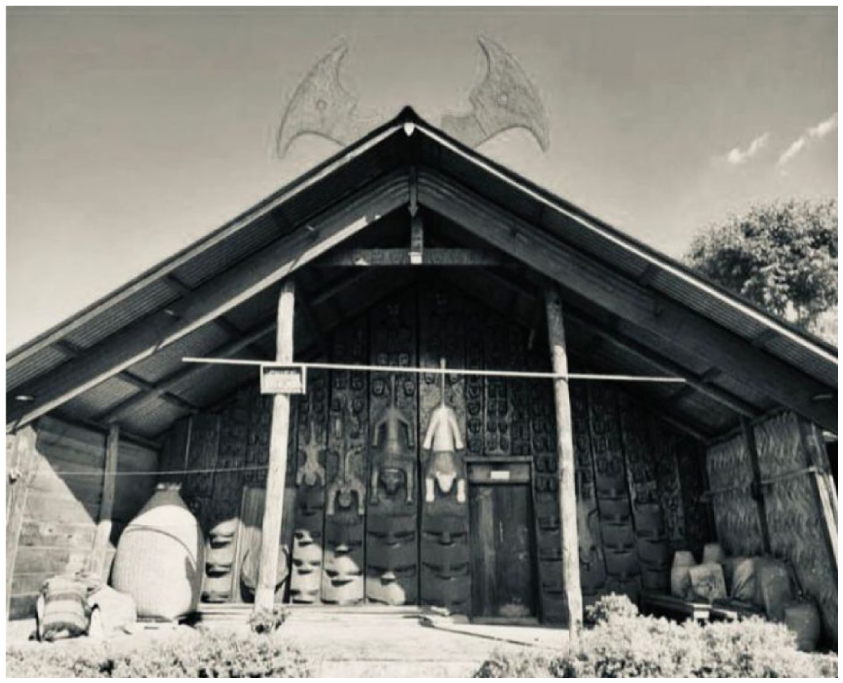
Mavechi or Reihpeihchi (chieftain house).
Maximum of the work are to be completed in a single day, including putting up taih (pillar) and placing chikai. Chikai should be placed in such a way that left-lumber in behind and right-lumber in the front. It is taboo to take down once taih and chikai are placed. After having completing the building, the human head or the tah-hou nouhou (piece of cloth or a strain of hair) which was hidden beside rokhuhbome (village-gate) will be brought and buried nearby taihtoutsii for ritual purpose.
The trees that were cut for pillars in constructing chieftain’s house should not be kept in forest for a night. A good quality of wood, like chahsii or vaosii that won’t rot easily or can’t be eaten by termite and wood bug would be used. The roof was covered with pouh (flat wooden plank). In the shortage of pouh, the best quality of ngaiche (thatch) is used, where only men folk shall be collected.
5. Khechizii or morung: The khechizii is the most important multifaceted institution for the young unmarried men. It is also the head-quarter for guarding the village from foes and evils that may befall upon the village. It is a traditional institution without a fixed definite curriculum. From this institution Figure 8 the junior boys learn from the seniors and the elders the values of discipline, culture, custom, tradition, folksongs, folklores, community work, responsibility, refinement, the art of defence during raids, etc.
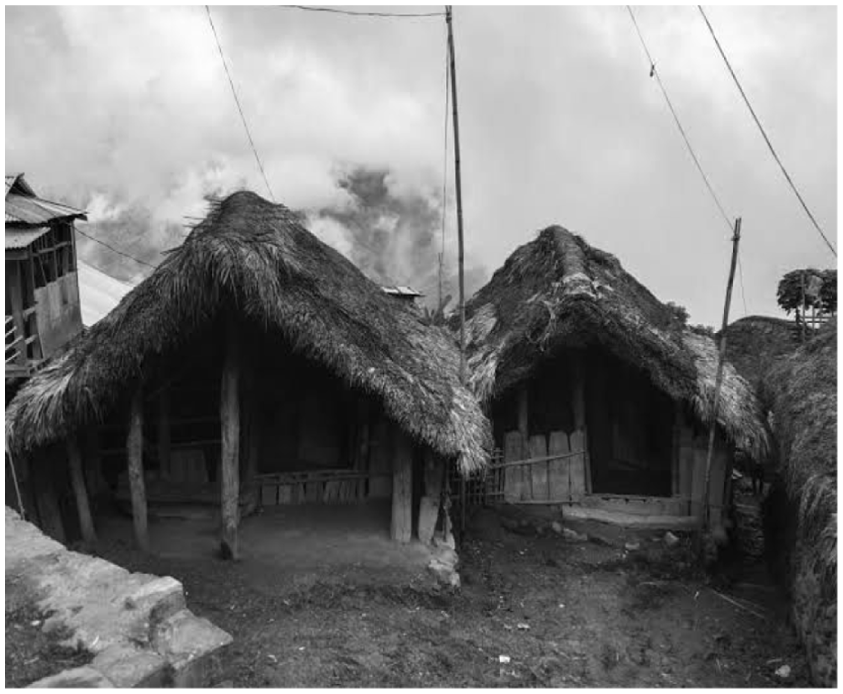
Khechizii (bachelors’ dormitory).
The dormitory is usually constructed by the boys themselves. It is an extra ordinary house and also the biggest and tallest in the village. Therefore, in many of the khechizii, the house is decorated with skulls of buffaloes and man sculptured on the planks and hanged or attached to the frontal wall. These structures typically feature intricate wood carvings, symbolic motifs, and elevated platforms. Khechizii is considered an architectural treasure and hold immense cultural importance.
6. Chipao: This is another type of vernacular architecture of the Poumai community which are built near the farm or in the paddy field as shown in Figure 9. It is constructed for the farmers for temporary or seasonal shelter to protect them from sun heat and rain. It is a small dwelling place with one room. It is made of readily available materials such as wood, thatch, bamboo and hay. It is constructed with the intention that can be built quickly within a short period of time.
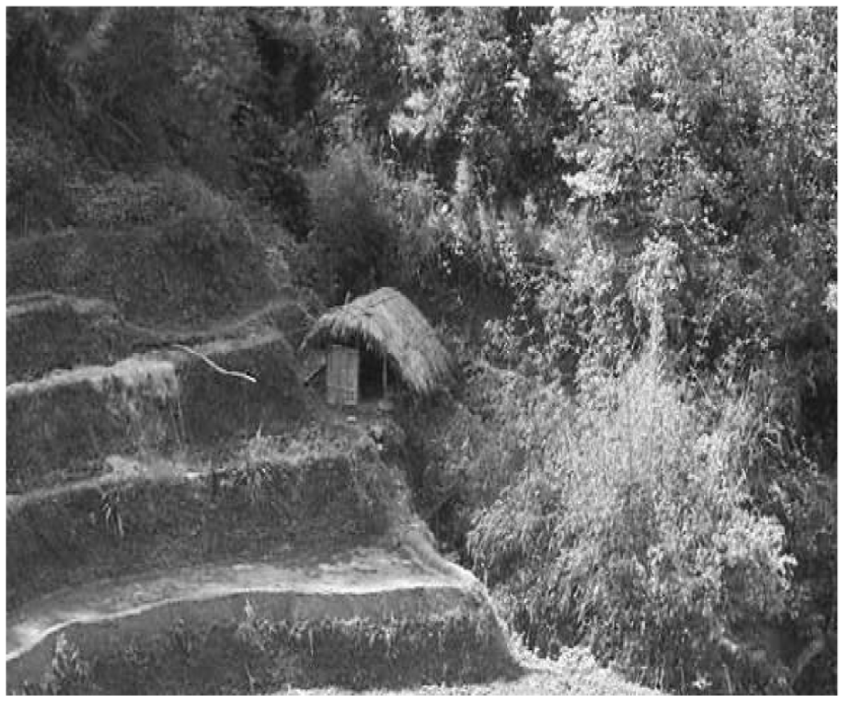
Chipao (hut).
Discussions
From the study, it is found that the traditional houses of the Poumai Nagas cost effective and has significant role in preserving their culture through symbols and story behind the houses they live in. It is also seen that there have been changes and replacement of Modernism from Traditionalism as can also be seen in the work of Mann (1985), in addition, Burke views change as the process of modifying past injustices (Burke, 1790).
Besides, this study has identified few themes on the basis of the folk architecture of the Poumai Nagas, which are discussed below.
Cultural Preservation: Traditional houses play a crucial role in preserving cultural heritage and traditions by serving as tangible links to the past and embodying cultural identity. The Poumai houses hold historical significance and architectural uniqueness that reflect the values, customs, and lifestyles of previous generations. This includes the traditional construction methods in folk architecture that were passed on by generations, such as using locally sourced materials or methods. Maintaining traditional architectural styles and practices helps the community safeguard traditional crafts and knowledge with a sense of continuity and identity, which is crucial for cultural survival in the face of modernization. It not only serves as cultural heritage but also acts as an educational tool for both locals and visitors to learn about traditional ways of life. Therefore, according to the sui-generis system, “Proper documentation may contribute to the preservation, promotion, and feasible exploitation of Traditional Knowledge for the betterment of mankind” (Begoña, 2017).
Social Factors: Folk architecture act as a social integration by providing valuable insights into a community’s history, culture, and lifestyle. It also attracts tourism, while creating economic opportunities that raise awareness and appreciation of the culture. By reconstructing, re-functioning, and social mapping, these ancestral houses are transformed into cultural spaces that not only maintain authenticity but also provide a platform for community involvement. In addition, it acts as a social institution where Indigenous knowledge is being taught. The traditional houses of the Poumai are being constructed in different styles for different statuses of people. For example, only those who have achieved the “feast of merit” may be able to construct chiveichi.
Aesthetic Value: The Poumai traditional architectural work and structure adds beauty, pride and cultural values to the community in terms of authenticity and integrity. The original texture of wood carving art and design is depicted in the of human figures and heads, buffalo heads, and wild animal figures such as lion, tiger, bear, wolf, eagle, etc. that were hunted by individuals of the house. Besides that, wooden plank, pleating bamboo design, and roofing pattern signify a great cultural value. Preserving those skills and techniques would lead to upholding the values of traditional folk architecture. This architecture is a testament to the Poumai community’s ability to create beautiful, meaningful, and practical spaces that resonate with their cultural heritage and environmental context.
Loss of Traditional Skills: The loss of traditional skills in folk architecture is a significant issue impacting many cultures and communities around the world. One of the major hindrances revealed by the study is the continuous loss of traditional knowledge as younger generations tend to ignore their importance which has been influenced by the advancement of modern technology. This decline in craftsmanship and knowledge can have far-reaching consequences for cultural heritage, community identity, and the sustainability of building practices. To preserve and maintain traditional techniques, we must bear in mind the importance of local architectural knowledge that is passed down from generation to generation.
In the last century, there has been an undue disruption in the transmission of traditional knowledge passed down by ancestors on such skills. The internet and modern communication can restore this chain and inspire young people to absorb ancient traditional knowledge without being abandoned by modern machines. Wild-vines that are used for binding the pillars are being replaced by nails, thatch roof by tin, split and plaited bamboo walls by bricks, mud floor by cemented floor. Longevity and durability are one of the main reasons for which timber is used for pillar, plank and walls as it last longer among all the other natural resources. All the materials that are used for constructing traditional house are biodegradable and eco-friendly. Recognizing the value of what the ancestors have built and documenting the skills used in constructing of those buildings will further enhance the cultural heritage of Poumai.
Traditional Poumai houses are designed to suit the local climate. Thatched roof, split and plaited bamboo walls and all the natural resources are permeable and offer natural ventilation that allows air to pass through, which helps in maintaining comfortable indoor temperature. Folk architecture is not only valuable for economic growth, but also contributes to the survival of society. And if humans are to succeed, they must relearn ancient knowledge with current and future technology to have the most “sustainable” design yet.
Conclusions
There has been an unprecedented urban growth in the recent past with the settlement of urban population almost equivalent to that of the rural. It is an era of great social change, with higher educational levels and advances in technology facilitating the flow of information and the movement of population. When it comes to buildings, traditional houses may have features that make them more resilient to global warming but may not be able to meet modern standards and requirements.
The transformations in Poumai vernacular architecture are observable since the last few decades. The old open houses that used to be built on trust in the past has been replaced by those closed houses and buildings, entrance barrier which was not there in the old house have now appeared, the number of rooms have also increased with separate room for cooking, sleeping and entertainment. The interior of the three-room house is now divided into several smaller compartments, with porches, lobbies, or corridors blocking access to the house. The transition from old housing to a new house involves economic transformation. Housing changes occur in response to, or even ahead of, socioeconomic changes. This architectural change marks an important step in cultural development.
The Poumai Naga tribe have very rich culture that have been preserved through decorations using traditional architecture in curving the shape and designing with a story behind all the decorations. However, as older generations who possess traditional skills retire or pass away, there may be fewer opportunities for younger generations to learn these techniques. The transfer of knowledge through apprenticeship and oral tradition can be disrupted. Thus, to make the local more efficient, scientific approach is required to upgrade the traditional knowledge system. As Indigenous methods of house construction are not only cost effective but are also eco-friendly in nature.
Footnotes
Acknowledgements
The authors are thankful to the Poumai Naga local traditional architect of Phuba, Phaibung, Saranamai, Koide and Tungjoy and the elders for their help, assistance and sincere co-operation throughout the survey and field trips. We want to appreciate the respondents in our sample for setting the time for our interviews and providing valuable information. The responsibilities for the interpretations and conclusions still remain those of the authors.
Authors’ note

Consent to participate
Informed consent was obtained verbally from all individual participants included in the study.
Author contributions
Study concept and design: Veimy
Acquisition of data: Rakhoveio
Analysis and interpretation: Rakhoveio, Veimy
Critical revision of the manuscript for important intellectual content: Rakhoveio, Veimy
Study supervision: Rakhoveio, Veimy
Funding
The authors received no financial support for the research, authorship and publication of this article.
Declaration of conflicting interests
The authors declared no potential conflicts of interest with respect to the research, authorship and publication of this article.
Glossary
Bahsii chestnut
Baohshuh small barn for storing rice and other things
bome dulao bigger door on the right
bome telao smaller door on left
chahsii champak
chesii oak
chihya front veranda
chikai horn of the house
chikaichi horn house
chipao hut
chiteibome small back door
chiveichi house of the feast and merit
chiveisou construction of chiveichi
chozii barn
chupho soft-reddish stone
hapeitai frontal plank engraved with buffaloes’ head
hruvao hay
gaonburas village elders
khaziive water vessel
khechizii bachelors’ dormitory
kuhsii walnut
lodu bigger bed
lotai smaller bed
maisouchi house of general people
mavechi chieftain’s house
meifii hearth or fireplace
morungs dormitories
ngaiche big thatch
ngaihih small thatch
pa rice-pounding table
pahlai most back room
pahsii alder
phesii oak
pouh flat wooden plank
poumai an Indigenous group in Northeast India
rahchi abode of God
reihpeihchi house of human head
riihaiko partition wall between chiteikha and the two front rooms
rokhuhbome village-gate
shisii cinnamon
siihroh wine vessel
siive wooden box
tah-hou nouhou piece of cloth or a strain of hair
taih pillar
taihtoutsii middle frontal plank
takhive kind of bamboo box for storing things
thaochuh three stones
thounii January
vaisii Indian cedar
vaosii bonsum
volidafii family hall
vozahveh wasted water vessel
zhosou feast of merit