







Abstract
Cultural appropriation and its impact on the sacred sites of Indigenous peoples, such as the Wixárika in Mexico, represent an ongoing challenge that traces back to the colonial era. This article examines how economic development initiatives, particularly mining concessions, tourism, and infrastructure expansion, have disrupted the cultural and ecological integrity of sacred landscapes like Wirikuta. Drawing from ethnographic fieldwork conducted between 2022 and 2024 in Jalisco and San Luis Potosí, the study identifies a paradox in state policies that simultaneously celebrate Indigenous identity while enabling extractivist practices. Through a qualitative analysis of testimonies, legal documents, and public discourse, it highlights how territorial appropriation acts as a contemporary mechanism of dispossession, threatening both material and spiritual dimensions of Indigenous life. The article offers new insights into the role of territorial sovereignty, ritual continuity, and ecological justice as central components for safeguarding cultural heritage in the face of modern development pressures.
Introduction
The history of gentrification and its impact on the sacred sites of Indigenous peoples has been a problem since the time of the Spanish conquest in Mesoamerica and has continued for centuries, supported by arguments such as the promotion of tourism and the constant discourse of progress as a natural consequence of accelerated economic growth. This study focuses on the Wixárika people, the name by which they refer to themselves, meaning a person with a deep heart who loves knowledge and wisdom and, more broadly, the people who know, who see beyond, and who seek spiritual balance with nature, an Indigenous group from Mexico.
In this article, the term gentrification is employed in an expanded sense, beyond its conventional urban application, to describe contemporary processes of appropriation, transformation, and revaluation of Wixárika territories that lead to the displacement of local populations and the commodification of cultural assets. While the concept is typically used in the context of urban renewal, its use here acknowledges both the historical roots of these processes linked to colonial dispossession and their modern manifestations through tourism, extractive industries, and infrastructure projects. This approach follows scholarly work that has extended the notion of gentrification to rural contexts (Phillips, 1993), to Indigenous territories linking it to processes of dispossession and territorial reconfiguration (Devine & Ojeda, 2017) and to tourism-driven transformations in Latin America (Jover & Lerena Rongvaux, 2024).
The Wixáritari, as they call themselves, have historically held great relevance in the cultural and historical landscape of Mexico; however, they were deprived of their proper name and part of their identity during the colonial period, when they were erroneously labeled as Huicholes, a term imposed by Spanish colonizers and described by Lumholtz as a degeneration of the tribal name (Lumholtz, 2006). This term is commonly interpreted as the one who flees, although the Wixáritari did not flee; rather, they resisted colonization.
The study of gentrification and its impact on sacred sites, specifically in Wixárika culture, is highly relevant. First, it offers a deeper understanding of how public policies and economic development practices can negatively affect Indigenous communities and their cultural heritage (Silva et al., 2018). Second, it helps to visualize the resistance and adaptability of the Wixáritari in the face of external threats, highlighting the need for inclusive and respectful policies toward Indigenous cultures. Furthermore, by documenting the historical and contemporary impacts of gentrification, this study contributes to the understanding of Indigenous rights and the importance of sustainable and equitable development.
The primary objective of this study is to analyze the impact of gentrification on the sacred sites and cultural practices of the Wixárika people, from the Spanish conquest to the present day. This includes tracing the history of territorial appropriation in regions central to their cosmology, examining the minimal economic benefit of large-scale foreign investment in these areas, and exploring the resilience of the Wixáritari in defending and adapting their cultural identity. The study also underscores the need to promote public policies that protect and value Indigenous heritage. The Wixáritari are considered one of the most culturally rich Indigenous groups not only in Mexico but globally. Until 1960, they remained largely inaccessible to tourists and state institutions due to both geographic isolation and cultural preservation strategies. This allowed them to maintain many of their ancestral customs and pre-Hispanic traditions (Villaseñor Bayardo, 2008). It has been suggested that the Wixáritari shared certain linguistic and cultural traits with the Guachichiles, a broader nomadic Indigenous group that once inhabited north-central Mexico. Historical records indicate that the Wixáritari migrated through various regions before establishing themselves in the Sierra Madre Occidental, particularly in the Sierra Huichola, which spans northern Jalisco and southern Zacatecas. This mountainous area includes municipalities such as Mezquitic, Bolaños, Huejuquilla el Alto, and Villa Guerrero in Jalisco, as well as Valparaíso in Zacatecas, and remains central to their cultural and spiritual practices. Figure 1. Map showing the Mexican states where the Wixáritari’s principal sacred sites are located: Hauxa Manaka, Wirikuta, Haramara, Te’akata, and Xapawiyemeta as well as the Sierra Huichola, the current area with the highest concentration of this Indigenous group.
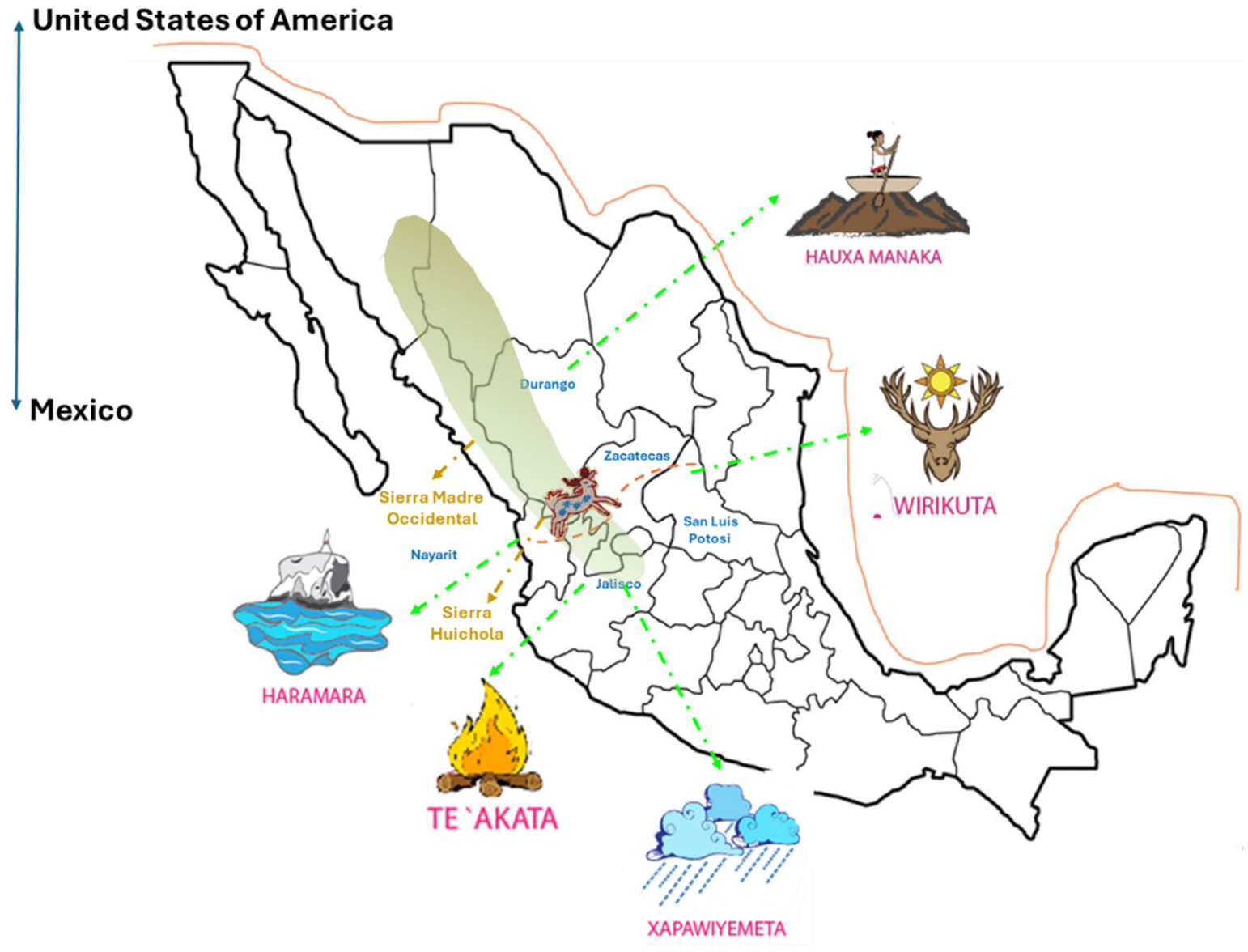
Sacred sites of the Wixáritari and the location of the Mexican states.
In the post-colonial era of the late 16th and 17th centuries, the Wixáritari retreated further into the highlands in response to Spanish incursions and the violence that followed. The links between the Wixáritari and the Guachichiles can be viewed through the history of the defeated and the victors, the survivors and the forgotten, whose memory has often been obscured by their classification as extinct. The Guachichiles suffered demographic and cultural collapse, described by several authors as genocide and ethnocide (Bartolomé, 2003; Beuchot, 2018; Vázquez & Hernández, 2007), and some scholars affirm that the Wixárika language may be an extension of the Guachichil language (Kindl, 2019). Once one of the most widespread across precolonial Mexico, it narrowly escaped extinction and today survives within the Wixárika community of the Sierra de Nayarit, where approximately 5,000 speakers still use it (Diguet, 1911/2005). The Uto-Aztecan language family encompasses over 30 languages spoken across the western USA and in multiple regions of Mexico. These include Nahuatl spoken in states such as Guerrero, Veracruz, Hidalgo, Puebla, and in the Milpa Alta district of Mexico City alongside Pima, Yaqui, Cora, Tepehuano, and Wixárika. The latter belongs to the Corachol branch of the Uto-Aztecan family and shares phonetic similarities with the Cora language, reflecting their close historical and linguistic relationship. Wixárika is predominantly spoken in Jalisco, Nayarit, Durango, and Zacatecas.
Memory, Genocide, and the Roots of Cultural Displacement
Colonial records, such as Antonio Mota y Escobar, refer to the Huicholes today known as Wixáritari. These accounts condemned their ceremonial practices as idolatry and sought to suppress their ancestral rituals, a perspective that has been critically analyzed in contemporary scholarship (Mota y Escobar, 1604/1940; Neurath, 2003). These accounts condemned their traditions as infernal, citing their religious practices and deep reverence for the divine as acts of idolatry. Central to these condemned practices were the veneration of sacred plants such as peyote (hikuri, the Wixárika name for the cactus regarded as sacred in their rituals), ritual dances, nocturnal chants known as mitotes (ceremonial dances around the fire), and the ritual hunting of deer, all of which remain vital to their cultural identity. In the places where the deities are believed to reside, the cults of hikuri and tolóatzin (a sacred force or deity) endure. Temples erected in their honor still stand, hidden in ravines and atop mountains. However, following the 1722 conquest of the Nayarit mountains, Christianization began to erode the pre-Hispanic spiritual life of the Wixáritari (Barabas, 2002).
Some anthropologists, such as Neurath (2003) and Liffman (2011), suggest that the Wixáritari may have once inhabited different territories and later relocated under colonial pressure. Bernardino de Sahagún’s (1950–1982) accounts of hikuri rituals among Chichimeca nomadic groups in northern Mexico have been interpreted by some scholars as possible evidence of a shared ceremonial heritage, although these practices may also reflect broader ritual traditions common to multiple Indigenous groups (Anguiano, 2018; Kindl, 2019). The mountainous terrain into which the Wixáritari withdrew was nearly inaccessible, which allowed them to safeguard their traditions for centuries In the present, however, these former sanctuaries have been increasingly disrupted by roads, drug trafficking routes, deforestation, and state-led development programs (Arellano, 2024; De Nova Vázquez, 2023; INPI, 2022; Neurath, 2003; Saumade, 2023). Their sacred sites now face threats from gold mining concessions, extractive industries, and destructive ethno-tourism. The near extinction of hikuri and the encroachment of North American Christianity have placed further strain on cultural resilience. According to the United Nations (1948), “genocide means any of the following acts committed with intent to destroy, in whole or in part, a national, ethnical, racial or religious group, as such” (p. 278). Article 4 of the Convention also includes crimes such as torture, enslavement, and forced exile. Modern international law likewise considers colonialism and ethnocide as crimes against humanity (Rojas & Vázquez León, 2007).
Spiritual Ecology and Cultural Continuity
The Wixáritari have historically sustained themselves through corn cultivation, a practice that is not merely agricultural but deeply spiritual, forming part of their cosmological order and ritual calendar. In recent decades, due to restricted access to ancestral lands and increasing external pressures, many Wixáritari have also engaged in seasonal wage labor in nearby urban areas. Within Wixárika cosmology, nature is conceived as alive rather than inert, with all elements possessing agency and engaging in communication with one another and with humans. This dialogue manifests through offerings, rites, and pilgrimages to sacred sites. Mountains, stones, trees, and springs are not objects but subjects (Benítez, 1968; Chávez Herrera, 2017; Neurath & Pacheco Bribiesca, 2006). Within this symbolic system, one being may represent another: a stone can become a person, a plant may embody a bird, or a being can simultaneously be alive and dead. For example, the hikuri embodies both a plant and a sacred teacher that grants vision, while the Kauyumari (Blue Deer) represents an animal and at the same time a divine messenger guiding the peyote hunt (Neurath, 2003). These paradoxes are not contradictions, but reflections of a worldview in which reciprocity and transformation define existence (Langscape, 2012).
This sacred ontology implies a deeply interconnected worldview, sustained through the faithful reenactment of ancestral practices, rituals, art, politics, and ways of life that mirror divine patterns established in mythical times. The Wixáritari divide this ancestral past into three kawitu (myths or cycles), which must be ritually recreated each year. These ceremonies preserve El Costumbre, a masculine Wixárika concept encompassing the integrated ceremonial, daily, and political life of the community essential for maintaining cultural identity and continuity (Rodríguez, 2018). These historical and contemporary threats, whether through religious imposition, territorial dispossession, or extractive industries, are not isolated events but form part of a continuum of structural violence. In the Wixárika context, such incursions are lived not only as physical displacement but as an existential fracture, as they disrupt the reciprocal dialogue with sacred geography that sustains life and memory itself.
Ceremonies are held at sacred centers known as tukipa (ceremonial houses or spiritual centers), led by the mara’akame (spiritual guide or shaman), who invites the gods to join through song, drumbeats, dance, consumption of hikuri and the drinking of tejuino (a fermented corn beverage). These rituals enable communion with the divine and are central to Wixárika cosmology. The hikuri is imbued with sacred meaning and plays a vital role in these ceremonies. Its deforestation and extraction by outsiders represent a threat not only to biodiversity but also to the cultural and spiritual integrity of the Wixáritari (México Ruta Mágica, 2024). While some individuals seek the plant for a spiritual or sacred experience, others pursue it merely as a recreational drug, disregarding its cultural significance. Such uses have contributed to deforestation and overextraction, making it increasingly difficult for the Wixárika people to access hikuri for their traditional ceremonies. Moreover, recent dynamics of cultural appropriation and the influence of ethnopsychiatry, often introduced through external development initiatives, have further contributed to shifts in ceremonial life. Although some of these interventions aim to support Indigenous youth through education and shelter programs, they often impose frameworks that undermine traditional knowledge systems.
Methods and Techniques of Investigation
This research was conducted using a documentary methodological approach with a social and intercultural perspective, aimed at analyzing the spiritual geography, cultural resilience, and historical and contemporary displacement processes affecting the Wixárika people. The study draws on ethnographic, historical, and sociopolitical documentation to explore their ceremonial practices, sacred sites, and cosmovision (a holistic worldview that integrates nature, spirit, ritual, and community into a unified spiritual and social system), as well as the pressures of gentrification and modernization on their territories.
The primary instruments employed were documentary analysis techniques. A comprehensive review of scholarly literature on the Wixárika people was carried out, prioritizing peer-reviewed academic articles, ethnographic monographs, historical records (such as Franciscan colonial documents), theses, and recent fieldwork-based studies. The selection criteria included relevance to ceremonial cycles, territorial conflicts, sacred ecology, and cultural resilience, ensuring both chronological depth and contemporary applicability. Special attention was given to sources that explicitly addressed Wixárika deities, ritual geography, and symbolic systems. To complement the qualitative framework, quantitative data were gathered from official statistical sources such as the Instituto Nacional de Estadística y Geografía [National Institute of Statistics and Geography] (INEGI) and the Instituto Nacional de los Pueblos Indígenas [National Institute of Indigenous Peoples] (INPI). These data sets were selected based on their recency, public accessibility, and disaggregation by Indigenous group. Based on this quantitative foundation, demographic maps and graphs were constructed to illustrate population dynamics, territorial displacement, and the sociocultural impacts of tourism and extractive industries (INPI, 2022; INEGI, 2024). In addition, a simple linear regression model was applied to project the future number of Wixárika language speakers. The model used time in years (t) as the independent variable and the number of speakers (S) as the dependent variable, based on historical data from 2020 onward. Regression allowed for the identification of trends and potential scenarios of linguistic erosion, offering a measurable indicator of cultural vulnerability. This integrated mixed-method strategy provides a robust analytical foundation and supports future interdisciplinary inquiries into Indigenous cultural survival, policy impacts, and sacred territorial defense (Cultural Survival, 2022).
Sacred Geography and Ritual Territory
In Wixárika cosmology, the world is structured as a sacred geography. Within this ceremonial landscape, specific sites are destinations for periodic pilgrimages, which renew the bonds between community, deities, and ancestral origins. Their ancestral territory previously described spans multiple states in western and north-central Mexico, interconnected by sacred sites that together form what is symbolically known as the Wixárika universe: a spiritual and territorial map that orients ceremonial life and preserves collective cultural memory. A geographical depiction of these sacred points is presented in Figure 2.
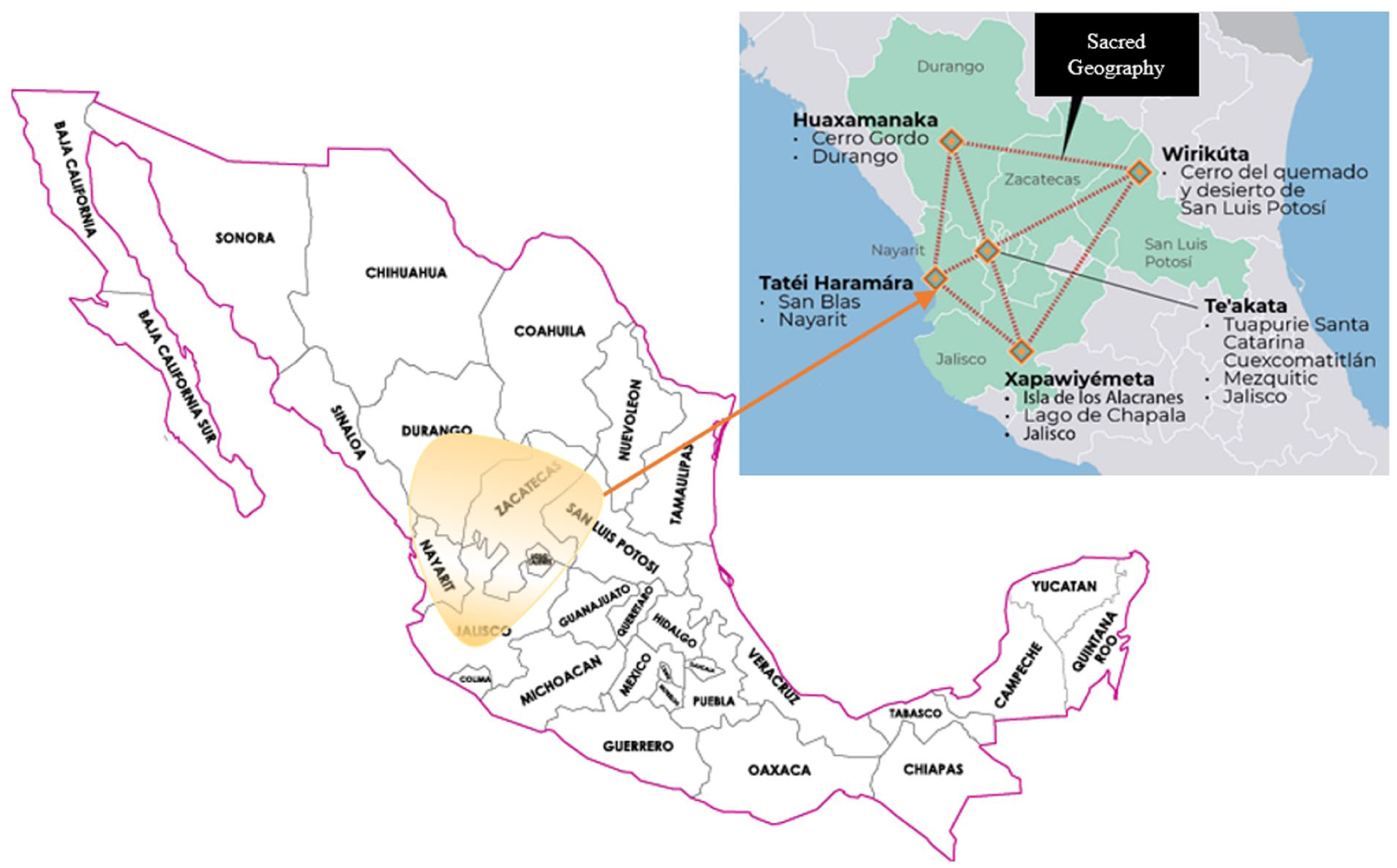
Geographic location of the ceremonial universe.
This map illustrates the sacred geography of the Wixárika people, highlighting five principal ceremonial centers: Huaxamanaka (sacred northern site), Tatei Haramara (Mother Water), Xapawiyémeta (place of the eagle), and Wirikuta and Te’akata (ceremonial center), which are ritually associated with the cardinal directions and form a symbolic spatial map essential to Wixárika cosmology (Gobierno de México, 2022b).
According to the worldview of the Wixáritari, the universe is structured around five cardinal points, each anchored by a Callihuey (temple) corresponding to a sacred site. These locations are not merely geographic but function as symbolic nodes within a cosmological map that links deities, natural elements, and ancestral memory, thereby preserving the community’s spiritual and cultural continuity.
The North is represented by Hauxa Manaká, a sacred site located at Cerro Gordo in the municipality of Pueblo Nuevo, in the state of Durango, Mexico. This mountain, rising over 3,340 m above sea level, is considered the highest point in the state and serves as a tripoint among the communities of San Bernardino de Milpillas Chico, San Francisco de Lajas, and Santa María de Taxicaringa. It is the place where Watakame (corn messenger), the cultural ancestor, received five sacred corn seeds, each symbolizing one of the ritual colors of maize. This cardinal point is associated with wind, wisdom, and ancestral knowledge. The South corresponds to Xapawiyémeta, identified as Isla de los Alacranes (Scorpion Island) in Lake Chapala, located in the state of Jalisco, Mexico. Lake Chapala is Mexico’s largest freshwater lake, lying in the municipalities of Chapala, Jocotepec, Poncitlán, and Jamay in Jalisco, and in Venustiano Carranza and Cojumatlán de Régules in Michoacán. Xapawiyémeta is the dwelling place of Witari, the spirit of water and rain (Pellizzi, 2017). This direction is linked to Mother Earth, agricultural fertility, and abundance, especially of corn, which is central to the Wixárika ritual calendar. The West is marked by Tatéi Haramara, corresponding to the sea at San Blas, in the state of Nayarit, Mexico. San Blas is a coastal municipality known for its historical port and rich biodiversity. This site is the dwelling place of Tatéi Haramara (Our Mother, the Sea), the goddess of the ocean and the origin of all waters. According to Wixárika tradition, Tatéi Haramara is considered the first solid object to emerge on Earth, giving rise to rivers and oceans, and nurturing all forms of life. This cardinal point is associated with endings, transitions, and ceremonies of gratitude to ensure rainfall and prosperity (Garcia-Weyandt, 2018). The East is represented by Wirikuta, located in the municipality of Real de Catorce, in the state of San Luis Potosí.
In Mexico, Wirikuta encompasses the Sierra de Catorce and its surrounding lowlands. It is revered as the dwelling place of Tayau, or Tau (Our Father Sun), who is associated with fire, renewal, and the primordial dawn. According to Wixárika tradition, this is where the blue deer, the first ancestor, offered itself to become hikuri. Finally, the Center is symbolized by Te’akata, a sacred site located near the community of Santa Catarina Cuexcomatitlán in the municipality of Mezquitic, Jalisco, close to the border with Zacatecas. This site is the point where the threads of the Tsikuri (Eye of God; a woven spiritual symbol representing the ability to see and connect with the divine) intersect (Gobierno de México, 2022a). It houses the spirit of Tatewari (Grandfather Fire) and represents the union of earth and sky, the bridge between the physical and spiritual realms (Garcia-Weyandt, 2020). Figure 3 presents the Tsikuri, a woven spiritual symbol that represents the ability to see and connect with the divine, often used to protect and to maintain cosmic balance in Wixárika tradition, referring to Wixárika sacred geography.
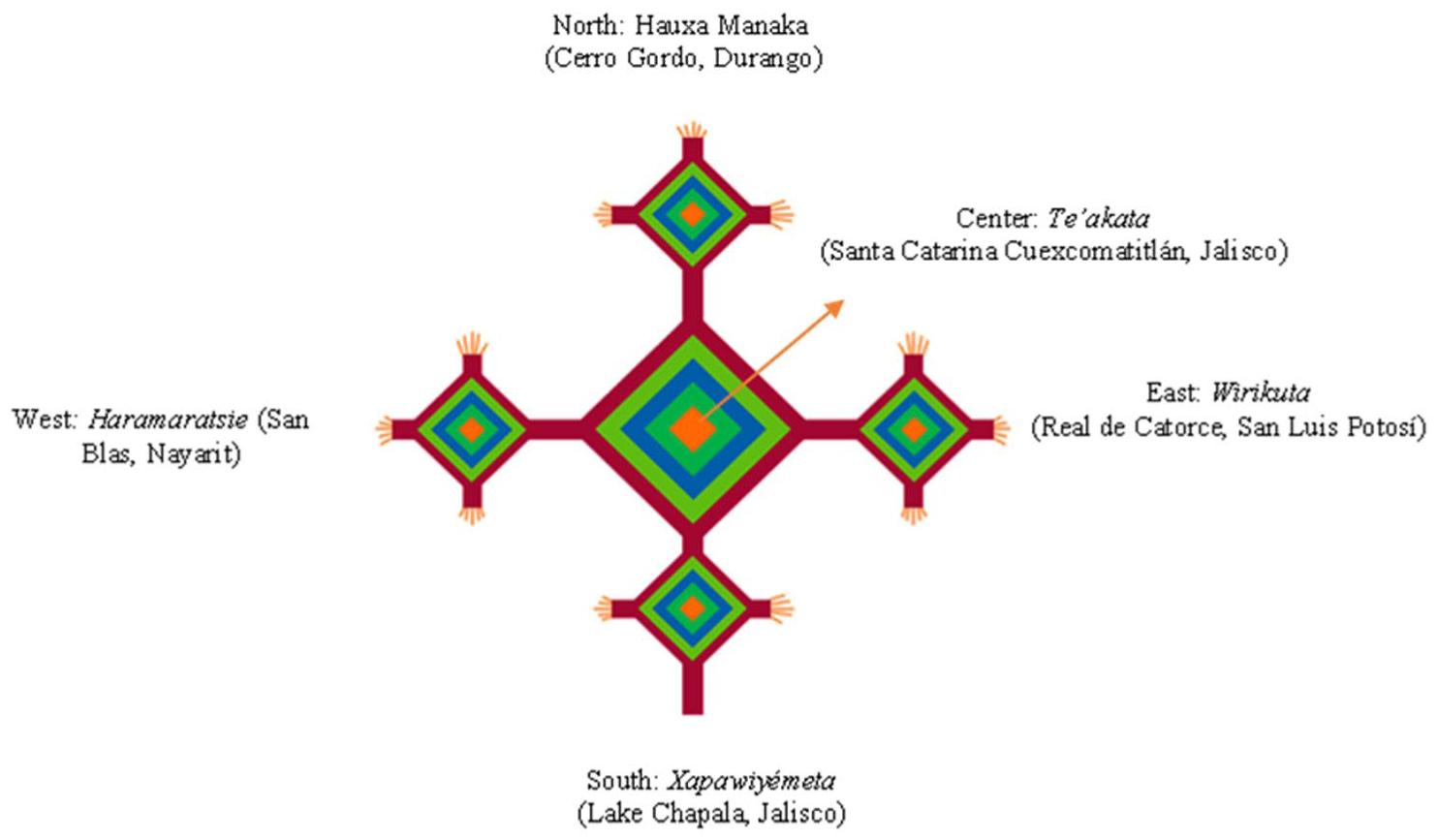
Tsikuri as ritual and cosmological axis.
The Tsikuri, often referred to as the Eye of God, is a woven spiritual symbol that embodies the Wixárika conception of the universe. It interconnects the five sacred directions with the cosmic center, Te’akata, functioning as a ritual axis and a spiritual conduct between the human and divine realms. Traditionally crafted by parents and given to their children as a symbol of protection and continuity, the Tsikuri serves as both a protective object and a medium for transmitting cultural memory and spiritual belonging across generations. In the Wixárika worldview, sacred sites are arranged along the cardinal points and represented through this ritual element. Beyond the five points mentioned above, another significant geographical space is Te’akata, which also forms part of this cosmological structure. According to the cosmogony of the Gran Nayar, the world was woven from the hair of the primordial goddess, and the Tsikuri symbolizes this sacred fabric. More than a spatial marker, the Tsikuri is both a protective amulet and a spiritual axis: it allows the deity Kauyumari (the Blue Deer messenger) to observe and guard the world (Guzmán, 2022). Table 1 presents the principal deities of the Wixárika universe and their corresponding sacred sites across several Mexican states. It summarizes their functions, symbolic meanings, and territorial representations, emphasizing the importance of safeguarding these spaces as sources of cultural and spiritual resilience.
Principal deities and sacred sites in Wixárika cosmology.
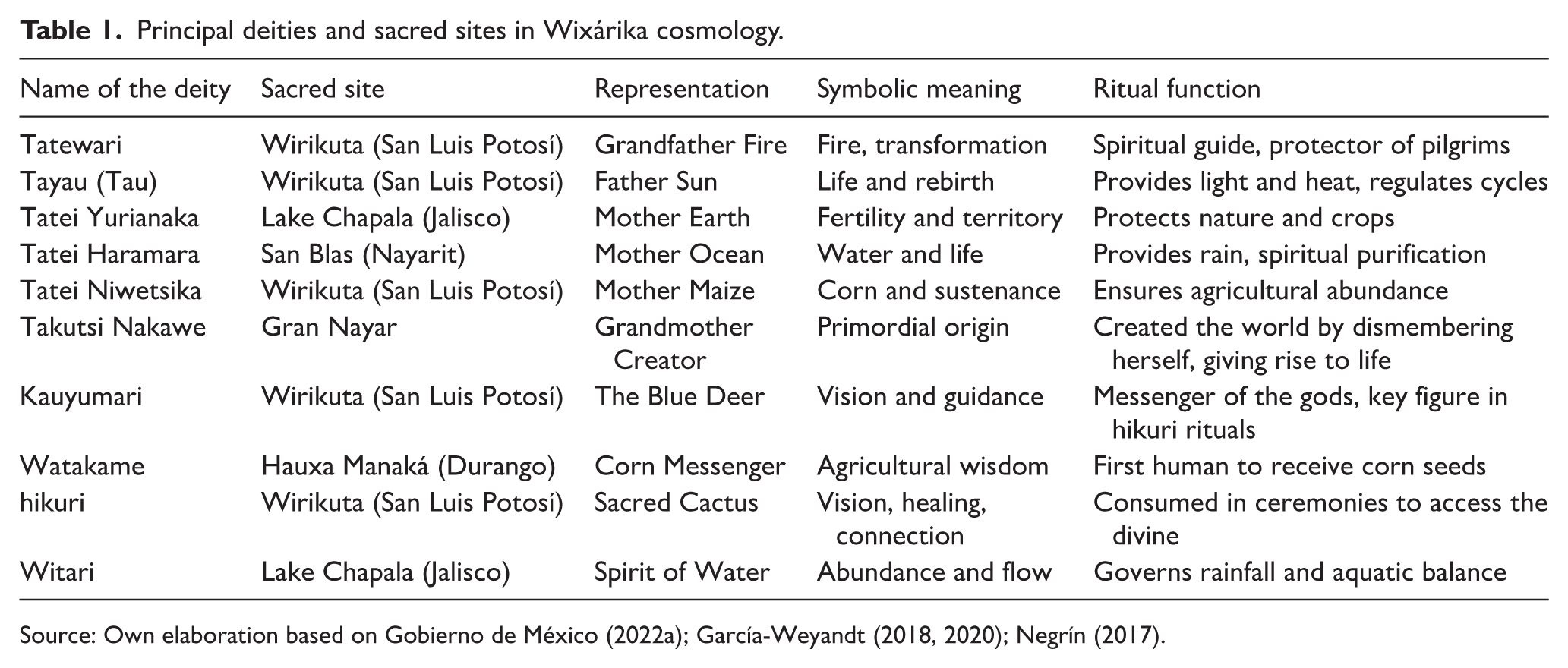
Source: Own elaboration based on Gobierno de México (2022a); García-Weyandt (2018, 2020); Negrín (2017).
This table presents key spiritual figures in Wixárika cosmology, associated with specific sacred places distributed across five Mexican states. It summarizes their representations, symbolic meanings, and roles within ceremonial life, emphasizing their importance in the spiritual continuity and territorial identity of the Wixáritari (Chapela et al., 2006).
This cosmogonic structure, along with the reverence for the cardinal points and sacred places, reflects the deep connection of the Wixáritari with their environment and spirituality, underscoring the role of rituals and traditions in preserving cultural identity. In this geographical universe, the gods dwell in hills, springs, stones, ponds, plants, and animals, and are often conceived as elders who embody the elements of nature: the sea, the earth, fire, the sun, and the rain. Among these sacred sites, Wirikuta holds special significance as the birthplace of the gods and the sun, and as the destination of the Wixáritari’s annual pilgrimages, which reaffirm communal bonds and spiritual continuity while reinforcing their connection with sacred territories and ancestral origins. Another key site is Tatei Haramara, located on the Pacific coast near San Blas in Nayarit, regarded as the world’s point of origin where the first ancestors and deities began their journey toward Wirikuta so that the sun and moon could be born. The Wixárika universe is structured around three interrelated spheres: mythological origin, rooted in the ocean as the primordial source of life; the field of corn, which embodies daily life, subsistence, and ceremonial practices; and ritual art, a space in which the community’s worldview is expressed and their identity is consolidated through symbols, color, and spirituality (Nierika, 2024).
Within this worldview, there are two main types of sacrificial rites: the festive propitiatory rite, performed to ensure abundance and harmony, and the circumstantial prophylactic rite, used to address imbalance or misfortune. During Holy Week, the Wixáritari integrate elements of Christian liturgical time with their own traditions, performing ceremonial sacrifices of bulls. One of the most significant events is the Pachitas Festival, where the Hispanic bull becomes symbolically integrated into Wixárika cosmology. This celebration reflects the adaptation of colonial influences into their ritual life particularly in culinary practices, which acquire deep spiritual significance. For example, the temporary prohibition of salt in specific foods is observed to maintain spiritual purity (De Nova Vázquez, 2023). Deer hunting, beyond being a subsistence activity, retains its central place in ceremonial life. Through the adaptation of rituals over time, a symbolic duality has developed between the deer, an ancestral and sacred being and the bull, an introduced species with layered cosmological meaning. These two animals now represent complementary opposites within the Wixárika ritual quadrant, alongside corn and hikuri. Together, these four sacred elements express the interconnectedness between the human, the natural, and the supernatural within Wixárika cosmology (Saumade, 2013).
Impacts of Gentrification and Territorial Displacement
One of the central findings of this research is that the spatial and spiritual boundaries of the Wixárika universe have been severely impacted by centuries of displacement and marginalization. Limited access to educational and economic development opportunities has rendered the Wixáritari particularly vulnerable to external pressures. Among the most detrimental are concessions granted to international mining companies, often overlapping with sacred geographic areas. These include Wirikuta and other ceremonial sites, where extractive activities such as gold and silver mining have not only physically altered the land, over 140,000 ha of Wirikuta were concessioned to Canadian companies such as First Majestic Silver in the early 2000s but also undermined the symbolic, cosmological, and ritual structures that sustain Wixárika life. Despite federal promises of protection, concessions have continued in the region, with more than 22 mining permits granted in Wirikuta as of 2012 (Cultural Survival, 2012). The Wixárika community has engaged in a 13-year legal struggle to halt these projects, underscoring the severity of the territorial and spiritual threat posed by extractive industries (Mongabay News, 2024). Recent analyses further emphasize that the regionalization of Wixárika space is deeply tied to traditional landscape knowledge, which is jeopardized by such concessions (Cultural Survival, 2022; De Nova Vázquez, 2023).
Cultural appropriation has compounded this damage, especially the commodification of Wixárika ritual art in global markets. This appropriation strips cultural expressions of their spiritual function, reducing them to aesthetic or commercial artifacts. Simultaneously, sacred plants such as hikuri face ecological extinction due to unsanctioned harvesting for non-spiritual uses, which has expanded with the rise of psychedelic tourism. This research confirms that displacement did not end with the colonial period but rather evolved into new forms of gentrification linked to tourism, infrastructure development, and resource extraction. The devastation of archaeological sites, the construction of roads, and the invasion of ceremonial zones reflect how modern neoliberal expansion mirrors older colonial logic. As a result, the sacred geography of the Wixárika universe is increasingly fragmented, and its ritual practices threatened. Quantitative data from the Sistema de Información Cultural (SIC) estimate approximately 20,000 speakers of the Wixárika language in its proper form figures that contrast with those of INEGI, due to overlapping with the Cora group and the inclusion of individuals who self-identify as Wixárika despite partial or mestizo heritage. These statistical discrepancies highlight the difficulty of capturing the full scope of cultural loss and resilience in formal records (SIC, 2024).
Historical Dispossession and Religious Suppression
The historical trajectory of Wixárika displacement began with the Spanish conquest but intensified during the colonial and post-independence periods. In the 16th and 17th centuries, although the Huichol Sierra itself remained unconquered, surrounding towns including Colotlán (a municipality in northern Jalisco serving as a regional hub for commerce and cultural exchange), formally established in 1591 after the Chichimeca Wars (1550–1590) were incorporated into colonial administrative and military structures, creating pressures that gradually encroached on Wixárika territory (Gerhard, 1996), Mezquitic (also in Jalisco, a municipality with a significant Wixárika population and cultural presence), Huejuquilla el Alto (noted for its historical and cultural significance to the Wixárika), Tenzompa (a community within Huejuquilla el Alto recognized for its Wixárika heritage and traditions), and Huajimic (a community in the municipality of La Yesca, Nayarit, and part of the traditional Wixárika territory) were established. These settlements further isolated the Wixárika from neighboring regions and facilitated the expansion of Franciscan missions, which were founded in Huajimic in 1610, Mezquitic in 1616, and Huejuquilla in 1649, among others, as part of a broader campaign to pacify and evangelize the area (Negrín, 2017).
Ultreras Villagrana et al. (2023) argue that this process of colonization not only transformed the territorial organization of the Wixárika but also reshaped internal social and gender structures, introducing enduring dynamics of power and development within the communities. The Sierra was eventually subdued in 1722, and by 1733, the Franciscans had established themselves in San Sebastián Teponahuaxtlán (a locality in Mezquitic, Jalisco), marking the beginning of a gradual but persistent process of Catholic influence in the region (Negrín, 2017). The Liberal disentailment laws and the violent uprising led by Manuel Lozada in the following decade contributed to the dispossession of Wixárika lands, despite their participation in resistance movements. These events were followed by the Porfirian government’s attempt in 1887 to demarcate Indigenous lands, intensifying struggles over territory. This period also marked the systematic destruction of kaliwey (ceremonial centers). Early 17th-century Franciscan reports claim the demolition of more than 1,400 kaliwey, and in 1728, they destroyed the kaliwey of Tenzompa, one of the most important sacred sites for the Wixáritari. These offensives ceased only when the Reform Laws enacted between 1855 (Ley Juárez), 1856 (Ley Lerdo), and codified constitutionally in 1874 forced the closure of convents and missions, though their implementation in the Wixárika highlands, particularly in the Sierra Madre Occidental region, remained limited, further exposing the Wixáritari to land expropriation and cultural suppression.
Throughout these centuries, the Wixáritari engaged in strategic alliances and participated in various political and revolutionary movements. Yet their primary objective was not ideological alignment, but the expulsion of invaders and the restitution of sacred territories. The aftermath of the Mexican Revolution did not yield substantial change. Although the 1917 Constitution nominally recognized Indigenous rights, bureaucratic inertia and structural exclusion continued to obstruct the restitution of ancestral lands and the reestablishment of religious autonomy (Romero, 2000).
Linguistic Loss and Cultural Erasure Through Statistical Evidence
Linguistic loss among Indigenous communities is often difficult to quantify, yet statistical modeling offers a valuable lens through which to understand its scope and trajectory. In the case of the Wixárika people, the decline in the number of native speakers is not merely a matter of language shift but a symptom of broader processes of cultural erosion. To illustrate this dynamic, the following figure presents a statistical projection of language loss based on historical data and demographic trends. Figure 4 presents a linear regression model projecting the decline in Wixárika language speakers from 2020 to 2050.
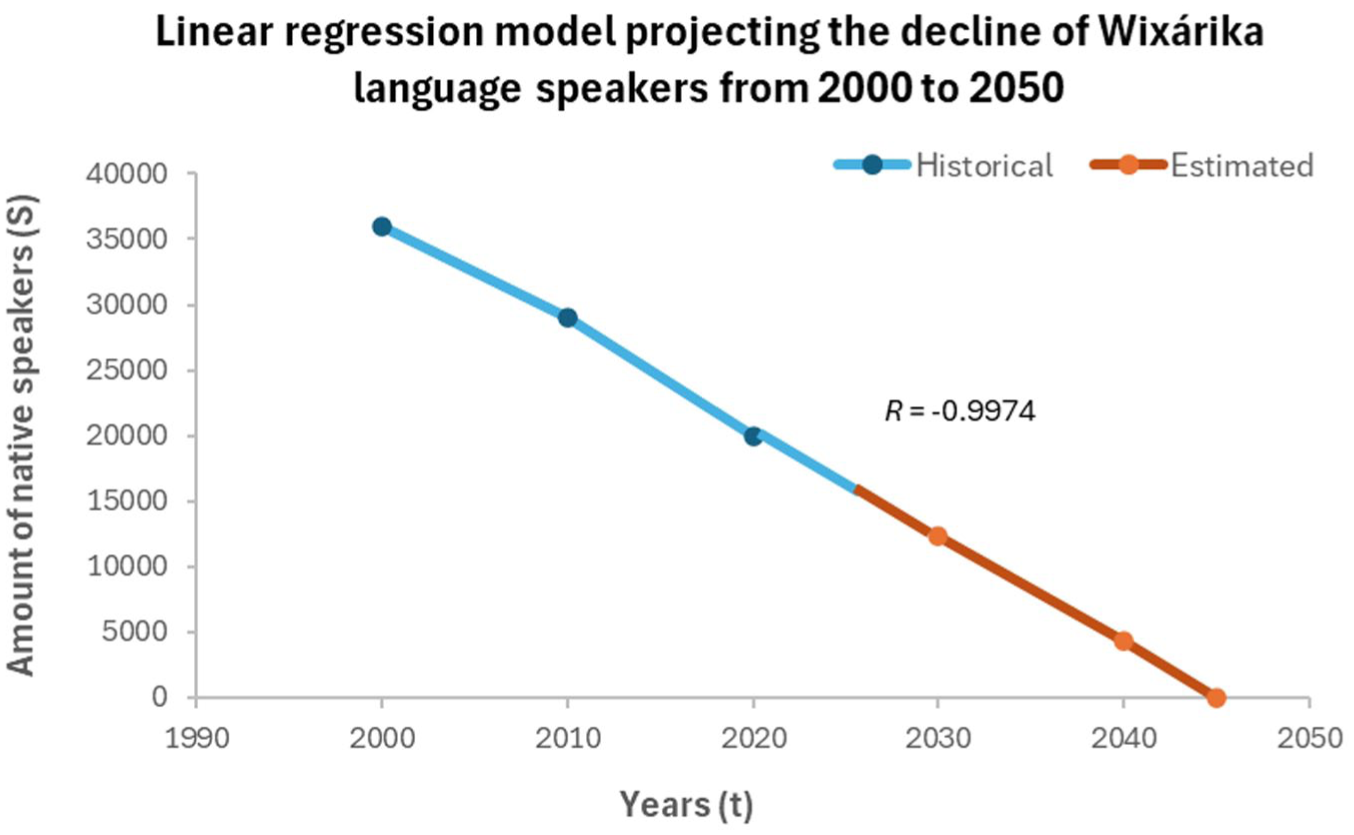
Linear regression model projecting the decline in the number of Wixárika.
The model was built using historical census data and applies a simple linear regression to forecast the projected decline in the number of Wixárika language speakers. In this model, the number of native speakers (
This analysis employs the linear regression formula:

This equation suggests that if current trends continue, the Wixárika language could face near extinction by 2050. In 2020, an estimated 23,769 native speakers remained, but projections indicate a sharp decline. Language loss in this context is not just a linguistic issue; it signifies the erosion of collective memory, ritual knowledge, and ontological frameworks rooted in orality and intergenerational transmission. As Nahmad-Sitton, Carrasco, and other researchers have emphasized, this trajectory is not purely demographic; it is political. Historical and contemporary manipulation by state actors and political parties has deepened the marginalization of Indigenous communities, including the Wixáritari (Nahmad-Sitton & Carrasco, 1998). Simultaneously, paradoxical discourses in the Global North romanticize Indigenous knowledge systems while benefiting from extractive economies that violate their sacred geographies.
Yet this trajectory is neither inevitable nor unchallenged. While the decline in the number of Wixárika language speakers represents a significant cultural threat, this projection does not take into account the revitalization efforts currently led by young Indigenous activists, educators, and cultural leaders. Among these initiatives is Taniuki (Our Language), a community-based educational program in urban contexts that promotes language transmission through interactive workshops; the participation of Wixárika youth in sacred ceremonies such as the first communal offering at Tatei Haramara which strengthens intergenerational spiritual bond and cross-sector collaborations such as the agroecological projects of the Indigenous Reciprocity Initiative in Wirikuta. Furthermore, many Wixárika youth are leveraging digital tools and online educational resources to safeguard their language and culture. These initiatives include community-run courses, publicly accessible audio phrasebooks, and other online language materials developed in coordination with the Instituto Nacional de Lenguas Indígenas [National Institute of Indigenous Languages] (INALI). These actions demonstrate that cultural resilience can be sustained beyond language through ceremonies, governance systems, ecological stewardship, and creative adaptations. Such agency confirms that the Wixárika people are not only preserving their cultural heritage but also actively shaping their future, integrating traditional knowledge with contemporary resources (Garcia-Weyandt & López de la Rosa, 2022; INALI, 2025; Jáquez, 2025; Wixarika Research Center, 2022).
Despite official recognition of sacred places in Mexico, such as Wirikuta, state policy has facilitated extractivist projects on these territories. One emblematic case is the Aguamilpa Dam, located in the municipality of Tepic, in the state of Nayarit, Mexico. Its construction in the early 1990s resulted in the flooding of ceremonial routes and territories considered sacred by various Indigenous communities. The location of the Aguamilpa Dam is particularly significant due to its impact on Wixárika ritual paths, which traditionally connect the Sierra Madre Occidental with the coastal regions. Indigenous authorities and community leaders have long criticized the project for disrupting spiritual landscapes, displacing families, and eroding ancestral practices and relationships with the land (Hernández Guerrero et al., 2020).
More recently, Canadian mining companies have intensified pressure on sacred territories. Since 2009, the region of Wirikuta, a central pilgrimage site symbolizing the origin of life and divine connections, has been targeted for gold and silver extraction. In 2010, the Mexican government granted 22 mining concessions to First Majestic Silver Corporation (Cultural Survival, 2011), affecting more than 70% of the federally protected Wirikuta reserve. Later, the Universo Project, led by Revolution Resources, expanded to over 59,000 ha within this sacred landscape, exacerbating environmental and cultural threats to Wixárika heritage (Huicholes: The Last Peyote Guardians, 2014).
These extractive initiatives were authorized without free, prior, and informed consent of the Wixáritari, violating both national and international frameworks. Promises of employment and development often mask permanent spiritual and environmental damage inflicted. In addition, due to low taxation policies in the mining sector, the Mexican state fails to secure compensation or environmental restoration (Morquecho Teniza, 2024). The correlation between linguistic erosion, spiritual desecration, and extractive neoliberalism reveals a continuity between colonial dispossession and modern economic violence. The loss of language, like the destruction of sacred sites, constitutes a form of cultural genocide not only erasing vocabulary, but unraveling the symbolic order that sustains Wixárika life.
Hikuri, Tourism, and the Commodification of Wixárika Culture
One of the most exploited and endangered sacred resources is hikuri, which remains illegal for the general population in Mexico. While its ceremonial use is officially permitted within Indigenous communities, it is often stigmatized by mainstream society as primitive or backward. Historically, the ritual use of hikuri extended well beyond the Wixárika region. However, during the colonial period, evangelization campaigns led many Indigenous groups in northern Mexico to abandon their consumption under missionary pressure. Among the few people who preserved its use are the Wixárika and, to a lesser extent, the Cora. The latter, having largely undergone Christianization, reduced their ritual engagement with hikuri, whereas the Wixárika maintained their traditional spiritual system, continuing to revere the cactus as a sacred entity. In Wixárika cosmovision, hikuri is a divine gift imbued with spiritual guardians, regarded as food for the soul and essential to spiritual vitality. According to oral tradition, hikuri is considered food for the soul, just as maize nourishes the body. Its protection is entrusted to Hatzimuika, the guardian deity, who ensures both its sanctity and ecological survival (Bernal Guzmán, 2017). Alongside the commodification of Wixárika art, one of the most profound forms of exploitation they face involves the unsanctioned and excessive use of hikuri, a sacred cactus central to their ceremonial life. This situation illustrates a complex and often asymmetric relationship between the Wixáritari and non-Indigenous societies, particularly in Mexico and the United States, spanning from the 19th century to the present. The history of hikuri use is entangled with discourses on race, indigenismo, religious rights, prohibitionist policies, and contemporary challenges such as inequality, marginalization, and criminalization. This issue requires a binational and bilateral analysis, as its implications differ across Mexican and U.S. contexts. From its early use as a medicinal remedy against cholera in 1833, hikuri has become a controversial substance featured in ecotourism, psychedelic therapy, and spiritual consumerism. These practices frequently conflict with Indigenous ritual beliefs, community rights, and legal frameworks, raising questions about cultural authenticity, appropriation, and the vulnerability of the categories used to analyze these experiences.
For the Wixáritari, hikuri is not merely a hallucinogen but a sacred being, a medium for spiritual healing and revelation. It is a medium for spiritual healing in the same way that maize nourishes the body, with its spiritual guardianship. In recent decades, however, global interest in peyote within the context of psychedelic tourism and New Age practices has increased substantially (Chacruna Institute, 2022). Ethnobotanical studies estimate that peyote populations in some regions of northern Mexico have declined by more than 40% since the 1990s, largely due to overharvesting and habitat loss (Anderson, 1996). At the same time, the rising demand from non-Indigenous users has significantly increased the market value of peyote, with prices reportedly doubling in the last two decades (Labate & Cavnar, 2016). This combination of ecological depletion and commercialization not only threatens the availability of hikuri for the Wixáritari but also disrupts their ceremonial cycles and spiritual practices. From geometric motifs to sacred representations of nature and deities, Wixárika artistic expressions are deeply rooted in a worldview that conceives all elements of the environment as living and sentient. However, the continued extraction of natural resources in sacred territories, combined with the commercialization of Wixárika culture, threatens not only their cosmology but also their fundamental belief in the vitality of nature, where even stones are understood as bearers of life and spirit (Anguiano, 2018).
Academic and journalistic explorations of shamanism and altered states of consciousness in both Mexico and the United States have at times obscured the distinction between scientific rigor and pseudoscientific interpretation. Figures such as Fernando Benítez and Carlos Castaneda have been central to these debates, frequently attracting critical scrutiny (Dawson, 2021). outlines a genealogy of disseminators, scholars, and exploiters, revealing connections between social science, ecotourism, and New Age spirituality. In particular, Castaneda has been criticized for exploiting Indigenous communities and hikuri by appropriating sacred traditions for personal fame and gain. The rise of ecotourism, framed as respectful and ostensibly aimed at combating inequality while honoring Indigenous traditions, has instead reinforced folklorization and the commodification of cultural expressions, becoming a defining feature of the current dilemma (Pérez Montfort, 2021). Another factor contributing to the gentrification and displacement of the Wixáritari is the recent commodification of their culture’s authenticity and exoticism for tourism. Wixárika artisans, aware of how their work is perceived, have adapted their artistic practices to appeal to tourists. While these crafts generate income, their symbolism is often co-opted by government institutions, merchants, travel agencies, and collectors who seek to capitalize on their worldview and iconography (Le Mûr, 2015). Since the 1960s, indigenist policies have promoted the image of the Wixárika as local heritage to boost the tourism sector. This framing has shaped how the Wixárika navigate their identity in urban settings. Perceived by outsiders as bearers of spiritual and exotic traditions, their culture has undergone processes of folklorization, where rituals and symbols are exaggerated, stylized, or commodified for commercial purposes, often detached from their lived reality. This dynamic has fostered cultural appropriation, as external actors market Wixárika identity as a consumable and promotable product. Although public discourse claims to value this culture for economic and political ends, official policies often embody contradictions. Government institutions and craft merchants frequently manipulate the image of this Indigenous group to promote ethnic tourism, encouraging an evolution of their artwork into more colorful and psychedelic forms. These changes, ranging from materials and techniques to iconographic styles, reflect market pressures rather than internal traditions. While some ceremonial art retains its original symbolism narrating myths, beliefs, and cosmology, other expressions are reshaped to meet tourist expectations. These pieces are not mere decorations; they are living narratives, bearing witness to collective memory and cosmological knowledge. From geometric motifs to sacred representations of nature and deities, Wixárika art sustains an ancestral legacy for future generations. In this sense, few other Indigenous cultures in Mexico preserve their spiritual practices, belief systems, and ceremonial continuity as deeply as the Wixáritari (Anguiano, 2018).
Results
Findings and Analysis
State policy toward the Wixárika reveals a persistent double standard. While Indigenous culture is publicly praised for its richness and sacred traditions, the concrete rights of the Wixárika are routinely undermined. Sacred sites are celebrated rhetorically, yet mining concessions such as those granted in Wirikuta reveal an ongoing contradiction between symbolic recognition and material dispossession. This situation is not unique to the Wixárika. Other Indigenous groups, such as the Yaqui in Sonora, have likewise faced serious challenges to their water and territorial rights a case vividly illustrated by their legal battle to halt the Acueducto Independencia, suspended by a Supreme Court ruling in 2013 (Cultural Survival, 2021; Gómez, 2017). Similarly, Maya communities have resisted the Tren Maya, arguing that it threatens their ceremonial landscapes and territorial autonomy (Olivares Franco, 2024). These intersecting struggles demonstrate that the tension between symbolic homage and dispossession is a widespread and systemic issue across multiple Indigenous peoples in Mexico, where development projects have proceeded without prior consultation, violating national and international frameworks for Indigenous consultation and consent. Symbolic gestures, such as the controversial use of the mascot during the Pan American Games, were implemented despite Wixárika opposition, illustrating a superficial and extractive approach to cultural representation (Nájar, 2011; Torres, 2023). Wixárika artists themselves express mixed views about working with intermediaries to sell their artwork. Many faces significant challenges regarding intellectual property, including copyright infringement. While commercial outlets have adopted some mechanisms to prevent illegal reproduction, original artists often lack access to legal tools or knowledge to protect their designs effectively. The increasing commercialization of Wixárika motifs by fashion and lifestyle brands raises further concerns about the ethical boundaries of cultural use. These issues underscore the historical legacies of colonization and highlight ongoing power asymmetries between Indigenous communities and external actors who benefit from their symbolic capital.
Currently, the Wixáritari inhabit the northern region of the state of Jalisco, with additional communities dispersed across Nayarit, Zacatecas, and Durango. In Nayarit, their settlements are more scattered and frequently coexist with Cora and mestizo populations. By contrast, the Wixáritari of Jalisco have actively sought to limit mestizo settlement within their territories, in efforts to preserve cultural cohesion and territorial integrity (Neurath, 2003). Beyond these territorial dynamics and the broader legal and commercial dilemmas they face, Wixárika culture has undergone continuous processes of ritual adaptation and transformation. Challenging the stereotypical image of isolated shamans and unchanging traditions, their ceremonial system has progressively incorporated external elements such as cattle and money into established cycles of maize cultivation and hikuri collection.
Although these elements originate from modern economic systems, they have acquired profound symbolic and ritual value within the Wixárika cosmovision. Rather than signaling cultural erosion, this evolving integration reflects the dynamic resilience of Wixárika spirituality in confronting the challenges of modernity. In parallel, the Wixárika community structure has evolved to include local commissions for water management, education, and territorial defense. These efforts respond to ongoing displacement from sacred sites and increasing tensions with regional authorities. Such organizational strategies seek not only political leverage, but also the preservation of traditional governance systems and internal hierarchies, which remain foundational to their religious and communal life. In 1968, five major Wixárika communities continued to hold communal, undivided lands primarily located in Jalisco and along the borders of Zacatecas and Durango. Over the past four decades, however, many Indigenous families have migrated from the Sierra Madre Occidental to the plateau and coastal regions of Nayarit in search of improved living conditions. This migration has resulted in the establishment of marginal or irregular settlements in urban areas. Historical accounts also note that during the 1960s, as much as one-quarter of Wixárika men served as mara’akame, reflecting the profound embeddedness of spirituality and religious leadership within Wixárika culture (Lumholtz, 2006).
Socio-demographic indicators and educational attainment among the Wixáritari
The following figures present statistical insights into the current situation of the Wixárika population. Figure 5 illustrates the approximate distribution of the Wixárika population by Mexican state. It is important to note that demographic figures vary depending on whether classification is based on self-identification or language proficiency.
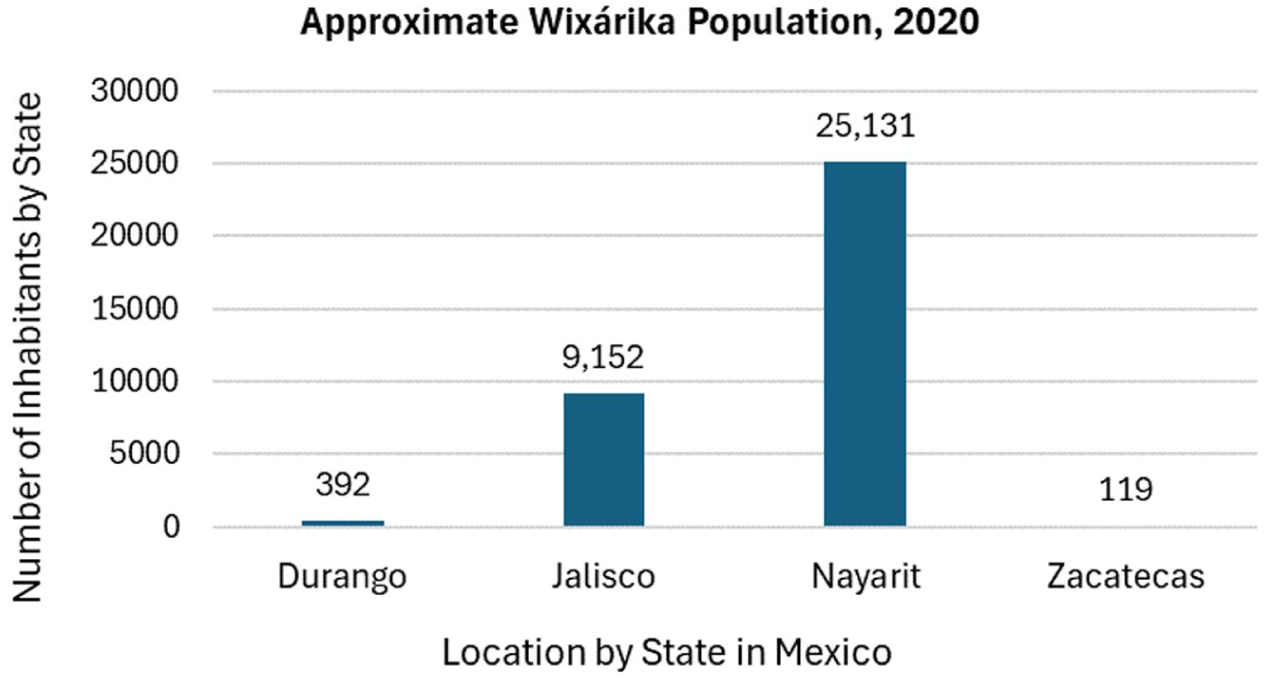
Approximate number of inhabitants by state in Mexico, 2020.
The 2022 national report merges Wixárika data with that of the Cora ethnic group, potentially distorting the accuracy of these statistics. Figure 6 presents education levels among Wixárika communities, revealing that neither state nor Indigenous led policies have produced substantive improvements in educational access or socioeconomic development. This reflects ongoing structural inequalities that continue to affect Indigenous in Mexico.
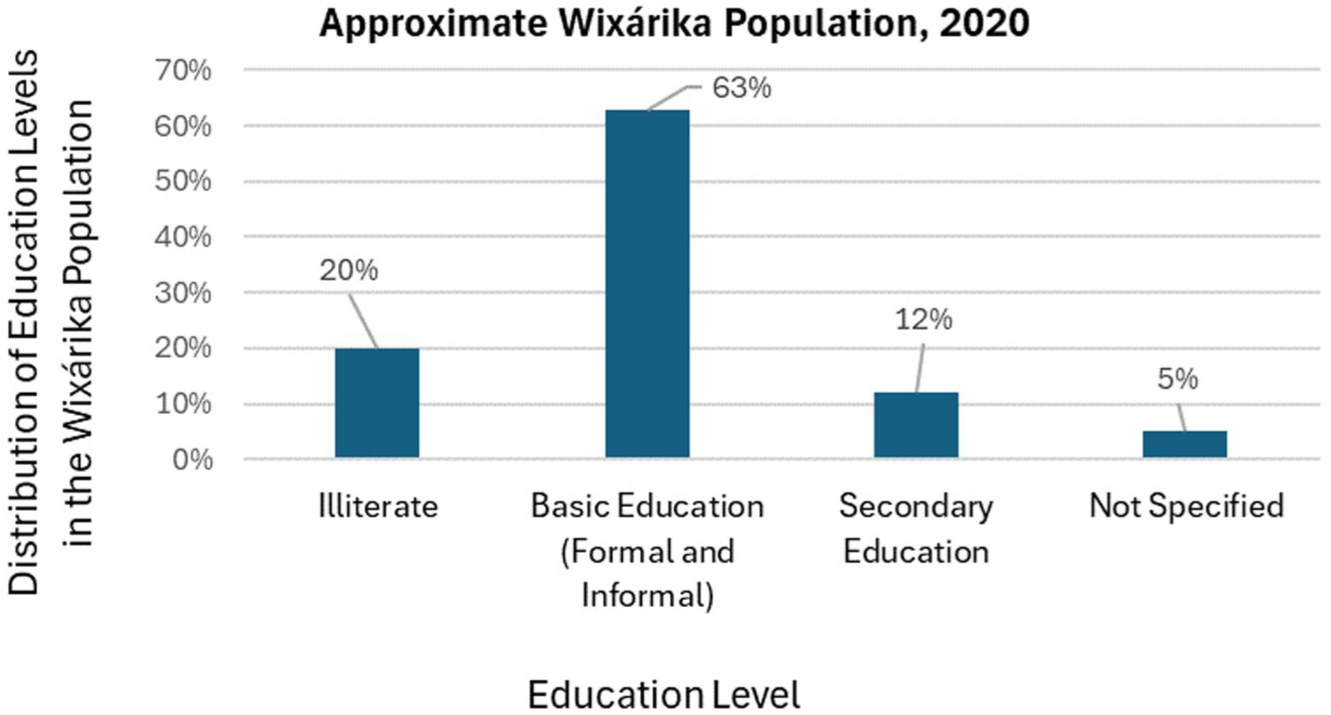
Educational attainment of the Wixárika population by level.
Currently, neither INEGI nor the SIC provide a specific disaggregation of university-level education within the aggregated data for Indigenous populations such as the Wixáritari. Consequently, the graphs presented based on general education statistics do not include information on higher education levels such as a bachelor’s degree or equivalent.
Discussion
Environmental Threats and the Urgency of Territorial Protection
In the Mexican economy, the Wixárika people continue to face systematic dispossession and exploitation. Their territories are frequently invaded without compensation and used for livestock grazing, intensive agriculture, and extractive mining activities all of which contribute to environmental degradation and cultural disruption. To counter these threats, the Plan de Manejo de la Reserva de Wirikuta (Management Plan for the Wirikuta Reserve) was collaboratively developed by Wixárika communities and governmental authorities. This plan seeks to protect the sacred geography of its water sources, soil, flora, and fauna through strict environmental regulations. It explicitly prohibits large-scale industrial mining within Wirikuta, acknowledging the spiritual, ecological, and cultural importance of the site as established in Reserve regulations (Arellano, 2024).
The types of mineral deposits found in Zacatecas and San Luis Potosí sustain industrial mining practices that are especially aggressive in their environmental and social impacts (Boni et al., 2019; Hernández Guerrero et al., 2020; Morquecho Teniza, 2024). In Wixárika territories, some of the most severe consequences reported include:
Groundwater contamination threatens not only local ecosystems but also ceremonial springs used in sacred rituals. Contaminants such as cyanide, xanthates, and heavy metals jeopardize both environmental and human health.
Desertification and soil degradation are disrupting agricultural cycles and reducing land fertility.
Loss of biodiversity, including the extinction of species vital to the Wixárika cultural and ecological landscape.
Public health impacts, including increased cases of respiratory, gastrointestinal, dermatological, renal, and reproductive illnesses, as well as elevated rates of cancers such as leukemia, lung, and bladder cancer, among surrounding populations.
Desecration of sacred sites, which undermines the continuity of Wixárika cosmovision and constitutes a violation of Indigenous rights under national and international legal frameworks.
Loss of scenic and cultural value, contributing to the decline of ecotourism, traditional agriculture, and sustainable economic practices in the region.
These mining activities, in addition to damaging the land, also threaten the Wixárika cosmovision, a worldview in which all beings are considered alive, including what Western paradigms may label as inanimate. Spirits are believed to inhabit all elements of nature; thus, humans, animals, plants, mountains, rivers, springs, stones, and even minerals possess a spiritual essence. Environmental destruction, therefore, has profound consequences that transcend physical loss, potentially leading to the erosion or disappearance of their cultural foundations (Boni et al., 2019).
The Wixárika people have endured continuous displacement since the Spanish conquest. Initially, they fled to preserve their autonomy; later, displacement was driven by tourism, gentrification, and third-party agrarian use of their territory. Logging and mining have severely impacted their natural resources, particularly water. Overexploitation of sacred plants and cultural appropriation such as the unauthorized copyrighting of Wixárika art by outsiders continue to endanger their heritage, especially as original artists often lack access to legal protections. Today, the community faces new threats, including the emergence of fake self-identified Wixárika mestizos who claim land and rights as their own. These groups engage in conflicts that frequently bypass official legal mechanisms (Vázquez & Hernández, 2007). The centuries-long struggle to defend their territory and sacred cosmology has led the Wixáritari to engage with external actors. In an effort to protect Wirikuta and other ancestral lands from foreign mining concessions endorsed by the Mexican state, they have shared sacred knowledge that was once kept secret. While this openness has garnered support from both national and international allies, it also carries the risk of cultural dilution. Historically, secrecy has been key to preserving their heritage.
The defense of Wirikuta has involved not only cultural and spiritual resistance, but also organized legal, community, and political strategies. These include the filing of legal injunctions to halt mining concessions, the establishment of a unified front of the Wixárika people and their allies to coordinate territorial defense, the development of community-based monitoring systems for environmental impacts, and coordinated advocacy in both national and international forums to seek recognition of Wirikuta as a protected cultural and natural heritage site (Boege, 2013). Public demonstrations, alliances with environmental NGOs, and the strategic use of media campaigns have further amplified their demands, bringing national and global attention to their cause. These actions underscore the community’s political agency, capacity for strategic alliances, and long-term commitment to defending their sacred land. According to the Instituto Nacional de los Pueblos Indígenas (INPI, 2022), broader national plans for Indigenous peoples also address the Wixárika people, incorporating proposals for safeguarding sacred sites, land, and natural resources, as well as strengthening traditional governance, promoting intercultural education, improving community health systems, supporting Indigenous economic initiatives, and enhancing basic infrastructure to reinforce territorial defense and cultural continuity.
Despite forced migration, the Wixáritari actively preserve their identity through ritual, craft, and spirituality. They establish traditional temples in new communities and maintain strong ties to their mountain homelands, often returning for ceremonial cycles. In urban areas, Wixárika families continue to rely on artisan production and traditional healing practices to survive, reaffirming their cultural resilience in the face of displacement (Beimborn & Romandía Peñaflor, 2009). The proper implementation of public policies could effectively address the challenges faced by the Wixárika people. However, Indigenous policies have arrived late in the states where Wixáritari communities are settled and, when implemented, have often lacked the structural consistency needed for long-term impact. It is crucial to establish coherent strategies that identify the limiting and enabling factors for coordination between local actors, aiming to build effective and inclusive governance networks. Although there is no single consensus on the best methodology for coordinating governance between state authorities and local communities, it is essential to develop qualitative approaches that center the perceptions and lived experiences of Indigenous peoples. These should include participatory instruments and dialogue-based frameworks that facilitate civic engagement, highlight effective forms of collaboration, and ensure that governments genuinely incorporate the perspectives of ethnic groups into public planning (Ramírez-Gómez, 2023).
One of the major institutional deficiencies identified in this study relates to the persistent confusion between institutions, the rules, norms, and values that shape collective behavior, and organizations, the public and private entities that operationalize these frameworks. This distinction, as discussed by Rojas (2019), is not merely conceptual but has tangible effects on governance outcomes. Our findings confirm his observation that public policies often fail to meet the expectations of all stakeholders; while certain groups may benefit, others frequently the very populations the policies are intended to support experience adverse effects. This pattern is consistent with prior analyses of Indigenous governance failures in Latin America, where policy design processes remain centralized and top-down, limiting the agency of affected communities. In the Wixárika case, the lack of structured mechanisms for integrating community representatives into decision-making echoes broader trends reported in studies of Indigenous policy frameworks (Raygoza-Limón et al., 2023). Although formal recognition of territorial and cultural rights exists, our evidence suggests that governmental actions remain largely symbolic, with insufficient translation into enforceable protections for sacred sites and resources. This aligns with the argument that participation without substantive influence can reinforce, rather than dismantle, structural inequalities (Potjomkina, 2023). Furthermore, the results highlight a tension between extractive-oriented development models and the cosmopolitical dimensions of Wixárika sacred geography. Previous literature (Boege, 2013) has emphasized the biocultural significance of sites such as Wirikuta, yet our analysis shows that policy priorities continue to favor industrial and infrastructure projects that disrupt both ecological systems and spiritual continuity. Such policies perpetuate what scholars describe as epistemic violence, displacing Indigenous ontologies in favor of market-driven logics.
From this perspective, the discussion moves beyond integrationist approaches toward frameworks of autonomy and reciprocity. While some authors have advocated for intercultural governance and legal pluralism, our findings suggest that without restorative justice and ecological reparation, such reforms risk remaining superficial. By situating the Wixárika struggle within a wider Latin American context of contested sovereignty and resource governance, this study underscores that sustainable development in Indigenous territories must be informed by biocultural frameworks capable of balancing ecological sustainability with cultural resilience. Ultimately, the evidence reinforces that sacred geography for the Wixárika is not an isolated cultural artifact but a living system interwoven with social, political, and spiritual dimensions. Any development initiative that fails to account for this interconnectedness risks replicating colonial dynamics under a modern guise, echoing historical patterns of dispossession rather than breaking from them.
Conclusion
The analysis demonstrates that the displacement of the Wixárika people is not confined to the colonial past but continues through contemporary mechanisms such as mining concessions, tourism, cultural commodification, and state-led infrastructure projects. These dynamics reproduce colonial patterns of dispossession while adapting to modern frameworks of economic development. Extractivist incursions into sacred territories like Wirikuta and the unsanctioned extraction of hikuri simultaneously degrade ecosystems and erode cosmological frameworks, threatening both material and spiritual continuity. Sacred geography embodied in sites such as Wirikuta, Te’akata, and Tatei Haramara emerges as central to ritual practice, ecological balance, and political survival. Its disruption represents not merely a physical loss of territory but an ontological fracture that undermines reciprocal relationships with nature and deities, foundations of the Wixárika worldview. The pressures that force mobility toward urban centers further expose the community to cultural dilution, while projections of language decline confirm that erosion extends into knowledge, memory, and intergenerational transmission.
The contradictions between symbolic recognition and material dispossession are evident: although state discourses often celebrate Indigenous identity, they coexist with policies that facilitate extractive industries and neglect the protection of sacred territories, intercultural education, and linguistic vitality. The limited scope and fragmented implementation of public policies perpetuate cycles of displacement and gentrification. At the same time, evidence highlights the resilience of the Wixárika people. Their capacity to safeguard rituals, reconstruct governance systems, and maintain sacred practices in both rural and urban contexts illustrates that displacement is not solely passive victimization but also active resistance and cultural reconfiguration. Ultimately, the Wixárika case exemplifies how gentrification, cultural appropriation, extractivism, and linguistic erosion converge as interconnected dimensions of structural violence. Situating these processes within broader Latin American struggles over sovereignty and territory underscores sacred geography as a living system integrating spirituality, ecology, and political identity. Protecting this system requires coherent, long-term policies capable of breaking with colonial legacies. The Wixárika struggle affirms that the defense of territory is inseparable from cultural survival, ecological justice, and human rights.
Footnotes
Authors’ Note
The authors declare that this article reflects their own research and perspectives. The views expressed do not necessarily represent those of their affiliated institutions.

Funding
The authors received no financial support for the research, authorship and publication of this article.
Declaration of Conflicting Interests
The authors declared no potential conflicts of interest with respect to the research, authorship and publication of this article.
Glossary
Callihuey ceremonial temple located at each cardinal point in the Wixárika cosmology
El Costumbre masculine Wixárika concept encompassing ceremonial, daily, and political life
Gran Nayar historical region in the Sierra Madre Occidental, where Wixárika and other Indigenous groups resisted colonization
Hauxa Manaká sacred mountain in Durango, representing the North, wind, and ancestral wisdom
hikuri sacred cactus (peyote) used in spiritual rituals for divine connection
kaliwey ceremonial centers
Kauyumari the Blue Deer, divine messenger and guardian of vision in peyote rituals
Kawitu mythical cycle or origin story ritually reenacted each year
mara’akame Spiritual guide or shaman who leads ceremonies and communicates with deities
mitote ceremonial fire dance and chant to communicate with the divine
taniuki our language
Takutsi Nakawe Creator Grandmother who wove the world from her hair; a primordial deity
Tatei Haramara our Mother of the Sea, sacred site on the Pacific coast
Tatei Niwetsika Mother of Corn; spiritual force ensuring sustenance and fertility
Tatei Yurianaka Mother Earth; deity of fertility and natural protection
Tatewari Grandfather Fire; guide of pilgrims and transformative ritual force
Tayau or Tau our Father Sun
Te’akata central sacred site; bridge between physical and spiritual realms
tejuino fermented corn beverage used in rituals for spiritual communion
Tenzompa ancestral ceremonial center destroyed in colonial times
Tewi niukiyari words of the people; the Wixárika term for their native language
Tolóatzin sacred force or deity invoked during rituals and enshrined in temples
Tsikuri “Eye of God”; woven symbol linking the five sacred directions
tukipa ceremonial center for gatherings and rituals
Watakame cultural ancestor who received five sacred corn seeds
Wirikuta sacred desert plateau in San Luis Potosí, origin of the sun
Witari Spirit of Water and Rain, residing in Lake Chapala
Wixárika person with a deep heart who loves knowledge and wisdom
wixáritari plural form of Wixárika
Xapawiyémeta sacred site represented by Scorpion Island in Lake Chapala