






Abstract
Background
Understanding molecular protein interactions offers promising long-term health benefits for volleyball players by serving as biomarkers that enable predictions of metabolic status, inflammation, injury risk, and recovery potential.
Objective
This review aims to clarify the molecular protein interactions that serve as useful biomarkers to enhance volleyball performance.
Method
For that end, a non-systematic review of the existing literature was conducted across multiple databases, including PubMed/Medline, Web of Science, Scopus, and Google Scholar. This review addressed the key molecular pathways as biomarkers that are affected during volleyball performance, such as BDNF, IGF-1, AMPK, PGC-1α, IL-6, and mTORC1, as well as the involvement of small non-coding RNAs, including miR-22, miR-17, miR-125b, miR-24, miR-26a, miR-93, miR-223, miR-320a, and miR-486.
Results
From the literature, we observed that a single 60-minute volleyball session elevates growth hormone levels and reduces IL-6, thereby supporting an anabolic state in volleyball players. Moreover, even 2 weeks of volleyball training increases BDNF and IGF-1 expression, partly driven by increases in specific miRNAs, such as miR-223, miR-320a, and miR-486. Notably, the magnitude of BDNF elevation varies across populations, reflecting genetic polymorphisms in the BDNF gene.
Conclusion
While measuring these molecular markers provides valuable theoretical insight into training adaptations and stress resilience in volleyball athletes, the extreme heterogeneity of current study protocols and the lack of standardized reference values for these biomarkers make it too early to use them as biomarkers for performance improvement and training adaptation. Consequently, these biomarkers currently serve as basic candidates for future research and require extensive validation before they can be reliably used for real-time, personalized training monitoring in volleyball.
Plain Language Summary
This narrative review aims to identify molecular proteins and their downstream targets as biomarkers for assessing injury status in athletes, as well as enhancing performance and decision-making skills. Primarily, when these proteins spike, they can indicate that athletes’ muscles are under stress and that an injury, such as a hamstring tear, may be developing. This can help coaches detect pain early before it worsens. Additionally, some of these molecular proteins decrease below their baseline levels, which can signal that athletes should stop training. Therefore, tracking these biomarkers through blood samples can shift the focus from treating injuries after they occur to proactive performance optimization.
Introduction
The benefits of sports and exercise have been recognized since ancient times, when physicians prescribed exercise to promote health and prevent disease. Charles Tipton underscored the continuity of this field by integrating molecular biology into exercise research. 1 His research supported to explain how exercise recommendations in ancient times adapted with today’s evidence on exercise as a form of “ancient medicine”. 1 Since then, several studies have reported that any form of sport and exercise provides health benefits, further strengthening the case for exercise as medicine.2-4 Volleyball is one of the sports that requires different forms of exercise, including endurance and strength, and is played by people of all ages, regardless of physical condition or impairment. Consequently, it has become the most popular sport, with representation from 220 countries since its discovery in 1895. Nevertheless, the physiological changes associated with this game, whether played indoors or outdoors, have produced distinct molecular responses.5,6 For instance, factors such as temperature, humidity, wind, and surface conditions during play may activate the players’ stress response by integrating several molecular targets, including interleukin-6 (IL-6), signal transducer and activator of transcription 3 (STAT3), peroxisome proliferator-activated receptor gamma coactivator 1-alpha (PGC-1α), mechanistic target of rapamycin (mTOR), and brain-derived neurotrophic factor (BDNF).7,8 More importantly, factors like sand instability and the court areas in beach volleyball increase the total distance and explosive acceleration, producing different physiological effects through orchestrated molecular cross-talk, but this is difficult to determine. 9 At the same time, this can exacerbate metabolic response, inflammatory cascades, and hormonal pathways.10-12 Primarily, intense volleyball play demands a heightened metabolic response, which may activate pathways such as IL-6/STAT3 to maintain energy homeostasis.10-12 This pathway may also curb neuroinflammation in the brain, thus preserving players’ cognition and decision-making skills. Even intermittent efforts in volleyball during positioning, passing, and strategic play help players to maintain low to moderate intensity, and molecules like STAT3 can increase its binding to BDNF and protein interacting with C alpha kinase 1 (PICK1) to improve neural plasticity via IL-6 at this condition, as evidenced by other moderate exercise that activates this scenario.13,14 However, intense volleyball training may disrupt this balance. 13 Therefore, each factor in volleyball must be considered before assessing specific molecular targets as biomarkers to improve performance.
Scientific developments in sports science, such as the isolation of specific molecular proteins, gained momentum in the early 1970s, culminating in the isolation of IGF-1 by Rinderknecht and Humbel in 1978. 15 DeVol et al advanced this by demonstrating increased IGF-1 miRNA expression in overloaded muscle, 16 while Geoffrey Goldspink further linked this protein isoform, like muscle growth factor (MGF), to resistance exercise-induced muscle growth and repair in the 1990s.17,18 Later, the pioneering work of Klarlund Pedersen established the concept of myokines in the 2000s by identifying IL-6 as an exercise-secreted cytokine that regulates metabolism and inflammation.19,20 These foundational works revealed diverse benefits of different molecular proteins across various sports, but sports like volleyball, characterized by fluctuating intensities and dynamic movements, stipulate precisely timed signaling responses under tight physiological regulation. Otherwise, it can worsen stress-response signaling, adaptive signaling, and inflammatory responses, and eventually interfere with muscle repair and growth processes in athletes. In addition, the mechanisms orchestrating their cumulative effects to yield positive adaptations remain unclear. Hence, establishing these mechanisms could position key proteins as biomarkers for tracking inflammation and injury risk in volleyball athletes, and enable targeted drugs to enhance muscle growth or accelerate recovery. Although the roles of certain molecular proteins, such as mTOR, BDNF, insulin-like growth factor 1 (IGF-1), transforming growth factor beta (TGF-β), and nuclear factor kappa-light-chain-enhancer of activated B cells (NF-kB), are well established in other sports and exercised conditions, primarily in regulating muscle protein synthesis, muscle growth, tendon strength, and bone density,21-24 these signaling molecules also contribute to worsening the athlete’s inflammatory status and cognitive functions. Consequently, it impacts performance and weakens team dynamics, especially under pressure. This can be explained by a scenario in which acute increases in lactate levels during short bouts of high-intensity activity may be linked to higher circulating BDNF levels, which support both cognitive enhancement and inflammatory regulation.25,26 Also, the increase in lactate induces tissue repair genes, such as arginase 1 (Arg-1), through IL-6-dependent paracrine or autocrine signaling. 27 This can trigger acute inflammation and regenerative processes to support muscle repair and recovery. Most importantly, this scenario is possible only if the athletes have well-developed aerobic and anaerobic energy systems.6,25,26 Otherwise, prolonged elevations in lactate and hydrogen ion (H+) concentrations can lead to fatigue and poor performance. 28 Therefore, mapping the most likely molecular protein targets and their related pathways in athletes could serve as new molecular biomarkers to indicate injury status, recovery progression, and decision-making ability. Hence, this review will synthesize current evidence on these proteins to propose them as potential biomarkers and elucidate the mechanisms involved. The goal is to guide future research to improve muscle mass and strength, enhance cognitive function, and identify molecular markers of injury status in volleyball athletes.
Methods
Search Strategy for Article Selection
To explore how targeted molecular cross-talk might improve volleyball performance and serve as potential biomarkers, this review used a non-systematic approach to synthesize current data from exercise protocols closely related to volleyball training. The primary aim was to identify molecular signaling pathways relevant to volleyball-specific performance. To ensure methodological transparency and high-quality reporting in accordance with the EQUATOR network, this current narrative review was structured and guided by the Scale for the Assessment of Narrative Review Articles (SANRA).
Data Information Sources and Search Period
A literature search was carried out across multiple databases, including PubMed, Web of Science, Scopus, and Google Scholar. These databases were selected to broaden coverage of articles on molecular proteins that improve volleyball performance. Primarily, PubMed/MEDLINE was used to capture mechanistic studies in molecular and clinical domains; Web of Science, Scopus, and Google Scholar were used to provide multidisciplinary citation coverage. The time frame for articles included in this review was January 2004 to December 2025, with no language restrictions applied during initial article retrieval. Additionally, the reference lists of all included full-text articles were hand-searched to ensure no relevant studies were missed, using forward and backward citation chaining.
Search Terms and Strategy
We have developed three different conceptual domains to perform search strategy as follows: (1) the specific sport context (volleyball, team sport, jumping, endurance, strength, beach volleyball, and athetes); (2) Molecular protein context (different molecular signaling proteins related to improve sports performance and their cross talks with downstrem targets and miRNAs); (3) performance-related outcomes (physical performance; muscle damage and following recovery, stress response, muscle adaptation and cognition). The specific keywords and Medical subject headings (MeSH) terms were identified for each domain and combined using Boolean operators (AND, OR) to construct search strings. The primary molecular targets, such as BDNF, IGF-1, IL-6, mTOR, AMPK, PGC-1alpha, and TGF-beta, and miRNAs that influence their expression. An example PubMed search string is given as follows (volleyball OR “team sport” OR “jumping”) AND (BDNF OR IGF-1 OR IL-6 OR mTOR OR AMPK OR PGC-1 alpha OR miRNA) AND (“molecular signaling” OR “signaling pathway” OR “gene expression” OR athletic performance” OR “cognitive performance” OR “ muscle adaptation” OR “recovery”)
Inclusion and Exclusion Criteria
Predefined Inclusion and Exclusion Criteria Were Applied During Article Screening
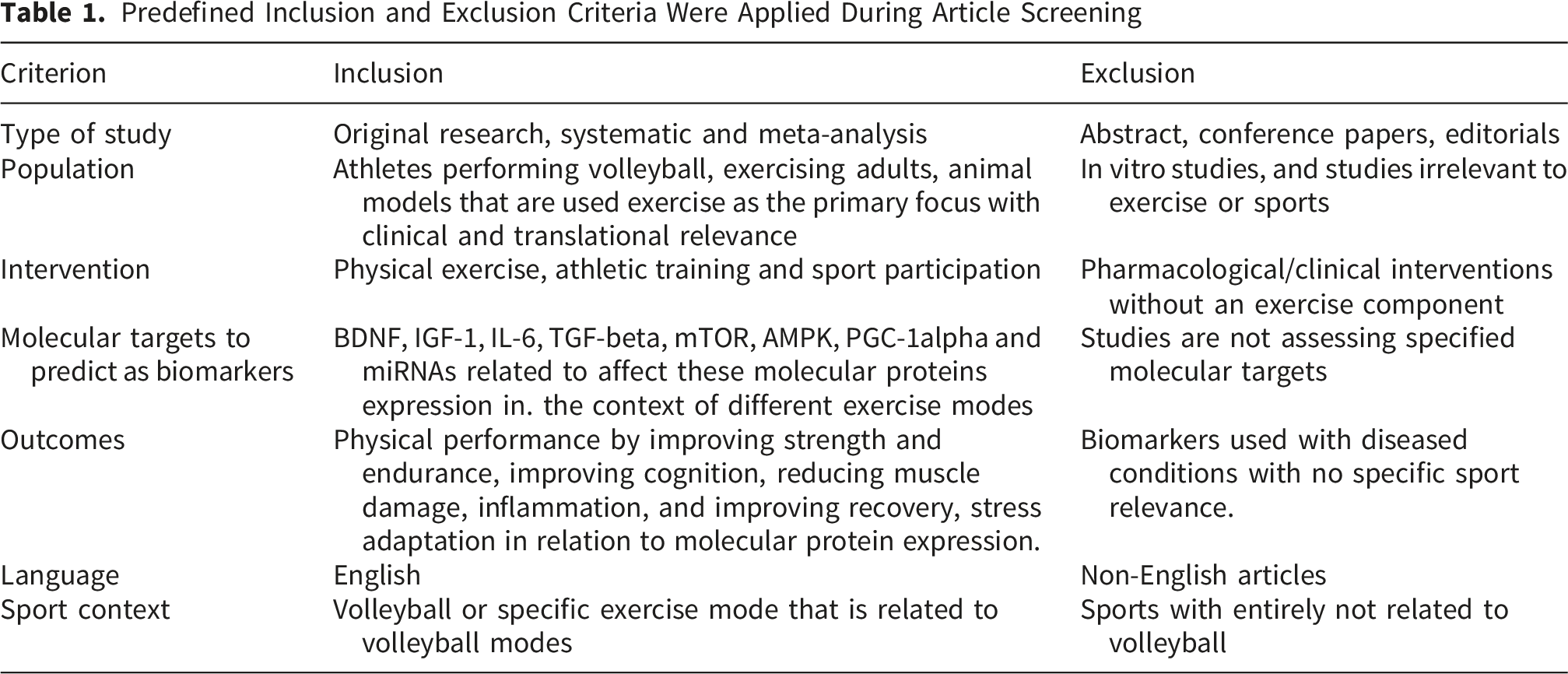
Results
Direct Evidence of Molecular Proteins’ Interactions in Volleyball Players
Characteristics of the Included Volleyball Studies
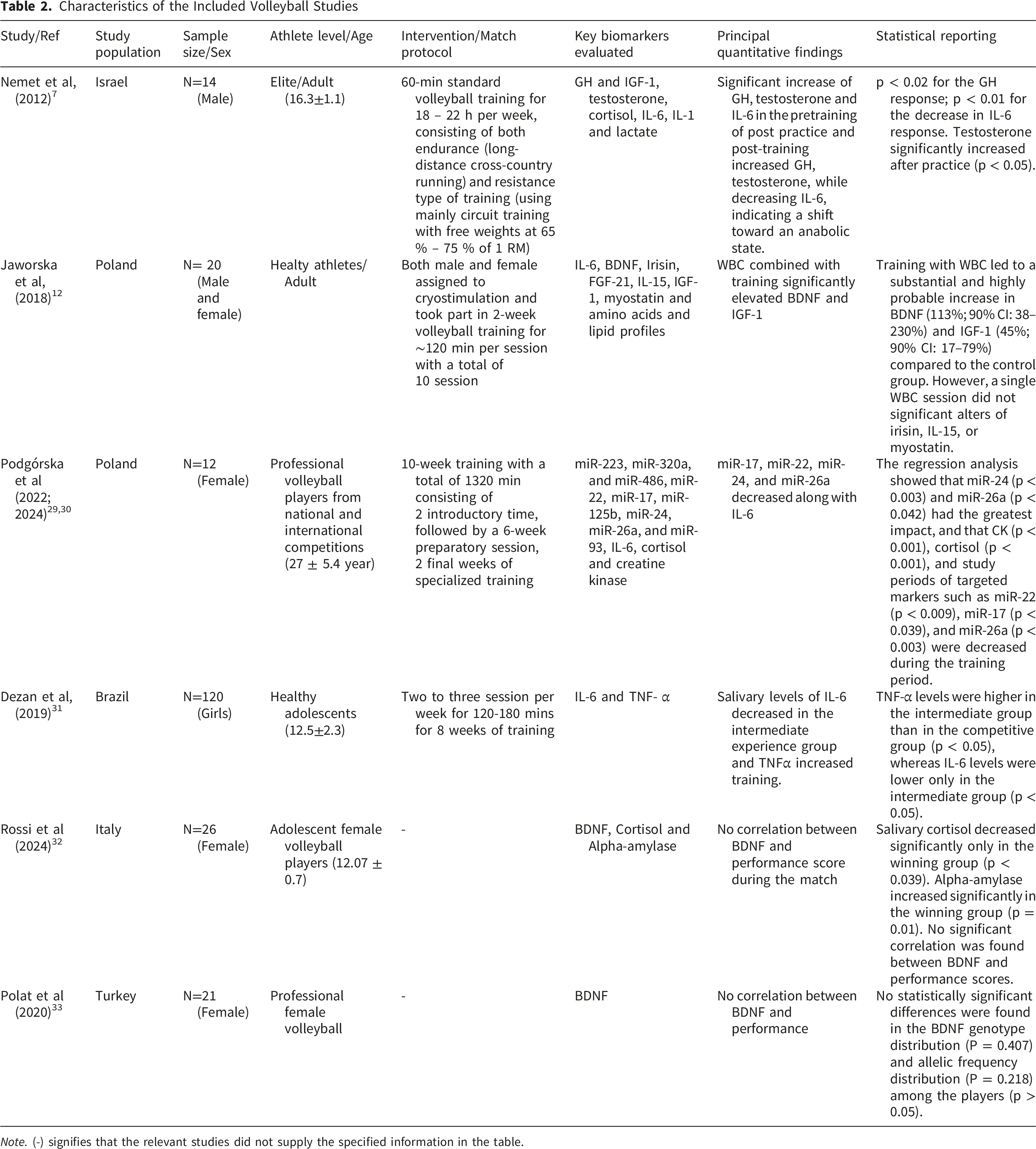
Note. (-) signifies that the relevant studies did not supply the specified information in the table.
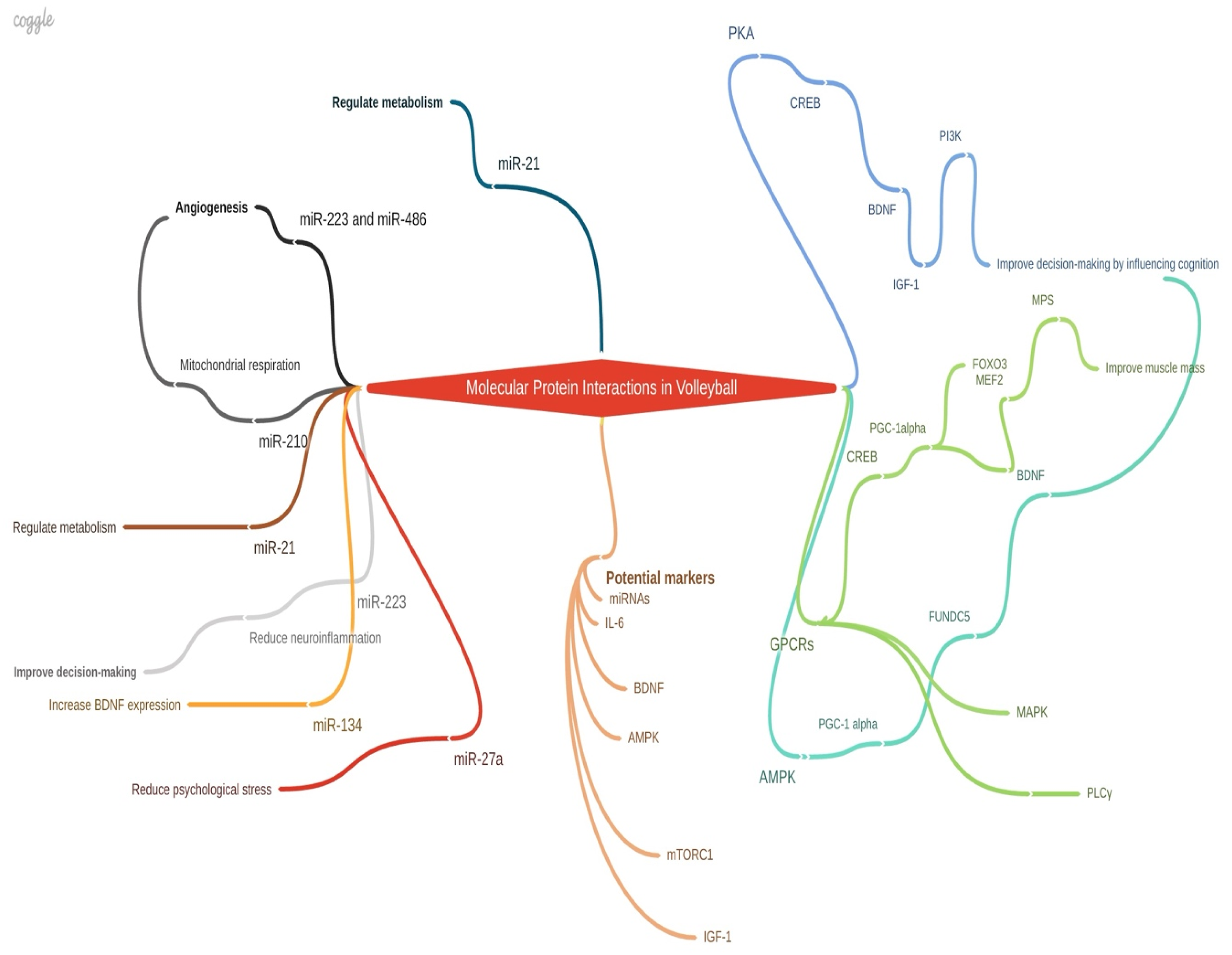
Mind map of molecular interactions driving physiological adaptations and performance in athletes. This schematic illustrates multi-system pathways that regulate metabolic health, angiogenesis, mitochondrial respiration, and cognitive decision-making. Light blue pathways indicate networks (e.g., PKA, CREB, BDNF, IGF-1, and PI3K) that primarily enhance central nervous system function and in-game decision-making. Light green pathways represent signaling cascades (e.g., CREB, PGC-1α, FOXO3) that drive hypertrophy and adaptation of peripheral muscle mass. Furthermore, specific microRNAs play targeted regulatory roles: miR-223 and miR-486 promote angiogenesis; miR-210 drives mitochondrial biogenesis; miR-21 regulates cellular metabolism; miR-134 increases BDNF expression; and miR-27a mitigates psychological stress. Abbreviations: BDNF = Brain-Derived Neurotrophic Factor; CREB = cAMP Response Element-Binding Protein; FOXO3 = Forkhead Box O3; IGF-1 = Insulin-like Growth Factor 1; PGC-1α = Peroxisome Proliferator-Activated Receptor Gamma Coactivator 1-alpha; PI3K = Phosphoinositide 3-Kinase; PKA = Protein Kinase A
Indirect Evidence That Supports Possible Molecular Proteins as Biomarkers to Improve Performance
Although studies are limited in exploring the roles of specific molecular proteins and miRNAs in enhancing volleyball performance, a large body of research has already established these molecules as biomarkers for predicting exercise-induced muscle damage and improving recovery and performance across aerobic and resistance training modalities, which are integral components of volleyball play. Therefore, considering exercise-induced molecular proteins as promising biomarkers may predict their translational value. For example, molecules such as mTORC1, IL-6/STAT3, IGF-1, AMPK, PGC-1α, TNFα, FOXOs, lactate, BDNF, CREB, and their related miRNAs, such as miR-486, are among the most studied in the literature with regard to different exercise types to improve various physiological adaptations and enhance performance.31-35 The increase in BDNF during exercise is linked with cognitive enhancement and increased glucose uptake, both of which are crucial for players’ performance. This scenario can also activate other signaling pathways, such as AMPK and PGC-1 alpha, allowing efficient energy compensation during the match. Another exercise-induced crucial molecule is mTORC1, which plays a central role in skeletal muscle protein synthesis and metabolic adaptation during exercise. Repeated high-intensity workouts, such as jumping or spiking, are also closely linked to mechanical stimuli generated by plyometric and resistance exercise protocols, which may share mechanisms that activate mTORC1. Further, indirect evidence comes from Gonzalez et al, who demonstrated that resistance exercise with high volume or high intensity stimulates mTORC1, 36 and both protocols are routinely incorporated into volleyball periodization.36,37 Also, concurrent endurance training is similar to the aerobic and anaerobic profile of volleyball, which may co-activate complementary pathways, such as AMPK, PGC-1α, and BDNF, to support muscle hypertrophy, energy compensation, and better cognitive decision-making during the volleyball match. Nevertheless, no studies have directly quantified these molecular proteins or their downstream effectors in volleyball players. Therefore, further studies are necessary to assess the translational value of these molecules as biomarkers for earlier prediction of training adaptation, recovery, and performance in elite volleyball players, using blood-based sampling or dedicated biopsy.
Discussion
From the literature, we observed that the following molecular proteins are most likely involved: mTORC1, IL-6/STAT3, IGF-1, AMPK, PGC-1α, TNFα, FOXOs, lactate, BDNF, and CREB. Additionally, their expression is influenced by miRNAs, such as miR-17, miR-22, miR-24, and miR-26a, which modulate muscle recovery, remodeling, and cognition by regulating the inflammatory process.21,37 These miRNAs are differentially activated and elicit distinct mechanisms depending on movement patterns during a game. Mainly, this scenario involves improving muscle strength, metabolic adaptation, cognition, and decision-making skills in athletes. For example, the endurance type may increase tissue-specific circulating BDNF, which can locally affect muscle lipid oxidation by activating AMPK. 38 However, the release of BDNF during exercise arises from multiple sources, including the interaction between Ca2+ and nuclear factor of activated T cells (NFAT) and the activation of MAPK, which increases IL-6 secretion and further increases BDNF.38,39 This can reduce anxiety symptoms and promote neuroplasticity. More importantly, these pathways may spuriously trigger off-target pathways that interfere with the beneficial effects of these molecules. For instance, IL-6 secretion may act like leptin by activating AMPK to increase glucose uptake and lipid oxidation within the muscle and adipose tissues, and having a low level of this molecule is a boon for athletes, especially aged athletes, as it can prevent metabolic diseases by triggering other anti-inflammatory cytokines such as IL-1Ra and IL-10, whereas the prolonged elevation of IL-10 by IL-6 may suppress the immune response, which could cause upper respiratory infection and this premature dominance can blunt the proinflammatory signals and delay muscle regeneration in sports injury. 38
Integrated Signaling Networks in Volleyball Training to Improve Recovery and Fatigue
While individual molecular proteins can serve as potential evidence for improving volleyball performance, exercise-derived studies increasingly show that these molecules function synergistically as an interconnected network during volleyball play. Primarily, they can coordinate to alter the metabolic environment for high energy demands, influencing inflammatory cascades and remodeling during recovery and promoting the anabolic-adaptive phase, leading to performance improvements and improved neural health for rapid decision-making. For instance, the AMPK-mTORC1 reciprocal axis can be activated during the “train hard and recover well” principle, thus boosting skeletal muscle remodeling and endurance adaptation in a manner consistent with an individual’s training status. In particular, AMPK and mTORC1 oppose each other in response to exercise stimuli. This scenario causes the “interference effect,” characterized by decreased strength gains and powers in concurrent strength and endurance training programs. This opposing adaptation can be bothersome for volleyball players who often face interference effects, thus affecting their ability to reach their maximum strength and power. 40 In addition, AMPK and mTORC1 activation promote and inhibit autophagy by phosphorylating ULK1 at distinct sites, hence maintaining cellular homeostasis by recycling damaged proteins and regulating protein synthesis by inhibiting eEF2. 41 Nevertheless, AMPK activity declines after the post-game recovery period, allowing PI3K/Akt/mTORC1-driven translation initiation via p70S6K and 4E-BP1 phosphorylation to improve protein synthesis and accelerate recovery. 41 This can affect players’ physiological status and training adaptation, but high-intensity volleyball training maintains AMPK activity high, which directly inhibits mTORC1, and drives peripheral fatigue and impairs recovery by reducing glycolytic flux, triggering serotonin precursor production, and this may be overcome by sufficient sleep and adjusting nutritional intake. 41 Furthermore, integrating hypertrophic signaling to decrease catabolic effects via IGF-1/PI3K/AKT/FOXO can balance anabolic and catabolic responses during the game. In this case, activation of AKT signaling may trigger mTORC1, which phosphorylates FOXOs and sequesters them in the cytoplasm, leading to the upregulation of atrophy-related E3 ubiquitin ligases Atrogin-1/MAFbx and MuRF-1.42,43 This scenario regulates both protein synthesis and restrains protein degradation, which is crucial for preventing myofibrillar damage during repeated eccentric landings in volleyball.
Molecular Signals That Integrate the Muscle-Brain Axis for Improving Cognitive Adaptation in Volleyball
Understanding the integration of muscle-brain axis signaling mechanisms enhances decision-making and focus, mitigates anxiety, and improves motor learning in volleyball players. Primarily, exercise-induced myokines can cross the blood-brain barrier (BBB), thus promoting metabolic rewiring, neurogenesis, and synaptic plasticity and reducing neuroinflammation. Notable myokines like IGF-1, IL-6, IL-4, FGF21, Irisin/FNDC5, and BDNF may play a role in stress regulation during rapid tactical decisions. For instance, the interaction between BDNF and IGF-1 via the muscle-brain axis has been shown to enhance cognition and decrease anxiety following physical activity, as evidenced in various experimental models.44,45 This mechanism is relevant to volleyball performance, particularly in high-pressure situations involving serving, receiving, and defensive transitions. Mechanistically, muscle contractions during gameplay increase peripheral IGF-1 levels, which cross the BBB to upregulate BDNF via CREB, consequently improving neurogenesis and synaptic plasticity. Additionally, locally produced BDNF in skeletal muscle influences neuromuscular junctions, both physiologically and morphologically, through the cAMP-PKA pathway. 46 This process is vital for preventing fatigue and enhancing overall performance in volleyball players. Other metabolic markers, including ketone bodies and lactate produced during exercise, have been shown to elevate BDNF levels and facilitate neurogenesis. 47 Furthermore, molecular proteins such as Irisin/FNDC5 can enhance neural health and increase bone mineral density by upregulating osteopontin and downregulating sclerostin during resistance training. 48 Regarding volleyball participation, evidence indicates that volleyball players exhibit higher levels of bone mineral density and bone mineral content in the arms, legs, ultradistal radius, lumbar spine, and femoral neck compared to non-active controls and athletes engaged in sports such as swimming.49-51 The possible mechanism in this scenario is that skeletal adaptations observed in volleyball players may be attributed to exercise-induced release of Irisin/FNDC5, which modulates bone metabolism by upregulating osteopontin and downregulating sclerostin via inhibition of Wnt signaling pathways. This suggests that Irisin/FNDC5 could serve as a biomarker for mechanical loading, skeletal integrity, and neural health related to volleyball activity. Additionally, as mentioned, IL-6, a muscle-derived myokine, is known to promote neuronal survival, neurogenesis, and metabolic regulation by activating AMPK. Alterations in IL-6 levels have been consistently observed among volleyball athletes. Specifically, Eliakim et al reported transient increases in IL-6 following a single session of volleyball training, 52 whereas Nemet et al observed a reduction in IL-6 response post-training, potentially reflecting adaptations aimed at enhancing anabolic processes. 7 These findings support the potential utility of IL-6 as a biomarker for metabolic signaling and training status in volleyball players.
Adaptive and Metabolic Signaling During Volleyball
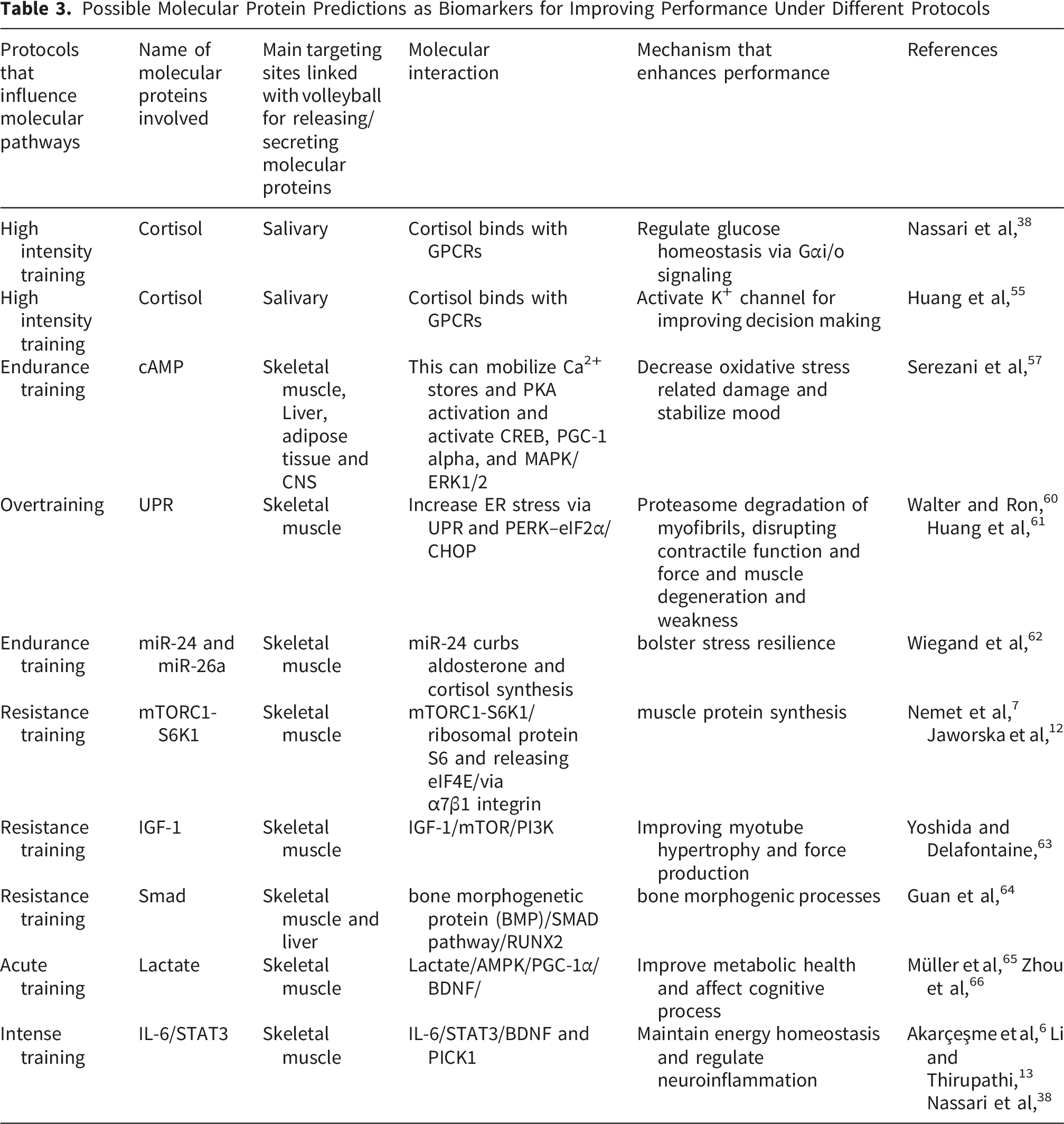
Stress responses in volleyball players cause physiological strain due to intermittent sprints and jumps and psychological pressure from competition, which profoundly shape performance through dual-edged molecular cascades. For instance, elevated cortisol levels during volleyball training may bind to G protein-coupled receptors (GPCRs) on neurons and muscle cells (Figure 2) (Table 3). This can regulate acute insulin release to improve glucose homeostasis via Gαi/o signaling.
38
This acute increase in cortisol is crucial in sports like volleyball for short-term energy homeostasis, as it improves insulin sensitivity.53,54 Also, cortisol binds GPCRs, which may trigger K+ channel activation to regulate cardiac rate and neuronal excitability, and this mechanism is crucial for accurate sensory-motor integration and rapid decision-making during serve or position for a spike.
55
Specifically, GPCR activation induces cAMP hydrolysis via phosphodiesterase (PDE), while cleaving PIP2 into IP3/DAG via phospholipase, which regulates intracellular cAMP levels.
56
This is important for muscle contraction by triggering the phosphorylation of calcium pumps.
56
Also, this scenario alters immune function and may prompt players to face the “open window” theory, characterized by short-term immunosuppression. Furthermore, the increase in cAMP can mobilize intracellular Ca2+ stores and activate PKA,
57
which phosphorylates CREB, PGC-1 alpha, and MAPK/ERK1/2 to fine-tune redox sensors like Nrf2 without increasing oxidative load in muscle cells and help stabilize mood-adaptive genes, such as Period (PER)2 expression, by CREB.58,59 A well-trained aerobic and anaerobic system in athletes maintains oxidative eustress for energy homeostasis and neural health, leading to improved cognition via factors such as AMPK, BDNF, CREB, IL-6, PGC-1alpha, GPCRs, K+ channels, and cortisol (blue box). Conversely, compromised aerobic and anaerobic systems increase oxidative stress, disrupting energy homeostasis and cognition via IL-6, cortisol, and ER stress. These disruptions hinder systemic protein translation and impair muscle growth (Red box) Possible Molecular Protein Predictions as Biomarkers for Improving Performance Under Different Protocols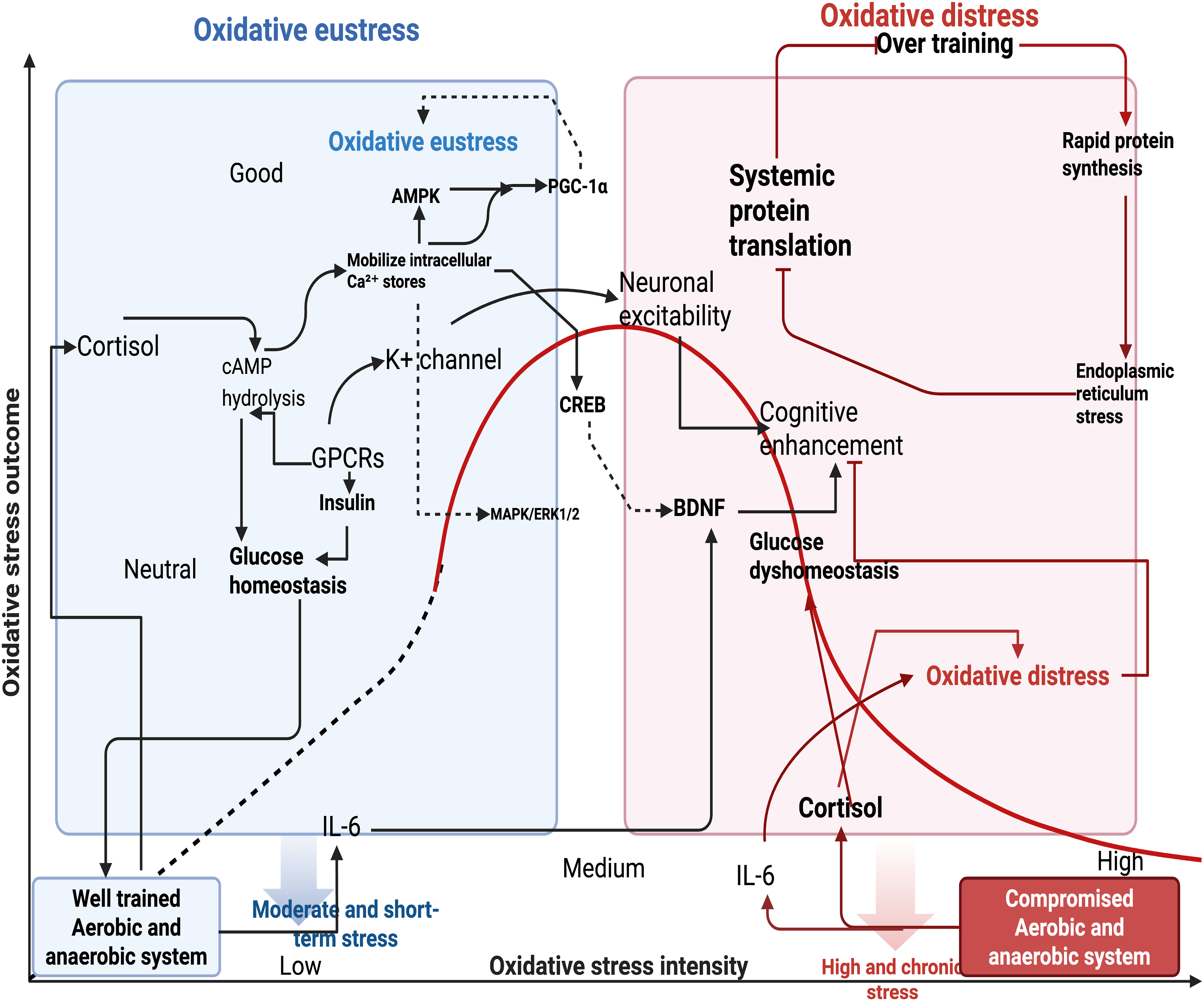
The role of endoplasmic reticulum (ER) stress in sports performance is often overlooked. Primarily, when players train hard or compete, rapid protein synthesis can overload the ER, triggering ER stress and slowing systemic protein translation by activating the unfolded protein response (UPR). 67 This short-term ER stress enhances antioxidant capacity, mitochondrial function, and chaperone activity in muscle. 67 Nevertheless, during overtraining, a chronic increase in ER stress shifts the UPR from a protective to a damaging state by activating the pro-apoptotic gene C/EBP homologous protein (CHOP) via PERK–eIF2α signaling.60,61 This can induce ubiquitin-proteasome degradation of myofibrils, disrupting contractile function and force, eventually leading to muscle degeneration and weakness. 68 This can also induce severe anxiety via HPA feedback loops, 69 which results in poor decision-making during a game. Paradoxically, optimum oxidative stress increases BDNF transcription via CREB Ser133 phosphorylation by triggering CaMKIIα autophosphorylation, enabling players to learn and adapt their memory through alterations in synaptic plasticity, initiated by long-term potentiation (LTP).7,12,70 Endurance efforts in volleyball can trigger epigenetic modifications, including DNA methylation, histone modifications, and miRNA expression, to reduce stress levels, similar to the effects seen in running. 12 A recent study reported that elevated levels of miR-24 and miR-26a in volleyball players may be attributed to psychological stress. For instance, miR-24 curbs aldosterone and cortisol synthesis in the adrenal cortex, 71 thereby sparking stress-adaptive mechanisms that bolster stress resilience; however, if this mechanism is disrupted, it can increase fragility to psychological stress. 48 Furthermore, the recently proposed concept of “Training-Fuel Coupling (TFC)” effectively delineates the bidirectional interaction between molecular networks activated during exercise and specific nutritional intake. 72 For instance, physical activity modifies the metabolic environment by activating AMP-activated protein kinase (AMPK) and mechanistic target of rapamycin (mTOR), thus influencing training outcomes such as hypertrophy and recovery through enhanced fatigue resistance. 72 This phenomenon is particularly relevant to volleyball, a sport that requires substantial energy expenditure and repeated high-intensity movements. Conceptualizing TFC may facilitate the optimization of explosive power, spike endurance, and recovery between rallies by promoting rapid ATP replenishment, mitochondrial biogenesis, lactate buffering, and metabolic flexibility. Nonetheless, empirical validation of this concept requires investigation across different experimental paradigms using various exercise protocols related to volleyball training.
Can Predicting Molecular Signaling Be Useful in Muscle Strength & Power?
Predicting molecular pathways helps overall muscle strength and power. Primarily, three scenarios are crucial: muscle growth, recruitment of specific muscle fiber types, and muscle adaptation, which collectively enhance muscle strength and power in response to training. Pathways, such as mTORC1-S6K1, IGF-1, protein Kinase B (Akt), Forkhead box O1 (FOXOs), NF-κB, and myostatin, are the primary candidates involved in these scenarios (Figure 3).73,74 For instance, resistance training activates the mTORC1-S6K1 signaling pathway, which promotes muscle protein synthesis by phosphorylating the ribosomal protein S6 and releasing eIF4E from its binding proteins. This can trigger protein translation via ⍺7β1 integrin.
75
Although this study did not directly assess the role of the mTORC1-S6K1 pathway in volleyball players, the resistance encountered during volleyball may activate it. Repetitive overhead motions, such as spiking and serving during training, can affect the infraspinatus and deltoid muscles, leading to muscle atrophy. In this scenario, assessing mTORC1-S6K1 may be a valid candidate as it is involved in muscle atrophy.
75
Professional volleyball players may have higher IGF-1 levels, which could reduce the risk of muscle atrophy compared to the general population, suggesting an anabolic effect of IGF-1 on preventing muscle atrophy.7,12 Also, increased IGF-1 may regulate mTOR by recruiting phosphoinositide 3-kinase (PI3K) to promote its phosphorylation. This is crucial for improving force production in volleyball players via improving myotube hypertrophy and preventing atrophy-induced denervation.
49
Additionally, Akt phosphorylation inhibits the tuberous sclerosis 1 and 2 proteins, which can affect muscle growth via the mTOR pathway, possibly involving the phosphorylation of p70S6K, ribosomal protein S6 activation, 4EBP1, and eIF4E, leading to decreased force production.76,77 The Smad pathway is known to enhance bone morphogenic processes by inhibiting myostatin signaling.
78
This pathway is mainly activated by resistance-type exercises.
79
In the context of volleyball, high-impact movements, such as jumping and landing, increase body resistance, which may affect Smad signaling and increase bone morphogenic processes. Furthermore, volleyball involves continuous moderate-intensity running and jumping, making it an aerobic sport.
80
Autophagy plays a vital role in maintaining muscle health and enhances volleyball performance. Although no direct research has linked autophagy-related genes specifically to volleyball players, molecular signals such as BDNF are activated in these players. For example, BDNF can phosphorylate FOXO3 via AKT, which, in turn, regulates autophagy-related genes such as LC3, Atg4, Atg12, and Beclin-1.
81
Calcium intake in volleyball players can boost calcium-related signaling pathways, potentially improving bone mineral density (BMD) and regulating resorption. This contributes to balanced bone turnover.
82
Molecular interactions to improve muscle strength, force, adaptation, and tackle stress response during volleyball performance. During a volleyball performance, the stress response activates AMPK, PGC-1α, and MEF2 to increase muscle strength and force by compensating for energy deficits and inducing allostasis, thereby maintaining energy homeostasis. External resistance in volleyball activates ⍺7β1 integrin to mediate mTORC1-triggered cognitive flexibility by affecting FAK, PI3K/AKT, and improving adaptation. Possible biomarker list for improving muscle growth, predicting damage, assessing metabolic health, and impacting mood and cognition (Red box)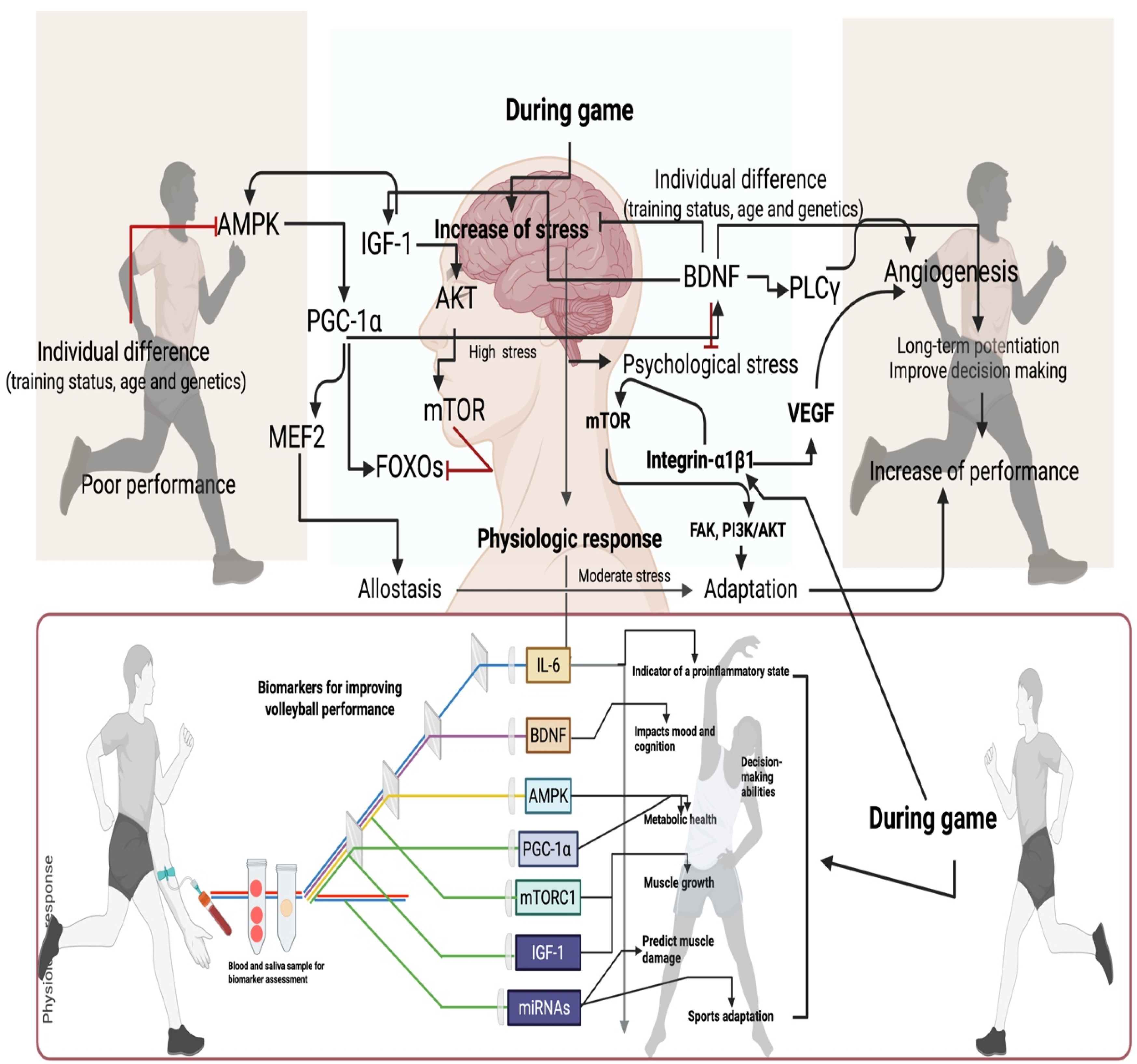
Potential Biomarkers for Volleyball Performance
The core aim of sport performance is to minimize injury risk while improving player performance. Pinpointing reliable biomarkers for achieving this remains challenging. Nevertheless, analyzing molecular markers via targeted signaling pathways, such as IL-6/STAT3, BDNF, and mTOR, offers promising biomarkers to enable customized training programs, monitor players’ progress, and guide rapid recovery. 83 IL-6 is one of the promising biomarkers that can be used to track the players’ inflammation status, but its dual nature, like being an inflammatory or anti-inflammatory, and the involvement in boosting fat metabolism, may potentially challenge its accurate interpretation. Measuring BDNF level can also be a promising way to predict decision-making skills in players, as this molecule enhances mood stability, synaptic plasticity, and cognitive processing. But exercise-induced other byproducts, like lactate, can directly interfere with this BDNF elevation, masking the true BDNF effect on neural adaptation. 51 Consequently, it is unable to determine whether the BDNF increase results from improved mood and cognitive processing or from the athlete’s heightened inflammatory response, which leads to increased lactate and further BDNF elevation. Assessing molecules such as AMPK and PGC-1α may predict players’ metabolic health and mental well-being. However, elevation of lactate can directly tag AMPK and PGC-1α to sensitize, and their transient activation, 52 along with other confounding factors such as overtraining-induced spikes in these molecules, may blur other adaptive and overtraining signaling. In this context, assessing IGF-1 and mTOR can be valuable markers as they can regulate protein synthesis and muscle development. Small molecules, such as miRNAs, can also serve as useful markers for assessing individual fitness and identifying overtraining or injury. For example, miR-27a and miR-30a could help detect concussions in volleyball players. 84 miRNAs, such as miR-21, miR-24, miR-26a, miR-320, miR-210, miR-223, miR-486, and miR-134a, may also help predict a player’s psychological state and adaptive response to training.29,30,85 Therefore, analyzing these molecules in volleyball players could help improve training strategies and injury prevention.
Critical Integration of Biomarkers in Performance, Recovery, and Injury Prevention
Although individual studies highlighted different molecular signaling responses among volleyball athletes according to training capacity, integrating these findings reveals a complex molecular network at both local and systemic levels that governs athletes’ performance and resilience. Notably, these biomarkers function synergistically to manage the physical and cognitive demands of volleyball. For example, decision-making and cognition during the game are most often associated with increased IGF-1 and BDNF levels in the literature, indicating the duality of these proteins. IGF-1 promotes muscle hypertrophy, and BDNF drives central neuroplasticity to improve motor skill consolidation and tactical memory. Nevertheless, evidence of BDNF remains contradictory. For example, some studies report training-induced elevations, whereas others report negative correlations between match scores and stress management in female players (Polat et al, 2020; Rossi et al, 2021). This inconsistency limited the exploration of these molecules in the current research. Also, BDNF expression is highly sensitive to genetic polymorphisms and psychological stress, suggesting that these biomarkers may be highly individualized for assessing the player’s cognitive readiness rather than a universal predictor of match success. The role of biomarkers such as IL-6, GH, and specific miRNAs in the management of inflammation is crucial for injury prevention in volleyball-like games. Primarily, these molecules cross-talk with each other during the recovery phase. For example, acute spikes in IL-6 after the match indicate muscle damage and metabolic stress. Nevertheless, the training-induced reduction in baseline IL-6 after the match with elevated GH highlighted a successful shift toward a muscular adaptation and a regenerative anabolic state. Therefore, tracking these biomarkers could help identify the risk of overtraining or soft-tissue injuries in athletes before clinical symptoms appear, enabling timely modification of training loads.
Pharmacological Considerations
While pharmacological agents can enhance athletic performance, they may confound the evaluation of athletes’ health status. Measurement of circulating biomarkers is particularly susceptible to interference from these substances, compromising the accuracy of physiological assessments of performance and recovery. Accordingly, it is critical to elucidate the mechanisms by which these drugs modulate key molecular signaling pathways in relation to biomarker interpretation, rather than solely considering their ergogenic properties. For example, administration of follistatin promotes muscle hypertrophy by inhibiting myostatin, activin A, TGF-β1, and PI3K/Akt/mTOR pathways (Figure 4).86,87 From a biomarker perspective, follistatin use may artificially elevate circulating IGF-1 and Akt/mTOR levels, possibly misrepresenting true training adaptations and instead reflecting pharmacologically induced anabolic potentiation.86-88 This complicates the interpretation of markers associated with muscle adaptation and recovery in athletic populations.
89
Tocilizumab, a monoclonal IL-6 receptor antagonist, attenuates the inflammatory response and can reduce standard inflammatory biomarkers such as CRP and ESR.
90
This can obscure an accurate assessment of athletes’ inflammatory status. In the specific context of volleyball, clinicians must recognize that tocilizumab treatment could mask athletes’ underlying physiological state. Additionally, overtraining perturbs redox homeostasis, predisposing individuals to oxidative stress.91,92 Exogenous antioxidants, including N-acetylcysteine, sulforaphane, canfosfamide, and dimethyl fumarate, are employed to restore redox equilibrium.93,94 However, these interventions may alter oxidative stress biomarkers, such as 8-isoprostane and GSH ratios. Therefore, careful assessment of these redox biomarkers is necessary to distinguish between pharmacologically normalized oxidative states and genuine physiological adaptations. The use of ergogenic aids, such as caffeine and creatine, can further influence biomarker profiles.95,96 Specifically, creatine supplementation elevates serum creatinine levels, which may be erroneously interpreted as evidence of muscle damage or renal dysfunction in athletes.
96
Therefore, documenting the use of these supplements precisely helps develop robust, biomarker-based monitoring protocols in volleyball players. List of pharmacological agents for improving performance via increasing muscle growth and repair processes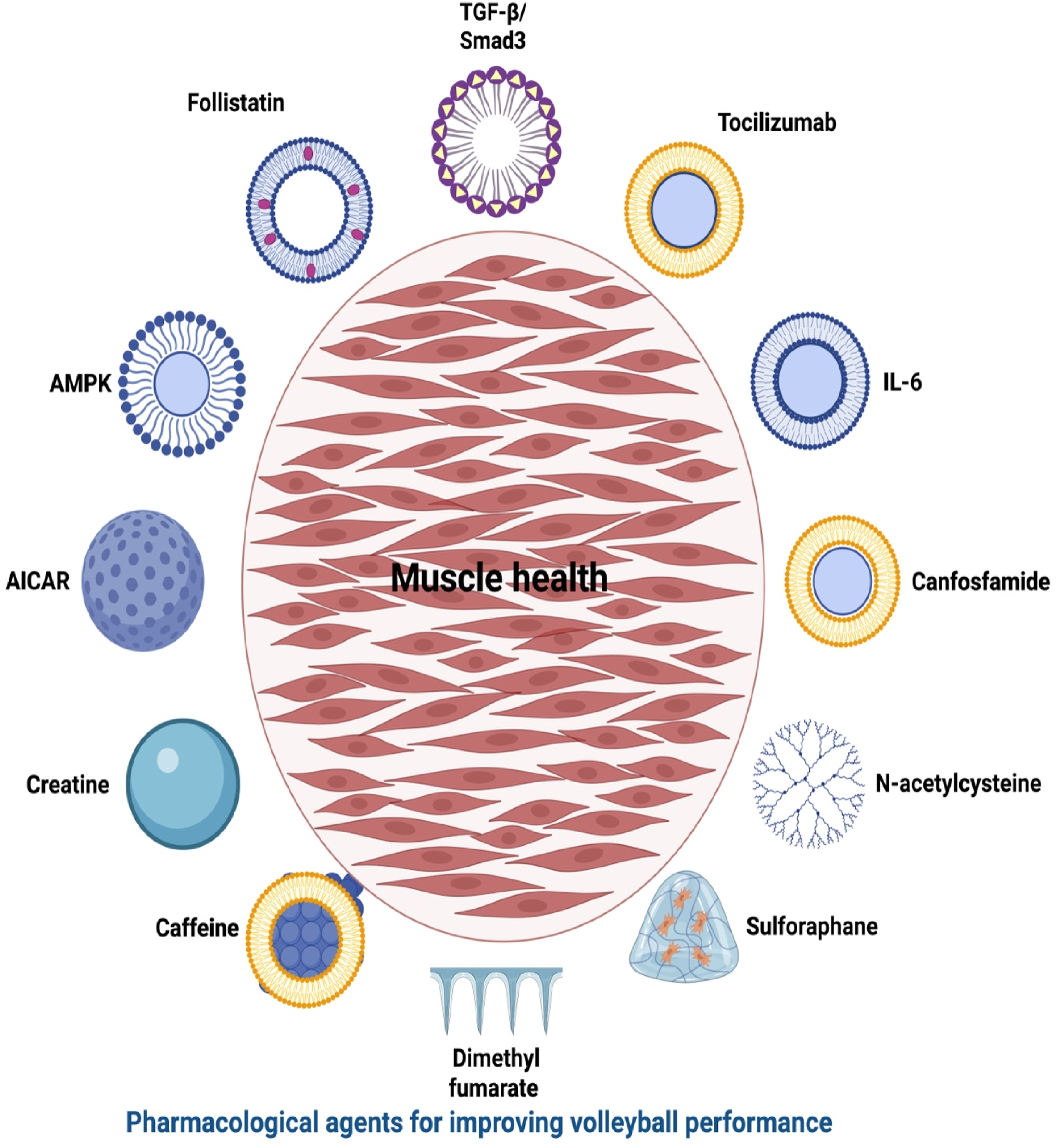
Critical Comparisons of Sport Type, Sex, Age, and Training Status
It is crucial to consider many aspects, such as the physiological and biomechanical demands of volleyball compared to other sports, when interpreting these molecular biomarkers from the literature. Unlike sports such as marathon running or triathlon, where athletes engage in continuous endurance exercise that can elevate IL-6 and AMPK activation to compensate for energy, volleyball relies on intermittent, explosive actions. In this context, biomarker profiles such as the GH/IGF-1 and mTORC1 axes are essential for fast-twitch muscle fiber hypertrophy and power generation. Furthermore, age and gender crucially modulate these molecular responses, as evidenced by Dezan et al, who reported that inflammatory markers such as TNF-α and IL-6 fluctuate uniquely in adolescent female players depending on training experience. Female athletes experience cyclical hormonal imbalances that affect baseline BDNF levels and systemic inflammation compared to male athletes, making female players more susceptible to stress-induced cognitive fatigue during games. In addition, age and training status impact the magnitude of the molecular response. For example, elite athletes often exhibit a blunted or highly efficient inflammatory response to pressure games, likely due to chronic epigenetic adaptations and miRNA regulation. Therefore, the use of these molecular biomarkers to predict a player’s overtraining status or cognitive readiness must be assessed against these factors.
Limitations of Current Evidence and Level of Support for Proposed Biomarkers
The data from volleyball studies are quite limited in evaluating their capacity to identify specific biomarker responses to volleyball stimuli. Therefore, care must be taken before drawing conclusions about these effects. For instance, only seven studies with about 100 participants overall provided such data. Most studies had small sample sizes, mixed-gender samples, varied interventions, and lacked control groups or long-term follow-up. As a result, the evidence for specific biomarker ranges is preliminary, making firm conclusions difficult. Biomarkers like GH, IGF-1, and IGFBP-3 rise, while IL-6 decreases after 60 minutes of practice in a single study of 14 adolescent males 7 ; however, the IL-6 decrease needs replication, as it is a well-known exercise-responsive myokine. Similarly, BDNF and IGF-1 are linked to neuroplasticity, cognitive performance, and metabolic rewiring, but they were elevated only following WBC in a 2-week mixed training program. The exact role of volleyball-induced increases in BDNF and IGF-1 is still unclear. Two cross-sectional studies with young female athletes found no correlation between resting BDNF levels and performance, questioning BDNF’s usefulness as a monitoring marker in indicating players’ cognitive skills or metabolic status. Of these seven studies, IL-6 was most frequently measured and consistently showed decreased levels after training, along with declines in microRNAs like miR-17, miR-22, miR-24, and miR-26a. Although the decrease in IL-6 may be due to long-term anti-inflammatory adaptation, the initial acute rise in IL-6 is important for interpreting training load, and it was not captured in these studies.20,29 These findings are unconfirmed in this aspect and have not yet been validated. Moreover, another study showed that an unexpected increase in TNF-α as IL-6 decreased, highlighting the complex pro- and anti-inflammatory interactions in youth volleyball. 31 Overall, these studies lack high-quality prospective validation. Most are preliminary and need replication. With more data, larger sample sizes, and improved study designs, these biomarkers could become routine parameters in practice.
Conclusion and Future Perspectives
Molecular proteins such as BDNF, IGF-1, mTOR, AMPK, IL-6, and PGC-1α orchestrate complex networks that integrate muscle strength, power generation, and stress resilience in volleyball athletes. Furthermore, intense training-induced metabolic shifts affect these proteins to support cognition, while miRNAs, including miR-21, miR-24, miR-26a, miR-223, and miR-486, are transiently altered in the training response and in inflammation. Nevertheless, the use of these biomarkers in applied sports science requires considerable attention, as heterogeneity in exercise protocols, sample demographics, and sampling timeframes can confound their interpretation. Also, the absence of standardized reference values for these biomarkers can limit their use for fully predicting performance, assessing injury risk, or personalizing training in real time on the field. Although technological advances, including wearable biosensors, synthetic molecularly imprinted polymers, and AI-driven analytics in the recent era, offer exciting potential for tracking biochemical cues, significant technical barriers still exist regarding signal noise, sweat interference, and limited sport-specific datasets, and this must be overcome to fully unlock the use of these technologies. Therefore, rather than aiming to use these biomarkers as an immediate solution, these molecular proteins and their interaction with other proteins and their specific pathways can currently provide a critical conceptual framework. So, longitudinal, highly standardized studies with larger cohorts are imperative to establish baseline reference ranges for these biomarkers and to validate their real clinical utility across different sports, including volleyball.
Supplemental Material
Supplemental Material - Molecular Protein Interactions and Predictive Pathways as Biomarkers for Enhancing Volleyball Performance: A Narrative Review
Supplemental Material for Molecular Protein Interactions and Predictive Pathways as Biomarkers for Enhancing Volleyball Performance: A Narrative Review by Yong Cai, Jie Dai, Anand Thirupathi and Weijun Song in Biomarker Insights.
Footnotes
Author’s note
This article used the Grammarly tool as an AI-based solution for grammatical correction and refining academic language to improve clarity and sentence accuracy. No scientific data were generated or altered using AI.

Author Contributions
Yong Cai, Anand Thirupathi: Conceptualization; Jie Dai: Methodology; Yong Cai and Weijun Song: Writing—original draft preparation; Yong Cai, Weijun Song, Anand Thirupathi, Jie Dai: Writing—review and editing; Yong Cai: Funding acquisition. All authors have read and agreed to the published version of the manuscript.
Funding
A Project Supported by Scientific Research Fund of Zhejiang Provincial Education Department (Grant number: Y202456137).
Declaration of Conflicting Interests
The authors declared no potential conflicts of interest with respect to the research, authorship, and/or publication of this article.
Data Availability Statement
No datasets were generated or analyzed during the current study.
Supplemental Material
Supplemental material for this article is available online.
Appendix
References
Supplementary Material
Please find the following supplemental material available below.
For Open Access articles published under a Creative Commons License, all supplemental material carries the same license as the article it is associated with.
For non-Open Access articles published, all supplemental material carries a non-exclusive license, and permission requests for re-use of supplemental material or any part of supplemental material shall be sent directly to the copyright owner as specified in the copyright notice associated with the article.
