






Abstract
This study provides a spatially resolved assessment of the abundance, composition, and ecological risk of large microplastics (LMPs, 1–5 mm) and mesoplastics (MSPs, 5–25 mm) in surface sediments at Lido Morelli Beach, southern Italy. Fifteen replicated sediment samples distributed across five shoreline-parallel transects were taken from the upper 5 cm of sediment within 0.25 m2 quadrats, covering approximately 800 m2 of beach surface. Plastic particles were visually sorted, size-classified, and chemically identified using ATR–FTIR spectroscopy. A total of 764 LMPs and 229 MSPs were collected, with maximum concentrations for both size classes occurring along storm berm transects. Polymer composition was dominated by polyethylene and polypropylene, and a strong positive correlation between LMP and MSP abundances (R2 = 0.86) indicated co-accumulation. Plastic pollution was assessed using four ecological indices. Pollution Load Index values >1 for both size classes and exceptionally high Pellet Pollution Index values suggest a probable pellet industrial source, while hazard-based indices (Hazard Index) indicated low polymer toxicity. The results provide actionable evidence for environmental regulators, port authorities, industrial pellet producers, and coastal management agencies, supporting targeted pellet-loss prevention, improved port and supply-chain controls, and monitoring strategies aligned with forthcoming EU regulations on the release of plastic pellets.
This is a visual representation of the abstract.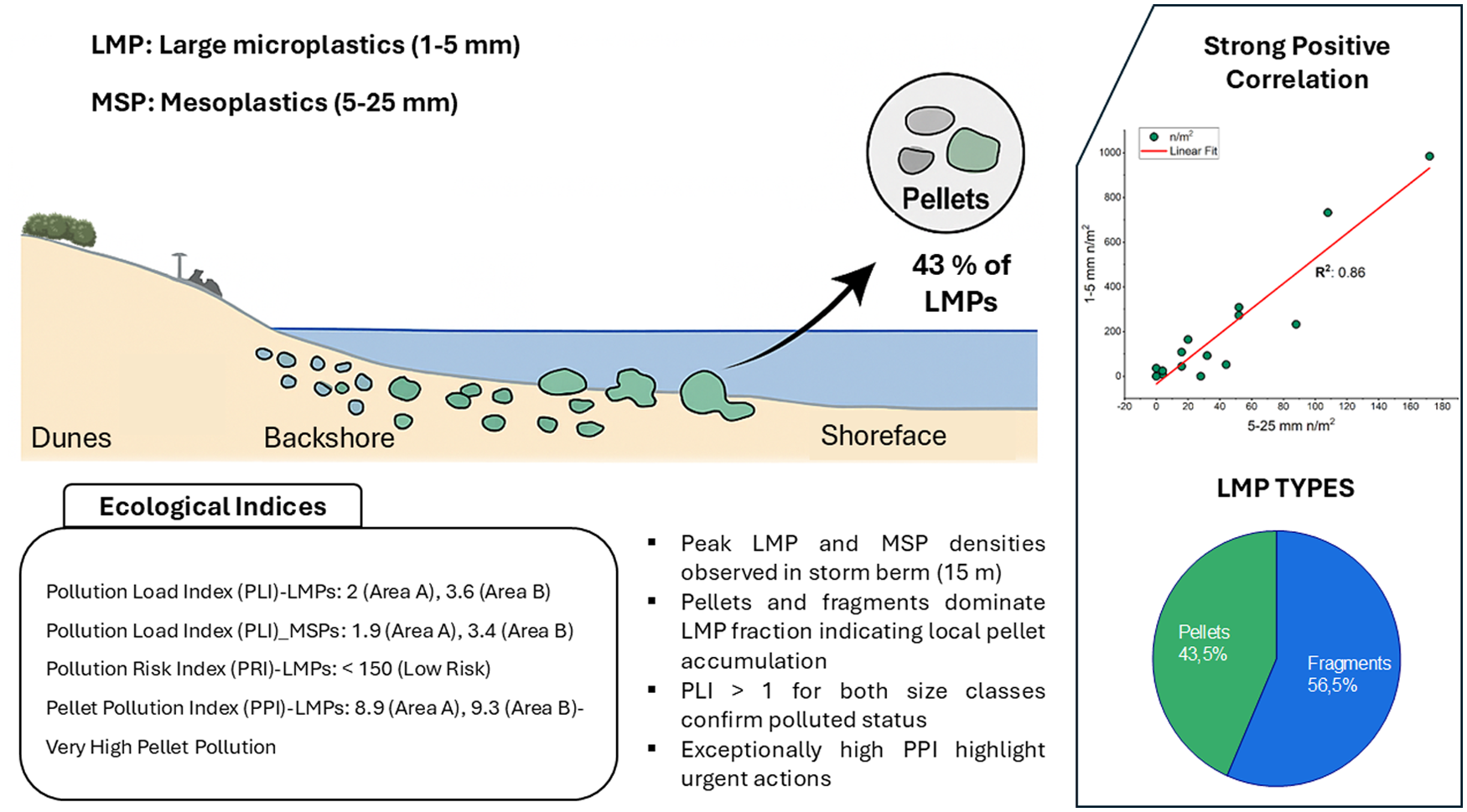
Introduction
Plastic debris in the oceans has been monitored for decades (Morris, 1980; Venrick et al., 1973), but recent estimates suggest about 5.25 trillion plastic particles, equivalent to 268,940 tons of waste, float on the world’s seas (Eriksen et al., 2014). The Mediterranean Sea is among the world’s top plastic accumulation zones, receiving about 100,000 tons of plastic annually from various human activities, due to its semi-enclosed nature and currents that favor the spread of plastic (Cincinelli et al., 2019).
According to classifications by the National Oceanic and Atmospheric Administration (NOAA) and the United Nations Environment Program (UNEP), plastic debris in the marine environment is primarily grouped by size. Macroplastics (>25 mm) are large, visible items such as bottles, bags, and fishing gear; mesoplastics (5–25 mm) are medium-sized fragments, usually from the breakdown of larger objects; and microplastics (MPs) are plastic particles smaller than 5 mm. MPs are further classified into primary MPs, intentionally manufactured for specific uses, and secondary MPs, resulting from the breakdown of larger plastics (Frias & Nash, 2019). The fragmentation of larger debris into MPs is a gradual process driven by physical, chemical, and biological factors, including wave action, sand abrasion, UV radiation, temperature fluctuations, and biological activity by microorganisms (Issac and Kandasubramanian, 2021). Based on these definitions, recent standards proposed further precision for MP classification. In particular, ISO 24187 (International Organization for Standardization, 2023) defines large microplastics as any solid plastic particle insoluble in water with any dimension between 1 mm and 5 mm, and microplastics as any solid plastic particle insoluble in water with a dimension between 1 µm and 1,000 µm. Recognizing these distinctions, it is important to note that all categories exhibit significantly different properties in terms of distribution, ecological impact, and environmental risk; understanding these differences enables the examination of MPs’ environmental presence and behavior.
MPs, intended as particles smaller than 5 mm, are the most studied class in the environmental matrices. They occur at high concentrations in both aquatic and terrestrial environments, especially in soils and surface sediments exhibiting a range of physical and chemical properties, including variations in size, density, shape, charge, and color. These characteristics influence their environmental fate and their bioavailability to aquatic organisms (Wright et al., 2013).
Mesoplastics (MSPs, 5–25 mm), along with macroplastics and MPs, enter freshwater and marine ecosystems from many sources, mainly land-based activities such as residential waste, tourism, industry, harbor activities, and wastewater effluent (Ellos et al., 2025). Although less abundant than MPs, MSPs are found in various environments, including beaches, rivers, agricultural soils, and landfills. While MSPs are less likely to be ingested by smaller fauna, they can break down into MPs, making contamination more persistent and more widespread. Investigating MSPs is key, as they represent an intermediate stage between macroplastics and MPs; accordingly, understanding how MSPs fragment, interact ecologically, and move in the environment is critical for assessing their role in pollution. By identifying MSP sources, researchers can create targeted mitigation strategies and evidence-based policies to reduce plastic input into aquatic systems (Chellasamy et al., 2023; Ellos et al., 2025).
Large microplastics (LMPs, 1–5 mm) fall into an intermediate category, often included in MP monitoring, and share features of both micro- and mesoplastics. While their direct toxicity is usually lower than that of small MPs, their tendency to fragment easily makes them significant contributors to secondary MP pollution (Chellasamy et al., 2023; Liu et al., 2018). Some studies suggest that LMPs and MSPs are closely linked in environmental processes, with MSPs accumulating and degrading into LMPs, which in turn fragment further into smaller MPs, thereby increasing contamination (Ellos et al., 2025; Isobe et al., 2014).
In the Mediterranean region, the spatial distribution of micro- and MSPs in coastal sediments is jointly controlled by beach morphodynamics, storm activity, and anthropogenic pressure. Field studies show that accumulation maxima commonly occur along storm berms, accretional upper-beach sectors, and near river mouths, reflecting the role of storm-driven deposition and swash dynamics in redistributing particles across the beach profile (Balestra et al., 2024; Constant et al., 2019). Local hydrodynamics, including wave height and direction, return currents, and storm frequency, further modulate seasonal and spatial variability, with pocket beaches and semi-enclosed bays acting as preferential accumulation settings due to their geometry and reduced flushing (Misic et al., 2019). Basin-scale modeling confirms that wave- and wind-driven surface circulation governs beaching hotspots, particularly along coastlines exposed to the dominant drift direction. Superimposed on these physical variables, urban, industrial, port, and riverine inputs substantially enhance sedimentary loads, with fragments accumulating on beaches and in protected depositional environments functioning as transport endpoints (Lo Bue et al., 2025; Merlino et al., 2020; Strady et al., 2025).
Despite growing attention to MPs in coastal sediments, the dynamics, sources, and accumulation pathways of larger plastic size classes (LMPs and MSPs) remain insufficiently characterized, particularly when assessed jointly. Existing Mediterranean evidence, though limited, indicates a consistent coupling among these size classes in abundance, sources, and degradation processes. LMPs typically dominate numerically, whereas MSPs contribute disproportionately to total mass, pointing to a substantial but under-recognized reservoir of coarse plastic in sediments (Grini et al., 2022). Elevated loads in anthropized settings—such as river mouths and industrialized coasts—reinforce this co-occurrence across environmental gradients, but the quantitative relationships governing these linkages remain poorly constrained, underscoring a critical gap in our understanding of sedimentary plastic dynamics.
Moreover, most monitoring studies to date rely on single-point sampling, which fails to account for spatial variability in the distribution of plastic items. As a result, many assessments may not accurately capture the extent of contamination in marine and coastal environments (Leads et al., 2023; Ulhasanah et al., 2025). This study provides the first integrated assessment of LMPs and MSPs in shallow sandy sediments of a Mediterranean protected coastal system (Lido Morelli Beach, southern Italy), thereby establishing a high-resolution baseline for these size classes. Unlike most previous works, spatial variability was assessed using a systematic sampling approach with shoreline-parallel transects situated between the beach berm and the coastal dune system. A key novelty of this work lies in the explicit investigation of potential relationships between these two size categories, explicitly targeting their co-accumulation, size coupling, and source-related patterns to clarify their interconnected roles in environmental fragmentation and dispersion. To further advance interpretation, four ecological indices, Pollution Load Index (PLI), Risk Index (H), Pollution Risk Index (PRI), and Pellet Pollution Index (PPI), were employed to evaluate the ecological risks associated with plastic debris, linking size-resolved plastic distributions to ecological risk and management relevance.
While the dataset provides a robust spatial baseline, it should be considered preliminary, as the absence of temporal replication precludes assessment of seasonal or event-driven variability, which is known to strongly influence plastic accumulation on sandy beaches.
Overall, this study provides a new dimensionally integrated perspective on plastic pollution, offering a transferable framework for monitoring and supporting evidence-based coastal management in Mediterranean environments.
Materials and Methods
Study Site and Sampling Design
The study site is situated in southern Italy, on the Mediterranean Sea, one of the most polluted marine environments affected by plastic waste. The site is located within a Protected Area, specifically within the “Litorale Brindisino” Site of Community Importance and the Regional Natural Park of Coastal Dunes. The “Litorale Brindisino” extends over 7,256 hectares, of which 423 are land and 6,833 are sea. The site features an extensive dune system, characterized by Mediterranean juniper scrub and sandy dune belts that are subject to erosion by marine, wind, and anthropogenic forces. The Brindisi coast also features important river sources, including the Grande, Piccolo, and Morello Rivers, which flow behind the dune system and form a complex of interconnected wetlands. The area is affected by both natural hydrodynamic forces and human activities such as tourism and maritime transport. The nearby Morello River, the popularity of the beaches as a tourist destination, and the proximity to Brindisi (a major port and industrial area) complicate the identification of pollution sources, making this site relevant for studying multiple MP inputs.
A single sampling campaign was carried out in June 2022, before the opening of the bathing facilities and the summer cleaning of the beaches, in a specific area located along the Brindisi coast, identified as Lido Morelli Beach, and located within the Regional Natural Park of Coastal Dunes, between “Torre Canne” and “Torre San Leonardo.”
The sampling design for LMPs and MSPs was developed by adapting the OSPAR Beach Litter Guidelines (OSPAR Commission, 2020) and the European Guidance on the Monitoring of Marine Litter (OSPAR, 2010). Despite these frameworks primarily addressing macro-beach litter and acknowledging the absence of a fully standardized protocol for beach microdebris, they provide consolidated recommendations on spatial coverage, sampling units, and replication.
The OSPAR requirement of a minimum investigated shoreline length of 100 m was met by surveying an equivalent total beach length, subdivided into five discrete transects of 20 m each rather than a single continuous stretch, in order to prioritize investigation of cross-shore (land–sea) distribution rather than alongshore continuity, in line with the objectives of this study.
The study area was divided into two sampling sub-areas, A and B, which were intersected by the Morello River and covered 277.33 and 526.53 m2, respectively (Figure 1). The B sub-area is located in the area occupied by a seasonal bathing establishment (i.e., a privately managed beach concession typical of Italian coastal areas), which operates during the summer but remains accessible outside the bathing season. Within these sub-areas, sampling was carried out along five identified transects selected in the backshore with a variable distance from the high tide level to the dunes. Specifically, two transects were identified in area A, the first (transect 1) at a distance of 6 m from the high tide level, and the second (transect 3) at a distance of 15 m. Similarly, in area B, it was possible to select three transects at a distance of 6 (transect 2), 15 (transect 4), and 25 (transect 5) meters from the high tide level. These distances were selected to represent the main morphological compartments of the beach, from the upper swash-influenced zone to the more stable backshore and dune-proximal areas, and to capture expected gradients in micro- and mesoplastic accumulation driven by hydrodynamic, aeolian, and anthropogenic processes. Sediment sampling was conducted using a 0.25 m2 quadrat (50 × 50 cm) and a depth of 5 cm, in accordance with European technical recommendations indicating defined-area sampling devices and collection of the uppermost sediment layer as appropriate for recently deposited microlitters. Inside the square, the uppermost 5 cm of sand was removed with a metal spatula. This depth isolates the sediment layer most affected by wave action, aeolian transport, and beach cleaning, but may underestimate deeper, buried particles, potentially introducing bias.
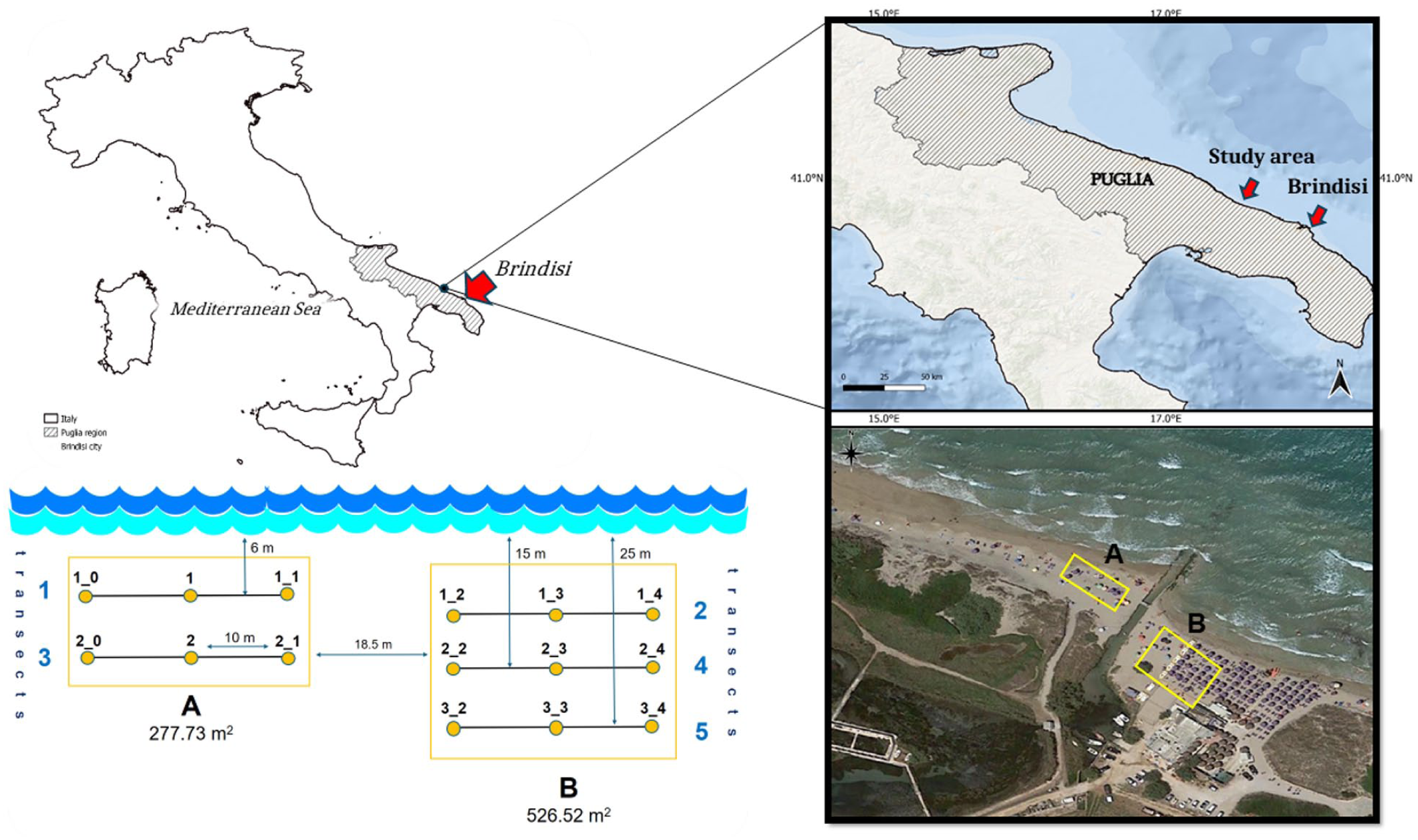
Map of the study area investigated at the national level (Italy) (top left) and regional level (Puglia) (top right); sampling design with transect subdivision (bottom left) and corresponding satellite image (bottom right). The regional map of Puglia is based on the ESRI Ocean basemap, the beach-scale image on Google satellite imagery, and the sampling scheme was manually drawn by the author.
Along each transect, three spatial replicates were collected at 10 m intervals, as suggested by the European guidelines, yielding a total of 15 sediment samples across the investigated area, approximately 800 m2 (Figure 1). Although formal power analysis was not feasible due to the lack of site-specific variance estimates, the combination of sub-area stratification, cross-shore positioning, and within-transect replication represents a balance between logistical constraints and the need to resolve major spatial patterns rather than fine-scale variability. Temporal representativeness is limited because repeated seasonal sampling was not possible at this touristic beach, which undergoes routine mechanical cleaning that may reduce surface plastic abundance and introduce a potential source of bias.
To minimize field contamination, a strict cleaning protocol was followed, where all equipment was thoroughly rinsed with Milli-Q water before use. Each sample was placed in a previously washed glass jar and stored in the dark until analysis.
Sample Preparation
Each sediment sample underwent manual sieving to isolate synthetic particles (plastics) from natural debris. The recovered plastic particles were classified into two distinct size classes: MSPs (5–25 mm) and LMPs (1–5 mm). The plastic material retained by the 5.0 mm sieve and up to 25 mm was classified as MSPs, whereas particles retained between the 1 and 5 mm sieves were classified as LMPs. The LMPs were initially subjected to visual inspection, followed by observation under a stereomicroscope for quantification (Masura et al., 2015). All identified large and mesoplastic particles were manually extracted using stainless steel tweezers and stored in pre-cleaned glass Petri dishes (Figure 2). LMPs were assigned to morphological categories based on shape and visual appearance, following standardized criteria commonly adopted in MP studies (Masura et al., 2015). Specifically, pellets were identified as rounded or cylindrical pre-production plastic granules; fragments as irregularly shaped pieces derived from the fragmentation of larger plastic debris; filaments as elongated, flexible particles originating from fishing gear such as nets and lines; spherules as small, rounded particles mainly derived from the fragmentation of expanded polystyrene containers; films, consisting of thin, flexible, sheet-like particles originating from degraded plastic packaging and nets as fibrous or mesh-like fragments originating from the degradation of aquaculture materials. A single trained operator performed sample preparation to minimize subjectivity and inter-operator variability. MSPs were classified as: (i) nets, including fibrous or mesh-like fragments originating from the degradation of fishing or aquaculture gear; (ii) foamed, comprising lightweight particles derived from expanded polystyrene materials; (iii) longitudinal, referring to elongated and rigid fragments; (iv) spherical, including rounded or quasi-spherical particles; (v) irregular, encompassing angular or heterogeneous fragments not attributable to the previous categories.
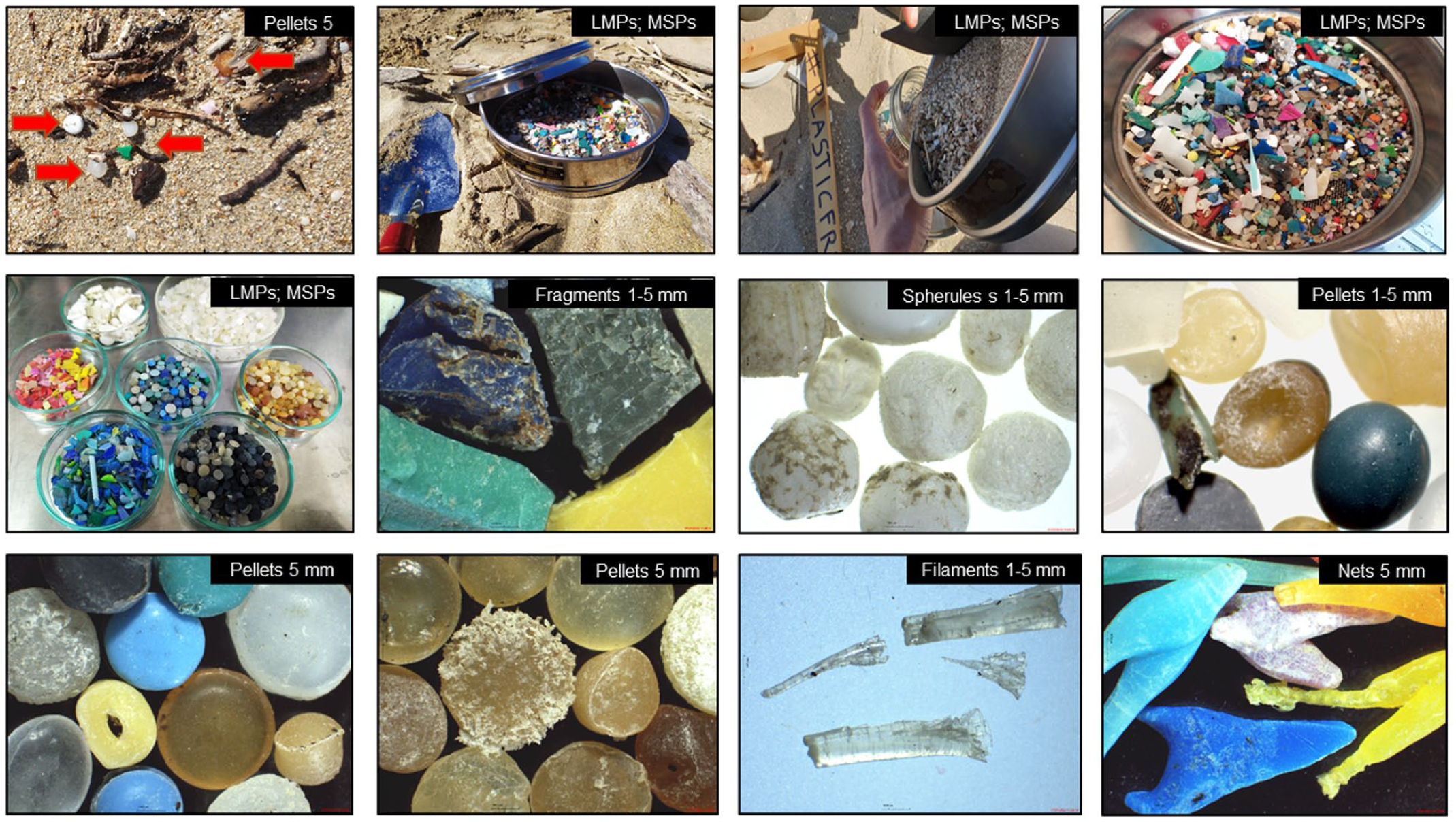
LMP and MSP particles were collected from the sandy sediments along the “Lido Morelli” beach.
To minimize contamination during sample processing, work surfaces and glassware were thoroughly rinsed three times with Milli-Q water, followed by ultrapure solvents, and oven-dried at 200 °C before use. All materials employed in the study (tweezers and glassware) were kept in a laminar flow cabinet and covered with aluminum foil when not in use. Field and laboratory blanks were not included, as the study focused on LMPs (1–5 mm) and MSPs (5–25 mm), for which contamination from airborne fibers, reagents, or laboratory materials, typically relevant for particles <1 mm, is considered minimal.
Infrared Analysis
To chemically characterize the MSPs and LMPs extracted from each sample, Fourier Transform Infrared (FTIR) spectroscopy was employed. FTIR spectra were acquired for MPs within the 1 to 5 mm and 5 to 25 mm size range for each sample. Each particle recovered from each sample was manually handled using metal tweezers and individually placed onto the ATR crystal for the spectral acquisition. The characterization enabled us to identify the polymers most prevalent in the study area and to hypothesize their potential sources. A Nicolet Summit FTIR (Thermo Fisher Scientific), equipped with an ATR Everest accessory and a DTSG KBr detector, was used for spectroscopic investigations. The background was measured with the same settings against air. The acquisitions covered a wavelength range of 3,700 to 400 cm−1, with 32 scans per spectrum and a spectral resolution of 4 cm−1. Polymer identification was performed by comparing the acquired spectra with manufacturer-provided reference polymer libraries and only matches with a similarity score greater than 70% were accepted. The OMNIC™ 9.2.86 software was used for both library matching and the identification of diagnostic absorption peaks characteristic of each polymer.
Data Elaboration
The concentrations of MSPs and LMPs found were expressed as grams and number of particles per unit area of sediment (g/m2; n/m2).
Statistical differences between the two sampled areas (A and B) and among transects at different distances from the shoreline (6, 15, 25 m), considering factors such as concentrations, shape, and particle types, were evaluated using the Kruskal-Wallis test due to non-normality of data, limited sample size, and unequal variances; Kruskal-Wallis tests were followed by Dunn’s post-hoc comparison with Holm correction. Correlations among the detected LMP and MSP concentrations were evaluated using the Spearman rank correlation test due to non-normal distribution, while the relationship between LMP and MSP concentrations was assessed using linear regression models reporting slope estimates, test statistics, p-values, and confidence intervals (Tables S1–S3). Zero-inflated samples were retained in all analyses and not excluded or transformed to preserve the natural heterogeneity of beach sediment contamination.
The spectral data were examined using OMNIC software (Thermo Fisher Scientific, Waltham, USA), covering the entire region (3,700–400 cm−1). For spectral and statistical analysis, OriginPro 2021 was used.
Pollution Indices
The Pollution Load Index (PLI) is used to assess the ecological risk in terrestrial and aquatic environments by measuring contamination from potentially toxic elements. In this study, PLI was used to estimate sediment pollution levels at Lido Morelli Beach. The PLI was calculated separately for LMPs and MSPs at each sub-area.
A PLI >1 indicates pollution, while a PLI <1 suggests a relatively unpolluted area.
The Risk Index (H) evaluates the ecological risk of MPs in sediments, considering their concentration, distribution, and composition to assess environmental impact.
The Pollution Risk Index (PRI) measures pollution risk in beach sediments, accounting for MP and heavy metal contamination, their quantities, types, and potential environmental impacts.
PLI, H, and PRI were calculated per transect and area (A and B) following the equations from (Lots et al., 2017):



Where
Four polymer types were used for risk score calculation: polypropylene (PP), polyethylene (PE), polystyrene (PS), and polyvinyl chloride (PVC), and the risk scoring system used is that of Lithner et al. (2011), with PP risk score 1, PE risk score 10, PS risk score 30, and PVC risk score 10,551.
A Pollution Load Index (PLI) value greater than one indicates a polluted area; a higher Hazard Index (H) reflects the presence of high-risk polymers; and a higher Pollution Risk Index (PRI) suggests that plastics with elevated ecological risk are present.
The pellet pollution index (PPI) was also calculated to classify sandy beaches based on the amount of MP pellets identified on a beach. The PPI was calculated as indicated by Gündoğdu et al. (2022):

Where nitems represents the number of sampled pellets, am2 denotes the total sampled area, and p is the correction coefficient, set at .22. The correction coefficient was applied to categorize pollution levels on a scale from 0 to 3 using the Pellet Pollution Index (PPI). The classification is defined as follows: very low pollution for 0.0 < PPI ⩽ 0.5; low for 0.5 < PPI ⩽ 1.0; moderate for 1.0 < PPI ⩽ 2.0; high for 2.0 < PPI ⩽ 3.0; and very high for PPI > 3.0 (Fernandino et al., 2015).
Results and Discussion
Large Micro- and Mesoplastic Abundance
The results provide estimates of LMP and MSP concentrations in sandy sediments along the Lido Morelli beach. Quantitative evaluations detected LMPs in nearly all samples, totaling 764 LMPs counted and classified, corresponding to 14.69 g of particles across approximately 800 m2.
The LMP densities ranged from 8 to 984 n/m2 and 0.05 to 16 g/m2. Figure 3 illustrates the LMP abundance in terms of both number and mass concentration. The absence of particles was observed in only two samples collected from transect two, six meters from the shoreline. The highest LMP concentrations detected in the investigated area were observed in transects 2, 3, and 4, with values of 332, 984, and 748 n/m2, respectively (Figures 3 and 4). These transects were located 15 meters from the shoreline in areas A and B, suggesting the presence of an accumulation zone within the storm berm on the backshore. Although hydrodynamic conditions and sediment properties were not measured directly, the preferential accumulation of LMPs along the storm berm is consistent with storm-driven run-up and swash sorting processes that transport buoyant and millimetric particles landward, followed by wind reworking and partial burial within the upper-beach sediments.
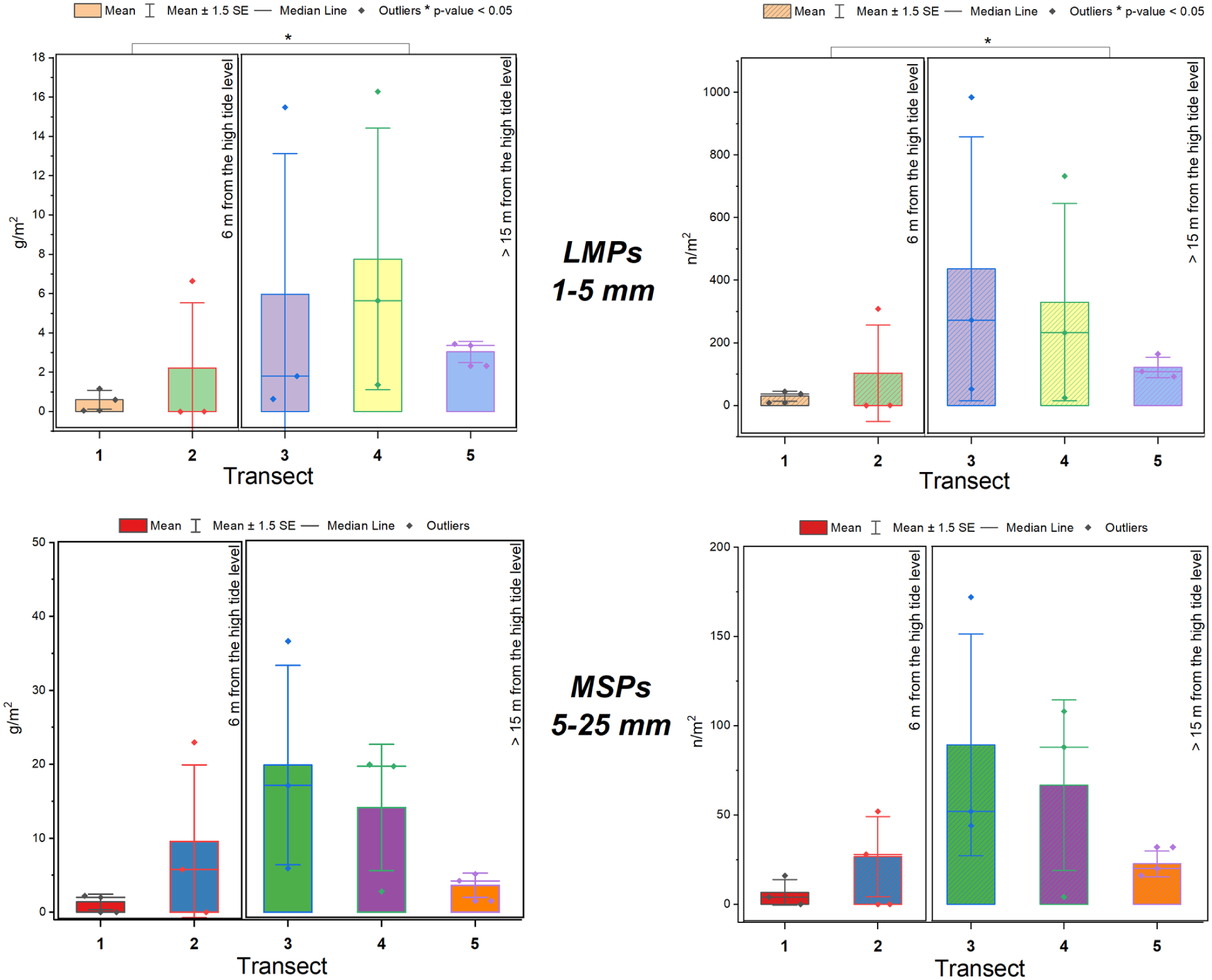
Box plot of LMP and MSP concentrations found in each transect (n = 3 replicates per transect; total = 15), expressed in n/m2 (right) and g/m2 (left) across shoreline-parallel transects. Boxes show the interquartile range (Q1–Q3) with the median; whiskers extend to the minimum and maximum values, and outliers are shown as points. Differences were tested using the Kruskal–Wallis test, followed by Dunn’s post hoc tests.
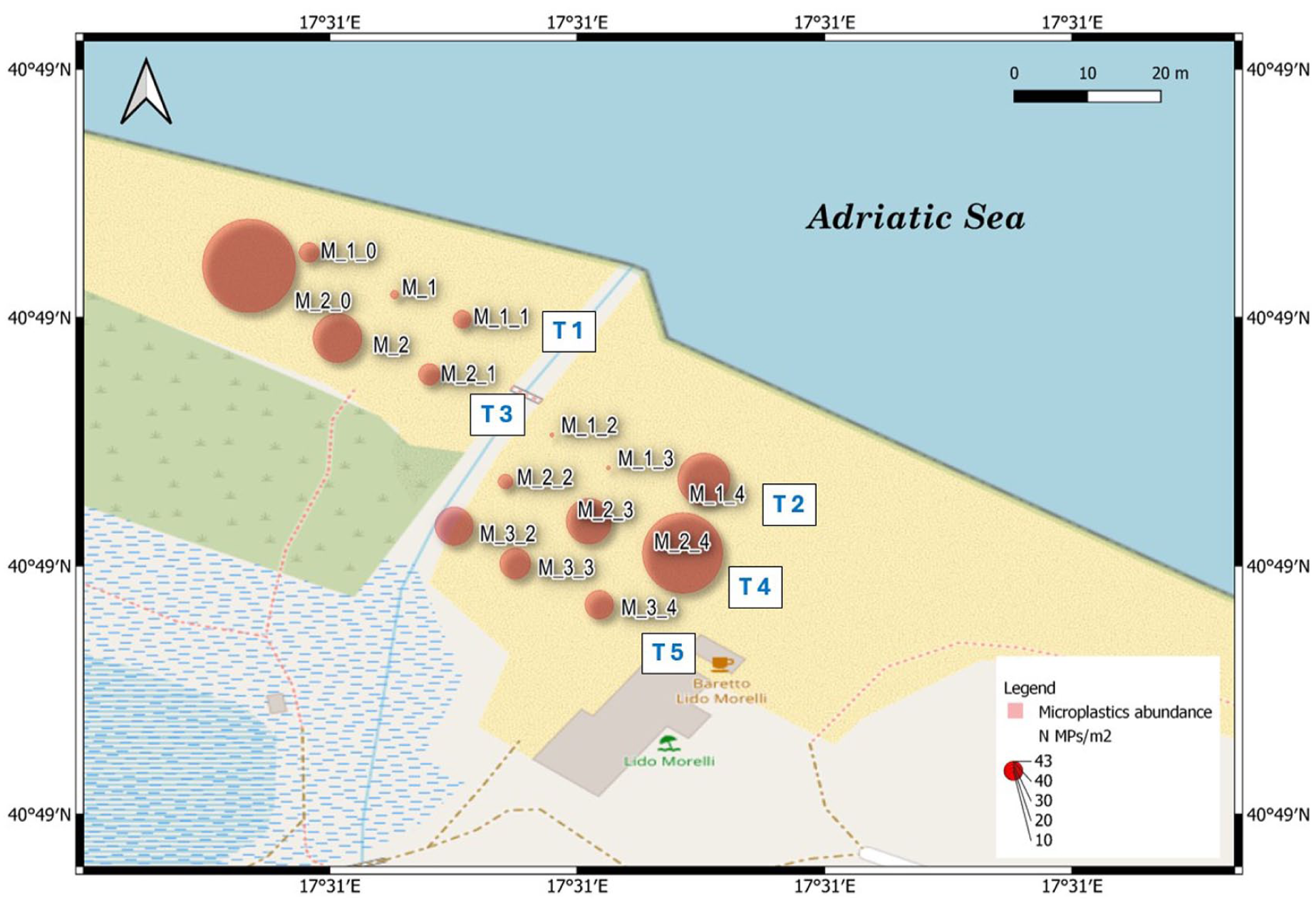
LMP concentration density expressed in n/m2 for each collected sample. The square indicates the number assigned to each transect. Figure created by the author using study data and a Bing Maps basemap in QGIS.
In contrast, the lowest concentrations, ranging from 8 to 86 n/m2, were recorded at approximately 6 meters from the shoreline. In comparison, intermediate concentrations (96–192 n/m2) were observed near the dune zone, approximately 25 meters from the shoreline. The hypothesis of LMP accumulation zones is well supported by the Kruskal-Wallis test, which revealed statistically significant differences in LMP concentrations among transects both in abundance (n/m2: χ2 = 4.51, p = 0.034) and mass (g/m2: χ2 = 5.02, p = 0.025; Figure 3). Post-hoc Dunn tests indicated significantly higher values of LMPs located farther from the shoreline (⩾15 m) compared to the proximal transect (6 m from the shoreline). Conversely, no significant differences in concentration were found between the two sampled areas (A and B), nor were any differences observed in the shapes and polymers identified. Although area B is subject to seasonal beach management and mechanical cleaning associated with tourist facilities, sampling was conducted before the onset of beach grooming activities. Therefore, the lack of significant differences between areas A and B likely reflects comparable pre-management conditions, with both sectors influenced by similar hydrodynamic forcing and background plastic inputs. In addition, the limited number of samples per area and the high within-area variability, particularly for MSPs, may have reduced the statistical power to detect subtle differences between areas. The homogeneous distribution of particle shapes and polymer types across both areas further suggests common sources and transport pathways acting at the scale of the entire beach, rather than localized inputs restricted to managed or unmanaged sectors.
Our findings confirm that plastic pollution is pervasive across European beaches. However, in the Mediterranean region, MPs show significant variability in concentration, depending on factors such as urbanization, tourism, industrial activities, and local hydrodynamic conditions (Lots et al., 2017). Comparable findings have been reported in various coastal regions. A study monitoring meso and LMPs at Playa Grande Beach, Tenerife (Canary Islands, Spain), recorded an average LMP abundance of 13 g/m2 (1,277 particles/m2), slightly higher than the levels observed in the present study (González-Hernández et al., 2020). Similarly, on Lanzarote, another island in the Canary archipelago, LMP concentrations for particles sized 1–5 mm reached 36.3 g/m2 (Edo et al., 2019). In the Pacific, research on Hawaiian beaches revealed highly MP (500 µm–5 mm) concentrations ranging from 100 to 1,700 particles/m2 (Rey et al., 2021). Significantly greater levels were observed by Compa et al. (2022) on the Balearic Islands, where MP of 1 to 2 mm-sized ranged from 13,523 to 20,302 items/m2. On the other hand, substantially lower concentrations of particles ⩾1 mm were recorded in Algeria, ranging from 7.6 to 66 items/m2 (Taïbi et al., 2021). In the Eastern Mediterranean region, researchers found the highest average MP abundances, likely due to a combination of geographic trapping, high coastal population densities, and substantial waste inputs (Campanale et al., 2019).
Nevertheless, great variability in MP concentrations can also be significantly influenced by differences in sampling methodologies, extraction techniques, identification protocols, and the size ranges considered. Indeed, the absence of standardized, validated methodologies remains a critical challenge in this field of study. Complex dynamics of MPs and pellet accumulation on beaches, driven by proximity to industrial sources, geomorphological features, and environmental conditions, are observed. For example, a study conducted by Ferreira et al. (2021) found that coastal morphology, sediment transport, and hydrodynamic forces played a crucial role in shaping specific accumulation zones. Areas with particular altitudes and slopes were more susceptible to pellet retention. MP distribution in sandy beach environments is influenced by both natural and anthropogenic factors, with distinct patterns observed across different regions. For instance, research on sandy beaches in São Paulo, Brazil (Ferreira et al., 2021), found higher concentrations of plastic pellets in coastal dunes than in backshore areas, underscoring their role as MP traps. This phenomenon is also observed in the northern Gulf of Mexico, where marine currents and tides play a key role in driving accumulation. In the southern Baltic Sea (Urban-Malinga et al., 2020), beach sediment transport often outweighed the effects of tourism and urbanization, while in the Eastern Mediterranean Sea (Piperagkas & Papageorgiou, 2021), seasonal variations significantly affected MP movement between backshore and nearshore zones. On a broader scale, studies have revealed considerable spatial variability in MP accumulation. In Tamil Nadu, India, high-tide sediments retained elevated concentrations of polyethylene and polypropylene MPs, likely linked to fishing and recreational activities (Karthik et al., 2018; Sathish et al., 2019). The results of this study align with the present work, highlighting how storm berms and dunes act as key accumulation zones shaped by local hydrodynamic conditions and human activities.
The results of the current study on MSP showed a total of 229 items (5–25 mm) collected from the inspected transects, yielding a combined mass of approximately 36.5 g. MSP densities also exhibited pronounced spatial variability: transects near the high-tide line (≈6 m from the shoreline) retained about 6 items/m2 (1.5 g/m2), whereas storm berm transects (≈15 m from the shoreline) reached up to 172 items/m2 (36.6 g/m2). Transects adjacent to the dune front (≈25 m from the shoreline) displayed intermediate MSP concentrations between 16 and 32 items/m2 (1.5–5.1 g/m2; Figure 3). Spearman rank correlations were used to assess the consistency between abundance- and mass-based metrics within each size class. A very strong monotonic association was observed for LMPs (ρ = 0.93, p = 4.3 × 10⁻⁷), whereas a weaker correlation was observed for MSPs (ρ = 0.83, p = 1.3 × 10⁻⁴), reflecting the greater variability in size and mass of larger plastic items.
When comparing the concentrations of MSPs reported in the present study with those from beaches worldwide, results for this size class also exhibit considerable variability. In South Korea, for example, average MSP concentrations of 37.7 particles/m2 were recorded across 12 beaches, with even higher local peaks; another study conducted on 20 South Korean beaches reported a mean of 13.2 particles/m2 (Lee et al., 2015; Lee et al., 2017). Along the southeastern coast of India (Tuticorin), concentrations ranged from 2 ± 0.8 to 17 ± 0.11 particles/m2, with higher values observed in areas subjected to intense recreational or fishing activity (Jeyasanta et al., 2020). On beaches surrounding the North American Great Lakes, the mean MSP concentration reached 598.8 particles/m2, with the highest values exceeding 800 particles/m2 (Arturo & Corcoran, 2022). According to the current study’s findings, MSP concentrations on beaches can range globally from a few to several hundred particles per square meter. However, on average, MSPs appear to occur at lower concentrations than LMPs in both marine and terrestrial environments, with the highest values typically associated with urbanized, industrial, or heavily anthropogenically impacted areas (Faure et al., 2015).
Spatially, MSP hotspots largely coincided with LMP hotspots, indicating that wave action, wind-driven backwash, and mechanical beach cleaning facilitate the co-accumulation of debris across size classes. However, unlike LMPs, a Kruskal-Wallis nonparametric test did not reveal statistically significant differences in MSP concentrations between transects at 6 m from the high tide level and those beyond 15 m. Probably MSPs exhibited a more uniform distribution along the beach profile than LMPs, likely because their greater size and mass render them less susceptible to the sorting effects of wave action and backwash, causing them to remain more stably deposited once stranded. Furthermore, the lower overall abundance of MSPs reduces the statistical power of nonparametric tests, making it more difficult to detect significant concentration differences between nearshore and mid-backshore transects. Consequently, although MSP hotspots overlap with those of LMPs, the variability in MSP concentrations between transects at 6 m and those beyond 15 m does not reach statistical significance. Supporting these observations, a strong positive relationship was observed between LMP and MSP abundances expressed as n/m2 (R2 = .87), indicating pronounced co-accumulation of both size classes in hotspot zones. Conversely, when concentrations are expressed as mass per unit area (g/m2), the regression yields a lower R2 of 0.46, reflecting greater scatter due to a few MSP items disproportionately influencing the total mass (Figure 5). The reduced explanatory power of mass-based regression reflects the strong influence of a limited number of large, heavy MSP items, which increase variance and weaken linear relationships. In contrast, abundance-based metrics provide a more robust representation of co-accumulation processes. Consequently, reliance on mass-based metrics alone may underestimate the extent of co-accumulation of plastic debris. These results align with previous research, which shows that plastic transport dynamics in coastal waters favor the nearshore accumulation of larger, buoyant particles, such as MSPs. Since most collected fragments are composed of low-density polymers, such as polyethylene and polypropylene, they remain suspended in the uppermost layer of the water column. In this layer, Stokes drift, the net onshore movement caused by wave-induced nonlinearity, is strongest. MSPs, which float higher and have greater upward terminal velocities than smaller LMPs, are thus more likely to be transported onto beaches. Once deposited, they are exposed to physical degradation and environmental stressors, which fragment them into LMPs (Isobe et al., 2014). As a result, on the one hand, the number of LMPs increases over time, while the abundance of MSPs declines due to progressive fragmentation. The remaining MSPs tend to consist of larger, more intact items, contributing disproportionately to the overall mass despite their reduced numerical presence. On the other hand, the LMP’s smaller fraction, being less affected by nearshore trapping, is more easily redistributed or transported offshore.
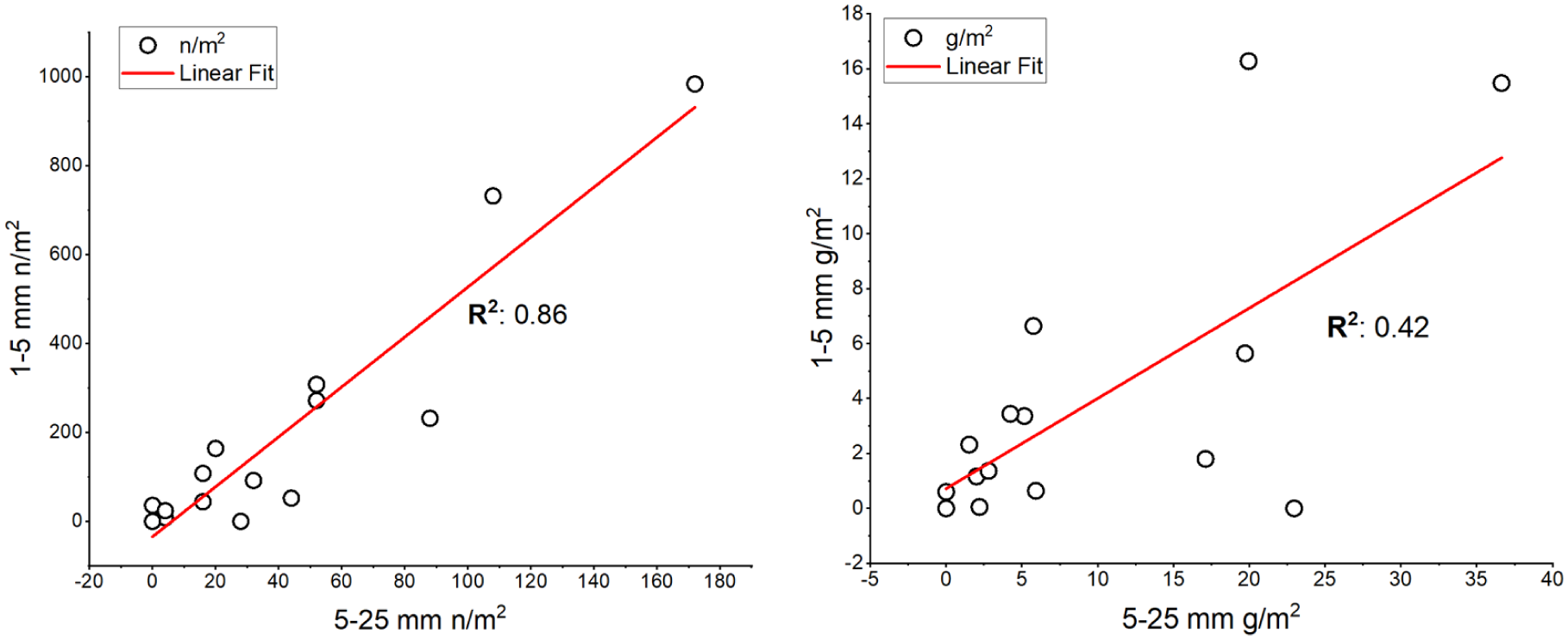
Linear regression models (based on 15 sampling points) showing the correlation between LMPs (2–5 mm) and MSPs (5–25 mm) concentrations in sandy sediments, expressed as number of items per square meter (n/m2, left; slope = 5.62 ± 0.59, 95% CI [4.35–6.89]; F(1,13) = 90.9, p = 3.1 × 10⁻⁷; R2 = 0.86) and mass per square meter (g/m2, right; slope = 0.33 ± 0.10 [0.12–0.54]; F(1,13) = 11.29, p = .005; R2 = 0.42).
Large Micro and Mesoplastic Shape and Polymer Composition
Figure 6 illustrates the percentage distribution of LMPs and MSPs according to their shape, polymer type, and color. The comparison reveals key differences and similarities between the two size classes, suggesting hypotheses on their sources and environmental behavior.
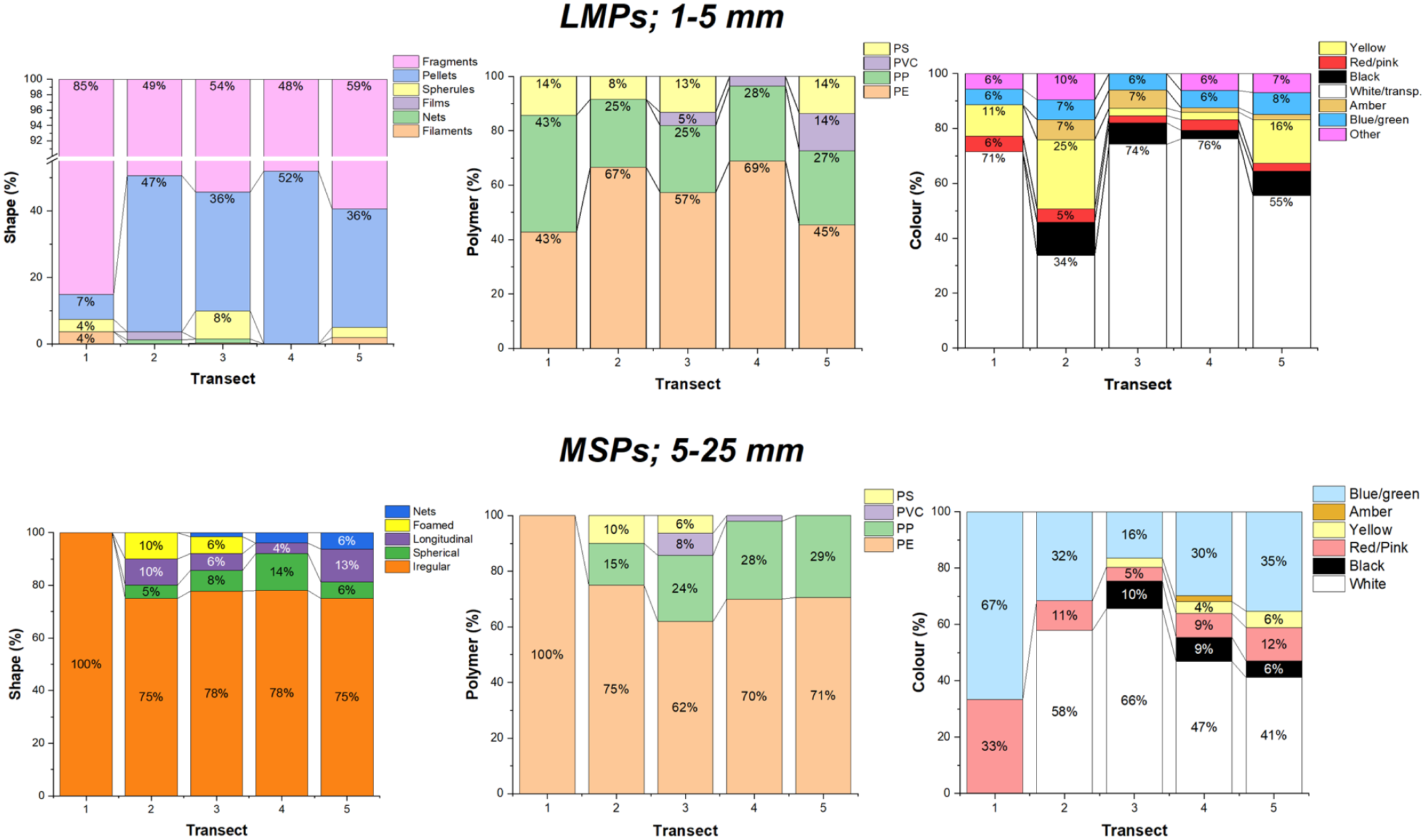
Percentage distribution of LMPs and MSPs by shape, polymer, and color.
In terms of morphology, LMPs were predominantly composed of fragments and pellets, followed by smaller fractions of spheres, sheets, lines, and nets. A total of 329 pellets and 436 fragments were counted and classified across 15 samples, constituting 43% and 57% of the total particles, respectively.
The term “fragments” refers to plastic particles smaller than 5 mm that result from the fragmentation of larger plastic debris into the environment. “Pellets” represent the raw materials in the form of small granules used in the production of plastic products; this result is particularly relevant compared to previous studies, which reported a predominance of fragments constituting approximately 80% of LMP debris (Al Helal et al., 2025; Edo et al., 2019; González-Hernández et al., 2020; Karthik et al., 2018).
In recent years, organizations such as the OSPAR Commission and the European Task Group for Marine Litter (ETGML) have emphasized the need for more comprehensive, reliable, and comparable data on the environmental presence of plastic pellets throughout Europe. To address this, OSPAR introduced a specific measure under the Marine Litter Regional Action Plan (MLRAP), known as Action 52, which aims to promote initiatives and best practices to minimize pellet loss during production. Concurrently, the European Union is advancing regulatory frameworks to classify plastic pellets as hazardous materials and mitigate their environmental impact.
Pellets, also referred to as nurdles, pre-production pellets, or industrial plastic, are small particles used as raw materials in the manufacturing of plastics. These pellets typically measure 3 to 4 mm in diameter and are categorized as LMPs (OSPAR Commission, 2018). Their physical properties, such as color and shape, can provide valuable information regarding their origin and degree of environmental aging. Based on their density, pellets may either float on the sea surface or sink to the seabed. Different types include virgin pre-production and recycled pellets, which can be unintentionally released into the environment at various stages of the production chain, including manufacturing, transportation, and conversion processes for finished plastic products (Karlsson et al., 2018). In the early 1970s (Carpenter & Smith, 1972), documented the presence of pellets in the environment for the first time.
Today, these pellets are found in marine waters, along riverbanks, and on beaches worldwide, including locations near and far from petrochemical or polymer production facilities, highlighting their potential for long-range transport (Karlsson et al., 2018). To address this concern, the European Commission proposed a regulation in October 2023 to prevent the unintentional release of plastic pellets, which are recognized as a significant source of microplastic pollution. The legislation imposes binding obligations on EU and non-EU economic operators and transporters involved in the production, handling, storage, and transportation of pellets, including implementing risk management plans, containment systems, spill response protocols, staff training, and compliance reporting. A provisional agreement on the proposal was reached in April 2025 by the European Parliament and the Council, with final adoption and publication in the Official Journal of the European Union pending. Once adopted, the regulation will enter into force after a transitional period, establishing harmonized requirements across the supply chain to significantly reduce pellet loss into the environment.
In our study, the presence of 43% pellets in the selected transects, composed mainly of polyethylene (PE) and polypropylene (PP), suggests a local industrial origin for the LMPs. This is further supported by studies (Edo et al., 2019; Karthik et al., 2018; Wang et al., 2019), which classified MPs based on their probable sources. In particular (Wang et al., 2019), attributed pellets of PE, PP, PS, PVC, and similar polymers to spilled or recycled raw materials, with a probability score of 4 on a scale from 0 to 5. The high proportion of pellets observed in nearly all samples analyzed (Figure 4) suggests a local source contributing to their transport and dispersion in the environment. The sampling area is approximately 49 km from the port of Brindisi, a city known for its petrochemical activities. However, source attribution based solely on polymer type and morphology remains circumstantial. Pellet presence at the study site may reflect a combination of probable industrial-related inputs and alternative pathways, including maritime transport activities, accidental spillage during shipping and port operations, and secondary redistribution of pellets released elsewhere and subsequently transported by coastal currents, wave action, and storm events.
In contrast, MSPs exhibited a predominance of irregularly shaped fragmented items, with minimal representation of other morphological categories. This pattern suggests that MSPs primarily originate from the degradation of larger plastic objects, likely associated with domestic, urban, and fishing-related sources. Previous studies have also shown that MSPs were predominantly composed of rigid plastic fragments (32%) and Styrofoam (48.5%), with proportions varying across beaches (Bacosa et al., 2024; Lee et al., 2017).
Regarding polymer composition, polyethylene (PE) and polypropylene (PP) were the most commonly identified polymers, accounting for approximately 50% and 30% of LMP items, respectively. Similar proportions were observed for MSPs, followed by lower percentages from polystyrene (PS) and polyvinyl chloride (PVC), indicating the presence of both lightweight packaging materials and more rigid plastic components (Figures S1–S4).
The observed results are consistent with previous studies, which also reported a predominance of these polymers in sandy sediments (Ceccarini et al., 2018; Edo et al., 2019; Karthik et al., 2018; Wessel et al., 2016).
On the one hand, the polymer distribution reflects the plastic demand, showing the domains of PE, the most widely used synthetic polymer worldwide, and PP, the second most commonly used, followed by PVC and PS on the global market (Kanellopoulos & Kiparissides, 2019).
On the other hand, notably, materials with densities greater than PE, PP, and seawater, such as PVC and polyethylene terephthalate (PET), were absent from the beach samples, suggesting their likely deposition and entrapment on the seafloor. Additionally, some PE and PP production facilities are located in Brindisi’s industrial area, approximately 49 km from the study site. This underscores the need for further research to investigate MP contamination in seabed sediments in this region. Moreover, the presented results should be regarded as preliminary, as the absence of temporal replication precludes assessment of seasonal or event-driven variability, which is known to strongly influence plastic accumulation on sandy beaches.
Pollution Indices Assessment
In this study, the Pollution Load Index (PLI) was used to assess the degree of contamination by LMP and MSP in the two sub-areas (A and B) of the selected site (Ranjani et al., 2021).
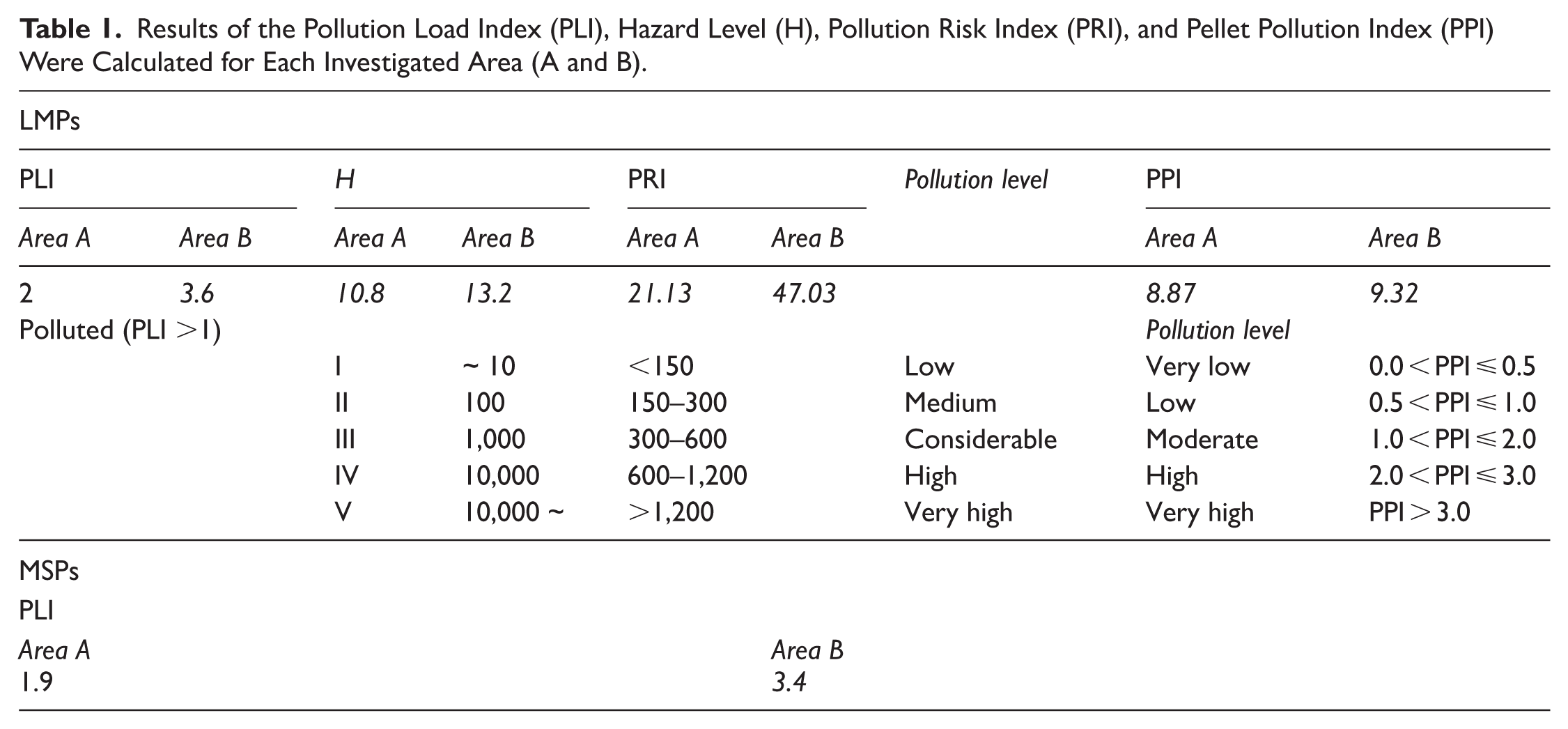
In both sub-areas, PLI for LMP exceeded the threshold value of 1, indicating a polluted site (Kabir et al., 2021; Nakano et al., 2024), and highlighting that elevated LMP densities, particularly of pellets, along storm berm transects are the primary contributors. PLI_LMP values ranged from 2.0 (Area A) to 3.6 (Area B), indicating moderate to elevated contamination levels attributable to LMPs alone.
Similarly, PLI calculated for MSP also surpassed 1 in both sub-areas, reflecting significant MSP contributions to overall sediment contamination. However, PLI_MSP values were lower than PLI_LMP (1.9 in Area A and 3.4 in Area B), since MSP counts and mass-based concentrations showed less extreme spatial peaks compared to LMPs. Although MSPs constitute a non-negligible fraction of the plastic load, their pollution index values indicate a relatively lower ecological burden than LMPs.
These findings align with previous studies, such as (Ranjani et al., 2021), which also reported PLI values above 1 in sandy coastal sediments affected by plastic pollution. However, Area B exhibited higher pollution levels than Area A, highlighting spatial variations in contamination. In Area B, as shown in Figure 1, the presence of a dense concentration of beach establishments during the summer months leads to more frequent and intensive mechanical cleaning of the sediments compared to the free beach area in Zone A. The cleaning is performed using machinery (such as sieves, screeners, and bulldozers) to sift the sand and remove larger debris. However, this process can bring MPs that were previously buried in sediments back to the surface. Additionally, the continuous movement of the sand can further fragment plastic particles, increasing the quantity of smaller fragments. The use of sieving machinery may also contribute to sediment remixing, thereby influencing the distribution of MPs in the area. This raises the question of whether mechanical cleaning merely exposes pellets or actually mobilizes them, potentially accounting for the higher recorded PLI in Area B. Supporting evidence from the literature indicates differences in pre- and post-cleaning pellet counts, suggesting that cleaning practices can significantly affect the spatial distribution of plastic debris.
Despite the elevated PLI values, the H and PRI, which account for polymer composition, were around 10 and below 150, respectively, in both areas. Based on the classification proposed by Kabir et al. (2021), these values indicate a low pollution level (Class I) for the study site. This result is consistent with studies suggesting that beaches dominated by low-risk polymers, such as PE and PP, generally pose a lower environmental hazard than other types of plastics, because PE and PP are less likely to undergo significant chemical degradation and release harmful substances into the environment. However, although these polymers are less chemically reactive, their persistence and tendency to fragment into MPs via physical processes (e.g., UV exposure and mechanical abrasion) still pose a risk of physical pollution and potential harm at certain exposure levels (Maharana et al., 2020). A comparison with previous assessments of sandy beach sediments suggests that while PLI values confirm contamination, the specific polymer composition plays a crucial role in determining actual risk levels. Some studies have found that locations with high PLI values also exhibit high H and PRI values, particularly when hazardous polymers such as PS and PVC are present (e.g., Nakano et al., 2024). In contrast, the relatively low PRI observed in this study suggests that the dominant MP polymers along the Brindisi coast may pose a limited ecological threat.
Moreover, the observed differences between areas A and B, with higher values across all indices in area B, highlight the need for further investigations into local sources and accumulation patterns.
The results obtained regarding the PPI values of 8.87 and 9.32 for Areas A and B, respectively (Table 1), indicate an extremely high level of pellet pollution, far exceeding the threshold for the “very high” pollution category (PPI > 3.0). These findings contrast sharply with most studies reported in the literature, which generally classify beaches as exhibiting low to moderate levels of pellet pollution, despite the known environmental risks associated with plastic pellets. This exceptionally high PPI could serve as a key urgency benchmark in the context of the pending EU regulation on pellet loss. Comparing our PPI values with the expected compliance thresholds outlined in the draft regulation makes it clear that our study area would require stringent measures to meet regulatory requirements. This highlights the pressing need for proactive management strategies to more effectively mitigate pellet pollution.
Results of the Pollution Load Index (PLI), Hazard Level (H), Pollution Risk Index (PRI), and Pellet Pollution Index (PPI) Were Calculated for Each Investigated Area (A and B).
For instance, a study conducted in Santa Catarina, Brazil (Marin et al., 2019), assessed marine debris across 25 beaches using the PPI and found low pollution levels across all sites, despite acknowledging the potential ecological threats posed by pellets. In the Laurentian Great Lakes (North America), an extensive survey reported an average of 19.1 pellets/m2, with high concentrations observed in specific locations near industrial zones and river mouths, highlighting the influence of anthropogenic inputs on pellet accumulation (Corcoran et al., 2020).
Some studies conducted in China, the Canary Islands, Greece, and South Africa have revealed the ecological risk of pellets due to high pollutant loads on their surfaces, primarily linked to industrial activity and pollutant adsorption (e.g., PCBs and PAHs; Camacho et al., 2019; Karapanagioti et al., 2011; Ryan et al., 2012; Zhang et al., 2015). Research from São Paulo, Brazil, further confirmed high spatial variability in pollutant concentrations, with industrialized areas exhibiting the highest contamination levels (Taniguchi et al., 2016).
The extreme PPI values recorded in the present study far exceed those documented in the literature above. This suggests that the investigated site experiences an exceptionally high influx and accumulation of plastic pellets, likely due to a combination of localized industrial discharges, maritime transport activities, and coastal hydrodynamic conditions that facilitate their deposition (Gündoğdu et al., 2022). The significantly higher pollution burden observed at this site underscores the need to support sustainable coastal management and mitigation strategies, as well as continuous monitoring programs, to assess long-term trends and potential ecological risks associated with pellet contamination.
Overall, the index-based assessment highlights a combination of features at the study site: (i) PLI values consistently above 1 for both LMPs and MSPs, confirming a polluted status; (ii) low to moderate hazard classes driven by the dominance of PE and PP; and (iii) PPI values that are orders of magnitude above typical beach ranges. High PLI and PPI values reflect elevated particle loads and pellet dominance, whereas lower H and PRI values result from the prevalence of low-toxicity polymers (PE and PP), indicating that ecological concern at this site is primarily driven by particle abundance and persistence rather than polymer-specific chemical hazard. Moreover, this combination positions Lido Morelli beach as a critical case study for understanding the risk of pellet-driven MP in recreational and conservation-priority coastal environments.
The observed accumulation of LMPs and MSPs in the above-mentioned storm berm zones may have potential implications for beach users. These areas are frequently accessed during recreational activities, increasing the likelihood of direct skin contact with plastic particles, incidental ingestion of sand, or resuspension by wind. While the polymer assemblage was dominated by low-toxicity materials (PE and PP), pellets are known to efficiently adsorb and subsequently release organic pollutants and additives, suggesting that potential concern is more closely related to the leaching of associated contaminants than to the intrinsic toxicity of the polymers themselves (Giugliano et al., 2025). These considerations highlight the relevance of spatially explicit monitoring for informing beach management and public awareness, while underscoring the need for dedicated exposure and health-focused studies.
Conclusions
This study provides the first baseline assessment of LMPs and MSPs in the sandy sediments of a protected Mediterranean beach, revealing accumulation patterns relevant beyond the study site. Backshore and storm-berm zones were identified as accumulation areas for larger microplastic particles, particularly industrial pellets, indicating that similar Mediterranean beaches exposed to industrial proximity and tourism pressure may experience comparable accumulation dynamics.
The very high PPI values recorded classify the study site among the most pellet-contaminated sandy beaches reported to date, demonstrating that pellet pollution can reach critical levels even in non-industrial and protected coastal environments. The coexistence of high PLI values with lower hazard and PRI indices indicates that ecological concern is driven more by particle abundance and persistence than by polymer toxicity alone, reinforcing the need for source-control strategies.
These findings have direct management implications. Port and maritime authorities, together with industrial stakeholders involved in pellet handling and transport, should be specifically targeted for pellet-loss prevention actions. Mechanical beach cleaning, while beneficial for beach usability, should be carefully evaluated as it may redistribute or fragment plastic debris rather than remove it effectively.
The PPI emerges as a practical and regulatory-relevant indicator, suitable for routine monitoring, site prioritization, and compliance assessment. Its threshold-based classification makes it directly applicable to management frameworks and particularly relevant in the context of the forthcoming EU regulation on plastic pellet loss. The high PPI values documented here demonstrate how such indices can support enforcement, identify priority areas, and evaluate the effectiveness of mitigation measures.
Although based on a single sampling event, this study establishes a robust baseline for a region where comparable data are currently lacking. Future investigations should focus on temporal replication and intervention-based assessments to support long-term management, building upon the framework presented here.
Supplemental Material
sj-docx-1-asw-10.1177_11786221261450443 – Supplemental material for Abundance, Composition, and Potential Ecological Risks of Large Micro- and Mesoplastics in a Southern Italian Beach
Supplemental material, sj-docx-1-asw-10.1177_11786221261450443 for Abundance, Composition, and Potential Ecological Risks of Large Micro- and Mesoplastics in a Southern Italian Beach by Claudia Campanale in Air, Soil and Water Research
Footnotes
Acknowledgements
The authors gratefully acknowledge Dr. Carmine Massarelli, Dr. Mariangela Triozzi, and Dr. Marco Raimondi for their precious support and availability in sampling campaigns.

Funding
The author received no financial support for the research, authorship, and/or publication of this article.
Declaration of Conflicting Interests
The author declared no potential conflicts of interest with respect to the research, authorship, and/or publication of this article.
Supplemental Material
Supplemental material for this article is available online.
References
Supplementary Material
Please find the following supplemental material available below.
For Open Access articles published under a Creative Commons License, all supplemental material carries the same license as the article it is associated with.
For non-Open Access articles published, all supplemental material carries a non-exclusive license, and permission requests for re-use of supplemental material or any part of supplemental material shall be sent directly to the copyright owner as specified in the copyright notice associated with the article.
