






Abstract
Microbial contamination of beef carcasses occurs during slaughtering process. Cross-sectional study was conducted to assess microbial quality of carcasses and workers’ meat safety practices at five municipal abattoirs in the central part of Ethiopia. Overall, 255 carcass swab samples, along with 30 samples each from hands and knife swabs, and water were collected for microbial quality assessment using standard plating method. Additionally, semi structured questionnaires were administered to 142 abattoir workers to assess their meat safety practices. The study showed that the overall mean aerobic plate count of 6.12 log10 CFU/cm2 and fecal coliform count of 4.58 log10 CFU/cm2 on beef carcasses. Carcass swabs had a significantly higher mean aerobic plate count (6.12 log10 CFU/cm2) compared to knife (5.54 log10 CFU/cm2; p=0.006) and hand swabs (5.19 log10 CFU/cm2, p=0.000) while knife swabs showed a higher mean fecal coliform count (5.05 log10 CFU/cm2) than carcass swabs (p = 0.005). Overall 60% of water samples were positive for E. coli and fecal coliforms. Furthermore, the use of personal protective equipment including overall coats and boots was 99.30%. All abattoir workers reported abstaining from eating, drinking and smoking at work, and 73.94% did not wear jewelry during slaughter processing. The use of aprons (44.37%) and head covers (45.77%) was practiced by less than half of the respondents, yet 63.38% of workers consistently wore clean personal protective equipment. Task alternation and equipment sharing were common, with 50% of workers engaging in these practices. Sterilization of knives between each use was not practiced by all abattoirs workers, and only 44.37% of workers performed regular medical checkups. About 35.21% of workers practiced hand washing with soap while only 9.15% used gloves during the slaughtering process. Among the respondents, 52.11% of them had received on job food safety training. In conclusion, the study showed high microbial loads on beef carcasses and a low meat safety practice rate (39.44%), highlighting the need for strict and effective multi-stakeholder food safety measures.
1. Introduction
Adequate quality and quantities of safe and nutritious food is important to sustain quality life and promote good health. 1 Meat from healthy animal is nearly free from pathogenic microorganisms 2 and highly nutritious and contributes numerous essential nutrients that are tough to obtain in adequate quantity from other food sources. 3 However, its nature provides ideal conditions for microbes to grow. Some microorganisms cause spoilage, while others pose a threat to human health. 4 Provision of beef meat that meets maximum microbial quality limit requirements is expected to ensure safety, healthy, and wholesome meat. 5
The safety of meat has been at the forefront of societal concerns in recent years, and indications exist that challenges to meat safety will continue in the future. 6 The consumption of contaminated food is a cause for more than 200 various diseases, ranging from diarrhea to cancer. 1 Major and highly reported outbreaks of foodborne disease have been related to the consumption of contaminated meat and have led to increased interest in meat safety among stakeholders. 7
Determining the microbial quality and safety of meat is crucial because of its high potential to harbor pathogens. 8 Sources of microbial contamination of a carcass include the animal, workers, the clothing of workers, equipment and water. 9 Microorganisms associated with the live animal are primarily located on the surface of the animal’s hide, hair, hooves and in the gastrointestinal tract. 2 Additionally, beef carcass processing procedures, like skinning, evisceration, and chilling, often lead to meat contamination by foodborne pathogens 10 due to poor hygienic and sanitation practices at the abattoir. 11
Food handler’s action and practices in a food processing facility are crucial for producing safe food. 12 Improper handling during processing can transfer pathogens, including human-specific foodborne pathogens or contaminants from animals and utensils to the carcass. 13 These non-compliance with food safety protocols contributes to the carcass contamination through several pathways. Furthermore, the key risk factors include negligence of washing hands properly after handling contaminated material before handling beef carcass, working while ill or with open wounds, using the same equipment for dirty and clean areas, improper evisceration and skinning techniques, inadequate equipment cleaning and sanitation, lack of use of proper personal protective equipment (PPE) and equipment sterilization and improper chilling or storage conditions.14,15
Inadequate hygienic practices are among the factors that compromises the microbial quality of carcasses in developing countries.16-19 In Africa alone, foodborne diseases are responsible for approximately 91 million illnesses and 137,000 deaths annually. 20 The microbial quality of carcass is a serious public health concern in Ethiopia 21 where consumption of raw and undercooked meat was common. 22 While there has been a report on abattoir workers’ hygienic practices at Adama Municipal Abattoir. 23 Microbial quality of carcass, meat contact surfaces and water quality have not been comprehensively studied at the Adama, Batu, Gelan, Holeta and Sebeta municipal abattoirs. Therefore, this study aims to determine the microbial quality of beef carcasses, selected contact surfaces, and process water, as well as to assess meat safety practices among workers in five municipal abattoirs in Central Ethiopia. The study has significant implications for public health and food safety regulations and policies by identifying microbial contamination along the beef production chain and evaluating worker hygiene practices, findings that can inform targeted interventions.
2. Materials and Methods
2.1. Study Area
The study abattoirs were located in towns of Adama, Batu, Gelan, Holeta and Sebeta. The towns are situated within a radius of 150 km from Addis Ababa, Ethiopia (Figure 1). They are regulated by the respective town municipalities. The abattoirs serve more than 500 local butcher shops which found in the study area and provide meat inspections and animal slaughtering services. Meat processed in the abattoirs is used for local consumption. According to the Ethiopian Statistical Service 2024 population projection, the population of the area is more than 700,000.
24
The area is characterized by rapid growth in urbanization and population growth. Map of Ethiopia showing study abattoirs (ArcGIS 10.8. 2)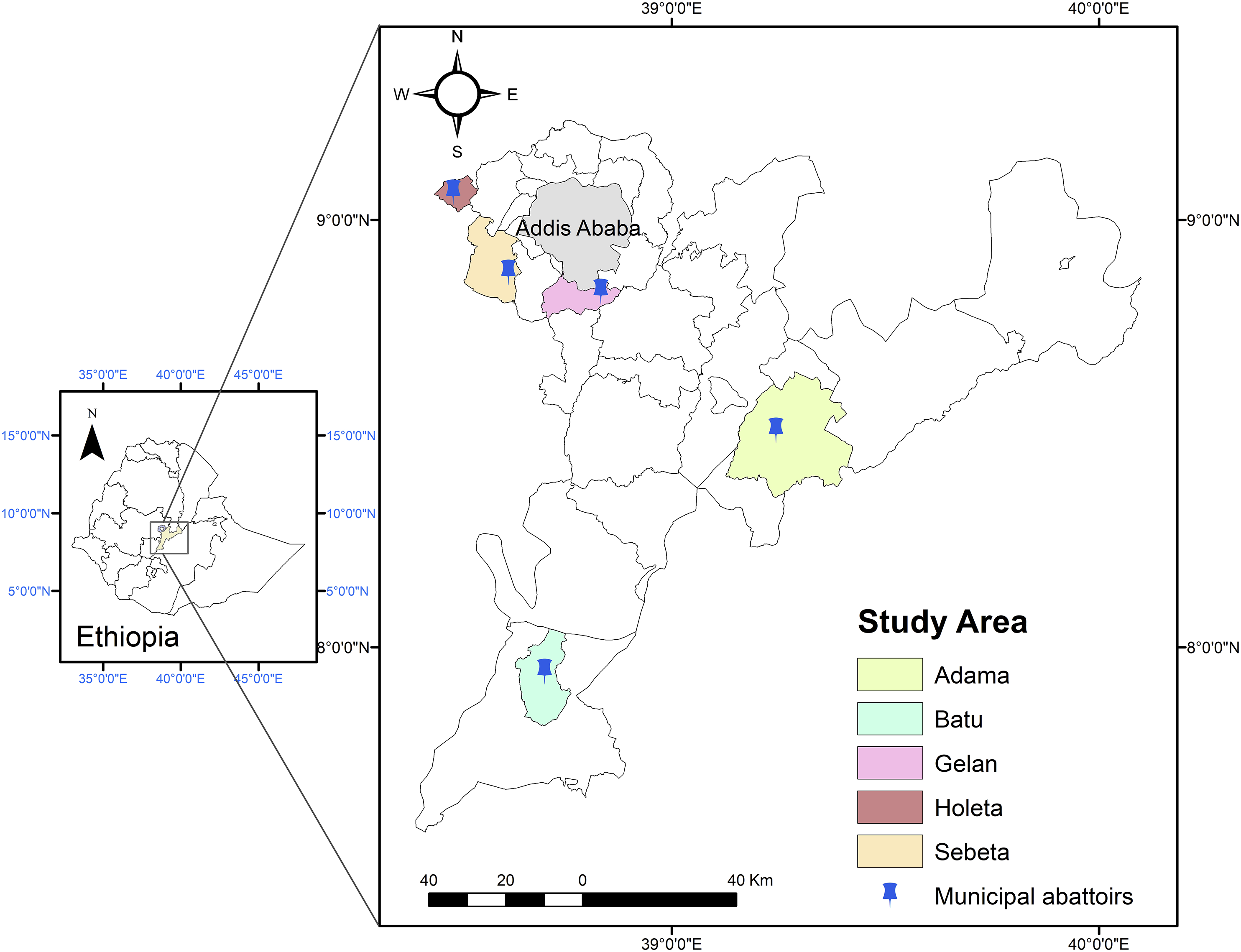
2.2. Beef Carcass Processing Procedures at Abattoirs
Apparently healthy animals, ready-to-be-slaughtered were presented to the abattoirs before mid-day and thorough antemortem examinations were performed and animals deemed fit for slaughtering were passed. The slaughter service started at midnight with mechanical stunning of animals by stabbing at the atlanto-occipital region using a sharp edge of the knife, immediately followed by bleeding, and then removal of the head and the feet with the carcass in a horizontal position on the floor. At Adama municipal abattoir, carcass processing steps were performed in a vertical position after hanging the carcass by hooks and sliding it over the rail system. However, in the remaining abattoirs, all carcass processing steps took place on the floor in a horizontal position. Then carcasses were transported at room temperature. Finally, the slaughter hall and the transporting vans were regularly cleaned.
2.3. Study Design, Sample Size and Data Collection
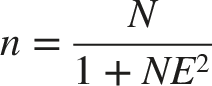
A cross-sectional study design was conducted from January, 2024 to February, 2025 on five municipal abattoirs located in Adama, Batu, Gelan, Holeta and Sebeta towns to assess abattoir workers’ meat safety practices and microbial quality of beef carcasses. Sample size was determined using Yamane’s (1967) formula for a finite population for workers meat safety practice assessment.
25
Proportion of sample size of abattoir workers from different study abattoirs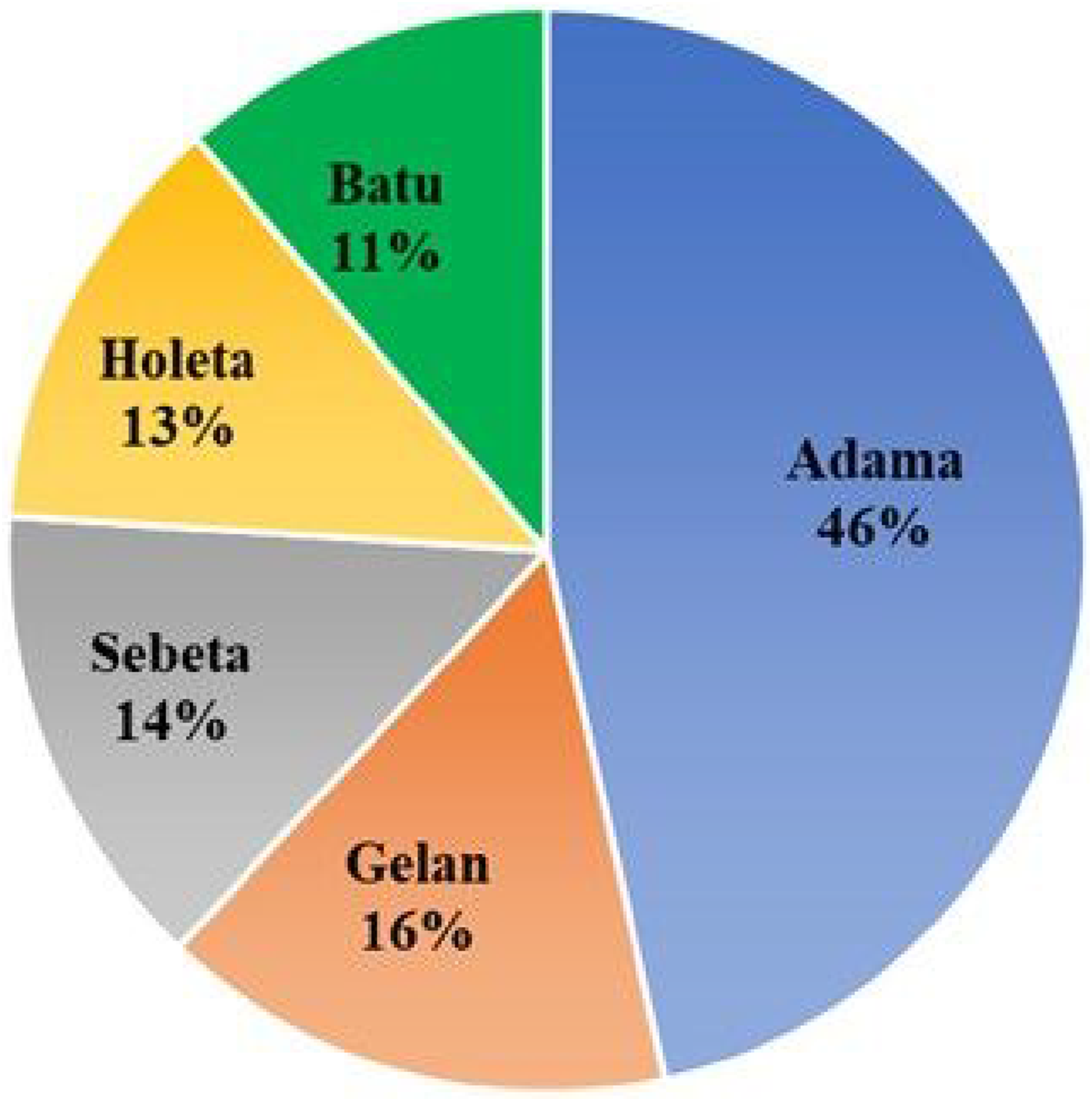
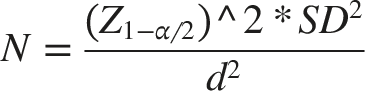
Sample size determination for carcass swab sampling was determined by formula given below
28
2.4. Microbial Quality Assessment
2.4.1. Sample Collection
A total of 255 beef carcass swab samples were collected from five abattoirs (51 beef carcass swab samples per abattoir) using systematic random sampling method. An equal distribution of samples carcasses samples was purposefully employed to allow for balanced representation in the five locations. At each sampling day five carcass swab samples were collected on weekly basis for each abattoir. A total of 30 hand swabs from workers, 30 knife swabs, and 30 water samples were collected during each visit to the abattoirs before the starting carcass processing. Water samples were collected several times repeatedly within the duration of sampling period to account for variation in water quality whereas different individuals were sampled for hand and knife swab. Carcass swabs, were collected using sterile non-absorbent cotton wool swab moistened with 0.1% peptone water by the swabbing technique on an area of 100 cm2 marked with a sterile plastic frame (10 cm × 10 cm) from anatomical carcass sites, the rump, flank, brisket and hind the fore leg through wiping sampling site for a total of approximately 10 times in the vertical and 10 times in the horizontal direction. 29 Swab samples collected from different anatomical sites of each carcass were pooled together and analyzed.
Abattoir workers’ hands, those who come into direct contact with carcass, and knife swabs were collected before the slaughtering operation began. All samples are transported to the Microbiology laboratory, College of Veterinary Medicine and Agriculture, Addis Ababa University using an icebox. At the laboratory, the serial dilutions were made using sterile diluents, from 10-1to10-9 in sterile 10mL sterile test tubes and 0.1 mL of homogenate was plated out on agar media of interest at an appropriate time and temperature. For aerobic plate count (APC), 0.1 mL of homogenate was plated onto the surface of plate count agar (Oxoid, Basingstoke, Hampshire, UK). Plates were incubated at 35°C for 48±3 hours. A violet red bile agar (Oxoid, Basingstoke, Hampshire, UK); was used to enumerate fecal coliform count (FCC); 0.1 mL of the homogenate was evenly spread onto agar plates and incubated at 35°C for 24 hours, typical and atypical colonies were enumerated. Plates containing between 15 and 300 colonies were counted.
30
Water samples used for carcass wash sources in the abattoirs were collected to determine the presence of fecal coliforms and E. coli in 100 mL of water using the qualitative method (positive/negative). The qualitative method is sufficient because, as a standard, drinking water contains no fecal coliforms and E. coli per 100 mL.31,32 Water used for food processing should be of potable.
33
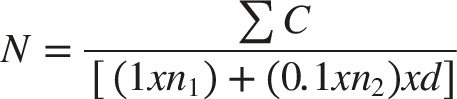
Counted colonies were calculated as follows:
2.4.2. Occurrence of Fecal Coliforms and E. coli in Water
For the enumeration of microbial quality of water, fecal coliforms were obtained by pouring 100 ml of the sampled water onto a membrane filter paper 47 mm in diameter, 0.45 μm pore size, to trap as well as isolate bacteria. Following filtration, the filter paper was then placed in a Petri dish, holding the prepared violet red bile agar (Oxoid Basingstoke, UK), cooled and incubated at 35°C for 24 hours. Purple-red colonies that are 0.5 mm or larger in diameter and surrounded by a zone of precipitated bile acids transferred to eosin methylene blue (EMB) agar (Oxoid, Basingstoke, UK). Further isolation of E. coli was performed using EMB. The Petri dishes were incubated for 24 hours at 35°C. Greenish metallic blue colonies in EMB agar were regarded as presumptive for E. coli. Gram stain and biochemical tests (IMViC tests) were utilized to confirm the E. coli isolates. 30
2.5. Data Analyses
The data were coded and analyzed using Stata Statistical Software, release 14.2 (Stata Corp LP, College Station, TX). Descriptive statistics were utilized to report overall scores for workers’ food safety practice questions using percentages and frequencies. The questionnaire comprises three parts general information of abattoirs (12 questions), general demographic characteristics of abattoir workers (5 questions) and 14 meat safety practice questions. For meat safety practice questions, each positive response was assigned a score of 1 or otherwise 0, and the scores were summed out of 14 questions. According to Abunna et al., 2022 total score obtained was divided by 14 and multiplied by 100 to obtain a percentage. Accordingly, abattoir workers with ≥70% scores were classified as having acceptable level of meat safety practice, while those with <70% scores were classified as having unacceptable level of meat safety practices This cut-off point was used to create a binary dataset to determine the overall meat safety practice. 34 Microbial quality of water is determined using the qualitative method (positive/negative) as it should be free from fecal coliform and E. coli bacteria can be demonstrated in 100 ml of water.31,32 The results of total microbial counts (CFU/cm2) were converted into log10 and descriptive statistics was used to calculate mean, standard error, minimum and maximum values, considering the type of sample and origin. Carcass microbial limit was determined as unacceptable if APC>5.0 log10 CFU/cm2 and FCC>3.0 log10 CFU/cm2 35 Microbial counts (microbial quality) were compared using one way ANOVA and Z-test for mean comparison. Linear regression analysis was performed to assess the association between abattoir and microbial load parameters (APC and FCC) and effect size and Confidence interval (CI) were reported. The comparison of acceptable meat safety practices with socio-demographics was performed with Chi-square test. P-value < 0.05 was considered statistically significant with a 95% level of confidence.
3. Results
3.1. Socio-Demographic Characteristics of Abattoir Workers
Socio-Demographic Characteristics and Acceptable Practices of Abattoir Workers
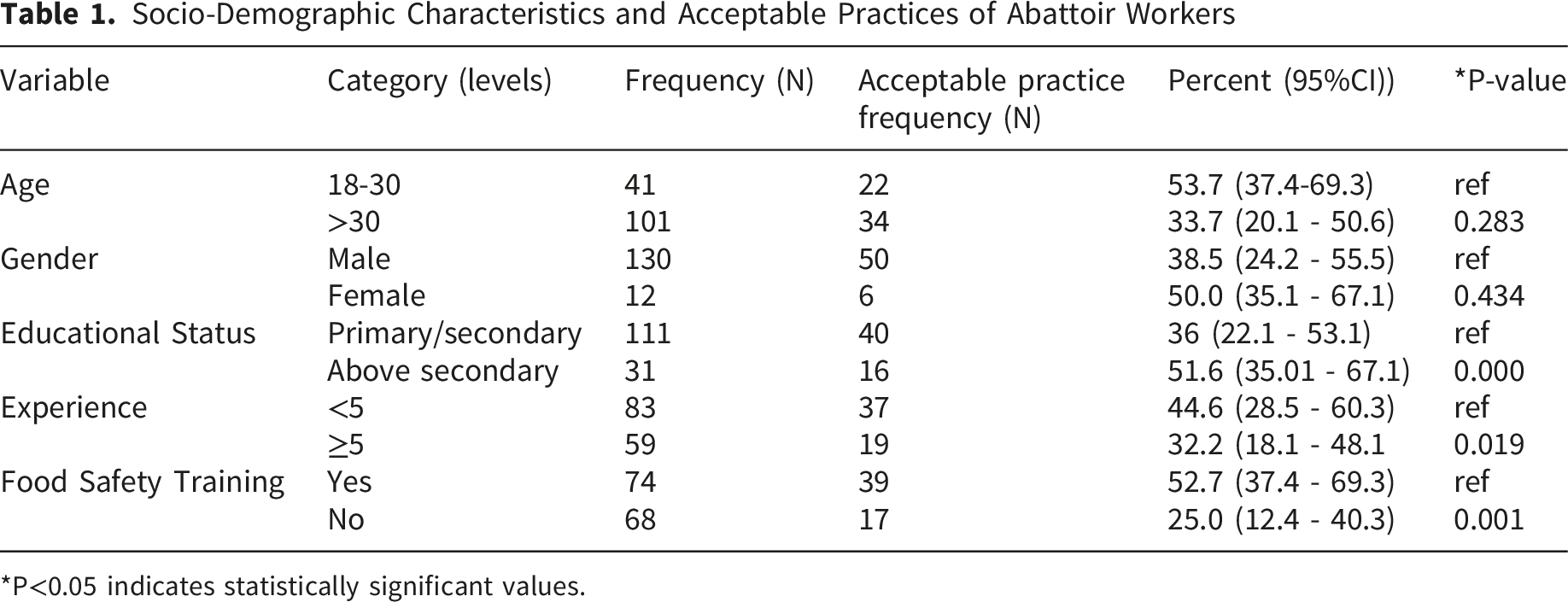
*P<0.05 indicates statistically significant values.
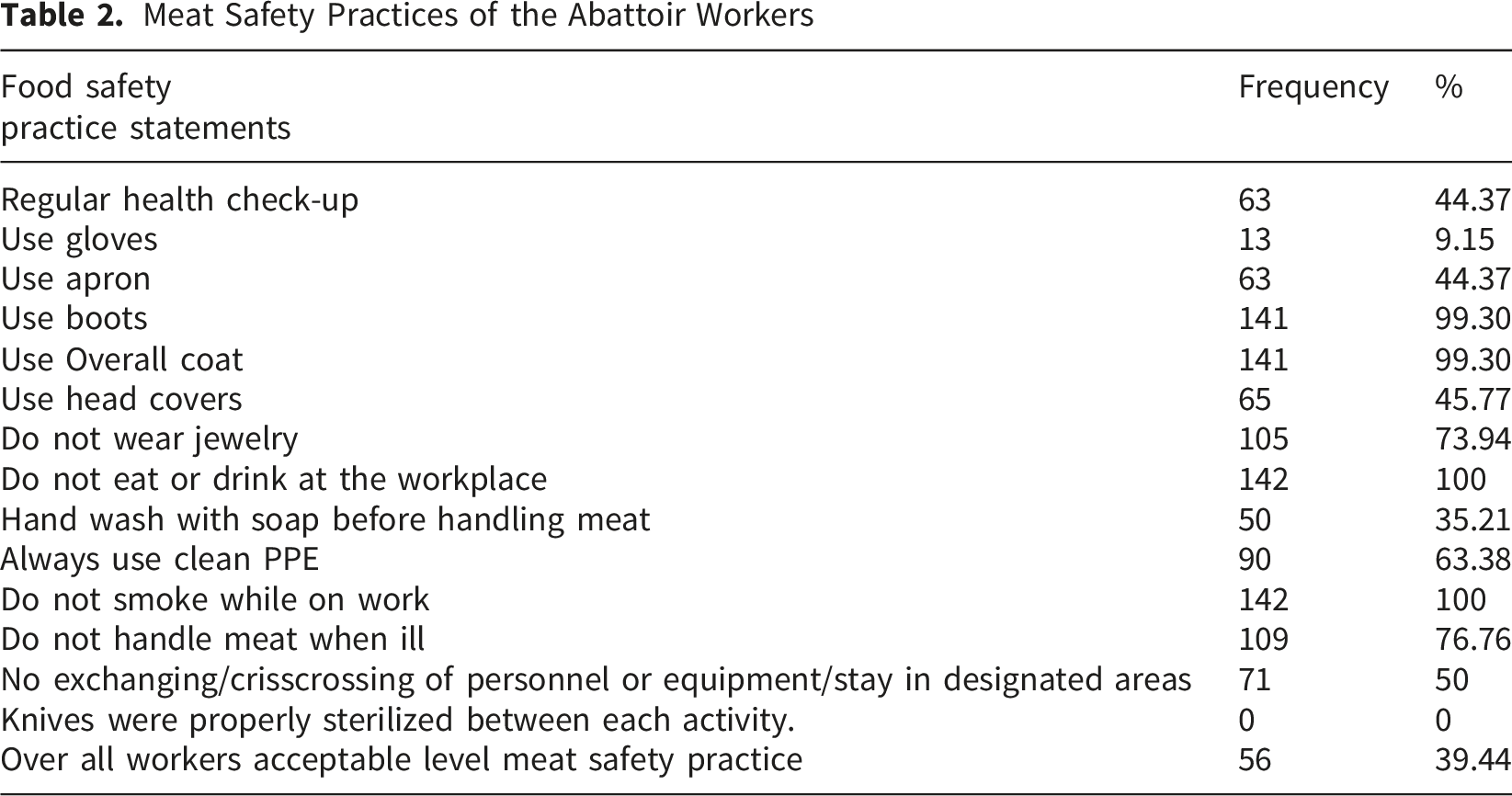
3.2. Food Safety Practices of the Abattoir Workers
Meat Safety Practices of the Abattoir Workers
3.3. Risky Meat Safety Practices of Workers at Each Abattoir
Figure 3 provides comparison of abattoirs with regard to meat safety practices and showing Adama abattoir workers showed good meat safety practices. Workers’ risky meat safety practices at each abattoir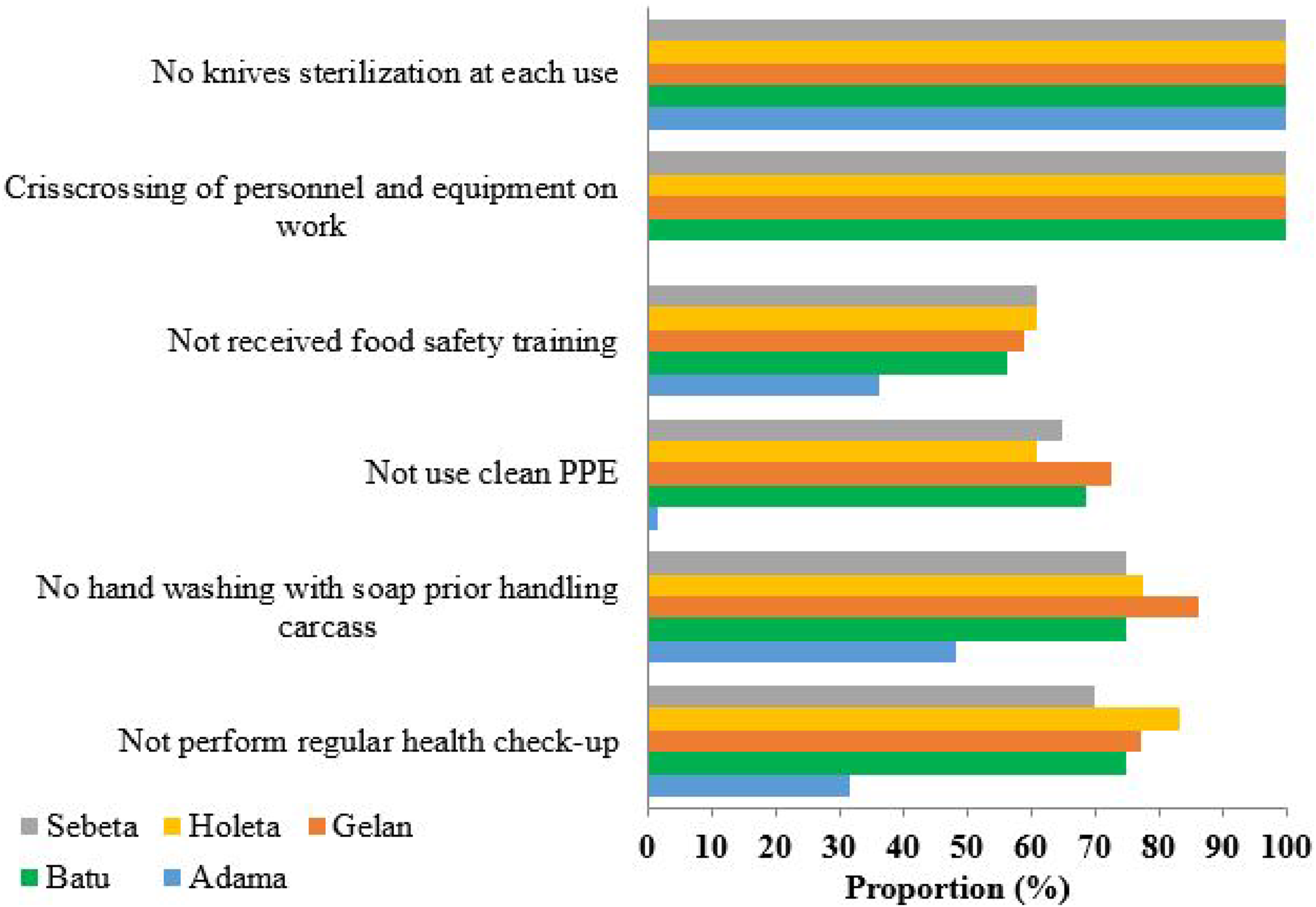
3.4. Microbial Quality of the Beef Carcass
Microbial Quality of Carcass
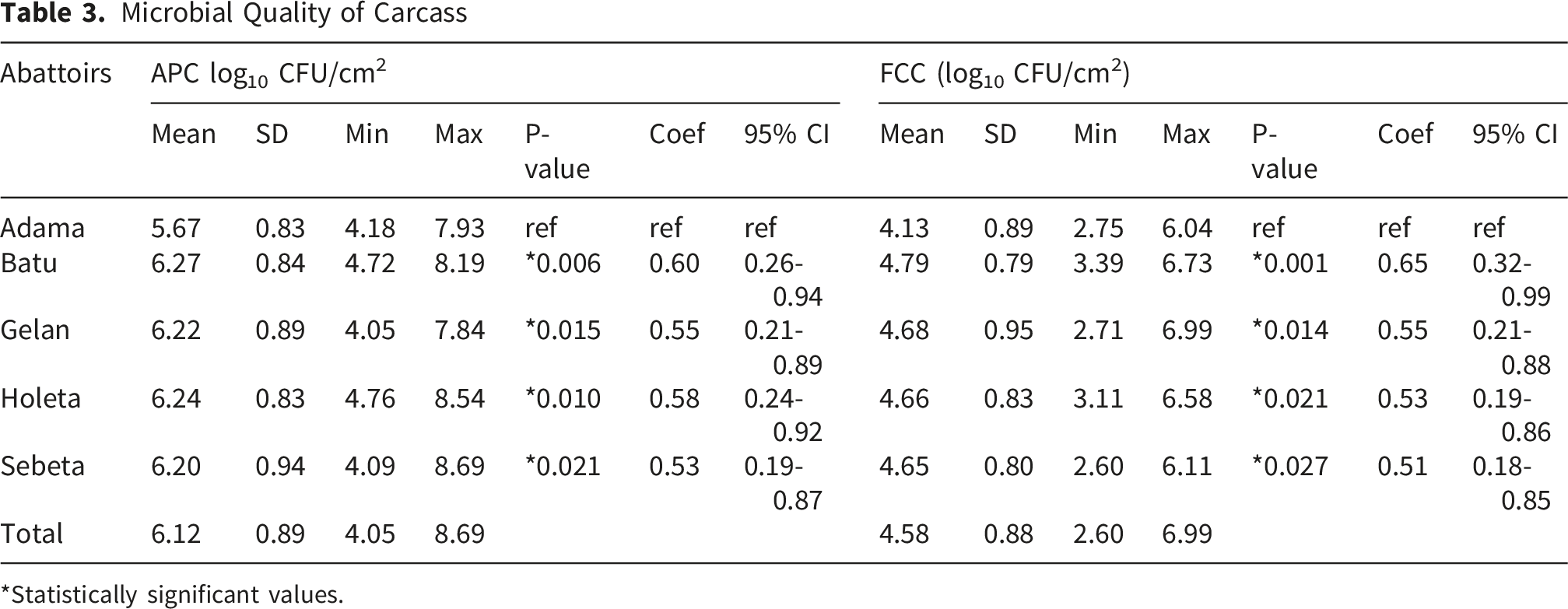
*Statistically significant values.
3.5. Microbial Quality of Workers’ Hands and Knives
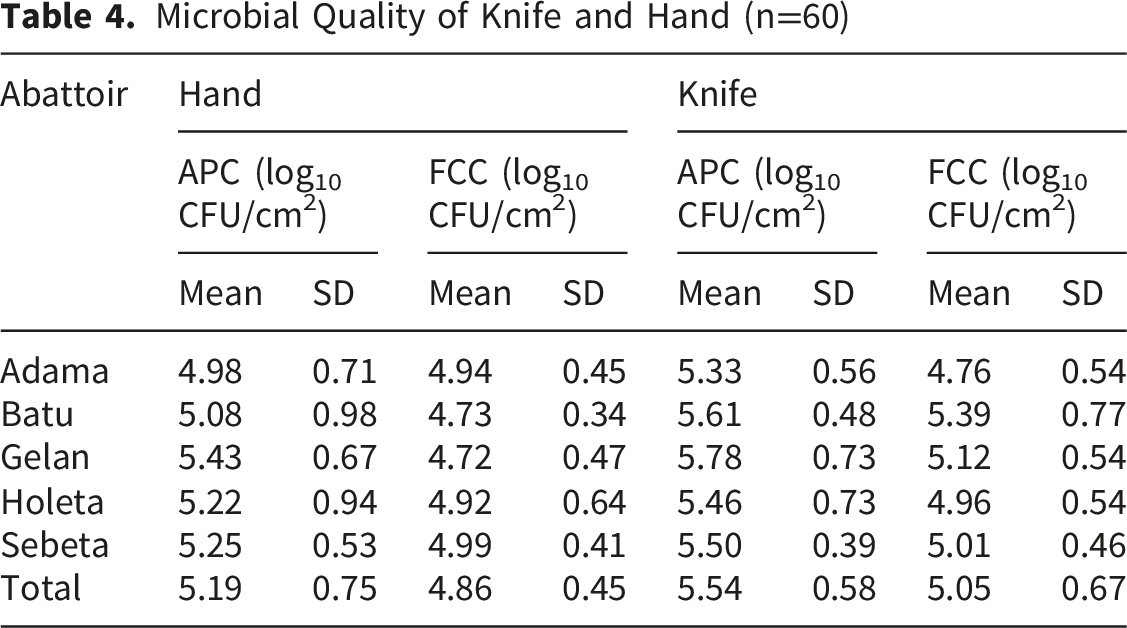
Microbial Quality of Knife and Hand (n=60)
3.6. Occurrence of Fecal Coliform and E. coli in Water Samples
Water samples from Batu, Gelan and Holeta municipal abattoirs were 100 % positive for fecal coliforms and E. coli while water samples from Adama and Sebeta municipal abattoirs were 100% negative. Overall 60% of water sample collected from five abattoirs were positive for fecal coliforms and E. coli.
3.7. Microbial Loads Across the Three Swab Samples
Comparison of the Microbial Loads Across the Three Swab Samples
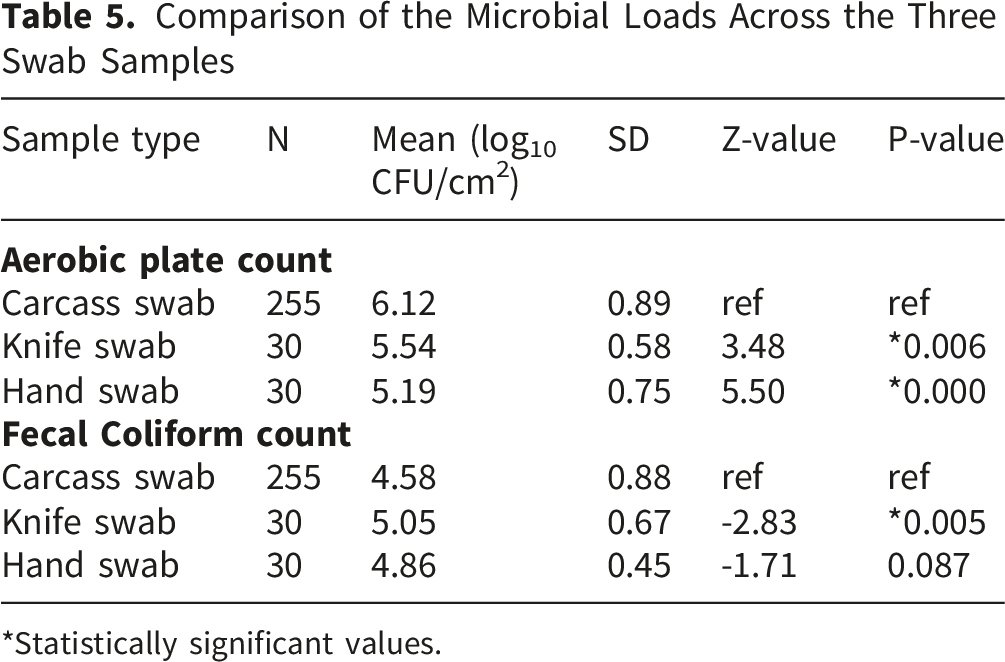
*Statistically significant values.
4. Discussion
Microbiological investigation is a critical quality management tool in the food business. 36 Contaminated meat has been cause for numerous cases of foodborne illness and poses serious challenges in developing countries. 37 The study showed the overall mean beef carcass APC was 6.12 log10 CFU/cm2 and FCC 4.58 log10 CFU/cm2, were high. This finding showed resemblance with a study from Haramaya, Ethiopia where 7.50 log10 CFU/cm2 FCC was reported. 38 Similarly 3.61 log10 CFU/cm2 FCC was reported from Dessie, Ethiopia 39 which was high. Fecal coliforms exist in the intestines and feces of animals. 40 The elevated fecal coliform counts is an indicator of possible fecal contamination. 41 Poor hygienic and sanitation practices during carcass processing procedures at the abattoir deteriorates microbial quality of carcasses. 11
An APC of the this study is comparable to the report from Dire Dawa abattoir, which is 5.63 log10 CFU/cm2, though the highest APC 7.11 log10 CFU/cm2 was reported from Haramaya municipal abattoir. 42 On the other hand the lowest APC 4.53 log10 CFU/cm2 reported from the carcass at Bishoftu municipal abattoir. 11 The microbial quality of carcass of our study was beyond acceptable limit both in APC and FCC. 35 The observed differences between studies might be due to methodological variations, including differences in sampling sites, microbiological techniques, incubation conditions, and the hygiene indicators evaluated. In our finding, a significant difference was observed in the microbial quality of carcasses between Adama municipal abattoir and the remaining abattoirs. This disparity might be associated with better hygienic practices of abattoir workers at Adama compared to others, where workers demonstrated better exposure to food safety trainings and medical check-up in addition to good hygienic practices. Good hygienic practices reduce carcass contamination by limiting the transfer of pathogens from hides, feces, or equipment to meat during carcass processing. 43 Additionally, at the Adama municipal abattoir, the carcass processing steps were performed in a vertical position, with carcasses hanged by hooks and slid over the rail system. However, in the remaining abattoirs, all carcass processing steps took place on the floor. Vertical processing of the carcass is imperative in maintaining hygiene and critical in minimizing contamination. 44
The microbial profile of food contact surfaces is a suitable indicator of a food safety management system. 45 The ability of microorganisms to adhere to surfaces has significant implications for food safety. Microorganisms present on animal tissues can contribute to food spoilage and pose risk to food safety. 46 Based on the standards used in the food processing industry, a standard of less than 1.3 log10 CFU/cm2 was used for APC and less than 1.0 log10 CFU/cm2 for E. coli count. 47 According to our study APC for knives and workers’ hand was 5.54 log10 CFU/cm2 and 5.19 log10 CFU/cm2,respectively. The FCC was 5.05 log10 CFU/cm2 for the knife and 4.86 log10 CFU/cm2 for the hands of meat handler’s. Other studies have reported higher loads including an APC 6.96 log10 CFU/cm2 for hand and 7.84 for knives log10 CFU/cm248 as well as FCC of 6.0 log10 CFU/cm2 49 for knives, but lower FCC 3.39 log10 CFU/cm2 for hand. 39 Comparisons of the swab samples reveal significant differences in microbial contamination across sample types, with carcasses showing the highest aerobic counts, followed by knives and hand, suggesting that carcasses might be contaminated by multiple sources in the processing chain. Additionally, knives can be contaminated through various means during evisceration, trimming, and surface contact, while hands become contaminated by touching contaminated surfaces. Consequently, swabs from knife and hands had higher coliform levels than carcasses, indicating poor hygiene practices among workers that likely pose risk of carcass contamination by coliforms.39,48
Water used for food handling and processing must be of potable quality 33 with no detectable fecal coliform and no E. coli bacteria present in 100 ml of water.31,32 However, except for Adama and Sebeta, all water samples from Batu, Gelan and Holeta municipal abattoirs were positive for fecal coliforms and E. coli. This might be due to abattoir water tanks were not cleaned regularly or covered properly with lid. Absence of cleaning of water tank/vessel regularly deteriorates the microbiological and physicochemical quality of stored water, 50 thereby posing a risk of food contamination. Furthermore borehole water sources were utilized without treatment in some abattoirs, which is a likely source of contamination as untreated borehole or ground water may harbor pathogenic microorganisms.51,52 Reports from abattoirs in Eastern Cape Province of South Africa, Lilongwe, Malawi, Dessie of Ethiopia, inconsistent with this study where abattoir water samples were reported to be positive for fecal coliforms and E. coli.10,16,39 On the other hand study from Bishoftu municipal abattoir reported abattoir water to have unacceptable microbial limit. 11 There is an evidence of lack of water quality testing in the municipal abattoirs of central Ethiopia. 53
The questionnaire survey in our study showed that 73.94% of workers did not wear jewelry during carcass processing. This was in alignment with the report that indicated the majority of workers removed their stuff, such as rings, necklaces and watches, before processing meat. 54 These findings cannot fulfil the criteria of not a single person working with meat handling should wear any jewelry, badges or buttons that may come loose and be accidentally included in the product. 44
This study showed that workers who performed regular medical checkups and did not work while ill were 44.37% and 76.76%, respectively. Yimana and Hassen, 2024 also reported that the majority of workers did not execute regular health checkups and refrained from handling carcasses during illness. 23 It is expected that those who come into direct or indirect contact with the carcass during their work should: undergo a medical examination before and throughout their employment; refrain from working while clinically affected by, or suspected of carrying, communicable agents that could be transmitted through meat. 14
Maintaining an appropriate standard of personal hygiene, wearing protective clothing, and ensuring that non-disposable protective clothing is cleaned before and during work is a mandatory practice for those who come into direct or indirect contact with carcasses. 14 Our study showed that handwashing with soap was practiced among 35.21% of workers. This infers the study of Yimana and Hassen, 2024 who reported that three-fourths of workers do not wash their hands before handling meat. The use of gloves at work was very low with only 9.15% of workers used it. This was in alignment with the report from Jigjiga, 55 where above three-quarters of workers do not use gloves at the time of processing carcasses. Very low glove usage and inadequate handwashing by food handlers, particularly when handling food, significantly increase the risk of foodborne illnesses. 56 Furthermore, the use of overall coats and boots by workers was 99.30% which is supported by the finding from Mekelle abattoir, Ethiopia. 57
On the other hand, the use of an apron and a head cover of workers was 44.37% and 45.77% respectively. About 63.38%, of workers always use clean protective equipment they had. This corresponds with a report from Gopalganj, Bangladesh, which shows that the majority of workers did not use aprons and hair covers 58 and Ambo, Ethiopia, where cleaning of personal protective equipment was reported mainly twice a week and weekly. 59 The current finding shows that, all abattoir workers obey to the rule of not smoking, eating and drinking at work, while they did not strictly follow other food safety rules. Similar findings has been reported by a previous study where none of workers from an abattoir in Kajiado, Kenya consume food, drink and smoking upon processing carcasses. 60 When engaged in food handling activities, personnel should refrain from behavior which could result in contamination of food, for example: smoking or vaping; spitting; chewing, eating, or drinking. 33
The study showed that 50% of workers alternate tasks and exchange equipment with one another. The knife, sterilization between each activity, was not carried out by anyone. The finding aligns with a study conducted in Debrebrhan abattoir, where equipment sanitation and sterility practice are reported to be poor. 61 Likewise, the exchanging/crisscrossing of personnel and equipment between dirty and clean areas was also reported. 23 This practice increases the risk of cross-contamination, compromising the hygienic status of the processing environment and potentially leading to the spread of foodborne pathogens, and needs enforcement of rules. 62 Equipment used for processing should be sterilized after each use and designated between dirty and clean areas. 44
The most important finding with regards to public health in this study was the absence of knife sterilization in all five abattoirs, signaling a breach of basic sanitation standards. The use of knives is constant throughout the process of slaughtering, including activities like skinning and evisceration. Without any sterilization, knives serve as a means of transmission for microorganisms. Knife contamination poses a high risk of transmitting pathogens from animal hides, intestinal material, or even other contaminated carcasses to the surface of fresh meat, thereby increasing chances of cross-contamination in the production process. 61 Poor hand hygiene exacerbates this problem because hands serve as another means of transmission of microbes. High numbers of microbes found in both knives and hands prove this point.
This study showed that, 52.11% of workers received on job food safety training. This finding is in concordance with the study conducted at the Bishoftu municipal abattoir, where more than half of the workers received on-job food safety training. 63 Carcass processing should be carried out by personnel with the appropriate training. 14 The overall acceptable level of meat safety practice of abattoir workers were 39.44%. This study is in line with report from Bishoftu, 34 Jigjiga, 64 Dessie and Kombolcha 65 Ethiopia where most of meat handlers had poor food safety practices. Poor meat handling practices can significantly increase the risk of meat contamination, leading to foodborne illnesses. 66 The overall meat hygiene practice was unacceptable while more than half of workers received on job food safety training. This might be due to inadequacy operational facility which had critical role in comprising of food safety practices.67,68 Moreover, low enforcement of food safety rules in food establishment leads in deterioration of microbial quality of food. 69 From a public health perspective, high microbial load of carcass resulted from unhygienic practices. 53 Similar deficiencies in meat safety practices and microbial quality reported in Bishoftu, Jigjiga, Dessie, and Kombolcha, suggesting that inadequate hygiene compliance and weak enforcement of food safety measures may represent systemic challenges across Ethiopian municipal abattoirs. These recurring findings collectively suggest the presence of systemic hygiene deficiencies, infrastructure limitations, and regulatory enforcement gaps across Ethiopian municipal abattoirs.
5. Conclusion
The findings of the study showed high carcass APC and FCC, poor knife sterilization, limited handwashing with soap, low glove/apron/head-cover use, and fecal contamination of water in three abattoirs with overall acceptable meat safety practice rate of 39.44%. Based on the findings, this study recommends sustainable hygiene training with enforcement of mandatory knife sterilization, infrastructure upgrades to vertical carcass processing, and regular water quality testing with borehole treatment. Stakeholder collaboration is also vital for improving the microbial quality of meat.
6. Limitations of the Study
It is important to consider the limitation of the study when interpreting its findings. A possible limitation of the study is its research design, which relied on cross-sectional study approach which cannot establish causal relationship and indicator-based microbiological assessment rather than specific pathogen detection. The absence of evaluating risks associated with specific foodborne pathogens underscores the need for further investigation of pathogens of food safety and the public health significance. Moreover, the reliance on self-reports regarding the behavior of workers could lead to social desirability bias, where individuals may report their adherence to the recommended hygienic behavior more often than it actually occurs. The study design does not allow for direct linkage between individual worker practices and specific carcass contamination levels, limiting the ability to attribute contamination sources to particular behaviors or risky practices. Clustering or nested sampling effects within abattoirs were not statistically addressed. The present study assessed carcass hygiene using FCC as an indicator of fecal contamination and hygienic practices during carcass processing. However, the use of FCC alone has some limitations. FCC may not capture the broader spectrum of microorganisms included in the Enterobacteriaceae family.
Supplemental Material
Supplemental Material - Microbial Quality of Beef Carcasses and Hygiene Practices at Municipal Abattoirs of Central Ethiopia: A Cross-Sectional Study
Supplemental Material for Microbial Quality of Beef Carcasses and Hygiene Practices at Municipal Abattoirs of Central Ethiopia: A Cross-Sectional Study by Endalu Mulatu, Ahmad Hamedy, Nebyou Moje, Biruhtesfa Asrade, Hika Waktole and Bekele Megersa in Environmental Health Insights.
Footnotes

Ethical Considerations
The study was conducted according to the guidelines of the Declaration of Helsinki, and Ethical approval for the study was obtained from the Institutional Review Board (research ethics committee) of the College of Veterinary Medicine and Agriculture Addis Ababa University (Certificate Ref. No: VM/ERC/03/11/16/2024).
Consent to Participate
Before conducting the study, the purpose of the study was clearly explained to the participants and their informed consent was obtained.
Consent for Publication
Consent was obtained from all participants.
Author Contributions
Endalu Mulatu: Writing review and editing, Writing original manuscript, Visualization, Validation, Research design, Data collection and Laboratory Investigation, Data curation and analysis, Fund acquisition, and Conceptualization. Nebyou Moje: Fund acquisition, Validation, Conceptualization, Writing review and editing, Research design. Biruhtesfa Asrade: Writing review and editing, research design, Fund acquisition. Ahmad Hamedy, Bekele Megresa and Hika Waktole: Writing review and editing, Resources, Research design, Supervision, Data analysis, Fund acquisition, Conceptualization.
Funding
The authors disclosed receipt of the following financial support for the research, authorship, and/or publication of this article: DAAD: German Academic Exchange Service; (Grant ID:57693451) and Addis Ababa University thematic research on Analysis of Food safety management systems in the Meat Processing and Distribution Chain in Central Ethiopia (Grant Ref. No. RD/PY-521/2023). The funders had no role in data collection, analysis, publication decision, or interpretation of the findings.
Declaration of Conflicting Interests
The authors declared no potential conflicts of interest with respect to the research, authorship, and/or publication of this article.
Data Availability Statement
The data used are available from the corresponding author on reasonable request.
Supplemental Material
Supplemental material for this article is available online.
References
Supplementary Material
Please find the following supplemental material available below.
For Open Access articles published under a Creative Commons License, all supplemental material carries the same license as the article it is associated with.
For non-Open Access articles published, all supplemental material carries a non-exclusive license, and permission requests for re-use of supplemental material or any part of supplemental material shall be sent directly to the copyright owner as specified in the copyright notice associated with the article.
