







Abstract

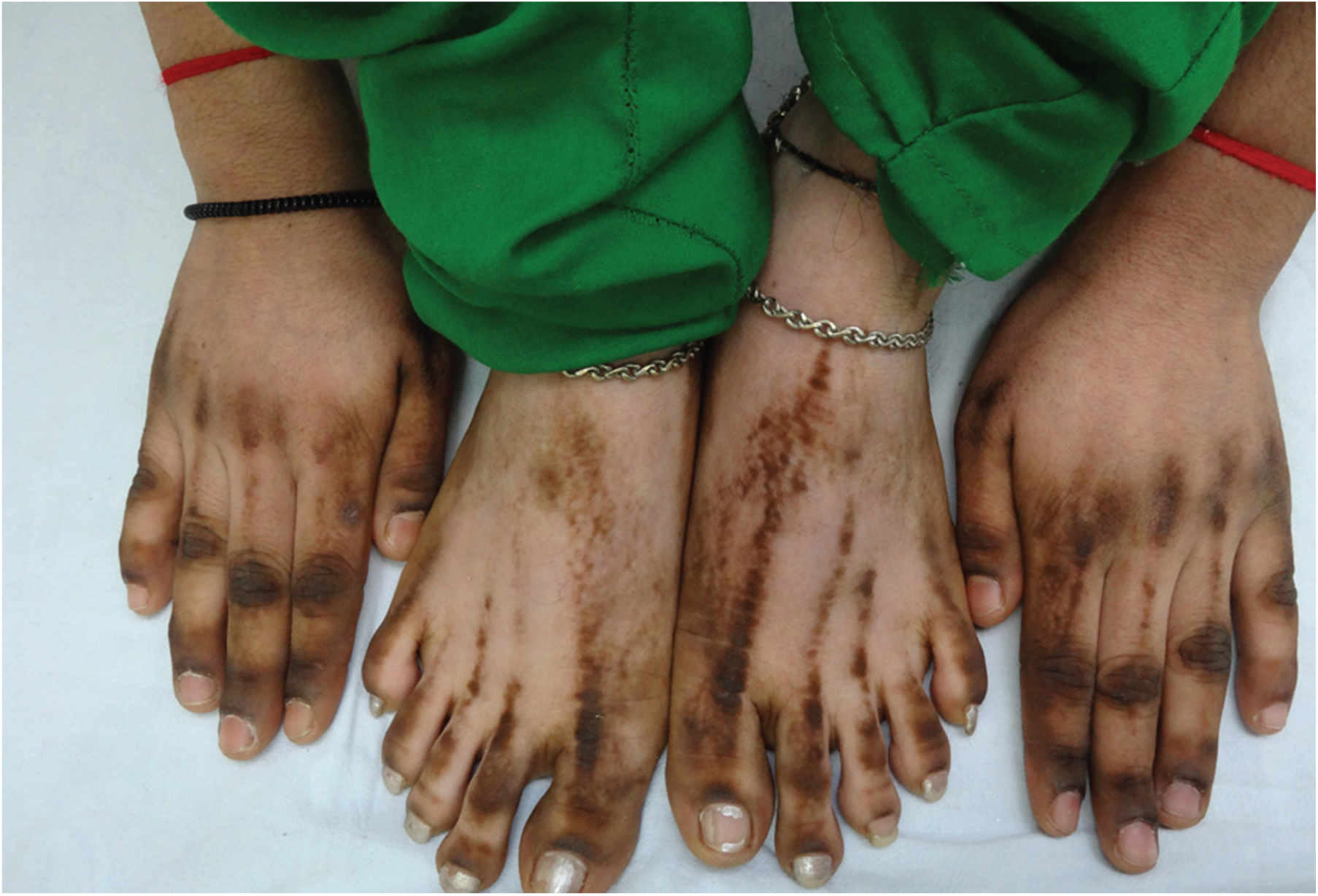
A lean young girl presented with bilaterally symmetrical, hyperpigmented, hyperkeratotic, velvetyplaques on the dorsa of her hands and feet. They were accentuated on knuckles with linear disposition on interphalangeal area. Examination of neck, axillae, groins, palms, soles, and mucosae was normal. There was no evidence of endocrinopathy or prior drug intake.
Schwartz 1 has classified acanthosis nigricans (AN) as benign, malignant, obesity associated, acral, unilateral, drug induced, syndromic, and mixed. Acral AN (acral acanthotic anomaly) affects extremities in isolation, is more common in darker skin types, and usually occurs in the absence of systemic features. 2 The concern of the patients is usually cosmetic, and the condition responds to keratolytics.
Footnotes
The authors have no conflicts of interest regarding this article, and have received no funding for this work.