






Abstract
Hidradenitis suppurativa (HS) is a chronic, inflammatory skin disease that is characterized by the formation of comedones, papules, nodules, abscesses and sinus tracts in the axillary, inframammary, groin, and gluteal areas. Up to 3.8% of the Canadian population has HS, though due to a lack of awareness of HS, many patients are initially misdiagnosed and do not receive adequate treatment early on in the disease course. Once a diagnosis of HS is made, developing an effective management plan can be a dilemma for many providers. There is significant variability in response to any given therapy within the HS patient population and many HS patients have other medical comorbidities which must be taken into consideration. The aim of this review is to provide a practical approach for all healthcare providers to diagnose and manage HS and its associated comorbidities. A sample electronic medical record template for HS management was developed by the Canadian Hidradenitis Suppurativa Foundation Executive Board and is intended for use in clinical settings. This will help to increase collaboration between primary healthcare providers, dermatologists, and other medical specialists and ultimately improve the quality of care that HS patients receive.
Introduction
Hidradenitis suppurativa (HS) is a chronic, inflammatory skin disease that is characterized by comedones, papules, nodules, abscesses and sinus tracts in areas of the body that have a high density of apocrine sweat glands. 1 HS typically presents in adolescents and young adults and is more common in females. 1 The prevalence of HS in Canada is estimated to be up to 3.8% of the general population. 2
The pathogenesis of HS results from impaired functioning of the pilosebaceous-apocrine unit. 3 This leads to hyperkeratinization, occlusion, dilation and rupture of the hair follicle, which activates a local immune response and causes the formation of inflammatory lesions. 3 Genetic mutations involving γ-secretase/the notch signaling pathway, excess androgen activity, menstrual cycle hormonal fluctuations, systemic inflammation, high carbohydrate/glycemic index diets, skin friction, excessive sweating, cigarette smoking/nicotine consumption and lithium are potential triggers for HS. 1,3 -9
HS can progress in severity if left untreated, leading to chronic pain, reduced mobility and a poor overall quality of life. 10 Early recognition and effective treatment of HS is essential to reduce the burden of this disease on patients and their caregivers. However, recent studies have found that many HS patients visit multiple different healthcare providers over an average of 7 years before being diagnosed with HS. 11 After a diagnosis of HS has been made, developing an effective management plan can be challenging. A 2020 survey found that 61% of HS patients reported dissatisfaction with current treatment options after previously trialling an average of 15 different therapies. 11 Due to the variety of aggravating factors for HS and high comorbidity burden, a combination of different treatment modalities may be necessary to achieve disease control. 3 Understanding the challenges associated with HS, common comorbidities and current evidence for treatment options can help to improve the quality of care provided to HS patients by both dermatologists and primary care physicians.
Methods
PubMed, Embase, and MEDLINE databases were searched for articles on comorbidities and management options for HS. Studies published in English prior to November 2021 were included. Systematic reviews and randomized control trials (RCTs) were preferred sources. However, given the paucity of evidence and lack of RCTs supporting many HS treatments, prospective and retrospective studies, case reports, and expert opinion statements were also included. Included studies were independently reviewed and data was extracted by the first and last authors (LJ and SP). The final manuscript was reviewed by a panel of six dermatologists (RA, MB, ID, EO, SMW, SP) and one general surgeon (RG) on the Canadian Hidradenitis Suppurativa Foundation Executive Board.
Diagnosis and Assessment of HS Severity
Three diagnostic criteria must be met in order to diagnose HS: (1) characteristic lesion morphology (2) characteristic distribution of lesions (3) chronicity and recurrence (Table 1). 12,13 If a patient meets all three diagnostic criteria, there is a 90% sensitivity and 97% specificity for a correct diagnosis of HS. 13,14
Diagnostic Criteria for Hidradenitis Suppurativa.

The severity of HS is most often assessed using the Hurley staging system (Table 2). 13,15 There are three Hurley stages of HS, which indicate mild (stage I), moderate (stage II) and severe (stage III) disease. The dermatology life quality index (DLQI) and the visual analog scale (VAS) for pain are also used to assess the impact of HS on patients’ daily lives. 13
Hurley Staging System for Hidradenitis Suppurativa.

Ultrasonography is an emerging diagnostic modality for HS that may be beneficial in identifying signs of more severe disease. 16 Some features, including fistulous tracts and signs of active inflammation, can be observed using doppler ultrasound but are not always apparent on clinical examination. 16 A recent study found that ultrasonography led to restaging from Hurley stage I to stage II or III in 44.7% of patients (n = 143), ultimately leading to changes in treatment plans. 16,17
Comorbidities Associated With HS
HS is associated with an increased prevalence of multiple medical comorbidities. 3,18 -21 HS patients should be assessed for common comorbidities, in order to understand patient-specific factors that contribute to HS pathogenesis and to create treatment plans that will be effective in managing both HS and any comorbid conditions. See Appendix A/B for recommended comorbidity screening.
Inflammatory Bowel Disease (IBD)
Compared to the general population, people with HS are at a 2-fold increased risk of developing Crohn’s disease and 1.5-fold increased risk of ulcerative colitis (Chen et al. 2019, n = 93,601, Crohn’s disease OR 2.12, 95% CI 1.46-3.08; ulcerative colitis OR 1.51, CI 1.25-1.82). 22,23 In a cohort of 109 pediatric HS patients, 48.6% reported gastrointestinal symptoms and 11.3% of these patients had been previously diagnosed or subsequently received an IBD diagnosis. 24 Biochemical evidence supports that there are common genetic and inflammatory cytokine pathways involved in the pathogenesis of both HS and IBD, including increased production of TNF-α, IL-1, IL-6, IL-17, and IL-23. 22,23 Anti-TNF-α biologics are frequently used in the management of both conditions and IBD patients with comorbid HS are more likely to require biologic treatment to achieve disease control. 25
Polycystic Ovarian Syndrome (PCOS)
One large cross-sectional study found that the prevalence of PCOS in female HS patients (n = 22,990) was 9.0% (OR 2.14, 95% CI 2.04-2.24) compared to 2.9% in the general population. 26,27 Hyperandrogenism is pathogenic in PCOS and can also worsen HS. 26 -28
Diabetes Mellitus (DM)
Two recent systematic reviews and meta-analyses found that there is about a 2-3-fold increased risk of DM in HS patients (Bui et al. 2018, n = 104,373, OR 2.78, 95% CI 1.79-4.31; Phan et al. 2019, OR 2.17, 95% CI 1.85-2.55), with most patients developing type 2 DM. 29,30 One study found that up to 75% of HS patients (n = 53) had biochemical evidence of insulin resistance. 31,32 Type 1 DM may also be more common in HS patients, however, this tends to precede the onset of HS. 33
Thyroid Disease
There is an increased prevalence of both hypothyroidism and hyperthyroidism in HS patients. 21,34 -36
Inflammatory Arthritis
Rheumatoid arthritis, psoriatic arthritis, and ankylosing spondylitis are more common in HS patients. 21,37 -39 A 2021 meta-analysis found that the total prevalence of inflammatory arthritis is about 1.9% in the HS patient population (95% CI 0.58-6.12). 37
Obesity
There is an association between obesity and HS. 40 -45 Obesity may worsen HS due to increased sweating, skin friction, number of skin folds, insulin resistance and systemic inflammation. 43 If patients are overweight or obese, counselling on weight loss and referral to a registered dietitian may be beneficial. In one study of HS patients who lost 15% or more of their body weight (n = 35), about 50% of patients went into clinical remission and another 20% saw improvement in their HS. 41 However, not all patients with HS are overweight or obese, and the development of HS is often multifactorial.
Metabolic Syndrome
HS is associated with features of metabolic syndrome, including hypertension, hyperlipidemia, hyperglycemia, and abdominal obesity. 46,47
Acne
HS patients are three times more likely to report a history of acne, including acne vulgaris, acne conglobata and acne fulminans (OR 3.44, 95% CI 1.95-6.07). 48 People with HS are also more likely to develop other conditions within the ‘follicular occlusion tetrad,’ which includes HS, pilonidal sinus/cysts, dissecting cellulitis of the scalp, and acne conglobata. 49
Pyoderma Gangrenosum
Pyoderma gangrenosum is associated with Crohn’s disease, with a prevalence of 3.68% in patients with both HS and Crohn’s disease (n = 48/1305, OR 12.38, 95% CI 9.15-16.74) and 0.12% (n = 77/66,927, OR 26.51, 95% CI 21.07-33.36) in HS patients without Crohn’s disease. 50 HS is part of the rare genetic syndrome ‘PASH,’ which includes pyoderma gangrenosum, acne, and HS. 50
Depression and Anxiety
A recent meta-analysis (n = 40,307) found that 16.9% of HS patients met diagnostic criteria for depression (95% CI 9.9%-27.2%) and 4.9% met diagnostic criteria for generalized anxiety (95% CI 1.7%-13.2%). 51 Contributing factors to psychiatric comorbidities may include health anxiety, stress from chronic disease management, pain, disability, financial concerns, negative body image, social stigmatization and sexual dysfunction. 51,52
Anemia
HS has been associated with anemia of chronic disease and iron deficiency anemia. 21,53 -57 Anemia may also occur with excessive zinc supplementation and resulting copper depletion, which HS patients may be at risk for developing due to the use of zinc supplementation as a HS treatment. 58,59
Medical Complications of HS
Squamous Cell Carcinoma (SCC)
Patients with vulvar, perineal and/or perianal disease may have an increased risk of SCC. 60 -62 SCC often arises after years of chronic inflammation and may be more advanced at presentation due to diagnostic delay. 62
Lifestyle Modifications
Avoiding Potential Triggers
Common patient-reported triggers for HS flare-ups include stress, diet, exercise, sweating, smoking, weight gain, menstruation and skin friction. 5 Healthcare providers should inquire about specific triggers that each individual HS patient has observed and advise lifestyle changes to mitigate these factors.
Smoking Cessation
Cigarette smoking is a risk factor for HS. 63,64 Up to 70-75% of HS patients report current smoking and an additional 10-15% have a past history of smoking. 40 Smoking tobacco products is associated with a poorer response to treatment and a higher number of areas of involvement compared to HS patients who have never smoked or quit smoking. 65,66 Chemicals from tobacco smoke may increase inflammatory cytokine production, while nicotine-mediated activation of nicotinic acetylcholine receptors surrounding the pilosebaceous-apocrine unit can increase follicular occlusion. 65,67 Improvement in disease severity has been observed in patients who quit smoking. 68
Pharmacological smoking cessation agents include nicotine replacement therapy (NRT), bupropion, and varenicline. 69 Bupropion is a norepinephrine-dopamine reuptake inhibitor and nicotinic acetylcholine receptor antagonist that is also used to treat depression. 70 Previous studies have observed an anti-inflammatory effect of bupropion, including a reduction in TNF-α levels, which may benefit HS patients. 70 -73 As nicotine can worsen HS, it may be best to only use NRT for a short interval to manage acute withdrawal symptoms or use alternative agents. 68 Psychological interventions with demonstrated efficacy in smoking cessation include cognitive behavioral therapy, motivational interviewing, and support groups. 74,75
Exercise, Clothing, Hair Removal and Menstrual Products
Pain and mobility restriction may limit exercise ability for some HS patients. Increased sweating and friction may also trigger HS flare-ups. 5 Activities which limit sweating and friction in the skin folds, such as swimming or yoga, may be preferable. 76 Patients should wear exercise clothing that is form-fitting in the skin folds, choose items composed of moisture-wicking fabrics, such as polyester, spandex or polypropylene, and use anti-friction creams and balms. 76,77 Hyperhidrosis treatments, including deodorants for sensitive skin and botulinum toxin injections, can reduce the impact of excessive sweating on disease activity. 76,78 High absorbency shorts and undergarments, which are produced by clothing manufacturers such as KnixTM, can help to reduce skin-to-skin friction and prevent leakage if there are draining lesions. 79 Patients should also be counselled to avoid shaving or waxing in areas with HS lesions and use tampons or menstrual cups to reduce local skin irritation. 76
Dietary Modification
Some patients report that dietary changes can alter disease activity. In one study, over 75% of HS patients reported eliminating at least one food from their diet, with some patients altering consumption of multiple food groups. 5,80 Limited studies have been done to investigate outcomes of specific dietary interventions in HS patients. Low glycemic index and low dairy diets have the most supporting evidence. 81,82
Sugar and refined carbohydrate intake should be limited, as this can trigger a rapid increase in blood glucose levels and a subsequent elevation in insulin and insulin-like growth factor 1 (IGF-1). 81 -84 Insulin and IGF-1 can increase androgen levels and androgen receptor sensitivity, leading to follicular occlusion. 81 -83 Dairy products contain natural androgens as well as whey and casein proteins, which also increase insulin and IGF-1. 81,85 A previous study found that 83% of participants (n = 47) had improvement of their HS after following a dairy-free diet. 86 In studies on milk product consumption in acne patients, skim milk produced the highest increase in insulin response and was associated with worsening of acne, which may be due to its higher concentration of whey protein. 87 -89 Whey protein shakes have also been associated with worsening acne in athletes, therefore limiting these products may benefit HS patients. 90,91
The Mediterranean diet may also be beneficial for HS patients, as it confers a protective effect against cardiovascular and metabolic disease. 92 One study found that people with HS, especially those with more severe disease, consumed fewer Mediterranean diet foods than people without HS. 93 Other dietary modifications with support from small studies or patient surveys include wheat and brewer’s yeast elimination diets, nightshade elimination, and the autoimmune protocol diet. 5,81,94,95 However, current evidence is insufficient to recommend these dietary strategies to HS patients. 81
Supplements
Zinc, vitamin D, and myo-inositol have been investigated as potential HS treatments. 80 Serum zinc deficiency is more common in HS patients, especially in severe disease. 96 Multiple studies have found that supplementation with 90-100 mg zinc gluconate is effective in improving HS. 97 -100 However, excess zinc consumption may result in copper deficiency within months of use, which may lead to anemia, neutropenia, and if prolonged, neurological symptoms. 58,59,101,102 HS patients should consider concurrently taking copper supplements to prevent copper deficiency. 58,59,101,103 In addition, clinical studies have investigated the use of zinc supplements in HS for only up to 3-4 months, therefore, we recommend limiting this treatment to a few months’ duration.
Vitamin D deficiency is more common in HS patients, especially in severe disease, and supplementation may be beneficial. 80,104 Myo-inositol and riboflavin (vitamin B2) supplements may help to reduce insulin resistance. 80,105 -108 Curcumin, although not previously studied in HS patients, may be helpful in reducing levels of inflammatory cytokines and managing pain. 80,109,110
Medical Treatments
Medical treatments should be optimized according to disease severity. Although topical therapies may be effective in managing mild disease, or as an adjunct treatment in more severe disease, systemic therapy is usually necessary in moderate to severe HS. In mild cases that are refractory to topical therapy, patients should be offered systemic agents. A recommended stage-specific approach for HS management is included in Figure 1.

A Stage-Specific Approach to HS Management.
Topical Skin Cleansers
Topical over-the-counter skin cleansers with anti-inflammatory and antibacterial effects have been supported as HS treatments by expert opinion or small case series but have not been been studied in clinical trials. These products include benzoyl peroxide, zinc pyrithione, chlorhexidine, and triclosan (Table 3). 99,111 -119
Topical Treatments for HS.

Topical Resorcinol
Resorcinol is a topical chemical peeling agent that has been used to treat acne and is included in over-the-counter anti-aging products. 120 One clinical study (n = 61) found that daily application of 15% resorcinol cream in an oil/water base over a 12 week period reduced the number of inflammatory nodules and abscesses by over 80% in patients with Hurley stage I and II HS. 121 Resorcinol also has shown efficacy in reducing HS-related pain and the size of sinus tracts. 121 -123 Applying resorcinol within hours of onset of an acute HS flare-up can also reduce the severity and time to resolution of new nodules. 122 Patient satisfaction ratings of resorcinol are high and ongoing use is well-tolerated. 124
Topical Antibiotics
Clindamycin is the most common topical antibiotic prescribed to treat HS. 111 Daily application of 1% topical clindamycin phosphate can reduce the number of inflammatory nodules and abscesses in mild to moderate HS and may have comparable efficacy to oral tetracycline antibiotics. 125,126 Topical clindamycin can be prescribed in combination with benzoyl peroxide. 114,115 Topical dapsone has also been supported by expert opinion and warrants further study. 111,114 A potential concern with long-term use of topical antibiotics is antibiotic resistance. 123,127
Topical Retinoids
Topical retinoids are vitamin A derivatives that are used to treat acne vulgaris. 112,128 No studies have been done to evaluate the use of topical retinoids in HS management, though expert opinion suggests that topical adapalene or tazarotene may be beneficial in treating HS due to their anti-inflammatory and keratolytic effects. 112,116,117 Topical adapalene has efficacy in treating post-inflammatory hyperpigmentation and atrophic acne scars, which may be beneficial for reducing the appearance of HS scars. 129 -131
Oral Contraceptive Pills
Combined oral contraceptive pills (OCPs) with a high estrogen to progesterone ratio and anti-androgenic progesterones, such as drospirenone or cyproterone acetate, have been used to treat HS in female patients of child-bearing age. 132 -135 The anti-androgenic activity of these OCPs is thought to be beneficial in reducing hormonal imbalances and the pro-inflammatory effects of excess androgens. 132 In Canada, three anti-androgenic OCPs are available for off-label treatment of HS: Yasmin®, Yaz® and Diane-35® (Table 4). 136 -138
Oral Hormonal and Anti-Hyperglycemic Medications for HS.
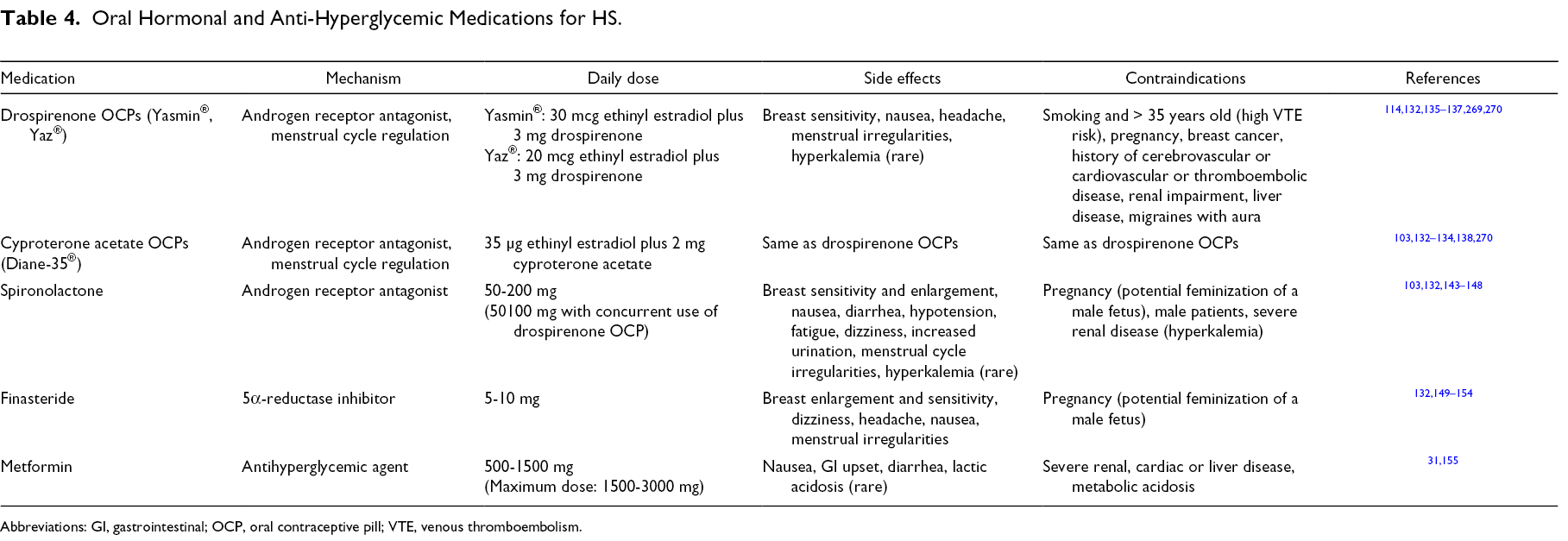
Abbreviations: GI, gastrointestinal; OCP, oral contraceptive pill; VTE, venous thromboembolism.
One study reported that 62.4% of women with HS experienced worsening of symptoms before or during the menstruation phase of their menstrual cycles. 139 For women who report menstrual flaring, an extended birth control regimen that consists of daily OCP use for 84-126 days may help to reduce the frequency of flare-ups. 103 Progesterone-only contraceptive methods, including OCPs, hormonal IUDs, injections and implants are not recommended due to reports of worsening HS from the pro-androgenic effects of unopposed progesterone activity. 111,139 A similar effect was observed in acne patients who used progesterone-only contraception. 140 -142
Spironolactone
Spironolactone is a potassium-sparring diuretic that also acts as an androgen receptor antagonist. 132,143 -146 Spironolactone is used to treat hormonal acne in female patients. 147,148 In a previous study of 20 female HS patients, 17 saw improvement in disease severity on spironolactone (100-150 mg daily) and 11 (55%) went into complete disease remission. 143 Hyperkalemia is a potential risk with spironolactone treatment, though this risk is low in individuals under the age of 45 with normal renal function, and therefore routine monitoring of electrolytes is not required in these patients. 147,148 Spironolactone may lead to menstrual irregularities, which can resolve with concurrent OCP use. 147 Spironolactone is not typically used in male patients. 146
Finasteride
Finasteride is an anti-androgen that blocks conversion of testosterone to dihydrotestosterone by 5α-reductase and is used to treat androgenic alopecia, hirsutism and prostate enlargement. 132 Finasteride has been successfully used in both female and male HS patients and has shown promise in pediatric HS patients. 149 -154 Caution should be used in adolescent males, as the long-term effects of finasteride on fertility are unknown in this age group. 149,151,152 Finasteride is contraindicated in pregnancy but has not been shown to have any long-term effects on fertility in women of child-bearing age. 149,154
Metformin
Metformin is an oral anti-hyperglycemic agent which has demonstrated efficacy in improving HS. 31,155 A previous study found that 68% (n = 36/53) of patients had clinically significant improvement in their HS while on metformin monotherapy. 31 The hypothesized mechanism is that metformin reduces insulin resistance, which can lower androgen levels. 31
Oral Antibiotics
Although HS lesions tend to be sterile, oral antibiotics are often used as a first-line treatment for HS due to their anti-inflammatory effects. 117 Oral antibiotics used to treat HS are summarized in Table 5. 103,111,156 -159 Tetracycline antibiotics are often used in mild to moderate HS, while clindamycin/rifampicin is typically used in more severe disease. 111,113,156 However, one study comparing tetracycline antibiotics to clindamycin/rifampicin found that both options may be equally effective for advanced disease. 156 Other antibiotic options with demonstrated efficacy include triple combination therapy with moxifloxacin, metronidazole and rifampin, as well as oral dapsone. 103,111,159 -162 For patients with severe, refractory HS, intravenous broad-spectrum antibiotics such as ertapenem and ceftriaxone may be used as an induction treatment prior to consolidation with oral antibiotics. 111,163 -167
Oral and Intravenous Antibiotics Used to Treat HS.
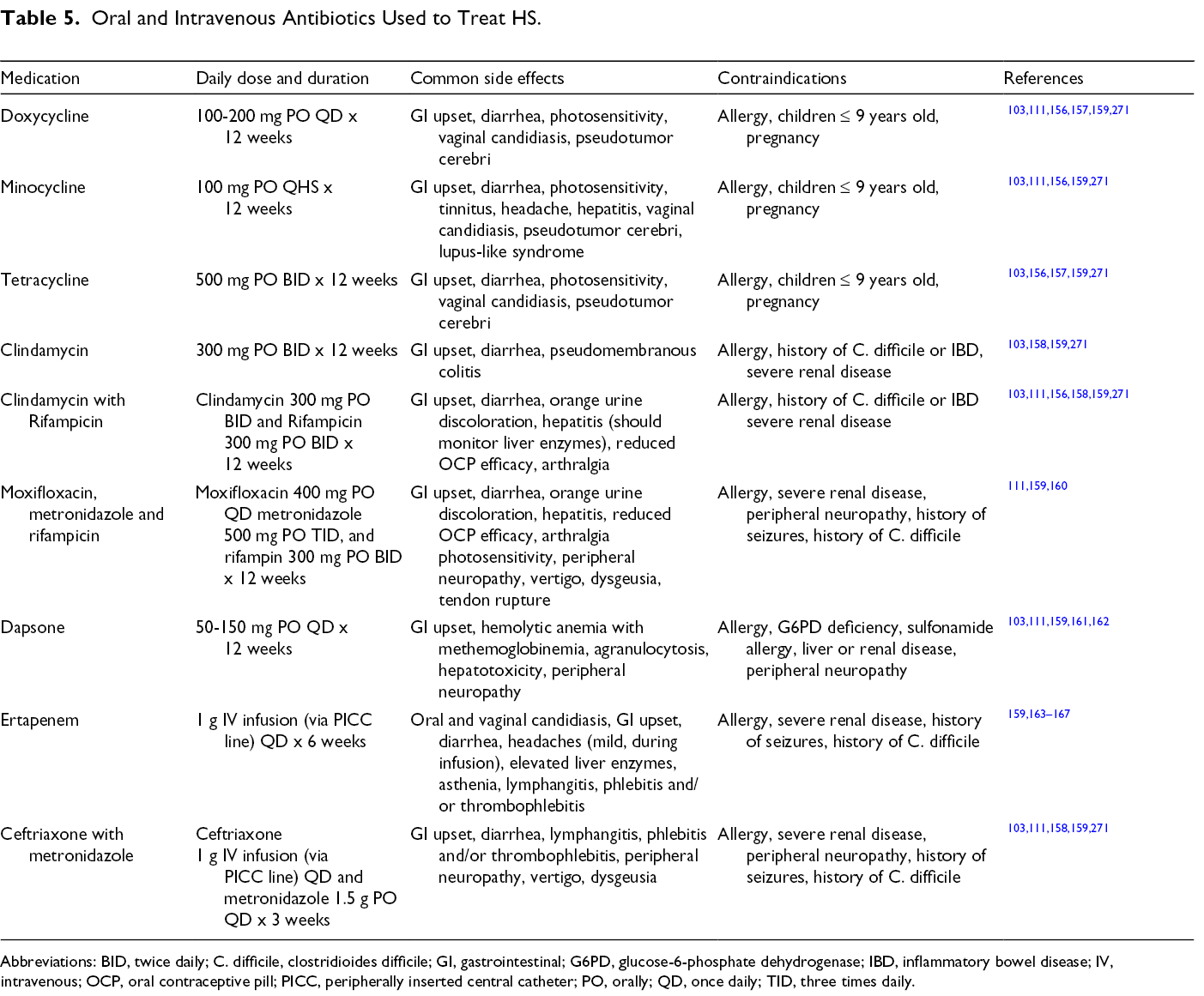
Abbreviations: BID, twice daily; C. difficile, clostridioides difficile; GI, gastrointestinal; G6PD, glucose-6-phosphate dehydrogenase; IBD, inflammatory bowel disease; IV, intravenous; OCP, oral contraceptive pill; PICC, peripherally inserted central catheter; PO, orally; QD, once daily; TID, three times daily.
It is recommended that oral antibiotic treatment be limited to a maximum period of 12 weeks. 167 With the availability of other effective systemic medications, including anti-androgens and biologics, repeated courses of antibiotics are a less favorable option. A previous study found that anti-androgen therapy had a higher success rate than oral antibiotic treatment in controlling HS, with the benefit of being safe for long-term use. 168 Disease relapse after antibiotic treatment is common, with about 59% of patients (n = 10/26) relapsing within one year (mean time of relapse = 4.2 months) after a 3-month course of clindamycin/rifampin. 169 Antibiotic resistance is another major concern and therefore antibiotics should be used primarily as a bridge to other therapies and for pre-surgical disease control. 127,159
Oral Retinoids
Isotretinoin is a vitamin A derivative that is used to treat acne vulgaris. 170 Evidence on the efficacy of isotretinoin in treating HS is inconclusive, with North American clinical practice guidelines listing isotretinoin as a second or third-line agent, while European guidelines recommend against isotretinoin use. 111,113 Some studies have found isotretinoin to be beneficial in completely or partially inducing remission of HS. 117,170 -174 In contrast, other studies found that isotretinoin was not effective for most patients and in some cases, worsening of HS was observed. 175 -179 In some patients, co-existing acne improved on isotretinoin while no improvement was seen in their HS. 175
Acitretin and alitretinoin have shown greater efficacy in treating HS compared to isotreinoin. 113,117,180 -183 One prospective series found that all 12 patients experienced improvement of their HS, with 9 patients experiencing no recurrence at 6 months post-treatment. 181 Patients who previously did not respond to isotretinoin had significant improvements on acitretin. 181 However, due to the teratogenic effects of acitretin, it is not ideal for use in women of child-bearing age, as they must avoid becoming pregnant for up to 3 years following treatment cessation. 181,183 Alitretinoin is a newer oral retinoid that has shown promise in managing HS. One clinical study found that 78.5% of patients (n = 14) had significant improvement on alitretinoin. 183 Alitretinoin is preferable to acitretin in women of child-bearing age due to its shorter half-life. 183,184 Oral retinoids are contraindicated in pregnancy and should not be prescribed concurrently with tetracycline antibiotics due to risks of pseudotumor cerebri. 185,186
Intralesional Corticosteroid Injections
Intralesional triamcinolone acetonide (Kenalog®) injections can be beneficial in reducing pain and time to resolution of HS nodules. 187 -195 Typically, a concentration of 10 mg/ml is used, with a maximum total dose of 40 mg per treatment session. 111,113,187,194,196 Allowing HS patients to book urgent fit-in appointments to receive intralesional corticosteroid injections can help to manage acute flare-ups and may reduce the need for patients to present to emergency care settings. 195
Botulinum Toxin Injections
Botulinum toxin (BTX) is a FDA-approved treatment for axillary hyperhidrosis. 78 One study found that 55% of HS patients reported focal hyperhidrosis in areas where they had HS lesions and patient surveys often report excessive sweating as a trigger for flare-ups. 5,78 Results from six previous case reports, one prospective analysis and one pilot RCT indicate that BTX injections may be a beneficial treatment for HS. 78,197 -203 Notable reductions in the number of HS lesions and patient-reported pain, healing of sinus tracts and improvements in DLQI have been reported. 78,197 -203 Treatment sites included the axillary, inframammary, groin and gluteal areas and treatments were repeated every 3-10 months, with no loss of efficacy. 78,197 -203 No complications with BTX treatment were reported in any of the studies.
Laser Hair Removal
Laser hair removal (LHR) uses specific wavelengths of light to selectively target and destroy hair follicles. 204,205 Multiple RCTs have found that monthly long-pulse Nd:YAG LHR treatments are effective in progressively improving HS, with no post-procedure recovery time required and high post-treatment patient satisfaction ratings. 115,204 -209 Cost is a significant barrier to accessing LHR, as a single treatment session may cost hundreds of dollars and LHR is often not covered by medical insurance plans. 210
Photodynamic Therapy
Intralesional photodynamic therapy (PDT) can be performed by injecting 5-aminolevulinic acid (5-ALA) or methylene blue (MB) into individual lesions, followed by fiber optic laser illumination. Intralesional PDT has demonstrated some improvement of HS lesions in small clinical studies. 113,211 -215 Further study is needed to assess the efficacy of PDT in treating HS.
Biologics
Adalimumab (Humira® and its biosimilar versions) is an injectable TNF-α inhibitor which is currently the only FDA-approved biologic for HS. 167,216 -220 It is indicated for the treatment of moderate to severe HS in patients ≥ 12 years of age. 216 -219 Two large RCTs (PIONEER I and II, n = 633) found that after 12 weeks of treatment, 50.6% of participants had at least a 50% reduction in inflammatory nodules and abscesses, compared to only 26.8% of the placebo group. 216,217 A pooled analysis on the safety profile of adalimumab, which analyzed data of 30,000 patients from multiple different trials, found that the incidence rate of serious infection was 2.8 per 100 person-years and the rate of malignancy was 0.5 per 100 person-years in HS patients. 221 Contraindications to biologic treatment include active tuberculosis, hepatitis B, hepatitis C or HIV infection, moderate to severe heart failure, active malignancy or malignancy within the past 5 years, and multiple sclerosis or other neurologic conditions. 222
For patients who do not respond to adalimumab, infliximab is the second-line biologic treatment of choice for HS. 111,167,219,220,223 -226 Ustekinumab and anakinra are recommended as third-line treatment options and brodalumab, secukinumab and bimekizumab have also demonstrated efficacy in clinical trials (Table 6). 111,167,219,220,227 -238 Phase 2 and 3 RCTs are ongoing for the following classes of biologics: anti-TNF-α (etanercept), anti-IL-1 (lutikizumab, anakinra, bermkimab), anti-IL-12/23 (ustekinumab), anti-IL-17 (bimekizumab, secukinumab), anti-IL-23 (risankizumab, guselkumab), anti-IL-36 (spesolimab, ismidolimab), and anti-CD-40 (iscalimab). 239
First, Second and Third-Line Biologic Agents Used to Treat HS.
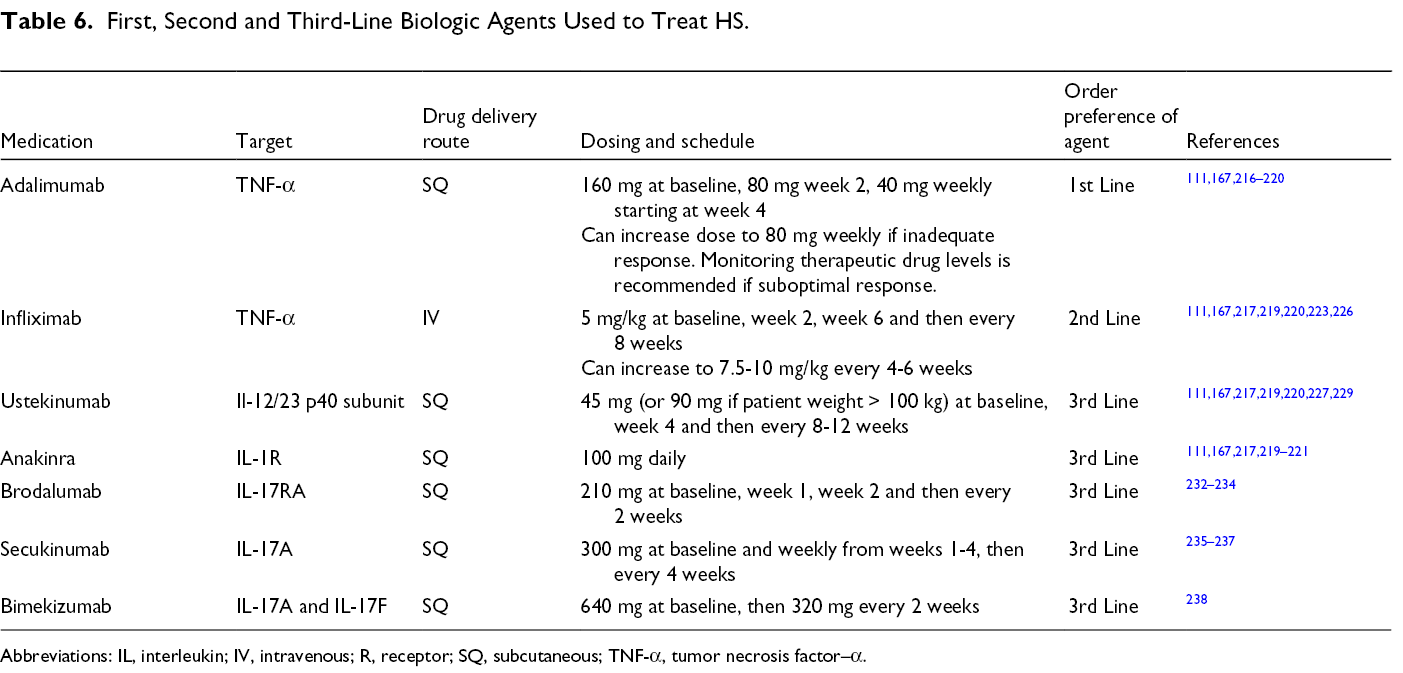
Abbreviations: IL, interleukin; IV, intravenous; R, receptor; SQ, subcutaneous; TNF-α, tumor necrosis factor–α.
Other Immunomodulatory Agents
Prednisone is not used as a long-term HS treatment due to high relapse rates upon discontinuation and significant side effects, but short courses may be beneficial in improving responses to biologic treatment. 240 Apremilast, an oral phosphodiesterase 4 inhibitor, has shown efficacy in treating moderate HS in one RCT and is currently undergoing additional study. 239,241 Other small molecule inhibitors that are currently under investigation in RCTs include JAK1 inhibitors (tofacitinib and upadacitinib), CXCR1 and CXCR2 signaling inhibitors, LTA4 hydrolase inhibitors, and complement C5a inhibitors (IFX-1, avacopan). 239,242
Pain Management
HS patients report that pain is one of the most challenging complications of their disease and it has a substantial negative impact on their quality of life. 243 Despite this, pain management is an often overlooked aspect of HS treatment plans. 244 A patient survey reported that over 80% of HS patients use at home remedies in order to control their pain, which may include self-lancing of nodules, application of hot compresses, over-the-counter pain medications and cannabis products. 245 Poorly-managed pain may lead to more frequent emergency department visits, suboptimal HS management and an increased risk of opioid use disorder. 246 -248 Thus, it is essential for physicians who treat HS patients to have an approach to managing different types of HS-associated pain.
HS patients may experience both acute nociceptive pain during flare-ups and chronic pain, which can have features of both nociceptive and neuropathic pain. 109,249 -251 A detailed pain history can help with selecting pain management options that are most likely to be effective. First-line treatments for acute nociceptive pain during flare-ups may include topical resorcinol, topical diclofenac, acetaminophen, ibuprofen, naproxen, intralesional corticosteroid injections, incision and drainage, and tramadol. 109,121 -195,252,253,253 For chronic pain (>6 weeks) with neuropathic characteristics, topical lidocaine or menthol, selective serotonin and norepinephrine reuptake inhibitors (duloxetine, venlafaxine), tricyclic antidepressants (amitriptyline, nortriptyline), and gabapentinoids (gabapentin and pregabalin) may be beneficial. 109,252,253 For all patients, optimizing medical management of their HS, treating psychiatric comorbidities, and providing education on wound care is recommended. 109 A referral to a pain management specialist should be considered if pain is refractory to multiple therapies or if long-term opioid therapy is being considered. 109
Surgical Management
Surgical intervention is usually required to remove sinus tracts in patients with Hurley stage II or III disease and can help to prevent recurrence of individual lesions. 254,255 Surgical interventions that are utilized in HS include incision and drainage (I&D), deroofing, and wide local excision. 255,256
Although I&D can offer immediate relief during acute flare-ups, the recurrence rate of HS lesions is nearly 100% and therefore routine use of I&D is not recommended. 256 Deroofing is the preferred surgical intervention for individual lesions and sinus tracts, due to the tissue-sparing nature and the ability to perform de-roofing as an in-office procedure under local anesthesia. 256 Deroofing involves removing the top layers of skin using curettage and/or electrosurgical dissection, followed by removal of fibrous bands and gelatinous tissue from lesions and sinus tracts. 257,258 A curette probe can be used to explore sinus tracts for side passages. 257 Healing typically occurs by secondary intention due to higher recurrence rates with primary closure. 257,259 More than 80% of patients do not have local recurrence after deroofing. 260 For extensive Hurley stage III HS, wide local surgical or carbon dioxide laser excision may be necessary to achieve disease control. 259,261 -263
Wound Care
Ideal dressings for HS are inexpensive, absorbent, non-irritating, and have antibacterial properties to prevent secondary infection. 264 -266 Patients can be prescribed silver-impregnated foam, hydrofiber with silver, or calcium alginate with silver dressings. 264 However, cost may limit accessibility of these dressings. 264 Alternatively, abdominal or feminine hygiene pads may be used. 264 Antimicrobial skin cleansers, topical antibiotics, Manuka honey, and platelet-rich plasma gel can be applied underneath dressings to improve wound healing. 265 -268
Summary
It is important for primary care physicians and dermatologists to be aware of comorbidities that commonly occur with HS to help guide treatment decisions. Collaboration with other medical disciplines, including gastroenterology, endocrinology, rheumatology, plastic surgery, and psychiatry, is essential to provide high quality care to HS patients. Smoking cessation, dietary changes, wound care and pain management should be addressed with every patient. Patients should be advised that multiple lifestyle, medical and surgical interventions may be necessary to achieve disease control and treatment plans should be individualized. A recommended electronic medical record template, which includes an approach to history-taking, initial assessment and management of HS, is summarized in Table 7.
Sample Electronic Medical Record Template for New HS Patients’ First Clinic Visits.
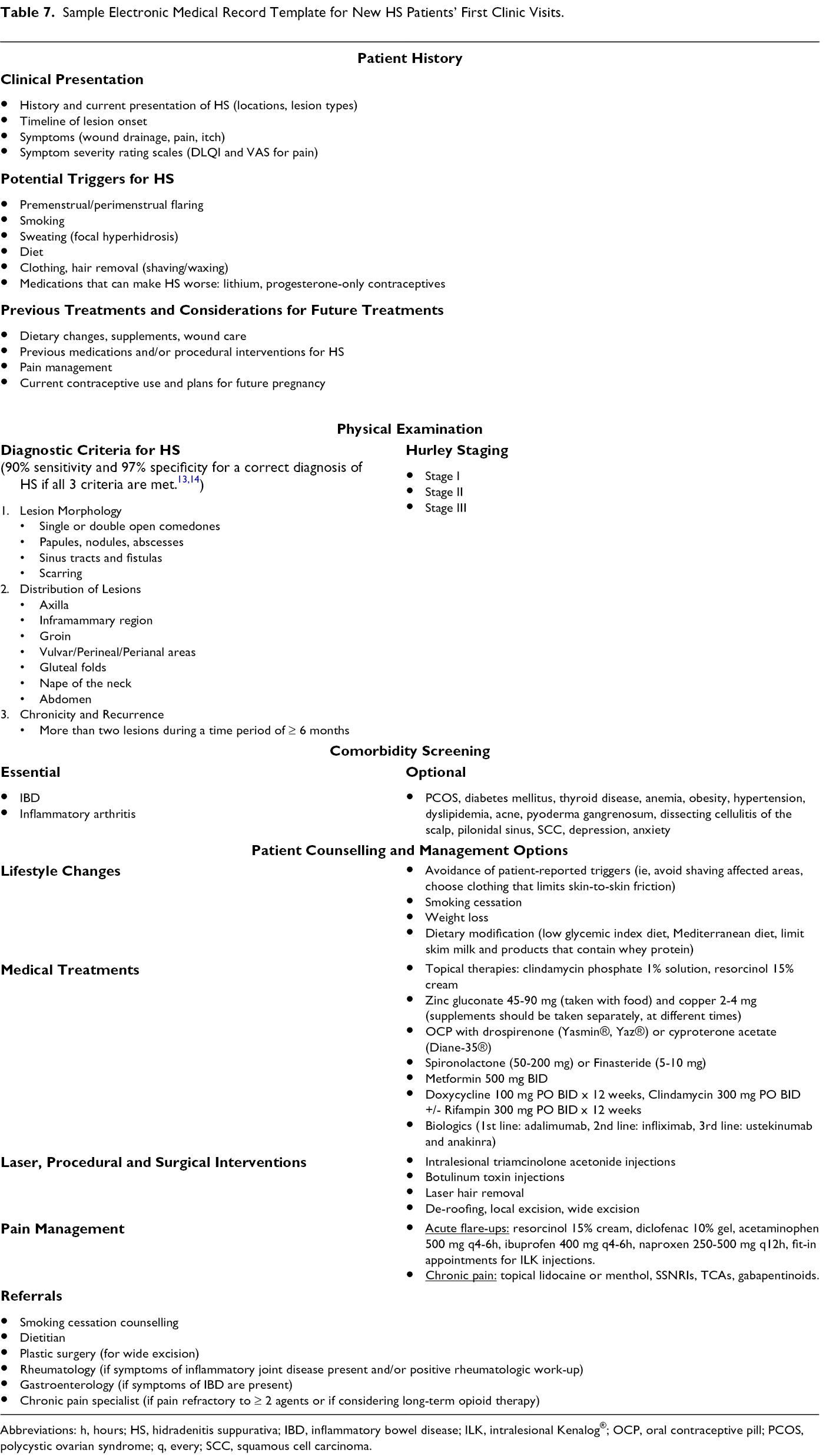
Abbreviations: h, hours; HS, hidradenitis suppurativa; IBD, inflammatory bowel disease; ILK, intralesional Kenalog®; OCP, oral contraceptive pill; PCOS, polycystic ovarian syndrome; q, every; SCC, squamous cell carcinoma.
Supplemental Material
Online supplementary file 1 - Supplemental material for Practical Guidelines for Managing Patients With Hidradenitis Suppurativa: An Update
Supplemental material, Online supplementary file 1, for Practical Guidelines for Managing Patients With Hidradenitis Suppurativa: An Update by Leah A. Johnston, Raed Alhusayen, Marc Bourcier, Isabelle Delorme, Ralph George, Elizabeth O’Brien, Se Mang Wong and Susan M. Poelman in Journal of Cutaneous Medicine and Surgery
Footnotes
Declaration of Conflicting Interests
The author(s) declared the following potential conflicts of interest with respect to the research, authorship, and/or publication of this article: Raed Alhusayen has served as a consultant and has received honoraria for speaking engagements from the following companies: AbbVie, Janssen, Novartis, Sandoz, Amgen. Marc Bourcier has served as a consultant and has received honoraria for speaking engagements from the following companies: AbbVie, Amgen, Bausch, Janssen, Leo, Lilly, Novartis, Pfizer, and Sanofi. Isabelle Delorme has served as a consultant and has received honoraria for speaking engagements from the following companies: AbbVie, Amgen, Anaptys Bio, Avene, Bausch Health, BMS, Celgene, Cutanea, Dermira, Devonian, Eli-Lilly, Galderma, Glenmark Pharmaceutical, Innovaderm Research, Janssen, Leo Pharma, Moberg Pharma, Novartis, Regeneron, Sanofi-Genzyme and UCB Pharma. Ralph George has served as a consultant and has received honoraria for speaking engagements from AbbVie. Elizabeth O’Brien has served as a consultant and has received honoraria for speaking engagements from the following companies: AbbVie, Novartis, and Therakos. Se Mang Wong has served as a consultant and has received honoraria for speaking engagements from the following companies: AbbVie, Amgen, Bausch Health, Eli-Lilly, Leo Pharma, Novartis, and Sun Pharma. Susan Poelman has served as a consultant and has received honoraria for speaking engagements from the following companies: AbbVie, Amgen, Bausch Health, Janssen, Novartis, and Sandoz.
Funding
The author(s) disclosed receipt of the following financial support for the research, authorship, and/or publication of this article: Publication of this article was sponsored by the Canadian Hidradenitis Suppurativa Foundation through an unrestricted grant from AbbVie.

Supplemental Material
Supplemental material for this article is available online.
References
Supplementary Material
Please find the following supplemental material available below.
For Open Access articles published under a Creative Commons License, all supplemental material carries the same license as the article it is associated with.
For non-Open Access articles published, all supplemental material carries a non-exclusive license, and permission requests for re-use of supplemental material or any part of supplemental material shall be sent directly to the copyright owner as specified in the copyright notice associated with the article.
