







Abstract
To recognize the significance of indigenous cultures and their landscapes as well as to appraise these places, identification and evaluation have to focus on indigenous worldviews rather than on the deeply embedded Western civilization ideals and values of the design. Australian Aboriginal and New Zealand’s Maori cultures are genuinely rooted in experiential interrelationships with land with a particular orientation toward relationship and time entrenched in cosmology, narrative, and place. This article explores a participatory design strategy that facilitates and benefits indigenous cultures in Australia and Aotearoa/New Zealand. Using a design-led research approach, this study endeavors to nurture capacity building within “traditional custodians” in order to contribute to the sustainability of rural communities as well as caring for landscape. The article also introduces a framework better suited to nurturing and managing cultural landscapes. This framework demonstrates the potential to simultaneously empower indigenous cultures to protect things that matter but also to enhance their economic, political, and social freedom as they understand it through the lens of their own cultural values.
Introduction
Many indigenous cultures believe that Earth is a sacred environment and regard themselves as an integral part of a holistic and living landscape, relating to the landscape in ways that reflect their experiences. The intricate, holistic, and interconnected relationship between people and the natural environment and its resources is formed primarily in spiritual terms instead of as material asset. This differs from the Western understandings of land and landscapes. Indigenous people believe that they belong to the land and are in unison with plants, animals, and ancestors whose spirits also inhabit these places and protect them (Abram, 1996). This relationship is a rich knowledge base developed over long periods of time and govern the way they see and understand ecosystems, ecosystem services, and environmental management and justice (Harmsworth & Awatere, 2013).
Most significant landscapes and ecosystems have been modified through human settlement and the exploitation of natural resources (Selman, 2004). With a history of colonization and increased globalization, many indigenous cultures have witnessed a decline in the quality of their natural ecosystems creating significant challenges to their way of life (Harmsworth & Awatere, 2013). The outcome of these events has resulted in loss of land, loss of culture, loss of identity, and loss of health and well-being—threatening their very existence (Panelli & Tipa, 2007). However, most of these losses are not seen as the most defining elements of indigeneity; instead, indigenous peoples defend a strong sense of unity and connection with the land as a fundamental characteristic that defines their existence.
The relationship between indigenous peoples and land has a long tradition and is a central premise to the culture (Durie, 2004). Tradition is generally manifested in oral narratives, tales, songs, customs, and approaches to healing and birthing, as well as death rituals (Blaisdell & Mokuau, 1994; Walker, 1990). “People are the land and the land is the people” (Whanganui River Maori Trust Board, 1993). The long-standing connection with land through forests, wetlands, rivers, coastal areas, and mountains provides the indigenous people a sense of identity and belonging. This sense of identity is cultivated by all individuals engaging in maintaining the human–nature relationship in balance as part of their daily life (Prechtel, 1999) and experiencing the natural environment as home (Cohn, 2011). Because of the inseparability between people and the natural world, indigeneity can be defined as a holistic system of knowledge developed based on a strong understanding of the natural systems that define the landscape (Marques, McIntosh, & Campays, 2018; Baker & Marques, 2017).
As human identity is regarded as an extension of the land, the restoration and maintenance of landscapes and ecosystems often require the active collaboration of local communities in their planning, management, and sustainable development. Increasingly, community participation has become an imperative for policy development and environmental management and planning practices across the globe (McIntosh & Marques, 2017). Particularly, over the past decades, a huge effort has been put into bringing indigenous communities into the decision-making process that directly affects them. Many of the initiatives that result from these new ways of thinking serve to reverse the bureaucratic and standardized “top-down” approaches present across government institutions and decision-making bodies (Mohan, 2007).
The research model, where the prevailing culture is one of “experts” designing for people, has typically led practice and has had a long and extensive history in academia (McIntosh & Marques, 2017). However, more recently, a design-led approach has moved to the forefront with a common goal of involving local people in driving, inspiring, and informing the design processes (Vaajakallio & Mattelmaki, 2007). This new approach not only incorporates the physical dimensions of space but also embeds social relations and subjective human experiences in the design itself (Schofield & Szymanski, 2011). It also aids indigenous peoples in asserting their claims to land rights and seeks their participation in managing indigenous lands (Sletto, 2009). This alternative approach, where people are treated as active citizens and therefore seen as partners and active cocreators in the design process, is linked to place-making and is not straightforward. It challenges the actions of those researchers and designers who engage in symbolic and figurative activities of “window dressing” to create an impression of commitment to community development. The design-led research process presented in this article is focused on the application of a collaborative and interdisciplinary participatory process, which requires a sustained period of interaction and relationship maintenance with indigenous communities (Muriwai, Houkamau, & Sibley, 2015). In this article, we discuss a series of participatory activities that were the result of collaboration between the Australian Murujuga Aboriginal community and UDLA—an urban design and landscape architecture practice situated in Western Australia—in one project and the Aotearoa/New Zealand’s Ngāti Kahungunu ki Wairarapa Maori tribe and the School of Architecture at Victoria University of Wellington in another. In both projects, participatory design methods were employed in the design and development of community facilities and environments for place-making. It is not the intention of this article to romanticize or idealize indigenous peoples in suggesting a return to a simpler way of living. Instead, this study recognizes the importance of environmental and social connections and learning from indigenous practices in developing a place-specific and culturally appropriate framework as well as design solutions. To accomplish this, the concepts of “landscape,” “land,” and “environment” are used interchangeably, as for the Aboriginal and Maori cultures, these constructs are used together to unlock the indigenous perspectives that underpin their worldviews.
Indigenous Knowledge and Environmental Consciousness
Indigenous knowledge of natural systems, ecosystems, and native flora and fauna of the surrounding environment has been developed through a long and sustained contact, and the respect for the forces of nature and the spirits that inhabit these places has molded the indigenous ways of living-on and living-from the land. The earth and sky, the elements, and the seasons form the stories that explain the origins of life and local communities to such an intimate extent that many can relate to a specific landscape through a series of genealogical sequences that trace back several generations in a hierarchical genetic assemblage with identifiable bonds (Harmsworth & Awatere, 2013). Indigenous cultures acknowledge a natural order to the universe, where places are seen as sacred and may be considered seats of power or guardianship, related to journeys associated with spirit beings or inhabited by entities that must be appeased. The relationship between indigenous peoples and the environment forms a core aspect in the establishment of knowledge as well as the organization of experience. The shaping of thinking and the links between the physical, spiritual, natural, and social environments also emphasize the importance of the land for collective and intergenerational health and well-being (Izquierdo, 2005; Lee & Armstrong, 1995; World Health Organization, 2002).
Through these constructs, a common understanding can be framed for what a cultural landscape is for Australia and Aotearoa/New Zealand indigenous cultures. While definitions may vary, the direction taken in this study focuses systematically on the interrelationship between human society and the natural environment, recognizing that cultural landscapes are defined by the intangible values that indigenous peoples place on landscape. The combination of a dominant culture of European descent in both Australia and Aotearoa/New Zealand with a highly urbanized society has similarly resulted in the deterioration of the natural environment and with it a loss of the minority Aboriginal and Maori cultural values. The accompanying structural and power imbalance within the two societies fosters inequity, which, while quite different, has still resulted in the neglect of indigenous minorities by the governing bureaucracies (Curtis, Wikaire, Stokes, & Reid, 2012; Hibbard & Adkins, 2013).
Underrepresentation of Maori and Aboriginal groups limits the potential of the built environment disciplines to provide a capable and culturally appropriate framework that caters for the needs of all. An analysis of current literature finds that many community development professionals in policy, planning, or design still undertake a conventional design approach that may include a limited analysis, a superficial survey of client requirements and expectations, and a “for-information-only” level of public consultation for an already-agreed-on design direction (Lipietz, 2008). In this way, the design process plays out literally behind closed doors. However, a more sensitive, democratic, and engaging participatory design approach as part of a ground-up response is required for indigenous communities, allowing for a reconnection to values and customs as well as engaging, educating, and empowering people to improve the sustainability of their communities. Community-driven participatory design-led research is an overarching term that is increasingly used to describe a variety of approaches to research that have as their centerpiece three interrelated principles: participation, research, and action (Minkler, 2005). These new approaches place the designer in the role of facilitator to community design decisions and report a positive effect in social, cultural, ecological, economic, and political outcomes.
With careful design guidance from a facilitator, a participatory approach can include sharing educational tools such as design analysis, evaluation, use of similar project precedents and concept development options. This may take the form of varied visual techniques, such as sketches, drawings, mind maps, collages, diagrams, and physical models. It can capture certain moments of unconscious collaboration where individuals work alongside the community, facilitating open communication with those in the process of creating and using the actual environment. By doing so, it can place the community within the design process and empower the community in developing and owning the design outcome.
Methodology
This research reports on two design-led, participatory, action research landscape case studies, one in Australia and the other in New Zealand. Design-led methods hinge on the understanding that the health of a community has a symbiotic relationship with how empowered the participants are while engaged with their environment. In this manner, community members can “have a say” in changing their existing conditions into their preferred ones. A collaborative community-driven design approach makes it possible for underrepresented communities to be involved in shaping their environment and starts with design professionals working regularly with indigenous community groups. In participatory experiences, the roles of the designer and the researcher blur as the community now becomes a critical component in the process (Sanders, 2002, 2006). People are asked to express themselves and to participate directly and proactively in the design development process (Sanders, 2008; Sanoff, 1990). Participatory design hereby acknowledges the direct involvement of its users as cocreators in the design and decision-making process.
This study has combined different strategies that allowed for partnership building and community-based activities, which sometimes reverted to the use of traditional tools such as pen and paper, maps, photographs, physical models, and even drawings in the sand while listening to the oral narratives—processes endorsed by leading participatory designers (Al-Kodmany, 2001). Oral traditions, narratives, and storytelling are still a reality in the everyday lives of many indigenous peoples and are a crucial part of any research. As a transmission tool in passing down social, ecological, economic, and political constructs to the next generations, oral narratives connect the past with the future, the land with the people, and the people with the story (McIntosh, Marques, & Hatton, 2018; Smith, 2012). This becomes an important tool in participatory design research as storytelling allows the teller to retain control instead of the researcher; therefore, the story becomes both method and meaning in the understanding of the values that create the identity of a place (Bishop, 1994; Kovach, 2009).
Both case studies used the development of a diagrammatic model, in consultation with elders prior to the beginning of the project, to manage, attain, and represent the complexity of the relationships (Downs et al., 2009). This helped endorse the nature of the research and assured that cultural engagement practices and protocols were respected (Lewis & Sheppard, 2005; Mark & Lyons, 2010). Principles of human scale development found in community development (Laverack, 2006; Max-Neef, Elizalde, & Hopenhayn, 1991) and the benefits of social empowerment through approaches such as the environmental justice movement (Bryant, 1995; McDonald, 2002; Rhodes, 2005; Schlosberg, 2007) were used to ground the collaborative participatory design-led approach. Multiple data collection methods were used, including accompanying community members in site visits to spiritual places and other sites affected by changes in land use, as well as harvesting culturally significant foods and conducting semistructured interviews with participants. Several focus groups were carried to allow for students and professionals to engage with the community in brainstorming the potential design solutions. The relationship established with indigenous peoples enabled students and professionals to work with traditional models of thinking and engagement, giving them awareness to often-hidden values as well as preparing them to be socially responsible world citizens.
The Case Studies
Two case studies are compared and contrasted in this article. The first project “Murujuga Cultural Management Plan” developed by landscape architecture professionals of UDLA with the local Murujuga peoples in Western Australia (Figure 1), involved the creation of a long-term resource and cultural management plan for Murujuga Country, setting out the key Aboriginal laws, customs, and knowledge about places for the preservation and development of the Murujuga National Park. The second project “Akoranga Wairarapa Moana” (Figure 2) in Aotearoa/New Zealand involved 20 Victoria University of Wellington students from the landscape architecture discipline working closely with members of the local Maori iwi/tribe Ngāti Kahungunu ki Wairarapa based in the Wairarapa region of the Greater Wellington. The project was aimed at designing sustainable and culturally sensitive responses to the regular flooding of the Ruamahanga and Tauherenikau Rivers and ultimately Lake Wairarapa (or Wairarapa Moana).
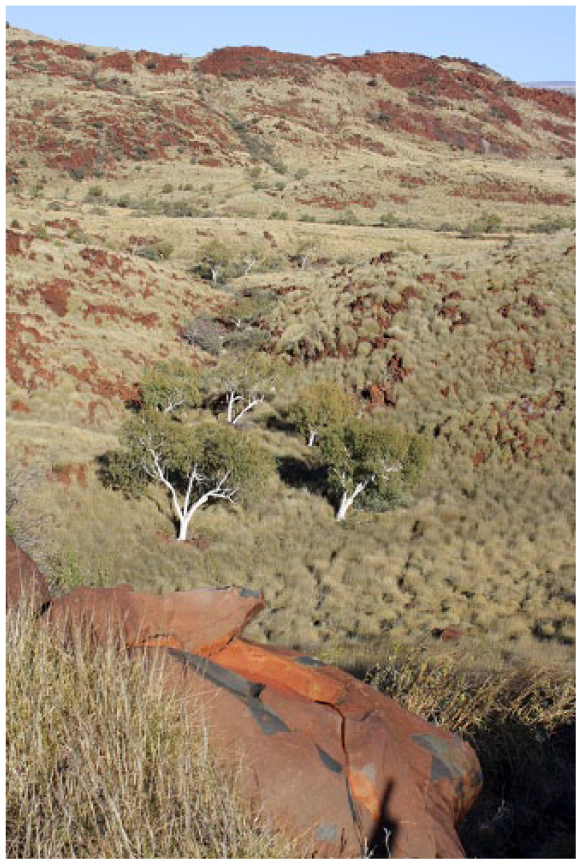
A typical rural landscape of Murujuga Country, Western Australia.
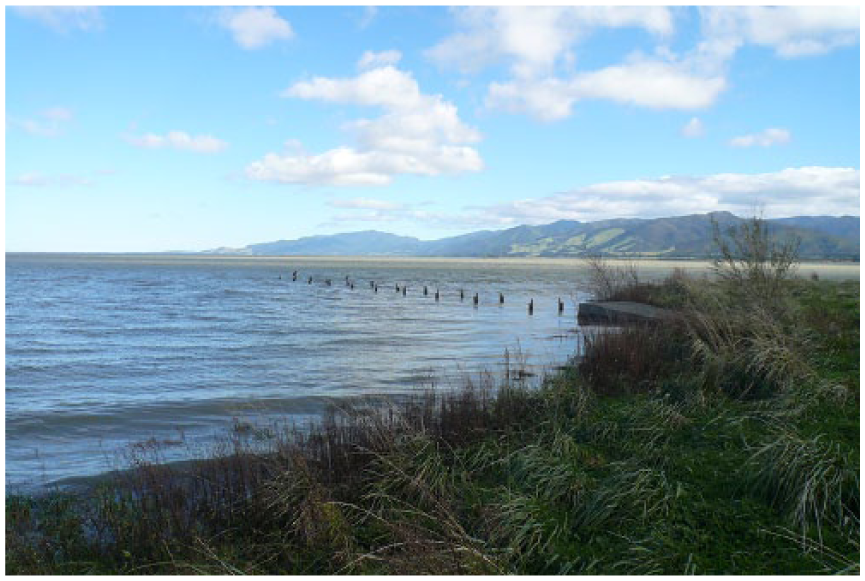
Place of guardianship is important for Maori culture such as Lake Wairarapa, the third largest in Aotearoa/New Zealand’s North Island (Wairarapa means “glistening waters”).
Both projects operated outside of the control of governmental agencies to explore alternative pathways to define, negotiate, and implement design solutions that were site specific and culturally sensitive. In particular, they sought to address the social and cultural problems that resulted from competition between different frames of understanding. Problems such as underrepresented indigenous communities, stressed housing markets, low-income households, and a limited capacity to improve local conditions were common to both projects. Both studies adopted a new approach, establishing an understanding that place, public realm, and settlement overall should be considered both in physical space and as an expression of cultural and social relations (Buggey, 2004). In both the studies, documentation of the site was undertaken, key players were informally interviewed, and several site visits were made. Later on, several discussions were initiated with different members of the community, especially elders, to define the scope of each project and to test the design framework.
The Case of Australia
This case study illustrates the potential for the community to play a major role in both coplanning and codesigning a project. Murujuga is an island in the Dampier Archipelago in the Pilbara region of Western Australia, which contains the town of Dampier. For the Murujuga Aboriginal peoples, the natural environment is seen as a cultural landscape that is the product of human activities. Indigenous heritage is characterized not only by the biophysical and environmental values but also by intellectual property, knowledge, skeletal remains, artefacts, beliefs, customs, practices, and languages, constituting what is called Aboriginal tradition.
As early as 1984, Australia enacted the Aboriginal and Torres Strait Islander Protection Act to preserve and protect places, areas, and objects of particular significance to Aboriginals and for related purposes (Australian Government, 1984). Intended to approach Aboriginal and Torres Strait Islander heritage from an indigenous perspective, the act defines “Aboriginal tradition” as “the body of traditions, observances, customs and beliefs of Aboriginals generally or of a particular community or group of Aboriginals, and includes any such traditions, observances, customs or beliefs with reference to particular persons, areas, objects or relationships” (Coleman & White, 2006, p. 193). The act hereby is not solely concerned with the historical and archaeological but additionally recognizes the heritage values of indigenous peoples as the first Australians. Their heritage is intimately linked with the landscape, beliefs, and customs.
In the case of the Murujuga Cultural Management Plan, the participatory approach started with an understanding of the broader context, where a circle of elders explained the key principles aligned with the practice of custodianship over relatively natural and undeveloped environments (Figure 3). For the Murujuga peoples, the natural environment is the source of life, history, and culture formed over eons of time spent where the “mob” has moved with the rhythms of their country (Grabasch & Firns, 2015). When Aboriginal people have the opportunity to “yarn on country,” there is a renewal of a natural and spiritual bond that connects them back to ancestral beings from the time of creation. The term country refers to everything that includes the living and the nonliving by weaving together family, physical, mental, and spiritual realms (Kingsley, Townsend, Henderson-Wilson, & Bolam, 2013). There is a shared interrelationship that has been developed, where the health of the landscape becomes entwined with the health of its traditional custodians (Figure 4).
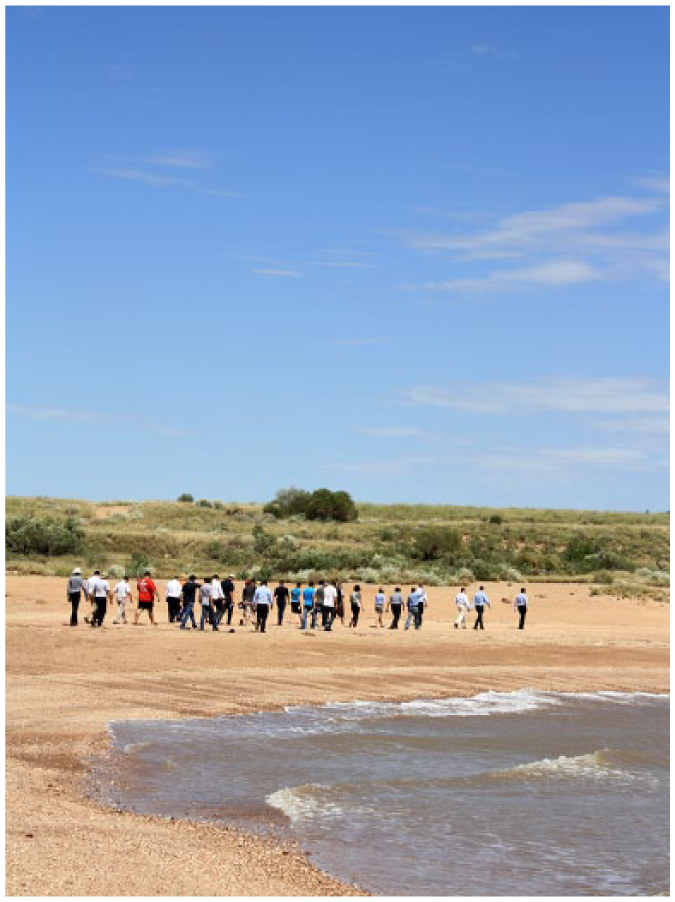
Coastal walk in Karratha, near to Dampier, Western Australia.
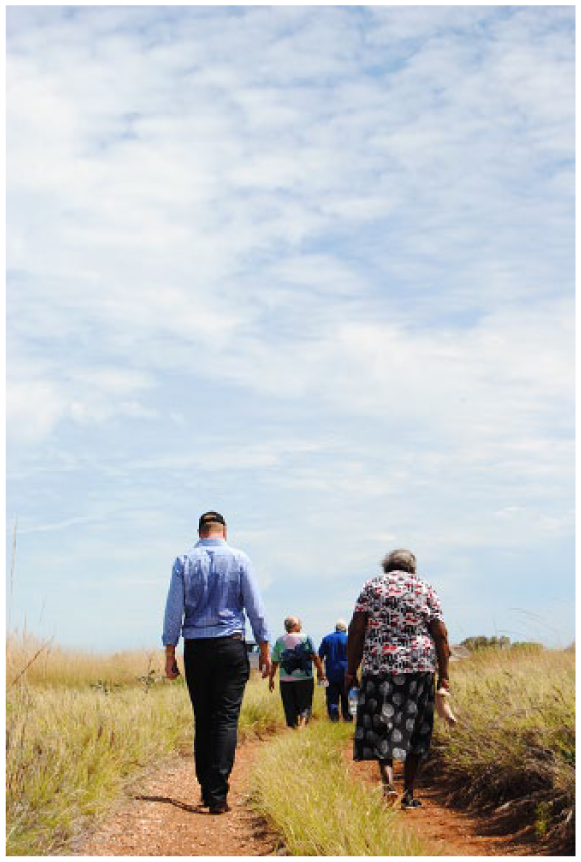
Walking in the country, Karratha, near to Dampier, Western Australia.
In an attempt to restore the connection to nature, this project commenced by juxtaposing two views or values of the Australian North West desert landscape by the Murujuga Aboriginal Elders. The first as the “connection to country” where the physical environment retains a central significance to human beings and cultural beliefs, and the second as an altered postindustrial landscape, a mining town. Both descriptions contrast differing values and relationships to the same North West desert landscape. Throughout the discussions, the community set out customs and knowledge about places, plants, and animals and the rules that will govern the use, access, preservation, and the development of a national park that brings together the rural and urban landscapes.
With regard to the urban fabric, the community shared their concerns related to the town of Dampier. Like many North West towns, Dampier has acquired a robust built form, rolling out dull engineered spaces that, although highly practical for large vehicle use, often lack attention to, or responsive design of, social places and human amenity that allows people to engage with and respect a culturally significant place (O’Faircheallaign, 2006). The community expressed the importance of the center of town as the “hearth” and the need for focal points and places that provide the opportunity for healing and repair of self. Heritage and cultural and spiritual attributes were mentioned numerous times during the workshop with the community. Working effectively within the complex conditions that shape North West communities involves undertaking a truly multidisciplinary approach in which planners, designers, and practitioners have the opportunity to assist with the provision of equitable land and culturally sensitive open space planning.
The use of a design-led participatory design process has allowed gathering and mapping of cultural understandings and values. The communication of local and cultural knowledge in a form that can be understood in a cross-cultural and intergenerational way recognizes the important values that underpin this research and ultimately contribute to the recording and mapping of the lived experiences. For example, the exploration of design scenarios started with looking at indigenous art works that were of importance to the community, then drawing together and developing informal sketches on potential design outcomes (Figure 5). Other tools such as the use of similar project precedents helped the community to understand the role of the designer as facilitator and communicated concretely what could be accomplished in terms of design in a similar framework. When performed correctly, a design-led participatory design process can increase the capacity of the community and provides substantial benefits to the design outcome.
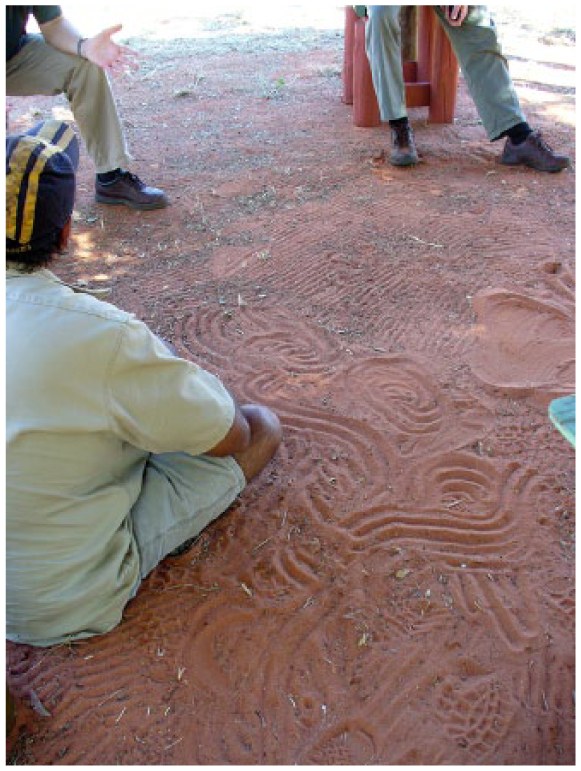
Learning from drawing in the Pindan dirt with the Murujuga peoples, Western Australia.
The Case of Aotearoa/New Zealand
This second case study explores the coproduction of design experiments to foster beneficial relationships between the Wairarapa region rural settlements, Maori culture, European-oriented society, and the ecological environment. The traditional Maori worldview acknowledges a natural order to the universe, built around the living and the nonliving. All living things are connected through whakapapa (genealogy) that directly connects us with the Maori creation myths, stories, and ancestral lineage, ordinarily referred to as Maori worldview (Te Ao Māori). In the modern interpretation, this conveys the interrelatedness between humans and ecosystems (flora and fauna), telling us that all living things of the natural world are connected and dependent (Harmsworth, 2004; Figure 6). The Resource Management Act recognizes that ancestral lands of iwi (tribe), hapū (subtribe), and whānau (family) are inseparable from the identity and well-being of Maori as tangata whenua (indigenous people). It acknowledges that the maintenance of ancestral relationships with wāhi tapu (sacred places) is a major issue for Maori tribes, and it defines such landscapes as all land where the ancestors lived and sought resources (New Zealand Goverment, 2017).
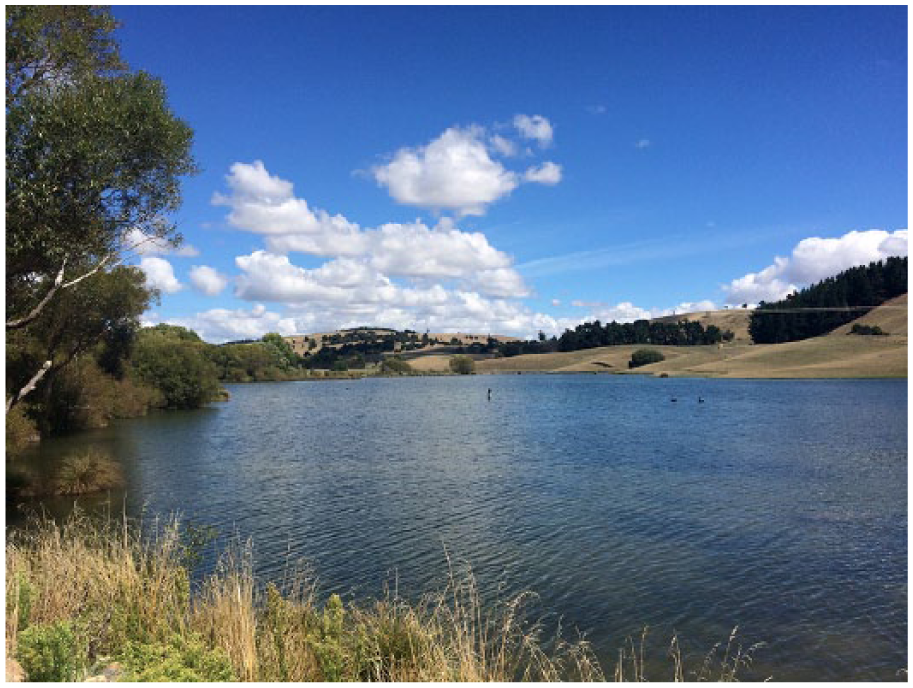
A place of mauri in Carterton, Wairarapa, Aotearoa/New Zealand, where the tangible values reflected on the natural systems in display are deeply linked with the intangible values communicated through storytelling by the Maori tribe.
The Wairarapa region is known for its abundance of land, water, and soil fertility as well as long occupation by Maori tribes such as Ngāti Kahungunu ki Wairarapa. Due to its proximity to Wellington, the Capital City of Aotearoa/New Zealand, recent infrastructure developments, such as motorways and railways as well as land use changes to accommodate monoculture agriculture and extensive beef and sheep grazing, has degraded natural resources and increased flooding events. In the case of Ngāti Kahungunu ki Wairarapa, the participatory approach started with the contextual and biophysical understanding of the landscape. In this project, extensive site visits varying in length from an afternoon to an entire week, meetings and workshops, and focus groups helped in exploring and refining the place-specific and culture–environment approach to well-being as a way Maori tribes may fulfil their responsibilities to their people and environment. This process empowered the participants and provided an ongoing open forum for discussion and identification of potential solutions.
During various meetings and workshops, Maori participants frequently referred to the physical attributes of the landscape, which included mountains, hills, cliffs, gullies, rivers, and lakes. Wāhi tapu, understood as sacred places, were referred to by the iwi/tribe as either a general location or a specific site that were embedded in traditional, spiritual, religious, ritual, or mythological values. Places may be urupā—related to birth or death; sites related to ritual, ceremonial worship, or healing practices; places imbued with mana (spiritual power) of chiefs or tūpuna (ancestors); battle sites or other places where blood has been spilled; or landforms like mountains and rivers having traditional or spiritual associations. For Maori, there is a transparent relationship between the natural environment and the spiritual world that assisted the students in crafting their design scenarios for the region.
Beliefs and values are a significant part of Maori cultural identity, helping establish cultural integrity and at the same time can be strong determinants for regulating, modifying, or controlling behavior (Sampson & Goodrich, 2009). The visual approach of the students enabled the Maori communities to witness how their sustainable and cultural values might address a regular flooding issue, rather than a series of analytics or zoning diagrams that are usually presented by governmental agencies. Design solutions were related to spiritual connection and sacredness, historic events pre- and postcolonization, myths and stories linked to naming of places, and land- and water-based recreational or subsistence activities and captured a sense of belonging with sensory impressions related to color or light and shadow and including natural elements and landforms. By “locating” values in a landscape, it was possible to understand the landscape as a whole and how different layers of knowledge might come together. Working with the community, initial design solutions were then tested to explore how farming activities might be modified to improve water quality, to protect the waterways and sacred places, and to use natural systems to mitigate the impacts of flooding. These design parameters created a stronger connection between people and land as well as improved the health and well-being of the landscape, an important vision for the Maori community.
The use of a design-led participatory design processes involving all of the community stakeholders overcame the challenge of enforcing a singular capital-driven model by creating a collective experience of things, events, and places that addressed the needs of all. It was quickly noticed that by involving the community in the design process and decision making, a strong feeling of ownership, guardianship, custodianship, and responsibility toward the different design scenarios and their environmental implications was accomplished. The process also allowed for economic imperatives to be acknowledged and compromises to be reached. Tools used, such as mind-mapping the region, addressing key strengths and weaknesses, using collage to illustrate oral narratives, deeply influenced the way in which students initiated their designs. The holistic understanding of landscape values, especially those of intangible nature, are much easier to address by acknowledging the relationship between the health of a community and the quality of its context.
Participatory Design as a Future Framework
In both cases, a collaborative community-based participatory design approach was used involving design professionals and students working together with community groups, government officials, and stakeholder groups to proactively explore ideas and preferred alternatives allowing the development of scenarios that might shape the surrounding environment. In both cases, the role of the designers and researchers blurred and the community became the core component of the process. Participants began to realize that it was no longer about hierarchies but about networks that could lead to a stronger and more influential front. In the Australian example, the community was finally empowered to communicate that the grand schemes planned by the local council were not desired and that they far preferred a simpler, less expensive but more personal intervention. In this way, the democratic principles that underpin participatory design were demonstrated through the involvement of the community in such wide-ranging actions as brainstorming, decision making, and even the conceptual design of potential future scenarios.
Developing an interdisciplinary collaborative design-led partnership aimed at engaging the community and facilitating meaningful outcomes requires both a wide range of disciplinary knowledge as well as ongoing active community participation. For Aboriginal and Maori communities, this included democratizing the participation process outward through reinstating principles of collective and open debate but framed in indigenous worldviews that answer the global challenge of ecological restoration. By doing this, simultaneously a strong link was established between the built and natural heritage and also a cultural and ancestral land stewardship.
Through these means, it is possible to deepen mutual understandings and collective constructs as well as fully support the action-driven capacity of the group involved. This engagement permitted both the community and the designers to acquire new tools and processes grounded in the local social, cultural, and environmental ideologies while facilitating the development of new analytical, experiential, and communicational skills. As such, this type of cross-cultural partnership can cater for the unfamiliar researchers and designers as well as the indigenous communities as it creates a mutually understandable platform in “place” while working from different cultural understandings (Edmunds, 2012).
Community participation hereby informed place-making in at least two ways: first, by providing depth and breadth for understanding the social, cultural, economic, environmental, and spatial dimensions that underlie space, and second, by formulating culturally sensitive intervention strategies that address the needs and desires of the community. The authors argue that designers can no longer afford to design an “end product” for users; instead, they must design with the goal of encouraging different and memorable experiences for all individuals, communities, organizations, and cultures that are deeply linked to the surrounding environment.
Our collaborative design-led framework can be summarized in four steps: (1) understanding of place, (2) relationship building, (3) respectful facilitation, and (4) empowered participation.
Step 1: Understanding of Place
The participatory design process always commenced prior to first contact. Both practitioners and students had to develop a holistic understanding of the project environment (social, ecological, economic, and political) and the history of events and beliefs that shaped the current situation. A strong understanding to what degree there is capacity within a community was required. For the Murujuga Aboriginal community, this involved a broad review of ethnographic, ecological, sociological, anthropological, and political literature as well as the compilation of an inventory of community members, their interests, their affiliations, and the areas they wished to contribute. In the case of the Ngāti Kahungunu ki Wairarapa tribe, it included the understanding of cultural protocols, tribal affiliations, and their relationship with the landscape and the wider community.
Step 2: Relationship Building
The creation of trust through relationship building was fundamental to keep the channels of communications between the members of the engagement team and the residents, other stakeholders, and project participants. For the Australian project, this included formal introductions, many hours of meetings, social gatherings, and events that facilitated discussion. For the Aotearoa/New Zealand’s project, the process started by an invitation from community elders for a get-together, where the indigenous community defined their own design priorities by identifying sites with strong cultural and spiritual meaning (Figure 7). Both projects involved long walks in the landscapes the communities belong to, social interaction with the wider family and tribe, and sharing of food (Figure 8). To be sustainable long term, designers and students must undertake relation-building activities over numerous years within the indigenous communities and engage in different styles of interaction to obtain the desired levels of trust and respect.
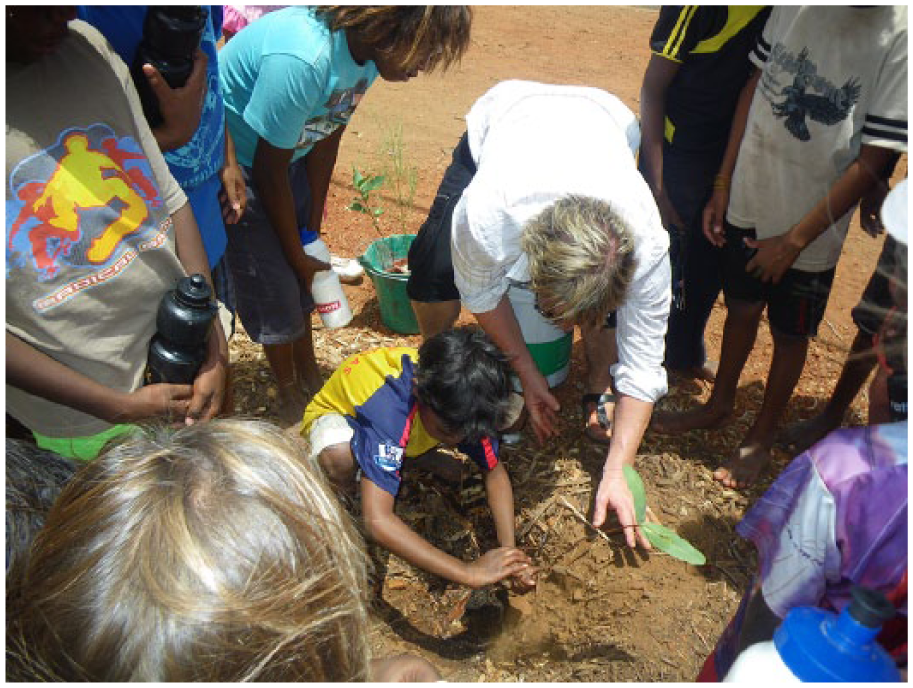
Bush tucker planting day, a ceremony with spiritual meaning, at Halls Creek, Karratha, near Dampier, Western Australia.
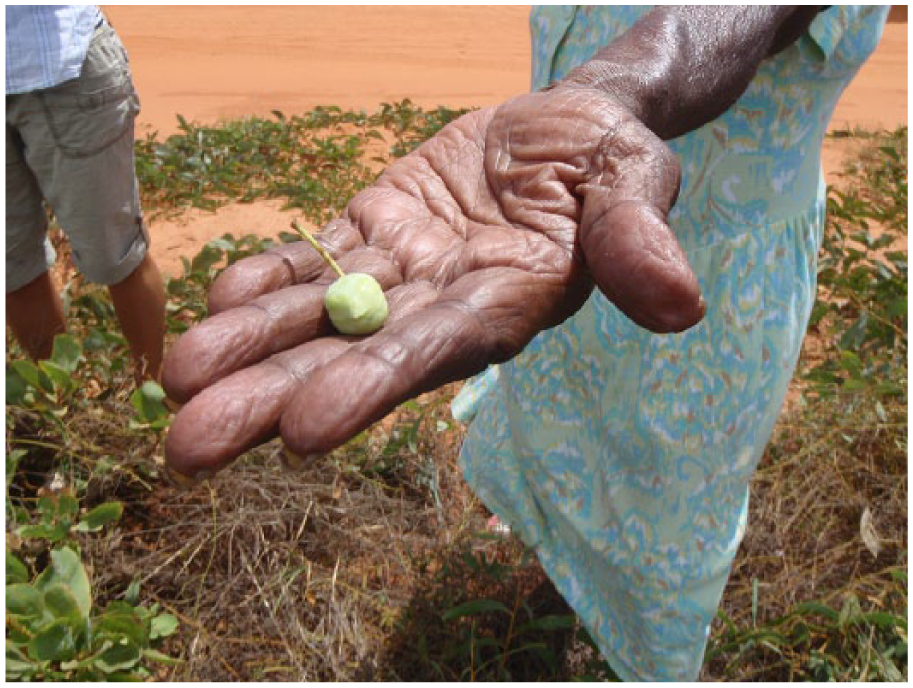
Gubinge, an Australian superfood, collected by the Murujuga peoples.
Step 3: Respectful Facilitation
To acknowledge the success of both the Murujuga and Ngāti Kahungunu ki Wairarapa relationships, the notion of storytelling was an integral part to narrating the symbolic linkages inherited and maintained through the continued connection to the land via birth, marriage, and death. In both projects, the communities often simply wanted someone to listen to them telling their story (Figure 9). This respectful facilitation allowed the designers and students to understand the identity of and attachment to each place.
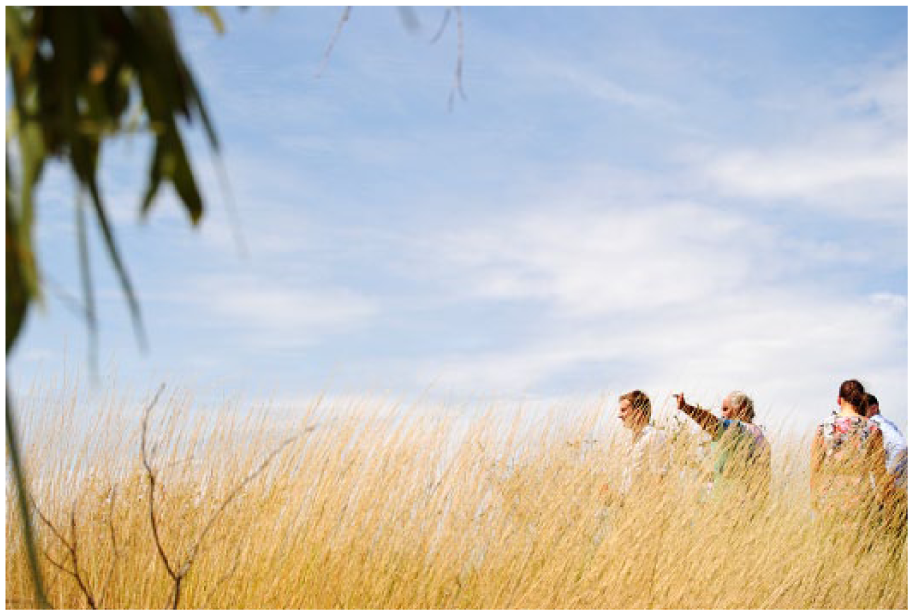
Murujuga cultural landscape, walking with the elders and listening to the oral narratives, Western Australia.
Step 4: Empowered Participation
Techniques for optimal participation involved working with established community and stakeholder groups, rather than imposing purpose-built committees. It quickly became evident in both projects that active people within smaller communities were already stretched in delivering many other community tasks. Finding ways to support local champions can often allow for the community to develop or grow in new directions. Also, relying on the existing skill-set of each member of the community allows for the development of a communal design language, ownership on what is designed and pride in what is implemented, marking the transition from a “designer’s project” to a “community project.”
Introducing designers and students to indigenous communities facilitated an exchange of cultural and ecological values, enabling the community to design with and through the designers and students. The connection allowed for designers to appreciate indigenous models of engagement with respect to life experience over abstract theory. While this type of connection is only superficial at best in a highly complex cultural context, it trained students and designers to accept the existence of more than one reality and to minimize the Westernized approach to reduce a known reality to a single construct. In the process of engagement, both the indigenous communities and the designers/students gained knowledge and the means to be socially and culturally conscious world citizens (Cortese, 2003; Wahl & Baxter, 2008). In this threshold, a problem that draws a design solution from experiences and investigates particular aspects or elements in a team effort can solicit interesting and innovative solutions (McIntosh & Marques, 2017; Strydom & Puren, 2013; Sutton & Kemp, 2006).
Conclusion
This article explored the contributions made by an interdisciplinary, participatory, and collaborative design-led approach. Research involving indigenous cultures, such as the Aboriginals of Australia and the Maori of Aotearoa/New Zealand, can benefit from alternative ways of understanding the natural and built environment. Traditionally, methods often fall short in terms of richness and diversity of values that held landscape, land, or the environment at the forefront. Alternative design strategies and techniques that extend and expand from indigenous constructs make them more culturally and ecologically meaningful than abstract sets of universal design principles. This study has shown that indigenous peoples depend not only on cultural values deeply embedded in landscape but also on spiritual, communal, and ecological constructs, which are mainly described through narratives and myths. To achieve balance, we suggest an approach that is rooted in collaboration and participation, where indigenous groups can validate their culture, keeping it alive and evolving.
In this way, Aboriginal and Maori cultures must not only be recognized and reestablished but be fully integrated into all aspects of society in a manner that is respectful, meaningful, and representative. There is much room to increase both Aboriginal and Maori involvement in community-based projects and in the improvement of physical, cultural, spiritual, emotional, and social well-being of people and their communities as core principles for an interdisciplinary, participatory, and collaborative design-led approach. For the Murujuga peoples and Ngāti Kahungunu ki Wairarapa tribe, themes of identity, place, community, and agency arose from the work carried out by designers and students as a way of embracing the future to better protect cultural values and the landscape they are part of. The tested approach sustain indigenous communities through their worldviews and provides the opportunity to individuals to collectively produce identity and a strong sense of belonging to a place or landscape as well as sustainable solutions.
Designing with and for indigenous communities has the potential to be a genuine process that allows for strong partnerships and personal relationships to be established with those who will use the design outcomes. In this study, the process required that all parties involved got to know one another and built mutual respect, blurring boundaries between the professional and the personal. There was often a heightened sense of vulnerability and uncertainty that was both exhilarating and problematic. With this, there is an ethical stand underlying participatory design that recognizes an accountability of design to the world it creates and the lives of those who inhabit it. By looking closely at what we do, how we see a site, and how we design for its people, this framework aids the designer in discovering new ways and techniques that can not only assist to see a place and its patterns but also provide new insights on how to design based on indigenous knowledge. In this manner, interdisciplinary and design-led research can provide an essential interface across indigenous communities, teaching, and practice.
Footnotes
Declaration of Conflicting Interests
The author(s) declared no potential conflicts of interest with respect to the research, authorship, and/or publication of this article.
Funding
The author(s) disclosed receipt of the following financial support for the research, authorship, and/or publication of this article: The New Zealand component of this research was funded by the Māori Research Office of Victoria University of Wellington.
