







Abstract
This study explores the traditional adobe dwellings of Kashgar, Xinjiang, through the lens of semiotics theory to conduct a comprehensive analysis of their environmental adaptability. It decodes the architectural language and probes the mechanisms by which modern algorithmic patterns are encoded. Utilizing field surveys, 3D modeling, and semiotic analysis, the research identifies and extracts symbols of environmental adaptation from Kashgar’s residential architecture and establishes an algorithmic translation framework. This framework facilitates the transformation of vernacular architectural grammar into a semiotic encoding for regenerative design. The research identifies core symbols including inward courtyards, Aytowan spaces, parapet walls, Su-pa, sunken courtyards, and arcades. Employing Peirce’s triadic relation, the study develops a meta-model consisting of “symbol extraction, module deconstruction, and algorithmic translation.” This model translates the material forms, functional attributes, and cultural semantics of traditional symbols into computable parametric rules. Such translation enables hierarchical reinterpretation and cross-regional application of traditional wisdom. The study not only deepens the understanding of encoding patterns for environmental adaptability in traditional dwellings but also offers a comprehensive theoretical framework and methodological tools for the dynamic preservation and parametric regenerative design of traditional architecture. Furthermore, it explores innovative avenues for the sustainable renewal and cultural heritage preservation of vernacular buildings within the framework of the Belt and Road Initiative.
Keywords
Introduction
Traditional rural settlements and their dwellings, as manifestations of the interaction between humans and cultural landscapes, have long held a prominent place in the realms of architectural studies and cultural heritage research (Aklanoğlu & Erdoğan, 2012; Fang & Li, 2022; J. Li et al., 2020; Liu et al., 2022). The adobe settlement in the ancient city of Kashi, Xinjiang, serves as an exemplary model of an “urban village,” characterized by distinctive morphological mechanisms and a dynamic evolutionary process. It stands as a testament to the ingenuity embedded in vernacular architectural traditions (Liu et al., 2010). In Kashi, these adobe dwellings not only accommodate the spiritual and ethical needs of families but also support traditional commercial activities. Yet, these structures are currently facing the dual challenges of physical deterioration and cultural obsolescence, exacerbated by global climate change, overtourism, and rapid modernization. The pressing question is how to achieve a harmonious integration of form and function in preserving these dwellings while also translating traditional craftsmanship into contemporary design languages—a critical issue demanding immediate attention in the field of cultural heritage conservation.
The implementation of environmental adaptability design theory in the sustainable construction of traditional residential clusters has produced significant outcomes (Shi et al., 2024). In these settings, the comfort thermal model in traditional dwellings plays a crucial role in enabling architectural adaptation to local climates (Xu et al., 2020). The development of traditional settlements demonstrates adaptive features shaped by both natural ecology and cultural traditions, ranging from site selection to architectural elements, embodying a design philosophy that seeks a balance between various competing factors (Mao & Li, 2023). Nevertheless, existing research primarily concentrates on a unidimensional analysis of architectural “technical functions,” reducing buildings to mere mechanical responses to environmental stimuli and overlooking their profound symbolic dimensions.
In the context of Kashi, the distinctive high-platform adobe architecture has been both preserved and perpetuated. Studies have been conducted on its architectural spatial forms and layout patterns (Aydin & Schnabel, 2015). While investigations into the construction culture of these dwellings have explored their material and spatial characteristics, the balance between traditional settlement analysis and contemporary development needs further exploration (Kobi, 2018). Furthermore, a shift from overt deprivation to subtle regulation risks severing cultural continuity, thus reducing architecture to a “mute exoskeleton” (Bi & Yang, 2023). Consequently, it is vital to find a balance between honoring traditional forms and fulfilling modern functional requirements. Research that employs “systemic thinking” to address the comprehensive environmental matrix of nature, production, and habitation is essential to bridge theoretical gaps in implicit compositional analysis. This approach should move beyond mere replication of traditional forms as solutions to contemporary design challenges (Yang & Pan, 2024), advocating for a more nuanced understanding and application in architectural practice.
The preceding discussion highlights that the evolution of environmental adaptability in traditional settlements necessitates the adoption of innovative methodologies and perspectives. Within this context, the application of semiotics theory elucidates the binary relationship between the signifier and the signified within architectural elements (Fjørtoft & Lai, 2021). Peircean triadism offers a foundational framework for exploring the research logic of environmental adaptability, while the theory of cultural genes underscores that traditional settlements’ symbolic mechanisms are systematically decoded through processes of recognition and classification (Hu et al., 2021). This approach provides a fresh perspective for the study of settlements; however, the current application of semiotics is predominantly limited to textual analysis and does not yet provide operational, algorithmic translation pathways that could facilitate the integration of traditional wisdom into contemporary design tools, such as parametric design. Consequently, creating a link between theoretical insights and practical applications, and translating semiotic research into specific methodologies suitable for analyzing the environmental adaptability of residential spaces, represents a critical challenge that must be addressed.
Core Paradigms of Semiotics Theory
Semiotics, as an interdisciplinary methodology, concentrates on the creation, dissemination, and interpretation of signs. It provides a comprehensive framework for examining the cultural and technical rationales of architectural spaces. Its theoretical basis is informed by Ferdinand de Saussure’s binary sign model and Charles Sanders Peirce’s triadic sign theory.
Saussure’s binary theory asserts that a sign comprises a “signifier” and a “signified” (Angelis, 2022). The signifier denotes the physical aspect of the sign, such as the shape, materials, and color of architecture, while the signified represents the conceptual meanings conveyed, including cultural metaphors and social functions. This theory is particularly effective in analyzing adobe dwellings in Kashi. For instance, the Aytawang space’s radial layout acts as both a technical mechanism for thermal convection ventilation (signifier) and a symbol of collective values in Uyghur family ethics (signified). This interplay between “form and meaning” unveils the complex attributes of architectural elements, providing a novel lens through which to understand adobe dwellings in Kashi.
Peirce’s triadic theory conceptualizes signs as a dynamic interplay among “representamen-object-interpretant” (Kilstrup, 2015). The representamen is the material manifestation of the sign, the object is what the sign denotes, and the interpretant refers to the cultural associations or psychological interpretations provoked by the sign. This framework is adept at dissecting the layered complexity of architectural symbols. For example, in Kashi dwellings, the female wall (daughter wall) serves both as a physical barrier against sand and wind (representamen) and, with its decorative latticed flower tiles (openwork brick patterns) as the object, it references the historical tapestry of multicultural integration (interpretant). This establishes a nuanced encoding of “matter-function-meaning.”
Application Path of Semiotics Theory
This section examines the composition of spatial elements, focusing on elucidating the relationship between the signifier—material forms of architectural elements—and the signified, which encompasses both functional and cultural meanings (Taleb & Musleh, 2015). These elements symbolize the “freedom of growth” inherent in the Kashi adobe settlements. Architecture, therefore, transcends a mere collection of symbols; it constructs a network of profound meaning through hierarchical organizational methods (Monedero, 2000; Wu, 2004). The study adopts a multidisciplinary approach, meticulously dissecting the symbolic system of Kashi dwellings into a three-tier framework: “Core Modules—Ancillary Modules—Envelope Modules.” Here, the core modules establish spatial order and cultural essence; the ancillary modules enhance spatial functionality; and the envelope modules delineate spatial boundaries. This modular approach lays a robust logical foundation for algorithmic translation. Architectural semiotics should prioritize the adaptive transformation of traditional symbols within modern contexts (Ozavcı & Turkan, 2023). Specifically, the spatial element composition of Kashi adobe dwellings demonstrates how traditional domestic spaces have transitioned into tourism display spaces. Innovative continuation of cultural semantics through parameterization is essential for revitalizing these spaces.
Symbolic Decoding and Algorithmic Modeling of Kashi Adobe Dwellings
This study involved systematic field investigations that collected visual symbolic information from Kashi adobe dwellings. Utilizing the encoding and decoding mechanisms of semiotics, it performed a thorough analysis of the interrelationships among structural signs, uncovering the semantic characteristics and symbolic functions embedded within architectural imagery. The objective was to establish a symbolic representation system based on visual variables, constitutive features, and spatial relationships, ultimately facilitating a structured and rule-based decoding mechanism for the symbolic elements of residential architecture.
Drawing from Peirce’s semiotic theory, the architectural symbolic system was deconstructed into a triadic relationship of “representamen-object-interpretant.” A theoretical decoding framework, termed the “symbol extraction-module deconstruction-algorithmic translation” research pathway, was developed. Employing component combinations and algorithmic frameworks on the Grasshopper platform, this method not only effectively supported the parametric modeling of Kashi adobe dwellings within their complex cultural contexts but also significantly enhanced the efficiency of historical building conservation and restoration. It provided crucial technical support for the sustainable preservation and inheritance of traditional residential architecture.
Research Area and Vision
As depicted in Figure 1, the Kashi region, situated in the southwest of the Xinjiang Uygur Autonomous Region, has historically served as a pivotal transit and distribution center for commodities, notably silk fabrics (Aydin & Schnabel, 2014). Kashi City, the administrative center of the region, has evolved into a significant hub for international trade. The cityscape retains traditional commercial settlements, which have garnered multiple accolades, including National Historical and Cultural Town, China’s Excellent Tourist City, and National Double Support Model City. The selection of the Kashgar region as the focal point of this study is both representative and typical. The Kashi Ancient City, located at the urban core, stands as one of the world’s largest extant clusters of adobe architecture. The diversity of architectural forms within this settlement showcases a rich blend of material and spiritual cultural attributes, underscoring its significant cultural heritage. Consequently, Kashgar Ancient City serves as an exemplary subject for investigating cultural heritage conservation practices tailored to specific regional circumstances, aimed at safeguarding invaluable and irreplaceable historical-cultural values. Nevertheless, the city confronts significant challenges, including the complex composition of materials, high-density residential conditions, rapid modernization, and pressures from tourism development. These challenges necessitate a delicate balance between preserving traditional craftsmanship, modernizing infrastructure, conserving architectural integrity, and aligning tourism expansion with community life. This study concentrates on these issues, endeavoring to thoroughly analyze the principal challenges in preservation and development amid global and modern influences. The findings from this analysis are expected to provide essential reference points for the conservation of similar historical urban sites in China and elsewhere.
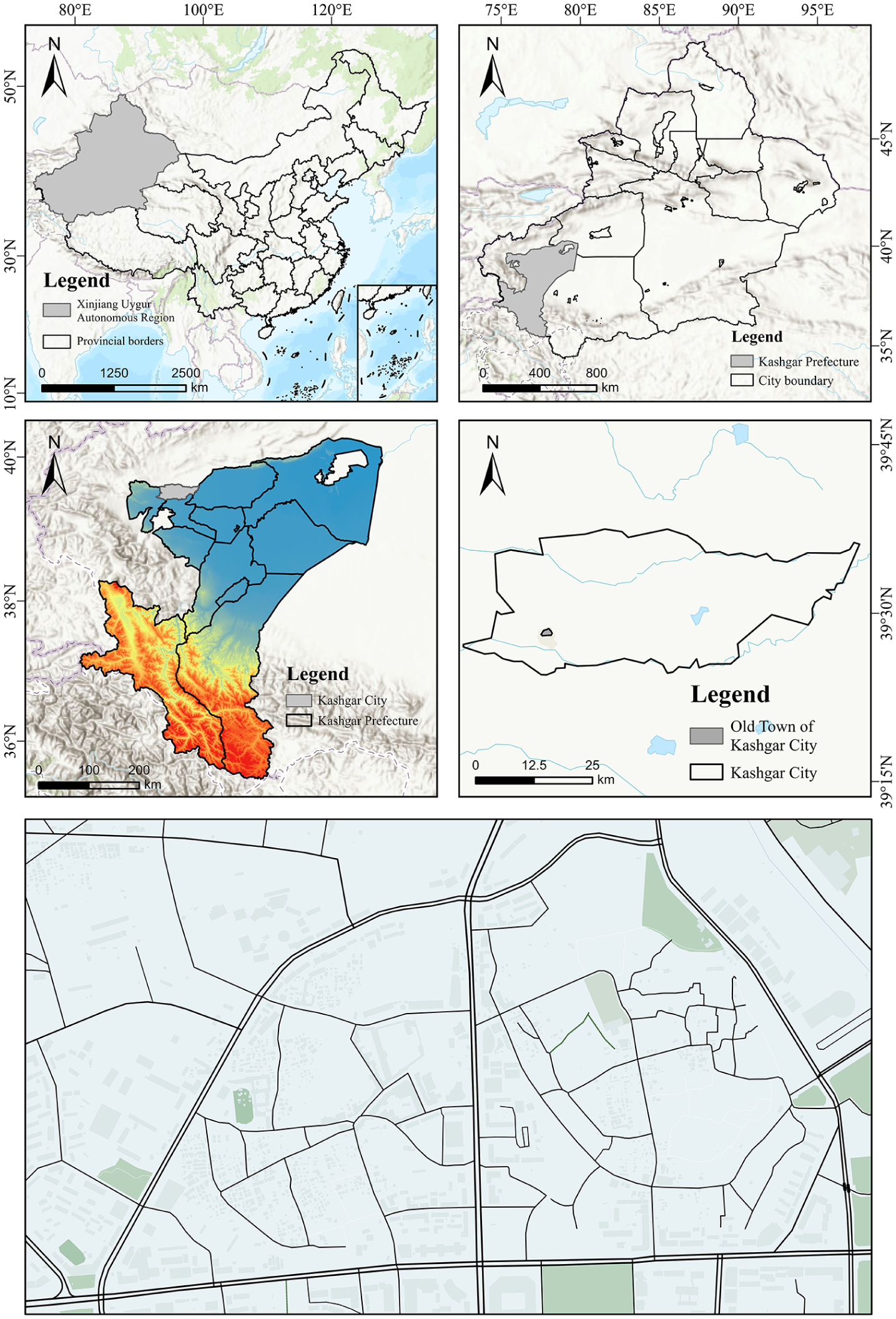
Analysis of the Location of Kashi Ancient City in Xinjiang, China
Research Content and Methodology
Research Area and Vision
This study focuses on the courtyard dwellings within the city proper of Kashi, employing a novel semiotic approach to decode the architectural elements. It entails the symbolic representation and refinement of courtyard compositions, utilizing a meta-model for analyzing and modeling the parametric techniques applicable to complex and repetitive structures. This method involves a meticulous delineation of the geometric and structural properties of the components, culminating in the encoding of all residential symbolic data into a parametric model. This model facilitates the accurate reconstruction of courtyard dwellings, ensuring uniformity in their layout, structure, and decor (Figure 2).
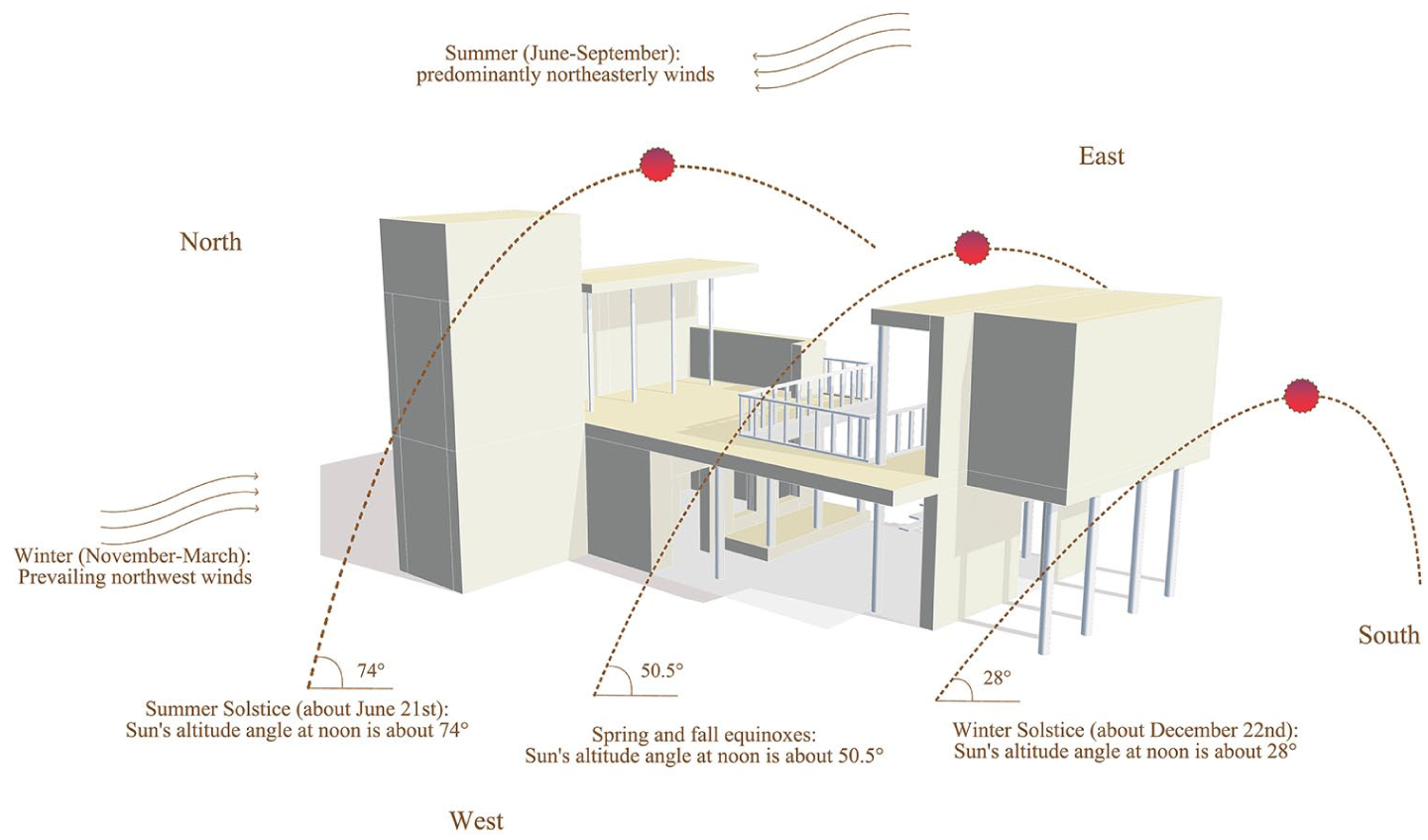
Analysis of the Spatial Structure of Typical Courtyard Dwellings in Kashi Ancient City, Created by Authors
The varying degrees of modernization in the region have led to a reduction in the “replicability” of the original architectural features and unique characteristics of these dwellings. By integrating semiotic theory and parametric modeling methods, this research aims to preserve the structural integrity and historical authenticity of Kashi’s adobe dwellings. Moreover, this approach offers scalable solutions for the conservation and management of traditional dwellings amid contemporary challenges. The study not only extends the applicability of traditional residential architectural theory but also establishes a semiotic-based research framework, providing a valuable reference for future investigations and conservation efforts in traditional residential architecture.
Data, Materials, and Methods
This study centers on the primary sector of Kashi Ancient City, selectively examining representative adobe dwellings as case studies. By employing a multidimensional approach to data collection and analytical modeling, we have developed an integrated research methodology that emphasizes the “form-function-meaning” paradigm. A mixed-methods framework is utilized, incorporating field surveys, semiotic analysis, and parametric modeling to methodically unpack the adaptive mechanisms encoded within the architecture of Kashi’s adobe dwellings.
Step 1: Employ textual and semiotic theoretical analysis methods in conjunction with spatial modeling frameworks to dissect the rural grammar encapsulating original objects, attributes, and relationships.
Step 2: Deconstruct the architectural model to ascertain the categorization of components, spatial interrelations, and the sequential assembly of the construction logic.
Step 3: Utilizing the foundational logic of rural grammar, implement the established semiotic decoding model to encode and construct spatial topological structures using advanced modeling software.
Step 4: Exploit encoding techniques and automated data modeling to develop an informative model of Kashi’s adobe dwellings.
Sampling and Characteristic Analysis of Inward-Oriented Courtyards in Kashi Adobe Dwellings
In the architectural composition of traditional dwellings in Kashi, the courtyard emerges as a pivotal element, consisting of multiple architectural components. These configurations vary considerably, crafting a spectrum of courtyard spaces tailored to the requirements of distinct historical periods. Based on a spatial typology, traditional courtyards in Kashi dwellings are predominantly classified as inward-oriented, providing a degree of privacy. Typically, these courtyards measure between 10 and 20 m in both length and width, while exterior walls stand 3 to 5 m tall. Such dimensions are strategically designed to accommodate the climatic conditions of the Kashi region, fulfilling essential shading and cooling needs. Moreover, they cater to the multifunctional demands of the inhabitants, supporting family activities, guest reception, and gardening.
Within the architectural semiotic framework, Kashi adobe dwellings are delineated as the “spatial cognitive signifiers of residential wisdom in arid environments.” At a material level, these architectural conglomerates are fundamentally constructed of three to four primary living units, lacking a defined central axis. Their layout exhibits remarkable flexibility on a two-dimensional plane, organized around a principal inner hall that leads to auxiliary spaces, kitchens, and other vital living areas, interconnected by corridors to form a cohesive courtyard compound.
The construction of Kashi dwellings adeptly utilizes the local geographical environment, adapting to the terrain to establish irregular, self-organized courtyard configurations. These spaces, extending from courtyards to rooftops and street alleys, have progressively adopted a vertical expansion strategy in response to land limitations. The courtyard functions as the “core signifier” of the residence, with additional elements incorporated according to functional requirements, akin to a grammatical structure (Mavromatidis, 2025). The functional aspects of Kashi adobe dwellings are derived from passive design principles suited to arid climates, effectively mitigating the regional challenges posed by strong winds, intensely hot summers, and severe winters. This design facilitates features such as resistance to sandstorms, insulation against summer heat, and retention of warmth during the winter months.
The periphery of the building delineates hierarchical sequences of domestic activities and demarcates boundaries for seasonally shared spaces, reflecting the social behavioral encoding inherent in the courtyard design. From a pragmatic standpoint, the inward-oriented design of Kashi adobe dwellings underscores a philosophy of “reticence,” fostering a relatively private living environment for families. The high walls constitute an adaptive response to both the harsh natural conditions and the socio-historical context, symbolizing the philosophical “segregation between interior and exterior” of the residence and providing a protective barrier for the family.
Conducting comprehensive field surveys to collect data on the forms and structural characteristics of Kashi adobe dwellings allows for an analysis that can unveil the hidden semiotic architectural codes within these dwellings. The “courtyard” emerges as the most distinctive architectural unit in typical Kashi adobe settlements, generally consisting of individual dwellings, corridors, plazas, and courtyards, thereby forming a prototypical courtyard space.
To accommodate living necessities, subsequent modifications include the addition of numerous auxiliary spaces, which vary in depth, height, and volume. These modifications enhance the diversity of the dwellings and enrich spatial intrigue, altering the overall skyline. Through varied configurations and layouts, a multitude of adaptable courtyard spaces are created. The courtyard structures of typical Kashi adobe dwellings can be categorized into three models: fully enclosed, semi-enclosed, and symbolically enclosed.
Fully Enclosed Courtyard
The following analysis draws upon data presented in Table 1, which details the architectural features of two fully enclosed courtyards. Sample No. 1 is situated at Doorplate No. 09, Aheikeqia Alley. It comprises a first-floor area of 97 m2, a second-floor area of 31 m2, and a roof area of 108 m2, culminating in a total building area of 128 m2. The building density for this sample is calculated at 70.29%, with the courtyard spanning 41 m2 and a courtyard-to-building ratio of 29.71%. Conversely, Sample No. 2, located at Doorplate No. 14, Odaxiheshan Alley, encompasses a more varied layout, including a basement area of 64 m2, a first-floor area of 54 m2, a second-floor area of 102 m2, and a roof area of 136 m2, resulting in a total building area of 247 m2. The building density here is 64.28%, with a smaller courtyard area of 23 m2 and a higher courtyard ratio of 35.71%.
Analysis of Features in Fully Enclosed Courtyards.
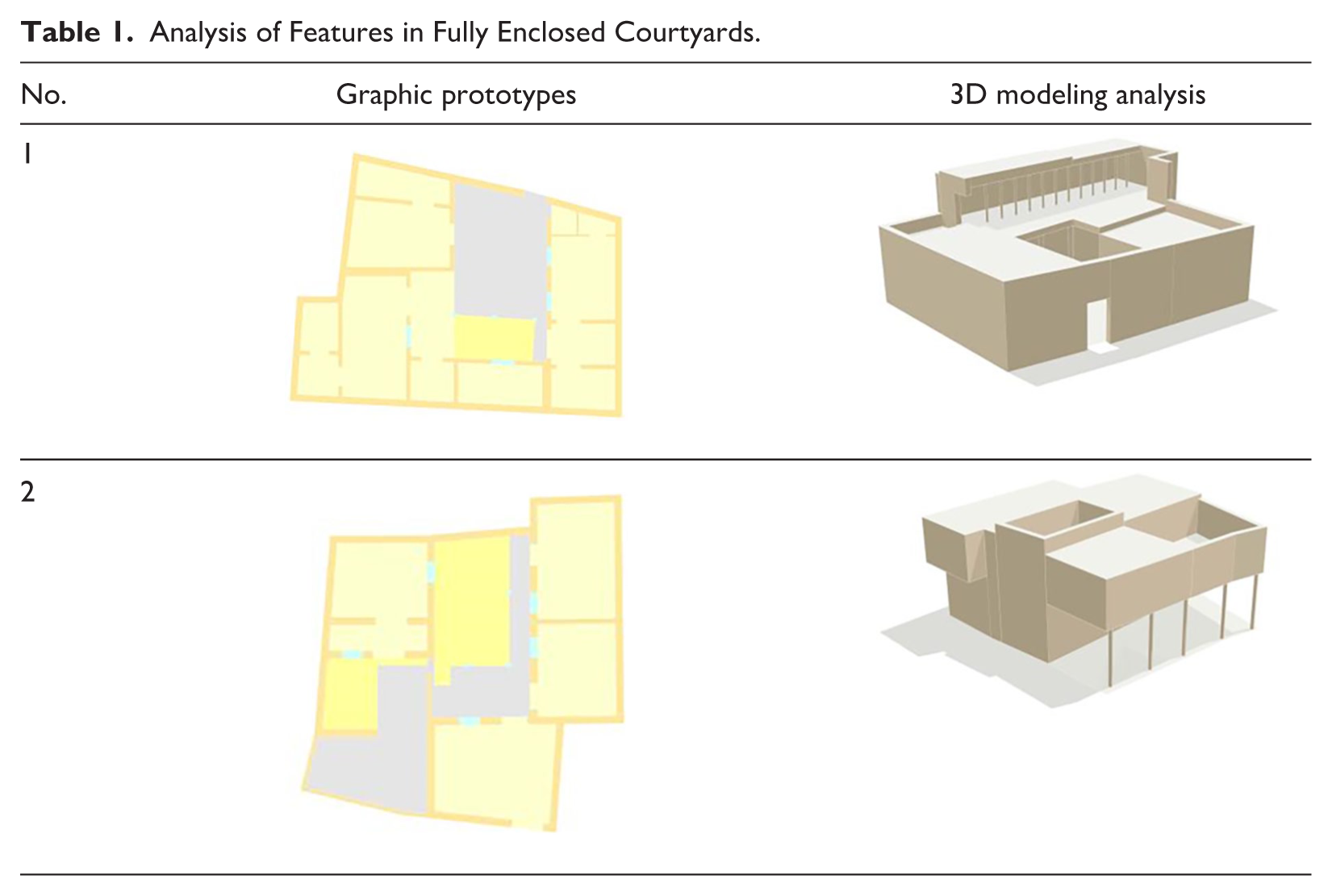
The residential architecture of Kashi, characterized by its adobe structures, commonly features walls constructed from rammed earth or brick, ranging from 3 to 4 m in height. These walls entirely enclose the interior spaces, creating a secluded environment. The only connection to the external alleyways is through a decorative wooden door, which serves both to ensure privacy and to provide protection against the prevalent dry, hot winds and sandstorms in Xinjiang. The design of the courtyard adheres to a “closed geometric form,” fostering an inward-facing spatial arrangement. This layout is complemented by ancillary spaces that are designed to expand vertically or are strategically suspended, while the internal circulation within these buildings maintains a continuous, looped configuration from entrance to exit.
Semi-Enclosed Courtyard
According to the survey data presented in Table 2, the first sample courtyard, designated as Sample No. 1, is situated in Aheikeqia Alley at Doorplate No. 07. It comprises a first-floor area of 131 m2 and a roof area of 165 m2, with a total building area also measuring 131 m2. The building density stands at 64.22%, while the courtyard spans 73 m2, resulting in a courtyard ratio of 35.78%. The second courtyard, Sample No. 2, located at Doorplate No. 17 in the same alley, features a first-floor area of 59 m2, a second-floor area of 31 m2, and a roof area of 95 m2. The total area of the building is 90 m2, with a building density of 54.63% and a courtyard area of 49 m2, corresponding to a courtyard ratio of 45.37%. Sample No. 3, found at Doorplate No. 25, includes a basement area of 120 m2, a first-floor area of 86 m2, and a roof area of 113 m2, culminating in a total building area of 206 m2. This sample has a building density of 51.81% and a courtyard area of 80 m2, yielding a courtyard ratio of 48.19%.
Analysis of Features in Semi-Enclosed Courtyards, Created by Authors.
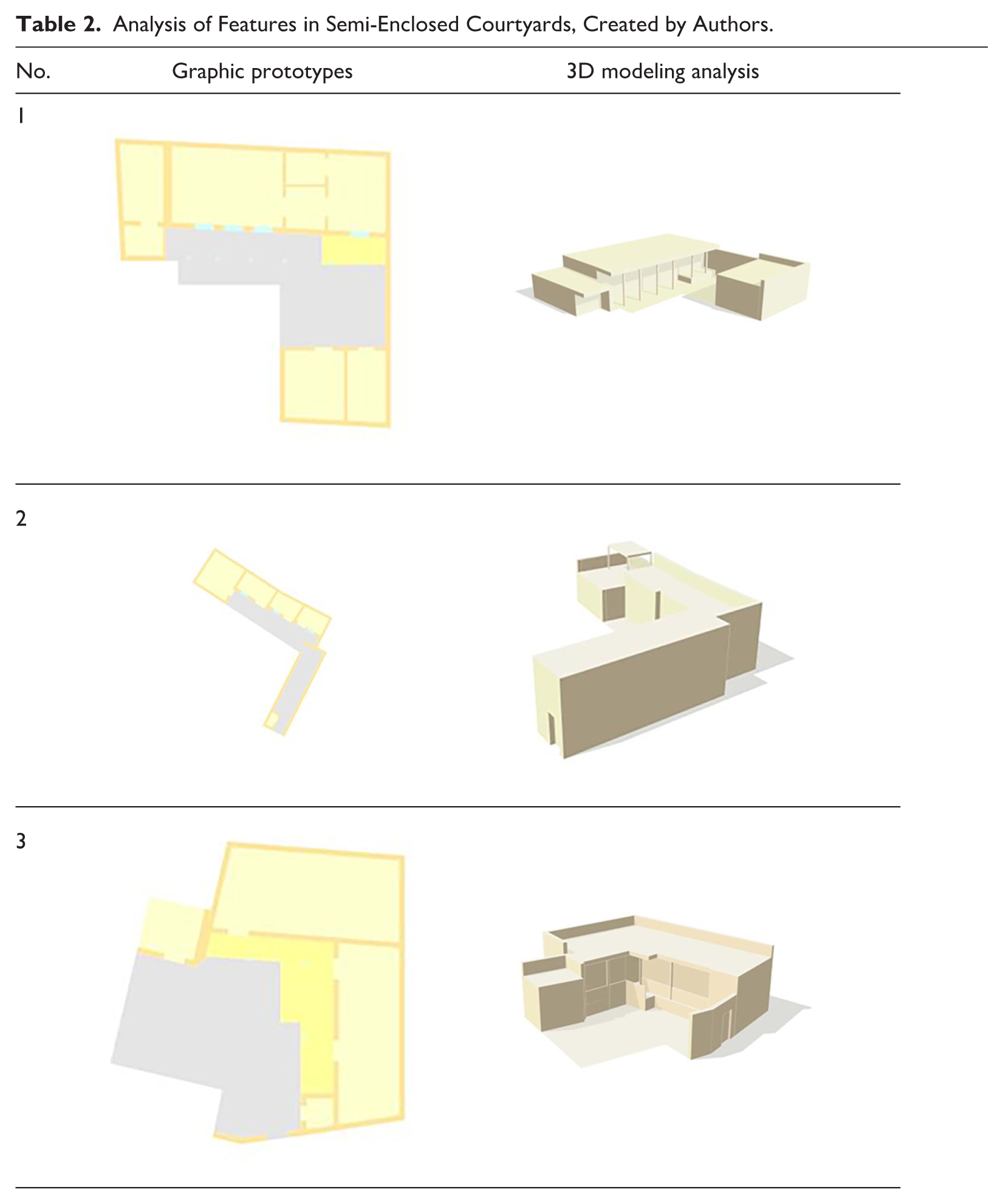
Several courtyards feature semi-open designs, achieved through the use of perforated brick walls, lattice or curtain door corridors, and other transitional spaces that forge semi-enclosed front courtyards. These architectural elements enhance ventilation and natural lighting while simultaneously shielding the interiors to obscure the demarcation between indoor and outdoor spaces. In addition, wooden shaded grape arbors are installed atop the roofs, casting patterned light and shadows, thereby creating what might be termed a “soft enclosure.”
The spatial arrangement within these courtyards often links individual residential units and functional areas, leading to configurations of courtyards with indeterminate shapes.
Symbolic Enclosure Courtyard
Based on the survey data presented in Table 3, the following detailed analysis encapsulates the structural dimensions and density ratios of various courtyards. Sample No. 1 is situated in Aheikeqia Alley, at Doorplate No. 21. The area allocations are as follows: 59 m2 on the first floor, 11 m2 on the second floor, and 72 m2 for the roof, culminating in a total building area of 70 m2. The building density stands at 71.95%, and the courtyard itself spans 23 m2, resulting in a courtyard ratio of 28.05%. Sample No. 2, located at Hoguzu’er Alley, Doorplate No. 18, comprises 71 m2 on the first floor, 27 m2 on the second floor, and 92 m2 for the roof, leading to a total area of 98 m2. It features a building density of 54.62% and a considerably larger courtyard area of 59 m2, with a courtyard ratio of 45.38%. Continuing with Hoguzu’er Alley, Sample No. 3 at Doorplate No. 30 includes 97 m2 on the first floor and 121 m2 for the roof, with the total building area mirroring the first floor at 97 m2. The building density here is noted as 72.39%, and the courtyard area measures 37 m2, corresponding to a courtyard ratio of 27.61%. Sample No. 4, positioned in Odaxiheshan Alley, Doorplate No. 08, maintains a first-floor area of 62 m2 and a roof area of 85 m2, with a total building area equal to the first-floor’s measurement. The building density registers at 66.67%, and the courtyard spans 31 m2, achieving a courtyard ratio of 33.33%.
Analysis of Features in Symbolic Enclosure Courtyards, Created by Authors.
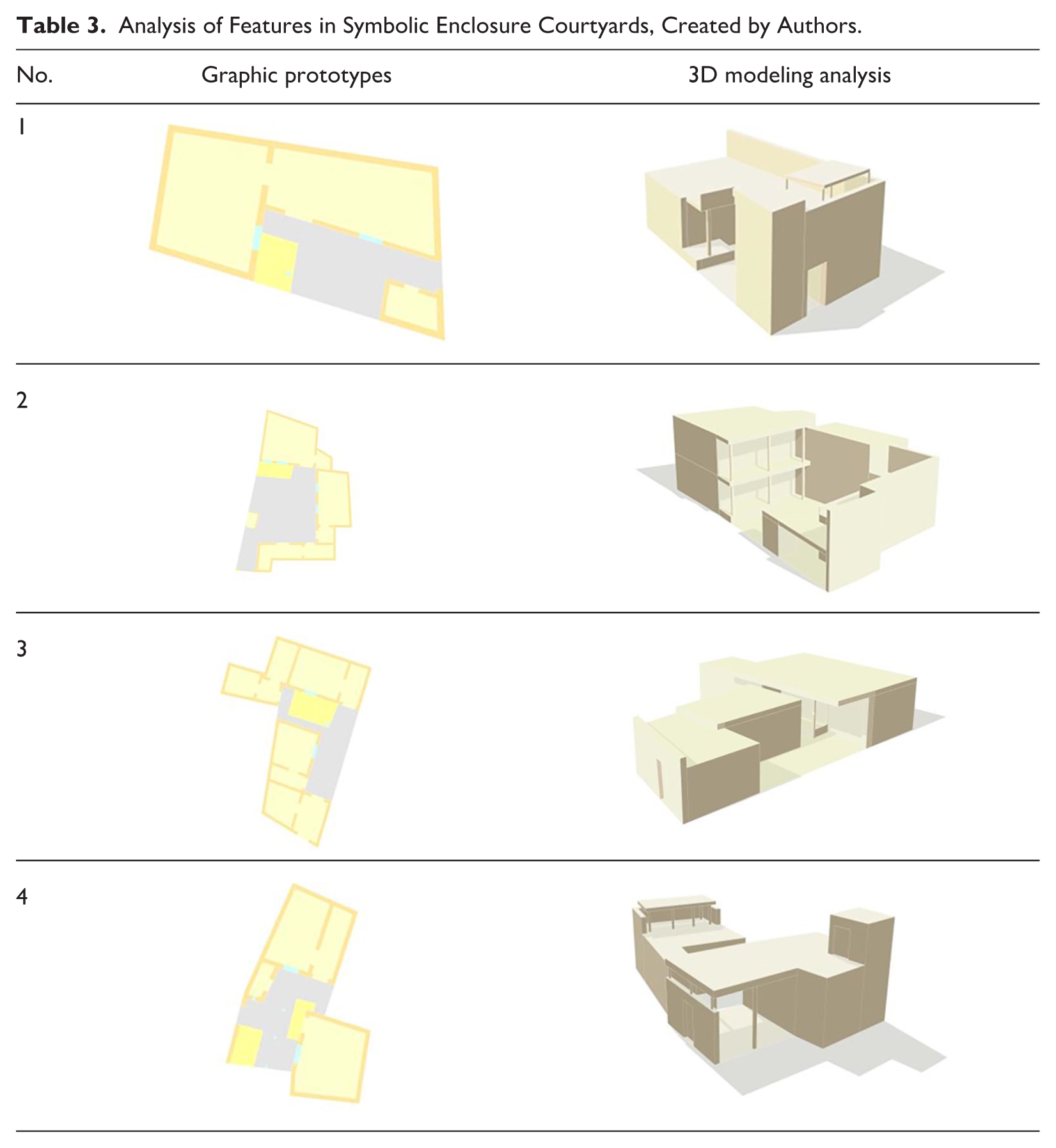
In terms of spatial configuration, some residential structures incorporate elevated corridors or sunken pools, alongside the strategic placement of low shrubs or flower beds along the courtyard edges to establish symbolic boundaries. The ground is often adorned with hexagonal terracotta tiles or vibrant mosaic patterns, which serve to delineate functional zones through material variation, thereby facilitating spatial separation without the necessity for physical barriers.
Post-enclosure, the courtyard space evolves to display a composite pattern of “multi-geometric shapes,” characterized by enhanced functionality and diversified circulation paths. These spaces adeptly integrate both horizontal and vertical elements, fostering interconnected layouts.
Conclusion
The architectural design of residential structures in Kashi adeptly utilizes the local geographical environment, resulting in irregular and spontaneous courtyard layouts that conform to the varied terrain. This evolution from courtyards to rooftops and street alleys illustrates a pattern of spatial expansion, vertically constrained by limited land availability. The courtyard, often regarded as the quintessential symbol of residential architecture, forms the foundational element to which other architectural features are functionally attached, akin to components in a grammatical structure.
The inward-facing design of traditional Kashi courtyards can be classified according to their form, function, and cultural significance. Typically, the architectural ensemble of traditional Kashi dwellings features a completely enclosed facade, constructed using thick rammed earth or brick materials, which encapsulates the courtyard. The transition from the courtyard to the living areas is facilitated by a gray space—a term denoting the intermediate zones that blur the distinction between the interior and exterior environments.
This distinctive courtyard typology stems from a passive design strategy tailored to arid conditions. It adeptly mitigates the harsh climatic challenges of Kashi—marked by intense winds, extreme heat in summer, and severe cold in winter—while providing critical functions like protection from sandstorms, insulation against summer heat, and retention of warmth during the winter months. Moreover, this architectural approach supports a relatively private living space for families in Kashi, reflecting a cultural preference for an inward-focused lifestyle.
The tall walls of the inward-oriented courtyards in Kashi dwellings represent an evolutionary adaptation to both the severe natural environment and the historical socio-cultural milieu. These structures symbolize the philosophical demarcation between internal and external realms, simultaneously embodying a protective ethos toward family life.
Decoding Analysis of Ancillary Components
The ancillary elements of the courtyard in adobe dwellings in Kashi, as illustrated in Figure 3, are categorized into four spatial types: gray space, sunken space, platform space, and protruding space. These elements exemplify logical adaptability to environmental conditions in the construction of residential architecture, thereby establishing distinct characteristics in their compositional patterns. The intricate arrangement of these components plays a crucial role in defining the architectural identity and rational structure of Kashi’s adobe dwellings. The classification of these ancillary components offers a detailed decoding of spatial relationships and the underlying construction logic.
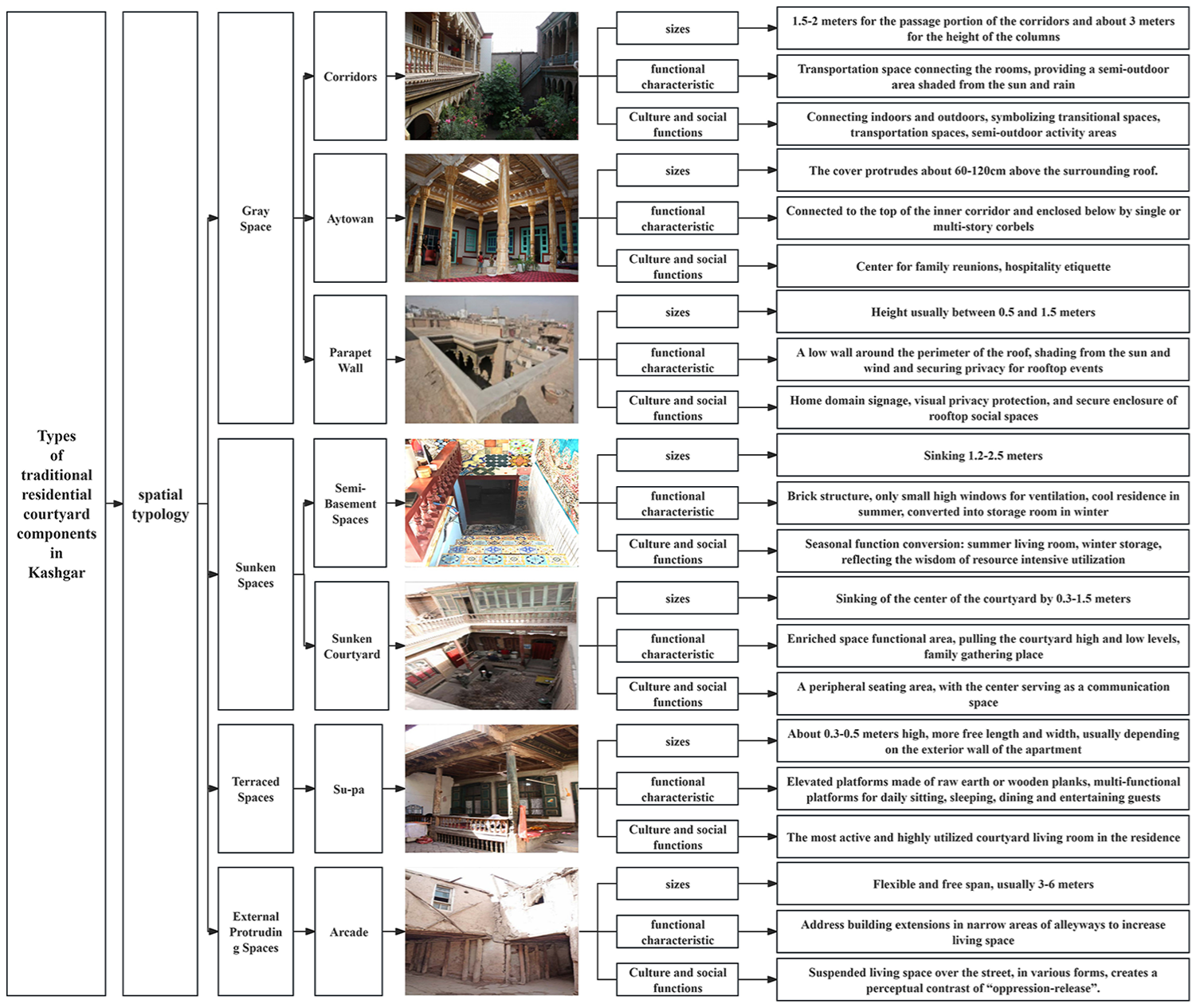
Decoding Analysis of Ancillary Components, Created by Authors
Gray Space: Semantic Decoding of Key Symbols
Corridors
Corridors may be conceptualized as “spatial signifiers encoding regional cultural symbolism.” Their semiotic importance, evident at the material level, emerges through a continuous arrangement of columns that create a “looping” visual code. This configuration symbolizes the topological representation of “spatial order” within folk cultural contexts. Typically, the spacing between columns in corridors ranges from 1.5 to 2 m. This dimension conforms to the golden ratio, reflective of human scale, and thus embodies a sense of harmony. These corridors act as embodiments of “construction memory,” functioning as filters for light and forming an interface system for “spatial geometry” through narratives of light and shadow.
At the semantic level, the width of corridors is differentiated—main corridors measure 2.5 m, and secondary corridors 1.8 m—indicating a hierarchical spatial organization. The orientation under the eaves specifies the daily activity zones for family members. Enclosed corridors incorporate diagrams that account for climatic factors, symbolizing “wind barriers,” whereas open corridors are equipped with supporting structures that facilitate variations in light and shadow. On a pragmatic level, turns in the corridor serve as visual signals for spatial transitions, with hexagonal terracotta tiles on the floor directing movement and indicating areas for rest, thereby acting as symbols of behavioral guidance.
Figure 4 depicts a sequence of features on the sidewalls of corridors, establishing a material archive of domestic life. Seasonal changes projected onto adobe walls act as natural temporal markers, serving as narrative devices within the space-time continuum. The sinuous forms of these elements can be algorithmically transformed into “path topology networks,” indirectly reflecting the self-organizing growth logic inherent in Kashi residential architecture.
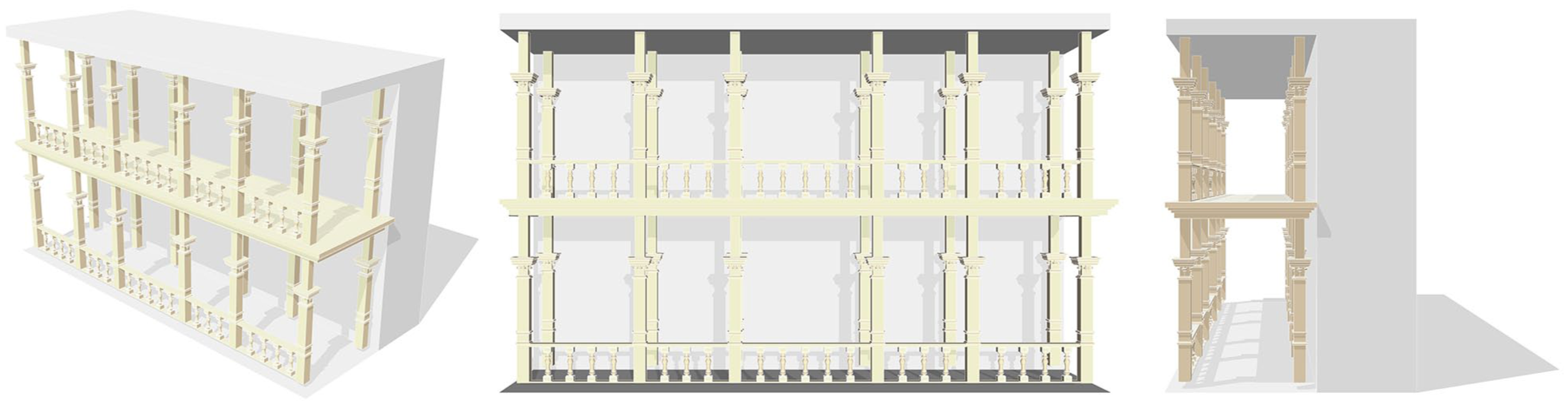
Corridor—Spatial Signifier Encoding Regional Cultural Symbolism, Author’s Original, Created by Authors
Aytowan: Cultural Signifier of Ritualistic Space
Within the framework of architectural semiotics pertaining to the adobe dwellings of Xinjiang Kashi, the space known as “Aytowan” is delineated as a “ritualistic spatial signifier in arid-region dwellings.” Its semiotic implications are discerned through a tripartite decoding framework. At the material level, the central dome structure represents a geometric projection of the architectural spatial model, with the textural nuances of the adobe plastering—imbued with the palmprint of its creators—serving as an embodiment of traditional knowledge.
At the semantic level, elevated “Su-pa” platforms are installed on the ground, epitomizing a social structural representation of the threshold space for household gatherings. The design also incorporates climate-aware elements such as optimized angles for summer ventilation and winter sunlight penetration.
The trajectory of morning sunlight initiates a sequence of spatial positioning for household members, serving as a pragmatic symbol guiding behavioral patterns. The Aytowan thus emerges as the “core symbol” in residential architecture; its geometric centrality is algorithmically transformed into a “gravitational field,” with other functional spaces arranged around this pivot, culminating in a comprehensive courtyard spatial grammar (Figure 5).
Aytowan—Ritualistic Space Signifier in Arid-Region Dwellings, Created by Authors
Parapet Wall: Symbolic Representation of the Roof Boundary
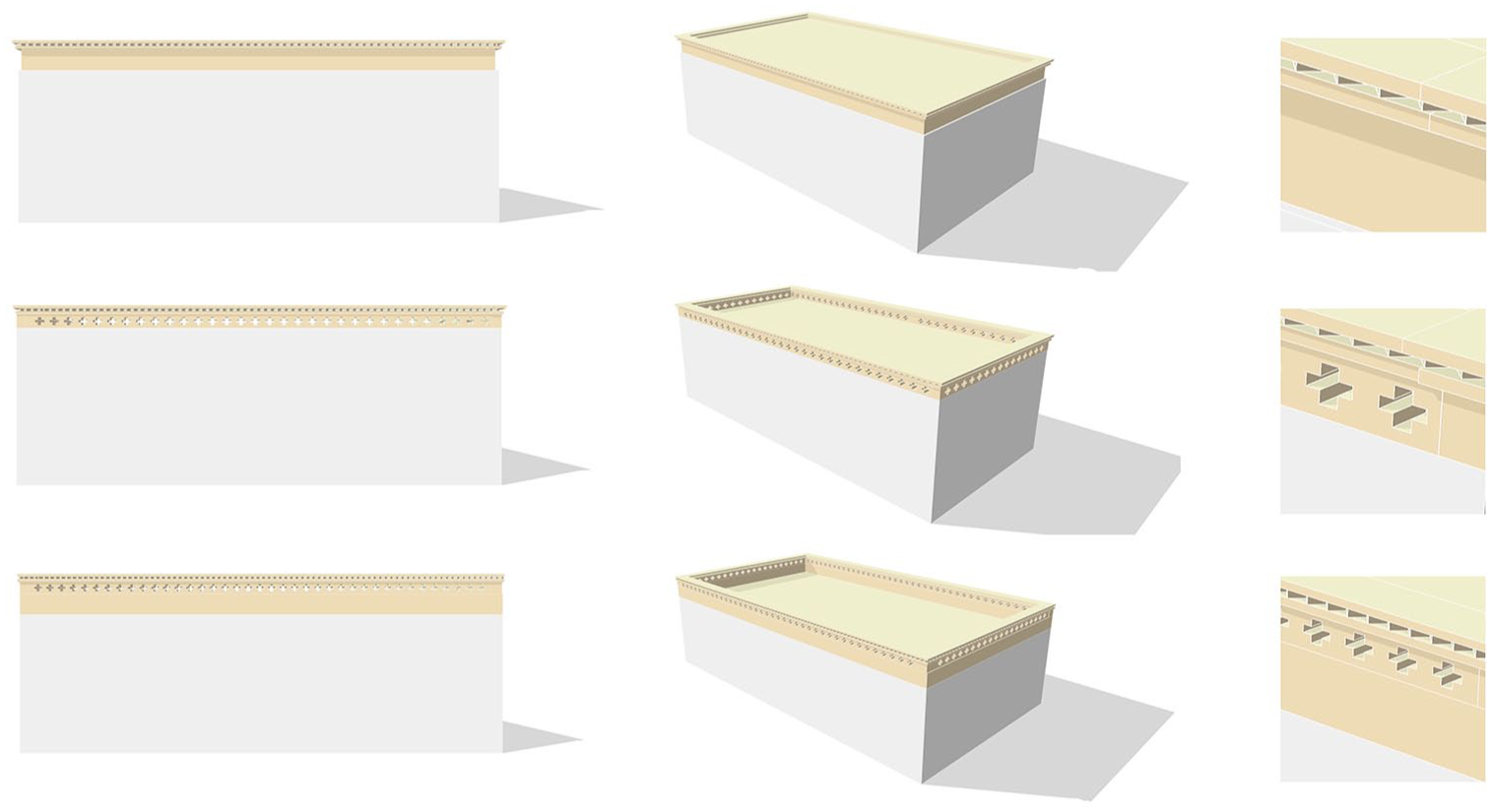
Within the architectural semiotics context, the parapet wall of earthen vernacular homes in the Kashi region of Xinjiang is characterized as the “superficial boundary signifier of the roof space.” Its semiotic implications are encoded with multidimensional cultural elements.
Typically measuring between 0.5 and 1.5 m in height, the parapet is constructed using either perforated or sun-dried bricks, serving both protective and decorative purposes and creating a “looking and being looked at” visual dynamic. This establishes it as a topological sign at the material level. Stucco flower grilles not only alleviate the effects of strong winds on roof-based activities but also enhance natural ventilation during the summer months. At the semantic layer, the architectural style of the parapet delineates territorial boundaries, thus preventing conflicts over space usage (Figure 6).
Parapet—Superficial Boundary Signifier of Roof Space, Created by Authors
The chosen height adheres to ergonomic standards, ensuring the safety of vulnerable groups such as children and the elderly during rooftop activities, while also extending the social space of the dwelling. The area behind the parapet becomes a semi-private social enclave for family gatherings.
At the pragmatic level, the decorative aspects of the parapet incorporate symbolic encoding. Geometric patterns echo the “symbol of infinite repetition,” invoking a sense of natural order. The juxtaposition of raw earthen materials with intricate carvings showcases the local ethos of “practical aesthetics.” The standardized dimensions of the bricks reflect the modular thought processes traditional to local artisans, signifying a deep-rooted connection to construction techniques.
Ecological Wisdom in Sunken Spaces and Terraced Spaces
Semi-Basement Spaces
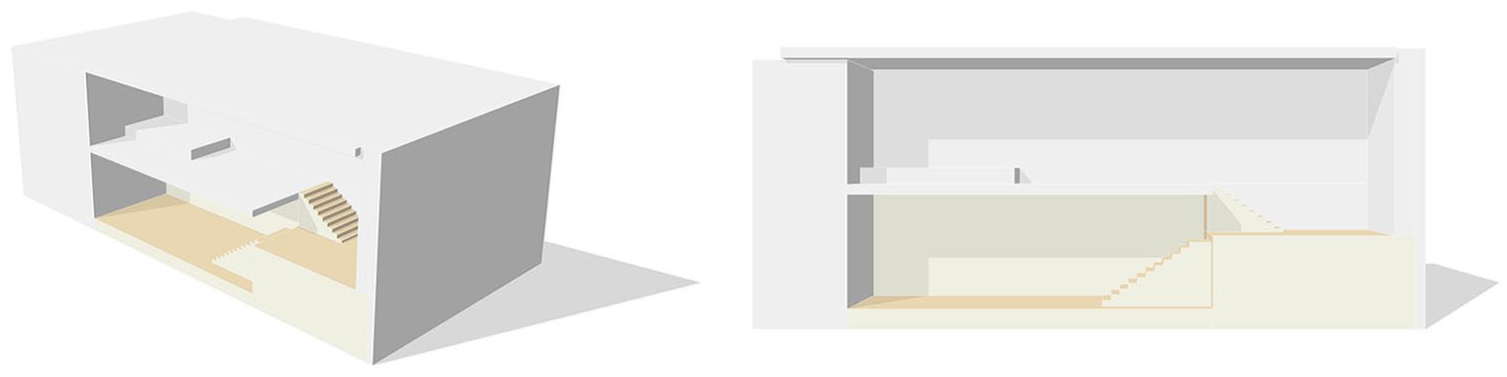
Within the framework of architectural semiotics, semi-basement spaces in the earthen vernacular houses of the Kashi region in Xinjiang serve as a “composite signifier of ecological wisdom in vertical stratification.” These spaces, which embody a sophisticated form of building wisdom—termed “seeking comfort from the earth”—are characterized by their multidimensional cultural encoding. Typically located beneath the main house, these underground storage rooms or semi-basement bedrooms frequently utilize earthen arch structures and vary in depth from 1.2 to 2.5 m. Access to these areas is provided by steps or ramps, and they feature only minimal ventilation openings, thus creating a topological sign at the material level. The discrepancy in height between the indoor and outdoor ground levels forms irregular spatial thresholds in the courtyard area.
At the semantic level, the semi-basement rooms maintain a relatively low average temperature during the torrid summer months, with minimal temperature fluctuations. Regarding air humidity, the semi-basement exhibits elevated humidity levels (Li & Liang, 2021), which decrease during the winter months. Owing to these characteristics, the spatial form is adaptable to seasonal variations: it functions as a living space in summer and transitions to a storage area in winter. Figure 7 showcases this architectural strategy that extends downward, unveiling unique spatial functions and encapsulating the profound philosophy of harmonious coexistence between humans and nature in arid regions. Its value is manifested in the conversion of environmental challenges into cultural expressions.
Semi-Basement Space—Composite Signifier of Ecological Wisdom in Vertical Stratification, Created by Authors
Sunken Courtyard
In the earthen vernacular homes of the Kashi region in Xinjiang, sunken courtyards are integrated as “signifiers of vertical-directional activity spaces” within the architectural semiotics system. These courtyards, which descend vertically from the ground level by 30 to 150 cm, embody the topological rhetoric of formal signifiers and symbolize spatial depth. On a semantic level, the sunken courtyard delineates the activity range for residents, providing a space for gathering or resting. The dynamic nature of the spatial format is revealed through these interactions. The sunken elements not only shape the spatial form and function but also transform them into carriers of meaning. Their contemporary significance is derived from the integral signifier chain of “form-function-meaning,” highlighting their role as comprehensive shaping elements rather than isolated ones (Figure 8).

Sunken Courtyard—Signifier of Vertical-Directional Activity Spaces, Created by Authors
Terraced Spaces (Su-pa)
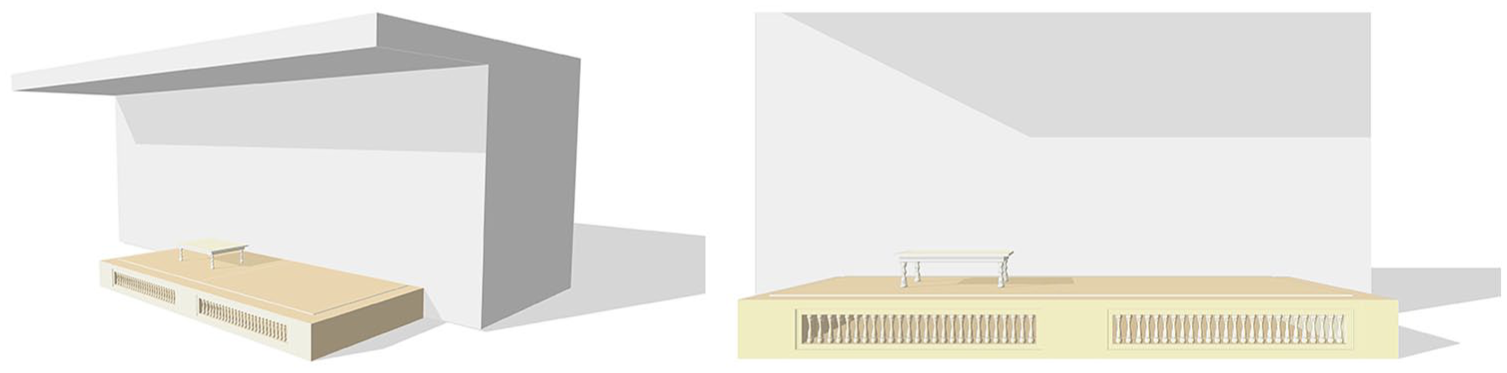
Within the architectural semiotics framework, the “Su-pa” in the earthen vernacular dwellings of the Kashi region in Xinjiang is characterized as a “hierarchicalized signifier of spatial order.” Constructed from sun-dried bricks, these platforms are elevated by 30 to 50 cm, thereby establishing a “territorial threshold” and creating a distinct spatial hierarchy. Su-pas are typically square or rectangular and represent the topological grammar within the material signifier layer.
From a semantic standpoint, the elevated design of the Su-pa is instrumental in mitigating ground-related dampness and high temperatures. During the winter months, this elevation allows for the placement of a stove underneath, which aids in heating the space. The Su-pa’s multifunctional attributes are notable, as these spaces are utilized not only for hosting guests but also transform into cool sleeping areas during hotter periods, thus becoming pivotal nodes in the spatial cognition of the inhabitants.
In terms of ritualistic pragmatics, as illustrated in Figure 9, the Su-pa is a fundamental symbol of Kashi’s regional architecture. It plays a crucial role in reinforcing the collective memory associated with the local spatial sequence of “courtyard-Su-pa-columned arcade.”
Su-pa—Hierarchicalized Signifier of Spatial Order, Created by Authors
The Connection Logic of External Protruding Spaces in the Settlement
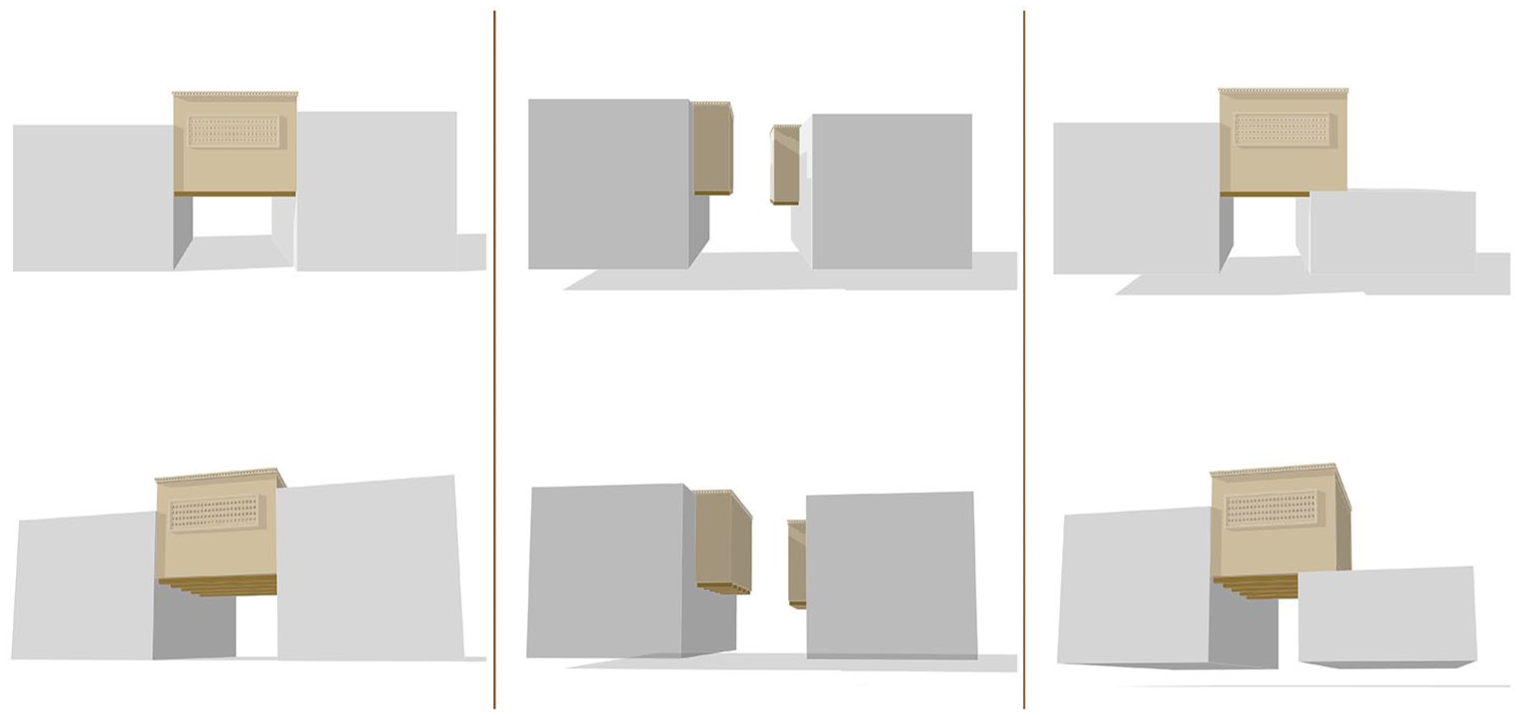
Within the context of architectural semiotics, the arcade in the earthen vernacular houses of Kashi, Xinjiang, is characterized as the “signifier of vertical settlement spatial connection.” This designation refers to a cantilevered residential space that extends over alleyways, forming a dual-channel system between ground and air, facilitated by a vertical clearance of 2.8 to 3.2 m. The intersecting section features a composite structure, thereby crafting an architectural language marked by observable mechanical impacts. It serves as a spatial topological symbol within the earthen vernacular architecture of Kashi.
Architecturally, arcades are differentiated into three distinct types:
Complete-span arcades that bridge narrow alleyways entirely, linking buildings on either side. This configuration engenders a dynamic of oppression and release, effectively transforming constrained spaces into perceived expansiveness.
In cases where alleyways are flanked by two-story buildings, the upper levels may jut outward on one or both sides, creating a “protruding floor” delineated by exposed wooden beams. This configuration results in a tapered alley profile—narrower at the top and wider at the bottom—thereby enhancing the sense of spatial enclosure and hierarchical structure.
Arcades that are anchored at one end to a main building and at the other to a low wall tend to mitigate the sense of enclosure through asymmetric design, diminishing structural rigidity.
From a semiotic perspective, these architectural forms serve as strategic responses to the scarcity of land in densely populated settlements. They fulfill practical functions such as shading and cooling, while simultaneously facilitating a compromise in the form of shared public spaces on upper floors. Pragmatically, by disrupting the linear uniformity of alleyways, arcades redefine the perception of public spaces within settlements through the interplay of layered volumes, fragmented light and shadow, and directed sightlines. Consequently, the arcade emerges as a quintessential architectural expression in the traditional vernacular of Kashi (Figure 10).
Arcade—Signifier of Vertical Settlement Spatial Connection, Created by Authors
Chapter Summary
This chapter methodically decodes the core architectural symbols found in the earthen vernacular houses of Kashi, Xinjiang. It confirms the applicability of Peirce’s triadic semiotic relation theory in analyzing these structures. By focusing on the Su-pa, the relationships among the representamen, object, and interpretant within architectural semiotics are meticulously mapped and quantified. This hierarchical decoding elucidates the structured characteristics of traditional sign systems and highlights the intricate relationships between their morphological rules, functional parameters, and cultural semantics. These insights provide a theoretical foundation for the potential algorithmic translation of these semiotic relationships.
Semiotic Decoding and Algorithmic Translation
The validation of decoding presented in Chapter 3 elucidated the “morphology-performance-semantics” structural characteristics of the signs under study, highlighting their inherent alignment with parametric systems. The hierarchical organization of architectural symbol modules—comprising core, ancillary, and cladding elements—further provides a rational blueprint for algorithmic translation. Consequently, this chapter synthesizes theoretical insights and technological advances to establish a Peircean semiotic decoding framework. It rigorously parses the architectural symbol system prevalent in Kashi’s earthen vernacular houses into quantifiable mappings among the representamen (morphology), object (function), and interpretant (cultural semantics). Building upon this foundation, rules that integrate morphological, functional, and semantic parameters are devised. Subsequently, a genetic algorithm (GA) is utilized for multi-objective optimization, facilitating the transition from traditional vernacular grammar to innovative parametric regeneration design.
Decoding Framework Based on Peirce’s Triadic Relations
Field surveys furnish concrete data on the earthen vernacular houses in Kashi, which is utilized to analyze and encode visual symbols. This endeavor identifies the intrinsic vernacular language encapsulated within these structures, distilling relational patterns among structural symbols. Through the application of combinatory decoding methods, the architectural ethos of the region is articulated, delivering a nuanced semantic portrayal along with ancillary functions of the symbols. These elements, encompassing visual variables, constitutive features, and spatial relationships, coalesce into the representamen through interactive interpretative processes. An efficacious rule-based decoding mechanism for interpreting folk dwellings is thus actualized.
Drawing on Peirce’s semiotic theory, the architectural symbol system is dissected into triadic relations—“representamen-object-interpretant.” This research establishes a decoding framework grounded in theoretical analysis, articulated as “symbol extraction-symbol dissection-algorithmic translation.” The detailed process is outlined as follows:
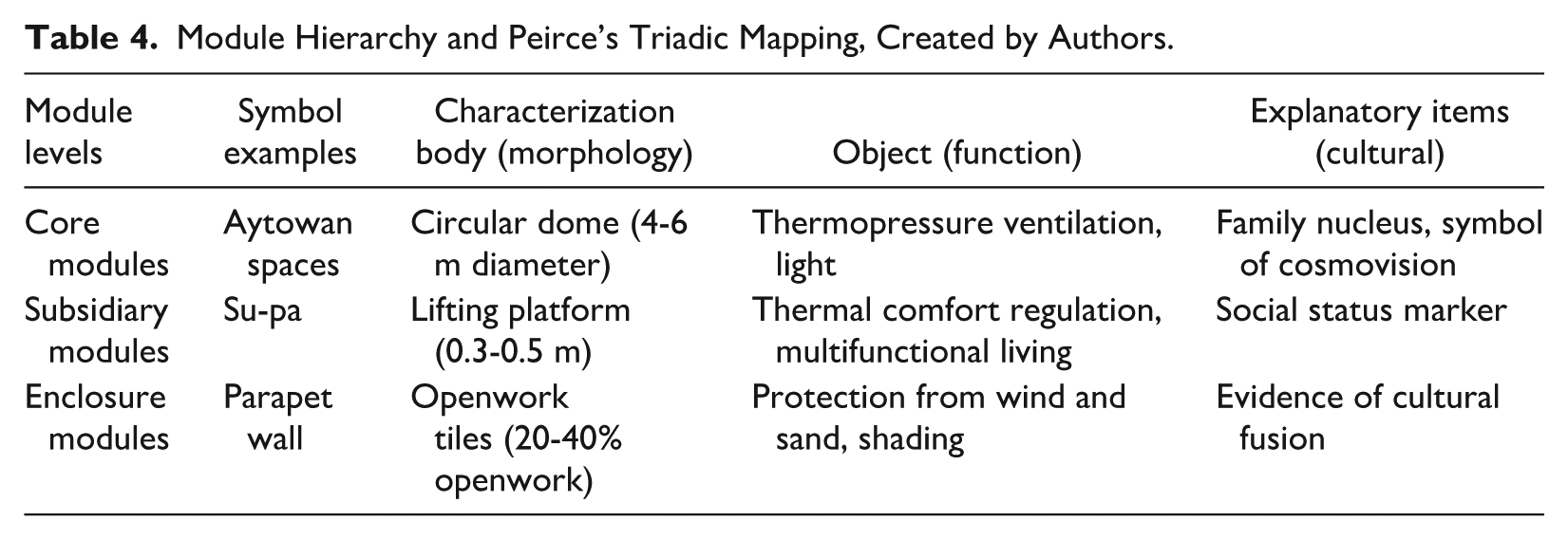
Symbol Extraction: 1. Representamen: Gather physical morphological data of architectural symbols, such as the diameter of the Aivan dome and the height of the Su-pa platform. 2. Object: Analyze functional attributes of the symbols, assessing aspects like ventilation efficiency and temperature regulation capabilities. 3. Interpretant: Derive cultural semantics of the symbols through scholarly literature and ethnographic interviews.
Symbol Dissection: Segregate the symbols into “core-ancillary-cladding” modules to elucidate the triadic mapping relationships among these entities (Table 4).
Algorithmic Translation: Transform the triadic data into computable parametric rules and employ multi-objective optimization to forge design solutions.
Module Hierarchy and Peirce’s Triadic Mapping, Created by Authors.
Parametric Translation Mechanism
Parameter Definition and Constraint Rules
Informed by the triadic relations, three categories of parameters are derived from the architectural symbols of earthen vernacular houses in Kashi (Table 5).
Measured Data of Three Categories of Parameters in the Architectural Symbols of Earthen Vernacular Houses in Kashi, Created by Authors.
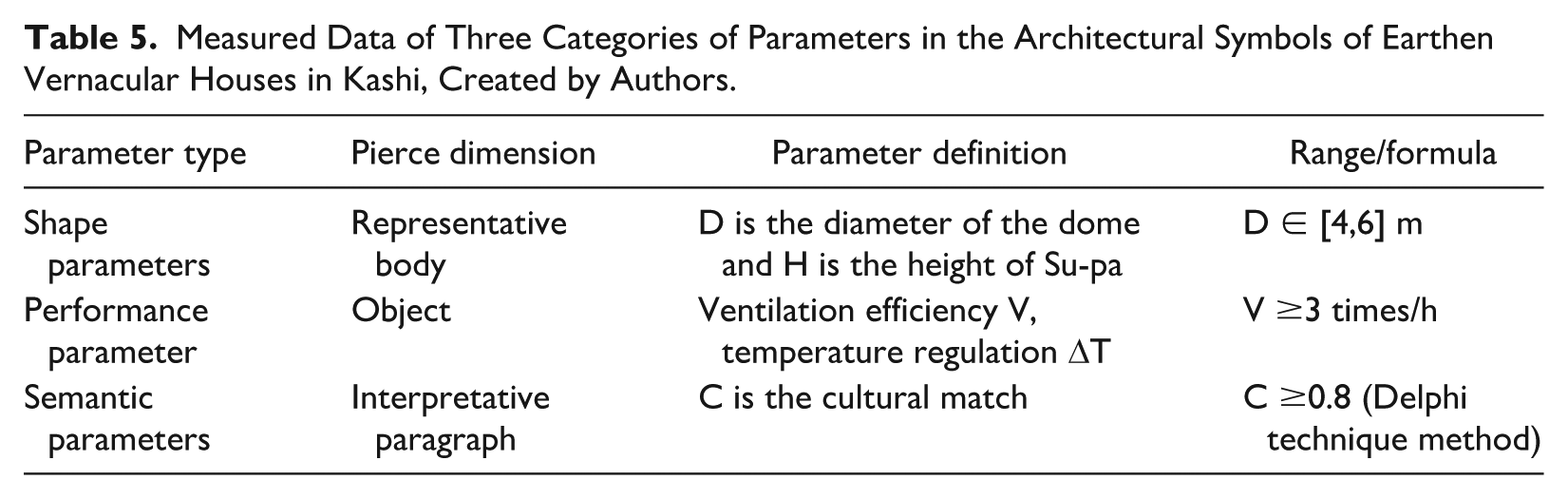
It is crucial to establish specific constraint rules within this parametric translation mechanism. For instance, the dome should be positioned at the geometric center of the layout to symbolize the cultural nucleus. Furthermore, the height H of the parapet wall must be no less than 0.5 m, reflecting the essential requirements for demarcating neighborhood boundaries.
Algorithm Process and Multi-Objective Optimization
GA is utilized for multi-objective optimization, following this structured process:
Initial Population Generation: Fifty architectural samples are randomly selected from a bespoke database, resulting in 50 unique sets of parameter combinations. These parameters encompass aspects such as architectural morphology, performance, and semantics, which have been thoughtfully considered. This approach enhances the diversity and representativeness of the initial population, providing a robust foundation for the subsequent evolutionary algorithms. It is crucial to fully consider the characteristics and requirements of the architecture when selecting sample groups to ensure that the generated parameter combinations comprehensively cover all possibilities and provide effective references for optimized design.
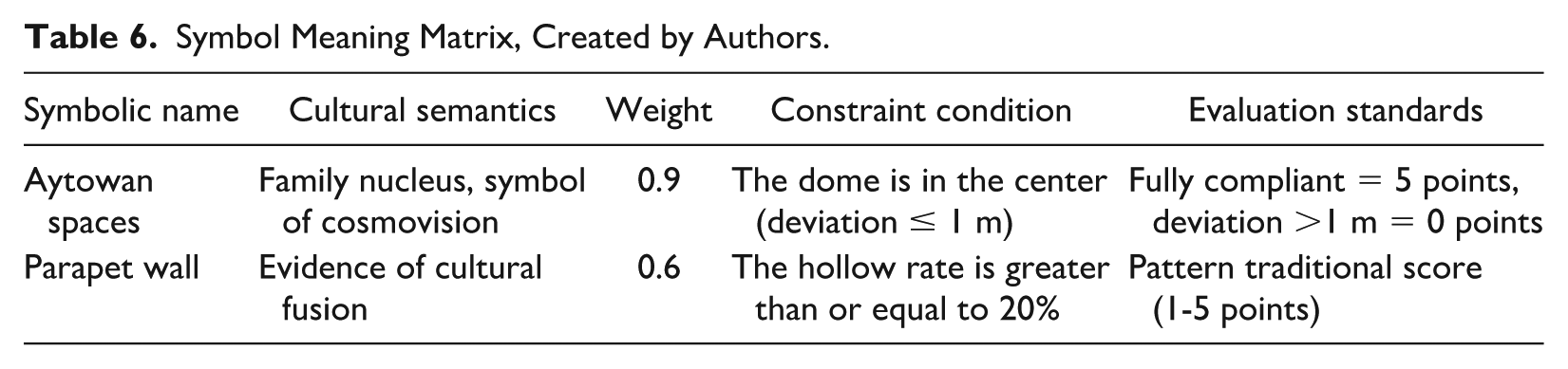
Fitness Evaluation: Thermal Environment Simulation: Compute the summer dome temperature and the PMV index for each parameter set. Structural Verification: Confirm the compressive strength of the earthen walls (≥2.5 MPa) and the safety factor for wooden beams (≥2.5). Cultural Scoring: Experts assess the designs using the Symbol Meaning Matrix (refer to Table 6).
Selection and Iteration: Retain the top 30% of individuals based on fitness scores and generate a new population through crossover and mutation processes. This cycle is repeated 100 times.
Symbol Meaning Matrix, Created by Authors.
Applicability and Limitations
The study explores a semiotic decoding framework applied to traditional folk dwellings in the Kashi region, demonstrating its potential practicality. However, its universal applicability and real-world application warrant careful consideration. In terms of applicability, the modular hierarchical system can flexibly adapt to various architectural types in arid regions. This adaptability is derived from the abstract logic embedded in Peirce’s triadic relations. The mapping mechanism of “representamen-object-interpretant” provides a consistent theoretical basis for parametric translation, even when the specific form of the symbols varies.
Nonetheless, the model exhibits certain limitations. The current framework does not adequately capture the dynamic nature of cultural semantics, such as the impact of modern lifestyles on traditional spatial functions. Furthermore, the quantification of non-structural decorative symbols still largely depends on expert judgment, complicating the objective determination of semantic weights through technical methods.
Therefore, future research should focus on two primary areas: First, the construction of a dynamic cultural semantics database to document the temporal evolution of symbolic meanings, and second, the development of technical tools that integrate image recognition and machine learning to facilitate automated semantic parsing of decorative symbols. These advancements will address the current limitations of the framework, thereby enhancing its applicability and precision in practical applications.
Encoding Algorithm Process and Meta-Model Generation
Drawing upon semiotic analysis and integrating the practical dimensions and logical frameworks of vernacular architecture, this study successfully executes a semiotically informed reconstruction design of Kashi vernacular houses. The process involves a dynamic interplay among all components, structured into four distinct phases to develop a spatial topological framework:
Establishing the Courtyard System: This step defines the grid relationships of the courtyard and its ancillary spaces within vernacular architecture along the XY and Z axes (Figure 11).
Grid Relationships of Courtyard and Ancillary Spaces in Vernacular Architecture, Created by Authors
2. Subdividing the spatial components based on the courtyard space to establish linear grids and generate repeatable structural units. These components are geometrically interrelated to optimize the structure of the vernacular architecture comprehensively (Figure 12).
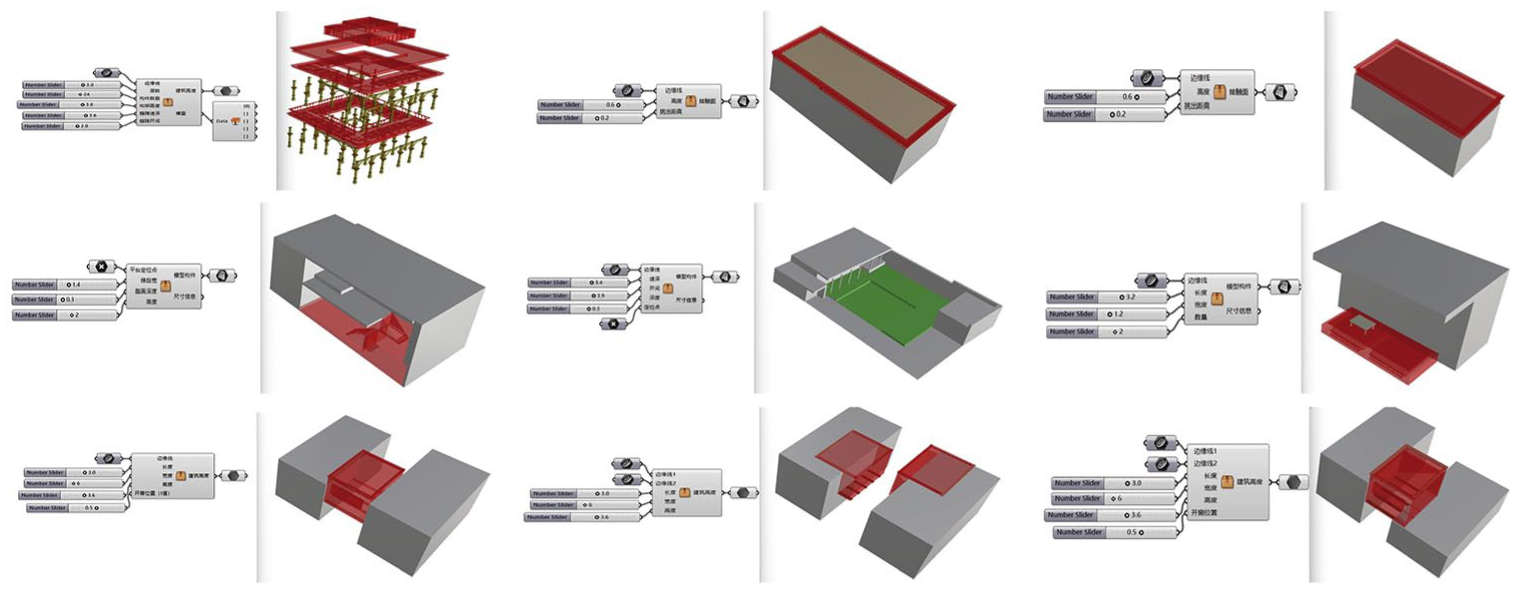
Spatial Components, Created by Authors
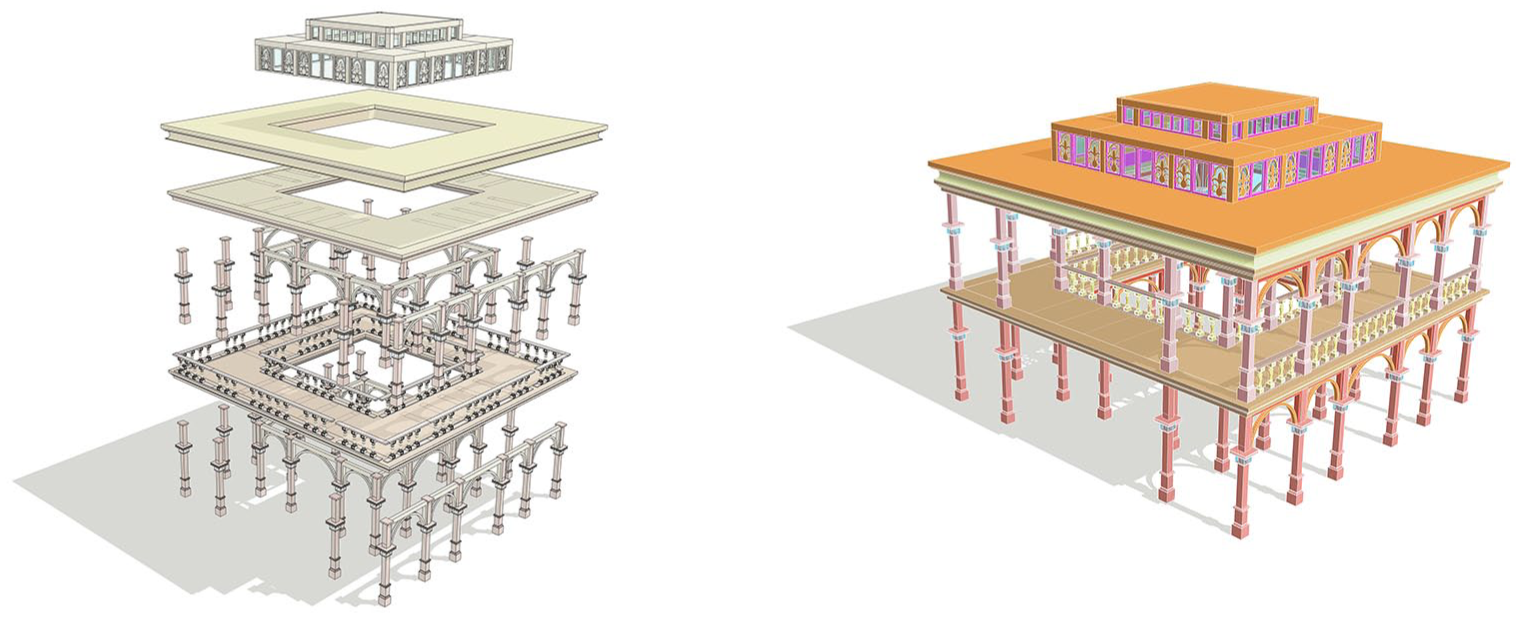
3. Utilization of Structural Logic and Spatial Relationships: Here, the main spatial components are positioned in a linear sequence, with refined parameters for each space (Figure 13).
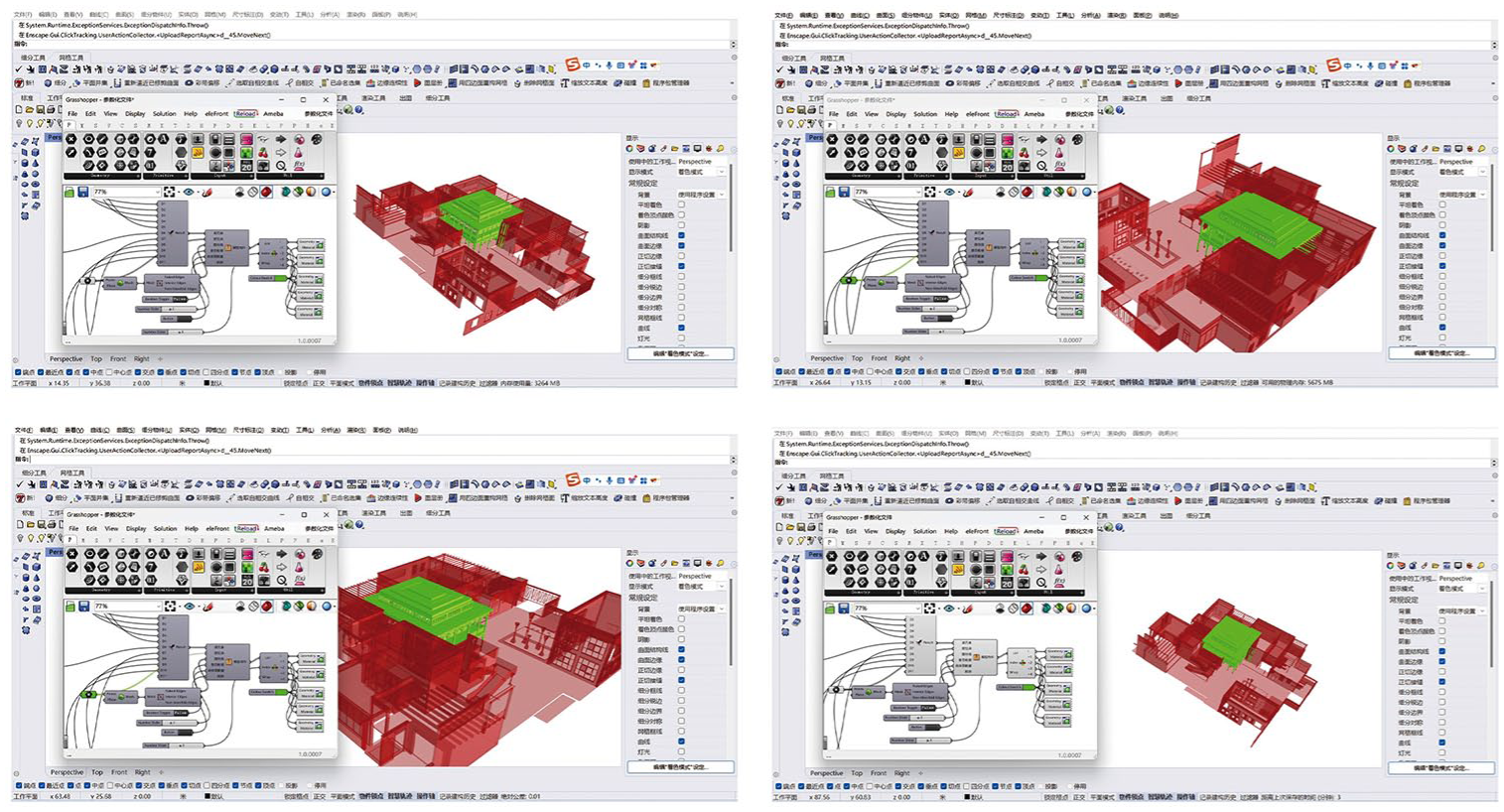
Single-Threaded Spatial Positioning, Created by Authors
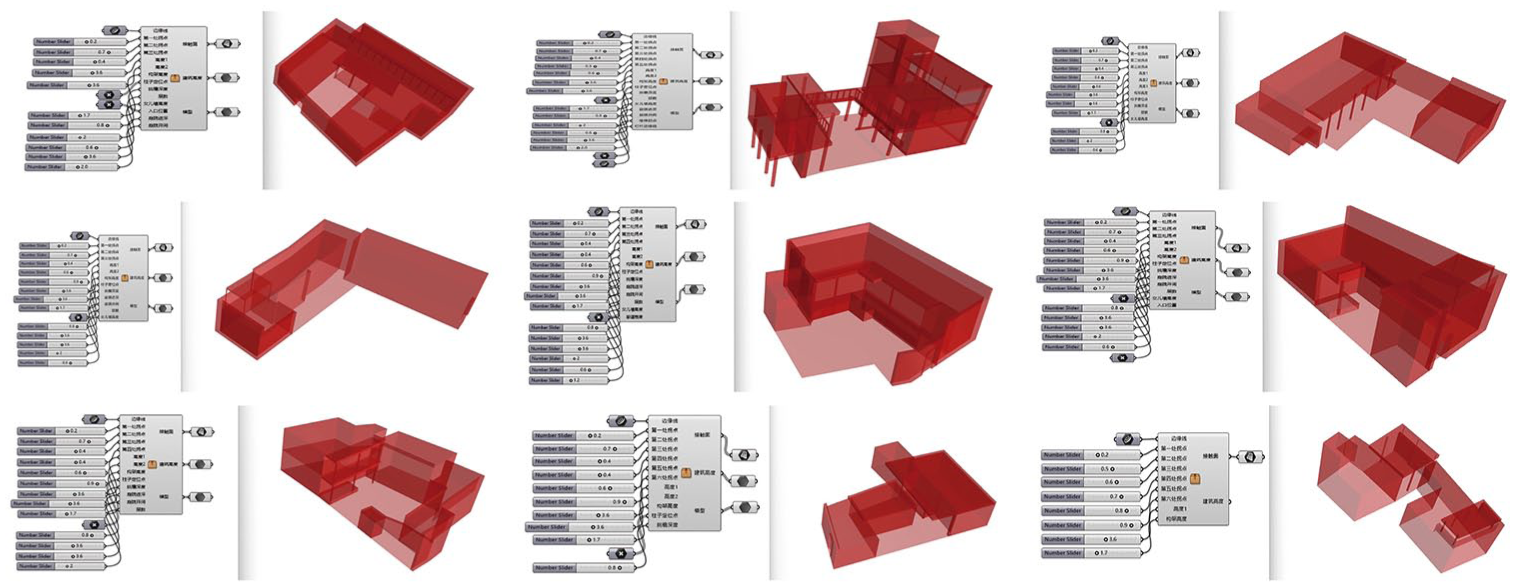
4. Parameters are imported into the meta-model, and various components are sequentially integrated and adjusted. Subsequently, the modeling software constructs the Building Information Model (BIM), as illustrated in Figure 14.
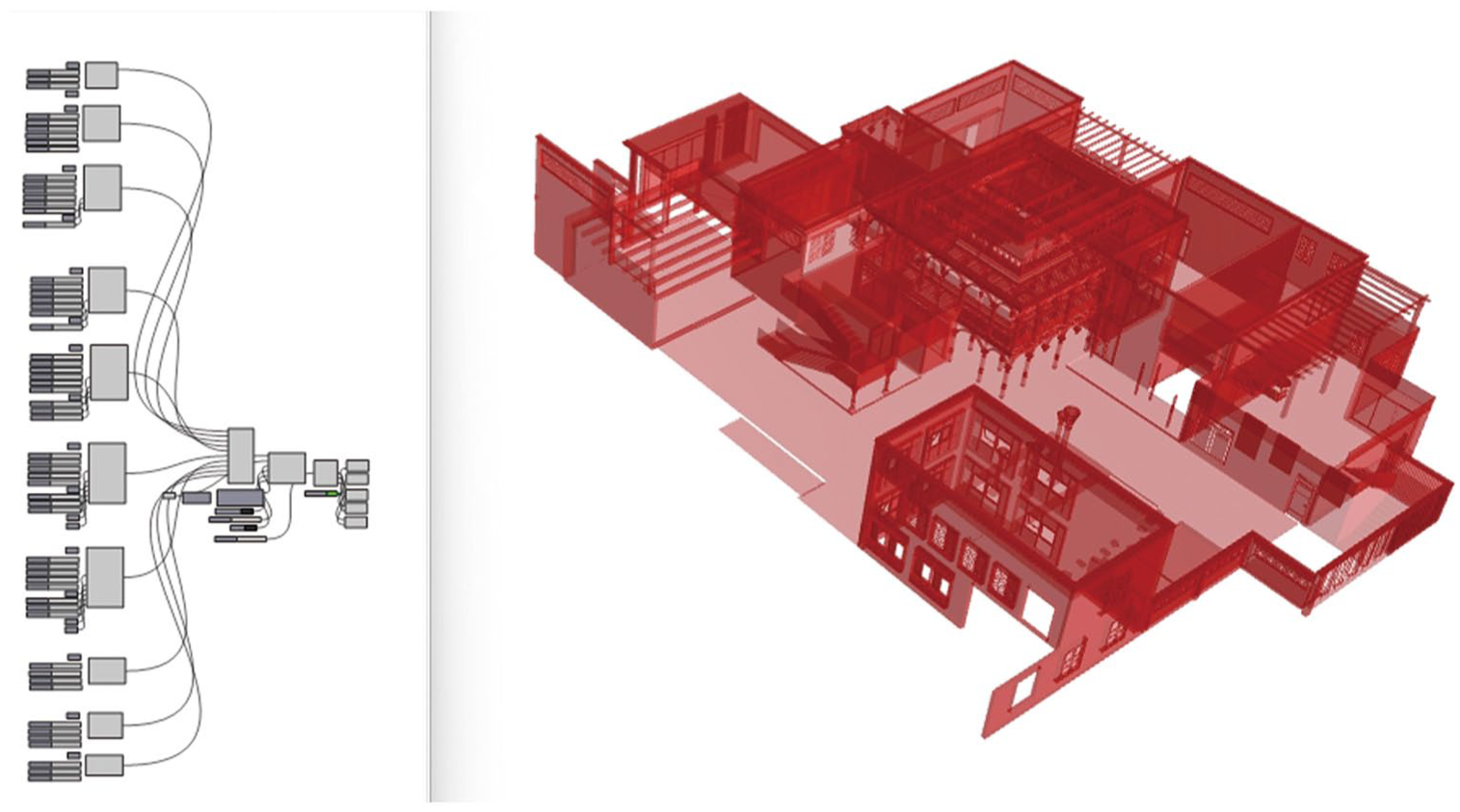
Generated Building Information Model, Created by Authors
This innovative methodology establishes a bidirectional workflow that integrates cultural interpretation with functional adaptation, thereby achieving precise quantification and extraction of cultural symbols while balancing their alignment with contemporary functional requirements. At its core, this approach fosters a dynamic equilibrium between cultural preservation and modern functionality. The study employs a parametric modeling strategy for the indigenous dwellings of Kashgar, which are deeply entrenched in complex cultural contexts. By algorithmically capturing auxiliary components to form parametric structures, the research facilitates accurate structural performance analysis and comprehensive reconstruction of traditional courtyard-centered dwellings. Through the decoding of cultural semantics and spatial logic of architectural elements, this approach not only achieves precise evaluations of structural performance but also embeds respect for and reinterpretation of regional cultural symbols during parameterization. To enhance the conservation and restoration effectiveness while promoting the sustainable preservation of historical architecture, specific design details are presented in Figure 15. Importantly, this transformation process actively incorporates community feedback through interviews, workshops, and participatory design methods. The spatial usage patterns, cultural identity, and demands for modern living conveniences of the residents are systematically collected and integrated into computational rules and design decisions. This not only significantly improves the efficiency of the preservation and renovation of the rammed-earth dwellings in Kashgar but also ensures their sustainability—that is, meeting the practical needs of contemporary life while respecting the historical context and community values.
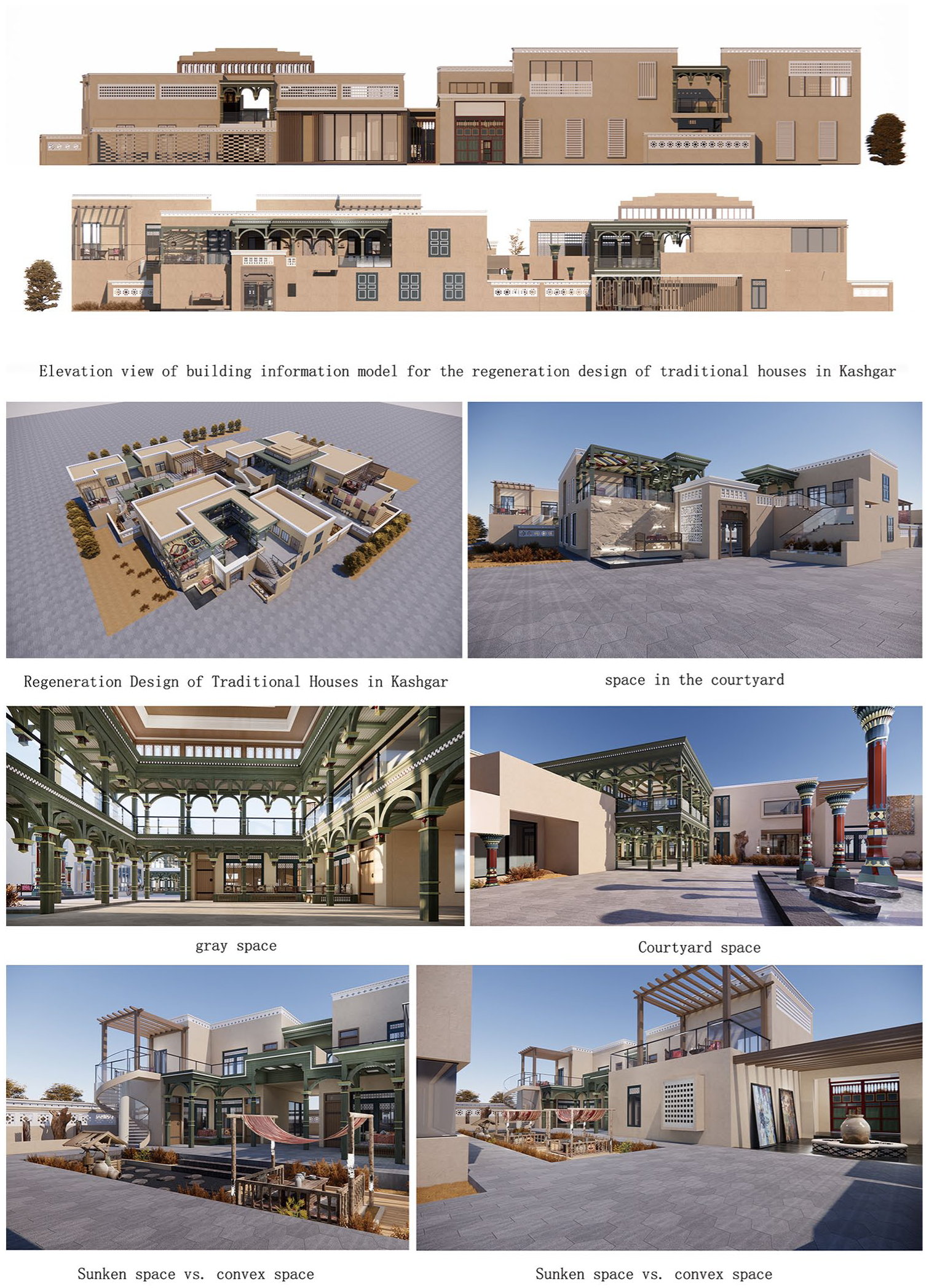
Reconstruction Design of Kashi Traditional Vernacular Houses, Created by Authors
Conclusion
This study develops an interdisciplinary framework comprising “symbol extraction, module deconstruction, and algorithm translation” to systematically decipher the adaptive elements encoded within the earthen vernacular houses of Kashi, Xinjiang. It uncovers the embedded architectural wisdom inherent in the local construction norms of traditional buildings. The research elucidates how the symbolic systems of Kashi vernacular houses profoundly integrate natural conditions, social structures, and philosophical approaches to life through a layered encoding of “form, function, and meaning.”
Theoretically, the study synthesizes Ferdinand de Saussure’s binary semiotic theory with Charles Sanders Peirce’s triadic relations, proposing a meta-model that transitions from semiotic decoding to contemporary design encoding. This novel approach transcends the conventional interpretation of technical functions in architectural studies and pioneers a new paradigm for the expansion of architectural semiotics. The practical redesign of vernacular houses confirms the potential for merging algorithmic processes with traditional knowledge, thereby ensuring an optimal synergy between traditional architecture and regional culture. Practically, this research provides a methodological toolset for the active preservation of living heritage within vernacular architecture in arid regions. It facilitates the hierarchical translation and cross-regional adaptation of traditional symbols, offering a localized strategy for the renewal of vernacular architecture and the revitalization of rural areas under the Belt and Road Initiative. The methodological framework of this study offers a parametric modeling approach tailored to the rammed-earth dwellings of Kashgar, incorporating their intricate cultural characteristics. This research captures and reorganizes auxiliary components algorithmically, thereby establishing a parametric structural system that facilitates precise analysis of structural performance. This system is instrumental in achieving the regenerative design of traditional Kashgar dwellings, with courtyards serving as the fundamental units. In addition, this work partially delineates the mechanisms of traditional translation and innovation within the “semiotics-algorithm” collaborative framework, which is pertinent to contemporary architectural practice. The crux of this approach lies in the ability of modern architects to integrate semiotic methods—used to decode regional cultural symbols and spatial semantics—with algorithm-driven design processes. These processes are adept at facilitating dynamic generation, performance optimization, and efficient construction. This integration enables the application of algorithmic tools not only for innovative interpretation and performance enhancement but also for a profound understanding and respect for traditional symbolic systems and cultural logic. Consequently, this approach opens new pathways for revitalizing historical architectural heritage.
Nevertheless, the study acknowledges certain limitations. Future research will aim to develop a dynamic cultural semantics database and assess the universal applicability of multi-regional samples to foster the creation of a global digital repository for traditional architecture and its application in reconstruction design.
In summary, this study not only forges a novel approach to the “recontextualization” of traditional architectural preservation through the integration of semiotics and algorithms but also provides critical insights into how contemporary architectural design can harmonize technical rationality with cultural sensitivity.
Footnotes
Declaration of Conflicting Interests
The author declared no potential conflicts of interest with respect to the research, authorship, and/or publication of this article.
Funding
The author disclosed receipt of the following financial support for the research, authorship, and/or publication of this article: National Social Science Foundation for the Arts Project (No. 20EH213).

Availability of Data and Materials
Focusing on the traditional adobe dwellings in Kashi, Xinjiang, this study leverages semiotic theory to perform a thorough analysis of their environmental adaptability, decoding the architectural symbols and exploring the encoding mechanisms of modern algorithmic patterns. The research not only deepens the understanding of environmental adaptability encoding patterns in traditional dwellings but also supplies a theoretical framework and methodological tools for the dynamic preservation and parametric regeneration design of traditional architecture. It opens new avenues for the sustainable renewal and cultural heritage preservation of vernacular buildings within the context of the Belt and Road Initiative. However, the data set is available from the corresponding author upon reasonable request.