







Abstract
This study examined popular music and school music education as cultural constructs of teenage students amid the shifting cultural and social dynamics of contemporary China. Data were drawn from questionnaires completed by 6,780 secondary students (mainly ages 12 through 17) from three cities—Beijing, Changsha, and Shanghai. The survey results revealed the extent of Chinese youths’ preferences for a variety of popular music styles in their daily lives, the relationship between their preference for popular idols and their music learning, and their views on learning popular music in school music education. The discussion in this article focuses on the dynamics of teaching popular music and learning other music styles (not limited to either popular or classical music) within the school environment in relation to teenage students’ daily music experiences and school music learning, school music teachers, and teacher education in contemporary China.
Introduction
The 1978 Open Door Policy stressed reforming and restructuring China’s economic system and the utilization of capital, advanced technologies, and management methods from the rest of the world, including capitalist countries such as the United States (U.S.) and the United Kingdom (U.K.). China has since shifted its focus from socialism to modernization to encourage foreign investments and to promote private enterprise development. By the end of 1995, at least 900 Chinese transnational corporations (TNCs) had set up more than 4,600 foreign affiliates in over 130 countries, and China’s foreign direct investment outflows averaged more than US$2.5 billion annually between 1990 and 1997 (United Nations Conference on Trade and Development, cited in Ren, 2010, p. 114). The growth of the middle class has boosted China’s consumption, particularly in the larger metropolitan areas of Beijing, Shanghai, Guangzhou, and Shenzhen (Barton, Chen, & Jin, 2013). This has led to a sustained boom in Chinese household consumption, resulting in an increase of domestic expenditure on resources for entertainment and leisure activities, particularly among the affluent in Mainland China. Today, Chinese teenagers in urban cities actively pursue Western culture through their consumption of Western clothing such as Levis and Nike, food and drinks such as KFC and Coke, TV shows, and Hollywood movies.
Besides going to discos and dancing, other entertainment activities in the 1980s included watching television and films on videocassette, singing karaoke, and eating in newly established restaurants (Croll, 2006; Latham, 2007; Rolandsen, 2011). Television and media sources in China have been a vital channel in diversifying foreign cultural influences on popular music, not only from Western countries but also from East Asian societies. Anglo-American forms of popular music, such as hip hop and rap, heavy metal, rock, and punk, have been imported to and localized in the mainland (see De Kloet, 2010; Friedlander, 1991; Liu, 2010; J. Wang, 2005, 2009). Following China’s entry into the World Trade Organization in 2001 and the 2008 Beijing Olympics, English has become an important part of China’s mass communication and education system (Cheng & Wang, 2012; Cooke, 2007; Wolff, 2009). Singing English songs is regarded as a good way for Chinese youths to learn the English language (see Cockrill & Lui, 2013; De Kloet, 2010; Gao & Xiu, 2008; Shen, 2009).
Popular songs and television programs, particularly from Hong Kong, Taiwan, Japan, and South Korea, also played a significant role in China’s cultural transformation between the 1980s and 1990s. During this time, many youths in China preferred Japanese and Korean popular music because of the attractive singers, hybridity, and trendiness. With the transmission of Japanese TV dramas and their theme songs, Japanese popular music (commonly referred to as “J-pop,” a hybrid music genre that fuses Western pop with a Japanese touch) was one of the influential music forces in China. Japanese television dramas such as “Tokyo Love Story” (1991), “Long Vacation” (1996), and “Love Generation” featured “beautiful people, beautiful clothes, good food, and good entertainment” (Chua, 2004, p. 206), and many Chinese youths were crazy about the theme songs of these dramas. However, Korean popular music has now become fashionable, overtaking Japanese popular music in popularity among Chinese youths in the early 2000s. This phenomenon, popularly called the “Korean Wave” (hanliu), began with Korean television dramas, and then grew to include sophisticated Korean dance and rap music spread by satellite TV.
The expansion of the music industry and the advances in Internet technologies on mainland social media platforms have given rise to more online fan clubs residing in Chinese cyberspace (Fung, 2009; Zhang & Mao, 2013). Today, there are online fan groups focused on global culture in China’s Internet sphere, including Hollywood movies, American television dramas, Japanese music, cartoons, and comic books, and Korean music, fashion, and food. The increasingly affluent lifestyles of Chinese youths in urban cities such as Beijing, Shanghai, and Wuhan have enabled them to afford digital entertainment, including mobile communication, MP3 players, videos, and PlayStations (Business Wire, 2004). Baidu (known as China’s Google), the largest music search engine in China, signed a deal with rights holders to license music on its website for both free download and streaming (Hille, 2011; IFPI, 2012). The opportunities offered by digital social networking have facilitated the spread of popular music, making it easier for urban youths to consume the music of their choice, as well as to learn about different lifestyles and ideologies through Western and other Asian popular songs.
Popular music and popular music education in the changing societies in Mainland China
A substantial body of literature on culture, education, and changing societies (e.g., Apple, 2013; Bernstein, 1977; Young, 1971) has argued that social transformation is an impetus for and is reflected in educational change, and that education is neither narrowed by nor limited to classroom experiences. The rapid and often radical changes experienced by societies have led to much debate about cultural transmission, students’ interests, cultural identity, and school education.
The promotion of popular music in school music education first began to receive attention over four decades ago in the West. The 1967 Tanglewood Symposium in the U.S. challenged music educators to include all music cultures and styles, popular teenage music in particular. It has long been suggested that teachers expand their horizons to include popular music in their teaching in response to the demands of a rapidly changing society, and schools also should tailor their curriculum contents and educational philosophies to suit the mainstream (Elliott, 1995; Green, 2001, 2005, 2008; Jorgensen, 2003). Substantial literature on the educational aspects of popular music has included methods for teaching popular music (Allsup, 2008; Dunbar-Hall, 1993), ways to study popular music (Lebler, 2008; Middleton, 1990), the adaptation of informal music learning practices for classroom use (Green, 2006, 2008), and the justification for introducing popular music into the school music curriculum (Gass, 1992; Rodriguez, 2004). However, Mainland China is a latecomer to the promotion of popular music in school music education.
After the establishment of the People’s Republic of China (PRC) in 1949, Communist China promoted a strong political and revolutionary orientation in the development of knowledge and culture in school education as political propaganda. Cultural globalization in the school curriculum (regarded as the transmission of ideas, attitudes, cultures, and values around the world), is now perceived as part of the process of transforming Chinese political culture, from collective Communism to individualism, which includes being more open to popular culture. In order to better respond to a changing society, curriculum change should focus on the integration of a life-oriented approach to help students solve social and daily life problems (Huang, 2004; Ryan, 2011). Owing to the intensification of economic globalization, the Ministry of Education (MoE) has recognized the importance of learning foreign languages, particularly English, and many urban cities such as Beijing and Shanghai have since extended their English language curriculum to Grade 1 students in elementary school education (Law, 2009, p. 276).
As China is ambitious and eager to take the world stage, it has attempted to develop the younger Chinese generation into citizens of the world through world citizenship education in school learning to further their understanding of people’s rights, responsibilities, and obligations as social members (Kennedy, Fairbrother, & Zhao, 2014; Law, 2011). According to Liu Jian, assistant director of the National Center for School Curriculum and Textbook Development under the MoE, the core of the curriculum reforms was an attempt to cultivate “new, advanced cultures and concepts to spread in schools and the society at large” (Xinhua News Agency, cited in Ho, 2006, p. 351). For example, most schools in China did not teach sex education, and most teachers and parents did not talk to children about sex. In order to improve sex education in the classroom, textbooks were compiled to cover the topics of sexual ethics and behavior, procreation and contraception, AIDS and other sexually transmitted diseases, and the dangers of drug use. These textbooks have been distributed to more than 10 major Chinese cities, including Chongqing, Guangzhou, Harbin, Shanghai, Wuhan, and Xian, since 2001 (People’s Daily News, 2001). Recently, the development of a school-based curriculum (SBC), one of the important aspects of the new curriculum reforms aimed at decentralizing the government’s decision-making power, was encouraged to cultivate “Children’s Philosophy” and to develop their critical thinking skills (Zeng & Zhou, 2013, p. 285). Accordingly, a secondary school in Guangdong adopted a popular cultural reference titled the “Harry Potter Chemical Magic” curriculum “to strengthen innovation of the subject” (Zeng & Zhou, 2013, p. 285).
For a long time popular music was prohibited in China’s school music education for fear of spiritual pollution by Western cultures, against which Mainland China introduced a strong revolutionary orientation (Ho & Law, 2004, 2012, 2015). While popular music has clearly evolved and flourished in Mainland China over the last three decades, little attention has been paid to Chinese youths’ music practices and experiences of popular music and school music education. The transition from a planned economy to a socialist-market economy in the mainland since the 1980s has involved many aspects of social and cultural life, and it has posed new challenges for the development of the popular music industry and the policy of incorporating popular music into education and education reform in the 21st century. The renewal of music practices and materials in school music education has come about because of rapid changes in modern China. Besides traditional Chinese and Western music, American jazz and pop, Chinese and Taiwanese pop, Western musicals, folk music, film music, and other world music have been introduced into the current school music curriculum (see Hunan Literature and Art Publishing House, 2012a, 2012b; People’s Education Publishing House, 2014; People’s Music Publishing House, 2014, 2015; Southwest Normal University Press, 2013). However, music teachers are still required to follow the official guidelines in their curriculum planning, which means that teachers’ freedom to select their own teaching repertories is limited in many schools (Ho & Law, 2015).
Though some popular songs have been integrated into the school music curriculum, the Chinese authorities have given high status to patriotic popular songs. In 2005, the Shanghai authorities proposed that popular music in school education should include some Hong Kong and Taiwanese popular songs from a list of 100 patriotic songs. The most controversial song is “Snail” by the popular Taiwanese idol Jay Chow. This song marked the emergence of individualism in the introduction of popular culture into school music education. Lyrical learning in Chinese school music lessons has long emphasized cooperation and collectivity, respect for Chinese authorities and others, obedience to rules, and so on, which dominate the values officially introduced into the school curriculum. The song lyrics of “Snail” encourage young people to pursue success and to overcome obstacles in life, which is a departure from traditional patriotic songs that usually foster a sense of collectivism, socialism, and heroism (Ho, 2011; Zou, 2005). Thus, the song “Snail” highlights the conflict of values between students’ experiences of political ideology in school music education and their experiences of freedom and individualism that are found in its lyrics.
Moreover, the 2011 reform of the Curriculum Standards for Primary Education and Junior Secondary Education marked the first time that the school music curriculum officially included popular songs (Ministry of Education, People’s Republic of China, 2012). The concept of “idol” has resulted in Chinese students being more interested in participating in school music programs and singing. Some teachers in China are happy to incorporate the “idol” milieu into their music teaching (Li, 2009; W. N. Wang, 2015). Further, music textbooks have begun to include popular songs and music from popular films and stage productions, both Chinese and those from other cultures (e.g., see Hunan Literature and Art Publishing House, 2012b; People’s Music Publishing House, 2010a; People’s Music Publishing House, 2010b; Shanghai Juvenile and Children’s Publishing House, 2010, 2011).
The research study
In this study, the wealth of popular and traditional types of music in Beijing, Changsha, and Shanghai provided a unique sociocultural environment in which to explore the extent to which student interests should guide decisions about popular music education. Beijing and Shanghai are metropolitan cities and Changsha is the provincial capital of Hunan Province. Beijing, the capital of Mainland China located in northern China, is the birthplace of Chinese rock. The Beijing Midi School of Music, established in 1993, was the first school nationally to offer classes on jazz music and rock music. As with Beijing, Shanghai (also known as the Paris of the East) was chosen for this study because it has pioneered education reform. The 1920s through the 1930s was the golden age of Shanghai popular songs (initially called shidaiqu, meaning “music of the time”), which were the basis of the modern Chinese popular music industry (Chen, 2005; Wong, 1992). As the capital of Hunan Province, Changsha is home to electronic technologies and popular culture and is the center for the entertainment business. The purchasing power of teenagers in Changsha is higher than in many other cities in the mainland, and most of them are interested in “purchasing celebrity-endorsed apparels” (Chang, 2011, p. 35). Moreover, Hunan’s wildly popular TV audition shows, “Chao Ji Nu Sheng” (“Super Girl”) and “Kuai Le Nan Sheng” (“Super Boy”), were modeled on the United States’ “American Idol” and the United Kingdom’s “Pop Idol.” “Super Girl” was a landmark popular cultural phenomenon in China and a cornerstone of the development of Chinese fans of cultural activities.
Purpose of the study
While there is a growing trend toward incorporating popular music into the school music curriculum (Ministry of Education, 2012), it is under-researched; dialogue on this issue can help to map young Chinese students’ perceptions of popular music and popular music education onto music education policies and practices in music education in contemporary Chinese society. By adopting selected respondents in Beijing, Changsha, and Shanghai, this study intends to present an overview of students’ preferences for diverse popular music styles in their daily lives, the relationship between their preference for popular idols and music learning, and their preferred popular music and other music styles in school music learning in these dynamic societies. In these Chinese cities, most secondary schools have at least one music lesson per week in their school music curriculum.
The research hypothesized that popular music is important to Chinese youths in their daily lives, as will be seen in their perspectives on learning the cultural diversification of popular music and classical music in school music education. In support of this assertion, the study sought to address the following questions:
To what extent do Chinese secondary students enjoy popular music in their daily lives?
Is there any relationship between students’ preference for popular idols and their music learning?
What are the students’ perceptions of the introduction of popular music into school music education?
Procedure and content of the survey
This research study used self-administered questionnaires, which mainly investigated the students’ preferences for popular music in and outside of school. For this purpose, the participants were invited to answer a multiple-choice questionnaire that took 15 to 20 minutes to complete. Each questionnaire was considered an individual record, and each question in the questionnaire was regarded as a variable. The data were coded and analyzed using the Statistical Package for Social Sciences (SPSS). Missing or invalid responses were discounted in the calculations. According to the survey requirements, quantitative analysis (e.g., mean, standard deviation, percentage, crosstab description, and the Pearson Correlation Coefficient) was conducted using SPSS functions. This study used a significant value at the .05 level in the SPSS software for the Pearson correlation two-tailed hypothesis test.
The questionnaire for the three cities was written in simplified Chinese, which was the native language of the student participants of the survey. It included closed items and 4-point Likert scale items that indicated the students’ preferences, agreements, and attitudes. The reason for adopting a 4-point scale was to allow respondents to express degrees of either agreement or importance; for example, 1 = highly disagree, 2 = disagree, 3 = agree, and 4 = highly agree; 1 = highly unimportant, 2 = unimportant, 3 = important, and 4 = highly important; and 1 = never, 2 = occasionally, 3 = sometimes, and 4 = always. The questionnaire items were found to have very high reliability, with a Cronbach’s alpha of 0.99. The first section asked basic information about the students’ gender, age, grade level, experiences with learning musical instruments, and major sources of musical knowledge. The second section asked students to what extent and why they liked popular music from different societies, their preferred popular music idols, and their habits of listening to or singing popular music. The third section explored the students’ preferences for what and how popular music should be taught and promoted in school. In particular, it asked how often they learned and how interested they were in learning popular music from different societies in school music lessons, how their schools should promote popular music, and whether there should be a balance between learning classical and popular music in school music education.
Participants’ demographic information
Thirty-two Chinese secondary schools (14 secondary schools in Beijing, 8 in Changsha, and 10 in Shanghai) were invited to participate in the survey questionnaire. Principals of the subject schools were asked for permission to collect data from their students. They arranged for their music teachers to distribute the questionnaires to students for completion in class. The teachers were free to choose participants and they served as facilitators for collecting and returning the questionnaires.
The survey was conducted between September 2011 and December 2012, with the participation of 6,780 students (2,971 from Beijing, 1,910 from Changsha, and 1,899 from Shanghai) enrolled in secondary grades. The rationale for choosing the target group of secondary school students was that all the students in the sample had experienced at least six years of music education in their primary studies, and they should have been exposed to Chinese and Western classical music, Western (sung in English) and Chinese (sung in Mandarin) popular music, and Chinese folk music and other world music (see the official music curriculum guidelines devised by the Ministry of Education, 2012). Though Chinese and Western popular music might rarely be taught in school, students were probably accustomed to it outside of school.
In total, the study surveyed a selected sample of 3,325 (49.04%) boys and 3,455 (50.96%) girls. The distribution of boys and girls among the three Chinese cities was 1,435 boys and 1,536 girls in Beijing; 834 boys and 982 girls in Changsha; and 1,056 boys and 937 girls in Shanghai. The subject schools were less willing to allow Grade 12 students to participate, as these students had to prepare for public examinations at the time of the survey questionnaire. Most students in this study were between the ages of 12 and 17 and attended Grade 7 through Grade 11.
Results
Sources of musical knowledge, popular idols, and instrument learning
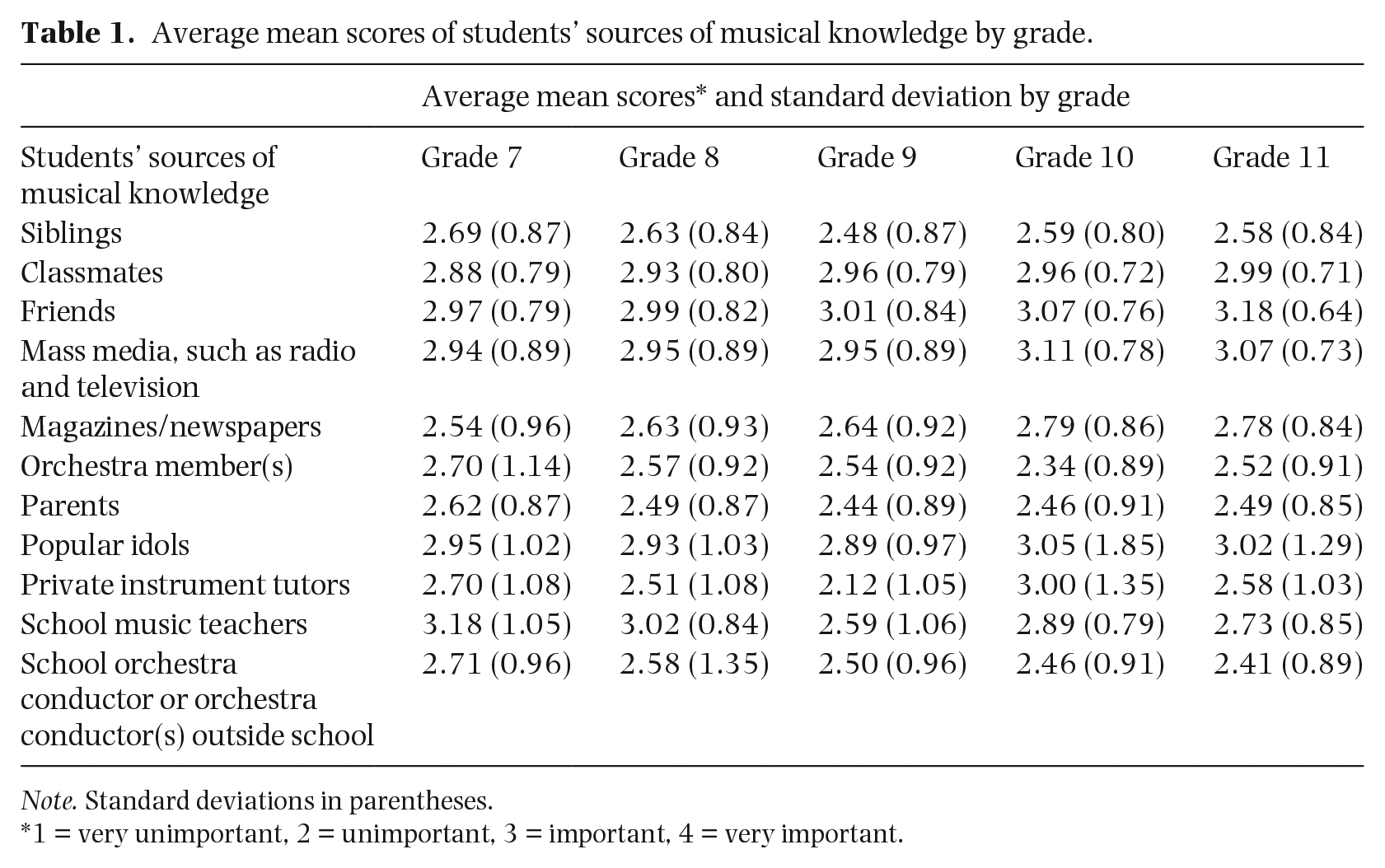
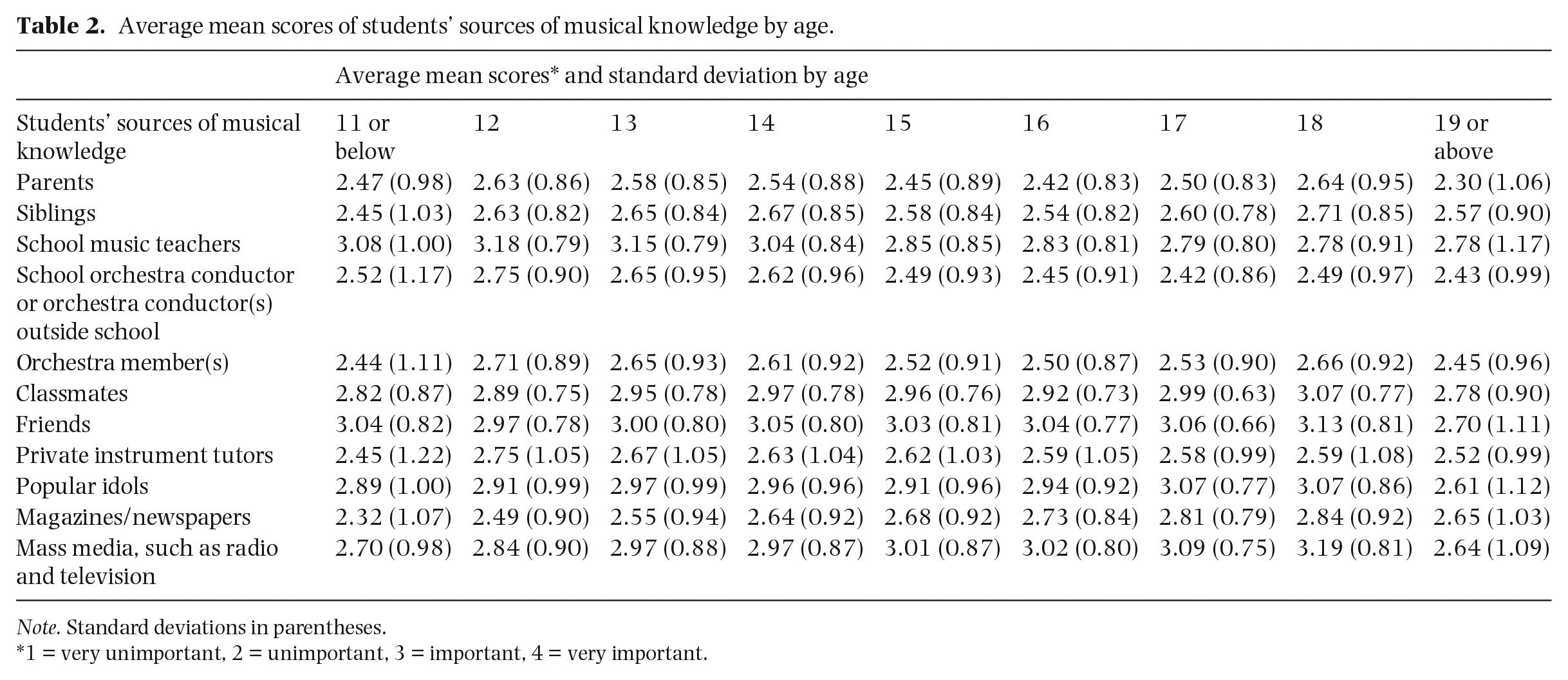
The background information of the students surveyed showed that school music friends and school music teachers, rather than parents, were the most important sources of the students’ musical knowledge. The top five musical knowledge sources among the valid responses were friends (M = 3.02, SD = 0.78), school music teachers (M = 3.00, SD = 0.91), mass media (M = 2.98, SD = 0.86), popular music idols (M = 2.97, SD = 1.14), and classmates (M = 2.95, SD = 0.77) (from 1 = highly unimportant to 4 = highly important). By cross-tabulating calculations, compared with students in other grades, Grade 7 students achieved the highest responding means for parents, siblings, school music teachers, orchestra members, private instrument tutors, and orchestra conductors, while mass media and popular idols obtained comparatively higher responding rates among respective Grade 10 and Grade 11 students (see Table 1). In comparing the responding means by age, students aged 18 achieved the highest rating for parents (M = 2.64, SD = 0.95), while students aged 19 or above scored parents the lowest (M = 2.30, SD = 1.06) (see Table 2). For school music teachers, students aged 12 or below maintained the highest scores. Mass media, popular idols, and magazines and newspapers obtained comparatively higher responding rates among students aged 16 and 18.
Average mean scores of students’ sources of musical knowledge by grade.
Note. Standard deviations in parentheses.
1 = very unimportant, 2 = unimportant, 3 = important, 4 = very important.
Average mean scores of students’ sources of musical knowledge by age.
Note. Standard deviations in parentheses.
1 = very unimportant, 2 = unimportant, 3 = important, 4 = very important.
Though Grade 10 (31.28%) and Grade 11 (29.46%) students maintained a higher percentage of preferring popular idols as their source of musical knowledge, the difference was not very much compared with the other grades (Grade 7 at 27.86%, Grade 8 at 27.67%, and Grade 9 at 25.49%; see Figure 1).
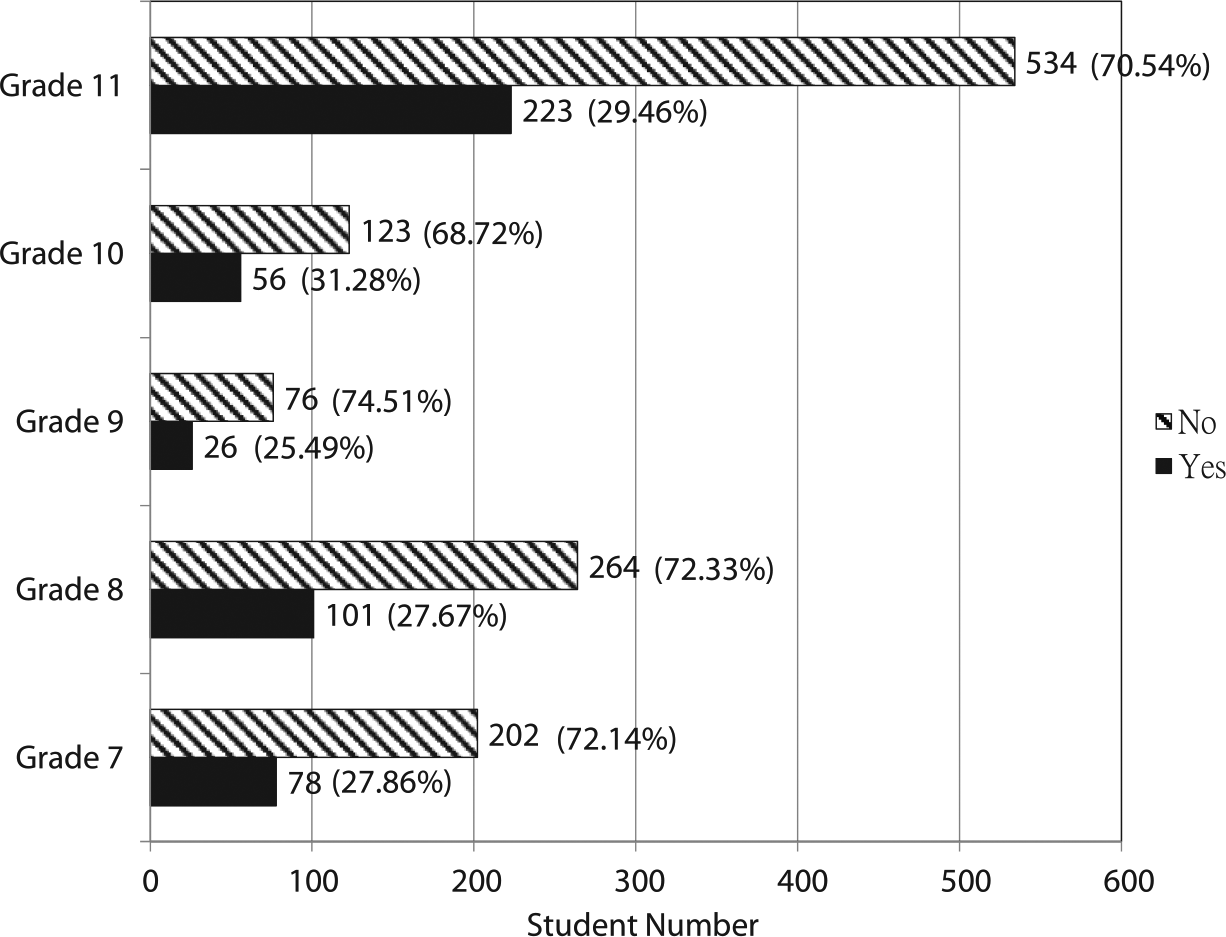
Number of students with popular idols as source of musical knowledge by grade attendance.
The top reasons given for preferring popular idols among the valid responses were (in descending order): the popular idols’ melodies and lyrics (M = 3.49, SD = 0.63), their performance styles and techniques (M = 3.22, SD = 0.76), their achievements in the music business (M = 2.90, SD = 0.88), their physical appearance (M = 2.77, SD = 1.01), their fashion sense (M = 2.53, SD = 0.93), media attention (M = 2.52, SD = 1.05), and the recommendations of their friends or classmates (M = 2.38, SD = 0.93) (1 = highly disagree to 4 = highly agree).
Furthermore, 2,282 (33.96%) students in this study were instrument learners, with their learning experiences ranging from one to seven or more years. A Pearson’s correlation was run to determine the relationship between the sources of musical knowledge among students and their instrument learning. The data indicated that for instrument learners, popular music idols as a musical knowledge source did not relate to their instrument learning.
Students’ consumption of popular music
The students preferred listening to or watching popular music on the Internet (90.37%) and their iPods or MP3 players (85.13%), while fewer students listened to popular music on television (57.35%), mobile phones (52.54%), the radio (47.06%), and CD players (42.95%). Of the students surveyed, 2,827 (45.63%) said that they listened to popular music or watched popular music videos for less than 5 hours per week, 1,377 (22.23%) for 6 to 10 hours, 728 (11.75%) for 11 to 15 hours, 402 (6.49%) for 16 to 20 hours, and 861 (13.90%) for 21 hours or more.
The survey found that the students’ preferences were related to the diversity of popular music in their daily lives. A majority of the respondent students (89.71%) liked popular songs, their favorite being in Putonghua—the first language of their homeland in Mainland China. The survey also found that they mostly liked popular music from the U.K., the U.S., and other Western and Asian countries. The top five regions for well-liked popular songs were Mainland China (M = 3.26, SD = 0.73), the UK and the US (M = 3.04, SD = 0.88), Taiwan (M = 2.61, SD = 0.87), other Western countries (M = 2.57, SD = 0.98), and South Korea (M = 2.48, SD = 0.95). Moreover, the 3,455 students (51.83%) who had visited karaoke clubs in the preceding 12 months expressed the same pattern of diverse popular music preferences (see Figure 2).
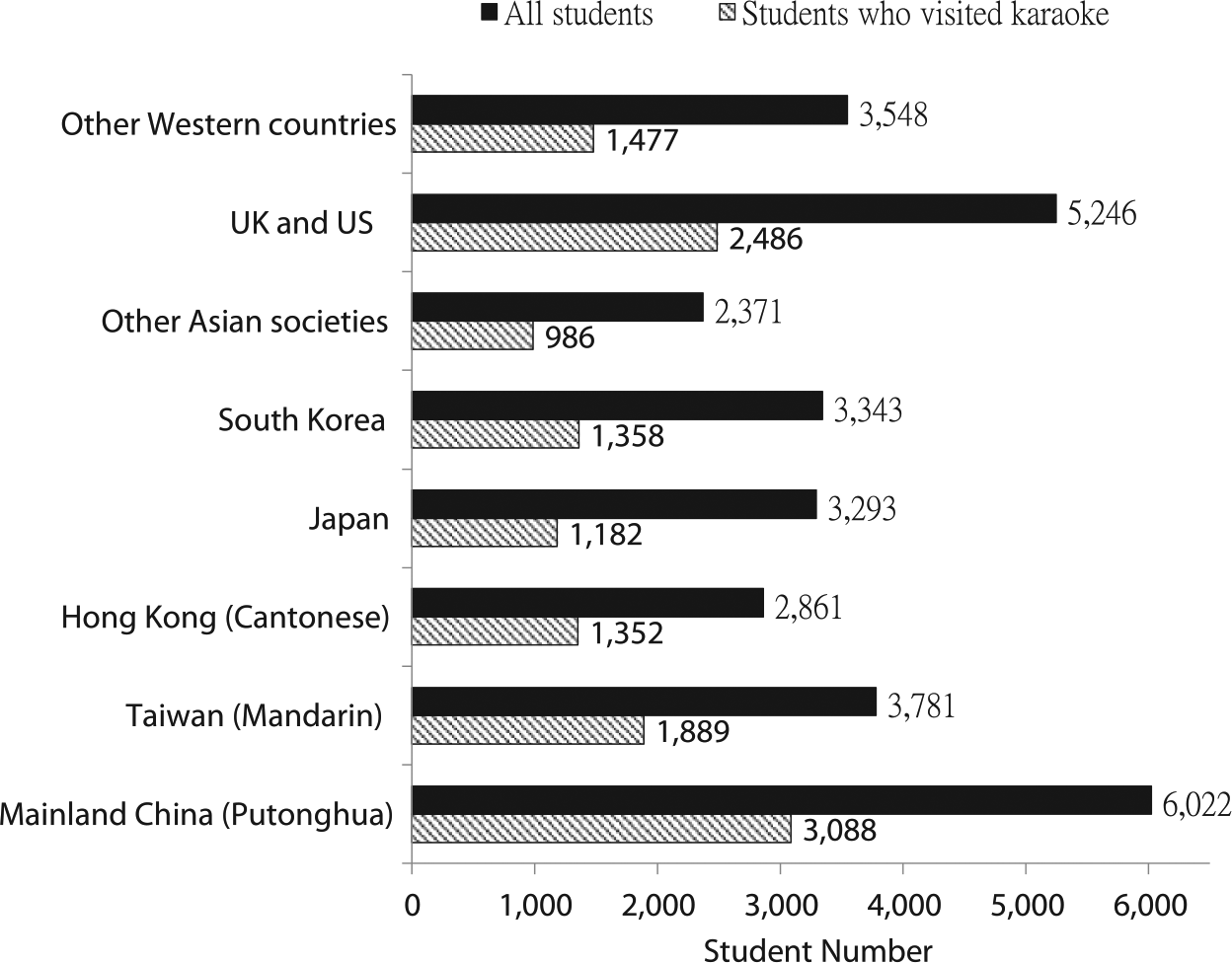
Popular music from various countries that students liked or strongly liked in their daily lives (n = 6,713) and students’ karaoke habits (n = 3,211).
This might be due to the problem of language, as singing Cantonese popular songs from Hong Kong scored higher than the popular songs from Japan and other Asian societies.
Students’ views on learning diverse music styles in school
The survey listed 22 music styles and asked the students to rate, on a 4-point scale (1 = never, 2 = occasionally, 3 = sometimes, 4 = always), how often teachers taught them in music lessons and the extent to which students preferred to learn them in school music lessons. It was expected that the Chinese students were mostly familiar with these 22 music styles through their formal and informal music education, as well as their daily music experiences outside school. Though these items might not be comprehensive to the student respondents, they were free to articulate their views and provide additional information on their preferred music styles in the item marked “other” in the survey questionnaire. Among the traditional music genres, Chinese folk songs (M = 2.53, SD = 0.97) and Chinese orchestra music (M = 2.31, SD = 0.86) were perceived to be taught most often in school (see Table 3), while popular songs from Mainland China (M = 2.11, SD = 1.08) was the most commonly taught popular music genre.
Students’ perceptions of different music styles taught in school music lessons.
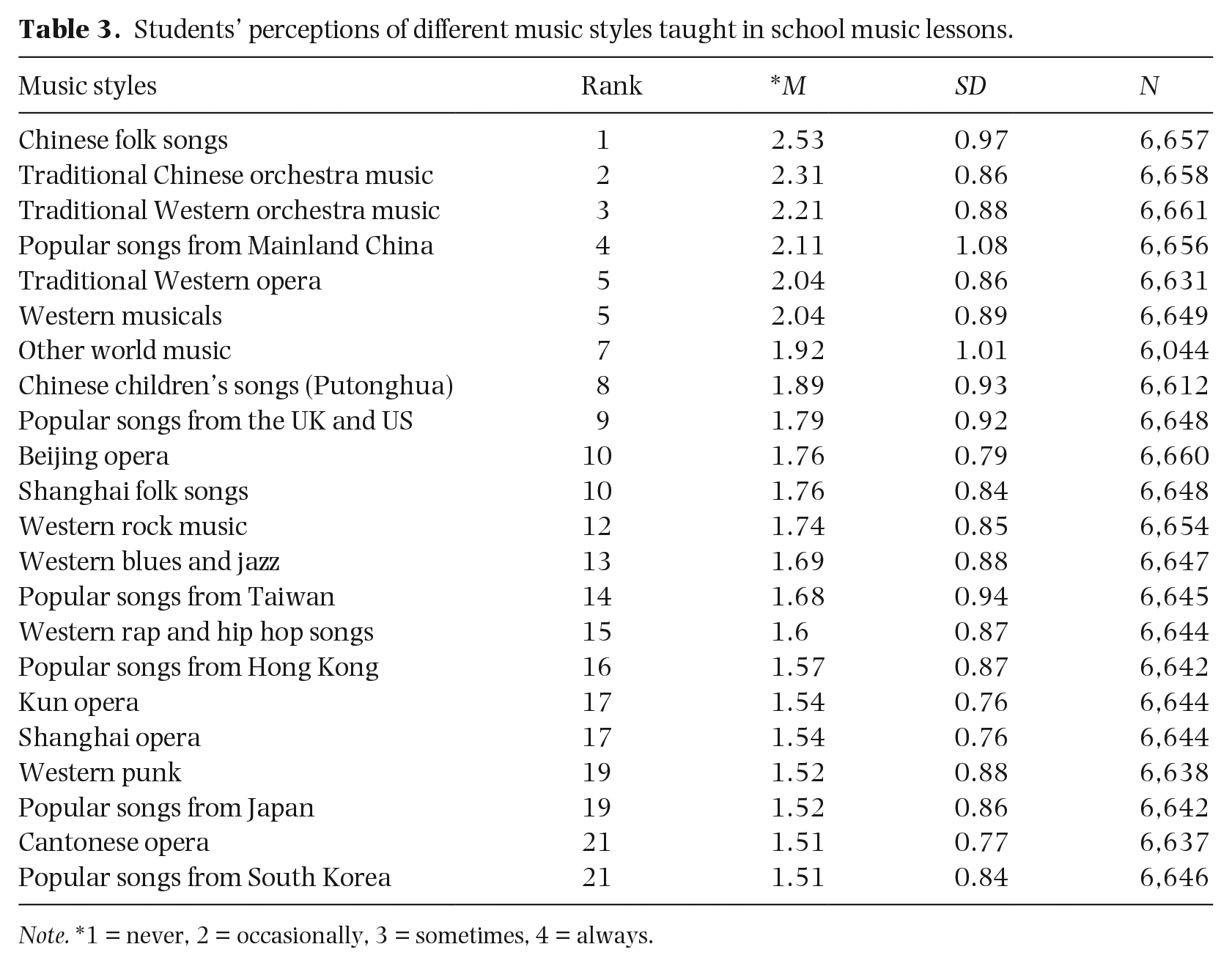
Note. *1 = never, 2 = occasionally, 3 = sometimes, 4 = always.
When asked which of the same 22 music styles they would most want to learn in school music lessons, the most frequent responses were popular music from Mainland China and popular music from the US and the UK, with average mean scores of 2.98 (SD = 1.10) and 2.85 (SD = 1.02), respectively (see Table 4). Students were less interested in learning traditional music in local dialects, including Beijing opera, Cantonese opera, Kun opera, and Shanghai opera, during their music lessons.
Students’ views of different music styles that they would prefer to learn in school music lessons.
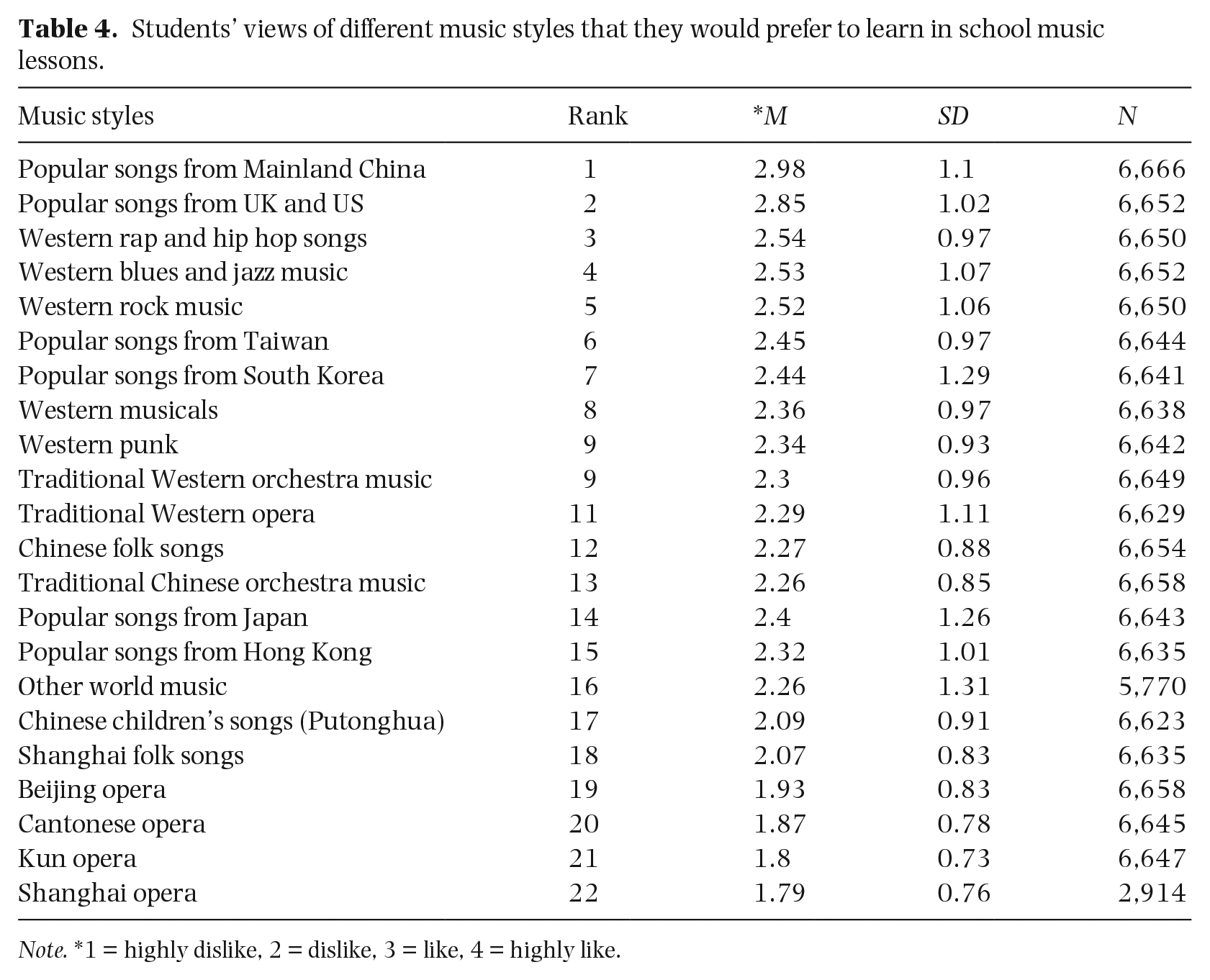
Note. *1 = highly dislike, 2 = dislike, 3 = like, 4 = highly like.
However, there were positive correlations between the students’ perceptions of the diverse music styles taught by teachers and their preferred music styles to learn in school music lessons: traditional Chinese orchestra music (r = 0.046, p < .01), Beijing opera (r = 0.171, p < .01), Kun opera (r = 0.291, p < .01), Shanghai opera (r = 0.307, p < .01), Cantonese opera (r = 0.348, p < .01), traditional Western orchestra music (r = 0.322, p < .01), traditional Western opera (r = 0.288, p < .01), Western musicals (r = 0.345, p < .01), Chinese folk songs (r = 0.289, p < .01), Shanghai folk songs (r = 0.308, p < .01), Western rock (r = 0.251, p < .01), Western blues and jazz (r = 0.324, p < .01), rap and hip hop (r = 0.159, p < .01), punk (r = 0.229, p < .01), English popular songs from the U.S. and the U.K. (r = 0.242, p < .01), popular songs from Mainland China (r = 0.255, p < .01), popular songs from Taiwan (r = 0.207, p < .01), Hong Kong Canto-pop (r = 0.186, p < .01), popular songs from South Korea (r = 0.274, p < .01), Japanese popular songs (r = 0.279, p < .01), and Chinese children’s songs (r = 0.200, p < .01). These findings indicate that the music genres taught in school music lessons were what students preferred to learn.
The surveyed students’ reasons for wanting more popular music in school can be grouped into two broad categories: intrinsic motivations and extrinsic motivations. Intrinsic motivations refer to students’ internal desire to understand music, fulfill their enthusiasm, and obtain a personal sense of achievement, while extrinsic motivations relate to factors external to the individual, such as parents, teachers, and friends. The results showed that the students valued intrinsic motivations over extrinsic motivations in this study.
Dynamics of teaching classical and popular music in school music education
The survey questionnaire findings showed that, despite their strong preference for learning about popular music, most students recognized the importance of striking a balance between learning about Western popular music and Western classical music (4,857 responses, 76.78%) and between learning about Chinese popular music and Chinese classical music (5,023 responses, 79.45%). The senior-grade students obtained a slightly higher means compared with the junior-grade students in their views on the balance of teaching Western popular music and Western classical music, but both the junior-grade students and the senior-grade students seemed to maintain a similar attitude toward the balance of learning Chinese classical music and Chinese popular music.
Discussion
As market mechanisms have been increasingly introduced into the mainland’s economy, this shift has posed new challenges to the cultural and educational development of metropolitan China in the 21st century. Based on the three research questions and the findings of this study, this section will address three main issues for discussion: (1) the extent of students’ enjoyment of popular music in their daily lives in the new global age; (2) the relationship between students’ preference for popular idols and their music learning; and (3) the students’ views on studying popular music in school music education.
Preferred popular music in students’ daily lives in the new global age
Technological innovations and increased economic openness have made popular music much more accessible to Chinese youths. Music has become a personal accompaniment in many teenagers’ lives because of the availability and popularity of personal music listening devices (Clark, 2012; Jian & Liu, 2009). This study has found that the Internet and iPods/MP3 players have enormously influenced Chinese students’ popular music habits and practices, with 90.37% and 85.13%, respectively, regularly making use of these technologies in their daily lives. Digital audio and video can be downloaded from the Internet, stored, and played on portable music devices such as personal computers, iPods, iPhones, and iPads. The Internet itself has gone through a huge transformation in urban China in the last decade, and young Chinese students now consume a wide range of popular music genres online (Cockrill & Lui, 2013; Pease, 2006). According to a survey conducted by the China Internet Network Information Center (CNNIC) (2013, p. 38), from 2011 to 2012, the top five network applications in China with the biggest audience were instant messaging (82.9%), search engines (80.0%), online music (77.3%), blogs/personal spaces (66.1%), and online video (65.9%). All of this suggests that the breadth and depth of students’ day-to-day exposure to music through various modes of media has influenced their music behavior in their daily lives.
Popular music is not only practiced for purposes of expression and consumption, but also for the articulation of cultural identity among Chinese teenagers. Moreover, popular songs from Mainland China contribute to Chinese students’ identity. Chinese students have great affection for popular music from Mainland China, and they also are generally receptive to international pop from different cultures. The results of the study showed that, although Chinese students who visited karaoke clubs mainly sang popular songs from Mainland China (M = 3.34, SD = 0.72), many sang English songs from the U.K. and the U.S. as well (M = 2.79, SD = 1.05) (from 1 = highly disagree to 4 = highly agree) (see Figure 2). The students’ musical tastes have evolved to include Western rock, punk, hip hop, and rap, as well as Asian popular music (see Table 4). One noticeable impact of cultural globalization on urban China is the phenomenon that many Chinese students have gained stronger intercultural awareness of learning English. The involvement of singing English-language songs and watching movies in the classroom can arouse Chinese students’ interest in learning English and help them identify some language items through reading lyrics (Gao & Xiu, 2008; Shen, 2009).
The relationship between students’ preference for popular idols and their music learning
Music has always been a factor in people’s lives, particularly for young people. Young people in China are very keen to follow the media and popular music trends in both the West and other Asian countries. The findings of this study indicated that popular music from Mainland China was the most preferred style among the students. China’s cultural and education policies have continued to evolve alongside a compelling tendency toward decentralized and diversified education in accordance with the general shift toward a market economy.
Popular idols were commonly found among secondary school students (see Tables 1 and 2). Comparatively, senior-grade students highly valued popular idols as their musical knowledge source. In response to Chinese authorities vowing to tighten restrictions on online popular music and performances presented by popular artists, digital piracy and other social sharing sites have become the most widespread practices of music consumption among Chinese youths in the mainland. In this new global age, China’s Internet may be the only way to build a fan base. The adoration of Chinese, American, Japanese, and Korean artists has become a part of youth culture in the mainland (Cockrill & Lui, 2013; Fung, 2008; Mah, 2005; Pease, 2006). Fans can even make use of the Internet to force other media to focus on their idols and to establish international fan clubs (Clark, 2012; Fung, 2008, 2009). Driven by a desire to help their idols, fans have uploaded fan-made videos, photo collages, and even real-time translations of idols’ television dramas and performances on social media.
Though most students maintained that popular idols influenced their musical knowledge, the number of students who preferred popular idols generally ranged between 27% and 31% across the grades studied (see Figure 1). Comparatively, non-instrument learners had a higher percentage (72.85%) of preferring popular idols compared with instrument learners (26.71%). The findings of this study showed that instrument learners generally did not find popular music idols to be a source for their musical knowledge. The weakest linear relationship was shown between students’ popular idols and their preferences for classical and folk music genres in their music learning. The data indicated that students who preferred popular idols might be interested in learning popular music genres but felt reluctant to learn traditional and folk music. It is suggested that music educators and music practitioners strengthen the connections between students’ school and real-world experiences to explore juxtapositions of music genres and styles in ways that assist young students in recognizing the intersections in holding two or more sociocultural and music identities simultaneously (Elliott, 1995; Green, 2005; Jorgensen, 2003).
Views on teaching popular music in school music education
In this study, the most important reasons for students wanting to learn popular music in school were learning their favorite popular songs, learning musical knowledge and music elements of popular music, and singing skills. When asked about their views on increasing their exposure to popular music outside the classroom, singing and music appreciation activities were the most preferred ways of learning popular music. Many students maintained that inviting popular artists to perform in school was less significant. These results suggest that most students valued intrinsic motivation over extrinsic motivation in terms of studying musical meanings that are “inherent” (i.e., arising from sounds, musical knowledge, and singing skills) (see Green, 2001, 2008). Aware of the often apparent incongruence between the aims of school music education and the social and cultural experiences of many Chinese teenagers, this raises the question of how to develop practical strategies, methods, and activities to increase the students’ participation in and broader engagement with understanding and knowing more about popular music in terms of knowledge, skills, compositional techniques, and instrumentation.
Though most of the students preferred learning popular music to learning classical music in school, this does not mean that they totally rejected learning classical music (see Table 4). Even though they preferred to have more popular music elements taught in school, they did not see the introduction of popular music into the music curriculum as an act against the learning of classical music, be it Chinese or Western in origin. Those respondents who wanted to learn more popular music in school also agreed that classical music should remain as part of the school music curriculum to ensure a more complete music education. As outlined by the Ministry of Education (2012), students should be encouraged to develop a broader sense of musical understanding through both classical and popular music genres, as well as to learn about the quantity and richness of other countries’ music cultures, to achieve a balanced, sequential music education program. Table 1 shows that the most influential source of musical knowledge in Grade 7 was school music teachers, which changed to friends in Grades 9 and 11, and mass media and popular idols in Grades 10 and 11, respectively. Comparatively, students aged 19 or above believed that parents, school music teachers, classmates, friends, popular idols, and mass media were less effective sources of musical knowledge (see Table 2). One reason for this is that older students may have developed their music knowledge and their preferred music styles through self-learning, which they may have considered to be a more effective source.
Moreover, in music learning, school music teachers are most influential among the junior grades, while mass media and popular idols have a greater impact on senior-grade students. The challenge for Chinese music teachers is the need to widen their students’ musical tastes (particularly starting in the junior grades) beyond those styles that are broadcast and promoted by mass media, such as Chinese opera music, Chinese folk music, diverse popular music styles, and other world music. There is a question of how music teachers can prepare to integrate different profiles and different popular music and non-music styles into their music lessons, particularly with respect to those with which they and/or their students are unfamiliar. School music education should be conceived, planned, and promoted to cover the diversity of music learning, whether classical, popular, or folklore, which will contribute to the broadest possible participation of students inside and outside the school environment. Along this line, multicultural music (not limited to either popular or classical music) has to be integrated into the music teacher education curriculum at large in Chinese higher education.
In today’s fast-changing digital age, options should be offered to refashion students’ and teachers’ understandings of cultural borders and their positions and relations within different popular music. Students’ musical experiences are shaped in a multiplicity of ways to promote music learning with a wider perspective, including their experiences in the music classroom determined by music teachers, national and cultural policies, mass media, popular idols, and musicians. The power of teachers’ influence on students’ preferences can increase if teachers are willing and able to share, or at least show some interest in, their students’ preferences and to recognize the social and cultural benefits of technology and music learning. Policymakers, music teacher trainers, and school music teachers should also recognize the impact of mass media on Chinese youths, their perceptions of students’ interest in music, the pleasures associated with watching television and watching music videos on the Internet, the importance of using computers and new technologies, and young people’s interest in popular celebrities and musicians. To better understand the perspectives of music teacher education, the curriculum for music teacher education programs in China should be updated to increase its relevance to pre-service music teachers of the 21st century, as well as the growing interest in popular music pedagogy. The challenge for China’s music education is broadening youths’ music tastes (e.g., classical music, folk music, and world music) beyond those styles that are promoted by contemporary mass media and the Internet. There are important implications here for music teachers to find a balance between teaching diverse music styles from both Western and non-Western traditions to maintain the epistemic integrity of the music subject for young Chinese students influenced by the sociocultural impacts on the dynamic changing societies in contemporary China. The challenge for music teachers and teacher education is to persuade a generation of music teachers to introduce diverse music cultures and an understanding of music as a unifying force, and to develop teaching methods and strategies with relevance to all learning contexts.
A limitation of the current study is its relatively small sample size, with only 6,780 school students from Beijing, Shanghai, and Changsha. This school-based study can never represent Mainland China as a whole. China is vast, with regional differences across its provinces. Even though three different sites were chosen for the investigation, this study cannot generalize the teaching and learning practices in the mainland. As such, this study represents a preliminary step in the investigation of the views of students’ perceptions of school music education and the extent to which popular music is significant to learning experiences in a culturally diverse community. To rationalize this study, the Chinese government has to engage various players (i.e., music teachers, policymakers, curriculum planners, and principals) to build consensus for its progressive education curriculum.
Footnotes
Acknowledgements
The author would like to thank the head teachers and teachers of the participating secondary schools, as well as the involvement of the students, all of whom are greatly appreciated. This study could not have been conducted without their outstanding assistance. The author would also like to thank the anonymous reviewers for their valuable comments and suggestions to improve the quality of the paper.
Declaration of Conflicting Interest
The author declares that there is no conflict of interest.
Funding
This study was generously supported by the Faculty Research Grant of The Hong Kong Baptist University.