







Abstract
Alignment between curriculum standards and teachers’ classroom instructional practices is critical in assessing curriculum implementation effectiveness and students’ learning. Using a modified version of the Surveys of Enacted Curriculum (SEC) for music, this study explored the alignment between the enacted curriculum and the national curriculum standards in the Chinese school system. Curriculum standards and classroom instructional practices were represented using sets of two-dimensional matrices that comprised content themes and five learning domains: Cognitive, Affective, Psychomotor, Social, and Cultural (the CAPSCt model). The results showed an overall high level of alignment (0.81–0.90). It was also suggested that the degree of alignment gradually decreased from the low grade to high grade band. Individual variations were evident in both the learning content and learning objectives, in which more emphasis was put on cognitive, affective, and psychomotor development than on social and cultural aspects. Methodological challenges and implications of the CAPSCt model for assessing curriculum enactment are also discussed.
Background
Since the early 1950s, eight rounds of reforms have been conducted in China’s education system, aiming to improve both the quantity and quality of educational resources. The core issue in these reforms is the implementation of subject-based curriculum standards. The most recent reform was launched in 2001 by the Ministry of Education upon the release of The Compendium of General Education Curriculum Reform (Ministry of Education, 2001). At a macro level, China’s current national school curriculum system is built upon three universal learning dimensions (Knowledge and Skills, Process and Methods, and Emotional Attitudes and Values) across 12 subjects. The National Music Curriculum Standards comprise the 2011 version for compulsory education (Years 1–9) and the 2017 version for senior secondary education (Years 10–12).
The curriculum documents for all subjects, including music, share structural components covering the nature and values, core concepts, objectives, structure, content, and implementation guidelines. In compulsory education, music is designed as a single subject that comprises four integrated teaching/learning areas (Appreciation, Expression, Creation, and Culture) across three grade stages (Years 1–2, Years 3–6, and Years 7–9). In senior secondary education, music is further divided into six compulsory modules (Appreciation, Singing, Instrumental Music, Composition, Music and Dance, and Music and Drama) and another six elective modules (Choir, Band Music, Dance Performance, Drama Performance, Music Theory, and Solfeggio). Having had several major upgrades since the 2003 trial versions, the current school curricula aim to (a) further extend music learning areas, (b) provide additional suggestions on course management, and, more importantly, (c) develop specifications on systematic standards for teaching/learning evaluation and assessment (Ministry of Education, 2017).
Recent studies have examined similar revisions of curriculum standards and textbooks that have taken place in music (Huang, 2019; Yan, 2014), biology (Lu & Liu, 2012), Chinese literacy (Dong, 2012; Wang, 2019a, 2019b), maths (Ma, 2015), physics (Zhang, 2019), science (Gao et al., 2019), and other non-music subjects (Sun & Liu, 2018; Wei, 2010; Xu, 2014). The common ground of these studies is the application of Bloom’s taxonomy of educational objective theory. They also echo the proposal that current curriculum reform should aim at curriculum alignment with instructional practices. From this perspective, the constructivist and social constructionist epistemological stances (Zhong, 2011) (should) evolve to a connectivist view of “core competencies” in the 21st Century Skills in National Core Arts Standards (Chen, 2018a; Yu, 2016). The official release of the Core Competencies highlighted the consolidation of subject-based standards into an overarching framework for “full-round development” that embraces a wide range of cognitive, social, and cultural outcomes (Chen, 2018b; Du & Lü, 2016). Ultimately, the strong alignment of this broad range of elements, guided by rigorous curriculum standards, is fundamental to a standards-based education system (Ananda, 2003; Anderson, 2002; Porter, 2002; Webb, 1997).
In the case of school music education, 11 textbook series have been developed in line with the curriculum standards and endorsed by the Ministry of Education (2020). Although the standards may limit the flexibility in content structure and instructional approaches, they provide comprehensive coverage of subject content and enrich teachers’ music repertoire. As a result, the standards and textbooks have been highly valued by music teachers with regard to set learning goals for music courses (Yu & Leung, 2019). However, secondary school music teachers are forced to work with two separate sets of standards: compulsory and senior secondary (high school). Significant differences between the two teacher groups that have a 10-year gap in teaching years reflect the impact of mandatory education curriculum revisions in 2001 and 2011 (Huang, 2012). The authorization of national music curricula has placed the responsibility on the Ministry of Education to develop assessments that are aligned with the standards.
Consequently, there is a demand for accountability systems that can guide schools to implement effective, system-wide, instructional practices regarding curriculum. Meanwhile, evidence from alignment measuring methods can allow all parties to see where standards and assessments intersect in a more transparent curriculum system (Martone & Sireci, 2009). Thus, there is an urgent need to study curriculum enactment as a crucial part of curriculum alignment. The sources of impact upon instructional practices are from existing educational challenges (Chen, 2018a, 2018b; Xu, 2011), as well as new policies (Fu, 2020) and educational initiatives (Wang, 2019a) that could transcend decades. In addition, it is necessary to review and assess the quality of school music curriculum implementation since 2001, as the findings could provide valuable implications for the 2022 version of China’s curriculum.
Literature review
Alignment
Two types of alignments
In previous studies, alignment has been defined as the degree of coherence among different components of an education system—such as policy, standards, assessment, and instruction—in achieving the desired outcomes (Martone & Sireci, 2009; Phelps et al., 2011; Porter et al., 2013; Webb, 1997). There are two primary forms of alignment: horizontal and vertical. Horizontal alignment can help education policy makers inspect the consistency within a particular system level. It means that the same content is taught across different schools at a given grade level and aligns with the learning standards and assessments that are established by the education authorities. Vertical alignment examines the agreement across levels (Case et al., 2004) and includes education policies, curricula, textbooks, classroom instructions, and student learning outcomes. Curriculum alignment has also been referred to as coordination among state and local academic standards, educational programs, instructional materials, teaching techniques, and academic assessments within schools (National Research Council, 2012, pp. 244–246). After horizontal alignment has been accomplished, vertical alignment becomes critical in ensuring the efficiency of the curriculum implementation. In China, both approaches are adopted to develop a comprehensive standards-based education system. Since 2016, the national policy and standards of education have been fully conceptualized in a universal framework around a core idea of an all-round person development supported by six overarching core competencies: learning to learn, healthy living, assuming responsibility, innovation and practice, humanistic understanding, and scientific spirit (Du & Lü, 2016).
Alignment models and methods
Three well-researched models have been proposed in previous studies to systematically evaluate and document the alignment between standards and assessments: the Achieve Model, the Webb Model, and the Surveys of Enacted Curriculum (SEC) Model. The Achieve Model focused on comparing standards across different subjects, grades, and states or nations; namely, horizontal alignment (Case et al., 2004). It has often been used to study the centrality of content, performance, and challenge sources in the alignment, which are particularly important for curriculum designers and policy makers. The Webb Model was designed to evaluate the alignment of quantitative results and qualitative ratings of four aspects of assessment: categorical concurrence, depth of knowledge consistency, range of knowledge correspondence, and balance of representation. The SEC model was developed to evaluate the vertical alignment among curriculum standards, subject content topics, instructional practices, and sequential cognitive developments (Council of Chief State School Officers [CCSSO], 2002).
The three models frequently incorporate several primary methodological approaches: sequential development, expert review, and document analyses (La Marca et al., 2000; Webb, 1997). With regard to vertical alignment, Bloom’s cognitive process dimensions were adopted in Webb’s depth of knowledge framework and Porter’s (2002) cognitive complexity model. Porter’s alignment index is the final resultant value representing an integrated degree of alignment (Lu & Liu, 2012). The three models inspect the alignment through different approaches; thus, selecting the appropriate model is often a best-fit and non–mutually exclusive practice (see Table 1). Nevertheless, the SEC model is the only vertical alignment model that has been used flexibly in schools across various regions, state curricula, and subjects for longitudinal data collection (CCSSO, 2020; Polikoff et al., 2020).
Comparison of the Three Alignment Models.
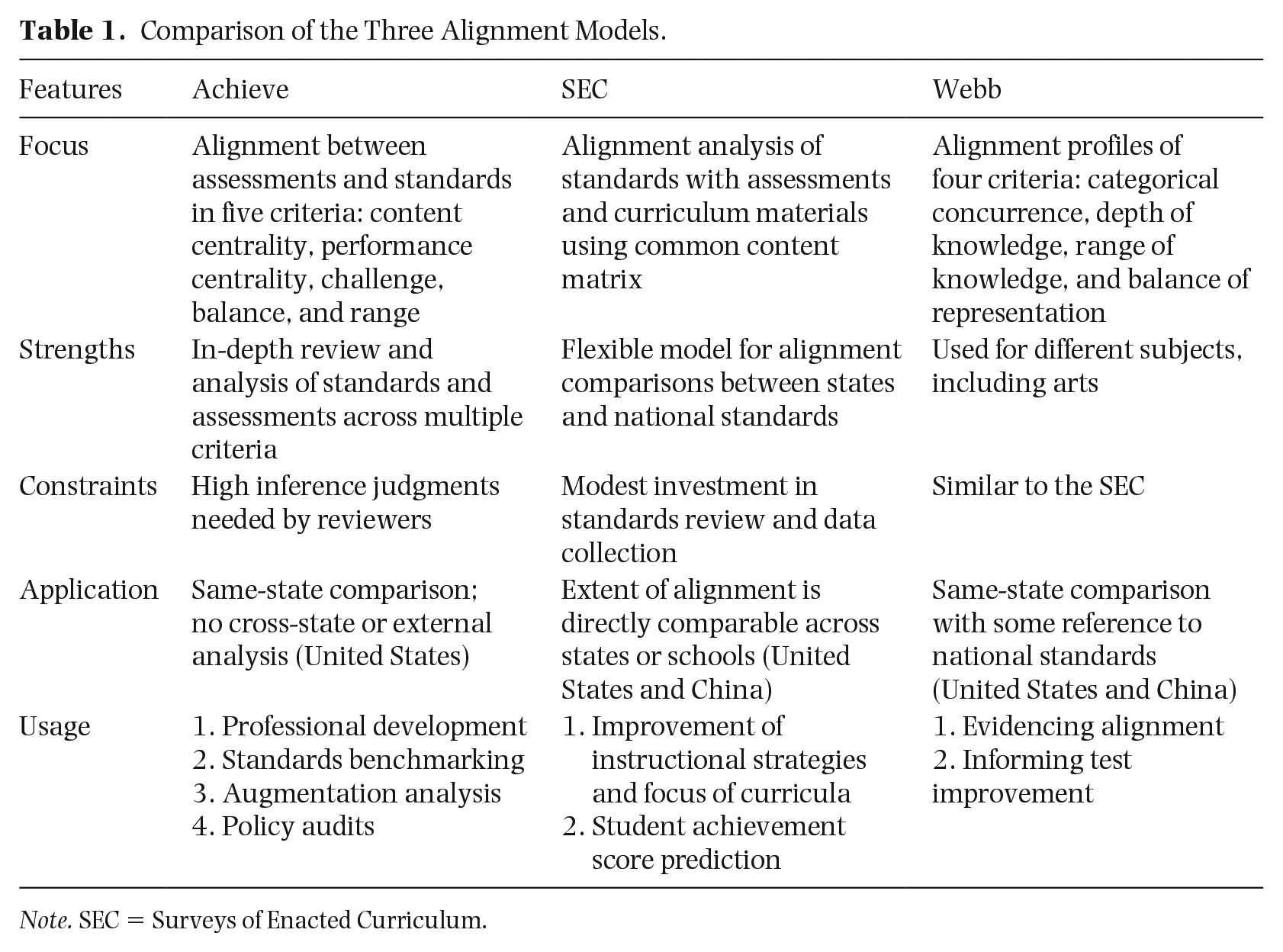
Note. SEC = Surveys of Enacted Curriculum.
Influenced by the extensive accountability and testing requirements from the ongoing standards-based reform, most alignment studies up until now have focused on the alignment between standards and assessments for either knowledge content or music performance (Qiu, 2011). Alignment studies of the enacted curriculum in music remain unexamined because (a) methods that have been used in relation to other subjects may not apply to instructional practices in a highly interactive and multifaceted music classroom; and (b) the intended learning goals in music lessons also involve cognitive, psychomotor (Sicherl-Kafol et al., 2014), affective, and social skills (Branscome & Robinson, 2017; Hansen, 2019, p. 532), as well as cultural awareness (Field, 2010).
Enacted curriculum and the SEC model
The curriculum is often seen as a term covering a range of sub-concepts. In Goodlad’s (1994) and van den Akker et al.’s (2003) typology models, three general levels of curriculum representants are proposed: (a) the intended, comprising ideal and written curriculum; (b) the implemented, comprising perceived and enacted/operational curriculum; and (c) the attained, comprising experiential and learned curriculum. In the SEC model, the enacted curriculum is defined explicitly as the subject content and the instructional practices taught in classrooms and experienced by students (Blank, 2002, 2005). These variables are often measured by the amount of instructional time devoted to teaching various strands and/or topics in the school curriculum (Porter, 2002). The SEC was initially designed to meet the need for evaluation tools with curriculum-focused educational standards, accountability, and systemic approaches (Blank, 2002). In the United States, it has become one of the most widely used and studied alignment methodological approaches to inform consequential decisions about teaching, education policies, and school programs across K–12 education for five subjects: maths, English, language arts and reading, science, and social studies (Ehrmann, 2017, pp. 35–38; Polikoff et al., 2020).
Validity of the SEC
Historically, the validity of the initial version of the SEC was ensured through a carefully designed implementation procedure. This included focus group review of survey contents, a multi-item scale for data analysis, clarification of research purpose, and prudent research ethics (Blank, 2002). Recently, the validity of the 2013 version was further assessed by Camburn et al. (2017) using a cross-sectional research design to resolve major controversial issues relating to validity. In the 2013 version, all topics in the four subjects were consistently mapped against a five-level scale of cognitive demands based on Bloom’s theory. A series of studies further strengthened the robustness of the SEC model in aspects of content and criterion validity (Polikoff et al., 2015), representation validity (Polikoff et al., 2015; Porter et al., 2011), concurrent validity (Camburn et al., 2017), statistical conclusion validity, and external validity (Polikoff et al., 2020; Polikoff & Porter, 2014). Most of these research studies suggested that the SEC is an effective toolkit to access the curriculum alignment in standards-based reforms.
SEC studies in China
The SEC model was adopted in this study with further consideration on subject-dependency and cross-cultural transferability issues (Liu & Zhang, 2007; Zheng & Lei, 2017). It was chosen on the grounds that it is a well-established framework underpinned by Bloom’s cognitive development phases (Blank, 2002), which is consistent with the general assessment criteria in most Chinese curricula (Liu & Zhang, 2007; Zheng, 2013; Zheng & Lei, 2017). However, there are two major challenges in adapting the SEC model within a Chinese context. The first challenge is that the SEC for music is unavailable even in the United States, where national and state music standards have been adopted and implemented in the music classrooms for many years. The second challenge is that no systematic framework similar to the SEC scheme has been developed to monitor the implementation of the curriculum. This is the case even though unified national curriculum standards have been implemented in the Chinese school education system across all subjects for compulsory (Years 1–9) and senior secondary (Years 10–12) education since the 2000s. Consequently, as a rejuvenated “supplementary” subject in the current education reform, music has a long way to go before it can be embraced for use in alignment studies due to the complexity and diversity in learning contents and assessment approaches.
Objectives and research questions
The focus of this study was the enacted music curriculum in which vertical alignment between the national curricula, school syllabi, and instructional practices is embodied. The study investigated the implementation status of national music curricula in schools. By providing SEC-based empirical evidence, the study can help both education decision-makers and teachers be reflective, critical, and creative in improving their curriculum content and teaching practices. In addition, the content standards and assessments criteria, which are established for SEC-model-based curriculum alignment, may be used to fine-tune the education system in terms of efficiency, coherency, and learning support (Camburn et al., 2017; Kaira, 2010). The research questions in this study were as follows:
Method
Instrument
The SEC model was adopted based on two essential conclusions from Polikoff’s et al. (2020) study: (a) the language of the SEC content can be treated flexibly as a general approach to measuring the content of instruction, and (b) the SEC analytical approaches can be adapted for identifying alignment issues in particular contexts. The music SEC, which was used in this study, includes all the modules from the original SEC framework. General information about this framework can be found in Part I and Part II lists on music-specific instructional content (Table 2). Given that any SEC modification may necessitate reanalyzing content standards with each new iteration of the framework, the development of the music SEC demands three sources of validity evidence for alignment: content, construct, and consequential (Kaira, 2010). The SEC model transforms curricula into a content matrix of two dimensions to analyze the alignment between intended and enacted curricula. The first dimension identifies specific content topics within the subject, while the second dimension refers to the respective expectations for student learning goals, namely, categories of learning objectives (CLOs). In addition to the Cognitive domain in the original SEC model, another four CLO domains (Affective, Psychomotor, Social, and Cultural) were included in the music SEC due to the complexity of intended learning outcomes in music education (Hansen, 2019, p. 532; Ministry of Education, 2017).
Music SEC and SEC (English, Language Arts, and Reading) Structural Component Comparison.
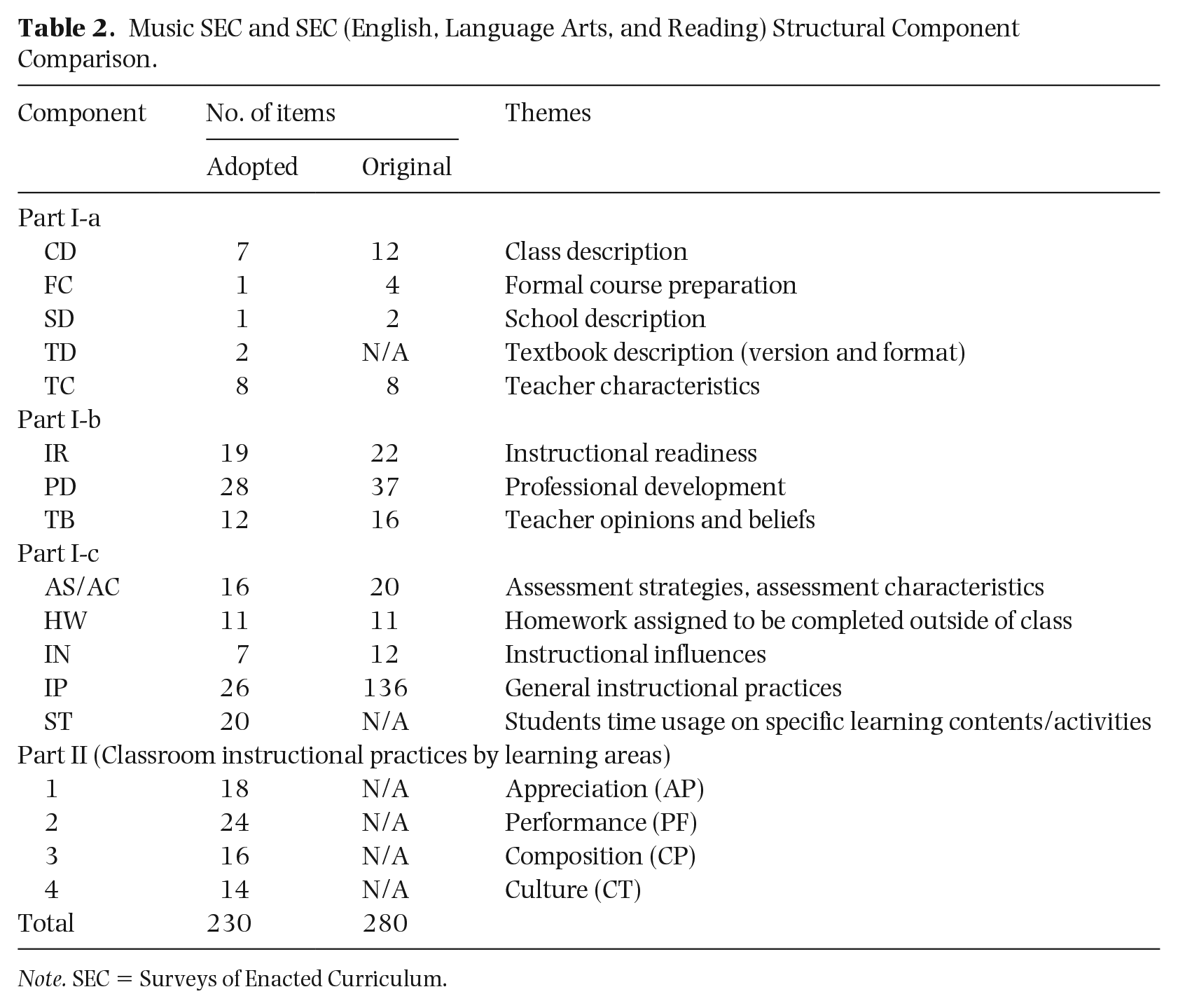
Note. SEC = Surveys of Enacted Curriculum.
Music content topics
The national curriculum standards (see Table 3) permeate all state- and mainland provinces-authorized music textbooks. Thus, they were divided into fine-grained sections of learning content topics and objectives to facilitate subsequent coding analyses. Following the methods described in the Coding Procedures for Curriculum Content Analyses (Porter et al., 2013), the final versions of Part II comprised 72 topics (18 for Appreciation [AP], 23 for Performance [PF], 17 for Composition [CP], and 14 for Culture [CT]) from the 2011 music curriculum standards for compulsory education (Years 1–9). Each item was measured in two dimensions: content emphasis and learning demand categories. The content emphasis on each item was measured on a 5-point scale ranging from no to considerable in terms of time spent. The CLOs are presented in sets of five-level learning objectives.
Learning Areas in Music Curriculum for Grades 1 to 9 (2011 Version) and Grades 10 to 12 (2017 Version).
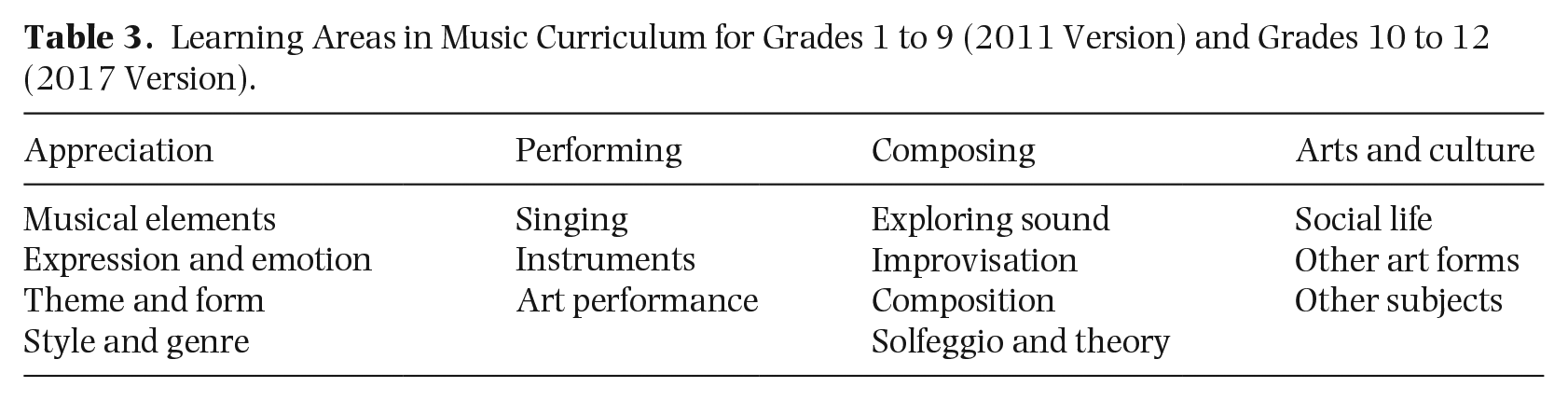
CLOs
Based on Bloom’s taxonomy, CLOs originally comprised five or six general cognitive tasks required by students (Falkner et al., 2019; Kurz et al., 2010; Liu et al., 2009; Lu & Liu, 2012; Roach et al., 2008). Considering the multifaceted curriculum learning objectives and instructional practices in music classrooms, this study used the CAPSCt model of CLOs that comprised five domains: Cognitive, Affective, Psychomotor, Social, and Cultural. Similar to task levels in the Cognitive domain, learning objectives in all domains were defined by corresponding theoretical frameworks (see Table 4).
Working Definitions of Learning Domains in the CAPSCt Model.
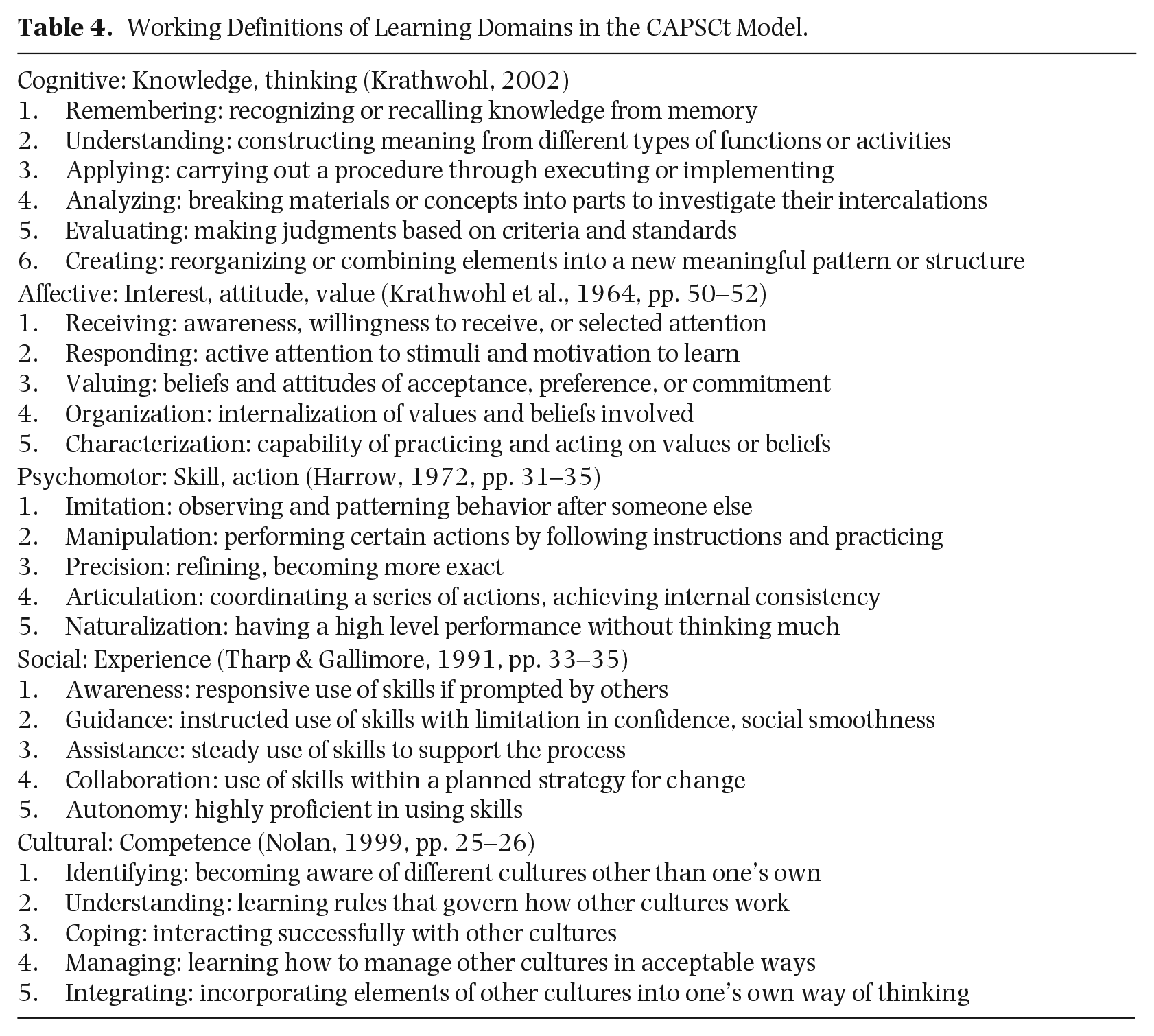
CLO level mapping
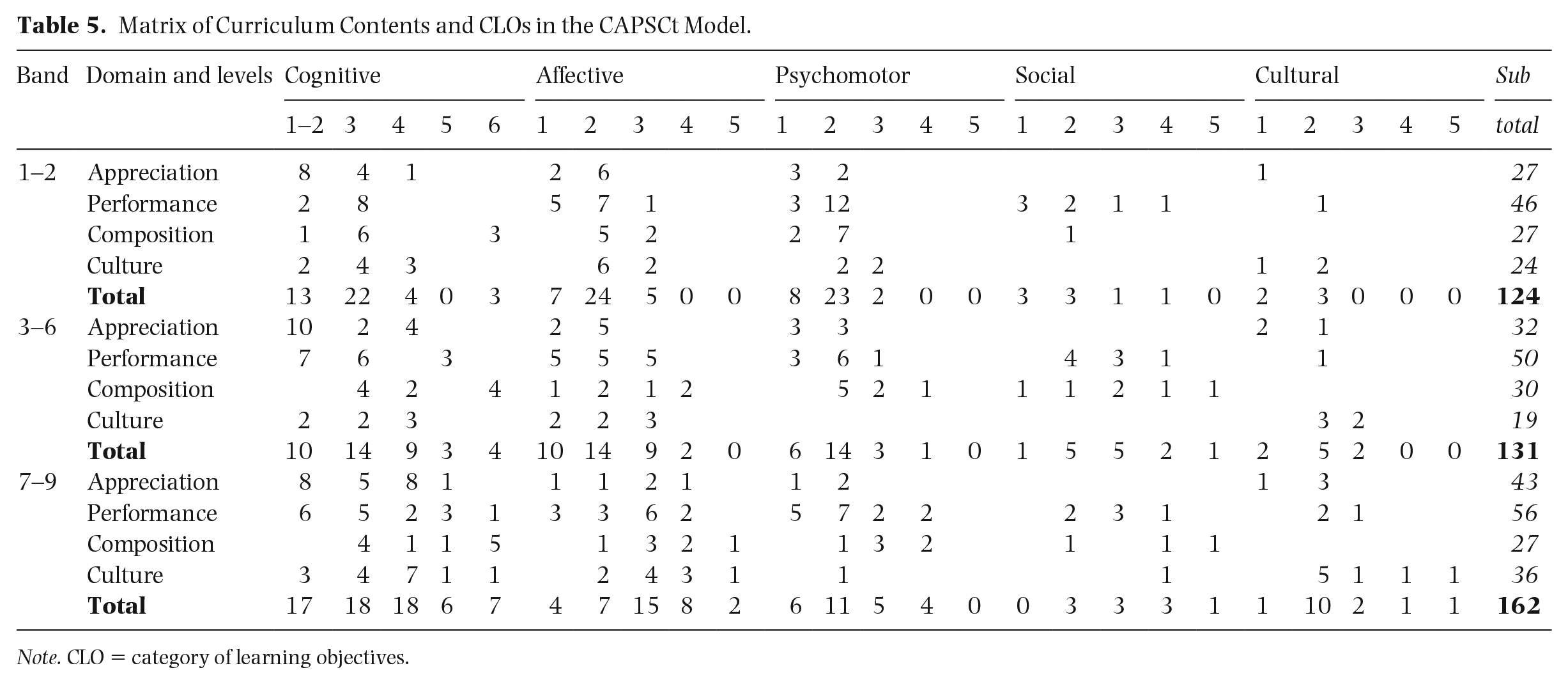
The SEC design was applied to both curriculum standards coding and subsequent instructional practice assessments. To ensure the construct and discriminative validity of CLOs in each domain, the curriculum content analysis was carried out by five trained subject matter experts (two music education researchers and three school music teachers in doctoral degree programs) who made collective judgments. Each coder analyzed curriculum standards and Part II survey items at the finest grained level of detail and then tagged each standard/item under one or more domains in the CAPSCt model. In this model, only one objective level could be chosen in each domain. The final output of the curriculum standards coding is a matrix of five learning domains against sets of CLOs. All coders reached full agreement on the final coding of learning domains and CLOs after three rounds of checking: individual, peer-review, and group discussion. Generalizability coefficients estimating the reliability of the coding procedures were 0.71 to 0.76 among the five coders in the first two rounds. The first two learning objective levels in the Cognitive domain (Remembering, Understanding) were combined into one level in the matrix, because (a) they are not clearly differentiated in the curriculum standards and (b) most (if not all) music curriculum content relates to practical knowledge that requires both memorization and understanding, even for the most “static” components like musical notation. In line with the curriculum standards, the CAPSCt matrix was partitioned by grade bands (see Table 5).
Matrix of Curriculum Contents and CLOs in the CAPSCt Model.
Note. CLO = category of learning objectives.
Alignment method
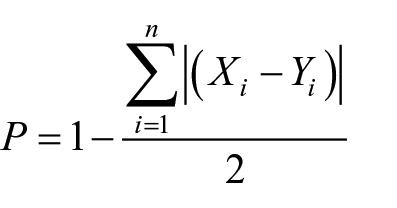
In the original SEC design, curriculum content coverage and CLOs were two components for alignment analysis. This article primarily focuses on the alignment of CLOs. For each applicable content topic within the CLO matrices, teachers provided ratings on two indices: the relative degree of emphasis (in terms of instructional time) and the intended levels for each implicated learning domain. As no official specification on time spent in the curriculum was provided, only the intended learning objectives data from Part II were compared against the standards. Concerning the CLO alignment analysis, the researchers observed to what extent the emphasis of reported CLO is aligned with the standards and differences across grade bands and domains in the CAPSCt model. As a result, two major adjustments were made in the alignment analysis to better suit these purposes. First, sub-learning areas, instead of individual SEC content items, were used as the unit in calculating Porter’s alignment index (Polikoff & Fulmer, 2013; Porter, 2002), where n is the total number of cells in the CLO matrix by sub-learning areas, and i refers to a specific cell, ranging from 1 to n. Both Xi and Yi are ratios with a value from 0 to 1. The sum of X1 to Xn (or Y1 to Yn) equals 1. Xi − Yi presents the discrepancy between the intended CLO and the standards at cell i. This is because (a) for the subject of music, a content item may cover more than one specific topic, even if fine-grained (such as “Create music accompaniment for games” in CP-Improvise); (b) sub-learning areas are used as basic building blocks of the standards that were further broken down into a set of interlaced “knowledge” points in the SEC. Second, to further explore how the reported CLO is different from the standards, the CLO level differences were also calculated without converting to ratios so that direct comparison with the standards was achieved.
Participants
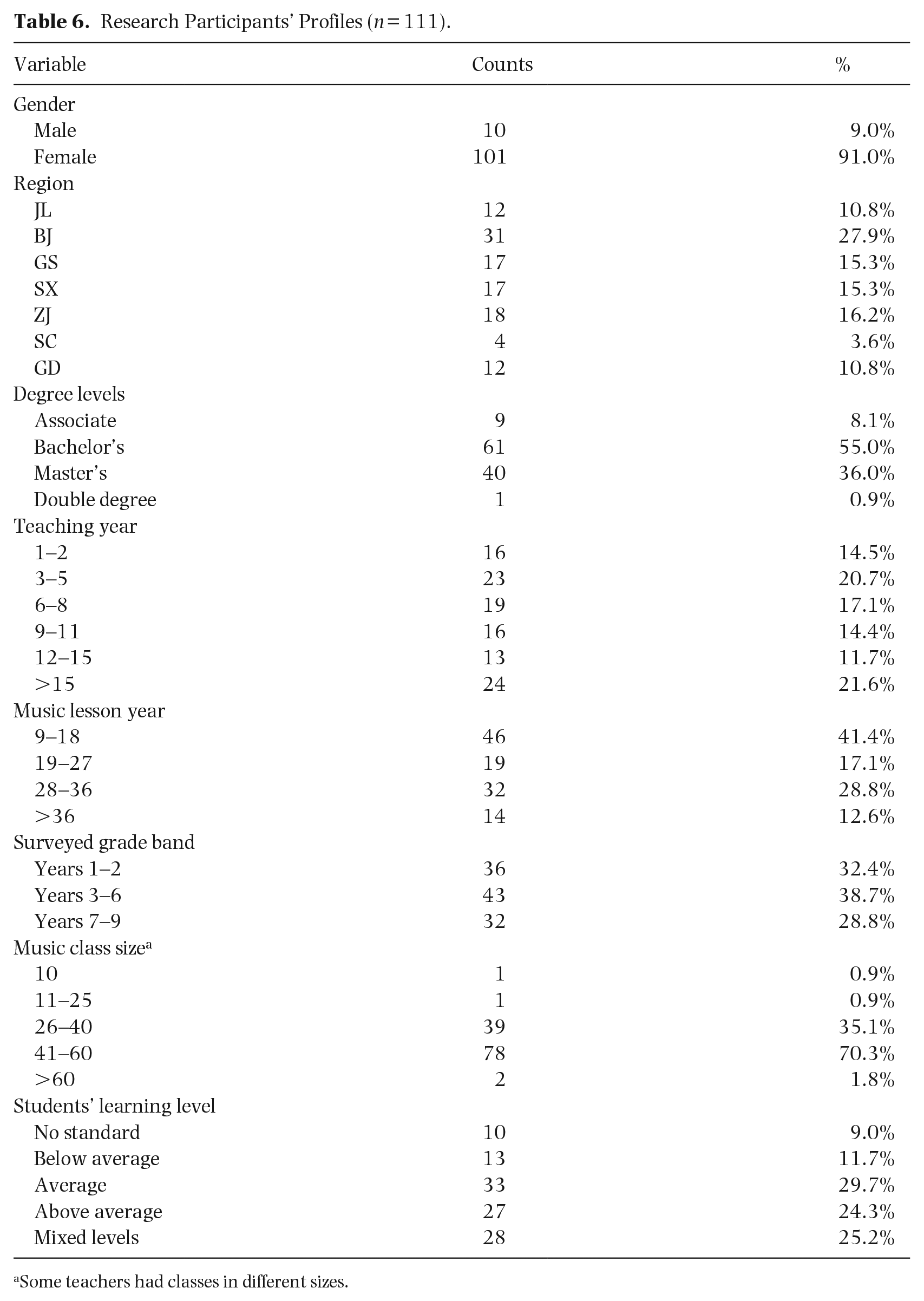
Based on purposive sampling, 127 typical public schools were enrolled for the study from seven major cities in mainland China, including the most developed regions (such as Beijing and Shenzhen in Guangdong province) and the least developed ones (such as Lanzhou in Gansu province). During the process, both personal and official contacts were made with seven local headteachers in music subjects to organize and supervise survey delivery and collection. Teachers’ participation in the study was voluntary. In total, 147 school music teachers initially joined the survey, while 111 cases were used for analysis after data screening (see Table 6).
Research Participants’ Profiles (n = 111).
Some teachers had classes in different sizes.
Procedure
Prior to starting the study, ethical approval was obtained from the Human Research Ethics Committee of the Education University of Hong Kong. The purpose of this research, research ethics, and the confidential treatment of the research data were explained to all teachers through an online debriefing meeting in advance. Participation in the study was voluntary, and participants gave their oral or written consent. The music SEC questionnaire was sent to all participants electronically 3 days before the data collection. During this time, two research training sessions were also organized to familiarize the headteachers with the survey procedure. Survey data were collected through an online version of the music SEC, which was delivered in separate sections over 4 days. Short video instructions were provided each day to help the participants to complete the questions effectively. After Day 4, participants were given another 4 days to complete the survey. The average participating time was 15 min per day. The surveys on teachers’ retrospective reports about their instructional practices during the past school year were collected before the end of the academic year.
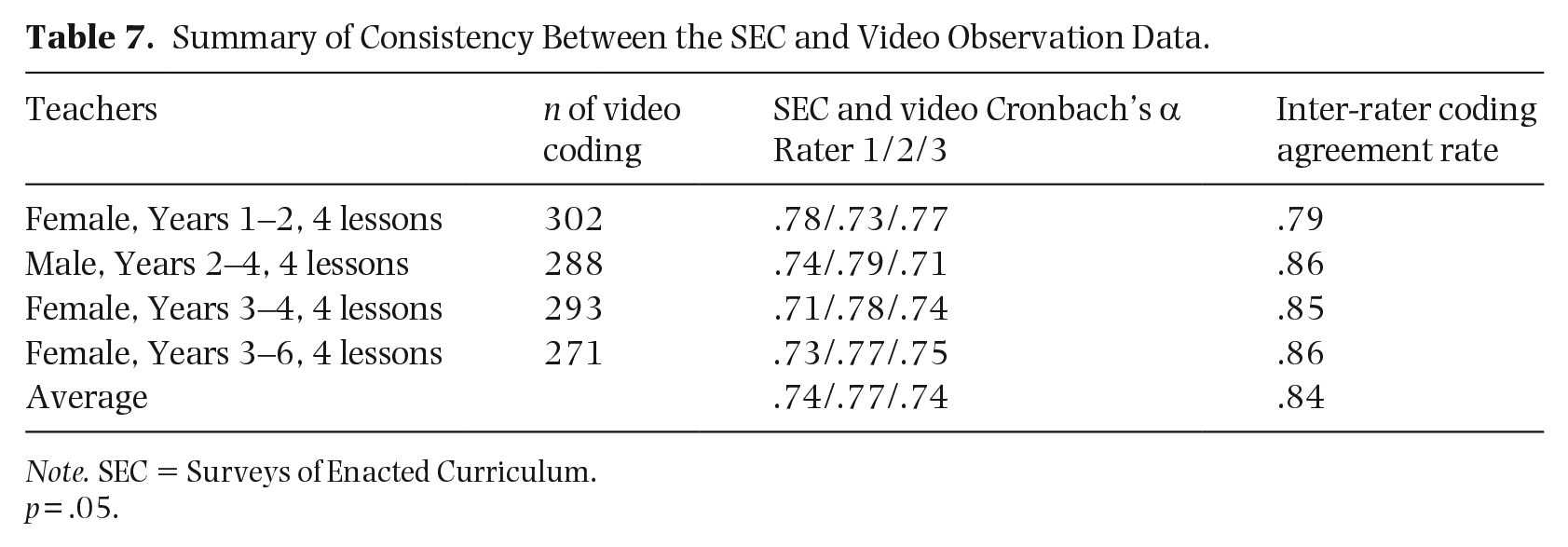
Twelve repeated survey items in Part II were used for reliability analysis that was deployed on Days 1 and 3. Cronbach’s alpha showed that the responses reached good consistency on the repeated items (α = .92). Four participants were invited to repeat the survey 10 days after the completion of data collection, which yielded good internal consistency (α = .95). In all, 98% of participants reported a high degree of clarity on item expressions and survey instructions. In addition, longitudinal data of 16 music lessons carried out by four participating music teachers were also collected. Lesson observations took place every other week, and the data included teaching logs and video recordings. In terms of the time that was spent on teaching activity, the reported SEC data are in general consistent with the quantified coding results (Cronbach’s α = .74–.77), where the overall coding agreement rate is .84 among the three trained coders (see Table 7). Jamovi Version 1.2 was used to perform all statistical analyses.
Summary of Consistency Between the SEC and Video Observation Data.
Note. SEC = Surveys of Enacted Curriculum.
p = .05.
Results
Learning content emphasis
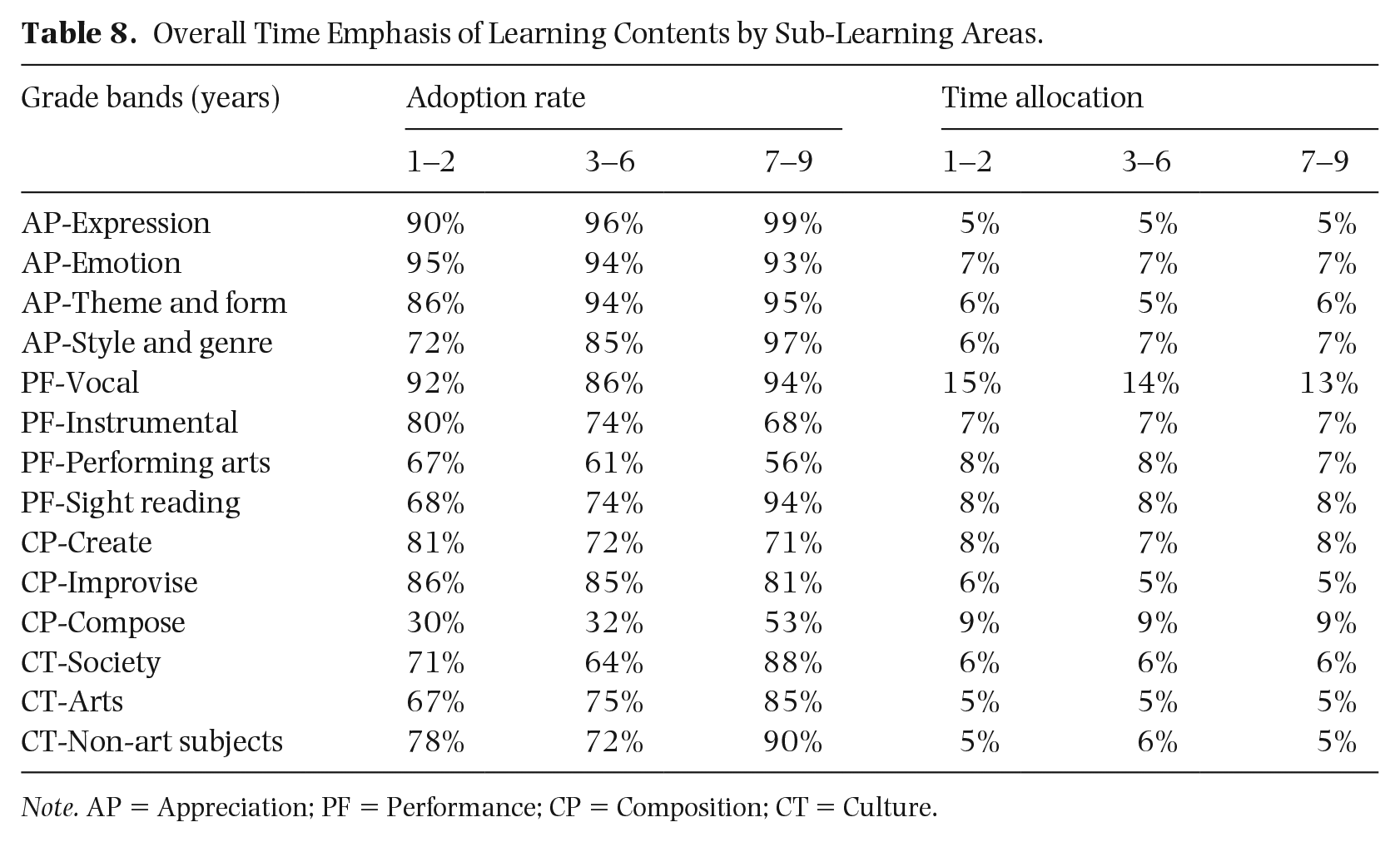
To ensure the accuracy of the alignment analysis, it is necessary to distinguish the influences from content coverage and CLO level differences. The former focuses on the SEC-defined curriculum content taught by the teachers, whereas the latter presents how the content was mapped against the intended learning objectives. About 90% of the teacher participants covered 51 out of 72 curriculum content items in their teaching. The time allocation on all the areas remained highly consistent across the three grade bands, whereas the adoption rates of some sub-areas gradually increased (AP-Expression, AP-Style and genre, CT-Arts) or decreased (PF-Instrumental, PF-Performing arts, CP-Create, CP-Improvise). Sudden increases (about 20%) were evident in PF-Sightreading, CP-Compose, CT-Society, and CT-Non-art subjects (see Table 8). These findings suggest that (a) the emphasis on curriculum content varied among grade bands, but (b) once a particular content area/item was selected, all teachers tended to spend a similar amount of time on it.
Overall Time Emphasis of Learning Contents by Sub-Learning Areas.
Note. AP = Appreciation; PF = Performance; CP = Composition; CT = Culture.
Overall CLO alignment
As the curriculum standards did not specify content time allocation, only CLO data from Part II items were used in the subsequent alignment analysis. Overall, the alignment indices are 0.90, 0.84, and 0.81 for the three grade bands (Years 1–2, 3–6, and 7–9). Because all participants in this study used the same curriculum standards and corresponding textbooks, it is understandable that the values were much higher than the average value (0.27) in previous SEC studies in the United States (Polikoff et al., 2020), but close to the results (0.67–0.80) from learning-areas-based alignments in a recent international study (Liu et al., 2009). Given that 0.78 was found to be the critical value derived from previous random sampling (Liu et al., 2009), all alignment indices in this study suggest a statistically significant (p < .05) alignment. Results of Kruskal–Wallis and Dwass-Steel-Critchlow-Fligner pairwise tests indicated statistically significant differences (p < .001) in both overall and the majority of sub-learning areas among the three grade bands. The mean values of alignment index difference showed that the overall alignment was brought down primarily by sub-learning areas under Performance and Culture (values more than 0.02), which contributed most of the variations among grade bands in general.
CLO alignment by grade bands
Because the overall alignment indices are not able to provide details of variation in sub-learning areas or CLO levels, direct comparisons were made between the standards and the original SEC data of the reported learning objectives without converting them to ratios. Using the CAPSCt model, the two data sets were visualized in topographies side-by-side (see Figure 1). This strategy was used to generate similar mappings of content emphasis and alignment results in ratios while providing a clearer view of tendencies in CLO level shifts. It is also worth reporting that all the topographic maps in this study present only the alignment between the reported and the assessed CLOs of learning content.
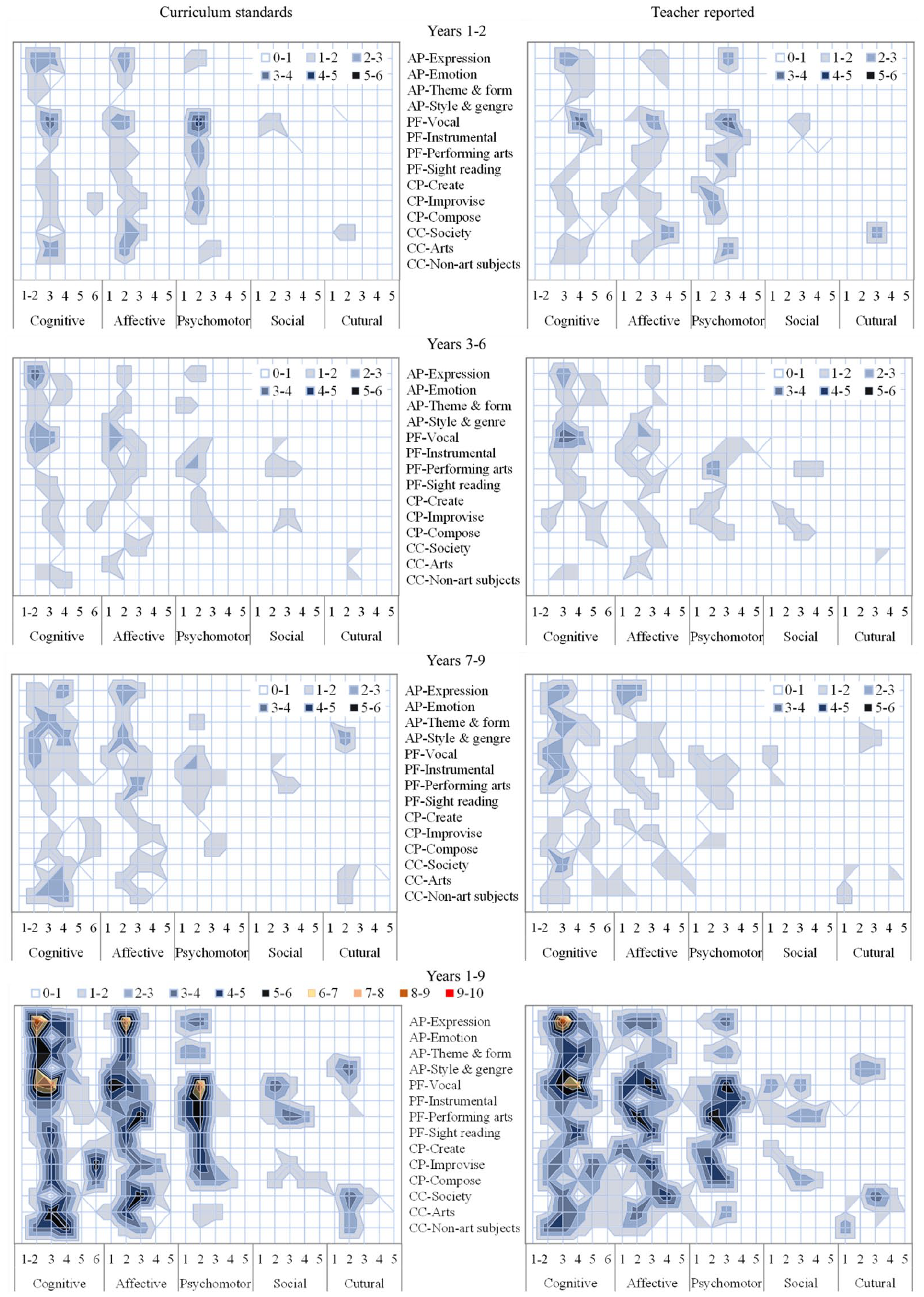
Comparison of Assessed and Reported CLOs for Years 1 to 2, Years 3 to 6, Years 7 to 9, and Years 1 to 9.
Figure 1 shows that, in comparison with the model matrix for Years 1 to 2 (left side), the distribution of the reported CLO (right side) shifts one level up (horizontal axis) across most of the sub-learning areas (vertical axis), except for Composition-related content that remains almost the same. Although this seems to contradict the alignment differences in Table 4, any confusion can be resolved by observing the accumulative CLO counts as a second dimension of the “topographic map.” Using the same method for developing the matrix in Table 4, the counts indicate how many times a particular CLO level is reported as intended learning objects for the corresponding content items. As shown by the figure legend, the darker the color, the higher its number. Close observations on Composition-related content items suggest that the “inflation” of the average CLO level in this learning area results from extra learning goals, such as sound source manipulation and musical instrument making, which the music teachers set as CP-Create and CP-Compose items in the Psychomotor domain. Any “extra” learning objective will increase the reported CLO cell values when no CLO specification is provided in a particular grade band. This may potentially influence the accuracy of alignment calculation if the values were converted into proportions at the very beginning (as was the case in previous studies). In addition, the comparison of the CLO counts in the curriculum assessed and teacher-reported matrices shows that the emphasis on some CLO levels decreases in the Affective domain of AP-Express, but increases slightly in the Psychomotor domain of AP-Expression and CT-Arts, as well as in the Cultural domain of CT-Society. The results suggest that the reported CLO pattern is generally in line with the curriculum CLO model with minor variations in some sub-learning areas. However, the former is often one level “higher” (a shift toward the right on the horizontal axis) than the latter in most domains.
For Years 3 to 6, CLO levels of sub-areas in Appreciation and Culture shift right by one unit, while the difference in Performance is minor. In Composition, the CLO for most sub-learning areas shifts to the left by one unit across the five domains. The accumulative CLO counts suggest (a) the learning outcome for PF-Vocal received more emphasis in the Cognitive domain; (b) the emphasis of Psychomotor CLO increases slightly in Performance; and (c) several CLOs are omitted or less-addressed in teaching, such as the Affective objectives in AP-Theme and form, as well as Cultural objectives in content related to non-art subjects.
The alignment results for Years 7 to 9 are more fragmented than those in the other two grade bands. In Appreciation, learning objectives for Expression- and Emotion-related content shift to the left by one unit in the reported CLO matrix, while the objectives for music Theme and Style shift to the right by one unit, indicating increased flexibility in CLOs within a particular learning area. In Performance, Levels 4 and 5 learning objectives are “removed” from the Cognitive domain of Vocal, Instrumental, and Performing Arts, whereas more emphasis is assigned to Levels 2 and 3 objectives. Sightreading is the only sub-area that receives “extra care” in this group. In the Composition and Culture areas, all objectives shift to the left by one or two units, suggesting major rearrangements in learning target and, possibly, content selection. Although a strong focus remains consistent on certain sub-learning areas, the CLO level adjustments change the “landscape” of the enacted curriculum to a large extent. Therefore, Years 7 to 9 CLO matrix is the most “individualized” version from the curriculum standards and exhibits structural variations in all learning areas.
To provide a comprehensive mapping of SEC data results, the three sets of CLO matrices are aggregated in Figure 1 (see Years 1–9). It shows that the assessed learning goals in the current music curriculum standards for compulsory education focus intensively on students’ development in Cognitive, Affective, and Psychomotor domains. Social and Cultural CLOs are embraced as necessary, but the goals that need to be achieved are less articulated. The average overall alignment index of 0.88 suggests that there are similarity among the overall CLO matrix patterns. Apart from the CLO level shifts in the reported SEC data, both content emphasis and CLO distribution are more “spread out” in the Cognitive, Affective, and Psychomotor domains. However, major differences are identified in the CLO amendments of Social and Cultural domains for the content related to Composition and Culture.
Discussion
Analyses may vary to suit different research inquiries with regard to methodological designs, algorithms, or methods for alignment. As the music SEC that was adopted in the present study had the same structure and format as the original SEC template, it yielded the same type of survey data and alignment indices (in ratios) for cross-system comparisons. The application of a direct comparison of CLOs is necessary so that the actual differences between the reported data and the standards by grade bands or domains for the CAPSCt model can be explored. Nevertheless, all analyses still adhere to the two premises in the original SEC design: (a) CLO levels within each CAPSCt domain are deemed as a set of progressive steps from “low” to “high” order as in Bloom’s work; (b) each measured unit is treated as a proportion, either in ratios or integers, of the whole (see CLO accumulates in Table 4). Given that the music curriculum standards in China are divided into three grade bands, the value of aligning each case with a matrix that covers all assessed CLOs regardless of grade-band specifications (as in previous studies) is debatable. For data reporting, calculating the alignment by individual grade band can provide a better sense of the extent to which the phased objectives are enacted. This is important for teachers and policy makers to gain a more contextualized understanding of curriculum enactment, particularly when both learning contents and CLOs are not allocated equally across grade bands (see Table 4 subtotals).
Another key point of this study is that the theoretical background and structure of the curriculum may have a profound impact on the methodological design and interpretation of alignment studies. If all CLOs are ordinal in the CAPSCt model, as in the original SEC model, the grade-band division in the curriculum seems to be (a) less useful in providing a comprehensive picture of curriculum enactment; and (b) less meaningful for a pure CLO-based system that ultimately focuses on assessing individual development in music learning, as advocated in the revised Bloom’s taxonomy (Roach et al., 2008). As a result, the question of whether the music SEC data should be analyzed by grade band or holistically is not entirely technical. Instead, results from grade-band-based analysis mostly fit the needs of the horizontal assessment, which refers more to the “degree” of fidelity and the progress of curriculum enactment at each phase. However, the holistic analysis can provide a grand view of the intended learning outcomes which need to be achieved during the school years stated in the curriculum. Therefore, the alignment results from these two approaches are interrelated but not interchangeable. If the sample fails to cover all grades, the alignment indices for holistic analysis can be misleading. Also, the bias might be amplified by a seemingly reasonable assumption that both content knowledge and CLO levels in each domain are ordinal and progressive as in the original SEC instruments for other subjects. But this may not be the case in music learning, particularly for Culture-related content, as well as CLOs in Social and Cultural domains.
The study also revealed that the distribution of learning objectives in Social and Cultural domains is more dispersed than in the other three domains. Given that the same CLOs were applied, teachers seemed to have different interpretations of the curriculum standards, which in turn resulted in diversity in enactment. To ensure a high level of alignment, the data suggested that there is probably a need for further elaboration either in curriculum or textbook design. The data also indicated that the assessment of CLOs in these two domains could and should be flexible: individuals’ development can be both progressive and interlaced (Martin, 2000), both homogeneous and heterogeneous (Jensen, 2012). Drawing on the above findings, a more feasible assessment toolkit should be considered, and the music SEC introduced to fully explore alignment in the Social and Cultural domains.
Conclusion
The findings of the present study suggest that (a) the intended learning goals in the national school music curriculum standards cover five domains, with more emphasis on cognitive, affective, and psychomotor development than social and cultural aspects; (b) the reported instructional practices by the participating school music teachers are highly aligned (0.81–0.90) with the standards overall, where the degree of alignment decreased gradually from Years 1–2 to Years 7–9; and (c) individual variations are evident in both learning content emphasis and CLO setting. Significant group differences were identified among grade bands. In comparison with the persistent emphasis on Appreciation content and PF-Vocal, the teaching arrangements in other learning areas (Composition, in particular) seem to be more flexible in terms of adoption rate and time spent. Years 1 to 2 teachers tended to set objectives one level (or two levels in Appreciation) higher than the standards’ requirements. However, this tendency became less obvious in the other two grade bands. Major learning outcomes for Culture-related content focused on cognitive or affective benefits instead of social and cultural development.
Although a complete vertical curriculum alignment should include all three levels (intended, implemented, and attained) across the system, the current study explored the alignment between the first two. The music SEC was developed and used as a research tool to collect systematic data about teachers’ instructional practices. It yielded several sets of alignment indices between the enacted curriculum and the written curriculum standards. As part of educational assessment, this quantifiable investigation into music teachers’ instructional practices shows great potential for both cross-sectional and longitudinal data analysis. The successful administration of the music SEC seemed to partly bridge the gap in the current assessment framework for school music education in China.
In summary, the music SEC was a useful toolkit for the assessment of teaching in this study. It provided promising common ground for comparisons of music curriculum enactment across schools, regions, and—possibly—education systems. Incorporating the five learning domains ensured that most of the intended learning outcomes from school music education were articulated in the standards-based system. For future applications, the music SEC and CAPSCt model need to be refined in terms of instrument reliability in transcultural contexts, as CLOs in Social and Cultural domains may not necessarily be progressive or content independent in music subjects. Nevertheless, by collaborating on alignment studies, educators, researchers, and policy makers could contribute to advances in current education reforms that emphasize both standardization and accountability (Scott, 2012).
Footnotes
Declaration of conflicting interests
The author(s) declared no potential conflicts of interest with respect to the research, authorship, and/or publication of this article.
Funding
The author(s) disclosed receipt of the following financial support for the research, authorship, and/or publication of this article: This work described in this paper was substantially supported by the Dean’s Research Fund of the Faculty of Liberal Arts and Social Science, The Educational University of Hong Kong, Hong Kong Special Administrative Region, China (Project No. FLASS/DRF/IRS-11).
