






Abstract
The use of music therapy techniques has recently extended into the educational realm to help overcome learning difficulties, support emotional management, and assist students to develop necessary social skills. This is known as educational music therapy (EMT). Current educational policies give ever greater importance to the fostering and development of core social skills and competencies as decisive factors in overall educational success. Thus, teachers are being encouraged to explore interdisciplinary and creative collaboration and to innovate and incorporate new, more active, teaching methods to enable students to meet these educational objectives. This article comprises a systematic review of 34 research studies from 13 countries concerning the use of EMT over the last 15 years. The authors have identified uses of EMT in general teaching and in music education. The PICO(C) framework was used to develop the research question and the PRISMA diagram was used to determine the criteria for exclusion or inclusion of studies for review. The results from all studies considered agree that music therapy has benefits at all contexts and levels of education. The studies examined are diverse in terms of design, application, and procedures, and music therapy and music education techniques largely coincide in their educational objectives: improving inclusion, learning outcomes, and well-being among students. In conclusion, there is a two-way process of transfer between music education and EMT, and the addition of EMT techniques as another innovative method within teachers’ repertoires could have many benefits in education. The added value can be found in the way this review relates different studies, revealing those dimensions that would benefit from further study as well as exploring the decision-making process around their potential applications.
Introduction
Studies of the benefits of music therapy in the educational field—educational music therapy (EMT)—have shown that, as a tool for inclusion, EMT has positive effects for students with cognitive, emotional, and social problems (Pérez Eizaguirre et al., 2015; Silva & Silva, 2017). Understanding of techniques and their application by music therapy specialists and music teachers could be of huge value in educational settings, as these innovative teaching methods are in line with current educational policies (UN. The 2030 agenda) and well-suited to improving teaching and learning, skill acquisition, and student well-being.
Music education and music therapy in education
Music education has a fundamental role in the personal and educational development of students. According to authors such as Limones Solís et al. (2021), music can help increase academic and social performance and improve students’ spiritual, intellectual, and physical health. Other benefits for education have been seen in the use of music as a tool to overcome disruptive behavior and for the reduction of aggression among adolescents (Fernández & Cardoso, 2016).
Federación Mundial de Musicoterapia World Federation of Music Therapy (2011) defines music therapy as: the professional use of music and its elements as an intervention in medical, educational, and everyday environments with individuals, groups, families, or communities who seek to optimise their quality of life and improve their physical, social, communicative, emotional, intellectual, and spiritual health and wellbeing. Research, practice, education, and clinical training in music therapy are based on professional standards according to cultural, social, and political contexts. (p. 1)
Pelliteri (2000) also highlights the use of music therapy for physiological, educational, and social purposes, while Edwards (2011) gives music therapy a role in special education as a way to reach particular educational objectives.
Within the educational field, we distinguish two principal areas for the application of music therapy: special education and mainstream education. Historically, the first uses of music therapy were with students who had special educational needs (SEN), and only more recently has its use been extended to educational centers for mainstream students.
The numerous experimental interventions and programs that have explored music therapy techniques demonstrate their wide-ranging benefits such as improving interpersonal skills, helping students with mobility problems, as well as improving student motivation (Knapp et al., 2011, cited in Lucas, 2013). Music therapy has also been used in educational centers for students with psychological problems or cognitive deficits (Oldfield & Carr, 2018). However, as Karkou (2010) notes, studies concerning music therapy interventions in schools are still few in number.
In the opinion of McFerran (2020), the use of music therapy techniques can result in improved learning outcomes and emotional well-being among students. Wigram et al. (2011) consider that music therapy can complement the teaching and learning process for students with particular needs. The incorporation of music therapy in schools alongside other educational programs and teaching strategies may contribute to improving students’ motivation to work. In addition, it could help to better address the needs of students on an individual basis, making for a more personalized, inclusive, and diverse approach to education.
Music therapy techniques and music education
Praena (2020) demonstrates that music therapy techniques introduced as a novel educational methodology can improve general development; motor, cognitive, and emotional skills; as well as particular behavioral and social skills. Furthermore, Praena found that these teaching methods fostered self-confidence, self-esteem, and independence—all of which are of potential benefit to students’ ongoing development.
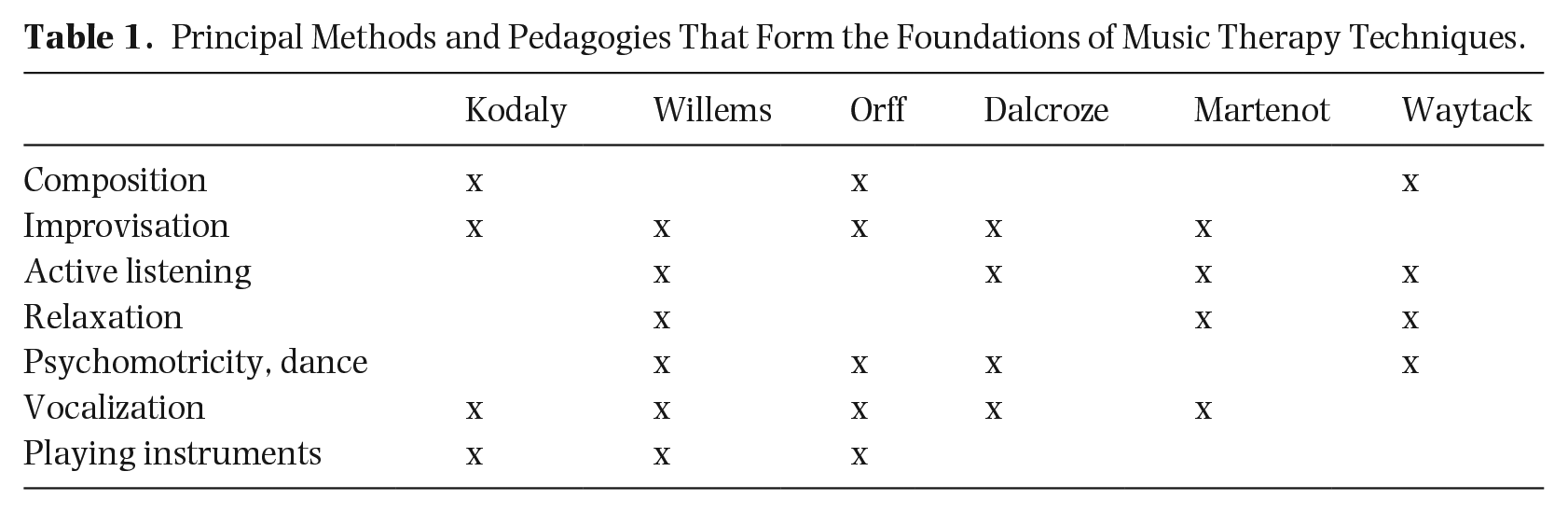
Music therapy techniques have their origins in various methods derived from music education (Table 1). They can be classified as active or receptive depending on the type of student or patient participation. Examples of active techniques include interpretation, either vocal (singing and rhythmic recitation) or instrumental; composition; writing poetry or lyrics; musical games; dance and movement; and making instruments. Examples of receptive techniques, in contrast, include listening to music and relaxation. Other musical techniques used in EMT are improvisation, composition, experimentation, arrangement, verbalization, transference, and communication.
Principal Methods and Pedagogies That Form the Foundations of Music Therapy Techniques.
The relationship between music therapy and music education
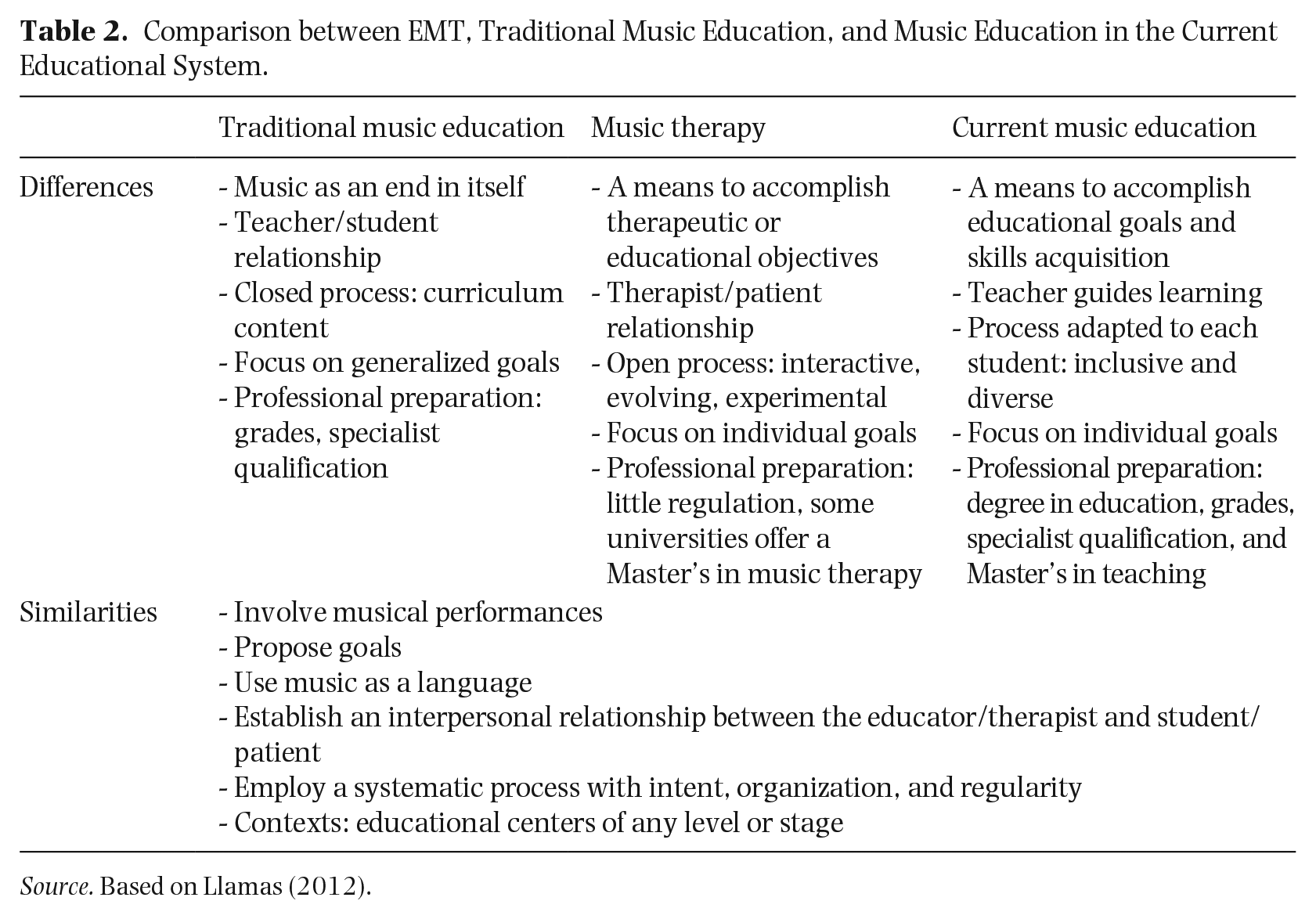
Alley (1977), cited by Lucas (2013), distinguishes between music therapy and music education for SEN students: their function and objectives being different, while complementary. Llamas (2012) defines and compares the two, describing music therapy as the use of elements of music for therapeutic purposes designed to achieve specific physical, emotional, mental, social, and cognitive changes (Federación Mundial de Musicoterapia World Federation of Music Therapy, 2011). This is in contrast to traditional music education, which includes the processes of music teaching and learning: musical terminology, history, aesthetics, harmony, acoustics, performance, and so on.
As a result of its purpose, traditional music education is principally concerned with delivering an academic, aesthetic education, while current music education has wider goals, and music therapy considers music as a means to achieve therapeutic benefits (Table 2). There are a number of important similarities between the fields of music therapy and music education: for example, the push to improve teaching quality and the overall development of students. A study by Yi (2019) concluded that there is much to be gained by an interdisciplinary approach to research into music therapy and music education. A similar conclusion emerges from the work of Metic & Svalina (2020) concerning a study where elements of music therapy were successfully introduced into primary school music lessons.
Comparison between EMT, Traditional Music Education, and Music Education in the Current Educational System.
Source. Based on Llamas (2012).
In summary, to date, a number of studies have looked at the application of music therapy techniques to participants of varied ages and educational levels (primary, secondary, and university). Although they have generally observed positive results, the range of foci (objectives, contexts, professionals involved, and type of students) makes it difficult to obtain a general overview. This review attempts to address this issue by synthesizing the diversity of EMT techniques cited in the literature, with the goal of determining possible educational applications for music therapy that could be implemented by music teachers.
The focus of this review is studies that have investigated the benefits of EMT in educational contexts, where those techniques have been implemented by therapists, music specialists, and teachers (Figure 1). The studies reviewed took place in all types of educational establishment and with a range of student groups. The music therapy techniques used were considered in relation to music education, the collaborating specialists, and common educational goals (skill acquisition).
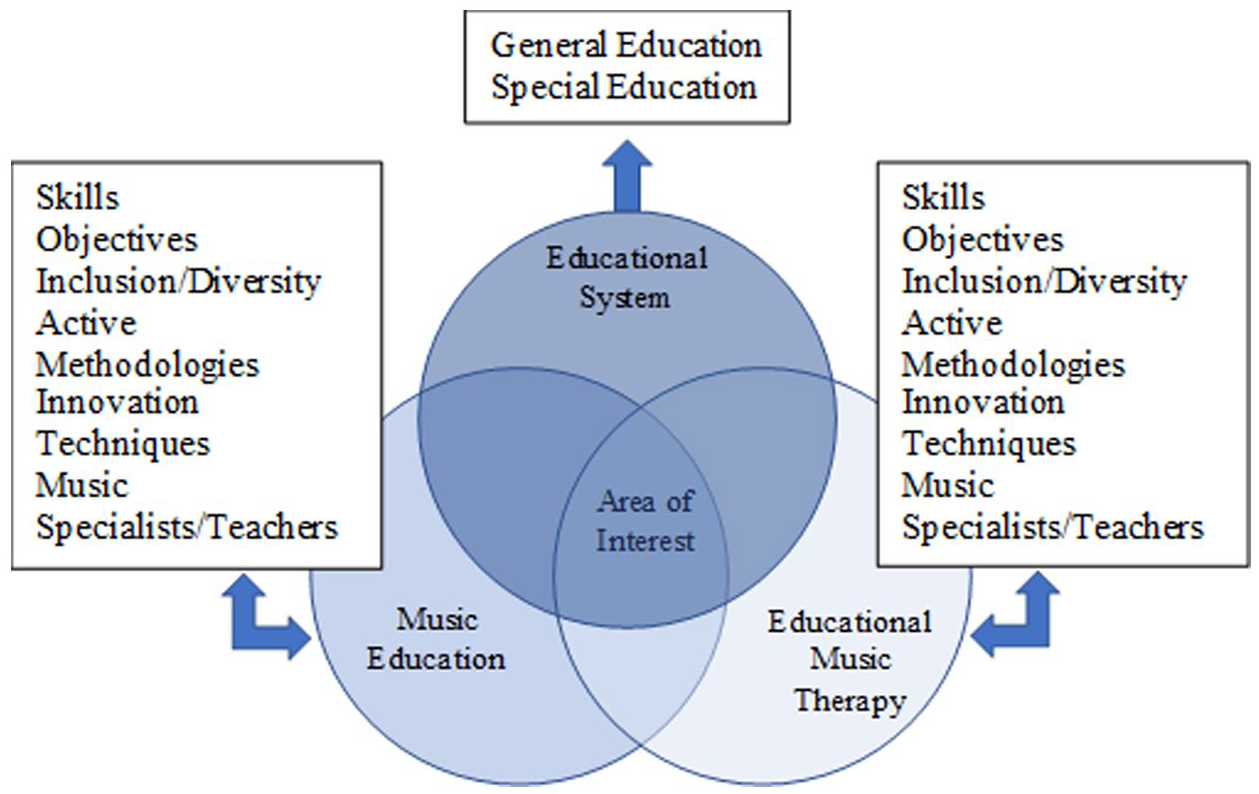
Diagram of Terms.
Method
Design of systematic review
The methodology adopted here is that of a systematic review, which, according to Xiao and Watson (2019), is reliable, valid, and repeatable. In addition, it allows us to analyze the available literature on this topic and identify future lines of investigation. To define the research questions for this work, we used the PICO(C) framework: the population (P) was the students, teachers, and therapists, and the intervention (I) was the application of EMT techniques. We compared (C) the uses and purposes of EMT techniques, and the outcome (O) was the identification of techniques that have been used in the school context (C). Thus, this study responds to the following questions: What music therapy techniques are used in the educational context? Are music therapy techniques suitable for application in the educational context?
The principal objective was to identify the various different techniques of music therapy and their application in the educational context. To gain a full overview, the bibliography has been reviewed in light of four specific goals: (a) to describe the studies that have used music therapy techniques in education in the last 15 years; (b) to present a word cloud showing the frequency of keywords in the selected studies; (c) to analyze the objectives proposed by the studies reviewed in relation to EMT techniques; and (d) to summarize the principal results and conclusions of the reviewed work with respect to the use of EMT.
Procedure: Analysis of documents
The review process followed the PRISMA framework (Page et al., 2021) (Figure 2). The data gathered were then organized, and the descriptors of interest were extracted and coded for evaluation (Tables 3−5):
Definition of objectives with an explicit and repeatable methodology. The articles selected are exclusively those related to music therapy techniques used in the educational context.
Systematic search for studies according to eligibility criteria. The criteria for inclusion were as follows: scientific articles selected via an exhaustive search process of Dialnet, ERIC, Scopus, and WoS; time interval from 2006 to 2021 (January and December included); and English, French, Portuguese, and Spanish languages. The search was filtered using various keywords. In this way, the particular search string used was AB = “music therapy” AND education AND (intervention OR program OR program). After filtering, the final corpus for this article comprised 34 articles.
Evaluation of the validity of results. The methodological reporting of the studies included here was evaluated using a bias risk formula comprising seven items validated and adjusted to the specific context of EMT. The items were as follows: (1) defines the objectives; (2) describes the type of participants; (3) explicitly specifies the educational context; (4) specifies educational level or phase; (5) details the type of instructor; (6) presents the results; and (7) describes the music therapy techniques used. These questions were answered with either “yes,” if they complied with the criterion specified (2 points); “don’t know” (1 point); or “no,” if they did not comply with the criterion specified (0 points). On the basis of this process, studies were classified thus: low methodological reporting (50% of the total points available); good methodological reporting (51%−75% of the total points available); and excellent methodological reporting (>75% of total points available). Scores for the quality evaluation were between 10 and 14 points with a median score of 12.5 points (91.5% of total points available). In the individual quality evaluation, all studies included in the review were classified as excellent.
Systematic presentation and systematic synthesis of the characteristics and results of included studies. Content analysis of the 34 included studies was completed following the approach of Arias et al. (2021). The descriptors analyzed were Design, Objectives, Participants, Duration, Phase/Context, Instructor, Instruments, Limitations, Results, Conclusions/Perspectives, and the Music Therapy Techniques used by professionals (therapists, music therapists, and music teachers).
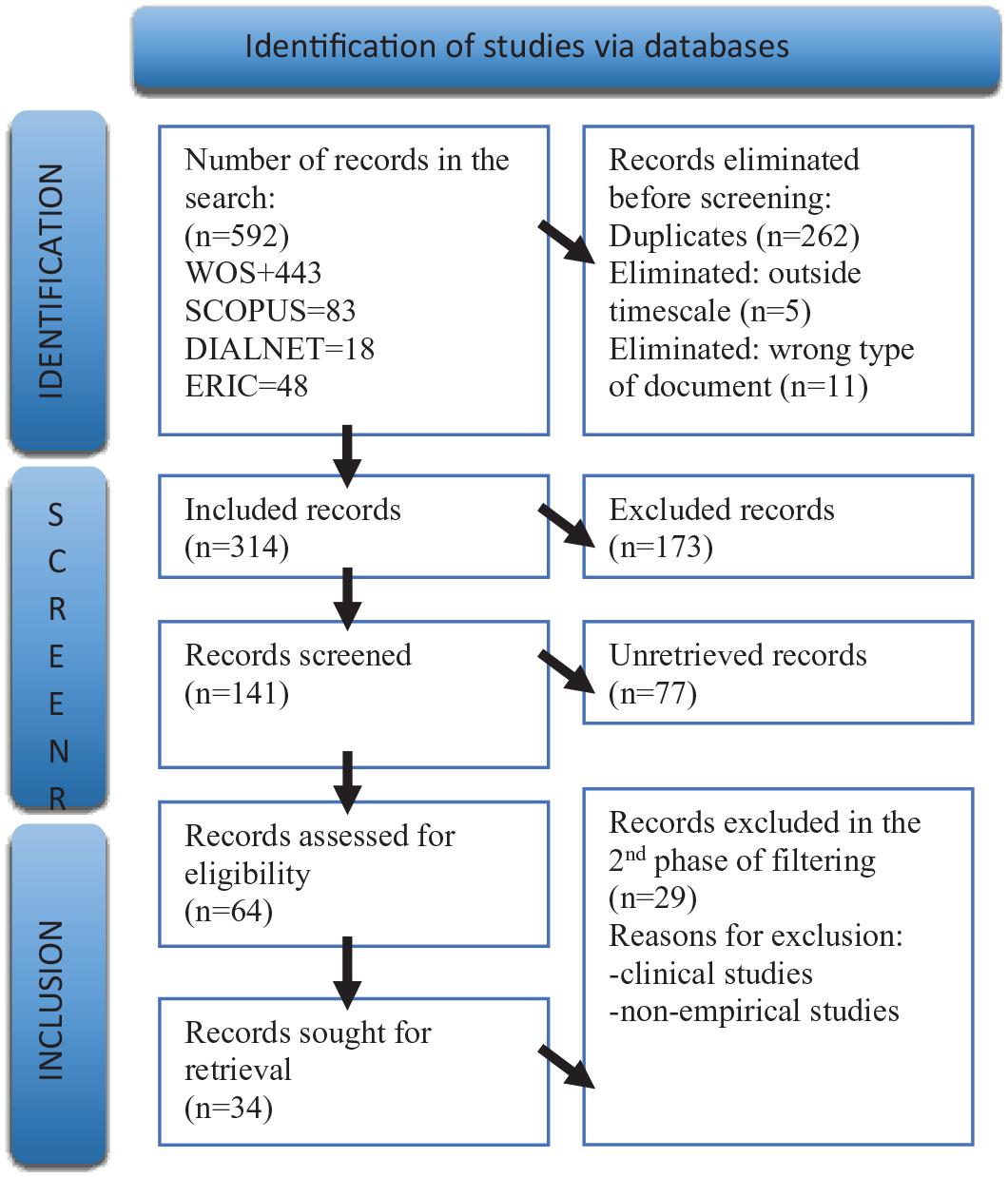
PRISMA Flow Diagram Showing the Process of Search and Selection Used to Obtain the Corpus of Articles Used in This Review (Following Page et al., 2021).
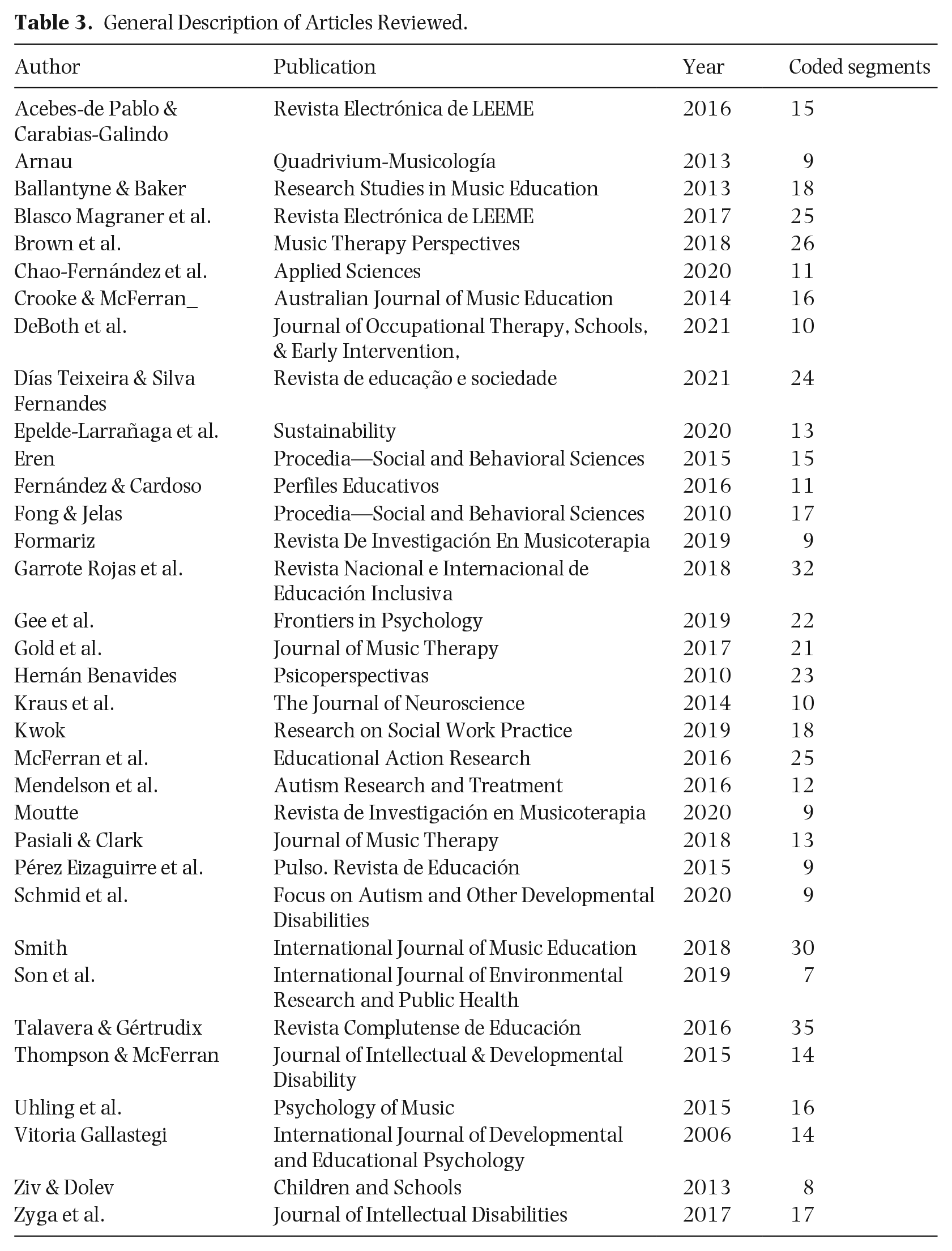
General Description of Articles Reviewed.
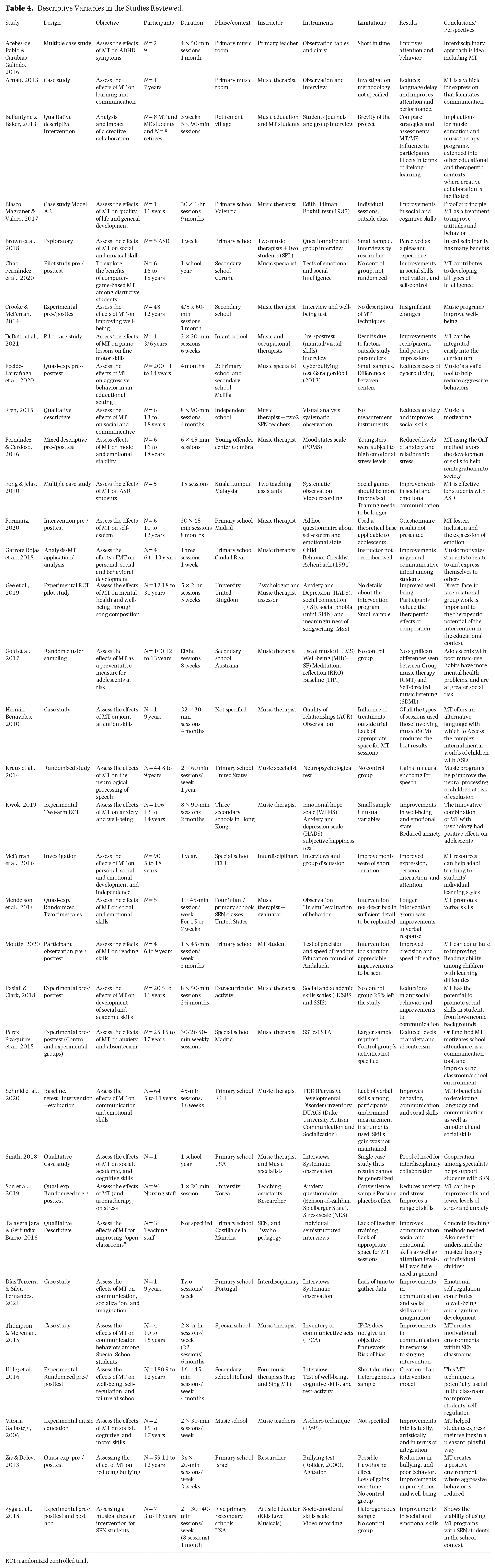
Descriptive Variables in the Studies Reviewed.
RCT: randomized controlled trial.
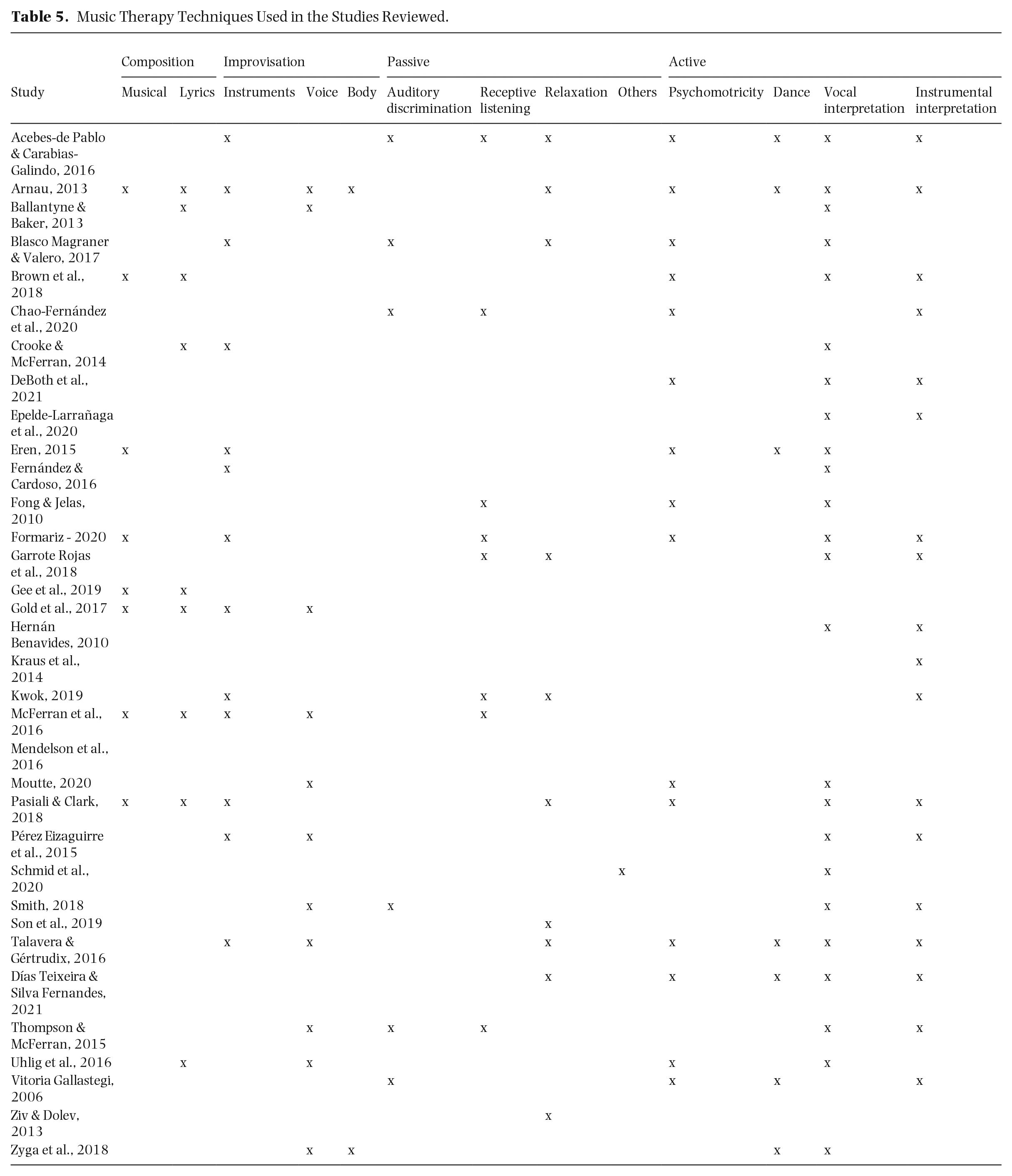
Music Therapy Techniques Used in the Studies Reviewed.
Instruments
The reference management system Mendeley was used for the organization and selection of records, and the qualitative analysis package MAXQDA 2021 was used for data analysis. Bibliographic data were exported using the standard RIS protocol.
Results
The analysis and review were done via two principle categories: the bibliometric elements and the main descriptors. The first step in the analysis was a general description of the studies reviewed to summarize and compare key features (Table 3): bibliographic data and principal characteristics of the articles (title and keywords). We continued the analysis of the corpus with a further general comparative summary of the articles selected. Table 4 contains the following descriptors as related to the articles reviewed: Design, Objectives, Participants, Duration, Phase/Context, Instructor, Instruments, Limitations, Results, and Conclusions/Perspectives.
Bibliometric elements
The element “principal authors” was used to order records in our corpus. Only two authors (Schmid and McFerran) contributed more than one article on the theme of interest in this study.
Examining the list of publications, we observed that no publication had particular prominence, except that the Revista Electrónica de LEEME and Procedia—Social and Behavioral Sciences both contributed two articles to this corpus. Concerning the publication year, there has been an increase in the number of articles published on our theme of interest. This is particularly true from 2013 to the present, with 31 of the 34 articles in our corpus being published in this period. This may be a result of attempts to meet the demands and objectives of recent developments in educational policies.
The titles of the articles in our corpus were also examined in terms of word frequency to generate a word cloud (Figures 3 and 4). The terms “students,” ‘social “education,” “music therapy,” and “intervention” are those that appear most frequently. Virtually all of the programs of music therapy considered in the corpus were related to special or mainstream schools, with very few in other educational institutions such as universities, specialist music schools, or young offenders’ centers. In addition, most studies presented here also considered some form of collaboration between music therapy specialists and educators. The data presented in the word cloud reflect the results of content and keyword analysis. This analysis produced a wide range of variable segments (n = 520), which is a consequence of the generic nature of keywords, and in some cases, the fact that authors must choose their keywords from a list generated by the journals in which they wish to publish their articles.
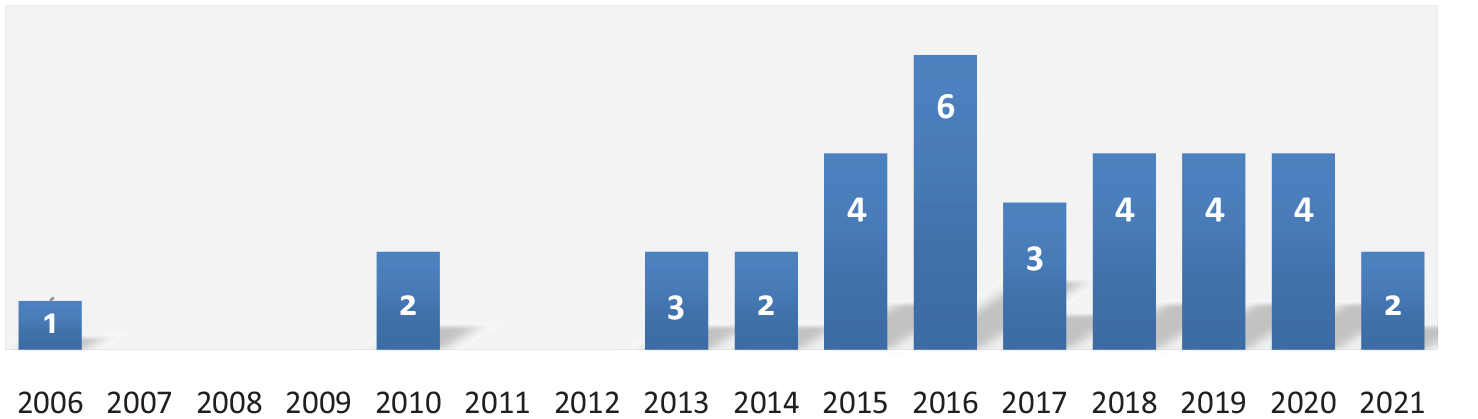
Number of Publications by Publication Year for the Period 2006 to 2021 for the Corpus Used in This Study.
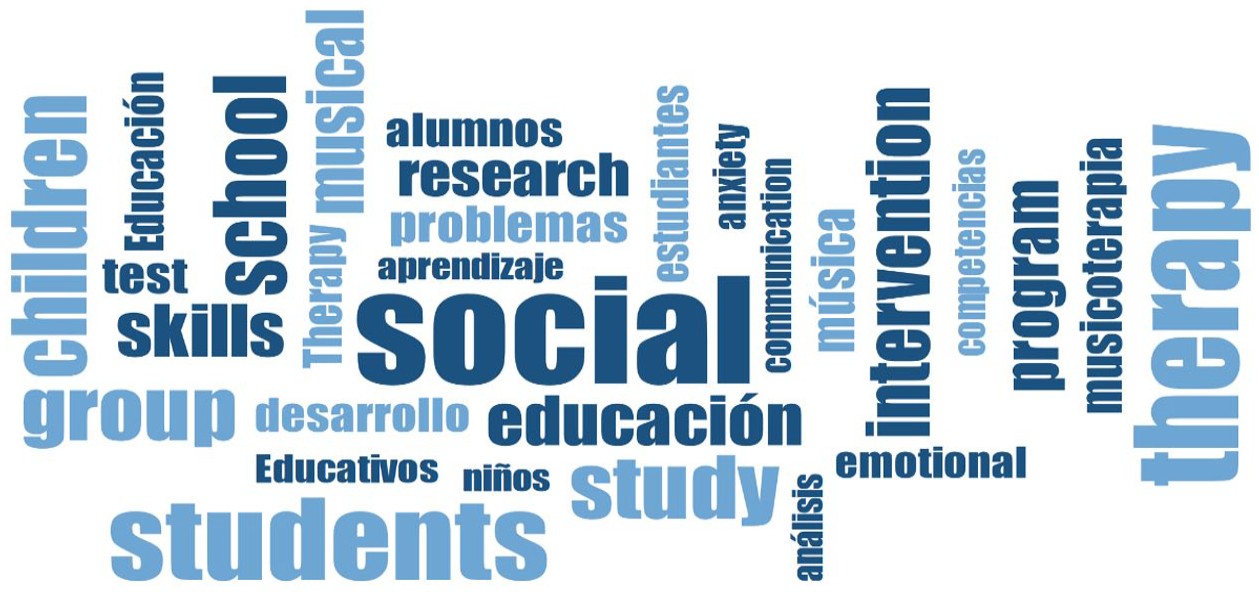
Word Cloud Generated Using the Titles of the Articles Selected for This Corpus.
Main descriptors
The first descriptor, study design, involved interventions in educational contexts in which the implementation of a music therapy program uses a pre- and posttest. There were some differences between studies: for example, there was one pilot study (Chao-Fernández et al., 2020); five single case studies (Arnau, 2013; Blasco Magraner & Valero, 2017; Días Teixeira & Silva Fernandes, 2021; Hernán Benavides, 2010; Smith, 2018; Thompson & McFerran, 2015); and one multiple case study (Acebes-de Pablo & Carabias-Galindo, 2016); two cases of the action-research model (Fong & Jelas, 2010; McFerran et al., 2016); four qualitative descriptive studies (Ballantyne & Baker, 2013; Eren, 2015; Fernández & Cardoso, 2016; Talavera Jara & Gértrudix Barrio, 2016); and one exploratory study (Brown et al., 2018). The remainder of the studies were either experimental or quasi-experimental.
Concerning the objectives of the papers examined here, 32 of the 34 studies wished to understand the effects and possible benefits of music therapy for students at risk of social exclusion or failure at school. This applied for studies considering any level of education (infant, primary, secondary, or university level) and any type of student (mainstream, or with SEN). The studies by Fong and Jelas (2010) and Talavera Jara and Gértrudix Barrio (2016) examined music therapy with respect to the acquisition and development of emotional, social, and communicative skills among students with autism spectrum disorder; a study by Blasco Magraner and Valero (2017) looked at the development of these skills to improve schoolwork; Brown et al. (2018) also looked for improvements in musical skills, while Vitoria Gallastegi (2006) specifically explored improvements in areas such as memory, bodily expression, and creativity.
Further to these fundamental objectives, other studies aimed to improve behavior and social skills among disruptive students (Fernández & Cardoso, 2016; Garrote Rojas et al., 2018; Pérez Eizaguirre et al., 2015), and Hernán Benavides’s (2010) work focused on the development of joint attention skills. The works by Ballantyne and Baker (2013) and Smith (2018), respectively, analyze the impact of a creative collaboration and identify the particular roles taken by music therapists within a music education collaboration. In addition, studies by Gee et al. (2019) and Son et al. (2019) looked at music therapy as a way to improve well-being and reduce stress among a cohort of university students.
The participants (N = 549) were infant and primary school students (n = 227) in 18 studies, secondary students (n = 214) in 10 studies, a mix of students from all these phases in three studies, and university students (n = 116) in three studies. In 17 studies, participants were students with SEN, and in 15, the students were mainstream. In some cases, participants were in young offenders’ institutions (Fernández & Cardoso, 2016), attended special schools (McFerran et al., 2016; Mendelson et al., 2016), or were residents in a retirement village (n = 8) (Ballantyne & Baker, 2013). Vitoria Gallastegi’s (2006) paper involved students at an unregulated institution (a music school). In four instances, the ages of participants were not stated (Brown et al., 2018; Fong & Jelas, 2010; Mendelson et al., 2016; Smith, 2018). The locations of the studies and the countries of origin of participants included Australia, Chile, Spain, the United States, Malaysia, Holland, Israel, Portugal, the United Kingdom, Hong Kong, and Korea.
The duration of investigations—in terms of the length of the intervention program, the number of sessions, and the length of individual music therapy sessions—showed great variation among studies. Many used 30- to 45-min sessions (four studies) adapted to the 50 min periods of the school timetable; others used 1-hr sessions (Blasco Magraner & Valero, 2017) or even 1½-hr sessions (Ballantyne & Baker, 2013; Eren, 2015). Six studies did not mention the length of sessions used. With respect to the number of sessions and the intervention duration, studies ranged from three sessions in a single week (Garrote Rojas et al., 2018) to sessions spread across a whole school year (McFerran et al., 2016; Smith, 2018). Five studies did not specify either the number of sessions or the total length of the intervention (Brown et al., 2018; Días Teixeira & Silva Fernandes, 2021; Fong & Jelas, 2010; Talavera Jara & Gértrudix Barrio, 2016; Vitoria Gallastegi, 2006).
The instructors delivering the interventions described included the researchers themselves (Son et al., 2019; Ziv & Dolev, 2013), specialists in SEN (Talavera Jara & Gértrudix Barrio, 2016), psychologists (Gee et al., 2019), music specialists (Chao-Fernández et al., 2020; Epelde-Larrañaga et al., 2020; Kraus et al., 2014; Vitoria Gallastegi, 2006), arts educators (Zyga et al., 2018), music therapists (Arnau, 2013; Blasco Magraner & Valero, 2017; Crooke & McFerran, 2014; Fernández & Cardoso, 2016; Formariz, 2020; Garrote Rojas et al., 2018; Gold et al., 2017; Hernán Benavides, 2010; Kwok, 2019; Mendelson et al., 2016; Moutte, 2020; Pasiali & Clark, 2018; Pérez Eizaguirre et al., 2015; Schmid et al., 2020; Thompson & McFerran, 2015; Uhlig et al., 2016), and teachers (Acebes-de Pablo & Carabias-Galindo, 2016; Fong & Jelas, 2010). In addition, there were several examples of interdisciplinary collaboration, for instance, between several specialists in the cases of Brown et al. (2018) and Eren (2015); between SEN specialists and music therapists in DeBoth et al. (2021) and McFerran et al. (2016); and between music therapists and music specialists (Ballantyne & Baker, 2013).
The music therapy techniques (Table 5) used in the studies reviewed can be organized as follows:
Composition: lyrics for songs and music (Ballantyne & Baker, 2013; Brown et al., 2018; Eren, 2015).
Improvisation: with instruments; movement and voice; and inspired by current feelings (Días Teixeira & Silva Fernandes, 2021; Eren, 2015; McFerran et al., 2016; Talavera Jara & Gértrudix Barrio, 2016; Vitoria Gallastegi, 2006).
Passive: auditory discrimination; receptive listening; and relaxation (Garrote Rojas et al., 2018; McFerran et al., 2016; Vitoria Gallastegi, 2006 among others).
Active: psychomotricity and rhythmic games; dance; vocal interpretation; and instrumental interpretation (percussion, Orff instruments, piano, and guitar) (Blasco Magraner & Valero, 2017; Brown et al., 2018; Eren, 2015; Smith, 2018 among others).
Several of the measurement instruments used in the various studies were especially designed for use with music therapy interventions, such as the Edith Hillman Boxhill Test (1985) used in the work by Blasco Magraner and Valero (2017). Garrote Rojas et al.’s (2018) work centered inclusive education and used the Achenbach Child Behavior Checklist (1991). Hernán Benavides’s (2010) study made use of the Assessment of the Quality of Relationships (AQR) tool, while Schmid et al. (2020) employed the PDD behavior inventory to assess general developmental disorders, and the DUACS scale to test social skills. Here we must point out that systematic observation techniques, such as individual, semistructured interviews and discussion groups were also widely used (Ballantyne & Baker, 2013). In addition, it should be noted that Vitoria Gallastegi (2006) used the Aschero Method (1995) as the music teaching scheme in her work.
Concerning the limitations found in the papers reviewed, several studies highlighted the lack of control group in their interventions (Chao-Fernández et al., 2020; Kraus et al., 2014; Pasiali & Clark, 2018; Ziv & Dolev, 2013; Zyga et al., 2018). Another limitation was the small number of participants in many of the studies reviewed in this work, and the diversity within test groups (Brown et al., 2018; Eren, 2015; Fong & Jelas, 2010) which made it difficult to generalize the results of these investigations. There were a number of other notable limitations: for instance, Blasco Magraner and Valero (2017) mentioned the importance of social interaction in connecting with the curriculum, yet despite this, their sessions took place on an individual basis, separated from the main group. Furthermore, in the work by Brown et al. (2018), the interviews conducted with participants to assess the progress of the intervention were led by instructors rather than, as would have been preferable, the researchers themselves.
In other work, there was a lack of detail in various areas. For example, Garrote Rojas et al.’s (2018) study did not make clear the particular nature of the instructor-specialists who delivered the intervention described. Intuitive interventions, such as music therapy, have a clear attraction; however, there is, as yet, little empirical evidence of their effectiveness. Thus, it is unfortunate that several studies did not include sufficient details of their techniques to enable their repetition. The VOICSS program, for example, used by Schmid et al. (2020) was not described in sufficient detail to enable the repetition of the intervention. The work described by Crooke and McFerran (2014) also failed to give enough details concerning their intervention to enable its replication. Furthermore, three studies failed to describe their measurement instrument: Mendelson et al. (2016), Vitoria Gallastegi (2006), and Eren (2015). The study by Fong and Jelas (2010) recognized there might be a need to extend the training period for instructors implementing the social play strategies that formed part of their intervention and also noted that these play strategies could be more improvised. Lack of time with respect to data collection was a factor also mentioned by Ballantyne and Baker (2013) and Días Teixeira and Silva Fernandes (2021). McFerran et al. (2016), on the other hand, pointed out how quickly the gains of any intervention can be lost.
The findings of case studies such as that of Smith (2018) and Hernán Benavides (2010) clearly require further investigation and these researchers highlighted how results can be influenced by other interventions outside the study. These researchers also cited lack of appropriate space for music therapy sessions to take place—there was no music classroom available. Another study mentioning a lack of appropriate space for their music therapy sessions was that of Talavera Jara and Gértrudix Barrio (2016), explaining that this impeded the ability to harness all the potential therapeutic benefits of music therapy. These authors also echoed others in mentioning the lack of training among teachers as a further problem. Finally, while Schmid et al. (2020) attempted to guarantee the validity of the DUACS instrument through a blind evaluation, they also suggested that the scale’s efficacy may be limited in the case of subjects lacking the necessary verbal skills.
The studies reviewed here presented positive results in terms of observed improvements in behavior and attention (Acebes-de Pablo & Carabias-Galindo, 2016; Moutte, 2020); participation, psychomotricity, memory and attention, levels of concentration, and the ability to communicate with specialists, teachers, and peers (Blasco Magraner & Valero, 2017; Fong & Jelas, 2010; Garrote Rojas et al., 2018; McFerran et al., 2016; Schmid et al., 2020); and levels of aggression (Epelde-Larrañaga et al., 2020). The benefits observed seemed to be most significant when interventions were of long duration, as in the case of Mendelson et al. (2016). In addition, Eren (2015) and Uhlig et al. (2016) observed a reduction of anxiety in direct interactions with others and better social skills among both sexes, enhanced well-being (see also Kwok, 2019), greater respect for turn-taking, improved eye contact and listening skills, better self-expression, more coordinated group movement, and acceptance of other peoples’ differences. Vitoria Gallastegi (2006) saw improvements in intellectual and artistic abilities as well as in participants’ integration within the group, and Días Teixeira and Silva Fernandes (2021) also noted increased imagination. However, Ballantyne and Baker (2013) and Smith (2018) indicated the need for more interdisciplinary collaboration, while Talavera Jara and Gértrudix Barrio (2016) highlighted the still scarce examples of the use of music therapy techniques in classrooms.
The studies reviewed reached a range of interesting conclusions, including that music therapy is a vehicle for expression that enables communication (Arnau, 2013); that it is a valid intervention in the case of SEN students (Fong & Jelas, 2010; Talavera Jara & Gértrudix Barrio, 2016) and mainstream students (Chao-Fernández et al., 2020; Crooke & McFerran, 2014; Gee et al., 2019); and that there are many benefits from interdisciplinary collaboration (Ballantyne & Baker, 2013), with music education providing the ideal curricular space for such interactions (Acebes-de Pablo & Carabias-Galindo, 2016; Brown et al., 2018; Smith, 2018). Studies also confirmed the efficacy of music therapy in improving behavior, socializing, and integrating students, so contributing to their well-being and overall development (Blasco Magraner & Valero, 2017; Días Teixeira & Silva Fernandes, 2021; McFerran et al., 2016; Schmid et al., 2020). Music therapy was also found to stimulate, motivate, progress, and enhance students’ personal skills, thus enabling them to express their feelings in an enjoyable, playful way (Vitoria Gallastegi, 2006 and Kwok, 2019). The changes produced in students were linked to an increase in their communicative intent, so motivating them to better relate and express themselves to others (Epelde-Larrañaga et al., 2020; Garrote Rojas et al., 2018; Mendelson et al., 2016). According to Eren (2015), the nonthreatening, welcoming nature of music therapy was key to enabling these changes and helped students move from a place of doubt and unknowing to a place of involvement and openness. For Hernán Benavides (2010), music therapy was an alternative language that allowed access to the complex internal world of students’ minds.
The future perspectives offered by the body of work reviewed here tended to suggest that it would be useful to complete other similar work with longer-duration interventions to understand the impact of music through each educational phase (Fong & Jelas, 2010; Pasiali & Clark, 2018). Ballantyne and Baker (2013), Brown et al. (2018), and Smith (2018) felt that, while collaboration existed between teachers and specialists, it was necessary to create a more stable environment to improve the effectiveness of such collaborations. In a similar vein, Garrote Rojas et al. (2018) thought that fostering relationships between classmates contributed to their cognitive and social development, such that both friendships and family involvement must be considered beneficial for students’ personal development. Blasco Magraner and Valero (2017) and Eren (2015) recommended that music therapy activities be undertaken first with a specialist and that they should be pleasant and easy to complete. The activities developed could then be implemented in the group-classroom context as well as with other populations with special needs. These authors also underlined the importance of designing new evidence-based research. To these ideas, Hernán Benavides (2010) added the need to complete longitudinal studies that would enable the development of music therapy resources specifically designed for SEN students. This author also suggested offering music therapy to members of the general population, regardless of their particular profiles, as a tool for emotional, cognitive, and social development.
Talavera Jara and Gértrudix Barrio (2016) felt that there was a need to improve teachers’ training in regard to delivering music therapy sessions, such that they would be better equipped to use essential techniques such as leading group instrumental work, working on musical language, and combining music with sensory activities or light therapy. Researchers in our corpus also underlined the necessity for specific spaces for music therapy sessions, alongside the development of concrete teaching methods and a full understanding of children’s preferences and musical history when planning activities (McFerran et al., 2016). Furthermore, Días Teixeira and Silva Fernandes (2021) were of the opinion that music has many therapeutic benefits but stressed that any music therapy intervention should always be begun as early as possible to maximize these benefits. Finally, Zyga et al. (2018) underlined the viability of music therapy interventions with SEN students in the school context.
Discussion and conclusions
This review has described the objectives proposed, results, and conclusions of a body of work concerning the use of music therapy techniques in an educational context. This analysis has enabled the identification of the various EMT techniques employed at all levels of education: primary, secondary, university, and lifelong learning, in both SEN and mainstream teaching environments.
From the results presented here, we can affirm that music therapy techniques are suitable for application in the educational context. In the case of infant school students, Acebes-de Pablo and Carabias-Galindo (2016) and DeBoth et al. (2021) concluded that music therapy can mitigate and even prevent learning difficulties. In the case of adolescents, music therapy appeared able to promote social harmony in school (Pérez Eizaguirre et al., 2015). For university students, music therapy was effective in reducing anxiety (Son et al., 2019; Kwok, 2019), and for older people, it was effective for lifelong learning (Ballantyne & Baker, 2013). Furthermore, the positive effect of music therapy techniques as an educational methodology was confirmed in several areas such as improved learning, the promotion of inclusion and diversity, social harmony, motivation, creative collaboration, and personal development. These techniques also fostered well-being from a skills-based perspective in ways that far exceeded the traditional content-based approach, with students’ increased interest in learning having positive benefits for wider society.
Concerning the question of which music therapy techniques are used in the educational context, here we found huge diversity resulting from individualized use. In addition, we have seen how techniques are tailored to the needs and interests of individuals, with reference to music education teaching methods proven to help students reach educational goals from a skills perspective. The review presented here reinforces the connections and overlap between music therapy in the school environment and music education: music therapy uses musical techniques and resources with a therapeutic aim, while music education applies the same techniques and resources with educational aims that are shaped by the challenges and objectives of the educational system.
The main conclusion that can be extracted from this review is that the implementation of music therapy techniques is recommended and produces positive results at all phases of education and in diverse learning environments (Ballantyne & Baker, 2013; Chao-Fernández et al., 2020). Nonetheless, from the beginning of the review process, we found a wide range of interpretations as to the exact nature of an EMT intervention, since both the term EMT and the concept of music therapy used in educational contexts for educational purposes are insufficiently well-defined and too general (Edwards, 2011; Patterson, 2003). For some authors, music therapy interventions were only those delivered by certified music therapists (Pérez Eizaguirre, 2015) which, while this has some logic in clinical environments, does not address the realities of the educational context. In the review presented here, half of the studies involved interventions delivered by professionals other than music therapists (teachers, students, psychologists, and researchers), using EMT techniques based on musical teaching methods with the aim of helping their students in various areas known to positively influence educational outcomes. To extract the full potential of EMT, however, brings with it the need for training in the specific teaching methods and the requirement that music therapy activities should be delivered by an appropriately qualified professional (Talavera Jara & Gértrudix Barrio, 2016) using peer collaboration (Ballantyne & Baker, 2013). As a result, to better define the concept of EMT, we would describe it as
“the use of music and its elements by teachers, specialists, or therapists in educational contexts with the aim of addressing the needs and problems of both individual students and of the student body as a whole, in processes of learning and personal development to enhance inclusion, social harmony, and well-being as a way to help students achieve necessary skills and objectives.”
The benefits that can be expected from the use of EMT in terms of psychological, physical, and behavioral improvements among students encourage its use in both formal and nonformal music education, as a tool to make teaching strategies more inclusive and to improve the teaching and learning process (Arnau, 2013; Chao-Fernández et al., 2020; Crooke & McFerran, 2014; Pasiali & Clark, 2018). Knowledge of EMT techniques for psycho-socioemotional goals should be encouraged among professionals in music education, because of their proven effectiveness with students at all levels of the educational system. These techniques could then become one more innovative methodology in teachers’ repertoires, further enabling them to foster positive teaching and learning experiences, progress in skill acquisition and motivation and also reduce students’ anxiety and improve the social skills and well-being of their students (Eren, 2015; Son et al., 2019; Uhlig et al., 2016; Ziv & Dolev, 2013).
This review has various limitations. In the first instance, it was difficult to apply the appropriate filters to differentiate between studies using EMT interventions and those simply using music interventions: this meant that, initially, a great number of studies were selected for inclusion, causing an overload of information. The necessary pruning of the corpus meant that some important details may have been lost and this factor must be taken into account in future studies (Young, 2016). Similarly, we omitted what might be termed “grey area” literature, that is, studies not published via the conventional academic or commercial routes, despite the fact that this body of work also contained studies of interest. As in all bibliographic reviews, any given selection of articles could contain some sort of bias which would potentially limit its usefulness. In the same way, there is an ongoing need to keep reviews of this nature up to date. Another limiting factor was the lack of any longitudinal studies that might demonstrate the evolution of any of the dimensions analyzed in the work reviewed so far. The effects of implementing a particular EMT intervention should, ideally, be considered over the long term; thus, it would be interesting to look at, for instance, how the perceptions of these interventions develop over time among teachers, students, and their families.
Based on the results summarized in this review, proposals for future work include a consideration of how to develop specific EMT-based action plans for educational centers, aimed at improving teaching and learning. One new area of research would be to assess the various EMT techniques with a view to understanding which are best suited to addressing particular needs and educational objectives. Another area would be to use the Delphi method to evaluate EMT interventions, establishing clear indicators of quality and applicability according to expert-evaluated programs.
This systematic review has enabled us to objectively evaluate the teaching methods and strategies of EMT applied to incentivize motivation or improve the performance and skills of students on the one hand and to enhance the professional development of educators on the other. It has also allowed us to look at connections between researchers and professionals in education with music as the central axis. Nonetheless, this article cannot be concluded without accepting that there is a great deal more to do. As shown here, there is a growing interest in EMT with a significant increase in studies concerning this topic in recent years. This highlights the need to search for new methodological foci in response to the challenges modern society faces in training the future citizens of the twenty-first century.
Footnotes
Declaration of Conflicting Interests
The author(s) declared no potential conflicts of interest with respect to the research, authorship, and/or publication of this article.
Funding
The author(s) received no financial support for the research, authorship, and/or publication of this article.
Ethical Approval
Because the research is a review of articles, no ethical approvals or informed consent was required.
