






Abstract
The increasing integration of artificial intelligence (AI) into music education raises important pedagogical, creative, and ethical questions. This scoping review synthesises recent empirical research on the use of AI in classroom-based music education, with a particular focus on student learning outcomes and creativity. Reviewed studies included 22 peer-reviewed empirical studies published between January 2023 and March 2025, identified from 1,274 records through systematic searches in major academic databases, revealing a strong geographical concentration of studies in East Asia, particularly China, with most research employing experimental designs and focusing on higher education contexts. Studies examined a range of AI applications, including adaptive learning systems, intelligent tutoring tools, AI-supported composition and arrangement technologies, and large language model chatbots. Across these contexts, AI use was generally associated with positive outcomes related to student motivation, self-efficacy, technical skill development, and aspects of musical creativity. At the same time, recurring concerns were raised regarding authorship, artistic authenticity, emotional depth, and teacher preparedness for AI integration. Methodologically, the literature is dominated by short-term quantitative measures, limiting insight into creative processes and classroom practices. Overall, the review suggests that AI may support music education when used alongside human guidance, while highlighting the need for qualitative and longitudinal research on creativity, pedagogy, and ethical considerations.
Keywords
Introduction
The growing presence of artificial intelligence (AI) in music education makes it increasingly important for educators to equip students with tools that are relevant for future professional practice (X. Wang, 2025). Rapid advances in AI are reshaping how information is produced, communicated, and consumed across society, and in music professions AI now contributes to processing, mixing, mastering, and composing (Moffat, 2021). Since the release of AIVA.com in 2016, the quality of generative music-AI has improved markedly, and services such as Suno.com and Udio.com have gained widespread attention (Rahman et al., 2024). These systems can generate complete songs with vocals and lyrics in minutes, enabling large-scale uploads of AI-created music without traditional gatekeeping. This contributed to one of the first major legal cases in the field, where Michael Smith generated thousands of AI-based tracks and used bots to inflate streaming counts, resulting in a 10-million-dollar fraud (U.S. Department of Justice, 2024).
Research shows that AI-generated music can be difficult to distinguish from human compositions (Rahman et al., 2024), with studies finding that “music composed by an algorithm and performed by a human was not distingiusable from that composed by a human” (Castelli & Manzoni, 2022, p.2). Still, music students often rate human compositions higher in emotional depth and complexity (Canyakan, 2024). Creativity remains a multifaceted construct closely tied to human cognition (Farina et al., 2024), and while generative models are trained on vast datasets, they operate by predicting musical sequences rather than engaging in human-like creative evaluation. This distinction was highlighted in Brandt’s (2023) experiment, where an AI-generated continuation of Beethoven’s Ninth Symphony revealed fundamental differences between computational output and human creative cognition. Together, these developments point to a situation in which AI can imitate established musical style with increasing fluency, while wider questions regarding authorship, intentionality, and evaluative judgement remain contested.
The emergence of generative music-AI presents both opportunities and challenges for the music industry. While concerns centre on authorship, originality, and copyright, industry bodies also acknowledge the potential of AI to enhance creative possibilities. As International Federation of the Phonographic Industry (IFPI, 2024) notes, “used responsibly, AI can contribute to amazing creative opportunities and enhance human artistry” (p. 51). At the same time, reliance on copyrighted training data has led to major legal disputes. In 2025, significant shifts occurred in the legal and commercial landscape surrounding generative music-AI, as leading rights holders moved from litigation towards formal licensing agreements with AI companies. Suno entered a “groundbreaking partnership” with Warner Music Group, and Udio established its first strategic licensing agreement with Universal Music Group, signalling an industry-wide transition towards regulated, rights-cleared AI music creation (Universal Music Group, 2025; Warner Music Group, 2025). These developments have prompted platforms to adjust their technical and licensing structures, including clearer attribution practices and mechanisms for authorised use of commercial catalogues. Such changes influence the technological environments in which students now create music, shaping which tools are accessible, under what conditions they may be used, and how issues of ownership and attribution are negotiated in educational settings. For music educators, this introduces both practical and ethical questions about preparing students for professional practice in an increasingly AI-integrated creative ecosystem.
Despite these tensions, emerging evidence suggests that AI can meaningfully enhance learning processes when integrated thoughtfully into music classrooms. Recent initiatives have explored AI for interactive and efficient teaching, such as Wissner’s (2024) music history class where students engaged with an AI chatbot, generated music, and reflected on ethical issues. AI has also been embedded into intelligent instruments, offering new opportunities for experimentation, timbre exploration, and performance (Iversen & Hebert, 2025). These developments align with broader shifts in digital education, where intelligent systems support engagement and reshape instructional practices (Hui & Geng, 2024). AI can personalise feedback, adapt learning materials, and support individual progression (Derakhshan & Ghiasvand, 2024), though teachers report significant training needs; in one study, 94% of secondary music teachers in Madrid desired further support in understanding AI’s pedagogical potential (Caudeli & Vela, 2024). Concerns remain regarding student agency and creativity: Cheng (2025) found that while AI can enhance creative development, overreliance on generative tools may weaken personal creative confidence. These mixed findings underscore the importance of examining how AI affects students’ music learning experiences and the conditions under which AI-supported learning strengthens rather than undermines students’ sense of authorship and control.
This review draws on two established theoretical perspectives. First, the Extended Creativity Framework (Boden, 1998) distinguishes between human creative cognition, characterised by intentionality, evaluation, imagination, and interpretive judgement, and computational generativity, which operates through statistical pattern learning and predictive recombination. This distinction helps explain why AI systems can convincingly imitate stylistic features of human composition while lacking purposive decision-making, reflective agency, and embodied musicianship. Second, Shneiderman’s (2020) Human-Centred AI framework emphasises that AI systems in education should support human autonomy, accountability, and iterative creative control. Framed in this way, AI tools are judged not only by their output quality but also by the extent to which they enable users to set goals, make informed choices, and refine their work over time. Together, these frameworks provide a basis for analysing how students navigate co-creation with AI tools and for interpreting emerging tensions around authorship, originality, and creative agency in contemporary music education.
Aims and Objectives
This scoping review aims to identify and analyse research-based knowledge on generative AI technologies in music education. The focus is on empirical studies documenting AI implementations in educational settings and examining how student learning outcomes and creative processes are affected, as well as studies discussing implications of AI for creativity among music students. Rather than evaluating the technical performance of AI systems in isolation, the review concentrates on how these systems are embedded in pedagogical designs, classroom activities, and assessment practices.
Previous reviews have begun to chart this field. Merchán Sánchez-Jara et al. (2024) synthesised application areas of AI in music education and associated challenges and opportunities, while Y. Zhang, Fen, et al., (2024) examined how AI can facilitate innovative learning in music and related disciplines. Lee and Kwon (2024) conducted a meta-analysis of AI education in South Korean K–12 classrooms. Building on and extending this work, the present review focuses specifically on generative AI technologies in classroom-based music education, emphasising student outcomes, learning experiences, countries of origin, and theoretical and methodological approaches. The intention is to provide a map of how AI is currently being used in empirical studies of music education and to identify patterns that may guide future research and practice.
The objective is to provide an overview of empirical research on generative AI technologies in music education and to examine how students are affected by AI technologies in classroom-based contexts.
This leads to the following research questions:
1. What is the current state of research-based knowledge regarding the status of AI as a pedagogical tool in music education?
(a) Which educational situations are predominantly described as benefiting from AI incorporation?
(b) What do the findings reveal about generative AI’s impact on student learning outcomes and motivations?
Method
There are multiple established methodologies for conducting scoping reviews, each offering a structured sequence of steps from study identification to the presentation of results. This review follows Arksey and O’Malley’s (2005) five-step framework: (1) identifying the review questions, (2) identifying relevant studies, (3) selecting the studies, (4) charting the data, and (5) collating, summarising, and reporting the results. This approach was chosen to capture a broad and heterogeneous set of empirical studies, rather than to test narrowly defined hypotheses.
First, the research questions were formulated based on a preliminary review of the literature and refined to address classroom-based music education involving AI. The initial questions were intentionally broad, focusing on AI as a pedagogical tool and on student outcomes, and were then iteratively adjusted to reflect the growing emphasis on generative technologies and creativity-related measures in the field. Second, a search strategy was developed and iteratively tested, resulting in two tailored search strings focused on peer-reviewed articles related to music, creativity, and educational practice. Pilot searches were used to adjust keywords and filters to balance sensitivity and specificity.
Third, inclusion and exclusion criteria were defined a priori and applied systematically to ensure consistency during screening. The full inclusion and exclusion criteria are provided in Table 1 (Supplementary Materials). The criteria were based on empirical focus, relevance to music education and AI, publication type, and publication year (January 2023–March 2025). Studies had to report original empirical data, address AI in relation to music learning or teaching, and be published in peer-reviewed journals. After removing duplicates, titles and abstracts were screened, followed by full-text assessment of potentially relevant studies. Figure 1 presents a PRISMA (Preferred Reporting Items for Systematic Reviews and Meta-Analyses) flow diagram documenting the study selection process.
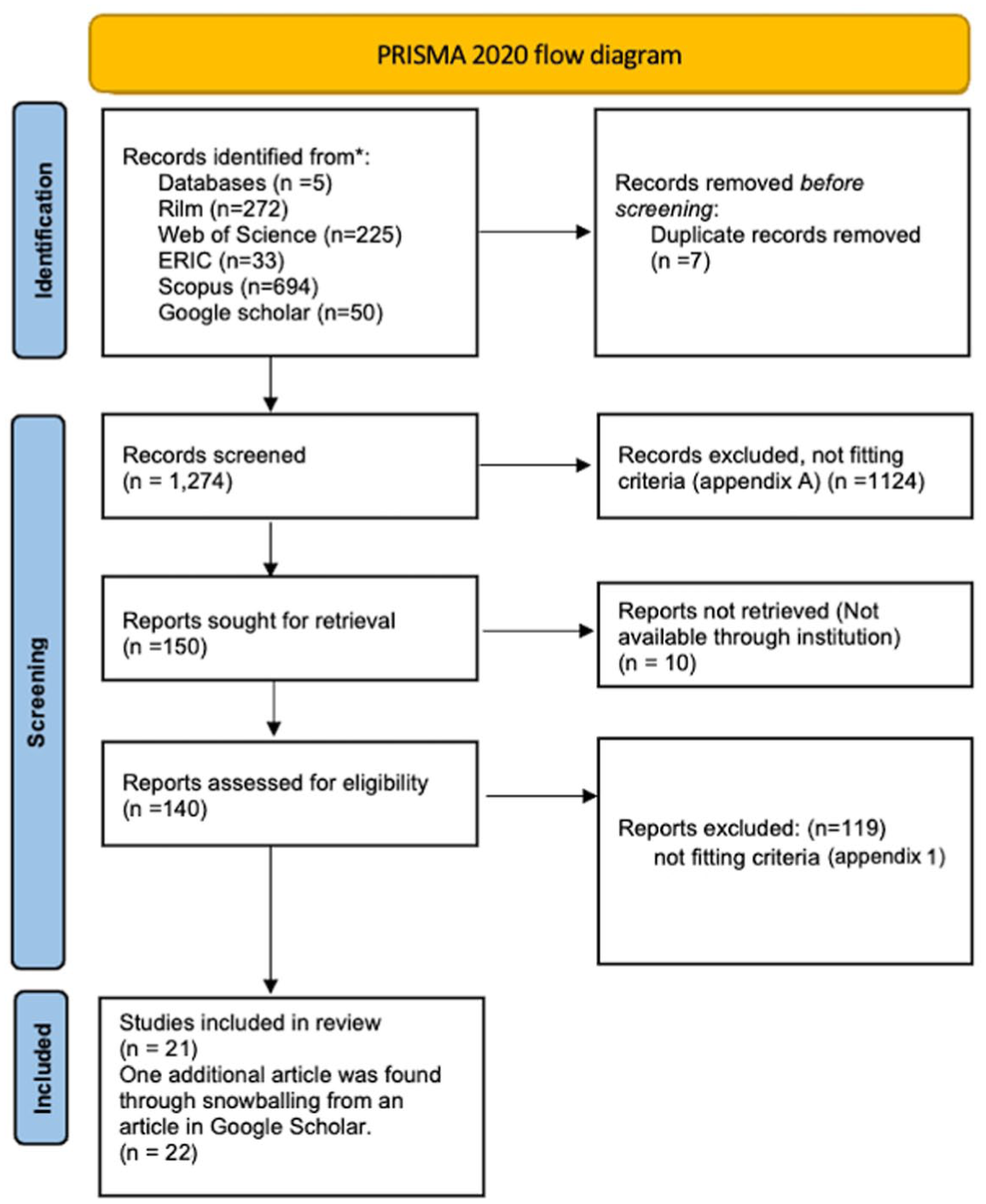
Prisma 2020 flow diagram.
Fourth, the research questions served as a framework for data extraction and analysis. The author conducted a content analysis using NVivo to organise codes and analytic memos, beginning with open coding and progressively clustering codes into categories related to AI technologies, educational contexts, research designs, theoretical frameworks, and measured outcomes. AI technologies were coded using a single primary category per study, reflecting the main system implemented or examined; studies that integrated multiple systems were coded as hybrid categories. These categories were then compared across studies to identify convergent and divergent patterns. Fifth, the results are presented in narrative and tabular form. For transparency, a full overview of included studies and extracted data is provided in Table 2 (Supplementary Materials). A thematic synthesis highlights how AI tools are used across contexts, what empirical outcomes are associated with their use, and what patterns emerge regarding students’ experiences of creativity and learning. Quantitative elements such as study design frequencies, geographical distribution, and sample sizes are summarised descriptively to provide an overview of the literature landscape.
A scoping approach was chosen because the field of AI in music education is both emerging and conceptually heterogeneous, with diverse tools, contexts, and outcome measures. Scoping reviews are particularly appropriate for mapping evolving areas of research, clarifying key concepts, and identifying gaps before more narrowly focused systematic reviews are undertaken (Mak & Thomas, 2022; Munn et al., 2018). In this case, the aim is not to estimate pooled effects, but to synthesise the range of empirical approaches and outcomes reported so far and to indicate where more targeted or comparative studies might be needed.
Search Strategy
Two main search strings were used to capture different forms of AI relevant to this review. The first targeted AI in music education, and the second focused on generative music-AI in composition and production. Searches were performed using Covidence to manage records, track decisions, and support double-checking of inclusion and exclusion decisions.
The keyword “AI music generator” is commonly used to describe AI-based technologies that produce music in response to user input. Combined with educational terms such as pedagogy, teaching, school, or university, however, it yielded relatively few relevant hits. The final strategy therefore relied on broader descriptors, particularly “AI” and “artificial intelligence.” Initial relevance was judged based on titles and abstracts, followed by close reading of full texts. Studies had to be empirical peer-reviewed journal articles reporting AI as a teaching tool in music pedagogy, either in classroom settings or in structured learning environments closely tied to formal education (see Table 1, Supplementary Materials).
Two systematic searches were conducted. The first focused on AI technologies in music education contexts, combining (artificial intelligence OR AI OR generative OR chatbot OR ChatGPT) AND (music) AND (education OR school OR classroom). Filters limited results to January 2023 to March 2025. This yielded 297 hits in Scopus, 113 in Web of Science, 125 in RILM, and 33 in ERIC. The second search targeted AI in music production and composition, using (artificial intelligence OR AI OR generative OR SUNO OR UDIO) AND (music) AND (production OR composition) in Scopus, Web of Science, and RILM, with the same time frame. This produced 397 hits in Scopus, 112 in Web of Science, and 147 in RILM. Eighteen articles met the inclusion criteria after screening. A supplementary search in Google Scholar using the same keywords yielded four additional studies. In total, 23 empirical articles published between January 2023 and March 2025 were initially included, with one further study identified through snowballing references (see Table 2, Supplementary Materials).
For clarity in the analysis, studies are referenced by their number in Table 2 (Supplementary Materials). During screening, one study (21) was retained because it explored creativity in pedagogy with ChatGPT, despite not being strictly within music; it is treated as relevant to the creativity theme but excluded from the synthesis of music-specific findings. Thus, the final synthesis is based on 22 studies, while the original numbering of 23 is retained for consistency with the screening process.
Results
This scoping review investigates empirical studies on the pedagogical applications of AI technologies in music education. Participant age groups varied: 13 studies focused on higher education, one on middle school, one on primary school, and two on high school students. Five studies included broad or unspecified age ranges. This distribution indicates that AI in music education has so far been explored most extensively at the tertiary level, often with pre-service music teachers or conservatory students, while systematic work in primary and secondary education remains relatively limited.
Geographically, the literature is highly concentrated (Figure 2). China accounts for 17 of the 22 included studies, followed by South Korea with two; the United States, Thailand, and Germany each contributed one empirical study. Several Spanish-language articles were identified but excluded based on the criteria. Conference proceedings and book chapters from Europe and North America were also found but did not meet inclusion requirements. The findings therefore primarily reflect developments in Chinese and East Asian contexts rather than a globally representative picture of AI in music education. Accordingly, the distributions, classifications, and thematic patterns identified in this review should be interpreted as a descriptive mapping of this specific evidence base rather than as indicative of global patterns in music education research. This imbalance has implications for how the results should be interpreted, especially in light of national policy differences regarding AI, data infrastructure, and curriculum reform.
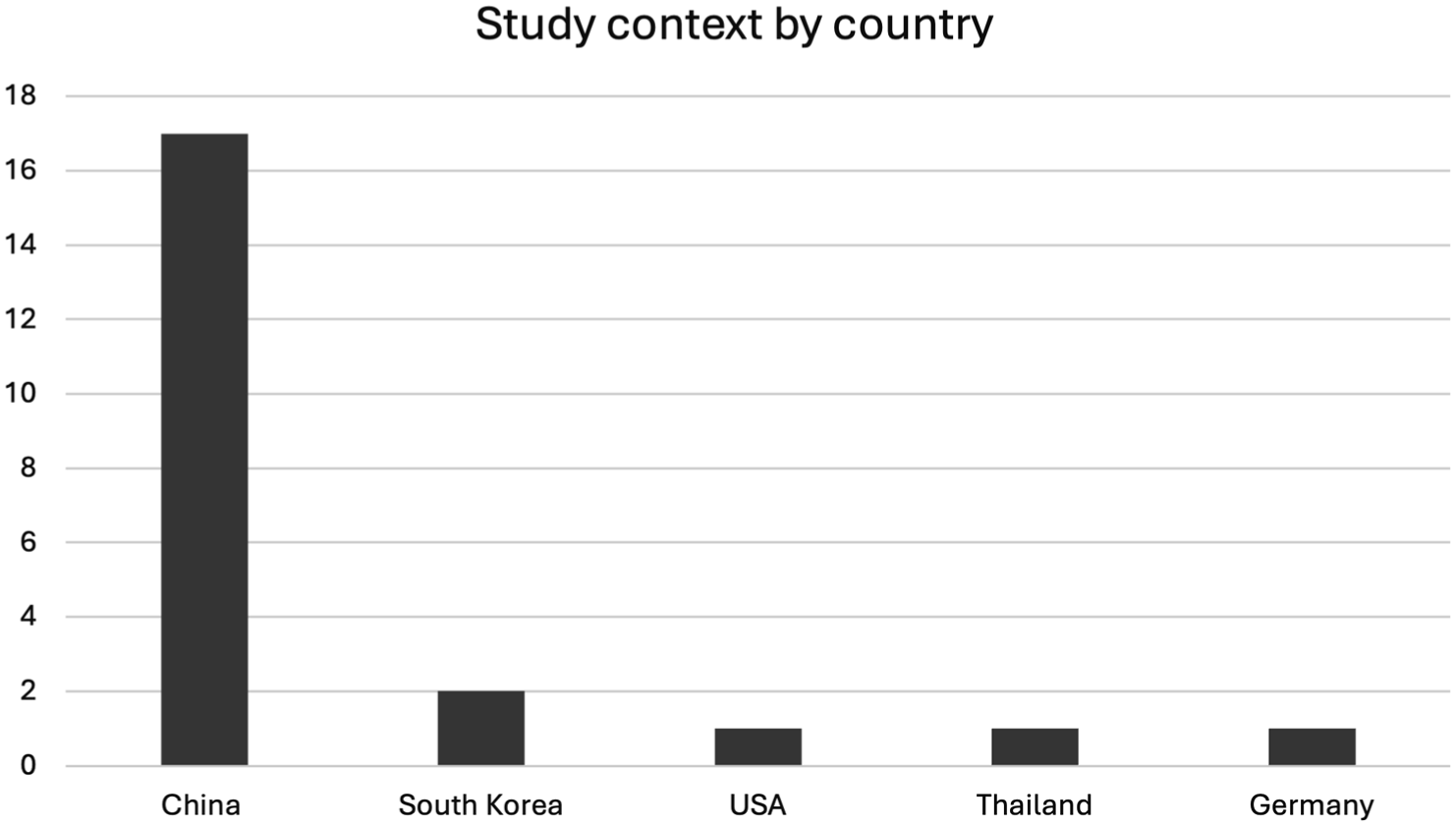
Study context by country.
A relatively homogeneous pattern emerged in research design (Figure 3). Seventeen studies used experimental designs (2–8, 10, 12–16, 18, 20, 22–23). Among these, two (4, 12) relied exclusively on test-based data, while the others combined tests or assessments with questionnaires. Three non-experimental studies used questionnaire data only (1, 11, 17), and two relied on interviews (9, 19). Most studies were purely quantitative, with the exception of two qualitative interview-based investigations (9, 19). Performance-based measures and self-report questionnaires were the dominant instruments. Pre- and post-tests, rubric-based assessments of compositions, and expert ratings captured learning outcomes, while self-efficacy and motivation scales were often adapted to music or technology contexts. Teacher-focused studies sometimes drew on Technological Pedagogical Content Knowledge (TPACK)-related frameworks. Many authors designed their own questionnaires to probe attitudes towards AI in music education. Few studies, however, reported systematic validity or reliability information, sample sizes were often modest, and interventions typically spanned a single semester or less. Control or comparison groups were not consistently implemented, which means that reported effects should be interpreted as preliminary rather than strong causal evidence.
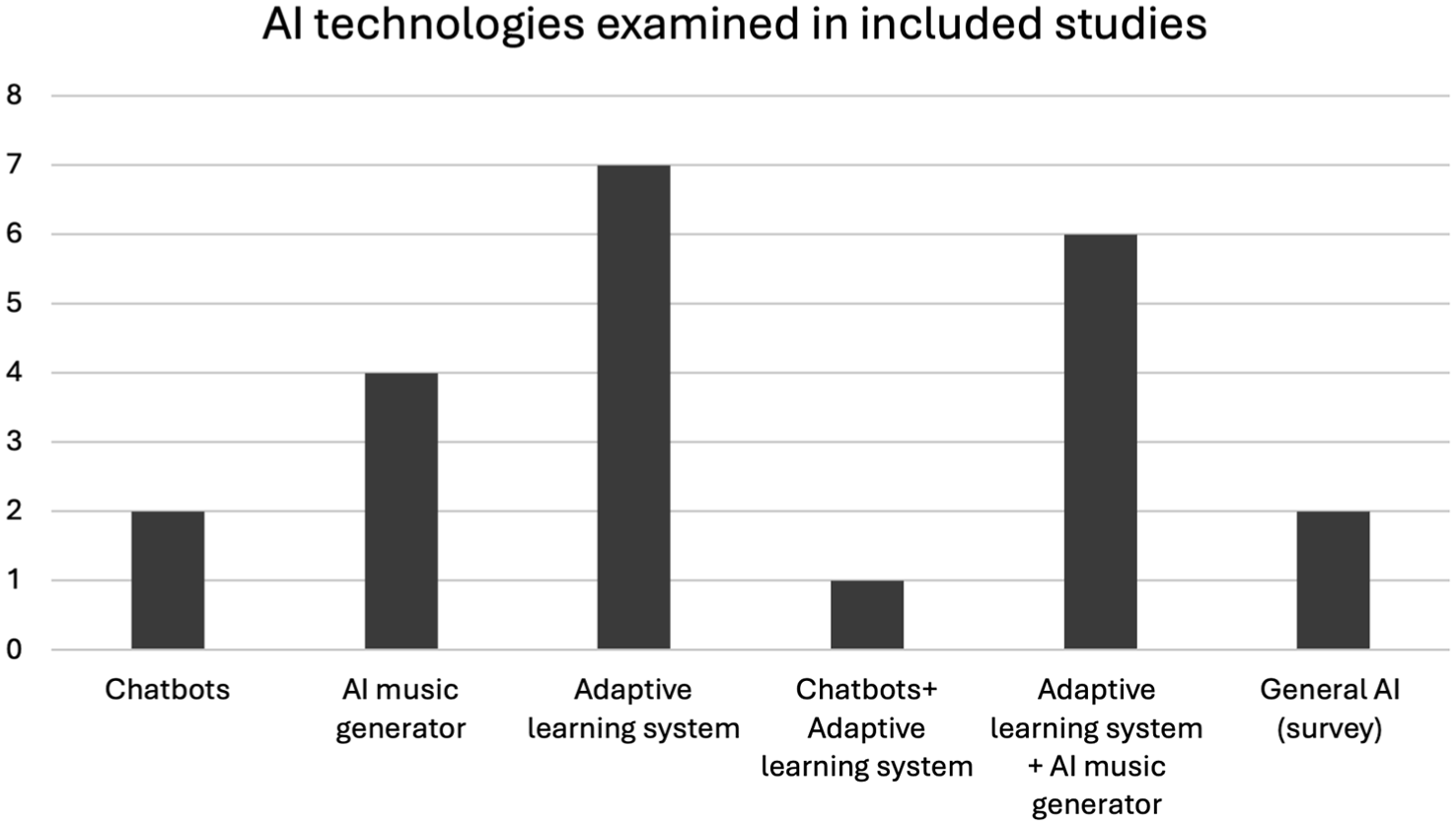
Ai technologies examined in included studies.
The term “AI technologies” covers a broad range of systems in the included studies (Figure 4). Examples include tools for instrumental learning (e.g., Yousician), modern AI music generators such as Suno.com, AI features integrated into Digital Audio Workstations (DAWs) (e.g., the drummer in Logic Pro), and large language model chatbots such as ChatGPT. Across instrumental, theoretical, and chatbot-based tools, systems often provided individualised feedback explaining how students could improve. Three studies specifically investigated chatbots in educational contexts, and four examined AI-based music creativity tools (music generators, plug-ins, or integrated generative features). Seven studies focused exclusively on AI-supported adaptive learning systems. One combined chatbots with adaptive learning, and six integrated adaptive systems with AI-assisted creativity tools. Two survey studies covered broad or non-specific ranges of AI technologies, exploring music students’ and musicians’ perceptions of AI in general.
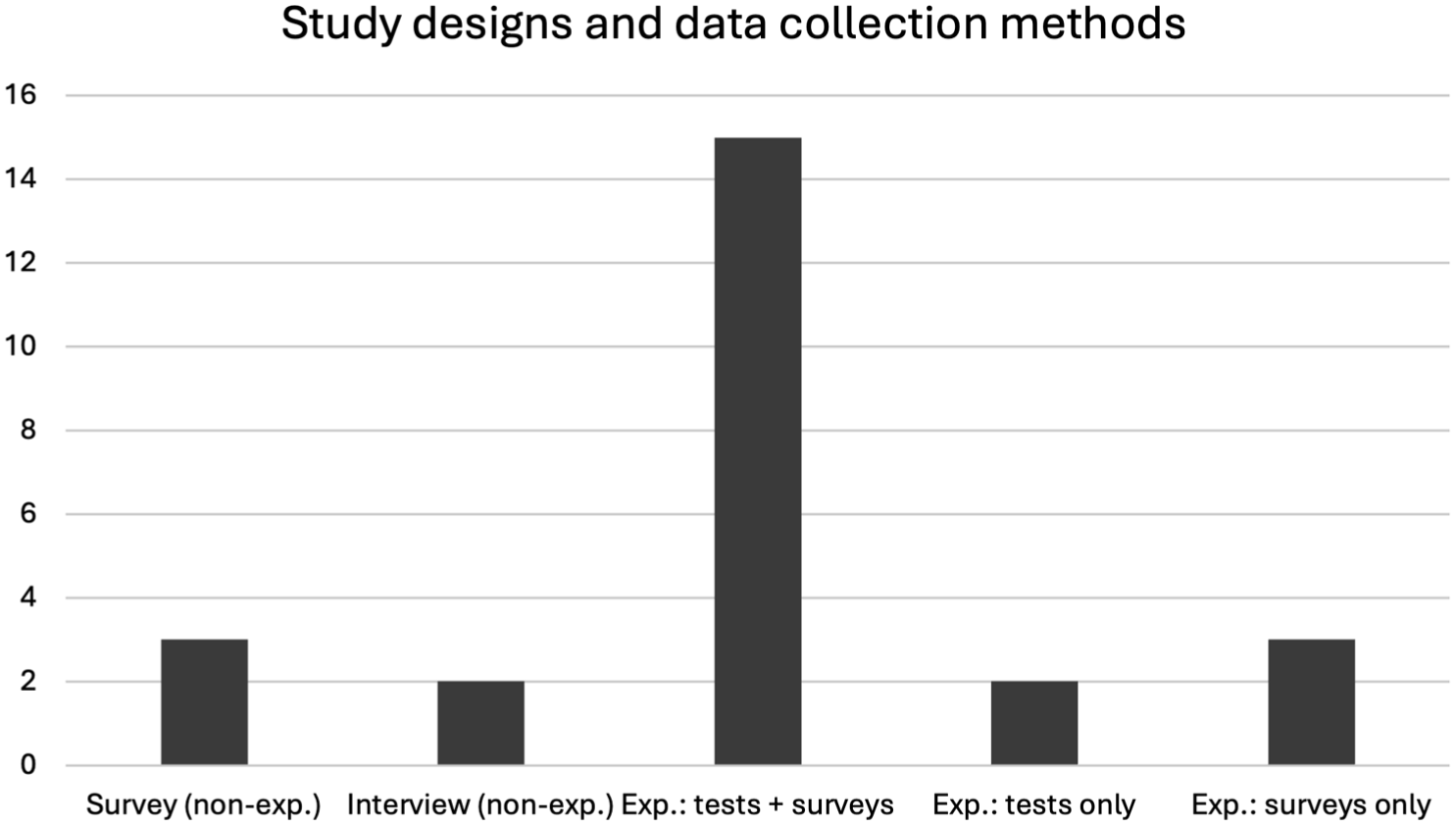
Study designs and data collection methods.
A wide range of theoretical frameworks reflects the interdisciplinary nature of AI integration in music education. Cognitive and motivational theories such as Cognitive Load Theory (Sweller, 1988), Self-Determination Theory (Deci & Ryan, 1985), and the Technology Acceptance Model (Davis, 1989) were used to explain cognitive processing, motivation, and attitudes towards AI-enhanced learning. Creativity and learning theories, including the 4C Model of Creativity (Kaufman & Beghetto, 2009), Creative Thinking Theory (Guilford, 1950), and Gardner’s (2011) Theory of Multiple Intelligences framed analyses of how AI tools influence creative output and related dimensions of motivation and cognition. Instructional design and personalisation frameworks such as the Presage–Process–Product (3P) Model (Biggs, 1993), TPACK (Mishra & Koehler, 2006), and Gagné’s (1985) Instructional Model highlighted AI’s potential to support adaptive and co-creative pedagogies. Additional frameworks included human-centred design, flipped classroom pedagogy, AI-enhanced personalised learning, and computational models such as deep learning, long short-term memory (LSTM), and Bayesian networks. Some studies also introduced conceptual lenses on cultural context, emotion-based learning, and ethical AI use, pointing to an emerging interest in aligning AI integration with sociocultural values and responsible practice.
Through thematic coding, four main foci were identified: (1) composition, production, and creativity; (2) instrumental and vocal learning; (3) perceptions of AI tools; and (4) non-musical outcomes such as motivation, intelligence, and self-efficacy.
Composition, Production, and Creativity
A major cluster of studies examined how AI technologies affect music creation and creativity. Several noted students’ uncertainty about authorship, ethical boundaries, and originality when co-creating with AI (15, 17, 19, 23), though studies focused purely on technical performance or skill metrics often did not engage explicitly with ethical issues (3, 4, 6, 10, 11, 20). L. Chen (2024) reported a significant relationship between music students’ creativity and their perceptions of AI, with learning motivation and engagement when using AI tools strongly associated with creative outcomes. In contrast, Yang (2024) found that in an AI-supported piano learning system, composition activities generated the lowest satisfaction among students, possibly because the participants were performance majors with less interest in composition.
Newman et al. (2023) interviewed five professional music creators about how they perceived AI tools and how they impacted their compositional processes. The musicians described using AI music generators, DAW-integrated AI tools, and AI applications for audio processing. Common uses included generating libraries of loops for later use in compositions and employing AI-assisted mastering. One participant preferred older AI generators due to concerns about training-data transparency and corporatism, blending ethical and professional perspectives. AI was described as helpful for overcoming writer’s block: “when I’m stuck, I like to grab some of the models I pre-trained and just ask it something” (p. 83). At the same time, participants voiced concerns about ownership of process and product. One noted that letting AI generate code “skips a whole important step in the process” by removing the interplay between coding and composing. Another questioned whether AI can be truly creative, emphasising that creativity involves decision-making and knowing where and when to end a piece, capacities they did not experience AI as having (Newman et al., 2023).
S. Zhang et al. (2024) conducted an experimental study using the AI music generator Suno.com, finding that AI-supported students showed higher satisfaction with their compositions and produced works evaluated as stronger in structural quality and timbral richness. Fourteen of the 15 highest-rated compositions were from the experimental group, which also reported high levels of creative interest and increased integrity and innovation in their work. Students nevertheless perceived AI-generated music as lacking emotional complexity. Liu and Liao (2025), in contrast, found no significant overall skill increase in a group using AI tools for composition, except for improvements in richness and complexity. L. Zhang (2025) implemented the “Kits AI” programme in a choral arrangement course for 70 third-year university students. The AI-supported group showed substantial gains in innovative abilities (6.26 points), originality of ideas (5.88 points), and musical understanding (3.34 points), whereas the control group showed no significant change.
Overall, AI tools in compositional contexts appear to foster creative engagement by supporting idea generation, enhancing structural and timbral dimensions, and stimulating interest in musical exploration. At the same time, the balance between creative support and dependency remains a central concern, particularly around authorship, perceived authenticity, and the extent to which students understand and can critically evaluate AI-generated material.
Instrumental and Vocal Learning
A second cluster of studies focused on instrumental and vocal learning, primarily piano (8, 10, 16, 20), but also voice or choir (7, 18) and flute (6). S. Z. Wang (2025) conducted an experiment with 118 piano students aged 14 to 17 over 4 months, combining traditional instruction with personalised feedback in the app Yousician. The AI-supported group showed clear improvements in note accuracy (8.14 vs. 5.21 in the pre-test; control: 6.89 vs. 5.17), rhythmic accuracy (7.65 vs. 4.56; control: 6.23 vs. 4.32), and playing technique (5.76 vs. 3.01; control: 4.75 vs. 3.23). Overall, the experimental group performed 7.5% better across tests.
Yang (2024) adapted a collegiate collaborative piano model with AI-supported pre-class, in-class, and post-class stages. A Bayesian network generated pitch and accompaniment, a video algorithm tracked gestures, and another algorithm recognised fingering. Students in the AI-supported model showed a 25.12% increase in piano knowledge and a 31.75% improvement in repertoire scores. Traditional teaching produced slightly better results in hand posture and physical performance quality, suggesting limitations of fully automated feedback. Survey data indicated that 62.26% and 66.04% of students in the AI model reached a “complete” state on learning metrics, compared with 37.14% and 34.29% in the traditional model.
Liu and Liao (2025) integrated IBM Watson Beat into flute teaching among final-year students at Beijing International Arts School in a randomised controlled trial. X. Li (2024) reported that AI-enhanced vocal instruction improved singing capabilities, for example in “expressiveness,” where the control group increased from 74.22 to 80.32 while the experimental group moved from 72.12 to 88.65. Lv (2023) implemented an AI-based flipped classroom for piano using a “stylus-driven intelligent learning system” with 118 higher education students. The AI group achieved higher final scores (M = 19.73) than the control group (M = 16.03), corresponding to a 17.5% overall increase.
Y. Chen and Sun (2024) designed an AI music education system and tested it over 12 weeks. The experimental group outperformed the control group in skill improvement (88% vs. 78%), emotional expression (87% vs. 72%), and satisfaction (90% vs. 70%). Han (2025) developed a teaching model using recurrent neural networks to analyse musical instrument digital interface (MIDI) signals from student performances on a 5-point scale from “very poor” to “excellent.” While detailed numerical comparisons were not provided, experimental-group students displayed higher engagement, skill development, and satisfaction. Surveys showed positive evaluations across instructional quality, user experience, and educational value.
Across these studies, AI-enhanced systems appear to support measurable improvements in technical skills, expressiveness, and engagement, particularly when used as a supplement to teacher-led instruction rather than a full replacement. The findings also suggest that the pedagogical design through which AI is integrated (e.g., flipped classroom, blended modalities, or continuous formative feedback) is crucial for realising positive effects.
Perceptions of AI Tools
Several studies investigated students’ and musicians’ perceptions of AI tools. Overall, students tended to view AI as a helpful source of assistance and inspiration but expressed concerns about authenticity and emotional depth, especially in higher education contexts (1, 5, 11, 18, 22, 23). Qian (2023) found that students believed AI could increase collaboration in music creation and group work and emphasised the importance of user interface design. Participants were concerned about potential algorithmic biases and described “algorithmic fairness” as a key ethical issue. They also worried that over-digitalisation might replace human educators and reduce mentorship and interaction.
Tigre Moura et al. (2023) examined perceptions of AI-generated art across media. AI involvement increased perceived novelty of the creative process, and AI-generated music received more favourable evaluations than other intangible art forms. However, purely human-created music was rated as most creative, and human–AI co-created compositions were perceived as moderately creative but less authentic than human-only works. Yi (2024) surveyed 385 Chinese artists, performers, and sound engineers about their use of ChatGPT; only 39 respondents had never used it, indicating widespread adoption. Participants reported using ChatGPT to generate musical ideas and explore new genres and styles. They highlighted democratisation of creative processes, redefinition of human creativity, changes in collaborative workflows, and growing acceptance of AI content. At the same time, they stressed limitations such as lack of emotional nuance in AI-generated music and concerns about job displacement.
X. Wang (2025) studied the integration of ChatGPT in conservatory piano courses with 566 students. AI was used to generate musical ideas, assist in theoretical tasks, and support composition. Students reported that AI not only enhanced productivity and motivation but also pointed to inaccuracies in AI responses and expressed concerns that AI could negatively affect education and future employment. Taken together, these studies suggest that students and practitioners view AI as both an empowering and destabilising presence: useful for creativity and learning, yet potentially undermining authenticity, emotional depth, and professional security.
Non-Music-Related Outcomes: Motivation, Intelligence, and Self-Efficacy
Several studies examined AI’s impact on non-musical domains such as motivation, intelligence, and self-efficacy. Many reported improvements in students’ confidence when AI provided adaptive feedback and personalisation. In some cases, however, students developed dependence on AI for “correctness,” slightly reducing trust in their own musical intuition (1, 4, 10, 11, 21). AI tools generally increased motivation and engagement, particularly through interactivity and learner autonomy. One study on memory preservation raised concerns that excessive AI use might reduce long-term engagement or critical thinking (1, 4, 8, 10, 21, 23).
L. Chen (2024) surveyed 521 college music students (mostly aged 18–24) about AI technologies and motivation. Students who used AI tools reported higher motivation to learn music. Perceptions of AI significantly predicted creativity, with 71% of the variance in creativity explained by AI perception. AI perception also correlated with motivation, indicating that active AI users were more engaged and motivated academically. X. Wang and Li (2024) investigated relationships between self-efficacy, AI readiness, and academic performance among music students, finding that nearly 63% of performance variance could be explained by the combined effect of self-efficacy and AI readiness. Self-efficacy alone predicted 52% of variance, and AI readiness alone predicted 60%, underscoring the importance of technological fluency.
P. Chen (2024) developed a question-and-answer AI tool for music classrooms and examined its impact on multiple intelligences over 1 year in a Chinese middle school. Significant improvements were reported in linguistic, spatial, bodily-kinesthetic, musical, interpersonal, and intrapersonal intelligences for the experimental group, but not in logical-mathematical or naturalistic intelligences. S. Z. Wang (2025) found a significant increase in self-efficacy in groups using AI tools compared with controls (57.38 vs. 51.13 in the pre-test, t = 2.145, p = .012). Jiuzhou et al. (2024) reported no significant gender differences in learning outcomes or attitudes among students using AI-assisted tools, indicating that the positive effects of AI-supported instruction appeared stable across demographic groups.
Liu and Liao (2025) used the Revised Two-Factor Study Process Questionnaire to measure learning strategies and found no significant impact of AI integration on practical learning behaviours, which they attributed to the short duration of the intervention. Xie and Wang (2024) compared memory and IQ scores between music students using AI tools and art students not using AI tools, finding only small differences across verbal comprehension, perceptual thinking, working memory, and processing speed. Yuan (2024) studied 500 musicians of varying ages and regions in China using an AI-assisted teaching system, reporting improvements in musical cognition, skill acquisition, learning engagement, and personalised instruction. Overall, these studies indicate that AI tools tend to support increased self-efficacy, motivation, and engagement, with largely positive correlations between AI perception, AI readiness, and academic performance. At the same time, they raise questions about overreliance on AI and its potential effects on independent critical and creative thinking.
Discussion
Given the strong concentration of studies within a single national and policy context, the patterns discussed here should be understood as context-sensitive indications of how AI is currently being studied and implemented in music education, rather than as claims about global practice or universally generalisable effects. As shown by the search results, a very high proportion of the included articles were from China. One likely reason is that Chinese universities are prioritising digital transformation to maintain competitiveness in the international education landscape (Xie & Wang, 2024). Qian (2023) notes that “China has shown a significant interest in utilizing the potential of Artificial Intelligence (AI) to revolutionize its education system, particularly music education, in recent years” (p. 2). China was also heavily affected by the COVID-19 pandemic, which accelerated investments in learning technologies and remote teaching (Gai, 2025). A further observation is the limited academic coverage of generative music-AI services such as Udio and Suno, despite their prominence in public discourse. A separate targeted search identified very few empirical studies on these platforms in educational contexts. While some conference papers discussed them, no peer-reviewed empirical classroom studies were found. Given that these services are relatively new, it is likely that research is underway but not yet published. Their potential to reshape mainstream perceptions of AI music generators nevertheless makes them important objects for future study.
Across the reviewed literature, participants navigate a tension between using AI tools to increase efficiency and preserve autonomy. Creators and students use AI to overcome writer’s block (Newman et al., 2023), generate more elaborate compositions (S. Zhang et al., 2024), and streamline creative workload. At the same time, when AI takes over tasks traditionally performed by the creator, the results are often perceived as less authentic and less representative of the musician’s personal imprint. This mirrors earlier debates about composing with pre-fabricated loops, where the legitimacy of the final product depends on demonstrable musicianship and creative manipulation (Bell, 2015).
The lack of transparency in training data, ethical concerns, and corporatist business models also shape perceptions. Participants express fear that AI will displace human composers and erode skill levels, fostering dependency on technology. Many argue that AI cannot be inherently creative (Newman et al., 2023), a view that aligns with broader epistemological debates on whether AI outputs, based on probabilistic recombination, can be considered genuinely creative in the absence of intentional agency (Magni et al., 2024). These concerns are amplified by the opaque nature of commercial AI systems and the difficulty of tracing how and from which sources particular outputs are generated.
A further issue is the early-stage nature of the evidence base. The literature is geographically uneven and heavily dominated by Chinese studies, which limits the generalisability of findings. However, this developmental stage is precisely when a scoping review is appropriate. Scoping reviews are designed to map emerging fields, identify initial empirical signals, and clarify conceptual tendencies before a geographically diverse or methodologically mature evidence base is available (Mak & Thomas, 2022; Munn et al., 2018). The strong representation of Chinese research can be understood in relation to China’s centralised higher education governance model, where national-level directives facilitate rapid institutional adoption and experimentation with AI-supported teaching (J. Wang, 2022). Documenting these early patterns is valuable, as they may foreshadow future pedagogical developments as AI technologies diffuse internationally and as other countries begin to implement similar initiatives.
Measured learning outcomes in the reviewed studies are largely positive, especially concerning motivation, technical skill, and creative output. At the same time, many participants report tensions around authorship and autonomy when using AI music generators (18, 19, 23). These concerns parallel students’ ethical worries about plagiarism and ownership in relation to large language models in academic contexts (Schei et al., 2024). Tigre Moura et al. (2023) found that listeners preferred music created through human–AI collaboration compared with purely AI-generated works, although fully human compositions remained the most highly valued. S. Li (2025) reported that a record label employing AI collaboratively with human producers achieved nearly three times the revenue of a label without AI, suggesting that hybrid approaches may become commercially attractive. Just as literacy in office software and DAWs has become expected in professional settings, it is likely that fluency in AI tools will be increasingly required in creative industries. AI literacy in education may therefore become essential for preparing students for future work and for enabling them to critically assess and shape AI-supported creative practices.
Methodologically, most outcomes synthesised in this review derive from short-term quantitative indicators such as pre- and post-tests, rubric-based composition assessments, exam scores, and self-report scales. These measures capture changes in performance and confidence but only partly address musical creativity as a process that unfolds over time, is negotiated relationally, and is tied to identity and authorship. Future research will need to complement experimental designs with longitudinal and qualitative approaches that examine students’ narratives, classroom interactions, and situated creative practices. Such work could, for example, trace how a cohort of students develops AI literacy across several courses, or how teachers negotiate assessment criteria when AI tools are used in composition and performance.
In the reviewed studies, AI was applied in three main types of classroom activities. First, in music creation and composition, AI tools assisted with idea generation, arranging, and structural experimentation (15, 18, 19, 22, 23). Second, in instrumental and vocal practice, adaptive feedback systems improved accuracy, rhythm, and expressiveness (5, 6, 8, 10, 16, 20). Third, in theoretical subjects such as music history, aural training, and music theory, chatbots and adaptive systems offered explanations and personalised exercises (1, 3, 9, 11). Across these domains, experimental groups generally outperformed control groups in aspects of creativity, technical skill, and theoretical understanding, although traditional instruction sometimes yielded stronger results for posture and physical technique (e.g., 16). Overall, AI appears to function best as a supplement to, rather than a replacement for, teacher guidance.
In response to the research question concerning the impact of generative AI upon student learning outcomes and motivations, the diversity of AI technologies and study designs makes it difficult to isolate precisely how AI enhances learning. Nevertheless, the evidence points towards consistently positive effects on learning outcomes, motivation, and satisfaction with instruction. For educators, this suggests that carefully designed AI integration may be a productive strategy to support engagement and learning, while also recognising that teachers with limited technological expertise may feel challenged by rapid change. At an institutional level, the findings underline the importance of professional development programmes that address both technical and pedagogical dimensions of AI use, including ethical reasoning, critical data literacy, and strategies for maintaining student agency when AI is present in the learning environment.
Although the reviewed studies provide early indications of how AI affects learning, motivation, and creative engagement, the evidence base remains methodologically narrow. Most studies rely on short-term interventions in controlled or semi-controlled settings and do not capture how AI is enacted in everyday classroom practice or how teachers and students negotiate creative agency, authorship, and pedagogical decisions. To develop more robust frameworks for AI in music education, future research should employ qualitative and mixed-methods designs that examine how AI tools mediate classroom interactions, how learners experience AI-supported creative processes, and how power, equity, and AI literacy are configured in different educational contexts. Such studies could, for example, explore how access to AI tools differs across institutions, or how students from different musical backgrounds experience AI-supported composition and performance.
Future studies should also investigate how large language model chatbots can be integrated across music subjects (e.g., composition, analysis, theory, history) and which pedagogical designs yield meaningful learning effects. Given that platforms such as Suno and Udio are widely accessible yet criticised for limited transparency and potential displacement of human producers, further research is needed on how musicians can be trained to work with these systems as collaborative tools rather than substitutes. This includes examining how creative decision-making, authorship, and workflow distribution operate in human–AI co-creation and identifying conditions under which AI expands rather than constrains students’ creative agency.
Limitations
This review is limited by its single-reviewer screening process, language scope (English and Scandinavian languages only), restricted time frame (January 2023–March 2025), exclusion of non–peer-reviewed sources, the dominance of experimental studies from China, and the generally short duration of most interventions. These factors constrain the generalisability of the findings and underscore the need for broader, multi-country, and methodologically diverse research. The reliance on published journal articles also means that informal or practice-based experimentation with AI in music education, which may be occurring in many institutions, is not captured here.
Conclusion
Across the reviewed studies, many students and practitioners welcome AI as a creative partner, yet simultaneously emphasise the need to maintain human autonomy in the artistic process. AI appears not only as a neutral tool but also as an active agent that reshapes pedagogical relationships, learning experiences, and evolving understandings of creativity. The current evidence suggests that AI-supported tools such as adaptive learning systems and generative music technologies can enhance engagement, motivation, and a sense of accomplishment. These findings are broadly consistent with previous scoping reviews and meta-analyses reporting positive effects of AI on motivation and learning experiences in broader educational contexts (Lee & Kwon, 2024; Merchán Sánchez-Jara et al., 2024; Y. Zhang et al., 2024).
At the same time, several studies reveal emerging tensions when musicians and students encounter AI technologies, particularly around authorship, originality, authenticity, and ethics in human–AI co-creation. The field of AI research in music pedagogy remains methodologically and geographically constrained, dominated by short-term experimental designs and Chinese contexts. Future work will benefit from longitudinal studies, in-depth qualitative and mixed-methods research, and critical perspectives on power relations, AI literacy, and the evolving role of the music educator who actively uses AI. Addressing these issues will be essential for developing pedagogical frameworks that harness AI’s potential while safeguarding human creativity, agency, and core educational values.
Supplemental Material
sj-pdf-1-rsm-10.1177_1321103X261453265 – Supplemental material for Impacts of Artificial Intelligence in Music Education: A Scoping Review of Instructional Strategies and Student Learning Outcomes
Supplemental material, sj-pdf-1-rsm-10.1177_1321103X261453265 for Impacts of Artificial Intelligence in Music Education: A Scoping Review of Instructional Strategies and Student Learning Outcomes by Kristian Tverli Iversen in Research Studies in Music Education
Footnotes
Acknowledgements
The author thanks Gøril Tvedten Jorem for assistance in designing the database search strategy and retrieving records for the first two search strings. The author also thanks David G. Hebert for comments on earlier drafts.

Author Contributions
Funding
The author received no external financial support for the research, authorship, and/or publication of this article.
Declaration of Conflicting Interests
The author declared no potential conflicts of interest with respect to the research, authorship, and/or publication of this article.
Data Availability Statement
The data supporting the findings of this study are openly available through searches in the ERIC, Web of Science, Scopus, RILM, and Google Scholar databases.
Supplemental Material
Supplemental material for this article is available online.
Author Biography
References
Supplementary Material
Please find the following supplemental material available below.
For Open Access articles published under a Creative Commons License, all supplemental material carries the same license as the article it is associated with.
For non-Open Access articles published, all supplemental material carries a non-exclusive license, and permission requests for re-use of supplemental material or any part of supplemental material shall be sent directly to the copyright owner as specified in the copyright notice associated with the article.
