







Abstract
During the first decade of television in Australia, a cohort of female broadcasters used their hard-won positions at the Australian Broadcasting Commission (ABC) to challenge the social and cultural complacencies of post-war society. Counteracting the assumption that women were largely absent in post-war broadcasting, this research discusses how two of these producers used their roles as public broadcasters to enact their own version of feminism, a social and cultural activism framed through active citizenship. Critiquing race, gender and national identity in their programmes, they partnered with Indigenous Australian activists and worked to amplify the voices of minorities. Referring to documentaries produced in Australian television’s formative years, this article describes how ABC producers Therése Denny and Joyce Belfrage worked to disrupt programming cultures that privileged homogeneous Anglo-Australian perspectives. As a consequence, documentaries like A Changing Race (1964) presented empathetic and evocative content that challenged xenophobic stereotypes and encouraged cross-cultural understandings.
Keywords
Aboriginal and Torres Strait Islander readers are advised that the following research contains names and images of people who have died. The greatest difference between the Aboriginal law and the white law is sharing. Among ourselves what belongs to one automatically belongs to the other – could not the white people also apply this law? Energy, imagination, education, a chance to be taught, to be trained, to be useful, a true place in the community without the degrading distinction which even the new Australians do not suffer. That is what these children should share. When they do, then we as Australians can show the world that we have taken a step forward in the ancient and troubled problems between the white and the coloured peoples. (Jimmy Little, A Changing Race, 1964)
In 1964, the documentary A Changing Race was telecast by the Australian Broadcasting Commission (ABC, 1964b; Figure 1). It was one of a range of television projects produced in the early 1960s which reflected a growing sense of unease with the social and cultural complacencies of post-war society. Produced by Therése Denny, the film was promoted as ‘a documentary with a difference’ for its insistence on directly presenting the thoughts and opinions of Aboriginal Australians (The Times Wollongong, 1964). An evocative work of propaganda, the film subverted the traditional patronising approach to presenting stories about minorities; it privileged the perspectives of Indigenous Australians and presented White Australians as the ‘other’. Broadcast 4 years before WEH Stanner’s ground-breaking Boyer lectures on ‘the Great Australian Silence’ (Stanner, 1968), the controversial documentary was the culmination of contributions from various broadcasters, activists and scholars, all on a mission to challenge prevailing post-war assumptions that Australia’s ‘Aboriginal problem’ was comfortably situated in the past. A close study of the development and production of A Changing Race provides an insight into the ways certain media practitioners in the early days of Australian television worked to challenge production conventions that privileged Anglo-centric perspectives, revealing how they sought to democratise public broadcasting’s exclusive processes of cultural production. In order to facilitate more direct representations from Australia’s Indigenous communities, they invited them to participate in the production process. Initially conceived by ABC producer Joyce Belfrage in 1961, the documentary underwent a traumatic development process until finally ‘delivered’ 3 years later by another female producer, Therése Denny.
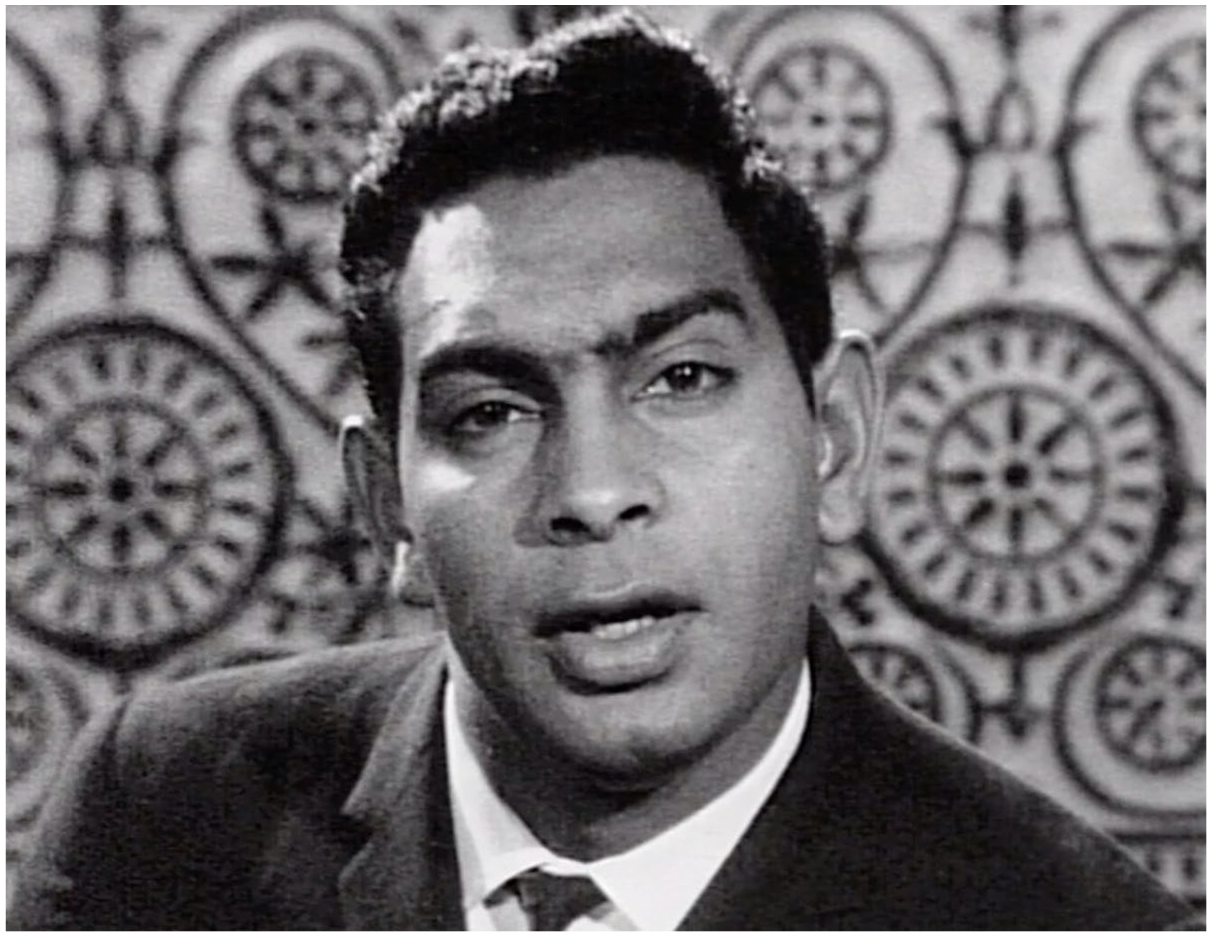
Jimmy Little, presenter of A Changing Race, 1964. Australian Broadcasting Corporation Library Sales.
This research relies on methodologies that historicise the hidden labour of production and considers the nature of public broadcasting and the ways in which cultural commentary was shaped within the production process. Histories of women producers and directors in Australian television are scant, and this article works to address these gaps. It utilises new research that identifies and contextualises the contributions of women in positions of authority, particularly those public broadcasters who sought to shape specific messages for national consumption. The efforts and achievements of these women, like those of many female broadcasters, have been largely ignored or misunderstood by research that fails to recognise and interrogate the discrimination women faced in a gendered production workplace (Andrews, 2019: 10; Hilmes, 1997: 131; Tilly and Scott, 1987: 1). By applying a feminist approach, this article also identifies historical inconsistencies in the representation of women’s work as broadcasters. This is evident in the handful of texts that have discussed A Changing Race. For example, in a 2001 article, writer and film critic Neil McDonald contextualised one particular memory source in such a way that he attributed key directorial decisions made by Denny to a male cameraman (Andrews, 2019: 9–10; McDonald, 2001). This misrepresentation was again relied upon in subsequent discussions of the controversial documentary (Fitzsimons et al., 2011; Laughren, 2010). This article subsequently reclaims Denny’s key role in A Changing Race.
More broadly, this article illuminates how women in public broadcasting expressed a desire to manifest their own type of post-war feminism, a social maternalism framed as active citizenship. Denny and Belfrage were members of a subculture of progressive female public broadcasters who felt compelled to critique Australia’s apathetic views of gender, culture and race. They were conscious of their privilege and sought to democratise public broadcasting’s exclusive processes of cultural production. The ABC, with its democratic public service remit and powerful reach and resonance, became the preferred venue for their activism. In the post-war decades, the ABC was a powerful, nationally connected cultural institution and an authoritative site for constructing and debating national identities. It was a locus of privilege at a time of great social, cultural and technological change. Television producers inhabited a highly contested domain where public affairs commentary was produced for national consumption. ABC producers and programmers imagined themselves as the nation’s cultural custodians, the type of people Richard White defined as a community of ‘intelligentsia’ (White, 1981: ix). During this era, a small group of ambitious women strategically negotiated positions of authority within that privileged community of public broadcasters. Denny and Belfrage wanted to play a role in shaping cultural and social discourse within the fora provided by the ABC. Seeing themselves ‘as capable and culturally superior’, they ‘felt confident to speak for others and make judgments about what was best for society’ (Andrews, 2016: 31).
Developing professional agendas
Joyce Belfrage was a British radio and television producer who migrated to Australia after being recruited by the ABC in London. Between 1959 and 1963, she was one of the three pool producers assigned to the Talks Department. Producing a wide variety of television programmes, Belfrage’s major work included The Critics and the Inquiry Into series. She produced episodes that ‘inquired into’ topics such as alcoholism, road safety, homelessness, the rebellious new youth generation and the difficulties facing migrants. Reflecting on her mission to use public broadcasting to critique complacent political cultures and social injustice, she later explained the following: My own philosophy in putting out these programs . . . was to question the values of society. This was the whole point of the program. I hope this was carried on after I left the series. That was certainly the intention at the beginning, and I felt it was of utmost importance in a society as complacent and decadent as the Menzies government’s latter years have produced in Australia. It was necessary to have an inquiring spirit into what were the accepted values. (Belfrage, 2001)
Belfrage’s campaign to produce socially relevant public affairs commentary was disrupted by an ineffective production culture fostered by the ABC’s difficult transition to television. Five years after the introduction of television, the organisation was still struggling to employ the necessary television staff, resources and technologies and found it difficult to implement an infrastructure that could manage them effectively (Andrews, 2019: 166–168; Carmichael, 1961a; Denton, 1968: 59–61). As a consequence, pool producer Belfrage was often removed from her own projects in order to serve the more immediate needs of the understaffed production slate. Compounding her frustrations, she was forced to subjugate her own hard-won position as a senior producer to bolster the skill set of inexperienced male Talks officers, to strengthen their positions at the expense of her own (Belfrage, 2001). One major project Belfrage developed but was unable to complete was Inquiry into Assimilation. The long-form documentary was to be an in-depth study of mission life and the government’s inadequate approach to the ‘care’ of Aboriginal Australians (Figure 2).
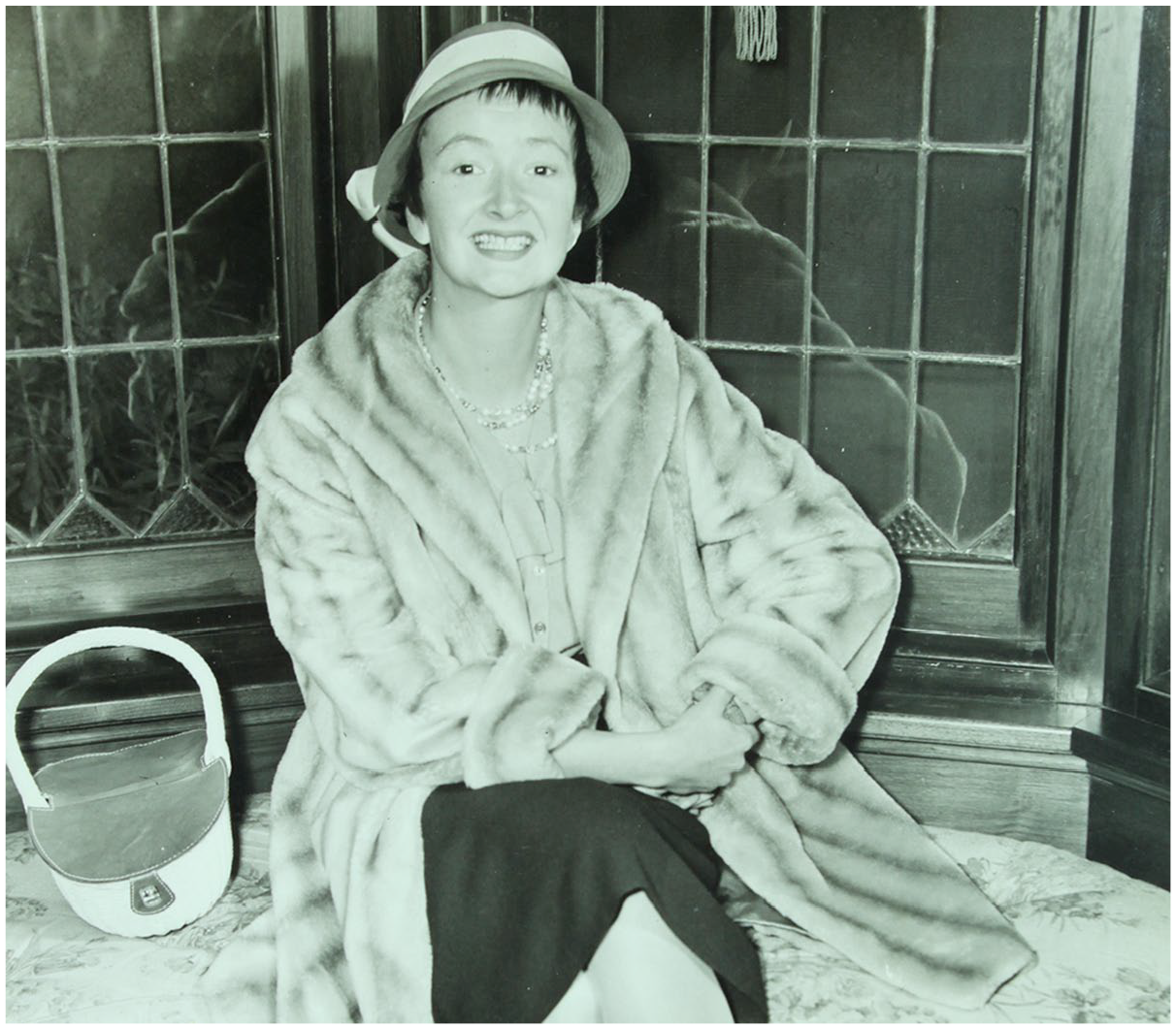
Joyce Belfrage, ABC publicity photo, circa 1960. National Archives of Australia: SP1011/1, 1068.
Meanwhile, Australian producer Therése Denny was experiencing greater success overseas. In the decade prior, realising the lack of potential offered by the local media landscape, Denny moved to London to forge a broadcasting career with the British Broadcasting Corporation (BBC). The ABC workplace manifested conservative social conventions that privileged male identity and authority and Denny could not surmount the obstacles facing a woman wanting to transition from secretary to radio producer. Instead, she joined the progression of ambitious Australian women who sought opportunities overseas as a remedy to the obstacles they faced as professionals in their local environment (Pesman, 1996). Strategically playing upon the ABC’s culture of deference to the BBC, Denny magnified her value in the eyes of reticent local programmers; subsequently impressed with her newfound BBC status, they commissioned her work regularly. During the five years, Belfrage worked at the ABC, Denny had worked on television projects including Portraits of Power (1958), Men of Action (1959), Great Captains (1960), The Titans (1962) and The Long Struggle (1963). She had always wanted to produce a series about Australia and after a few unsuccessful attempts, finally found her opportunity when she was chosen for the producers’ exchange programme between the ABC and BBC in 1963. In just over a year, Denny produced four challenging documentaries. In addition to A Changing Race, she created Weekend in Australia (ABC, 1964c), A Boy in Australia (ABC, 1964a) and The World of Father Silvio (ABC, 1965). In each of these, she alternated between inspirational perspectives that praised the nation’s assets and scathing judgements on the less-admirable aspects of Australian life, particularly its parochialism, cultural complacency, sexism and racism.
Denny had admired Belfrage’s (1960) Inquiry into Migration and during the development of her ABC series, familiarised herself with Belfrage’s unfulfilled project on Aboriginal mission life (Miles, 1963). Folding Belfrage’s concepts into her own documentary, Denny used her substantial authority as a visiting expert to adapt the film to be even more confronting. It was rare for a woman to be given a position producing and directing general Talks content and Denny was strategic in her use of her BBC status to sustain her authority within a production workplace that she knew to be insular, insecure and resistant to women in authority. One factor that likely strengthened her determination to push ahead was her knowledge of Belfrage’s inability to see the controversial project completed. Denny was unwilling to compromise her production values and she ruthlessly manipulated production protocols in order to get her controversial ideas into production. She asserted (and exaggerated) her BBC endorsements to intimidate local ABC programmers to discourage them from giving her unwelcome recommendations, making it difficult for local producers to overrule her decisions (Denny, 1964). Some senior managers were disconcerted by the way she wielded her authority. One memo written to the ABC’s film department stated the following: ‘I have a sneaking suspicion that we may have some trouble with this dame; she will probably hound us to death’ (Edwards, 1963). Denny broke protocol by rushing into filming before a full production assessment had been approved by the ABC’s film management committee, the same committee who compromised Belfrage’s ability to pursue her own project (Andrews, 2019: 222). Capitulating to her autonomous approach, supervisor Kip Porteous wrote to his peers, conceding her special status and clearing the way ahead: ‘I understand that Miss Denny’s technique of production demands a high degree of independence and every effort will be made to avoid encroaching up this unless such action is absolutely necessary’ (Porteous, 1964).
Challenging the status quo on two fronts, Therése Denny and Joyce Belfrage used their intellectual and moral authority to contribute to social debate and encourage social reform at a time when women were expected to dedicate themselves to the domestic domain. They also forged careers as professional broadcasters and worked alongside men in the privileged field of cultural production, where the sexual division of labour systematically compromised the scope of women’s work. Both jobs and content were gendered at the post-war ABC; public affairs, for example, was assigned as a ‘male’ domain. Female broadcasters were constrained by pathways that corralled them into superficial, supportive roles and only a few exceptional women were able to advance (Andrews, 2019: 93–135). A study of the ABC hierarchy in the post-war years revealed that most senior, authoritative roles were deemed ‘male’ and female staff were consistently expected to facilitate the advance of their male counterparts (Andrews, 2019: 93–135). Marilyn Lake described the development of the post-war feminist identity as a transition from the citizen feminist pursuing ‘maternalist missions of protection’ to women seeking ‘equality with, and working alongside, men’ (Lake, 1998: 132–142). Denny and Belfrage manifested both of these ambitions. To do so, they implemented a range of industrial strategies in order to survive and advance. They were transmedial and industrially mobile, and they forged powerful industrial alliances and used their transnational exchanges and technical training to negotiate and advance within global broadcasting networks, greatly strengthening their status at the ABC (Andrews, 2019). After they established a position of authority within the ABC hierarchy, they were more able to present critical commentary and encourage their audiences to rethink outdated and unjust contemporary attitudes and conventions (Figure 3).
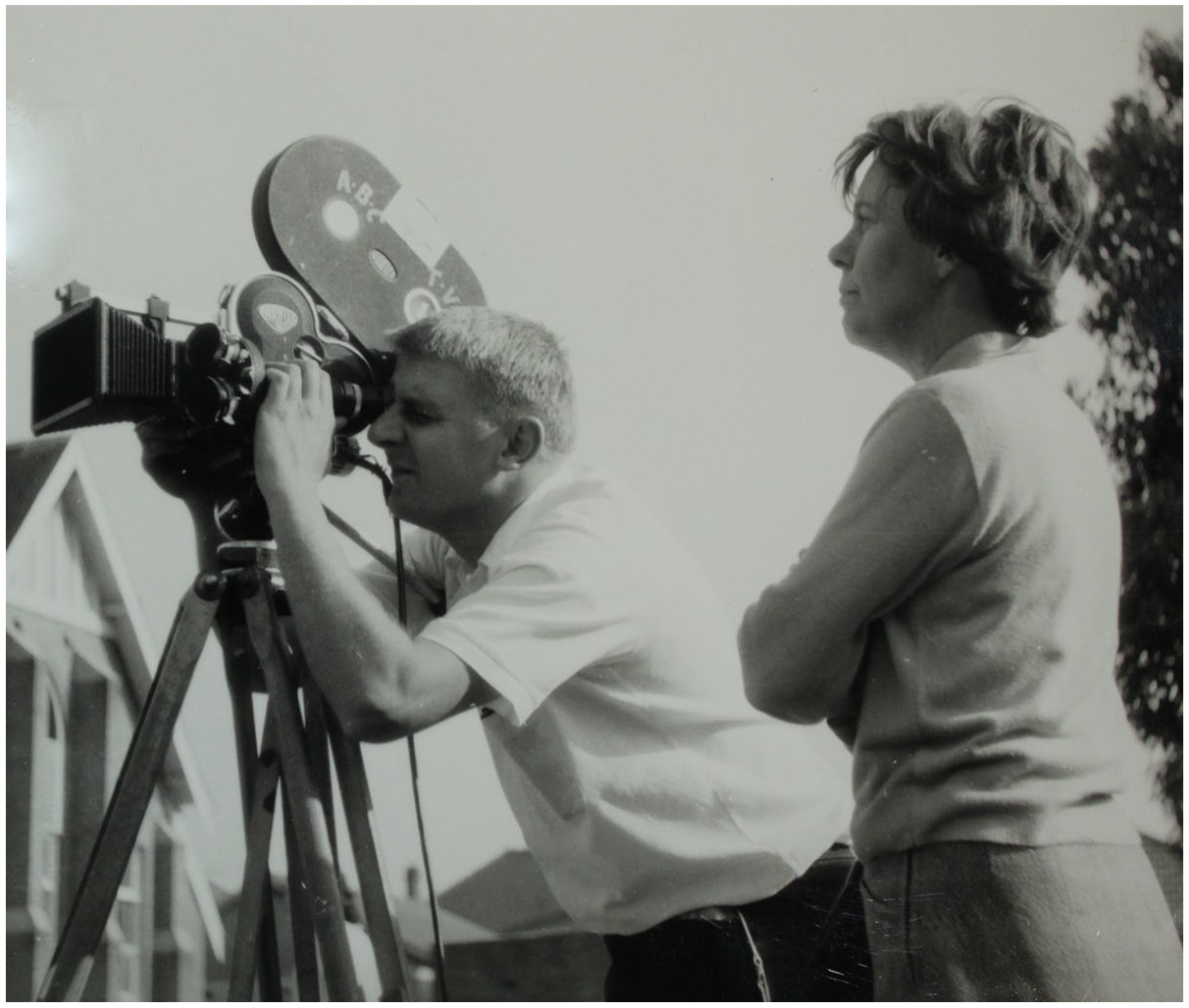
Therése Denny, directing scenes for the ABC in 1963. National Archives of Australia: SP1011/1, 797.
Producing critical commentaries
Denny and Belfrage shared similar philosophies about public broadcasting and its role in social reform. From their youth, they each felt a sense of social responsibility and were encouraged to be active citizens. Like the others in their cohort of elite female ABC producers, they belonged to a generation of women who received an education loaded with moral purpose and social responsibility (McCalman, 1993: 144). Although they did not identify as feminists, they consistently worked against systems of discrimination and argued for gender equality. They instead identified as citizens. They saw citizenship as an effective ideology to manifest their social service agendas; it validated their presence in the public sphere and justified their status as professionals. Their authority as ABC producers was further strengthened by their sense of vocation. They were imbued with a social and moral authority, a certain way of looking at the world, one which aligned with the core philosophies of public broadcasting. They produced radio and television that manifested their desire to remedy injustice and ignorance, working to produce projects that addressed discrimination in a way to evoke empathy and understanding. For example, Belfrage’s (1960) Inquiry into Migrant Problems and Denny’s The World of Father Silvio were created to foster cross-cultural understandings and discourage xenophobia. In Weekend in Australia, Denny subverted a slice-of-life documentary on iconic Australian lifestyles with barbed critiques of the anachronistic gender constructs permeating society. A Boy in Australia offered blunt critiques of Australia’s parochialism and cultural complacency. With A Changing Race, Denny was determined to criticise the nation’s cruel and unjust treatment of Aboriginal peoples.
Both women were successors to an earlier generation of interwar feminists who asserted their political identity as citizens of the empire. According to Fiona Paisley, interwar feminists solidified their own status as active citizens of the British Empire as they adopted a maternalistic approach towards those they saw as victims of colonialism (Paisley, 2000). Unfortunately, the well-meaning yet self-serving agendas of reforming empire-feminists to speak for Indigenous peoples contributed to a further ‘silencing’ of the people they were advocating for (Paisley, 2000: 155). As Aileen Moreton-Robinson has explained, White women were still enacting subjective feminist agendas that worked to dominate, objectify and suppress the diverse perspectives of Indigenous women, well into the 21st century (Moreton-Robinson, 2000: xv-xxv). To some degree, Denny and Belfrage recognised their privilege and made efforts to avoid silencing the people they were trying to help. In the post-war era they had, like the earlier generation of female citizen activists, political and professional identities were firmly entangled within nation and empire. Both women’s careers advanced through their engagement with the connections and channels of exchange offered by the BBC’s global dominion dynamic, a network, Simon Potter described, that was fostered ‘to strengthen the bonds’ of empire (Potter, 2005).
Belfrage’s Inquiry Into series and Denny’s series of four documentaries used public broadcasting television to make pointed criticisms of a complacent and self-congratulatory Australian society. As socially conscious broadcasters, they were responding to a milieu that Judith Brett described as ‘frozen by smugness, fear and indifference, and dominated by the values and assumptions of a bygone age’ (Brett, 1993: 2). As Anna Haebich explains, in the post-war years, Aboriginal Australians were expected to sacrifice their cultural identities in order to receive a ‘beneficial’ assimilation. What resulted was a failure of promise and premise, with ‘institution(al) racism at all levels of society (making) this outcome inevitable’ (Haebich, 2008: 13). Views on assimilation began shifting in the 1960s. Richard White stated that ‘gradually the racial exclusiveness and intolerance associated with “the Australian Way of Life” showed signs of weakening; in Aboriginal policy, in theory at least, “integration” replaced “assimilation”’ (White, 1981: 168). Both women were deeply concerned about Australia’s treatment of its Indigenous peoples and sought to contribute to the building momentum for reform. Adapting Belfrage’s research, Denny produced a film that shone a light on the systemic failure of missions and reserves to sustain a proactive approach to the care of its people.
They were not alone in utilising the ABC as a site for their activism. At the same time, other, marginalised Australians worked to use the ABC to speak to the nation. A casual scan through issues of The ABC Weekly from the 1950s reveals how the magazine provided a forum for debate on a range of issues. It provided a site where a variety of perspectives could be argued directly by ABC contributors and members of the public. In one instance, ‘Aborigines Welfare Officer’, Alex Norton penned a feature story on ‘The Life of Aboriginal Women in Australia’ (Norton, 1956: 14). A call-to-arms to White society to be more welcoming and understanding, Norton obtusely objectified Aboriginal Australians in a clumsy attempt to speak to White readers about the role Aboriginal Australian women play in the assimilation of their race. In another example, Aboriginal activist Faith Bandler (using her maiden-name, Faith Mussing) responded to a contributor’s assertion that Australia did not manifest racist practices, reminding readers that Aboriginal Australians had been made ‘outcasts in (their) own country’ (Mussing, 1956: 2). Explicitly rejecting the statement that ‘a colour bar does not exist’ in Australia she said, We stood shoulder to shoulder with our fellow Australians in the fight against Fascism and the fight for freedom. Unfortunately, it was not a freedom for all. My brothers suffered the humiliation of being refused a drink in hotels and of being segregated because of the pigmentation of their skin. Let us also not forget the Aboriginals – the ‘old Australians’. Not only are they deprived of citizen rights today but they are subject to most degrading laws which deprive them of any semblance of freedom and tend to destroy their self-respect. (Mussing, 1956: 2)
Bandler became a sophisticated media strategist and actively used the media to convey issues at the heart of Indigenous Australians’ constitutional dilemma (Lake, 2002: 95). In 1961, she agreed to help Joyce Belfrage conceptualise her documentary on Assimilation (Belfrage, 2001). Another example of Bandler’s broadcast presence could be seen four years later when she participated in John Thompson’s ABC ‘Features’ radio show segment 100,000 Aborigines, and on the radio show Fact and Opinion, providing commentary alongside White politicians and calling for amendments to the Constitution (Lake, 2002: 95).
After Belfrage reached out to Faith Bandler, she recruited Anthropologist Dr Jeremy Beckett, asking him to share his research and knowledge of the treatment of Indigenous Australians in regional towns and communities. With their advice, Belfrage developed a project that would examine the government’s paternalistic treatment of Aboriginal Australians. It would discuss how they were constrained into remote communities and restricted to living on missions and reserves, with little opportunity for self-determination (Carmichael, 1961b). One final issue the documentary would address was the treatment of children taken to missions, presenting the latest research on the harm experienced by them during the assimilation process. Internal memoranda written in 1961 by the ABC’s Head of Talks Alan Carmichael indicate that he was mindful of recent international expectations for modern, colonised nations to start addressing the damage being done to First Nations communities, with pressure on Australia to proactively address the issue (Haebich, 2008: 15). It explains why he recommended Belfrage’s project as ‘a serious attempt to present the complexities of the problem from the points of view of aborigines . . . teachers, local people, and last but not least, the government who carries the can overseas’ (Carmichael, 1961b). The project was not completed due to under-resourced ABC production infrastructure, yet Carmichael was so impressed by the proposal that he endorsed its resumption a year later when adopted by another reform-driven female producer, Therése Denny.
Of the four documentaries that Denny produced between 1964 and 1965, A Changing Race stands out. The most well-crafted of her locally produced work, it offered a focused interrogation of the treatment of Aboriginal peoples. A Changing Race applied a sophisticated level of filmcraft to present confronting and uncomfortable truths about race relations in a way that would evoke a degree of sympathy and understanding from Anglo-Australian audiences. Presenting its arguments solely from an Aboriginal perspective, it rejected the usual ‘voice of god’ narrative typical in ethnographic documentaries of the time. Rather than having a White narrator – much like a White ‘protector’ – speaking for them, Indigenous Australian contributors were made visible as they spoke directly to the camera. Denny’s documentary made two key points. The first was to shine a light on the systemic failure of missions and reserves to sustain a proactive approach to the care of its people, instead fostering dependency and despondency. The second was that the assimilation and subsequent quality of life of Aboriginal Australians was prevented by their lack of constitutional equality as citizens.
Denny recruited popular singer Jimmy Little, a Yorta Yorta man, to introduce the documentary and perform the role of mediator. He was an eloquent, handsome, talented and ‘assimilated’ Aboriginal Australian who would appeal to ill-informed White Australians. In Little’s introduction, the project’s agenda is made explicit: ‘To tell you of the problems which have prevented them from their rightful place in this community’ (ABC, 1964b). Denny and Little worked together to formulate his narration, incorporating his own opinions and concerns, tying them into the bigger issues being discussed. In a 2001 interview, Little recalled how Denny would ‘raise an issue and gently probe me, then listen intently while I talked’ (McDonald, 2001: 69). Little invited audiences to be patient and understanding as he contextualised the difficulties for some of the programme’s participants: ‘some of them are very inarticulate, not used to talking to white people much less a camera’ (ABC, 1964b). Audiences were introduced to more than 20 contributors, each sharing their concerns and feelings about their role in society and commenting on issues crucial to their social, cultural and political well-being. Contributors discussed Aboriginal land rights, their relationship to land and their concept of the Dreaming. Evoking the richness of their culture and traditions, they described how their culture had been damaged since White settlement.
Consolidating the ideas of Joyce Belfrage, Faith Bandler and Jeremy Beckett, Denny gained additional advice from renowned scholars and Aboriginal rights campaigners TG Strehlow and Charles Duguid. The documentary’s title was a likely response to the title of Duguid’s book, ‘No Dying Race’ (Duguid, 1963). The film’s participants directly challenge Australia’s fatalistic way of looking at First Nation people and the complacent justifications for their segregation. It argued that for people living on reserves and missions, the absence of self-determination and the denial of civil rights meant that life was a vicious circle of lost hope and opportunity. One speaker, Milton Liddle, reiterated the need for a civil rights bill in order to allow indigenous Australians to ‘live the way the white man lives’ (ABC, 1964b). At times, participants imagined a middle ground where their people could be included in mainstream society, given equal rights and self-determination, yet still sustain their own cultural identities. Contributor Malcolm Cooper declared the following: As long as they don’t lose their own identities. They’re Aboriginals sure, but in the community, I want them to be Aborigines that have their own customs . . . that should not be lost, and if they can retain these and mix with the white people. (ABC, 1964b)
At one point, Little stated ‘the worst thing the White man has done to the black has been to take away from him the self-respect he had for his own race’ (ABC, 1964b). The film presented an opportunity for Indigenous Australians to remind viewers of their lack of citizenship and explicitly lament the limitations of a federal system that obstructed their social integration.
The documentary’s thematic approach suggests that Therése Denny was attempting to address the notion of integration as a replacement to assimilation. She encouraged participants to present their own unique views, without White narrators speaking over them and for them. Contributors subsequently represented a diverse range of experiences of assimilation. One speaker explicitly criticised the patronising, hypocritical and self-righteous behaviour of White Australians. Alternatively, another acknowledged a necessity for displaced Aboriginals to succumb to the paternalist systems of mission life, where removal, education and training was their only avenue to survive and adapt to an unwinnable situation. One participant, Mrs Branson, declared that ‘the Government, they do their best really, but they’re not using enough imagination . . . they just don’t consult the people themselves that they’re interested in to find out what they think is best’ (ABC, 1964b). Denny believed that these direct representations would work to counteract the negative stereotypes that insisted Aboriginal Australians were incapable of self-determination.
Further enhancing its persuasive approach, A Changing Race was aesthetically sophisticated and poetic in its visual representations of the Australian landscape. Denny juxtaposed beautiful outback panoramas with depressing images of dilapidated reserves, intercutting footage of healthy and busy people with aimless and unhappy mission dwellers. The film functioned as an expository documentary with a clear aim to promote and persuade. Critic Sylvia Lawson was particularly impressed: ‘Miss Denny’s film pulls no punches. It is the straightest possible brand of film reportage’, going on to argue, ‘this is propaganda of almost incendiary energy; Miss Denny flings us the sourest part of the present situation and tacitly challenges us to digest it’ (Lawson, 1964: 19–20). While the press was generally full of praise for the documentary (TV Times, 1964: 1B; The Times Wollongong, 1964), the response of one critic reflected how some White Australians preferred to maintain the illusion that Australia’s ‘Aboriginal problem’ was comfortably resolved. Women’s Weekly TV critic Nan Musgrove wrote how ‘irritating’ the project was for its failure to contextualise the Whiteness of its Indigenous contributors and its lack of a narrator, evidently something that she believed ‘made a difference’ when evaluating their opinions (Musgrove, 1964: 15).
Conclusion
A Changing Race was endorsed by senior ABC programme executives like Alan Carmichael and Clem Semmler, who saw it as an important piece of social commentary. However, there was also some consternation among ABC management once they saw the final project, with some debate behind the scenes between bureaucratic factions (The Canberra Times, 1965: 3). Semmler defended the documentary, stating, The film in my opinion clearly says some of the things which ought to be said about the plight of aboriginals in Australia including many things (and sights) which most of us don’t care to think about and most organisations concerned with the welfare of aboriginals probably prefer to keep in the background. For this reason I am sure that some of its aspects will not please mission societies, departments of native administration etc. (Semmler, 1964)
Unlike her earlier programmes, which were readily shared between the BBC and ABC, Denny’s controversial documentaries were withheld from international circulation. This was despite the positive reviews and numerous requests for repeat broadcasts and copies of the film from government departments such as the South Australian Department of Aboriginal Affairs, research institutes such as the Anthropology Institute of Anatomy, community groups and individual viewers. Ultimately, A Changing Race was unrepentant in its advocacy. The film provided a platform from which Indigenous Australians could speak directly to the White Australia and constructively criticise the inadequacies of racist policies and cultures.
A Changing Race was championed by two women who saw themselves as cultural activists and advocates for marginalised Australians. Denny and Belfrage’s careers illustrate how certain female producers saw the ABC as an effective way to contribute to public discourse in the post-war era. Through the powerful reach and resonance of television, they provided alternatives to the dominant Anglo-centric and androcentric commentary produced within the public sphere. Critiquing the cultural complacencies that dominated post-war society, they encouraged Australian audiences to embrace new ways of thinking about their world, and others.
