







Abstract
This article seeks to understand how Latin American feminist public expression has gained algorithm-mediated visibility on social media. To this end, a cross-platform analysis was conducted for two issues: the legalisation of abortion in Argentina and the struggle to eliminate violence against women. The data were collected on four platforms: Twitter, Instagram, TikTok, and YouTube through the representative hashtags, ‘#abortolegal2020’, ‘#25N’, and ‘#niunamenos’. Digital critical methods were employed to gather data and approach high-visibility users, visual messages, and hashtagging practices. The findings reveal two configurations of algorithmic mediated visibility, formed by assemblages of actors, formats, and knowledge: platform vernaculars and algorithmic resistance. Both result in a mutual shaping between platforms, seeking to impose a quantitative logic of visibility, and feminist actors, using the tactics of algorithmic resistance to give visibility to the content, aesthetics, and resignified messages about their struggles.
Keywords
Platforms as stages for the feminist struggle
Through both organised and spontaneous activism, Latin American feminism rallied around two main issues in 2020: eliminating violence against women (VAW) and abortion legalisation (AL). Twice, these issues inspired large collective expression in public spaces: first on 25 November 2020, when protests against sexist violence were organised in several Latin American cities, and, second, in December 2020, when mobilisations supporting legalising abortion occurred in Argentina. Street demonstrations found continuity in social media because of the difficulties for the displacement of the activists and the exacerbation of domestic violence during confinement caused by COVID-19 (UN Women, 2020a).
Digital activism – which occurs in, with and from digital media – has public expression, defined as a set of communication practices in digital media intended to make visible world problems and visions (Flores-Márquez, 2019). Participatory media (Jenkins, 2006) link the voices of activists to social media through public figures (Yanisky-Ravid and Lahav, 2017), micro-celebrities (Marwick, 2017) and produsers (Bruns, 2008). In addition to converging with media industries, public figures also contingently engage with feminist social causes.
Messages consist of heterogeneous content: digital news, activist statements, political messages, videos from the music industry and user-produced content. Political causes and social claims are entangled with native media contents and formats aligned with the platform's politics of algorithmic visibility, which are guided by data-driven metrics (Cotter, 2019). Algorithmic visibility is a kind of power (Bucher, 2018) that decides who and what can or cannot be seen (Gillespie, 2014). These decisions are linked with a complex set of parameters aligned with the platform's interests (Petre et al., 2019; Nieborg and Poell, 2018). Public speech is not free from the possibilities and restrictions imposed by the social platforms that host it. In this sense, there is a tension between the alternative digital practices typical of social movements and the extractive and quantifying logic of social platforms.
In this context, feminism on social media seeks to achieve visibility, establish topics and perform in collaborative movements, ‘hacking’ recommendation systems (Bishop et al., 2020) and deploying knowledge about algorithmic performances to enact algorithmic resistance (Treré, 2019) toward the patriarchal political structure and platforms’ visibility politics. Although studies have examined the expression of feminism on social media using hashtag feminism (Dixon, 2014), scholars have paid scant attention to the actions of algorithms.
Poised at the intersection of feminism and media studies, this article seeks to understand, on the one hand, how Latin American feminist public expression has gained algorithm-mediated visibility on social media, and, on the other, to determine how algorithmic visibility shapes feminism when its claims converge with platform vernaculars, defined as ‘shared conventions and grammars of communication which emerge from the ongoing interaction between platforms and users’ (Gibbs et al., 2015: 257). This study approaches the subject through a comparative multimodal analysis of a set of feminist public messages posted on Twitter, Instagram, YouTube and TikTok by high-visibility actors (Omena et al., 2020) about AL and VAW.
The article follows with a conceptual framing of algorithmic visibility and algorithmic resistance. It then contextualises Latin American feminism as a social movement and discusses how the platform vernaculars shape feminism as a public (Warner, 2021). After describing the methodology, the findings outline two configurations of algorithmic-mediated visibility. In the first, actors employed the algorithmic logic of social media, adopting platforms’ vernacular genres and formats to transmit feminist messages and transform the social movement into a broader phenomenon that takes on the characteristics of a feminist public and can be framed in the perspective of popular feminism (Banet-Weiser, 2018). The second, led by the activist core (Marat, 2021) of the feminist movement, resists political structures and forms of algorithmic visibility based on business logic and metrics. Together, the digital practices of the core of the social movement and those of a feminist public could increase the possibilities of influencing public policies in favour of women's rights. Finally, the conclusion discusses the risks and benefits of these complementary methods for Latin American feminism.
Data activism: politics of visibility and algorithmic resistance
In recent years, activists and academics have paid attention to data activism, defined as participating and acting through software and data to solve practical problems, resist and orient themselves to data justice (Milan and Treré, 2019). Milan (2017) admits that the primary activity of social platforms is datafication, ‘quantified social interactions were subsequently made accessible to third parties, be it fellow users, companies, government agencies, or other platforms’ (Van Dyjck, 2014: 199). However, user actions, including posts, metrics and information distribution, can benefit social activists in terms of agency construction, identity, and visibility of struggles. Data activism opens the question of how the algorithmic power of visibility affects digital social movements (Milan, 2015).
Algorithms are more than just a set of instructions encoded in software. Their ability to process, filter and rank data gives them power and makes them political. Algorithmic power is inherent in each situation and helps produce specific ways of acting and knowing. Its politics consists of making the world appear in certain ways over others (Bucher, 2018). Such is the power of platforms, which manage content visibility through ‘algorithmic rankings, determining who and what gains visibility on social media’ (Cotter, 2019: 86). Although algorithmic opacity (Pasquale, 2016) obscures how platforms manage algorithmic visibility, it is certainly aligned with their business models (Nieborg and Poell, 2018) through data-driven metrics like followers, likes and shares (Petre et al., 2019). Focusing on YouTube visibility, Rieder et al. (2018) add other values to the metrics, including novelty, search volume and viewing time. However, the authors recognise users’ visibility as most important and measure it in channel subscriptions.
The platform's politics of visibility represents a challenge for feminism and other social movements that act under non-commercial logic but also need to make their causes visible. In response, a range of alternative uses and appropriations that reinforce users’ agency to challenge the platforms’ algorithmic power and attention policies have emerged (Velkova and Kaun, 2021). For instance, some studies show alternative tactics for digital activists to face algorithmic power and gain visibility. Moreover, Christian et al. (2020) consider that alternative and marginalised narratives could be profitably disseminated on large platforms if they are communicated in a language shared between platforms and groups and are suitable for quick interpretation. Hutchinson (2021) proposes that digital activism initiates a process of micro-platformisation and algorithmic negotiation in which movements adopt and adapt certain practices of content creators to gain algorithmic visibility. Another approach is based on the algorithmic knowledge of actors. For example, Treré (2019) identifies the algorithmic resistance tactics that activists have developed to expose and act against the logic of political parties and institutions. Such algorithmic resistance includes four components: envisioning social media algorithms as political opportunities; knowledge on how to carry out digital political actions; a network of activists’ profiles and accounts that can be activated at any time, and a proper social and political context (Treré, 2019). Algorithmic resistance is directed towards political parties and structures; however, activists’ knowledge of algorithmic operations also addresses the politics of visibility on platforms. Activists play the game of visibility (Cotter, 2019) by applying algorithmic knowledge to hashtivism practices (Blanco-Ramírez and Scott-Metcalfe, 2017) to position their demands as trends, dispute the meaning of hashtags or connect the practices of street mobilisation with the styles and aesthetics of social platforms.
Latin American feminism: study cases
Feminisms in Latin America are not a homogeneous movement. They are marked by unresolved conflicts, such as racial and social class differences, in societies with an unequal and patriarchal structure (Bard-Wigdor and Artazo, 2017). Despite differences and conflicts, Latin American feminisms have common struggles with a central purpose: ‘the conquest of equal rights for women and the extinction of subordination of any dominant male guardianship’ (Barrancos, 2020: 17).
Widespread problems across the continent, such as the increasing number of conservative groups (de la Torre and Seman, 2021), economic inequities, corruption, high levels of impunity, weak economic development and violence from organised crime, have widened gender gaps (OECD et al., 2020). Although Latin American countries have committed to promoting gender equality through creating ministries for women, legal reforms, criminalising gender-based violence and establishing gender quotas for political offices, women's rights are not guaranteed (CARE, 2020).
Although the early feminist movement was small, it has begun to amplify its base in recent years through a constitution of a heterogeneous force. Constructing feminist spaces in various institutions, establishing relationships with the State and forging transnational connections through mass media and social media contributed to this expansion (Paradis and Matos, 2013). Latin American feminisms have articulated shared purposes despite their differences; thus, this work uses the singular term ‘Latin American feminism’.
This study addresses two historical struggles in Latin American feminism: legalising abortion (LA) and eliminating violence against women (VAW). LA is one of the most debated issues in Latin American feminism (Larsen, 2016). Some Latin American countries criminalise all types of abortion, while others allow it under certain circumstances, and some regions or countries have recently decriminalised it (Ester and Chavez-García, 2019). Among the latter is Argentina, where, after public debate sparked by feminist groups since the 1980s, abortion was decriminalised in December 2020. Although congress addressed abortion in 2018, the hashtag #abortolegal2020 refers to a second round of debate. The renewal of seats in congress and the public support from the president-elect in 2019 made legalisation possible (Barrancos, 2020). Feminist and human rights experts expect that this victory may spread throughout Latin America (UN Women, 2020b).
WAV is a major concern in the region. Although 13 of the 20 countries in the region have comprehensive laws on violence against women (GEO, 2019), statistics show that 60 to 76% of women have suffered some type of violence due to their gender (ECLAC, 2020). There are many obstacles to ending violence against women, including the negligence of justice operators, re-victimisation by authorities and the media, and a lack of training in legal institutions to respond and follow up on cases (Cerva, 2020). The political opportunity to install an agenda that adequately addresses VAW is weaker than the opportunity granted by the AL in Argentina. In 1999, the General Assembly of the United Nations declared 25 November the International Day for the Elimination of VAW (UNESCO, 2018). Every year, on that date, women mobilise throughout Latin America. Online, the hashtags #25N and #niunamenos are most often used.
Feminism as a public and platform vernaculars
When feminism converges with social media expressions, it takes a different cultural form from social activism. This cultural form adopts forms of expressions shaped by ‘strategies, mechanisms, and economies encoded on their social affordances’ (Milan, 2015:3). The cultural production around feminism on social media enables a feminist public, understood as the participation of unknown self-organised and connected people around a discursive issue (Warner, 2021) that presents as an entanglement between people, expressions, and shared feelings of belonging and solidarity around actual and imagined communities (Papacharissi, 2015). To make an impact, social movements need a broader and more popular public than the activist core. Studying feminist mobilizations against sexual violence in India, Marat (2021) highlights that transformations were made possible by political opportunities and activist networks that obtained solidarity from heterogeneous audiences by promoting their historical frameworks: ‘protests brought together members of the public who shared feminist concerns, but they had not been actively voicing them’ (Marat, 2021: 26).
The convergence of media publics and feminism has been critically framed by various perspectives, including approaches as postfeminist sensibility (Gill, 2007) and popular feminism (Banet-Weiser, 2018). The perspective called postfeminist sensibility considers that ‘postfeminist media culture should be our critical object, rather than an analytic perspective’ (Gill, 2007: 148). It analyses the recent postfeminist cultural production as a set of ideas, images and meanings that ‘focus on women's bodies as their source of value and the centrality of ideas of ‘makeover’, including the requirement to ‘upgrade’ one's psychic life to be positive, confident and glowing’ (Banet-Weiser et al., 2020: 5), reinforcing women's autonomy to be healthier and more positive. More open to broadening the public, popular feminism ‘refers to practices and conditions that are accessible to a broad public, from organising marches to hashtag activism, to commodities.’ (Banet-Weiser et al., 2020: 9).
These media and feminist perspectives engage with platform vernaculars, popular genres of communication that shape messages through platforms’ characteristics, and determine stable forms of communication (Gibs et al., 2015). Feminist publics reappropriate these vernaculars for the viralisation of feminist messages. Feminist studies in Latin America have recently begun considering the convergence of activism and social media. For example, Laudano (2018) and Tarullo and García (2020) identify a connection between some public figures in the massive and social media expressions regarding abortion debates. These authors note that social media promotes feminism on social networks through specific campaigns led by public figures with numerous followers, which make visible feminist actions and connect them with other audiences. For Rovira-Sancho (2018), social platforms offer opportunities for expressions where the personal is political: a politic without a central command.
This article aims to go beyond the visibilisation and broadening of feminist publics and seeks to discuss how these mediated practices shape and transform the feminist movement through the tension between activism and the commercial logic of platforms that have the power to give format and algorithmic visibility to feminist messages. As Milan highlights: ‘ platforms promote a (socio)cultural shift that alters the process of inscribing meaning into our contemporary social and spatial interactions’ (Milan, 2015: 3). This issue will be discussed in the conclusion.
Methods and materials
This study uses cross-platform methods (Rogers, 2017) to address feminist expression on four platforms: Twitter, Instagram, YouTube and TikTok. The first three are high-reach platforms for users in Latin America (Carrasquilla, 2019; Statista, 2021; Vicinitas, 2018), while the latter is on the rise (Ceurvels and Williamson, 2020). Twitter and YouTube have been studied concerning digital activism and feminism (McDuffie and Ames, 2021; Núñez-Puente et al., 2015), while Instagram is only just beginning to be studied in this regard (Özşenler, 2021; Tarullo and García, 2020). There is no previous literature on Latin American feminism and TikTok due to its novelty and recent popularity (Abidin, 2021).
Digital critical methods, ‘which draw on the data generated by platforms to treat them critically’ (Burgess and Green, 2018: 17) were employed to gather data and associated metrics from a set of hashtags related to VAW – #25N, #niunamenos (‘not one less’) – and LA– #abortolegal2020 (‘legal abortion 2020’). Following Lievrow; (2011) concept of mediated mobilisation, data collection was carried out simultaneously with the main events related to each topic: 25 November 2020 for the first two hashtags and 11 December 2020 for the second. This strategy allowed for the collection of a large amount of data from each date (Table 1).
Data collection by central theme and platform.

As each platform has particular conditions of data access, different scrapers (Marres and Weltevrede, 2013) were selected. RStudio libraries were used for Twitter, Instagram and TikTok data. Rtweet (Kearney, 2021) and Tiktokr (Guinaudeau, 2020) have access to data through Twitter and TikTok APIs, and Instacrawler (Schroeder, 2019) collects data with screen scraping methods (Elmer, 2015). YouTube data was collected with YouTube DataTools, selecting a video list by relevance and collecting 500 videos by launch (Rieder, 2015).
Two subsets were formed to conduct the present study. Following the algorithmic visibility approach, Subset 1 included a set of publications created by high-visibility users, while Subset 2 focused on a broader set of Instagram posts to study their hashtags as communicative objects. Subset 1 consisted of posts published by the ten users with the highest visibility by platform. These users received the highest engagement in terms of likes, views and retweet metrics and made up the smallest part of a sample (Omena et al., 2020). The criterion for selecting the subset was that the engagement rate exceeded 20% of the total sample and that the post gathered over 2000 reactions. Below that rate, engagement falls and disperses among the rest of the database. This data set brings together 140 posts by 80 high-visibility actors. Table 2 displays the representation of the engagement percentage of the top 10 actors from the complete data set for each platform and topic.
Percentage of engagement by topic and platform of the top 10 users for the total data sets.

As each platform has different elements to produce engagement, the most quantitatively relevant measure was adopted for each of them rather than collapsing the metrics (Rogers, 2017). For Instagram and Twitter, the ‘favourite’ metric, which is quantitatively superior to retweets, was used. On TikTok and YouTube, the ‘views’ metric was used, which is quantitatively superior to likes and comments.
Subset 2 expanded the corpus to posts published on Instagram with engagement greater than 100 likes from the databases detailed in Table 1. While exploring this subset, a co-hashtag referencing contrary positions to abortion legalisation, #salvemoslas2vidas (‘let's save both lives’), was found. To verify if the opposing co-hashtag was present on the anti-abortion main hashtag, a similar number of posts tagged #salvemoslas2vidas were observed.
Data analysis was conducted from a cross-platform and multimodal perspective. The analysis considered the complexity of the data, consisting of images, text, hashtags and links between users (Pearce et al., 2018), while also taking into account the high visibility actors involved (Omena et al., 2020) in the studied issues.
The visibility of messages was studied from three aspects. First, the actors were categorised (Table 3) according to their contribution to feminist expression. Second, visual production was analysed as a vehicle of narrative, affective and identity expression (Leaver et al., 2020) on social networks. Third, concurrent tagging of images (Marres and Gerlitz, 2016) was studied in the second subset to identify the uses and reappropriations of hashtags as narrative objects and to dispute meaning.
Categorisation of high-visibility actors.
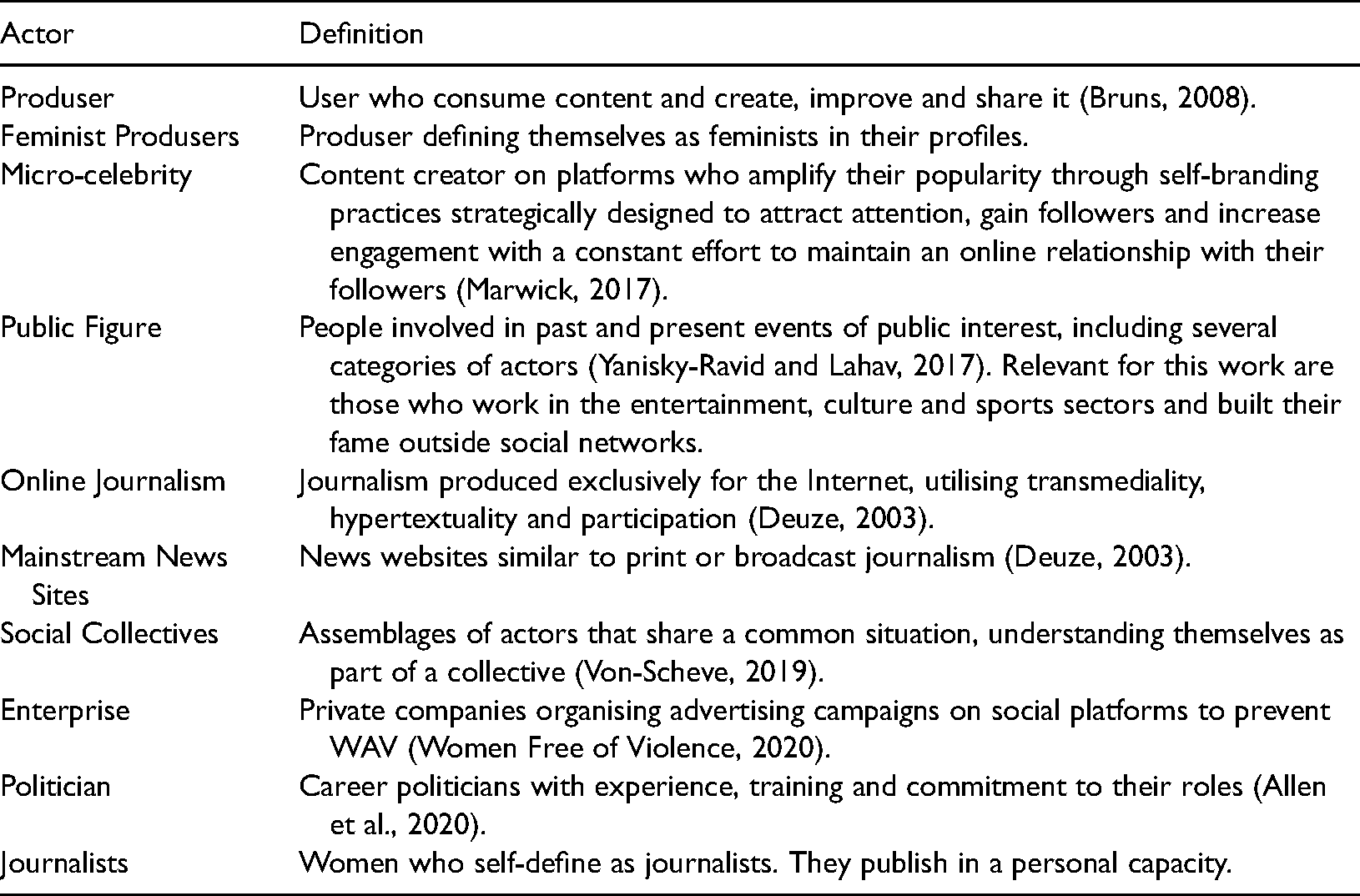
Data sets were managed following AOIR ethical guidelines (Frankze et al., 2020). They are presented anonymously and grouped. No posts are cited, no publications are credited to authors, and no value judgments are made.
Findings
To highlight feminist issues on social media, high-visibility users spread messages, negotiate visual meanings and deploy algorithmic knowledge to dispute intentions on hashtags and make topics trend. The political context and opportunities are also relevant for this purpose. The findings reveal that Latin American feminist public expression gains algorithmic-mediated visibility through two configurations understood as assemblages of actors, expression formats, and knowledge about platforms affordances and algorithmic functioning: the first is focused on platform vernaculars and the second on algorithmic resistance.
Vernacular visibility
Vernacular visibility primarily emerges in YouTube and TikTok content. In this case, the platforms appropriate the feminist topics by shaping their communication patterns through actors, formats and aesthetics. The expressions result from personalised actions, carried out mainly by public figures, micro-celebrities and produsers. The absence of social organisations, media or political actors among the highly visible actors in the case of VAW, indicates that the issue is not a priority on the government and media's public agenda.
Ironically, there is a dearth of women content creators in the high visibility list on YouTube. For example, regarding VAW, the most visible production is a music video by an all-male band with 36 million views. Some female audience members recounted micro-stories about sexist violence in the video's comments section. The list continues with productions from other male musicians and micro-celebrities and another video that sarcastically demeans the feminist struggle. Female micro-celebrities making videos with characteristics of popular feminism (Banet-Weiser, 2018) garner less visibility than male productions, directly proportionate to the channel's number of followers (Rieder et al., 2018). For AL, the most viewed videos came from traditional media and digital journalism sources and some videos by a feminist micro-celebrity. Both cases reflect the convergence between mainstream media culture and popular participation, as Burgess and Green (2018) pointed out.
On TikTok feminist messages gained momentum thanks to micro-celebrities and young female produsers. The aesthetics and expected uses of TikTok shape the videos in which users tell jokes, dance or challenge users with opposing views with humour and irony. Core activists are absent among high-visibility users (Figure 2). The most-watched videos are short performances, including music, dance and role-play. In these videos, women appear facing the camera in a close-up or medium close-up. They use TikTok's features, such as text overlays on some video segments to emphasise audio, denouncing gender-based violence and demanding justice. Here, a body emerges shaped by the platform vernacular: from the postfeminist sensibility view, they are sexualised bodies (Gill, 2007). However, they simultaneously show a collective dimension by using feminist elements such as slogans and hashtags. However, narratives not modelled by the usual aesthetics are also visible: videos introduce live recorded situations of mothers suffering and searching for their missed daughters, due to structural and systematic VAW, forced work, or human trafficking (Velasco-Domínguez and Castañeda-Xochitl, 2020). TikTok's platform vernaculars enable feminist visibility, building upon platforms’ genres and high-visibility uses through soft resources stored and experienced by participants (Milan, 2015). Although this kind of participation capitalises on the interest generated by #25N, it is usually short-lived and runs the risk of dissolving the political aspects of the social protest in content produced by feminist audiences. This dynamic is common for content about eliminating violence against women (Figure 1) and coincides with few political opportunities to promote the issue in the media and political agenda.
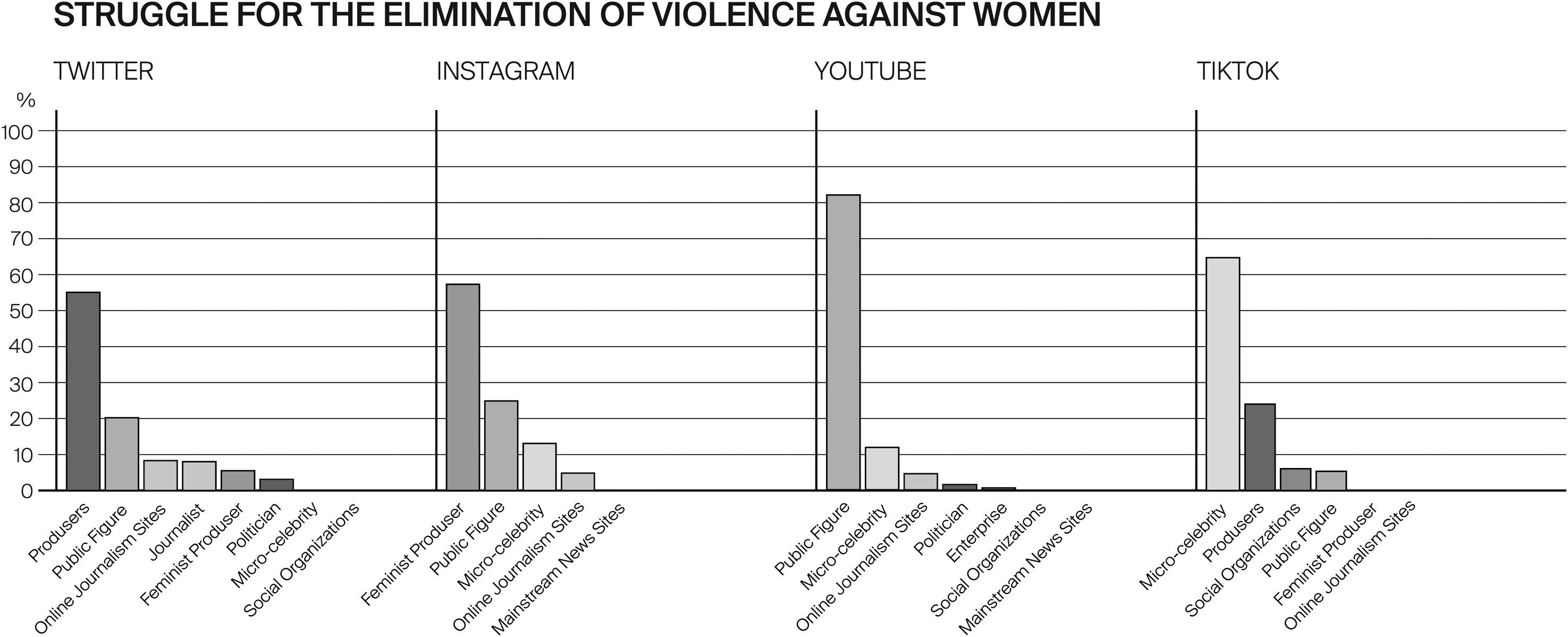
VAW: high-visibility actors by platform. Data extracted from the collected data set (image design by Andrea Febres).
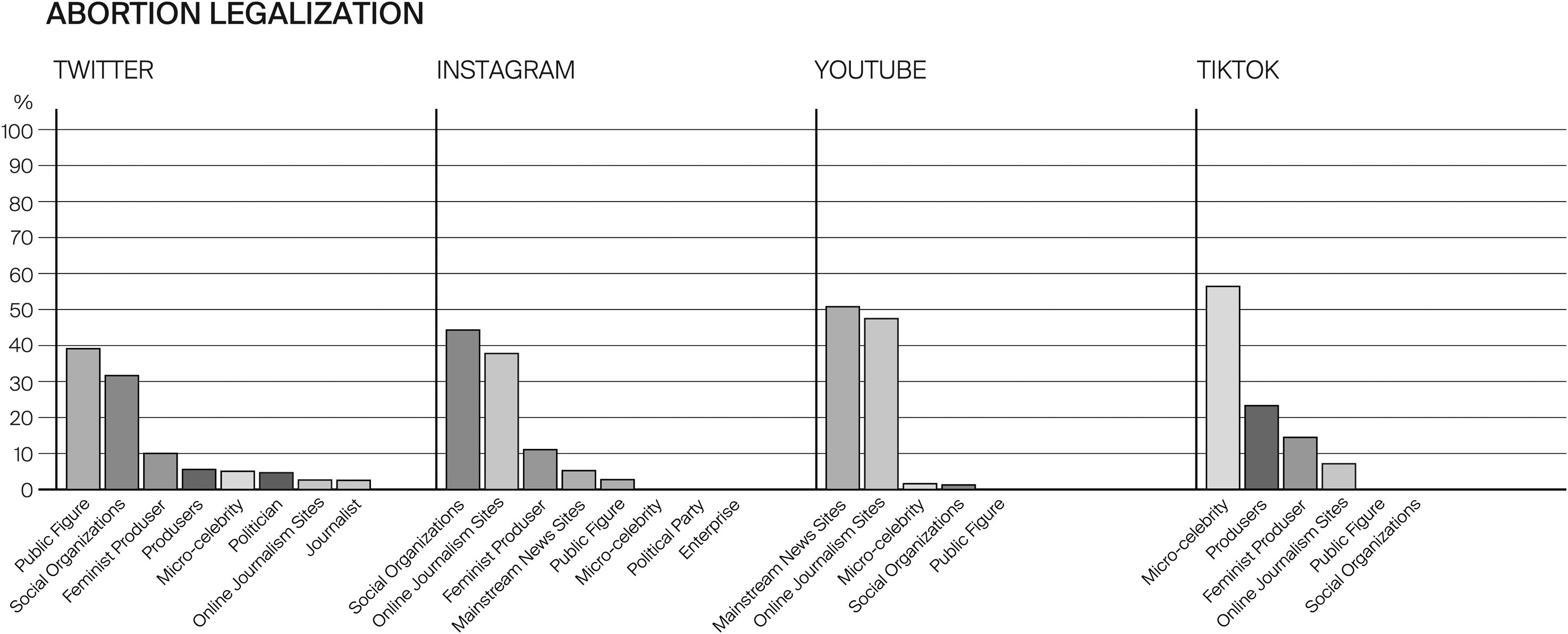
Al: high-visibility actors by platform. Data extracted from the collected data set (image design by Andrea Febres).
Algorithmic resistance
For algorithmic resistance, high-visibility users are feminist collectives and individuals. For AL, high-visibility actors are core activists who have influenced the political arena. Campaña por el Aborto Legal (‘Campaign for Legal Abortion’) and Amnesty International (Barrancos, 2020) had the greatest visibility on Instagram and Twitter (Figure 2). A significant group of online journalism sites are also high-visibility users, especially on YouTube. On Twitter, core activists are only surpassed by a public figure, a young actress and singer with many followers. However, on Instagram, core activists outnumber public figures and micro-celebrities in engagement, resisting the platform's usual attention policies.
More than half of the high-visibility actors identify as feminists in their profiles, and more than 85% of them identify as women. They have various professional backgrounds, including feminist physicians, journalists and lawyers. Feminist produsers post content regularly and have many followers on their networks. Social organisations, digital media and individual feminists produce the most visible public expressions committed to AL. For this issue, high-visibility users are feminist produsers, mainly on Instagram, or regular users publishing feminist content.
The visual messages of organisations, digital journalists and feminists (Figure 3) addressed legalisation from three interconnected spaces: street, media and networks (Flores-Márquez, 2019). The streets were present in the repeated focus on demonstrations outside the National Congress. Women accessed the parliamentary vote through streaming, both on giant screens placed in public squares and on users’ mobile phones and computers.
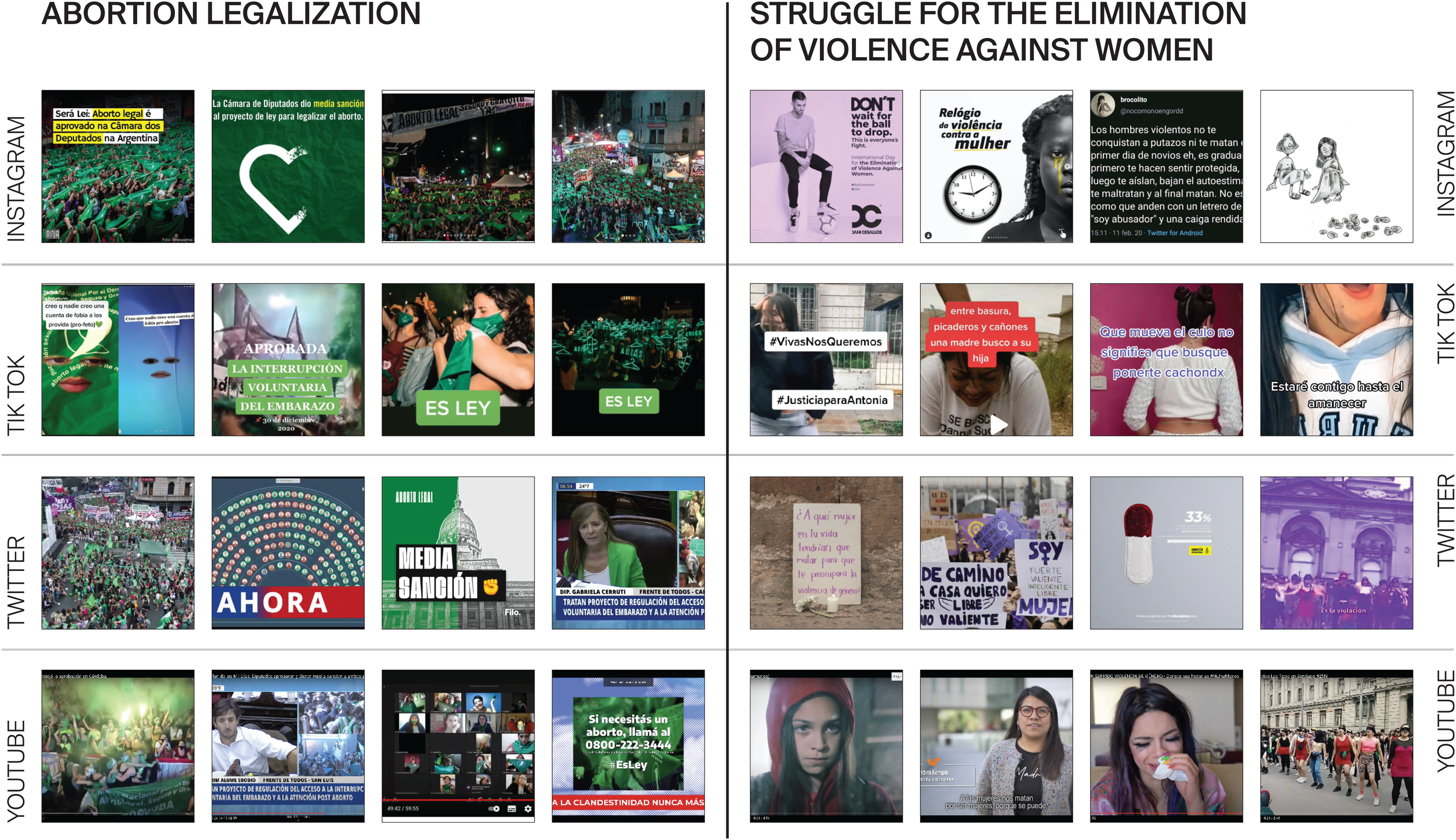
Montage of high-visibility visual messages about AL and VAW. Extracted from collected data sets (image design by Andrea Febres).
While Twitter focused on the congressional debate broadcast by television, Instagram flyers and illustrations embraced the platform's graphic design aesthetic. In these images, the colour purple and the green scarf predominate as symbols of the feminist movement (Bertolaccini, 2020). They constitute an aesthetic of social protest on platforms that, from a postfeminist sensibility, have modelled feminism as ‘desirable, stylish and decidedly fashionable’ (Gill, 2016: 611). On the contrary, the green scarf recalls a history of militancy and human rights, which also materialises in viralised images of other bodies, such as those of historical feminist women attending a mobilisation (Felitti and Ramírez-Morales, 2020).
Other visuals (Figure 3) denote an information flow between platforms: Twitter messages circulate on Instagram, and vice versa. The general logic is verbal rather than visual. Even images of mobilisations focus on posters and slogans. Posts highlight two topics: demanding justice for femicides and texts that make visible and denaturalise daily forms of sexist violence. Although verbal, the messages differ in aesthetics. Those written by hand, sometimes in purple, depict the action of street mobilisation and banner displays, as in the case of AL. In contrast, the digitally designed flyers draw on the aesthetics of Instagram's graphic illustration, including pastel colours. The third group of messages come from Twitter as a screenshot, acquiring different meaning (Highfield and Leaver, 2016): although words are commonplace on Twitter, on Instagram, they become resistance to the image and necessity to explain, report and claim. The purple colour, which refers to the historical claims of working-class women (Huguet- Pané, 2021), distinguishes several visual and written messages.
Although YouTube visibility is linked to platform vernaculars, some core activists attempted to increase their videos’ visibility. Their audience exceeds the number of their channel's followers. The first example is the performance of the Las Tesis collective in Chile, a global symbol of the struggle to end violence against women (Serafini, 2020), which attracted great visibility from a digital journalism channel, despite the channel has few followers. The second is a video made by the Campaña por el Aborto Legal (Campaign for Legal Abortion) collective of a rally titled ‘El pañuelazo’ in reference to the green scarves. Against the backdrop of the COVID-19 quarantine, it brought together thousands of feminists on live cross-platform streaming. The third example is a group of videos on abortion legalisation from a digital journalism site. All three videos attracted wider audiences than their channel subscribers, challenging the logic of visibility being linked to followers.
Algorithmic knowledge is visible on both Twitter and Instagram. At first, regular and feminist produsers led hashtivist actions (Blanco-Ramírez and Scott-Metcalfe, 2017) by tagging images to garner engagement from users who follow these hashtags, recognise content producers with favourites and retweets, and make the topics trend. Moreover, feminist produsers tag their posts with both hashtags in favour of legalisation and those that express contrary opinions. Reappropriating the adversary's space demonstrates a meaning dispute and an effort to make one's own position visible. Hashtags such as #abortolegalya (‘legal abortion now’), #feminismo (‘feminism’) and #niunamenos (‘not one less’) are highly visible in the hashtag #salvemoslasdosvidas (‘let's save both lives’), identified with anti-abortion and anti-feminism positions (Figure 4). However, anti-abortion users failed to insinuate their messages into pro-legalisation hashtags. Several users tagged posts in other sections, like #photojournalism, to ensure relevance for the algorithm and to appear in searches related to different subjects. References to native Instagram practices were also found, such as challenges, community hashtags, mentions of places and marketplaces for identity merchandise (e.g. scarves and pins).
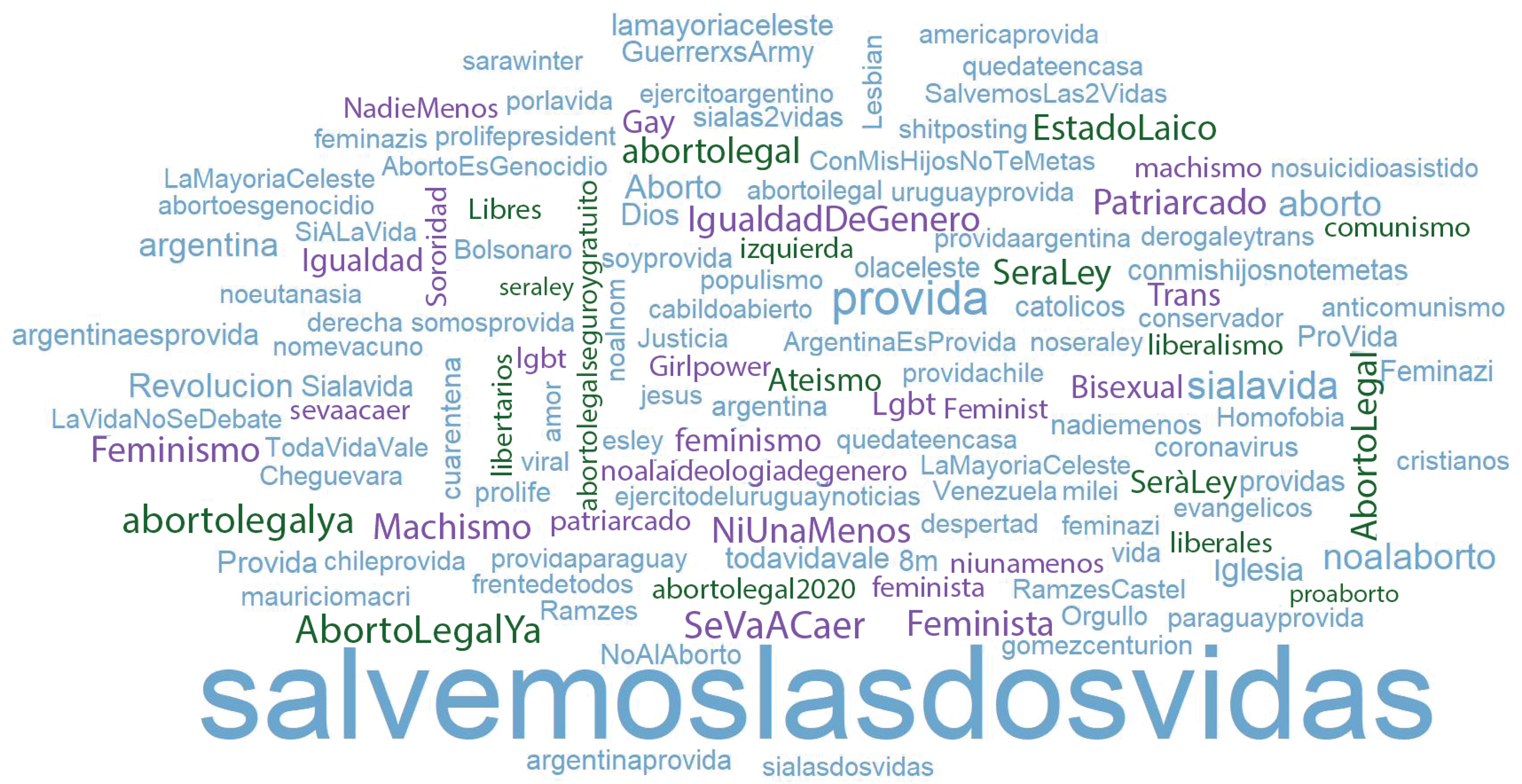
Wordcloud of Top hashtags shared by feminist produsers on anti-abortion legalisation #salvemoslasdosvidas. Light blue: Anti-abortion positions. Green: Pro-legalisation. Purple: Tags related to VAW. Data extracted from the collected data set (image design by Andrea Febres).
Instagram hashtags reflect a solid feminist expression. Tags were related to solidarity, #yositecreo (‘yes, I believe you’), ending sexist violence, #niunamenos (‘not one less’), demanding justice for victims of femicide, #justiciaporiarayroxa (‘justice for Iara and Roxa’). This final tag refers to two Argentinian friends, both victims of femicide. Roxana was found murdered only hours after marching and demanding justice for her friend Iara. Finally, tags such as #lgbt and #transfeminismo (‘LGBT’ and ‘transfeminism’) supported gender diversity. These expressions are transnational: #niunamenosvenezuela, #instachile (‘not one less Venezuela’, ‘Instagram Chile’). Instagram's typical hashtags are present but to a lesser extent: #likeforlikes or #photography are some of the few that appear.
Algorithmic resistance contributed to making AL and VAW visible issues on these platforms in different ways. AL was led by social collectives and digital journalists in a favourable context due to the political opportunity to debate an issue promoted by the Argentinian government. VAW was driven by feminist produsers, who negotiated visual aesthetics with platforms and led hashtivist actions to make the topic trend on Twitter in an environment of poor political opportunity and media participation and the active participation of more socially engaged public figures.
Conclusion
The main contribution of this work is identifying two complementary configurations of obtaining algorithmic-mediated visibility for feminist public expression in Latin America. The platform vernaculars configuration link to high-visibility micro-celebrities and public figures, who add feminist messages to their content on a contingent basis. Algorithmic resistance consists of organised action from feminist collectives, digital journalists, and produsers to challenge the commercial and followers-based logics of algorithmic visibility. Although AL and VAW share some elements of both configurations, algorithmic resistance was more common in AL, while platform vernaculars were frequent in VAW.
AL gave shaped feminist data activism getting visibility to the issue on social media for bringing into them the aesthetics of street mobilizations and the symbols of feminist struggles, as the green colour of the scarfs. The high-visibility expression about VAW is related to certain aspects of popular feminism (Banet-Weiser, 2018). The difference between postfeminist critical perspectives (Banet-Weiser et al., 2020) and Latin American feminism is that the latter does not focus on highlighting empowered individual women through the sexualised value of their bodies. Here, the motivation for the reappropriation of platform genres is the failure of national states in eliminating gender-based violence. Using platform vernaculars is a means of claiming justice and connecting with other women through solidarity and belonging in a space where politics is connected to individual bodies (Rovira-Sancho, 2018). Considering this kind of expression in the context of few political opportunities to solve structural violence offers renewed meaning to the atomised and user-content based expressions about violence against women.
It is necessary to challenge the idea that platforms are information media that make the demands of social movements visible (Laudano, 2018; Tarullo and García, 2020) or even that social movements require a micro-plaformisation negotiation to gain visibility (Christian et al., 2020; Hutchinson, 2021). The broad mobilisation achieved for AL had unique characteristics and was resolved successfully. On the contrary, VAW continues to be an unsolved problem. Once the struggle for abortion legalisation ended, algorithmic visibility shapes contemporary feminism offering it a broad, contingent, and platform-dependent public, in a context of weak political opportunities.
Feminism, as Marat (2021) points out, needs the actions of core activism and those of feminist publics. The activist core seeks and takes advantage of political opportunities. The feminist publics contribute with visibility and awareness to materialise desired structural changes. Further discussion of the benefits of a commercial and platform-dependent logic is needed, as it broadens the public but atomises it and becomes contingent on feminist expression. Visibility based exclusively on platform vernaculars runs the risk of reducing the problem of structural violence to feminist expressions that depend on the affordances and commercial logic provided by platforms.
Regarding the methods, the cross-platform analysis provided a comparative perspective of the roles of platforms and actors. In addition, it highlighted the different forms of feminist public expression and the heterogeneity of the actors who contribute to it. The possibility of agency differs for each platform. Twitter and Instagram have established themselves as spaces of visibility for feminist struggles, and YouTube and TikTok present opportunities for expanding expression.
This study has some methodological limitations. By collecting hashtag data, it omits other posts that may have high-visibility. At the same time, without tags, these messages lose the opportunity to be part of the collaborative strategies of feminist expression identified throughout this work. Collecting data over a short but relevant period had the advantage of capturing the events’ novelty, which is preferred by algorithms (Rieder et al., 2018), and the peak moments of expression, simultaneous with street mobilisations on two dates significant to feminism. However, this method had a limited scope. Longitudinal studies are needed for a deeper understanding of the role of algorithmic visibility and, above all, visibility based on platform vernaculars. Messages from ordinary and low-visibility users should also be addressed to identify the stories that algorithmic visibility is not showing.
Footnotes
Acknowledgments
Gabriela Sued thanks Conacyt- Postdoctoral stays for Mexico for the support for the preparation of this article. The authors thank Smart Data Sprint of Universidade Nova de Portugal for the opportunity to carry out the research that led to this work.
Declaration of Conflicting Interests
The author(s) declared no potential conflicts of interest with respect to the research, authorship, and/or publication of this article.
Funding
The author(s) disclosed receipt of the following financial support for the research, authorship, and/or publication of this article: This work was supported by the Conacyt, Consejo Nacional de Ciencia y Tecnología (grant number Estancias Postdoctorales por México, Sistema Nacional de Investigadores).
