







Abstract
The growing presence of social media in children's everyday lives has intensified concerns about its relationship with mental health. This study examines how differentiated patterns of online media use are associated with suicidal ideation (SI) among Spanish children aged 10 to 15, incorporating direct cybervictimization (DCV) and age within a moderated mediation model. A nonexperimental, cross-sectional design was implemented using data from a nationally representative survey conducted in Spain (N = 804). Based on reported attitudes and uses of media and technology, three user profiles were identified through exploratory factor analysis: lurkers, characterized by predominantly passive consumption of online content; sharers, defined by the creation and public distribution of content; and interactors, whose activity centers on reciprocal exchanges with online contacts. The analysis confirmed differentiated associations across profiles. For sharers and interactors, the link with SI operated mainly through higher levels of DCV. Among lurkers, a direct association with SI was observed. Age exerted a limited moderating role within the model. Taken together, these findings underscore the importance of distinguishing between participation profiles and exposure to online aggression when examining SI in childhood, rather than relying solely on aggregate measures of social media use.
Introduction
The internet has become a fundamental scenario for social life (Notredame et al., 2018). In that sense, social media platforms offer a wide, ever-changing, and complex range of possibilities for mediated interaction (Bayer et al., 2020). This interaction can be unidirectional or reciprocal, synchronous or asynchronous, public or private—just to name a few key options. In line with the classic Uses and Gratifications approach (Katz et al., 1974), users of these platforms are active agents, making individual choices based on their specific expectations and needs (Ferris et al., 2021), and different types of use yield different impacts on each user's mental health (Kross et al., 2021). Thus, users turn to these spaces to fulfill various needs—such as escape and entertainment, but also learning, information seeking, relationship building and maintenance, and presenting themselves to peers as more popular (Kircaburun et al., 2020).
Social media not only facilitate new ways of connecting with other users but also allow the development of all kinds of strategies for monitoring one's own social performance (popularity and centrality), relationships with other contacts, and comparison with their self-presentation performances. The existence of social metrics that synthesize, in quantitative terms, the amalgam of affective expressions produced on profiles within these platforms has contributed to new practices of social surveillance and self-surveillance, including an “imagined surveillance” driven by the idea of being observed by unforeseen audiences on social media who evaluate us (Duffy and Chan, 2019). These metrics are interpreted by adolescents to evaluate the social validation they receive and to monitor their own evolution on the platform (Caro-Castaño, 2023). Various studies on social media have detected anxious behaviors by children and adolescents in relation to the obligation they perceive to keep their profile active for self-presentation (Boyd, 2015; Mascheroni et al., 2015), but also in relation to the tasks they perform with other contacts (liking, commenting, and recommending) so that these act reciprocally and thus achieve a certain volume in the social metrics of their publications (Turkle, 2011; Chambers et al., 2018), even engaging in self-promotion practices (Caro-Castaño, 2022; Rivas-Herrero and Igartua, 2021).
Research into the impact of social media on the mental health of children and youth is a growing concern, given the omnipresence of these digital environments in their socialization processes (Boyd, 2015; Houghton et al., 2018). Yet findings remain contradictory (Perlmutter et al., 2024; Valkenburg, 2022). This inconsistency stems from the shifting, complex nature of social media platforms (Bayer et al., 2020; Sanders et al., 2023), the varied uses and gratifications each user finds in them (Ferris et al., 2021; Kircaburun et al., 2020; Metwally et al., 2025), and the individual traits of users (Valkenburg et al., 2024). These digital technologies tend to amplify users’ preexisting mental states (Moreno et al., 2022). Franchina et al. (2018) found that when metrics did not reach the volume expected by adolescents, the respondents experienced a negative impact on their self-esteem. It should also be considered that content related to self-image and corporality on social media constitutes the factor that most affects the mental health of this age group (Mulisa et al., 2025). For their part, Kline et al. (2023), based on interviews with adolescents (12–18 years) who had experienced an acute mental crisis, detected that the interviewees interpreted metrics as indicators of acceptance obtained among their peers, but also as a source of quantitative comparison with their contacts, experiencing envy, depressive mood, and self-harm behaviors when obtaining metrics below their expectations. Nesi et al. (2019), in their work with children and adolescents hospitalized for mental health problems, found that they reported positive experiences on social media in relation to the perception of peer social support, but also negative emotional experiences related to comparison with others’ posts, as well as feelings of social isolation, having a greater incidence in girls than in boys. Also, the work of Timeo et al. (2020) in preadolescents (11–14 years) found that those who had received fewer likes on their posts reported decreases in their self-esteem and in their perception of a meaningful existence, as they interpreted this lack of interactions as a clear sign of social exclusion. In this context, there has been a growing body of research, intervention proposals, and even a culturally embedded ideology (Jorge et al., 2022) centered on the idea that people—especially youth, as a particularly vulnerable group—should incorporate digital disconnection practices into their use of screens, devices, and social media.
Building on this line of research, the present study seeks to examine the impact of online media use on a key dimension of mental health: suicidal ideation (SI), defined as the presence of negative thoughts related to self-harm (Nobile et al., 2021). The following section outlines the hypothesized model, and the main variables involved.
Hypothesized model: the influence of online media use on SI
Online media usage serves as the independent variable in this study (Figure 1). It refers to the ways in which individuals engage with digital environments and can be a determining factor in personal outcomes such as wellbeing and mental health (Thorisdottir et al., 2019; Valkenburg et al., 2022; Verduyn et al., 2017, 2022). Moreover, one of the most extensively studied variables in relation to the effects of social media use on young people is time spent on these platforms (Hilty et al., 2023; Hunt et al., 2018; Kerr and Kingsbury, 2023; Liu et al., 2022; Metwally et al., 2025). In that sense, Hilty et al. (2023), in their scoping review of social media in children, adolescents, and young adults, found that lower levels of use and engagement were associated with improved mood and psychological wellbeing. Similarly, Kerr and Kingsbury (2023) observed that Canadian adolescents showed a positive association between frequent video consumption on social media and the use of instant messaging with the development of mental health issues. Among girls, increased usage time was specifically linked to SI and eating disorders. Liu et al. (2022), in their systematic review, also found a significant association between time spent on social media and the risk of depressive symptoms in adolescents, especially among females. They emphasized the need for future research to differentiate the effects of passive versus active use, as well as various levels of engagement with social media.
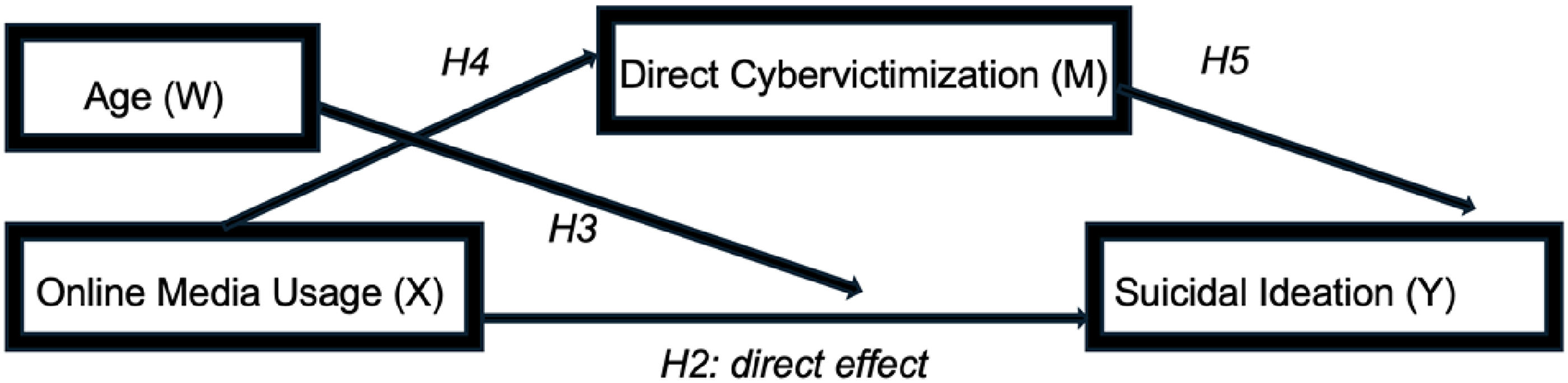
Hypothesized mediation model with a moderated direct effect. Source: Own elaboration.
Although the quoted works remark the effects derived by the individual online media usage, previous research notes that “time spent” does not capture the complexity of user behavior and cannot, on its own, explain problematic patterns such as addiction (Andreassen, 2015). Other studies have examined how time spent on social media affects the overall range of activities in which young people engage. In this vein, Li et al. (2017) found that social media use reduced the desire to socialize and take part in offline leisure activities, while Bozzola et al. (2022) highlighted how excessive use impacted adolescents’ sleep patterns and reduced the time available for offline activities beneficial to their mental health. Likewise, Franchina et al. (2018), in their exploratory study on the connections between FOMO (fear of missing out) (Przybylski et al., 2013), social media use, and phubbing behavior among adolescents, found that FOMO predicted phubbing—in other words, the greater the FOMO, the stronger the tendency to focus on the phone rather than engage in face-to-face interactions. Ma et al. (2025), in a survey of young adults, identified a chained mediating effect involving daytime sleepiness and sleep quality in the relationship between social media use and SI, highlighting poor sleep quality as a risk factor for suicidal thoughts. In a similar way, Kennard et al. (2025), in their study of youth receiving support for depression, SI, and suicidal behaviors (SC) in Texas, found that 40.3% of participants reported problematic social media use. These individuals were more likely to report higher screen time and, compared to those who did not report problematic use, displayed more severe depressive symptoms, anxiety, suicidal thoughts, and poorer wellbeing indicators.
The conceptual model guiding this study is grounded in communication research on media uses and effects. It draws on the Uses and Gratifications tradition, which understands media engagement as shaped by users’ motivations and patterns of participation. It also builds on the extended active–passive model of social media use (Verduyn et al., 2017, 2022), which differentiates forms of engagement and relates them to distinct psychosocial processes. From this perspective, the implications of social media use are not assumed to be uniform but may vary according to how individuals participate and the relational dynamics that emerge within digital environments. Within this framework, direct cybervictimization (DCV) is considered as a potential intervening mechanism in the association between participation patterns and SI, while age is incorporated as a developmental factor that may condition the strength or direction of these associations during the transition from late childhood to early adolescence.
SI is addressed here as an early cognitive marker of psychological distress in childhood and early adolescence (Vargas and Saavedra, 2012), particularly in contexts where experiences of exclusion or humiliation acquire heightened salience. Within digital environments, such experiences often take the form of cybervictimization, including perceived aggression, public shaming, or exclusion from online interactions (Kliem et al., 2020; Malik and Obhi, 2019). Research has shown that adolescents who report negative or harmful interactions on social media, including cyberbullying dynamics, are more likely to present suicidal thoughts and related behaviors (Kingsbury et al., 2021; Weinstein et al., 2021). From this perspective, DCV is conceptualized not merely as a parallel outcome of media use, but as a relational mechanism through which specific patterns of participation may become associated with SI.
Based on this theoretical framework, we propose the following hypothesis:
Online media usage is indirectly associated with suicidal ideation through direct cybervictimization.
Prior research has highlighted the importance of distinguishing between active and passive forms of social media use when assessing their implications for wellbeing and psychological distress (Keles et al., 2020; Kingsbury et al., 2021; Pang, 2021; Thorisdottir et al., 2019; Valkenburg et al., 2022; Verduyn et al., 2017, 2022). From this perspective, different participation patterns may be differentially associated with SI. This model suggests that active social media use (ASMU) can help individuals meet their need for connection and increase their social capital. Two conditions must be met for ASMU to have a positive impact. First, the interaction must involve reciprocity—something critically influenced by whether the user directs their actions toward specific contacts (e.g. tagging someone in a photo and sending a direct message), as opposed to undirected communication that follows a broadcasting model (e.g. posting a profile picture). The second condition is the degree of communion, as the interaction can be either pleasant or unpleasant for the user. In digital environments that enable moral disengagement through anonymity and physical distance, the risk of hostile behavior increases, giving rise to forms of “dark participation” (Quandt et al., 2022), with cyberbullying being the primary example of targeted hostile interaction in these spaces (Verduyn et al., 2022, p. 65).
Passive social media use (PSMU) can have either a positive or negative impact depending on the type of content consumed by the user. The model evaluates this effect through two factors: (a) the degree of self-relevance and (b) the sense of accomplishment the content generates in the user (Verduyn et al., 2022, p. 65). PSMU allows users to compare themselves with others as a strategy for evaluating their own opinions and abilities. In this regard, several studies have found that users’ self-assessment of their achievements in comparison to others tends to be negative, as people commonly present an aspirational self on these platforms (Caro-Castaño, 2022; Marwick, 2015). And there is a detrimental effect on the mental health of individuals who are particularly sensitive to social comparison (de Vries et al., 2018; Hamilton et al., 2024; Rivas-Herrero and Igartua, 2021; Weinstein et al., 2021).
On their part, Kingsbury et al. (2021) studied how active and passive usage patterns related to nonsuicidal self-injury (NSSI) and SC in Norwegian university students. The researchers found that active private use (chatting with friends) was associated with decreased odds of NSSI and SC, while active public use of social media (posting) and social comparison was associated with increased odds of NSSI ideation, NSSI, and SC. Valkenburg et al. (2022) found that, despite heterogeneous results, the ASMU hypothesis received strong support for generating wellbeing versus generating distress; while the hypothesis about PSMU received greater support regarding impacts that generate distress versus those that generate wellbeing. In fact, these trends do not change their positive or negative direction depending on the public or private nature of ASMU and PSMU. Steinsbekk et al. (2021) proposed refining the distinction between active and passive uses by incorporating two specific dimensions within ASMU: “self-oriented” use, referring to the posting of original posts, updates and photos, that is, communication centered on self-presentation; and “other-oriented” use, focused on commenting and liking other users’ posts, which would enhance the subject's social comparison. In their longitudinal study with preadolescents, Steinsbekk et al. (2021) found that increased “other-oriented” use of social media predicted a decrease in self-esteem related to appearance, especially in girls; while “self-oriented” use of social media had no effect on participants’ self-esteem in the transition from childhood to adolescence. In summary, the literature suggests that certain forms of ASMU can generate social benefits (Steinsbekk et al., 2021; Valkenburg et al., 2022), such as feeling connected and gaining social capital (Verduyn et al., 2017, 2022). In contrast, passive use appears to encourage users to compare themselves with others (Verduyn et al., 2022; Steinsbekk et al., 2021), which can negatively affect their self-esteem—particularly among individuals who are especially sensitive to social comparison (de Vries et al., 2018; Hamilton et al., 2024; Rivas-Herrero and Igartua, 2021; Weinstein et al., 2021):
Passive forms of online media engagement are more strongly associated with suicidal ideation than active forms of engagement among Spanish children.
Other works offered alternative explanations for the relationship between passive social media uses and the mental distress of its users. Thus, O'Day and Heimberg (2021) found that people who experience social anxiety spend more time on these platforms with a preference for PSMU. Likewise, Gori et al. (2023) found that users’ self-esteem and experience of anxiety associated with FOMO were related to daily time spent on social media, and that these three factors (self-esteem, FOMO, and usage time) mediated the connection between preoccupied and fearful attachments, and passive social media use.
One of these predictors may be biological in nature, such as age, given that childhood represents a transitional developmental stage (Vargas and Saavedra, 2012). In the proposed model, age is incorporated as a moderator of the direct association between online media usage and SI. This means that the strength of this association may vary across the developmental range included in the sample, while the indirect pathway through DCV is specified separately.
Age moderates the direct association between online media usage and suicidal ideation among Spanish children.
O’Reilly et al. (2018), in a qualitative study with children and adolescents (11–18), found that participants perceived social media as a threat to mental health, citing its role in enabling cyberbullying, generating anxiety, and becoming addictive. Recently, the study by Weinstein et al. (2021), which focused on identifying the effects of social media as reported by adolescents hospitalized for SC, concluded that while these platforms can have both harmful and beneficial uses, “digital hygiene interventions” are advisable. Social media disconnection was viewed positively by participants (Weinstein et al., 2021), particularly given that negative thoughts linked to SI may be associated with perceived violence or aggression experienced within digital environments. In this sense, García and García (2024) highlight how bullying is a global and multifaceted phenomenon that increasingly extends into virtual environments. Social exclusion is one of the forms that cyberbullying takes (Kliem et al., 2020), but also one of the main consequences for victims (Malik and Obhi, 2019), with the opposite response, social support, being the most effective standard prevention for its prevention (Ademiluyi et al., 2022) or mitigation (Macaulay et al., 2019). Social exclusion is often discussed in terms of cybervictimization—that is, the perceived violence within digital environments, whether direct or indirect (He et al., 2024)—which has been selected as a mediating variable. Thus, H4 and H5 emerge:
Online media usage is positively associated with perceived direct cybervictimization, with a stronger association observed in active engagement compared to passive consumption.
Direct cybervictimization is positively associated with suicidal ideation among Spanish children.
DCV includes not only insults or aggressions, but other forms of social exclusion, as being deleted or not included in instant messaging groups (Reich et al., 2018; Turkle, 2011); or the lack of immediate response to messages in a chat when the platform reports that they have been “seen” by the recipient (Mai et al., 2015).
Method
Sample and procedures
This is a nonexperimental, correlational study with a cross-sectional design. The target population of this study consists of boys and girls aged 10 to 15 residing in Spain. To access this population, the sampling frame included students enrolled in the fifth and sixth grades of primary school and the first and second years of compulsory secondary education (ESO) in public, private, and semiprivate schools. The sampling method used was strictly probabilistic, employing a multistage cluster sampling approach with stratification at the first-stage unit level. The sampling units were as follows:
− First-stage unit: The school, as the access point to the target population − Second-stage unit: The classroom/student group − Third-stage unit (sampling element): The individual student. No subsampling was conducted, and all students in the selected classrooms were included
The sampling method ensures the representativeness of the obtained sample, albeit with limitations due to the response rate. It is important to note that the survey did not receive any institutional support from the regional Ministries of Education, making participation entirely voluntary. In most schools, participation depended on authorization from both the school administration and the parents’ association (AMPA). The sample was collected by Sigma Dos—one of the most reputable survey companies in Spain—in 2024. A total of 309 schools were contacted, resulting in participation from 17 schools and 67 classrooms. Although it was not possible to calculate a precise nonresponse bias indicator, this limitation should be considered when interpreting the generalizability of the findings. Even school ownership was not a determinant, as 65% of the participating schools were public and 35% private.
Regarding age, gender distribution, and varying response rates, the estimates were adjusted based on the enrolled population in the fifth and sixth grades of primary school and the first and second years of ESO, as well as the gender distribution of students, using official non-university education statistics published by the Ministry of Education. Before data collection, both the procedure and instruments were evaluated and approved by the Ethics Committee of the University of Málaga (Spain). A total of 804 children participated in the survey, with the following age distribution: 9% were 10 years old (n = 72), 24.1% were 11 years old (n = 194), 25.4% were 12 years old (n = 204), 26.4% were 13 years old (n = 212), 12.9% were 14 years old (n = 104), and 1.6% were 15 years old (n = 13). Five responses were left blank and were treated as missing values.
All data were collected through a printed survey, completed by hand by the surveyed children. To confirm their participation, the polling company obtained informed consent signed by the minors’ legal guardians. Before the questionnaire was administered in the classroom by trained specialists, the children were read an informational assent, which included the option to leave questions blank if they did not wish to share their opinions or participate in the survey.
The hypotheses were tested using a combination of descriptive and inferential statistics. As the primary analysis, we conducted an exploratory factor analysis to identify the independent variables. To evaluate the model presented in Figure 1, we performed a moderated mediation analysis using PROCESS macro version 3.0 for SPSS (version 25), specifying model 5 as described by Hayes (2018). The analysis was conducted with 10,000 bootstrapped samples and a 95% confidence interval.
Measurement of suicidal ideation
SI was measured according to the Paykel Scale (Paykel et al., 1971). This is a dichotomous scale with five variables (Table 1). To check the internal reliability of this construct, we used the Kuder–Richardson coefficient (KR20), a cohesion test for dichotomous variables. For five elements, KR20 reported a coefficient of 0.736, perceived highly acceptable (Betancourt and Caviedes, 2018).
Descriptive statistics of the construct suicidal ideation and weighted average percentile ranking among the surveyed children in Spain (2024).
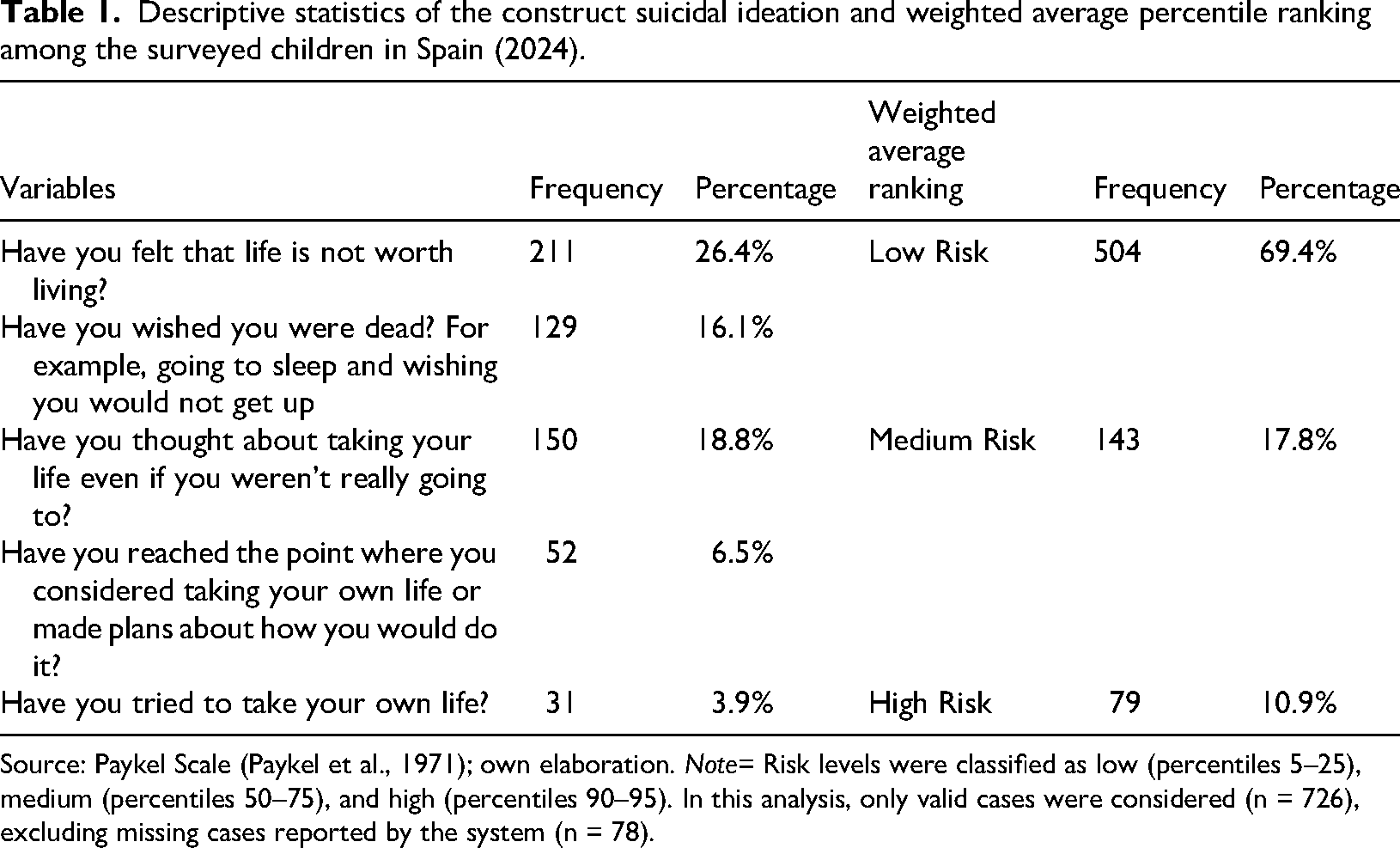
Source: Paykel Scale (Paykel et al., 1971); own elaboration. Note= Risk levels were classified as low (percentiles 5–25), medium (percentiles 50–75), and high (percentiles 90–95). In this analysis, only valid cases were considered (n = 726), excluding missing cases reported by the system (n = 78).
Measurement of cybervictimization
The second construct was measured using the Cybervictimization Scale (Buelga et al., 2019). This study specifically examines variables associated with DCV, assessed through eight items on a five-point Likert frequency scale (Table 2). These items evaluate the victim's perceived experiences of DCV, such as insults or exclusion from social groups. The Cronbach's alpha for the eight items was 0.898, indicating high reliability.
Descriptive statistics of the construct direct cybervictimization among the surveyed children in Spain (2024).
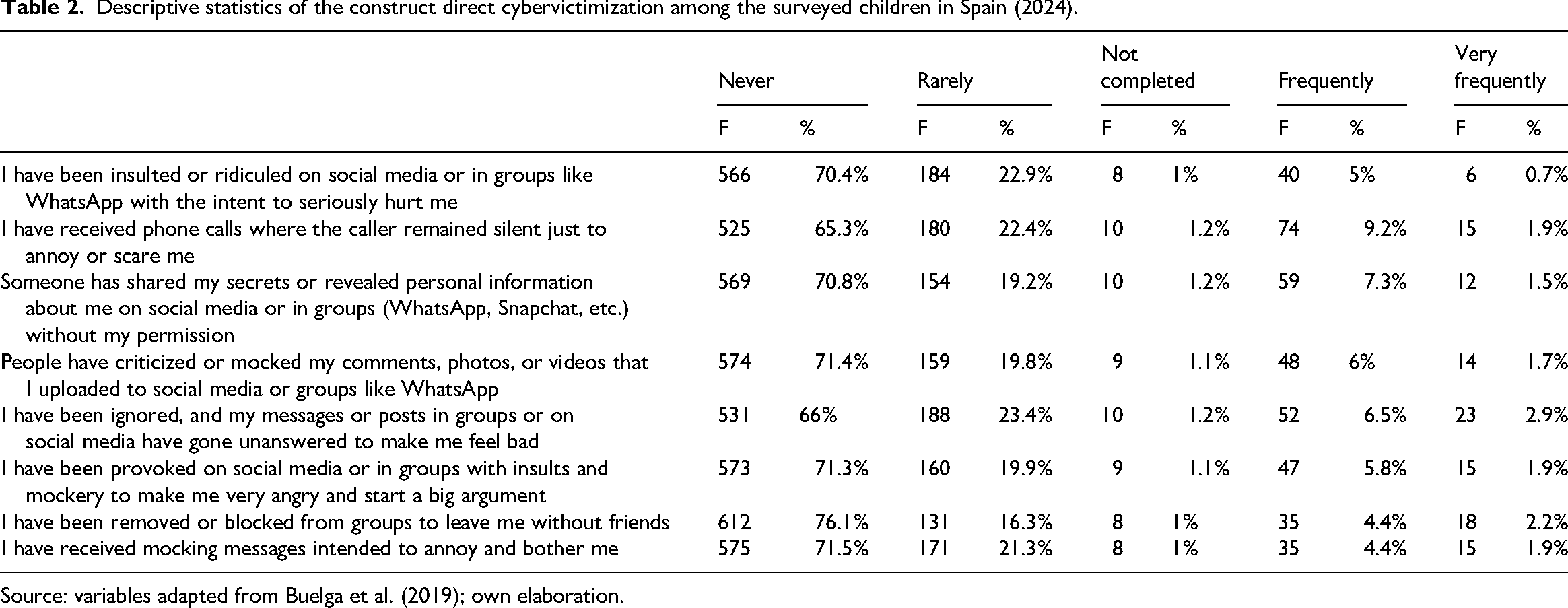
Source: variables adapted from Buelga et al. (2019); own elaboration.
Measurement of uses of media and technology
Our third construct is based in the scale of Attitudes and Uses of Media and Technology, validated by Rosen et al. (2013), previously tested in children with a similar profile (Rosen et al., 2014), and partially adapted by the study's researchers. This scale measures 50 different attitudes and uses, but according to the characteristics of our sample, we only selected 14 variables related to uses of media and technology. These questions were measured using a Likert scale of frequency. After data analysis, and to ensure the reliability of the study, we had to exclude two variables. The first, “I play video games with violent content on a computer, game console, or smartphone”, was too broad and did not provide a contrast with other types of video games. The second, “I comment on social media posts, status updates, photos, etc.”, was excluded due to high cross-loadings with two factors in the factorial analysis. The complexity of analyzing this variable may be related to the diverse nature of the comments made by the surveyed children. Some comments could be considered emotional reactions (e.g. posting a smiley face in response), while others were more narrative in nature. After excluding these two variables, the remaining 12 variables achieved a Cronbach's alpha of 0.866, considered highly acceptable.
Results: descriptive statistics of suicidal ideation and DCV
The construct of SI consists of five variables, as defined by the Paykel Scale (Paykel et al., 1971). Table 1 presents the descriptive statistics along with the weighted average ranking, which displays the percentiles of these variables, classifying risk levels as low (percentiles 5–25), medium (percentiles 50–75), and high (percentiles 90–95). In this analysis, we considered only the valid cases (n = 726), excluding the missing cases reported by the system (n = 78).
Approximately one in three surveyed children in Spain reported medium to high levels of SI according to the Paykel scale (28.7%, n = 222), while the majority present low or nonexistent scores (69.4%, n = 504). The second construct, DCV, as explained in the methodology section, is based on eight items (Buelga et al., 2019). Table 2 presents the descriptive statistics:
The most frequent or very frequent DCV items are related to the reception of phone calls where the caller remained silent (11.1%, n = 89), the feeling of being ignored or unanswered by groups (9.3%, n = 75), and the sharing of secrets or personal information in groups without permission (8.8%, n = 71).
Descriptive statistics of attitudes and uses of media and technology
Table 3 presents the descriptive statistics for the Scale of Attitudes and Uses of Media and Technology. In this analysis, missing cases were excluded, and only valid cases were considered.
Descriptive statistics of uses of media and technology among the surveyed children in Spain (2024).
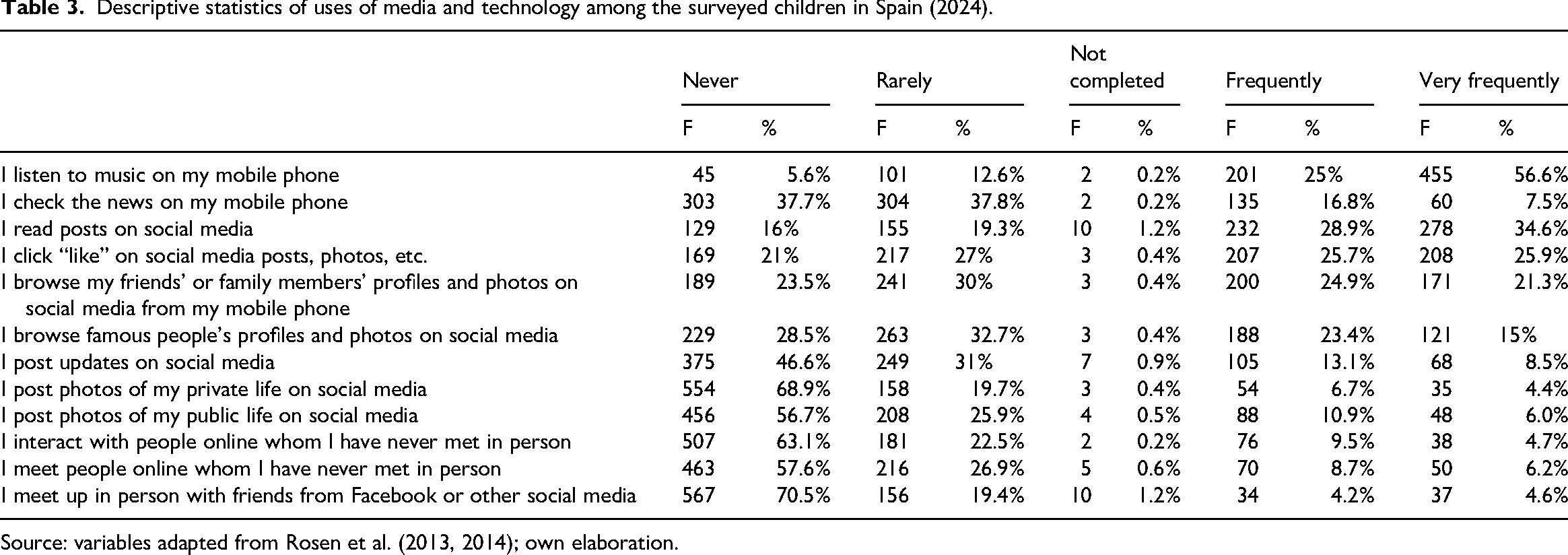
Source: variables adapted from Rosen et al. (2013, 2014); own elaboration.
The most frequent attitudes and uses of media and technology reported by the surveyed children in Spain are: listening to music on my mobile phone (81.6%, n = 656), reading posts on social media (63.5%, n = 510), clicking “like” on social media posts, photos, etc. (51.6%, n = 415), and browsing friends’ or family members’ profiles and photos on social media from my mobile phone (46.2%, n = 371).
Factor analysis for attitudes and uses of media and technology
To explore whether differentiated patterns of participation could be identified within the sample, an exploratory factor analysis with Varimax rotation was conducted on the 12 selected items. The intention was not to impose predefined user categories, but to examine whether distinct forms of engagement would emerge from reported practices. The resulting structure showed coherence with distinctions described in research on active and passive social media use (Verduyn et al., 2022).
Three factors were identified (Table 4), reflecting differentiated attitudes and usage patterns among the surveyed children in Spain. Together, these factors explain 62.461% of the variance after rotation, exceeding the minimum acceptable threshold of 60% (Frías and Pascual, 2012). The Kaiser–Meyer–Olkin (KMO) test yielded a value of 0.879, indicating good sampling adequacy. Bartlett's test of sphericity (χ2 = 3792.871, df = 66, p < 0.001) confirmed the suitability of the data for factor analysis.
Exploratory factor analysis of uses of media and technology among the surveyed children in Spain (2024).
Source: variables adapted from Rosen et al. (2013, 2014); own elaboration.
Loadings <0.50 were excluded.
The three identified factors were: lurkers (seven items), accounting for 26.461% of the variance after rotation (α = 0.826). This first factor represents behaviors where the children primarily consume online content. The second factor, sharers, with three items, describes the 19.886% of the variance after rotation (α = 0.853), and it alludes to those children whose attitudes and uses are linked to the creation and sharing of content on social media. The third factor, interactors, with three items and the 16.113% of the variance after rotation (α = 0.699), pertains to children who focus their online experiences on co-oriented interaction with their online contacts on these platforms regardless of whether they met them online or offline.
To understand the possible influence of age within this online media usage, we present a comparison in Figure 2 after the simplification of these latent factors into a weighted average percentile ranking. In all cases, we found significative associations according to the chi-square test with lurkers [χ2(10, N = 799) = 152.868, Cramer's V = .309, p < 0.05; M = 2.05, SD = .753], which recorded the highest score and intensity; sharers [χ2(10, N = 799) = 63.320, Cramer's V = .199, p < 0.05; M = 1.33, SD = .622]; and interactors [χ2(10, N = 799) = 36.591, Cramer's V = .151, p < 0.05; M = 1.28, SD = .575].
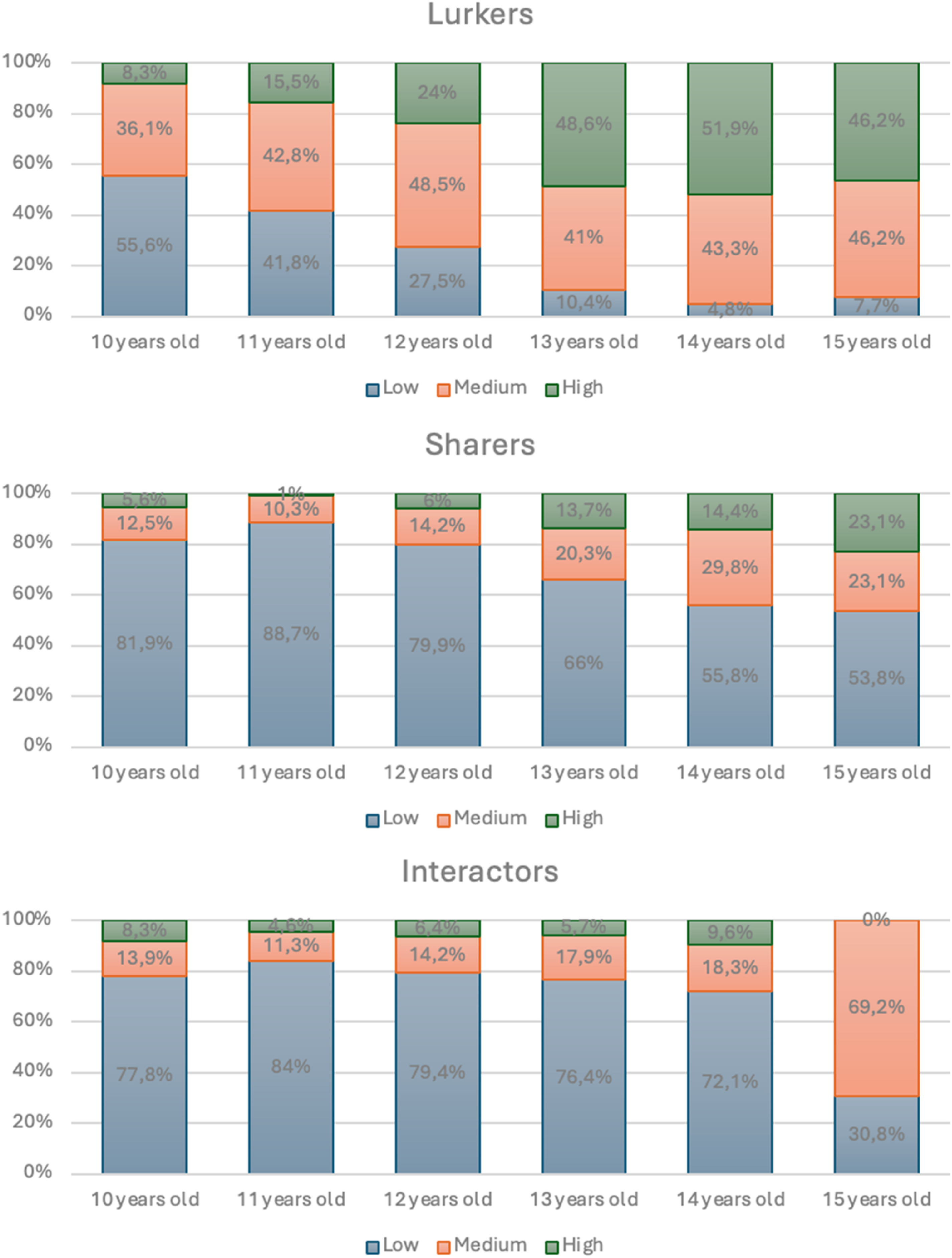
Descriptive comparison of online media usage and the age among the surveyed children in Spain (2024). Source: Own elaboration.
As observed in the previous graphs, the medium to high incidence of these online media usage profiles tends to score higher as children grow older. But this result should be interpreted with caution, as nearly eight out of 10 surveyed children fall within the 11 to 13 age group (76.3%, n = 610).
Moderated mediation analysis to test the influence of suicidal ideation on online media usage
To test the hypothesis model, we conducted a moderated mediation analysis. Before performing this test, it was crucial to examine the associations between variables to prevent collinearity issues. To achieve this, we applied the chi-square test, supplemented by Cramer's V index, which measures the strength of these associations. The results indicate a significant association between the proposed outcome, SI, and all variables included in the model: DCV items [χ2(27, N = 726) = 126.791, Cramer's V = .418, p < 0.05], factor 1: lurkers [χ2(24, N = 726) = 64.893, Cramer's V = .299, p < 0.05], factor 2: sharers [χ2(12, N = 726) = 52.107, Cramer's V = .268, p < 0.05], factor 3: interactors [χ2(12, N = 726) = 48.411, Cramer's V = .258, p < 0.05], and age [χ2(6, N = 726) = 13.395, Cramer's V = .136, p < 0.05].
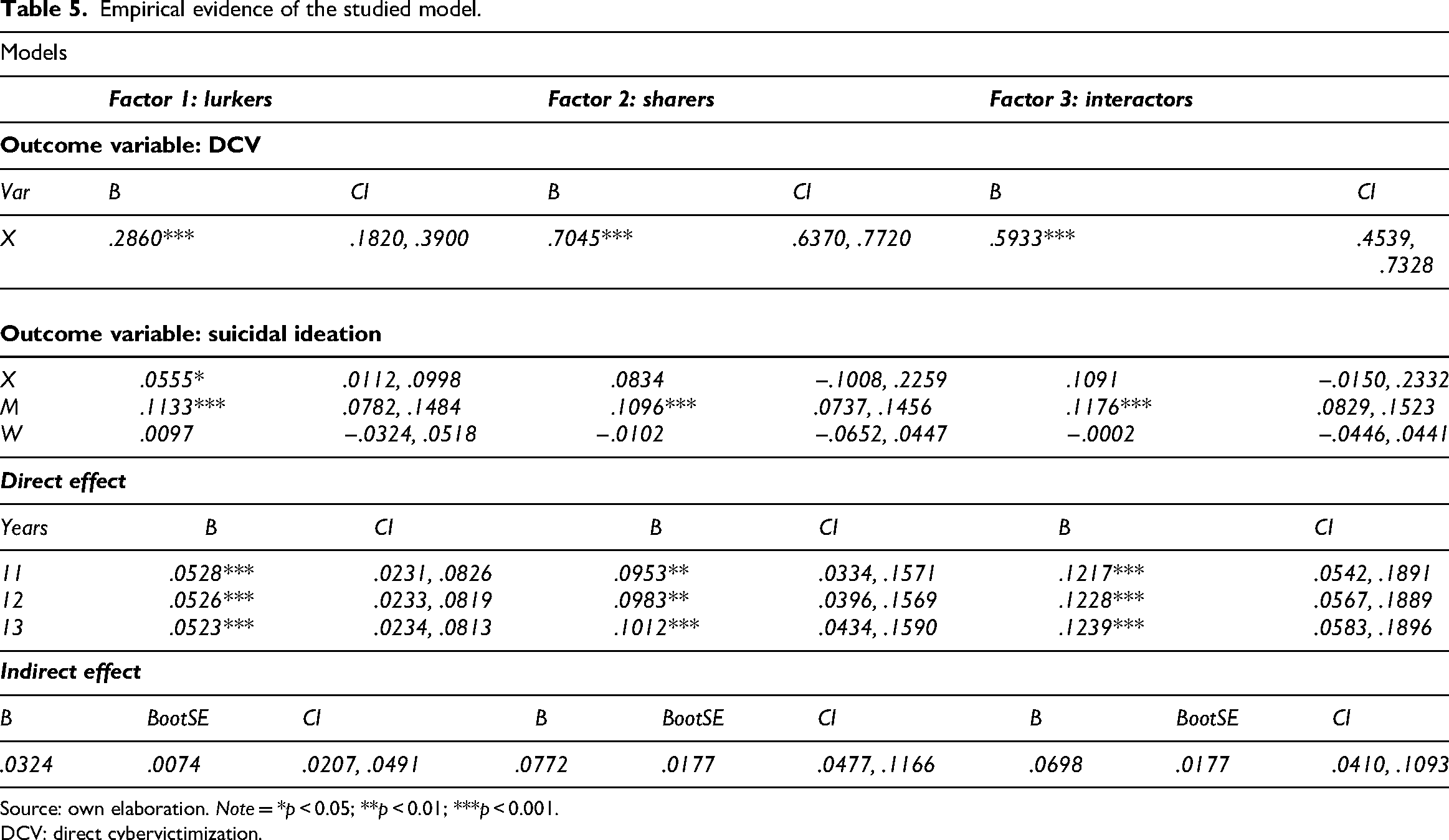
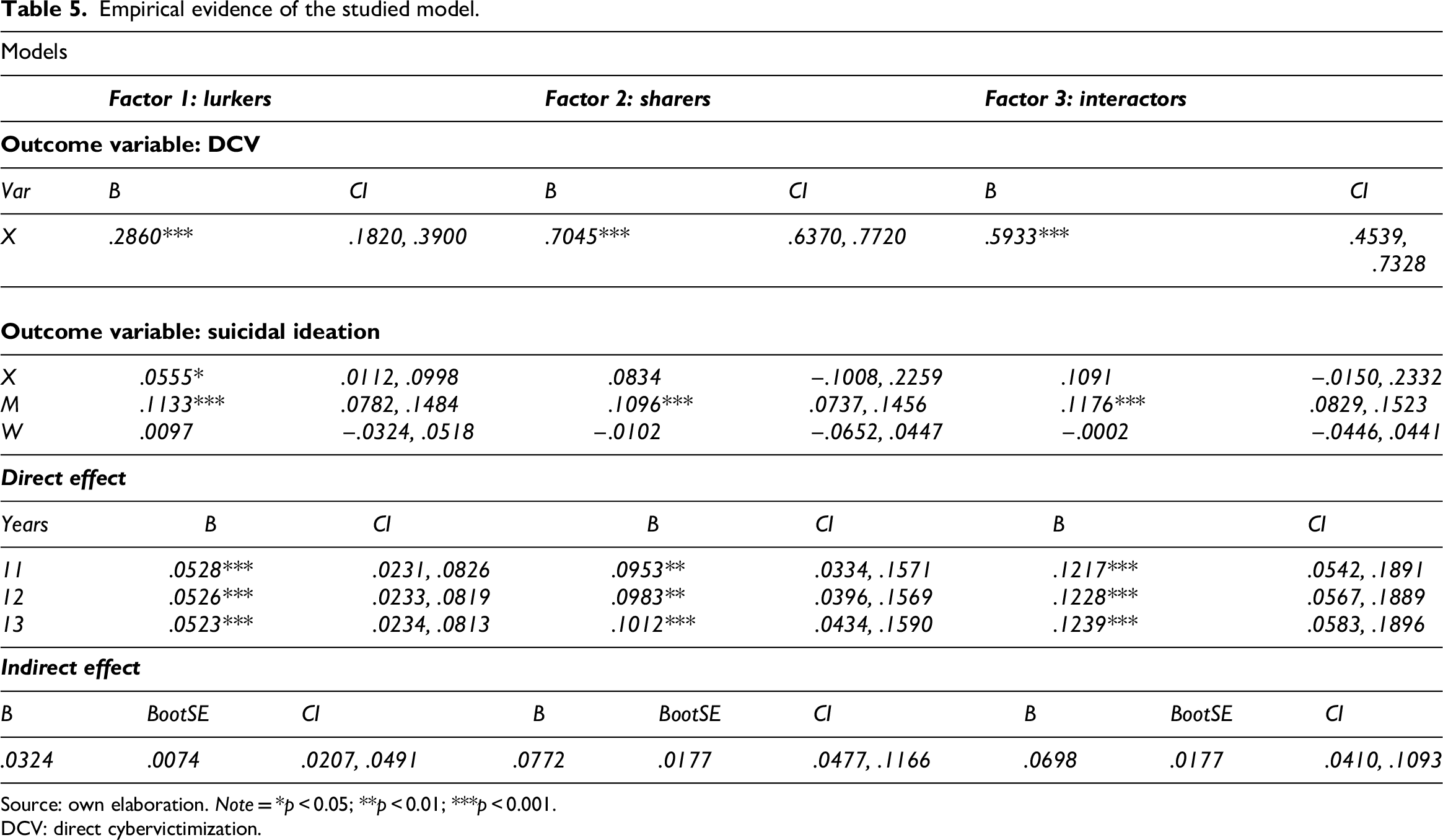
As shown in Table 5, the results support the indirect association proposed in H1: online media usage was significantly associated with SI through DCV. This indirect effect was stronger for sharers and interactors than for lurkers. Age showed a limited moderating effect within the model. Specifically, it conditioned the direct association between online media usage and SI, while no significant moderation was observed for the indirect pathway through DCV. The moderating effect on the direct association was stronger for sharers (B = .0772, SE = .0177, 95% CI [.0477, .1166]) and interactors (B = .0698, SE = .0177, 95% CI [.0410, .1093]) than for lurkers (B = .0324, SE = .0074, 95% CI [.0207, .0491]).
Empirical evidence of the studied model.
Source: own elaboration. Note = *p < 0.05; **p < 0.01; ***p < 0.001.
DCV: direct cybervictimization.
In the case of the direct effects, the results indicate that the direct association between online media usage and SI was significant only for children classified as lurkers (B = .0555; p < 0.05; 95% CI [.0112, .0998]), supporting H2. This indicates that passive engagement was statistically associated with SI in this group. In contrast, for children who engage more actively on social media (sharers and interactors), the impact on SI does not occur directly, but rather through the experience of DCV. In these cases, the risk of SI appears to increase when online interactions expose them to situations of harassment or digital aggression. Therefore, it is not only the amount of time spent on social media that matters (Andreasen, 2015), but also the nature of their interactions and the experiences they encounter within these spaces.
Therefore, H3 was only partially supported. Age did not significantly moderate the indirect pathway between online media usage and SI through DCV. However, it showed a conditional effect on the direct association between passive usage (lurkers) and SI. Specifically, the positive association between passive engagement and SI was stronger among older children within the sample. These findings should be interpreted with caution, given the concentration of participants in the 11 to 13 age range (Figure 3).
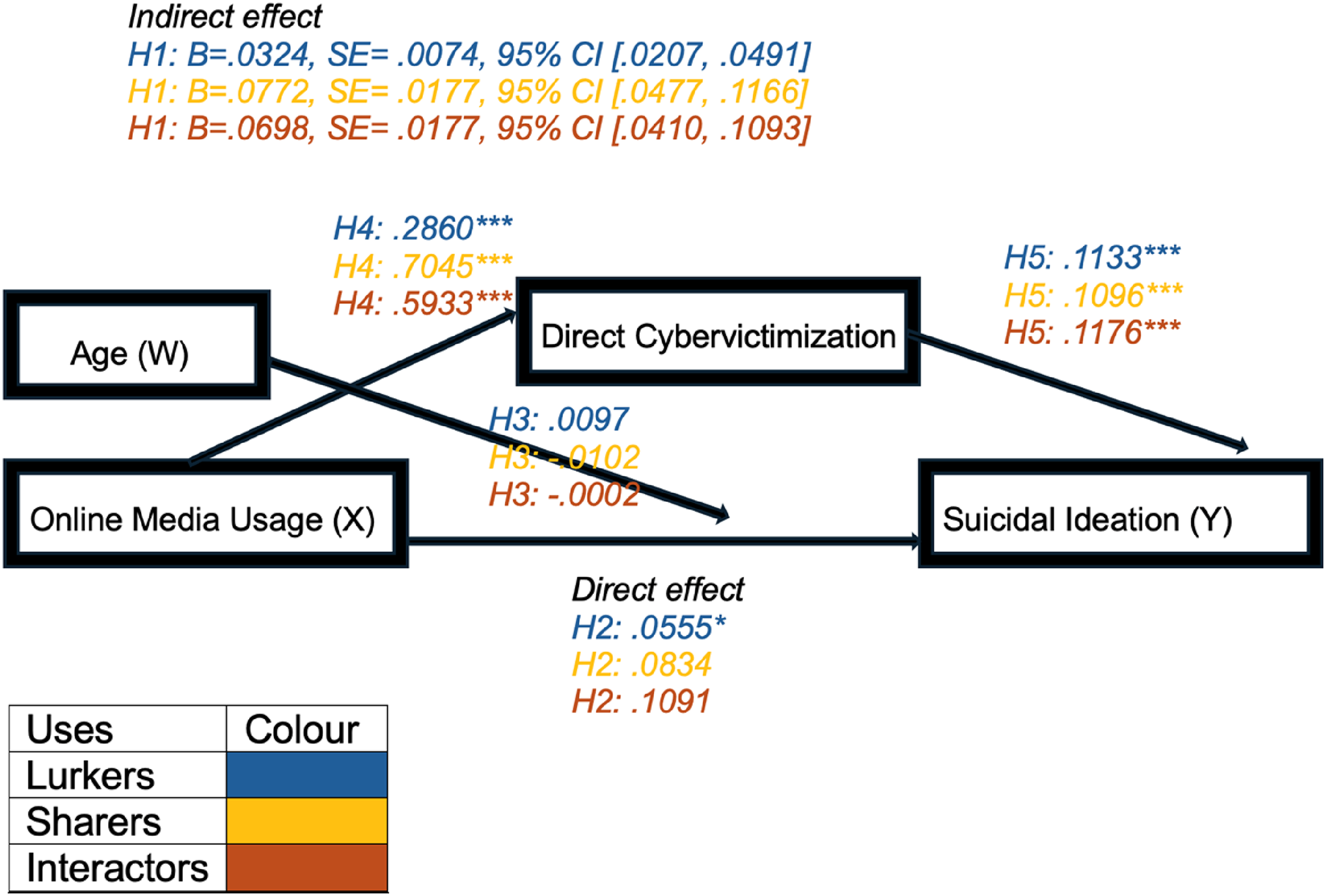
Hypothetical model of mediation with a moderated direct effect. Source: Own elaboration.
In all cases, perceived DCV increased as online media usage intensified, supporting H4. The magnitude of this association was greater for sharers (B = .7045; p < 0.05; 95% CI [.6370, .7720]) and interactors (B = .5933; p < 0.05; 95% CI [.4539, .7328]) than for lurkers (B = .2860; p < 0.05; 95% CI [.1820, .3900]). These results indicate that participation patterns characterized by higher visibility or reciprocal exchange are more strongly associated with perceived cybervictimization. Perceived DCV was positively associated with SI among Spanish children with a more pronounced effect for interactors (B = .1176; p < 0.05; CI = .0829 / .1523), and lurkers (B = .1133; p < 0.05; CI = .0782 / .1484), than for sharers (B = .1096; p < 0.05; CI = .0737 / .1456), so we have enough evidence to confirm H5.
Discussion and conclusions
Social media exert a significant influence on the identity and attitudes of contemporary societies (Bayer et al., 2020; Notredame et al., 2018), particularly among children (Boyd, 2015; Houghton et al., 2018). This population is especially vulnerable to social media content, as the preadolescent stage is characterized by ongoing changes and heightened expectations (Vargas and Saavedra, 2012). At the same time, social media offer a wide range of uses and gratifications (Kircaburun et al., 2020), including the pursuit of social connection and validation (Caro-Castaño, 2023; Verduyn et al., 2022).
Beyond its psychological implications, this study contributes to communication research by examining how differentiated forms of participation within platform-based environments structure exposure to relational risks. Rather than treating social media use as a homogeneous behavioral variable, the analysis approaches it as patterned participation embedded in architectures of visibility, reciprocity, and metric evaluation. In this sense, the findings speak not only to individual wellbeing, but also to how platform logics of quantified interaction shape children-mediated social experience.
This study advances current research by empirically operationalizing differentiated participation profiles in childhood and testing their distinct pathways to SI within a moderated mediation framework. The confirmation of hypothesis 1 (H1) carries several implications, which are discussed below. Theoretically, greater public exposure and increased interaction in online spaces are associated with higher levels of SI through the mediating role of DCV. This finding can be interpreted at both individual and social levels. At the individual level, lower engagement with digital environments has been associated with improved wellbeing (Hilty et al., 2023; Kerr and Kingsbury, 2023), including the reduction of disorders such as sleep disturbances (Ma et al., 2025) and mental health symptoms, particularly depression and anxiety (Kennard et al., 2025). At a social level, the new forms of surveillance and self-surveillance enabled by these platforms, including “imagined surveillance” (Duffy and Chan, 2019), also encourage new modes of social comparison, which may affect users’ self-esteem (Franchina et al., 2018; Kline et al., 2023; Mulisa et al., 2025; Nesi et al., 2019; Timeo et al., 2020)—particularly in contexts characterized by greater public visibility or reciprocal interaction. Specifically, public rather than private sharing in these spaces has been correlated with NSSI ideation, NSSI and SC (Kingsbury et al., 2021). While the indirect effect proposed in H1 was confirmed, a distinct pattern emerged for passive engagement. Specifically, passive participation was directly associated with SI, whereas more active forms of engagement were indirectly associated through higher exposure to DCV. This finding is consistent with previous research linking passive use to negative emotional outcomes, particularly among individuals who are more sensitive to social comparison (de Vries et al., 2018; Hamilton et al., 2024; Rivas-Herrero and Igartua, 2021; Weinstein et al., 2021). Similarly, the direct effect of online media use was significant only for lurkers (H2)—individuals who primarily consume content without actively participating in communication or peer interaction. This pattern aligns with previous research indicating that passive engagement is associated with lower perceived social connectedness on these platforms. In contrast, a sense of belonging and peer connection (Verduyn et al., 2017, 2022) may be gained through more active forms of engagement, such as those characterizing sharers and interactors. Furthermore, lurkers may be more vulnerable to social anxiety, as described by O'Day and Heimberg (2021), and therefore more prone to lower self-esteem and an increased FOMO (Gori et al., 2023), which have been examined in prior research in relation to SI.
Regarding H3, the biological factor of age did not emerge as a strong moderator within the statistical model, leading to only partial confirmation of this hypothesis. This finding indicates that age conditioned only the direct association between certain usage profiles and SI, while the indirect pathway through DCV remained stable across the developmental range considered.
Greater online media use intensifies DCV, as proposed in H4. This effect is more pronounced among children who are highly visible online, particularly those who frequently share personal content such as thoughts or photos on social media platforms, as increased visibility may heighten exposure to negative interactions or the absence of interaction. The lack of feedback is often interpreted by preadolescents as a form of social exclusion (Timeo et al., 2020), which has been conceptualized both as a manifestation of online cyberbullying (Kliem et al., 2020) and as one of its consequences (Malik and Obhi, 2019). Within this framework, DCV operates as the mechanism linking participation patterns and SI. In line with H5, higher levels of perceived DCV are associated with greater SI. This association may reflect how social media platforms function as public arenas of identity construction (Bayer et al., 2020; Caro-Castaño, 2022), where greater visibility may increase exposure to perceived forms of cybervictimization, including public shaming, exclusion, or lack of feedback.
The results presented in the previous pages have important practical implications. Younger children may experience formal or informal restrictions when creating or managing accounts on online platforms, resulting in their online media usage being more focused on passive experiences, which are not without risks. Rather than focusing solely on restricting the use of digital environments, these findings may inform discussions about strategies aimed at reducing relational risks in digital contexts, including digital education and forms of parental and teacher guidance. At the family level, practices of digital disconnection have been discussed in previous literature (Liu et al., 2022; O’Reilly et al., 2018) and may be considered within broader debates on digital wellbeing. Simultaneously, media education should be reinforced to help children critically decode social media content (Reyes and Salvarini, 2023) and discourage the replication of pro-suicidal content across these channels. Education plays a relevant role in addressing cybervictimization and promoting mental health awareness among children, as emphasized by Reyes and Salvarini (2023).
As a main limitation, the presented results are based on the application of a national survey in Spain. In this regard, and as a recommendation for future studies, it is worth noting—given that the observed effects are statistically significant—the need to explore whether these patterns are replicated in other contexts or in longitudinal studies that would allow for an assessment of their impact over time. Given the cross-sectional design, the results should be interpreted as associative rather than causal. In addition, the relatively low institutional participation rate may introduce potential self-selection effects, as schools willing to participate could differ systematically from those that declined, which should be considered when interpreting the scope of generalization. At the same time, gender was not considered in the analysis, despite previous studies having identified it as a relevant factor in understanding the effects of social media on young people's mental wellbeing (Kerr and Kingsbury, 2023; Nesi et al., 2019; Steinsbekk et al., 2021).
Footnotes
Acknowledgements
The authors acknowledge the Social Observatory of the “La Caixa” Foundation, as the data for this article were funded by the project titled “The Relationship Between Suicidal Ideation Among Spanish Children and Their Consumption and Exposure to Media and Social Networks,” funded under the Childhood and Vulnerability call (FS23-1B) by the Social Observatory of the “La Caixa” Foundation (code: LCF/PR/FS23/60020019).
ORCID iDs

Ethical approval and informed consent statements
This is a nonexperimental, observational study; no interventional data involving human subjects were experimentally collected. The empirical evidence derives from a structured survey administered as the primary research instrument. Given the involvement of minors, the study protocol was reviewed and approved by the Internal Review Board (IRB) of the University of Málaga (Report No. 79; Registration No. 129-2023-H). The IRB, chaired by the vice president for Research, operates as a cross-disciplinary Ethics Committee. The approved protocol ensured adherence to ethical principles and child protection standards, including data confidentiality.
Funding
The authors disclosed receipt of the following financial support for the research, authorship, and/or publication of this article: This publication is part of the project PID2023-153339NA-I00, funded by MICIU/AEI/ 10.13039/501100011033 and by ERDF/EU.
Declaration of conflicting interests
The authors declared no potential conflicts of interest with respect to the research, authorship, and/or publication of this article.
Data availability statement
The dataset used in this study is available upon request, as is the interpretation protocol, which can be obtained from the corresponding author.