







Abstract
This study examines protest stickers as a medium of political expression and everyday activism, focusing on stickers supporting Palestine during the recent genocide in Gaza. It explores the socio-political narratives embedded in these stickers and how they are constructed and communicated. The dataset comprises over 900 stickers sourced from the official Instagram account @flyers_for-falastin. Using multimodal critical discourse analysis, the study analyses both visual and verbal elements, drawing on framework of visual social semiotics for the visual analysis and socio-discursive framework for the verbal analysis. The findings reveal six key themes: (i) the liberation of Palestine; (ii) testimonies of genocide; (iii) calls to action and support for initiatives; (iv) resistance against fascism; (v) portrayals of Israeli leaders as war criminals and evil; and (vi) Western complicity in genocide and related atrocities. The study concludes that the combined use of visual and linguistic strategies amplifies both the urgency and emotional resonance of genocide-related narratives, inviting viewers not only to take action but also to emotionally engage with the suffering of Palestinians. Despite their small size, protest stickers are shown to function as potent tools of resistance, memory, and global solidarity.
Introduction
The recent Israeli assaults on Gaza are widely regarded as the most extreme and brutal manifestation of Israeli ongoing aggression against Palestinians, seen as a continuation of the 1948 Nakba (Abou-Hodeib, 2024). As of 29 November 2025, the Palestinian Ministry of Health reported that these attacks have resulted in at least 70,100 death and more than 170,900 injuries since the outbreak of Israel's genocidal campaign in Gaza on 7 October 2023 (Al Jazeera, 2025a). On 7 October 2023, Israel declared war following a surprise, coordinated attack by Hamas, the Palestinian resistance movement, on southern Israel. This operation, known as Al-Aqsa Flood, resulted in 1139 deaths and the capture of approximately 240 individuals. Hamas stated that the attack was a response to decades of Israeli atrocities against Palestinians, including ongoing settlement expansion, Israel's 16-year blockade of Gaza, increasing settler violence, and military attacks in the West Bank – actions they assert violate international law (Al Jazeera, 2023a). The Israeli genocidal attacks have sparked a major humanitarian crisis in Gaza, causing widespread destruction, mass displacement, and deliberate targeting of civilians. Israel has reportedly violated international humanitarian law by striking civilian infrastructure – including homes, hospitals, and schools – and disrupting essential services such as water, electricity, and healthcare (Sualman et al., 2024).
Israel's military campaign has drawn worldwide criticism due to the extreme violence and systematic dehumanization inflicted on Palestinians (Nurfaedah et al., 2025). In response to genocide and in protest against Israel's aggression in Gaza, demonstrations and solidarity initiatives have taken place across the globe. Activists have utilized a variety of visual media to challenge dominant narratives, resist structural silencing, and mobilize support, including posters (Saputra et al., 2025), graffiti (Louz, 2025), caricatures (Lulu, 2025a), AI-generated videos (Lulu, 2025b), and stickers. This study focuses specifically on the latter, examining the role of stickers as a medium of political expression and activism. Examining the multimodal aspects of these stickers provides valuable insights into how their meanings are created, interpreted, and communicated. This study aims to explore the socio-political narratives embedded in these stickers and how they are constructed and communicated, using multimodal critical discourse analysis (MCDA). Accordingly, this research seeks to answer the following two questions:
What are the predominant themes represented in the protest stickers? What visual and linguistic elements are employed in these stickers?
Palestine as a colonized country
Palestine is a prevalent contemporary example of settler-colonialism, in which Zionists seek to replace the indigenous Palestinian population with Zionist settlers through military expulsion (Wolfe, 2006). Zionist ambitions to create a Jewish state in Palestine began to solidify in the late nineteenth century. They were formalized at the first World Zionist Congress in Basel, Switzerland (29–31 August 1897), chaired by Theodor Herzl and attended by 204 delegates from Jewish communities across 15 countries (Ghanim, 2011). The congress adopted the ‘Basel Program’, declaring that ‘Zionism strives to create for the Jewish people a home in Palestine secured by public law’ (Al-Hut, 1991: 348). A central Zionist myth used to justify the occupation of Palestine claimed that Palestine was a ‘land without a people for a people without a land’ (Pappé, 2017). This myth ignored the region's long-standing indigenous populations and rich historical civilizations. It framed European Jewish settlement as morally and religiously justified while disregarding the presence of diverse communities (Saadah (2021).
On 2 November 1917, British Foreign Secretary Arthur Balfour wrote to Lord Rothschild, a prominent leader of the British Jewish community, issuing the Balfour Declaration, which affirmed the government's support for establishing a national home for the Jewish people in Palestine and pledged to ‘use their best endeavours to facilitate the achievement of this object’ (Kabha, 1988: 97–101). This declaration provided a framework that facilitated Jewish immigration to Palestine and assisted the development of political and social institutions central to a future Jewish state (Ghanim, 2011; Kabha, 1988). Hence, the British Mandate (1917–1947) supported Zionist settlement to serve British imperial interests while suppressing Palestinian self-determination, leaving lasting effects on the region (Haidar et al., 2024; Maharani, 2024). On 29 November 1947, the UN General Assembly adopted Resolution 181, known as the Partition Plan for Palestine, which called for the creation of an Arab state and a Jewish state in Palestine, while placing Jerusalem under a special international regime (Ghanim, 2011). This Plan culminated in the Zionist ‘master plan,’ known as Plan Dalet, aimed at the ethnic cleansing of Palestine (Pappé, 2006). It involved coordinated military operations by militias such as the Haganah and Irgun to seize historical Palestine and expel its indigenous population (Saadah, 2021).
The outcome in 1948 was the Palestinian Nakba and the establishment of a ‘Jewish national home’, which Zionists regarded as the redemption of God's ‘ancient promise’ to Abraham (Khalidi, 2009). The State of Israel was declared by David Ben-Gurion on 14 May 1948, following the British withdrawal and in accordance with UN Resolution 181 (Ghanim, 2011). During this time, Israel launched a large-scale operation of ethnic cleansing, widespread genocidal massacres and the violent uprooting of Palestinians, represented by the Nakba (Saadah, 2021). The Nakba led to the destruction of roughly 530 villages, the deaths of approximately 13,000 Palestinians, and the forced displacement of over 750,000, contributing to a Palestinian diaspora now exceeding seven million, who continue to be denied their right of return by Israel (Qabaha and Hamamra, 2021). New Jewish towns and cities were established on the ruins of destroyed Palestinian ones, while villages that survived the violence were repopulated by Jewish immigrants (Masalha, 2012). In contrast, the Zionist narrative denies the occurrence of the Nakba, portraying Palestinian displacement in 1948 as voluntary rather than resulting from violence and expulsion (Esmeir and Abu-Lughod, 2007).
Political stickers
Protest stickers are small, self-adhesive pieces of paper commonly placed on walls and street furniture such as traffic lights, bus stop, rubbish bins, trees, junction boxes, and lampposts. They are tools of political activism (Bodden and Awcock, 2024). Protest stickers are quick and inexpensive to produce, easy to disseminate, and a low-risk way to express opinions or make political demands in public space (Awcock, 2021; Bodden and Awcock, 2024). Stickers’ distribution relies on the activism of anonymous individuals (Vigsø, 2010). They express a wide range of social and political issues, including sexuality, veganism and vegetarianism, human rights, immigration, and electoral politics. Self-adhesive stickers emerged in the 1920s (Awcock, 2021), became widely used as a tool for commercial communication in the 1960s (Vigsø, 2010), and began to be used for expressing political opinions in the early 1970s (Awcock, 2021; Reershemius, 2019). They express support for a cause or group at a collective rather than an individual level (Awcock, 2021). Many protest stickers aim to persuade viewers by encouraging specific actions, such as ‘Boycott Israel’, ‘Make racists afraid again’, and ‘Go vegan’. Others function as public statements of opinion or circumstance, expressing messages such as ‘Fuck Fast Fashion’, ‘Refugees welcome’, and ‘Trans rights are human rights’ (Awcock, 2021: 525). There is growing recognition of the importance of political stickers within public space and political cultures, especially regarding their role in enabling public expression for marginalized and vulnerable communities (Awcock, 2021; Awcock and Rosenberg, 2024; Bodden and Awcock, 2024).
Broadly speaking, according to Hartle and White (2022), visual arts have grown significantly as part of protest movements in the twenty-first century. Protesters increasingly emphasize the power of art and creativity as tools for political action. Creativity extends beyond powerful visual representations to include metaphors, intertextuality, textual, and linguistic elements. Thus, while some artworks are primarily aesthetically pleasing, most are intellectually and visually provocative, challenging, and even disturbing. Hartle and White further argued that activists employ a wide range of visual technologies, both in physical spaces like streets and online on social media platforms, thereby creating public spaces mediated by sociality. Thus, protest imagery is not only increasing in volume but also becoming more strategically important as a tool in digital activism.
Stickers share both similarities and differences with other countercultural urban practices often referred to as ‘street art’, such as graffiti (Bloch, 2019; Iveson, 2016), yarn bombing (Mann, 2015), and fly-posting (Gerbaudo, 2013). Despite differences in material, form, and method, these practices all disrupt the intended functions of objects in public space, thereby revealing the radical and creative potential of urban spaces beyond their conventional uses (Mould, 2019). Politically charged symbols within these visual media generally serve to claim space (Awcock, 2021), participate in public debate (Andron, 2016), and express identity (Reershemius and Ziegler, 2024). The act of placing such symbols in public spaces often carries ideological and emotional weight, provoking confrontation, seeking visibility, and expressing belonging for marginalized communities (Vigsø, 2010). In this way, these symbols become tools of resistance against authoritarian regimes, what LeVine (2015) called ‘The Revolutions’ War Paint’.
Most of the few existing studies on stickers focused on their material properties and semiotic characteristics (Conley, 2020; Merrill, 2020; Ritchie, 2019). Vigsø (2010) examined stickers used by Swedish extremist groups in 2008 as a form of political communication, focusing on their rhetorical strategies and their appeal to what he terms ‘extremist organisations’. He contended that the analysis of stickers should go beyond narrow semiotic interpretations of meaning as mere signification or representation. Furthermore, he argued that the primary function of extremist stickers is to signal the presence of the sender, rather than to exert political influence or persuasive effect. Reershemius (2019), on the other hand, analysed 1191 stickers documented on Digbeth, a street in central Birmingham, UK, exploring them as a communicative genre within urban public space. Her study examined their agency, spatial placement, and the linguistic practices that shape their design, function, and circulation. The findings indicated that stickers integrate commercial, artistic and transgressive discourses, constituting a distinct form of urban communication, particularly in pedestrian areas. Although often illegal, sticker posting operates as a way of claiming space and giving voice to otherwise underrepresented individuals and groups.
Awcock (2021) analysed an archive of over 5000 photographs of protest stickers, collected over 6 years from 53 locations, to explore the geographies of political stickers. She argued that protest stickers serve as valuable tools for understanding the geographies of resistance, the right to the city, and the dynamics of public space. Furthermore, Awcock and Rosenberg (2024) examined 461 trans-positive stickers in Edinburgh, framing them as a form of everyday activism that publicly encounters transphobic discourses and policies. They emphasized the political potential of stickers as instruments of public resistance, capable of disrupting transphobic cultural and political discourses while fostering trans-affirming interactions within public spaces. In their study, Bodden and Awcock (2024) argued that political stickers function as more than mere tools for conveying information, as their meaning is actively shaped through the interactions of those who encounter them. Through actions such as scribbling, ripping, sticking, and scratching, passers-by transform stickers into sites of public political deliberation and expressive claim-making.
This study is significant because, despite the ubiquity of protest stickers, they have received relatively little scholarly attention within the social sciences and humanities (Awcock and Rosenberg, 2024). Studying these stickers is important for understanding practices of resistance and the dynamics of public space. Most previous research on stickers has focused primarily on their material properties and semiotic characteristics, as mentioned earlier, whereas this study emphasizes the linguistic features of stickers, with a particular focus on those related to Palestine. To the researcher's knowledge, and following a comprehensive review, no prior study has conducted a multimodal analysis of protest stickers in relation to current global conflicts, including the ongoing conflict in Gaza, highlighting the originality of this research. Furthermore, analysing the multimodal aspects of these stickers provides valuable insights into how their meaning is constructed, interpreted, and shaped.
Methodology
The data for this study consist of protest stickers focusing on the recent war in Gaza. Since the start of the war, the researcher attended multiple pro-Palestine protests in Belgium, where she observed activists distributing stickers to participants, including herself. Through this engagement, she became familiar with the stickers’ designs and formats. To systematically collect a larger dataset, the researcher traced the origin of the stickers by examining the source printed in small font on their corners. Most of the collected stickers were found to be sourced from the official Instagram account @flyers_for-falastin, where the dataset of this study was collected. The researcher's positionality as a Palestinian offers an emic perspective that deepens and legitimizes the analysis. This positional standpoint allows for a more nuanced interpretation of the symbolic and emotional meanings embedded in the stickers, revealing insights that may not be readily accessible from an outsider perspective.
The aforementioned account publishes artwork specifically about Palestine, functioning as a part of grassroots activism rather than merely online content with simple messages. This study focuses on the stickers, which are distinguished from other types of artwork by their small size, simplified design, bold colours and striking slogans, designed to achieve quick visibility in public spaces and allow political messages to be conveyed rapidly unlike posters, which are larger and include multiple elements with more detailed content.
The Instagram account was launched in 2023 as a collective call for solidarity with Palestine, joined by artists from around the world who freely donate their work to the collection as a shared act of support. The account bio, or profile description, links to a website featuring information about the campaign. The homepage features calls to action such as ‘Be Part of the Movement’ and ‘Take Action’, which encourage users to take actions including ‘show your solidarity’ by ‘displaying flyers for Palestine in windows or in the streets… let them be a visible and powerful statement of solidarity and resistance!’ The website also provides a ‘Submit Your Artwork’ section, allowing artists and activists to contribute their designs, which, after selection, are made available on Instagram for download and printing, facilitating wide dissemination. The account emphasizes that submitted artwork should carry a clear message supporting Palestine and be high-quality digital artwork suitable for printing. For the stickers, the Instagram captions explicitly instruct viewers to ‘Download, print and put them everywhere!’, demonstrating both their intended function as stickers and their role as shareable media. Some posts additionally provide examples of placement in public spaces, such as walls (see Figure 1) and windows (see Figure 2), illustrating how the stickers are circulated and employed as a tool for grassroots activism.
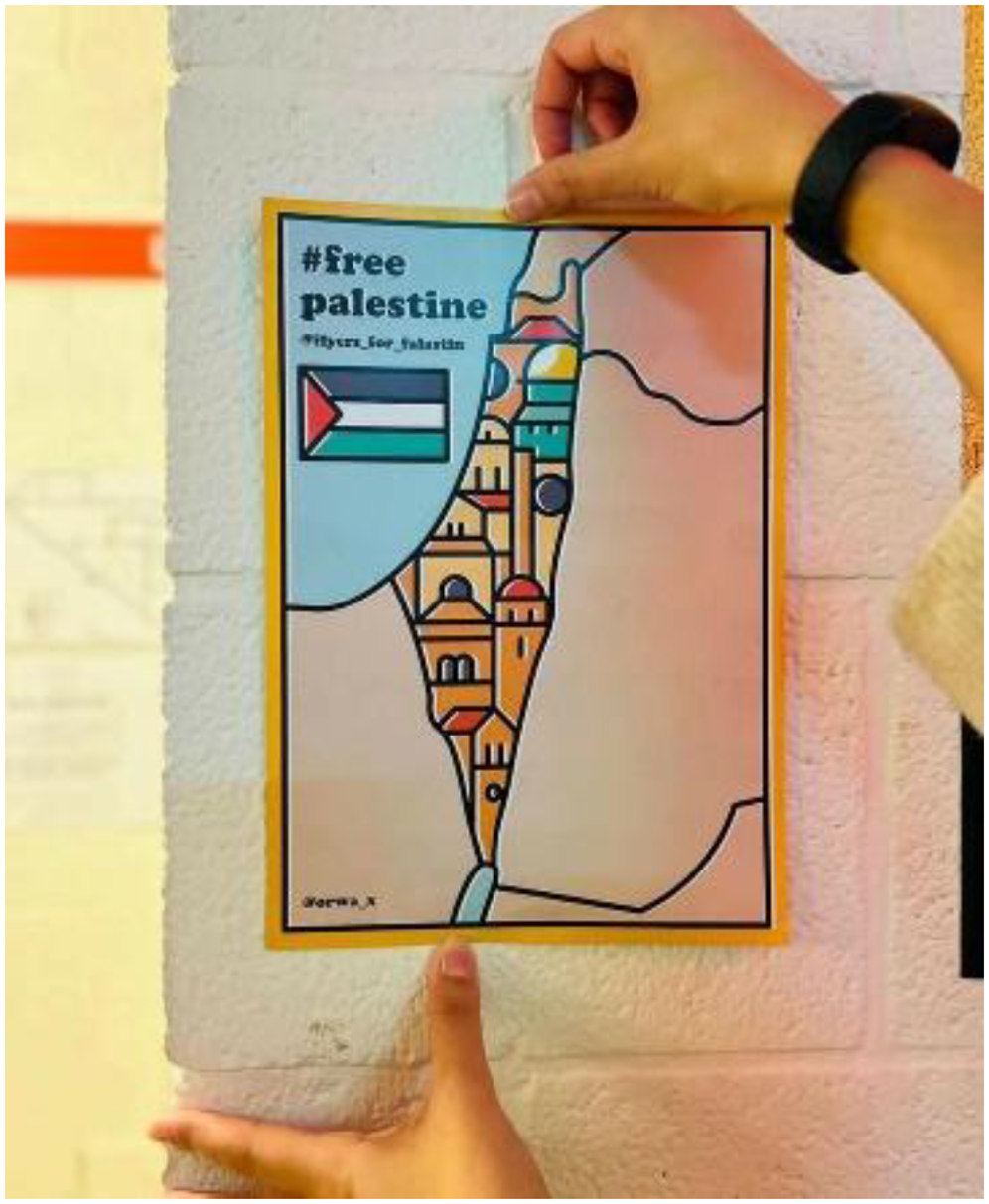
Wall sticker placement.
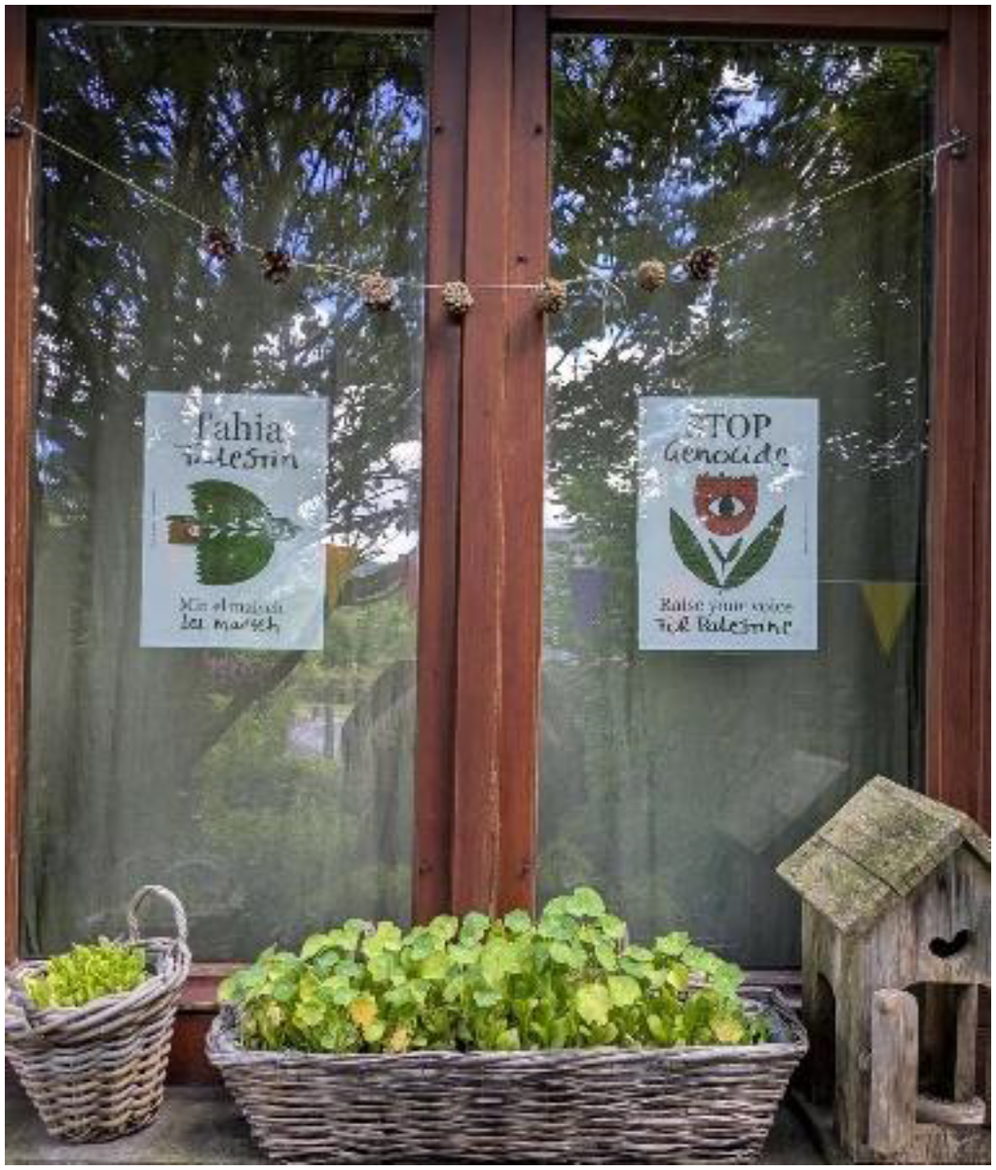
Window sticker placement.
Regarding the creators of these protest stickers, their Instagram accounts are also indicated on the stickers. Upon examining these accounts, the researcher observed that, although a few creators do not use their real names – for example, @visualintifada, and @seesoundprints – the majority do. This limited anonymity of creators highlights the agency and freedom these creators have on social media to disseminate their work. By openly sharing their designs online, in addition to physically placing stickers in public spaces, these creators therefore engage in a form of digital resistance, using social media to amplify their message, encourage others to disseminate the stickers, and support the cause.
Data were collected for the period 2024–2025, corresponding to the peak of the war, when protests and the circulation of related stickers were most prominent. In the initial screening, the researcher examined over 900 stickers to identify recurring themes and messages. From this process, six main themes were identified. To ensure inter-coder reliability, the researcher first noted the initial themes and then asked a colleague to independently review the stickers and identify recurring themes. Both coders then collaboratively reviewed their identified themes, incorporating multiple perspectives to guide the coding process and theme development. The final set of recurring themes was finalized through mutual agreement. Inter-coder agreement is essential for evaluating the consistency with which different coders assign the same ratings to each item (Tinsley and Weiss, 2000). After identifying the recurring themes, the researcher selected a subset of stickers for detailed analysis in this paper. Selection was based on visual and verbal diversity, meaning stickers with different visual semiotics and slogans were chosen to capture the range of messages and designs, while duplicates in terms of imagery or text were avoided to provide a more comprehensive analysis.
This study employs MCDA to analyse the data. MCDA is a theoretical approach that integrates social semiotic theories and analytical tools into critical discourse analysis. It conceptualizes language as part of a broader set of semiotic resources used to communicate different meanings according to their meaning-making potential (Ledin and Machin, 2019; Van Leeuwen, 2008). MCDA also aims to uncover discourses, the kinds of social practices they entail, and the ideologies they support, with the goal of identifying discursive resources that can contribute to social change (Ledin and Machin, 2019).
The visual analysis in this study draws on Kress and Van Leeuwen's (2006) framework of visual social semiotics. Drawing on Halliday's functional socio-semiotic theory of language (1975, 1978, 1994, 2004), Kress and Van Leeuwen conceptualize visual texts as semiotic resources that convey interpretations of experience and facilitate various forms of social interaction (Kress and Van Leeuwen, 2006). Kress and Van Leeuwen (2006) identified three semiotic functions of meaning in visual composition: (1) Representational meaning, which addresses the participants and actions, depicting them either through narrative illustrations of actions or through conceptual representations; (2) Interactive meaning, which considers how images engage with viewers, analysing elements such as gaze, framing, social distance, and power relations; and (3) Compositional meaning, which involves structuring visual elements to convey information and evoke responses, analysed through the placement of elements, framing (or its absence), and visual salience or weight.
The verbal analysis in this study draws on Fairclough's (1989) socio-discursive framework, which aims to ‘contribute to the general raising of consciousness of exploitative social relationships, through focusing on language’ (Fairclough, 1989: 2). Fairclough introduced a three-dimensional model of discourse analysis that enables researchers to examine the relationships between language, politics, and society. The three interrelated dimensions of this modal are discourse as text, discourse as discursive practice, and discourse as social practice. Our analysis focuses on the first dimension, discourse as text, to critically examine the textual features of the stickers. This dimension covers the linguistic and structural features of discourse, including the arrangement of vocabulary, grammar, cohesion, and overall textual structure.
The researchers employed a data-driven approach, allowing the analysis to be shaped by the data itself rather than strictly adhering to all aspects of the theoretical frameworks. This flexible strategy ensures that findings are closely grounded in the material, yielding relevant and nuanced insights instead of being constrained by rigid, predefined rules.
Findings
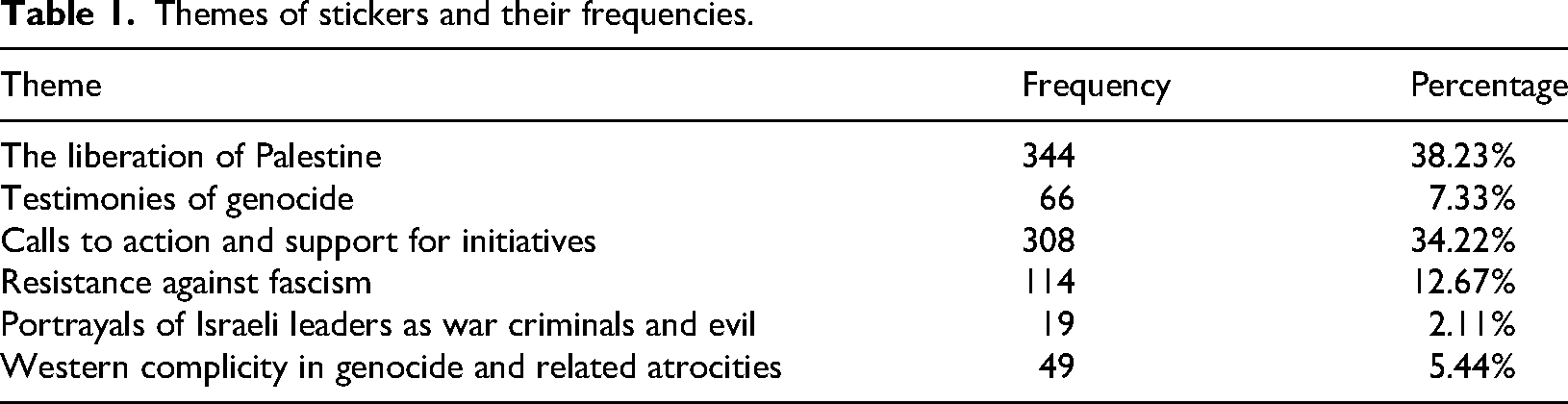
Six predominant themes were identified from the dataset. In this section, each theme is examined through representative stickers selected for in-depth analysis. Accordingly, this section addresses the first research question concerning the predominant thematic content of the protest stickers, as well as the second research question regarding the visual and linguistic elements employed in these stickers. Table 1 below shows the six identified themes and their frequencies.
Themes of stickers and their frequencies.
The liberation of Palestine
As shown in Table 1, this theme is the most frequently occurring theme. The core message of this theme conveyed by these stickers is the demand for the liberation of Palestine and the end of its occupation. This theme is predominantly articulated through explicit political expressions such as ‘Free Palestine’, ‘From the river to the sea, Palestine will be free’, ‘End the occupation’, ‘Palestine belongs to Palestinians’, and ‘Land back’.
Multiple modes are utilized in the stickers to convey their message, including text, colours, and symbols. In Figure 3, a simple sticker, frequently observed by the researcher in various street locations, features the phrase ‘FREE PALESTINE’, which functions as an imperative expressing a direct call to the audience for justice. The phrase is written in large, bold font to emphasize the importance of the message. The Palestinian flag accompanies the phrase, symbolizing national identity and the struggle for self-determination, thereby reinforcing the call for national liberation. Notably, the blue background represents the colour of the river and the sea, reflecting the slogan ‘From the river to the sea’.
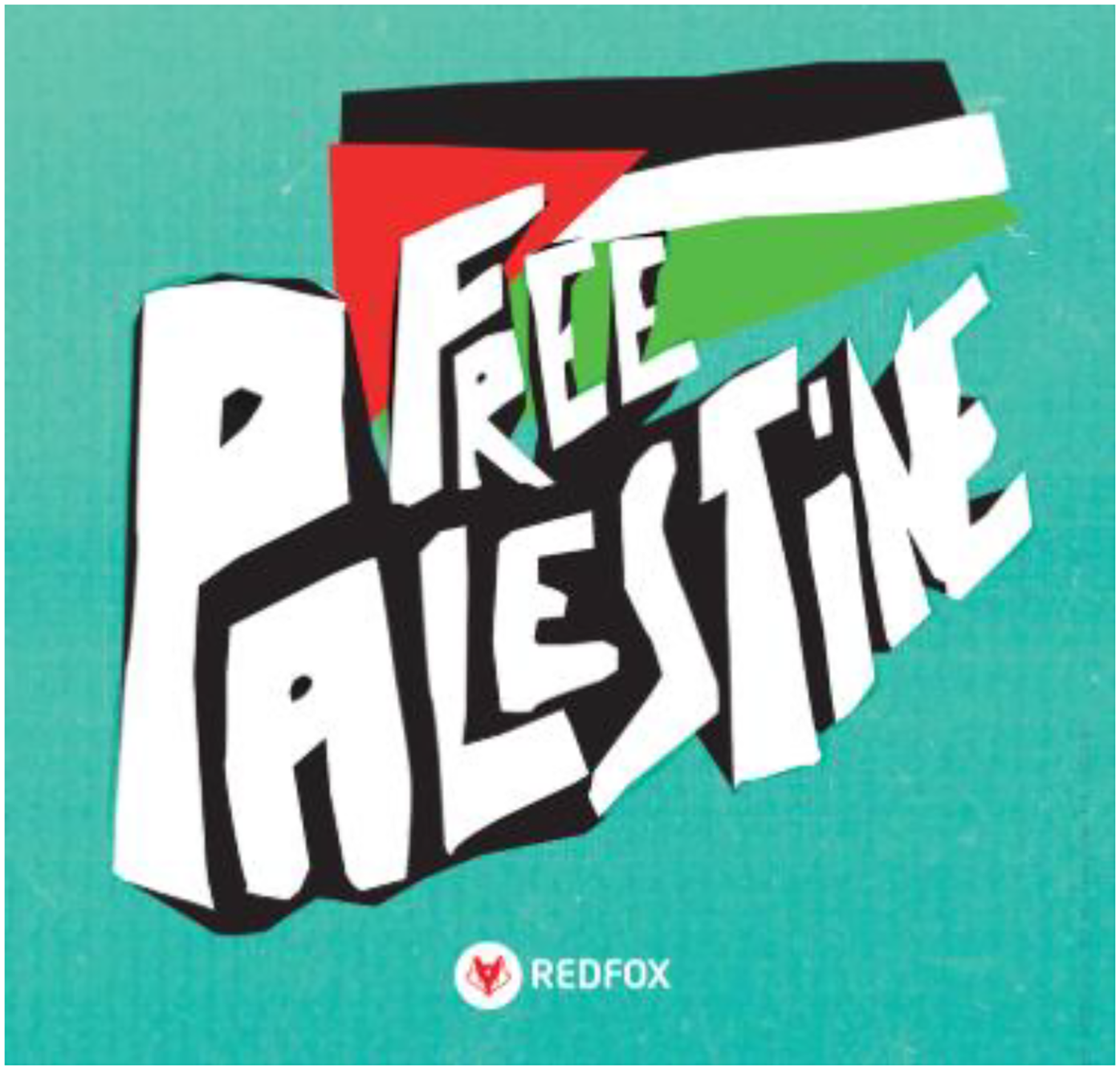
Protest sticker supporting “Free Palestine”.
In Figure 4, the meaning is emphasized by the widely used slogan ‘FROM THE RIVER TO THE SEA, PALESTINE WILL BE FREE’. The sticker is designed entirely in the colours of the Palestinian flag and incorporates several Palestinian national symbols that convey messages of resilience and resistance in the struggle for liberation. These symbols include as follows:
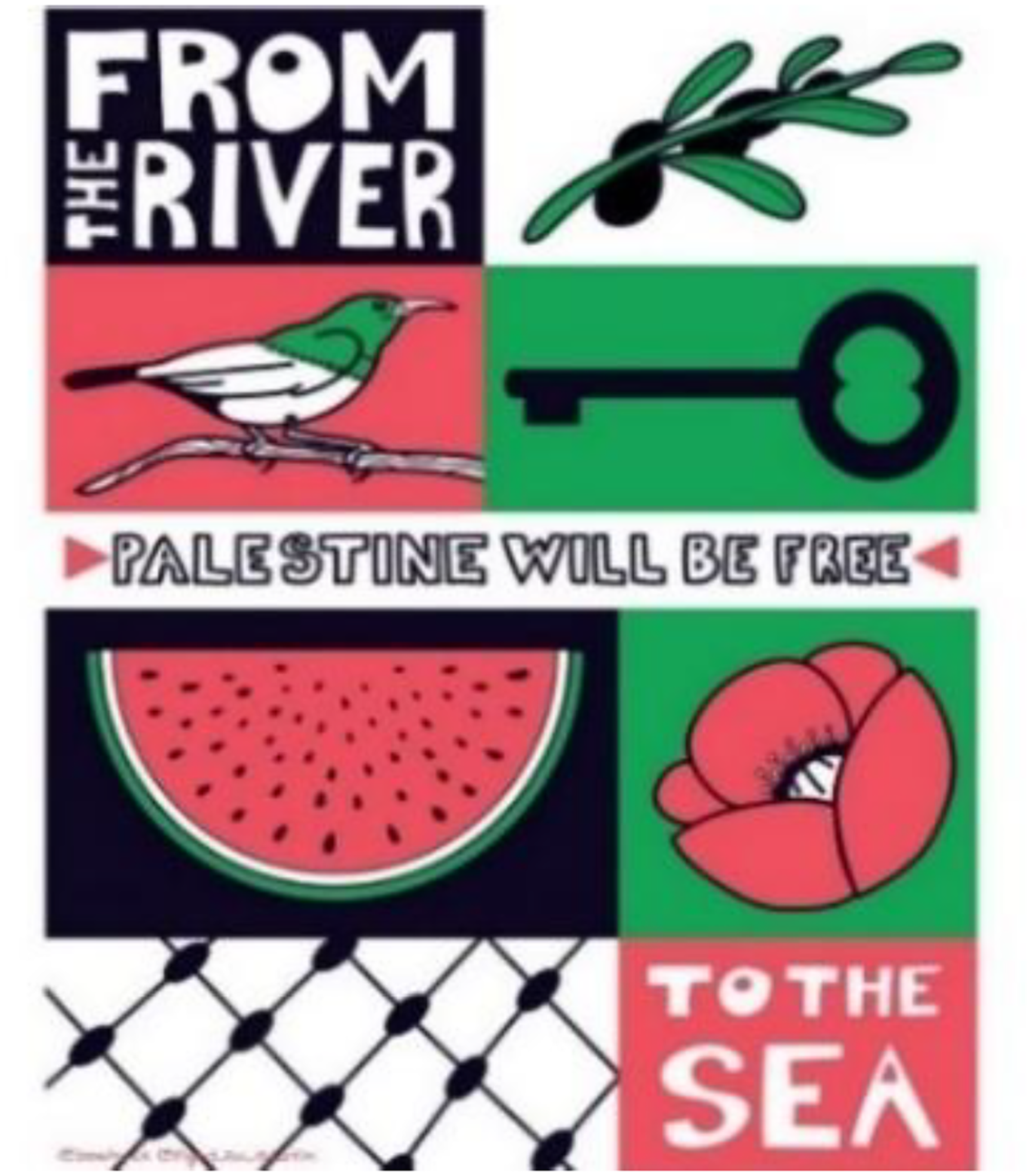
Protest sticker depicting the liberation of Palestine.
Testimonies of genocide
Some stickers portray real individuals who were killed during the Israeli attacks, sharing their stories through images and sometimes quotations. The purpose is to remind viewers that these figures are not just statistics, but real people with lives, experiences, and voices. These individuals may include journalists, doctors, poets, or children, emphasizing the personal and human impact of the ongoing violence.
In Figure 5, the sticker depicts an image of the Palestinian journalist Anas Alsharif. On 10 August 2025, Israeli forces carried out a deadly strike on a tent housing the Al Jazeera news team in Gaza City, killing all crew members, including Anas. Prior to the attack, he had been threatened to leave northern Gaza and stop documenting the destruction and Israeli crimes, which he had been covering for over a year and a half. Refusing to comply, Anas was killed to silence his reporting on the suffering of his people (Al Jazeera, 2025b). Before his death, he prepared his final will, and the quote on the sticker reads: ‘IF THESE WORDS OF MINE REACH YOU, KNOW THAT ISRAEL HAS SUCCEEDED IN KILLING ME AND SILENCING MY VOICE’. In the sticker, Anas is depicted wearing his press vest, seated amid rubble, making direct eye contact with the viewer – a ‘demand’ gaze that calls for attention and recognition (Kress and Van Leeuwen, 2006: 118). This portrayal reflects the unwavering commitment of Palestinian journalists to documenting Israeli actions and giving voice to their people's suffering.
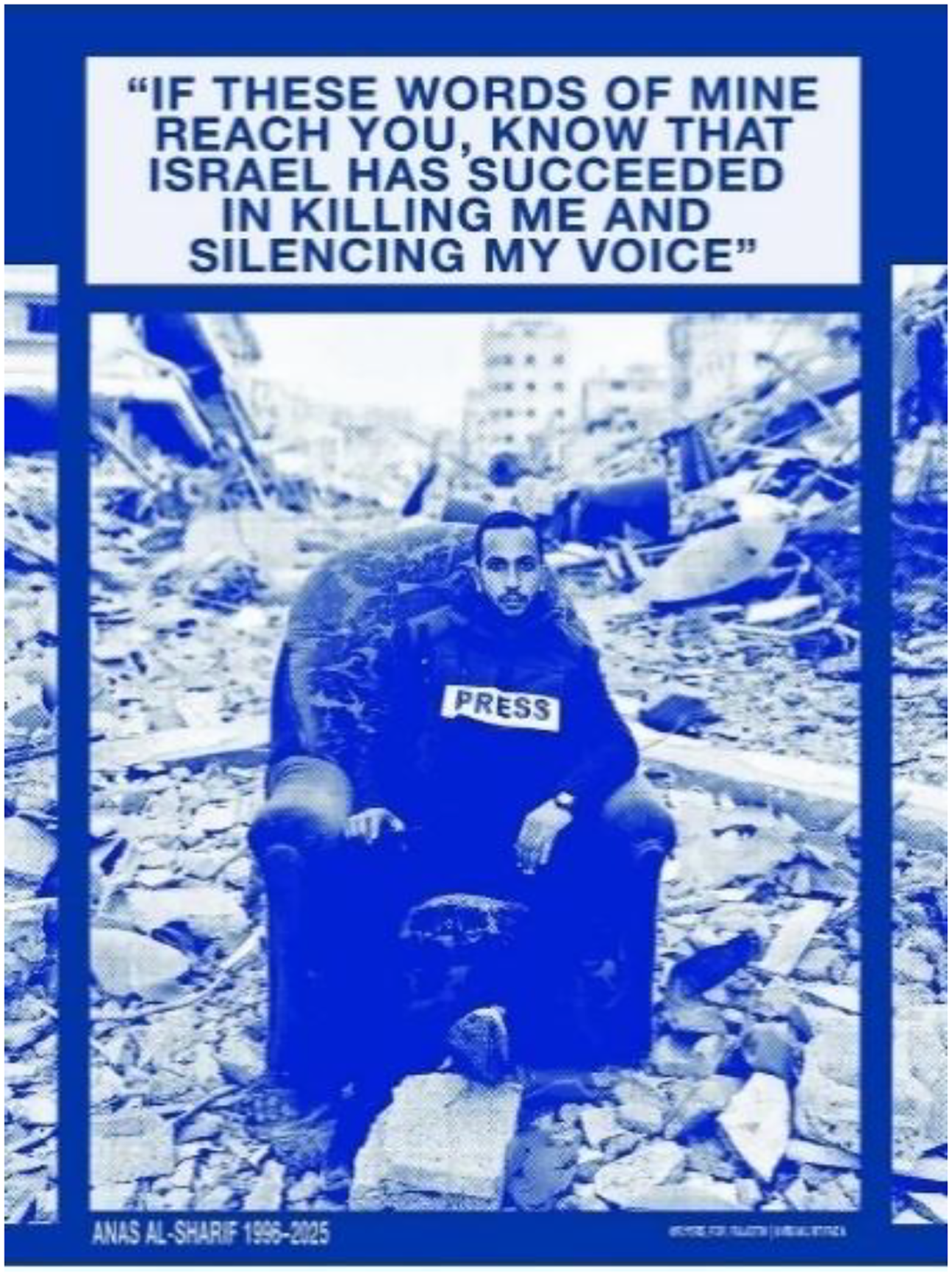
Protest sticker depicting Palestinian journalist Anas Alsharif.
The sticker shown in Figure 6 features two individuals who were victims of genocide, along with their lifespans: Anne Frank (1929–1945) and Hind Rajab (2018–2024). Anne Frank was a Jewish girl born in Germany who became widely known for the diary she wrote while hiding from the Nazis during World War II. Her family escaped to the Netherlands to avoid persecution and, during the German occupation, went into hiding in a secret bunker in 1942. Over 2 years, Anne documented her experiences, which later became a powerful account of life under Nazi oppression. The hiding place was discovered in 1944, leading to the family's arrest and deportation to concentration camps. Anne died of typhus in Bergen-Belsen in 1945, just weeks before the camp's liberation. Anne has since become a global symbol of the suffering endured by victims of racism, discrimination, and fascism (Vlazna, 2013). Hind Rajab was a 5-year-old girl from Gaza. On 29 January 2024, she was killed while attempting to escape to safety when an Israeli tank fired on the car carrying her with her relatives. Everyone in the car was killed instantly except Hind and her young cousin Layan, who managed to call the Palestinian Red Crescent for help. Layan was killed shortly afterward, leaving Hind alone on the line, crying out and pleading for help. Two rescuers who attempted to reach her were also killed by Israeli tank fire. Hind remained trapped in the wrecked vehicle, and the car was later found to have approximately 335 bullet holes. A recording of her desperate calls went viral on social media (The Hind Rajab Foundation, 2026). Her story has become a symbol of Palestinian suffering and what some describe as the ‘Israeli Holocaust’, referring to the deliberate killing and destruction of the Palestinians. Both girls are depicted with a smile and direct eye contact – a ‘demand’ gaze – that draws attention to their suffering and the injustices they endured, while their smiles reflect their innocence. The slogan ‘NEVER AGAIN MEANS NEVER AGAIN FOR ANYONE’ is written in bold, capitalized red letters, with the colour red signifying danger and emergency (Hong-mei, 2024) and symbolizing both the ongoing slaughter of Palestinians and the urgent need for collective action. Widely circulated, the slogan underscores that the Holocaust and similar atrocities must never be allowed to happen again to anyone, anywhere. Overall, the sticker serves as a powerful cry for peace and justice for those suffering under occupation.
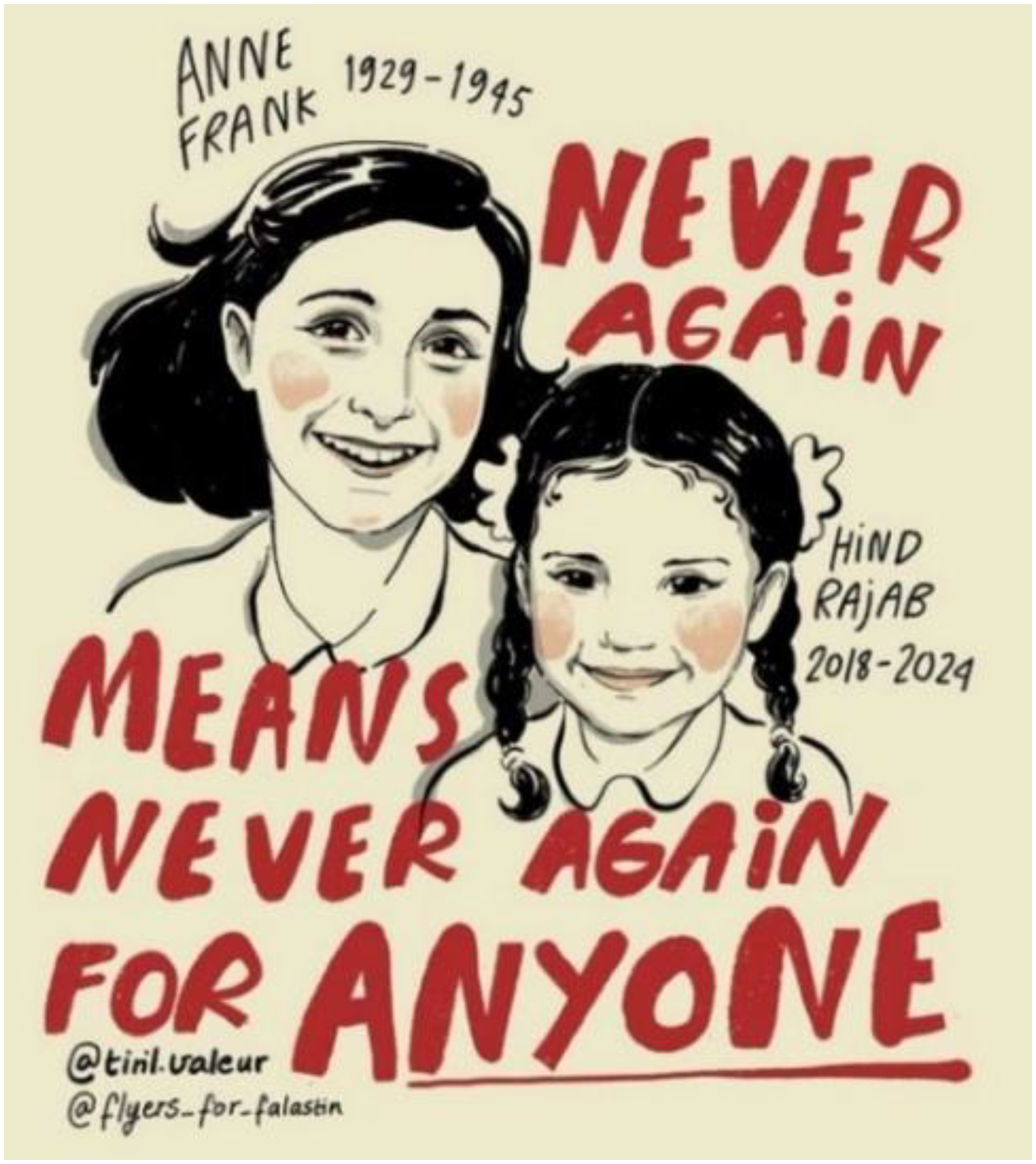
Protest sticker depicting Anne Frank and Hind Rajab.
Calls to action and support for initiatives
As shown in Table 1, this theme is the second most frequently occurring. The core message of this type of stickers is to urge concrete action rather than passive solidarity. These stickers directly call on viewers to act through messages such as ‘Use your voice’, ‘Don’t stop talking about Palestine’, ‘Stop war crimes’, ‘Stop starving Gaza’, ‘Stop the hunger in Gaza’, and ‘Rise up for Gaza’. The language is predominantly imperative, emphasizing urgency and responsibility. However, these imperatives are not framed merely as authoritative commands but rather as a collective and friendly call (Lulu and Alkaff, 2019) that foregrounds shared humanity and solidarity. For example, Figure 7 calls on viewers to ‘STOP THE BOMBS. STOP THE SIEGE’, while Figure 8 urges to ‘END ALL U.S. AID TO ISRAEL. STOP THE GENOCIDE. ARMS EMBARGO NOW. AID IS NOT A WEAPON. LIFT THE SIEGE’. The use of capitalized text enhances visibility and conveys a sense of emergency, reinforcing the immediacy of the call to action. Although these stickers do not incorporate explicit national symbols, the use of the Palestinian flag colours in the typography serves as a powerful symbolic substitute, visually linking the message to Palestinian identity, resistance, and solidarity.
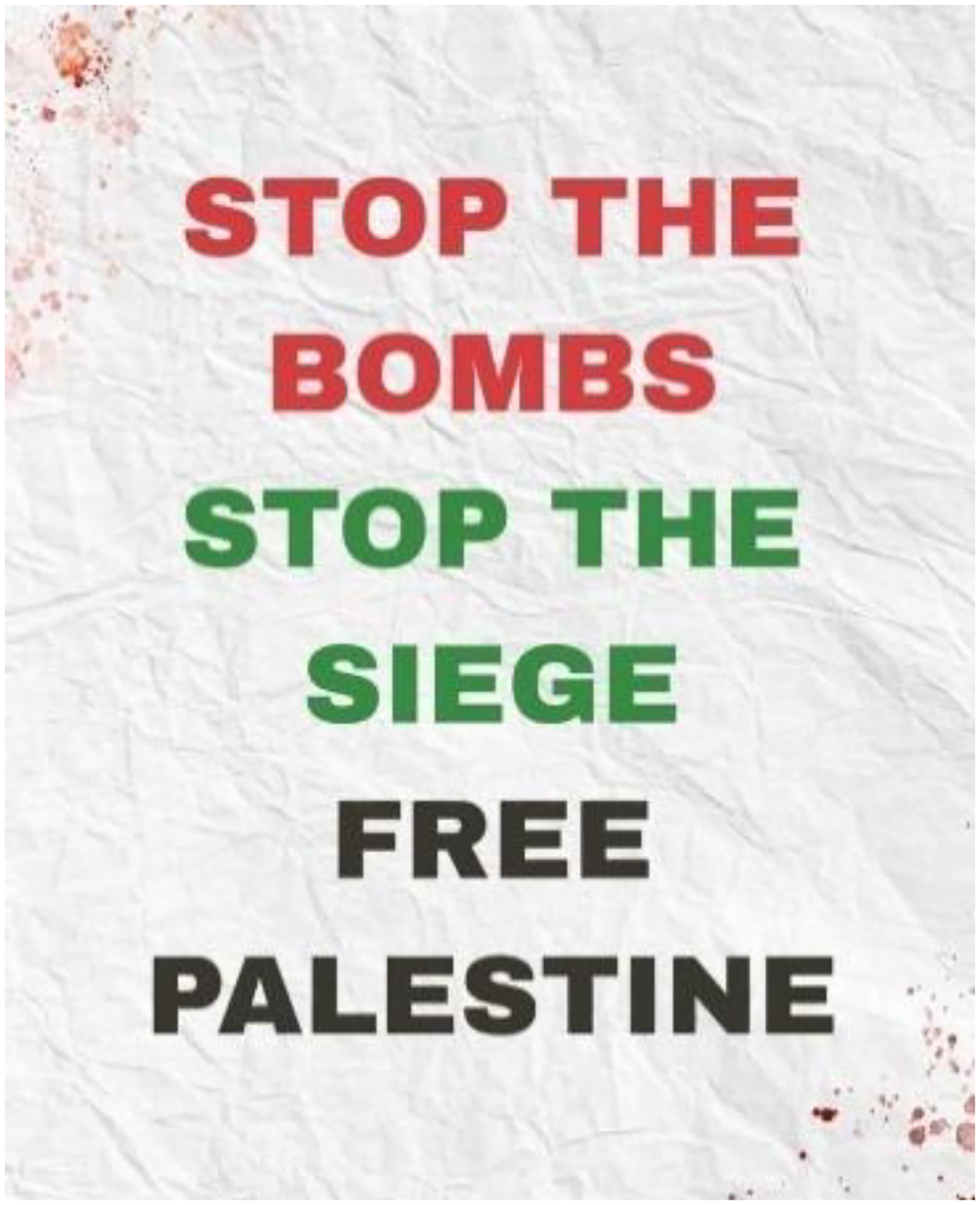
Protest sticker calling for action to stop bombing.
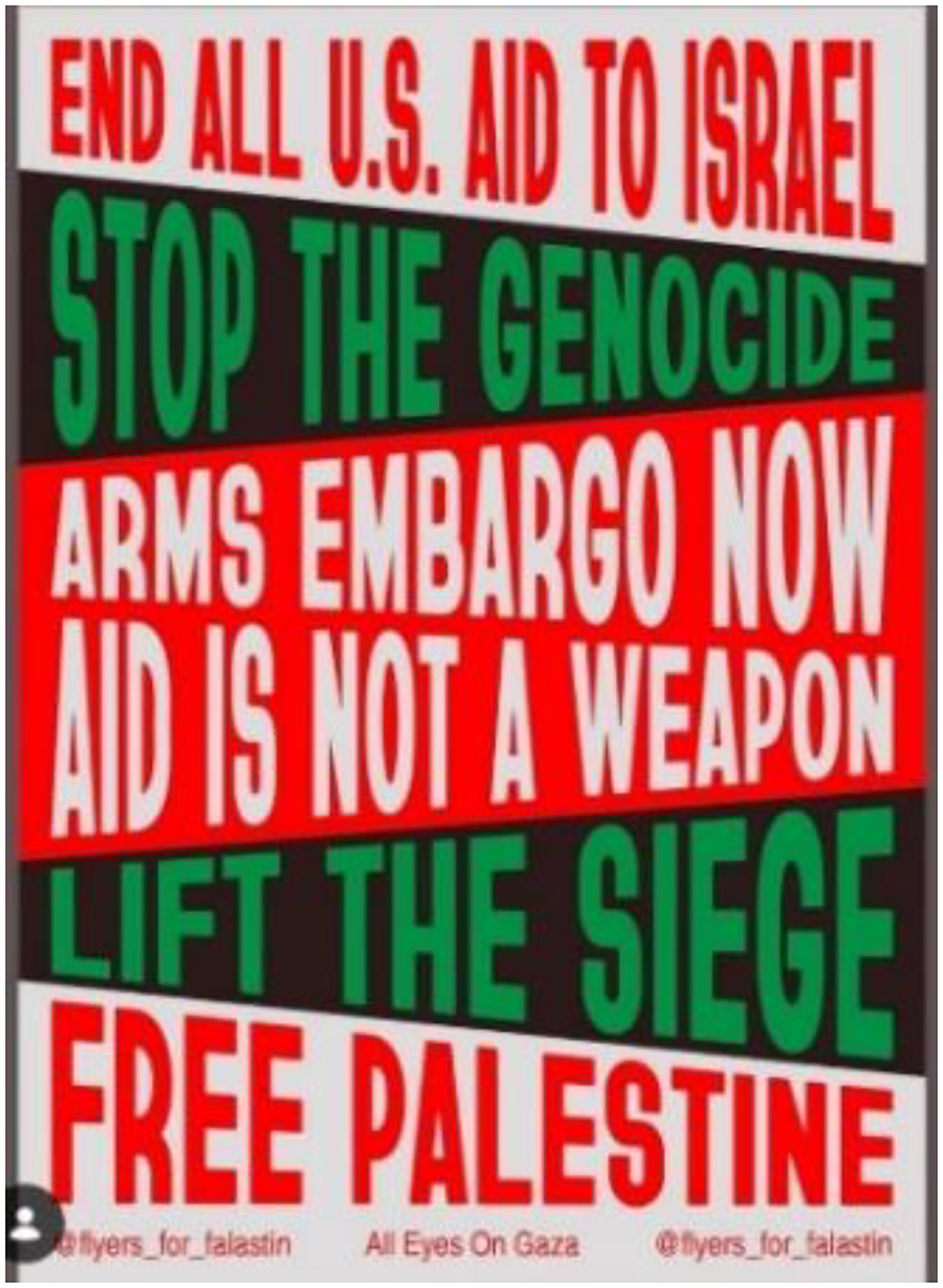
Protest sticker calling for action to end U.S. aid.
Other stickers are demonstratives with action-oriented imperatives, paired with emotionally charged images depicting the suffering of the people of Gaza, often including children, women, or casualties. For example, Figure 9 features the imperative, bold and capitalized to draw attention, ‘SAVE THE CHILDREN’, alongside an image of a young boy crying blood, symbolizing the hardships endured by children in Gaza. The boy wears a kuffiya, and a watermelon appears in the background – both representing Palestinian identity, solidarity, and resistance against colonization. He holds a key, symbolizing the ‘Key of Return’, while making a victory-hand gesture to signify resilience and endurance. In his other hand, he holds a dove, a symbol of peace, which is also depicted crying blood. This combination of peace and suffering draws attention to the suffering of those seeking peace. Overall, the image serves as a powerful call to action, urging viewers to protect children from genocide and support Palestinian resilience. Another example, Figure 10, features the imperative, bold and capitalized to draw attention, ‘END THE GENOCIDE’, alongside a portrayal of a Palestinian mother crying blood, with small shrouds representing her children. The word ‘genocide’ is emphasized in blood-red letters, highlighting the scale of the massacre of children during the genocide.
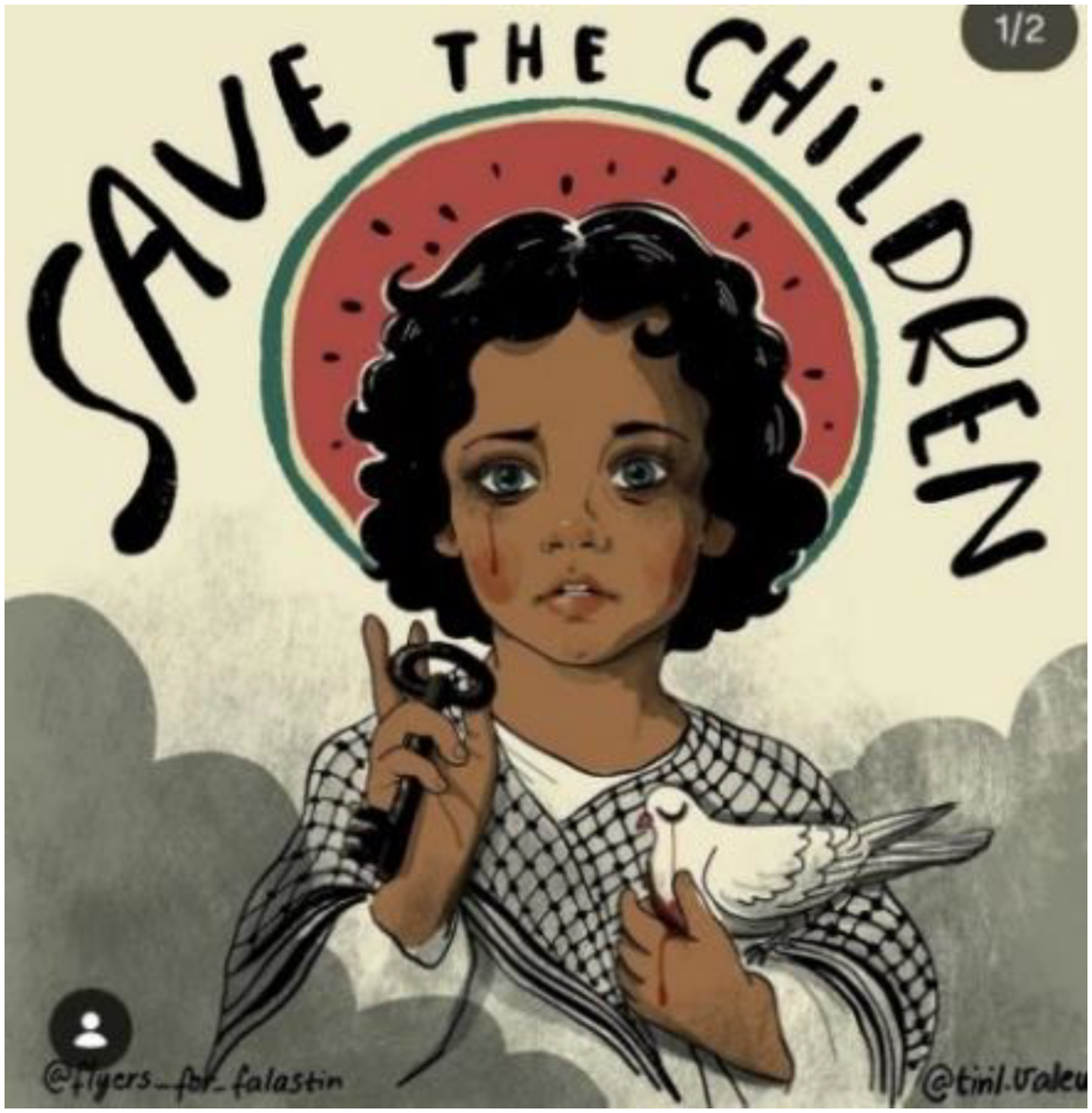
Protest sticker calling for action to save the children.
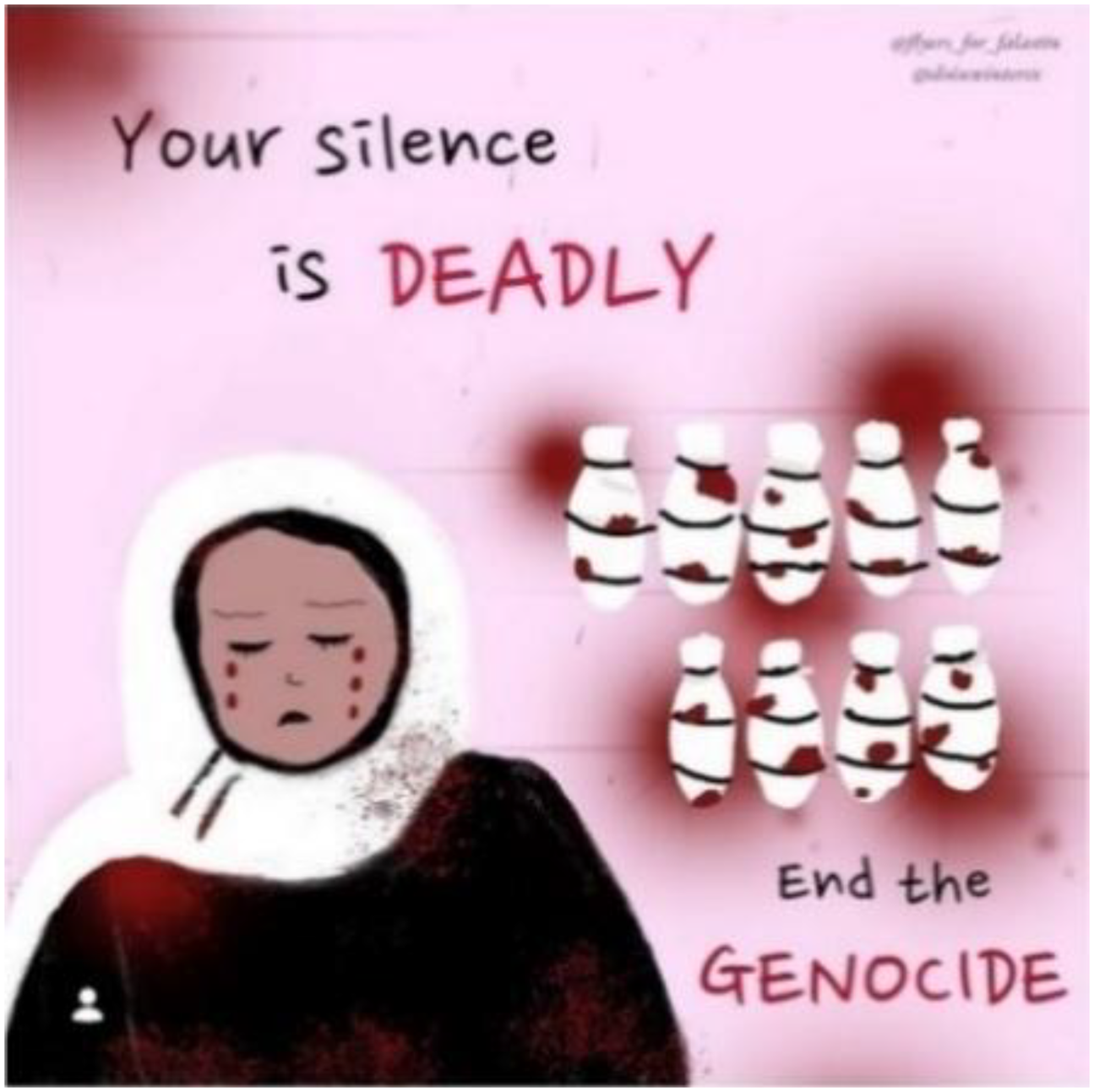
Protest sticker calling for action to end the genocide.
Other stickers include practical imperatives urging action, such as promoting boycott campaigns, inviting participation in initiatives like marches near the Gaza border, and joining flotillas toward Gaza. Figure 11, for example, urges viewers to ‘Choose wisely. Boycott complicity. Support humanity’, accompanied by images of products targeted for boycott due to their support of the Israeli occupation. These products are displayed on a red table and stained with blood, symbolizing the victims of the genocide. The visual representation links consumer choices to the continuation of violence, highlighting moral complicity. Figure 12, on the other hand, serves as a direct invitation to ‘BREAK THE SIEGE’ of Gaza through the Global March to Gaza initiative, a major international movement in which thousands of activists worldwide planned to march to the Rafah crossing. A significant component of this movement was the Sumud Convoy, which began in Tunisia on 9 June 2025. Over a thousand activists, mainly from the Maghreb region, travelled by land through Libya toward Egypt to join the larger global march. The initiative aimed to challenge Israel's siege, raise international awareness of the genocide, and pressure world leaders to take action (Al Jazeera, 2025c). The sticker draws on the image of Handala, the iconic cartoon character among Palestinian refugees. Created by the well-known Palestinian cartoonist Naji Al-Ali and known as ‘the child of the camps’, Handala represents the enduring struggles of Palestinian refugees. He frequently appears in Al-Ali's cartoons, which critique oppression and exploitation in the Arab world. The character also symbolizes the Right of Return, reflecting both the refusal to forget Palestinian rights and the rejection of normalization with the occupation. Handala's hands are positioned behind his back, symbolizing a refusal to let anyone undermine the Palestinian cause (Louz, 2025). In the sticker, Handala appears behind the border, raising a victory-hand gesture toward participants of the march, while activists on the other side hold the flags of the Maghreb region. This powerful imagery underscores the effectiveness of the march in raising awareness of the Gaza genocide and supporting the Palestinian cause.
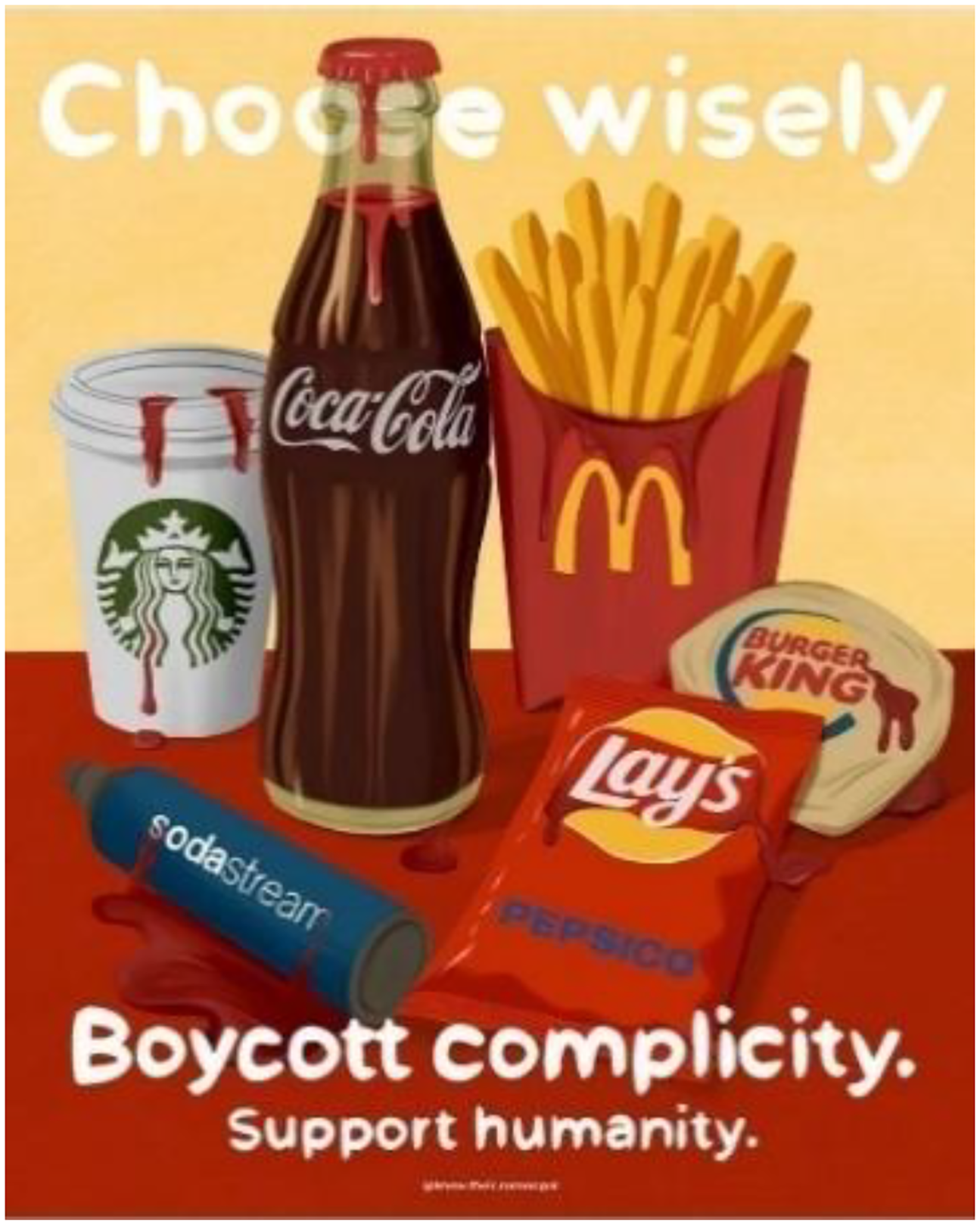
Protest sticker supporting boycott initiatives.
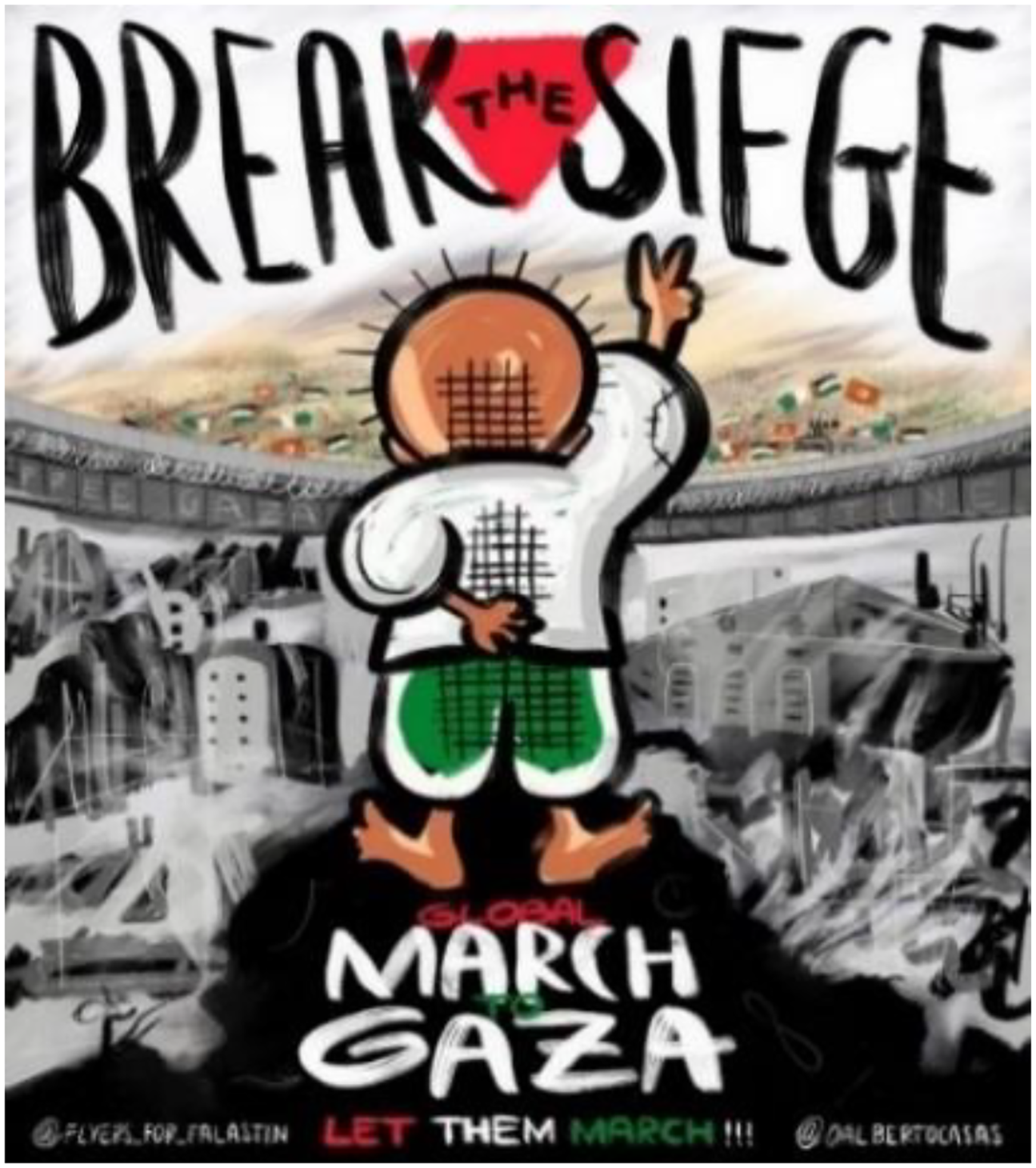
Protest sticker supporting initiatives to break the siege.
Resistance against fascism
The core message of this theme highlights resistance by Palestinians living under occupation, implying that such resistance is justified against fascism, colonialism, and oppression. Common slogans include ‘Respect Existence or Expect Resistance’, ‘Decolonize Palestine’, ‘Long Live the Palestinian Resistance’, ‘Smash Zionism, Fascism, Colonialism’, ‘Globalize Intifada (uprising)’, ‘Support Resistance’, and ‘Resist Occupation’.
Figure 13, for example, features the statement ‘YOU CAN NEVER KILL THEIR RIGHT TO RETURN’ and states that ‘RESISTANCE IS JUSTIFIED WHEN PEOPLE ARE OCCUPIED’. The use of red, capitalized text emphasizes the importance of the message and symbolizes the blood of martyrs, a meaning reinforced by the red dotted background pattern. The first statement implicates he right of Palestinian refugees to resist in order to reclaim their lands and return. The sticker depicts a Palestinian man covering his face with a kuffiya, a symbol of resistance. Red poppies symbolize resilience, anti-colonial struggle, and the remembrance of martyrs. The man makes direct eye contact with the viewer, a demand gaze that calls for attention and recognition, while simultaneously challenging the occupation and conveying a message of unwavering commitment to resist.
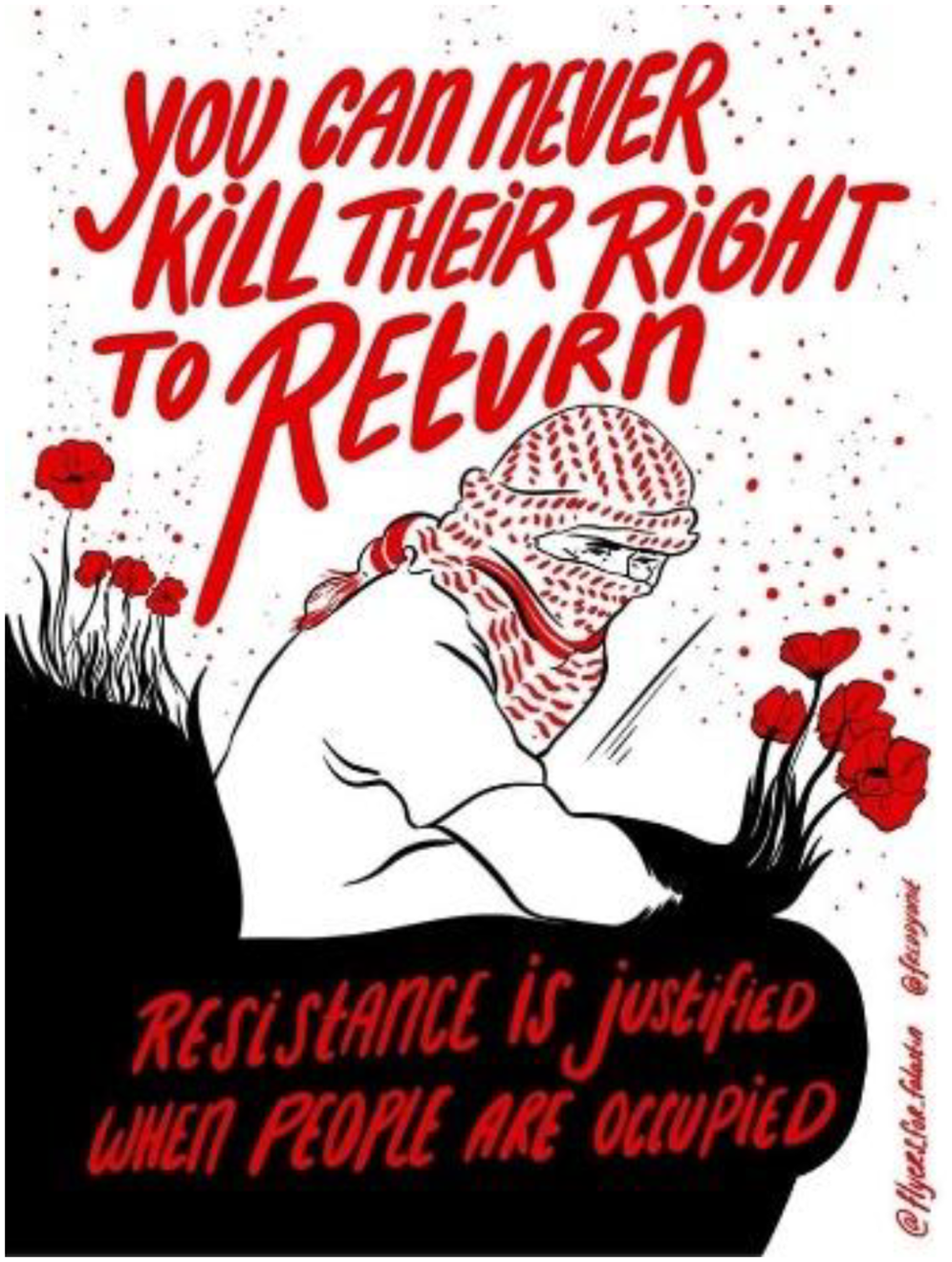
Protest sticker framing resistance as justified.
Figure 14, on the other hand, features the statement ‘PALESTINE. FIGHT FASCISM EVERYWHERE, LONG LIVE THE RESISTANCE’ and portrays a Palestinian fighter wearing a kuffiya while holding a stone in confrontation with an Israeli tank, identified by the Israeli flag. The setting depicts fire and rubble resulting from Israeli destruction. The capitalized phrase ‘THE TRUTH IS OURS’, written in red on a cracked wall, symbolizes the blood of martyrs. Collectively, the visual and textual elements in both figures present resistance as a legitimate right in response to occupation and destruction, highlighting the determination and resilience of Palestinians in defending and upholding their rights.
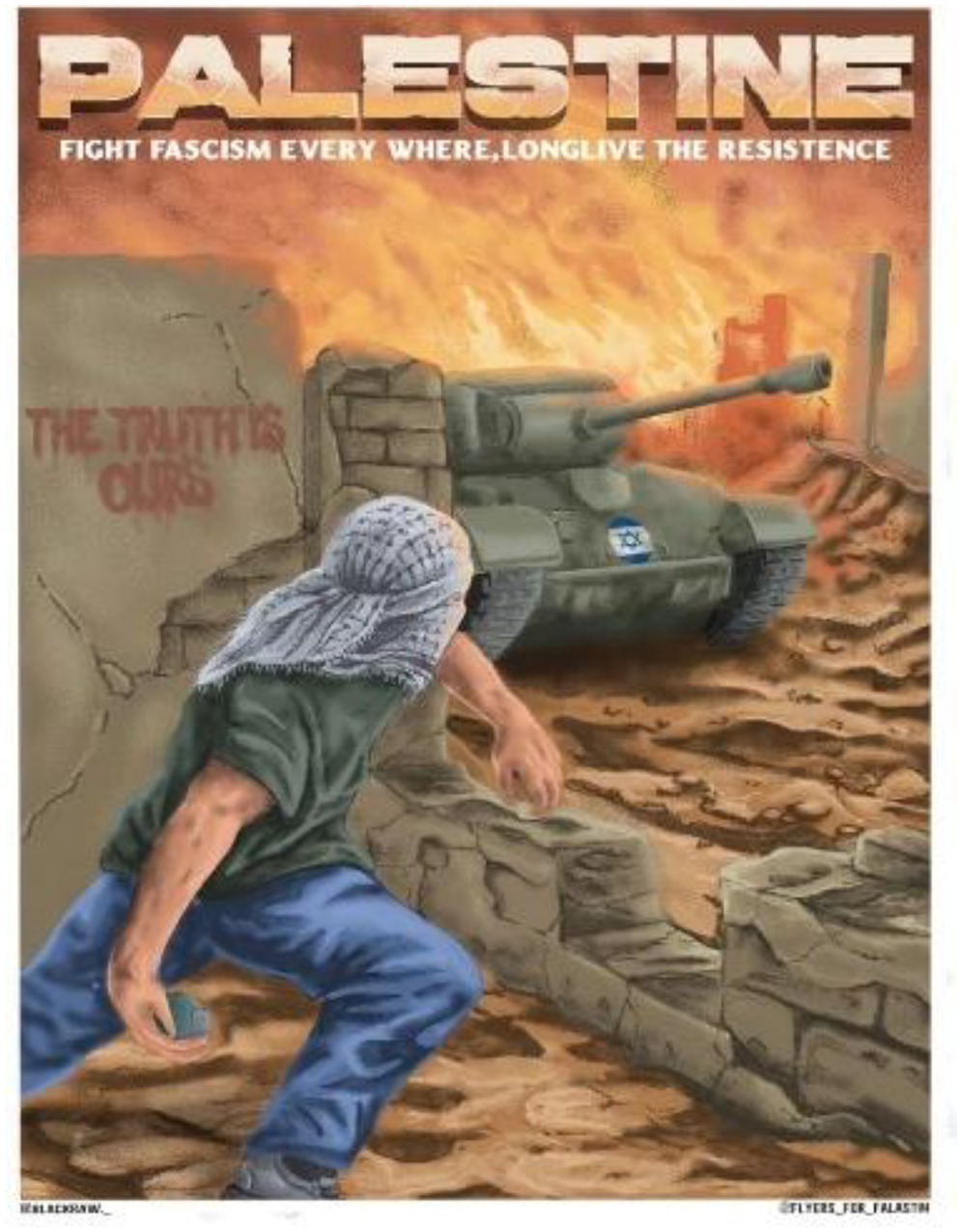
Protest sticker depicting Palestinian resistance to occupation.
Portrayals of Israeli leaders as war criminals and evil
This theme has the lowest frequency among all themes. These stickers portray Israeli leaders, often Prime Minister Benjamin Netanyahu, as evil and criminals. In Figure 15, for example, the sticker stating ‘THE REAL HORROR IS NOT FICTION—IT IS ON EARTH ISRAHELL’ depicts Netanyahu with black horns, devil-like wings, a red face, and a fiery background, visually encoding him as demonic. Netanyahu's demanding gaze directed at the viewer, along with his pointing hand gestures, functions as a challenge to the world, portraying his assertiveness in continuing his cruelty while the world remains silent in the face of the atrocities he has committed.
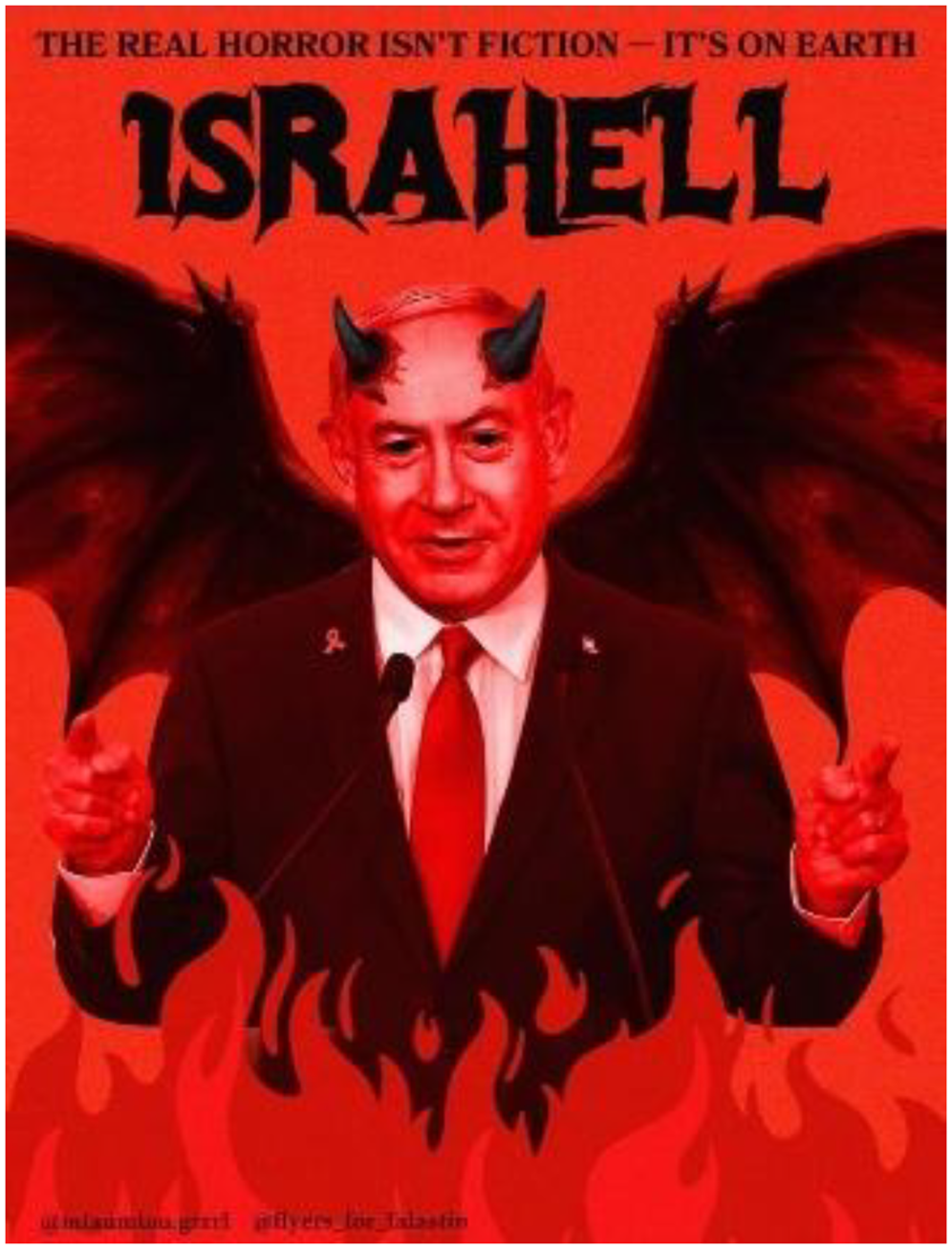
Protest sticker depicting Netanyahu as criminal.
Figure 16 similarly portrays him as a devil, with black horns and black X marks over his eyes. This demonized portrayal indicates moral corruption, loss of humanity and evilness, while also conveying condemnation of his actions. The term ‘Israhell’ in both figures functions as a linguistic signifier, commonly observed in pro-Palestinian activism and social media, to critique Israeli governmental policies and its oppression of Palestinians.
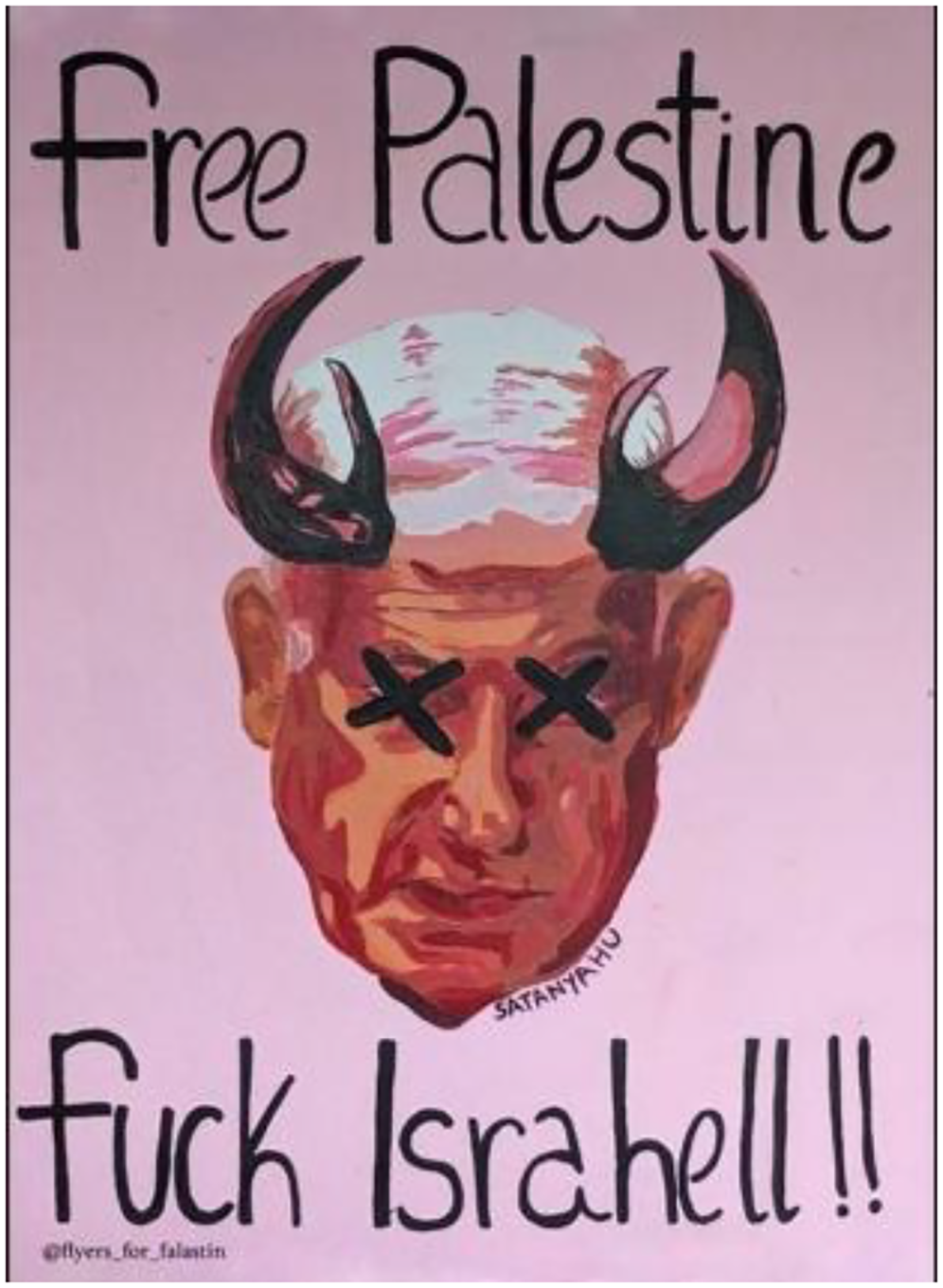
Protest sticker depicting Netanyahu as demonic.
Western complicity in genocide and related atrocities
This category of stickers highlights the perceived complicity of Western powers in the genocide and ongoing atrocities against Palestinians through their political and military support for Israel, particularly via the supply of weapons and military aid. Figure 17, for example, depicts a Palestinian man destroying the U.S. flag with a large hammer alongside the slogan ‘SMASH THE WAR MACHINE’. In this context, the ‘war machine’ signifies the U.S. complicity in sustaining violence through its support for Israel. The act of destroying the flag visually conveys rejection and condemnation of U.S. involvement in genocide. The man's direct and angry gaze demonstrates his determination to challenge and expose this complicity, while the cracks in the flag further enhance this sense of determination.
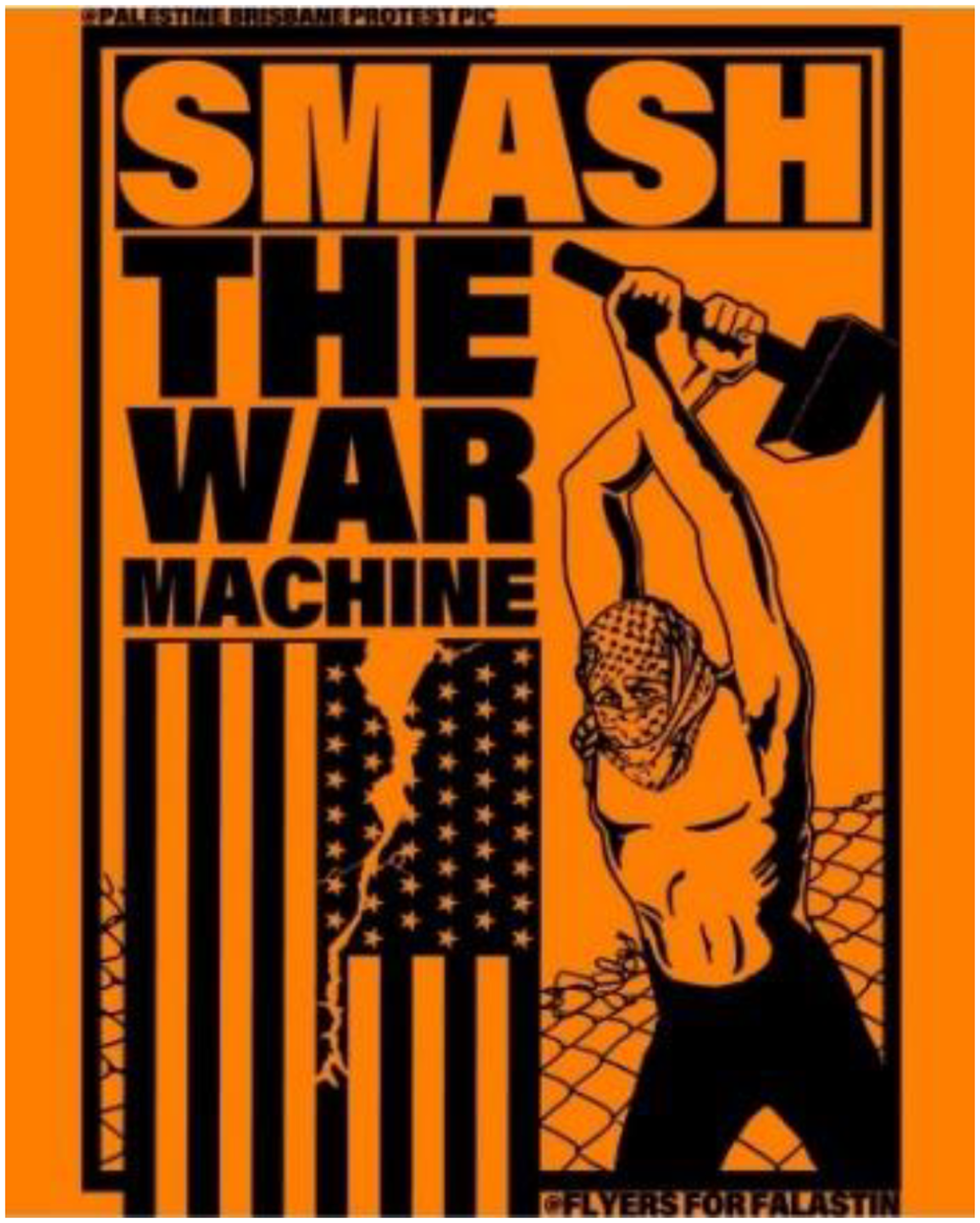
Protest sticker depicting US complicity in genocide.
Figure 18 extends this critique by depicting rockets wrapped in the U.S. and Israeli flags, aimed and on the verge of explosion, as indicated by rising smoke. On the ground, smoke from the explosions fills the scene, from which a hand emerges holding a Palestinian flag alongside a bird coloured in the Palestinian flag, symbolizing resistance, survival, and hope amid destruction. An the top, a red background s appears, symbolizing the blood of Palestinian victims killed as a result of U.S. weapons. The accompanying slogan ‘FUCK THE DEATH MACHINE AND ALL ITS ACCOMPLICES’ explicitly condemns those seen enabling the genocide. Notably, the inclusion of the European Union logo within the letter ‘O’ of ‘accomplices’ highlights the perceived role of some European countries in exporting weapons to Israel and their complicity in Palestinian deaths and suffering.
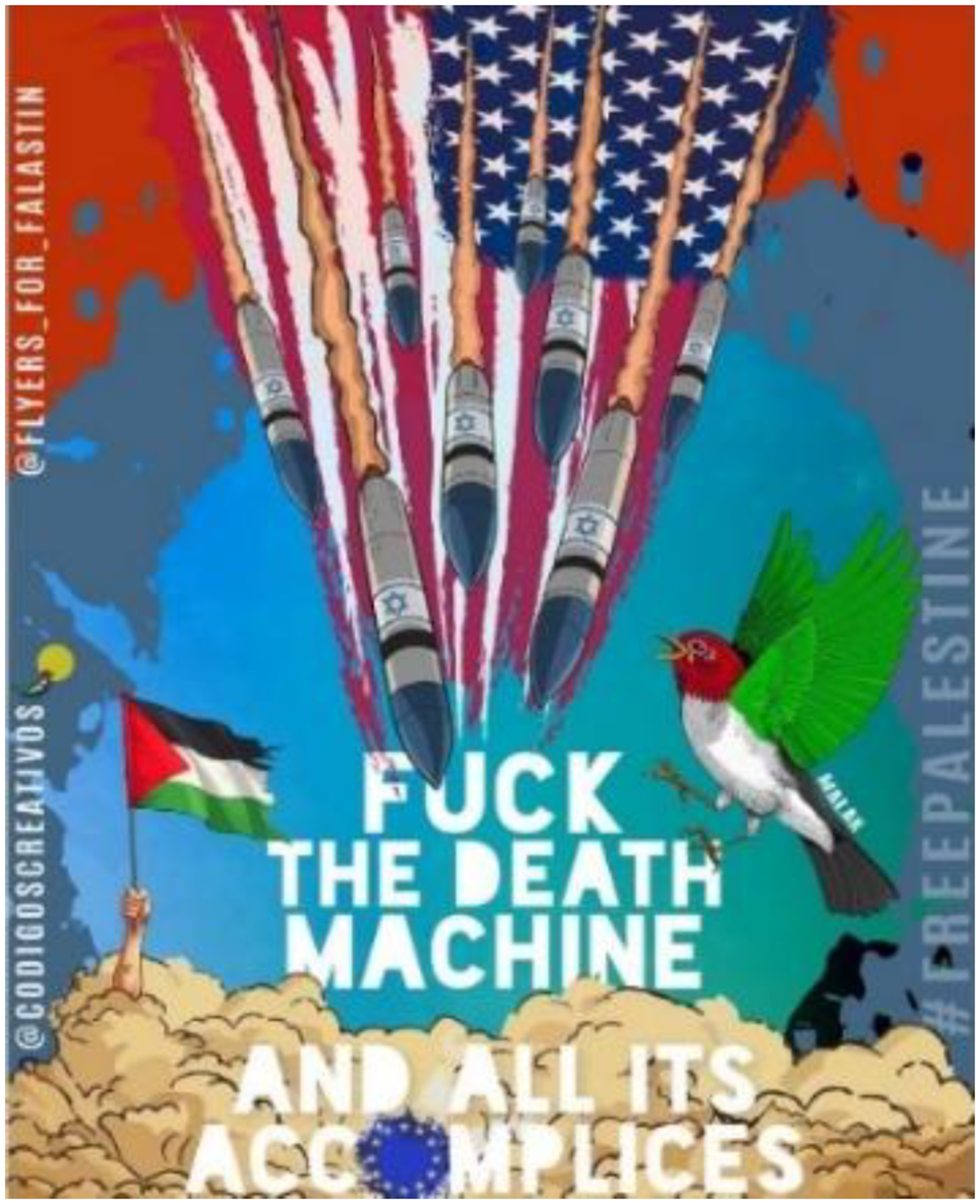
Protest sticker depicting Western complicity in genocide.
Discussion and conclusion
This paper explored protest stickers as a medium of political expression and activism, focusing on stickers addressing the genocide in Gaza. The first research question was addressed through the identification of six key themes that emerged across the dataset. The findings confirm that protest stickers primarily express solidarity at a collective rather than an individual level, particularly solidarity with the Palestinian people as a whole. This aligns with Awcock's (2021) argument that political stickers function as collective forms of political expression. The study demonstrates that these stickers do not merely describe specific political issues; rather, they operate as a form of everyday activism aimed at persuading viewers to take action against injustice (Awcock, 2021), specifically occupation and genocide in the context of this study. This is reflected in the most frequently occurring themes, namely, ‘the liberation of Palestine’ and ‘calls to action and support for initiatives’. Accordingly, the findings support previous scholarship that highlights the role of political stickers in public spaces and political cultures as platforms for public expression among marginalized and vulnerable groups (Awcock, 2021; Awcock and Rosenberg, 2024; Bodden and Awcock, 2024; Reershemius, 2019). Importantly, this study focuses specifically on protest stickers opposing genocide within a broader colonial context, foregrounding the voices of Palestine supporters as articulations of the experiences of an occupied and colonized people in need of visibility and global support. Unlike earlier studies that examine general political issues – such as trans-positive stickers (Awcock and Rosenberg, 2024) or street stickers more broadly (Awcock, 2021; Bodden and Awcock, 2024; Reershemius, 2019) – this research highlights a transnational discourse of solidarity that reflects global, rather than localized, political engagement. This global dimension constitutes a key contribution of the study.
Moreover, the study demonstrates that political protest stickers frequently assert and disseminate factual information about conditions of occupation and oppression. This informational function serves not only to educate viewers but also to encourage action aimed at resisting injustice, while simultaneously evoking empathy and moral responsibility toward marginalized communities. Consequently, protest stickers function as significant instruments of public resistance, reinforcing conclusions drawn by earlier scholars. The findings further demonstrate that activism is enacted not only by the designers of these stickers but also by those who distribute and display them, who engage in resilient and powerful acts of resistance. Thus, this study argues that political protest stickers transcend passive commentary and operate as visual tools of solidarity, mobilized to amplify and weaponize voices of resistance.
The second research question was addressed by examining the visual and linguistic elements employed in the protest stickers. The findings demonstrate that these elements work synergistically to communicate anti-colonial messages, thereby supporting prior research in multimodal discourse analysis that emphasizes the central role of semiotic resources in the interpretation of visual texts (Lulu, 2025a, 2025b; Lulu et al., 2021, 2022). In terms of visual analysis, the study reveals that protest stickers employ a wide range of semiotic strategies to effectively frame anti-colonial narratives as well as narratives of resistance and solidarity. These strategies include the use of culturally iconic symbols deeply embedded in Palestinian collective memory, such as the kuffiya, the watermelon, the Palestinian flag, the olive branch, the Palestinian national flower (Hannoun), the dove, and the Key of Return. Collectively, these symbols convey messages of resilience and resistance against colonization, while also emphasizing hope for freedom from occupation. Furthermore, the analysis argues that nearly every sticker incorporates at least one culturally significant symbol, underscoring the centrality of cultural identity in visual resistance.
Another prominent strategy involves the use of Palestinian flag colours within typography or across the entire sticker design, which visually links the message to Palestinian identity, resistance, and solidarity. Even in cases where explicit national symbols are absent, the use of these colours functions as a powerful symbolic substitute. Additionally, many stickers employ emotionally charged images of victims – either photographic or illustrated – serves as a deliberate strategy to represent suffering and human loss.
A further significant semiotic element is the use of direct eye contact, referred to by Kress and Van Leeuwen (2006) as a ‘demand’, which calls for viewers’ attention and recognition and, in the context of this study, intensifies emotional engagement with the suffering and injustice endured by the depicted participants. Moreover, the visual portrayal of political leaders held responsible for the genocide – such as depictions of Benjamin Netanyahu as demonic or evil – creates an immediate emotional impact and strengthens calls for accountability. This finding aligns with earlier research on visual demonization in political discourse (Lulu, 2025a; Lulu et al., 2022).
In terms of textual analysis, several key strategies emerged from the data. One prominent strategy is the predominant use of imperative constructions, which emphasize urgency and moral responsibility to act through messages such as ‘Support Palestine’ and ‘Stop the Genocide’. These imperatives are framed as collective calls that foreground shared humanity and solidarity. Another textual strategy involves the capitalization of words and the use of bold fonts to enhance visibility, emphasize the importance of the message, and convey a sense of emergency, thereby reinforcing the immediacy of the call to action. Additionally, the use of red-coloured text – commonly associated with danger and urgency (Hong-mei, 2024) – functions in the context of this study to symbolize both the ongoing killing of Palestinians and the immediate need for collective action. The analysis also reveals the frequent use of powerful and emotionally charged slogans as a textual strategy, commonly employed in pro-Palestine protests, which strengthen affective engagement and reinforce collective resistance. Furthermore, another significant strategy is the incorporation of quotations from victims of war – including journalists, writers, and medical professionals – which adds authenticity to the stickers while simultaneously evoking strong emotional appeals from viewers by foregrounding lived experiences of war and suffering.
In conclusion, the study argues that the combined use of visual and linguistic strategies amplifies both the urgency and emotional resonance of genocide-related narratives, inviting viewers not only to take action but also to emotionally engage with the suffering of Palestinians. The findings highlight that the creators of protest stickers demonstrate a nuanced understanding of cultural symbolism and collective trauma within a colonial context, enabling these visual texts to operate simultaneously on emotional and political levels. The study also opens avenues for future research to examine protest stickers addressing genocide in other conflict zones and to explore or compare how visual symbolism functions across different geopolitical contexts in representations of genocide. Ultimately, this research underscores the importance of recognizing the political and communicative power of these small adhesive artefacts, demonstrating that protest stickers – despite their size – function as potent tools of resistance, memory, and global solidarity.
Footnotes

Funding
The author received no financial support for the research, authorship, and/or publication of this article.
Declaration of conflicting interests
The author declared no potential conflicts of interest with respect to the research, authorship, and/or publication of this article.
Data availability statement
The data associated with this study will be provided by the corresponding author upon