






Abstract
This article challenges dominant narratives of queer absence in historical archives by examining women’s same-sex relationships in Denmark at the turn of the 20th century. While feminist and queer scholars have often emphasised archival silences surrounding non-heterosexual lives, we uncover not an archive of loss, but one of abundance. Drawing on Anjali Arondekar’s concept of “archival abundance,” we analyse demographic data and archival materials – including letters, photographs and official records – to reframe the phrase “she never married” as an opening, rather than a closure. Our research reveals abundant and visible traces of queer intimacy, gender non-conformity and alternative kinship structures that have been frequently overlooked or misinterpreted. With our queering of historiographical methods, we propose a shift from reading women’s lives through a lens of absence and silence to recognising the queer possibilities embedded in their lived experiences and everyday practices. This reframing invites a more expansive understanding of queerness in historical research and archival interpretation.
Introduction
Feminist historians have long noted the invisibility or faint presence of women’s lives in historical archives (Allen, 1986; Hunter, 2017). Similarly, scholars of queer history have lamented the archival obscurity of individuals who lived non-heterosexual lives. Engagement with queer archives is often characterised as a confrontation with gaps, fragments and silences in the search for queerness (Coleman, 2010; Dragojlovic and Quinan, 2023; Hunter, 2017). This perceived queer loss or invisibility is often attributed to the structure of the archives, themselves – typically organised along conventional life paths such as (heterosexual) marriage and biological kinship (Arondekar, 2009; Wolthers, 2021) – as well as by the nature of “gay and lesbian cultures, [which] often leave ephemeral and unusual traces” (Cvetkovich, 2003: 8). While much scholarship has foregrounded queer silences in the historical archive, a substantial body of Scandinavian research has documented the lives of women outside heterosexual marriage without framing them solely through the lens of loss (see Hellesund, 2019).
As we embarked on our research into female same-sex relationships in Denmark at the turn of the 20th century, we found many accounts that failed to recognise or name the same-sex relationships women shared. In particular, official archives, encyclopaedias and earlier historical narratives often documented these women’s professional achievements while overlooking their queerness, portraying the women as solitary and framing their lives in terms of absence – of marriage, children and sexual intimacy (see Jacobsen, 2016; Jexen, 2021). However, as we began to explore the archive directly, we uncovered a number of stories of both well-known and ordinary women and their same-sex love lives. Moreover, these traces of romantic, affective and sexual relationships between women were not veiled, obscured or fragmented, but explicit and visible. What we found was not an archive of loss but, in Anjali Arondekar’s words, an “archive of abundance” (Arondekar, 2023).
This archival richness was additionally reinforced by the demographic patterns we uncovered. Most notably, between 1870 and 1916, nearly 49% of all women over the age of 35 in Copenhagen were registered as unmarried, divorced or widowed. In contrast, only approximately 25% of men in the same age group were living without a partner (Census for Copenhagen, 1882). These figures – showing that nearly half of adult women in Copenhagen lived outside of traditional heterosexual marriage for nearly 50 years – struck us as particularly significant. If so many women were living outside of a marital union with a man, how did they sustain themselves, how did they live and, crucially, how did they love?
To us, this demographic context broadened the field of possibility for exploring alternative modes of intimacy and relationality than those of conventional historical narratives, inviting a re-examination of women’s potential for queerness during this period. Following Arondekar (2023: 2), in the present article, we aim to challenge the “epistemological preoccupation with loss as the structuring mode of narration for histories of sexuality”. Our argument emerges from the tension between what the archives reveal and how those revelations have been interpreted – or overlooked. We trace how certain records have been forgotten, ignored or read in ways that reinforce narratives of solitude, absence and a lack of queerness. In particular, we highlight how family stories about women engaged in same-sex relationships have frequently pivoted around the anticlimactic phrase: “She never married.” We argue that this narrative not only truncates women’s lives and stories but also strips them of erotic possibility and fails to acknowledge the broader demographic realities of gender, independence and intimacy at the turn of the 20th century. In response, our analysis brings together demographic data with two archival examples of queer abundance. Rather than accepting loss as the default interpretive frame, we draw on Arondekar’s notion of abundance – not simply as the presence of a specific queer object or identity, but as an epistemological stance that resists the primacy of absence as the organising logic of queer history (Arondekar, 2023).
We begin by presenting our theoretical framework, followed by a description of the archival sources and demographic data that inform our analysis. Subsequently, the article unfolds in three parts. First, we analyse demographic patterns to uncover overlooked possibilities for queer relationality at the turn of the 20th century. Second, we explore how mainstream heteronormative historiography has failed to recognise queer desires and non-normative gender identities, and we propose a queer lens for the (re)interpretation of archival sources. Third, we analyse the legal, cultural and historical silences that have shaped the interpretations of queer couples, often reducing them to figures defined by their unmarried, childless and desexualised status. Finally, we propose a methodological queering of the phrase “she never married,” encouraging its reading not as a narrative closure, but as a space of opportunity, as an invitation to alternative, queer trajectories that signal the beginning of a story grounded in abundance and possibility.
Theoretical framework
Anjali Arondekar (2023: 2) cautions against framing sexuality through “vernaculars of loss,” arguing that such an approach forecloses alternative historiographical possibilities and obscures the richness in histories of sexuality. Instead, Arondekar invites us to consider what emerges when the history of sexuality is approached as a site of abundance. This coupling of sexuality and abundance calls for a shift in theoretical and analytical orientation – away from notions of impoverishment, loneliness and abandonment and towards a more generative potential. In this article, we draw on a theoretical approach to queer historiography that “breaks with such moribund conventions and summons more abundant and joyful lineages of possibility and freedom” (Arondekar, 2023: 22). Accordingly, we do not begin from a language of loss or deficiency, but seek to reinterpret sexualities of the past as sources of possibility, success, resilience and, indeed, of queerness. Arondekar’s formulation of abundance emerges from a specific postcolonial and South Asian context, where questions of sexuality are entangled with caste and colonial governance. Our use of “queer abundance” in a Danish context around 1900 is not indented as a direct or universal application of Arondekar’s framework, but as a situated methodological orientation that is attentive to differences in historical conditions. Where Arondekar mobilises abundance to challenge historiographies that is structured by colonial loss, we explore how a related sensibility to abundance may open alternative readings of archival material shaped by narratives of sexual isolation and deficiency in histories of queer women’s sexuality in Denmark.
In a similar vein, Jack Halberstam (2011: 88) repositions loss in The Queer Art of Failure, suggesting that loss “imagines other goals for life, for love, for art, and for being”. Rethinking what loss does, he argues that losing and failing may “offer more creative, more cooperative, more surprising ways of being in the world” (Halberstam, 2011: 2–3). In this sense, Halberstam challenges conventional understandings of success and failure, advocating for a redefinition of behaviours or ways of being that dominant narratives often dismiss as passivity or stagnation. By recognising failure as a conscious refusal to conform to dominant logics of power, Halberstam (2011: 88) foregrounds alternative possibilities embedded within the very structures that marginalise non-normative lives. Halberstam notes that failure is often attributed to queer people – and has historically been something they are perceived to do “exceptionally well” – because heteronormativity equates success with progress, accumulation and the creation of a biological family. Subsequently, queer and counter-hegemonic modes of being are frequently associated with non-conformity, non-reproductive lifestyles and negativity (Halberstam, 2011: 89). Heather Love (2009) similarly argues that queer bodies are often conceived to bear the failure of all desire. In this formulation, the queer body becomes evidence of failure, while heterosexuality is imbued with achievement, fulfilment and success(ion). Thus, the queer subject is cast in terms of negativity, anti-(re)production and unintelligibility. However, Halberstam (2011: 11) suggests that, by embracing failure as a form of alternative knowing, we may reinterpret it as a refusal of mastery and a counter-hegemonic narrative of loss. By engaging in the archive with the framework of the queer art of failure, we adopt a point of departure that (re)interprets the conventional failure narrative of women’s lives as one of creativity, surprise and possibility.
Furthermore, we draw on feminist and queer scholarship as a corrective framework to guide our interpretation and writing against the heteronormative structures that have historically constrained queer women within the archive. Building on Sara Ahmed’s (2010) critique in The Promise of Happiness, we challenge the cultural expectation that happiness must align with normative ideals. We highlight the counter-interpretations of queer women who have brought happiness to other women through their love – even when historiography has not embraced such love, or has failed to recognise it as love at all. Our challenge, then, is not the absence of queerness in the historical record, but rather the absence of historical accounts that acknowledge queerness. Therefore, we approach this article from a place of yearning – yearning for abundant queer readings that both correct assumptions about women’s supposed lack of marriage, children, community, sex and desire, and that open up new interpretive possibilities for the figure of the “unmarried woman.”
Archival material and methodological approaches
Methodologically, we draw on demographic data concerning women’s marital status, occupations and patterns of migration from rural to urban areas around the year 1900. These statistics were sourced from the Copenhagen Municipality Archive (Stadsarkivet), with a particular focus on the period 1870 to 1910. Our attention centres on the ways in which women lived, worked and moved through space during this time. Rather than treating these figures as neutral data points, we approach them as interpretive tools – as entryways into alternative narratives of women’s lives (see Strunk, 2024).
Furthermore, we draw on selected archival examples that illustrate how portrayals of women have frequently confined them to narratives of unhappiness, loneliness, heteronormativity and childlessness. In particular, we engage with these interpretations at points where historiographical approaches have become stuck, gone astray or defaulted to (hetero)normative explanations. Through the lens of queer abundance (Arondekar, 2023), we reinterpret the source material not as evidence of lack, but as sites rich with potential. To foreground this epistemological approach, we focus on two specific cases. The first concerns Theodora Lang (b. 1855) and Anna Høltzermann (b. 1862), a Danish couple who lived together for more than 50 years. Unlike many state or women’s movement-driven collections from the period, much of the archival material related to their lives, such as letters and photographs, was preserved through private family efforts and later deposited in the Silkeborg Archive, a local archive in the rural region of Denmark where they resided. The second case focuses on Sophy A. Christiansen, a Danish carpenter who also cohabited with a female partner and whose gender identity resists cisnormative categorisation. The archival material related to Christensen is more fragmentary and dispersed. It consists of a photograph taken by the photographer Mary Steen alongside a series of descriptions found in books and encyclopaedias (Gejl, 2023; Jexen, 2021; Wiene, 1991). Unlike the privately preserved and later deposited collection of Lang and Høltzermann, the traces of Christiansen’s life are preserved through published works and visual documentation. At the same time, it is important to acknowledge that such materials have not survived by coincidence. Both state institutions and women’s movements in the 1970s and 1980s have contributed significantly to the very archival abundance that this article draws upon (Possing, 1992; Wiene, 1991). However, while these efforts have ensured visibility and preservation, they have also been accompanied by interpretative frameworks that we seek to challenge. For example, women engaged in professions such as carpentry, like Christiansen, have been portrayed as choosing work over marriage, which positions them within a narrative of heterosexual absence rather than as subjects of potentially queer lives.
Rather than searching for queerness in absence or hidden fissures, we adopt a methodology that listens attentively to what the archive openly tells us about the women’s love, relationships, family bonds and forms of independence. While the archives contain a wealth of queer material, the women’s voices – particularly regarding their sexualities, family structures and lived experiences – have often been silenced, misinterpreted or distorted. To address this, we propose and apply a methodology that invites a more expansive approach to reading the archive – one that attends to surplus, multiplicity and interpretative openness. In doing so, we engage with previous portrayals of the women alongside demographic insights, allowing us to explore the possibilities that lie beyond the narrow constraints historically imposed on these and other queer women.
Demographic patterns as possibility
In what follows, we attempt to reposition the dominant narrative of the single, unmarried and childless woman at the turn of the 20th century by presenting statistical demographic data. We begin with the demographic observation that approximately half (49%) of women in Copenhagen at the turn of the 20th century were registered as unmarried, divorced or widowed. This leads us to ask: If nearly half of all women lived outside the bounds of heterosexual partnership, what other forms of life, love and fulfilment were available to them?
This question appears to have also occupied the statisticians, themselves. In the commentary accompanying the 1882 census, the authors expressed a sense of wonder and uncertainty regarding how these women sustained themselves: “One must, according to the actual circumstances, regard marriage as the natural path for women to obtain sustenance,” they observed, noting further that: “Half of the women over 35 years of age lack a provider” (Census for Copenhagen, 1882: XV). They concluded that this development “must be assumed to mark a turning point in the female existence” (Census for Copenhagen, 1882: XVI). This language reflects a deeply held assumption that marriage was not merely the social ideal, but perhaps also the only legitimate means by which women might achieve economic and social stability. Within this logic, the phrase “she never married” functions as a shorthand for a host of perceived absences – absence of a husband, children, financial security, stability and fulfilment. And yet, even at the time, there appears to have been palpable unease and a hint of curiosity about the lives of women who lived outside these structures. The tone of the 1882 commentary hints at an unspoken recognition that these women’s lives may have taken other forms, pursued other desires and built alternative forms of community. Thus, rather than reading “she never married” as a marker of deficiency, absence or closure, we propose understanding it as an opening – an invitation to consider abundance and multiplicity beyond the confines of heterosexual marriage and conventional family bonds.
In 1911, 53,000 women (compared to 18,400 men) were recorded as unmarried, divorced or widowed in Copenhagen, indicating a significant overrepresentation of single women in the city (Census for Copenhagen, 1914: 8). While the authors of the demographic reports may have struggled to imagine how women could sustain themselves outside of heterosexual partnership, the data point towards an emerging reality of female independence at the time. This aligns with the earlier commentary on a “turning point in female existence” and suggests that prevailing norms regarding women’s roles and sources of sustenance were beginning to shift.
The overrepresentation of women in urban centres also reflects broader patterns of migration, as many were moving from rural areas of Denmark to cities such as Copenhagen. Between 1881 and 1895, women accounted for 56% of all migrants to the capital Copenhagen (Census for Copenhagen, 1892). Notably, from 1881 to 1885, 9263 women migrated to Copenhagen, representing a 39% increase from the 6653 women who moved there between 1876 and 1880. This surge in female migration is evident across all age groups, while men were simultaneously leaving the city for work in rural areas (Census for Copenhagen, 1892). Women migrants left behind parents, families and rural communities to pursue lives of greater autonomy in the capital. For many, factory work with regular hours, the camaraderie of female colleagues and access to the city’s social and cultural offerings – including dance halls, department stores, theatres and museums – proved highly appealing (Andreassen and Pryds Helle, 2025). Their migration represented not merely an economic necessity, but also a form of “freedom migration,” through which the women sought autonomy, opportunities and alternative ways of living.
The demographic data reveal not only that many women were living independently from men but also that they were sustaining themselves economically. The commentary accompanying the 1882 census explicitly acknowledges this shift: Given the peculiar social and occupational conditions that created the large surplus of women “without providers” in Copenhagen, this phenomenon has become a significant factor in shaping the social and occupational conditions in the capital, particularly in relation to questions about women’s education to support themselves and their equal employment rights with men. (Census for Copenhagen, 1892: 8)
Despite prevailing societal assumptions about women’s dependence on male providers, many women were, in fact, providing for themselves. By 1885, 37% of all registered providers in Copenhagen were women. The occupational data reveal that women worked in a wide range of roles – many within traditional feminine domains, such as domestic service, teaching, nursing, dressmaking, innkeeping and fashion retail (Census for Copenhagen, 1892) – and still others in professions that transgressed gender norms, such as wholesaling, manufacturing and craftsmanship, including carpenters, bricklayers and blacksmiths. Across these diverse forms of work, the vast majority of women – between 91.8% and 99.6% – were unmarried (Census for Copenhagen, 1892).
Rather than interpreting these statistics as evidence of lack, loss or social failure, we propose that they are indicative of the many ways in which women lived beyond the confines of heterosexual marriage. The high proportion of unmarried, divorced and widowed women – alongside their migration to urban centres and their economic self-sufficiency – invites us to imagine a broader landscape of female lives, work, relationships and desires at the turn of the 20th century. Taken together, these demographic patterns invite two related but distinct questions that guide our inquiry. First, how historical narratives have obscured what appears to have been a more common experience of women’s social and economic independence in Denmark? And second, how historical and archival interpretations have subsequently struggled to recognise the queer possibilities that such independence made possible in women’s lives and intimacies? In what follows, we trace and address these questions.
Looking again: Sophy and the gender-queer possibilities of the archive
History is not merely a study of past events; rather, it is a study of how the present views and traces the past (Allen, 1986). Consequently, Hundstad et al. (2022: 15) advocate for an abandonment of the traditional historical gaze when researching queer history, instead urging an openness to more queer perspectives on the archive to render queer stories more visible. We aim to contribute to this invitation by showing how a historically heterosexual, feminist gaze has overlooked and marginalised same-sex desires and queer figures in the archive, while applying a queer lens of desire and gender transgression to reveal new histories of same-sex relationships. We begin with Sophy A. Christensen as a figure through whom the demographic patterns outlined above can be traced historically, showing how women’s economic independence created lived alternatives to heterosexual life scripts. We examine Sophy A. Christensen (1867–1955), who became the first female master carpenter in Denmark. Owing to her status as the first woman to establish her own carpentry workshop, her story has been recounted in various books and encyclopaedias (Gejl, 2023; Jexen, 2021; Wiene, 1991).
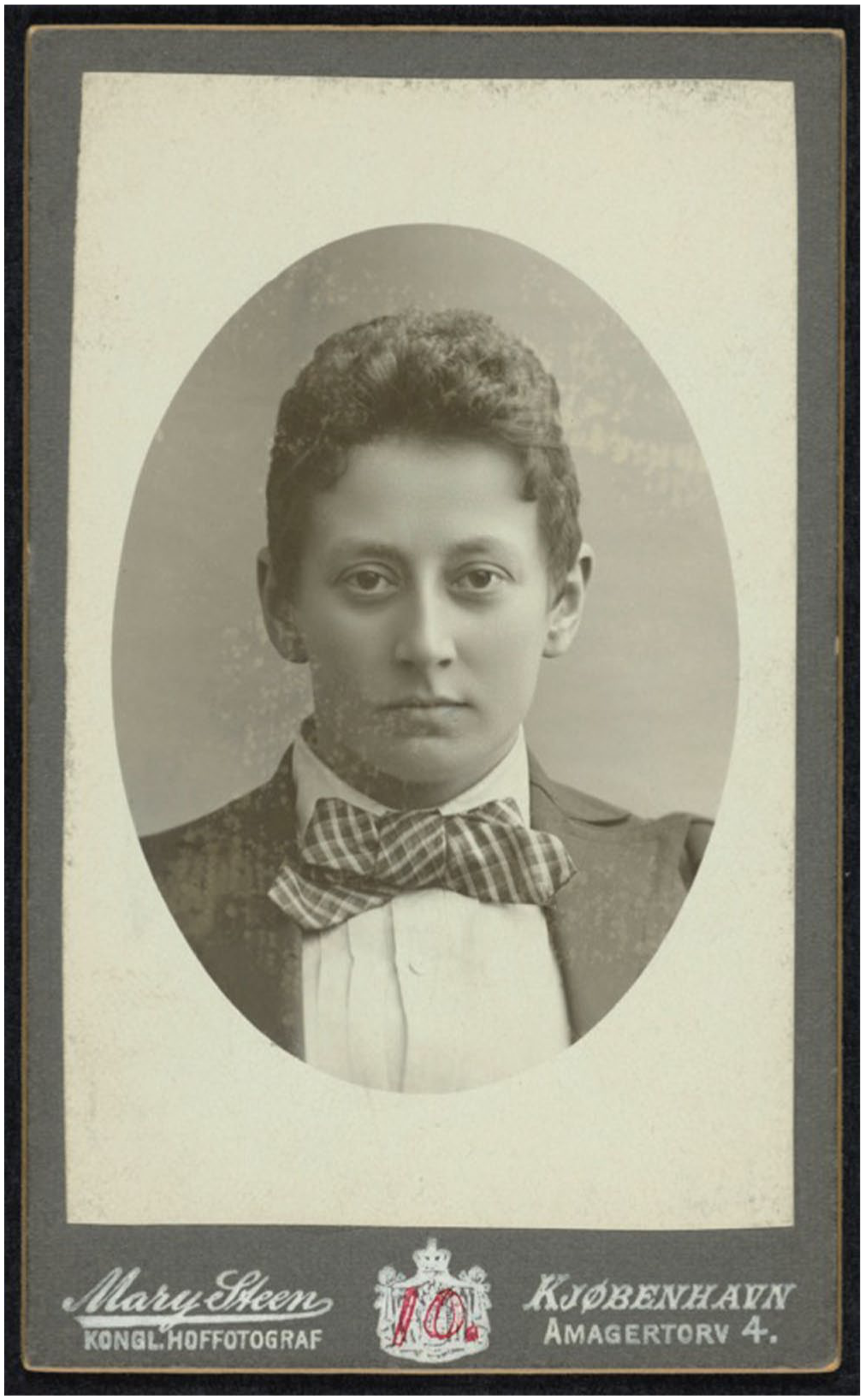
In these sources, Sophy has repeatedly been portrayed as someone who never married and a woman who had to compromise her femininity due to her profession: [Sophy] put the lid on her femininity – maybe as an aim to fit into the artisan environment. She was known for always keeping her hair short and for wearing a tie or butterfly. She, too, never married or had a family. (Jexen, 2021: 39)
This portrayal resonates with certain dominant historiographical tendencies in women’s history in the 1970s and 1980s, which often disregarded same-sex relationships and interpreted signs of masculinity as products of a patriarchal context, thereby “explaining” them away (Calhoun, 2002: 61). Relatedly, Nan A. Boyd (1999) has shown that strands of 1970s and 1980s lesbian feminist historiography failed to frame same-sex relationships or male impersonators within a logic of sexual desire or transgender identity. Instead, such figures were interpreted as symptoms of patriarchal constraint, leading to the conclusion that, if male impersonators had “lived at a time when they could enjoy economic freedom, political rights, or sexual love for women as women, they would not choose to masquerade as men” (Boyd, 1999: 75). Differently, Sophy may be read as a queer figure expressing female masculinity (Halberstam, 1998) or – applying contemporary terminology – as a potential non-binary, gender-fluid or transgender individual.
Viewed through a queer lens, Sophy’s photo can be situated within a queer sexual economy, in which she might be read as a sexually attractive “butch.” Her short hair and masculine presentation may have been attractive to the women with whom she formed intimate partnerships, such as Anna Pedersen, an actress at the Royal Theatre. Furthermore, by the late 19th century, short hair had become a symbol of progressive modernity (Andreassen and Pryds Helle, 2025). Thus, rather than signifying a compromise of femininity, Sophy’s appearance may reflect a cultivated image that simultaneously conveyed her progressive attitudes, affirmed her desirability within the queer community and mirrored a potentially non-binary self-image. Rather than concluding Sophy’s narrative with “she, too, never married,” we propose that her progressive queer story begins with her lack of (heterosexual) marriage.
Halberstam (2011: 4) argues that, whereas feminine success is often measured against male standards, gender failure can offer relief from the constraints of patriarchal ideals, whereby not succeeding at womanhood can, in fact, offer unexpected pleasures. In a similar vein, it has been argued that when womanhood is defined within a heterosexual framework, lesbians cannot be considered “women”; and if lesbians are not “women,” then they exist outside of patriarchal norms and may possess the potential to reimagine and redefine the meanings of their gender (Wittig, 1992). From this perspective, Sophy’s gender identity may be understood through what Halberstam describes as “shady, murky modes of undoing, unbecoming, and violating” (Halberstam, 2011: 4). Rather than conforming to stable or legible categories of feminism, Sophy inhabits a space of disruption within normative scripts. Her gender identity is not simply a case of “failed” femininity, nor has she “put the lid on her femininity”; instead, she is actively engaged in the work of undoing the very structures that have historically constrained the telling of her story. Grounded in a space of negation, refusal, absence and silence, Sophy’s gender identity gestures towards modes of unknowing – part of an alternative form of becoming that resists confined interpretations. We argue for a (re)interpretation of these avenues of desire and undoing, not as signs of failed femininity or the end of her narrative, but as openings into other ways of being. Rather than closing Sophy’s story due to the absence of a heterosexual man to define her “happy ending,” we propose a reading that embraces her non-conformity as a kind of “failure” – one that generates, rather than forecloses, more creative and pleasurable ways of being and invites us to develop new approaches to queer history.
Sophy was an (unmarried) woman working within a male-dominated profession. In 1895, she became the first female master carpenter in Denmark, establishing her own furniture workshop. Her business soon flourished, leading her to employ 10 journeymen and 2 apprentices. Her remarkable career and professional accomplishments have been celebrated in many historical accounts. However, what remains unspoken in these narratives is her personal life and, in particular, her queerness. Similarly, archival interpretations, by recounting the story of Sophy’s work but not her love, have reflected only a partial view of Sophy’s life and experience. Furthermore, she has often been portrayed as the lone pioneer among female carpenters of her time, but this is not historically accurate. In the same year that Sophy earned her master title, Cathrine Horsbøl also established herself as a master carpenter. Moreover, the demographic data previously presented shows that Sophy was far from alone. During that same period, 2690 women were registered as “heads of business,” and 11,644 as “assistants” in manufacturing and crafts industries, such as carpentry. Of these, 95.8% were unmarried. This suggests the presence of a broader community of women who were not only economically independent but also independent from men.
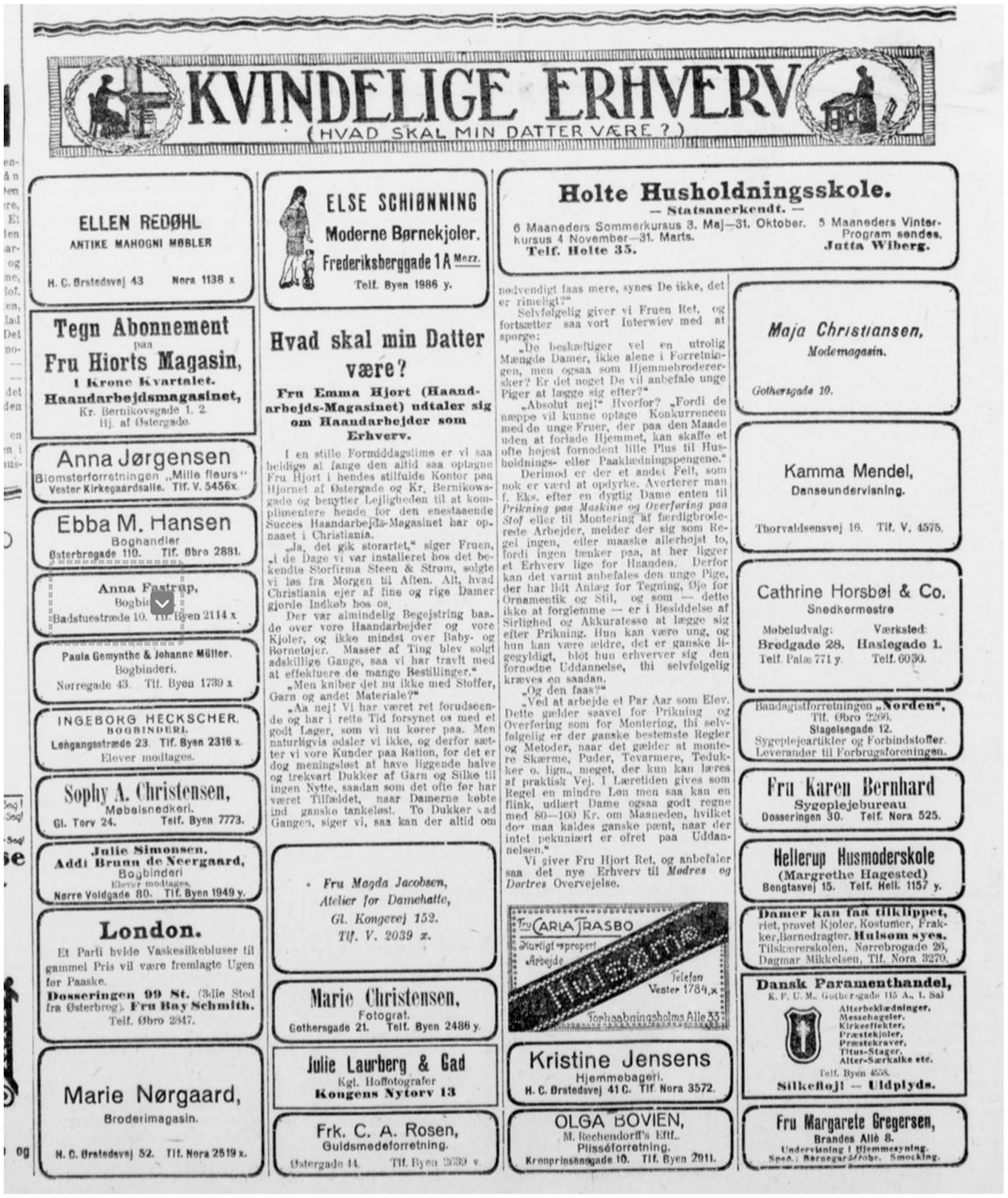
For example, the Danish Newspaper Nationaltidende featured a section titled “Female professions: What should my daughter become?” In this segment, advertisements from both Sophy and Cathrine appeared – including the addresses of their carpentry studios – alongside listings from many other women. These women likely shared skills, knowledge and perhaps even aspects of their lives; and they supported and learned from one another, forming a collective of possibility. Their community was not only professional but also personal, potentially encompassing alternative forms of intimacy and success. The visual impact of the advertisements in the newspaper – with columns filled with women working in trade, the arts and various other professions – speaks to the shifting norms around gender and independence at that time. By recovering these stories and the broader demographic context in which these women lived, we aim to reframe Sophy’s narrative from one of individual exceptionalism to one of collective visibility. Women like Sophy were not isolated anomalies but part of a wider network of self-sufficient women whose lives challenged the dominant narratives and interpretations of absence and failure, inviting us to reconsider our understanding of abundance, fulfilment and intimacy.
In both the commentary on the demographic statistics and previous interpretations of Sophy’s life, the opportunities afforded by her work and self-sufficiency have gone largely unrecognised – as has the economic freedom that enabled her to live an alternative, progressive and queer life. While her professional achievements have been appropriately acknowledged, the rich possibilities arising from her multiple forms of independence have often been framed as “failed” femininity or marriage. Tone Hellesund has examined how many (unmarried) women around the turn of the 20th century were deeply engaged in the women’s rights movement, actively participating in the founding of professional organisations, student associations and international networks (Hellesund, 2019: 24). These women considered themselves part of a broader movement – reading, writing and establishing transnational connections. Hellesund suggests that the figure of the spinster can be regarded as queer – not necessarily due to her sexual practices, but because of her “failure” or refusal to conform to dominant ideals of romantic love, heterosexual marriage and motherhood. This non-conformity, Hellesund argues, positioned the spinster within the public sphere in ways that disrupted normative gender roles and challenged the rigid division between male and female domains (Hellesund, 2019: 40). Building on this, we argue that Sophy and her community of (unmarried) women embodied queerness through not only their rejection of heteronormative life scripts but also their explicit and abundant queer relationships, desires, gender expressions and kinship structures. Alongside the structural or political queerness Hellesund describes – marked by the creation of new spaces for female agency – Sophy and her community also enacted and inhabited a queerness that was relational and affective.
A beginning at the end: The queer life of Theodora and Anna
The legal prohibition of same-sex marriage has contributed to the archival invisibility of many queer relationships. Archival records tend to follow legal definitions and categories, and thus, an individual in a registered, legally recognised (heterosexual) marriage is more likely to have their partnership documented and visible in the archive than an individual in an illegal marriage or a relationship outside wedlock. Nonetheless, some archives offer abundant evidence of partnerships that closely resemble marriage, even if they were never legally recognised as such. One such example is the archive of Theodora Lang (1855–1935), an important figure in the development of education in Scandinavia. Theodora lived with Anna Høltzermann (1862–1933) for more than 50 years, forming a life partnership that, while never legally acknowledged, was deeply intimate and socially legible within their circles. The two women met in November 1882, when Theodora moved from Copenhagen to rural Silkeborg to assume a position as head of the school in which Anna was employed. Their bond developed quickly into a romantic relationship – something Anna would later describe as “love at first sight.” For decades thereafter, they commemorated the anniversary of that initial meeting as a personal celebration of their love.
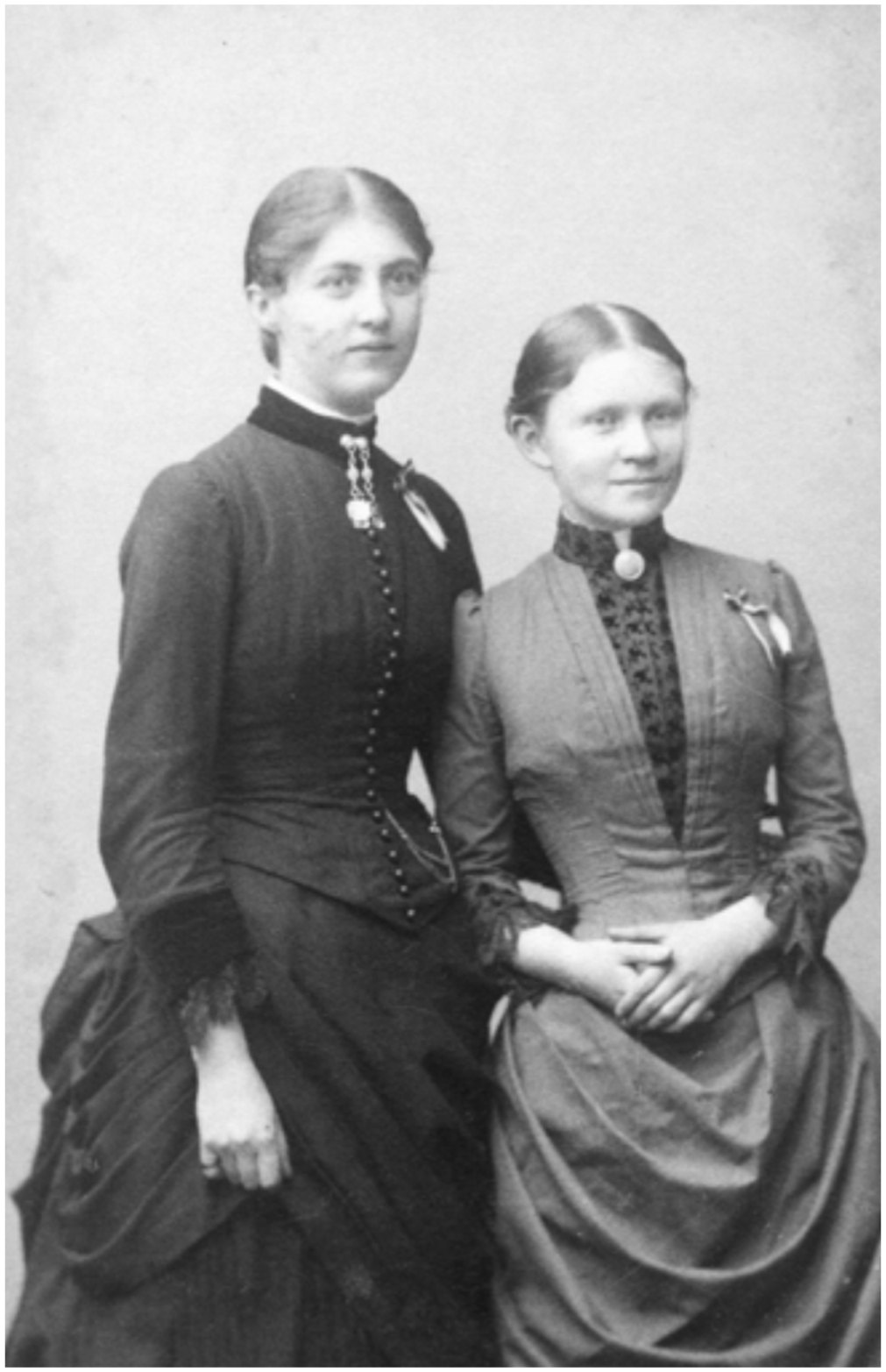
If Sophy’s life demonstrates how women’s economic independence opened up queer ways of living, the archive of Theodora and Anna allows us to draw out how this independence also enabled women to structure their lives around sustained queer intimacies. As we explored the archive, we were struck by the affective abundance and sheer volume of material – conveyed primarily through an overwhelming number of letters – expressing the women’s affection, devotion and love – and photographs. On one of Theodora’s birthdays, Anna gifted her a bracelet accompanied by a note reading: “Theodora, do you like this bracelet? A ring, I did not dare. But perhaps in the summer, when the sleeves are shorter, you might wear it daily so as not to forget the giver?” (Silkeborg Archive, 1884). Although Anna refrained from offering an engagement or wedding ring, the bracelet clearly served as a symbolic and visible affirmation of their relationship. Another poignant letter was written by Theodora on the 43rd anniversary of their first meeting: I sit here tonight with my mind so full of memories of the first time we saw each other, on November 21, 1882. You were 19 years old, and I was 27. It truly was a meeting with rich, blessed outcomes for both of us. What a difference it makes in one’s life to have someone who gives you such a rich, deep and complete love as you have given me and will continue to give for as long as you live. It is precisely this certainty and assurance that is so wondrous. Once again, my heartfelt thanks for these 43 years. You have given me a lifetime’s worth of joy. (Silkeborg Archive, 1925)
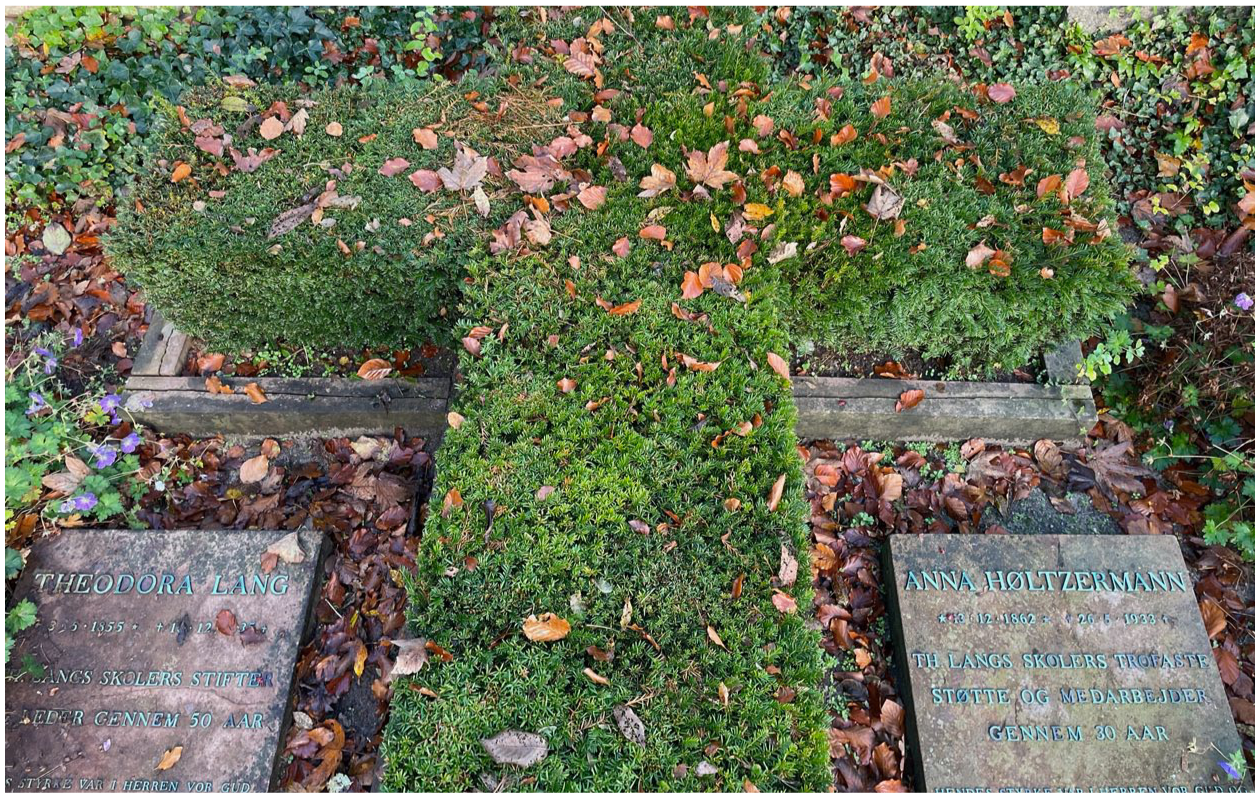
These archival traces reveal not only the affective depth of Theodora and Anna’s relationship but also the forms of queer domesticity and commitment that existed between them. The archive also includes letters from their foster daughter and son-in-law, who referred to Theodora and Anna as “mothers-in-law” – a phrasing that suggests recognition of their partnership within their family and social milieu. Another testament to their relationship lies just beyond the archive: in the nearby cemetery, Theodora and Anna are buried side by side – a memorial to their love and intimacy, and lifetime spent together.
Despite the abundance of evidence attesting to Theodora and Anna’s love and partnership, Theodora has consistently been described in the historical record as single. For instance, the Danish Royal Library as well as the Silkeborg Archive collectively holds an extensive collection of photographs depicting the two women together, yet the accompanying archival descriptions make no reference to their relationship. When we inquired about Theodora’s archive and met with the archivist who supplied the material, we were repeatedly told – with great conviction: “She was not a lesbian.” This narrative of Theodora’s supposed lack of partnership or queerness is further reinforced by historical accounts that interpret her relationship with Anna as maternal, rather than romantic, citing the 7-year age difference between them as indicative of a mother–daughter dynamic (Jacobsen, 2016). In such readings, their intimacy is recast as familial and desexualised – a bond between two unmarried women who, as it is often stressed, never married, rather than a life partnership rooted in love and commitment. Here, the absence of legal recognition contributes to a broader historiographical void. The lack of marriage is treated as a narrative conclusion, as though nothing further needs to be said. In this telling, Theodora’s relationship with Anna is effectively reduced to the phrase “she never married” – a formulation that erases the intimacy, love, desire and queer possibility embedded in their shared lives.
Hundstad et al. (2022: 15) argue that the interpretation of history through a heteronormative lens, combined with a strong norm of discretion, produces a culture of unspoken narratives or silences around queer relationships. This may help to explain the silence surrounding Theodora and Anna. The politics of discretion appears reinforced by the legal invisibility of same-sex marriage. However, as we sifted through the archival records, such as the love letters between the two women, we became increasingly puzzled as to how a same-sex relationship so clearly inscribed in the archive could have been so persistently overlooked. As Hunter (2017: 207) reminds us, silencing is not passive, but active: “The moment of fact retrieval and the construction of narratives is a . . . moment of silencing practice: who gets included in the story is a very powerful process of silencing others”. Whether through deliberate omission or perceptual blindness, the refusal to name Anna as Theodora’s love and partner constitutes a definitive action – irrespective of whether it is driven by a heteronormative gaze or a politics of discretion.
Sara Ahmed (2010: 90) similarly considers how heterosexual love is constructed as the only conceivable path to a happy ending, offering direction and purpose and constituting the ultimate aim of life. For Ahmed, such “happiness scripts” function as gendered directives, whereby a girl becomes a woman by finding happiness in the happiness of a man. In this formulation, happiness functions as a straightening device (Ahmed, 2010: 91), meaning that any deviation from the heteronormative path is a potential deviation from happiness, itself, carrying with it the threat of unhappiness. From this perspective, Theodora and Anna’s love may have remained unrecognised because love, in order to be recognisable, is expected to conform to conventional scripts of happiness and, most notably, the institution of marriage. Their partnership, which did not conform to these normative structures, became invisible in the archive not due to absence, but because it failed to align with dominant configurations of happiness and dominant cataloguing of archival sources.
And yet, there is compelling evidence to suggest that queer happiness and love are indeed present in the archives of Theodora and Anna. The absence of marriage in the historical record, however, leads to their love being framed as a void – a silence treated as final, foreclosing further inquiry into their lives and experiences. In this framing, the lack of marriage becomes a narrative endpoint rather than an invitation to consider alternative modes of happiness. In contrast, we propose beginning at this apparent ending and (re)interpreting queer (un)happiness as a point of origin. Rather than viewing legal marriage and biological children as the only legitimate conclusion, we advocate for a reinterpretation of the queer archive – one capable of articulating different stories about queer happiness, intimacy and love. Following Ahmed (2009: 1), who argues that “we are not obliged to ‘believe’ in the unhappy ending by taking the ending literally, as ‘evidence’ that lesbians (. . .) must turn straight”, we similarly contend that just because a life appears to end in either a conventional or a “sad” fashion – marked by the absence of marriage – we need not accept that as the inevitable or truthful conclusion of a woman’s life or identity. Thus, we do not have to accept that which erases queer historical possibilities.
Conclusion
Inspired by Arondekar (2023), we argue that reading the stories of Sophy, Theodora and Anna through a lens of queer abundance positions the archive as a fertile space for reimagining and interrogating the ways in which their lives have been understood. Approaching histories of sexuality and gender identity through a frame of abundance, Arondekar contends, does not require the construction of a new economy of endless knowledge, nor does it entail an approach of simply accumulating “more, more, more.” Rather than offering salvation through loss, abundance operates as a conceptual metaphor that allows us to move beyond the habitual oscillation between complete fulfilment and deep lack in historical narratives and interpretations (Arondekar, 2023: 3). In this article, we propose abundance not to replace interpretations of absence with excess, but as a historiographical orientation and epistemological framework that challenges the persistent devaluation of queerness in the archival discourse. We ask how these forms of queer abundance within our archival material may have eluded historical attention and preservation. More than that, we consider how abundance resists the compulsion to frame queerness solely within the historical logic of loss (Arondekar, 2023). Against the dominant language of absence and lack – of men, marriage and children – we read abundance alongside failure, suggesting that within the queer art of failure, new narrative windows can be opened, leading to new interpretations of queer possibility. Importantly, such a methodology invites a queer reading of the often-closure-laden phrase “she never married” not as an ending, but as a historiographical invitation, as an opening into abundance and alternative queer historical futures. In this way, queer abundance, alongside a rereading of phrases as “she never married,” may complicate the historical narration of women’s lives at the turn of the 20th century. Rather than functioning as an endpoint, the phrase may be read as a signifier of the possibility of queer desire and intimacy, opening up new interpretive doors for the figure of the “unmarried women” and marking a shift in historiographical orientations towards a queer past of intimacy and independence.
In response to the ways in which women who engaged in same-sex relationships at the turn of the 20th century have been forgotten, ignored or framed through narratives of loss and absence, we have instead highlighted their queer lives through a reading of abundance. Historical narratives have frequently erased women who deviated from heteronormative expectations such as marriage and motherhood. By highlighting these interpretative silences and forms of archival blindness, we have invited a methodology that reimagines and repositions these women as queer subjects. To disrupt genealogies shaped by historical misinterpretation, we have employed a framework of abundance (Arondekar, 2023) alongside the queer art of failure (Halberstam, 2011), foregrounding alternative forms of female independence and fulfilment beyond the narrow confines of marital recognition. This theoretical approach may enable a different queer past to be narrated – one that resists the reductive tropes of unhappiness and loss that have often defined these women’s stories.
The historical archive – its letters, photographs, diaries and numerical records – reveals far more than what has traditionally been narrated. It tells stories of queer relationships, inventive familial structures, economic autonomy, reimaginings of femininity and gender, and numerous other transgressions enacted through women’s remodelling of heterosexual marriage and their embrace of the possibilities that Copenhagen offered at the turn of the 20th century. In our research, we did not encounter an archive marked by an absence of marriage-like queer relationships, children, wealth, happiness or community. On the contrary, we found one replete with multiple queer forms that had been overlooked or misinterpreted by previous eyes.
To borrow Arondekar’s (2023: 17) formulation, this archival situation “marks both archival abundance and historical minoritization: it is both removed from the archival mandates that govern minoritized histories and, at the same time, intimately acquainted with them and their most subtle efforts of history-writing”. Taking inspiration from this, we have reconsidered the dynamics of historical minoritisation and turned towards a pathway of abundant presence through our reinterpretations of three women’s lives. Through the stories of Theodora, Anna and Sophy, as well as supporting demographic data, we have disrupted and repositioned the dominant framing of queerness as lost or invisible within interpretations of the queer archive. We have resisted a simple genealogical account of history that traces a linear line back through legal, heterosexual and biological family structures and suggested that seemingly conclusive phrases such as “she never married” or “she put a lid on her femininity” should not be read as statements of loss or absence, but as openings into queer and abundant ways of living. In this way, queer abundance – along with a rereading of multiple so-called “failures” – may complicate the historical narration of women’s lives, prompting a shift in our historiographical orientations towards the queer past.
Footnotes

Funding
The authors disclosed receipt of the following financial support for the research, authorship, and/or publication of this article: This work was supported by the Independent Research Fund Denmark. Grant number: 1024-00021B.
Declaration of conflicting interests
The authors declared no potential conflicts of interest with respect to the research, authorship, and/or publication of this article.