






Abstract
This qualitative study examines how institutional actions in a business school influence student disability disclosure and shape student construals of its risks and benefits. Our findings indicate that while students experienced inclusion initiatives and accommodations as distant and abstract, they perceived sanctions for unexcused absences as immediate and tangible, which significantly increased disclosure rates. Drawing on longitudinal data collected over 3 years through surveys, semistructured interviews, and participant observations, we analyzed the lived experiences of students with disabilities (SWDs) alongside faculty and staff. Thematic analysis identified two types of organizational actions—Facilitator Prods and Enforcer Jolts, which produced divergent perceptions and outcomes. Despite extensive institutional advocacy efforts (Facilitator Prods), students were more likely to disclose only after a compliance-driven attendance policy (Enforcer Jolts) was implemented. Using Construal Level Theory (CLT), we explore how organizational actions shape students’ construals of disclosure costs and benefits and their decisions to conceal or reveal a disability. This study advances management education scholarship by illustrating how business schools, as arenas that actively socialize and professionalize future managers, can inadvertently reproduce ableist assumptions through the very inclusion initiatives designed to disrupt them and how enforcement-driven mechanisms may paradoxically engender more durable cultural transformation.
Introduction
People with disabilities (PWDs), particularly those with invisible disabilities, face a persistent conundrum in organizational life: whether to disclose their disability and risk stigma or to conceal it and “pass” as able-bodied (Grimes et al., 2020). Invisible disabilities, including chronic illnesses, learning differences, mental health conditions, or neurodivergence, are not immediately apparent to others, which can make disclosure a complex and often stressful decision for individuals (Riddell and Weedon, 2025). Students with disabilities (SWDs) in higher education confront disclosure decisions in environments that function simultaneously as learning spaces and as preparatory arenas for professional life. In business schools, in particular, the classroom becomes the workplace, professors act as supervisors, and grades operate as performance metrics. Within such contexts, disclosure is both a pragmatic decision about accessing accommodations and a symbolic act bound up with identity, credibility, and belonging. For management educators, this study surfaces an unsettling dynamic: in high-stakes professional socialization arenas, the cultural norms business schools consciously cultivate lead students to construe inclusion as distant and aspirational, while unreflectively imposed administrative mechanisms collapse that distance, reframing disclosure as an immediate survival imperative and producing behavioral shifts that years of inclusion-focused efforts could not.
Inclusion initiatives within higher education institutions (HEIs) often frame disability support in terms of awareness and empowerment, urging students to “be themselves,” “embrace diversity,” and “seek support.” Such efforts, often celebrated as the gold standard of equity and integration, promise accommodation and support mechanisms designed to level the playing field (Blasey et al., 2022). Yet these initiatives operate at a high construal level—abstract, value-driven, and future-oriented (much as a student might weigh disclosure in terms of long-term stigma or professional identity)—in contrast to the low-construal logic of immediate, concrete consequences such as failing a course for unexcused absences. Framed at this level of abstraction, they often fail to provide concrete implementation routes that make disclosure feasible or outcomes tangible. This challenge is compounded in business schools, where the norms of resilience, independence, and relentless productivity reproduce the ableist assumptions of the corporate environments they feed (Jammaers et al., 2016; Sharma and Prabhu, 2025). In such high-pressure settings, students become acutely aware that disclosure may conflict with the very ideals of leadership, self-sufficiency, and competence they are being trained to embody (Manno et al., 2024).
It is within this context that our study at a French business school took shape. Across longitudinal data collection combining online surveys, semistructured interviews, and participant observations with SWDs, their peers, and faculty and staff, we uncover the mechanisms of an unexpected outcome: value-driven communications and support schemes were experienced by students and faculty as distant and abstract, whereas punitive policies tied to attendance were perceived as immediate and concrete. Strikingly, it was the enforcement of sanctions for unexcused absences, rather than the promise of accommodations, that produced a notable increase in disability disclosure. This finding suggests that disclosure is not only shaped by institutional climates of inclusion but also by how organizational actions impact the psychological distance of costs, benefits, and implementation intentions.
In interpreting these findings, we draw on Construal Level Theory (CLT) (Trope and Liberman, 2010) to illuminate how high-level construals (abstract, value-oriented) and low-level construals (concrete, situational) influence disclosure decision-making, particularly where identity stakes and institutional demands intersect. Our analysis shows how institutional prods (high-construal actions) and jolts (low-construal actions) shift students’ construal levels, thereby shaping disclosure behavior.
This research makes four contributions. First, we conceptualize Facilitator Prods and Enforcer Jolts to illustrate how seemingly minor compliance mechanisms, such as stricter attendance rules, can prompt disclosure more effectively than voluntary, support-based initiatives. Second, we extend CLT by theorizing the Enforcement Jolt as a sudden, top-down intervention that collapses psychological distance, reframing disclosure from an identity-laden decision into a practical matter of academic survival. Third, we unfold how the perceived costs and benefits of disclosure shift across construal levels: at high construal, stigma and identity risks dominate, while at low construal, immediate academic survival outweighs these concerns and compels disclosure. Finally, we advance the discourse on ableism in business schools by showing how symbolic inclusion efforts often reproduce ableist norms, while behavior-first enforcement paradoxically seeds cultural change by normalizing disclosure and accommodations. This article proceeds as follows. We begin by reviewing the literature on the dilemma of disability disclosure in an ableist world, especially in business schools, and CLT in the context of action and decision-making. We then present the empirical context of our case study and detail our data collection and analysis. This is followed by our findings and discussion before concluding with the study’s limitations and implications.
Disability disclosure in an ableist world
Ableism refers to a system of beliefs, practices, and structures that privilege able-bodiedness and cast disability as abnormal, deficient, or burdensome (Campbell, 2009). It is not limited to interpersonal prejudice but operates as a cultural logic that shapes expectations of productivity, independence, and competence (Dolmage, 2017). In organizational contexts, ableism is embedded in everyday assumptions of what a “normal” worker looks like, how they should perform, and which bodies and minds are presumed to belong (Jammaers et al., 2016).
Organizations thus do not merely reflect ableist attitudes; they reproduce them through normative assumptions, performance metrics, job design, and implicit standards of the “ideal worker.” These norms surface in microaggressions, productivity expectations, definitions of competencies, and persistent normative presumptions (Boehm and Jammaers, 2024; Sharma et al., 2025). Such practices make ableism an organizing principle rather than an occasional bias, shaping the criteria for inclusion and exclusion long before an individual even considers whether to disclose a disability.
Despite societal expectations for universal citizen workforce participation, PWDs remain disproportionately excluded due to barriers (e.g. inaccessible workspaces, pervasive ableist practices; Jammaers and Zanoni, 2020). Disability is sometimes socially constructed by coworkers and managers as a subordinated difference (Johansson et al., 2025; Mik-Meyer, 2016, 2017), and managerial discourses often portray disability as an “. . . individually embodied, negative deviance” (Dobusch, 2017: 493). Moreover, organizations can exercise socio-ideological control not through formal rules but through the subjective “. . . self-positioning of employees within managerially inspired discourses about work and organization with which they may become more or less identified and committed” (Alvesson and Willmott, 2002: 620). This form of identity regulation is often cost-effective for organizations, relying on employees’ own self-surveillance and internalization of ableist norms (Elraz and Knights, 2021; Jammaers and Zanoni, 2020; Jammaers et al., 2019; Mavin et al., 2023).
Organizational members with invisible disabilities are confronted with a complex dilemma when it comes to disclosure in this ableist world. Disclosure is often perceived as a double-edged sword: on one hand, it can aggravate stigma, and on the other, nondisclosure can intensify the burden of concealment (Blockmans, 2015; Lingsom, 2008). Clair et al.’s (2005) review demonstrated, for example, how workplace dynamics influence the management of invisible identities, while Follmer et al.’s (2020) study emphasized how workers with concealable stigmatized disabilities are greatly influenced by organizational context as well as the anticipated reactions of coworkers when making disclosure decisions. Other recent scholarship on disability disclosure extends these insights by showing that decisions are shaped not only by factors such as interpersonal trust but also by broader institutional settings. For example, a systematic review on disclosure decisions among youth and young adults with disabilities by Lindsay et al. (2018: 2974) found that “. . . decisions to disclose were often contingent on the perceived availability of supports and accommodations, as well as the anticipated consequences for employment opportunities.” Similarly, Von Schrader et al. (2014) highlighted how employer practices and workplace climate are pivotal to disclosure outcomes. For many, the decision to disclose a disability is not just a matter of personal choice but an ongoing negotiation between subjective identity, the need for support, and the fear of discrimination. While concealment may offer temporary relief from stigma, it can also lead to isolation, added stress, and limited access to accommodations that could otherwise foster greater participation and success (Pearson and Boskovich, 2019). Conversely, while disclosure can create opportunities for support, it may also invite prejudice and marginalization.
Hegemonic and ableist discourses of performance and efficiency commonly found in organizations discourage individuals from disclosing disabilities (Abrams et al., 2024). As Elraz (2018: 12) explains, disclosing or concealing is “a stigmatized subject position . . . related to the individual attempt to be understood, build close relationships at work, bring change, educate, raise awareness or reduce stigma.” Yet PWDs are often impaired not only by their condition but also by the negative stereotypes, myths, and stigma they face in the workplace (Krupa et al., 2009). Such stigma and discrimination can often restrict performance, limit social integration, and damage employment prospects by reinforcing feelings of incompetence (Tsang et al., 2007). They also contribute to reduced disability disclosure, which undermines managerial awareness and institutional responsiveness (Martin et al., 2015).
Decreased self-disclosure can also result in significant harm to PWDs: it may limit access to accommodation or treatment, hinder performance, exacerbate self-stigma, or produce a lasting sense of not reaching one’s potential (Corrigan and Watson, 2002; Gelb and Corrigan, 2008; Honey, 2003). While employment is often a key source of identity and belongingness, the workplace issues stemming from limited disclosure may “. . . restrict [PWDs’] ability to gain, maintain or thrive in work” (Elraz, 2018: 4). Ableism and the dilemmas of disclosure extend well beyond the workplace. The HEIs function as primary sites of professional socialization, actively reproducing normative expectations of performance, independence, and resilience that define organizational life. For SWDs, disclosure dilemmas are therefore not merely anticipatory futures but present realities, already embedded in their learning environments. That said, elite settings such as business schools, while sharing important structural features with workplaces, constitute distinct arenas whose parallels with organizational contexts should not be overstated.
Unfolding disclosure dilemmas in business schools
Business schools occupy a unique position in higher education because they not only deliver academic training but also function as gateways to professional identities and organizational cultures. They are often framed as elite, competitive environments that emphasize excellence, leadership, and employability, reproducing many of the ableist assumptions found in workplaces (Sharma and Prabhu, 2025). In this way, business schools are more than educational institutions: they are high-pressure arenas of performance, where competition and self-presentation are central and where the management of one’s identity is crucial for future employability. Students in these settings are socialized into the norms of the “ideal worker,” where resilience, constant availability, and high performance are valorized while weakness, dependency, or deviation from normative standards are stigmatized (Brown et al., 2021).
For SWDs, such environments intensify disclosure dilemmas. While disclosure may provide access to accommodations that can enable fuller participation in rigorous programs, it also risks undermining the carefully curated professional image demanded of business school students. A positive identity must avoid perceptions of weakness, particularly in institutions where future career success depends on cultivating a reputation for competence and leadership potential (Sharma and Prabhu, 2025). As a result, SWDs may remain silent, at the cost of their well-being and academic performance.
At the same time, elite HEIs, and business schools in particular, have been criticized for perpetuating broader social inequalities by valorizing individualism, competition, and profit maximization (Kumar et al., 2024). While they present themselves as champions of diversity and inclusion, reality often falls short of such rhetoric. The SWDs continue to encounter significant barriers in the “B School,” where pressure to conform to a demanding and competitive academic environment leaves little room for disclosure or vulnerability (Dulini and Etlyn, 2020). Although many institutions have introduced policies and support structures, these mechanisms typically depend on voluntary disclosure, especially in the case of invisible disabilities. As McGregor et al. (2016) note, students are essentially left to their own devices when deciding whether or not to disclose, and such decisions are rarely straightforward.
The act of disclosure in business schools thus assumes a deeper significance. It is not only a practical step toward accessing accommodations but also a revelation of personal identity that risks exposure to stigma and bias (Kerschbaum, 2014; Kerschbaum et al., 2017; Samuels, 2003; Valle et al., 2004). To disclose is to accept and make visible a socially stigmatized aspect of oneself in a setting where professional identity is still being formed. For many students, this act can feel like a contradiction of the business school ethos, where managerial potential is linked to relentless productivity and unshakable confidence.
Scholars have argued that disability inclusion in higher education requires more than providing accommodations or removing physical barriers. It also involves reshaping cultural, symbolic, and pedagogical spaces where ableist norms are reproduced (Pearson and Boskovich, 2019). Business schools, however, remain sites where ableist logics are entrenched and where the expectation of competence projection discourages students from disclosing. Even as campuses promote inclusive climates, research shows that SWDs continue to weigh the costs and benefits of disclosure carefully despite the promise of support (Cole and Cawthon, 2015; Gibson, 2012; Liasidou, 2014).
CLT and the limits of inclusion practices
The dilemmas of disclosure in business schools can be further illuminated through the lens of CLT (Trope and Liberman, 2010). The CLT proposes that individuals think and make decisions at different levels of psychological distance: at a high level of construal, decisions are framed in abstract, values-driven, and future-oriented terms, and at a low level of construal, they are framed in concrete, immediate, and situational terms. This distinction is useful for understanding why organizational and institutional commitments to inclusion often remain aspirational, while disclosure practices among SWDs remain fraught and inconsistent. Conventional inclusion tactics in many workplaces and institutions of higher education, in particular business schools, are typically articulated at a high level of construal as aspirational goals. Institutions emphasize abstract commitments to diversity, equity, inclusion, and belonging, often embedding these values in strategic plans, mission statements, and promotional materials (Bell et al., 2016; Boussebaa and Brown, 2017). Such commitments are powerful in shaping institutional identity but remain distant from the immediate realities faced by students who must decide whether to disclose and from professors and administrators managing disability inclusion directives. At the individual level, SWDs must evaluate disclosure in terms of both identity-based consequences and practical feasibility. While stigma, peer and faculty perceptions, and reputational concerns shape identity-related risks, students must also consider whether disclosure will lead to concrete and reliable accommodations. This tension between high-level, values-driven discourse and low-level, concrete experience at the ground level is at the heart of the disclosure dilemma.
The cost-benefit analysis of disclosure under CLT
Disclosure of a concealable stigmatized identity, such as disability or disease, often involves weighing anticipated costs and benefits. The Disclosure Processes Model (Chaudoir and Fisher, 2010) has established that individuals are guided by either approach goals (e.g. obtaining support, authenticity) or avoidance goals (e.g. fear of stigma, loss of control), with outcomes contingent on both motivations and context. Yet what is considered a “cost” or a “benefit” can be shaped by construal level.
Under high-level construals, people tend to evaluate disclosure in terms of broad, identity-based risks and moral goals. For example, disclosure might be perceived as an act of vulnerability that threatens social image or exposes one to stigma (Hess et al., 2018). At the same time, inclusion discourses in educational settings often encourage students to disclose in the name of authenticity, fairness, or collective awareness—all highly desirable but abstract benefits (Valeras, 2010). In such framing, the emotional and reputational costs loom large, while the benefits, though noble, may appear intangible or delayed. As a result, students may opt for concealment, not out of resistance to inclusion values, but due to a perceived mismatch between identity risks and practical returns.
In contrast, low-level construals, triggered by immediacy or proximity, reframe the disclosure decision through situational stakes and concrete consequences. When disclosure is required to resolve an urgent issue, such as avoiding sanctions or accessing accommodations needed to complete coursework, the costs of nondisclosure become immediate and tangible (e.g. academic failure), while the benefits (e.g. official leniency, institutional protection) become direct and pragmatic. In this context, disclosure shifts from an abstract, identity-laden decision to a question of feasibility and execution. Importantly, CLT suggests that as construal level shifts from high to low, people’s goals shift from protecting identity or achieving moral alignment to ensuring feasible outcomes and managing present realities (Ledgerwood and Trope, 2011; Vadera et al., 2024).
The value-action gap of disclosure under CLT
Even when disclosure is evaluated positively in principle, individuals often refrain from acting on their intentions if implementation paths are vague or overly abstract. Research in goal pursuit and behavior change emphasizes that intentions alone are not sufficient; successful action often requires clearly defined steps, environmental cues, or institutional scaffolding that reduce ambiguity and friction (Gollwitzer, 1999; Sheeran and Webb, 2016). The CLT provides a framework to understand this gap, suggesting that high-level construals are well-suited for goal setting but poorly suited for goal execution.
In institutional contexts, inclusion is often framed in abstract, moral terms—for example, “embrace diversity”—and such high-level construals emphasize social desirability but leave feasibility vague, offering little clarity on what specific course of actions SWDs should take and what immediate outcomes are linked to the act of disclosure. Even when resources and benefits are substantively available, the lack of procedural clarity, such as to whom students should disclose, what documentation is required, and what outcomes to expect, could prevent individuals from translating intention into action. For students seeking to mitigate stigma or mistrust, such a lack of procedural structure can inhibit action (Quinn and Earnshaw, 2013). In terms of temporal distance, promised benefits could be far away in the future, leaving these incentives to be disclosed at the high construal even when the provision is factual.
Conversely, low-level construals provide concrete anchors that make disclosure more actionable. Research on implementation intentions demonstrates that people follow through more consistently when specific procedures and environmental cues guide behavior (“if X, then I do Y”) (Gollwitzer and Sheeran, 2006). Applied to disclosure, explicit institutional scripts on “how” to disclose and accommodate may shift the decision from a value-laden decision of “why” to a concrete procedural task. Paradoxically, this means disclosure may occur even in value-neutral or less supportive settings if action routes are well defined, while value-rich environments may still see low disclosure when processes remain ambiguous.
How do different types of institutional actions—high-construal, value-driven initiatives versus low-construal, compliance-oriented enforcement—shape students’ and faculty’s perceptions of disability disclosure and disclosure outcomes? The following case study at an elite French business school will precisely explore these dynamics.
Research methods
Empirical setting
As Kleemola et al. (2025) show, accessibility practices and transparency vary across countries, underscoring the importance of understanding context-specific policies when studying support for SWDs. Our case study is situated in a leading French business school, part of the highly selective, elite Grandes Ecoles (GE) system. Students typically attend 2 years of preparatory classes after high school, followed by competitive entrance exams in hopes of selection and admission. While the public universities and top engineering schools across the country remain more economically accessible with minimal tuition, business schools in France are notable for their substantially higher price tag, due in part to their more direct pathway to job search support and socioeconomic security (Benveniste, 2023).
The GE system, comprising both engineering and business schools, generates greater social stratification, social reproduction, and lower intergenerational mobility (Benveniste, 2023; Hellier, 2017), leading to a student body that is both academically high-achieving and socio-economically advantaged overall. Disability inclusion in this environment is consequently affected by the combination of high selectivity, intensive academic demands, and a relatively affluent student population.
Disability support in French higher education is highly centralized and governed by national legislation, notably the 2005 Loi pour l’égalité des droits et des chances (Law for Equal Rights and Opportunities). Unlike in the United Kingdom or the United States, where universities have significant autonomy to develop support services, French HEIs must adhere to certain national and regional standards and have “Mission Handicap” units, which are “disability offices” set up in all education institutions. McPeake et al. (2024) compare the UK model to the French and note that the French system is less flexible and more bureaucratic but ensures a baseline level of provision nationwide. The French staff interviewed in their study described having limited discretion to make individual adjustments, which contrasts with the UK model of reasonable adjustments negotiated locally between students and institutions.
In France, financial support for SWDs is fragmented and distributed across multiple channels (Ministère de l’enseignement supérieur recherche, 2024). Students, therefore, often need to apply to a combination of internal resources and external financial support: access often depends on their ability to navigate the administrative procedures required by each agency.
National compliance requirements
While institutional resources and student ability to manage bureaucracy shape available forms of support, this occurs within a broader framework of national compliance requirements. Since January 2022, all training organizations in France have been obliged to comply with Qualiopi, a stringent national quality compliance certification (Ministère du travail, de la santé, des solidarités et des familles, 2024). This National Quality Framework comprises 7 criteria and 32 indicators that training providers meet. These include resources for inclusion of SWDs and tracking of student attendance as a response to a globally witnessed post-COVID decline in student attendance (Dagorn and Moulin, 2025; Ministère du travail, de la santé, des solidarités et des familles, 2024).
In response to these obligations, the school’s management announced in August 2022 that a stricter attendance policy would be adopted starting 1 September. A digital attendance platform was adopted, and the faculty was asked to use it for every lecture, emphasizing that students with over three unjustified absences would automatically receive a zero grade for the course, leading to a re-sit exam capped at 50%.
These national compliance requirements establish a formal framework that links disclosure and institutional support to documented administrative procedures. In principle, such frameworks create conditions where accessing accommodations depends on the ideal scenario whereby students formally declare their needs, highlighting the tangible but often bureaucratically mediated nature of support. It is within this context in the 2022–2023 academic year that the business school presented in this study experienced a significant increase in student disability disclosure. Although the percentage of SWDs self-reporting was still under the national average of 2.2% (Ministère de l’enseignement supérieur recherche, 2024), the number had doubled, then tripled compared to previous years (see Figure 1). We set out to better understand the reasons behind this dramatic increase.
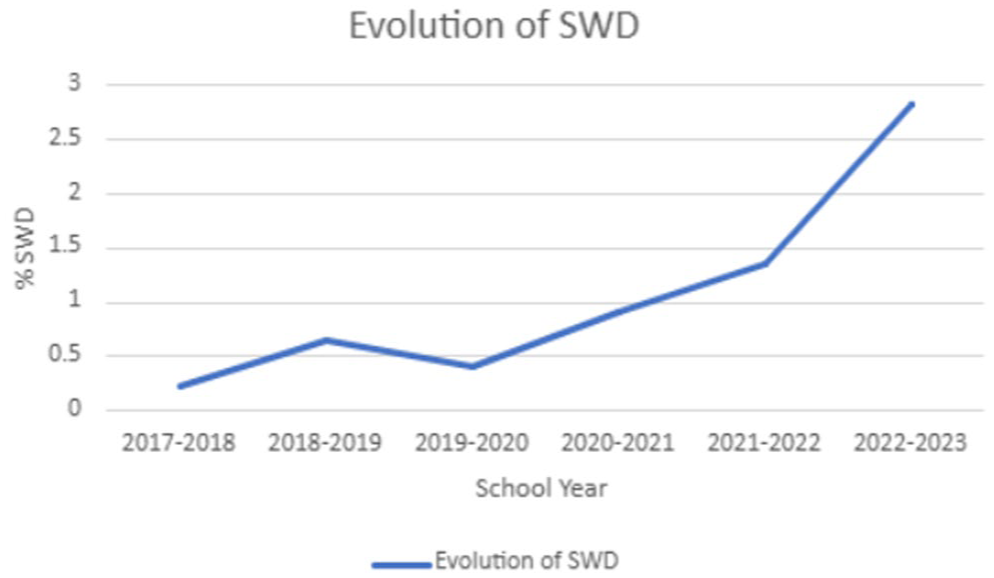
Number of student disability disclosures from 2017 to 2023.
Data collection
A single-case study design (Yin, 2009) was used to capture the richness of this unique empirical setting and gain access to respondents in their natural work environment. We employed a discursive approach to analyzing interview texts (Bergström and Knights, 2006; Holmer-Nadesan, 1996) with semidirective interviews providing a holistic representation of inclusion perceptions and creating space for the voices of those most at risk of exclusion—individuals with disabilities (Foreman-Murray et al., 2022; Rußmann et al., 2024). Our initial intent was to primarily interview SWDs, yet we also included all students in the “Grande Ecole” program (third-year bachelor’s and master’s level) and all faculty, administrators, and managers involved in designing and enforcing disability inclusion policies. This holistic design was conceived to provide the most complete depiction of disability inclusion possible. Surveys and published messages in the internal communication system were sent to all internal SWDs, inviting participants to respond to the survey and volunteer for an interview.
The first author was, at the time of data collection, a doctoral student who has since defended her dissertation. She concurrently held a teaching role as a “lecturer” in the institution, a more precarious role than a professorship, positioning her as both an insider and an outsider, a student and a faculty member. This insider–outsider duality facilitated access to participants across different stakeholder groups while also introducing potential biases in data collection, as participants may have adapted their responses due to their perceptions of her role. In addition, as both an educator and the mother of a child with multiple learning disabilities, disability-related issues informed her heightened sensitivity to questions of access, disclosure, and support. This positioning enabled more targeted probing during interviews and the identification of less visible dynamics, while also requiring ongoing reflexivity and awareness of potential bias effects at work throughout the research process.
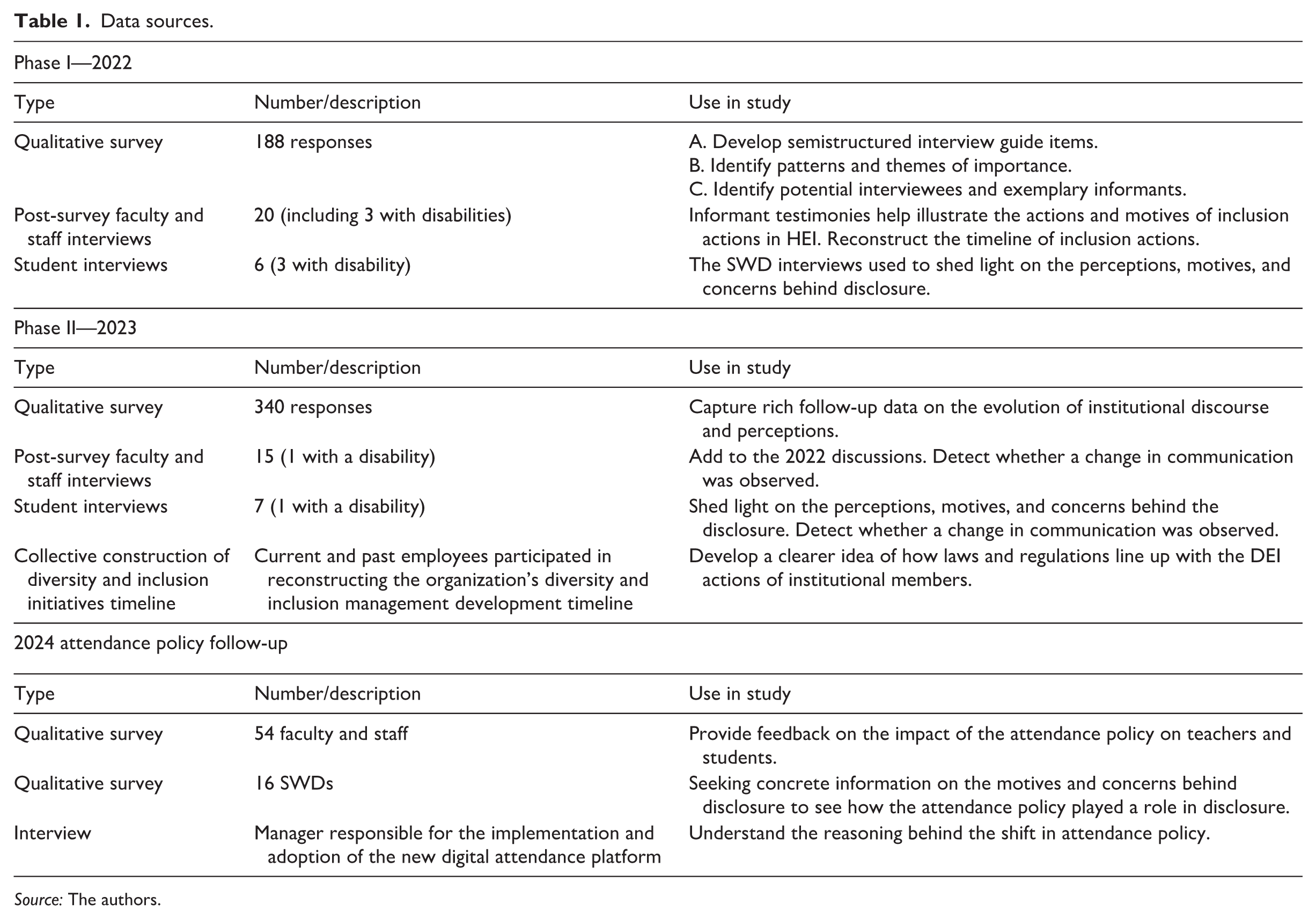
Phase I. From April to June 2022, an online pilot survey identified participants for 1-hour interviews. The survey, available in English and French and general data protection regulation (GDPR) compliant, covered demographics, disability, institutional policies, and experiences. A total of 188 responses were collected: 51 administrative staff members, 3 managers, 18 professors, and 116 third-year bachelor’s- and master’s-level students. Of these, 119 identified as females, 67 as males, and 2 as other; 17 reported invisible disabilities (none with visible disabilities), 16 requiring accommodations.
Participants were invited to in-person or video interviews between June and August 2022. With permission, interviews were recorded and transcribed. Each interview, offered in either French or English, lasted around 1 hour. Student interviews explored how SWDs perceived institutional directives and procedures for accommodations; nondisabled students were asked about awareness of peers with disabilities and institutional disability inclusion practices. Faculty, administrative staff, and managers provided insights into inclusion practices and institutional timelines.
Phase I identified key informants responsible for policy and communication shifts, granting us access to internal documents, communications, and processes related to later-rising disclosure and accommodation requests. This informed the launch of Phase II of the data collection in early 2023.
Phase II of the data collection was a follow-up process designed to trace the evolving discourses and perceptions of disability inclusion inside the institution. A new survey gathered 340 responses: 47 administrative staff members, 11 managers, 28 professors, 9 “other,” and 245 third-year bachelor’s and master’s level students. Of these, 222 identified as female, 114 as male, 3 as “other,” and 1 did not respond. Twenty-four reported disabilities, none of them visible. This reflects broader patterns in higher education, where most disabilities are invisible (e.g. learning disabilities, mental health conditions, or chronic illnesses). Students with highly visible disabilities are relatively rare in elite business schools, so only a small number of SWDs were interviewed, reflecting the composition of the student body and the sensitive nature of disclosure. The 2023 interview explored changes in institutional communications and training related to inclusive pedagogy.
Attendance policy follow-up of 2024
To probe further, two surveys were conducted in spring 2024. The first, with 16 SWDs, explored disclosure motivations: 3 perceived institutional support, 2 disclosed due to worsening disability conditions, and 11 disclosed to obtain accommodations that would provide attendance exemptions. The second survey, with 54 faculty and staff, captured the lived experiences of the attendance policy and practice. We also interviewed the project manager responsible for the implementation of the attendance-tracking platform to assess any additional motivations driving disclosure decisions and projected outcomes. Table 1 summarizes all data sources used.
Data sources.
Source: The authors.
Data analysis
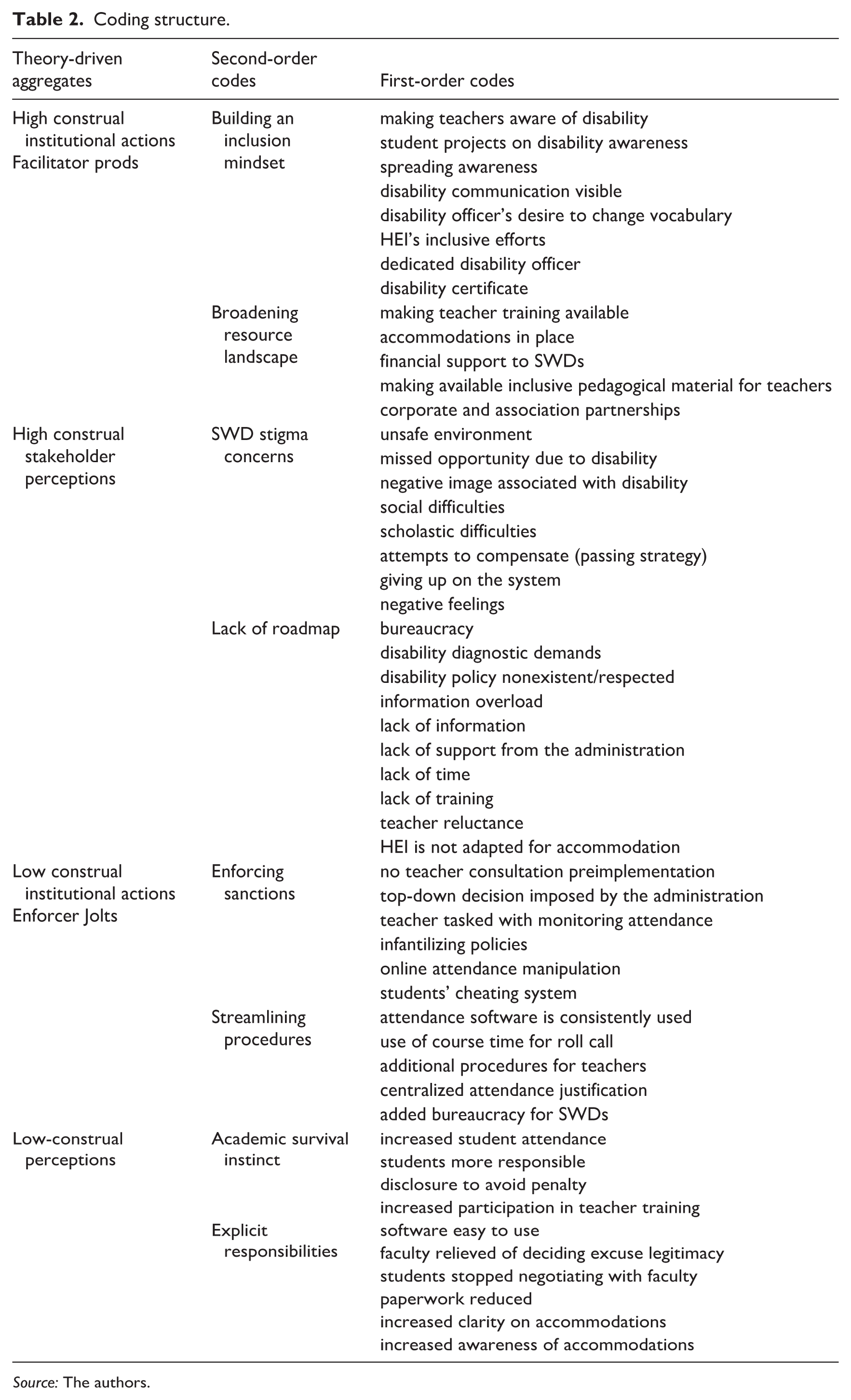
The 2-year longitudinal approach adopted for data collection yielded a large composite dataset used to abductively develop our findings (Tavory and Timmermans, 2014). Alternating between extant theories on disability, inclusion, disclosure, CLT, and our dataset, we analyzed the institutional actions and policy changes described by key organizational stakeholders to make sense of their narratives (Ybema et al., 2009). Thematic analysis helped us identify recurring patterns and themes that capture the complexities of disability disclosure in the given institutional context. Following King et al. (2010), we treat themes as recurring, salient, and noticeable characteristics that emerge from participant accounts and characterize “. . . particular perceptions and/or experiences, which the researcher sees as relevant to the research question” (p. 150). After transcribing the interviews and reviewing the survey responses, we began the coding process by reading through the data in its entirety to identify the variety of distinctive themes it comprised. Given that participants were given the choice of interview language and were aware of how language shapes perceptions of disability, we paid particular attention to the connotations of key terms in French, such as handicap. While handicap is the legal and widely used term in French, it carries social and institutional weight that differs from the English “disability,” which may be perceived more neutrally or inclusively. Recognizing these distinctions helped ensure that coding and thematic development were sensitive to the nuances of participants’ discourse and the ways in which language reflected both social and institutional attitudes toward SWDs. We then proceeded to open code using Atlas.ti qualitative data analysis software to allow new themes to emerge, which revealed more original concepts revolving around the specific actions, thoughts, or organizational experiences mentioned by the participants, which were then incorporated into the broader coding framework (Thornberg and Charmaz, 2014). As part of the iterative code reduction process, the initial codes were refined through multiple rounds of merging and splitting (Gray, 2018) with attention to code groundedness, or frequency of appearance and connection to the raw data. As patterns became clearer, we developed a set of second-order codes.
A next step in the coding process involved moving closer to relevant theoretical constructs that would provide explanatory power to our findings to help us better understand organizational members’ perceptions of disability and disability disclosure inside the institution. This abductive move was made possible by mobilizing CLT (Trope and Liberman, 2000, 2003), which helped us harness the “. . . dynamic interplay between empirical evidence and theoretical insights” (Tavory and Timmermans, 2014: 166) and make sense of the construal level in which various motivations and concerns are located (i.e. high-construal vs low-construal stakeholder perceptions). Simultaneously, we looked at the institutional actions influencing these perceptions. At this broader level, we developed an overarching view of institutional actions in relation to their influence on stakeholder construals of disability disclosure. This understanding helped us place these actions into two broad categories based on the construal level they will elicit: high-construal actions and low-construal actions, which we dubbed Facilitator Prods and Enforcer Jolts, respectively. The results of these steps are encapsulated in Table 2 below.
Coding structure.
Source: The authors.
Findings
Our analysis reveals two overarching approaches taken by the business school during the research period, which, intentionally or unintentionally, resulted in two different disability disclosure outcomes: Facilitator Prods and Enforcer Jolts. Interpreted through the lens of CLT, these approaches reflect different orientations in organizational action—either as abstract and value-oriented commitments (high construal) or as concrete, immediate mechanisms for compliance (low construal). Importantly, these actions are institutional in nature but enacted through multiple actors, including the disability officer. Many of the action-oriented mechanisms represented in Figure 2, therefore, cut across populations while structuring how stakeholders interpret and respond to disability inclusion efforts. For instance, high-construal, value-driven initiatives can heighten student attention to identity-related concerns such as stigma, whereas low-construal, procedural actions orient them toward more immediate, practical considerations such as academic survival and compliance requirements.
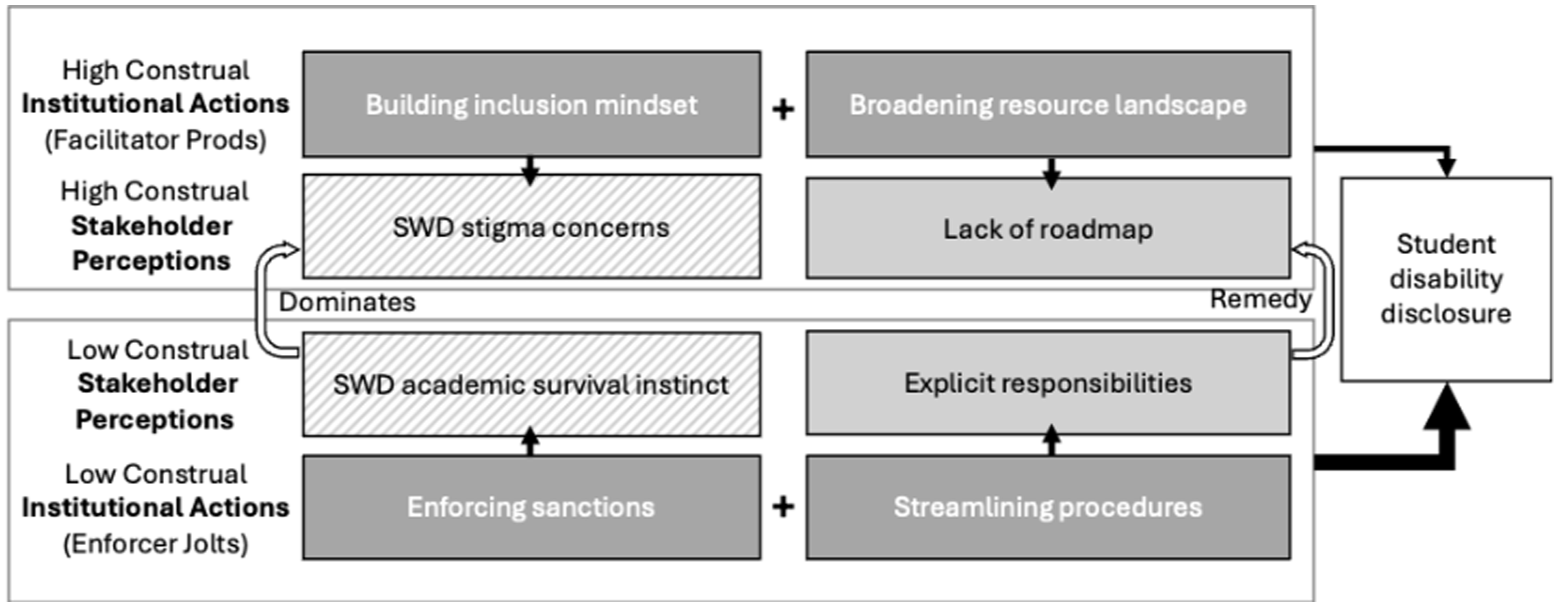
Facilitator Prods and Enforcer Jolts experienced by SWDs.
Each type of action gives rise to distinct perceptions and experiences across stakeholders, resulting in four aggregate categories. As reflected in Figure 2, institutional actions on the left-hand side, that is, the high-construal action of building an inclusion mindset and the low-construal action of enforcing sanctions, are primarily directed at—or inadvertently shape—the experiences and reactions of students, specifically affecting SWDs’ stigma concerns or academic survival instincts; whereas cross-cutting actions on the right-hand side influence all stakeholders, generating responses across students and faculty alike.
Together, these findings highlight how well-intended institutional advocacy and resource provision initiatives were often experienced as distant and abstract, while procedural enforcement practices were understood as immediate, tangible, and ultimately more effective in provoking behavioral change. For reasons of confidentiality, participants are referred to by pseudonyms throughout this article.
High-construal institutional actions (Facilitator Prods)
High-construal actions, or “Facilitator Prods,” refer to the institutional actions that are abstract, values-driven, and future-oriented. This category includes two second-order themes: Building Inclusion Mindset and Broadening Resource Landscape, which are actions primarily aimed at reducing barriers and providing support to SWDs. Over the years, a noticeable increase in such actions was observed and reflected in the timeline of institutional interventions (see Figure 3). Examples of these actions include proactive outreach, the provision of resources, and efforts to create a more inclusive culture through educational and administrative reforms.
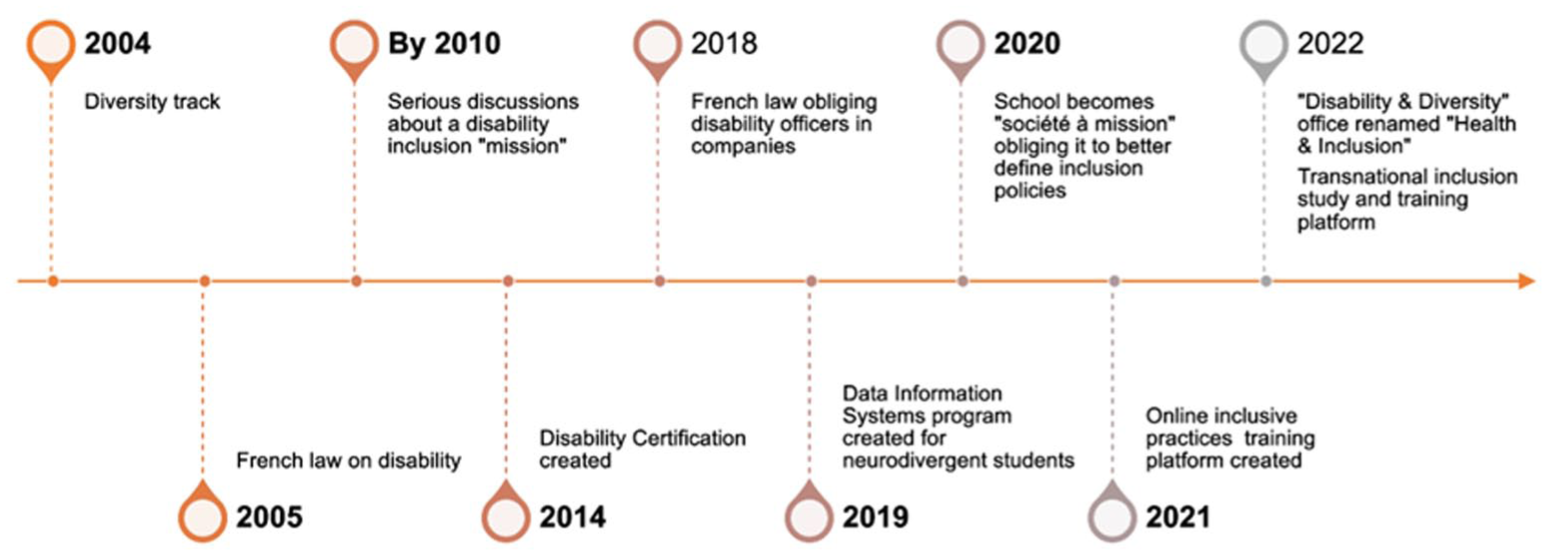
Timeline of disability inclusion actions.
Building an inclusion mindset
As previously mentioned, the term “handicap” remains prevalent in French, reflecting its historical and cultural embeddedness (Giami et al., 2007). Annie, the school’s disability inclusion officer, sought to update the institution’s vocabulary around disability during our period of study. After attending a national conference of disability officers, where it was decided to discontinue use of the term “handicap” due to its stigmatizing connotations, Annie, the disability officer, revised her student communications campaign. Whereas they had previously been advised to contact the Disability and Diversity Office if they had a “handicap,” the 2022–2023 campaign instead invited students with “specific needs” to approach the Health and Inclusion Office. To clarify the scope, Annie highlighted specific learning needs or medical pathologies such as dyslexia, ADHD, diabetes, epilepsy, and depression on the digital screens across campus. Annie emphasized the negative identity implications of certain terms:
If you use the word “handicap”, no one will recognize themselves, but if you use the names of pathologies—eating disorders, dys disorders, anxiety disorders, things like diabetes . . . then the young people will recognize themselves.
Annie’s office made students aware of their services at public events at the beginning of the academic year, as recalled by Olivia, an SWD:
. . . there were several booths, and one of them was for diversity and inclusion. Annie was overseeing it, and I know that it can be a helpful way for students who have difficulties to speak with these people.
Notably, Olivia’s account positions the disability office as one booth among many—present in the institutional landscape but peripheral to the moment of decision-making. This is precisely the high-construal character of such initiatives: visible as a signal of institutional commitment yet too distant from the concrete circumstances of disclosure to reliably prompt it. Olivia continued to explain:
. . . they did some broad awareness-raising. They invited an association . . . about visual impairments. And a Paralympic champion gave a conference on disability, how he experienced his exterior, so very interesting. And throughout the year, they kept us informed, of course, about the basics of disability . . .
These efforts illustrate a broad, awareness-oriented approach to inclusion, centered on education, visibility, and cultural change. Such aspirational campaigns are also common in corporate inclusion efforts. While intended to foster a more tolerant and compassionate environment for SWDs, the emphasis on disability conditions may inadvertently reinforce self-stigmatization among those concerned (Brzykcy and Boehm, 2022).
Broadening the resource landscape
The institution had developed an expansive and continually evolving resource landscape, including external partnerships and events, dedicated funding, and an internal support ecosystem, such as disability services and reference personnel. It negotiated over 20 partnerships with local and national companies and associations with whom it hosts a wide range of events and activities to help spread disability inclusion awareness and to assist students in finding internship and job opportunities.
France introduced a legal requirement in 1987, obliging companies with 20 or more employees to ensure that at least 6% of their workforce consists of PWDs. Noncompliance means paying a fine, which funds training and employability initiatives (Service-Public.fr, 2025). The HEIs qualify to receive these funds directly from collaborating companies. At the time of writing, the school had five company partners who each contributed €10,000 annually to cover disability-related expenses, as Annie pointed out:
. . . In this agreement, there are several things, like holding information sessions with them, specifically aimed at students with disabilities . . . a recruitment forum . . . There are CVs collected, students apply and then it’s time for interviews . . . And the €50,000 raised goes entirely to students with disabilities to finance their accommodations.
She emphasized that these collaborations are aimed at skills development as a broader effort to align students with evolving labor market demands, particularly in high-demand sectors such as data science:
. . . the entire connection with the company is to implement accommodations in a sustainable way. The second goal was to address a need in today’s job market, which is to find profiles in the data field, a very scarce sector.” The funding provides an essential pipeline for SWDs like Olivia who shared that “. . . everything they offer with the disability scholarship, which really helped me finance software, and which really helps me on a daily basis.
Although materially substantial, these resources were embedded within a broad, institution-wide approach to inclusion that emphasized expansion, visibility, and long-term opportunity. While more operational in nature, these support structures were experienced by students as part of the school’s overarching and proactive commitment to disability inclusion, rather than as clearly bounded or situationally anchored interventions. The SWDs generally acknowledged and valued these expanded resources and accommodations. Ryad, a student with a learning disability, noted that
. . . there’s an enormous disability service. It was amazing, I had never seen that before. So I thought, “Ah, that’s a change!” There’s a disability reference person. I had regular meetings with her, and in fact, they even wanted us to have a meeting to check if everything was going well, even three months before I started, to see what accommodations could be put in place.
Yet Ryad’s enthusiasm for the sheer scale of provision points to a paradox central to high-construal environments: the very abundance of resources, rather than simplifying the path to disclosure, can render it opaque. A proliferation of contact points, services, and support structures signals institutional commitment at an abstract level while leaving students uncertain about where to begin, reinforcing hesitation at precisely the moment when concrete decisions must be made.
The school’s professional development team offered staff and faculty a wide range of training on disability-related topics, including the design of inclusive pedagogical content. These initiatives were complemented by an institutional learning ecosystem in which employees were granted access to an online, self-directed platform hosting training modules and disability inclusion materials. Students were likewise offered a certification course on disability inclusion, and since its launch in 2014, nearly 400 students had completed the program at the time of writing.
These initiatives reflect a substantial investment in building institutional awareness and capability, spanning partnerships, funding mechanisms, training platforms, and support services. However, despite their operational richness, these resources were not tightly integrated into clear, actionable pathways for students and faculty. Instead, they were experienced as diffuse, dispersed across multiple channels, and only loosely connected to specific moments of decision-making, such as disclosure or accommodation requests. When asked, most faculty reported uncertainty about how to locate these materials and what their specific responsibilities were in relation to disability inclusion.
As such, the resource environment functioned at a high level of construal: it emphasized visibility, values, and long-term opportunity but did not consistently translate into immediate, situational guidance. While such efforts reduced certain barriers and expanded resources, they often required students and faculty to independently navigate a complex landscape without clear procedural direction. As the following sections will show, this high-construal orientation elicited high-construal concerns, such as identity-related stigma, and left students and teachers without clear roadmaps for inclusive practice, placing considerable strain on the disability officer tasked with translating broad commitments into daily support.
High-construal stakeholder perceptions
High-construal perceptions refer to stakeholder (i.e. students, faculty, staff) perceptions of the high-construal actions detailed above, carried out by organizational decision-makers. These perceptions are also related to abstract concepts such as identity and stigma and the lack of concreteness in the felt impact of the high-construal actions. This aggregate category contains two second-order themes, SWD Stigma Concerns and Lack of Roadmap.
SWD stigma concerns
Disability-related identity stigma seemed to be prevalent despite institutional efforts to mitigate it. One administrative staff member reflected on the evolution of student self-perceptions based on terminology linked to disability: Well, sometimes people would say, “No, but I’m not disabled at all” . . . The word “disability” has a bad connotation in France . . . because we’re not very aware of it in our society. Such comments reflect the patent rejection of disability on a lexical level, as exemplified by Juliette’s personal rejection of the word “disability,” her negative association with it, and her attempt to conceal it from peers:
I didn’t consider myself as disabled. To me, a person with a disability was someone who didn’t have all their faculties and therefore was logically considered less than normal people. So, I didn’t want to be different because of that. I didn’t want to feel inferior to others, so my friends knew, but most people in class didn’t know, and that suited me well.
In other cases, it is not the terminology but rather the presence of special equipment for accommodating SWDs’ needs that could elicit stigma concerns. As Juliette, an SWD, explained,
I never wanted to have a computer because I manage pretty well with writing and I wanted to keep the invisible side of the disability, so that no one in the class knew about it except the professors.
Juliette’s account illustrates how stigma operates not only at the level of identity labeling but also extends to the material markers of accommodations themselves. The school’s awareness initiatives seem to have made material accommodations visible to peers, making SWDs more sensitive to the risk of exposing their carefully concealed disabilities. Another student explained that teachers, too, may have a negative perception of SWDs: For some professors who are from the old school, they often think it’s because we’re lazy or because we don’t want to [work].
Annie captured the layered complexity of student identity during such a transitional moment:
There are those who don’t really know what’s happening but are struggling and don’t verbalize it. . . . The construction of identity, moving out of adolescence, preparing for professional life. It’s a lot to deal with, especially when there’s a diagnosis on top of it. And then there are those who are more mature about their health situation, and they come to see us or talk to the teachers because we’re not always the first point of contact.
It is during this vulnerable identity transition period that high-construal, awareness-oriented inclusion efforts may heighten students’ sensitivity to how they are perceived by others. By foregrounding disability as a salient identity category—through both discourse and visible accommodations—students become acutely attuned to subtle cues from their environment, particularly from faculty who hold evaluative authority over their academic performance. In this heightened state of sensitivity, even ambiguous or inconsistent reactions from professors may be interpreted as judgmental or stigmatizing, shaping how students manage disclosure in practice. Ryad’s account captures this asymmetry with particular force:
The professors don’t help you because they see you as someone weird, you know, because you have a disability while at other times he has to overcompensate and reassure them that his disability will not be too much of an inconvenience, compelling him to minimize its severity and to intimate that: “. . . ‘it’s nothing at all’,” just to make the professor understand that it doesn’t impact the course. It goes as smoothly as possible.
The disability officer, Annie, had exerted much energy on stigma-lowering actions and on encouraging disclosure through the lure of accommodations. Despite student acknowledgments of these efforts, stigma concerns nevertheless remained ever-present.
Lack of roadmap
Students, faculty, and staff appeared mostly confused about legal procedures, policies, requirements, contacts, or resources available when it came to including SWDs. Perceptions of administrative support varied widely, and while some SWDs appreciated the support offered by the disability office, others found the bureaucratic hurdles discouraging and felt that the school’s actions did not always align with its stated commitments. Despite the inclusion-focused efforts from the disability office aimed at supporting students through administrative procedures and facilitating access to accommodations, there remained a lack of clear guidelines on requesting accommodations or implementing them in the classroom. Some SWDs did not feel that the accommodations were worth the bureaucratic pain that disclosure involved: I am sure I could request accommodations, but I feel like it is more hassle than it is worth.
Ethan, an SWD in the second year of his bachelor’s program, only found some comfort in the informal emotional support from a few professors while facing difficulties with the heavy state-level administrative procedures required to formally recognize his disability:
. . . I already have [a professor’s] support, which has helped me a lot because I couldn’t imagine continuing my studies without it. And it’s true that, well, let’s say, having someone who understands—once again, it’s really comforting.
Ryad also expressed his difficulties with the French bureaucracy. In France, there are neither structures nor anything, it’s up to me to do everything. Even the forms I filled out and everything . . .
A few members of the faculty and staff also pushed back against the degree of support expected from the administration. This led to a broad array of faculty-facing scenarios for SWDs where individual attitudes varied greatly. As one explained, . . . the role (of the teachers) is to teach, not identify students in difficulty. Of course, they can let us know if they see something strange like a student who is struggling or absent a lot. Faculty members needed concrete instructions to make pedagogical accommodations a reality. Participant accounts reveal that some remained unaware or resistant to the necessary adjustments required in their course design or exam format. In other cases, they were informed but nevertheless resisted implementing accommodations.
For students living with an invisible disability, Annie emphasized the importance of voluntary disclosure since . . . there are many who need accommodations, but they don’t say it . . . after that, it’s their responsibility. In the absence of clear institutional guidance, SWDs must double as both student and their own advocates, creating additional struggles due to the variety of attitudes and readiness the faculty displayed.
For example, very few faculty and staff members surveyed and interviewed were aware of the private-sector financial aid sources available to SWDs, although qualifying students were well-informed. Annie expressed the challenges of communicating with untrained faculty . . . the professors don’t know how to handle [disability] either, so it’s complicated. That’s why we came up with the idea of an agreement, which is a kind of contract between the students, their needs, and the school. This agreement requires students to approach their professors and explain their classroom needs and allows them to take responsibility for voicing their requirements. Annie reflects on the reasoning behind this, noting that
Our school of thought is that we’re . . . here to prepare [students] for job integration. The students who benefit from accommodations tomorrow in the workplace will need to know how to talk about their needs, and . . . the first steps in presenting it to the teachers, is . . . a way to prepare for integration into the professional world.
The dual role of student and disability advocate inevitably burdened already overwhelmed SWDs. However, without the necessary resources to keep faculty informed, Annie needed them to serve as “relays”:
I don’t have all the tools to be super effective. We’re in a reorganization, and everyone has a high mental load. But still, I don’t really know how the professors are taking it, how they’re experiencing it . . . I want them to get to know us, and to know that if they have any questions, any problems, any logistical issues, they can really rely on us.
Annie’s description reveals the structural position of the disability officer as the sole bridge between high-construal institutional commitments and the realities of classroom practice. Operating without adequate tools or faculty buy-in, she is left to translate abstract inclusion values into daily support on a case-by-case basis. SWDs experience, in daily institutional life, strong feelings of ambivalence when approaching teachers, as Ryad intimated:
I think there are two [professors] who, at the beginning of the course, told me they had received communication from Annie . . . I think they all did, but they just don’t care . . . well, when exam time comes, I’m always thinking, “What should I do? Should I tell them? What should I say afterward, what will we do on the computer? On paper?” It’s always a struggle, a moment of reflection, of strategy, to figure out what to do, what to say.
His narrative captures vividly the cognitive burden imposed by the absence of procedural clarity for both faculty and SWDs. The implementation gap, or the failure of high-construal environments to provide concrete action routes, manifests here as exhausting, ad hoc sensemaking: each exam requires Ryad to independently reconstruct the situation, assess his interlocutor, and improvise a disclosure strategy from scratch. His dilemma also reflects the uncertainty faced by instructors, who are left without clear guidance on how to respond. Together, these accounts reveal an institutional approach to inclusion that, while aspirational in tone, remains structurally disconnected from the concrete moments of decision-making in which disclosure occurs.
Disclosure outcomes following high-construal institutional actions
Despite the changes in communication by the inclusion team throughout the 2022 school year, survey responses suggested limited awareness of such efforts. Of the 43 respondents who completed surveys in both 2022 and 2023, only 4 noticed changes in communication. Awareness of disability contact persons even declined, from 43% in 2022 to 31% in 2023, contradicting initial assumptions that improved communication alone would drive disclosures.
These findings point to the limitations of high-construal actions: while well-intentioned and symbolically powerful, they often fail to translate into concrete recognition or practical engagement among students and faculty. To understand how disability inclusion became effective in practice, we now turn to the low-construal actions—more immediate, procedural, and enforcement-driven measures that shaped disclosure and accommodation in tangible ways.
Low-construal institutional actions (Enforcer Jolts)
This aggregate category refers to those institutional measures that are temporally immediate and concrete, designed to ensure compliance with policies and regulations through enforced processes and institutional mechanisms. This category includes two second-order themes: Enforcing Sanction and Streamlining Procedures. A key finding here is that the school’s decision to implement a new and more stringent attendance policy served as a powerful enforcement mechanism, ultimately leading to a noticeable increase in disability disclosures.
Enforcing sanctions
To address low in-person course presence following the COVID-19 pandemic, the school introduced a stricter attendance-tracking system requiring faculty to record presence at every lecture and limiting the number of unjustified absences. This measure was explicitly intended to make students’ physical presence nonnegotiable and to create an enforceable mechanism of accountability. While not designed specifically for SWDs, this policy had direct implications for SWDs, for whom disability-related absences required formal justification, thereby increasing the need to disclose in order to avoid academic penalties. Faculty were tasked with carrying out roll calls at the beginning of class and monitoring student participation using an online system.
The rollout of this policy revealed the concrete, top-down nature of the enforcement. Teachers did not have positive responses to its introduction, describing it as an administrative decision imposed without prior consultation, a typical [school] top-down decision that doesn’t take into account the day-to-day necessities of being a teacher, noting that It’s a perfect example of administration mismanagement, bad communication and lack of listening to frontline staff. Some even noted that obliging faculty to police attendance altered the classroom dynamic, since additional surveillance responsibilities could strain the student–teacher relationship.
This is yet another element that prevents us from fighting an instrumental relationship with the lessons (getting the diploma instead of enriching ourselves intellectually). Why can’t the students sign themselves in? This would make them more responsible for their learning. It would also comply with the legal requirements for apprentices.
Others criticized the measure for infantilizing students by compelling attendance through sanctions rather than fostering intrinsic motivation:
The system infantilizes students who don’t take responsibility for their own learning. Just worried about being present to not be punished.” and “We don’t need police officers . . . it’s seen as unnecessary and infantilizing control, in some way, for students who are adults.
The policy not only constrained teachers but also generated new patterns of student behavior. Faculty observed students “gaming the system,” as one put it: . . . this complicates my relations with students online because some of them cheat the system by logging on without really being present, so I sometimes feel like a prison guard. Another noted that the allowance of three unjustified absences per semester had unintended effects: . . . some students may intentionally miss nearly 30% of the class (now that they can track their attendance) just to take advantage of my attendance policy.
From a CLT perspective, these gaming behaviors are not merely opportunistic but theoretically revealing. They demonstrate that all students, like SWDs, respond to enforcement through low-construal reasoning: they evaluate the policy not in terms of its educational value but through the immediate calculus of personal advantage. The attendance system, designed to enforce compliance, inadvertently generates its own low-construal workarounds, suggesting that enforcement mechanisms produce behavioral responses across the student population that are pragmatic rather than value-driven.
Streamlining procedures
Alongside sanction enforcement, the school also sought to standardize procedures for tracking attendance. This step was driven less by internal initiative than by external pressures, particularly the national introduction of the Qualiopi quality regulation legislation. These regulatory pressures demanded consistent and auditable procedures to demonstrate that students were receiving the support and monitoring necessary to succeed. As one manager put it, Accommodation of the disabled is required by French and EU policies that are overseen by the Ministry of Education and local governments.
Prior to the shift, attendance practices varied widely. Some professors never checked attendance; others kept their own spreadsheets, and individual programs adopted idiosyncratic practices. This patchwork system resulted in inconsistency across courses and left SWDs especially vulnerable to uneven accommodations. The new certification requirements compelled the administration to introduce a centralized digital platform for attendance tracking, thereby eliminating variation and obliging universalized compliance by all faculty. Greg, the manager responsible for implementation, emphasized the institutional rationale for the change: It is a matter of ensuring that training organizations implement sufficient means to make sure that learners who join a program have every chance of success. Greg also connected the platform to broader cultural traditions, arguing that compulsory roll calls reflected French educational norms:
. . . we aligned all the study regulations with a common rule, which is that attendance in class is mandatory . . . In the Anglo-Saxon world, if [students] don’t show up and can’t get good grades by the end of the year, well, tough luck for them, and if they don’t need the class and manage to pass the exam . . . well, good for them.
For some faculty, however, the mandatory roll call and use of the digital platform introduced unnecessary burdens. Teachers noted that . . . more time [was needed] to take the register. It’s another software system to open when you begin teaching, and described the system as extra bureaucracy in the making as I can do the roll call without a “tool.” While the platform simplified compliance for the administration and created a clear pathway for monitoring SWD accommodations, its implementation displaced time during class and added new layers of procedural work for instructors.
With this “top-down” implementation of compulsory attendance cascading from the national ministry down to all levels of educational institutions, the faculty, staff, and students were now forcibly aligned with the procedures and necessity of electronic roll call and, ultimately, the tools and impulse to implement SWD accommodations at the classroom level.
Low-construal stakeholder perceptions
This refers to participant perceptions of the low-construal institutional actions described above, which emphasize concrete procedures, immediate enforcement, and compliance with external regulations. Unlike the abstract and symbolic qualities of high-construal actions, these perceptions centered on the tangible costs and consequences of implementation—such as added bureaucracy, administrative burdens, and strained classroom dynamics. This aggregate category contains the two second-order themes, SWD Academic Survival Instinct and Explicit Responsibilities.
SWD academic survival instinct
Participants consistently linked the new attendance policy to a heightened focus on academic survival. Faculty pointed to increased classroom presence, noting that:
Now almost all students show up in person and follow the course as designed. This increases overall engagement . . . they are less tempted to avoid a class since they know the system will limit their final mark after three absences.
Students perceived a direct threat to their progression with the sanction of failing a course after more than three unjustified absences and the prospect of a capped re-sit grade. This was especially acute for SWDs whose conditions caused frequent or unpredictable absences. Several disclosed that they had never considered approaching the disability office until the new rules made nondisclosure untenable. One SWD explained that I really appreciated the way the school listened to me and set up the attendance waiver so that I could go to the doctor when I needed to. If only companies could do what you do . . . Another disclosed his disability to obtain exemption from the attendance rule altogether; putting it more starkly: . . . otherwise I’d never be able to validate the school year because of absences. Thanks to the disability center, I’ve been able to get an exemption from attendance, which saves my schooling and also my health.
Examples abound of students deciding abruptly to disclose due to medical issues requiring late arrivals or absences, realizing that only documented accommodations could buffer them against sanctions. As another SWD described, Given that my medications can cause prolonged sleep, I am allowed to come in late to classes in the morning or afternoon or at any given time.
Another student suffering from diabetes expressed a similar rationale:
Irregularities due to diabetes can quickly become restrictive depending on the period . . . I can sometimes have very difficult nights and not be able to go to class the next day, I need compensatory time during exams in case of compulsory treatment (hypoglycemia), I have to leave class if I feel ill . . . all these reasons made it necessary for me to declare [my illness] to the school.
Faculty, staff, and students seemed to generally hold the view that the new attendance policy did play a role in increasing participation. Institutional data underscore this pattern. In the 2021–2022 school year, 80 students voluntarily disclosed their special needs to the disability office. By September 2022, that number had shot up to 140 students (see Figure 4).
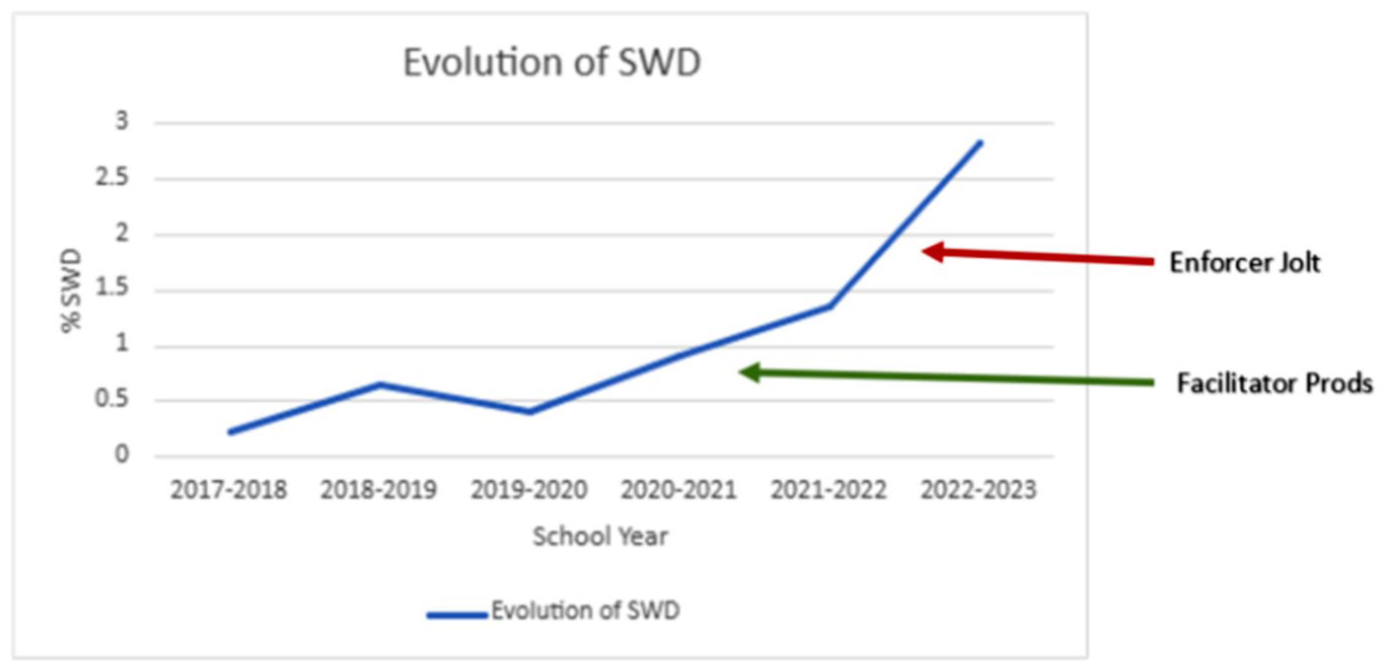
Number of students disclosing disability after Facilitator Prods and Enforcer Jolt.
The records show a striking increase in the number of students requesting attendance exemptions—from just 2 students in 2021 to 38 students in 2022 and 46 students in 2023, a striking increase given that exemptions were not even tracked prior to the policy change. The disclosure of disabilities for attendance exemptions also led to a corresponding rise in the number of students asking for other forms of accommodations, such as specific software for conditions like dyslexia. This pattern revealed how the fear of sanctions transformed accommodation from an abstract right into an urgent matter of academic survival.
Explicit responsibilities
Alongside heightened attendance, the streamlined procedures clarified roles and redistributed responsibilities across the institution. Some professors expressed relief that they no longer had to adjudicate the legitimacy of student absences, a task that had previously created tensions in the classroom.
As one explained:
As a teacher, I only take actual attendance and absence during the class hours and leave students’ excused absence to their program administrators. This relieves me from my moral dilemma of deciding whose excuse was worth granting absence and whose was not.
With responsibility shifted to administrators, students were less inclined to negotiate directly with faculty, instead complying with school policies as written.
Faculty also highlighted the ease of the new platform, appreciating its streamlined features: I liked the simplicity and clarity of the app, as well as the ability to add comments for absences. Centralizing attendance data reduced paperwork while making compliance checks more transparent. In this way, the policy reinforced a system of explicit responsibilities: teachers logged attendance, administrators processed and validated absences, and students were expected to follow procedures rather than appeal informally.
Disclosure outcomes following low-construal actions
The introduction of compulsory attendance policies brought disclosure decisions into sharp relief. Faculty and staff often questioned the pedagogical logic of using sanctions to foster student engagement, describing the approach as counterintuitive to cultivating intrinsic motivation. Nevertheless, the policy produced immediate behavioral effects: absentee students began attending class more regularly, and SWDs made swift, sometimes overnight disclosure decisions to safeguard their academic standing. With the risk of failing courses looming larger than aspirational messages of inclusion, disclosure became a pragmatic survival strategy.
An important contrast emerged when comparing high- and low-construal stakeholder perceptions. Whereas SWD responses to high-construal actions were concerned about potential stigma and the absence of clear guidance, these themes virtually disappeared once low-construal actions were introduced. Students rarely mentioned stigma in relation to attendance enforcement; instead, their narratives focused overwhelmingly on academic survival, suggesting that the immediacy of sanctions dominated more abstract identity concerns. At the same time, the explicit responsibilities embedded in the new system remedied the lack of a roadmap that had previously frustrated stakeholders. In this sense, low-construal actions not only redirected attention from stigma to survival but also provided the procedural clarity that high-construal initiatives had promised but failed to deliver.
Discussion
This study set out to examine how different types of institutional actions shape disability disclosure decisions in a French business school. Our analysis revealed a striking divergence between two modes of institutional action, conceptualized as Facilitator Prods (high-construal, abstract, values-driven initiatives) and Enforcer Jolts (low-construal, concrete, enforcement-oriented measures). Facilitator Prods, such as awareness campaigns, inclusive language reforms, and the creation of support resources, signaled an aspirational commitment to inclusion but were often experienced by students and faculty as distant, symbolic, and difficult to operationalize. These actions elicited concerns about stigma and frustrations from the lack of a clear roadmap, discouraging disclosure and leaving much of the burden on students and the disability officer.
By contrast, Enforcer Jolts, most visibly embodied in the compulsory attendance policy, introduced immediate and tangible consequences that reconfigured disclosure as a matter of academic survival rather than identity management. Under these conditions, stigma receded in students’ accounts and was replaced by pragmatic calculations of penalty avoidance and safeguarding academic standing. Simultaneously, the streamlined compliance system redistributed responsibilities across stakeholders, reducing ambiguity and clarifying procedures. Disclosure rates increased markedly in this environment, with the sharpest rise linked to attendance-related exemptions, demonstrating that enforcement-based measures achieved what value-oriented initiatives had not: they transformed disclosure from a symbolic choice into a procedural necessity. This discussion of “jolt” effects invites deeper reflection on their long-term temporality. A “before-and-after” event initiates change yet simultaneously risks generating unintended or unforeseeable spillover consequences. Moreover, the novelty of a jolt may eventually dissipate, giving way to institutional normalization, a process that can accelerate bureaucratization and the “sedimentation” of rules into rigid policy, ultimately undermining the very foundations of change the jolt was designed to catalyze. In the case studied here, the jolt coincided with the post-COVID return to campus, a moment of heightened institutional vulnerability that arguably amplified its disruptive force. Whether the disclosure gains produced by this jolt will endure once the policy becomes routine or whether they will plateau and recede as the urgency fades remains an open and important question for future longitudinal research.
Theoretical contributions
Our findings make several contributions to the literature on disability disclosure, ableism in higher education, and CLT. First, we extend the literature on disability disclosure by showing how an ostensibly minor administrative reform—a stricter attendance policy—produced an institutional pivot away from “student-friendly” Facilitator Prods toward top-down Enforcer Jolts. Rather than encouraging voluntary disclosure through inclusion-focused awareness efforts, the institution leaned into compliance mechanisms that favored sanctions, stringency, and power distance. This pivot reveals how formal enforcement tools can outmaneuver inclusion-oriented initiatives: disclosure was propelled less by empowerment than by the jolting threat of failure. In this way, our study complicates the prevailing assumption that supportive climates are the primary catalysts for disclosure (Blockmans, 2015; Follmer et al., 2020). Instead, we demonstrate how universalist enforcement mechanisms may yield sharper and more immediate behavioral responses than carefully cultivated, long-term inclusion campaigns.
Second, we advance CLT (Trope and Liberman, 2003) by showing how organizational actions recalibrate the psychological distance of disclosure. High-level construals tied to values-driven inclusion initiatives, empowerment, and the promise of accommodations kept disclosure psychologically distant, framed as a moral or identity-laden decision. By contrast, the immediacy of sanctions collapsed this distance: the prospect of failing a course for absences reframed disclosure as a here-and-now matter of academic survival. We theorize this dynamic as an Enforcer Jolt: a sudden, top-down intervention that rapidly lowers construal levels by transforming disclosure from a value-driven choice into an urgent procedural necessity. The metaphor of a jolt captures both the disruptive character of the change and the speed with which students recalibrated their decisions. In this way, we extend CLT by showing not only how construal levels shape outcomes but also how institutional shocks can trigger rapid shifts in construals themselves.
Our findings also highlight how competing logics within institutions generate construal tensions for students. The disability office encouraged disclosure through aspirational, stigma-reducing campaigns, while the academic-administrative apparatus simultaneously imposed sanctions that made disclosure compulsory. These mixed messages produced an internal form of “cannibalizing competition” between organizational units, in which inclusion-oriented narratives were dominated by compliance-driven enforcement. This dynamic underscores how disclosure decisions are shaped not only by external stigma or individual psychology but also by the institutional contradictions students must navigate when confronted with divergent expectations and priorities.
Moreover, by bridging the CLT literature with disability disclosure dilemmas, we contribute to both by reframing the balance between risks and benefits. Prior scholarship emphasizes stigma as the primary deterrent (Clair et al., 2005; Grimes et al., 2020). In our study, however, stigma receded into the background once sanctions were introduced: the risk of academic failure overshadowed identity concerns, shifting disclosure into the domain of survival. While promises of accommodations may be abstract and negotiable, sanctions were immediate and nonnegotiable, rendering concealment untenable. Our framework thus nuances both CLT applications and disclosure research by showing that the relative weight of risks and benefits depends on construal level and institutional design.
Finally, we engage with the scholarship on ableism in business schools by illustrating how inclusive initiatives, while well-intentioned, often reproduce the very dilemmas they seek to solve. Previous work highlights how business schools socialize students into ableist norms of resilience, independence, and flawless performance (Brown et al., 2021; Jammaers et al., 2016). We show that when inclusion is advocated through awareness campaigns or symbolic commitments, it tends to reinforce rather than challenge these norms, making identity stigma more salient and leaving students to shoulder the costs of concealment or advocacy themselves. In contrast, value-neutral enforcement policies cut through the symbolic layer, forcing disclosure not by changing cultural norms but by altering the immediate calculus of risk and survival.
This paradox raises a provocative possibility. Rather than beginning with abstract values in the hope that they will inspire behavior, institutions may find that behaviors enforced through concrete mechanisms precede and ultimately reshape values. Over time, such procedural routinization may shift the way disability is perceived—not as an exception to manage but as a regular feature of academic life. In this sense, behavior-first enforcement can unintentionally seed cultural change, suggesting that the pathway to inclusion may run counter to conventional wisdom: values may follow from behavior rather than the other way around.
Practical implications for management learning and education
Our findings offer several practical implications for HEIs. First, our findings suggest that values-driven inclusion initiatives and enforcement should be treated as complementary rather than competing strategies. Value-driven campaigns that encourage students to “embrace diversity” or “seek support” rarely translate into disclosure unless they are paired with straightforward, accessible procedures that show students exactly how to act. Without such procedural clarity, inclusion efforts risk being dismissed as symbolic. Conversely, when institutions implement strict enforcement measures such as compulsory attendance tracking, they must ensure these are situated within a broader environment of care. Otherwise, enforcement risks being experienced as punitive surveillance rather than as a framework that enables support. In practice, value-driven inclusion efforts can gain credibility by being actionable, while enforcement can gain legitimacy by being experienced as supportive rather than coercive.
Second, disability disclosure and accommodation should be designed as a procedural step embedded in the institution’s daily operations, rather than framed as an act of personal courage. When disclosure is treated primarily as a moral or identity-laden choice, stigma concerns dominate, and many students withhold information despite needing accommodations. But when disclosure is tied to a routine, transparent process—such as registering absences or requesting exam adjustments—it becomes normalized, less emotionally costly, and easier to navigate. At the same time, institutions must guard against reducing disclosure to a mere bureaucratic checkbox. Students will feel more at ease when procedures are coupled with signals of understanding and care, ensuring that disclosure is not only administratively straightforward but also socially safe.
Third, our data highlights the critical importance of clear roadmaps and responsibilities in diversity inclusion. When procedures are ambiguous or responsibilities diffuse, students fall into a gap between intentions and implementation. In such contexts, faculty are left improvising rules, students are forced into self-advocacy roles (Moriña and Biagiotti, 2022), and disability officers take on disproportionate burdens. This lack of clarity exacerbates stigma and creates inconsistent outcomes. By contrast, when responsibilities are explicitly allocated, students can access support without protracted negotiations. Clarity reduces conflict, increases compliance, and builds trust that inclusion is more than rhetoric.
Finally, our findings suggest that behavior-first enforcement may paradoxically contribute to cultural change over time. Procedural rules such as attendance monitoring may initially be perceived as coercive, but they normalize both disclosure and accommodation by making them routine elements of academic life. Over time, the visibility of such practices can help reshape norms, reducing the perception that disability accommodations are exceptional or burdensome. Yet this potential is double-edged: if enforcement is not balanced with supportive communication and empathetic implementation, it may entrench resistance and alienation. Institutions, therefore, need to recognize that enforcement and inclusion are not mutually exclusive but can work together to produce both immediate behavioral shifts and longer-term cultural transformation.
Limitations and conclusion
This study presents several limitations that should be acknowledged. First, its focus on a single French business school constrains the transferability of findings to other higher education contexts, especially those with different regulatory frameworks or cultural approaches to disability inclusion.
Second, the positionality of the researchers warrants reflection. As faculty members embedded in the institution under study, and with the chief interviewer knowing many of the actors personally, the research team occupied a dual role as both observers and participants in the unfolding events. This proximity offered unique access, trust, and a deep understanding of institutional practices, but it may also have introduced bias in data collection and interpretation—whether by shaping how questions were asked, how participants responded, or how narratives were analyzed. While reflexive practices were employed to mitigate these risks, we recognize that our situated perspective inevitably influenced the framing of the findings. Whereas this study does not fully engage with the researchers’ positionalities in relation to ableism, it nevertheless warrants our explicit acknowledgment. Cunliffe (2004) argues that genuine reflexivity requires researchers to critically examine how their own situatedness shapes the knowledge they produce, not as a procedural corrective but as an ongoing ethical practice. As able-bodied academics embedded within the competitive logic of a business school, we are not neutral observers: we are ourselves subject to, and partly constitutive of, the very ableist norms this study critiques. The high-performance culture we analyze is one we inhabit and, at times, unreflectively reproduce, including in our pedagogical expectations of students. There is a risk, in other words, that we remain entrapped within the institutional logic we seek to examine, lacking the critical distance to fully perceive how our own assumptions about productivity, resilience, and disclosure have shaped our research questions and our interpretations. A more sustained engagement with researcher positionality in relation to ableism remains an important limitation and a necessary direction for future work. Third, although the study drew on a substantial and varied empirical dataset, the number of SWDs who participated remained relatively small. Recruiting SWD volunteers proved difficult, reflecting both the challenges of disclosure itself and the structural barriers to accessing this population. A larger SWD sample might have provided additional nuance, particularly around differences between types of disabilities and intersectional identities. These limitations highlight the need for further research across multiple institutions, ideally conducted by independent teams and with broader participation of SWDs, to test the robustness and applicability of the dynamics identified here.
In conclusion, this study shows how institutional actions at different construal levels shape the disclosure decisions of SWDs in business schools. While high-construal initiatives projected aspirational visions of inclusion, they remained too abstract to overcome stigma or provide clear pathways for action. By contrast, low-construal enforcement measures such as compulsory attendance rules produced immediate behavioral effects, compelling disclosure as a matter of academic survival and clarifying responsibilities across stakeholders. Interpreted through CLT, these findings reveal how the perceived costs and benefits of disclosure shift depending on psychological distance, with sanctions collapsing stigma concerns into pragmatic choices. Beyond individual disclosure decisions, this study speaks to a broader imperative for management education: business schools have a responsibility not only to accommodate SWDs but also to cultivate in all students the reflexive awareness of ableism as a structural condition they will encounter and reproduce in organizational life. Disability inclusion, in this sense, is not merely a diversity, equality, and inclusion (DEI) checkbox, but a critical management competency, one that future managers must be equipped to recognize, question, and actively disrupt.
Beyond theoretical contributions, the study underscores a paradox for HEIs: Inclusion is often advanced less by value-driven efforts than by enforcement, yet the two can reinforce one another when carefully aligned. For HEIs, the challenge is not to choose between values and procedures but to integrate them—designing systems where students feel both supported and compelled to disclose and where enforcement mechanisms seed cultural change toward genuine inclusion.
Footnotes

Funding
The authors received no financial support for the research, authorship, and/or publication of this article.
Declaration of conflicting interests
The authors declared no potential conflicts of interest with respect to the research, authorship, and/or publication of this article.