







Abstract
Nowadays, lightweight building structures are widely used by the construction industry as a more natural and cost-effective method. The purpose of this study is to compare between sound pressure level and vibration velocity method for sound reduction index determination for single- and double-leaf gypsum board partitions. The sound pressure level method was carried out according to the requirements of ISO 140-3:1997, and the vibration velocity method (V) was carried out according to some criteria of ISO 10848-1:2006. Regarding double-leaf partitions, measurements were carried out with the leaves separated by 5- and 10-cm air gaps. The effect of cavity filling with absorbing materials was studied experimentally. The space between the leaves was filled with Rockwool and polyurethane to illustrate the effect of cavity absorption on the sound reduction index behavior. It was found that there is good agreement between the two methods. Also, cavity filling with a 10-cm absorbing material such as Rockwool increases the sound reduction index at the critical frequency by 7 dB using sound pressure method and 4 dB using vibration velocity method.
Introduction
The various uses of lightweight partitions in wall and floor structures increase due to their advantages over traditional masonry partitions, as they are easy to install and can achieve the sound insulation requirements at low cost and low overall surface weight.
In the sound pressure level (SPL) method, it is difficult to separate transmission through the test specimen from airborne transmission through particular paths (like leakages and air ducts) or from structural transmission through lateral paths (lateral walls and floors). However, this is not a problem in laboratory tests because of the structural separation between two adjoining rooms and the absence of airborne paths of transmission, 1
where the sound reduction index (SRI) according to ISO 140-3:1995 2 is calculated as

where

where
Vibration velocity method is carried out according to some criteria of ISO 10848-1:2006, 3 where its measurements do not depend on the airborne sound transmission paths. Rockwool was inserted between the lateral walls and the wooden frame on which the test specimen was mounted to reduce the vibration transmission. With the vibration velocity technique, the measurement procedure is faster at less cost, and once implemented it does not need highly skilled experience to set the instruments and carry out the measurements.4,5 The tested partitions were airborne excited with the same loudspeaker set as for the SPL method measurement. 6
The SRI for the separating element using the vibration method is calculated as4,5,7

where Lp1is the SPL in the source room, S is the separating element area, S0 is the reference area of 1 m2, and

where S is the area of the surface and

where k is the wave number and

where V is the root mean squared (RMS) velocity and V
Previous studies
Previous experimental works on the SPL and vibration velocity method are given in Table 1.
Previous studies of sound pressure level and vibration velocity method.
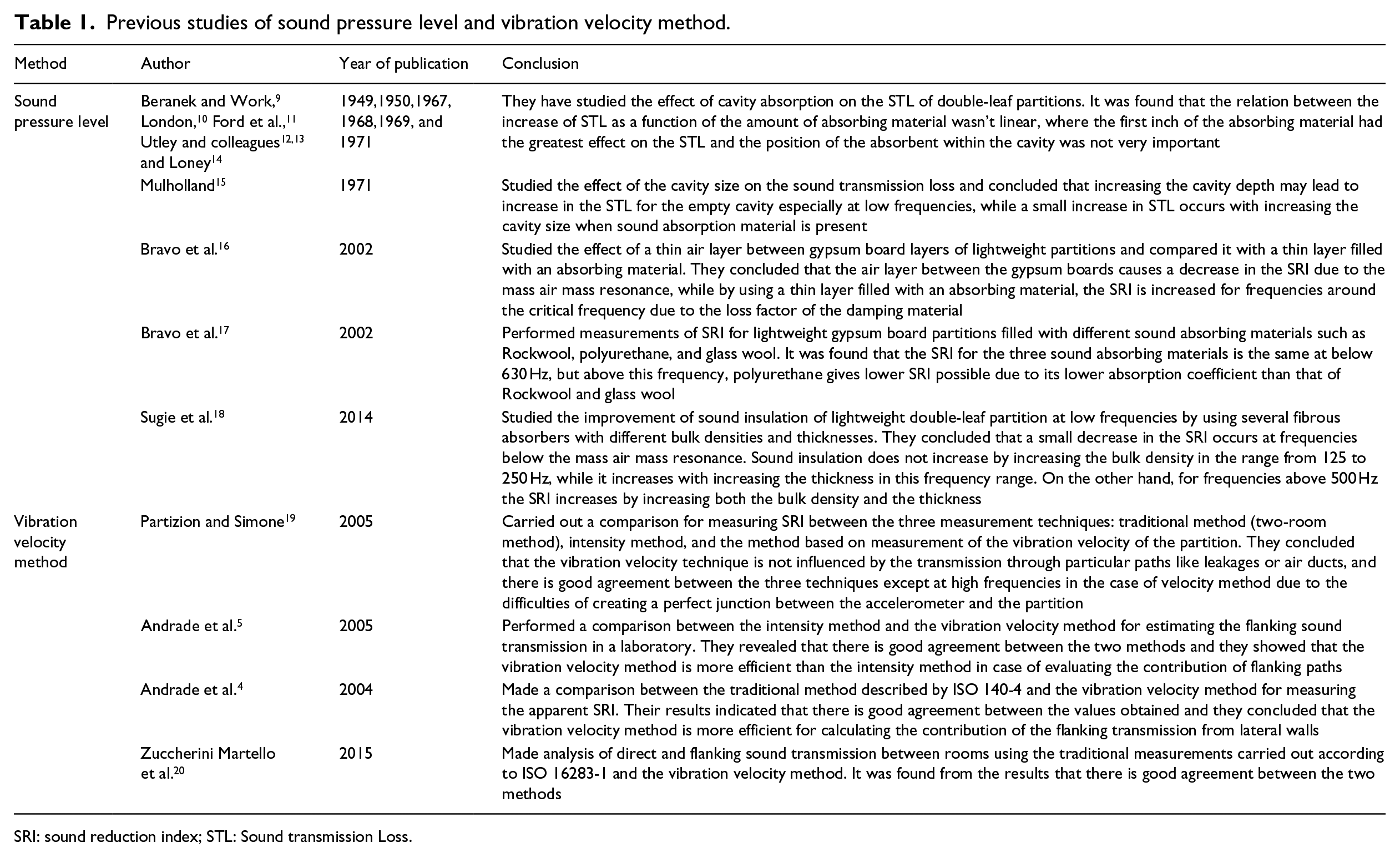
SRI: sound reduction index; STL: Sound transmission Loss.
The objective of this study is to compare between the two methods for measuring the SRI of 16 mm single- and double-lightweight gypsum board partitions.
Experimental arrangement
To compare the results obtained for the SRI, a set of measurements were carried out by installing the testing partition between two sound transmission rooms.
Figure 1 shows the two sound transmission rooms with an opening between them, in which the partition was inserted. The loudspeaker was placed in one of the rooms in order to produce a white noise signal. The propagated sound in the source room transmitted through the partition to the receiving room. Two experimental methods were used in order to measure the SRI.
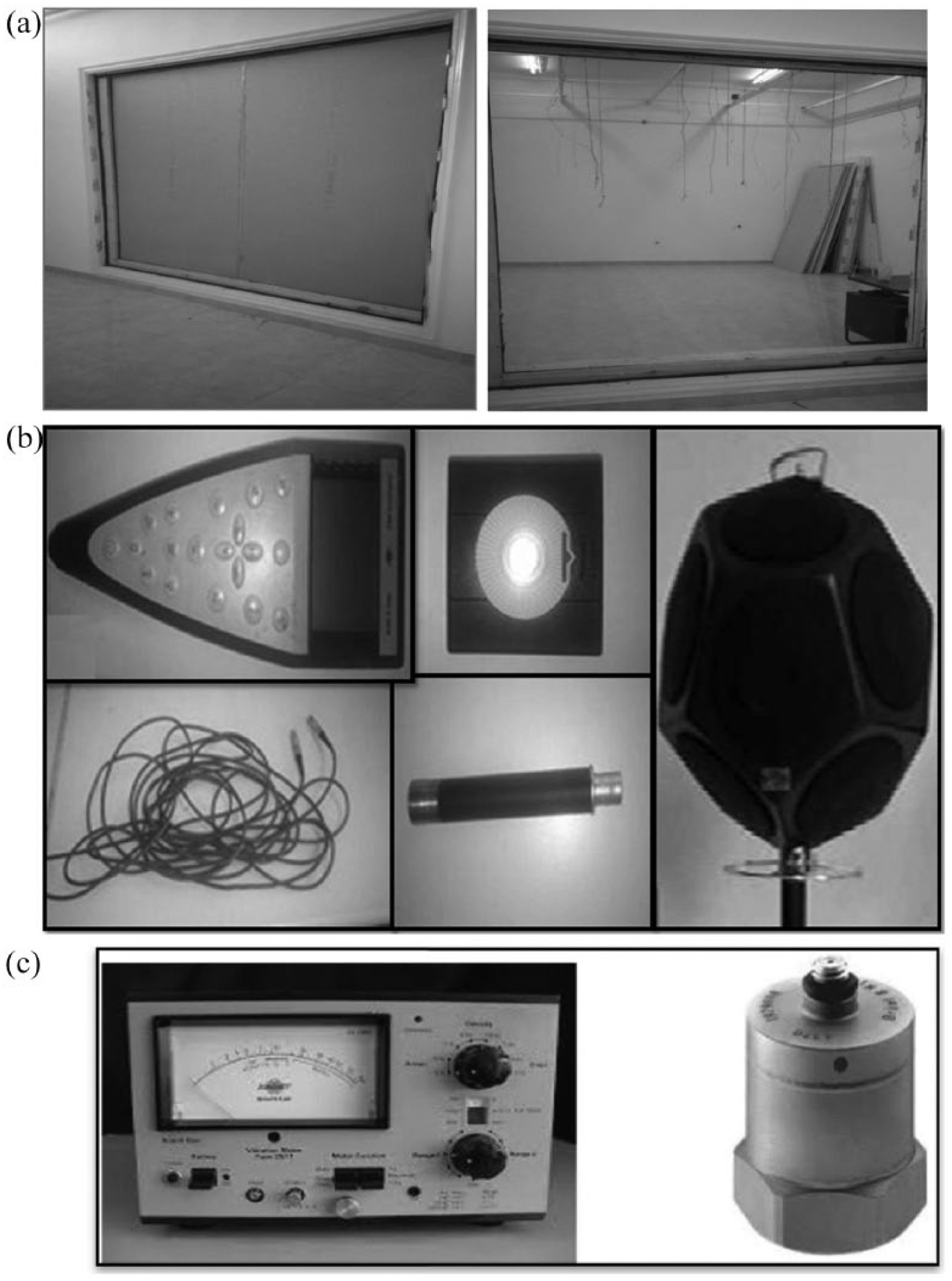
(a) Sound transmission rooms and the test opening. (b) Sound level meter, sound calibrator, microphone with preamplifier, cables, and omnidirectional sound source. (c) Vibration meter and accelerometer.
The measurements were conducted in two empty adjoining rooms with an opening of 2.40 × 2.40 m2 (area = 5.76 m2) in the separating wall between the two rooms. The source room has dimensions of 6.34 m (length) × 3.87 m (width) × 4.20 m (height) with volume 103 m3 and the receiving room has dimensions of 6.34 m (length) × 5.97 m(width) × 4.20 m (height) with volume 159 m3. The sound source located at the corners in the source room and five microphone positions were selected in both the source and receiving rooms. The distance between the microphone positions was 0.7 m, the distance between any microphone position and the room surfaces was 0.7 m, the distance between any microphone position and the sound source was 1 m, and the distance between any microphone position and the test specimen was 1 m. To determine the reverberation time, the loudspeaker located in the receiving room and three microphone positions were used. In each microphone position, the reverberation time measured twice and the average of the reverberation time at the different three positions was determined.
SPL measurements
Measurements were carried out according to the requirements of ISO 140-3 and measuring SPLs included an Omni-power sound source of type B&K 4296, a power amplifier of type B&K 2716, 1/2 in microphone type B&K 4189, and attached to sound-level meter-type 2260 for 1/3 octave band spectrum analysis. The measurement chain was calibrated before each measurement using sound calibrator type B&K 4231. When the sound source was switched on in the source room, the spatial average of SPLs L1 and L2 in the source and receiving rooms, respectively, is obtained according to the equation 2

The reverberation time of the receiving room within the frequency range of interest is shown in Figure 2.
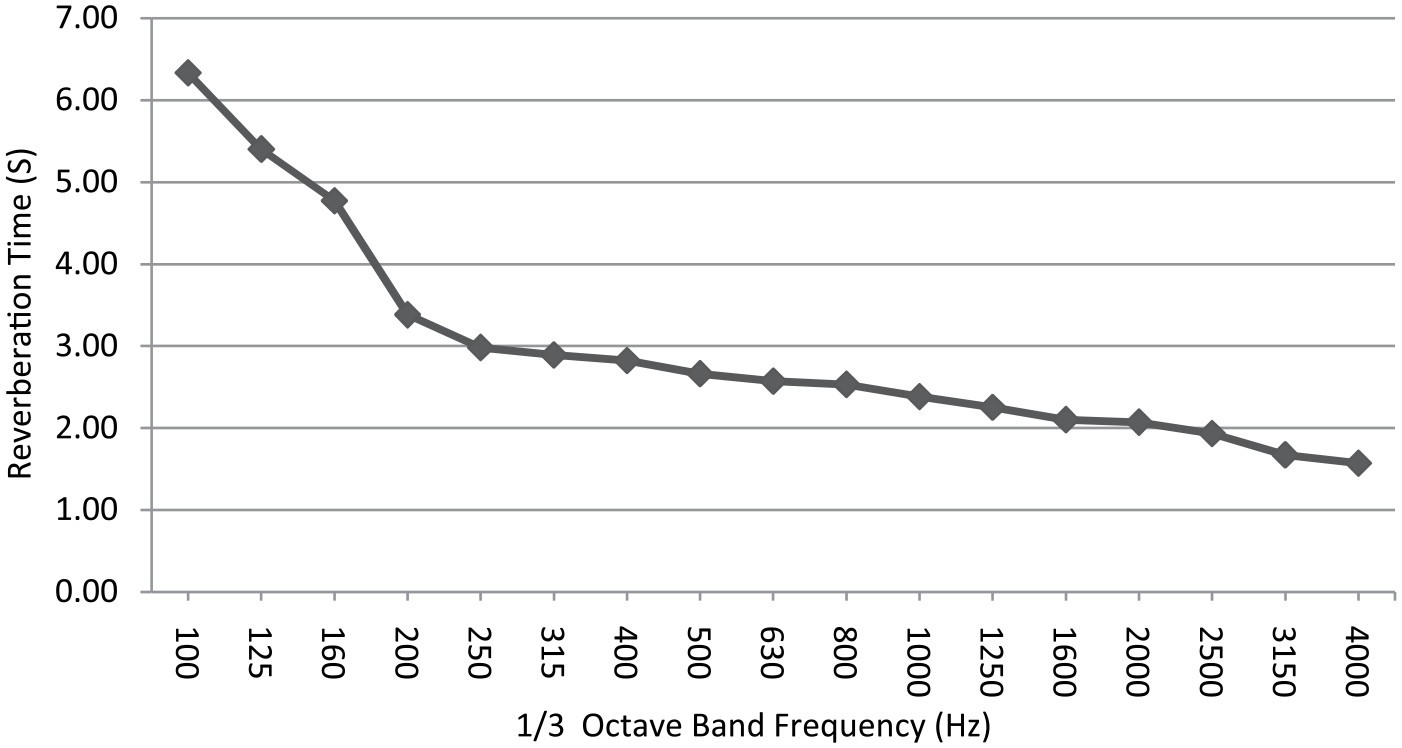
Reverberation time of the receiving room within the frequency range of interest.
Vibration measurements (V)
Measurements were carried out according to the criteria suggested in ISO 10848-1. Vibration meter type B&K 2511 is an instrument that is used in conjunction with an accelerometer type B&K 4370 to measure vibration in terms of velocity. A calibration exciter type B&K 4294 was used to calibrate the accelerometer before each measurement using a reference acceleration of 10 m/s 2 . The accelerometer was connected to the partition with a thin layer of beeswax. There are about 10 measurement positions that are randomly distributed over the entire surface of the receiving side of the partition.
Sample specifications
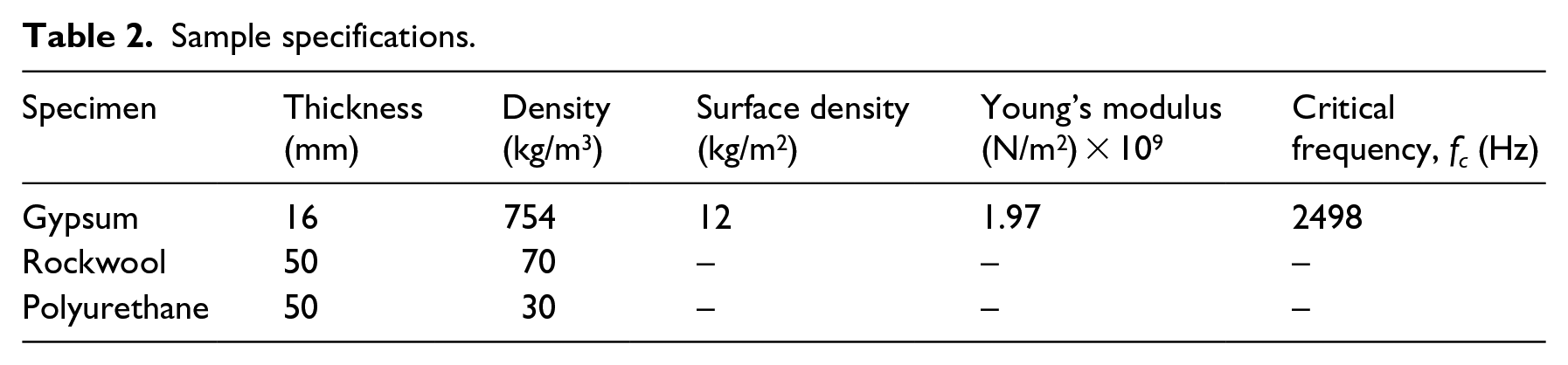
Some sample specifications are shown in Table 2.
Sample specifications.
The critical frequency of the 16-mm gypsum board partition was calculated as

where c is the speed of sound (m/s), h is the thickness (m) of the specimen, ρ is the density of the specimen (kg/m3), and E is Young’s modulus of the specimen (N/m2).
The test specimen was mounted on a wooden frame, which is mounted firmly with the lateral walls. Rockwool thickness of 5 cm was inserted between the wooden frame and the lateral wall to minimize flanking transmission.
In the first series of measurements, a single lightweight gypsum board partition of thickness 16 mm was inserted in the test opening.
In the second series, double-leaf lightweight partitions were considered. In the double layer of gypsum board of 16 mm thickness, the leaves were separated by a 5 and 10-cm air gap.
The third structure had a double layer of 16 mm thickness gypsum board in which the air space between the leaves was filled with Rockwool and polyurethane. Using these materials in the cavity between two layers is the proper way to increase the SRI of a structure (Figure 3).
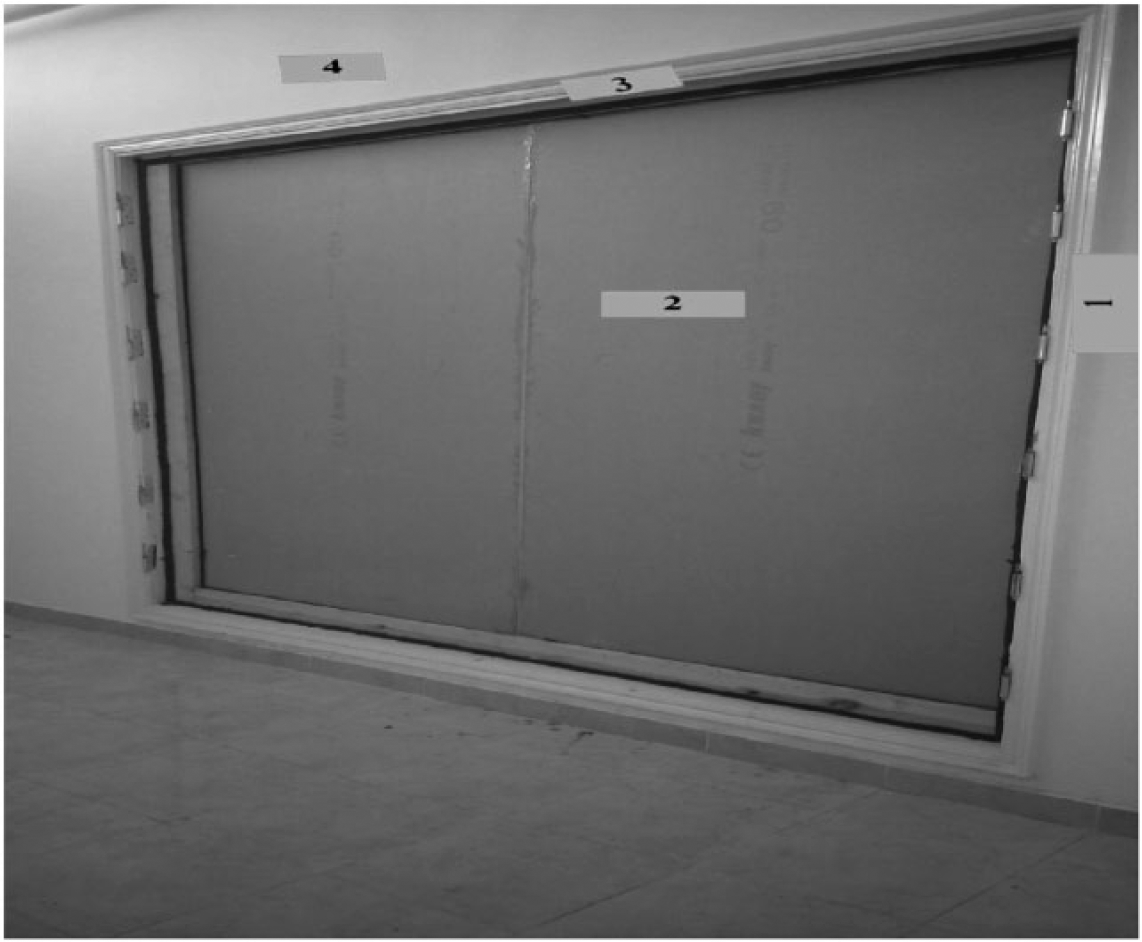
Picture of the specimen and the wooden frame.
Results and discussion
Single partition
Figure 4 illustrates the relation between the frequency and the SPL in the source and the receiving room.
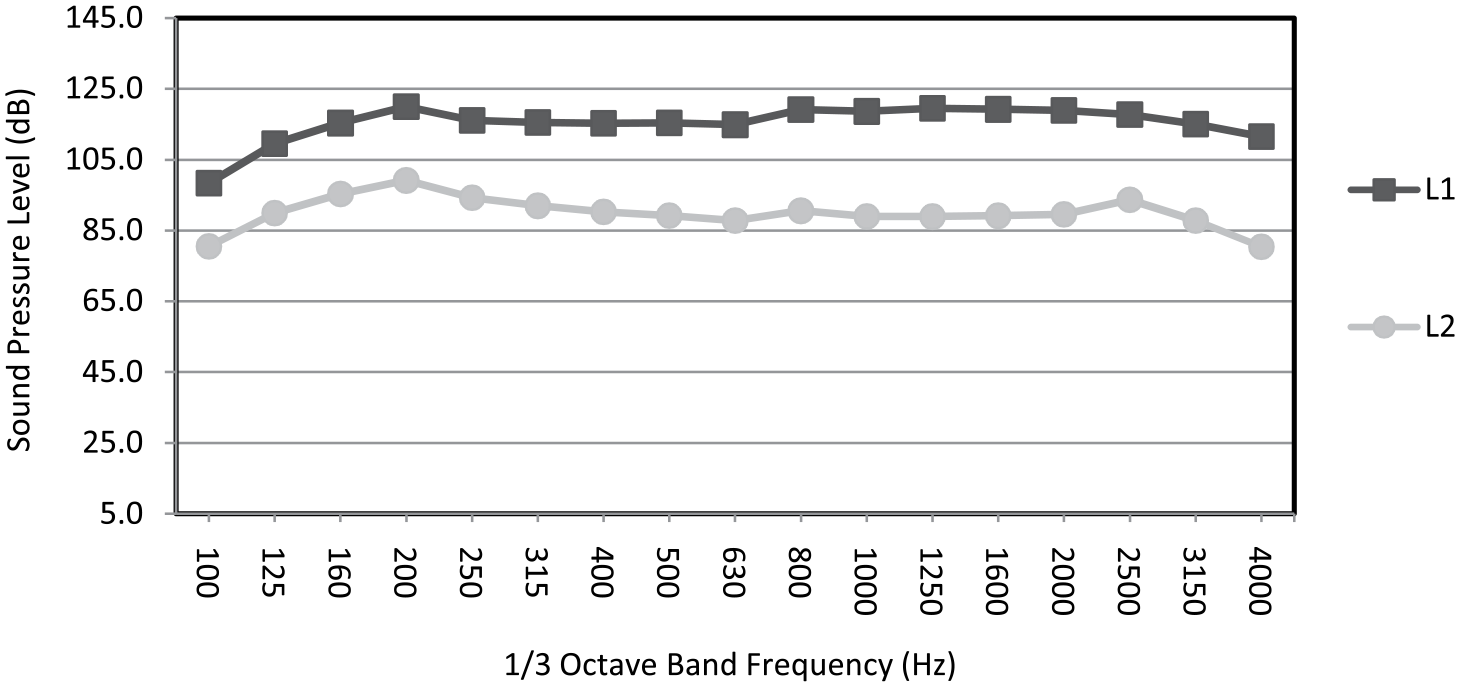
Sound pressure level of the single partition in the source and receiving room.
Figure 5 shows the comparison between SRI values using SPL method SRI(SPL) and the vibration velocity method SRI(V) of a 16-mm single gypsum board partition.
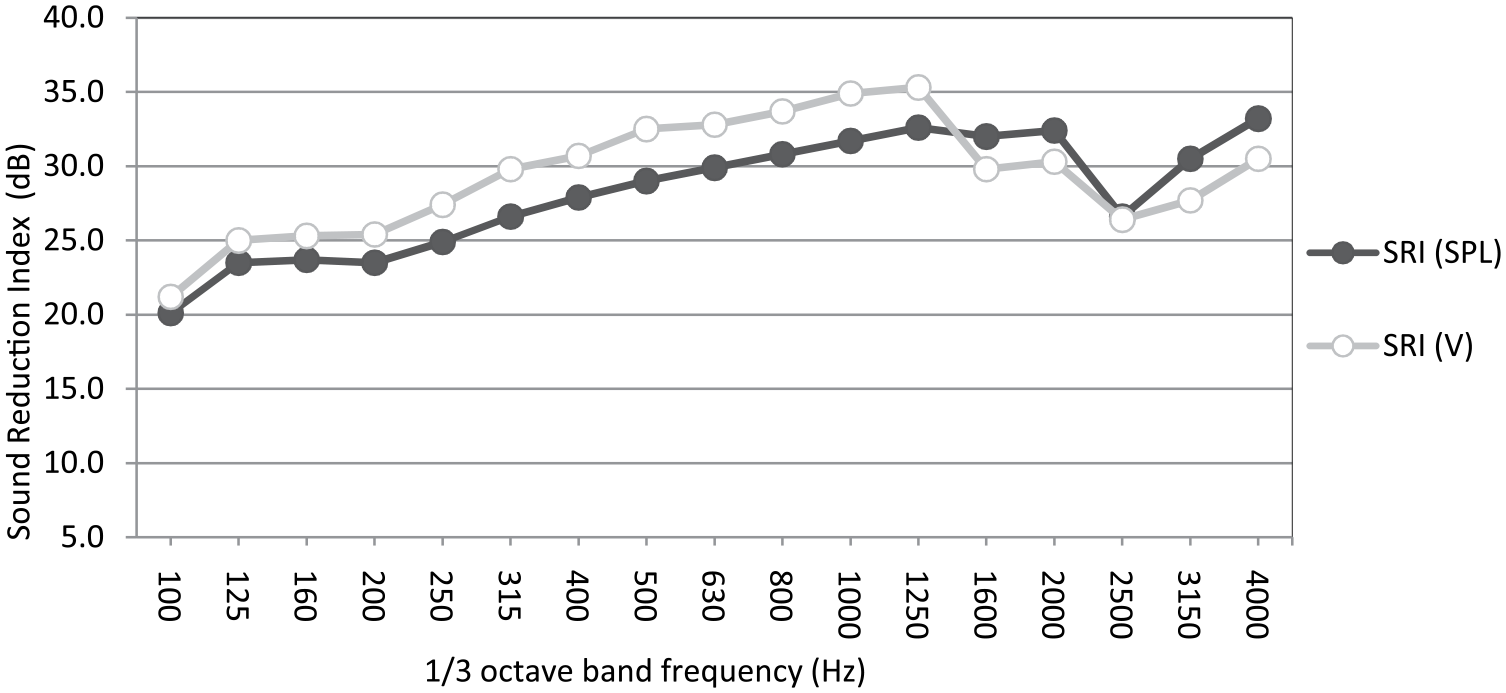
Comparison between experimental results of the sound reduction index for 16-mm single-gypsum board partition using sound pressure level and vibration velocity methods.
From Figure 5, it is manifested that, below 1600 Hz, the SRI(V) is higher than the SRI(SPL) by about 3–4 dB, because the vibration technique is not influenced by the transmission through airborne paths or leakages. However, at higher frequencies above 1600 Hz, the values of SRI(V) are lower than the SRI(SPL) due to two reasons: first, greater difficulties in creating a perfect attachment between the accelerometer and the partition using the mounting material (beeswax). Second, the mounting conditions of the accelerometer can reduce the resonance frequency of the measurement system, which reduces the SRI values at high frequencies. The dip appears in high-frequency range due to the coincidence effect which occurs when the wavelength of incident sound coincides with the wavelength of the bending wave in the panel, resulting in deterioration in the SRI curve, where the critical frequency is observed at 2500 Hz and theoretically found at 2498 Hz.
Double partitions
Effect of increasing air cavity depth
The mass air mass resonance that occurs due to the cavity depth is calculated as 21

where m1 and m2 are the mass per unit area of the two leaves, and d is the cavity depth.
Figure 6 shows the effect of increasing the air cavity depth on SRI using both the methods.
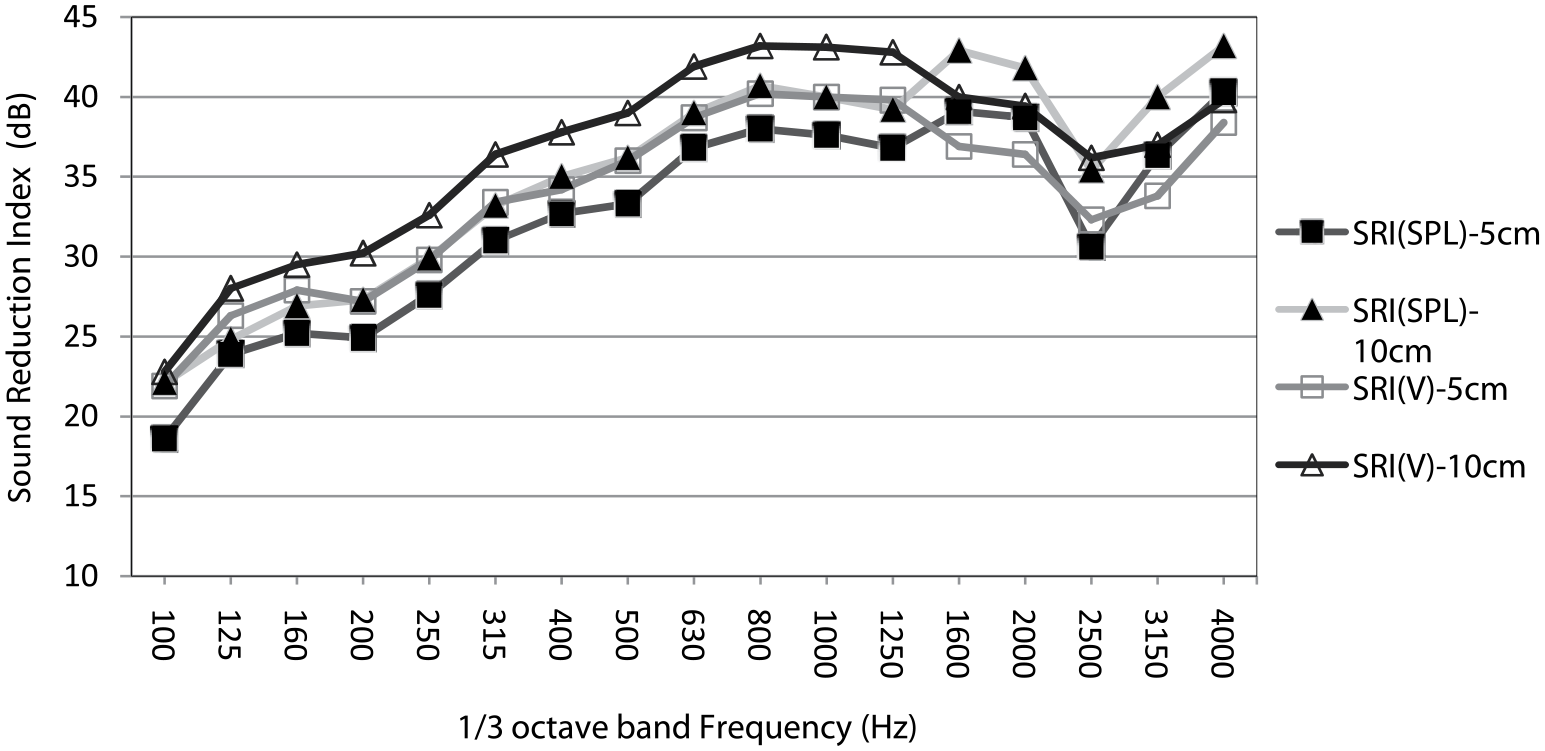
Effect of increasing air cavity depth on SRI values.
It is shown in Figure 6 that there is good agreement between the two methods. Below 1600 Hz, SRI(V) is higher than SRI(SPL) because the vibration technique is not influenced by the transmission through airborne paths or leakages. However, at higher frequencies above 1600 Hz, the values of SRI(V) are lower than SRI(SPL) due to two reasons: the difficulties in creating a perfect attachment between the accelerometer and the partition using the mounting material (beeswax), and the mounting conditions of the accelerometer can reduce the resonance frequency of the measurement system, which reduces the SRI values at high frequencies. At low frequencies, little improvement in SRI(SPL) is obtained due to mass air mass resonance that appears at 100 Hz. The other deterioration in the SRI(SPL) curve is due to the coincidence effect, where the critical frequency appears at 2500 Hz. Increasing the cavity depth from 5 to 10 cm shifted the resonance frequency to lower frequencies outside the range of interest, where it is found to be 76 Hz and led to increas in the values of SRI(SPL) and SRI(V) by about 3 dB.
Effect of cavity absorption
Figure 7 demonstrates the effect of filling the cavity with 10-cm sound absorbing materials of Rockwool and polyurethane on the SRI using both the methods.
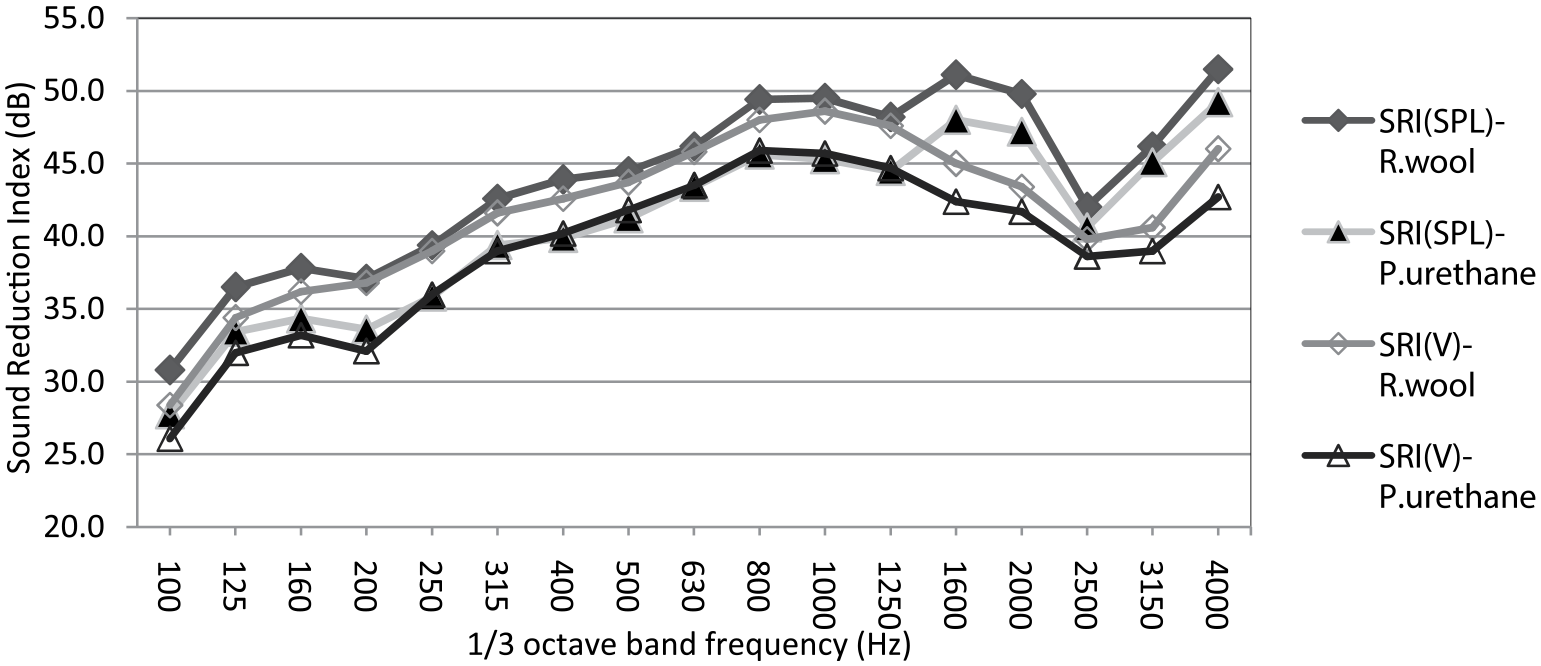
Effect of filling the cavity depth with 10-cm Rockwool and polyurethane.
It is revealed from the figure that, the values of SRI(SPL) of Rockwool are higher than the values of SRI(SPL) of polyurethane by about 3–4 dB, because Rockwool has a higher porosity, while the SRI(V) values of Rockwool are higher than the SRI(V)values of polyurethane by about 2–3 dB.
Table 3 shows the SRI results of 16-mm single- and double-leaf gypsum board partitions filling with 10-cm Rockwool using sound pressure and vibration velocity method.
SRI results of single- and double-leaf 16-mm gypsum board partitions filled with 10-cm Rockwool using SPL and vibration velocity methods.
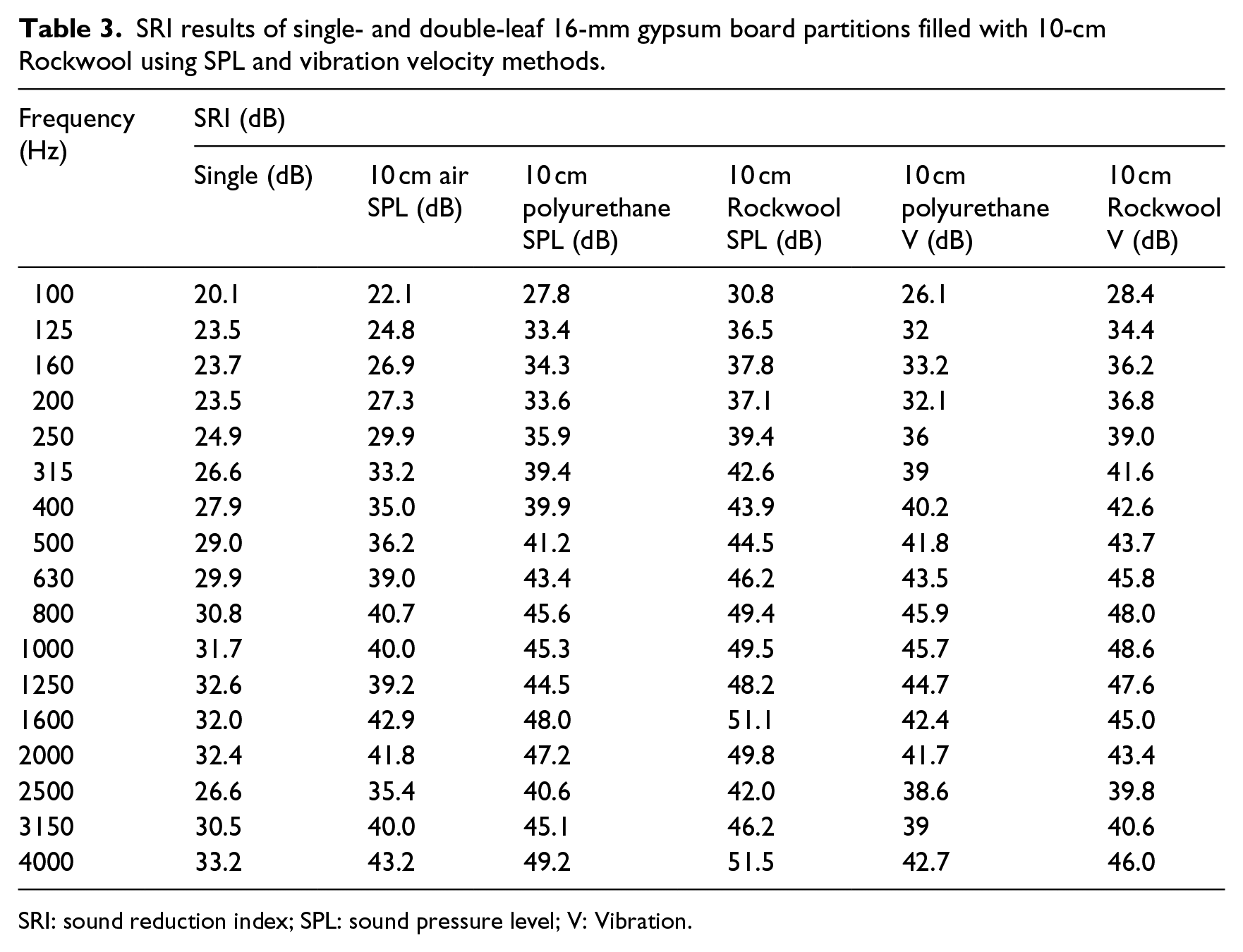
SRI: sound reduction index; SPL: sound pressure level; V: Vibration.
Figure 8 shows the comparison between single and double 16-mm gypsum board partitions with cavity depth of 10 cm using sound pressure method and vibration velocity method.
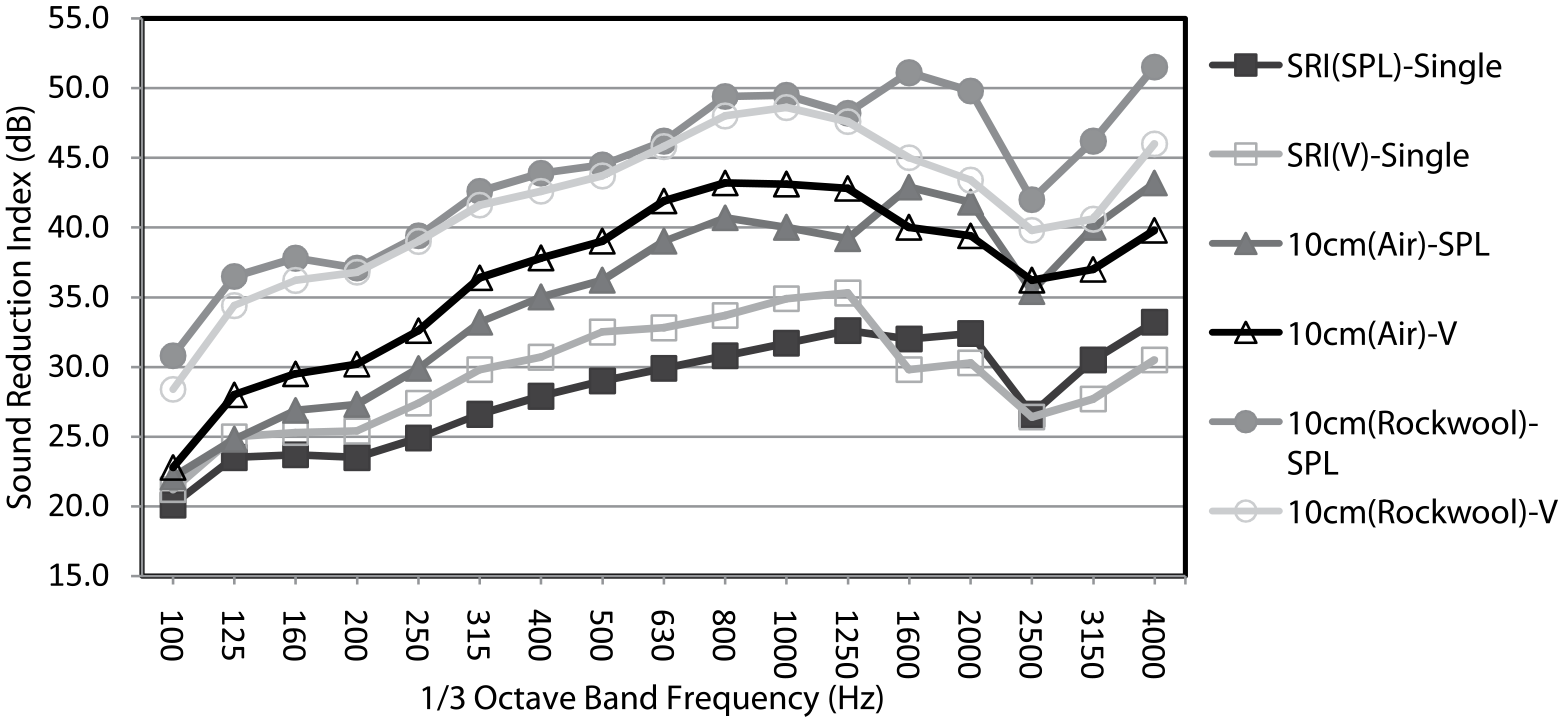
Comparison between 16-mm single- and double-gypsum board with cavity depth of 10 cm using sound pressure level and vibration velocity method.
It is seen from Figure 8 that filling the cavity with rock wool has a positive effect on noise reduction and SRI is improved by about 7 and 4 dB at the critical frequency using sound pressure and vibration velocity methods, respectively, while using double layers with 10-cm air gap enhances the SRI by about 9 dB at the critical frequency compared with the single layer. In addition, the critical frequency became less sharp after filling the cavity with the absorbing material because existing the absorbing material cuts down the amplitude of the stationary waves in the cavity and, consequently, the SRI improved at all frequency ranges.
Conclusion
In this article, SPL and vibration velocity methods were used to investigate the SRI of 16-mm gypsum board lightweight partitions. An agreement between the two methods is revealed. Increasing the cavity depth from 5 to 10 cm shifted the resonance frequency outside the range of interest, while using double layers with 10 cm air gap improved the SRI by 9 dB at the critical frequency compared with the single layer. Filling the cavity with 10-cm Rockwool increases the SRI at the critical frequency by 7 dB using sound pressure method and 4 dB when using vibration velocity method and made the critical frequency less sharp, because of existing absorbing material cuts down the amplitude of the standing waves in the cavity.
Footnotes
Declaration of conflicting interests
The author(s) declared no potential conflicts of interest with respect to the research, authorship, and/or publication of this article.
Funding
The author(s) received no financial support for the research, authorship, and/or publication of this article.
