







Abstract
This research set out to broaden the pool of evidence regarding the acoustic conditions at schools in South Africa. A review of local and international literature, standards and design guidelines shows that the ideal classroom acoustic conditions of 35 dBA ambient and 0.7 s reverberation time are required to enable a suitable environment for teaching and learning. A review of local literature revealed a very small body of knowledge regarding actual acoustic conditions and monitoring of classroom acoustics and that these cases demonstrated ambient noise levels in classrooms (whether occupied or unoccupied) to be above the recommendations of the relevant South African National Standard (SANS 10103). The limited local research promted the need for this case study. The findings of a province-wide survey of urban schools showed that traffic noise is the main source of noise disturbance in schools. A case study of five schools showed that the average outdoor noise level at schools exposed to traffic throughout the day is 63.3 dBA and the average indoor noise level at these schools when classrooms are unoccupied is approximately 58 dBA, which is significantly higher than the requirement. The reverberation time in classrooms was between 0.6 and 1.75 s. It is concluded that the current acoustic conditions in South African urban schools is poor when evaluated against the South African National Standards. However, since this is based on only five case studies, a broader study is required to understand the general conditions and establish suitable mitigation measures.
Introduction
There is considerably international evidence that poor classroom acoustics—referring to both background noise level and reverberation—has a negative effect on learners and teachers. Many studies over decades of research demonstrate that high background noise affects learner performance, such as reading comprehension, memory, cognitive abilities, and attention,1–6 while reverberation has been shown to influence speech intelligibility.7,8 Although the findings in some studies are not statistically significant (e.g. the RANCH-SA study revealed only a minimal impact of noise on reading comprehension 9 ), it is not disputed that noise is intrusive and disturbing to speech intelligibility. However, in South Africa this knowledge rarely translates into legislation and design practice. A review of design norms and standards and local literature revealed an unbalanced relationship between the knowledge of the effects of classroom noise on the one hand, and the monitoring and implementation of noise-mitigating classroom design on the other.
A possible reason for the gap between knowledge of the effect of excessive noise and the consideration of acoustics in the national norms and standards, and subsequently the implementation of remedial measures, is the dearth of empirical knowledge regarding the acoustic performance of classrooms in South Africa. The purpose of this study was to remedy this knowledge gap to a small extent. To this end, the acoustic performance and the suitability of the classrooms of five case study schools in the highly urbanized province of Gauteng were evaluated with reference to the existing regulations and international standards of best practice.
Background
For speech to be intelligible, the sound of the speech needs to be loud enough to be heard by the listener and each phenome should be clearly distinguishable. 10 In a typical classroom environment, speech intelligibility is essential. 11 Whether the approach to learning is predominantly by teacher instruction or by group discussion, the words spoken need to be clearly heard to be understood.
While the speech quality of the speaker (signal) and the hearing capability of the listener (receiver) are necessary components for communication, the behavior of sound traveling through the physical environment between and around the signal and receiver is also an essential component of speech intelligibility. 12
The way sound behaves in an indoor environment is influenced by the shape, size, and materials used in the space.13,14 The background noise level and the reverberation time in a classroom affect the clarity of the speech signal.7,15 Acoustics is thus an essential physical factor to consider when designing a classroom.
Attention to acoustics is not only necessary for speech intelligibility but is also important in creating an environment that is conducive to cognitive processing (thinking and concentrating). 16 Decades of extensive research has established the acoustic requirements for classrooms and examined the effects of noisy environments on the performance and health of learners and teachers.3,9,17,18 In spite of this, the acoustic performance of classrooms seems to enjoy little attention in South Africa.
Considering the impact of noise on educational outcomes, it is an important consideration in South Africa, where education is a national priority. 19 From the literature it is clear that a suitable background noise level and reverberation time is particularly important for children with learning disabilities, hearing impairments, or learning in a second language,15,16,20 which is significant in South Africa, where a large portion of the learners are not being taught in their home language. 21
Review of evidence regarding the effect of classroom acoustics
Several researchers have collated evidence regarding the effect of the acoustic environment (noise and reverberation) on learner performance: discussing the negative effects on annoyance, stress, social behavior, reading skills, spelling, memory, comprehension, speech perception, auditory processing, attention or concentration, and voice strain.22,23 The effects of noise in the classroom, as well as the extent of the effects, seems to vary depending on the type of noise and the age and ability of the learners. 16 Younger learners and those with language or learning differences (including second language learners) seem to have more difficulty hearing in noisey environments. 24 The effects of many types of noise, including air traffic noise, road traffic noise, white noise, music, speech, and random noise, have been studied in detail.4,5,17,25,26 Traffic noise especially has been identified as a common source of classroom noise.27–29 The consensus from these studies is that classroom acoustics is a necessary consideration for school designers and classroom managers.
Apart from the effects of classroom acoustics on the performance of learners, the acoustic quality in a classroom also affects the teachers’ performance. A poor acoustic environment, with high background noise and reverberation time more than 0.7 s requires greater vocal effort by the teacher30,31 and negatively affects voice health and voice comfort.32,33
The global response to the effect of classroom noise
Based on the importance of a suitable acoustic environment, many countries have developed norms and standards for classroom acoustics. Most regard a suitable ambient (background) noise level in a classroom to be 30–35 dBA with a reverberation time of approximately 0.7 s.34–39
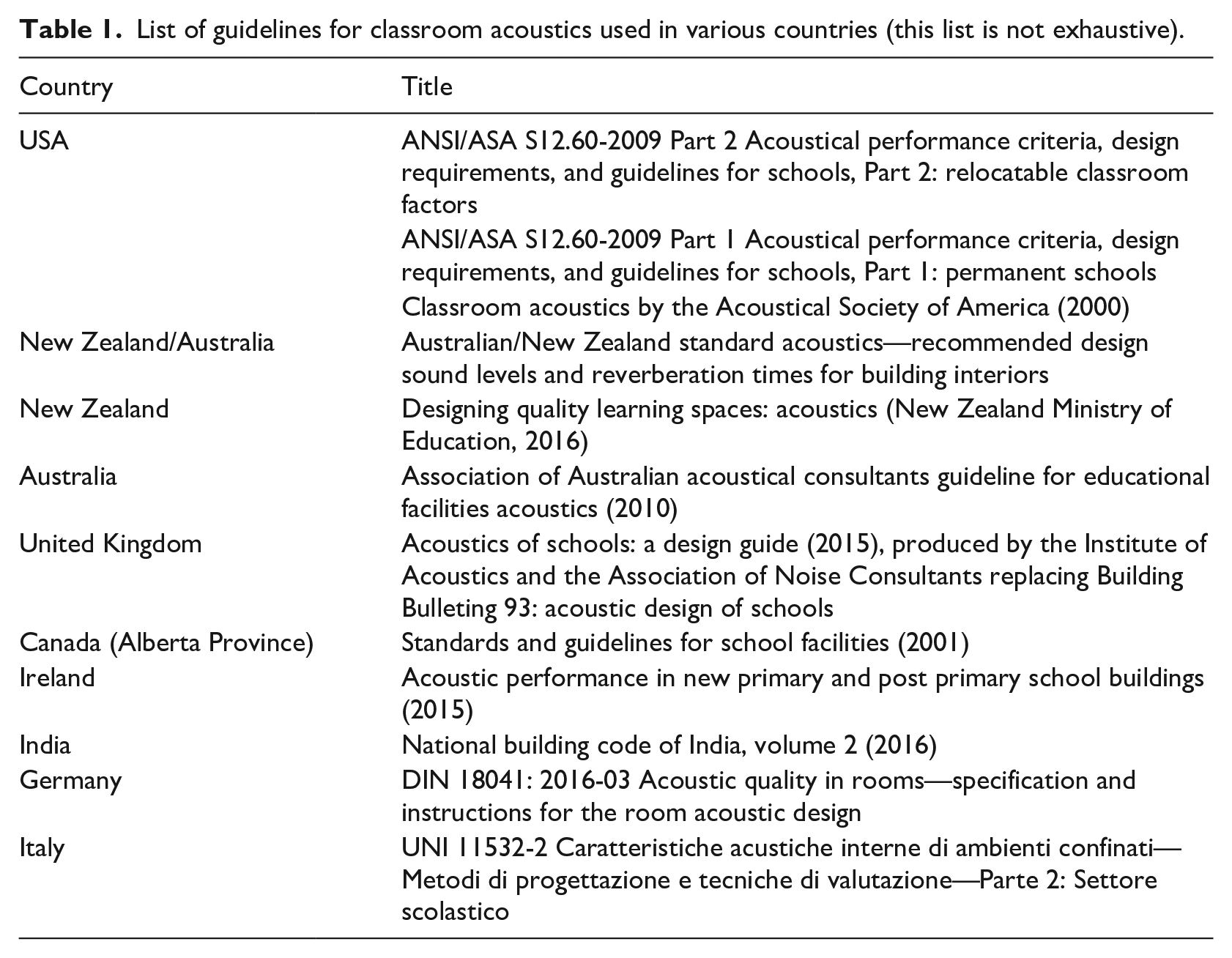
Many countries, such as those listed in Table 1, have developed norms, standards, or guidelines that specifically address classroom design and acoustics. Some are performance requirements and others are prescriptive requirements, but in both cases sufficient explanation and additional guidance are provided to assist designers in achieving the required conditions.
List of guidelines for classroom acoustics used in various countries (this list is not exhaustive).
In contrast, in South Africa, classroom acoustics receives little attention in norms and standards or local guidelines and regulations for classroom design.
South African landscape regarding classroom noise and acoustics
The regulatory environment
Building design in South Africa is primarily regulated by the National Building Regulations and Standards Act (Act No. 103 of 1977, as amended, 2008). This Act makes provision for the establishment of National Building Regulations (NBR) which are implemented through the South African National Standard (SANS) 10400: The application of the National Building Regulations. The NBR is intended to ensure that buildings are designed and built in such a way that they provide a uniform standard for a safe and healthy environment at the most elementary level; the regulation does not necessarily aim to achieve comfort and convenience. 40 This may explain why there is no mention of acoustic requirements in buildings of any kind in the NBR.
There are, however, South African National Standards that refer to acoustics specifically, in particular SANS 10103 (2008): The measurements and rating of environmental noise with respect to annoyance and to speech communication. This standard provides methods for assessing environments for acoustic comfort and speech intelligibility, as well as suitable ambient noise level limits for various environments. However, these limits are not enforceable by any means and in practice very few designers are aware of them. Nevertheless, the recommended classroom limit is 35 dBA (for an unoccupied room), which is in agreement with international standards. There are a number of limitations to this standard which make it different from those provided for education facilities in other countries.
Firstly, as already mentioned, these standards are not enforceable as design criteria but are merely recommendations against which environments can be assessed, should there be a desire to do so. Secondly, reverberation time is not considered and assumed to be too low to interfere with speech intelligibility. Lastly, since the purpose of the standard is to provide measurement methodology, it does not provide any guidance regarding the means of achieving suitable ambient levels. Thus, while the recommended limits may be used as performance criteria, it does not provide any of the additional guidance that is found in the international standards or guidelines listed above.
While the NBR speaks to general building design with no mention of acoustics, and the SANS 10103 speaks to acoustic requirements (although limited) without mention of building design to achieve the requirements, there is another local source to be considered, namely the National Minimum Uniform Norms and Standards for School Infrastructure, published by the Department of Education (DoE) in 2009. This is underpinned by the National Policy for Equitable Provision of an Enabling School Physical Teaching and Learning Environment, developed by the DoE in 2007. The Norms and Standards are to ensure that physical learning environments are suitable to facilitate effective teaching and learning activities toward achieving improved and equitable education outcomes. Under the section on architectural norms and standards the following aspects are addressed:
- Size of education spaces
- Space norms by prototype and level of provision
- Classroom size (number of learners)
- Average space per learner
- Lighting
- Acoustics
- Comfort levels (inclusive spaces)
- Sports facilities
The inclusion of lighting and acoustics as indoor environmental aspects to consider while excluding aspects such as ventilation and thermal comfort is curious. Nevertheless, acoustics is awarded some attention, although minimal. Only four points to consider for acoustics are listed as quoted below:
- “An ‘open space’ should not be smaller than 300 square metres.
- In relation to the size of the space, the extent and quality of the absorbing surfaces must be designed with the objective of providing a general background noise of 40–50 decibels db (sic) (with the space fully occupied).
- Reverberation (echo) must be dealt with, in relation to the volume of the space and the quality of the surrounding surfaces. Too ‘live’ spaces must be avoided and a rather low reverberation time achieved: approximately 0.6–0.7 s.
- Classrooms should not be juxtaposed immediately adjacent to a sports field.” 41
While the reverberation time is in line with recommendations in other literature, the ambient noise level is higher than the generally accepted limit of 35 dBA. It is not clear whether the ambient level is in an occupied or unoccupied space; most guidelines (including the SANS 10103) refer to an unoccupied space.
Further to the above-mentioned National Norms and Standards for School Infrastructure, the Department of Basic Education published and prescribed the Regulations Relating to Minimum Uniform Norms and Standards for Public School Infrastructure in November 2013. These regulations elaborate on certain aspects of the planning and architectural norms contained in the 2009 Norms and Standards, presenting them as enforceable regulations.
For some aspects of school design, such as universal access, greater detail is provided in the regulations than in the 2009 norms and standards. However, acoustics receives diminished attention, with only the following two points given:
- Acoustic conditions should, as far as reasonably practicable, facilitate clear communication of speech between teacher and learner, and between learners themselves, and should not impede teaching and learning activities.
- Background noise and reverberation should, as far as reasonably practicable, be reduced to a minimum. 42
These regulations thus provide neither prescriptive nor performance criteria for classroom acoustics, making it impossible to evaluate classrooms for acoustics suitability. It is evident that there is poor attention given to classroom acoustics in the local legislation. However, this weakness is not limited to legislation—a thorough search for local academic literature regarding classroom noise returned limited findings.
Scope of local research
To better understand the importance attached to acoustics in schools in South Africa, as well as the breadth (themes or topics) and depth (volume of research) regarding classroom acoustics and noise, a literature survey was conducted of online sources such as scholarly articles, theses, and dissertations using search terms such as “South Africa + acoustics + school”; “South Africa + classroom + noise”; “South Africa + teacher + noise.” Some of the papers that appeared in the search results were not included in the evaluation. For example, a paper on the topic of teaching that mentions that group work results in classroom noise, but does not elaborate on the noise or mitigation measures, would have been excluded. Papers that were included were those discussing the effects of noise on the teachers or learners, the source of noise, and the measurement (monitoring) and management of noise in schools or classrooms.
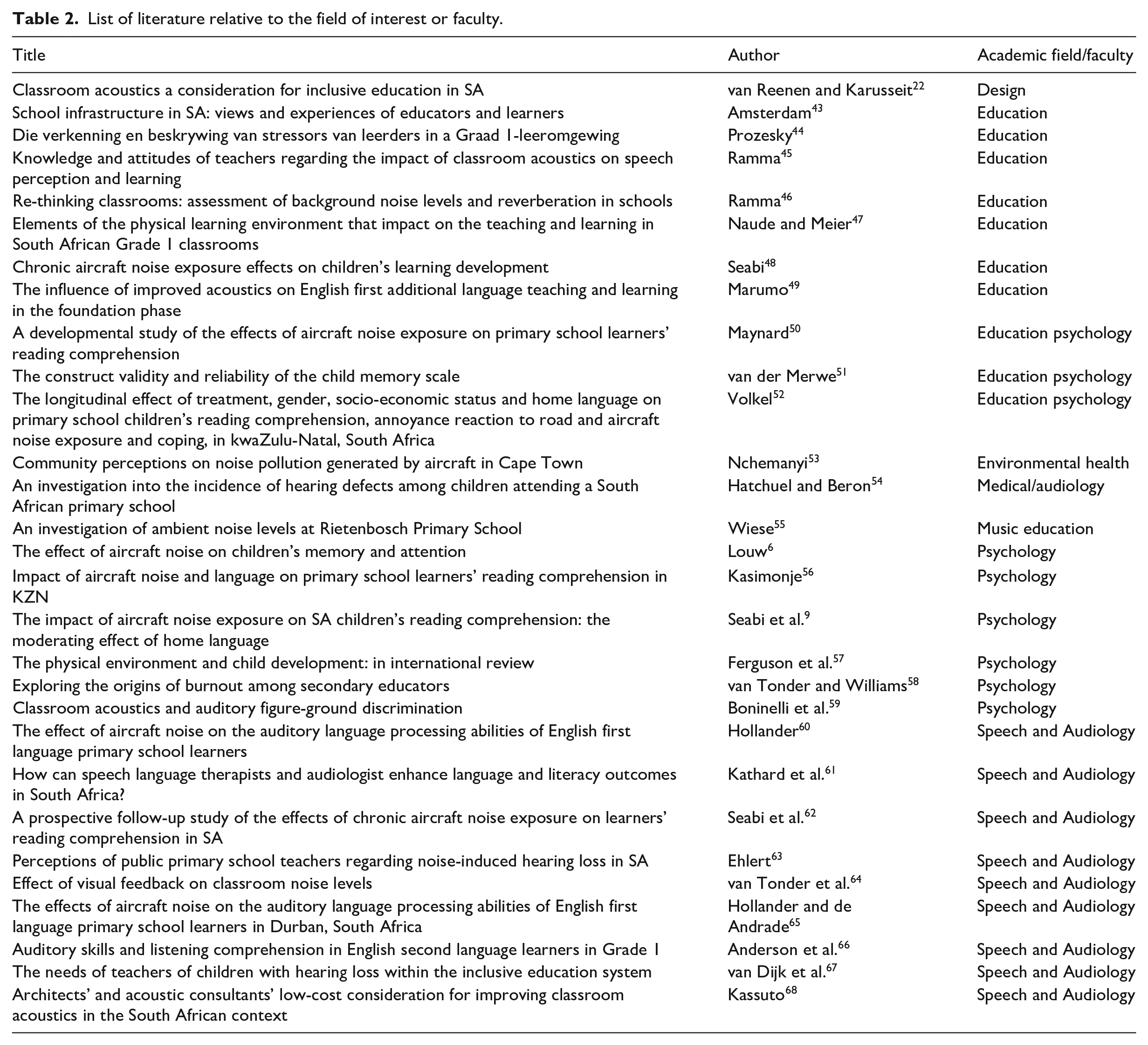
Twenty-nine individual items of literature were found. These are listed according to the field of interest or faculty in Table 2. As represented in Figure 1, the majority of the literature is in the field of speech and audiology (32%; n = 9), followed by education (25%; n = 7) and psychology (21%; n = 6). Only one of papers were in the field of design.
List of literature relative to the field of interest or faculty.
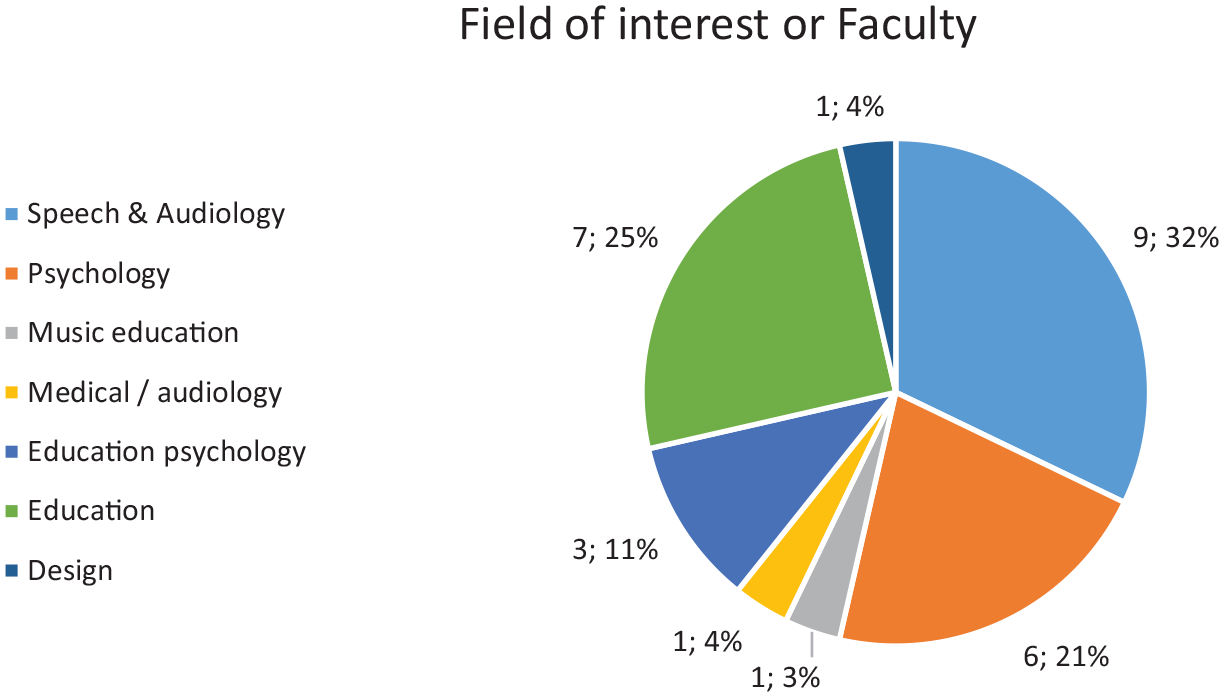
Distribution of literature according to field or faculty.
While it is encouraging to note that there is research regarding classroom acoustics occurring in South Africa, it should be noted that 10 of the 29 local papers rise out of a single study, namely the RANCH-SA study. This is an extensive international longitudinal study regarding the effect of aircraft noise for schools near and far from an airport. Most of these were focused on the effect of noise on reading comprehension, particularly for second language learners.
The focus of the local research cuts across a number of different themes, many papers touching on multiple themes. The popularity and distribution of themes are illustrated in Figure 2. It is evident that many of the studies center around aircraft noise, the effect of noise on general well-being, and the effect of noise on second-language learners and inclusivity of those with learning disabilities. No papers were found that focused specifically on the source of noise in classrooms other than aircraft noise. The exact phrase “road traffic was mentioned in 15 of the papers, highlighting its potential importance, although none of the papers discussed it specifically.”
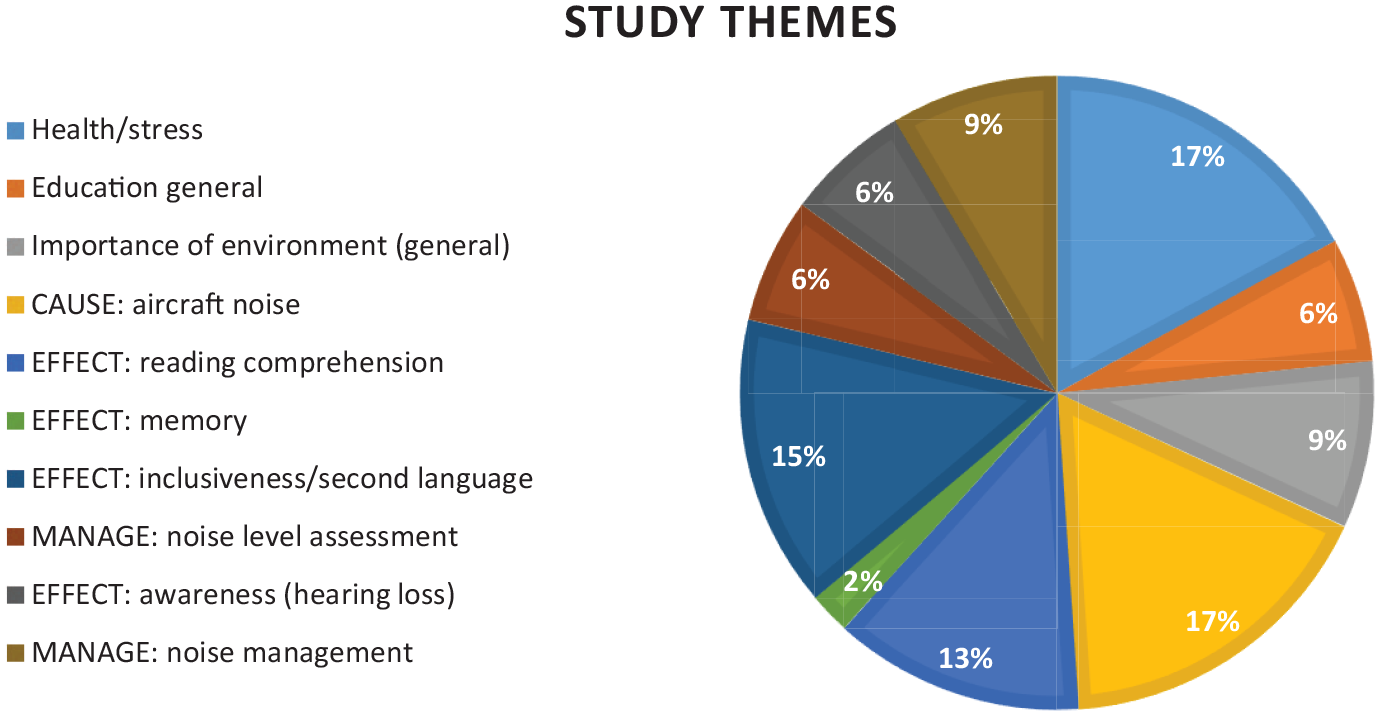
Distribution of study themes.
All the papers were published between 2004 and 2019, except two, which were published in 1965 and 1981 and focused on hearing loss and auditory processing respectively. Twenty-one of the papers were written by unique authors; six authors (Pottas, Hollander, Ramma, Seabi, Cockroft, and Goldshagg) contributed to more than one of the collection of papers, demonstrating a small pool of prolific authors or specialists. Supervisors to masters or doctoral theses are not considered as authors here, although it is acknowledged that there are some academics who are frequently involved in research regarding classroom noise.
This evaluation of the local literature is limited in that some research papers may have been overlooked. For example, it is known that research regarding classroom acoustics has been conducted at honors or masters level at certain universities but these are not available in the public online domain.
Only three of the local research papers found mention the actual noise levels measured at schools, as summarized in Table 3. The evidence to date suggests that South African classrooms are not acoustically ideal for teaching and learning.
Summary of evidence found regarding measured noise levels in South African classrooms.
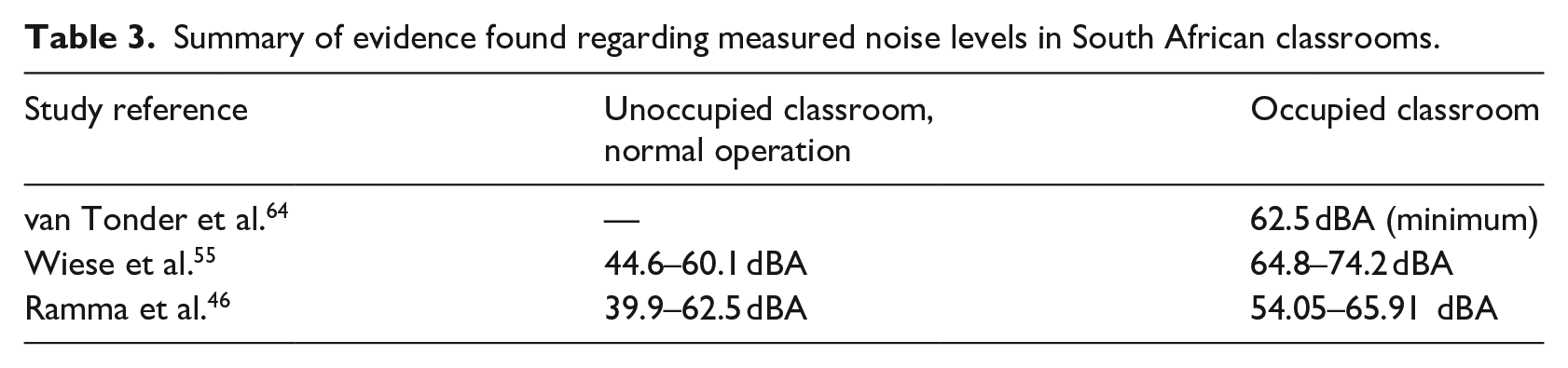
The lack of quantitative evidence regarding the acoustic performance of classrooms is evidence in itself that noise management is not sufficiently enforced in South African schools.
The survey of local literature clearly shows that while there is some active research on the impact of classroom acoustics on learning, there is limited research on the relationship between classroom design and noise levels and especially the acoustic performance of classrooms in South African schools.
Research design
The intention of this study was to investigate noise levels in South African schools, particularly with reference to traffic noise, to address the current evidence gap and improve the baseline collection of data regarding noise levels in schools in South Africa. To this end, a multiple case study was designed to investigate noise in and around classrooms. This study makes strong reference to the requirements of SANS 10103. As such, occupant-generated noise is not considered, but environmental noise is considered as a contributing component to the ambient noise level. Thus, outdoor and indoor noise levels were considered.
The acoustic suitability of classrooms was evaluated against the criteria of an ambient noise limit of 35 dBA and a reverberation time of between 0.4 and 0.6 s. Outdoor noise was measured to establish the impact of the outdoor noise on indoor noise in actual cases.
Five schools in the highly urbanized province of Gauteng were selected as case study sites. Four of the schools selected were in urban areas on roads with high traffic volumes throughout the day and one was in a quiet suburban area surrounded by residential properties. Qualitative data (gathered through questionnaires) and quantitative data (gathered through on-site sound level measurements) were used to describe the acoustic quality of selected classrooms and identify the source of noise.
A province-wide survey was also used to investigate the prevalence and source of classroom noise in Gauteng schools. The survey was administered electronically to all Gauteng schools (both private and public) and managed in such a way as to ensure no duplication of responses.
Case study sites were selected from the list of schools provided by the Gauteng Department of Education (GDE), including both public and independent schools. Schools that identified themselves as noisy in the province-wide survey were approached to participate in the study. Out of 21 schools identified, five agreed to participate. The schools are dubbed School A to E in this study. Schools A, B, C, and D were located on busy roads, while School E was in a quiet suburb. At each school one classroom that faced the roadside boundary was selected as a study classroom. The classrooms were not all of the same size but were all compliant with local norms and standards for classroom sizing. The desks were either grouped or arranged in a traditional classroom arrangement of rows facing the teacher with teaching from the front.
Teachers working in the selected classrooms completed a questionnaire designed to establish the perceived noise level, the perceived effects of noise, and the actions taken to attenuate noise.
The noise assessment at the schools considered three measurements: the indoor ambient sound pressure level (SPL) to compare to the established limit (35 dBA), the outdoor SPL at the school boundary to quantify the noise source (predominantly road traffic) and the outdoor SPL at the classroom to establish how much traffic noise reached the classroom. The reverberation time in each classroom was also measured to compare to the established requirement (0.4–0.6 s).
Local and international standard methods for measuring noise levels indoors and outdoors were considered to determine the most appropriate method for taking on-site measurements, such as SANS 140-5:1998, SANS 10103:2008, ANSI/ASA 12.6-2010 and BB 93, and precedent studies were consulted.29,69–71 The height of the sound level meter, distance from the source, and distance from reflective surfaces were considered. Noise measurements were taken in terms of the continuous equivalent sound pressure level (Leq).
Outdoor noise was measured at the school boundary at a distance of approximately 15 m from the center of the adjacent road, as per ANSI/ASA S12.9 Part 2, over the full school morning (5 h) during normal school operation. The height of the microphone was 1.2 m. This is referred to as Location A in this study.
Outdoor measurements taken at the outer façade of the selected classrooms, referred to as Location B, were taken over 30 min during the noisiest 1-h period. The noisiest hour was determined by analyzing the results of the 5-h measurement and then returning the following day to perform the façade measurement during the identified hour. Both measurement days were normal week days during the school term, assuming the outdoor noise to be the same on both days. The microphone was located 1.2 m from the external wall of the classroom at a height of 1.2 m above ground level.
The indoor SPL was measured when the classroom was unoccupied yet while the normal outdoor environment activities that would be occurring during the school period were operating. Measurement was taken over a 30-min period during the 1-h period. The microphone was positioned approximately 1.2 m away from the façade inside the classroom, centered along the length of the classroom, and at a height of 1.2 m, meeting the requirements of the local standard, SANS 10103. This is referred to as Location C in this study.
Equivalent continuous sound pressure level (in dBA) was measured across the frequency range of 16 Hz–20 kHz using a Class 1 integrating sound level meter set to record the Leq in 5-min intervals over 30 min.
Reverberation time was measured using the impulse response method described in SANS 3382-2. The measurement of the sound decay was set to be triggered by a source noise of 75 dB. For this measurement, the microphone was positioned in the center of the classroom at a height of 1.2 m. A limitation of the study was that only one measurement position was possible.
Findings and discussion
Province-wide survey findings
The purpose of the province-wide survey was to establish the prevalence and main sources of external noise in classrooms in Gauteng, and from there identify the case study schools. The survey was sent electronically to all 3065 schools on the provincial database. Many of the email addresses could not be reached (353). Thus the effective number of schools reached was 2712. Out of this number, 124 schools responded—a response rate of 5%, which is to be expected of on-line surveys to South African schools. 72
Only one response per school was requested, whether completed by an administrator or teacher, with the intention to solicit a subjective perception. The first question was essentially an opinion poll asking: “In your opinion, is your school located close to an external noise source (e.g. busy road, railway, or industry) that regularly affects the background noise level in any of the classrooms during the school day?” The answers offered were multiple-choice radio buttons for “Yes,” “No,” or “Not sure; unable to answer.” Only one answer could be selected. If the respondent answered “No” or “Not sure; unable to answer” the survey ended. A “Yes” response proceeded the respondent to the next section, which was designed to determine what the source of outdoor noise was, asking the question, “What is the main source of the disturbing noise?” The answer choices were “road traffic,” “rail traffic,” “air traffic,” “industry,” or “other.”
Out of these respondents, 36% (n = 45) affirmed that the classroom noise at their school is affected by external noise sources. Of these, 73% (n = 32) reported the main source of noise to be road traffic, 5% (n = 2) reported the main problem to be air traffic, and 7% (n = 3) reported the main source to be rail traffic, with the remainder being industry, business, or entertainment related sources. Additional comments provided by respondents (22%, n = 10) specifically mentioned noise caused by South Africa’s main public transport mode, the communal minibus taxis. These comments referred to loud music and activity emanating from taxis, rather than taxi traffic noise. Overall 26% of the schools reported exposure to road traffic noise.
Although the response rate was low, there is a clear indication that road traffic noise is a dominant source of disturbance in classrooms.
The schools that reported traffic noise exposure were identified on a map and it was found that not all were located in areas where high traffic was expected (such as business districts). This seems to indicate that even low volume traffic can cause classroom disruption.
Teacher questionnaire findings
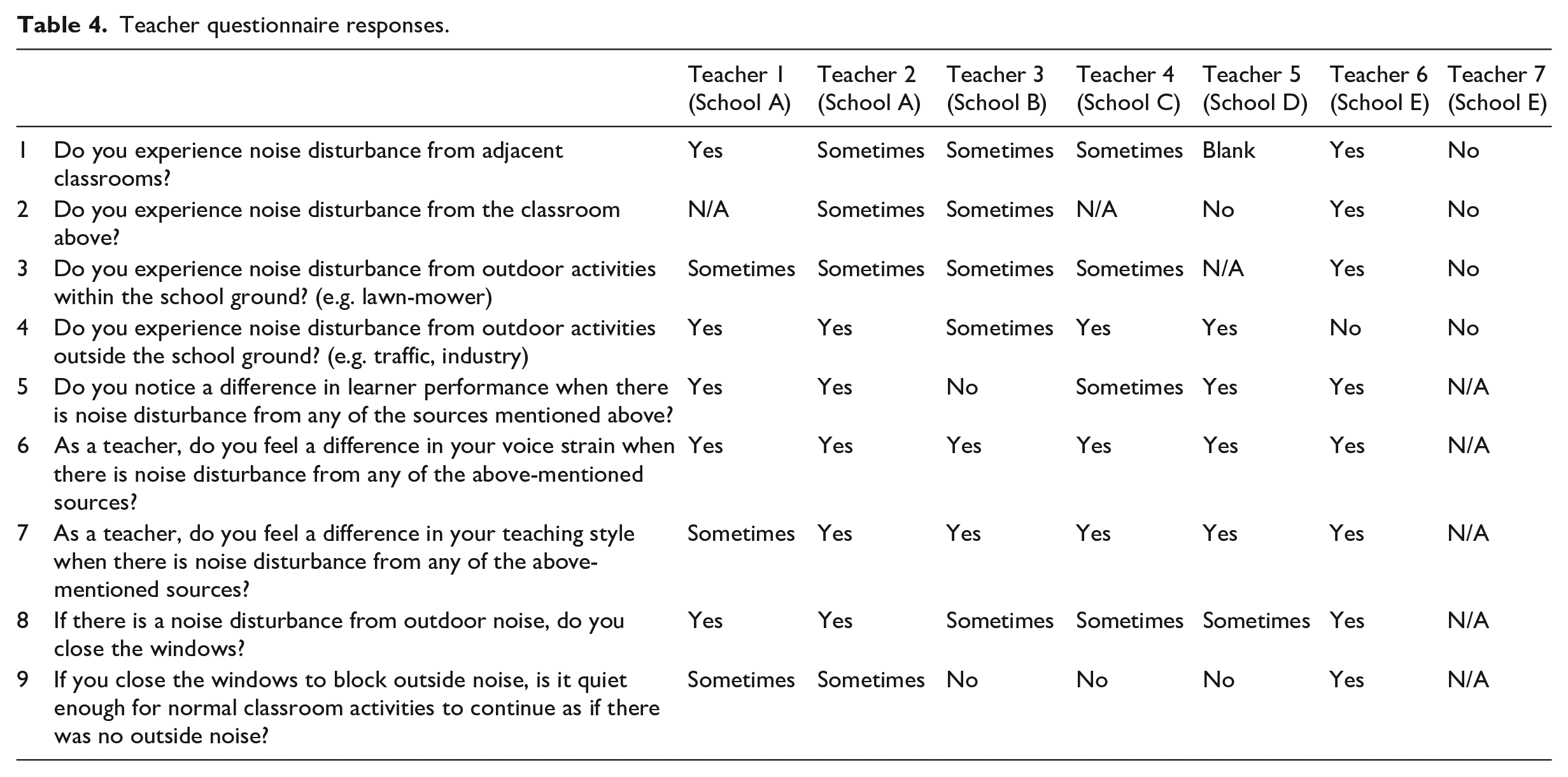
The teachers who regularly use the selected classroom at each school were asked to complete a questionnaire regarding noise in and around the classroom. At Schools A and E, the teacher using an adjacent similar classroom was also enlisted to participate. Altogether, seven questionnaires were administered in five schools. The results are shown in Table 4 and Figure 3. The three-level response scale of response was used, offering responses of “yes,” “no,” and “sometimes”; “not applicable” was also offered where suitable.
Teacher questionnaire responses.
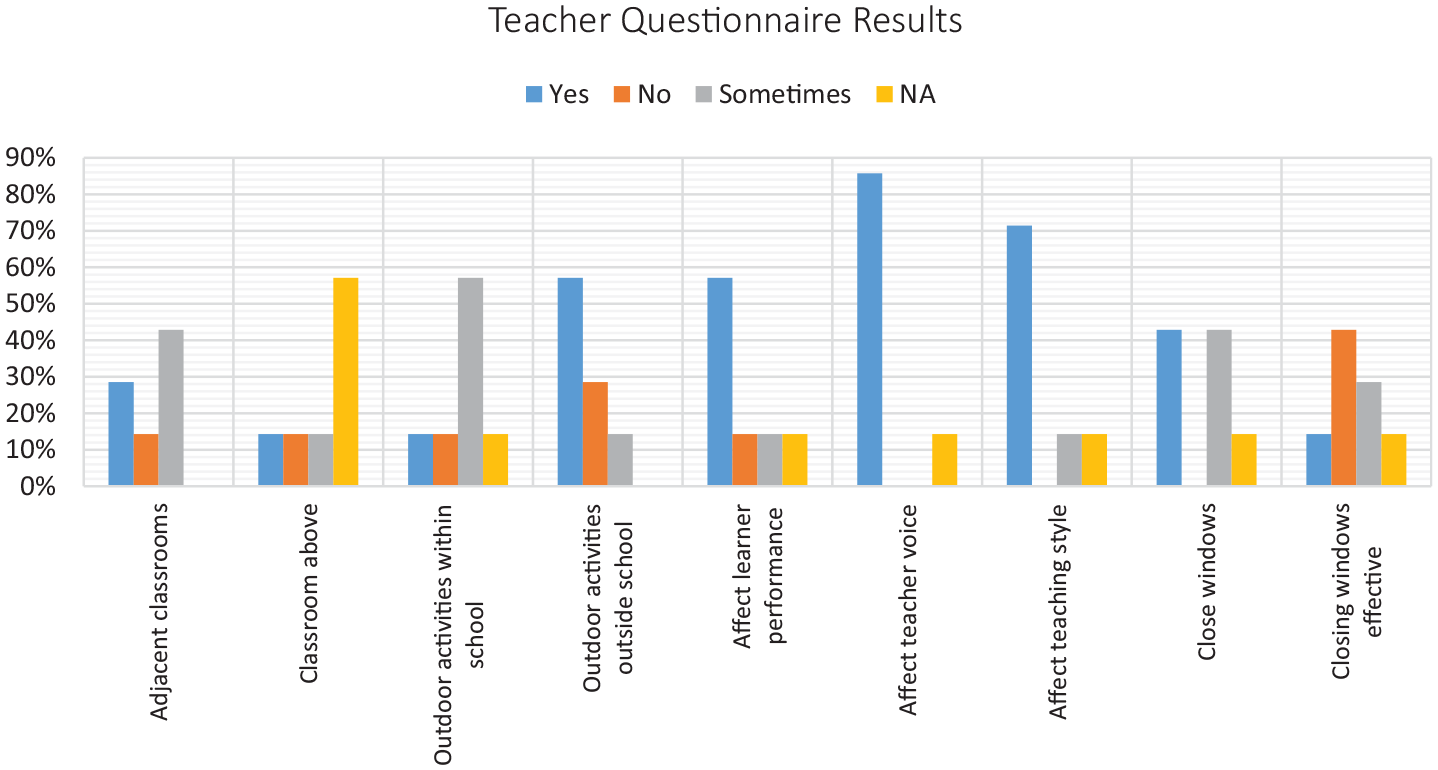
Results of the teacher questionnaire.
The results show that noise disturbance is sometimes experienced due to noise emanating from classrooms adjacent to or above the selected classroom or from outdoor noise sources within the school grounds. However, noise disturbance from sources external to the school is more prevalent. This is not surprising since four out of the five schools selected are on busy roads. Although the sample is very small, there is a strong indication that schools located on busy roads are affected by traffic noise.
Although the effects of noise was not a focus of this study, it was included in the survey for additional interest. Results showed that four out of the six teachers who answered find that noise affects the learners’ performance. All who answered reported that they experience voice strain in the presence of noise and most (five out of six who answered) reported that noise disturbance affects their teaching style.
It is interesting to note that at School E (the quiet school) it was reported that noise affects classroom activities. Although traffic noise at this school was low, it was observed through the questionnaire results as well as the on-site measurements that user-generated noise from within the school (voices from adjacent classrooms) is a concern here. This may be a due to the way the users operate, or the way sound is transmitted in this specific school, which was not investigated. It may also be related to the lack of the masking effect that could be provided by outdoor noise. This may be a topic for further study.
With respect to actions taken to prevent noise disturbance, three out of six who answered reported that they close the windows; two felt that closing the windows sometimes helps and one felt that it does help attenuate the noise. Only one felt that closing the windows is effective for attenuating outdoor noise.
Although this is a small sample, these results confirm again that noise from sources external to the school (such as road traffic) is a valid concern and that it has a negative effect on teaching and learning. The results also confirm that closing the windows against disturbing outdoor noise is not very effective.
On-site noise measurements
The environmental noise level was measured at each selected site at Locations A, B, and C according to the method described.
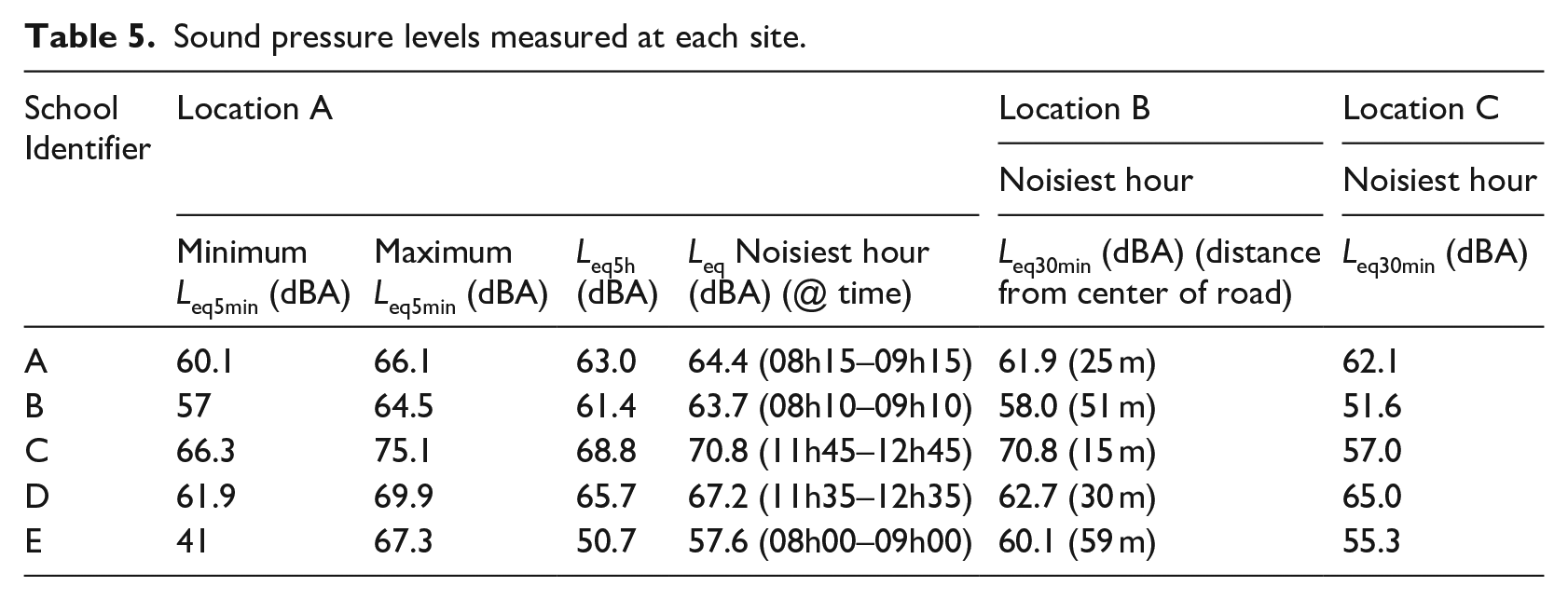
The source of noise at Location A was predominantly road traffic noise. The minimum and maximum noise levels and the 5-h Leq at Location A, as well as the 30-min Leq during the noisiest hour at Locations B and C, are as recorded in Table 5. Measurements were taken during normal school hours but while the classrooms were unoccupied, eliminating the effect of user-generated noise. The difference in measurements at Location B and Location C give an indication of the insulation effect of the facade (with the windows open).
Sound pressure levels measured at each site.
Outdoor noise
The average at the school boundary across all five sites was 61.9 dBA. At School E, the Leq5h was significantly lower than any of the other schools, significant being considered to be greater than 6 dB. This is not surprising since the traffic volume here was lower. If the noise level at School E is excluded from the average, the average traffic noise level at the four schools on busy roads was 64.7 dBA. This could be taken to be the typical environmental noise at urban schools, although it would need to be confirmed by a larger sample. It should also be noted that the traffic volume outside these schools was approximately 1000 vehicles per hour with a traffic speed of approximately 60 km/h. All measurements were taken on week days during normal term time (not exam or holiday time), when traffic and school activities would be considered typical.
The highest sound level recorded at Location B (outside the classroom) at any of the schools was 70.8 dBA; the average was 62.7 dBA, or 63.3 dBA if School E is excluded. These levels are significant as they inform the sound insolating requirement of the classroom envelope to achieve a suitable indoor sound level. If the Leq30min outside each classroom is considered in relation to the noise level at the boundary and the distance from the boundary, it is found that at Schools A, B, and D the sound level decreases proporationately to the distance from the road by approximately 0.12 dB per meter, which is insignificant over a short distance but can become significant over a greater distance such as at School B. Further studies in similar conditions would be useful to determine whether this could be a valid generalization. At School C, Location A and Location B were the same location because the classroom was built very close to the road. At School E, the noise level directly outside the classroom was actually higher than at the boundary; this correlates with observations on site that noise from the adjacent classrooms was high. It is evident, based on these cases, that for schools located on busy roads, the classrooms should be located as far from the road as possible to reduce noise levels at the classroom; yet noise control within and between the classrooms is also to be factored into the classroom design.
Classroom noise
The noise inside the classrooms (Location C) is in all cases far above the limit of 35 dBA (by 16.6–30 dB). The average indoor noise level was calculated to be 58.2 dBA. In Schools A to D, this is most likely as a result of traffic noise coming in through the open windows, as almost no noise was noted from other activities, while at School E, this was most likely due to noise from the classroom above.
Considering that a person speaking in a normal voice has a voice level of about 65 dBA measured 1 m from the speaker,8,29 the difference between the speaker level and the ambient noise (measured at Location C as per SANS 10103) in the selected classrooms is between 0 and 13.4 dB. This is referred to as the signal to noise ratio (SNR). School B has the most favorable SNR and School D the least. Ideally, the SNR in a classroom should be 10–15 dB. 15 Based on this criteria, only School B (SNR 13.4 dB) is favorable. However, it is noted that speech recognition is also dependent on the reverberation time.
The reverberation times measured in each classroom are presented in Table 6, ranging from 0.6 to 1.22 s. Only the classrooms in Schools A and B demonstrated reasonably favorable reverberation times (⩽0.6 s). The low SNR in School A (2.9 dB) is not likely to result in a good listening environment, while the low reverberation time in combination with a high SNR at School B will result in a good listening environment in spite of an ambient noise level that is 16.6 dB above the requirement of 35 dBA.
Reverberation time and SNT measured in each classroom.
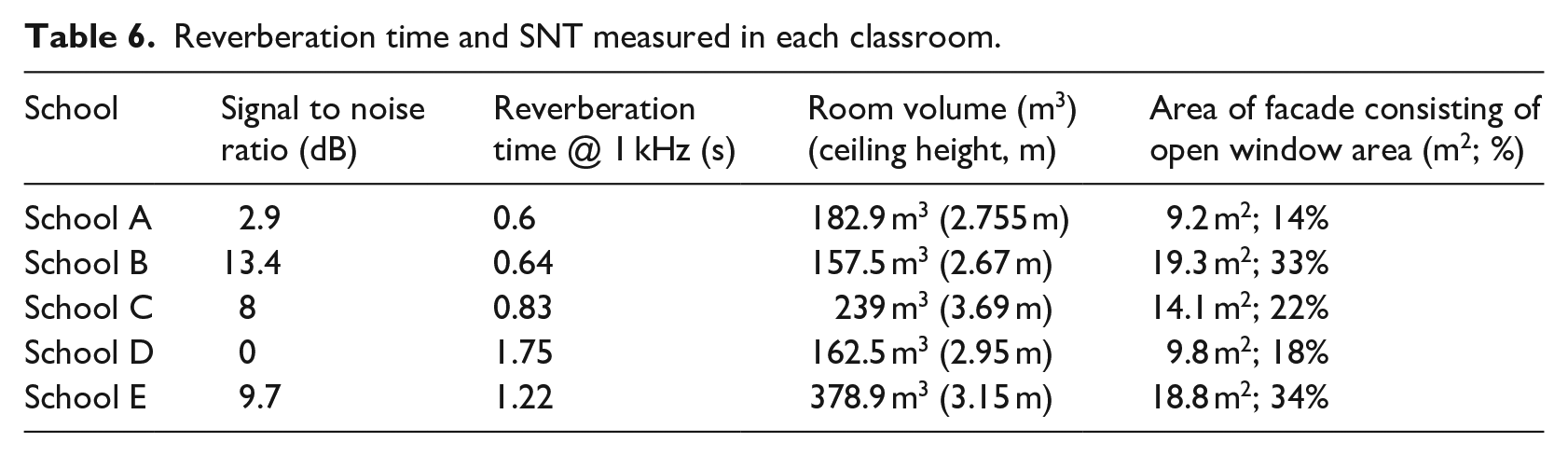
The reverberation times in School A and B were within acceptable ranges, both being around 0.6 s in the 1 kHz octave band. At School C, the reverberation time was a little high at 0.83 s. Although there were many absorbent finishes in the classroom (such as carpets and felt pin boards) the ceiling at School C was very high (3.69 m), which is likely to contribute toward a higher reverberation time.
School D had an excessively high reverberation time of 1.75 s. The negative impact on speech clarity was immediately noticeable on-site. The volume of the room and the ceiling height were not particularly high; the long reverberation time is most likely attributed to the lack of absorptive finishes in the classroom. The classroom was sparsely finished compared to those in Schools A, B, and C, with no posters, shelving, carpet, books, curtains, or other items that contribute to sound absorption. This point is illustrated by comparing Figures 4 and 5 below. Another possible explanation could be that the area of open windows (which effectively provide absorption) was small but this argument is disproven by School A which had less open window area and yet a lower reverberation time.
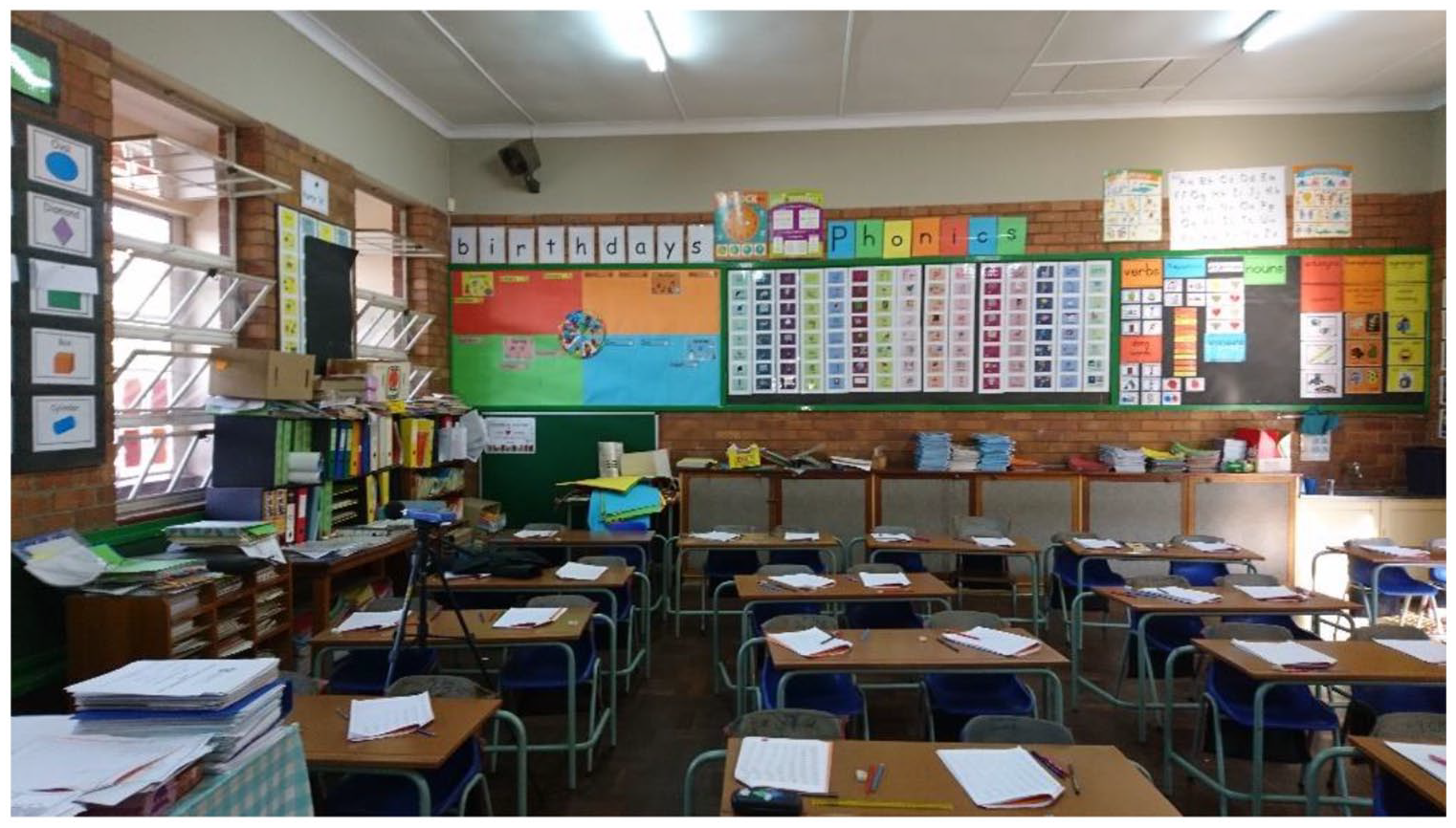
Photo of classroom at School C showing objects and materials that contribute to sound absorption.
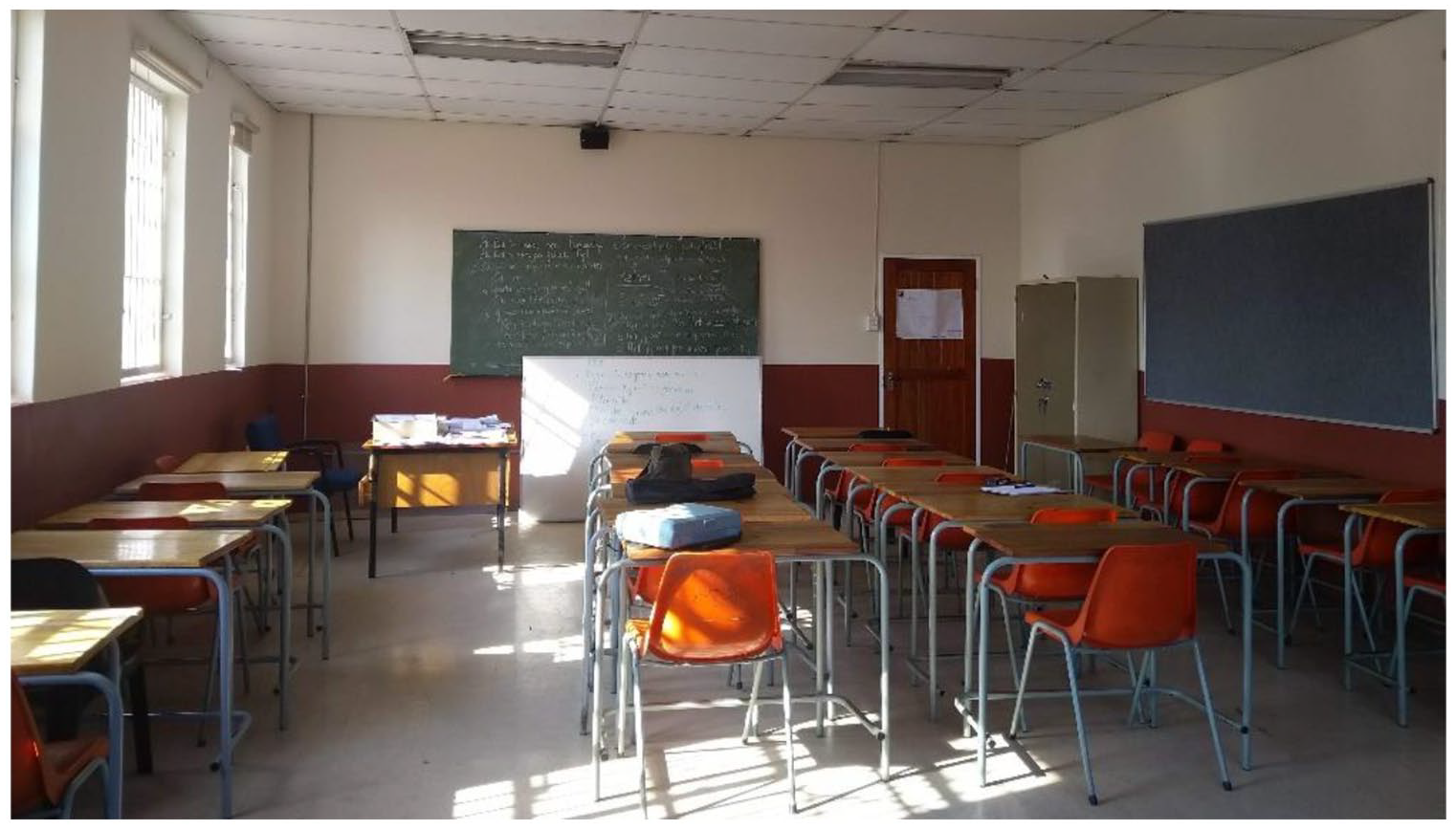
Photo of classroom at School D showing lack of sound absorbing objects and materials.
Sound attenuation due to distance and envelope insulation
The change in measured sound level between the different measurement locations is shown in Table 7, demonstrating the effect of distance from the source, as well as the effect of the building envelope. The effect of the building envelope was measured with the windows open since almost all classrooms in Gauteng are normally naturally ventilated by means of opening windows.
Difference in noise level between measurement locations during the noisiest hour.
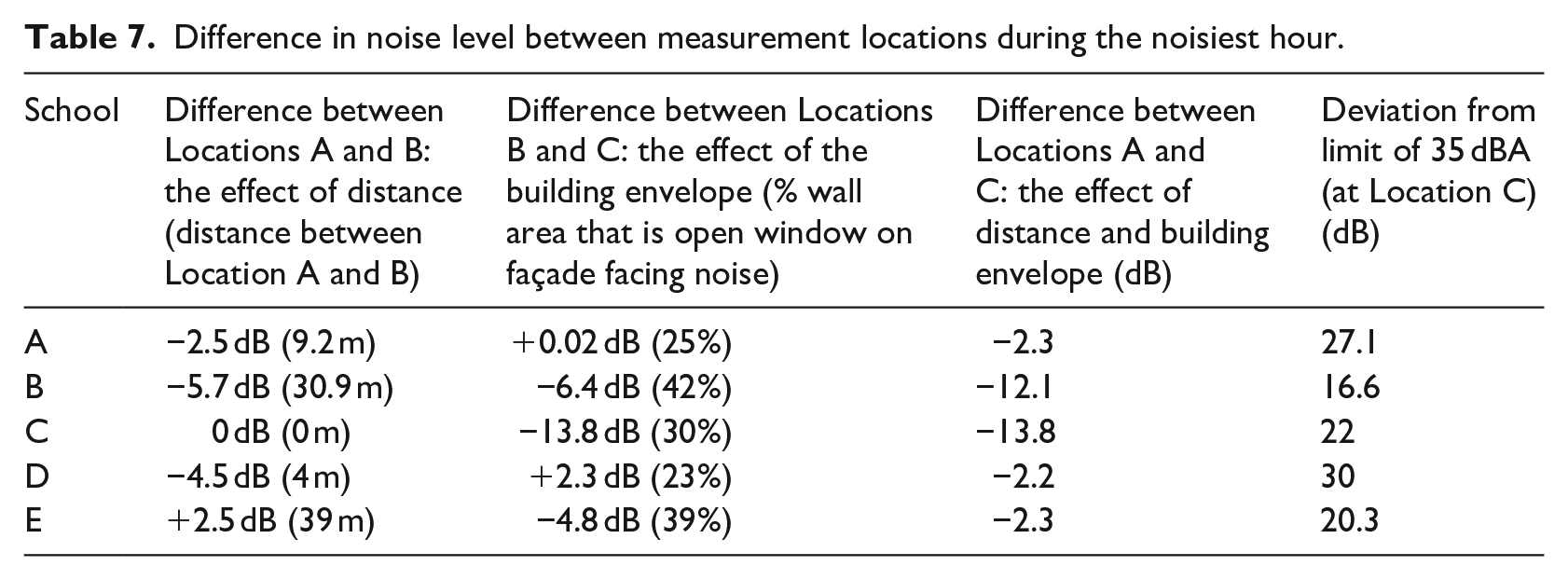
There is a decrease in SPL between Location A and B at Schools A, B, and D, which can be attributed to the effect of distance on sound attenuation. At all schools, the boundary barrier was a palisade fence offering no effective sound attenuation of the traffic noise.
The difference between measurements at Location B and Location C, either side of the classroom wall, provides an indication of the sound transmission resistance (insulation) provided by the classroom wall with the windows open. At School A, where openings constituted 25% of the façade facing the road, there was effectively no difference between the inside and outside noise level.
At School B there was a decrease of 6.4 dB, even though a large percentage of the façade (42%) consisted of open windows.
School C displayed the greatest resistance to sound transmission (13 dB). This is likely due to the design of the classroom. This classroom had a store room on the noise-facing side of the classroom (see Figure 6). Even though there were large windows open to the adjacent street in the store room and between the store room and the classroom, it is likely that this additional space provided a buffer. In spite of this, the noise level in the unoccupied classroom was still 57 dBA, 22 dB above the standard required, and the teacher reported disturbance due to traffic noise; the high reverberation time (0.83 s) combined with the SNR of 8 dB is also likely to result in an unfavorable listening environment.
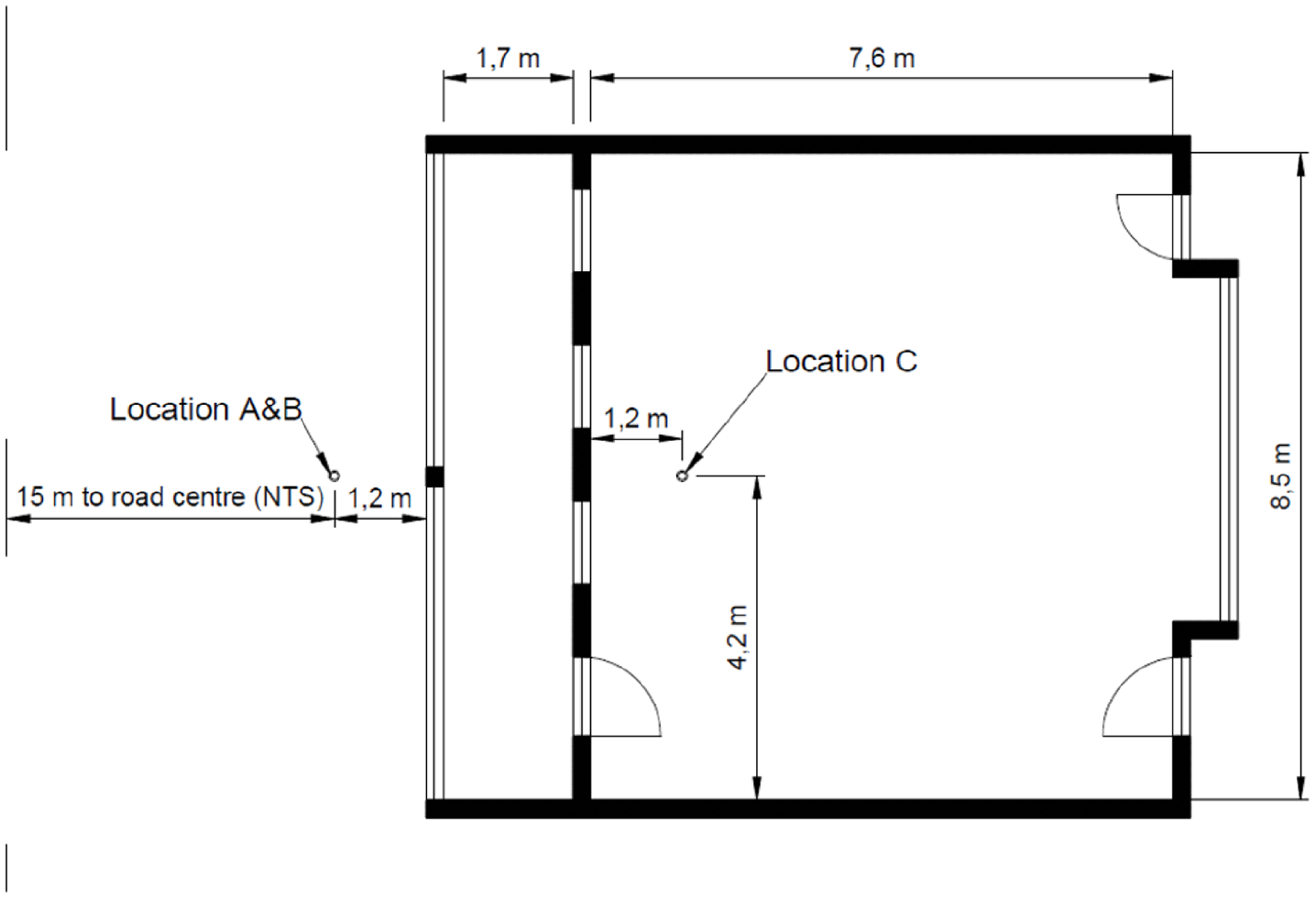
Plan of School C classroom showing buffer zone created by store room.
At School D, which had the lowest percentage of open window area relative to the exposed façade, the noise level inside the classroom was actually higher than that measured outside. This may be attributed to the high reverberation time in the classroom (1.75 s), which could increase the ambient sound level inside the classroom as incoming sounds do not die away quickly.
At School E there was a slight decrease in the noise level across the building envelope, although there was an increase in noise level from the roadside to the classroom, attributable to noise generated in the classroom above, as discussed previously. If the approximate rate of noise attenuation over distance that was observed at Schools A, B, and D is applied to School E, the noise level outside the class would be 51.7 dBA, making the inside noise level 46.9 dBA. This is still above the required ambient level in a classroom, demonstrating the magnitude of the challenge to designers to achieve a suitable indoor ambient noise level in classrooms, particularly if they are ventilated by means of open windows.
Conclusion and recommendations
It is evident from the literature review that classroom ambient noise levels (when unoccupied) are widely accepted to be 35 dBA with a reverberation time less than 0.7 s. Furthermore, a review of South African classroom acoustics studies revealed a very small body of research in this field and that few classrooms are able to meet this requirement.
The case-studies presented revealed on-site measurements that confirm similar findings, reinforcing the conclusion that the ambient sound level limit of 35 dBA, required by the SANS 10103 and most international norms, was not achieved under normal (but unoccupied) operation (with windows open) of the selected classrooms.
The Regulations Relating to Minimum Uniform Norms and Standards for Public School Infrastructure state that classroom acoustics should “facilitate clear communication of speech between teacher and learner, and between learners themselves, and should not impede teaching and learning activities.” 42 Considering the low SNR (2.9–13.4 dB) and high reverberation times (0.6–1.75 s) measured at the selected sites, it can be concluded that only one of the classrooms assessed (at School B) was acoustically suitable, in spite of having an ambient sound level in excess of the requirement.
The study found that the schools located on busy roads were subjected to traffic noise which drove the ambient classroom noise level above the limit, and the school located on a quiet road was subject to internal noise sources.
The findings of the province-wide survey and the teacher questionnaire further confirm that traffic noise is a disturbance in urban schools. Although this is mainly the case for schools located on or close to busy roads, traffic noise in less busy areas can also be disturbing, as evidenced through the province-wide survey. Furthermore, the teacher questionnaire confirmed that noise has negative effects on teachers and learners and that available noise management solutions (closing windows) are ineffective.
The study further contributes to the collection of evidence regarding the unsuitable ambient noise levels in South African classrooms, with measured noise levels in unoccupied classrooms under normal operating conditions of between 51.6 and 65 dBA, compared to noise levels of 44.6 and 60.1 dBA 55 and 39.9 and 62.5 dBA 46 found in other local studies. Although this is a very small sample, it is useful in demonstrating that more stringent attention should be given to the management of noise in classrooms.
Evidence regarding the importance of acoustically suitable classrooms is not lacking. The intention to ensure classrooms are suitable in every way is clear in the local school infrastructure norms and standards. However, without accurately specified and enforceable regulations, the evidence seems to indicate that it is unlikely that acoustically suitable classrooms will be achieved, particularly where windows are required to be opened for natural ventilation. Given the expected beneficial impact of good acoustics on educational outcomes, it is recommended that provincial departments of education develop enforceable evidence-based regulations stipulating acoustic requirements in line with international norms. Such regulations should be supported by regular monitoring and management of noise and reverberation.
The method applied for this case study is repeatable and may be used for future studies to broaden the landscape. Thus, this study may be seen as a pilot. The benefit of establishing a broader landscape is that it will provide evidence of the need for regulating noise levels in classrooms, as well as a profile of the schools that require interventions.
Footnotes
Declaration of conflicting interests
The author(s) declared no potential conflicts of interest with respect to the research, authorship, and/or publication of this article.
Funding
The author(s) received no financial support for the research, authorship, and/or publication of this article.
