






Abstract
Entrepreneurship has become a prominent strategy for overcoming poverty, but few studies have identified the specificities of different entrepreneurial configurations in indigenous contexts. Thus, the aim of this study was to analyze positive effects and their relationship with participants’ profiles of entrepreneurial programs, from the experiences and meanings of Mapuche people (mostly women) in poverty and social vulnerability situation in rural and urban contexts. A qualitative study was conducted in rural and urban areas considering a total of 19 respondents. Results focus on woman experiences showing three types of Mapuche entrepreneur women profiles (fighter, submissive and reluctant) and their trajectories in entrepreneurship programs, considering their responses to their background, their relationship with the program and profile-specific positive effects.
Theoretical framework
Indigenous entrepreneurship
Entrepreneurship programs have proven to be effective in developing enterprises and their economic growth (Banerjee et al., 2010; Klinger and Schündeln, 2011; Martínez et al., 2013), as well as creating a channel for the transfer of knowledge (Gajardo, 2012). In this context, supporting of small productive activities have become a prominent strategy for overcoming poverty (Sutter et al., 2019). These programs have adopted diverse modalities, for example, offering financial incentives (such as credits or kick-starters), providing knowledge and promoting further occupational training (Amorós and Acha, 2014; Thomas and Sinha, 2009).
The basic assumption of these programs is that, due to entrepreneurship, the life quality of people could be improved, especially in the case of women (Vargas-Hernández, 2016), through the improvement of the self-efficacy and confidence in general, and broadening their perspective on life (Elliott et al., 2020). Additionally, indigenous entrepreneurship have been consider as long-term value endeavors as they contribute to the maintenance of indigenous culture, while also promoting economic prosperity and political stability, both in the indigenous communities and in the societies in which they are embedded (Macpherson, 2021).
Hence, the value of these kind of programs demands attention to their distinctiveness. In a systematization of social programs in Peru, which considers entrepreneurship programs oriented towards rural indigenous populations (Zárate et al.,2012) good business management and good product quality stand out as factors of success that had positive effects on income generation, subjective well-being, and women’s empowerment. However, aspects associated to subjective well-being are understood in terms of entrepreneurial competences and there is no record of the characteristics that these programs have when directed towards indigenous people.
On the other hand, a systematization of entrepreneurship programs carried out in Colombia, which includes experiences with indigenous population (Rincón et al.,2012), states that this type of program is effective as long as the productive activities adapt to the human, social, cultural, economic and natural resources of their participants. Similarly, several studies have suggested that indigenous culture and values are fundamental aspect to consider as they are determining factors in all approaches to indigenous entrepreneurship (Collins et al., 2017; Poirine et al., 2017). Hence, intercultural approaches deem entrepreneurship programs as intercultural spaces whereby agencies that are external to the communities run the risk of modifying the meanings of economic development of indigenous people (Estermann, 2014; Rodríguez and Iturmendi, 2013). Nevertheless, according to Croce (2017) few studies have addressed the specificities of different entrepreneurial configurations in indigenous contexts.
Mapuche social situation and history
Poverty is known to have negative effects on life quality (Greve, 2020), particularly in the case of indigenous population. In Chile, the country where this study was performed, 12.8% of the population consider themselves indigenous or native people and Mapuche are the largest group (79.84%) (National Socio-Economical Characterization Survey, 2018). There is a total of 1,745,147 Mapuche of which 4.5% are in poverty, compared to 8% of the non-indigenous population (National Socio-Economical Characterization Survey, 2018). According to Irarrázaval and Morandé (2007), in terms of the income level, Mapuche population concentrate on the two lowest quintiles, which relate to low education levels, high rate of illiteracy and higher rates of lack basic service, such as drinking water, indoor toilet or sewage systems.
Undeniably, Mapuche people have a greater disadvantage compared to the majority, with the rural segment being the most underprivileged (Maldonado, 2003). The urban–rural distinction is fundamental considering the mass rural–urban migratory processes (Thiers-Quintana, 2014). Currently, large part of the Mapuche population is concentrated in urban areas, specifically in the city of Santiago (Metropolitan Region), but there is still many rural Mapuche communities living in the south of Chile, in regions like Araucanía and Bio (INE, 2018). However, higher levels of poverty are found in rural Mapuche areas, compared to urban ones (Bricenñeo et al., 2017; Celis et al., 2008). Nevertheless, urban Mapuche also experience significant levels of poverty (Libertad y Desarrollo, 2019) related to geographic delocalization, disintegration of family ties, and labor and economic marginalization (Pereira, 2018).
In addition to these disadvantages, Mapuche people also experience discrimination (Poblete, 2003) and prejudices or negativity associated with being Mapuche (Zañartu et al., 2017). Examples of discrimination are verbal abuse (use of derogatory names such as “blacky” or “indian”) (Merino et al.,2009) and censorship in the primary education system (Poblete, 2003). Furthermore, indigenous women, face gender-based problems, as limited access to education (Wood and Davidson, 2011), social and institutional discrimination (Aninat et al., 2017), sexism and chauvinism (Pearson & Helms, 2012), isolation and lack of support networks (Ketterer and Zegers, 2012). Although Mapuche woman oversee the transmission of culture and traditions to new generations (such as caring for nature, protecting medicinal plants, food sovereignty and sites of cultural significance) (Painemal, 2020), they have been traditionally confined to the private space, being the responsible of the craft, agricultural and domestic labors (Bengoa, 2011). Furthermore, many Mapuche women were secluded in the racialized work of domestic service in big cities, such as Santiago of Chile, due to rural-urban forced migration (Alvarado, 2021).
The origins of these multiple an interconnected disadvantages and vulnerabilities are complex and related to historical and political process, particularly land usurpation, territorial exclusion and assimilationists policies (Pinto, 2012). Nevertheless, before the colonization and during it, Mapuche merchants managed to play a crucial role in the Andean commercial development acting as intermediaries between the economic spaces on both sides of the Andes, giving continuity to the mercantile circulation as a source of resources for the indigenous economy (Inostroza, 2016). This continued after the colonization, in terms of exchange networks with the capitalist market of central Chile and Argentina, even though Araucanía and Pampa occupation (Inostroza, 2016).
Unfortunately, as a result of this complex process, today disadvantages are maintained, at least in part, because of the less access to physical assets and human capital, their location in areas of lesser economic dynamism and difficulties in accessing markets (Quiñones, 2013). Murray and Cabaña (2019) emphasized that the forced peasantization of the Mapuche and the range of assimilatory policies that accompanied it, impoverished and invisibilized Mapuche within Chilean society, reducing social, ethnic and territorial problems to “a mere poverty issue, denying ethnic identities and treating Mapuche as any other ‘poor’ Chilean” (p.166). In this scenario, Mapuche people in rural and urban areas were subjected to unprecedented social and cultural subordination (Boccara and Seguel-Boccara, 1999). For example, through the imposition of monolingual and monocultural education, as well as health programs that did not take into account indigenous conceptions of the body and disease (Boccara and Seguel-Boccara, 1999). This homogenizing project, progressively lead to the pauperization of Mapuche people lives, where the resistance to the symbolic violence exercised by the State marked Mapuche culture as a “culture of resistance” (Cantoni, 1978).
Notwithstanding the tense relationship with the State and the resistance of the Mapuche people to systematic attempts of cultural assimilation (Bengoa, 2011), State policies have been implemented to improve the inclusion of cultures minorities and promote their well-being, while also attempting to revitalize and safeguard cultures minorities that are at risk of being “lost”, such as the Mapuche culture (Government of Chile, 2011).
Efforts include initiatives oriented to indigenous people, for example programs about micro-enterprise, credits and initial capital, internalization of products, among others (Aninat and Hernando, 2019). Regarding entrepreneurship programs specifically directed to Mapuche people, they have not only benefited its participants but had also contributed to revitalizing remote regions that are highly populated by Mapuche (Macpherson et al., 2021). However, available reports are only related to public initiatives, focused on their accountability regarding hours of capacitation, number of participants, among others (e.g., Dascal et al., 2009), so it is relevant to research initiatives in the non-governmental sector from an integral perspective.
Mapuche women’s entrepreneurship
Most of the action around indigenous population have been historically articulated around indigenous identity, without problematizing the nuances of gender differences within indigenous people (Cañete and Painemal, 2018). Indigenous women usually have technical knowledge, skills and motivation, but they tend to remain on the margin, without access to critical resources (Deedam and Onoja, 2015). Yet, recent studies showed that within Mapuche culture women preform dominant roles as entrepreneurs, acting as entrepreneurial leaders that make strategic and operational decisions “with men occasionally, and reluctantly, following behind” (Macpherson et al., 2021, p. 80).
There is consensus that indigenous entrepreneurship can contribute to improve economic, social and cultural well-being (Henderson, 2018), but, until now, scholars have dedicated limited attention to explore indigenous women entrepreneurship, remaining as an underrepresented research topic (Croce, 2019), even more so in the non-western regions (Macpherson et al., 2021).
In this context, it has been recognized the value of entrepreneurship considering an intersectional perspective, called by Croce (2019) as indigenous-gendered integrated perspective, which propose the importance of understanding the indigenous women’s entrepreneurial experiences from their own perspective and considering their specific socio-cultural contexts and social structures.
The aim of this study was to analyze positive effects and their relationship with participants’ profiles of entrepreneurial programs, from the experiences and meanings of Mapuche people (mostly women) in poverty and social vulnerability situation in rural and urban contexts.
Method
Design
An exploratory qualitative study was conducted (Flick, 2004), with an evaluative emphasis on the changes detected by the participants, being the research question: how positive effects from an entrepreneurial program relate with participants’ profiles? The approach was descriptive in nature, with comprehensive and relational scope (Krause, 1995). Ethnography was taken as a theoretical reference, focusing on culture, ways of life and social structures of the human group in which the researcher is inserted in a contextualized manner (Angrosino, 2012) to discover and describe the different subjectivities and sociocultural practices in each community. This ethnography fieldwork consisted in a deep cultural immersion, carrying out a process of familiarization and continuous participant observation during two years of stay in the rural territory and a sustained work with the urban organization over one year.
Participants
The institutions involved in this study were two non-governmental organizations. One was located in a rural area at the south of Chile, and the other in Santiago, the capital city. The urban-rural distinction was important since a large part of the Mapuche population is in the south of Chile, such as the Bio Region, where many rural Mapuche communities live, and concentrated in the Metropolitan Region, specifically in the city of Santiago (urban area) (INE, 2018).
Both institutions offered group training, although the productive activities were performed individually. In both organizations the trainings considered support for entrepreneurship (productivity, commercialization, legal aspects) and for psychosocial development (personal and relational skills associated to interpersonal and intergroup links). Neither organization provided material or financial resources to carry out the projects.
In the rural case, the focus was on business development and the productive activities were associated with traditional loom weaving. The training process comprised two intervention components that are permanently available. First, the establishment of groups of women who receive technical training in traditional Mapuche knitting. Second, women are encouraged to attend community gatherings pertaining to the association (informative meetings, selection of the board and administration) and the commercialization of the knitted goods produced at trade fairs and other events.
In the urban case, the focus was on occupational habilitation and enterprises were related to catering and jewelry using traditional Mapuche features, among others. The training process lasts four months and comprised two stages. First, a group stage consisting in a business management training. Second an individual advice space for participants to develop their productive activities.
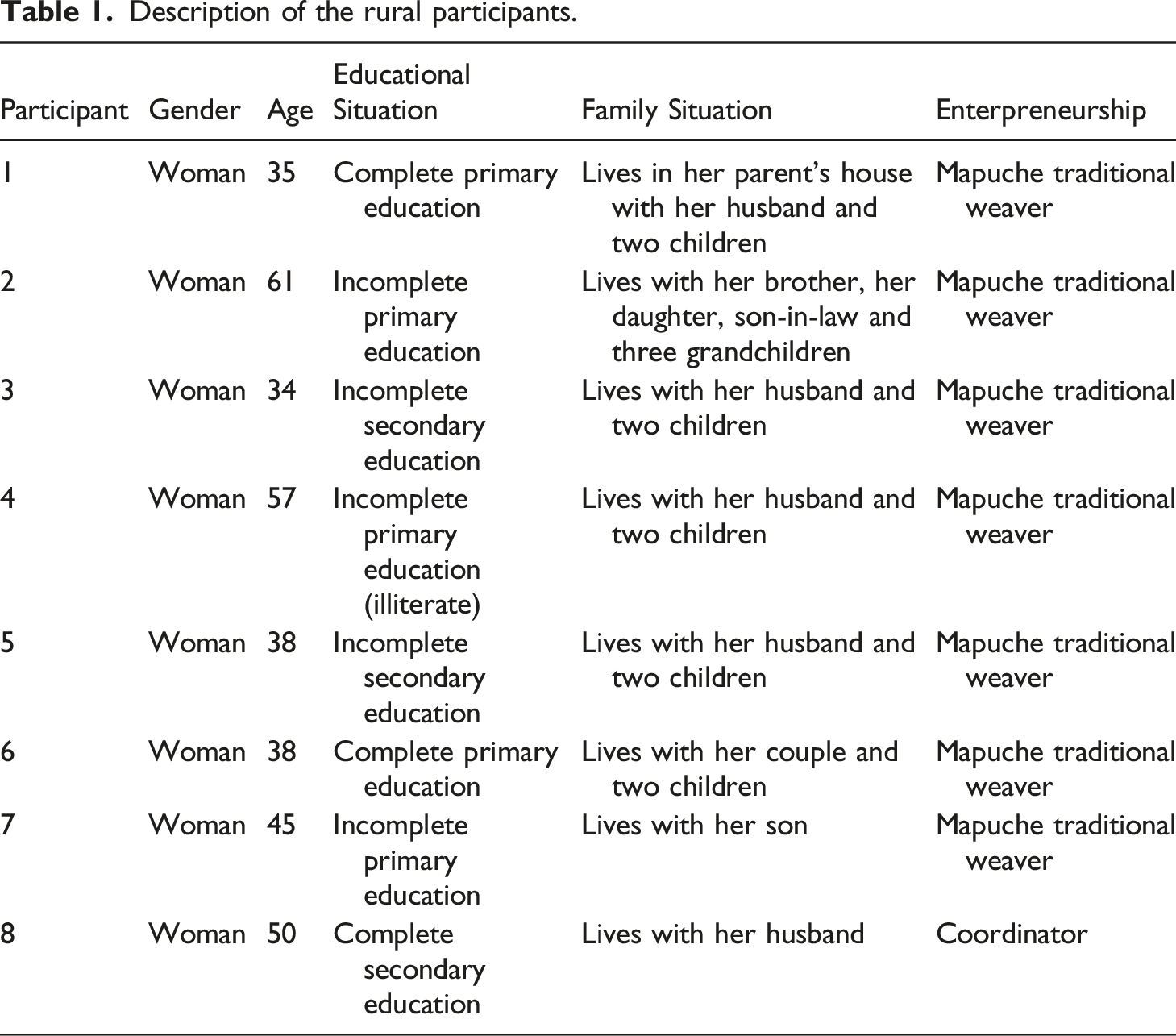
Description of the rural participants.
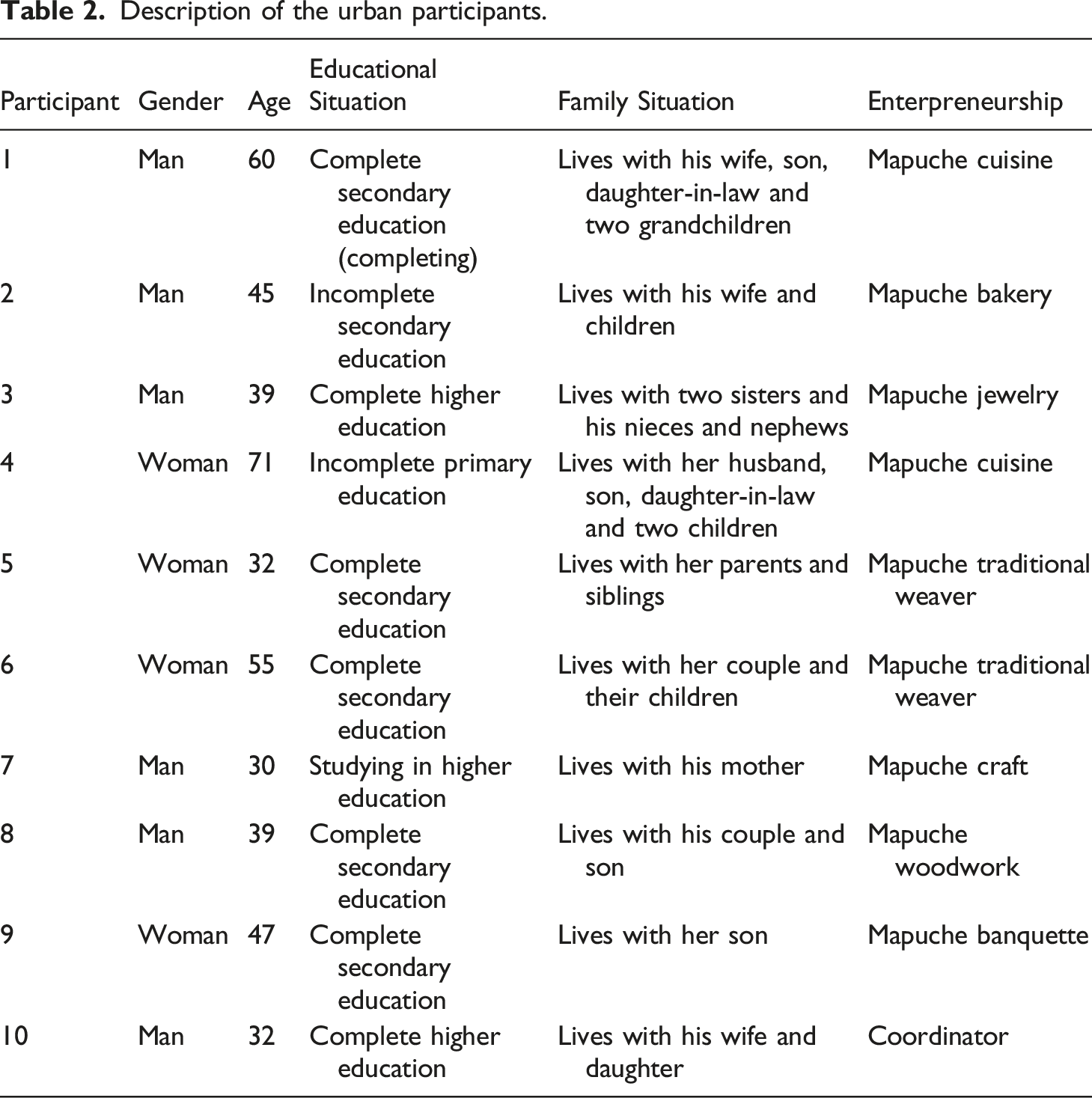
Description of the urban participants.
Regarding the ventures, in the rural case there were women who made traditional Mapuche weaving before the program, but with very limited production in terms of quantity and distribution. Quality standards were left for each weaver to set (e.g., ancestral techniques such as “trarican” vs. foreign styles; artificial dyeing vs. natural products). Most of the women who participated in the program learnt the technique from the most experienced women.
In the urban program, some participants started their ventures thanks to the program, but some gastronomy or clothing enterprises had already started (mentioning interest in improving management and legal aspects). Before the intervention, incipient enterprises were found to be informal, sporadic, seasonal and/or largely unable to add value and distribute their products.
Data production
Data production strategies were the focus group (Morgan, 1990) and semi-structured and in-depth individual interviews (Kvale and Brinkmann, 2009), using a thematic script that guided the conversation toward changes detected by the participants, as well as the distinctive aspects of their participation in the programs. These activities lasted between 45 minutes and 1 hour. Also, a field notebook was used during the whole study and ethnographic observations of technical trainings, business management trainings, community gatherings, trade fairs and other events were carried out (Angrosino, 2012). Combining different data production strategies allows a greater theoretical saturation and triangulating or validating the interpretations generated (Denzin, 1970).
The principal researcher lived for two years in the rural Mapuche community where she carried out the accompaniment and after that she conducted the interviews. Some months later, when the researcher returned to the capital city, she started working with the organization oriented to urban Mapuche people, accompanying the trainings and then conducting the interviews and focus groups.
In the rural area, individual interviews were carried out with seven participants, arranged by town resident who had broad knowledge of the women who participated in the organization. These interviews were held in the women’s homes, which allowed in-depth knowledge of their living conditions and enterprises. In the urban area, one focus group with four participants and individual interviews with six participants were performed, arranged by the organization and held at their centers. Ethical norms from the American Psychological Association (APA, 2010) and the Chilean National Commission for Scientific and Technological Research (ANID, 2022) were followed throughout the research.
Data analysis
Descriptive and relational analyses were carried out following the Grounded Theory (Glaser and Strauss, 1967; Strauss and Corbin, 2002). This was complemented with ethnographic reflections. Also, the Analysis Device Encounter–Context–Themes (Daher et al., 2017) was used, allowing for a more holistic view of the participants' experiences and emphasizing particular characteristics of being Mapuche.
Regarding the descriptive analysis, emergent concepts were detected in the interviews and focus group, which were organized in categories, that in this study refers to the effects of the programs reported in the descriptive results section. Concerning the relational analysis, participants’ profiles were detected retrospectively. This occurred after the implementation of the programs, in an emergent and inductive way. These profiles were not necessarily recognized or directly described by all the interviewees, while there were some exceptions. For example, it is understandable that due to social desirability, program participants did not refer to themselves as submissive and reluctant. Hence, the profiles described here were built from the discourses and practices reported by the participants, keeping as a precaution not to over-interpret them.
Results
In the frame of the broader research were these results come from, another analysis (Daher et al., 2021) described opportunities and tensions regarding Mapuche people entrepreneurship connecting them with explicit and implicit background aspects, such as participants’ history and culture. In this case we first present descriptive results, reporting five categories, which refer to cross-sectional effects independent of the participant profile. Then, relational results, associated with the axial codification, refers to Mapuche entrepreneur women profiles and their trajectories. Although there were no substantial differences detected between the urban and rural cases, every time there were some distinctions these are mentioned.
Concerning the connection between descriptive and relational results, descriptive results on financial capacity and lower uncertainty, as well as self-perception and recognition, produce the common foundation referred in the relational results (which are increase in financial capacity due to the enterprises, peace of mind, and recognition as “Mapuche enterpeneur”). This common foundation allows the emergence of specific effects according to each participant profile. As aforementioned, results are focused especially on the experiences of the female participants.
Descriptive results
Positive effects from participation in the program were detected. These were organized by areas, which are financial capacity, labour development, self-perception, effects on the family and on the relationships with others. The effects were closely related to the experiences of the people, happening in a wholesome manner and, many times, simultaneously. Furthermore, while participants expressed that the program and its activities required personal investments such as dedication and sacrifice of time, generally their final impressions were positive explaining that the positive changes outweighed the sacrifices. In this way, participants expressed satisfaction with the program, using expressions of affection such as “I love it” or “it feels like family”.
Effects on financial capacity
At a financial level, several participants expressed an improvement in their living conditions due to the productive activities and support of the organization. This occurred because of an effective increase in their income, which allowed them to support themselves autonomously and better manage their resources, considering the reinvestment in materials and household expenses. For example, these participants equipped their house with appliances and financed the education of their children. This contributed to improve their life quality and hope for a better future, as one of the participants says: I know that by having an income one can live a little bit better every day, (…) having the things I still need for my house, guaranteeing the education of my children for the future (Participant 1, woman, Mapuche traditional weaver, rural area).
In the case of the women in the rural area, financial stability that came from having a guaranteed monthly income was very important in contrast with the uncertainty generated by the seasonality of the work in the fields. This stability was attributed to their own production, as well as due to the support from the organization in the marketing of their products, as it was observed in the ethnographic fieldwork during the participation in trade fairs, group training and community gatherings. Additionally, for these women it was relevant to manage their money independently from that of their partners, acquiring a more active role in this area.
Effects on labour development
At a labor level, the participants saw several effects that contributed to the development of their enterprises. On one hand, they widely valued the opportunity to be trained for their occupations and equipped with knowledge about good business management. This translates into the acquisition of new technical knowledge, as well as strengthening or formalizing prior knowledge. For example, in respect to the traditional Mapuche weaving in the rural context, women reported learning to spin, dye and draw; as for the business, participants said they were able to draw up a budget, plan activities, reduce expenses and increase profits. According to them this had a direct effect on the improvement of the quality of their products, as well as a suitable management of their businesses, which allowed them to grow and overcome obstacles. One of the participants emphasized the acquired knowledge on how to economize costs and to earn more, starting to do things that were not even in her mind before.
On the other hand, a positive effect in this area was the acquisition of enterprise related language. For the participants this was relevant because using this new language allowed them to behave in line with the “business world’s habits”, developing greater confidence when facing their clients and when negotiating, as they comprehended a greater number of technical words, allowing them to communicate properly and effectively. This was consistent with ethnographic observation of business management trainings, where participants incorporate non-Mapuche words related to entrepreneurship (such as technical tools or names of administrative documents).
In the case of participants from urban areas, the intention of having an autonomous management of their enterprises, i.e., not depending on others to fulfill their activities (e.g., neighborhood leaders), stands out. This implied a renewed willingness to acquire knowledge and improve the enterprises installations. In the case of the women from the rural areas, it was particularly important to be busy at work.
Effects on self-perception
Effects at the psychological level could be characterized as a renewed self-perception, were perceptions of the work they did were improved as well as the perception of their future possibilities. Renewed self-perception was mentioned most often, opening up the possibility of changing the way of being. For example, shyness was a common characteristic of the Mapuche women in the rural area, however, one participant referred that overcoming this characteristic allowed her to grow as a person, communicate with others and feel better about herself. Also, for participants in the rural area it was possible to have a different perception of their role as a woman, which implied a new way of setting out their lives and occupations, and the ability to leave their houses and work. These aspects were observed during ethnographic fieldwork on community gatherings and trade fairs, where woman that did not go out of their houses, or did not speak with strangers, developed enough confidence to do so.
Another broadly mentioned effect was one on “self-esteem”, this included personal characteristics such as self-worth and feeling competent, as well as actions directed to setting goals and overcoming obstacles to achieve them. This was considered crucial to properly perform in their enterprises, seeing a mutual influence between renewed self-perception and perceptions of their own work and the value of it. In their accounts, increased self-worth was influenced by clients’ positive recognition of their work and reinforced by the recognition of program colleagues and intervention agents. This led to satisfaction in the work field, feeling proud of their work, a general sense of satisfaction at a personal level, and greater psychological well-being. In this sense, supporting participants’ self-worth led to a path, from external recognition to internal validation. Furthermore, this allowed them to have a vision of what they wanted to do in the future and persevering until achieving it. As for the relationship between self-worth and work, one of the participants explained: Yes, I think that I improved my self-esteem in the sense of valuing my work. When I myself value my work, I am valuing me. Before I used to work, made a product and sold it at a low price, almost giving it away. With all the work we do here I told myself I couldn't give it away because this it's worth something, because this is me (Participant 4, woman, Mapuche clothe designer, urban area).
Effects on the family
The participants spontaneously spoke about their families, expressing changes in the family dynamics, the roles fulfilled, and the support perceived because of the program. First, regarding family dynamics, the women from rural areas, who had not worked previously, the idea of “going out” became very important. Attending training sessions, meetings and sales fairs allowed them to be part of the working world. In terms of the family dynamic, this translated into earning the respect of their children and partners when going out of the house, as initially they had been strongly opposed to this, but had softened during the program due to conversations and family agreements. Finally, their family gave in, and the women felt empowered to express their need to go out and participate. About these issues one participant shared: It has changed, because they have already gotten used to that, for anything that I want to do or that I have to take part in, now they don't say to me “why are you going to do that?”, because they would be against it, because they didn't like that sometimes these were things that they couldn't understand. But not anymore, because by saying that I'm doing it, I just do it. (…) I spoke to them, especially with my daughter, I told them that I needed to go out and I could see this was a change for me because I felt more confident about doing my things (Participant 2, woman, Mapuche traditional weaver rural area).
In the case of women who had previous work experiences (both in the urban and rural area), the greatest gain of carrying out an independent productive activity was that they could work from home and, even though there were periods when they had to go to fairs or courses, working at home allowed them to take more responsibility for their children. Therefore, the effect for these women was the possibility of complementing work and home. The transversal effects (i.e., considering men participants) were improving the communication inside the house (with the partner and children) and having greater confidence.
Second, regarding effects on the roles fulfilled, participants emphasized taking on an active financial role thanks to their enterprises and noted a change in attitudes toward them from their family, as members began to perceive them as hard-working people. Third, regarding the effects on the support perception, the participants mentioned the support and involvement of the family in the business as important. Several people mentioned the crucial role that their family had (husband/wife, brothers/sisters, sons/daughters), collaborating in certain tasks and receiving a salary for this on occasions. For example, due to ethnographic fieldwork it was possible to visit a “ruca” (Mapuche traditional house) built by a participants’ partner so that she could exhibit and sell her products.
Effects on the relationships with others
According to participants’ experiences, these effects focused on their relationship with clients and training colleagues, as well as in their relationship with other institutions or groups. In general, this was due to practical instances of the program, such as attending fairs or courses, which created opportunities for interpersonal and institutional connection.
In terms of the interpersonal relationships, the interaction with the clients stood out for all the participants, particularly when these were non-Mapuche. They mentioned having had a positive relation with these people, marked by the non-discrimination and valuation of their work. Several participants shared having experienced discrimination during childhood, therefore these positive experiences with non-Mapuche offered the possibility of reparation. Another aspect of the interpersonal relations that was greatly influenced by the program, particularly in the case of women in the rural area, was the relationship they had with their colleagues in the association and having formed friendships with some of them. This was greatly valued by the participants as they could meet and share time with “kind” and “friendly” people, as well as escaping day-to-day worries (e.g., taking care of family members). For women in the rural area, this profound effect was attributed to the enclosed environment they normally experienced. For participants in the urban area, this social need seemed to already have been met. At a broader level it was relevant to have acquired the capacity to lead and speak in public, which was seen in ethnographic fieldwork, as the participants assumed leadership roles in their organizations.
In respect to the relationship with other institutions and groups, participants mentioned that having established a greater connection with them brought several benefits. Participants from the rural area said they had increased their network of contacts due to attending fairs, opportunities in which they interacted with other arts and crafts groups and with sponsoring institutions. This were opportunities to showcase their products, market their services and increase their motivation to expand their businesses. These institutions and groups valued and supported participants’ work, while they could also learn from the experiences of other entrepreneurs. Participants from the urban area managed to relate with institutions like the Internal Revenue Service and the Councils to formalize their businesses. They also looked for support from other organizations like neighborhood groups and public entities (e.g., the National Commission for Indigenous Development CONADI). This gave them greater knowledge about how these entities work and the procedures they must follow to access help and support when necessary. In addition, it was pointed out that, thanks to the program, they learned to demand respect and express their discontent in the complaints book when they felt discriminated.
Relational results: Mapuche entrepreneur women profiles and their trajectories
The main finding of this study, as result of the relational analysis through axial codification, was the identification of Mapuche entrepreneur women profiles and their trajectories. This phenomenon presents the way in which three participants’ profiles have specific trajectories, characterized by their reactions to their background and their relationship with the program, developing a common foundation that allows specific positive effects related to each participant profile. This phenomenon is presented in Figure 1, which highlights the connections between these aspects. Mapuche entrepreneur women profiles and their trajectories.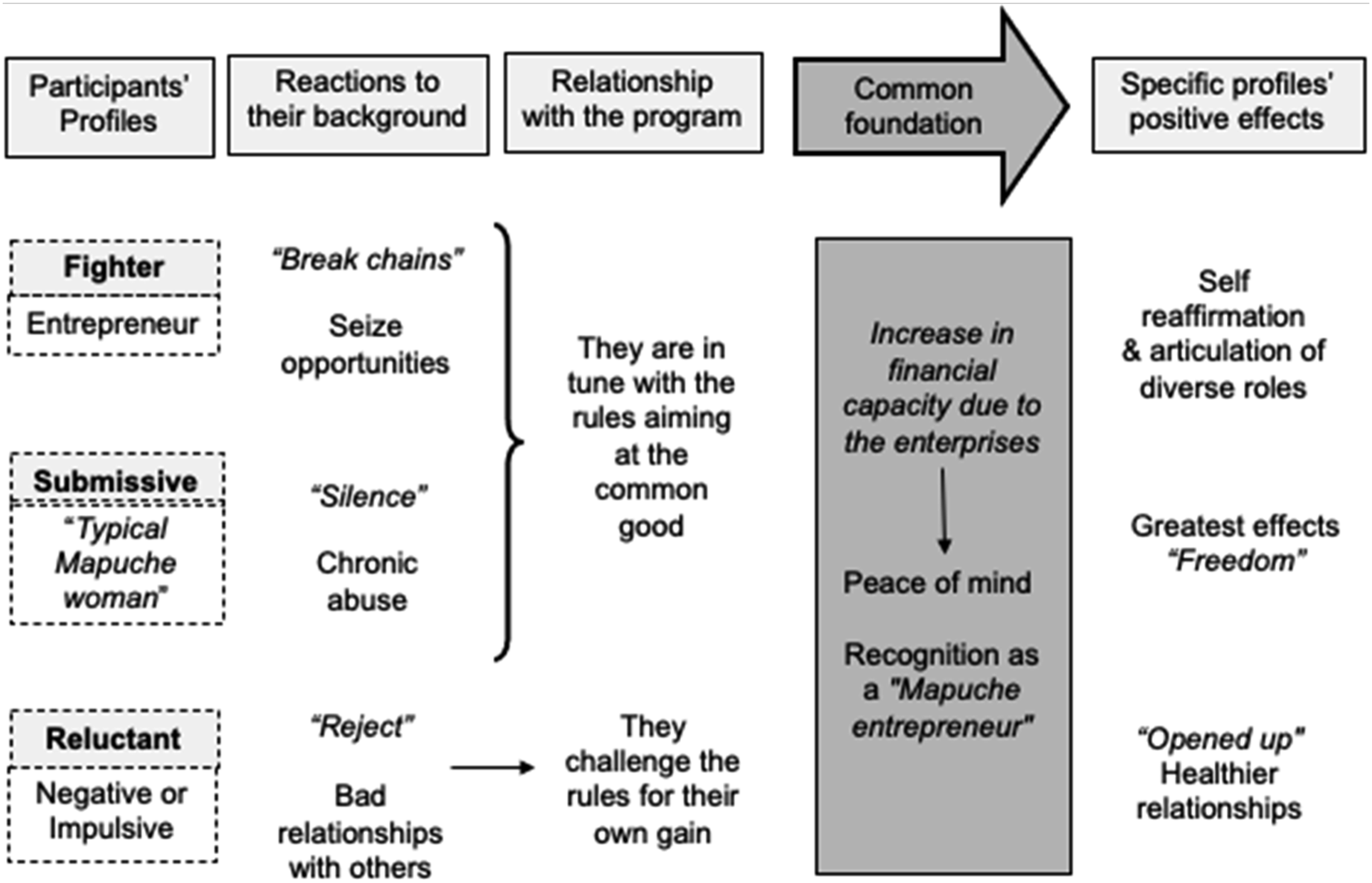
Participants’ profiles
Three different participants’ profiles were identified: the fighter, the submissive and the reluctant. Furthermore, these profiles were linked with specific effects related to each of them. These configurations emerged in the encounter during the ethnographic fieldwork with these people and were contrasted and confirmed in the interviews held. Through these instances, certain distinctions, and recurrences in the way in which participants expressed things, in how they understood their life circumstances and acted on them were noticed, as well as in the way they related with others and with the program. Nevertheless, these profiles refer to subjective positions in relation to their way of being entrepreneurs in the programs, which may vary according to the opportunities and challenges that people live, rather than essentialist and static “ways of being”. For example, a frequent pattern was that women initiated their participation at the programs being characterized mainly by the submissive profile and afterwards many developed a fighter’s profile.
First, the fighter profile refer to participants that were characterized for presenting themselves as entrepreneurs, open to new experiences, motivated to learn and hard-working. More so, they are the ones who assumed responsibilities and leadership positions. Second, the submissive, according to the words of those in charge of both programs, were the “typical Mapuche woman”, that is to say, those shy and silent women, without autonomy in respect to the men of the family (partner, sons, brothers), with low self-esteem, who struggled to learn and were not educated. More so, these women tended to settle for things, be less of an entrepreneur and accepted family traditions. Third, the reluctant participants expressed their reluctance either negatively or impulsively. Participants that reacted negatively initially opposed change, but once they tried what they were proposed, they manage to learn and participate. The ones thar reacted impulsively were aggressively against the program and do not try what is being proposed.
Considering these participants’ profiles, trajectories and distinctive effects, which marked the type of participation in the programs, were identified.
Reactions to their background
Regardless of the profile, all the participants came from an adverse setting, characterized by poverty and abuse, having suffered discrimination for being Mapuche and stories of domestic violence. However, each person reacted or faced this context differently: while discrimination would lead some participants to reticence, it would lead others (such the submissive) to silence.
Facing this context, the fighter wanted to and could break the chains of abuse and poverty, looking for an alternative through the program. The submissive stayed enclosed in herself and her home, remaining a chronic victim of violence, feeling very hurt. The reluctant was characterized by creating bad relationships with others, extending their aggressive reactions when facing unfortunate situations, and having a negative attitude with others. The latter profile was very noticeable during the observations of the training sessions where these participants were aggressive, reactive, and unfriendly towards other participants and the intervention agents. In the following vignette, the coordinator of the rural area program shared her reflections: There is variety of women in [the rural organization]. There is a profile of women who are real fighters, entrepreneurs, who are motivated to learn new things, when there is training, they are the first ones to sign up, they like to learn and have new experiences, they are hard-working and bring many products, they consider [the rural organization] as a serious work source. There are other women who are shyer, for whom is difficult to start businesses, is complicated for them to learn because they had little schooling, their self-esteem falls a lot, they are very submissive, they say yes to everything and don’t have their own will, it is very hard for them to start weaving, they are scared of innovating and making new things. There are others that are really negative, they say no to everything even before trying, but after trying and daring to take the step they realize that they can do it. There are others who are very impulsive, who react badly and do not measure the consequences of their words, but then when they do they have already thrown cast the first stone or said no to learning something (Participant 8, woman, Coordinator, rural area).
Relationship with the program
In terms of the relation that the participants established with the programs, this also varied according to profile. The fighter and the submissive were in tune with the rules of the programs considering the common good, while the reluctant challenged the rules, seeking personal gain. In this way, the attitude with which these people arrived at the programs had an impact on their type of participation. The first two profiles saw the programs as an opportunity for progress, so they adapted and took advantage of this. On the contrary, the reluctant profile –which was less frequent– had difficulty reconciling with the spirit of the programs, they were more conflictive people who, according to those in charge, tended to drop out of the programs, expressing if there is no motivation for the training and for incorporating the tools learned, it simply will not have any major technical effects on the ventures. Nevertheless, some ended the training, but they constantly expressed their reluctance and did not manage to succeed with their enterprises.
Common foundation and specific profiles’ positive effects
Each of the different participation trajectories detected were associated with specific positive effects. The common foundation for these trajectories to emerge, regardless of the profile, was the increase in financial capacity due to the enterprises, the peace of mind, and the recognition as Mapuche entrepreneur. The economic improvement became a fundamental condition, allowing participants enough peace of mind to reduce general anxieties. Starting from this, success stories were reported, like “moving forward” and “one can do it”, which progressively leading to feeling recognized as Mapuche entrepreneurs, improving their relationship with others and recursively their financial capacity as well. This common foundation produce different trajectories depending on the participants’ profile.
In the case of the fighter, they experienced self-reaffirmation on their capacities, as they could reinforce their competences and obtain a sensation of greater confidence. On the other hand, exclusively in the case of women, they managed the articulation of diverse roles by complementing their dedication to their homes and to work. During the ethnographic observations of the training sessions held in the participants’ homes, it was possible to see these multiple roles, as they were developing their entrepreneurship while taking care of their children. This turned out to be very relevant, given a context demanding role multiplicity. The conflict of these women before entering the programs was the need to generate economic resources, forcing them to leave home, resenting leaving their children. By participating in these programs, they reported a new financial alternative which allowed them to work from their homes and still be able to directly take care of their children.
In the case of the submissive women, this type of participant expressed the greatest effects, due to the experience of freedom by “leaving” their homes and joining the workforce, which broke dynamics of abuse and oppression. This does not necessarily mean that these women worked outside the home, just as the women of the previous profile, for them it was very important to spend time at home and be directly in charge of looking after the children; but the possibility to go to training, share with other women in work meetings and attend fairs outside their town was highly appreciated. These women reported having dared to express themselves for who they were, to express their opinion and show their positive changes to the family, feeling the support of their partners and children who began to be more understanding and less controlling. By “going out”, particularly in the rural context, these women overcame shyness, improved their self-esteem and gained more confidence. The change in this profile was substantial and is expressly manifested in the affirmation “yes, we can”.
In the case of the reluctant, the ones who stayed in the program, the main effect was building healthier relations with others and using their time constructively. These participants managed to advance in their businesses and, as they could build their trust in the rest, it was possible for them to reverse their poor attitude towards them. In this sense, an effect of the program was that they “opened up” and considered other ways of acting and relating with others (e.g., when dealing with clients, particularly non-Mapuche people). This occurred, in the opinion of those in charge of the programs, because they channeled their “negative energy” constructively.
Overall, the result experienced by many of the participants was that they achieved recognition as “Mapuche entrepreneur” by themselves and others, due to having an occupation and increased income, which simultaneously led them to a greater social and productive integration, which is linked with the possibility of leaving the cycle of poverty and abuse: I think that there are women who have grown as people by having an economic activity. When the woman has an economic empowerment, they can distribute their money and acquire a more complete autonomy, in the sense of being able to say no to the husband when he hits them, to dream that their children can get ahead in life and give them better education, to break out of the cycle of poverty, of abandonment and of violence. So, [the rural organization] has contributed to this and any support to a woman in this sense, also helps an entire family. Then, this is what is positive when a woman acquires economic power (Participant 8, woman, Coordinator, rural area).
Discussion
The aim of this study was to analyze positive effects and their relationship with participants’ profiles of entrepreneurial programs, from the experiences and meanings of Mapuche people (mostly women) in poverty and social vulnerability situation in rural and urban contexts. As results of this study, effects in different areas of Mapuche women lives were identified, which were financial capacity, labour development, self-perception, family and the relationships with others. Then, the way in which three participants’ profiles have specific trajectories is presented, characterized by their reactions to their background and their relationship with the program, developing a common foundation that allows specific positive effects related to each participant profile.
In this section the connection between the descriptive and relational results with the available literature is presented, pointing out those aspects that coincide, as well as those that are novel from this study; concluding with the scopes, limitations and projections.
Regarding effects in financial capacity, the greater generation of income reported coincides with Banerjee et al. (2010), Klinger and Schündeln (2011) and Martínez et al. (2013). For the participants of this study, this was translated into economic stability and independence. Particularly, the relevance given to managing money independently from that of their partners, goes in line with Young (1999), who suggests that even when resources are not high, they can have a transformative potential in terms of gender, if it is women who have control over them.
In terms of labor development, the acquisition of new knowledge was consistent with what was seen in a previous study (Gajardo, 2012), where these participants highlighted having obtained knowledge about their occupations and about good business management, the latter being related with the “business world’s” language. However, as identified by Daher et al. (2021) the knowledge about the business world is relevant, but its undertakings are ultimately based on the integration of these aspects with elements of Mapuche’ own culture. Moving from an informal style of work to one with greater formality was also important, achieving greater complementarity between their enterprises and family life, which goes hand-in-hand with the type of occupation that has been reported as preferred by Mapuche people (Aravena, 2002). This reported preference, aligns with the increase of studies focusing on how women work whilst looking after their family commitments (Ratten and Dana, 2017). However, Baughn et al. (2006) claimed that many women need flexible working hours because of the unequal distribution of roles and therefore are pushed into self-employment.
In relation to the self-perception, these effects were particularly relevant in rural context were several studies show the positive effects that economic participation has on rural women self-esteem (Mora et al., 2019).
In respect to family relations, the family dynamic and the roles fulfilled changed, increasing the sense of perceived support and the empowerment of the women, in line with the experience of entrepreneurial programs (e.g. in Peru; Zárate et al., 2012).
In terms of relations with others, the positive interaction with clients and colleagues, as well as a connection with other institutions and groups, corresponds with other reports identifying the promotion of networking as a key aspect of this kind of programs (Rincón et al., 2012). Particularly, the positive interaction between Mapuche and non-Mapuche people, marked by non-discrimination, is highly relevant considering the impacts of perceived discrimination, and corresponds with other studies that showed the beneficial effects of the positive contact between indigenous Mapuche people and non-indigenous Chileans (Gonzalez et al., 2022). Furthermore, increased participation of women from rural areas within their community and organization was also reported, assuming responsibilities and leadership positions. These findings coincide with another study where the empowerment of the indigenous woman was correlated with the increase of participation in social projects (Maldonado, 2003). Similarly, other studies on the economic participation of rural women showed the effects it has on leadership capacity, socialization and social integration (Mora et al., 2019).
The aforementioned shows that the effects found in this study are consistent with findings from research in entrepreneurship, except for the effects on self-perception which has been less explored. Thus, the novelty of the descriptive results of this study is that it highlights the importance of the psychosocial dimension, rather than only the focus on financial capacity and labour development due to the training. This psychosocial emphasis is consistent with current models on entrepreneurship in contexts of poverty, such as the empowerment-based entrepreneurship education model (Santos et al., 2019).
Regarding the relational results of this study, an akin work is Murray and Cabaña (2019) study on the experience of a group of Mapuche women beneficiaries of a conditional cash transfer program in a rural context in the south of Chile, concluding that “entrepreneurial trajectories of participants appear as variable and unpredictable rarely dependent upon people’s personal characteristics and more related to the business areas woman opted for” (p.173). However, the most novel result of this study was identifying such trajectories and specifying the variation of effects depending on the type of participant, which became participant profiles.
The fighter profile presents herself as an entrepreneur who assume leadership positions and works hard, overcoming the logic associated with entrepreneurship which supposes that “if women were more like men”, being competitive and aggressive, they can be successful (Marlow, 2019). In this way, it is important to develop strategies that promote entrepreneurship from solidarity and collaborative logics, which are more culturally aligned with Mapuche culture (Daher et al., 2021), such as the case presented in this study where most of the women who participated in the program learned the technique from the most experienced ones and support each other in the process of learning. These results show that the fighter profile promotes the development of people, groups, communities and organizations behind the entrepreneurships. However, this is not always the case, since Gonzalez and Mege (2018) argues that formal methods of teaching could erode the transmission of Mapuche culture and cosmovision, as those methods many times remove familial scenarios were teaching occur between mothers or grandmothers and daughters. In their study, even when these methods were conducted in collective scenarios, they still were so directive that limited participants work to mechanical reproduction of requested products (Gonzalez and Mege, 2018). The programs analyzed in this article, on the contrary, by relying on group training that promotes peer relations and the recognition of Mapuche culture, show that it is possible to overcome these tendencies.
The submissive profile is characterized by being shy, silent, with less autonomy and low self-esteem. Although submission is a trait that can be found in non-Mapuche women, due to traditional gender roles and dominant chauvinist culture (United Nations Development Program [UNDP], 2010), in these women it could be argued that they live a “double submission”, by also being subject to the expectation of the Mapuche culture to be submissive (Bengoa, 2011), adopting a particularly strong form. Likewise, other studies state that these women, given the structure and hierarchy of the Mapuche culture, tend to be in a subordinate (Castro, 2004), even invisible position, living “indoors” (Ketterer and Zegers, 2012). The results of this study related to leave home are relevant, considering that there are still clear demands related to women’s economic marginalization and lack of participation outside the domestic sphere (Gargallo, 2006). Although some approaches of Latin American feminism have reclaimed the domestic space as a sphere of dignity and symbolic and productive power (Federici, 2013), in this case the participants considered domestic space as one of reclusion and “not being” (Gargallo, 2006), and therefore regard leaving home as an act of empowerment. However, while participating in these programs created a new financial opportunity to work from their homes, is important to keep in mind that this could be perpetuating notions of gender differences in which women are expected to be fully responsible for the family functioning (Murray and Cabaña, 2019). More so, in a comparative study between Mapuche and Maya women on the consequences of their participation in productive entrepreneurship for indigenous women, concluded that the Mapuche women’s case illustrate more powerfully than the Maya case the intersection of indigenous identity and gender identity, were the Mapuche women have a less obvious gender revindication (Mora et al., 2018).
The reluctant profile expressed their reluctance either negatively or impulsively. Notwithstanding, it would be important to avoid an acritical reproduction of what Hale (2004) described as integration attempts that distinguishes between dysfunctional ethnicity (rebel or insurgent indian) and good ethnicity (authorized indian). This critic has been already applied to the Chilean context by Richards (2007), who argues that policies aim to turn poor indigenous women into authorized indian women: self-controlled, self-sacrificed, hard-working and rational. Thus, authorized Mapuche women are those who seem similar to poor Chilean women and, in contrast, rebel or insurgent Mapuche women are the ones who reject participation in governmental integration programs (Richards, 2007).
Align with these warnings, profiles described here should not be understood from a normative or moral approach, but rather consider as blueprints for interventions adjustments. Furthermore, and as it was aforementioned, profiles are better understood as subjective positions (Martínez, 2011) which are not fix but rather fluent according to live experiences. This idea promotes continued research, deepening the descriptions of profiles, considering their possible alternations and detecting new profiles on other type of programs.
Another relevant aspect associated with the relational results is the recognition as “Mapuche entrepreneur”. This element, of the common foundation, is crucial considering the centrality of culture in understanding indigenous entrepreneurship process that are aligned with the specific culture with which programs are working with, in this case, the Mapuche culture. Thus, is important to encourage the cultural artifacts available for the enterprise, considering the idea of indigenous people affirmation “we want to start new businesses, but always with our identity in mind”, reported by Di Giminiani (2018). However, this cultural aspect of the entrepreneurship must be balance with economic value creation activities, “identifying, blending, balancing and aligning value creation strategies to the community’s [and people] socioeconomic needs and objectives” (Colbourne, 2017, p. 128), recognizing them as integral subjects, and not only from a culturalist point of view.
Also, it is possible to acknowledge the centrality that cultural aspects play in defining entrepreneurship trajectories related to each profile. These ideas further support Daher et al., 2021, conclusions showing that unlike non-indigenous entrepreneurs, Mapuche people’s experience is related not only to the possibility of personal and economic growth, but rather it is also seen as vehicle for their culture, allowing them to recover their traditions and gain a strong sense of community. Thus, it has been argued that the consideration of the broader community interests and benefits (e.g., traditions recovery), rather than just their personal and individual goals, is a distinguishing feature between indigenous and non-indigenous entrepreneurs (Ratten and Dana, 2017).
In conclusion, the scope of this study is that changes which occur due to the entrepreneurship programs studied are not homogeneous, as they are produced in the intersection between personal characteristics of the participants, their cultural background and what the programs offer, which branches out into different types of effects. Therefore, the design of the interventions should consider the particular characteristics of their participants and their cultural background, so on the basis of a methodological framework, it could be possible to make adjustments according to participants profiles of each program. This, bearing in mind their particular characteristics and cultural resources, in order to adapt to their activities and achieve positive effects, coinciding with what is seen in entrepreneurship programs directed to the indigenous population in other countries (Rincón et al., 2012). However, future interventions and studies should be careful on not reproducing colonial and stigmatizing views, and rather explicitly and systematically incorporate ideas of interculturality, intersectionality and empowerment, among others. Also, as mentioned before, interventions could benefit from highlighting the psychosocial dimension of entrepreneurial programs, rather than only focusing on financial capacity and labour development; promoting the balance between cultural aspects and economically valued activities; and securing the consideration of the broader community interests and benefits, rather than just personal and individual goals.
Finally, effects and profiles in entrepreneurship programs are analyzed from a gender perspective and its intersection with the indigenous identity, with particular emphasis con cultural aspects, poverty situation, and considering a territorial dimension (rural/urban). This study contributes to expand the knowledge about indigenous-gendered integrated perspective in entrepreneurship, especially in Latin America.
Footnotes
Acknowledgements
The authors of this article would like to thank the participants of this study and the institutions involved. This study was part of the thesis Evaluación de programas sociales de intervención en pobreza: Oportunidades y desafíos de integrar las dimensiones objetiva y subjetiva [Evaluation of social intervention programs in poverty: Opportunities and challenges of integrating objective and subjective dimensions], written within the context of the Doctoral Program in Psychology of Pontificia Universidad Católica de Chile. We would also like to thank Dagmar Raczynski and Alemka Tomicic for their comments and Daniela Sepúlveda for her help as our research assistant.
Declaration of conflicting interests
The author(s) declared no potential conflicts of interest with respect to the research, authorship, and/or publication of this article.
Funding
This article is part of the doctoral thesis ‘Evaluation of social intervention programs in poverty: Opportunities and challenges of integrating objective and subjective dimensions'. This work was supported by the TecnolÃgicaNational Commission for Scientific and Technological Research CONICYT (currently National Research and Development Agency of Chile ANID) of the Chilean Government (21090123) and Center for Intercultural and Indogenous Research (CIIR), FONDAP (15110006).
