







Abstract
Research on the transition to primary school has predominantly emphasised children’s individual processes, leaving the collective dynamics of children’s peer worlds underexplored. This study addresses this gap by examining the peer world transformation of a Chinese Australian child, framed by Corsaro’s sociology of childhood, Bronfenbrenner’s ecological systems theory, and Vygotsky’s cultural-historical theory. The findings reveal that a child’s peer world comprises three major types of peer groups: formal peer groups created by adults (FPGA), informal peer groups initiated by children (IPGC), and informal peer groups formed by adults (IPGA). During the transition to school, the formation of each type, interactions within each type, and interactions between types demonstrate changing patterns. These patterns collectively reveal the mechanisms underlying the child’s peer world transformation. This study advances understanding of the peer world as a dynamic, multilayered system, offering insights for fostering supportive peer environments and enhancing practices to facilitate transitions to school.
Introduction
The transition to primary school is a critical period, offering both opportunities and challenges for children (Dockett & Perry, 2015). Extant studies highlight positive links between school readiness, adjustment, and later success (Donaldson et al., 2023; Whittaker et al., 2024). While these studies have made valuable contributions, they often oversimplify the transition by conceptualising it as a linear process, primarily defined by whether children meet predefined adjustment standards and measured through standardised assessments (Mettler et al., 2023). Although this approach enhances operational feasibility and enables early identification of “abnormalities” for timely intervention, it fails to capture the complexities of the transition and may risk overlooking children’s overall well-being.
Contemporary child psychology posits that the transition to school is a non-linear process, marked by an interplay of progress, regression, and stagnation (Kozulin, 1990; Vygotsky, 2021a, 2021b). An in-depth understanding of this process requires examining their continuous life trajectories and subjective experiences, rather than relying solely on statistical data (Veresov et al., 2024). Additionally, most studies on the transition to school focus on individual processes, examining children’s academic, social, and behavioural readiness and adjustments (e.g., Moulton et al., 2015). While they offer valuable insights, they primarily adopt a micro-level perspective. The transition to school, however, involves both individual and collective dimensions (Ma, 2024). This study positions the collective process of a child’s peer world as a central focus, examined through the child’s lived everyday experiences.
Corsaro and colleagues introduced key terms including peer world, peer group, and peer culture (Corsaro, 1992; Corsaro & Everitt, 2014). Peer world, shaped by children, contrasts with the adult world, which often positions children in subordinate roles. Peer groups consist of children united by shared characteristics or goals, and enduring groups develop peer cultures with stable activities, rules, and values. This study defines peer world as a complex system of interconnected peer groups, each with its own culture. Research on peer world follows two primary orientations. The first focuses on peer world during stable periods, emphasising negotiations between peer and adult worlds, as seen in Corsaro’s work and studies inspired by his theory (e.g., Löfdahl, 2006). The second examines specific peer groups, particularly friendships, and their impact (e.g., Karlsson & Nasi, 2023) or their shifts during critical periods (e.g., Peters, 2003). However, research on shifts in peer worlds, involving interconnected peer groups, remains limited.
This study addresses this gap by analysing transformations in a Chinese Australian child’s peer world during the transition to primary school, with particular attention to the underlying mechanisms. Here, “mechanisms” refer to the overarching patterns driving these transformations, with implications beyond the individual case. Two research questions guide this inquiry: (1) How does a child’s peer world transform during the transition to school? (2) What patterns characterise these transformations? This paper begins with a detailed introduction to the research process, outlining the research paradigm, theoretical framework, and research design. It then presents findings addressing the first research question, followed by a discussion of the second research question.
How to research peer world during the transition to school?
The selection of research methods is driven by the study’s goals, questions, and type of knowledge it generates. Unlike studies that separate the “theoretical framework” and “methodology”, often obscuring their interconnections, this study integrates the “research paradigm”, “theoretical framework”, and “research methods” into a cohesive section.
Research paradigm
This study critiques the positivist view of static truths, instead conceptualising knowledge as constructed through diverse perspectives, in line with interpretivism and constructivism (Goldkuhl, 2012). It adopts a qualitative research paradigm grounded in these theories. Constructivism focuses on how reality is shaped through interactions, while interpretivism emphasises individual interpretation based on subjective experiences (Burns et al., 2022). Therefore, a child’s peer world transformation is conceptualised as both socially constructed through interactions and subjectively interpreted through the child’s lived experiences.
Theoretical framework
Key concepts from Corsaro’s sociology of childhood, Bronfenbrenner’s ecological systems theory (EST), and Vygotsky’s cultural-historical theory (CHT) are integrated to form a theoretical framework for this study.
According to the sociology of childhood, a child’s peer world can be analysed through three dimensions: identifying peer groups, examining their interactions, and tracing transitions between groups (Corsaro & Everitt, 2014). Departing from traditional perspectives that position children as subordinate to adult society, Corsaro (1992) proposes the concept of “interpretive reproduction”. The “interpretive” captures children’s creative adaptation of adult-world information to address their own concerns, and the “reproduction” acknowledges children’s agency in cultural production. This concept supports analysing children’s role in their peer world.
EST situates the child within a nested structure comprising microsystem (the child’s immediate settings), mesosystem (interactions between these settings), exosystem (settings that indirectly influence the child), and macrosystem (broader sociocultural influences) (Bronfenbrenner, 1989, 2005). To examine how a child’s peer world evolves during transitions, this study proposes two modifications to the original model (see Figure 1). First, the adjusted model includes only the microsystem and macrosystem. This exclusion does not negate the impact of other layers. The mesosystem’s impact manifests through interactions among the child’s significant others across institutions, while the exosystem’s impact emerges in the child’s interactions with others within the microsystem. Second, the modified model emphasises interactions across peer groups (represented by red double-arrow lines connecting peers P1-P6). It also incorporates adult-child interactions (black double-arrow lines connecting adults A1-A4) and other relationships (dotted lines). This modification aligns with Neal and Neal’s (2013) networked (rather than nested) conceptualisation of system layers. A child’s peer world within broader context.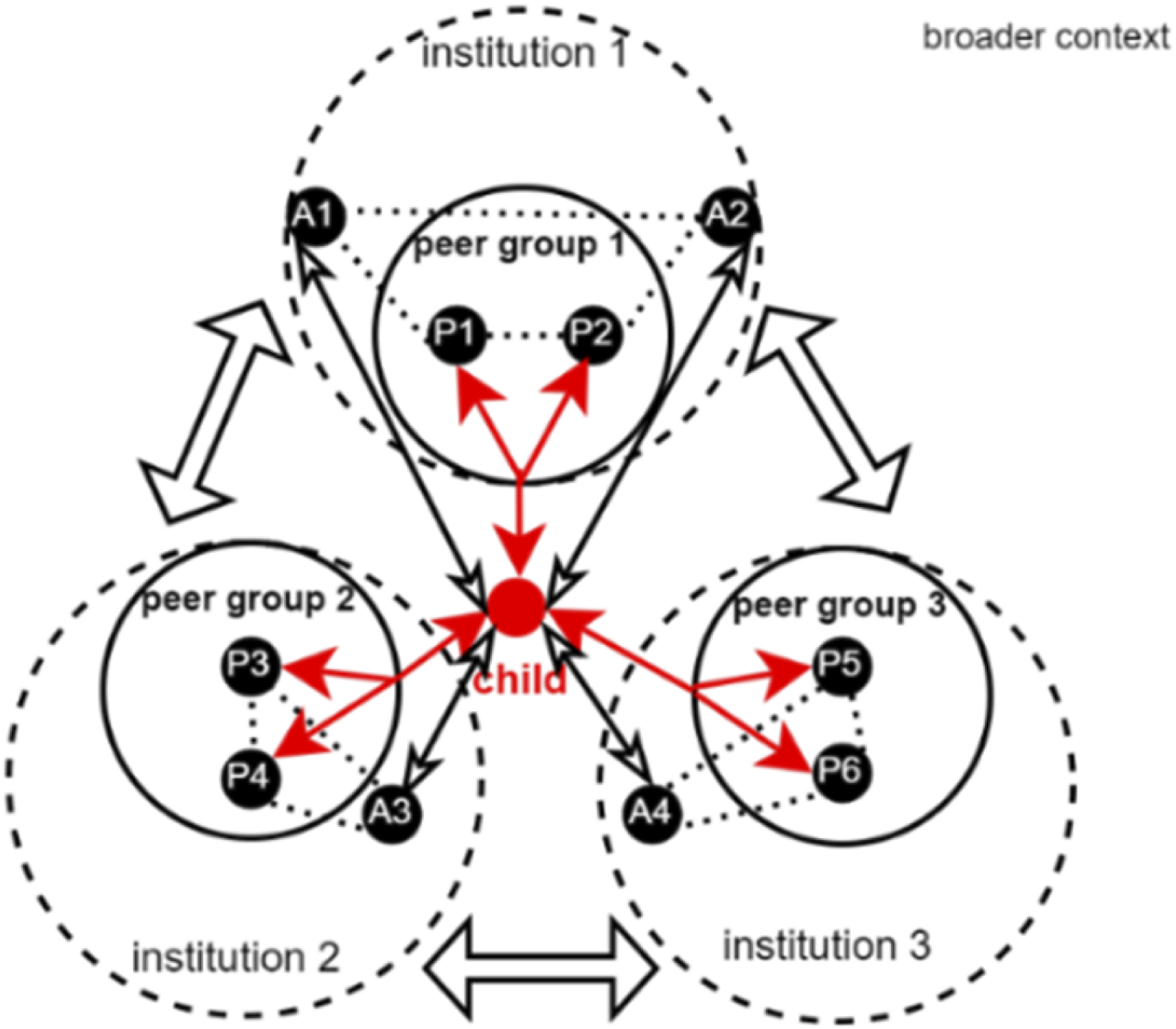
While the sociology of childhood and EST provide insights into a child’s peer world during stable periods, they fall short in capturing its dynamics during transitions. To address this, the cultural-historical concept of the social situation of development (SSD) is employed. Vygotsky defines SSD as the dialectical relationship between a child and their environment, marking the “initial moment for all dynamic changes in development during a given period” (Vygotsky, 1998, p. 198). Although children share similar physical development trajectories, their psychological development varies due to the uniqueness of their SSDs (Vygotsky, 2021a, 2021b). A child’s transition to school can be divided into phases based on qualitative reorganisations of their SSD (Ma, 2020), beginning with the first school-relevant experience that alters the SSD and ending when the new SSD stabilises. Understanding a child’s peer world transformation requires examining how it transforms through these phases.
Research method
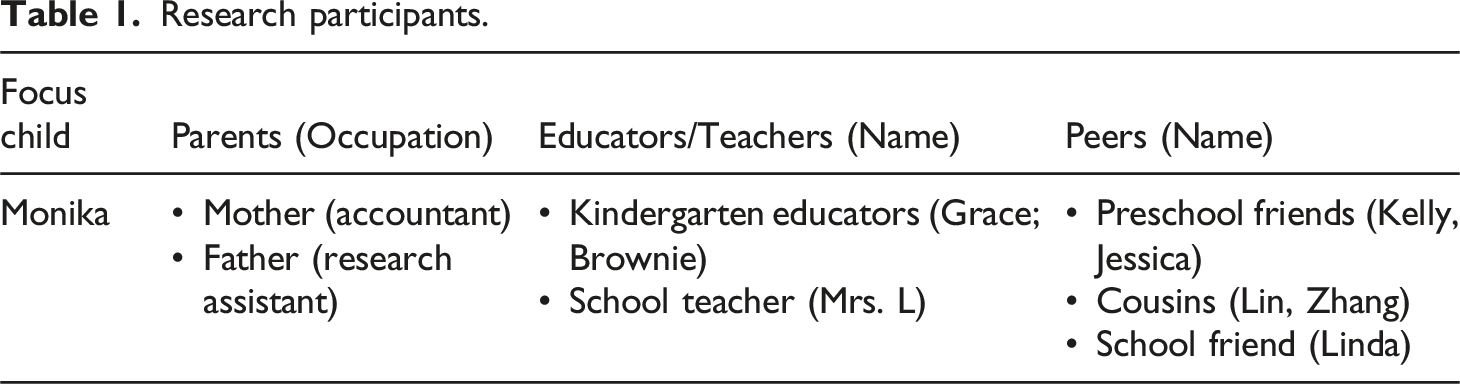
This study utilises data from a larger project investigating five second-generation Chinese Australian children’s transition to primary school. Collected longitudinally over 1.5–2 years, from the final preschool year to the first school year, the data specifically focused on children’s ongoing everyday life experiences during this transition. Due to word limits, only one case was selected for detailed analysis. This limitation was mitigated through two approaches. First, the case demonstrating the highest degree of theoretical saturation was chosen. Following Braun and Clarke (2021), theoretical saturation is the point where additional data no longer yields new themes. Among the five cases, Monika’s case approached theoretical saturation most closely. Second, themes emerging in other cases but absent in Monika’s case were incorporated into the analysis. Comparative analysis revealed only one such theme, which was supplemented with examples from other cases. It also should be noted that Monika’s case serves as an illustrative example of peer world dynamics beyond cultural background, rather than representing traits specific to second-generation Chinese Australian children.
Research participant
Research participants.
Data collection
Data collection for Monika’s case.
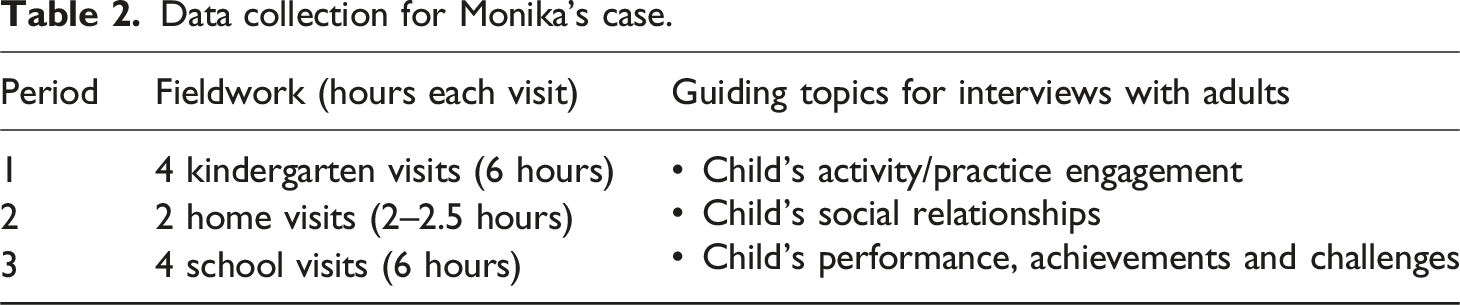
Home and kindergarten observations were video-recorded, while school observations were documented through written notes due to school restrictions. Adopting an active role, the researcher established trust with participants to collect authentic data (Fleer, 2014). Adult participants assisted in recording observations when necessary. Interviews were conducted as interactive dialogues (Fleer, 2008): child interviews occurred naturally during observations, and adult interviews followed a semi-structured format balancing focus and flexibility. Unscheduled contact with parents yielded supplementary insights. Data collection comprised 14 formal visits (totalling 67 observation hours and 9.5 interview hours), supplemented by 12 additional hours from unscheduled contacts.
Data analysis
Data was analysed through three layers. First, Monika’s transition to school was periodised using the concept of SSD. Second, Monika’s peer world in each phase was analysed using concepts of the sociology of childhood and the model adapted from EST. Third, previous analyses were synthesised, compared, and thematised to identify patterns in how a child’s peer world transforms, focusing on different peer groups’ formation and the interactions within and between these groups. The first two layers of analysis are presented in the following section, and the third layer of analysis is presented in the Discussion.
Monika’s peer world shift during the transition to school
According to qualitative changes in SSD, Monika’s transition is periodised into three phases (M1 to M3), with the phase preceding the transition labelled as Pre-M. This section explores Monika’s peer world across each phase. Vignettes, the examples revealing how meanings are contextually situated (Barter & Renold, 2000), are employed to illustrate scenarios characterising each peer group Monika engaged with.
Monika’s peer world in Pre-M
In this phase, Monika’s peer world was structured by two peer groups at the childcare centre. The first (PG-PreM-1) comprised Monika and her friends, Kelly and Jessica, who closely interacted in preschool. The second (PG-PreM-2) included all the children in the room, who interacted primarily during educator-directed practices (Figure 2). Monika’s peer world in Pre-M and M1.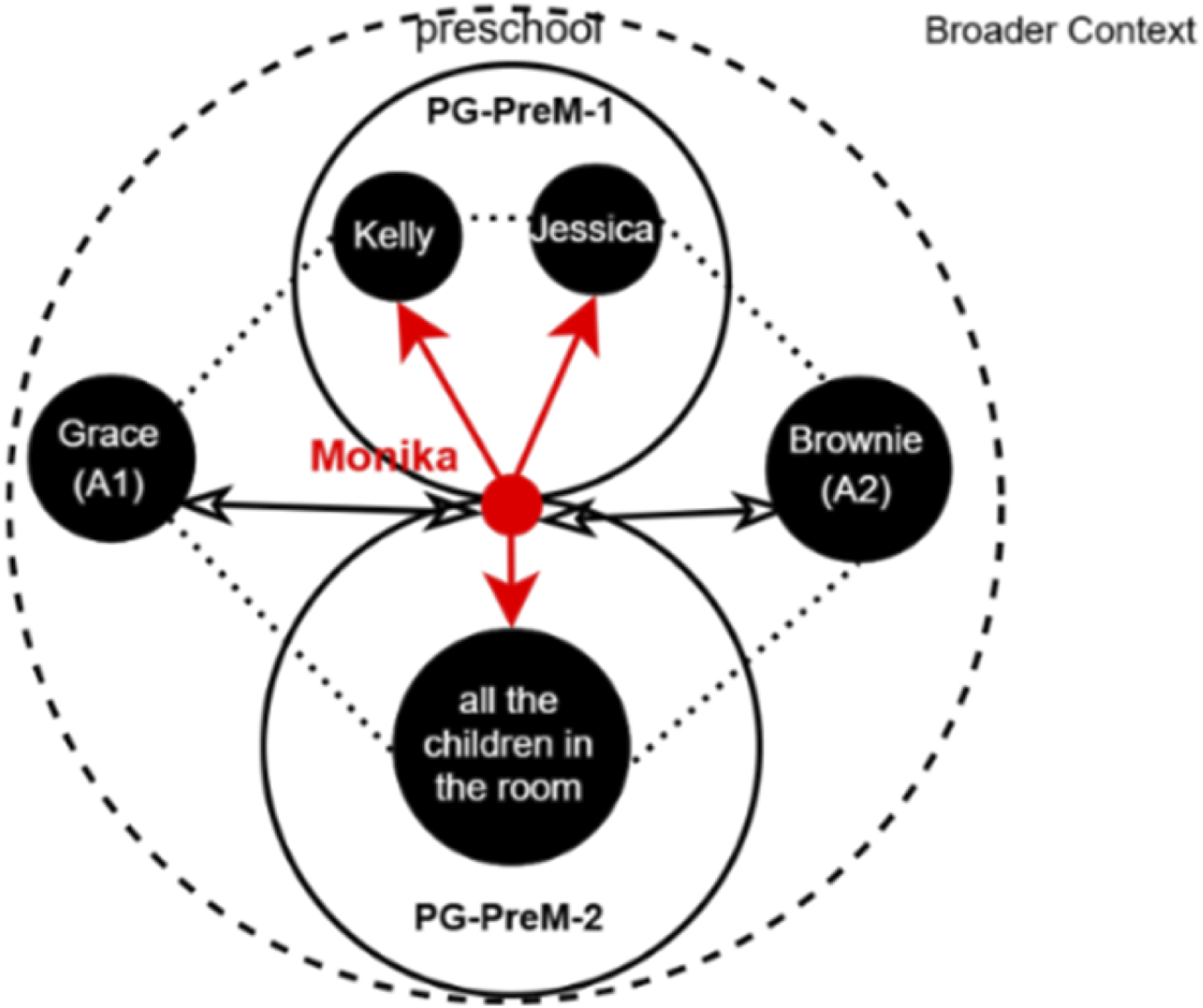
Connections between these two peer groups were shaped by the preschool routine – Monika transitioned between them as the schedule shifted from free time to group time. Vignettes 1 and 2 illustrate typical examples of these peer groups.
PG-PreM-2 was structured by adults. It grouped children in their final preschool year into a kindergarten program and became active during educator-directed practices such as group time. Outside these practices, children formed smaller peer groups. Monika, Kelly, and Jessica formed a stable peer group (PG-PreM-1), each assuming distinct roles. Monika acted as the leader, selecting books and setting the pace (Vignette PreM-1) or initiating sound mimicry and sharing with peers (Vignette PreM-2). Kelly acted as mediator between the group and educators, demonstrated by showing her clean hands to the educator (Vignette PreM-1) and redirecting Monika and Jessica’s attention to meet expectations (Vignette PreM-2). Jessica adopted a supportive role, following demonstration clean hands and participating in reading (Vignette PreM-1), as well as imitating “sss” sounds and complying when being suggested to quiet down (Vignette PreM-2).
Monika’s peer world in M1
In Pre-M, Monika enjoyed sports time after returning from the childcare centre, but in M1, she was required to participate in a one-hour academic learning session at home as preparation for school. This was jointly directed by her parents, with her mother focusing on math and her father on literacy. Monika and her parents also attended the school open day, where she met her future teachers and familiarised herself with the school environment. Monika integrated these new experiences into her peer world.
The structure of Monika’s peer world remained consistent, but she enriched it with new experiences. In Vignette 3, she shifted play from caring for a baby to bringing the baby to school, insisting on being addressed as “Miss,” mirroring school norms. In Vignette 4, she shared her school open-day experience, prompting the educator to facilitate a discussion that sparked curiosity and anticipation among the children about school.
Monika’s peer world in M2
Monika’s everyday life was disrupted when her family travelled to China for her grandfather’s funeral, marking a new phase in her transition. She stayed at her grandparents’ home, living with her parents, grandmother, two cousins (Lin, her age; Zhang, two years older), and their parents. In this phase, her peer world was structured by this new peer group (PG-M2), comprising Monika and her two cousins. The three children interacted in three primary ways (Figure 3). Monika’s peer world in M2.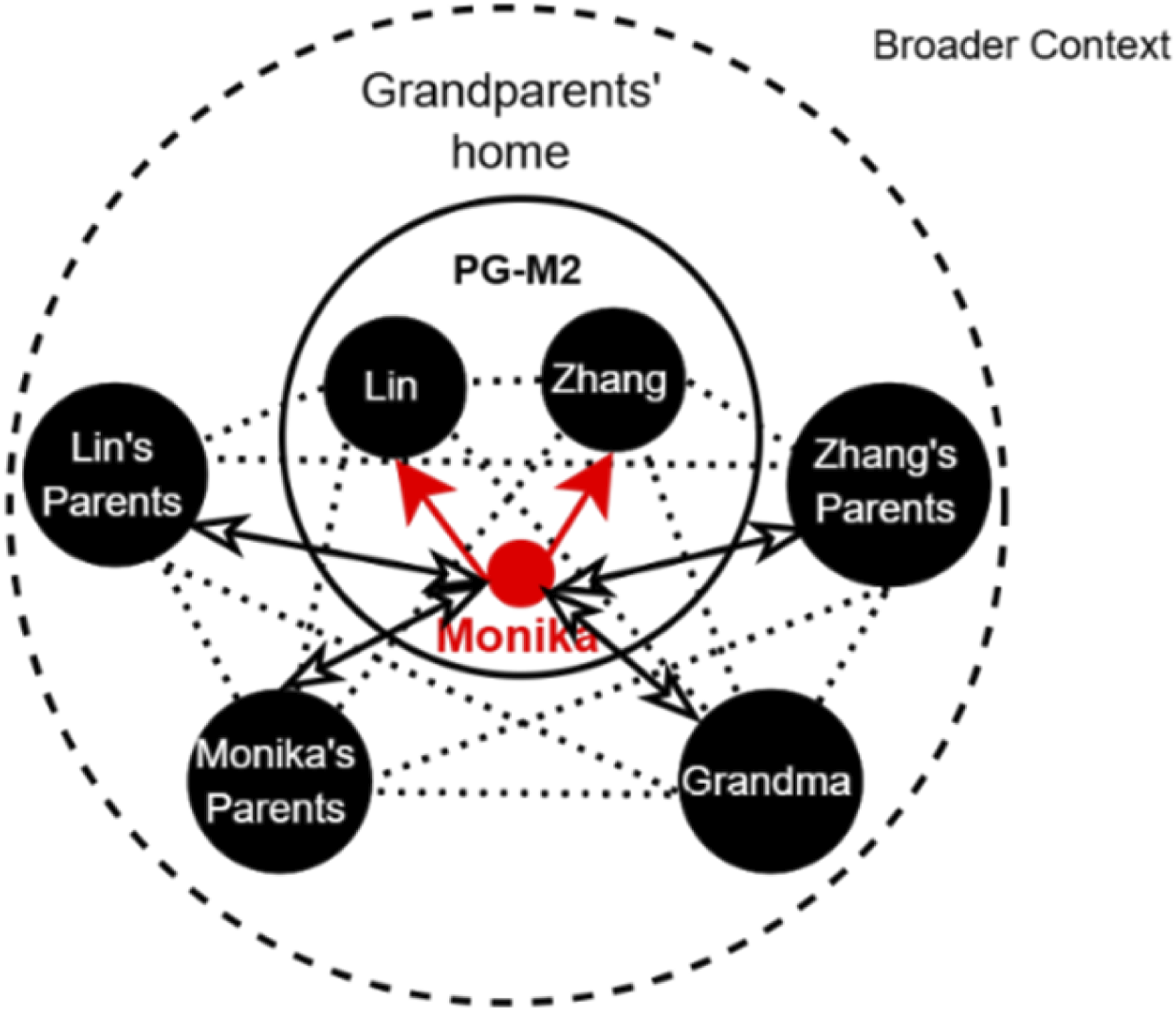
First, they adapted to each other’s habits through daily interactions, allowing them to learn from each other’s living experiences. Monika was struck by the heavy workload her cousins faced. For example, Lin, in addition to attending kindergarten, participated in piano, dance, and English classes; Zhang balanced a demanding school schedule with programming, basketball, and math classes after school. Second, they engaged in self-initiated play, with Monika often taking the lead, similar to her role in PG-PreM-1. Third, the children were brought together by adults, who frequently compared them, fostering a sense of competition within the group.
In this vignette, Monika exhibited assertiveness during play with her cousins, yet displayed discomfort when Lin began dancing. Her request to “pee” appeared to function as an attempt to escape the uncomfortable situation.
Monika’s peer world in M3
Upon returning to Australia, Monika began primary school, marking the start of M3. PG-PreM-1 dissolved as the girls attended different schools, and PG-M2 continued through her parents’ connection with her cousins’ parents. Three new peer groups emerged: PG-M3-1, formed with her new friend Linda; PG-M3-2, comprising Monika and three classmates at her table; and PG-M3-3, encompassing her entire class. Monika transitioned between them based on the school routine and in-class practices (Figure 4). Monika’s peer world in M3.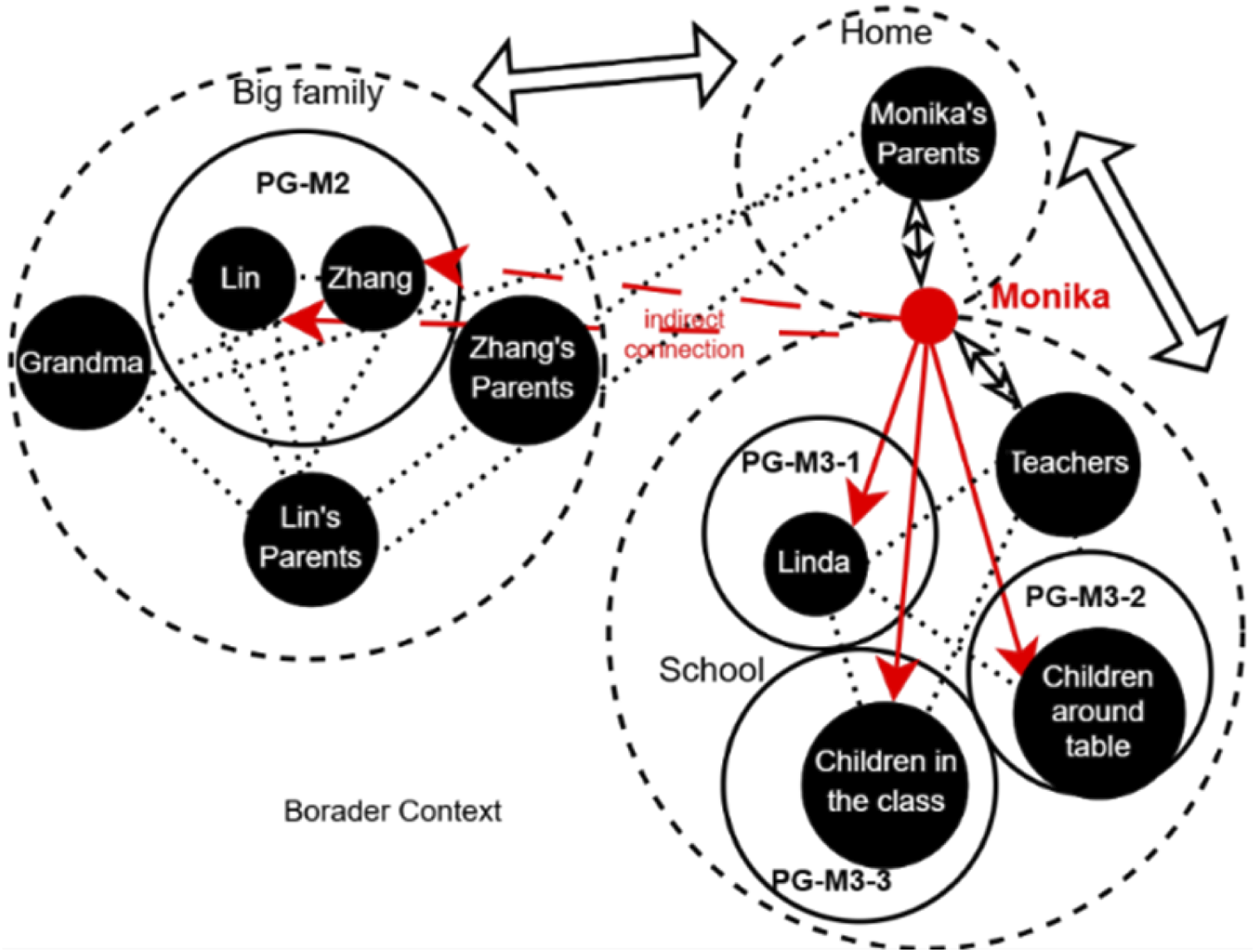
Initially, Monika struggled with the loss of PG-PreM-1, but this was naturally resolved when she befriended Linda, a Chinese girl in her class, forming PG-M3-1.
The vignette illustrates a typical activity that Monika and Linda engaged in. Unlike PG-PreM-1, where the three girls connected through shared interests, with each taking distinct roles, PG-M3-1 was characterised by bonding over shared topics without distinct roles, as both equally initiated chatting and activities. Monika also developed a stable relationship with three classmates at her table, forming PG-M3-2.
The researcher intentionally guided the painting activity toward a discussion to explore Monika’s perceptions of friendship. Monika’s responses revealed a distinction between friends and classmates, highlighting the difference between physical and psychological connections. In PG-M3-1, Monika and Linda shared both physical proximity and psychological closeness, but children in PG-M3-2 were connected primarily by physical proximity without a deeper psychological bond.
Monika was also involved in PG-M3-3. It included all the children in the same classroom. Their interactions were largely shaped by teachers’ practices, but children retained some autonomy to adapt these directives.
In the vignette, Tom reinterpreted the teacher’s instruction by writing it on another child’s back, while Peter attempted to modify it by using his feet. These exemplify what Corsaro (1992) terms interpretive reproduction. While children had agency, teachers set boundaries. Tom’s interpretive reproduction was accepted and incorporated into the class practice, but Peter’s was not.
The family also maintained frequent contact with their Chinese relatives.
Unlike her earlier avoidance, in PG-M2, Monika chose to confront the competition, demonstrating her competitiveness.
Patterns of a Child’s peer world transformation during the transition to school
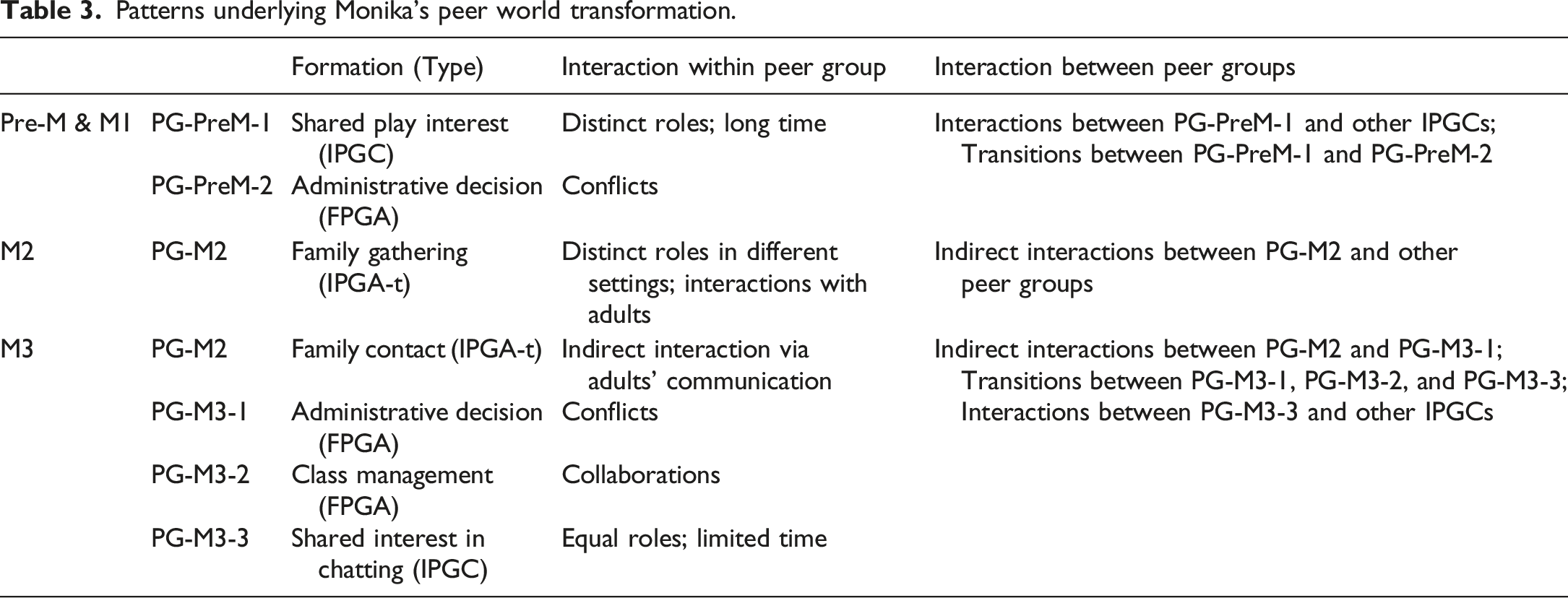
Patterns underlying Monika’s peer world transformation.
Dynamics in the formation of peer groups during the transitions
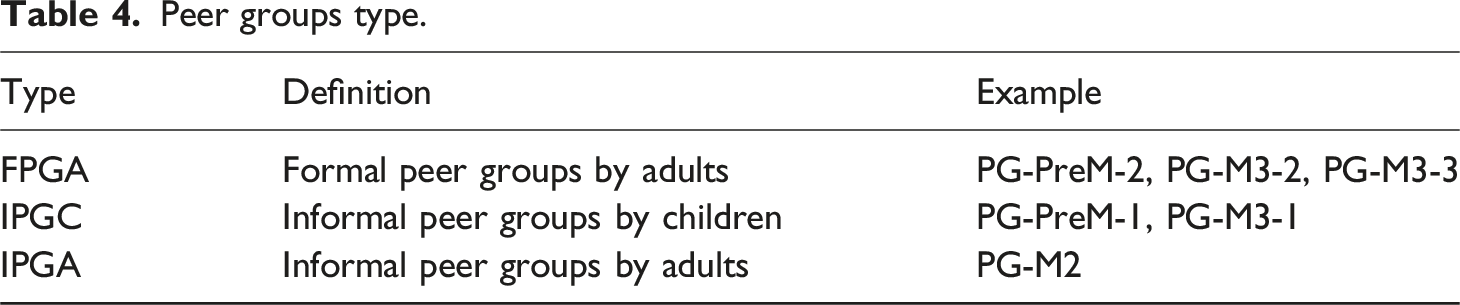
Peer groups type.
FPGA – a more refined structural division
Both preschool and primary school commonly assign children to formal peer groups based on their ages, a practice observed worldwide (González-Moreira et al., 2021). At Monika’s childcare centre, children in their final preschool year were divided into two kindergarten rooms, with Monika placed in Room 1 (PG-PreM-2). Similarly, her primary school organised first-year students (prep year) into five classes, assigning Monika to Class B (PG-M3-2).
Unlike preschools, which rarely subdivide children in the same room into smaller formal peer groups, primary schools often organise students into smaller groups within a class based on various criteria, such as ability, gender, interests, and seating arrangements, to support educational objectives (Kutnick & Manson, 2021; Shaw, 2019). In Monika’s class, the teacher divided students into five groups, each associated with a specific table and colour. The seating was arranged to balance gender and promote cultural diversity. Monika was assigned to the Green Table (PG-M3-3), which included four children: two boys (Australian background and Indian background) and two girls (Chinese background and Australian background). This difference is likely attributed to the distinct educational goals and practices. While preschools primarily aim to support children’s development through play, where collaboration is flexible and spontaneous, primary schools emphasise structured practices, requiring students’ stable, consistent collaboration (Einarsdottir, 2006). This shift may occur earlier in preschools that adopt schoolification practices (Clausen, 2015), but it was not observed in Monika’s case.
IPGC – from play-interest-oriented to all-encompassing interest-oriented
As previous research has shown, friendship groups are among the most common IPGCs in early childhood (Afshordi & Liberman, 2021). As children grow into middle childhood or adolescence, a wider range of IPGCs emerge, such as study buddy, student organizations, clubs, and even gangs (Kreager et al., 2011). In this study, Monika was involved in two friendship groups: PG-PreM-1 and PG-M3-1. Both groups were formed around shared interests but differed in their focuses: children in PG-PreM-1bonded over play activities, while children in PG-M3-1 connected through discussions of everyday events.
This change can be attributed to two factors. First, the distinct educational environments of preschool and primary school encourage shorter, more casual play or chats during recess in primary school, contrasting with the extended, focused play typical of preschool settings. Second, cultural differences influenced the nature of Monika’s relationships. Her bond with Linda was rooted in shared life experiences and a common cultural background, whereas her relationships with Jessica and Kelly were based on shared preferences in play activities.
IPGA-T – more occasional than other peer group types
Previous studies have primarily focused on the two peer group types discussed above, with limited attention to informal peer groups established by or due to adults (IPGA). IPGA can be further divided into two subtypes: temporarily formed (IPGA-T) and stably formed (IPGA-S). The primary distinction between these subtypes lies in the time spent together and the spatial proximity among group members. In IPGA-T, children spend limited time together and do not live near one another, whereas in IPGA-S, children spend significant time together and either live in close proximity or share a household. In Monika’s case, only IPGA-T (i.e., PG-M2) was observed. In other cases from the larger research project, IPGA-S was identified. For instance, one boy formed an IPGA-S with his younger brother (5 years his junior), while another formed one with his older sister (13 years older). Due to the age gap, these siblings rarely interacted closely during the transition to school, and no new themes emerged regarding shifts in their peer worlds. This represents a limitation of the present study. Future research should explore the dynamics of IPGA-S to address this gap.
In Monika’s case, PG-M2 was temporarily formed by adults in a family gathering, specifically around the shared event of the grandfather’s funeral. The adults – siblings themselves – introduced their children (cousins) to one another, initiating their connection. Although the three children are cousins, they only became a peer group through these gatherings. Similar groups can be formed among children of adults who are friends or colleagues. In contrast, typical examples of IPGA-S include sibling groups who live together or neighbourhood children who spend daily time together over extended periods.
Dynamics in the interactions within peer groups during the transitions
Previous studies suggest that while a group is influenced by factors such as location, resources, and membership, it is ultimately defined by its structure (Nunes et al., 2022), which is shaped by interactions among group members (Forsyth, 2014). Therefore, analysing interaction patterns within a group provides valuable insights into its nature. A detailed examination of the interactions within Monika’s peer groups reveals characteristics that differentiate each type. These interactions undergo specific changes during the transition to school, shaped by various factors.
Interactions within FPGA – ongoing conflicts, increased time, and more stable
As noted, FPGAs function effectively when guided by adults, particularly educators and teachers, through structured practices aligned with specific educational objectives. In Monika’s case, children in PG-PreM-2 and PG-M3-1 connected during educator-initiated or teacher-led practices, and children in PG-M3-2 collaborated based on teacher-assigned seating and group tasks. This structure distinguishes FPGAs from other peer groups.
However, interactions within FPGAs are not always as harmonious as planned. Peer conflicts and children-adult conflicts can arise due to differing intentions and motives (Hedegaard, 2005, 2012). In Vignettes PreM-2 and M3-3, peer conflicts emerged during adult-directed practices due to divergent priorities. Some children, like Kelly, adhered to the adults’ instructions, even helping peers follow directions. Others prioritized their own interests, engaging in spontaneous actions—such as crawling, hissing, writing on other’s back, or writing with feet. Some children alternated between compliance and spontaneity. In these vignettes, children-adult conflicts arose from a misalignment between the adults’ expectations and children’s motives. For instance, the educators planned to complete the reading session before lunch, but children’s actions interfered. Similarly, while the teacher directed students to practice writing letters, Tom and Peter disrupted the process.
From a sociology of childhood perspective, these conflicts reflect power struggles between the peer and adult worlds as well as within the peer world (Corsaro & Everitt, 2014). In Vignettes PreM-2 and M3-3, child-adult interactions demonstrate how adult world often dominates peer world, but peer world can also influence adult world. For example, when Tom wrote “P” on a child’s back, the teacher adapted her practice, acknowledging its effectiveness. Kelly’s actions in Vignette PreM-2 illustrate a power struggle within peer world, as she refrained from joining the “crawling and hissing” and reminded others to follow instructions, acting as a “spokesperson” for adult world. A different power struggle within peer world is seen in Vignette PreM-1, where children competed for their peer group interests.
Additionally, interaction time within FPGAs increased during the transition to school due to schedule changes. While preschool afforded children greater autonomy and fluid participation, primary school imposed constraints through reduced free time, prioritized structured practices, mandatory participation requirements, and fixed seating arrangements. These changes fostered more stable FPGA interactions.
Interactions within IPGC – less time, role assignment, and high-quality play
As interaction time within FPGAs increased, interactions within IPGCs significantly decreased, and children’s roles within IPGCs became less defined during the transition to school. In preschool, the three girls in PG-PreM-1 had stable roles: Monika as the play director, Kelly as the mediator, and Jessica as the follower. In primary school, roles in PG-M3-3 became fluid, with each taking the “director” role depending on the situation. High-quality play, characterised by imaginary situations, clear rules, and defined roles (Vygotsky, 2016), was observed less frequently in primary school. Instead, less structured forms of play, such as rough play, were more common, which are considered less developmentally beneficial (Fleer, 2021).
The significant reduction in free time, limited play resources, and overcrowded play areas were major factors driving this shift. At Monika’s primary school, children’s play was confined to three outdoor spaces: a recreational area with slides and a climbing net, a farming area with animals and gardens, and a sports playground. Recess time was restricted to these outdoor areas, as children were generally discouraged from remaining in classrooms. The recreational area, crowded mostly with boys, was the most popular spot, but Monika and Linda avoided it due to the congestion. The sports playground was dominated by older students playing ball games, making it inaccessible to younger children for safety reasons. As a result, Monika and Linda had limited options for play, which, combined with the reduced recess time, left little opportunity for high-quality play.
Interactions within IPGA-T – evolved according to life dynamics, adult involvement and children’s agency
Interactions within IPGA-T are largely influenced by adult involvement and children’s responses, rather than directly by transition changes. In Monika’s case, interactions within PG-M2 evolved with life dynamics. After returning to Australia, in-person interactions shifted to virtual exchanges via her parents’ online communication. As adults encouraged competition between the cousins, interactions became more competitive. Following her transition to school, Monika’s increased confidence led her to confront these comparisons, actively sharing her accomplishments rather than avoiding them.
Interactions within IPGA-T can evolve along two pathways: functioning only with adult involvement or transitioning into a self-sustaining friendship group. In Monika’s case, PG-M2 followed the former path. Initially, the three cousins played harmoniously, suggesting the potential for transitioning into a friendship group. However, adults introduced competition and repositioned children as rivals rather than playmates, undermining the group’s development into a friendship. As a result, when Monika returned to Australia, she did not miss her cousins as she did her preschool friends. The group only re-formed when adults acted as a bridge, as seen in Vignette M3-2, highlighting the contingent nature of IPGA-T.
Dynamics in the interactions between peer groups during the transitions
Most studies on peer relations focus either on macro-level perspectives without addressing specific peer groups (e.g., Hay et al., 2004; Parker et al., 2015) or on micro-level dynamics within individual peer groups (e.g., Buhs et al., 2006; Maunder & Monks, 2019). Limited attention has been given to meso-level interconnections between peer groups. Building on prior micro-level analysis, this section identifies four modes of inter-group interactions from a meso-perspective and examines their shifting patterns during transitions, providing insights into the mechanisms shaping the peer world as an interconnected system.
Interactions between IPGCs – less common
Interactions between IPGCs often arise from conflicts of interest. In Vignette PreM-1, three girls from PG-PreM-1 occupied a sofa, but two boys from another IPGC approached, causing a conflict. Such interactions, common in preschool, involve children asserting their rights and negotiating. When negotiations failed, children seek adult intervention—a key conflict-resolution strategy (Angu, 2020; Chung & Asher, 1996). In primary school, these interactions declined, likely due to reduced free time and fewer opportunities for extended play. Children engaged in simpler activities, as seen with Monika and Linda, reflecting this shift across educational settings.
Transitions between FPGAs – less flexible and emergent
Transitions between FPGAs are shaped by institutional schedules and educational intentions. In preschool, these transitions follow routines like morning tea, group time, and lunch, often allowing children the freedom to choose participation, such as opting out of group reading. In contrast, primary school transitions, such as those between whole-class sessions, group work, and recess, are more structured and mandatory, offering little choice. Besides, educators often facilitate FPGA transitions based on educational goals. In preschool, these transitions are typically emergent. For instance, during a reading session about a caterpillar, an educator adapted her plan when a child mentioned finding a caterpillar outside, dividing the FPGA based on children’s preferences. In primary school, transitions are generally pre-planned. While occasional emergent adjustments occur, such as shifting from writing letters in the air to writing on each other’s backs, these changes modify the approach rather than the practice structure. Consequently, transitions between FPGAs in primary school are less flexible than in preschool.
Transitions between IPGC and FPGA – dominated by IPGCs to dominated by FPGAs
Transitions between IPGCs and FPGAs occur regularly in preschool and primary school settings. These transitions typically happen in preschool during routine activities, such as morning tea, group time, and lunch. Children temporarily leave their IPGCs to join FPGAs for these activities, returning to their IPGCs afterward. For example, in Vignette M1-2, the girls played with each other in their IPGC (PG-PreM-1), joined the FPGA (PG-PreM-2) for group time, and then returned to their IPGC. In primary school, transitions often occur at recess, when children leave structured class FPGAs for free play in their IPGCs. At the end of recess, they rejoin their FPGAs for class time. As seen in Vignette M3-1, Monika and Linda left their FPGAs (PG-M3-1 and PG-M3-2) to form an IPGC (PG-M3-3) during recess, then returned to their FPGAs afterward. In summary, preschool is dominated by IPGCs, with FPGAs forming temporarily during group activities, while primary school is dominated by FPGAs, with IPGCs emerging primarily during recess.
Indirect interactions between IPGA and other peer groups – bring experiences from other peer groups
Unlike FPGAs and IPGCs, which occur in structured settings with stable routines, IPGAs, particularly IPGA-Ts, emerge in unstructured environments, such as family gatherings or informal social settings, lacking consistent schedules. This makes it difficult to identify consistent interaction patterns within IPGAs or in their relationships with other peer groups. However, a general principle emerges: children often bring experiences from other peer groups into IPGAs, a phenomenon called “indirect interaction.” While such interactions could theoretically be bidirectional, they appeared predominantly unidirectional in Monika’s case. For instance, Monika incorporated preschool play experiences to enrich PG-M2 activities, Lin shared dance class routines, and Zhang introduced learning experiences from school and after-school classes. Monika also highlighted her academic achievements to assert her abilities among her cousins. Conversely, experiences from PG-M2 were rarely transferred into Monika’s other peer groups. This unidirectionality may stem from differing impacts of different peer groups; children are more likely to transfer experiences from groups where they feel deeply engaged. In Monika’s case, her limited time in PG-M2 reduced its impact on her other peer groups.
Conclusion
This study has explored mechanisms underlying the peer world transformation during children’s transition to school. Three peer group types (FPGA, IPGC, and IPGA) emerge. Throughout this period, the formation of each type, interactions within each type, and interactions between types demonstrate changing patterns, as discussed in the previous section. These patterns collectively reveal the mechanisms underlying a child’s peer world during the transition to school. The findings demonstrate how contextual, interactive, and individual factors intersect, revealing children’s peer world as a dynamic, multilayered system. They both inform and deepen relevant theories, making theoretical contributions to the field.
The findings confirm that the broader context (or macrosystem in EST) provides a structural framework influencing children’s dominant institutions, thereby shaping their peer world and its transformation. In this study, the mainstream Australian context framed both the educational offerings at Monika’s childcare centre and primary school, and the resources available to her family and community. For instance, the transition from Australia’s advocated play-based preschool environment to the more structured environment typical of primary education systems worldwide influences changes in children’s peer world, such as the increasingly refined division of FPGA. Simultaneously, the Chinese community influenced Monika’s family by either encouraging or discouraging specific practices, such as valuing academic achievement and promoting academic preparation for school. Consequently, her IPGC in the preschool setting was enriched after academic preparation experiences at home during M1. This insight contributes to both EST, particularly regarding relationships between system layers, and the sociology of childhood, specifically concerning relations between the adult and the peer world.
While the broader context provides a structural framework, dominant institutions where children are situated possess the authority to create specific institutional environments and practices within this framework, drawing on their capital, values, and traditions. For example, as an immigrant Chinese family simultaneously navigating Australian cultural influences and Chinese cultural traditions, they may choose to prioritise one culture over the other or integrate both. This suggests that cross-cultural studies would benefit from focusing on how families with particular cultural backgrounds negotiate between cultures, rather than identifying static characteristics shared by these families or comparing fixed differences across cultural groups, as traditional cultural studies have often done (Ma, 2019). At the same time, children exercise agency in determining how to act and react within these institutional environments and practices based on their subjective experiences. It is through children’s everyday interactions with their surroundings across dominant institutions that their SSD is established and reorganised, shaping their peer worlds. This insight contributes to deepening the understanding of the cultural-historical concept of SSD, while helping to build theoretical connections between the sociology of childhood and cultural-historical theory.
The findings also yield practical implications. The identified peer group types provide a novel framework for understanding peer groups and offer guidelines for supporting children’s development in practice, particularly in identity formation, sense of belonging, and resilience development. For instance, children’s identities tend to be more predetermined and rule-based in formal peer groups (FPGA), whereas they emerge more contextually in informal peer groups (IPGC and IPGA). Similarly, sense of belonging depends more on peer recognition in child-initiated groups (IPGC), but relies more on adult recognition in adult-initiated groups (FPGA and IPGA). Children demonstrate stronger belonging and resilience development in stable peer groups (FPGA, IPGC, and IPGA-S) compared to temporary groups (IPGA-T). Based on these trends, educators could leverage different peer groups types according to their different features to support children’s development in different domains.
Besides, the findings show a significant reduction in free time and play resources in primary school, diminishing peer interactions within IPGCs and potentially hindering creativity and independence (Brown & Patte, 2012; Watts, 2022). This underscores the need to rethink educational practices to balance unstructured and structured time and foster holistic environments that support children’s peer worlds. Finally, this study highlights children’s dual agency within the peer and adult worlds, showing their ability to adapt adult expectations (Corsaro, 1992), to construct their peer world, and to contribute to the adult world. It urges educators and policymakers to foster supportive environments and value children’s input. Future research should explore how children’s contributions to both worlds can inform inclusive educational practices, recognising them as active participants in shaping their environments.
This study has two limitations. First, the research sample is limited in size. While this limitation was mitigated through supplementary cases, the application of two approaches and thick narratives, future studies with larger samples would help uncover more detailed mechanisms. Second, cultural background was not the primary focus. Although the study used a second-generation Chinese Australian child’s case as an example, the aim was to investigate the mechanisms that may be transferable to children with similar experiences across cultural backgrounds, rather than identifying the ones specific to second-generation Chinese Australian children. Nevertheless, research on the latter remains valuable and warrants future investigation. Furthermore, findings from this case study highlight the need for future research in diverse cultural contexts to evaluate the transferability of these mechanisms.
Footnotes
Declaration of conflicting interests
The author(s) declared no potential conflicts of interest with respect to the research, authorship, and/or publication of this article.
Funding
The author(s) disclosed receipt of the following financial support for the research, authorship, and/or publication of this article: The study was funded by the National Social Science Fund Project of China [grant number: 24CSH089].
Ethical statement

Data Availability Statement
The participants of this study did not provide written consent for their original data (e.g., video recordings, audio recordings, and photos) that may reveal their identities to be shared publicly. Therefore, due to the sensitive nature of the research, the original data is not publicly available. However, transcribed observational and interview data, reviewed by the adult participants to ensure no identifying information is disclosed, can be obtained from the corresponding author upon reasonable request.