







Abstract
Minangkabau kaba narratives, an indigenous kind of oral storytelling originating from West Sumatra, Indonesia, effectively convey profound cultural principles and historical insights. Nevertheless, the pertinence of these traditions to younger cohorts, namely Generation Z, is being widely scrutinized in the contemporary day. This research examines the structural and semiotic components of Minangkabau kaba narratives and assesses their significance and attractiveness to Gen-Z students at Universitas Negeri Padang. The research employs a mixed-methods approach that involves analyzing the linguistic aspects of 10 popular kaba narratives and conducting qualitative interviews with 50 Gen-Z students. The study aims to assess the extent of young audiences’ involvement with kaba narratives and determine the elements that influence their attractiveness. The results demonstrate the presence of the conventional narrative structure and abundant symbolism in kaba narratives, which contain the fundamental values of the Minangkabau culture. Students’ appreciation of Kaba’s cultural value is determined by how it is presented and its relevance to contemporary life. The research suggests methods to augment the allure of kaba narratives, such as digital adaptation, inclusion of modern topics, and integration into educational courses. These proposals aim to guarantee the ongoing recognition and safeguarding of Minangkabau cultural heritage in digital technology.
Keywords
Introduction
The Minangkabau kaba narrative, one of the forms of oral tradition originating from West Sumatra, Indonesia, effectively conveys profound cultural principles and historical wisdom. This oral tradition, passed down from generation to generation, plays an important role in preserving and transmitting the cultural wealth of the Minangkabau society. However, in the contemporary era, particularly among the younger generation known as Generation Z. Generation Z refers to individuals born between the mid-1990s and the early 2010s (Gentina, 2020; Nieżurawska-Zając et al., 2023; Sinha, 2024). This generation has its own characteristics, including being referred to as the digital generation because they grew up with the internet, smartphones, and social media, making them highly skilled in using technology (Kutasi, 2013; Mahmoudabadi & Mollaahmadi, 2021; Olçum & Gülova, 2023). In the modern era, Generation Z is heavily influenced by digital resources in education, requiring modern educational methods that integrate digital tools into learning (Akhmetshin et al., 2019; Boonlab & Pasitpakakul, 2023). This condition has led to increasing doubts about the relevance and appeal of traditional narratives such as the Minangkabau kaba. Considering the impact of globalization and digital technology on cultural consumption, it is important to understand how these narratives remain meaningful to the younger generation for the purpose of cultural preservation (Hasanuddin, 2021; Shiri et al., 2022).
In this context, the theoretical framework of youth participation proposed by Zhang et al. (2024) is relevant, as it emphasizes that youth participation is dynamic, iterative, and contextual. This framework introduces four key dimensions: purpose, positioning, perspectives, and power relations. The purpose dimension highlights the importance of formulating participation goals together with young people; positioning provides them with the space to actively define their roles; perspectives acknowledges the diversity of youth identities and experiences; while power relations underscores the need to negotiate dynamics of power so that participation does not remain merely symbolic (tokenism). Thus, this framework offers both theoretical and methodological foundations for understanding and designing the engagement of Generation Z in sustaining the Minangkabau kaba as cultural heritage. Involving Gen Z in cultural heritage projects fosters a sense of community and belonging. This, in turn, encourages them to participate in local heritage activities, which not only raises awareness but also contributes to preservation (Kashchenko & Polozhentseva, 2021; Menkshi et al., 2021).
The Minangkabau kaba narrative has been extensively studied from structural and semiotic perspectives to reveal the cultural values contained within it. Khairani and Sinaga (2020) showed that kaba is rich in themes such as social cohesion, respect for nature, and work ethics. The structural analysis conducted by Manaf and Nasution (2022) demonstrated that kaba has a classical narrative pattern with consistent stages of introduction, development, and resolution, while their semiotic study highlighted cultural symbols such as mountains and rivers as representations of life’s journey and challenges. These studies strengthen the understanding of how kaba functions as a medium for transmitting Minangkabau cultural values. Nevertheless, most previous studies tend to focus on textual and interpretive dimensions without linking how kaba narratives are received and interpreted by the younger generation in the digital era. Manaf and Nasution (2022) has begun to mention the role of media in cultural preservation, but his discussion remains descriptive and does not explicitly relate to Generation Z as the dominant audience today. Similarly, Devanti and Astutik (2024) noted the importance of addressing contemporary issues in the revitalization of traditional stories, but there has not yet been a systematic exploration of how traditional narratives like kaba can be adapted into digital formats and combined with modern themes to enhance youth engagement. These studies affirm the importance of kaba as a medium of cultural transmission. However, there are still few studies that specifically examine how today’s young generation, especially Generation Z, engage with kaba.
The younger generation plays a very important role in cultural preservation. For example, in Korça, Albania, young people, especially university students, are directly involved in the maintenance of archaeological sites, museums, and libraries. This helps them to increase their awareness of cultural values and contribute to their preservation (Menkshi et al., 2021). The involvement of young people in preserving kaba as a medium of cultural transmission should be accepted as part of culture amid the current of modernity and encourage the younger generation to interact with these narratives in their daily lives. The involvement of the younger generation with cultural heritage, now influenced by digital media and global factors, creates new dynamics that have not been widely studied within the kaba Minangkabau framework (Devanti & Astutik, 2024). Digital media plays a very important role in how young people interact with and participate in cultural preservation. Young people often interact with cultural heritage through digital substitutes such as virtual reconstructions and digital artifacts, which enable wider engagement in cultural heritage (Economou, 2015). Several platforms such as Instagram, Facebook, and Twitter are widely used by young people to disseminate information related to cultural heritage, making it attractive and easily accessible to the wider community (Mu’alifah & Jumino, 2021).
Although there have been in-depth studies on the structural and semiotic aspects of kaba, research on Generation Z’s perceptions of these narratives is still limited. The existing literature does not sufficiently explain the extent to which the values contained in kaba resonate with today’s young generation and how these narratives can be modified to remain relevant in the current era. This study aims to fill that gap by examining the appeal of Minangkabau kaba to Generation Z students at Universitas Negeri Padang. This research combines linguistic analysis with empirical data obtained through student interviews (Nasution, 2020; Yuliantari, 2021).
Based on this, the following research questions are proposed: 1. What are the structural elements in Minangkabau kaba narratives that represent the cultural values of Minangkabau society? 2. What are the semiotic elements contained in kaba narratives to convey cultural messages and meanings? 3. What is the level of knowledge, interest, and engagement of Generation Z students at Universitas Negeri Padang towards the Minangkabau kaba narratives? 4. What factors influence the relevance and appeal of kaba narratives for Generation Z students? 5. What strategies can be proposed to enhance the appeal of kaba narratives for Generation Z, particularly through digital adaptation and the incorporation of contemporary themes?
This research is important for several reasons. First, this study strengthens efforts to preserve and revitalize the Minangkabau cultural heritage by bridging traditional narratives with contemporary audiences. To increase the accessibility and engagement of Generation Z with kaba, educators and cultural practitioners can utilize strategies based on an understanding of the structural and semiotic components of kaba (Anwar et al., 2020; Khan, 2023). In addition, this study provides valuable perspectives in the global discourse on cultural preservation in the digital era, while offering practical recommendations for integrating old stories into modern cultural activities (Diego et al., 2024). The findings of this research also have the potential to influence cultural policy and educational curricula, ensuring the sustainability and development of the Minangkabau kaba heritage in an ever-changing world (L. Zhang et al., 2020).
Literature Review
Cultural Values in Minangkabau Kaba Narratives
The Minangkabau kaba narrative plays an important role in preserving the cultural history of West Sumatra while representing the values and customs of Minangkabau society. Previous studies have extensively documented the significance of the cultural values contained in these stories. Khairani and Sinaga (2020) emphasized that kaba narratives often raise themes such as social cohesion, respect for nature, work ethics, and morality. These themes serve as a medium for transmitting cultural values across generations. Manaf and Nasution (2022) conducted a structural study of kaba that revealed a complex narrative structure effective in embedding cultural values within engaging and memorable stories. They analyzed plot development, character roles, and thematic components to demonstrate how these stories reinforce cultural norms and promote social harmony within Minangkabau society.
Semiotic Analysis of Kaba Narratives
Semiotic studies are essential for understanding the hidden meanings in Minangkabau kaba. In their research, Manaf and Nasution (2022) carried out a semiotic analysis of kaba narratives and identified various symbols and signs that effectively convey cultural meanings. Their study revealed that cultural values are communicated through character archetypes, symbolic behaviors, and recurring themes. For example, the portrayal of wise elders, brave heroes, and loyal friends symbolically represents ideal roles and behaviors within the community. The depiction of natural elements such as mountains and rivers often serves as symbols of the Minangkabau people’s close relationship with their environment. Manaf and Nasution (2022) argue that these semiotic aspects play a crucial role in understanding the cultural significance of kaba and its contribution to sustaining tradition.
The Impact of Globalization and Digital Media
Traditional cultural activities such as storytelling face significant challenges due to globalization and the rapid development of digital media. Devanti and Astutik (2024) highlighted the impact of globalization on cultural heritage, showing that young generations are increasingly influenced by global cultural patterns, leading to a decline in their recognition and engagement with traditional narratives. Generation Z, who are highly familiar with digital technology and global media, tend to follow these patterns. Nevertheless, digital media also offers opportunities to preserve and revitalize classic stories. Shiri et al. (2022) examined the impact of digital technology on the preservation of storytelling traditions and suggested that the use of creative digital platforms can enhance accessibility and engagement, particularly among young generations. They highlighted the potential of digital adaptations such as animated films, interactive applications, and social media campaigns as bridges between ancient storytelling traditions and modern cultural consumption.
Generation Z and Cultural Heritage
Understanding Generation Z’s engagement with cultural heritage is essential for designing effective preservation strategies. In his research, Nasution (2020) examined the interest and engagement of Generation Z with the Minangkabau kaba among today’s youth. The study revealed that although there is widespread recognition of the cultural value of kaba, its presentation greatly influences this generation’s level of attention. Conventional storytelling methods are perceived as less engaging compared to digital versions that have been modified with contemporary elements and interactive features. Anwar et al. (2020) stressed the importance of cultural education in preservation efforts, emphasizing the need for innovative strategies capable of reaching young generations. According to them, integrating cultural narratives into educational curricula and utilizing digital technology can enhance the appeal and relevance of traditional stories like kaba for Generation Z.
Although there is considerable evidence concerning the cultural values and semiotic aspects of the Minangkabau kaba, few studies have examined how Generation Z perceives and interacts with these narratives. Previous research has focused more on the traditional elements of kaba and paid less attention to its relevance and suitable adaptation methods for modern audiences. This study aims to fill that gap by exploring the appeal of the Minangkabau kaba to Generation Z students at Universitas Negeri Padang. It will combine structural and semiotic analysis with empirical data derived from student interviews.
This literature review underscores the deep cultural values embedded in the Minangkabau kaba narratives as well as the challenges and opportunities presented by globalization and digital media. The storytelling tradition faces difficulties in remaining relevant to Generation Z, yet innovative digital adaptations and pedagogical initiatives can drive cultural heritage preservation. This study seeks to advance this understanding by examining the structural and semiotic components of kaba and assessing its appeal to Generation Z, thereby providing a comprehensive insight into how traditional narratives can be adjusted to meet the needs and preferences of modern audiences.
Method
Research Design
This study employed a mixed-methods approach by integrating linguistic analysis and qualitative data collection to comprehensively examine the research objectives. The primary rationale for combining these methods was to obtain a thorough understanding of the cultural content embedded within kaba narratives while also capturing the perceptions and engagement of today’s young audience. Structural and semiotic analyses were conducted to uncover the cultural values embedded in kaba, while qualitative interviews captured how these values are understood, interpreted, and perceived as relevant or not by Generation Z university students in the digital era. This dual approach ensured that the study not only documented traditional cultural heritage but also evaluated its contemporary significance and potential for transformation. Therefore, the integration of both methods aligns with the research objective to contribute both theoretically and practically to the preservation of Minangkabau cultural heritage within the evolving digital landscape. This technique aligns with recent developments in cultural studies that emphasize the importance of combining textual analysis with empirical data collected from target audiences (Creswell & Creswell, 2017).
Ethical Considerations
This study was conducted in compliance with ethical research protocols involving human participants. All participants provided informed consent after receiving comprehensive information, and their identities and confidentiality were safeguarded throughout the research process (Flick, 2020). Prior to data collection, the research protocol was submitted to and approved by the Ethics Committee of Universitas Negeri Padang.
Linguistic Analysis
To address the first two research questions, a comprehensive linguistic analysis was conducted on selected Minangkabau kaba narratives. This analysis consisted of two components: structural analysis and semiotic analysis. Referring to the methodology used by Manaf and Nasution (2022), the study closely examined narrative structures, plot development, and character functions within a collection of the ten most widely read kaba narratives. This analysis facilitated the identification of recurring patterns and themes, including the cultural values of Minangkabau society.
Building on Manaf and Nasution’s (2022) work, the semiotic analysis focused on examining symbols, signs, and themes that effectively convey cultural meanings within the same texts. This study revealed the underlying cultural values embedded in these narratives. The selected kaba narratives for analysis were determined based on their popularity and cultural significance, which were established through consultations with local cultural experts and a review of relevant literature.
Qualitative Data Collection
Sample and Participants
Participant Demographics
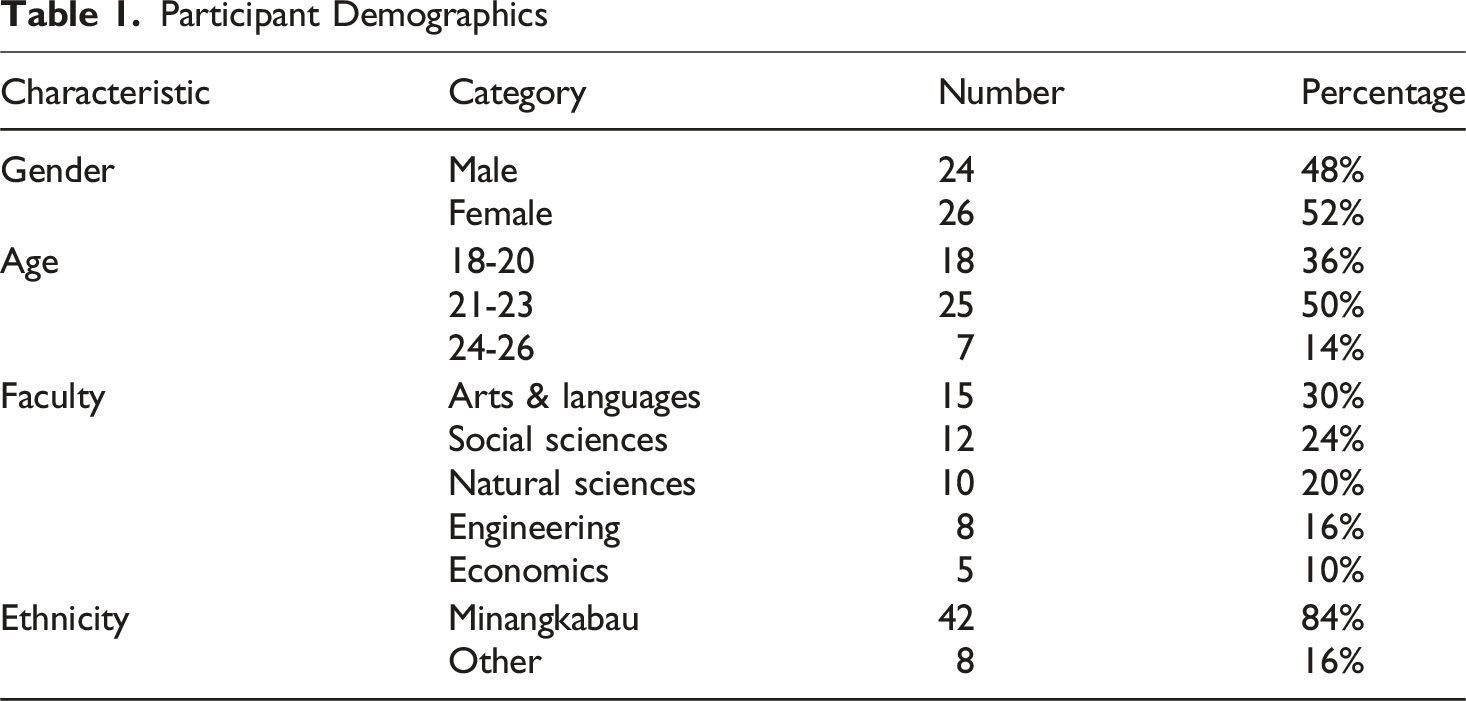
A comprehensive demographic analysis ensures that this study encompasses various perspectives among Generation Z students, enriching the depth and credibility of the qualitative data obtained.
Interview Process
The semi-structured interview guide was developed based on the research objectives and a review of the literature concerning youth engagement with cultural heritage (Nasution (2020); Devanti and Astutik (2024). The interview questions were designed to explore students’ perceptions of kaba narratives, their experiences of engagement, their preferred formats for presentation, and their views on adapting kaba to contemporary contexts. The interview guide covered five main themes: (1) knowledge and understanding of kaba, (2) perceptions of the cultural values in kaba, (3) the relevance of kaba to modern life, (4) preferred media formats for enjoying kaba, and (5) suggestions for enhancing the appeal of kaba among young people.
The interview data were analyzed using thematic analysis, following the six steps outlined by Braun and Clarke (2006): (1) data familiarization through repeated reading of transcripts, (2) initial coding to identify meaningful data segments, (3) searching for potential themes from the codes, (4) reviewing the themes to ensure internal coherence and relevance to the data, (5) defining and naming the identified themes, and (6) constructing the narrative of the analysis results. This process was conducted manually, ensuring traceability between raw data, codes, and the themes developed.
The validity of the thematic analysis was maintained through researcher triangulation, where two independent researchers participated in the coding process to minimize interpretive bias. Discussions between researchers were held to reach an agreement on the final themes used in reporting the results. Thus, the development of themes in this analysis was not only systematic but also adhered to credible methodological standards in qualitative research.
Data Analysis
The interview data were transcribed and analyzed using thematic analysis techniques by following the six stages described by (Braun & Clarke, 2006). This approach enabled the identification of recurring patterns and themes within the qualitative data, providing valuable insights into Generation Z’s perspectives and engagement with kaba narratives. The results of linguistic analysis and thematic analysis from the interviews were then combined to obtain a comprehensive understanding of the structural and semiotic components of kaba, the cultural values contained within them, and their relevance to Generation Z audiences.
Interviews with 50 Generation Z students at Universitas Negeri Padang revealed varying levels of knowledge and engagement with kaba narratives. Through thematic analysis, three main dimensions of student appreciation were identified: (1) Cultural Appreciation, (2) Personal Relevance, and (3) Media Preferences. 1. Cultural Appreciation
Most participants acknowledged that kaba is an important part of Minangkabau cultural heritage. They expressed pride in this cultural narrative, especially when kaba is associated with values such as social harmony, respect for nature, and moral integrity. 2. Personal Relevance
Student appreciation deepened when they perceived kaba as relevant to modern life. They valued stories that addressed contemporary issues such as environmental preservation, social dynamics, and digital life. 3. Media Preferences
Participants consistently showed a preference for digital formats. Animated videos, short films, interactive applications, and social media content were favored over traditional oral storytelling methods.
Results
Structural and Semiotic Elements in Minangkabau Kaba Narratives
Structural analysis of Minangkabau kaba narratives revealed a traditional storytelling plot structure that clearly consists of a beginning, middle, and end. These narratives typically contain moral messages or cultural lessons woven into the storyline. Common themes frequently appearing include social harmony, respect for nature, work ethics, and moral integrity.
Structural Elements
Minangkabau kaba narratives generally follow a tripartite structure consisting of three parts: • Introduction: Introduction of the setting and characters, while building context and initial conflict. • Development: The main sequence of events unfolds, where the protagonist faces challenges or embarks on an adventure. • Conclusion: The story’s conflict is resolved, usually accompanied by a moral message or cultural value to be conveyed.
A student remarked, “Kaba stories always start by introducing the characters and their environment, then proceed to their adventures or problems, and finally everything is resolved with a meaningful lesson” (Participant A, July 2023).
The tripartite structure in Minangkabau kaba narratives reflects a directed and systematic storytelling method, aligned with traditional storytelling techniques. The introduction provides the foundation for listeners to understand the context and motivations of the characters. The development stage showcases the protagonist’s journey through various challenges that enrich the story. Meanwhile, the conclusion phase not only resolves the plot but also reinforces cultural values or moral lessons that deepen the narrative’s meaning and strengthen the role of the story as a vehicle for imparting community norms and wisdom.
Common Themes
Recurring themes in kaba narratives reflect the core values upheld by Minangkabau society, including: • Social Harmony: Stories often emphasize the importance of togetherness and cooperation within the community. • Respect for Nature: Many narratives highlight the close relationship between the Minangkabau people and their natural environment. • Work Ethic: Characters depicted as diligent and persistent typically receive rewards. • Moral Integrity: Honesty, loyalty, and moral courage are frequently praised values.
An example can be found in the story “Si Kaciak dan Harimau”, where the protagonist’s bravery and cleverness in saving his village from a tiger threat depict social harmony while also demonstrating respect for nature and moral integrity.
These themes affirm the core values of Minangkabau society, serving as guidelines for communal life and individual character formation. Narratives such as “Si Kaciak dan Harimau” not only resolve conflicts but also show how individual bravery aligns with broader societal ideals, thereby reinforcing the community’s moral framework. Below are some manifestations of the social and cultural values found in Minangkabau kaba:
Manifestation of Cultural Values
The structural and semiotic elements identified in Minangkabau kaba narratives play a significant role in encapsulating and transmitting the cultural values of Minangkabau society. These elements not only entertain but also educate listeners, enabling cultural values to be internalized and passed down across generations.
Promoting Social Harmony and Cooperation
The moral messages embedded in kaba narratives often emphasize the importance of harmony and cooperation within society. These stories illustrate the significance of mutual assistance and collective effort in overcoming various challenges. For instance, the story of “Si Kaciak dan Harimau” reinforces the value of joint effort in protecting the village from danger. One participant stated, “Kaba stories teach us the importance of living in harmony with others. They show how working together can help us achieve great things” (Participant D, July 2023).
The moral messages in kaba narratives reinforce the importance of social harmony and collective spirit in Minangkabau society. Through illustrations of the necessity of cooperation and mutual support to overcome obstacles, these stories assert that working together for common interests is the key to success and safety. In the story “Si Kaciak dan Harimau”, the emphasis on collective action reflects the principles of solidarity and mutual cooperation (gotong royong), which are hallmarks of Minangkabau culture.
Respect for Nature
Natural elements in kaba narratives often symbolize the Minangkabau community’s respect for the environment. Mountains, rivers, and forests are not merely backdrops but integral parts that reflect the community’s closeness to nature. In the story “Malin Kundang”, the river symbolizes the journey of life and the consequences of forgetting one’s origins. This tale underscores that disrespect for nature and cultural roots can lead to fatal outcomes. A participant remarked, “The way kaba stories discuss nature shows how important it is for us to respect the environment. It’s a big part of our culture” (Participant E, July 2023). The use of natural elements as symbols in kaba narratives underscores the holistic perspective of the Minangkabau people toward the environment, where nature is positioned within cultural and moral frameworks. These stories highlight that maintaining a harmonious relationship with nature is essential for personal and social balance.
Affirming the Importance of Work Ethic
The portrayal of hardworking characters in kaba narratives emphasizes the value of diligence and perseverance. Characters who demonstrate persistence and determination often achieve success and serve as role models for the audience. In “Kaba Cindua Mato”, the protagonist’s hard work and cleverness are key to his success, reinforcing the idea that perseverance leads to achievement. A student commented, “Kaba stories always have characters who work hard and never give up. That inspires us to do the same” (Participant F, July 2023). The depiction of hardworking characters in kaba narratives reinforces the cultural belief that success and personal growth can only be attained through continuous effort. This reflects the Minangkabau community’s values that emphasize the importance of perseverance and dedication.
Strengthening Social Norms and Expectations
Character Archetypes and Their Cultural Values in Kaba Narratives
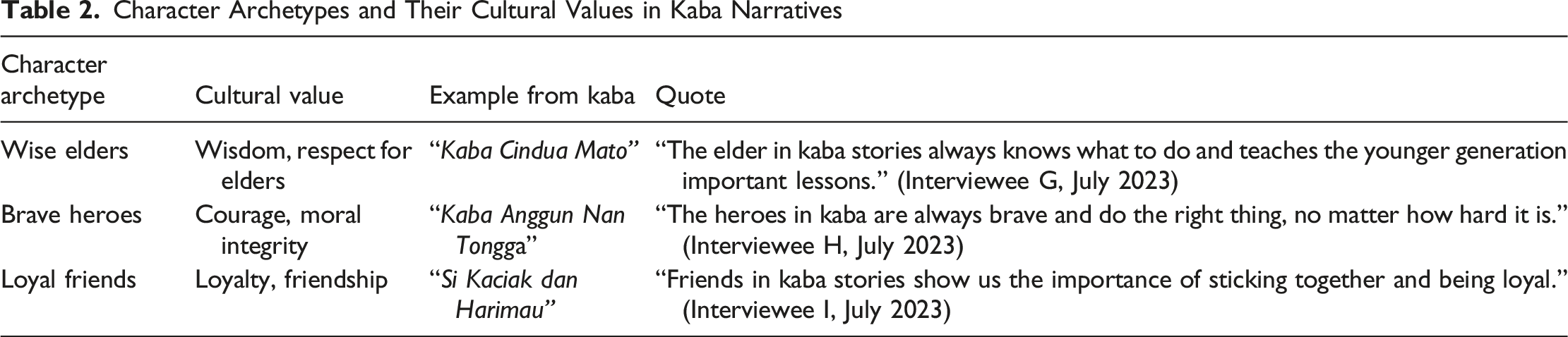
These archetypal characters exhibit traits and behaviors that are highly valued within Minangkabau society. By embodying these ideal values, they provide concrete examples for listeners on how to live in accordance with the cultural values upheld by the community. The findings of this study indicate that the structural and semiotic elements in Minangkabau kaba narratives play a crucial role in preserving and promoting the cultural values of the Minangkabau people. The traditional storytelling structures employed, along with the rich symbolic meanings embedded within kaba, ensure that moral messages are effectively communicated and internalized by the audience.
These narratives promote social harmony, respect for nature, a strong work ethic, and adherence to social norms, all of which contribute to maintaining the cultural identity of the Minangkabau community. The presence of archetypal figures reinforces these values by presenting role models who inspire listeners.
In conclusion, Minangkabau kaba narratives are essential to the process of cultural transmission, as they instill noble values through engaging and memorable stories. The in-depth analysis and interview excerpts presented in this study affirm the vital role of kaba in sustaining the continuity and cultural identity of the Minangkabau people, while also highlighting the ongoing relevance of kaba within contemporary Minangkabau society.
Semiotic Elements
Symbols and Motifs in Kaba Narratives
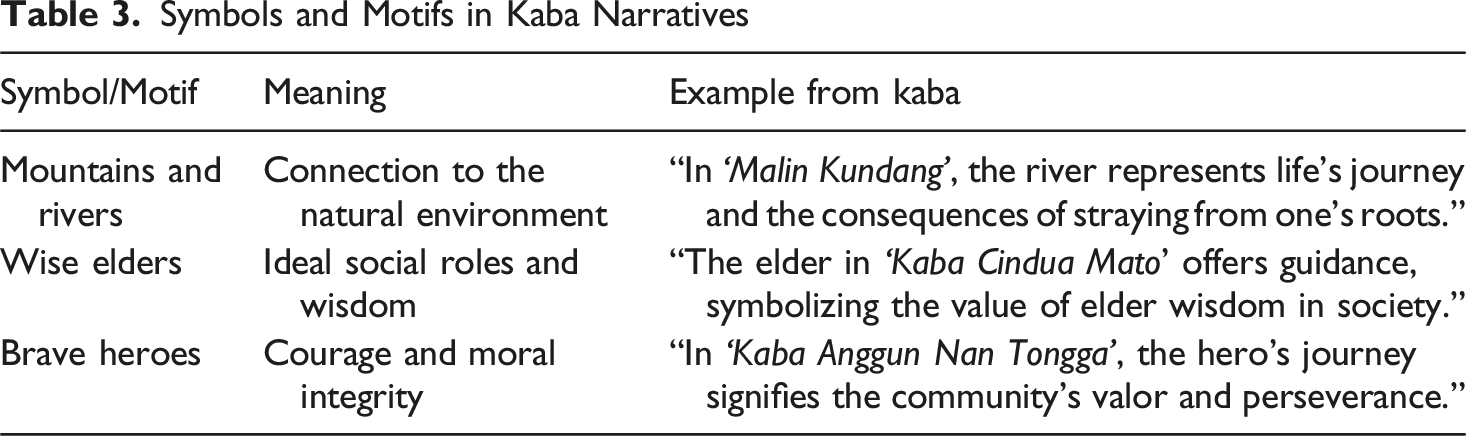
An interview participant stated, “The mountain in kaba stories is not just a physical location; it symbolizes challenges and the strength needed to overcome them” (Participant B, July 2023). From a semiotic perspective, kaba narratives convey complex cultural values and communal aspirations through symbols and motifs. For example, mountains and rivers are not merely geographical features but represent broader themes such as life’s challenges and the journey of existence, affirming the relationship between individuals and their environment. Similarly, the figure of the wise elder symbolizes collective wisdom and the ideal social roles valued in Minangkabau culture, while the brave hero represents community courage and integrity. These symbolic elements help convey deeper meanings, making kaba narratives not only entertaining but also rich in cultural significance.
The structural and semiotic elements found in kaba narratives function to encapsulate and transmit the cultural values of Minangkabau society. The moral messages embedded in these stories promote social harmony and cooperation, which are central values within the Minangkabau community. The symbolic use of natural elements reflects the community’s respect for the environment, while portrayals of hardworking and diligent characters emphasize the importance of perseverance and effort.
Archetypal figures in kaba stories, such as the wise elder and the courageous hero, reinforce social norms and expectations. These characters serve as role models, illustrating attitudes and behaviors that align with Minangkabau cultural values. This storytelling method ensures that important cultural messages are passed down from generation to generation, thereby preserving cultural continuity and identity. Another participant expressed, “When I hear kaba from my grandparents, I learn about our cultural values like respect and hard work. Those stories are a big part of who we are” (Participant C, July 2023).
In conclusion, the structural and semiotic elements in Minangkabau kaba narratives play a significant role in preserving and promoting the cultural values of the Minangkabau community. The traditional storytelling structure, along with the rich use of symbols and motifs, ensures that these narratives remain a vital part of Minangkabau cultural heritage. The in-depth analysis, complemented by interview excerpts, underscores the importance of these elements in maintaining the cultural identity of the Minangkabau community.
The Level of Interest and Engagement of Gen-Z Students with Kaba Narratives
Interviews with Gen-Z students at Universitas Negeri Padang revealed varying levels of familiarity and engagement with kaba narratives. Although most students recognized the cultural significance of kaba, their level of engagement was influenced by several factors, such as the mode of presentation and the relevance of the stories to their current lives.
General Appreciation for Kaba
Student Perspectives on the Significance and Delivery of Kaba Narratives
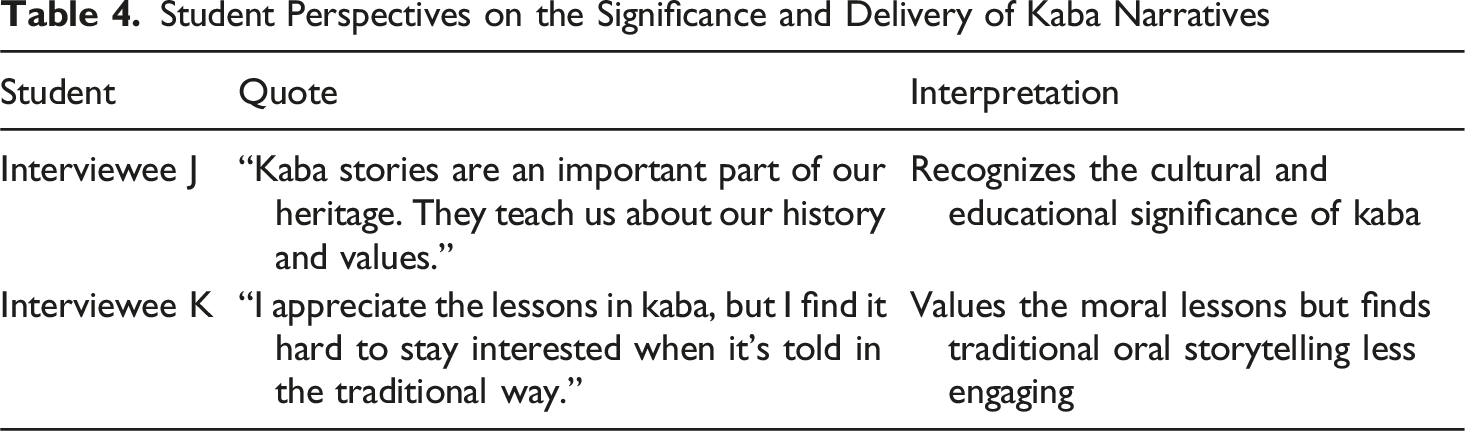
Student Feedback on Kaba Narratives
Student responses revealed a deep understanding of the role and delivery of kaba narratives. While there was strong appreciation for the moral and cultural values embedded in kaba—as highlighted by Participant J, who emphasized its importance in preserving cultural heritage and instilling values—Participant K pointed out the challenges associated with traditional storytelling methods. This reflects a gap between the cultural significance of kaba and the current audience’s level of engagement, indicating the need for adapted storytelling approaches that sustain interest without diminishing the educational and cultural essence of kaba.
The Impact of Presentation Methods
The method of presentation significantly influences student engagement with kaba narratives. Traditional oral storytelling was perceived as less engaging compared to modern digital formats. Students preferred digital adaptations such as animated videos, interactive applications, and social media content. This preference aligns with Nasution’s (2020) findings, which underscore the importance of presentation modes in capturing young people’s interest in cultural heritage. One student remarked, “I really enjoy kaba stories when they’re made into short animations or comics. It’s more exciting and easier to understand” (Participant K, July 2023). Another student added, “Social media is where I spend most of my time, so if kaba stories are available there, I would definitely be more interested in watching them” (Participant L, July 2023).
These student responses confirm a significant shift in how cultural narratives like kaba are received by the current generation. Traditional storytelling methods are less effective in engaging modern audiences, who are more attracted to interactive and visual formats. This shift reflects Nasution’s (2020) findings that adapting traditional stories to contemporary media platforms can enhance their appeal and accessibility, ensuring that cultural heritage remains relevant and appreciated by younger generations.
Relevance to Modern Life
Student Perspectives on Modernization and Relevance in Kaba Narratives
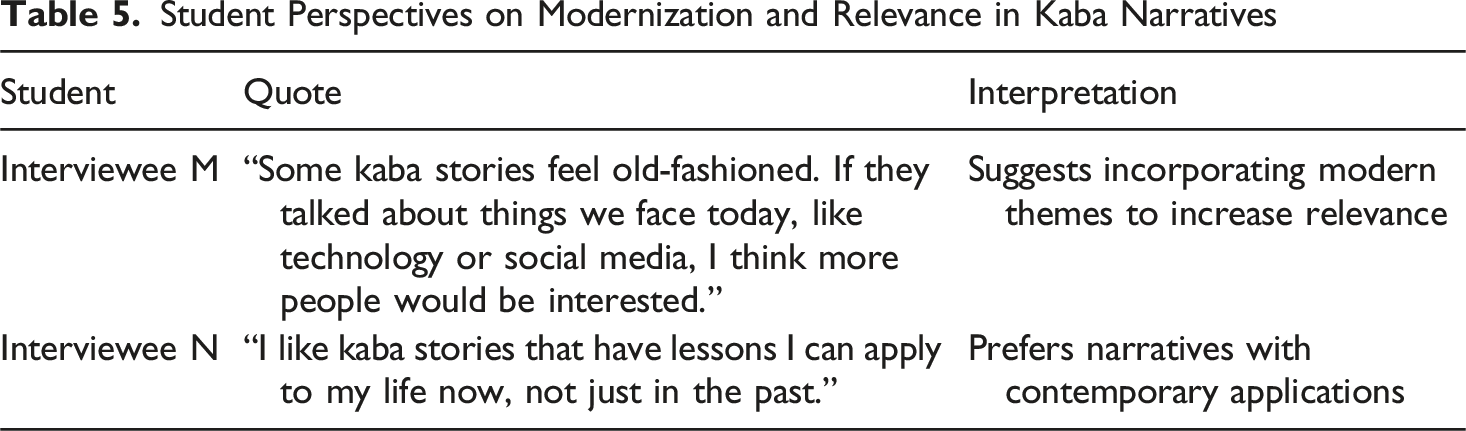
A student suggested, “If kaba stories featured characters facing problems we experience today, like technology or social media, I think more people would be interested” (Participant M, July 2023).
These research findings indicate that although Gen-Z students at Universitas Negeri Padang recognize the cultural significance of kaba narratives, their level of engagement is heavily influenced by the mode of presentation and the relevance of the stories. While students appreciate the moral and cultural values embedded in kaba, traditional oral storytelling methods are less effective for this generation. Instead, they display a clear preference for digital formats that align with their media consumption habits.
Digital adaptations, such as animated videos, interactive applications, and social media content, are identified as effective tools for engaging younger audiences, consistent with Nasution’s (2020) findings on the role of digital media in cultural preservation. Additionally, relevance to modern life is another key factor. Integrating contemporary themes and settings into kaba narratives can enhance the relatability of the stories to daily life and ensure that kaba remains resonant with the younger generation.
Therefore, adapting kaba into digital platforms and incorporating modern elements are essential strategies for preserving and promoting Minangkabau cultural heritage among Gen-Z students.
Factors Influencing the Relevance and Appeal of Kaba
Several factors influence the relevance and appeal of kaba narratives for Gen-Z students. These factors underscore the importance of adapting traditional stories to align with the consumption habits and interests of today’s generation.
Digital Adaptation
Student Preferences for Digital Formats in Kaba Narratives

A strong preference among Gen-Z students for digital formats reflects a significant shift in how cultural narratives like kaba are consumed and appreciated. Animated videos, interactive applications, and social media content align with students’ digital habits and enhance engagement by providing a more dynamic and interactive experience. This trend underscores the importance of adapting traditional stories to modern platforms to maintain their relevance and accessibility, thereby capturing the attention of the younger generation increasingly immersed in digital media.
Relatability
The ability to connect with the characters and situations in kaba stories greatly influences students’ interest. Stories that address contemporary issues or are set in modern contexts are perceived as more engaging and relevant to young audiences. Students expressed a desire for kaba narratives to tackle topics pertinent to their current lives, such as technology, social media, and modern social dynamics.
One participant stated, “Some kaba stories feel outdated. If the stories talked about things we face now, like technology or social media, more people would be interested” (Participant M, July 2023). Another added, “I enjoy kaba stories that have lessons I can apply to my life today, not just lessons from the past” (Participant N, July 2023). These statements highlight the importance of updating kaba narratives to reflect contemporary experiences and challenges, thereby enhancing their relatability and appeal to Gen-Z students.
Cultural Education
Student Perspectives on Educational Approaches to Kaba Narratives

The findings of this study indicate that the relevance and appeal of kaba narratives for Gen-Z students are significantly influenced by digital adaptation, relatability to their lives, and cultural education. The strong preference for digital formats underscores the need to modernize the presentation of kaba stories to align with the media consumption habits of younger generations. Animated videos, interactive applications, and social media content emerge as effective mediums to engage students with these traditional narratives.
Relatability to modern life is another crucial factor, as students tend to be more engaged with stories that reflect their contemporary experiences and issues. Integrating modern themes and settings into kaba narratives can enhance their relevance and make them more appealing to Gen-Z. This approach bridges the gap between traditional values and modern lifestyles, ensuring that kaba stories remain meaningful and resonant for younger generations.
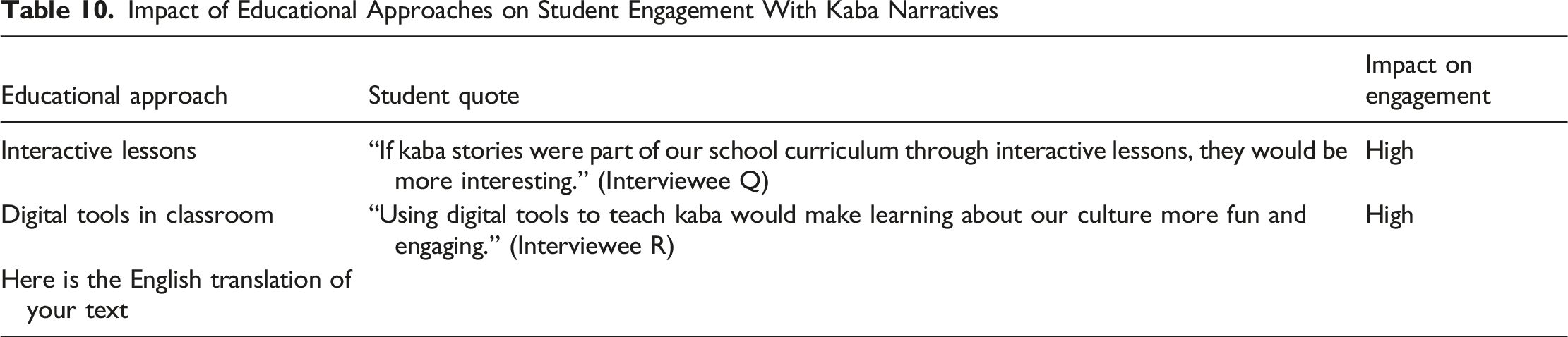
Incorporating kaba narratives into educational curricula also presents a valuable opportunity to enhance their relevance and appeal. Innovative educational approaches that utilize digital tools and interactive learning methods can make these traditional stories more engaging and accessible. By embedding kaba within the education system, students can develop a deeper connection to their cultural heritage while enjoying a dynamic and modern learning experience.
In conclusion, adapting kaba narratives to digital formats, integrating contemporary themes, and incorporating them into educational curricula are key strategies to enhance their relevance and appeal to Gen-Z students. These findings emphasize the importance of evolving traditional storytelling methods to align with modern audience preferences and interests, thereby ensuring the continued appreciation and preservation of Minangkabau cultural heritage.
Recommendations to Enhance the Appeal of Kaba
Based on the study’s findings, several strategies are recommended to increase the appeal of kaba narratives for Gen-Z students. These strategies focus on digital adaptation, the inclusion of contemporary themes, and integration into education to align with the preferences and needs of today’s young audiences.
Adopting Digital Storytelling
Impact of Digital Formats on Student Engagement With Kaba Narratives

The data indicate that digital adaptations of kaba narratives—such as animated videos, interactive applications, and social media content—significantly enhance Gen-Z students’ engagement. By aligning with their digital consumption habits, these formats are more effective in capturing attention while providing an immersive and enjoyable learning experience. This shift towards digital storytelling underscores the importance of integrating modern technology to maintain the relevance and appeal of traditional cultural narratives in an ever-evolving media landscape.
Integrating Contemporary Themes
Impact of Modernization on the Relevance of Kaba Narratives

Integrating contemporary issues and modern settings into kaba narratives can significantly enhance their relevance and appeal to young audiences. By addressing current topics such as social media and environmental issues, and placing characters within relevant modern contexts, these stories can bridge the gap between traditional values and present-day realities. This approach helps preserve the cultural significance of kaba while ensuring that the narratives resonate more strongly with students, making them more engaging and applicable to their everyday lives.
Integration into Education
Impact of Educational Approaches on Student Engagement With Kaba Narratives
Recommendations to Enhance the Appeal of Kaba Narratives for Gen-Z Students
The recommendations for increasing the appeal of kaba narratives among Gen-Z students focus on adjusting storytelling methods to align with the consumption habits and interests of today’s generation. Adopting digital storytelling through animated videos, interactive apps, and social media campaigns can significantly boost engagement. These digital formats align with the preferences of tech-savvy audiences and make kaba stories more accessible and enjoyable.
Integrating contemporary themes into kaba narratives is also essential to ensure their relevance to young audiences. By incorporating modern issues and settings relatable to current life, kaba stories can bridge traditional values with modern lifestyles, ensuring that the stories remain meaningful and practical. This approach helps students see how cultural values apply to their daily lives, thereby increasing their interest and engagement with kaba.
Integrating kaba narratives into educational curricula can further enhance their relevance and appeal. By embedding kaba in school and university curricula and employing innovative teaching methods, educators can foster greater awareness and appreciation of Minangkabau cultural heritage. Interactive lessons and the use of digital technology in the learning process can make the experience more dynamic and engaging while strengthening students’ connection to cultural narratives.
In conclusion, adapting kaba into digital formats, incorporating contemporary themes, and integrating it into educational curricula are key strategies for enhancing its appeal to Gen-Z students. These recommendations align with the preferences and interests of today’s youth while ensuring the continued appreciation and preservation of Minangkabau cultural heritage. The in-depth analysis and interview quotations presented in this study underscore the importance of evolving traditional storytelling methods to meet modern learners’ needs, ensuring that kaba remains a vital and engaging part of Minangkabau culture.
Discussion
This research provides insights into how Gen-Z students engage with Minangkabau kaba narratives amidst globalization and technological advancement. The interview data and thematic analysis reveal that while students generally maintain a high level of cultural appreciation, their engagement is significantly influenced by factors such as the mode of presentation, relevance to modern life, and their preference for digital media. These findings reinforce previous research by Nasution (2020), which emphasized that the medium of presentation is crucial in determining the extent to which cultural heritage can attract young generations.
Furthermore, this study advances prior research by offering a new conceptual framework on student engagement: Cultural Appreciation, Personal Relevance, and Media Preference. These dimensions enrich interdisciplinary approaches in cultural studies, especially in understanding how technology today not only serves as a tool for cultural dissemination but also as a means of recontextualizing cultural meanings to stay relevant to contemporary social needs (Shiri et al., 2022). This aligns with Alsaleh’s (2024) notion that technology aids in cultural dissemination.
Additionally, adjusting kaba’s themes and settings to modern issues such as social media, technology, and environmental consciousness represents an innovation in cultural revitalization. Devanti and Astutik (2024) have already asserted that young generations are more connected to cultural narratives contextualized with today’s global challenges. Therefore, kaba is not just a repository of values in traditional domains but also a space for negotiating cultural identity in the modern era.
In education, the findings reinforce the urgency of integrating cultural heritage into curricula, particularly through digital and interactive approaches. This supports Anwar et al. (2020) call for technology-based pedagogical transformation to enhance cultural literacy among youth. Kaba, when incorporated into education, not only retains its educational value but also contributes to addressing 21st-century challenges such as creativity, collaboration, and digital literacy. However, overcoming implementation barriers requires innovative solutions and sustained support for educators and institutions (Adera, 2025; Blanco-García et al., 2025; Dhir, 2021; Kiryakova, 2020; Wijaya, 2020; Yasa et al., 2024).
Practically, this study demonstrates that the sustainability of kaba cannot rely solely on traditional methods but necessitates a process of cultural re-signification through new media. Digital adaptations like animations, interactive apps, and social media content have proven effective in bridging the gap between cultural heritage and the Gen-Z lifestyle. The findings also highlight the importance of interdisciplinary approaches involving cultural academics, educators, and technology practitioners in redesigning more adaptive cultural preservation strategies.
A theoretical contribution of this study is its expansion of discourse on cultural preservation in the digital era by proposing that revitalizing cultural heritage requires interventions not only in content preservation but also in the innovation of form and medium. Successfully adapting kaba can exemplify how traditional narratives can remain alive and evolve when they adapt to changing times and contemporary social challenges.
Thus, this study not only addresses academic needs for effective cultural preservation models in the digital era for Gen-Z but also offers practical recommendations for policymakers and cultural institutions to develop technology-based programs that strengthen cultural identity among youth. Examples include prioritizing the creation of digital adaptations of kaba narratives by cultural organizations and educators. Collaborations with animation companies to produce short animated films inspired by popular kaba stories could attract young audiences. The success of initiatives like “Pitung the Legend,” an animated series rooted in Jakarta mythology, demonstrates the significant impact of this method.
Similarly, developing interactive mobile applications that allow users to engage directly with kaba narratives through games and interactive storytelling could greatly enhance user engagement, similar to the “Wayang Force” app, which revives Javanese wayang stories through interactive media.
Additionally, modifying kaba narratives to incorporate contemporary issues and contexts can enhance their relevance and appeal to the Gen-Z demographic. For example, a kaba story could be reimagined to address current environmental challenges, with the protagonist facing difficulties reflecting today’s ecological crises. Campaigns like “Save Our Seas” use traditional narrative structures to educate youth about marine conservation. Integrating kaba narratives into school and university curricula using creative teaching techniques can boost students’ understanding and appreciation of cultural heritage. In the context of literature learning, this approach provides opportunities for students to develop interpretative skills and creativity. Integrating kaba into school or university curricula through creative teaching techniques, such as digital storytelling or interactive performances, can enhance students’ understanding and appreciation of traditional literature. Initiatives such as Singapore’s “Cultural Heritage Education Project” have successfully engaged children with their cultural heritage through digital storytelling and interactive learning. Schools in Indonesia can adapt this model by encouraging students to create digital versions of kaba narratives as part of literature learning. In this way, traditional literature is not only studied as a static text but is also revitalized through creative processes that combine cultural values with digital literacy skills. This enables Generation Z to build a personal connection with regional literature while simultaneously developing 21st-century competencies grounded in technology, collaboration, and critical thinking.
Engaging youth in community-based activities that involve them in the storytelling process can strengthen their connection to cultural heritage. Practical experiences, such as workshops where students collaborate with local storytellers and digital media specialists to create their own kaba versions, can be particularly impactful. Programs like “StoryCorps” in the United States aim to foster deeper understanding and appreciation of cultural narratives by collecting and sharing personal stories through community engagement.
To ensure the sustainability of Minangkabau kaba in the digital age, cultural practitioners and educators can implement these strategies to engage and captivate future generations. These concrete examples demonstrate the practical application of research findings, showing how traditional cultural stories can be preserved and revitalized through innovative methods.
Conclusion
This study provides important insights into the challenges and opportunities in preserving traditional cultural narratives in the digital age. The research analyzed the structural and semiotic components of the Minangkabau kaba narratives and explored how Gen-Z students interpret these stories, while highlighting the need for creative approaches in cultural heritage preservation.
The findings emphasize the importance of modifying traditional storytelling techniques to align with contemporary consumption patterns and preferences, particularly through the use of digital platforms and the integration of current themes. Although this study was designed to provide comprehensive insights into the issues explored, certain limitations must be acknowledged. The generalizability of the findings is constrained due to the small sample size and the focus on students from a single institution. Furthermore, the qualitative nature of the research introduces a degree of subjectivity and potential biases in the interpretation process (Creswell & Creswell, 2017).
Integrating kaba narratives into school curricula presents a promising approach to fostering cultural knowledge and appreciation among younger generations. This recommendation offers practical guidance for cultural practitioners, educators, and policymakers to ensure that Minangkabau cultural heritage remains significant and dynamic in an increasingly interconnected world.
Footnotes
Acknowledgements
The author expresses sincere gratitude to the LPDP RI (Indonesia Endowment Fund for Education) for its financial support in the completion of this research.

Funding
The authors received no financial support for the research, authorship, and/or publication of this article.
Declaration of Conflicting Interests
The authors declared no potential conflicts of interest with respect to the research, authorship, and/or publication of this article.