







Abstract
What motivates political parties to use social media, and how does this usage correlate with outcomes such as party success? As social media platforms have become increasingly important for political communication, these questions have gained prominence in the literature on both party politics and social media politics. In this paper, we contribute to these discussions by introducing a new dataset on the social media activity of 498 political parties across 37 countries on four platforms, Facebook, Instagram, Twitter, and YouTube, from account creation to the end of 2023. The dataset provides rich aggregated data on posting volume and timing, enabling the study of long-term patterns in platform adoption, communicative patterns, and parties’ online activity. The paper presents the data, provides descriptive and inferential findings on how political parties engage with social media, and outlines several research avenues enabled by this dataset.
Introduction
Since the early 2000s, political elites have increasingly embraced digital tools. While scholars had begun exploring political parties’ use of the Internet around the turn of the century (Margetts 2006), the emergence of social media platforms such as Facebook, Twitter, Instagram, and YouTube has dramatically reshaped how political actors engage with voters. This transformation has been especially pronounced during election campaigns, with the 2008 U.S. presidential election representing a pivotal moment in political parties’ adoption of digital tools.
The literature highlights two critical dimensions of the digital transformation within political parties: internal organization and external communication (for an overview see Lilleker et al., 2019). Studies indicate that political parties have undergone substantial internal digital shifts, utilizing the Internet to mobilize resources such as recruiting activists, fundraising, and engaging members through digital tools like comments, polls, forums, and grassroots interactions (Sandri et al., 2024). Certain parties, including the Five Star Movement (M5S), Podemos, and the Pirate Parties, are often labeled as “digital parties” due to their extensive reliance on digital tools to foster internal democracy (Barberà et al., 2021; Gerbaudo 2021).
Externally, political parties have increasingly adopted digital tools for communication, allocating resources to hire technology specialists, advisors, and community managers. Social media, in particular, has revolutionized how parties conduct their campaigns (Jungherr 2023), serving as a complement to traditional communication channels such as manifestos, press releases, and parliamentary speeches. Consequently, more parties and politicians have expanded their presence on social media platforms like Facebook, Twitter (Jungherr 2016; Stier et al., 2025), and Instagram (Olof Larsson 2023; Pineda et al. 2022; Russmann et al. 2019), which provide accessible, instantaneous, and adaptable means of communication (De Sio and Weber 2020). These platforms are used by parties for various purposes, including setting agendas (Gilardi et al., 2022) and disseminating messages (Filimonov et al. 2016) to diverse audiences. Notably, parties often employ social media less for dialogue and more as a broadcasting tool to reach broader audiences, such as voters, journalists, and opinion leaders (Jungherr 2016). Furthermore, parties utilize data analytics and algorithms offered by social media platforms for microtargeting voters (Dommett and Power 2019; Erfort 2024; Votta et al., 2024).
While numerous studies have explored political parties’ use of social media platforms, much of the existing research is constrained by its focus on specific countries, parties, platforms, or time periods, such as election campaigns. These limitations reduce the generalizability of findings and impede meaningful comparisons of social media usage across countries, platforms, and over time. In addition, researchers increasingly face barriers to accessing social media content data due to changing platform policies and API restrictions. We believe that scholars investigating political parties and social media politics can greatly benefit from a comprehensive dataset that captures the external digital communication practices of political parties across varied contexts.
To address this gap, we present the PartySOME dataset, which documents the daily, weekly, monthly, and yearly social media activity of 498 political parties from 37 countries. The included platforms are Facebook, Instagram, Twitter, and YouTube, spanning from the mid-2000s to the end of 2023. While the dataset does not include the content of these posts, it provides detailed metadata such as posting frequency and timing. It represents a valuable resource for scholars examining the effects of party presence across platforms and facilitates analyses of social media usage as both dependent and independent variables. Such metadata enables researchers to track longitudinal trends in digital campaign intensity, compare patterns of platform uptake across party types and countries, and analyze strategic timing around electoral cycles. In addition, PartySOME provides a centralized and structured repository of official social media handles of 498 parties.
The note is structured as follows. The next section details the data collection process and introduces the PartySOME dataset. This is followed by a presentation of descriptive statistics on political parties’ use of social media. Finally, we explore the research opportunities enabled by the dataset and conclude with recommendations for future research directions.
The PartySOME dataset
To compile this dataset, we selected political parties from 37 countries listed in the ParlGov dataset that had held at least one seat in their national parliament between 2005 and 2023 (n = 498). This period aligns with the emergence of the first social media platforms. Next, we conducted manual Internet searches to identify the parties’ accounts on Facebook, Twitter, Instagram, and YouTube. Our process typically started with the party’s official Web site, which frequently included links to their active social media profiles. In some cases, we asked country experts to help us identify the accounts.
If information for any of the four major social media platforms was not available on the party’s Web site or if no Web site existed, we used Google and the search functions of the respective platforms, trying various party names and abbreviations. While political parties are increasingly active on additional platforms such as Telegram, WhatsApp, LinkedIn, TikTok, and Bluesky, links to these platforms were far less common on official websites, suggesting their more limited use. Furthermore, identifying official party accounts and extracting data from these platforms proved significantly more challenging. For these reasons, we focused on the four main platforms where the majority of parties maintain an active presence. In some rare cases, a party itself had no official account but their leader did. This is for example the case for the Hungarian party Fidesz and its leader Viktor Orban. In such instances, we included and scraped the leader’s account and flagged it in a separate variable of the dataset.
After having identified the parties’ accounts, we collected data on their social media activity using various tools. For Facebook, we retrieved all posts from the identified parties using CrowdTangle (Garmur et al., 2019), a tool developed by Facebook that enables users to track the performance of public accounts on the platform. For YouTube, we utilized the YouTube V3 API, initially gathering data on videos published by each party. For Twitter, most of the data was collected using the Twitter API and the academictwitteR package (Barrie and Ho 2021), while the remaining data from Twitter and Instagram was gathered through a web scraping tool developed by Plique et al. (2019). During the data collection process, access to the Facebook and Twitter platforms was restricted, preventing us from collecting data for the entire period of interest or for certain parties. When we began scraping Instagram, official API access through CrowdTangle was not available anymore, and we therefore relied exclusively on the Plique et al. (2019) tool. Any gaps in temporal or party coverage are thoroughly documented in the Appendix on pages 1-9 and the dataset’s metadata.
Figure 1 illustrates the dataset’s coverage across the four platforms, categorizing parties into the following groups: those for which we identified an account and collected complete social media activity data; those for which no account could be found on a given platform; those for which an account was identified but data could not be collected due to access restrictions at the time of collection; and those for which data was collected, but coding or data restriction issues during the process resulted in only partial coverage for the full period. The other category includes instances were an account was identified but data could not be access due to account suspension or deletion. These details are documented as variables in the dataset provided. As shown in the figure, the majority of parties in the dataset are active on the four platforms. Account identification and data collection of the PartySOME dataset.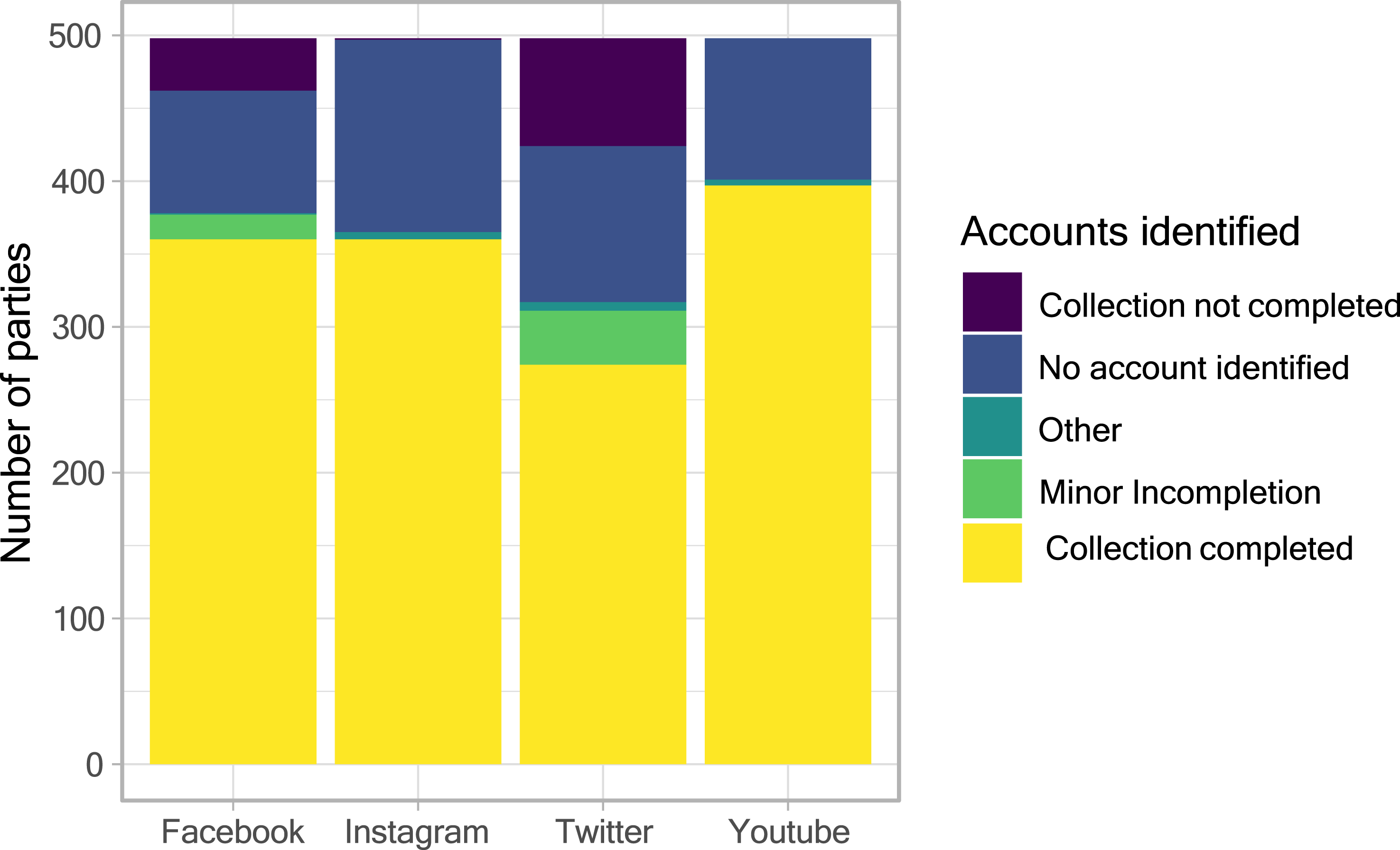
From the collected posts, we derive count metrics that capture the number of posts published by each party on each platform, aggregated at the daily, weekly, monthly, and yearly levels.
Thus, these counts form the core of the dataset and reflect the posting behavior and patterns of parties over time. Since data such as follower counts and post interactions evolve over time and depend on the timing of data collection, we exclude these metrics from the dataset. In addition to the total number of posts, we also include, when available, additional information of the type of posts on the respective platforms. This includes for Instagram and Facebook, a breakdown of posts by type (image and video). First, we release an aggregated dataset compiling the total number of posts for each party and platform from their creation until the end of 2023. This dataset also includes each party’s Web site, if available, along with their social media handles across various platforms, facilitating further research on the digitalization of political parties. Next, we provide versions of the dataset at yearly, monthly, weekly, and daily intervals, enabling researchers to analyze the dynamics of party social media activity over time with fine-grained detail. This dataset can be linked to other datasets using Parlgov party identifiers. This may, for instance, be useful for merging this data with the Chapel Hill Expert Survey (Jolly et al., 2022), Party Facts (Döring and Regel 2019), or the Political Party Database (Scarrow et al. 2017). The dataset is available and maintained at the following GitHub repository: https://github.com/malojan/partysome.
Descriptive findings
To begin, we examine the adoption rates of social media platforms by political parties, question that has been discussed in the literature on party digitalization since the emergence of the platforms (Barberá and Zeitzoff 2018; Gibson 2015; Gulati and Williams 2013; Quinlan et al., 2018; Williams and Gulati 2013). Our dataset includes information on the dates when parties created their accounts on Facebook, Twitter, and YouTube. However, we lack this information for Instagram, which is why we use the date of the first post as a proxy for account creation. Figure 2 displays the distribution of account creation by platform over time, revealing distinct adoption patterns across platforms. YouTube was the first platform adopted by parties, with significant adoption density around 2007-2008, followed by a continuous but declining adoption rate in the following decade. In contrast, the adoption of Facebook and Twitter was much more rapid, with most parties adopting these platforms between 2008 and 2012. Finally, Instagram was the last platform adopted by parties, with a peak in adoption between 2016 and 2020. This comes as no surprise given that Instagram was launched in 2010 and only started to become a major social media platform after the acquisition by Facebook in 2012. Number of accounts created by year for each platform. Dashed lines indicate the launch dates of each platform: Facebook in February 2004, YouTube in February 2005, Twitter in March 2006, and Instagram in October 2010.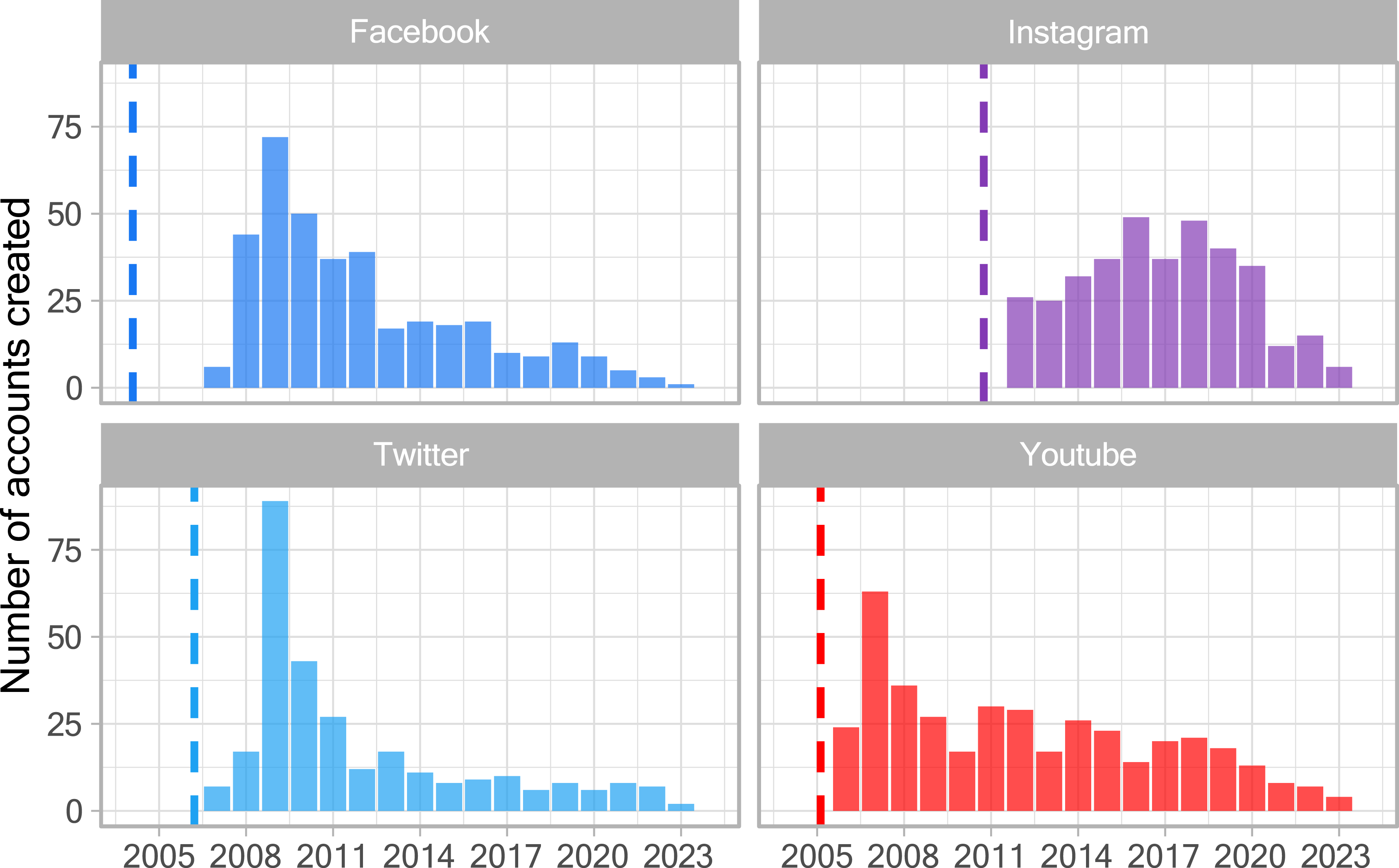
Next, we examine the evolution of the monthly number of posts by platform. Figure 3 shows that for a long time, Twitter was the most widely used platform by political parties, followed by Facebook, with both experiencing increased usage throughout the 2010s. However, in recent years, party behavior on social media has shifted. Instagram has seen a rise in adoption, while Twitter usage has declined since 2019, even before Elon Musk’s acquisition of the platform in 2023. A similar trend is observed with Facebook, which has also experienced a decline in usage in recent years. Monthly evolution of the number of posts by platform. Dashed lines represent the creation of each platform. Due to incomplete data for Twitter in 2023, we exclude Twitter data from December 2022 onwards. For a detailed discussion and description of incomplete data, see pages 1-9 of the Appendix.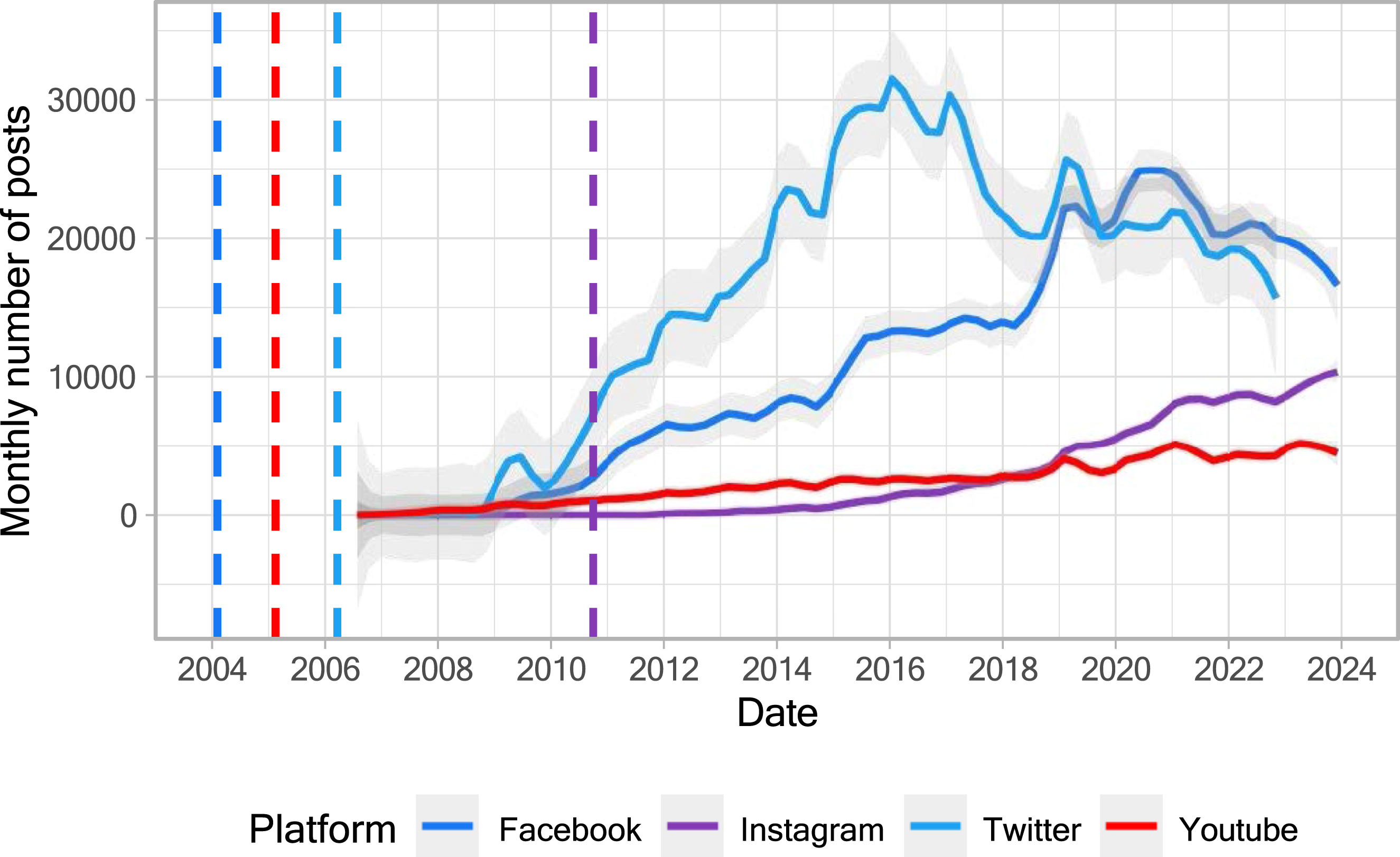
Explaining social media use of political parties
To demonstrate the usefulness of the dataset, we explore several key hypotheses proposed in the literature to understand the variation in social media use across political parties, comparing our findings of existing research with insights derived from our updated and comprehensive dataset.
First, we test the extent to which party resources influence social media use. On the one hand, some literature suggest that parties with low resources have incentives to invest in social media because they have less access to traditional media as it can enable them to receive a wider audience (Gibson and McAllister 2015). Other argue that even if communication costs are low, social media activity requires financial and human resources that some parties do not have. In some parties, one or more dedicated staff members may be fully in charge of managing social media, while in others, this tasks falls to unpaid activists or part-time employees. Larger parties with greater financial resources can hire professional communication teams to ensure consistent messaging, cover party activities, and amplify leaders’ public appearances. As a result, parties with higher resources are expected to have a stronger presence online (Whitesell et al. 2023). This strategic deployment of digital resources aligns with findings from studies showing that data-driven campaigning varies widely in practice depending on parties’ organizational capacity and resources at hand to bet more strongly on digital communication channels (Dommett and Power 2019; Kefford et al., 2023; Klinger 2013; Lüders et al. 2014). Similarly, Kalsnes (2016) highlights that social media strategies necessitate organizational adaptation and the mobilization of important resources, which disfavors minor parties compared to major competitors. Empirical research further supports this idea by showing that candidates from major parties, incumbents, and those with high campaign budgets are more likely to use Twitter than others (Evans et al. 2014; Gilmore 2012; Vergeer 2015; Vergeer and Hermans 2013). This suggests that social media engagement is not solely a function of accessibility but also a party’s ability to invest in strategic digital communication.
To test this, we consider two variables: party vote share and presence in government. The underlying assumption is that if the resource hypothesis holds, larger parties and governing parties should use social media more. Conversely, the second hypothesis would suggest the opposite. Party vote shares and government participation data are sourced from the ParlGov dataset.
Next, we investigate the relationship between party ideology and social media use, considering both party family and populist ideology. The literature is inconclusive on whether parties along the left-right spectrum use social media more or less. However, some studies suggest that post-materialist parties and those with a younger electorate, such as Greens or the radical left, may be more likely to use social media or pursue the digitalization of their organization overall (González-Cacheda and Cancela Outeda, 2025). Further research suggests that populist parties are more likely to use social media than others. Bartlett et al. (2011) argues that the rise of social media has facilitated the success of populism by enabling populist political actors to mobilize formerly disenfranchised groups. Others have suggested that social media provides a platform for populist movements to emphasize themes such as popular sovereignty and anti-elite rhetoric (Engesser et al., 2017). The findings remain inconclusive, as some studies highlight the importance of digital media in fostering direct interactions and voter engagement for populist parties (Gerbaudo 2014, 2017), while others find no significant differences in posting behavior between populist and non-populist parties, apart from engagement metrics favoring the former (Larsson 2022). More recent research further nuances this picture, suggesting that while populist parties may post more frequently (Thomeczek 2024), their higher engagement rates remain a distinguishing factor rather than a universal rule (Davidson and Enos 2025). We explore how these factors influence social media use through the party family classification of ParlGov as well as relying on the classification of populist parties by the PopuList (Rooduijn et al., 2024).
Third, since most studies have focused on social media use during election campaigns, we investigate how party social media activity varies across the electoral cycle. The expectation is that parties invest more in social media during election periods than at other times. This aligns with research showing that parties use social media during campaigns to mobilize voters, disseminate messages, and engage with the media (Jungherr 2016). To measure this, we compute the number of months until the next election, using data from the ParlGov dataset. To account for potential non-linearities in campaign dynamics, such as a sharper increase in activity in the final months leading up to an election, we also include a squared term for this variable.
Lastly, while we do not formulate specific expectations about how these factors vary across platforms, we explore this variation. Platform choices can be strategic, as parties may target different voter profiles depending on the platform (Whitesell et al. 2023). Additionally, platforms offer different affordances: Instagram and YouTube rely heavily on images and videos, whereas Twitter and Facebook are more text-based. These differences may influence how frequently parties post on each platform.
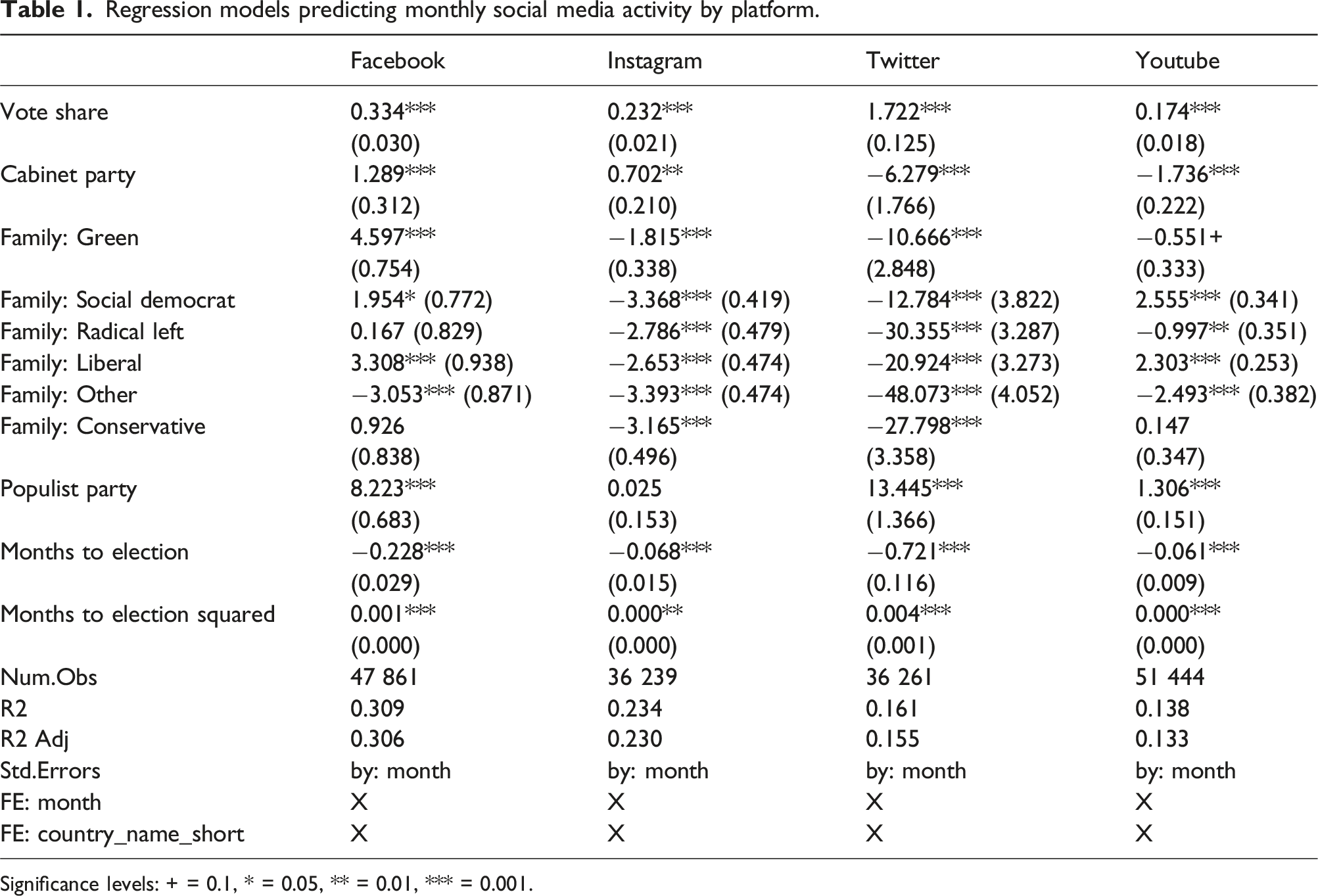
Regression models predicting monthly social media activity by platform.
Significance levels: + = 0.1, * = 0.05, ** = 0.01, *** = 0.001.
Figure 4 first visually represents the coefficients for the different variables regarding the effect of party resources on social media activity. Both government participation and vote share are taken as proxies for the resource hypothesis in our models. The results first show that party vote share has a positive and significant effect on posting on social media across all platforms, showing that the more electorally important a party is, the more it posts on social media. Our models indicate that being a member of a current government has a positive association with posts on Facebook and Instagram, while it reduces the number of videos uploaded to YouTube. The findings therefore seem corroborate the resource hypothesis that higher vote shares, and more financial and staff resources are associated with more social media activity (see also Dommett and Power 2019; Evans et al. 2014; Gibson and McAllister 2015; Kalsnes 2016; Kefford et al., 2023). Government participation yields more nuanced results across platforms. Coefficients for the effect of party resources on social media activity.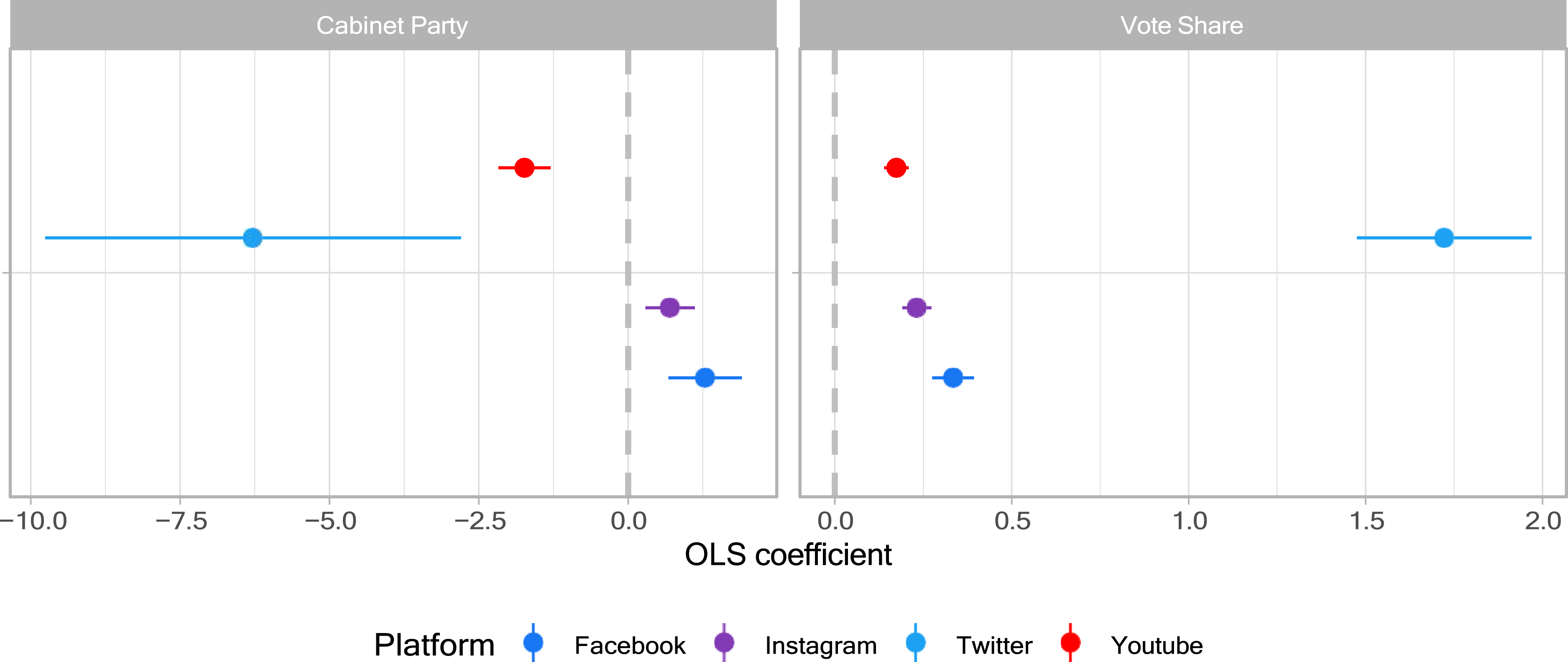
Figure 5 presents the predicted probabilities of monthly social media posts across platforms for different party families. The results indicate significant differences in social media use between party families, though these differences vary by platform. Twitter/X is often perceived as a right-leaning platform. Our results confirm these views by showing that radical right parties post significantly more than all other party families. A similar pattern can be observed on Instagram, where radical right parties also post significantly more than other party families. On Facebook, the predicted probabilities show that left-wing and liberal parties tend to use the platform more than right-wing, radical right, or radical left competitors. YouTube, in contrast, follows a distinct pattern: social democratic and liberal parties post more videos than other party families. While we do not have a clear theoretical explanation for this, it is important to note that YouTube differs from other platforms in that it primarily hosts longer video content. In contrast, Twitter, Facebook, and Instagram rely more on text, images, or short videos, which may create different incentives for parties when producing content. Predicted values for the effect of party family on social media activity.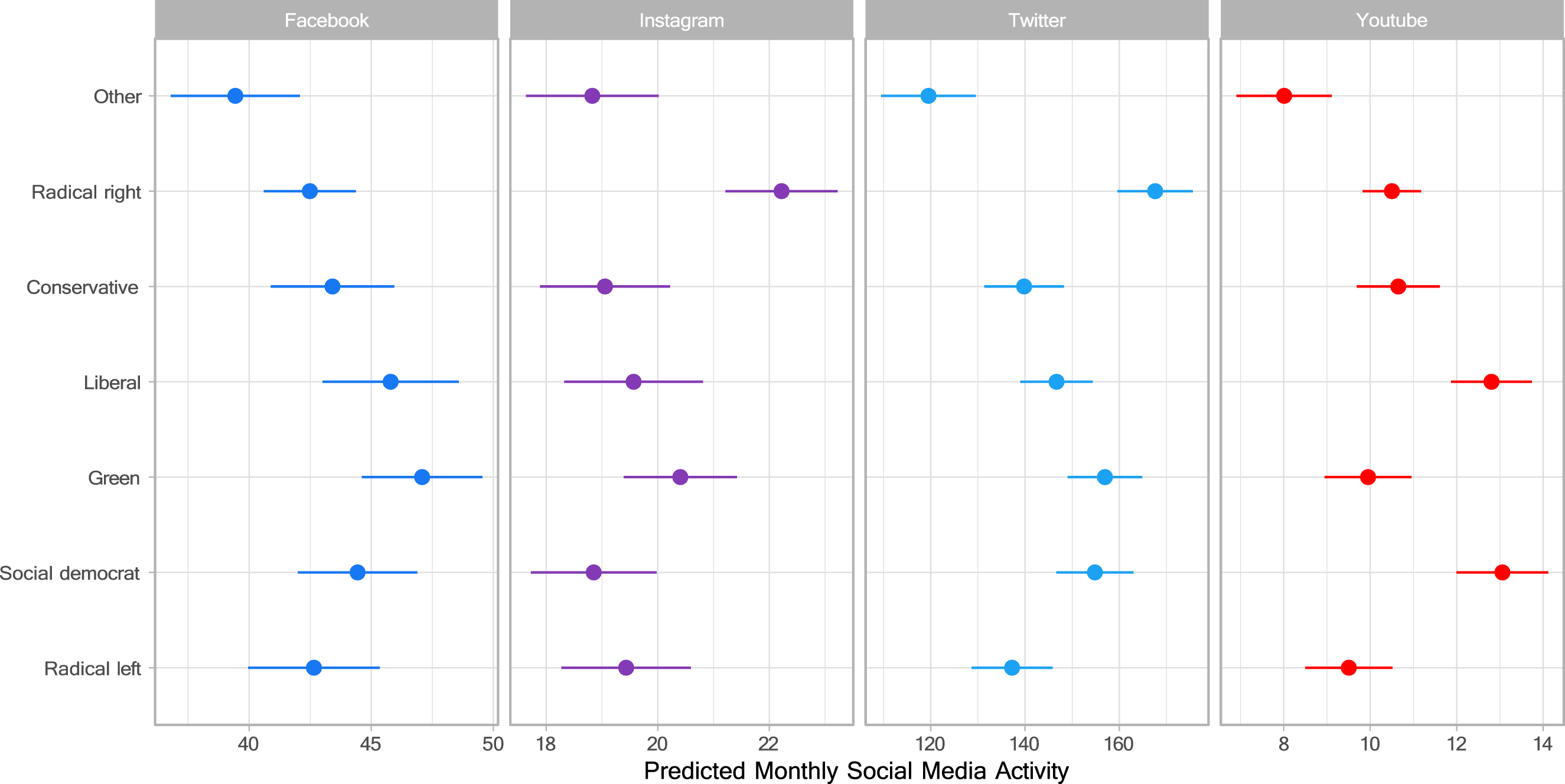
Figure 6 presents the predicted monthly number of posts across platforms for populist and non populist parties. The results indicate that populist parties tend to post more on social media than non-populist parties, particularly on Facebook, Twitter, and YouTube. However, contrary to previous findings in the literature, we do not observe a significant difference in posting behavior between populist and non-populist parties on Instagram. Given our earlier finding that radical right parties are significantly more active on Instagram than other party families, we can speculate that the overall effect of populism on Instagram is dampened by the lower Instagram usage of left-wing populist parties. The predicted probabilities for radical left parties in Figure 5 support this interpretation. These results refine prior claims that populist parties universally post more frequently (Thomeczek 2024), and aligns with the literature by showing that volume does not necessarily distinguish populist actors from mainstream ones (Davidson and Enos 2025; Larsson 2022). Predicted values for the effect of populism on social media activity.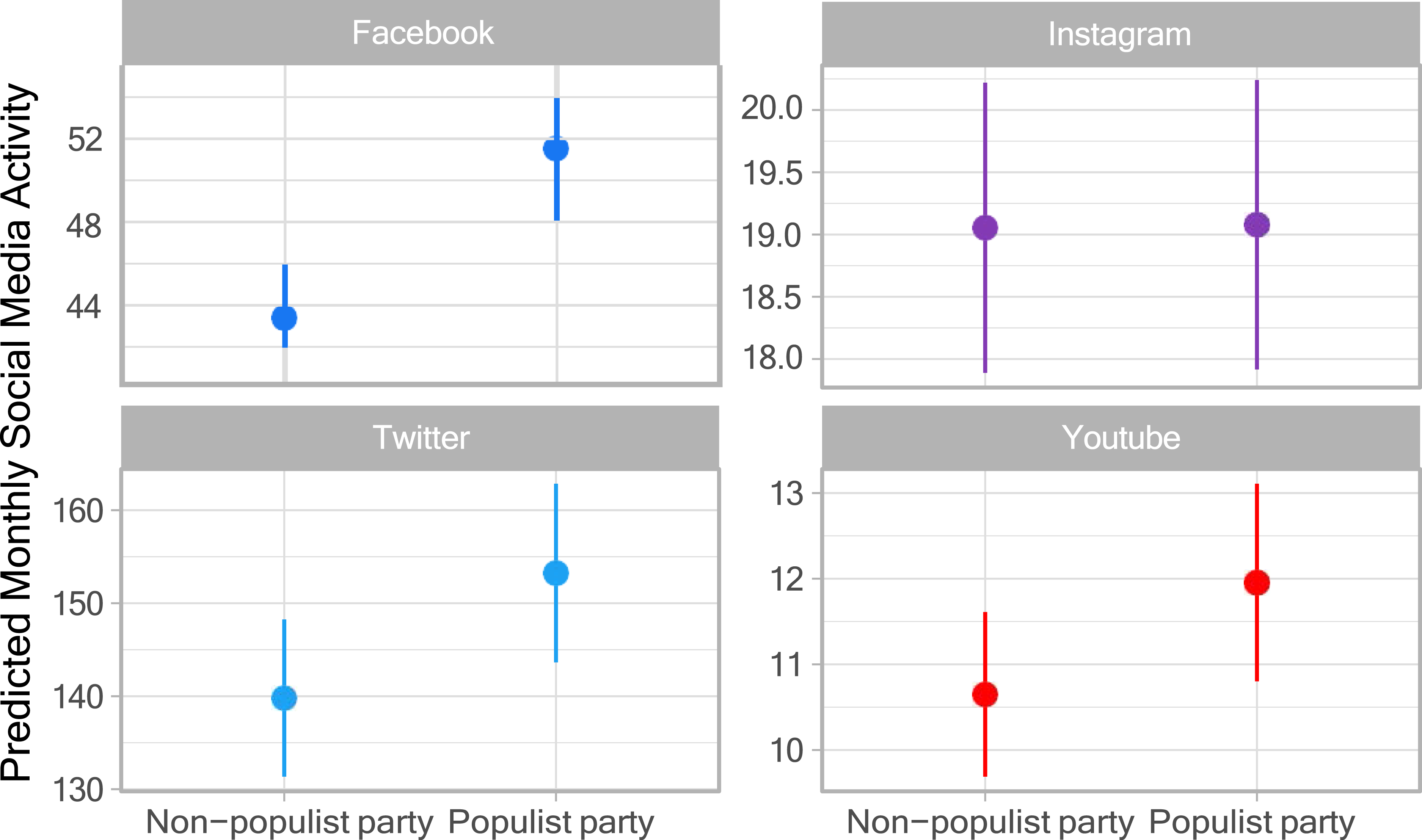
Finally, Figure 7 presents the predicted effect of the squared variable measuring the election cycle on social media activity across platforms. The results align with existing research on social media uses during campaigns (Jungherr 2016), showing that parties increase their social media activity on all platforms as the next election approaches. The inclusion of a squared term reveals a non-linear relationship. Social media activity accelerates more sharply in the final months before an election, suggesting that parties intensify their digital campaigning efforts as election day nears. Predicted values for the effect of the electoral cycle on social media activity.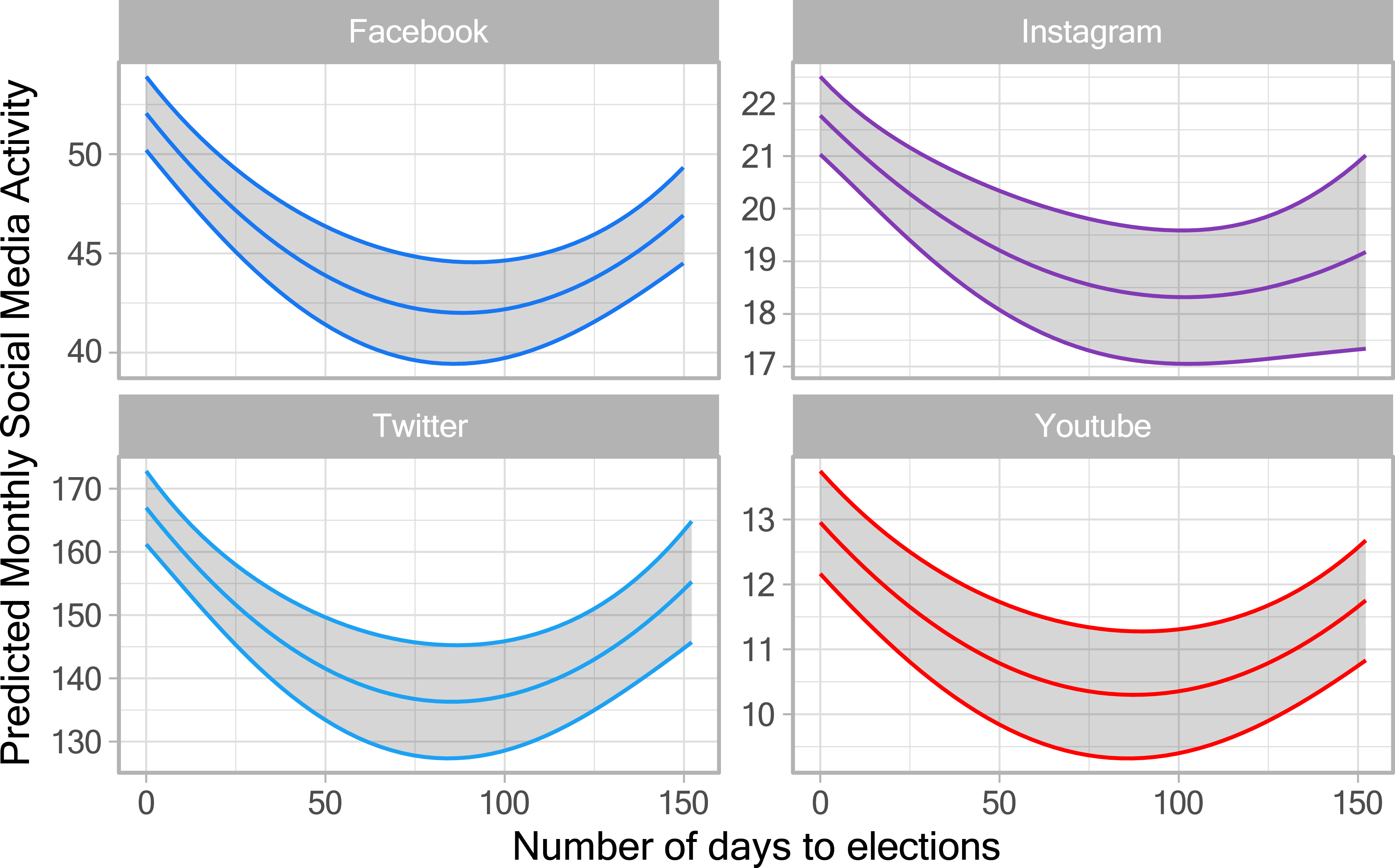
Conclusion
In this paper, we introduce the PartySOME dataset, the most extensive and comprehensive collection of political parties’ social media activity. Covering 498 parties across 37 countries and four major platforms over more than a decade, this dataset systematically tracks weekly social media activity, providing a valuable resource for analyzing how parties engage with digital tools across diverse political contexts. We believe its release will foster further research on political parties’ digital communication strategies and their evolving use of social media.
PartySOME is particularly useful for studying the evolution of political communication strategies, which, beyond what is communicated, also involves when, on which platform, and with what intensity attention is allocated. Scholars can examine how parties’ adoption of social media has changed, whether they shift emphasis between platforms, and how platform affordances shape their communication styles (for earlier studies see for example Koc-Michalska et al. (2021); Deseriis (2021); Theocharis et al. (2023)). Scholars could for instance use event history analysis to predict adoption of these platforms. It also enables the investigation of whether parties concentrate their efforts on a single platform or diversify their presence, as well as how these patterns evolve during election campaigns or other circumstances. Additionally, the dataset helps to explore how social media has become a key arena for parties to respond to crises, scandals, and major policy debates by tracking spikes in online activity following significant political events.
Another research avenue is the relationship between party social media presence and voter engagement. By linking PartySOME with external survey data, scholars can assess whether party social media activity aligns with citizens’ online behavior and the presence of different social and political groups. Researchers can also test whether parties’ social media strategies mirror their voters’ preferences or if they invest in platforms where their voters are less present to expand their reach.
Furthermore, the dataset facilitates research on party and electoral competition. By integrating PartySOME with electoral performance data, scholars can analyze whether and how online presence correlates with electoral success. It also enables studies on digital competition, investigating how parties react to each other’s online strategies.
At the party level, PartySOME can be linked with research on various aspects of party digitalization. For instance, do “digital parties” that use social media for internal purposes also rely more on it for external communication? If not, what explains this divergence? Furthermore, researchers can explore the relationship between how parties post on social media and the extent to which they use ads on these platforms to target voters.
Finally, PartySOME supports cross-national comparisons of party social media use. Its broad coverage of countries and parties allows researchers to explore how digital strategies vary across different political and institutional systems, shedding light on the factors driving party digitalization in diverse contexts.
Supplemental Material
Supplemental Material - PartySOME: A comprehensive dataset on political parties’ SOcial MEdia activity
Supplemental Material for PartySOME: A comprehensive dataset on political parties’ SOcial MEdia activity by Malo Jan and Luis Sattelmayer in Party Politics
Footnotes
Acknowledgements
The authors thank Jan Rovny for his feedback on the manuscript, as well as the three anonymous reviewers for their helpful comments and suggestions.
Declaration of conflicting interests
The authors declared no potential conflicts of interest with respect to the research, authorship, and/or publication of this article.
Funding
The authors received no financial support for the research, authorship, and/or publication of this article.

Supplemental Material
Supplemental material for this article is available online.
Author biographies
References
Supplementary Material
Please find the following supplemental material available below.
For Open Access articles published under a Creative Commons License, all supplemental material carries the same license as the article it is associated with.
For non-Open Access articles published, all supplemental material carries a non-exclusive license, and permission requests for re-use of supplemental material or any part of supplemental material shall be sent directly to the copyright owner as specified in the copyright notice associated with the article.
