







Abstract
We examine how the degree of social closure among political elites shapes mass-level political trust in Latin America, a region marked by historically closed elites and persistently low trust. Building on contrasting perspectives, we argue that elite closure undermines citizens’ trust, but its influence also depends on a country’s long-term patterns of closure. In contexts where elites have been highly closed over time, further increases are expected to erode trust. In more open systems, by contrast, closure may be positively associated. Our analysis combines LAPOP data (2004–2018) with PELA-USAL elite indicators in a large-N comparative framework. Estimates from hierarchical models indicate that elite closure—characterized by legislative re-election rates and family ties in politics—significantly reduces political trust. However, these results are heterogeneous: rising closure erodes trust only in countries where elites have historically been highly closed, highlighting the context-dependent role of elite composition in shaping citizens’ political trust.
Introduction: The erosion of political trust in contemporary democracies
In recent decades, the legitimacy crisis of democracies has become a global issue, giving rise to widespread concern (Citrin and Stoker, 2018; Dalton, 2004; Pharr and Putnam, 2000; Poguntke et al., 2015; Torcal and Montero, 2006b; Van Ham et al., 2017). Paradoxically, the global proliferation of liberal democracy at the end of the 20th century has been followed by a growing sense of political discontent and disconnection among citizens (Catterberg, 2005; Dahlberg et al., 2015; Offe, 2006). One of the most prominent manifestations of this crisis is the gradual erosion of the subjective connection between elites and citizens, along with an increased perception that political actors fail to represent those they are elected to serve (Castells, 2018).
Political trust is a crucial indicator of legitimacy and political support and, as such, has been extensively scrutinized as a critical measure of democracy’s overall health. The concept refers to the relationship between citizens (the subjects) and political institutions and actors (the objects), in which citizens assess the motivation and competence of political entities to act in their interest, even in the absence of direct oversight (Van der Meer, 2017). Numerous studies across different regions have documented a decline in political trust, coinciding with the growing discrediting of politics (Bargsted et al., 2017; Torcal, 2014; Valgarðsson et al., 2025). While a certain degree of skepticism can be healthy and even beneficial for democracy, as it fosters an engaged and vigilant citizenry (Van der Meer and Zmerli, 2017; Warren, 2017), its widespread prevalence can lead to adverse consequences.
The debate surrounding the determinants of political trust has been primarily conducted from an object-dependent perspective, in which two main viewpoints are distinguished. On the one hand, there is the “outcome legitimacy” perspective, which attributes the primary responsibility for the erosion of political trust to the economic and political performance deficiencies of the democratic system (Anderson and Singer, 2008; Catterberg, 2005; Hakhverdian and Mayne, 2012; McAllister, 1999). On the other hand, although less prominent, another strand of literature highlights the role of institutional and democratic inputs in explaining the erosion of political trust (Dahlberg et al., 2015). It identifies key factors such as the system of government (Norris, 2011), the duration and stability of democracy (Aarts and Thomassen, 2008; Torcal and Montero, 2006b), and the electoral and party system rules (Magalhães, 2006), among other institutional features.
This article contributes to the political trust literature by foregrounding the role of political inputs in shaping citizens’ evaluations of political institutions. Rather than focusing on policy outcomes or governmental performance— the more commonly addressed perspectives in research on political trust—our analysis examines how the composition of political representation, specifically the degree of social closure among political elites, conditions political trust. Elite closure is defined as the extent to which political elites restrict access to their group, thereby preserving control over political resources and decision-making power. By linking political trust to the degree of elite closure, the article advances an input-legitimacy perspective, showing that citizens’ trust in representative institutions is shaped not only by how governments perform in office, but also by who governs and how access to political power is structured.
Theoretical expectations regarding the consequences of elite closure for political trust are, however, mixed. Some scholars suggest that cohesive and closely-knit elites would facilitate agreement formation and efficiency (Higley, 2018; Hoffmann-Lange, 2018), potentially strengthening political trust and legitimacy. In contrast, research on descriptive representation highlights processes of legislative elitization and the overrepresentation of affluent groups, alongside a growing perception that political leaders are increasingly “out of touch” with the public (Dellmuth et al., 2022). From this perspective, high levels of elite social closure may erode political trust, as impermeable elites are perceived as distant and unresponsive.
Building on these competing perspectives, the empirical analysis focuses on Latin America, a region marked by persistently low levels of political trust (Mainwaring et al., 2006; Mattes and Moreno, 2017) and historically closed and homogeneous political elites (Rovira Kaltwasser, 2018). We hypothesize that, on average, elite closure will negatively affect political trust across the region. However, we also expect this relationship to be context-dependent. Specifically, in countries with persistently high levels of elite closure, increases over time are likely to further erode citizens’ political trust. By contrast, in countries with more permeable elites, the association is expected to be positive, reflecting potential gains in trust associated with cohesive elites.
Exploring the relationship between political trust and elite closure in Latin America offers three key advantages. First, the region exhibits some of the lowest levels of political trust globally (Mainwaring et al., 2006; Parra Saiani et al., 2024; Valgarðsson et al., 2025), yet there is substantial cross-national and longitudinal variation. Second, political elites in Latin America have historically been highly closed, socially homogeneous, and weakly connected to the broader population (Rovira Kaltwasser, 2018; Scott, 1971). These baseline conditions provide a particularly stringent context for assessing the possibilities for trust to emerge. Finally, because most comparative research on political trust has focused on advanced Western democracies, shifting the empirical focus to Latin America allows this study to extend existing theories to a systematically underexplored regional setting.
To test our propositions, we conduct a large-N comparative study using data from the Americas Barometer (LAPOP), covering 16 Latin American countries between 2004 and 2018, combined with elite-level information from the Latin American Elites Project (PELA-USAL). Results from linear hierarchical models support our expectations, albeit with some nuances. Within-country increases in elite closure—measured by the proportion of legislators with relatives in politics, and legislative reelection rates—are associated with lower political trust. We also find heterogeneous associations: rising levels of elite closure reduce political trust only in countries with a high average of closure during the observed period, whereas the expected positive association is not statistically significant in countries with more open and permeable elites.
The remainder of the article proceeds as follows. The next section develops the theoretical framework and hypotheses, followed by a contextual discussion of political elites and political trust in Latin America. We then present the empirical analysis and conclude by discussing the implications and directions for future research.
Theoretical framework: Elite closure and its impact on political trust
Max Weber defined closure as the restriction of access to a social relationship based on specific conditions, ultimately leading to the monopolization of valued advantages or resources (Weber, 1964). Building on this idea, social closure can be conceived as an organizational process through which a group—either explicitly or implicitly—draws categorical boundaries between themselves and “others” to secure control over specific resources and sustain long-term status advantages (Tomaskovic-Devey and Avent-Holt, 2019). According to these authors, the closure of a relationship or network can be intentional, reflecting a group’s strategic efforts to safeguard its position through exclusive access to valued resources. Yet, this process can also emerge unintentionally, driven by factors such as tradition, cognitive biases, or cultural stereotypes.
This definition of social closure offers a useful lens for analyzing the potential influence of political elites on the political system from two perspectives. On the one hand, drawing from elite theory (Burton et al., 1992), elites characterized by internal homogeneity and strong cohesion may positively affect democratic governance. When elite members share similar social backgrounds and values and maintain dense social ties, coordination and consensus-building are facilitated, fostering efficiency and institutional stability (Hoffmann-Lange, 2018). On the other hand, highly cohesive, impermeable, and densely connected elites may also generate boundary-making and exclusion. While these dynamics can preserve elites’ hold on power by limiting the incorporation of new actors or outsiders, they may undermine democratic representation and, over time, erode institutional legitimacy and performance (Higley et al., 1991).
How might such closure shape mass-level political trust? We adopt the latter perspective and argue that homogeneous and closed political elites are likely to be perceived as monolithic entities, guided by their own agendas and priorities, and detached from citizens’ everyday concerns (Bargsted et al., 2017; Luna and Altman, 2011). Moreover, high social closeness among elite members may inadvertently foster detrimental practices like corruption, sustained by within-group trust and dense intra-group ties (Hoffmann-Lange, 2018). Accordingly, we expect that strong familiarity and closeness within the elite will, on average, undermine citizens’ trust in political institutions. By contrast, more inclusive and socially permeable elites may strengthen citizens’ perceptions of external efficacy and thereby exert a positive weight on political trust. This expectation aligns with previous findings showing that external political efficacy is positively associated with institutional trust and satisfaction with democracy (Rhodes-Purdy, 2017).
The closure of political elites can occur through multiple mechanisms. Our research focuses on two. The first is closure based on family ties, operationalized by the prevalence of kinship connections within legislatures. Family relationships are widely recognized as a key factor in the formation and reproduction of political elites (Garrido-Vergara, 2020), providing candidates and officeholders with advantages such as early political socialization, access to strategic networks, name recognition, and perceived trustworthiness rooted in familial background (Camp, 1982; Schwindt-Bayer et al., 2022). Research has shown that highly homogeneous political elites may disproportionately represent the values and interests of their group, often leading to the formation of insular and impermeable elite circles, and weakening their ties with broader social sectors (Cordero, 2009; Espinoza, 2010). Accordingly, we argue that the prominence of family connections is a strong indicator of elite closure and limited permeability. Moreover, citizens are likely to perceive this dynamic through the recurrence of well-known surnames within legislative bodies, which may give them an indication of the extent to which political power is concentrated in a few interconnected families.
Our second marker is the legislative reelection rate, commonly used as an indicator of legislative experience and professionalization, and regarded as a core component of congressional institutionalization (Carey et al., 2000; Levita and Márquez Romo, 2023; Palanza et al., 2016). Extensive research links experienced and professional legislatures to political stability, stronger institutions, and higher-quality legislative output, making them central to consolidated party systems. However, excessively long careers could also harm democratic institutions. Renewal and elite circulation are essential to prevent stagnation, facilitate the entry of new actors and ideas, and enhance accountability. In this sense, increasing the porosity and turnover of the political elite would be beneficial for combating corruption and enhancing the legitimacy of political institutions, particularly in contexts where political discontent has increased (Golosov, 2018; Levita and Márquez Romo, 2023; Matland and Studlar, 2004). This proposition matches Schedler’s (1995) caveat about the risks of over-institutionalization, which could produce “stultified party systems”.
Building on these considerations, we propose that high legislative reelection rates can also serve as an indicator of elite closure, particularly in contexts where elites appear highly disconnected from the general public. More specifically, we argue that high reelection, manifested by the continued presence of the same cast of parliamentarians over time, may be interpreted by the public as a sign of a closed and self-replicating elite, reinforcing perceptions of restricted access to power and limited voter influence.
In sum, we expect elite closure to have a general negative relationship with political trust, as greater social homogeneity among elites deepens the divide between them and ordinary citizens. However, drawing on elite theory and the political institutionalization perspective, we also recognize that internal cohesion within political elites can enhance the stability and efficiency of the political system—potentially boosting citizens’ trust in political institutions. This idea resonates with the “output legitimacy” approach, which links political trust to the system’s performance and responsiveness.
To reconcile these competing expectations, we argue that the influence of elite closure on political trust is fundamentally conditional on a country’s baseline level of elite permeability. In contexts where political elites have historically been highly closed, socially homogeneous, and weakly connected to broader social groups, further increases in closure are likely to exacerbate perceptions of exclusion, entrenchment, and unresponsiveness, thereby deepening the erosion of political trust. In such settings, elite cohesion is more likely to be interpreted as evidence of a self-reproducing political class insulated from democratic accountability. By contrast, in countries where political elites are, on average, more open and socially diverse, increases in elite closure may not trigger similar perceptions of exclusion. Instead, they may be interpreted as signals of experience, coordination capacity, and institutional effectiveness, yielding positive associations with political trust. This conditional framework underscores that elite closure is not inherently trust-eroding or trust-enhancing; rather, its political consequences depend on historically embedded patterns of elite circulation.
Lastly, it is worth noting that family ties and reelection rates, while both are conceptualized as indicators of elite closure, also capture analytically distinct mechanisms of elite closure. Family ties in politics represent a mechanism of social reproduction, whereby access to political office is mediated by inherited social capital, name recognition, and dense elite networks. Re-election rates, by contrast, capture a process of professionalization, through which political office becomes increasingly occupied by career politicians who benefit from incumbency advantages and institutionalized barriers to entry. Despite these differences, both mechanisms operate to restrict elite circulation by systematically privileging a narrow set of actors and limiting opportunities for political outsiders. 1
Elites and political trust in Latin America
Latin America provides a compelling setting to examine the relationship between elite closure and political trust. The region consistently exhibits some of the lowest levels of political trust worldwide (Parra Saiani et al., 2024; Segovia et al., 2008; Valgarðsson et al., 2025), a pattern often attributed to historical legacies such as military dictatorships (Bargsted et al., 2017), persistent social inequality (Mattes and Moreno, 2017; Zmerli and Castillo, 2015) and limited state capacity (Mainwaring et al., 2006). Despite these common structural constraints, levels of political trust vary substantially both across countries and over time.
Figure 1 illustrates trends in trust in parliament across Latin America between 2006 and 2018. While regional averages remain low, notable cross-national differences emerge. Uruguay consistently records the highest levels of trust, whereas countries such as Peru and Paraguay remain well below the regional mean. Within-country trends also diverge: some cases—including Chile, Uruguay, Peru, Colombia, and Panama—show a sustained decline in trust, whereas others display more moderate changes or even modest increases over time. Trust in the parliament (7-point scale) by country and survey wave in Latin America, 2004-2018 (Source: LAPOP). Note. Dashed lines indicate the country-level means of trust in parliament.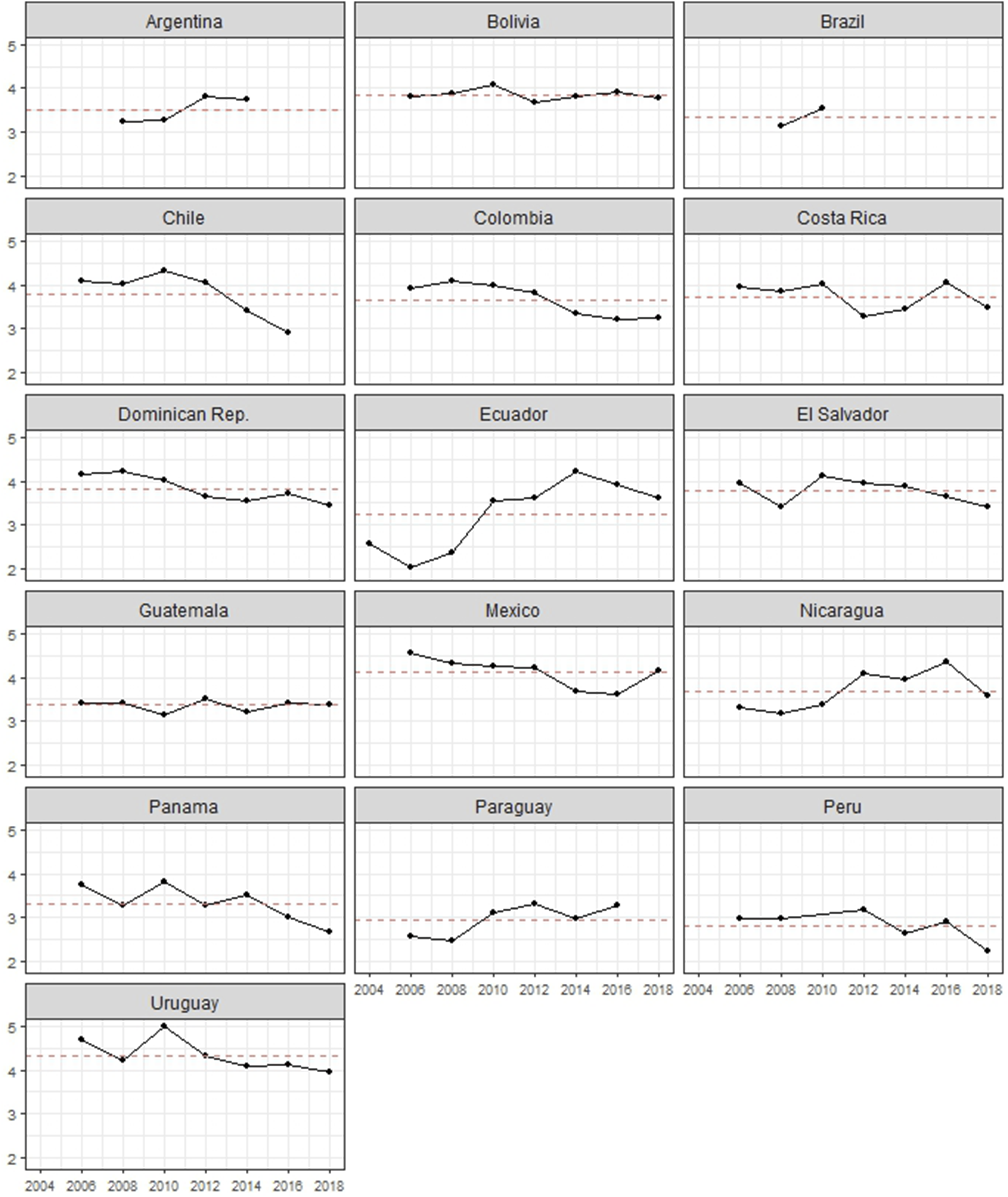
Beyond these patterns, understanding the composition and social characteristics of political elites is essential for grasping the structural roots of elite-citizen disconnection in the region. Historically, Latin American elites have been characterized by weak ties to the broader population, responding to social demands primarily when pressured by democratization processes or emerging social cleavages (Rovira Kaltwasser, 2018). Although the expansion of citizenship and the rise of new urban classes during the twentieth century forced partial incorporation (Rueschemeyer et al., 1992), persistent inequality and uneven access to political power have remained defining features of the region’s political development (López, 2018).
Chile exemplifies the endurance of elite social homogeneity in the post-democratic transition period. Political elites have remained largely male, socially homogeneous, and tightly interconnected through family and social networks, with low turnover and weak vertical linkages to society (Atria and Rovira Kaltwasser, 2021; Cordero, 2009; Espinoza, 2010; PNUD, 2004). This configuration has been associated with growing public disenchantment and concerns about democratic legitimacy.
To empirically capture elite closure, this article relies on two indicators: the prevalence of family ties in national legislatures and legislative reelection rates. Political dynasties are a well-documented feature of Latin American legislatures, with prior research documenting their prevalence, career duration, and gendered patterns across several countries (Camp, 1982; Cordero, 2009; Espinoza, 2010; Joignant et al., 2014; Schwindt-Bayer et al., 2022). As shown in Figure 2, approximately half of legislators across the region report having at least one family member involved in politics, with limited cross-national variation but more heterogeneous within-country trends over time. Proportion of legislators with relatives in politics by country and survey wave in Latin America, 2004–2018 (Source: PELA-USAL). Note. Dashed lines indicate country-level means of the indicator.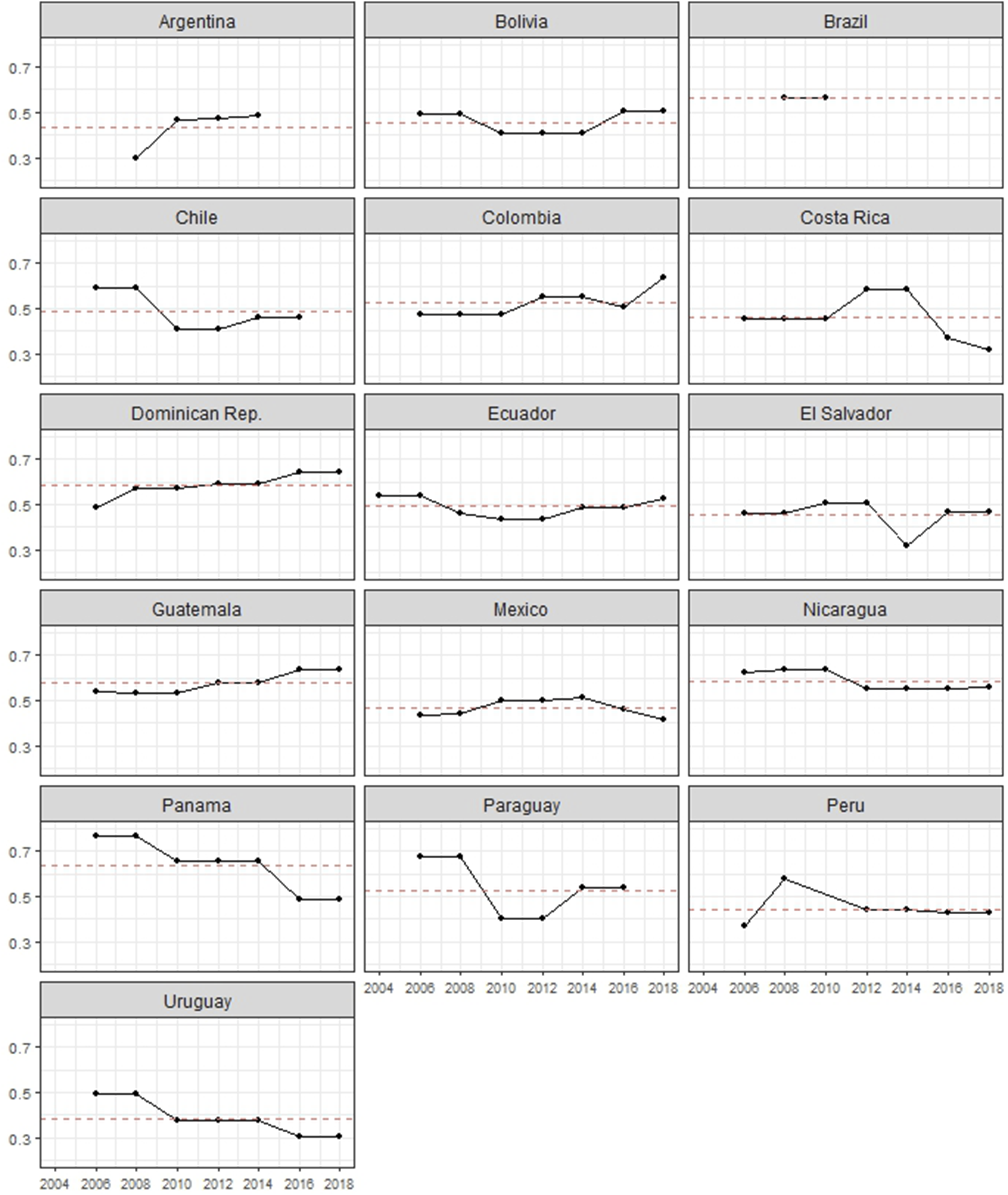
The second indicator—the legislative reelection rate—captures elite turnover and professionalization. Latin America stands out for its high levels of parliamentary turnover relative to other regions (Levita and Márquez Romo, 2023), often interpreted as a sign of weak party systems and institutional instability (Mainwaring and Zoco, 2007). Figure 3 reveals substantial cross-national variation, with high re-election rates in Chile, El Salvador, and Uruguay and markedly lower levels in the remaining countries. Over time, reelection rates remain relatively stable in most cases, reflecting the persistence of electoral and legal frameworks that shape legislative careers. Reelection rate of legislators in Latin America by country and survey wave, 2004–2018 (Source: PELA-USAL). Note. Dashed lines indicate country-level means of the indicator.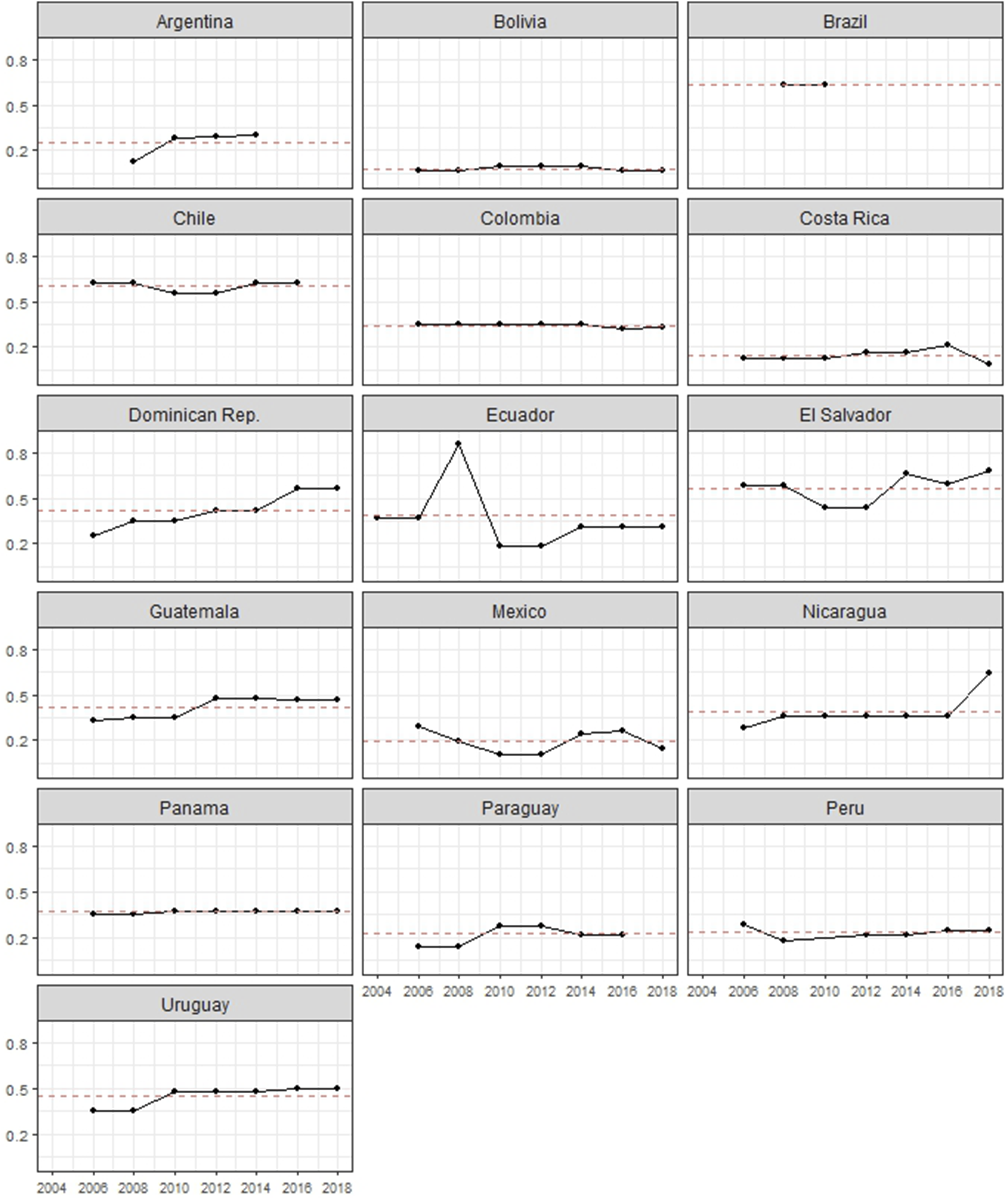
Hypotheses
Building on the preceding theoretical discussion and case-specific context, we analyze the influence of the degree of social closure among political elites on mass-level political trust, testing three hypotheses. First, we expect that within-country increases in indicators of elite closure—measured by country-year changes in legislative reelection rates and family ties—will be negatively associated with citizens’ political trust (H1). Second, higher country-average levels of elite closure will be associated with lower levels of political trust (H2). Finally, we posit a conditional relationship: while the marginal effect outlined in H1 is expected to be negative on average, its direction and magnitude will depend on countries’ long-term levels of elite closure. Specifically, in countries characterized by persistently high levels of elite closure, further increases in closure will be associated with additional declines in political trust (H3a). By contrast, in countries with historically low levels of elite closure, increases in closure are expected to be associated with temporary increases in political trust (H3b).
Data and methods
The study employs a comparative large-N design encompassing sixteen Latin American countries: Argentina, Bolivia, Brazil, Chile, Colombia, Costa Rica, Ecuador, El Salvador, Guatemala, Mexico, Nicaragua, Panama, Peru, Dominican Republic, and Uruguay 2 . Data on individual-level variables come from LAPOP (LAPOP Lab., 2004–2018), a project that has regularly conducted nationally representative surveys in the region since 2004, averaging seven waves per country. To capture elite social closure, we rely on the PELA-USAL project (Alcántara, 1994–2021), which surveys members of the lower chambers once per legislative period across the region. This dataset identifies the main characteristics of legislators and political parties. The combined data have a three-level structure, with 154,699 respondents nested within 102 country-years across 16 countries. Analyses are restricted to complete cases.
The study’s dependent variable is political trust, corresponding to the institutional aspect of political disaffection as outlined in the Torcal and Montero (2006a) framework. We operationalize political trust using an ordinal item that measures trust in the parliament on a 1-7-point scale, where 1 indicates “no trust at all” and 7 “a lot” 3 .
To measure the degree of closure of political elites, we employ two indicators extracted from the PELA-USAL data. The first variable, the prevalence of family relatives in politics, is captured as the proportion of representatives with relatives who have been involved in politics at any point, as reported in every wave of the PELA survey. The second indicator, legislative reelection rate, is measured as the proportion of legislators who declared that they were not in their first term in each PELA survey wave (see measurement details in Appendix, Section 1.2).
Descriptives statistics.
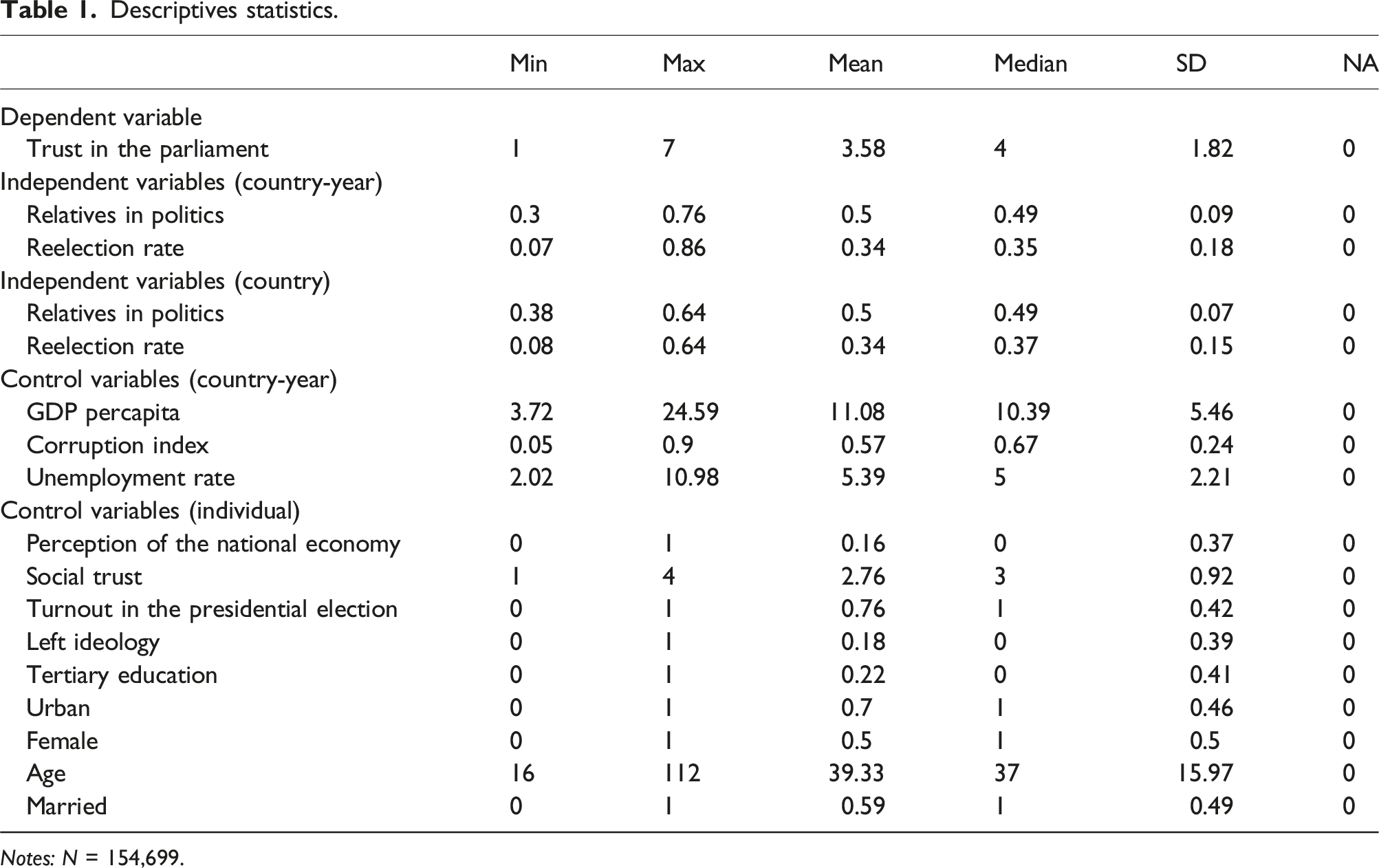
Notes: N = 154,699.
Statistical modeling
Our statistical analysis relies on multilevel regression models (Snijders and Bosker, 2012). Given the three-level data structure and our aim of estimating the associations of elite closure at both the country-year and country levels, we followed the suggestions outlined by Schmidt-Catran and Fairbrother (2016) for fitting multilevel models with comparative longitudinal survey data. Specifically, we estimate models with random intercepts at the survey (country-year) and country levels, identified as the primary sources of variation
5
. To capture temporal dynamics and strengthen the robustness of our estimates, we also include a linear predictor for time. The general specification of these models is presented in the following equation: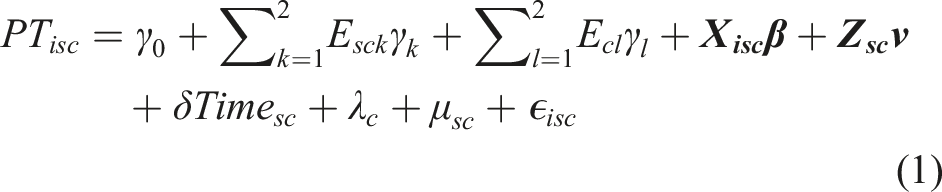
A central methodological concern in analyzing hierarchical data is selecting an appropriate centering strategy for predictor variables. Following Brincks et al. (2017), we applied grand mean centering (CGM) to both individual- and country-year-level variables, while country-level variables are left uncentered. This approach preserves covariation across variables measured at different levels, allowing estimation of level effects (level 2) while controlling for individual characteristics, and capturing contextual effects at the country level (level 3). This strategy entails estimating within-country associations for the survey-level elite closure variables and contextual effects for country-level averages of these indicators.
We also estimate models to assess the impact of elite closure at the survey level, conditional on a country’s average degree of elite closure (H3a and H3b). To this end, countries were classified as exhibiting low or high elite closure, using the 50th percentile of each indicator as the threshold. This classification generated a dummy variable distinguishing two subgroups of countries, representing low- and high-closure scenarios. Models were then estimated to incorporate a cross-level interaction between country-year elite closure and these country-level dummy variables, as represented in the following equation:
Results
Linear hierarchical model of trust in the parliament as a function of social closure predictors.
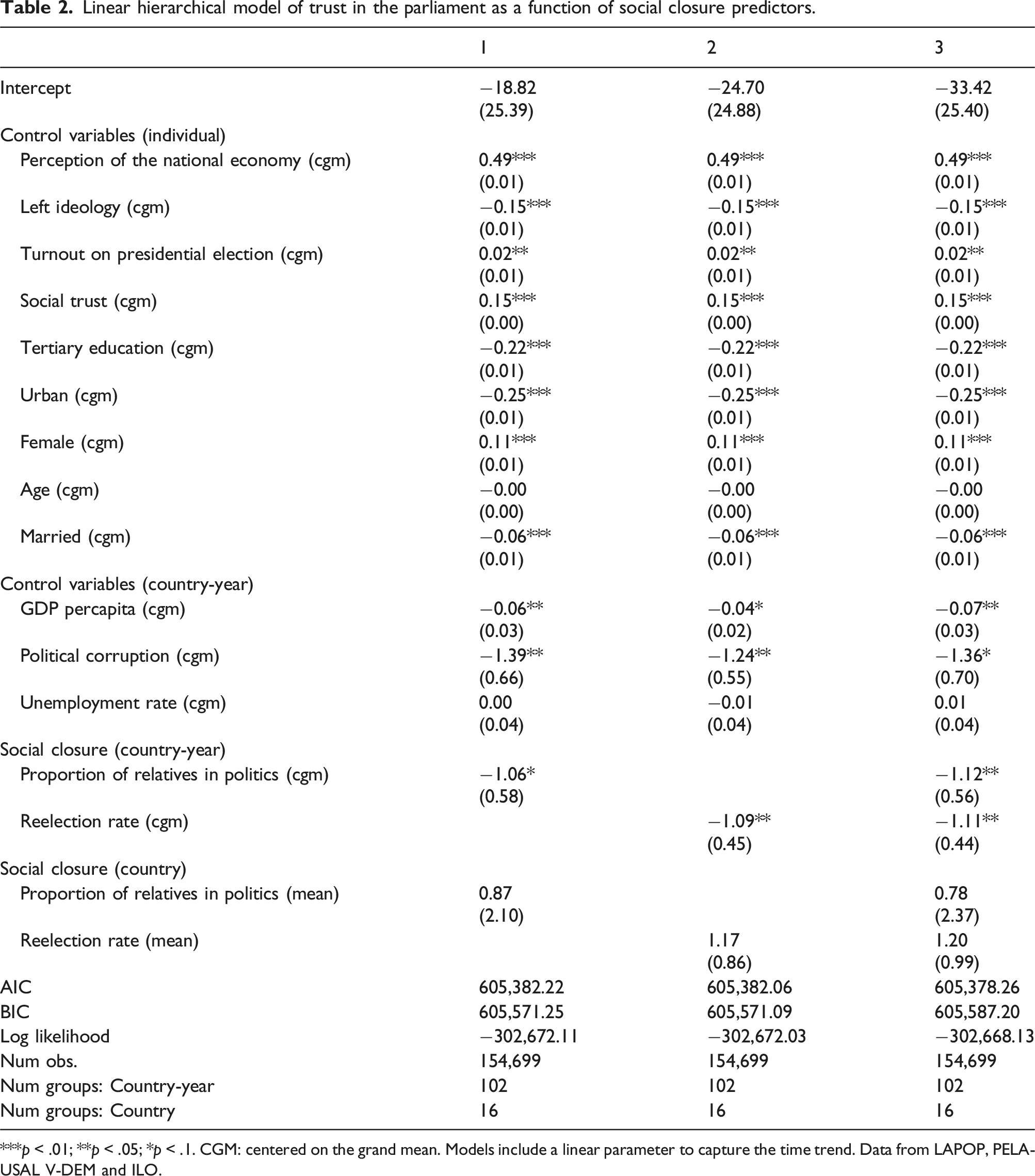
***p < .01; **p < .05; *p < .1. CGM: centered on the grand mean. Models include a linear parameter to capture the time trend. Data from LAPOP, PELA-USAL V-DEM and ILO.
To assess whether the long-term level of elite closure moderates the influence of within-country changes in elite closure indicators, we estimate equation (2). This model replaces the country-level average of each elite closure variable for a dummy indicating a high-closure scenario ( Latin American countries according to the degree of social closure among political elites. Note. Dashed lines indicate the median value of the indicator across all countries. Linear hierarchical model of trust in the parliament with multiplicative elite closure predictors. ***p < .01; **p < .05; *p < .1. CGM: centered on the grand mean; CWC: centered within context. Models also include a linear parameter to control the time trend. This estimate was omitted from the table. Data from LAPOP, PELA-USAL, V-DEM, and ILO.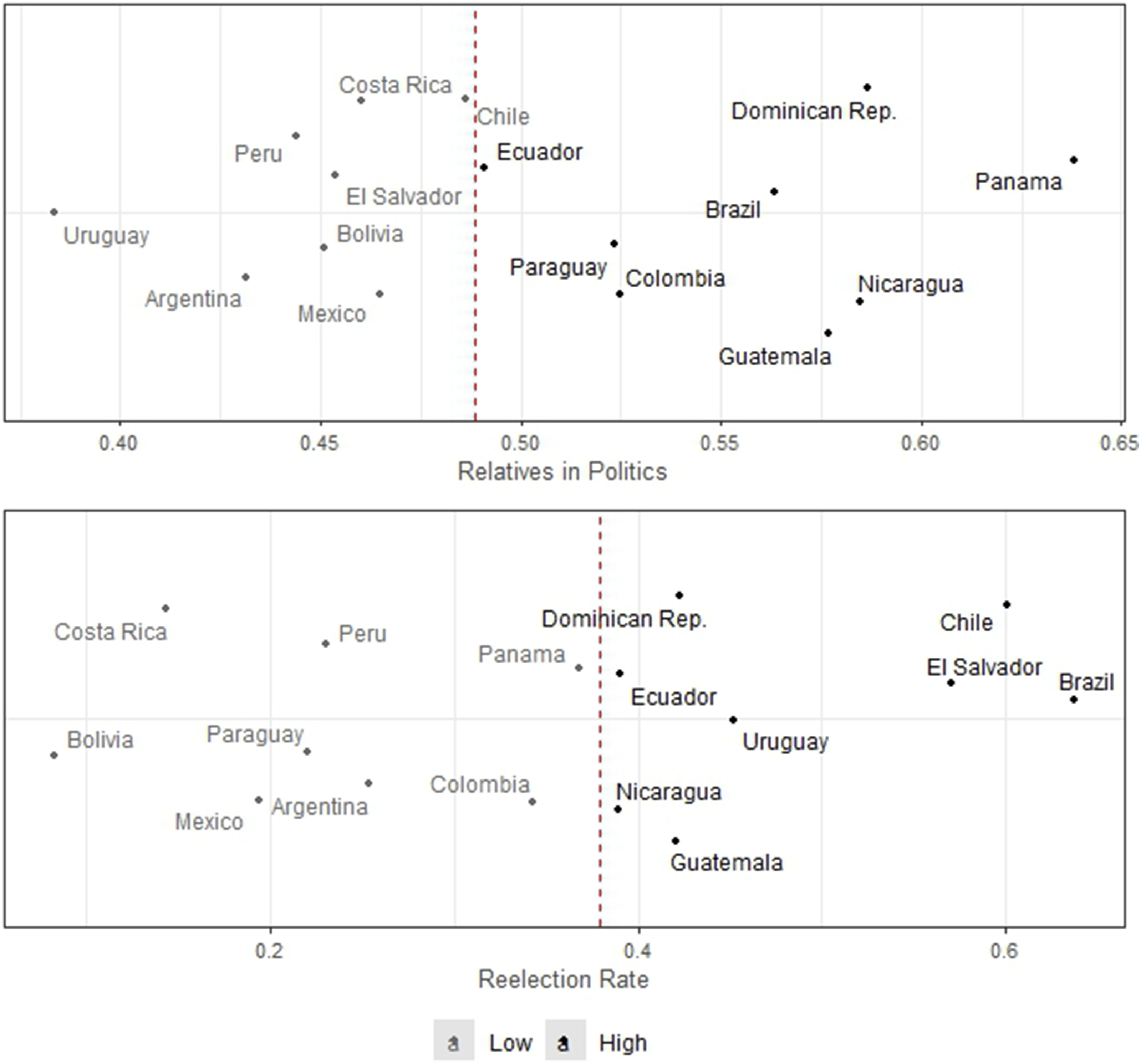
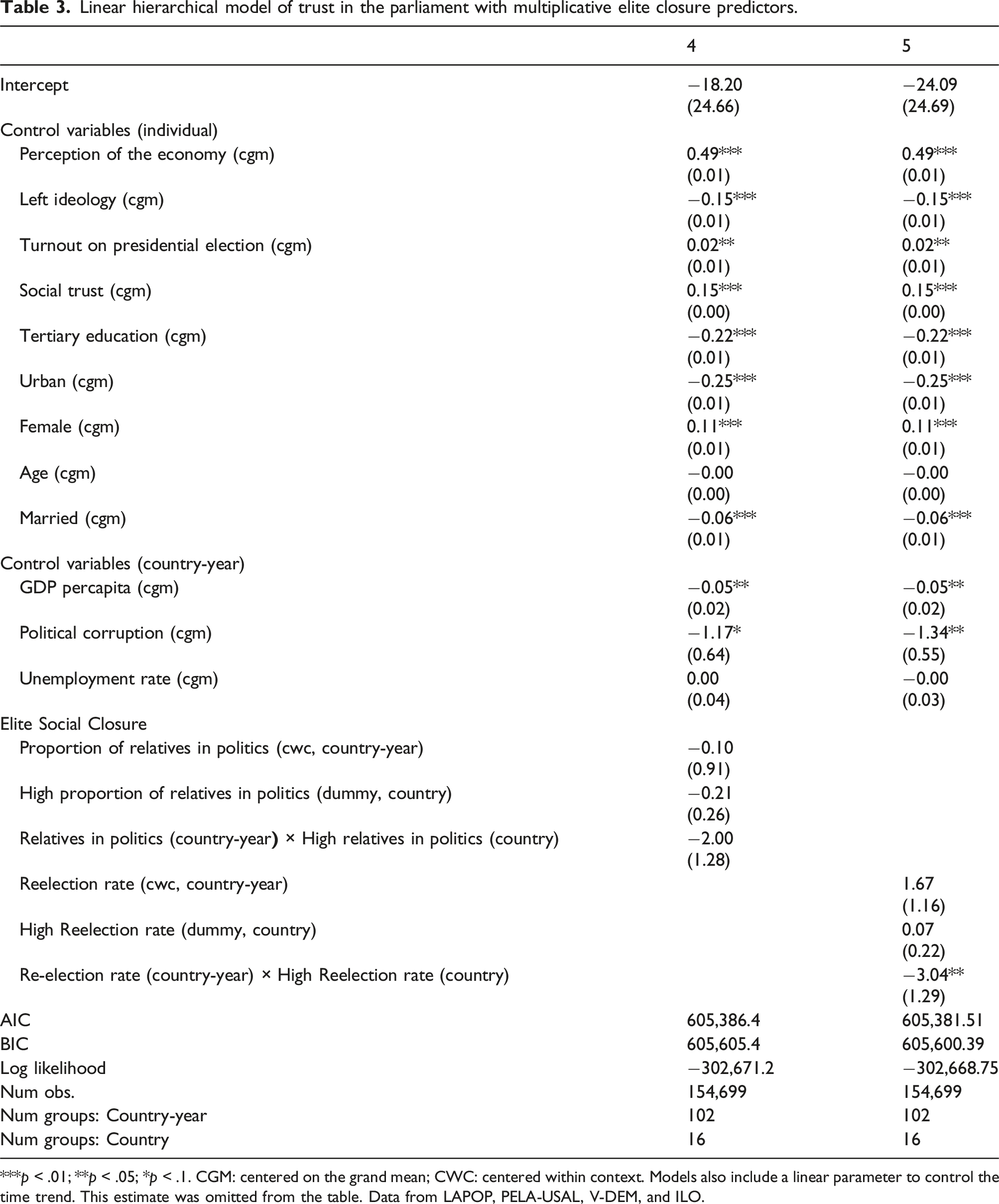
The results indicate that only the interaction term involving reelection rates is statistically significant (p < .05), whereas the interaction involving the proportion of relatives in politics is not (p = .12). To avoid interpreting interaction coefficients as unconditional marginal effects, we therefore compute and present marginal effects in Figure 5, which offer a more informative and intuitive depiction of these relationships (Brambor et al., 2006). The figure displays point estimates for each country-year indicator of elite closure under low- and high-closure contexts, along with their confidence intervals. Marginal effects of elite closure indicators on political trust in countries with high and low average levels of closure.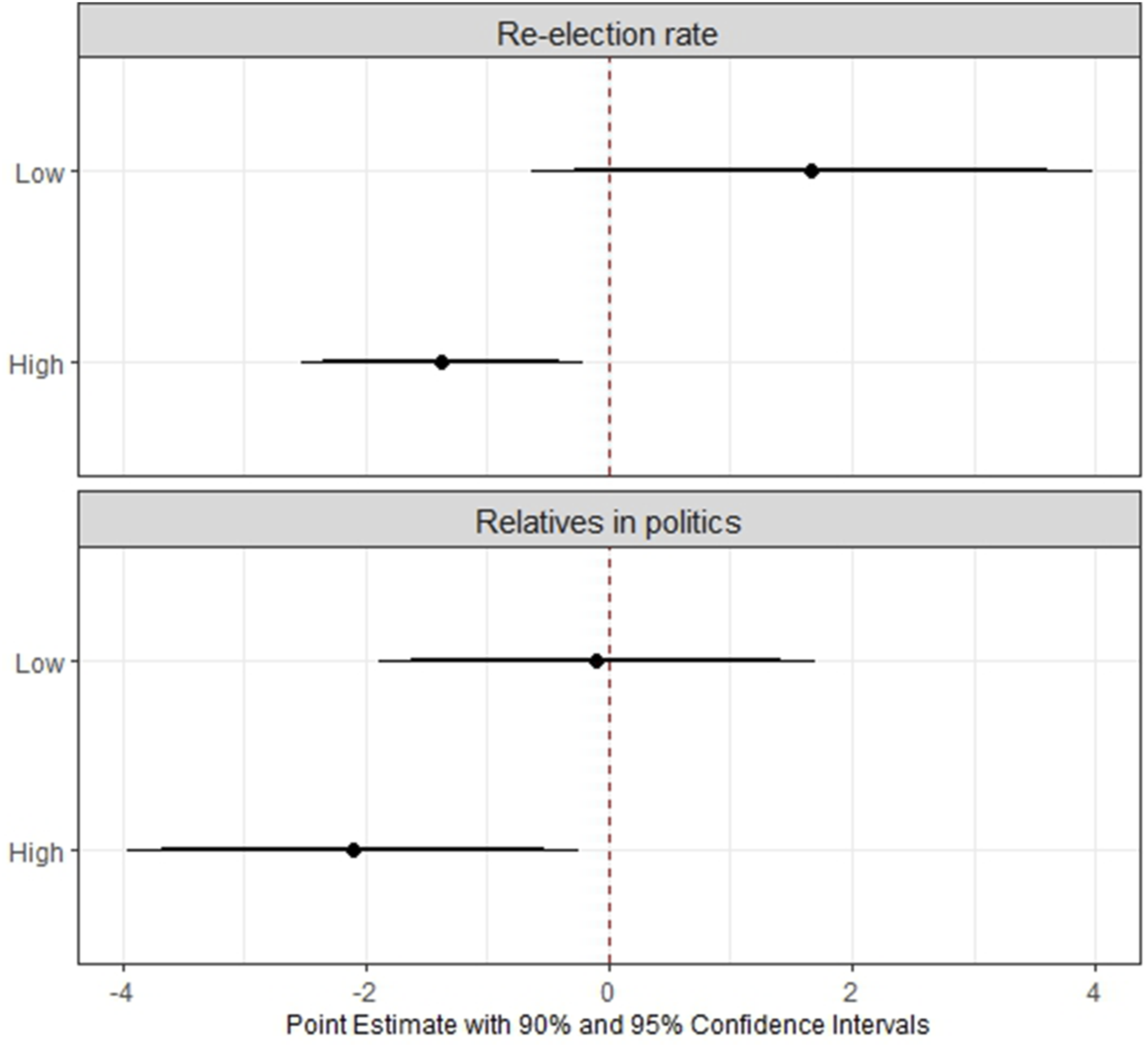
As shown in Figure 5 and consistent with H3a, the marginal associations are negative and statistically significant in countries with high average levels of elite closure. Specifically, in high-closure contexts, the within-country effect of reelection rates is −1.37 (p < .05), which substantively implies that a 10-percentage-point increase in the share of parliamentarians serving a second term or more is associated with a 0.14-point decrease in political trust in countries with high average reelection rates, such as Chile, El Salvador, and Brazil. On the other hand, the point estimate for legislators’ family ties in high-closure countries is −2.1 (p < .05), indicating that a 10-percentage-point increase in the proportion of parliamentarians with relatives in politics is associated with a 0.21-point decrease in political trust. By contrast, in countries characterized by relatively low average levels of elite closure, temporal increases in social closure are not associated with statistically significant increases in political trust. The estimated effect on reelection rates does not meet conventional thresholds for statistical significance, and the coefficient for family ties in politics is substantively small and statistically indistinguishable from zero. Consequently, we find no consistent empirical support for Hypothesis H3b.
Overall, these findings indicate that temporal increases in elite closure erode political trust in contexts where closure is already high, whereas similar variations in low-closure contexts do not meaningfully affect political trust.
Conclusions
This study provides empirical evidence on how political elite closure affects citizens’ political trust, highlighting previously underexplored determinants in the literature. By conceptualizing elite closure as a political input, our findings support the input-legitimacy perspective, underscoring that trust evaluations are shaped not only by institutional performance, but also by political inputs related to the organization of political representation—specifically, who holds power and how access to elite positions is structured. We focus on two indicators of closure—family ties among legislators and reelection rates—which serve as proxies for the mechanisms through which elites restrict and control access to their group.
Within-country analyses reveal that changes in both indicators are negatively associated with mass-level political trust. While belonging to politically experienced families provides candidates with advantages such as knowledge, networks, and resources (Camp, 1982; Schwindt-Bayer et al., 2022), these benefits do not automatically translate into positive evaluations. A high prevalence of family ties may signal a closed or “encapsulated” elite (Bargsted and Maldonado, 2018), limiting responsiveness to citizens’ interests. Similarly, although prior research emphasizes the benefits of parliamentary experience for democratic consolidation and legislative quality (Carey et al., 2000; Levita and Márquez Romo, 2023; Palanza et al., 2016), our findings suggest that accumulated experience may undermine trust and democratic legitimacy.
This study also examined the heterogeneity of the effects of political elite closure conditional on each country’s average level of closure, addressing contradictory hypotheses in the literature and cross-national variation. We argued that elite closure would undermine trust primarily in countries with more closed and exclusive elites, while in contexts with greater historical openness or diversification, its effects were expected to be positive. Our estimates partially confirm these expectations: in countries where elites appear “captured” or confined to narrow social circles, increases in closure indicators erode political trust, whereas no positive effects are observed in more open and relatively diverse elite configurations.
The finding that reelection rates negatively affect political trust primarily in countries with consistently high average reelection rates supports Schedler’s (1995) hypothesis that high institutionalization—of which reelection rates are an indicator—can have detrimental effects on democracy. These results nuance the literature that emphasizes the benefits of low turnover and parliamentary experience for legislative quality and democratic stability, showing that in some contexts, accumulated legislative experience may undermine legitimacy if it constrains elite renewal and openness. Consequently, in contexts characterized by highly closed and self-reproducing political elites, greater circulation and renewal may help restore institutional legitimacy, particularly under conditions of widespread political disillusionment and low public trust (Golosov, 2018; Matland and Studlar, 2004).
Similarly, the heterogeneous effect of increases in the proportion of parliamentarians with family networks is noteworthy. In highly closed elite contexts, strong family ties may damage the relationship between representatives and citizens, as research on Latin American cases suggests (Cordero, 2009; Espinoza, 2010). High levels of familial connections may foster perceptions of elites as hermetic, “endogamous,” and socially isolated, reinforcing doubts about their representational capacity. These results also help to shed light on widespread public perceptions of Latin American elites, frequently portrayed as “the same people as always”, “members of a few families”, or as insular groups closely tied to one another. Conversely, elite diversification, reflected in weaker family networks, can signal greater openness and foster trust, particularly in contexts of high institutional discredit.
Interestingly, rising closure levels over time do not significantly affect political trust in countries with relatively low average closure. One possible explanation is that elite closure must reach sufficiently high levels to be perceived by citizens and incorporated into their trust evaluations; at lower levels, such traits may simply lack political salience.
Regarding the limitations and future directions of this work, several points warrant mention. First, the analysis is restricted to the Latin American context. While this offers important advantages, it raises questions about whether these relationships hold elsewhere. A large-N comparative study that includes cases from other regions would be crucial for assessing the broader validity of the hypotheses tested here. Second, improving measurement instruments is essential. The dependent variable was operationalized with a single indicator, primarily due to data constraints. Future research would benefit from more robust measures of political trust that draw on a broader set of indicators. Likewise, the measurement of political elite closure could be refined by incorporating additional indicators of key sociological dimensions, such as socioeconomic or ethnic composition, as well as other mechanisms of elite social closure.
Third, assessing the plausibility of the proposed hypotheses requires closer examination of the causal mechanisms linking elite integration and citizens’ political trust. Although this study advances some theoretical expectations regarding possible mechanisms, we did not test them empirically. Future research should address this limitation to strengthen the present findings. Finally, complementary analyses could further illuminate the role of elite closure in shaping political support, particularly its influence on attitudes such as support for democracy, satisfaction with democratic performance, or support for anti-establishment candidates. Advancing along these lines will deepen our understanding of how elite dynamics shape democratic legitimacy in Latin America and beyond.
Supplemental material
Suppplemental Material - Political trust and elite closure: Evidence from Latin America
Suppplemental Material for Political trust and elite closure: Evidence from Latin America by Camila Ortiz-Inostroza, Matías Bargsted in Party Politics
Footnotes
Acknowledgements
We are grateful to Juan Pablo Luna, Luis Maldonado, Carolina Segovia, and Mariano Torcal for their helpful and insightful comments on earlier versions of this article. We also thank the anonymous reviewers and the editor of Party Politics for their constructive feedback and valuable suggestions.
Declaration of conflicting interests
The authors declared no potential conflicts of interest with respect to the research, authorship, and/or publication of this article.
Funding
The authors disclosed receipt of the following financial support for the research, authorship, and/or publication of this article: This work was funded by the Agencia Nacional de Investigación y Desarrollo (code: ANID BECAS/DOCTORADO NACIONAL/21192270 and ANID/FONDECYT POSTDOCTORADO/3250851) and the Centre for Social Conflict and Cohesion Studies (COES) (code: ANID/FONDAP/15130009).
Data Availability Statement
Replication materials for the article are available at Ortiz Inostroza (2026) 
Supplemental material
Supplemental material for this article is available online.