







Abstract
This study investigates why social movements either form political parties or remain extra-parliamentary. I hypothesize that the availability of suitable political representation critically shapes these trajectories. Through a comparative analysis of the German Greens and the far-right PEGIDA movement and process tracing approach, I examine the organizational evolution of the German Greens and PEGIDA. Findings reveal the Greens formed a new party to address an unrepresented ecological agenda. In contrast, PEGIDA, facing a similar anti-immigrant gap, fused with the transforming Alternative für Deutschland, obviating its own party formation. Cross national evidence from Manifesto Project Data complements these findings, illustrating that representation gaps are closed following the entry of Green and far-right parties. This work contributes by demonstrating that representational gaps are not only filled by new party emergence but also by symbiotic absorption into existing parties, offering a more nuanced understanding of institutionalization and party system adaptation.
Introduction
How do social movements evolve their organizational structures to become electorally competitive political parties? Under what specific conditions do ideologically divergent forces, such as ultra-nationalistic and ecological movements, choose to invest in formal party organization and compete in electoral arenas, rather than remaining purely extra-parliamentary? This paper examines these dynamics by focusing on two compelling German cases: the transformative journey of the German Greens from a diverse social movement into a robust political party, and the contrasting trajectory of the far-right social movement PEGIDA, (Patriotische Europäer gegen die Islamisierung des Abendlandes, Patriotic Europeans Against the Islamization of the Occident), which, despite its significant mobilization capacity, has largely eschewed formal party formation.
Classified as niche parties that mobilize voters on non-economic issues (Wagner, 2011), both Green and radical right parties have moved to the center of recent academic debate (Azrout et al., 2023; Bergman and Hjermitslev, 2025; Stiers, 2025). Party scholars often focused on their ideological platforms (Price-Thomas, 2016), electoral performance (Müller-Romel, 2013) and policy impacts (Vieten and Poynting, 2016), and the demand and supply sides for their electoral success (Mudde, 2014).
For Green parties, scholarship has analyzed their origins from new social movements of the 1970s (Poguntke, 1998). Similarly, the literature on far-right parties has extensively analyzed their ideological characteristics (Mudde, 2007, 2019). Recent works often investigate their electoral breakthroughs, the normalization of their discourses, and their increasing presence in European parliaments (Manucci, 2024) Some scholars have explicitly acknowledged the hybridization of party and movement practices within the far-right, examining how these groups contest elections while simultaneously mobilizing in the streets (Ellinas and Lamprianou 2019). However, for movements like PEGIDA, which have remained predominantly online, street-based, and resistant to formal party transformation, the focus of the literature often shifts to their mobilization capacity, their discourse, and their impact on public opinion or established parties, rather than the internal organizational dynamics that prevent or discourage party formation (Dostal, 2015). This gap in the literature –the comparative analysis of the organizational choices and their underlying rationale in both successful and unsuccessful niche party formations from anti-movements– is precisely what the current analysis aims to address.
This study investigates the organizational evolution of social movements to highlight the mechanisms that drive their transformation into political parties. I examine the conditions under which social movements in advanced democracies institutionalize their modes of political participation, moving beyond civil society activism by forming political parties. Conversely, this inquiry also necessitates an examination of the flip side of the coin: why some social movements opt not to transform into political parties, instead preferring to remain within the realm of civil society and outside state institutions?
Drawing primarily on Kitschelt’s (2006) framework concerning strategic responses to political opportunities and employing comparative case analysis based on process tracing approach, this study argues that representational gaps are key determinants in the decision of anti-establishment movements to form political parties. My core argument is that while the absence of adequate political representation for their core issues propelled the German Greens to establish a political party, the far-right PEGIDA movement chose to remain outside institutionalized political competition largely due to the emergence of a representative voice in the Alternative für Deutschland (AfD). In other words, despite both social movements commanding substantial public support, targeting ideologically distinct audiences, and operating under similar structural conditions, the Greens entered the arena of political competition primarily because existing parties failed to represent the issue areas that they championed. PEGIDA, on the other hand, has experienced a gradual fusion and co-optation with AfD, thereby obviating the perceived need for its own formal party organization.
This comparative analysis thus illuminates how the presence or absence of a viable political conduit for a movement’s demands critically shapes its organizational trajectory, pushing some towards party formation while encouraging others to remain extra-parliamentary. This study expands conventional understandings of how social movements impact party systems. Rather than solely leading to the creation of new political parties, I argue that the fulfillment of these gaps can also occur through a process of symbiotic fusion, wherein an established party undergoes ideological and organizational metamorphosis to incorporate the movement’s demands.
Theoretically, this study makes a significant contribution by modeling the development of representation gaps into a distinct three-phase process involving growing demand, niche party emergence, and subsequent issue ownership. These phases help to signpost how representation gaps evolve and shape movement-party trajectories, providing a more robust framework for analyzing these dynamics. By doing so, this study contributes significantly to the growing literature on movement parties, which has primarily focused on how new formations utilize bottom-up, direct-democratic tools to enhance internal democracy (Vittori 2022), or has identified a limited subset of contemporary cases that strictly combine low organizational investment with high protest mobilization and specialized programs (Borbáth and Paxton, 2025). Furthermore, this analysis expands conventional understandings of party system adaptation and addresses a notable void in the literature on party mergers. While existing merger studies emphasize that established competitors sacrifice autonomy for electoral viability (Bolleyer et al., 2016), citing ideological congruence (Ibenskas, 2016) and mutual trust (Lees et al., 2010) as essential prerequisites, I move beyond functionalist interpretations of existing party interaction. Instead, this study argues that the fulfillment of representational gaps can also occur through a process of symbiotic fusion, wherein an established party—such as the AfD—undergoes profound ideological and organizational metamorphosis to incorporate the movement’s demands. This analysis offers a more refined perspective on institutionalization and party system adaptation, addressing a notable gap in the literature.
Transition from disruptive to institutionalized politics
Social movements are broadly understood as collective challenges based on common purposes and social solidarities that seek to induce social and political change through “sustained interaction with elites, opponents, and authorities” (Tarrow, 1998: 4). They are typically composed of activists who aim to represent marginalized or excluded groups through protests and media events, often operating with loose organizational networks (Kaldor, 2003). While political action within social movements can indeed be triggered by perceived provocations, a more nuanced understanding recognizes the role of strategic planning and leadership decisions in shaping their trajectories (McAdam et al., 1996). Thus, contemporary scholarship largely views their emergence as intrinsically linked to shifts in political opportunity structures (Kitschelt, 1985; Tarrow, 1998) and critical resources available for mobilization (McCarthy et al., 1977).
On the other hand, political parties are instrumental in political recruitment and marshaling supporters for elections. While much of the literature on party formation emphasizes elite-driven processes or structural determinants like electoral rules and socio-economic cleavages, party formation can stem from various origins, notably, the institutionalization of social movements (Panebianco, 1988). Hence, it is essential to analyze the social movement origins of political parties. Such an approach illuminates how initial grievances, and contentious collective action can evolve into formalized political organizations, offering richer insights into their foundational values, internal dynamics, and adaptive capacities beyond purely institutional or elite-centric explanations.
Scholars also identify movement parties as a hybrid form emerging from the fusion of these two modes of political mobilization. Movement parties are “coalitions of political activists who… apply the experience which they obtained from social activism into the organizational area of party competition” (Kitschelt, 2006: 280). Such parties often inherit certain institutional deficiencies from their history of social activism. These include a typically less formal definition of membership roles, a limited reliance on paid professionals, and a less developed physical infrastructure, such as dedicated offices or vehicle fleets. Their cadres often maintain strong connections with their activist pasts, continuously combining activities within formal democratic arenas (e.g., debating parliamentary bills) with extra-institutional mobilization (e.g., engaging in disruptive protests or occupations) (Kitschelt, 2006).
However, this looser organizational structure is not without its advantages. Compared to highly centralized and bureaucratized parties, movement parties can exhibit greater flexibility and responsiveness to new issues and sudden political events. Their lower organizational costs and ability to operate outside rigid institutionalized time schedules can facilitate rapid adaptation and innovative forms of political action (Papadakis, 1988). This inherent adaptability allows them to maintain a dynamic connection to evolving societal demands, which can be a significant asset in fast-changing political environments.
Moreover, the transition to institutionalized politics presents attractive strategic gains for social movements. Party formation allows disparate individual issue movements to form stable alliances, pooling their respective electoral support and mitigating the inherent volatility of single-issue protest cycles (Offe, 1989: 241). As political parties, they can also extract greater resources, including membership fees and state subventions, contingent on their electoral performance. Furthermore, they obtain a privileged access to public media for campaigning, an efficient channel for disseminating their ideas (1989: 242). Lastly, engagement in electoral competition fosters a dynamic process of discourse refinement and policy development through confrontation with other parties, ultimately enhancing their resonance with the public.
Given these inherent characteristics, why do some social movements choose to constitute themselves as movement parties? Kitschelt (2006) offers four compelling theoretical explanations for this strategic decision, starting with political learning and strategic adaptation which drives activists to realize that formal party organization offers a more effective pathway to achieve their long-term political goals than purely extra-parliamentary activism. Second, a game with asymmetric and incomplete information occurs in political competition. Movement entrepreneurs often possess privileged, private information regarding the true depth and breadth of their potential constituency’s support, anticipating significant electoral gains. Conversely, established parties, operating with incomplete information, might underestimate the magnitude of defection from their voter bases, thereby failing to pre-empt the entry of a new competitor. Third, the presence of lower institutional barriers to entry, such as relatively low electoral thresholds and easier access to public campaign funds, diminishes the costs and risks associated with electoral competition, making party formation a more viable option (Kitschelt, 1985).
Fourth, and perhaps most critically, movement parties often emerge to fill representational gaps within the existing party system. When established political parties fail to adequately articulate or champion certain salient issues, a new political space emerges that a movement party can strategically occupy. This involves identifying a political objective that can be singularly assumed by a movement party, thereby mobilizing a segment of the electorate whose concerns are otherwise neglected (Meguid, 2005).
The political transformations following the independence of post-communist countries, yield useful insights for the movement-party interactions and the concept of representation gaps. During a period of intense public distrust in political institutions, these nascent parties successfully participated in the first democratic elections, filling a significant vacuum of representation (Glenn, 2003). To assuage public concerns about institutional politics, Václav Havel of the Civic Forum in the Czech Republic emphasized the party’s social movement character, declaring: “Parties belong to party members, Civic Forum belongs to All!” (2003: 157). 1 Other notable instances of movement parties include the Worker’s Party in Brazil, the Broad Front in Uruguay, the Farabundo Martí National Liberation Front in El Salvador, the Movement Toward Socialism in Bolivia, and the Concertación in Chile (Anria, 2018). Similarly, Islamist movements such as the Muslim Brotherhood, Turkey’s National Outlook (Milli Görüş) movement, and Tunisia’s al-Nahda, along with the Communist Party of India in Kerala and West Bengal (Desai, 2003), and the African National Congress in South Africa and the United Malays National Organization in Malaysia (Bermeo and Yashar, 2016), all illustrate social movements that transformed into durable political actors in the absence of meaningful representation.
While Figure 1 focuses on the pathways most relevant to the empirical cases examined in this paper, a broader range of outcomes is theoretically possible. In some instances, movements may opt to remain extra-parliamentary, prioritizing protest, advocacy, or discursive influence over electoral participation. This outcome is more probable when a movement’s organizational identity is deeply embedded in an extra-parliamentary logic and lacks the centralized leadership necessary to navigate the bureaucratic demands of electoral registration and campaigning. Conversely, even in contexts where an established party already occupies the relevant ideological space, movements may still choose to enter electoral competition, generating intra-niche rivalry rather than filling an empty representational space. This might occur when movements perceive the existing party as ideologically diluted or co-opted by the establishment, creating strategic incentives for a “purer” rival to enter the fray and reclaim the niche. These alternative scenarios highlight that the link between representational gaps and party formation is not automatic but contingent on strategic calculations, organizational capacity, and perceptions of electoral viability. However, these alternative trajectories should not be treated as residual or unlikely. Rather, they are expected to emerge under specific configurations of organizational resources, strategic incentives, and political opportunity structures. For example, a high-resource movement facing a prohibitive electoral threshold (Factor 3, Figure 1) might nonetheless choose to form a party to gain discursive legitimacy, whereas a fractured movement facing a weak representational gap (Factor 4, Figure 1) might remain a movement due to a high likelihood of electorally competitive failure. By acknowledging this broader set of possibilities, the framework clarifies that movement-party linkage is a contingent process with multiple equilibria, rather than a linear or deterministic outcome. Visualization of theoretical logic, derived from Kitschelt’s approach, and compiled by the author.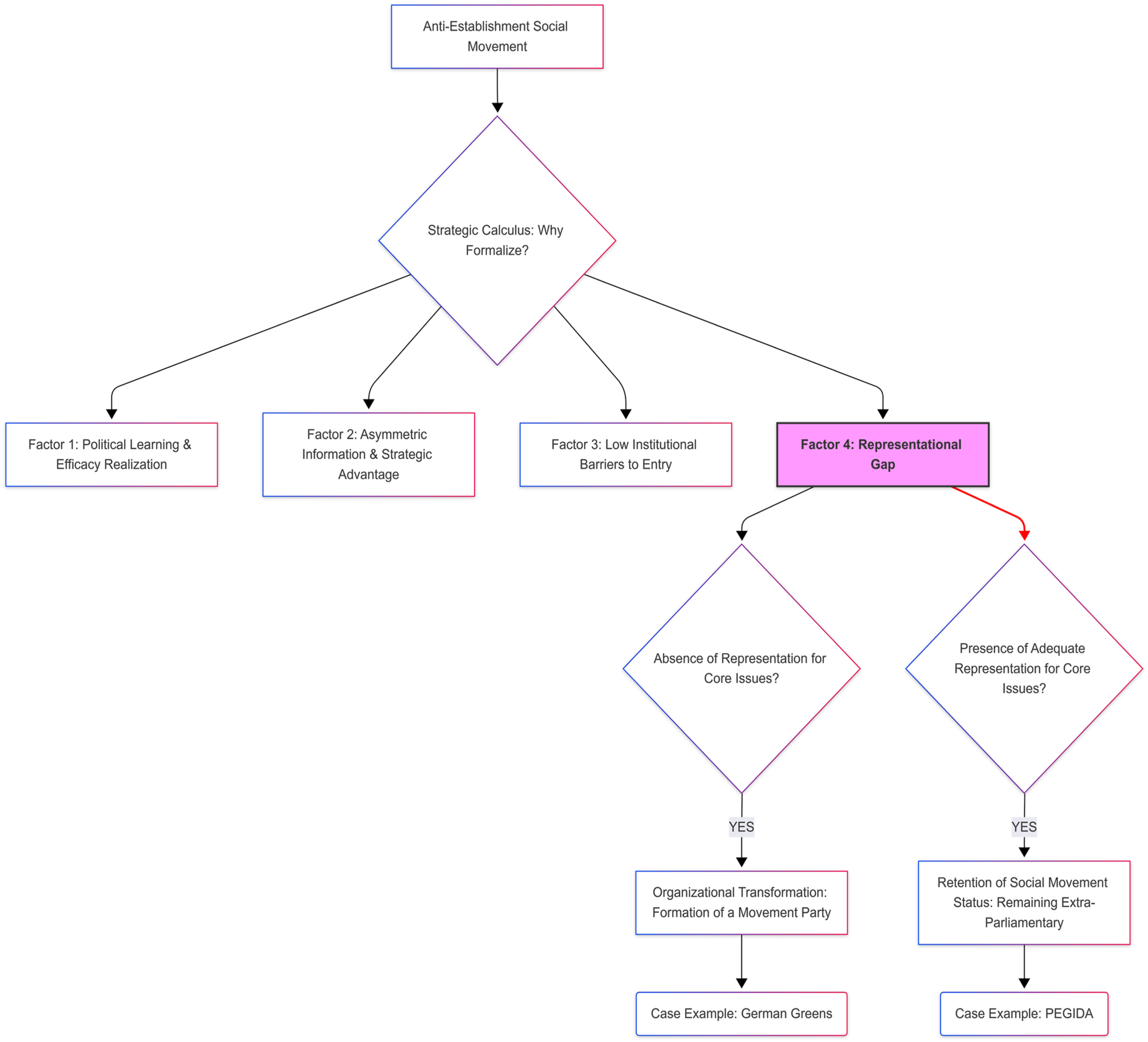
This paper focuses on the trajectories of PEGIDA and the Greens because they offer analytically tractable and empirically grounded illustrations of two key pathways: the transformation of a movement into a party under conditions of unmet demand, and the persistence of movement mobilization without successful institutionalization. Other theoretically plausible outcomes—such as movements abstaining from party formation despite representational gaps, or entering electoral competition despite the presence of established competitors—fall beyond the empirical scope of this study, particularly given the constraints of the German party system.
This particular emphasis is crucial because both the German Greens and PEGIDA emerged within the same overarching socio-political context, sharing similar underlying conditions related to Kitschelt’s first three explanations. Both movements undoubtedly engaged in strategic learning, their activists making rational calculations about the most effective avenues for influence. Similarly, both likely capitalized on information asymmetries regarding the depth of their respective constituencies and operated within the consistent institutional landscape of German democracy, which offered relatively low barriers to political entry, including substantial public subsidies for campaigning. Hence, the primary variable explaining their divergent trajectories—the Greens’ formation of a new party versus PEGIDA’s fusion with an existing one—resides in the specific nature of the representational gap they sought to fill and, critically, how the established party system reacted to it.
The foundational literature on movement parties has been significantly shaped by the historical trajectory of European Green parties. This scholarship emphasizes that the successful institutionalization of these movements depended largely on the mobilization of specific ideological resources not yet occupied by established political actors (Jahn, 1993). In many instances, the emergence of Green parties was less a product of total systemic failure and more a direct consequence of the inability of Social Democratic or Center parties to integrate environmentalist electorates after high-salience policy shifts, such as the nuclear energy referenda of the early 1980s (Bürklin, 1987; Vedung, 1988). Consequently, the representational gap for the Greens was carved out of a specific failure of mainstream parties to absorb a new, ideologically distinct constituency.
However, while the Greens’ experience provides a robust model for organizational transformation, contemporary protest movements are increasingly exhibiting a different logic of “party-movement fusion.” Unlike the distinct separation maintained by earlier movement parties, recent developments—particularly on the radical right—suggest a more symbiotic relationship between street mobilization and challenger parties (Hutter and Weisskircher, 2023). Central to this fusion is the intra-party innovation spiral, a mechanism that drives strategic realignment within a challenger party (Weisskircher et al., 2023: 542–543). Because challenger parties are often more responsive to their core support base and protest politics than mainstream competitors, they cannot easily ignore mobilization occurring on the streets (Hutter and Vliegenthart, 2018). This proximity creates a feedback loop: as movement entrepreneurs and party politicians engage in a complex relationship of cooperation and competition, the party undergoes an internal shift to more closely align its platform with movement claims.
In order to reveal cross-national patterns, I employ Manifesto Project Data (Lehmann et al., 2024), which reveals a consistent pattern across all 12 countries: environmental salience in non-Green party manifestos rises modestly prior to Green party entry, peaking around the time of their first electoral participation, followed by a decline afterward (Figure 2).
2
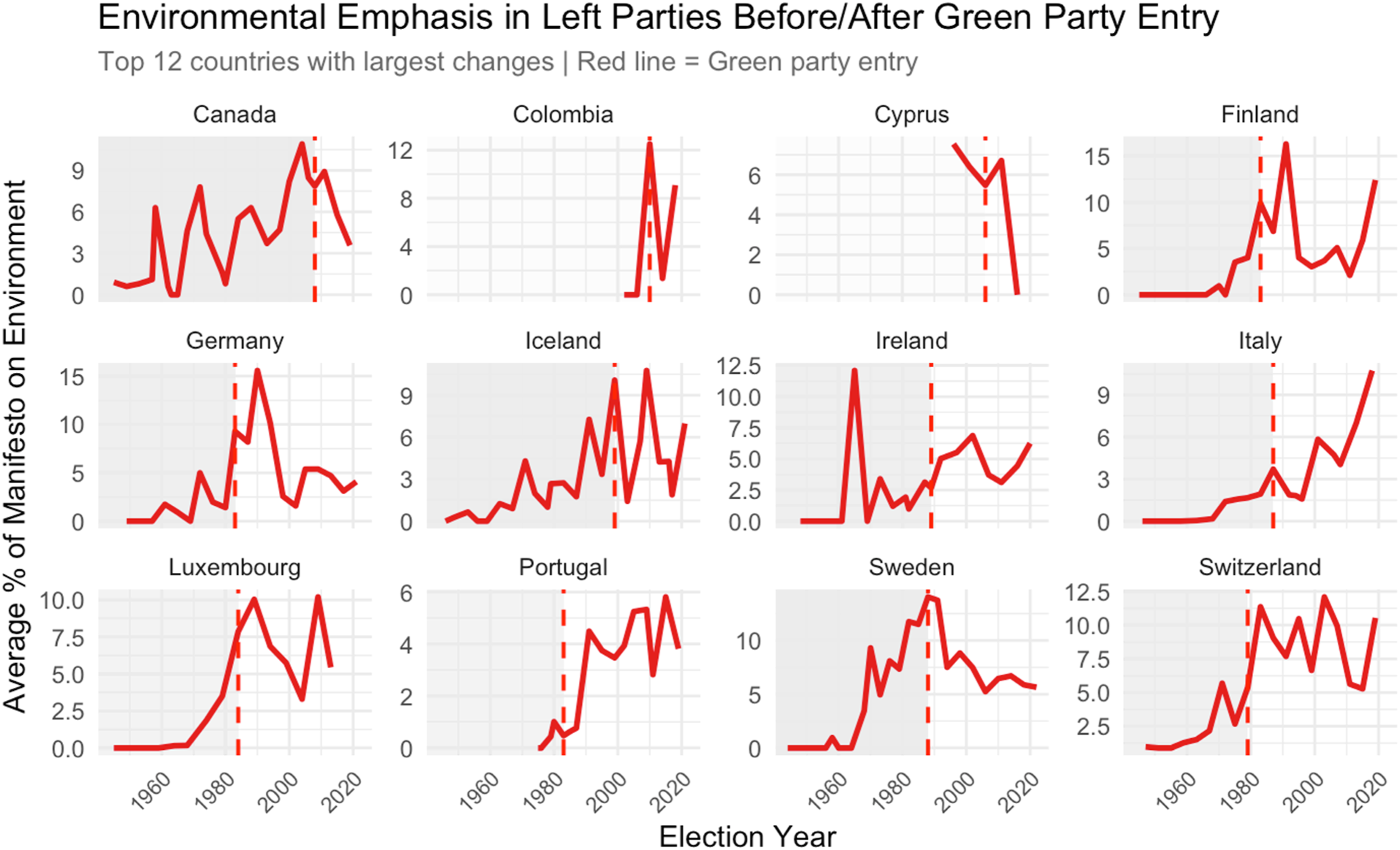
The pre-entry rise might also reflect elite anticipation of Green competition rather than pure demand-driven responsiveness. We observe a similar pattern among Socialist/Left and Social Democratic parties in particular (Figure 3). As Green parties firmly cemented their position as the primary champions of environmental concerns, traditional left parties initially reduced their emphasis on environmental issues in their manifestos. Emphasis on environmental issues among non-green party manifestos. Emphasis on environmental issues among social democratic and socialist/Left party manifestos.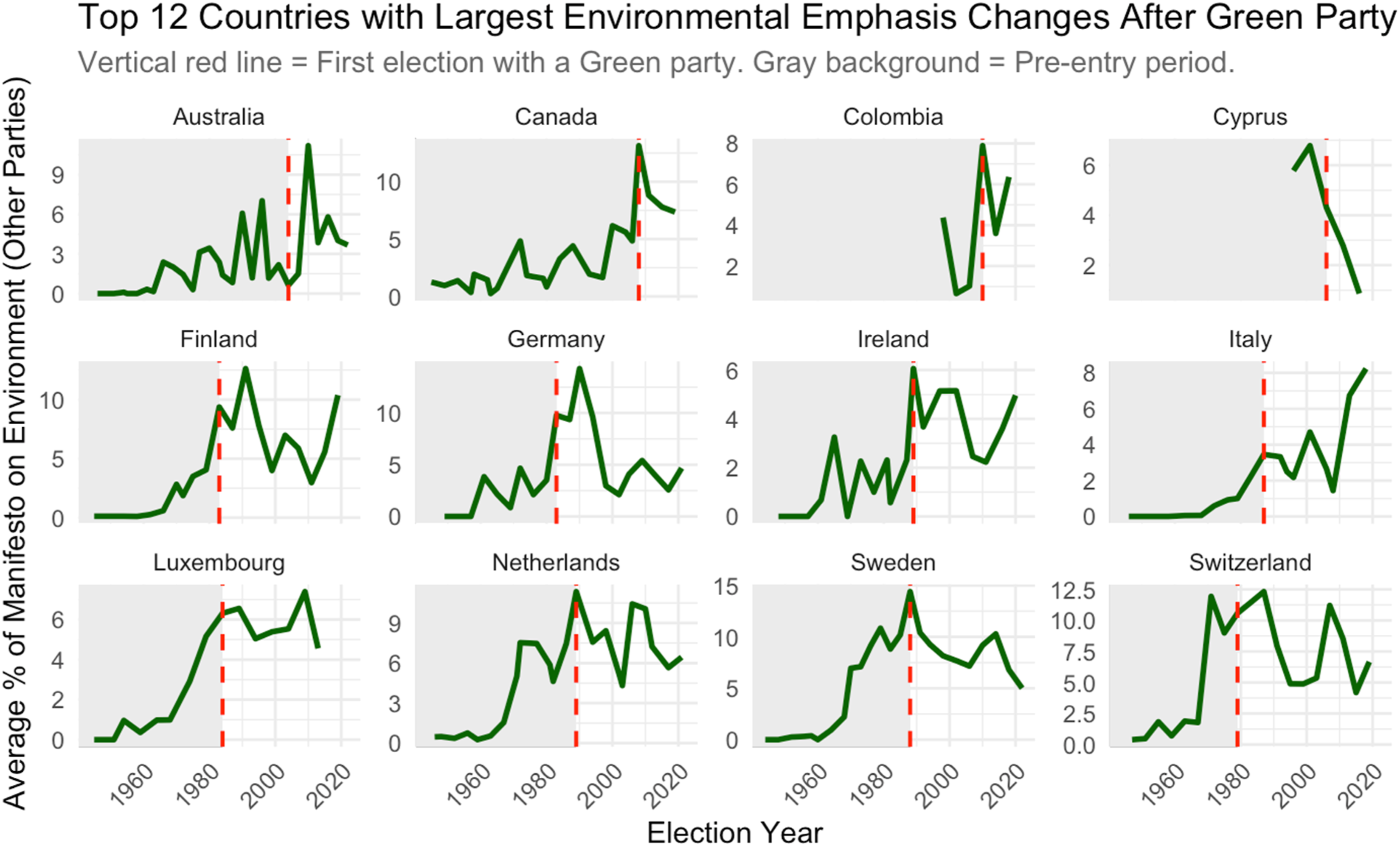
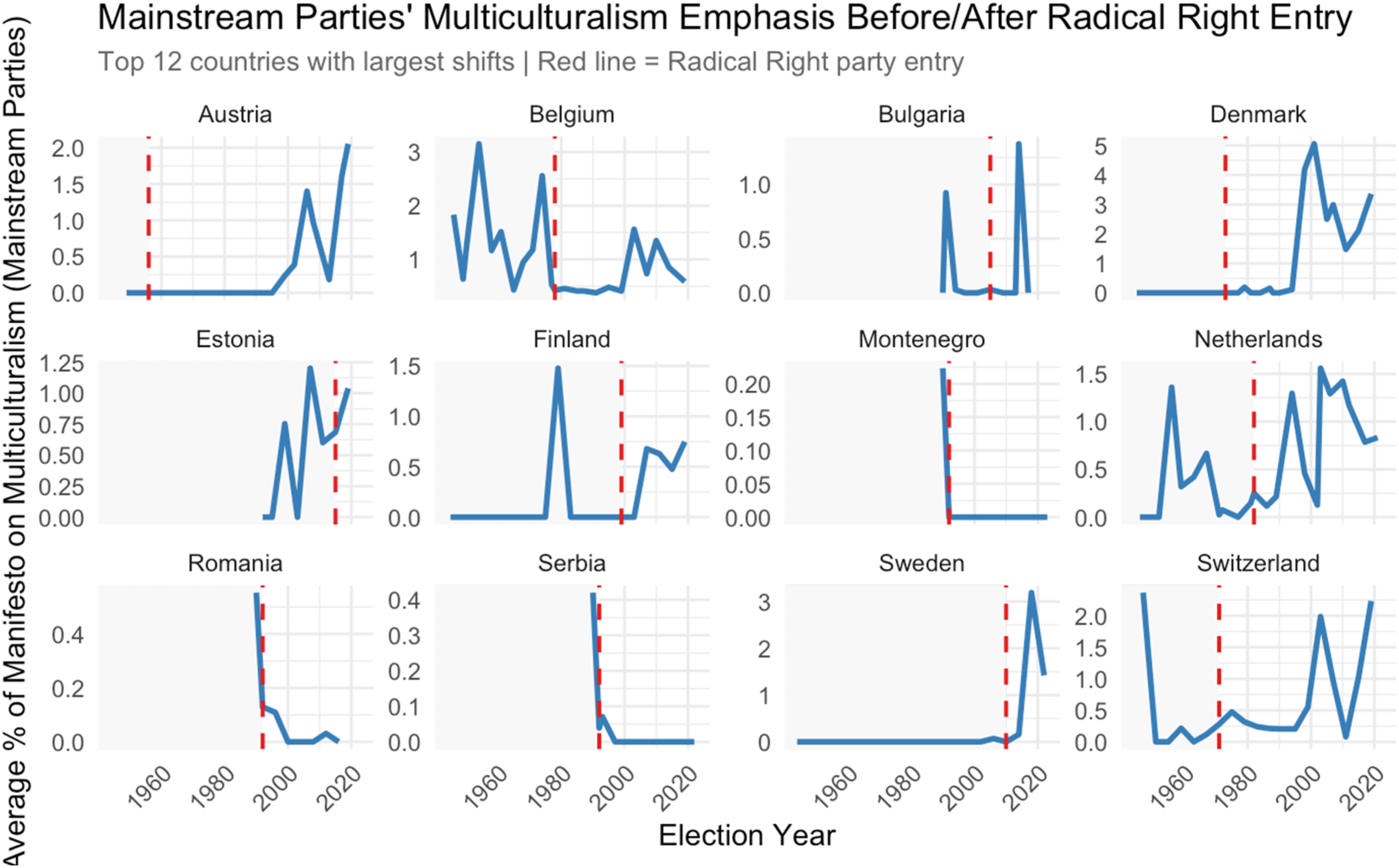
Furthermore, Figure 4 illustrates the extent of the representation gap in the radical right’s core issue area—defined by a negative approach to multiculturalism and support for cultural homogeneity—immediately prior to the entry of radical right parties. This gap is then followed by either increased competition over these issues or a declining emphasis on them due to the presence of such parties. In general, these trends from party manifestos forward attention to the following three phases: • Growing Demand: Rising public concern about environmental/anti-immigrant issues (e.g., due to protests or media attention) prompts mainstream parties to tentatively adopt these themes, but their efforts are often incremental or symbolic. • Niche Party Emergence: The lag between elite responsiveness and public demand creates a representation gap, allowing Green/Radical Right parties to form as specialized alternatives. Their entry signals credibility on the issue, drawing focus away from half-hearted efforts by others. • Issue Ownership: Post-entry, mainstream parties may reduce environmental/anti-immigrant emphasis, as Greens/Radical Right now “own” the issue. This could reflect strategic retreat (ceding the niche to avoid vote-splitting) or voter realignment (environmentally conscious voters now loyal to Greens, others to Radical Right). Emphasis on negative approach towards multiculturalism among non-radical right party manifestos.
In summary, social movements can undergo significant organizational transformation to form political parties, reaping substantial benefits when specific conditions are met. The diverse range of movement parties discussed provides compelling evidence of this dynamic interaction between distinct modes of political mobilization. The next section will detail the methodological approach employed in this study, followed by a comparative analysis of the German Greens and PEGIDA, examining their historical trajectories and the dynamics that shaped their respective organizational outcomes.
Method
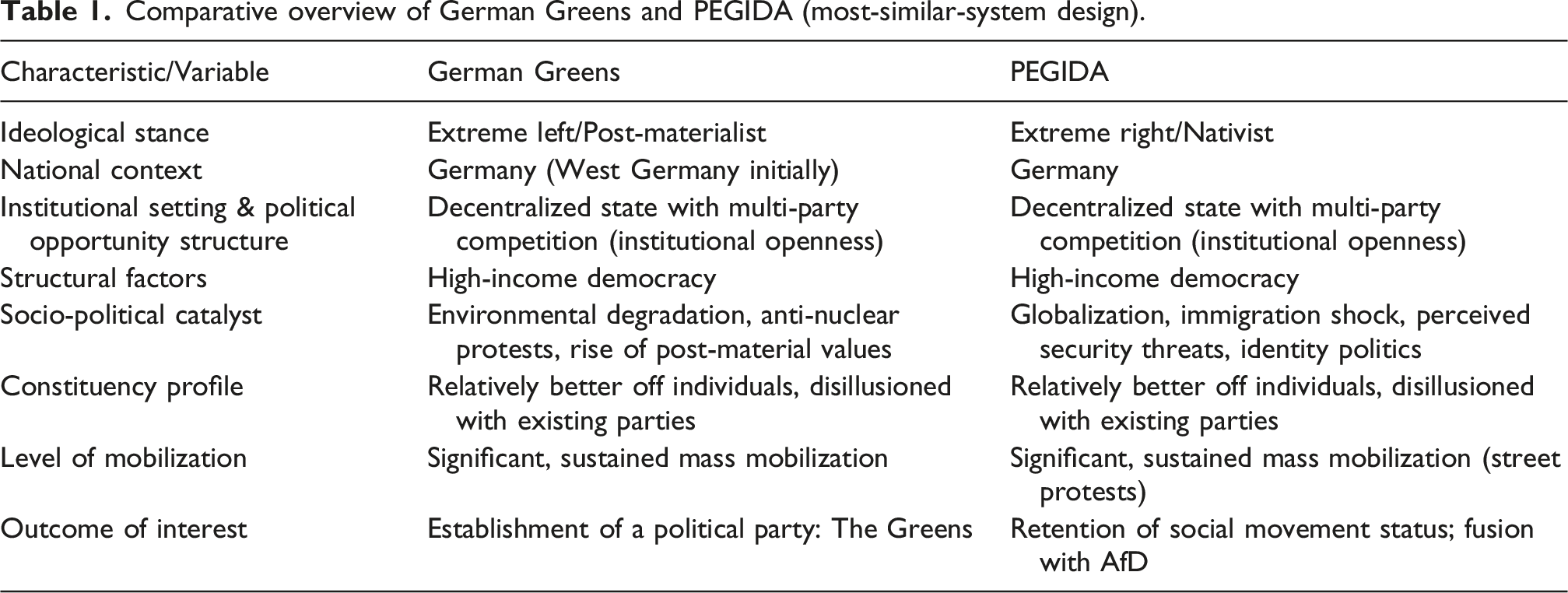
This study adopts a comparative case analysis, specifically employing a Most-Similar-System Design (MSSD), to investigate the sources of organizational transformation within anti-establishment social movements. I conduct a within-country analysis focusing on two prominent German cases: the German Green movement, which successfully transformed into a political party and participated in electoral competition since the 1980s, and the more recent far-right PEGIDA movement, which remained outside institutionalized political competition, subsequently fusing its support with the AfD.
To unpack the mechanisms driving these divergent outcomes, this study employs process tracing, a methodological tool specifically suited for examining organizational evolution. This approach facilitates a detailed analysis of the sequences of events, decisions, and interactions that produce specific political results (Bennett and Checkel, 2015). To operationalize this, I utilize event-history maps to identify historical outcomes and their underlying explanations. These maps are instrumental in representing unit-level causal effects by highlighting specific events and their contextual nuances (Waldner, 2015:247). By meticulously tracing these causal pathways, this method illuminates the divergent trajectories of the Greens’ party formation and PEGIDA’s non-transformation. The construction of these maps and the subsequent tracing of organizational trajectories rely primarily on secondary literature, media accounts, and speeches delivered by leading movement and party officials.
Comparative overview of German Greens and PEGIDA (most-similar-system design).
Greens: From disruptive to institutionalized politics
The German Greens offer a prime case study for analyzing the transition from disruptive social movements to institutionalized political participation. During the 1950s and 1960s, relentless pursuit of economic growth without adequate environmental regulations led to severe ecological issues, including air and water pollution and widespread environmental destruction (Dominick, 1988: 3). This unregulated growth and the absence of environmental protection policies generated significant societal backlash.
Post-1970s German politics involved the phase of “Growing Demand,” where rising public concerns over environmental issues became highly salient. Following the 1973 energy crisis, nuclear power became a cornerstone of the Social Democratic Party (SPD) and Free Democratic Party (FDP) coalition government’s economic modernization policy (Joppke, 1991: 46). These developments triggered widespread anti-nuclear protests (Müller-Rommel, 1989), which coalesced around the Ausserparlamentarische Opposition, an extra-parliamentary opposition group that fundamentally rejected traditional party and parliamentary politics (Dominick, 1988: 5–6). Hence, the Greens’ roots trace back to the ecological movement, which united young activists, feminists, and pacifists, largely as a reaction against the materialist politics prevalent in post-WWII Germany (Milder and Jarausch, 2015).
Greens effectively harmonized traditional organized politics with the principles of the ecology and pacifist movements (Papadakis, 1988). Both the nascent movement and the subsequent party primarily comprised young, university-educated individuals in white-collar professions (Milder and Jarausch, 2015: 4). Notably, those working in sectors outside the traditional capitalist mode of production, such as education, healthcare, and welfare, readily identified with the Green party’s non-economic and non-materialist discourse (Papadakis, 1988: 443). The party’s genealogy further extends to dissenters who left the Social Democratic Party (SPD) following the passage of its moderate Godesberg Program in 1959 and the exclusion of its youth organization, the Sozialistischer Deutscher Studentenbund, in 1961. These historical splits eventually fueled the initial rise of ecological movements, which subsequently led to the formation of local and state-level Green electoral lists (Milder and Jarausch, 2015: 11).
Another crucial, albeit less radical, component of the emerging Green political landscape was the Bürgerinitiativen (Citizen Initiatives). These groups primarily consisted of individuals concerned about environmental issues but dissatisfied with existing political parties (Müller-Rommel, 1985: 487). These local initiatives subsequently merged into a nationwide organization, the Bundesverband Bürgerinitiativen Umweltschutz, which by the late 1970s encompassed approximately 1000 affiliated groups (Dominick, 1988: 12). Consequently, the West German Green Party was definitively born out of this multifaceted protest activism, resulting from the combination of various left-wing social movements.
The transition from disruptive activism to institutionalized politics proved challenging, largely due to an internalized aversion toward party politics (Dominick, 1988: 18). The Greens consciously sought to preserve their social movement characteristics, actively resisting bureaucratization, which they perceived as an inevitable consequence of party formation. They consistently emphasized core values such as personal liberties, grassroots participation, local self-governance, decentralization, de-professionalization, and de-bureaucratization (Müller-Rommel, 1989). Consequently, early founders initially refrained from identifying their new institutional structure as a political party, opting instead for terms like “Wahlvereine” (electoral association). Similarly, Greens in Lower Saxony preferred “Grüne Liste Umweltschutz” (Green List for Environmental Protection), while those in Hamburg debuted as “Bunte Liste” (Colorful List) (Dominick, 1988: 19).
Despite these reservations, the Greens remained convinced that parliament offered an effective avenue for influencing public opinion, advancing their interests, and demonstrating the principles of grassroots democracy (Papadakis, 1988: 436). 3 In 1979, the confusion surrounding the Greens’ identity was partly resolved at a conference in Frankfurt, where 500 delegates convened and collectively chose a name that encompassed all Green organizations in West Germany: “Sonstige Politische Vereinigung Die Grünen” (The Other Political Union, the Greens) (Dominick, 1988: 21). This formal step was followed by the official founding of the party, Die Grünen, in January 1980. This development effectively shaped the second phase, “Niche Party Emergence” as the Greens attempted to fill the representation gap.
The initial and sustained success of the Greens is partly attributable to the Social Democratic Party’s (SPD) inability to channel the political demands of leftist youth into parliamentary politics, as the SPD was widely perceived as the “Establishment” party by this demographic (Papadakis, 1984). Particularly during the 1980s, the Greens rigorously opposed coalition with the SPD, reflecting their supporters’ disillusionment with established parties (Papadakis, 1988: 445). Ideologically, the Greens positioned themselves further left than the SPD, classifying as “left-ecological” (Milder and Jarausch, 2015: 6). With this extreme leftist stance, the German Green party was considered a radical alternative seeking fundamental institutional changes, contrasting with more reformist Green parties in the UK, Belgium, Finland, and Sweden (Müller-Rommel, 1985: 491).
By occupying a highly distinct policy position, the Greens initiated the third phase, “Issue Ownership.” The Greens’ Weltanschauung was significantly different from SPD across four policies: ecological, social, grassroots democratic, and non-violent (Müller-Rommel, 1989). The party articulated a critique of technocracy and capitalist modernization, demanding an immediate shutdown of the nuclear power industry (Papadakis, 1988: 444). Crucially, the Greens championed women’s and minority rights, and freedom of information—issues largely unrepresented by the existing political parties in West Germany (Papadakis, 1984). In essence, the Greens emerged as a direct response to the perceived failure of catch-all parties to adequately address environmental concerns. Moreover, these parties’ inability to defend pacifism and women’s and minority rights further contributed to the Greens’ efforts to consolidate their position in German politics (Müller-Rommel, 1985: 484).
The Greens garnered substantial support in the 1983 federal elections, securing 5.7% of the vote and entering the Bundestag. Their influence further expanded in 1998 when they became part of the federal coalition government, with party leader Joschka Fischer serving as Foreign Minister. By 2011, the Greens achieved a notable breakthrough by forming a coalition government in the traditionally conservative state of Baden-Württemberg, with Winfried Kretschmann becoming the party’s first-ever state premier. Following the 2021 German federal elections, the Greens entered a coalition government with the SPD and the Free Democratic Party, forming the “traffic light” coalition. The Greens’ sustained presence and success in German parliamentary democracy resulted from a confluence of diverse factors, specifically the representational gap.
The German Greens’ journey exemplifies the theoretical framework centered on the concept of representational gaps (Figure 5). Post-WWII industrial growth led to significant environmental degradation, fueling the rise of new social movements, particularly anti-nuclear, environmental, and peace activism. Crucially, the established catch-all parties, specifically the SPD, largely failed to incorporate these new politics issues into their platforms. This profound representational void created the impetus for the movements’ subsequent organizational evolution. Despite an inherent, ideologically rooted aversion to traditional party and parliamentary politics, a strategic realization emerged among key activists: the parliamentary path offered the most effective avenue for leveraging their resources and achieving their policy goals. This pragmatic shift directly led to the national unification and formal founding of Die Grünen. Subsequent enabling factors, such as proportional electoral system and decentralized state structure, along with the emergence of capable leadership and the sustained salience of their core issues, solidified their organizational survival. Event history map for the organizational evolution of German Greens.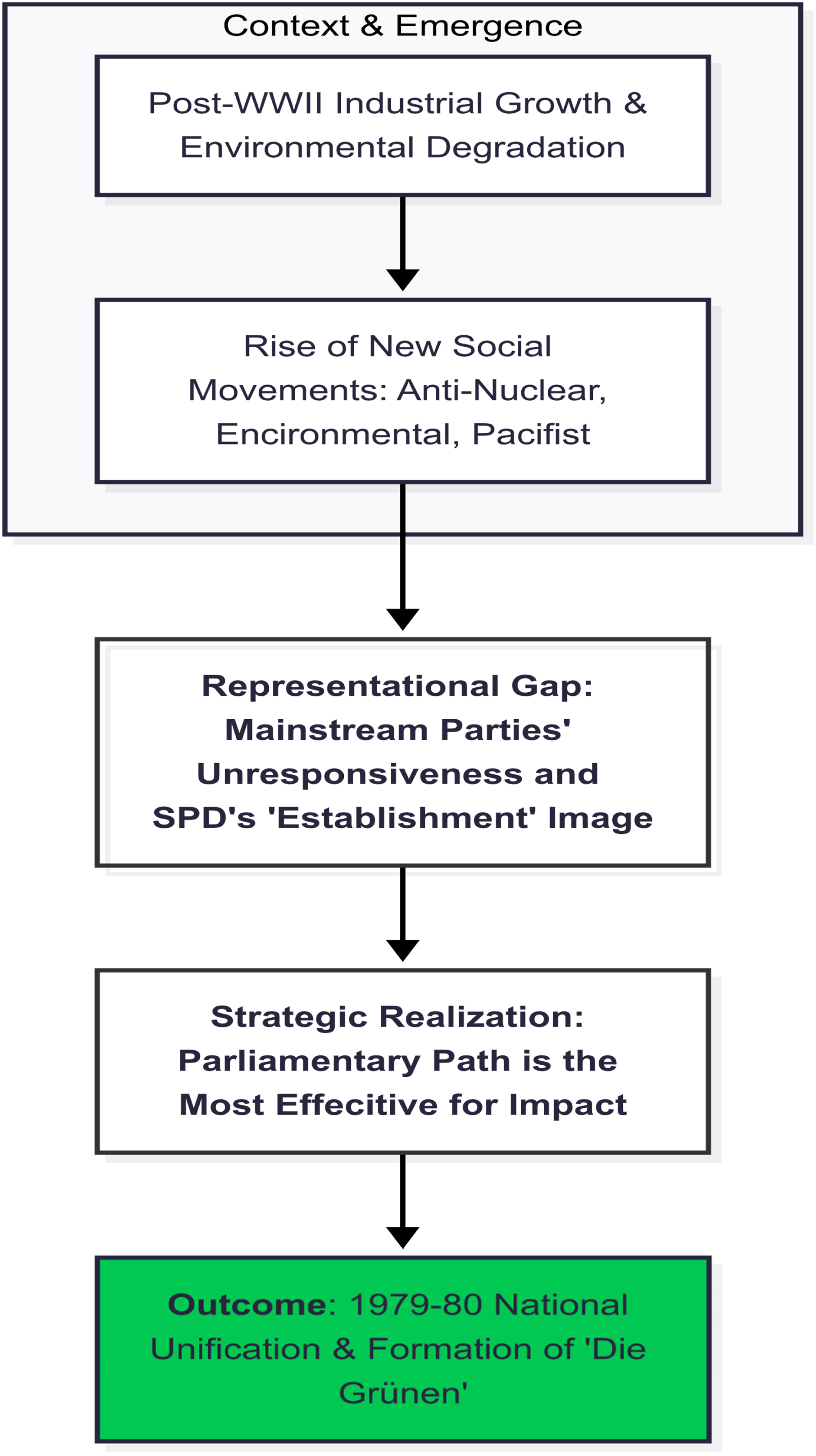
PEGIDA: An anti-immigrant social movement
The Growing Demand phase for PEGIDA occurred almost 40 years later than the Greens’ when German party politics was about to experience significant restructuring in 2010s. PEGIDA initially emerged in Dresden as a virtual social movement, primarily utilizing Facebook. It quickly garnered support from cities across both Eastern and Western Germany, attracting support from often wealthy areas, and people with higher education degrees in natural sciences or engineering (Önnerfors, 2017: 173). Its central narrative of “ordinary people” resisting the Islamization of the West resonated widely, drawing approximately 25,000 participants to a single rally in January 2015 (Grabow, 2016). Supporters frequently wear outfits favored by Neo-Nazis, and openly express sympathy for Vladimir Putin’s authoritarian style of politics, often displaying “Putin help us” placards at rallies (Druxes and Simpson, 2016: 5). Consequently, PEGIDA advocates for normalized German-Russian relations (Grabow, 2016) and champions a xenophobic, anti-immigrant, anti-elitist, and anti-establishment discourse (Grimm, 2015).
PEGIDA’s politics of identity predominantly centers on anti-Islamic and anti-immigrant sentiments, viewing Muslims and Arabs as threats to European culture (Druxes and Simpson, 2016: 2). The “Eurabia” narrative, which portrays Islamic culture as alien and unassimilable, is actively propagated by such groups to mobilize against outsiders (Önnerfors, 2017: 161). PEGIDA, therefore, champions a foundational Kulturkampf, aiming to protect German, Christian, and broader European identity from what it perceives as an infiltration by Muslim immigrants. Its demands include limiting immigration, imposing additional barriers on asylum applications, immediately deporting foreign-born or immigrant criminals, and increasing border controls and police presence to ensure public safety (Grabow, 2016: 176). PEGIDA supporters, for example, directly target former Chancellor Angela Merkel and her multiculturalism policies, which they believe destroy the nation’s cultural heritage. Merkel was caricatured and mocked as “Queen of Smugglers” and “Multi-culti Mommy” by PEGIDA activists (Kim, 2017: 5).
The rise of far-right movements and parties, including PEGIDA, is strongly associated with the failure of mainstream parties to effectively challenge or even moderately channel ultra-nationalist demands into parliamentary politics (Druxes and Simpson, 2016: 7). This phenomenon aligns with the concept of “post-politics,” where traditional forms of representation and existing political parties are no longer perceived as attractive avenues for certain segments of the population. Frustration with conventional representation fuels demands for direct democracy, a sentiment often vocalized by extremist groups like PEGIDA (Önnerfors, 2017: 161). In sum, PEGIDA’s emergence is rooted in a confluence of socio-political conditions that exposed a significant representational gap. The next section will delve into the AfD’s trajectory and how its organizational transformation eventually sought to close this very representation gap.
Leadership change in the AfD and the PEGIDA’s absorption
Founded in early 2013, the AfD initially emerged as a euro-skeptic party primarily composed of academics staunchly opposing Germany’s economic policies aimed at bailing out struggling EU economies (Kim, 2017). Notably, and perhaps surprisingly for many, the AfD at its inception did not employ anti-immigrant or anti-Islamic rhetoric, expressed commitment to political asylum for persecuted applicants, and cultivated a bourgeoisie public image (Patton, 2017: 165). Its academic composition was notable: seven of its 20 candidates in the 2014 European Parliament elections were academics, with an additional five holding doctorates, earning the AfD the moniker Professorenpartei (Party of Professors) (Patton, 2017: 164). Attendees at early party conferences in 2013 and 2014 included teachers, academics, judges, journalists, publicists, lawyers, and entrepreneurs, indicating an initial base largely composed of educated, higher-income individuals with a less pronounced xenophobic political agenda (Grimm, 2015). Under the leadership of Bernd Lucke, the AfD primarily demanded Germany’s exit from the eurozone, advocating for “sound economic reasoning,” rule of law, transparency, and greater citizen participation (2015: 266).
The AfD and PEGIDA were not initially allies. Bernd Lucke, then AfD leader, and other party officials—particularly from the liberal economic wing—were openly skeptical of PEGIDA, viewing the movement as excessively xenophobic, nationalist, and radical, fearing it could alienate their voter base (Meier and Niewendick, 2014). Conversely, PEGIDA’s leader, Lutz Bachmann, found Lucke’s wing in the AfD overly accommodating, publicly dismissing the AfD as a “failed protest party” consumed by “internal fights about posts,” “debates about the direction,” and self-preservation (Vorländer et al., 2018: 57). This relationship of open competition peaked when Bachmann announced his intention to establish a rival party, the Freiheitlich Direktdemokratische Volkspartei (AfD Sachsen Aktuell, 2016). Although these plans came to nothing, they underscore the significant initial mistrust and representational gap perceived by PEGIDA leadership before the AfD’s subsequent ideological realignment.
However, the AfD also harbored a more radical nationalist wing, represented by figures such as Frauke Petry, Björn Höcke, Marcus Pretzell, and Alexander Gauland, who would later steer the party towards PEGIDA’s ideological direction (Chase, 2017). This dynamic drastically shifted following a leadership coup within the AfD in July 2015, which effectively sidelined the relatively moderate Lucke-wing from the party’s leadership and celebrated the AfD as ‘the PEGIDA party’ (Grabow, 2016: 175).
The leadership coup triggered a distinct second phase of Niche Party Emergence, initiating a de facto fusion between the AfD and PEGIDA that restructured the AfD’s ideological position without creating a new party. This pivotal moment signaled the AfD’s decisive move towards a more radical stance and an explicit ideological alignment with PEGIDA. Under the new leadership of Frauke Petry and Björn Höcke, the AfD openly embraced radical-right values, which facilitated its effective absorption of PEGIDA’s ideological direction and supporter base (Druxes and Simpson, 2016: 3). This ideological convergence proved lucrative for the AfD. On one hand, PEGIDA demonstrated to the AfD that radical opposition to Islam and immigration could be a powerful source of mobilization. On the other, the movement strengthened the radical nationalist wing within the party, thereby consolidating the position of the new leadership (Patton, 2017: 174).
A series of subsequent events and prominent party speeches underscore the de facto fusion of PEGIDA and the AfD. Even in the movement’s infancy, local-level synergy was evident; by October 2014, the AfD parliamentary group in Dresden city council explicitly welcomed the PEGIDA protests, praising them as peaceful and objective articulations of citizen concerns (Lommel, 2014). The AfD quickly recognized PEGIDA as a natural extra-parliamentary partner (Patton, 2017: 174). This sentiment was echoed at the highest levels by figures like Alexander Gauland, who not only labeled PEGIDA as “natural allies” but also personally validated their demonstrations, dismissing extremist labels and finding their “19 points” platform largely reasonable (Weiland, 2014). This alignment signaled a definitive rightward shift, eventually leading co-leader Jörg Meuthen to push for the official removal of cooperation bans on members joining PEGIDA rallies (Reuters, 2018). Björn Höcke, for instance, openly embraced PEGIDA’s so-called “crusade,” declaring his commitment to fighting the perceived Islamization of Germany (Grabow, 2016).
Various studies confirm that most PEGIDA supporters directly back the AfD, preferring it over all other German parties (Patzelt, 2016). They are often characterized as “two sides of the same coin”—the party and the movement—mutually supporting each other’s political activities (Hellmeier and Vüllers, 2023). This dynamic positions the AfD as the parliamentary arm of the movement, while PEGIDA provides societal reach through street mobilization, sometimes undertaking more controversial actions on behalf of the party (Grabow, 2016: 175–178). Höcke himself has likened PEGIDA to a “Dresden branch” of the party. Another prominent AfD figure, Alexander Gauland, similarly described PEGIDA as a natural ally (Grimm, 2015: 273). Both AfD officials and PEGIDA supporters publicly attend each other’s events, delivering speeches and messages of support. A party convention decision allowing AfD members to appear at future PEGIDA rallies was even celebrated as a “milestone” by Saxony-Anhalt AfD chairman André Poggenburg (Zeit Online, 2018). Their connection extends beyond mere alliance to being “flesh of the same flesh” (Patzelt, 2016: 186).
Following the leadership change and its rapprochement with PEGIDA, the AfD completed the third phase of Issue Ownership, as it consistently promoted an anti-immigrant and anti-elitist stance, which significantly contributed to the closure of the representation gap. Prominent AfD figures enthusiastically championed German patriotism, advocating for pride in the nation’s history (Patton, 2017: 166). For instance, Alexander Gauland controversially exalted Prussian history while dismissing the Nazi era as merely a “speck of bird shit” on German history (Der Spiegel, 2018). In sum, PEGIDA’s trajectory of remaining a social movement and forging a close, albeit informal, alliance with the AfD, rather than forming its own independent political party, aligns with the theoretical arguments emphasizing the crucial role of representational gaps and strategic choices in movement party formation. While PEGIDA clearly tapped into a significant representational gap concerning anxieties about immigration, national identity, and perceived failures of the political establishment, the existing political landscape offered an alternative avenue for this gap to be filled.
The strategic trajectory of PEGIDA and its subsequent fusion with the AfD can be further elucidated through Gamson’s (1975) seminal outcome model, which evaluates movement success based on the dual pillars of “acceptance” and “new advantages.” While traditional party systems often react to external pressure through pre-emption—the granting of policy concessions without formal recognition of the movement’s legitimacy—the relationship between PEGIDA and the AfD represents a distinct departure from this pattern. In this case, the movement achieved a high degree of acceptance through the AfD’s internal realignment, which validated PEGIDA’s concerns as a legitimate expression of the “völkisch” constituency. However, because the movement did not evolve into a standalone party but instead saw its claims and personnel absorbed into the AfD’s structure, it suggests an outcome that straddles the line between co-optation and full response. This de facto fusion demonstrates that movement success in less institutionalized or highly polarized environments may not result in organizational independence, but rather in the fundamental transformation of an existing political vehicle that secures both symbolic recognition and the pursuit of new policy advantages.
It is crucial to nuance PEGIDA’s mobilization capacity compared to the broad, national, and diverse post-materialist movements that underpinned the Greens in the 1970s. As scholars have noted, PEGIDA remained predominantly a regional, Dresden-based phenomenon with limited sustained organizational success outside of Saxony (Vorländer et al., 2018: 119–124). This raises valid questions regarding the viability of a PEGIDA party at the national level.
However, the emergence and subsequent ascendance of the radical nationalist wing within the AfD, culminating in the leadership change of July 2015, created a viable political vehicle capable of articulating and championing PEGIDA’s core concerns within the institutional framework (Figure 6). Even with its regional limitations, PEGIDA’s concentrated support base in Saxony could have served as a significant asset for independent regional party formation within Germany’s federal multi-party system. Yet, this pivotal development altered the strategic calculus for PEGIDA. Instead of undertaking the significant costs and challenges associated with independent party formation (as the Greens did when no established party adequately represented their ecological and peace agenda), PEGIDA found a powerful and increasingly successful political party willing to adopt its key issues and mobilize its supporters. The AfD, in turn, benefited from PEGIDA’s grassroots mobilization capabilities and its ability to articulate more extreme positions. This symbiotic relationship, characterized by mutual endorsement and strategic division of labor (AfD in parliament, PEGIDA on the streets), effectively allowed the representational gap identified by PEGIDA to be addressed through an existing, albeit transforming, political party. Therefore, the absence of independent party formation by PEGIDA can be understood in the context of a viable and willing political entrepreneur (the AfD under its new leadership) emerging to capitalize on the same representational gap, offering a less institutionally demanding path for PEGIDA’s agenda to gain political traction. Event history map for the organizational evolution of PEGIDA.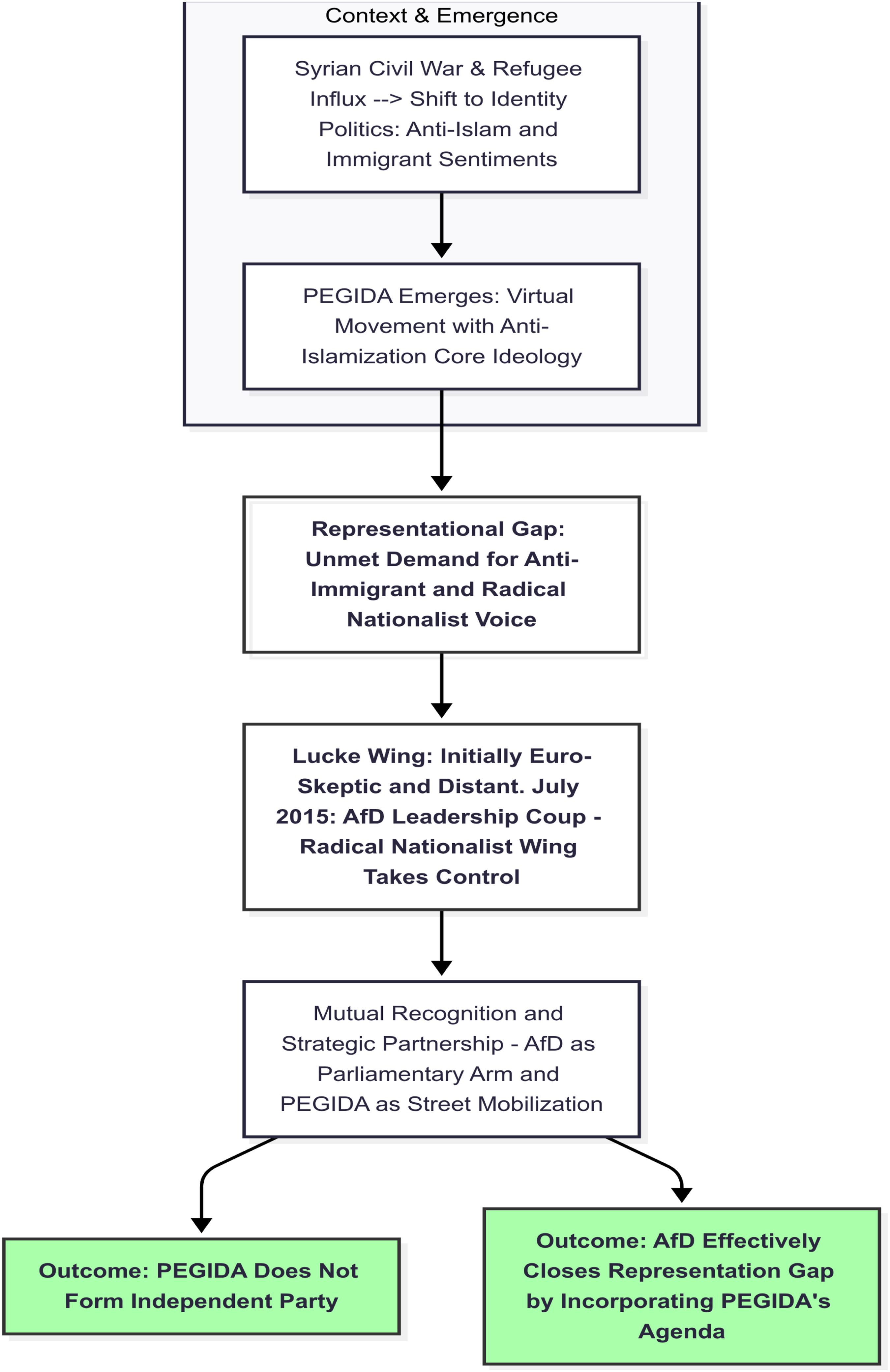
Conclusion
This study investigated how and why social movements, responding to perceived representational gaps, either institutionalize as new political parties or form symbiotic fusions with existing ones. This inquiry is crucial for understanding the dynamic evolution of party systems, the mechanisms by which new political demands enter the mainstream, and the ongoing challenges to democratic representation in an era of shifting values and heightened societal anxieties.
Drawing upon representational gaps, augmented by insights into strategic choices and political opportunity structures, this analysis presented a comparative examination of two distinct trajectories in German politics. My central argument posits that while both cases originated from significant representational voids, their divergent outcomes were shaped by the nature of the unaddressed demands and the availability of suitable political entrepreneurs. The findings reveal that the Greens emerged in response to a clear gap in “new politics” issues—ecological, pacifist, and rights-based—which established parties largely ignored. Faced with this unresponsiveness, and supported by a favorable institutional environment (e.g., proportional representation), the Greens strategically opted for direct party formation, successfully institutionalizing as a distinct political entity to champion these unrepresented concerns.
In contrast, PEGIDA arose from a different yet equally potent representational gap, channeling anti-immigrant and anti-Islam sentiments. However, instead of forming its own party, PEGIDA engaged in a de facto fusion with the AfD. This fusion was critically enabled by an internal leadership coup within the AfD in 2015, which shifted the party’s ideological core to align with PEGIDA’s agenda, allowing the AfD to effectively absorb the movement’s base and close the representational gap through an existing, transforming party.
These findings contribute significantly to the literature on movement-to-party transformation by highlighting that the filling of a representational gap is not exclusively achieved through the formation of an entirely new party. Instead, it can also manifest as a symbiotic fusion or absorption, where an existing party undergoes an ideological and organizational metamorphosis to incorporate the movement’s agenda and supporters. This process differs from traditional “pre-emption;” rather than a party merely co-opting a few demands to neutralize a movement, the AfD-PEGIDA case represents a deeper structural alignment where the party adapts to fill a representative space the movement no longer seeks to occupy independently. This distinction offers a more nuanced understanding of institutionalization processes and the adaptive capacities of party systems, filling a gap in comparative studies that often focus primarily on independent party emergence.
Despite these contributions, this study faces certain limitations. While institutional arrangements in Germany have remained relatively stable over the past 40 years, the historical contexts and party system dynamics of the 1980s and the 2010s differ significantly. The emergence of the Greens occurred within a Cold War framework of new politics, whereas PEGIDA and the AfD responded to the complexities of a fragmented, post-reunification party system and modern populist surges. Future research could further explore the specific conditions under which an existing party is likely to undergo such a transformation to absorb a movement’s agenda versus when a new party is the inevitable outcome. Comparative studies across different party system types and the role of digital mobilization platforms in facilitating either direct party formation or fusion, especially in the context of radical movements, also represent promising avenues for deepening our understanding of contemporary political change.
Footnotes

Funding
The author received no financial support for the research, authorship, and/or publication of this article.
Declaration of conflicting interests
The author declared no potential conflicts of interest with respect to the research, authorship, and/or publication of this article.