







Abstract
There is now growing empirical evidence that tourism development affects residents’ attitudes to tourism and individuals’ perceived well-being. Building on previous studies, this article wishes to ascertain whether this phenomenon is common to different destinations or is site-specific. To this aim, a propensity score method is implemented. The empirical analysis is based on a two-step survey (pre-, and peak-tourism season) carried out in two seaside destinations in Italy where tourism is a major economic sector. While results demonstrate that residents’ happiness is endangered by tourism development, this article evidences that this stylized fact shows some peculiarities that are site-specific. It follows that socioeconomic and cultural characteristics, history and type of tourist development matter and have to be considered in developing any tourism policy.
Introduction
It is now commonly acknowledged that leisure activities contribute to individuals’ subjective well-being (SWB). Among the various typology of leisure activities, there is now growing empirical evidence that demonstrates that tourism, and certain type of tourism more than others (Bimonte and Faralla, 2012, 2015), positively impacts on tourists’ overall satisfaction with life (Iwasaki, 2007; McCabe and Johnson, 2013; Neal et al., 2007; Sirgy et al., 2011). On the contrary, this issue is controversial when dealing with residents, that is, the host communities. The latter is a crucial partner for the achievement of any tourism policy or/and development target. Therefore, knowing whether and how tourism impinges on local communities’ well-being is of paramount importance (Sharpley, 2014; Snaith and Haley, 1999; Yu et al., 2011).
Recently, various studies have focused on the relationship between tourism, and in particular tourist development, and residents’ SWB (Kim et al., 2013; Rivera et al., 2016). Most of them are based on cross-sectional surveys (i.e. data collected at one specific point in time) carried out in destinations where tourism already exists and constitutes an aspect of the everyday life. In other words, they used a “synchronic” approach. Fewer surveys tried to track opinions over time.
To better understand and test whether tourism affects residents’ attitudes and SWB, a “diachronic” analysis would be more appropriate (Vargas-Sanchez et al., 2014). Bimonte and Faralla (2016) dealt with this issue carrying out a two-step survey in Follonica, a mature national and international beach destination on the Tuscan coast (central Italy). Their aim was to detect whether and how the start of the tourist season impinges on residents’ perception of tourism impacts and life-satisfaction. They interviewed twice the same sample of residents before and during the peak tourist season and compared the results. They found that tourist development impinges on perceived impact and residents’ SWB.
Bimonte et al. (2019b) carried out a similar experiment in another Italian destination, that is, Vieste. It is a southern destination with a long-established tourist vocation. They realized a three-step survey with the twofold aim of: (1) testing whether locals’ attitudes to tourism varied over time and tourist development affected individuals’ SWB and satisfaction with life domains (seasonal hypothesis) and (2) verifying whether this effect was transitional (resilience hypothesis).
The present article builds on these previous studies. It merged the two data sets deriving from the two surveys realized in the two destinations. The analysis was carried out on all investigated variables that were common in the two studies. Unlike Bimonte et al. (2019b) and Bimonte and Faralla (2016), it carried out an analysis to see whether an empirical regularity (stylized fact) emerged as for SWB and satisfaction with environmental and home aspects. In particular, it investigated whether significant differences emerged with respect to the initial level of the variables of interest (i.e. at time 1) between the two seaside destinations and with respect to the observed differences between the appraisal of those variables at time 2 (T2; after the tourism season) and time1 (T1; before the tourism season). Then, since differences may depend on the observed characteristics of the two populations, it applied the propensity score (PS) method (Rosenbaum and Rubin, 1983) to isolate the impact of the area’s peculiarities on each variable of interest. Specifically, the PS method is a technique used to identify a control group with the same distribution of covariates as a treatment group (Stuart, 2010). PS methods are widely used in social science research, including economics, political science, psychology, and sociology (Caliendo and Kopeinig, 2008; Guo and Fraser, 2014). While PS method is a technique originally developed to overcome such difficulties when performing causal analyses (Rubin, 2005), Frölich (2007) demonstrated that it can be also used in applications other than treatment evaluation. For instance, among the others, Nopo (2008) presented PS matching for the descriptive purpose of analyzing gender wage gap; Ferrari (2019) used a PS method to study the wealth gap between native and immigrant households across the wealth distribution.
In this article, we used PS method in the Frolich’s perspective, that is, PS is used as an alternative technique to the decomposition analysis of the type proposed by Blinder (1973) and Oaxaca (1973) and in particular, we are interested to estimate the so-called unexplained component part of the Oaxaca–Blinder decomposition. We argue that PS provides a more solid basis for comparing Vieste and Follonica differences on each variable of interest when important differences in observable characteristics exist between the two destinations.
In other words, this method allows us to establish whether statistically significant differences exist in the variables of interest between the treated (Vieste) group and the untreated/control (Follonica) group. If the preexisting differences in variables between the two destinations would disappear after applying the PS method, it can be concluded that the differences between the two groups can be attributed to the background differences in the population. On the contrary, if the preexisting differences would persist or the initial similarity disappear, then it may be inferred that differences depend on some destination’s specificities which would be worth investigating.
Finally, from a methodological point of view, it is important to note that we also refer to the recent paper of Sloczyn’sky (2019). It means that we decided to invoke the potential outcome model (see, e.g. Holland, 1986; Imbens and Wooldridge 2009) without any causal interpretation of our estimates.
Tourism and residents’ SWB
The beneficial and detrimental impacts of tourism on destinations and communities have been broadly investigated and discussed. 1 It is normally presumed that residents’ attitudes to tourism, assessment of tourism impacts and, more generally, residents’ SWB mostly depend on the net benefit of tourism (difference between the costs and the benefits), and their even/uneven distribution among the members of local community (Ap, 1992, 1990; Bimonte and Punzo, 2016; Stylidis et al., 2014). Understanding whether and how tourism development affects residents overall sense of well-being and satisfaction with a set of life domains is of utmost importance, because local communities’ acceptance is vital for the achievement of the goal of any tourism policy and plan (Lee, 2013; Liang and Hui, 2016).
Although still scanty, research on the link between perceived impacts of tourism and residents’ SWB has recently grown. Tourist development was proved to positively affect residents’ happiness in small islands (Nawijn and Mitas, 2012). Consistently, in their research on European countries, Okulicz-Kozaryn and Strzelecka (2017) found that at low levels of development tourism contributes more to residents’ happiness than it does at a high level of development, evidencing a reduction once tourism activity goes beyond a certain threshold point domestic tourists. Moreover, according to their results, domestic tourism contributes more than international tourism to locals’ SWB.
According to Rivera et al. (2016), this relationship was weak and mediated by social comparison. This association also emerged for China. Lin et al. (2017) evidenced that SWB and perceived economic benefits of tourist development are positively related. They also displayed that satisfied residents were keener to take part in value co-creation activities with tourists.
Unlike the previous, using data on 32 countries from the 6 waves of the European Social Survey, Ivlevs (2017) evidenced a negative relationship between international tourist arrivals and residents’ SWB. The negative link is more pronounced for people living in rural areas and countries at a higher stage of tourist development.
All these studies share the same limit: they carry out a cross-sectional survey to examine the relationship between tourism development and residents’ SWB in destinations where tourism already constitutes an established component of the community’s everyday life. In other words, they do not really have a control variable for tourism development. In this circumstance, it is difficult to ascertain whether variations in quality of life (QOL) and SWB truly depend on tourism or other causes (Pratt et al., 2016).
To partially escape the problem, Kim et al. (2013) realized a multidimensional analysis. They analyzed communities at different levels of tourist development. They found that the impact of tourism on residents’ satisfaction with life domains and, in turn, of the latter on life satisfaction as a whole depends on (are mediated by) the stage of tourist development. In a study conducted in the Fiji islands, Pratt et al. (2016) came to the same conclusion. They compared the gross happiness index of two villages at very different stages of tourism development and with different exposure to tourism and tourists. They evidenced that the village with lower exposure to tourism was significantly happier.
Unlike the previous, Bimonte and Faralla (2016) and Bimonte et al. (2019b) carried out a diachronic analysis to detect whether residents’ attitudes and happiness change with tourist development, that is, with the arrival of tourists in summer. They separately conducted their study in two different famous and mature seaside destinations in Italy. As Vargas-Sanchez et al. (2014), they used seasonality as an extrinsic moderating variable. Their results were consistent with the previous: the perception of tourist impact and SWB changed over time and the start of tourist season impinged on both, increasing the perception of the former and jeopardizing the latter.
However, any destination and community is unique, because molded by historic processes and cultural traits and influenced by economic and typology of tourist development. The combination of all these aspects makes each tourist destination unique. Therefore, to test whether the research hypothesis can be generalized, we merged the database and compare the results that emerged in two different surveys, carried out in Follonica (Bimonte and Faralla, 2016) and Vieste (Bimonte et al., 2019b), two destinations with different socioeconomic and cultural characteristics, history, and type of tourist development. The aim is to detect whether results are site-specific with respect to each single aspect investigated. Our research question is: RQ1: Does any variation in perceived tourist impact depend on destination?
To such aim, this article carried out an analysis in differences. It first analyzed whether significant differences emerge between the initial level of the variables of interest (i.e. at time 1) in the two seaside destinations and in the observed differences between the appraisal of those variables at time 2 (after the tourism season) and time 1 (before the tourism season). Then, it applied the PS method (Rosenbaum and Rubin, 1983) to verify whether eventual differences in each variable of interest depend on the area’s peculiarities or, rather, on the characteristics of the two populations.
Survey design and methods
Study sites
The surveys were realized in Vieste and Follonica, two mature Mediterranean tourist destinations: the former located in Apulia, a region in the southeast of Italy, and the latter on the southern coast of Tuscany, a region in the center of Italy (Figure 1). They share the status of Mediterranean seaside destinations, but apart from their different geographical, natural, and historical attributes and attractiveness, they differ in some important tourist-related contextual factors.The start of tourism development in Vieste dates back to the early 1960s. It is now in the mature stage of the destination life cycle, steadily accounting for almost 2 million night stays a year in the last decade (more than three times as much as Follonica). Tourists visiting Vieste mostly stay in hotels, tourist villages, or rented accommodation. Compared to Follonica, the share of second homeowners is very low. In fact, while a large share of tourists visiting Follonica are families and come from neighboring provinces; this is not true for Vieste. This is also witnessed by a different mean age of tourists: while the majority are between 25 and 40 years in Vieste, this figure is 35–54 years in Follonica. The two destinations also differ in terms of residents’ socioeconomic condition: the former has a much lower per-capita income (about 8500 vs. 14,200 euros, respectively) and different economic structure, which historically determined and still causes migration processes. The unemployment rate is higher in Vieste (at provincial level in recent years the figure was around 20% for Vieste and about 8% for Follonica). While agriculture and fishing have been important sectors for the economy of Vieste, Follonica and neighboring areas underwent industrialization and deindustrialization. However, in both destinations, the service sector represents the major economic sector (about three-fourth of value-added) and tourism represents a very important driver of the local economy in both destinations. As a matter of fact, most respondents (52% vs. 32%) declared that they were directly or indirectly involved in tourism and almost all considered tourism an important component of the local economy (99%).
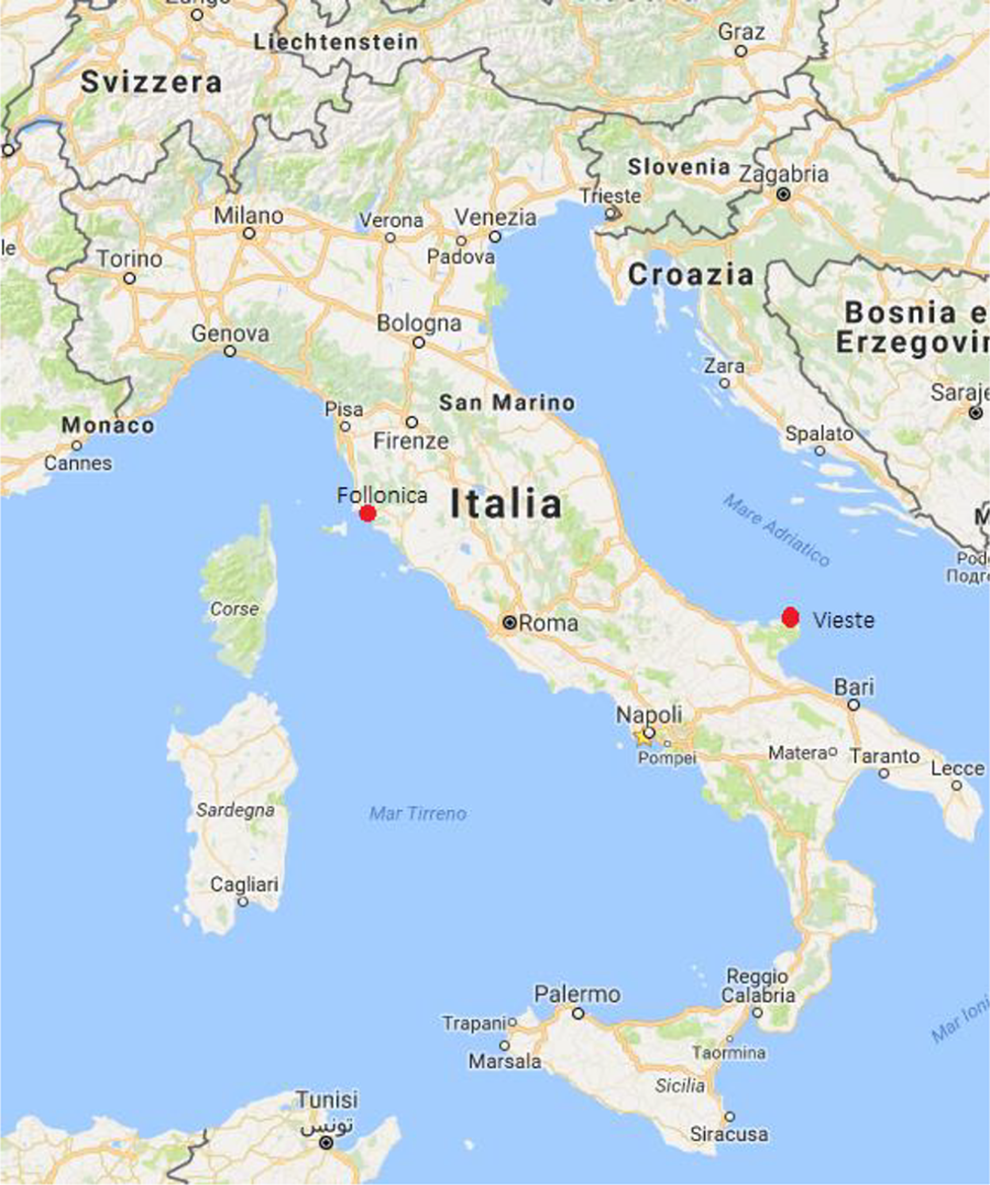
Geographical location of Vieste and Follonica.
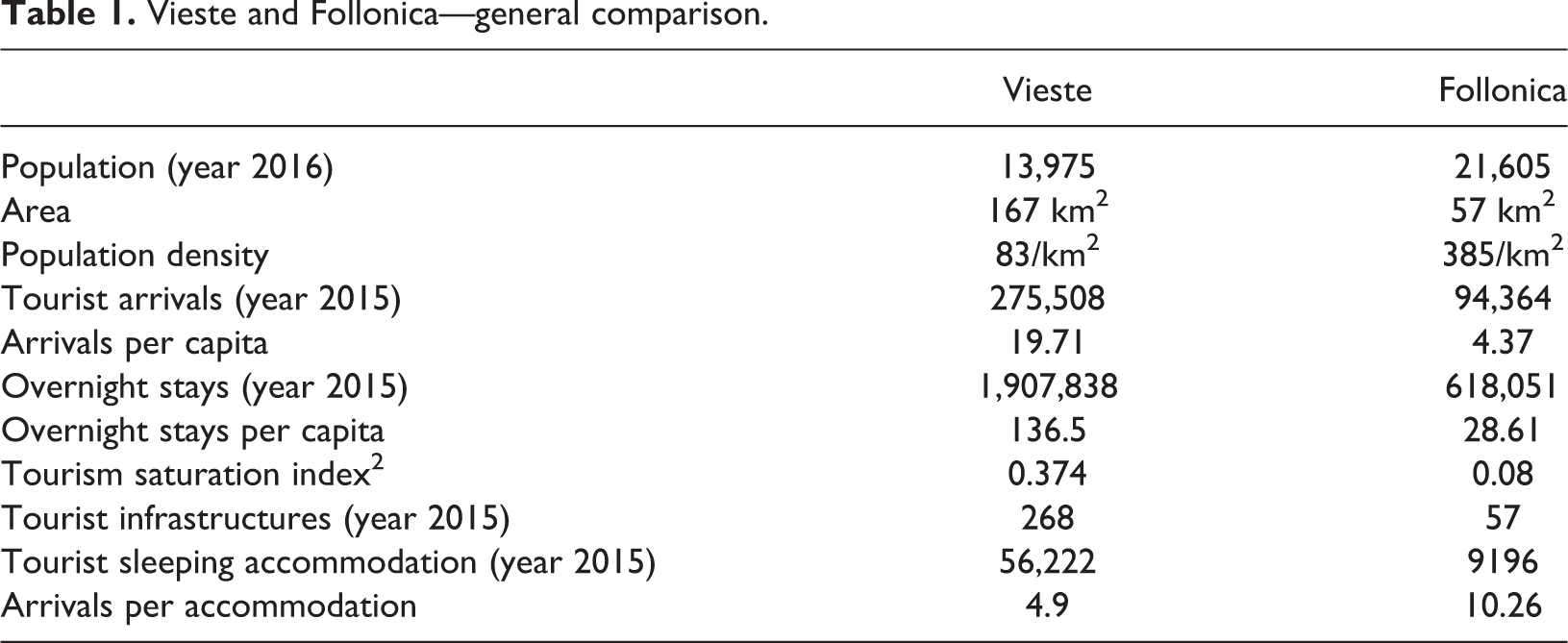
Vieste is less populated than Follonica but has a larger land area in km2 (Table 1). It receives more than 275,000 tourists a year (almost three times as much as Follonica) whose average length of stay is 6.9 and 6.5 days, respectively. In both destinations, the majority (around 80%) are Italian (Agenzia Puglia Promozione, 2016; IRPET, 2017) and tourist arrivals are mainly concentrated in July and August. However, considering the typology of tourists (mainly families coming from neighboring areas), Follonica has a more consolidated shoulder seasons and a less pronounced peak season. It is characterized by a more equitable distribution of tourist flow. To this aim, we calculated the Gini index to represents the different seasonal concentration. It evidenced a lower dispersion (0.51 vs. 0.69) for Follonica compared to Vieste. This also contributes to explaining the different figures in terms of number of arrivals per accommodation. Figure 2 evidences the tourist flow concentration at the province level (Follonica, in the Grosseto province, and Vieste, in the Foggia province).
Vieste and Follonica—general comparison.
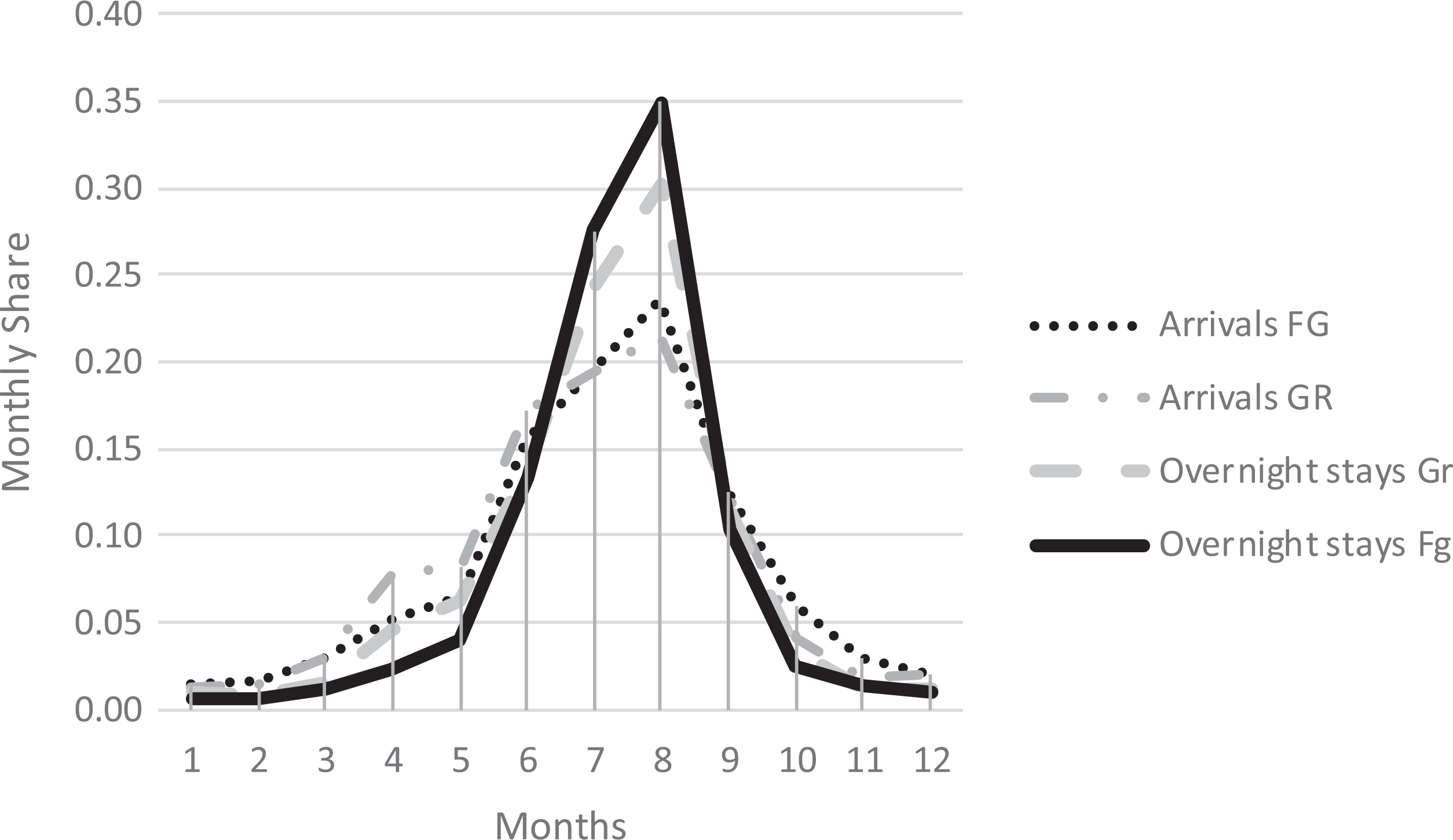
Seasonal concentration of arrivals and overnight stays.
Sampling frame and survey methodology
The reference populations consisted of individuals aged 18–70 on the municipal electoral register of the two seaside destinations. The two populations of 11,312 and 16,463 individuals in Vieste and Follonica, respectively, were stratified by age and sex. Two random samples of 200 and 329 individuals were drawn using a proportional selection rule. Through a researcher administered questionnaire, the same individuals were asked the same questions in two periods: in May, before the starting, and in August, at the peak of the tourist season. This frame (one off and one peak season period) was mainly chosen for the following reasons: they made it possible to detect individual perceptions of tourist impacts in different contexts and to use tourism as a treatment variable; the proximity of the periods reduced the probability of changes in time-dependent characteristics (such as personal income, occupation, marital status, etc.) which could affect individual appraisals. (Bimonte et al., 2019: 325)
Following a widespread procedure of the empirical literature on happiness (OECD, 2011; Veenhoven, 2000), people were first asked to gauge their well-being on a Likert-type scale ranging from 0 (totally unsatisfied) to 10 (totally satisfied) (Powdthavee, 2007). Well-being is normally presented as a multidimensional phenomenon approached in the literature from two distinct points of view: “objective” and “subjective.” Objective wellbeing relates to ideas of the fulfilment of materialistic demands and access to physical, environmental, social and other resources. Subjective wellbeing, meanwhile, relates to self-assessments of satisfaction which renders it much more complex to measure since it includes ideas such as goal achievements and expectations as well as ideas about engagement in meaningful relationships amongst other variables. (Hartwell et al., 2018: 1834)
In Vieste, the number of valid questionnaire was 174 in May and 132 in August. Figure was 329 and 220, respectively, in Follonica. To deal with the possible selection bias, a weighting adjustment technique was applied (Särndal, 2007). To such aim, we used survey information from the sampling frame to calculate weights, comparing the characteristics of respondents with those of the whole sample.
Methods
As stated, all our variables of interest were assessed on a scale ranging from 0 to 10. To develop our analysis, we considered these categorical ordered variables as cardinal. Even though cardinal evaluations of such variables must be taken with caution, it is now acknowledge that evaluating satisfaction ordinal variables as cardinal leads to similar results in a regression framework (Ferrer-i-Carbonell and Frijters, 2004; Van Praag and Ferrer-i-Carbonell, 2008).
Considering the main goal of the article, that is, testing for differences in responses between the two destinations, for each variable we generated an indicator which defines observed differences between the appraisal of Vieste’ and Follonica’s residents. Therefore, we first tested for significant differences in the initial level of our variables of interest (at time 1), then we tested for significant differences in the observed changes between time 2 (T2) (at the peak of tourism season) and time1 (T2) (before the starting of tourism season). We only analyzed those variables that were common to both studies. To execute this analysis, we used the PS method (Rosenbaum and Rubin, 1983), which permits to isolate the site-specific effect on variables of interest.
Let us assume that there are two groups, denoted A (Vieste) and B (Follonica), and suppose that a researcher is interested in examining the difference between these groups with respect to an outcome y (in our case aspects of own life and home environment). Consider a model in which the distribution of y in each group is related to a vector of covariates x (e.g. sociodemographic variables). Since the two populations A and B are different, appropriate methodologies are needed to isolate the impact of the area-specific characteristics on each variable. PS methods could be used to compose comparable samples by equating the distribution of covariates in the comparison group (Stuart, 2010). If the observed differences in y between A and B would disappear after applying the PS method, it can be inferred that they could be attributed to the background differences in populations. If the observed differences in y would remain intact after applying the PS method, the conclusion can be drawn that the differences cannot be imputed to the background population characteristics and other determinants should be investigated.
In particular, we aim to estimate the average treatment effect (ATE). A simple definition of the ATE can be written as:

where E(.) represents the corresponding two potential outcomes, the outcome under the treatment
There are multiple PS methods that may be used (Caliendo and Kopeining, 2008). In our study, we used PS to adjust for imbalances that existed between the two seaside destinations. In particular, we applied the so-called inverse probability of treatment weighting (Lunceford and Davidian, 2004; Sato and Matsuyama, 2003). Empirically, each individual j can be described by a vector (
First, we estimated the PS
Main results
Descriptive statistics and empirical analysis
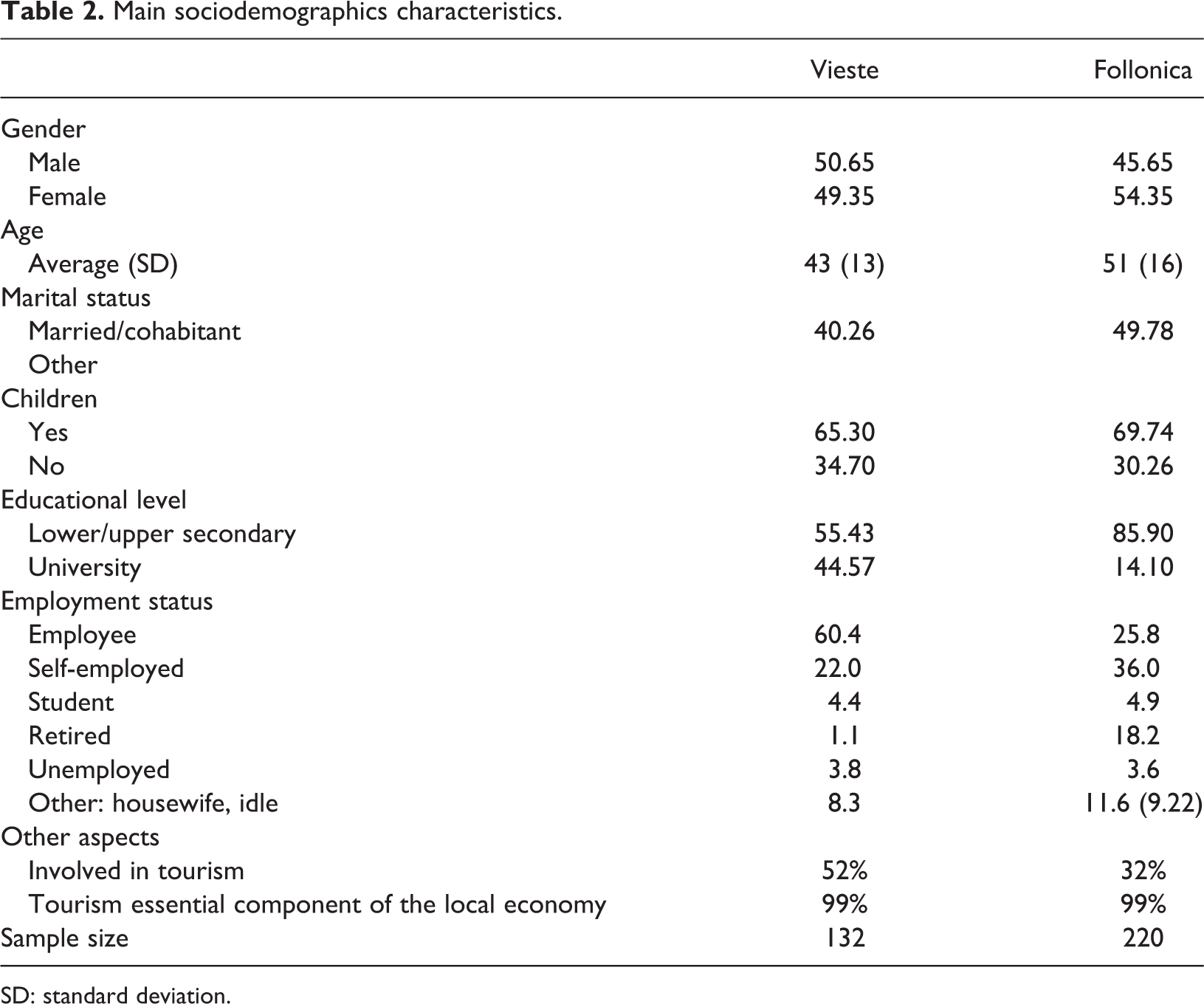
Table 2 summarizes the sociodemographic characteristics of the final sample. It refers to the balanced panel of individuals. Figures are all consistent with the data of the reference population (Istat, 2016). Table 3 presents the median values 9 for our variable of interest at time 1 and time 2 for both destinations. It highlights that residents were very satisfied with aspects of their lives, like housing and personal relations and quite satisfied with their economic situation and work. As for the change in judgments in the two survey periods, we can see that while satisfaction with some of these aspects remained largely unchanged across the two periods, differences emerged in the perception of aspects between destinations. However, in some cases, at first glance, it might appear that the beginning of the tourist season did not encroach on individual appraisal of the factors investigated and, therefore, on SWB. At a closer look, the distribution of scores evidences a shift to the left, indicating a worsening in the people’s perception. This is also true for SWB in Vieste, where individuals appraised their happiness as 7 (median value) in both periods.
Main sociodemographics characteristics.
SD: standard deviation.
T1 vs. T2: descriptive statistics of the sample (n = 132).
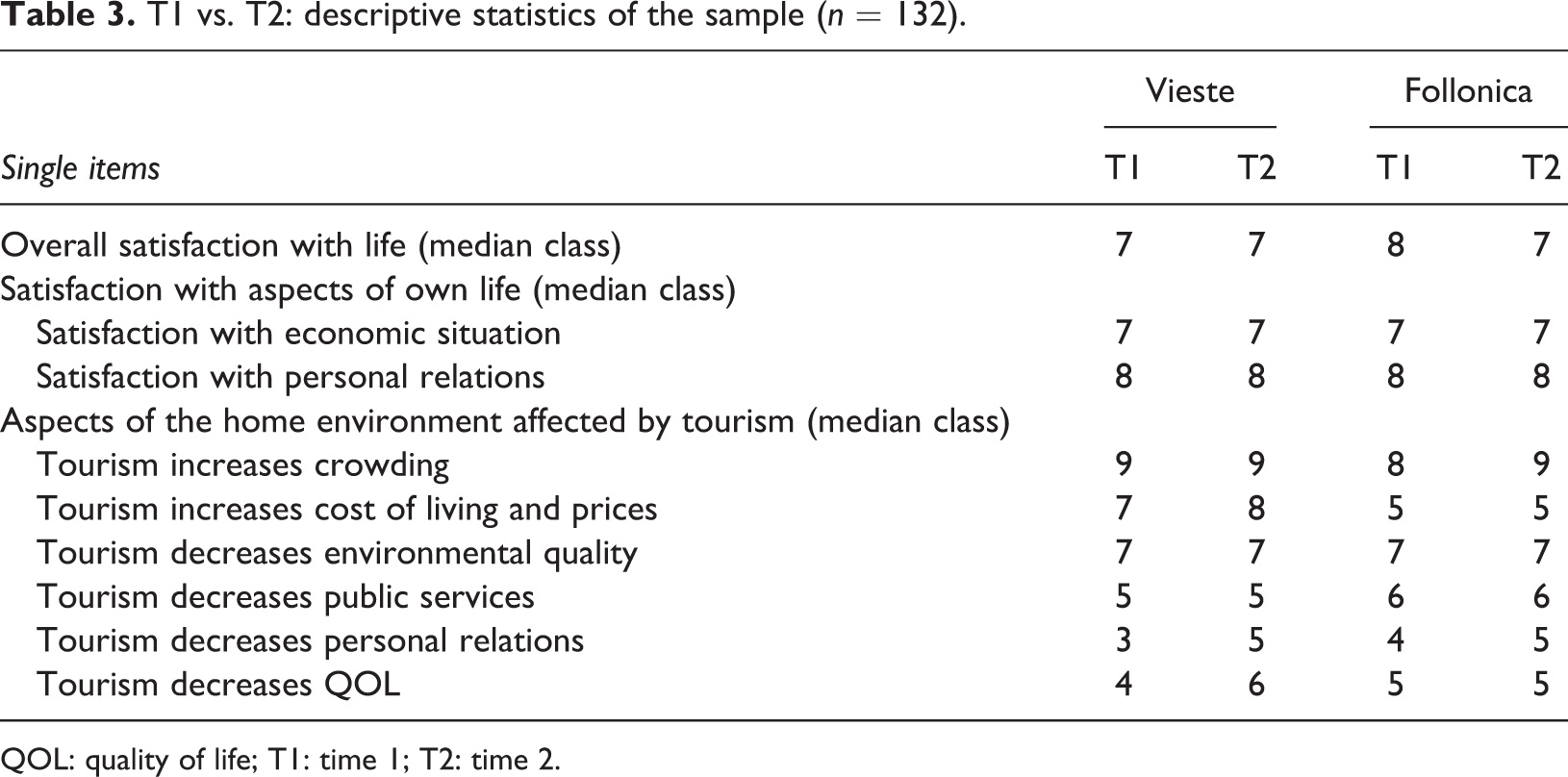
QOL: quality of life; T1: time 1; T2: time 2.
Investigating why this variation occurred is of utmost interest. This was one of the aims of Bimonte et al. (2019) and Bimonte and Faralla (2016)’s paper. 10 But, it is also interesting to explore whether there are site-specific factors that may affect residents’ SWB and satisfaction with environmental and home aspects. Therefore, our main aim was not to explore the relative contribution of various aspects to individual overall life satisfaction but rather to verify whether onset of the tourist season directly or indirectly affected people’s perceived well-being and whether it may be imputed to specificities in the two destinations that do not depend on population characteristics.
To such aim, we estimated ATE. Different practices have been adopted for choosing a suitable specification of the PS. The PS has been estimated by a logit regression that predicts the conditional probability of assignment to the treatment (e.g. the seaside destination Vieste) as a function of the following individual characteristics: age, gender, educational level, marital status, and to have children. The results of the Hosmer–Lemeshow goodness-of-fit test (
To control for the ignorability condition assumed within the PS causal framework, we checked graphically for the common support or overlap condition (Caliendo & Kopeinig, 2008). Figure 3 shows the overlap in the distribution of PSs in treatment (Vieste) and comparison (Follonica) groups. The high level of overlap supported that the overlap condition is satisfied. Finally, we checked the balance between the treated and the untreated groups after weighting. We found that both sets of weights markedly improved balance of all covariates. 12
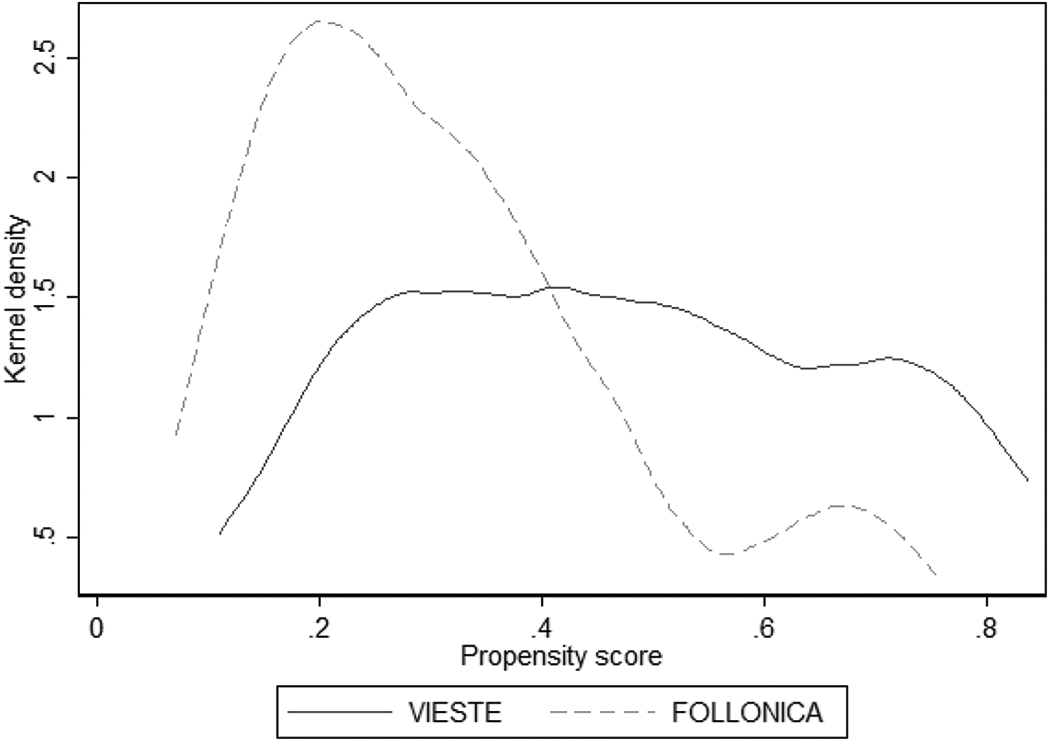
Common support between treatment and matched PSs: PS: propensity score.
Table 4 reports the observed differences and estimated ATE for each aspect of interest, both for the initial level (T1) and for the change in appraisal between T2 and T1. As it can be seen, some interesting aspects emerge, highlighting differences between the two destinations. Three ATEs are significantly different from zero at T1, evidencing differences in residents’ appraisal of own SWB and appraisal of aspects that are supposed to be affected by tourism. Moreover, differences also emerged with respect to changes induced by the start of tourist season, denoting a different way to perceive changes in everyday life induced by tourism development.
Estimated ATEs by aspects of own life and home environment and observed difference.
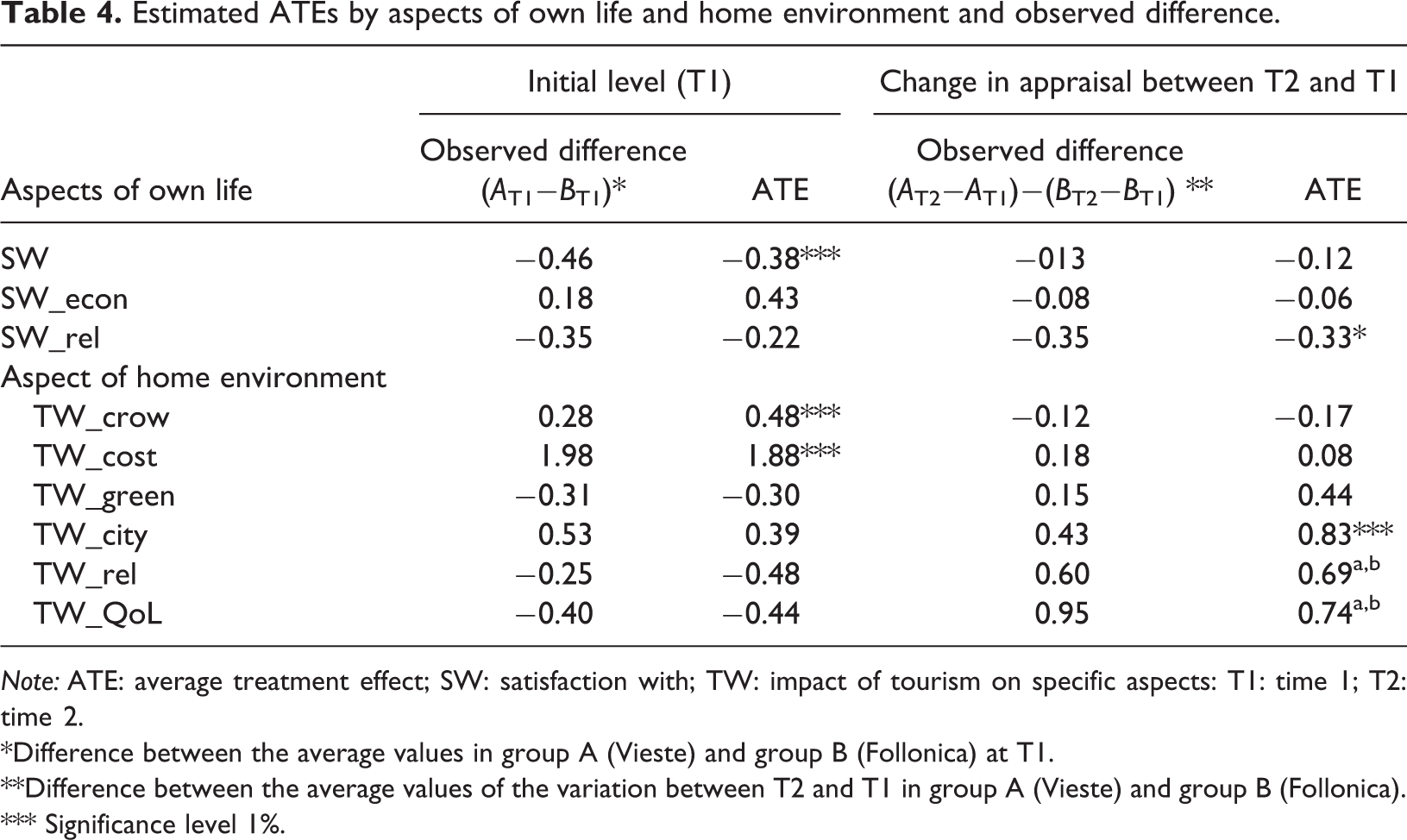
Note: ATE: average treatment effect; SW: satisfaction with; TW: impact of tourism on specific aspects: T1: time 1; T2: time 2.
*Difference between the average values in group A (Vieste) and group B (Follonica) at T1.
**Difference between the average values of the variation between T2 and T1 in group A (Vieste) and group B (Follonica).
*** Significance level 1%.
In particular, as for SWB, the ATE exhibits a negative value, that is, before the start of tourist season, residents in Vieste are in general less satisfied than those living in Follonica. This result is independent of population’s characteristics. This figure is in line with the Italian National Institute of Statistics’ data on citizens’ satisfaction with life (Istat, 2019). Indeed, the latter evidences that compared to northern and central Italians, southern people are less satisfied with their life.
Differences emerge also with respect to the perceived impact of tourism on some aspects of home environment, that is, on crowding and cost of living. Indeed, ATEs are positive. This means that, compared to those living in Follonica, people residing in Vieste perceive more the impact of tourism on these two aspects.
As for changes induced by the onset of tourism season, some interesting differences emerge. Personal relationships in Vieste are more affected than in Follonica. Indeed, satisfaction with respect to this aspect decreases more, irrespective of population characteristics. Simultaneously, people living in Vieste perceive as more severe the impact of tourism on some aspects of home environment, that is, public services, personal relationship and QOL. Among the others, this can be explained by the different characteristics of tourist flows. Indeed, as we saw, Vieste has a less equitable distribution of tourist flows and a higher tourism saturation index (TSI). The latter might be used as a proxy to understand the different impacts of tourism on local population. We could expect that the higher the TSI, the more likely the social disruptions in the host community.
Our findings evidenced that, while both studies carried out in Follonica and Vieste highlighted similar qualitative results, detecting statistically significant differences in the distribution of certain major items, in particular SWB, affected by the start of tourism and, in line with their research hypothesis and design, no statistically significant changes in satisfaction with aspects of people’s own lives less affected by tourism (housing, income), the appraisal of certain aspects differ in the two destinations. According to our study, what matters is that these differences may not be imputed to population characteristics.
Our findings make evident that during the peak season satisfaction with personal relationship worsened for a significant proportion of residents in both destinations, but this decrease was stronger in Vieste. As for tourist impacts on home environment, residents’ perception showed a different pattern for public services, personal relationship and QOL in the two destinations. Why this happened is a tricky issue worth to be investigated. In our case, together with cultural or community’s characteristics, a possible explanation can be found in the different concentrations of tourist flows. The higher concentration of tourist flows may cause a higher irritation of locals and this may affect the perceived impact of tourism and cause a stronger disruption in social ties. These aspects are consistent with the result envisioned by social identity theory.
Conclusions
In recent decades, research on the relationship between aspects other than material aspects (income and tangible goods) and individual SWB has flourished. New insights into causes and predictors of SWB have been produced (Bartolini and Bilancini, 2010; Blanchflower and Oswald, 2004; Easterlin, 2001; Frey and Stutzer, 2000; Helliwell, 2003; Ram, 2010; Sarracino, 2010; Veenhoven, 2000). Among the others, leisure activities, and in particular tourism, have been also investigated as a determinant of individuals’ SWB (Bimonte and Faralla, 2012, 2015; Iwasaki, 2007; McCabe and Johnson, 2013; Neal et al., 2007; Sirgy et al., 2011).
While it is now widely acknowledged that tourism contributes to tourists’ happiness, this is not certain for hosts who receive tourists. Recently, attention has been devoted to this issue, that is to the relationship between tourist development and residents’ life satisfaction (Bimonte and Faralla, 2016; Bimonte et al., 2019b, 2019a; Kim et al., 2013; Rivera et al., 2016; Woo et al., 2015). The aim of these studies was to understand which features of peoples’ lives were most influenced by tourism and verify whether tourism development impinged on individuals’ SWB.
Unlike the previous, this article inspected whether results were site-specific. To such aim, PS method was carried out. Indeed, it allows isolating the site-specific effect of tourism on variables of interest. This method removes the effects of population characteristics on results. Our analysis evidenced that there are characteristics that are peculiar to destinations. Residents in Vieste evidenced structural differences compared to residents in Follonica: they turned out to be less satisfied with their life and to perceive more the impact of tourism on some aspects of home environment, irrespective of population characteristics.
Moreover, differences also emerged with respect to changes induced by the start of tourist season: they evidenced a different preference structure. It emerged that tourism jeopardize comparatively more satisfaction with personal relationship. It seems that personal relationships in Vieste are more endangered by the start of the tourism season. Indeed, satisfaction with respect to this aspect decreased more in Vieste than in Follonica. Simultaneously, people living in Vieste perceive as more severe the impact of tourism on some aspects of home environment, that is, public services, personal relationship, and QOL. All these findings let suppose that communities are characterized by different reference values and preferences.
These figures could be explained by recalling the social identity theory. According to this theory, hosts may be thought as a group of people characterized by a shared identity and, therefore, the effects of tourism on residents’ SWB and other aspects of residents’ life could be mediated by community pride and sense of belonging (Magno and Dossena, 2020). These aspects need to be appropriately inspected and addressed and to be considered when developing tourism plan and policies.
To conclude, it is possible to maintain that, while studies carried out separately in Follonica (Bimonte and Faralla, 2016) and Vieste (Bimonte et al., 2019b) validated the seasonality hypothesis put forward by Vargas-Sanchez et al. (2014), our analysis evidenced that the intensity of this phenomenon depends on site-specific characteristics. The onset of the tourist season makes people’s attitudes, perceived impacts of tourism, satisfaction with certain life, and environment domains to change but changes are different. This means that the impact of tourism is mediated by cultural, historical, and societal factors.
In our analysis, we run a panel data regression model that allows reaping the advantages of longitudinal and cross-sectional approaches. It collected data in two different destinations and used the tourist season as an extrinsic variable. Results demonstrated that residents’ attitudes and happiness change over time, and this is true irrespective of the study site. But, what is interesting to understand is that the way in which they vary depend on destinations.
To our knowledge, previous cross-sectional analysis did not investigate this aspect. They tested whether and how residents’ attitudes and SWB vary at different stages of tourist development but did not investigated whether this depended on population characteristics. Therefore, this study shed new insight in the understanding of tourism impact on resident.
Limitations and further research
Like other studies in this field, the present research has problems and limitations. The first was sample size, especially in the second wave when the response rate was lower. Unfortunately, resource constraints prevent us to select a larger sample and cover a longer period. A larger sample surveyed over a longer period would produce clearer and more sound results. However, the pioneering character of the study and the way the sample was extracted are mitigating factors.
We nevertheless think that more in-depth analysis is needed to confirm or confute the hypothesis put forward in this article. Comparative analysis with other study-site at different stages in their tourism development cycle and with different levels of seasonality could be useful. It would also be interesting to determine whether and to what extent the tourist effect depends on others aspects, such as type of tourism (sea, cultural, etc.) and tourists (mass vs. ecotourists), but also to detect which factor may explain differences in attitudes and appraisals between destination.
We also think that despite the limits and drawbacks of our study, it sheds additional and new light on the link between tourism and residents’ SWB and, in particular, it opens a new line of investigation that, though demanding, has the makings of comprehending better the issues at stake and helps policymakers to develop site-specific policies. With respect to the latter point, our findings support the “simple” but strong idea that socioeconomic and cultural characteristics, history, and type of tourist development matter and have to be considered when developing any tourism policy. For example, according to the social identity theory, understanding whether a community has a strong identity and sense of belonging that mediates the impacts of tourism is crucial. In these cases, tourism policies should aim at developing more distributed and equitable forms of tourism development and attracting slow tourists rather than one-day visitors.
Local communities are crucial partner for the achievement of any tourism policy or/and development target. Therefore, knowing whether and how tourism impinges on local communities’ well-being, what peculiar aspects better explain resident’s attitude to tourism and what traits of the home environment and residents’ life are more jeopardized by tourism is of paramount importance.
Footnotes
Declaration of conflicting interests
The author(s) declared no potential conflicts of interest with respect to the research, authorship, and/or publication of this article.
Funding
The author(s) received no financial support for the research, authorship, and/or publication of this article.
