







Abstract
Considering that carbon emissions are one of the main causes of climate change, it is increasingly urgent to reduce CO2 emissions from tourism. This study aims to scientifically assess whether the digital economy can mitigate the negative environmental effects of tourism. Based on a two-way fixed effects model for a global sample of 100 countries from 2003 to 2020, this study highlights the tourism-CO2 emissions nexus is negatively moderated by the digital economy. Specifically, while tourism development results in increased CO2 emissions, our research shows that the digital economy can mitigate this negative impact. Furthermore, heterogeneity analyses reveal that this moderating effect is particularly pronounced in high-income countries. This study provides valuable insights for policymakers in fostering the growth of the digital economy in support of sustainable tourism development.
Introduction
Among the most rapidly growing industries in the world, tourism serves as a catalyst for resource exchange across nations (Yang and Fik, 2014). From an economic perspective, tourism plays a pivotal role in driving vertical and horizontal growth within tourism-related sectors. Moreover, it serves as a driver for regional development and wealth accumulation, making significant contributions to local investment, entrepreneurial activities, trade expansion, foreign exchange inflows, and employment (Akinboade and Braimoh, 2010; Aratuo et al., 2019; Chang et al., 2012; Zhang and Zhang, 2021). Nevertheless, as environmental concerns increasingly pervade society, tourism is no longer perceived as a “green” industry (Liu and Yin, 2022). And they become less environmentally friendly as tourism activities expand, especially when tourists seek exceptional tourism experiences (Priskin, 2003). According to the Glasgow Declaration, carbon emissions from tourism increased by over 60% between 2005 and 2016. The figure is projected to increase by more than 25% by 2030 compared to 2016. The adverse environmental consequences of tourism, especially in terms of CO2 emissions, have emerged as a significant concern for global sustainable development (Mishra et al., 2022; Yang et al., 2023; Zha et al., 2019).
Against the backdrop of ongoing discussions regarding the environmental ramifications of tourism, numerous academic inquiries have been conducted to unravel how tourism affects CO2 emissions. However, the results of these studies are highly inconsistent, with some scholars arguing for a positive correlation between tourism development and CO2 emissions (Eyuboglu and Uzar, 2020; Yorucu, 2016), while others advocating for a negative association (Lee and Brahmasrene, 2013; Shaheen et al., 2019). The disparities observed in these studies can be attributed to methodological variations and inconsistencies in the data utilized (Zhang, 2022). Yet another plausible explanation for this discrepancy seems to lie in the varying degrees of the digital economy. The digital economy has emerged as a distinct and transformative economic paradigm, revolutionizing traditional modes of production and exchange. As elucidated during the G20 Leaders’ Summit in Hangzhou in 2016, the digital economy encompasses a vast array of economic activities that are centered on data resources, which serve as a pivotal factor in production processes. These activities harness the capabilities of modern information networks, serving as the conduit for seamless data exchange, and rely on the innovative applications of information and communication technologies as the driving forces for enhancing operational efficiency and optimizing the overall economy. In general, the digital economy is considered to be low carbon. It has been recognized that the digital economy can reduce CO2 emissions and improve carbon efficiency (Wang et al., 2022). In fact, the widespread use of digital technology in the travel industry has become a popular trend. With the emergence of digital services such as online booking, virtual reality tours, and smart tour guides, the evolution of digital technology has changed individuals’ travel patterns and travel experiences (Pencarelli, 2020). While these digital advancements enhance the tourism experience, they also exert a certain influence on the reduction of CO2 emissions. Therefore, from this perspective, the digital economy appears to play an important role in reducing CO2 emissions in the tourism sector, and also appears to provide direction for the transformation of the tourism industry from resource-intensive to environmentally friendly. Consequently, a comprehensive understanding of the intricate role played by the digital economy on the influence of tourism on CO2 emissions is crucial for informed policymaking and sustainable tourism development.
In light of this, this paper examines whether the digital economy decreases the adverse effects of tourism on CO2 emissions based on 100 countries’ samples from 2003 to 2020. The summary of this paper’s additional work on prior studies is as follows. First, this study uncovers the influence of tourism on CO2 emissions depending on the digital economy. To achieve this objective, we have constructed a comprehensive analytical framework that encompasses tourism development, the digital economy, and CO2 emissions. Through the establishment of this framework, we delve deeply into the moderating influence of the digital economy on tourism-CO2 emissions, offering a plausible explanation for the inconsistent findings of prior research. Next, the research idea of this paper is novel and reveals the marginal impact of tourism on environmental degradation at different levels of the digital economy. Although the basic regression confirms the existence of the moderating effect, the calculation of the marginal effect enables the comparison of the magnitude of tourism’s role in influencing CO2 emissions at varying digital economy levels, thus facilitating more targeted and effective responses by countries at diverse stages of digital economy development. Third, a multidimensional indicator was used to measure the digital economy and further examine how its sub-indicators (infrastructure, social impact, digital trade and social support) moderated the impact of tourism pressure on CO2 emissions. Finally, our findings provide valuable insights for policymakers to develop strategies to reduce CO2 emissions and provide clear direction for government officials. The findings provide policymakers with insightful information on how to effectively promote low-carbon tourism and address climate issues, contributing to the achievement of net-zero emissions.
The remainder of the study is structured as follows. Section 2 discusses why the digital economy is critical to tourism’s impact on CO2 emissions. Section 3 represents a detailed description of the data utilized and the identification strategy employed. Section 4 reports and discusses the results. The study is concluded with a brief conclusion and some suggestions for further research.
Literature review
Tourism and CO2 emissions
With the rapid development of tourism, the pressure of tourism on the environment has gradually gained attention (Dogan and Aslan, 2017; Eyuboglu and Uzar, 2020; Yorucu, 2016). Significant positive associations have been tested and validated by several scholars. For example, Eyuboglu and Uzar (2020) stated that a 1% increase in tourism results in a 0.099% increase in CO2 emissions, and Yorucu (2016) highlighted that increasing numbers of foreign tourists exacerbate environmental deterioration through high CO2 emissions. There are several reasons to explain this relationship. Firstly, both tourist attractions and places of accommodation release significant amounts of carbon dioxide during the production of tourism products (Kelly and Williams, 2007). Second, travellers are responsible for a considerable amount of CO2 emissions when visiting tourist attractions, using hotel services, purchasing food and beverages, and engaging in a variety of recreational activities (Becken and Patterson, 2006; Dwyer et al. 2010; Tang and Ge, 2018). Third, in addition to the CO2 emissions directly generated by tourism production and consumption, complementary tourism-dependent sectors such as transport and some manufacturing industries also contribute significantly to CO2 emissions (Gunter and Wöber, 2021).
On the contrary, some studies have shown that tourism development can contribute to emission reductions. For example, Lee and Brahmasrene (2013) examined EU countries from 1988 to 2009 and concluded that tourism plays a key role in reducing CO2 emissions. Besides, Shaheen et al. (2019) also provide evidence that international tourist arrivals are associated with reductions in CO2 emissions. There are various reasons responsible for this reduction. First, rising tourism demand has prompted local governments and businesses to upgrade infrastructure and optimise public transport networks to improve accessibility and quality (Paramati et al., 2018; Villanthenkodath et al., 2022). In this way, tourists are encouraged to use greener modes of transport, which reduces their carbon footprint. Next, sustainable low-carbon tourism models can reduce energy consumption, waste emissions and CO2 emissions by promoting ecological awareness (Pan et al., 2018) and green tourism products and services (Ma et al., 2021). Finally, tourism development often coincides with investments in environmental protection. Firms and destinations tend to invest in environmentally friendly projects to enhance tourism quality and attract tourists (Ben Jebli and Hadhri, 2018; Dogan and Aslan, 2017; Imran et al., 2014) and reduce CO2 emissions.
Additionally, it is noteworthy that the tourism industry’s contribution to CO2 emissions does not necessarily adhere to a uniform pattern, instead exhibiting a complex nonlinear relationship. This nonlinearity was initially posited by Grossman and Krueger in 1991, who introduced the concept of the Environmental Kuznets Curve (EKC). According to this theory, as per capita income rises, pollution initially worsens, reaching a peak before gradually declining as income levels continue to increase. Ghosh (2020) empirically investigated the environmental impacts of tourism using the EKC framework, providing further evidence to support this theory. The study confirmed the validity of the tourism-induced EKC hypothesis and verified the non-linear effect.
While a wide range of studies have focussed on this relationship, it is certain that the available empirical evidence on the tourism- CO2 emissions nexus remains mixed and controversial. Some evidence suggests that the disagreement present in current studies could be attributed to disparities in methodology or sample data (Zhang, 2022). Nevertheless, it is important to recognize that the absence of consideration for the digital economy may also contribute to this discrepancy. The digital economy can propel the advancement of regional science and technology is widely acknowledged, as it serves as a fundamental catalyst for low-carbon growth by streamlining production processes and enhancing energy efficiency (Miao et al., 2017). However, the extent of its moderating impact has not been adequately explored in prior research. Hence, it is imperative to conduct further investigations to shed more light on this matter.
Why does the digital economy matter?
This section endeavors to delve into the intricate mechanisms through which the digital economy exerts its influence on tourism’s impact on CO2 emissions. We propose a bifurcated perspective, encompassing both active and passive dimensions, to comprehensively assess this phenomenon. Proactively, the digital economy promotes environmental sustainability within the tourism sector through technological advancements (Wang et al., 2022; Zhang et al., 2022). Firstly, the digital economy has acted as a catalyst for technological innovation in the field of energy efficiency (Chen et al., 2021). This includes the deployment of intelligent energy-saving control systems, efficient lighting systems and smart heating systems (Hu, 2023). These advances not only improve the energy efficiency of tourist attractions and hotels, but also help reduce CO2 emissions. Secondly, the digital economy has facilitated the emergence of a sharing tourism economy, providing technical support for a model that relies on shared goods rather than individual ownership, which is known for its environmental efficiency (Gössling and Michael Hall, 2019). This includes the use of electric tour buses, shared bikes and public transport options within the tourism industry, thereby reducing the carbon footprint of visitors and staff. In addition, the digital economy facilitates smart tourism management by integrating cutting-edge technologies such as drones and artificial intelligence (Wang et al., 2020; Xiang, 2018). These technologies increase the efficiency of co-operation in managing attractions, hotels and transport, thus saving human and energy resources.
Passively, the application of the digital economy strengthens the government’s environmental governance capacity, while incentivising tourism businesses and tourists to adopt low-carbon behaviours (Eom and Lee, 2022). Contemporary countries have incorporated environmental governance into government performance assessments, reflecting an increased awareness of sustainability (Li et al., 2020). By utilising innovative management strategies, service processes and operational procedures, the digital economy has improved the environmental governance capacity of local governments, enabling them to effectively shift to more sustainable practices. It motivates tourism businesses and tourists to adopt low-carbon behaviours, effectively reducing tourism-related CO2 emissions. Based on the above analyses, we propose the first hypothesis.
The relationship between tourism development and CO
2
emissions is influenced by the digital economy. Various economic development levels have led to different levels of technological sophistication, regulatory maturity, and quality of human capital. Consequently, the moderating effects of DE can differ depending on income level. Indeed, economic advancement is intricately linked to technological progress, enabling the integration and application of digital technologies (Yousefi, 2011). By optimizing resource allocation and enhancing energy efficiency within the tourism sector, digital technologies can effectively harness their immense potential for mitigating CO2 emissions. Furthermore, as the economy matures, so do policies and regulations (Goel and Nelson, 2016), fostering a conducive milieu for the digital economy to reduce CO2 emissions by promoting technological innovations, supporting infrastructure development, and facilitating industrial transformation and upgrading. Additionally, economies with higher development levels prioritize investments in education (Ranis et al., 2000), training, and talent nurturing. By cultivating tourism professionals equipped with high-tech proficiency and environmental consciousness, these nations are able to capitalize on the digital economy’s negative regulatory impact on CO2 emissions during tourism development, thereby promoting a more sustainable and environmentally friendly industry. Thus, we propose the second hypothesis.
The moderating effect of the digital economy is particularly pronounced in high-income countries.
Methodology and data
Data
Our research focuses on examining the relationship between tourism, the digital economy and CO2 emissions, and the relevant data collected from the World Development Indicators (WDI) and the UN E-Government Survey (UN EGOV). The WDI collects data for tourism (including tourism expenditure (TE), revenue (TR), and arrivals (TA)), CO2 emissions, and the digital economy (including Fixed broadband subscriptions, Fixed telephone subscriptions et al.). Complementing this, the UN EGOV provides e-government development indicators (including the Telecommunication Infrastructure Index, Online Service Index, and E-Participation Index), aimed at quantifying a subset of the digital economy sub-indicators. Detailed explanations regarding the measurement of these variables are presented in Section 3.2.
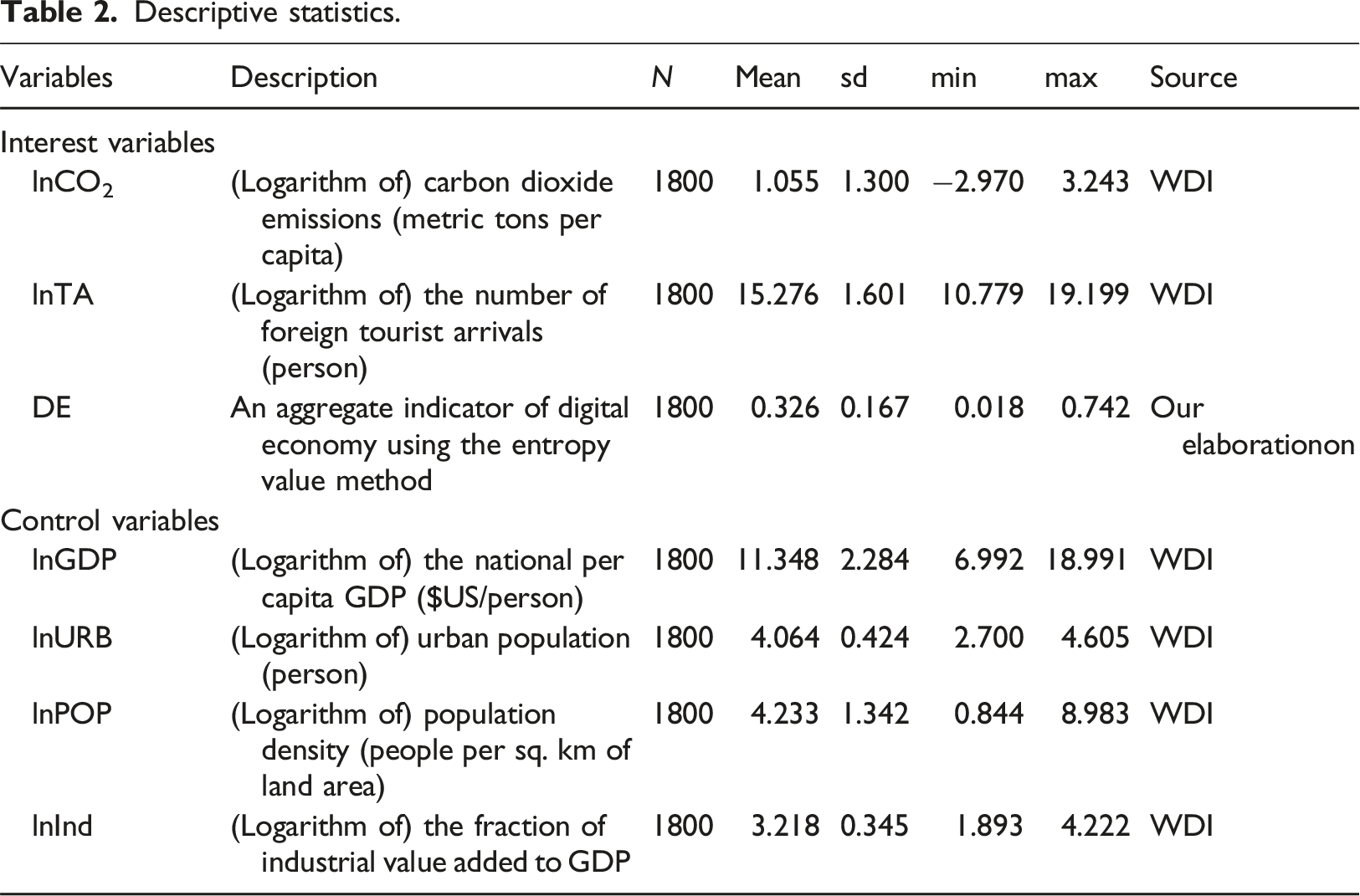
To ensure the robustness and accuracy of our empirical results, we rigorously screen the initial sample data. This entailed the elimination of a substantial number of samples exhibiting incomplete or missing vital variables. These encompassed nations with significant gaps in data on gross tourism income or inadequate information on the digital economy, among other crucial indicators. Furthermore, to address minor data gaps for individual years, which accounted for less than 1% of the overall sample size, we employed the linear interpolation method 1 . Additionally, the data are converted into logarithmic form except for the digital economy. As a result of this meticulous screening and processing, the study culminated in the acquisition of a well-balanced panel dataset encompassing 100 countries spanning 2003 to 2020, yielding a total sample size of 1800 observations, providing a robust and comprehensive foundation for our empirical analysis. The countries included in this study are listed in Appendix A (Figure A1).
Variables
The dependent variable in this paper is CO2 emissions, which are measured using carbon dioxide emissions (metric tons per capita). This measurement is among the most commonly used indicators of environmental performance (Lee et al., 2013). The key independent variable is tourism development. Given that tourism performance can able to represent the countries’ tourism development, we use the number of foreign tourist arrivals to measure it (Adebayo et al., 2023; Ivlevs, 2017; Karabulut et al., 2020).
The sub-indexes names and data sources of the digital economy index.
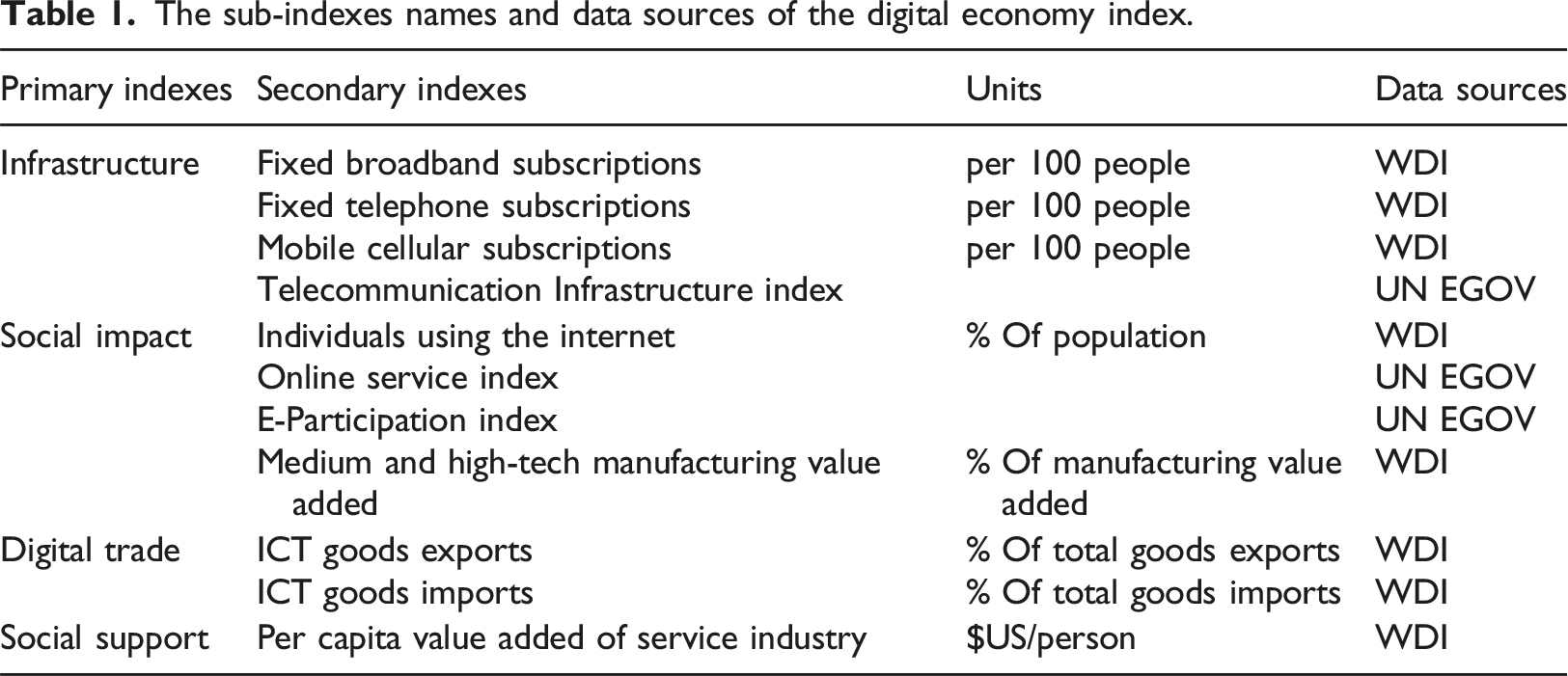
In addition, to avoid the omitted variable bias, we also include some control variables in our model, namely economic growth, population density, urbanization level, and industrial development (Hocaoglu and Karanfil, 2011).
Economic growth
Carbon dioxide emissions are largely influenced by economic growth. Energy is a key driver of economic development and national prosperity, necessitating the use of fossil fuels. This in turn inevitably leads to environmental degradation in the form of increased CO2 emissions (Hu et al., 2021). Nonetheless, the significant expansion of the tertiary sector and the emergence of green industries in recent years have brought a degree of ambiguity to this relationship. Therefore, it is possible that economic growth could have a mitigating effect on CO2 emissions (Zhang et al., 2014).
Population density
The impact of population density on CO2 emissions is multifaceted and can yield both favorable and adverse outcomes (Wang and Su., 2019). On the one hand, a concentrated population can foster agglomeration economies, affording nations the advantage of enhanced productivity and consequently, a potential reduction in pollution levels. This is attributed to the efficient utilization of resources and the streamlining of the production processes within densely populated areas. Conversely, an escalation in population density can also lead to agglomeration diseconomies, characterized by intensified competition and transport congestion. Such conditions have the propensity to exacerbate CO2 emissions, as they often necessitate higher amounts of energy consumption and subsequent environmental degradation.
Urbanization level
Urbanization is a leading cause of CO2 emissions worldwide. On the one hand, the large influx of rural populations into the cities leads to an escalated demand for housing and public amenities as urbanization advances, which necessitates the consumption of substantial amounts of fossil fuels and exacerbates CO2 emissions (Sun et al., 2014). On the other hand, urbanization contributes to the utilization efficiency of urban infrastructure, which is an important way to reduce CO2 emissions (Li and Lin, 2015). Thus, it is still unclear how urbanization influences CO2 emissions.
Industrial development
The industrial sector holds a pivotal role in influencing CO2 emissions. The preponderance of energy sources utilized within this sector comprises fossil fuels. The combustion of these fossil fuels during industrial operations results in the emission of significant quantities of CO2. The study uses the share of industrial value added in GDP to represent industrial development.
Descriptive statistics.
Model
Ehrlich and Holdren introduced the IPAT model as a framework for assessing the environmental consequences of human activities in 1971 (Ehrlich and Holdren, 1971). This model proposes that the environmental impact is jointly determined by the effect of three key factors: population (P), affluence (A), and technology (T). However, it is worth noting that, as an accounting equation, the IPAT model is inappropriate for hypothesis testing due to its deterministic nature. To surmount these constraints, Dietz and Rosa (1994) expanded the deterministic framework into a stochastic variant known as the STIRPAT model. The standardized representation of the STIRPAT model can be expressed as
Introducing a natural logarithmic transformation of the parameters can mitigate the potential effects of heteroscedasticity. Therefore, we transform the STIRPAT model into natural logarithmic form
The underlying hypothesis articulated in this research posits that the digital economy can promote the decoupling of tourism and CO2 emissions. In particular, we propose that while tourism development may result in increased CO2 emissions, a higher level of the digital economy tends to mitigate the negative impact of tourism. In order to empirically examine our hypothesis, we enhance model (2) by incorporating tourism development and the digital economy. Consequently, the augmented model is defined as follows
The marginal effect of tourism development on CO2 emissions can be calculated by examining the following partial derivative in equation (4)
Results and discussion
Basic results
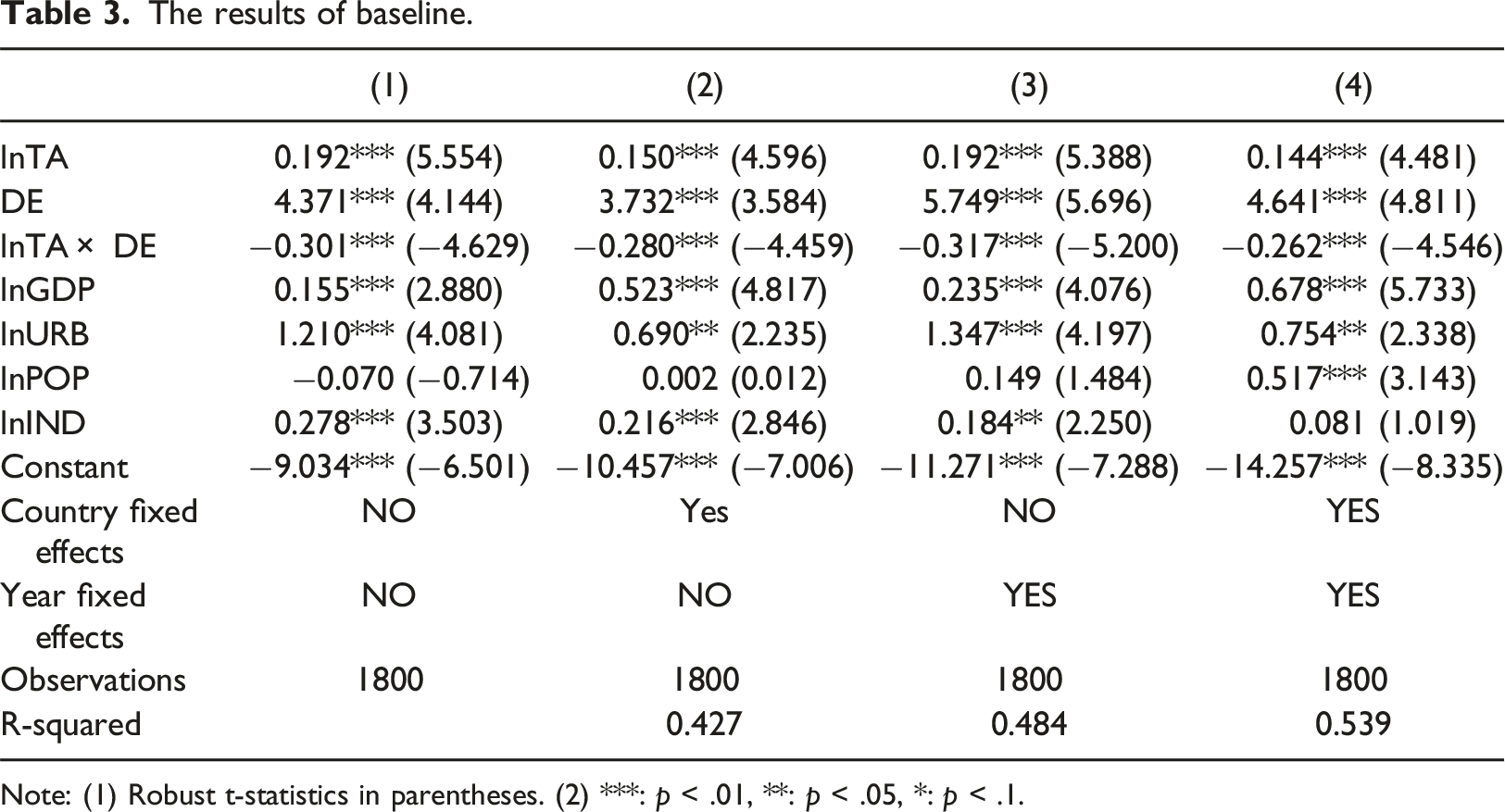
The results of baseline.
Note: (1) Robust t-statistics in parentheses. (2) ***: p < .01, **: p < .05, *: p < .1.
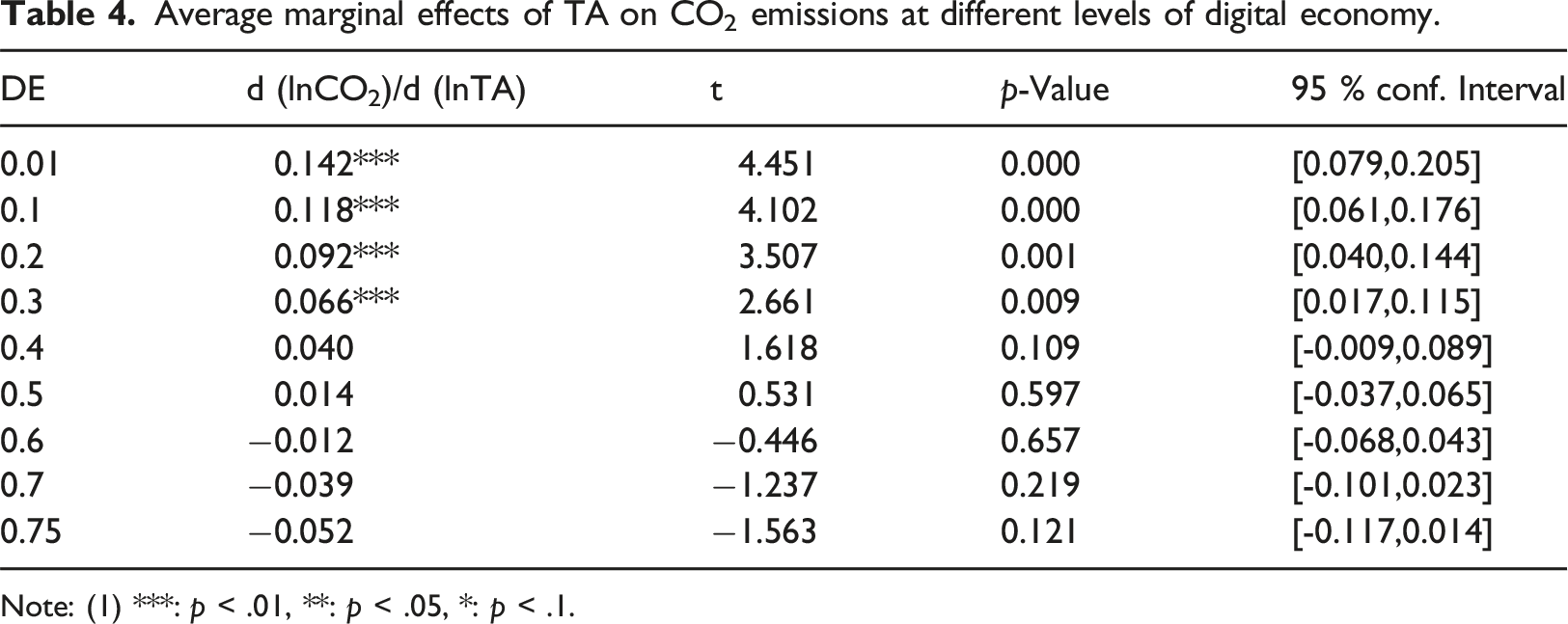
Average marginal effects of TA on CO2 emissions at different levels of digital economy.
Note: (1) ***: p < .01, **: p < .05, *: p < .1.
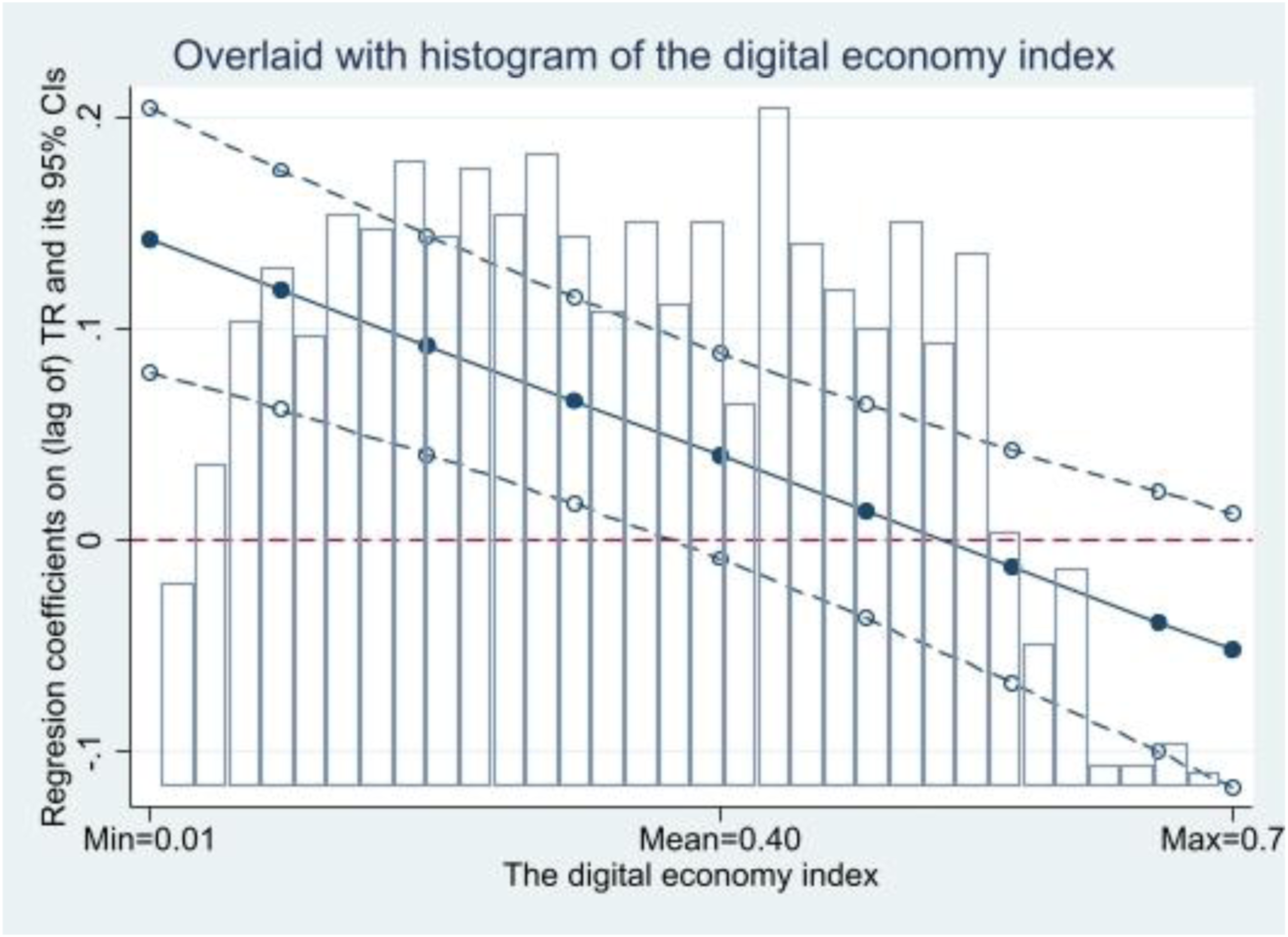
Marginal effects of lnTA on lnCO2 at various levels of the digital economy. Notes: the middle line illustrates the estimated marginal effects and the dashed lines represent the 95% confidence intervals.
In terms of control variables, the results show that there is a significant positive correlation between economic growth, urbanisation and population density, which is consistent with the studies of Sun et al. (2014) and Xiang (2018). It’s worth noting that industrial development does not exhibit a significant impact on CO2 emissions, thereby necessitating further empirical exploration to elucidate the intricate relationship between these variables.
Robustness check
A variety of additional analyses are conducted in this section in order to ensure the validity of our findings. These include alternate tourism and CO2 emission measurements, alternative model specifications, and an examination of the influence of potential outliers.
Replacement of key indicator variables
Robustness analysis: an alternative measure of tourism development and carbon emission.
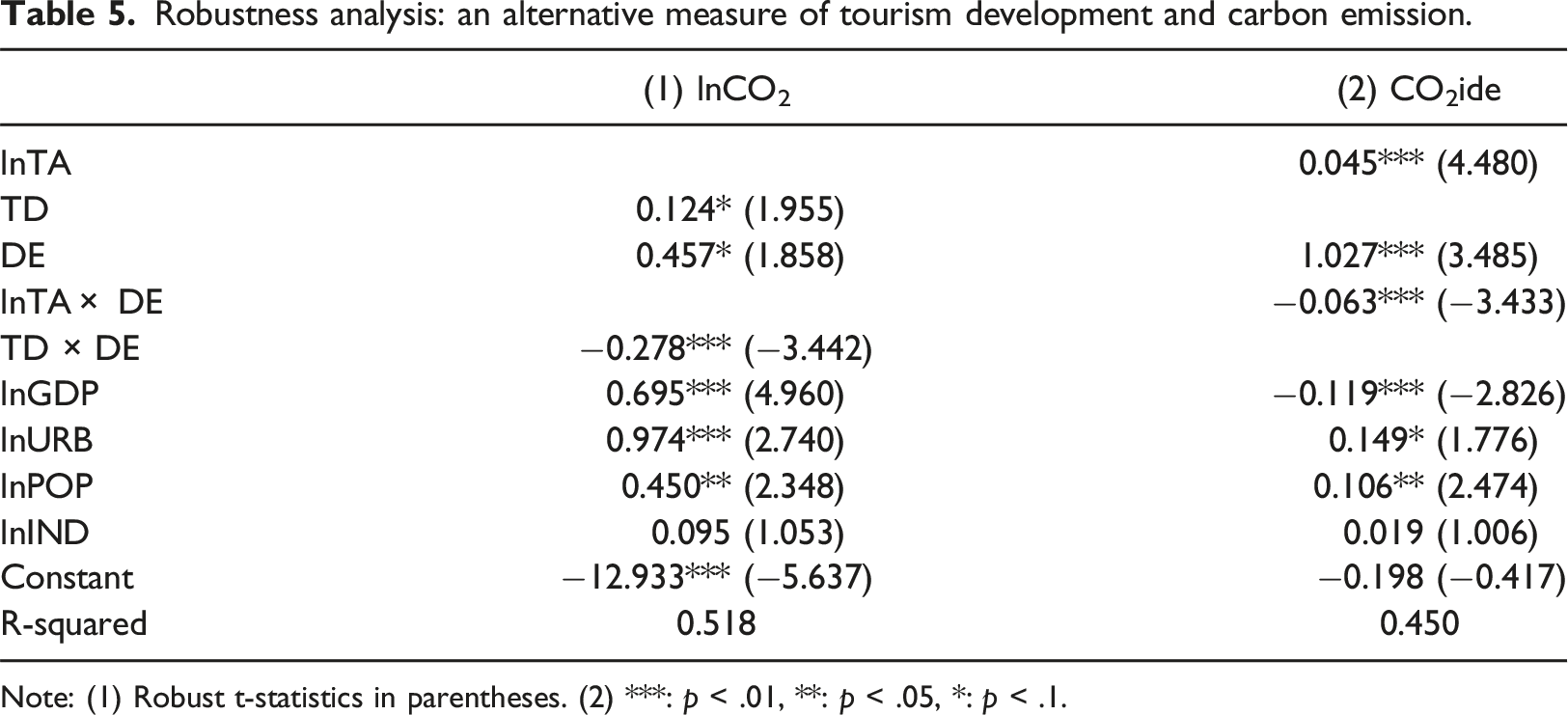
Note: (1) Robust t-statistics in parentheses. (2) ***: p < .01, **: p < .05, *: p < .1.
Results from the dynamic panel model
Robustness analysis: GMM estimations of dynamic panel data models.
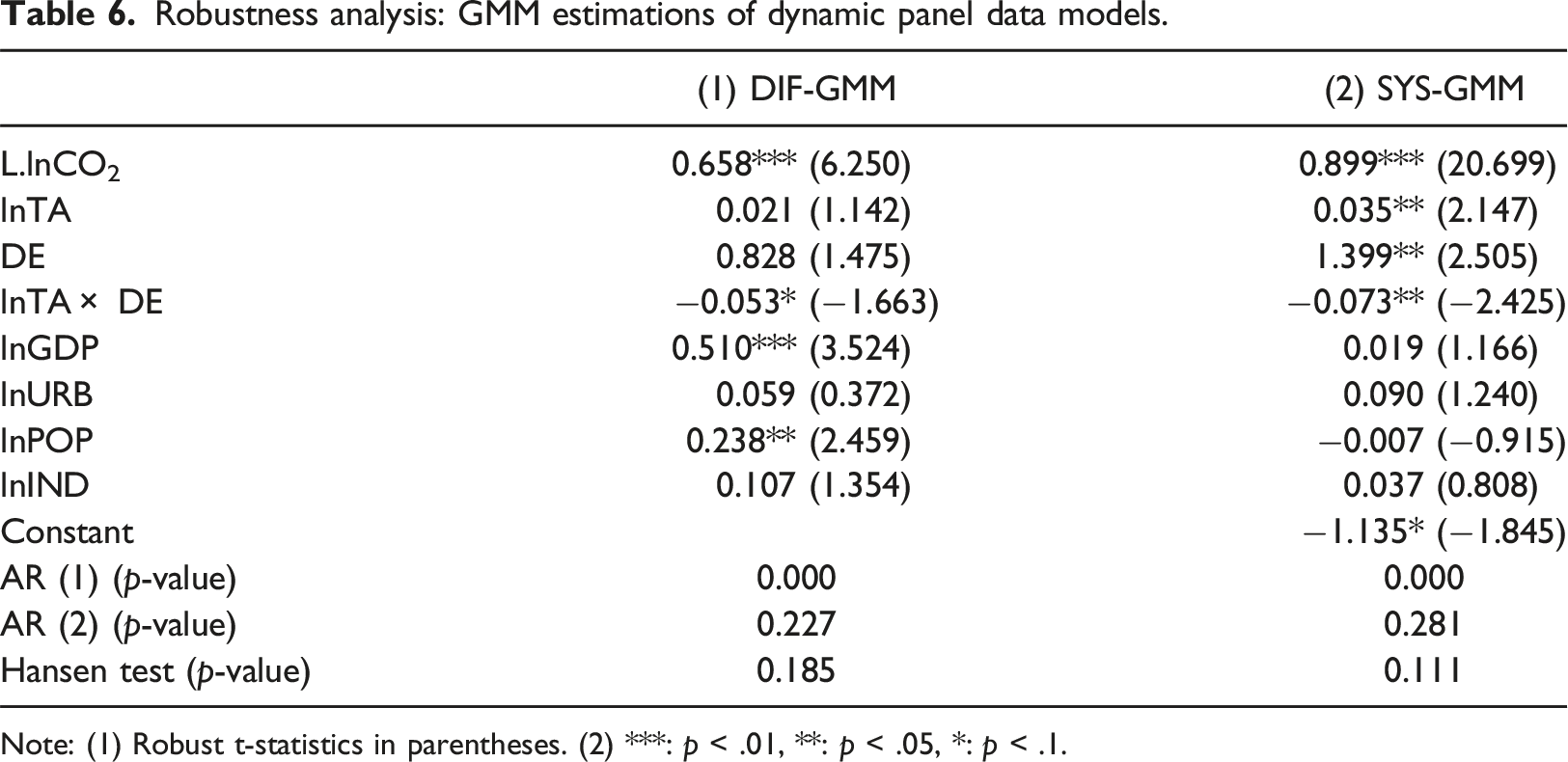
Note: (1) Robust t-statistics in parentheses. (2) ***: p < .01, **: p < .05, *: p < .1.
An examination of the influence of potential outliers
Robustness analysis: An examination of the influence of potential outliers.
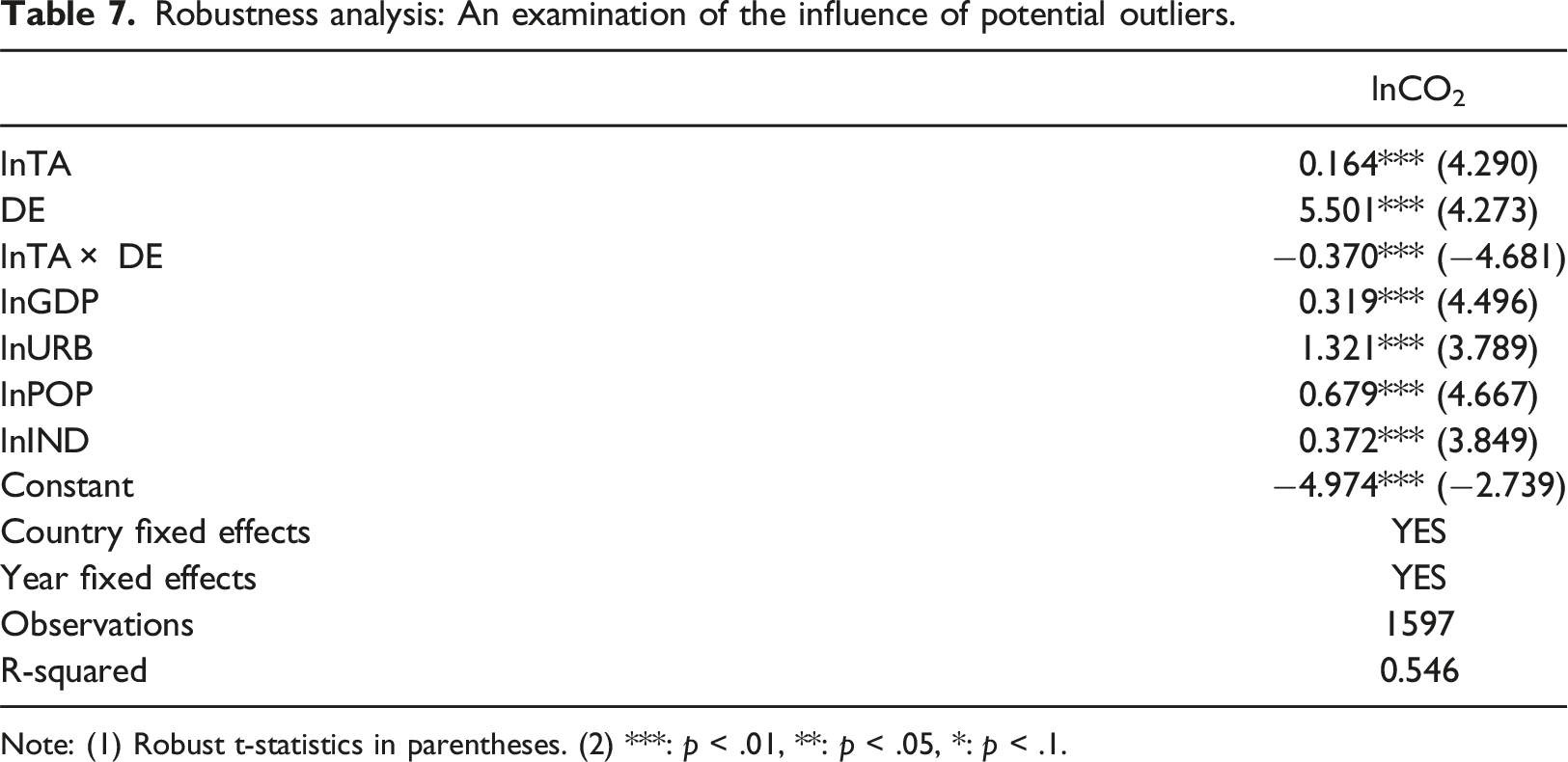
Note: (1) Robust t-statistics in parentheses. (2) ***: p < .01, **: p < .05, *: p < .1.
Heterogeneous tests
Income heterogeneity
Heterogeneity analysis: Income heterogeneity.
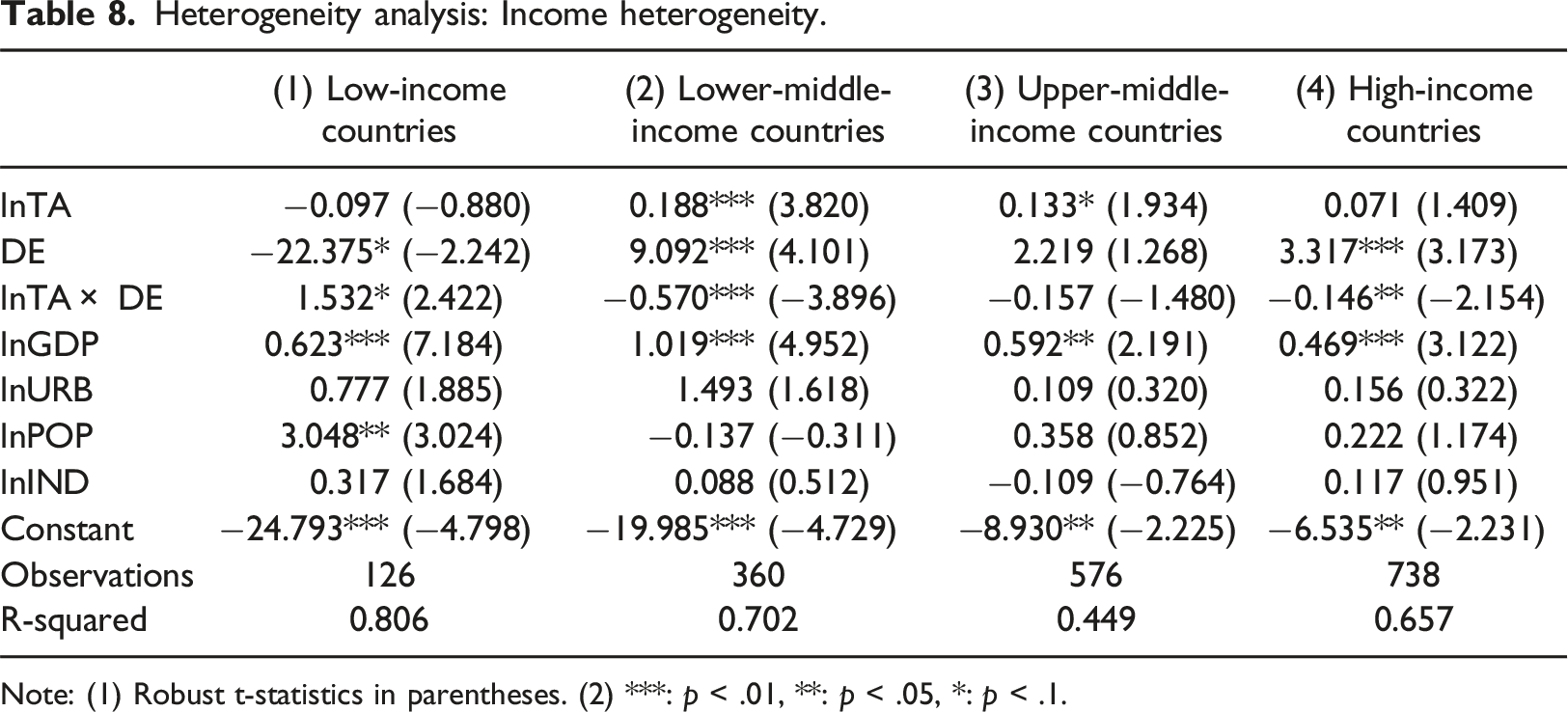
Note: (1) Robust t-statistics in parentheses. (2) ***: p < .01, **: p < .05, *: p < .1.
The underlying reasons for this phenomenon are multifaceted. Firstly, high-income countries possess comparative advantages over low-income nations in terms of financial resources and scientific and technological expertise. These advantages serve as crucial external catalysts for the green transformation of tourism, enabling these countries to pursue sustainable practices more effectively. Secondly, high-income countries have a longer history of developing the digital economy, resulting in the maturation of technologies. These advancements facilitate the exploitation of data elements’ potential, thereby unlocking the CO2 emission reduction benefits associated with the digital economy. Conversely, in low-income countries, the digital economy remains in its infancy, with digital infrastructure lagging behind. This limited capacity hinders their ability to leverage the power of the digital economy in mitigating the positive impact of tourism on CO2 emissions.
Moderating effect of digital economy sub-indicators
Heterogeneity analysis: Moderating Effect of Digital Economy Sub-Indicators.
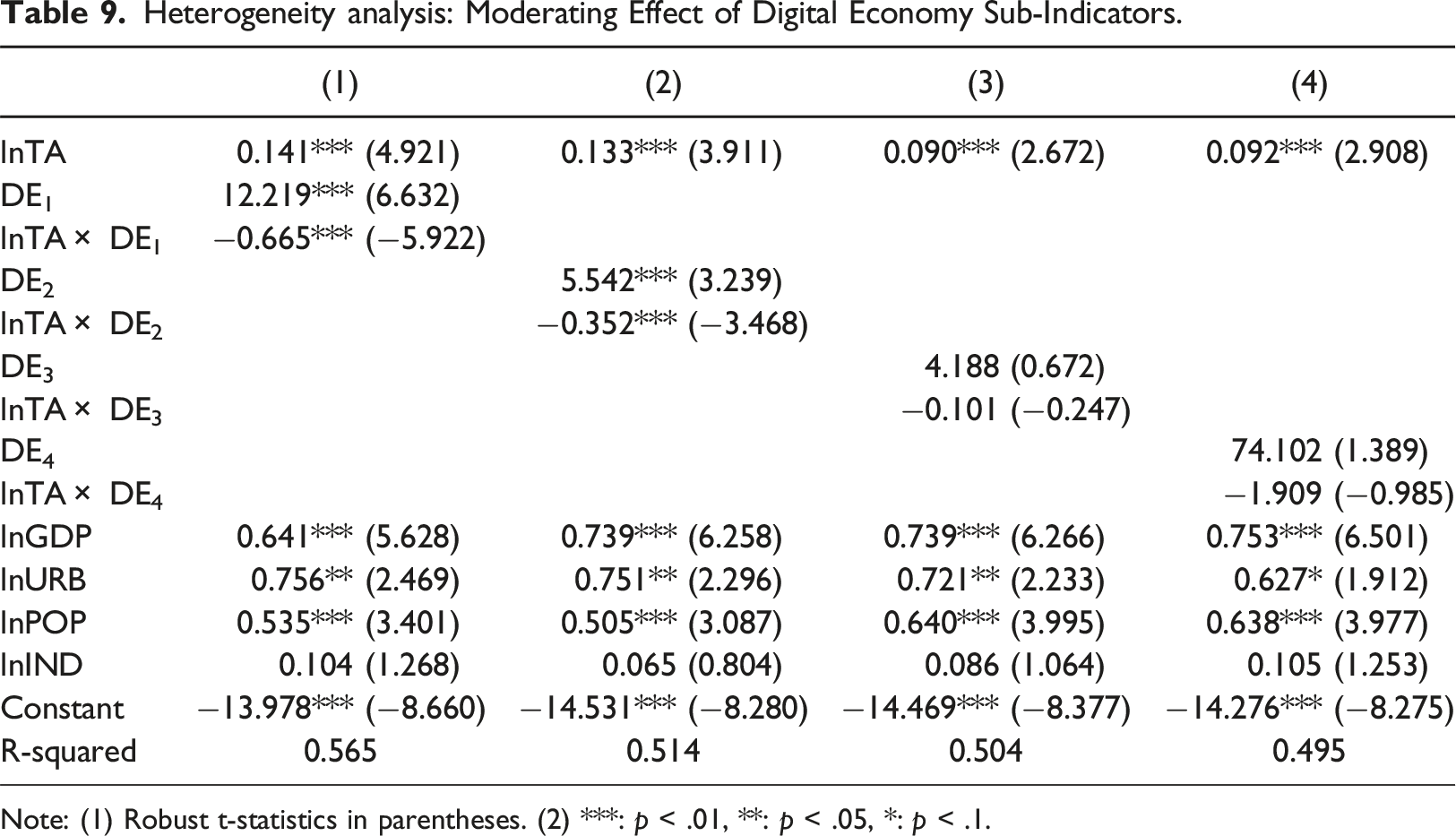
Note: (1) Robust t-statistics in parentheses. (2) ***: p < .01, **: p < .05, *: p < .1.
Conclusion and policy implication
The literature has clarified the different roles of the tourism sector in CO2 emissions. Nevertheless, little attention has been paid to the main drivers behind this phenomenon. We construct an integrated analytical framework covering tourism development, the digital economy and CO2 emissions, scrutinising the moderating role of the digital economy on the tourism-CO2 emissions nexus. Our findings reveal that the digital economy tends to attenuate the harmful environmental consequences of tourism. We posit that this mitigating effect is attributed to several factors. Firstly, the digital economy fosters green innovation within the tourism sector, thereby promoting environmentally sustainable practices. Secondly, it enhances the environmental governance capabilities of governments, enabling more effective policies and regulations. Finally, the digital economy encourages tourism enterprises and tourists alike to adopt low-carbon behaviors, further contributing to the reduction of CO2 emissions.
Indeed, these findings underscore the importance of the digital economy on low-carbon tourism and its potential for mitigating climate issues, providing valuable insights for policymakers in developing the digital economy to support sustainable tourism development. Firstly, this research suggests that the digital economy not only promotes the industry’s low-carbon transition but also enhances its eco-efficiency. This underscores the imperative for national governments to formulate policies that facilitate the digitalization of the tourism sector. Secondly, heterogeneity analysis reveals that higher levels of digital infrastructure and digital social impacts are associated with lower CO2 emissions from tourism. It is therefore crucial to prioritise innovations and breakthroughs in digital technologies alongside the popularisation of digital knowledge and technologies. Furthermore, it is imperative for the State to provide support to governments at all levels in enhancing their understanding and application of digital technologies. This includes implementing more digital reforms, fostering a conducive environment for innovation, and encouraging widespread adoption of e-government initiatives. By doing so, we can harness the full potential of the digital economy in driving sustainable tourism development and mitigating the adverse effects of climate change.
While this study gives valuable insight into the intricate linkages between tourism development, the digital economy, and CO2 emissions, it possesses certain limitations that future research endeavors should address. Firstly, this paper overlooks spatial factors, a crucial aspect that could significantly impact the analysis. Future studies must tackle this limitation by meticulously considering the spatial autocorrelation problem and examining how spatial variations influence CO2 emissions. Moreover, the present study focuses solely on macro-level analysis, leaving a gap in micro-level understanding. With improved data availability, future research should endeavor to conduct more nuanced and granular analyses at the micro level, utilizing city-level data to gain a deeper understanding. Finally, this paper could not clarify the different effects of different types of digital technologies. Future research must delve deeper into the application of digital technologies in the tourism sector, meticulously exploring the potential heterogeneity of the moderating role of various digital technologies in the complex relationship between tourism and CO2 emissions. By addressing these limitations in future research, the relationship between tourism, the digital economy and CO2 emissions can be better understood.
Supplemental Material
Supplemental Material - Digitalization means green? Linking the digital economy to environmental performance in the tourism industry
Supplemental Material for Digitalization means green? Linking the digital economy to environmental performance in the tourism industry by Lingling Jiang, and Zhike Lv in Tourism Economics
Footnotes
Acknowledgements
We thank especially the Editor Prof. Albert Assaf and two anonymous referees for very constructive remarks and suggestions. They make some pertinent comments on the previous version of this article. Nevertheless, any shortcomings that remain in this research paper are solely our responsibility.
Declaration of conflicting interests
The author(s) declared no potential conflicts of interest with respect to the research, authorship, and/or publication of this article.
Funding
The author(s) disclosed receipt of the following financial support for the research, authorship, and/or publication of this article: This research is partially supported by the Hunan Natural Science Foundation of China; (2021JJ40548), Social Science Foundation of Hunan Province (No. 23YBA082), Hunan Province Degree and Graduate Teaching Reform Research Project (No. 2021JGYB075), the Postgraduate Scientific Research Innovation Project of Hunan province (No. CX20230647) and Xiangtan University Postgraduate Research Innovation project (No. XDCX2023Y027). Any shortcomings that remain in this research paper are solely our responsibility.

Supplemental Material
Supplemental material for this article is available online
Note
Author biographies
References
Supplementary Material
Please find the following supplemental material available below.
For Open Access articles published under a Creative Commons License, all supplemental material carries the same license as the article it is associated with.
For non-Open Access articles published, all supplemental material carries a non-exclusive license, and permission requests for re-use of supplemental material or any part of supplemental material shall be sent directly to the copyright owner as specified in the copyright notice associated with the article.
