







Abstract
Sustainability strategies have become central topics in the literature on tourism development, given the significant increase in tourism demand in Europe. This study examines the economic (cost) impact of increased tourism demand on the European Food and Accommodation Industry. We employed three distinct models — pooled linear regression, flexible nonparametric, and semiparametric smooth coefficients — using data spanning European countries from 2005 to 2020. Our findings reveal the heterogeneous impacts of tourist arrivals and length of stay on costs. Although the direct effects were predominantly positive, the indirect effects were found to be negative, resulting in a minor overall negative effect on the average. Furthermore, we found that the proportion of domestic tourists has a notable impact on costs, revealing that higher proportions are linked to lower direct costs but higher indirect costs on average. These findings provide valuable insights for industry stakeholders and policymakers alike.
Keywords
Introduction
Descriptive statistics.
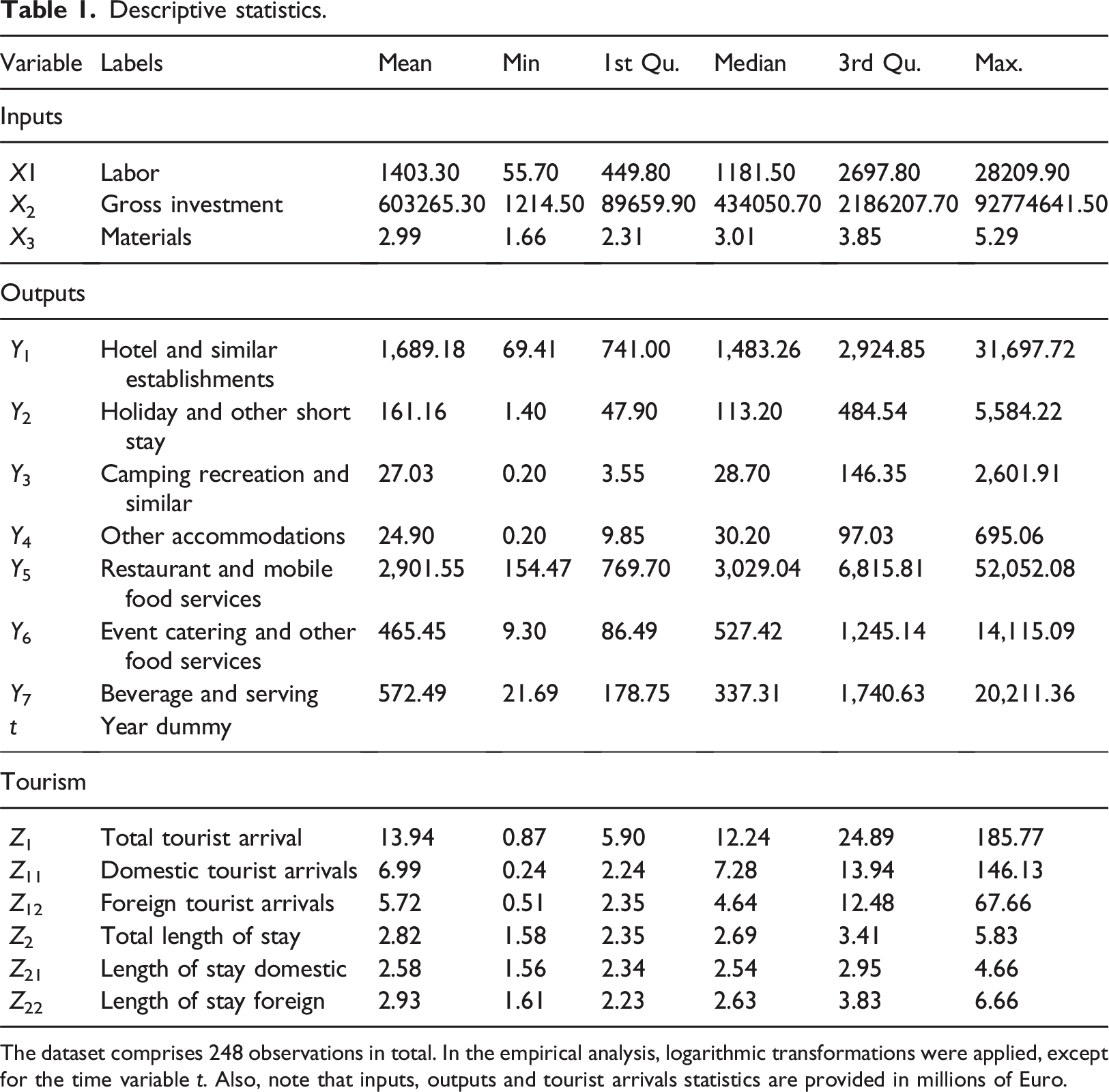
The dataset comprises 248 observations in total. In the empirical analysis, logarithmic transformations were applied, except for the time variable t. Also, note that inputs, outputs and tourist arrivals statistics are provided in millions of Euro.
Recent research has shown significant interest in research on the economic impacts of tourism demand on the European food and accommodation industry. A surge in tourism demand is expected to yield both positive direct and indirect economic benefits in this sector. Studies indicate that as the number of tourists increases, there is increased demand and revenue for hotel accommodation, restaurants, cafés, and other food and beverages (Allan et al., 2022; Brida et al., 2015; Dritsakis, 2012; Gössling et al., 2020; Song et al., 2018). In addition, the increase in tourism demand stimulates employment opportunities and investments in infrastructure, enhancing economic activity across various sectors (Allan et al., 2022; Figini and Patuelli, 2022; Song and Li, 2008). However, disparities in tourism demand across European countries can lead to challenges such as overtourism, where popular destinations face negative environmental and economic impacts due to excessive tourists (Figini and Patuelli, 2022; Gössling et al., 2020).
Although tourism demand can enhance the economic prospects of the food and accommodation industry, it also has potential negative consequences. One of the challenges is the seasonal variation in tourist arrivals throughout the year. During peak seasons, overcrowding and pressure on resources are common, whereas, in off-peak periods, businesses in this sector face difficulties in maintaining profitability (Bramwell and Lane, 2000; Corluka, 2019). Furthermore, overtourism, caused by an excess of tourists beyond a destination’s capacity, incurs multiple economic costs, including disrupted local economies, reduced quality of life for residents, and environmental degradation. Studies such as Vizek et al. (2024) and Gössling et al. (2012) have highlighted negative impacts like the conversion of housing stock into tourist accommodations, higher housing prices, and increased water consumption.
Despite existing research, there are gaps in macro-level economic sustainability studies, often overlooking the economic dimensions of overtourism (Capocchi et al., 2019; Kee and Chau, 2020; Oklevik et al., 2019; Qiu et al., 2019). Economic sustainability research focuses primarily on GDP, employment, competitiveness, and environmental trade-offs (Garrigós-Simón et al., 2015; Kristjánsdóttir et al., 2018; Pulido-Fernández et al., 2015). The literature on unsustainable tourism predominantly addresses non-economic dimensions, yet the impact on economic sustainability remains crucial for businesses and regulators. Businesses must align their operations with the broader sustainability goal of balancing tourism supply and demand (Pulido-Fernández et al., 2019). Innovative strategies from destination managers and operators, as highlighted by Dwyer et al. (2009), can control customer behavior and promote environmentally responsible choices. However, limited attention has been paid to distinguishing between the impacts of domestic and foreign tourists. Only a few studies, including those by Larsen and Wolff (2019), Incera and Fernández (2015), and Muštra et al. (2023), have examined tourist satisfaction, income inequality, and the role of cultural heritage in economic resilience. However, the impact on economic sustainability from a cost perspective remains largely unexplored.
Therefore, this study investigates the economic impacts of the increase in tourism demand in the European food and accommodation industry from a cost perspective. This study contributes to the literature by addressing two key research questions. First, it explores the effects of increased tourism activities in Europe by assessing the total number of tourists, both domestic and international, and the average duration of their visits to a country, using the distance function approach to gauge the economic costs of increased tourism demand (Kumbhakar et al., 2015). Second, we investigate both the direct and indirect effects of increased tourism demand. In particular, we evaluate costs and distinguish overtourism phenomena based on the shape of the cost curve, that is, the declining or minimum costs indicative of favorable business outcomes and the increasing costs that signal unsustainable tourism due to congestion and pollution. We employ three alternative models; pooled linear regression, flexible nonparametric, and semiparametric smooth coefficient (SPSC), using data from 35 European countries from 2008 to 2020. Taking into account the multifaceted nature of tourism, we consider various accommodations and services to ensure a comprehensive analysis. Utilizing semiparametric modeling allows detailed exploration of heterogeneity in European tourism sectors. Furthermore, the economic impacts of tourism demand on the food and accommodation industries can vary between different countries in Europe. For example, popular tourist destinations can experience a higher concentration of tourism compared to lesser-known locations. This study goes beyond simply identifying trends; it provides insight into the economic implications of increased tourism demand and offers guidance for informed policy and business decisions at the national and regional levels.
This study provides a comprehensive understanding of the economic consequences of overtourism and solutions for mitigating these negative effects. This impact on economic sustainability is significant for businesses and regulators. As tourism demand surpasses sustainable levels, escalating costs and taxes can impede economic performance due to intensified competition and regulatory pressures. It has been argued that aligning operations with broader sustainability objectives and consumers’ behavioral nudges towards environmentally responsible choices can mitigate adverse economic impacts (Pulido-Fernández et al., 2019). This study’s novelty lies in its focus on the economic impacts from the perspective of business enterprises, providing insights for stakeholders and policymakers. It advocates for a balanced approach to tourism development, cognizant of its economic, environmental, and social dimensions, to foster sustainable growth in the sector.
Methodology and data
Methodology
Production economics offers various approaches for measuring productivity, including primal measures with a single output (a production function), primal measures with multiple outputs, and dual cost/profit/revenue functions (Kumbhakar et al., 2015). For measurement of tourism and hospitality productivity, either a single-output primal method (Assaf and Agbola, 2014; Chatzimichael and Liasidou, 2019) or the multiple-output Input Distance Function (IDF) approach (Abrate and Erbetta, 2010; Alemayehu and Kumbhakar, 2021) is used. The current study also applies an IDF approach with multiple outputs because it is difficult to obtain price data, service characteristics (Duncan, 1990; Gaynor and Anderson, 1995), and accurate cost measurement for the cost function approach. Previous studies have considered tourist arrivals (Assaf and Tsionas, 2018; Lozano and Gutiérrez, 2011) and duration of stay (Abad and Kongmanwatana, 2015; Assaf and Dwyer, 2013; Chatzimichael and Liasidou, 2019) as output.
However, this approach highlights that probabilistic demand for services influences cost functions, since demand is determined externally. Firms that accommodate fluctuating demand generate the probability of providing service rather than taking it as given (Duncan, 1990). That is, they must adjust their capacity and production levels to meet varying customer demands; and failing to do so results in under-utilization of capacity and challenges in minimizing costs. The costs associated with idle capacity and uncertain demand impact a firm’s cost structure through outputs, prices, and input utilization. Operational flexibility and adaptability are critical, which requires strategic planning, efficient resource management, and the ability to forecast and respond to demand fluctuations. This approach underscores the importance of maintaining reliable service despite uncertain demand and optimizing cost structures. Furthermore, tourism theory underscores tourism demand which is influenced by various factors, including income levels, relative prices, exchange rates, and external economic conditions (Witt and Witt, 1995), as well as seasonal variations, national tourism policies (Song and Witt, 2012), economic trends, international marketing efforts, and geopolitical stability (Li et al., 2005). Tourism demand significantly shapes the production process and cost structure within the accommodation industry. The impact of tourism demand on costs can be dissected into several factors, including the adjustment of room rates based on demand fluctuations, the increased use of variable inputs such as utilities and housekeeping during peak periods, and the optimization of capacity utilization and economies of scale as occupancy rates increase (Smeral, 2009). Efficient supply chain management is also crucial to meeting varying demand levels, which influences operational costs and infrastructure investments (Li et al., 2005). Thus, our methodology treats tourism demand as an environmental variable rather than a direct determinant of cost functions, offering the advantage of distinguishing between input-output variables and environmental factors such as tourism demand.
Thus, we begin with the transformation function F(x
it
, y
it
) = A
it
, where x
it
and y
it
are vectors of input and output, respectively, and A is the neutral productivity shift function with unobserved productivity shock (random noise) and other exogenous shifters (if any). By imposing homogeneity of degree 1 (in x) restrictions on F(.), we can write it as an input distance function (IDF), that is,

Flexible marginal effects
To allow flexibility in marginal effects, we considered two models. In Model 2, we introduced a nonparametric function in which the z variables affect costs directly and indirectly unlike all other variables.
We estimate the model in (2) in two steps. First, we obtain the conditional expectation of each of the covariates and the dependent variable and then use them to transform (2) to remove β0(z). This is known as the Robinson transformation. Once the parameters (β j are estimated, we obtain an estimate of β0(z) in the second step. See Robinson (1988) for further details on the estimation steps.
Direct and indirect marginal effects
Our final model (Model 3) allowed flexible direct and indirect effects. The direct effects are the same as those in Model 2. Given that the z variables can also affect x1 indirectly via covariates, Model 3 is specified as
We employ Gaussian kernel functions and least-squares cross-validation, among the various kernel methods [see Henderson and Parmeter (2015) for more details] to estimate the nonparametric functional coefficients and compute the marginal effects. The Gaussian kernel balances bias and variance, ensuring robust estimation. Gaussian kernels capture data smoothness, offering compact support and noise reduction, enhancing accuracy. The estimation procedure for the SPSC model follows Li et al. (2002); Li and Racine (2010). First, we assume the intercept coefficient (β0) and the slope coefficients (β j and γ m ) as smooth nonparametric functions of Z. Second, we utilize this method to estimate these smooth functions, assigning weights based on the distance between observations and the point of interest. That means, the SPSC model provides flexibility for analyzing complex data relationships with nonparametric methods.
The bandwidth parameter, crucial for determining the degree of smoothing, is meticulously selected to strike a balance between bias and variance. The least squares cross-validation is chosen for its adaptability and ability to minimize prediction error, maintain model flexibility, and capture underlying relationships without undue bias. The bandwidth parameter is key, determined by least-squares cross-validation to balance bias and variance, as least-squares cross-validation minimizes prediction error, improving model performance. Third, we employ constrained estimation techniques to uphold constraints such as the non-negativity of marginal effects, thereby improving the economic interpretation of the estimated coefficients. Finally, we compute the marginal effects of Z on the outcome variable using the estimated smooth functions, allowing a complete analysis of their relationship. In essence, the SPSC model provides a flexible framework for scrutinizing intricate relationships in empirical data, providing nonparametric flexibility for modeling effects. If the functional coefficients are constant, Model 3 is reduced to Model 2. Similarly, Model 1 is a special case of Models 2 and 3.
Data
The data used in this study were obtained from the Eurostat database, which covers the period from 2005 to 2020 and comprises 576 observations from 37 European countries. However, after data cleaning, our final dataset consisted of 248 observations from 24 European countries, spanning 2008 to 2020. Several missing observations were excluded from the analysis using the software. This dataset offers detailed information on the production of the food and accommodation industry and the demand for tourism in different European Nomenclature (NACE) classifications, providing a broad temporal and geographical dimension.
The data comprise food and accommodation sectors at different levels. In this study, we considered level 2 classifications: I551, I552, I553, and I559, indicating hotels and similar, holidays and other short stay, camping recreation, and other accommodations, respectively. The food subsector includes I561, I562, and I563 for restaurants and mobile food, event catering and other food, as well as beverages and serving. As our empirical model analyzes multiple outputs, this study considers the outputs classified into these categories measured in monetary terms. The inputs are quantified in terms of labor, capital stock, and materials, following the standard model specification in the literature (Assaf and Barros, 2013). Labor is measured by wages and salaries, capital in gross investment, and materials in the purchase of goods and services not for resale. All these variables are also measured in millions of euros, except for gross investment, which was presented in 1000 euros and converted accordingly for the analysis. The time trend variable t is computed as the difference between the year and 2007, with the year ranging from 2008 to 2020.
The extant literature (e.g., Grönroos and Ojasalo, 2004; Smeral, 2009; Syverson, 2011) elucidates that labor inputs are assessed through labor services. Syverson (2011) articulates three methodologies for quantifying labor input in productivity analysis, each possessing distinct advantages and limitations. Smeral (2009) emphasizes the imperative to measure labor input in productivity analysis by quantifying labor quantity (e.g., hours worked) and considering factors that influence workforce quality and productivity. By integrating both quantitative and qualitative measures, economists can more accurately evaluate labor’s role in production processes and its contribution to overall productivity levels. The quantitative measure, such as the number of hours worked or the equivalent full-time employee, neglects the qualitative aspect of labor services. In contrast, the qualitative measure accounts for variations in skills, education, experience, and other factors that can influence the contributions of the workforce to the production process. Lastly, the wage bill disbursed to employees serves as a proxy for labor input, presuming that wage variations reflect differences in labor productivity and quality. Higher wages per employee are often perceived as employing more productive workers. Grönroos and Ojasalo (2004) advocate for this metric in the measurement of productivity in the service sector, although it may not comprehensively capture all dimensions of quality. Due to constraints on data accessibility, our study utilizes wage bills as a measure of labor input.
Tourism demand is measured by the number of tourist arrivals and average length of stay, with a distinction between domestic and international sources. These variables are measured in terms of the number of tourists and nights. The review by Syverson (2011) elucidates how economists assess and analyze productivity disparities using various data sources and methodologies. These data sources at various levels can capture distinctions between firms, industries, and countries. The study further underscores the potential to integrate these distinctions into productivity models through economic modeling. Since our research endeavors to comprehend the heterogeneity of productivity and the ramifications of tourism demand in Europe, it is situated within the realm of international comparisons that account for such heterogeneity using a semiparametric smooth coefficient model, which provides estimates for each observation. We believe that this captures the heterogeneity among the tourism industry in Europe more effectively, given the objective of the study.
Table 1 presents descriptive statistics for the variables used in the empirical analyses, offering insight into the importance of tourism to the economies of European countries. In particular, the sector pays wages and salaries of around four billion annually, invests about 13 billion, and spends about three billion on materials on average in the sample countries. The sector generates revenue of approximately 18 billion euros annually, with restaurants and mobile food services contributing the largest share (46%), followed by hotels and similar establishments (26%) and beverages and serving (13%). The dataset also reveals that 31 million tourists participate in tourism activities in these countries annually on average, with domestic tourists accounting for the largest share slightly above 60%. These tourists stay on average for three nights in these countries, foreigners stay longer than locals, and the sample countries are represented in seven out of thirteen years on average. Figure 1 illustrates the distribution of the sample countries over time. Sample distribution among European countries and years (2008-2020).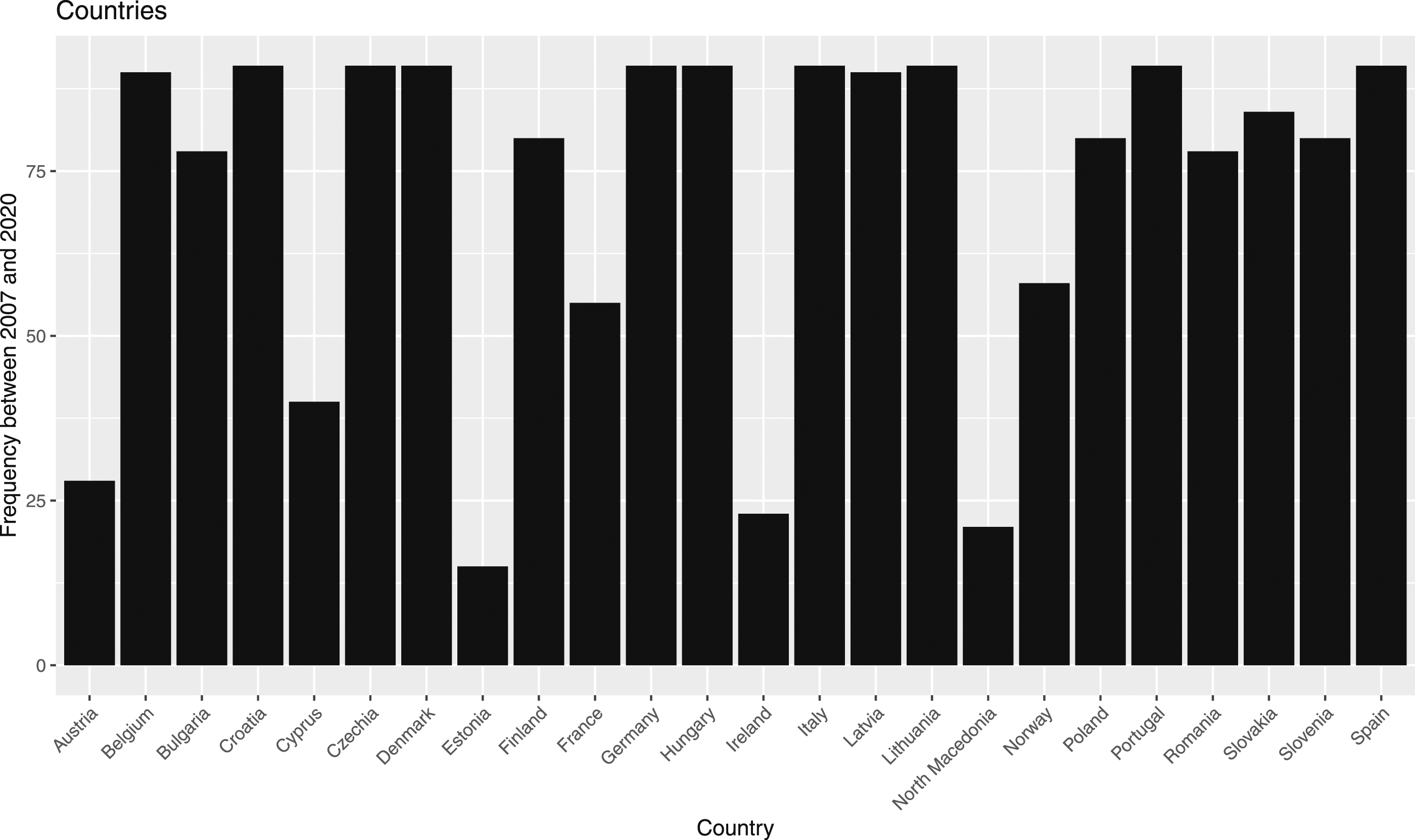
The temporal variability of the sample countries is important to capture the dynamic nature of economic and tourism developments in Europe. Bartelsman and Doms (2000) demonstrate that scrutinizing temporal variations within a country elucidates patterns, trends, and determinants of productivity fluctuations. Deciphering the causes of dispersion reveals the drivers of productivity with more precision. Analyzing technological adoption, regulatory changes, and human capital investments evaluates their long-term impacts. In addition, it elucidates industry dynamics, including firm entry and exit, ownership transitions, and mergers and acquisitions, which are crucial to comprehending competitive dynamics and productivity.
In summary, temporal variability is essential to our study, enhancing the robustness and credibility of our analyses by capturing diverse economic conditions and enabling sophisticated modeling techniques. This encompasses a spectrum of economic conditions, policy changes, and other determinants that impact productivity and tourism demand. By longitudinally observing a heterogeneous set of countries, our dataset significantly enhances the robustness of our analyses. Such variability mitigates biases inherent in static data and facilitates the application of advanced econometric techniques, such as the semiparametric smooth coefficient model, which yields precise estimates by accommodating heterogeneity. Consequently, our findings remain contemporaneous and reliable, thereby fortifying the validity of our conclusions.
Results
We analyze the impact of increased tourism on costs in the European Food and Accommodation industry using pooled linear regression, nonparametric, and SPSC models. The effects of tourist arrivals and length of stay (denoted z1 and z2) on costs are examined using three models. Model 1 represents the standard linear regression model, with z variables having constant marginal effects. In Model 2, the marginal effects are direct and non-parametric functions of z1 and z2. Model 3 extends this by incorporating both direct and indirect marginal effects, modeling all coefficients as non-parametric functions of z1 and z2.
The novelty of Models 2 and 3 lies in their ability to estimate the marginal effects of the z variables in a fully flexible (nonparametric) manner. In Model 2, the variables z directly influence the cost through the constant term (β0), which is a nonparametric function of z1 and z2. In Model 3, the z variables affect the cost through all parameters, which are nonparametric functions of z. Thus, the marginal effect of z
k
is obtained from 
The overall marginal effect of z
k
is the sum of direct and indirect effects.
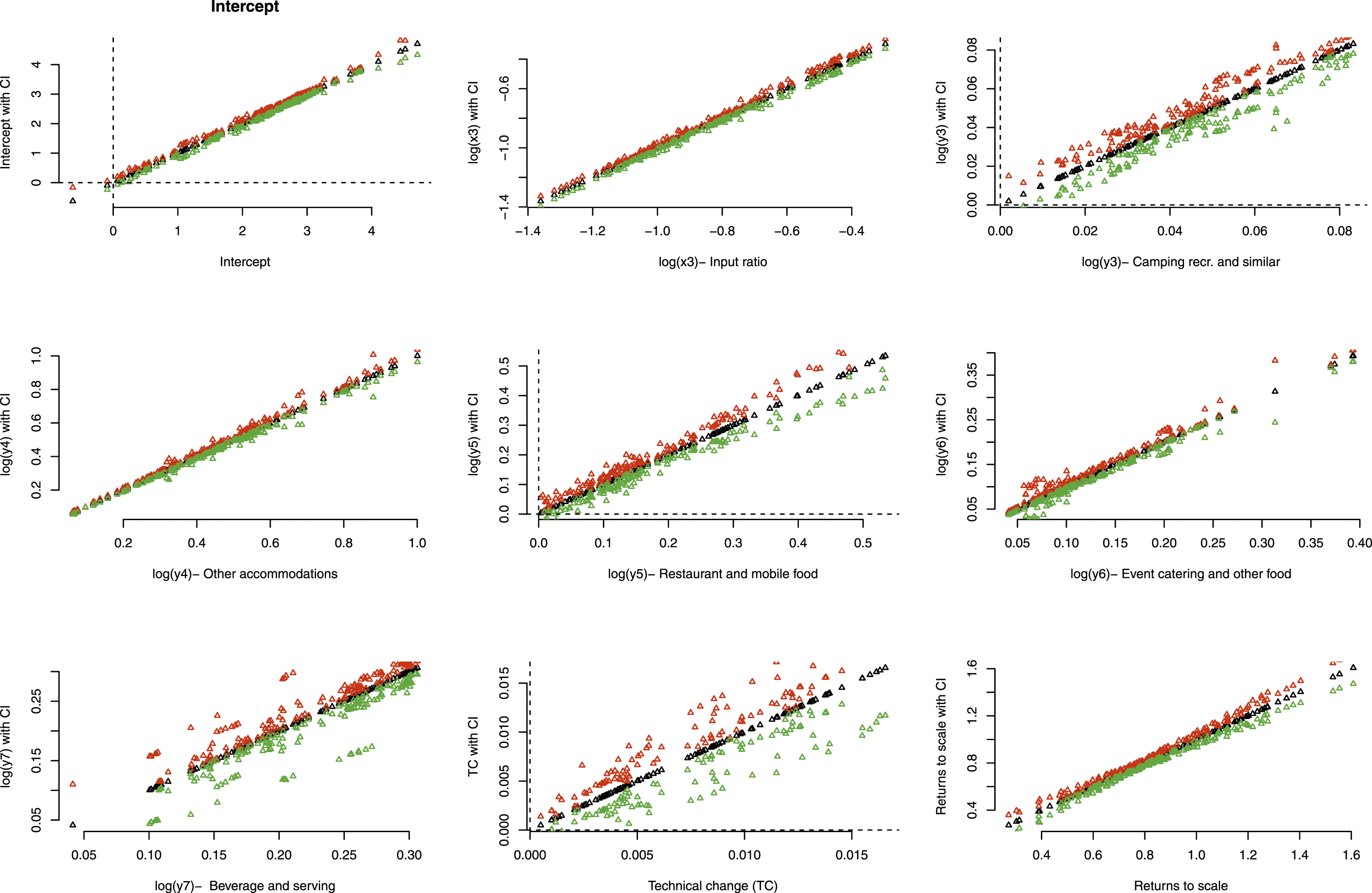
We illustrate the statistical significance of the parameter estimates following Kumbhakar and Sun (2012) and Henderson et al. (2012). The criteria are as follows: the coefficient estimates are mapped along the 45° line, denoted by black stars, and the lower and upper 95% bootstrapped confidence intervals are illustrated in red and green, respectively. These bootstrapped confidence intervals were constructed using the standard formula, that is, coefficient estimates ± 2*standard error. The horizontal and vertical lines intersect at the center (mean) and divide the graph into four quadrants. An estimated observation is considered significant at the 5% level if it lies on the lower left or upper right side of the center; observations lying on the horizontal line are not significant.
The next subsection presents key findings on the direct, indirect, and overall impacts of the increase in tourism demand, derived from the SPSC model. The subsequent sections delve into point estimates of elasticity and returns to scale, while the discussion and implications section summarizes these findings and their practical implications.
Direct and indirect cost effects of increased tourism (z k )
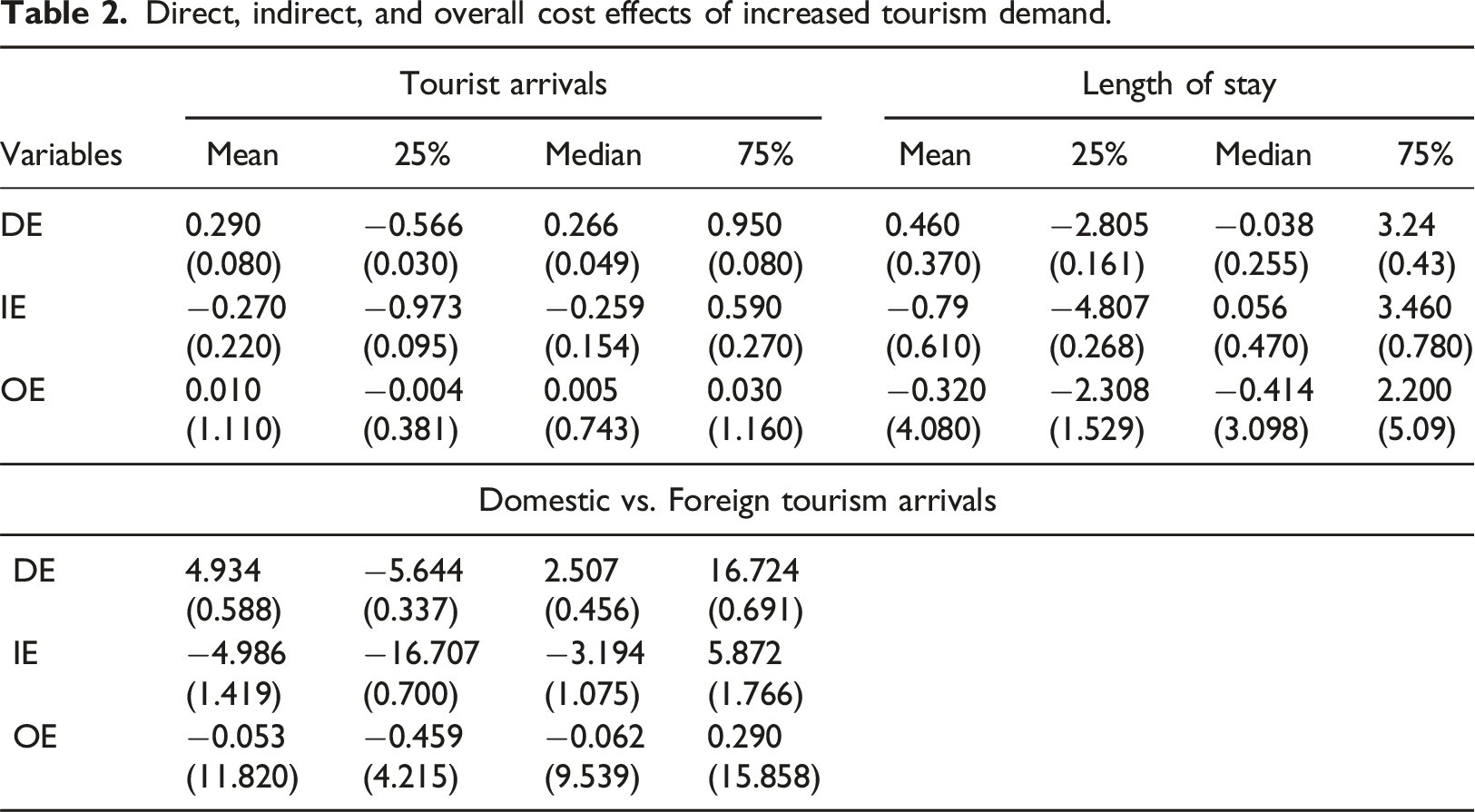
Direct, indirect, and overall cost effects of increased tourism demand.
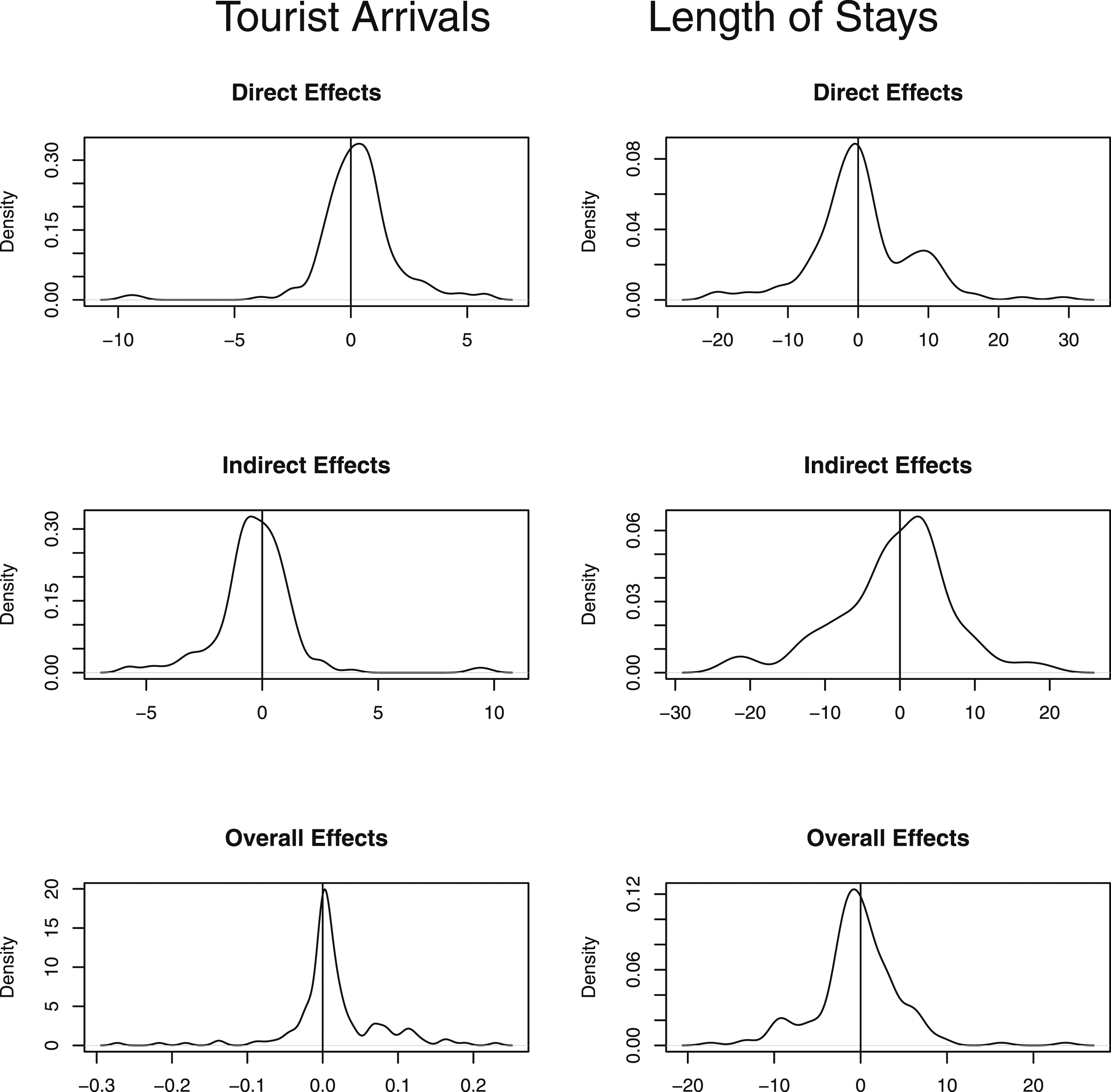
Density plots for cost effects of increased tourism.
Figure 3 and the classifications in Table 3 underscore the statistical significance of these effects, revealing a spectrum of positive, zero, or negative impacts, depending on the context. Specifically, the direct effects of tourist arrivals are positive in approximately 58% of observations and negative in approximately 37%. In contrast, indirect effects exhibit positive effects in approximately 44% of the cases and negative effects in approximately 46%. Overall, the effects are positive in about 64% of the cases and negative for the remaining observations. Statistical significance of cost effects of increased tourism. Classification of direct, indirect, and overall effects.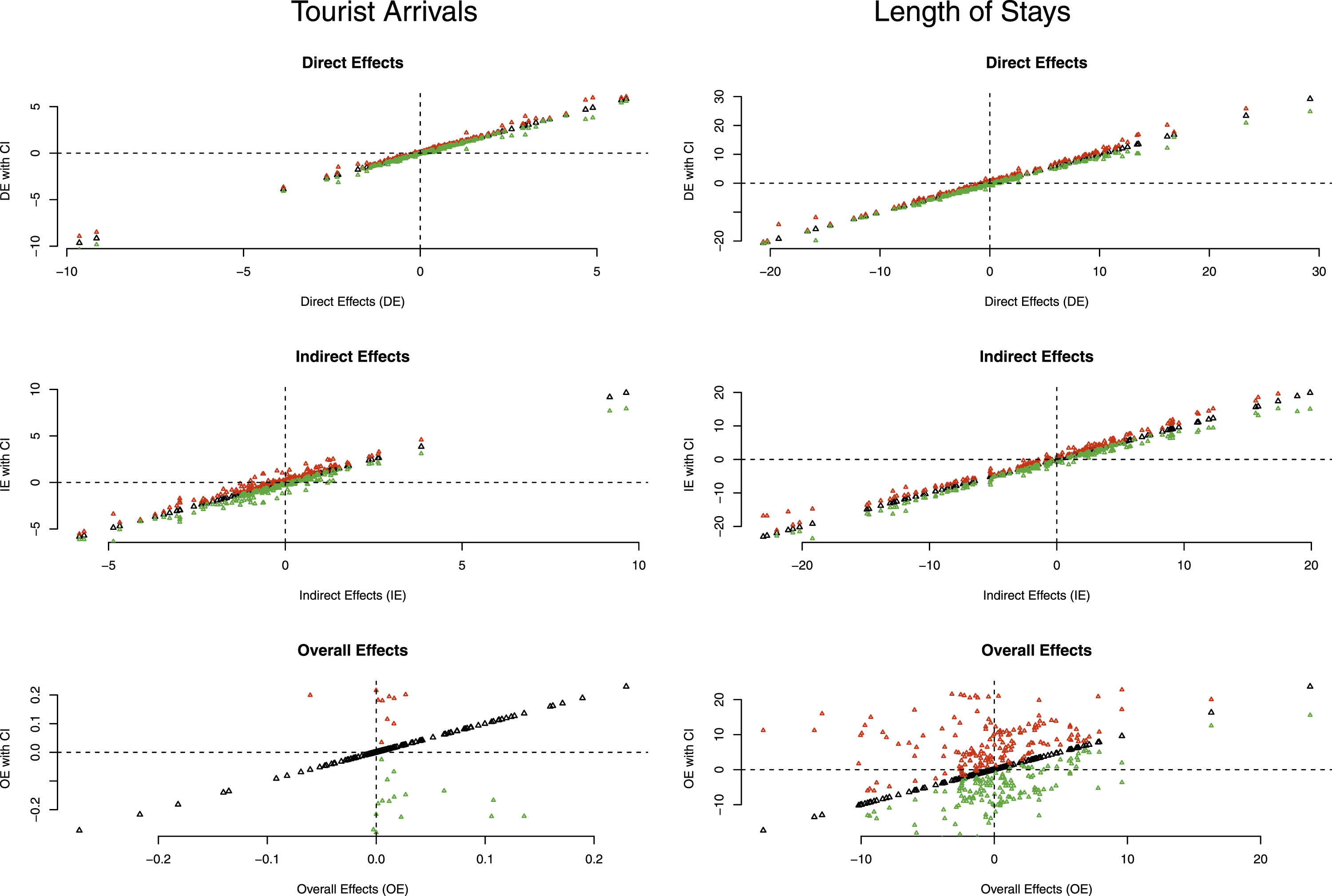
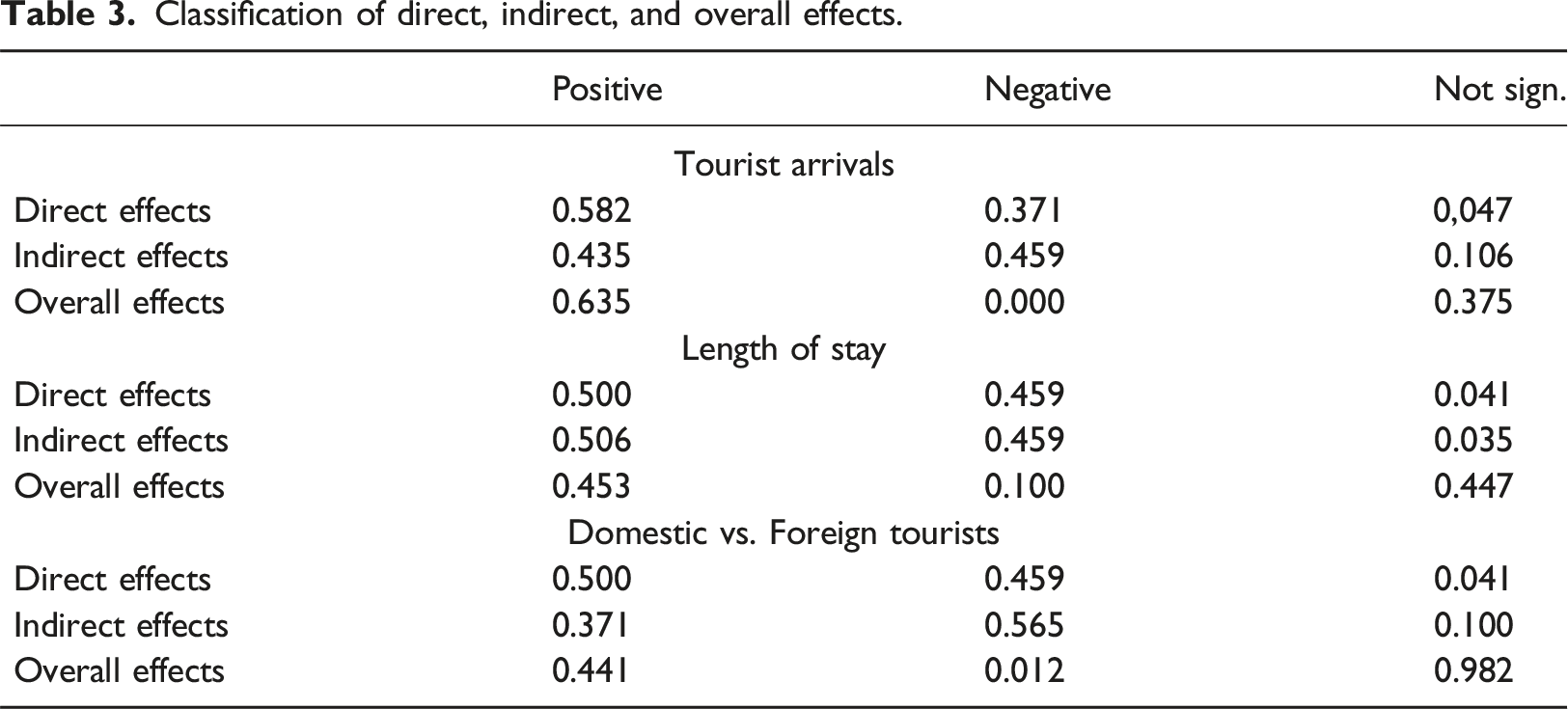
The effects of length of stay are diverse. Direct effects average 0.46% [−2.81 to 3.24], and indirect effects average −0.78% [−4.81 to 3.46]. Overall, the average effect is −0.32 [−2.31 to 2.20]. Length of stay increases direct costs but reduces indirect costs, leading to lower overall costs. Longer stays result in higher direct costs but lower indirect costs. Table reftab:Table3 shows that 50% of observations report positive direct effects and 37% negative, while 51% show positive indirect effects and 46% negative. Overall, negative effects slightly prevail, representing 45% of the cases.
The proportion of domestic tourists affects costs. Direct cost effects were 4.93 [−5.64 to 16.72], while indirect effects were −4.99% [−16.71 to 5.87], resulting in an overall impact of −0.05 [−0.46 to 0.29]. Higher shares of domestic tourists increase direct costs, decrease indirect costs, and overall costs. Table 3 shows that 0.50% of direct effects are positive and 46% are negative; indirect effects are 0.37% positive and 56% negative. Overall, 44% of outcomes are positive, and 1.2% are negative.
Statistical significance of coefficient elasticity estimates and returns to scale estimates
Elasticity estimates.
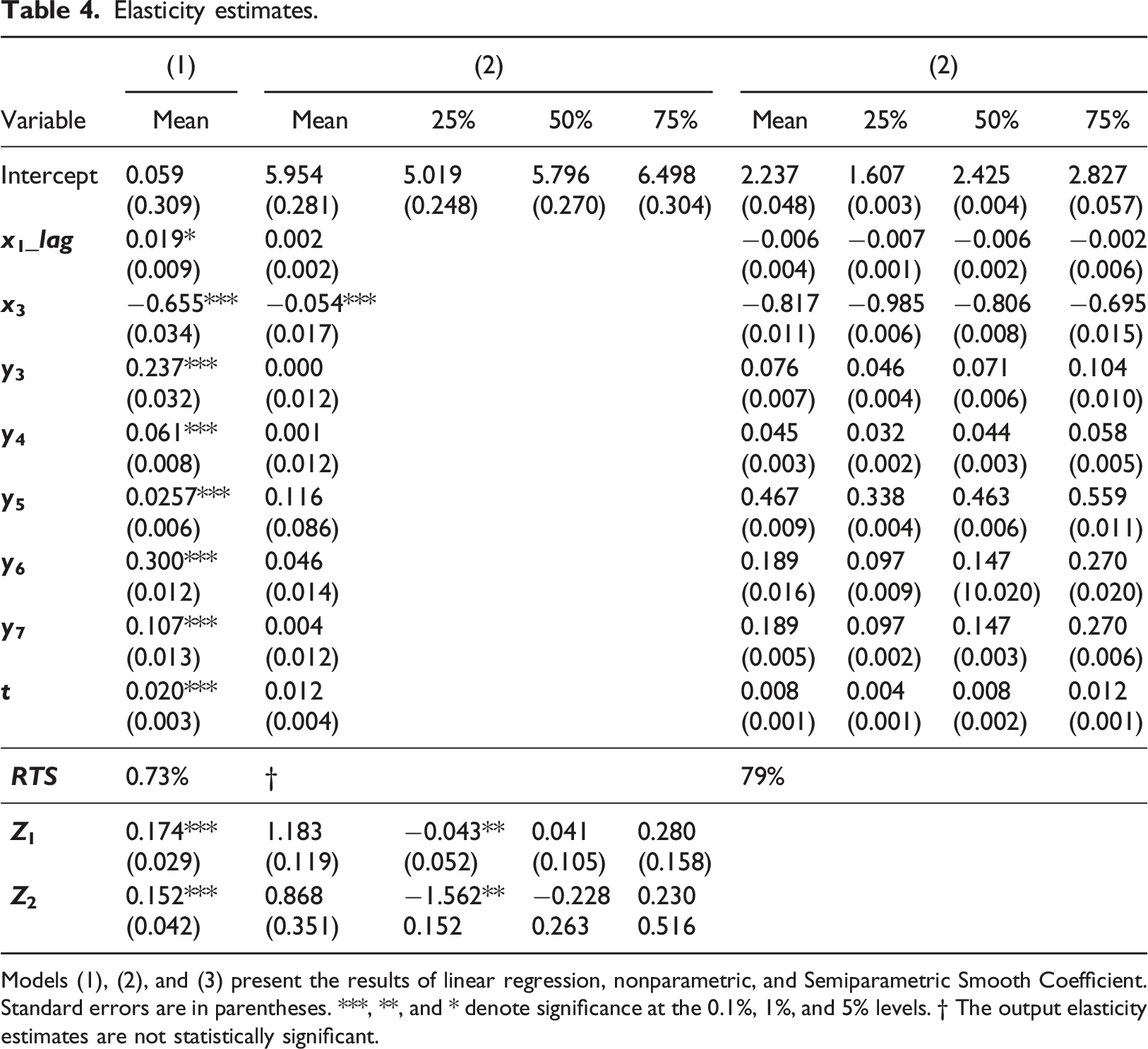
Models (1), (2), and (3) present the results of linear regression, nonparametric, and Semiparametric Smooth Coefficient. Standard errors are in parentheses. ***, **, and * denote significance at the 0.1%, 1%, and 5% levels. † The output elasticity estimates are not statistically significant.
However, the effects of increased tourism demand (i.e., tourist arrivals and length of stay show contrasting effects with the results from the pooled OLS. The advantage of the SPSC model is that it provides the possibility of excluding outliers. Although some observations violate theoretical restrictions, this flexible modeling approach provides valuable insights into areas that require closer investigation. Figure 4 shows the density plot of these estimates, while Figure 5 presents the statistical significance and shows mixed results on the significance of these coefficient elasticity estimates; some point estimates are significant, while others are not. This variability is expected owing to the observation-specific nature of the SPSC model. These show heterogeneous results, with some negative, zero, or positive. RTS indicates scale economies, where increasing these outputs can lead to decreased costs (RTS < 1), constant cost changes (RTS = 1), or increased costs (RTS > 1). The results show that the RTS is 73% in the Pooled OLS and 79% [87, 99] in the Semiparametric model, on average. The estimates of technical change are similarly significant at less than the 0.1% level. Density plots of elasticity estimates. Elasticity estimates.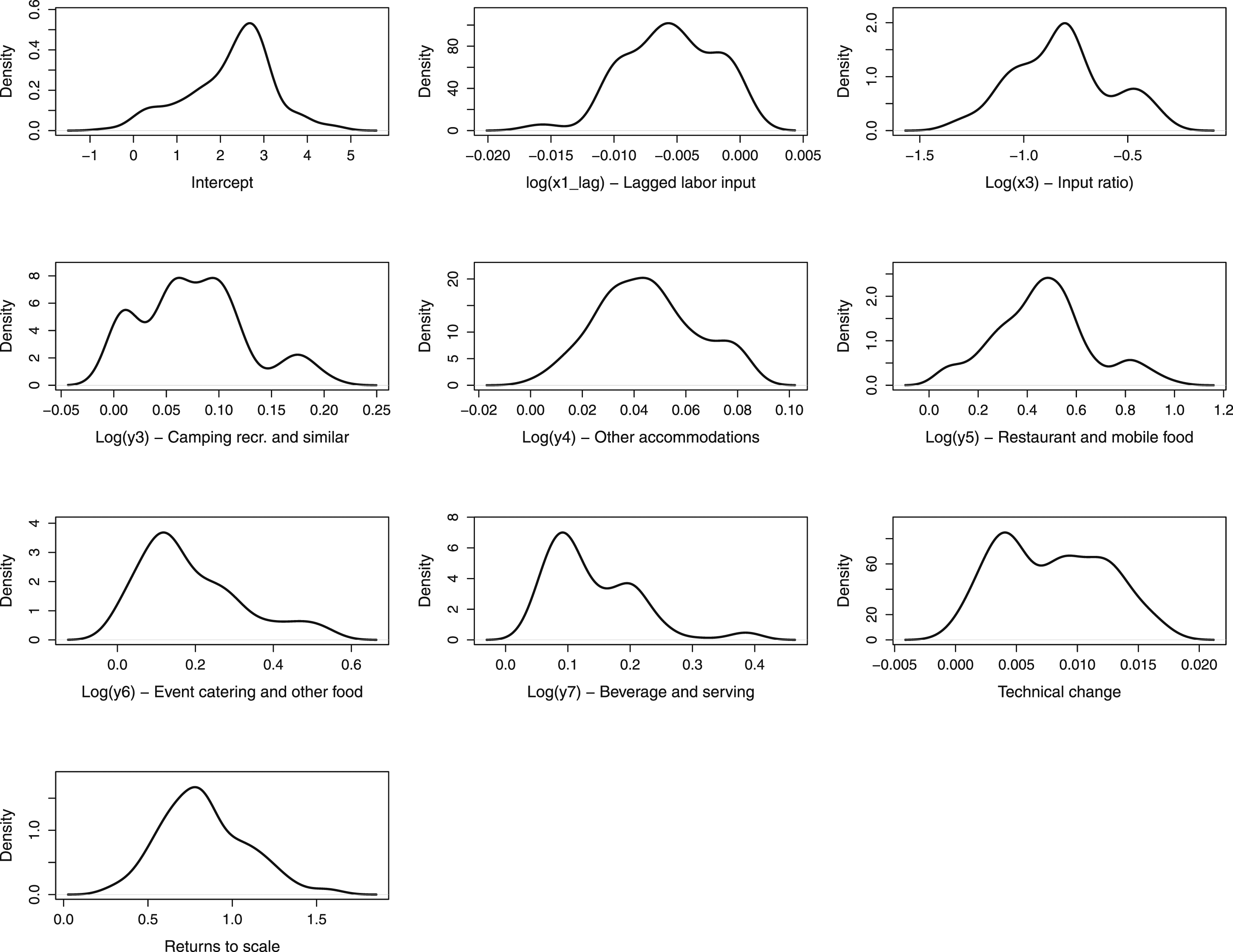
Discussion and implications
The European tourism industry is under increasing pressure due to the increasing demand for tourism. To gauge the impact of this surge on industry costs, we investigated the cost dynamics of the European Accommodation and Food sector using three models: pooled linear regression, nonparametric and semiparametric smooth coefficient (SPSC) models. Our findings show a nuanced picture of the factors influencing costs in this industry.
The direct effects of tourist arrivals and length of stay have heterogeneous effects on costs. Although direct effects leaned towards positive, indirect effects tended to be negative, resulting in a minor overall negative effect on average. Furthermore, the effects of tourist arrivals and length of stay varied in context, indicating nuanced impacts depending on specific circumstances. Furthermore, it was found that the proportion of domestic tourists influences costs, with higher proportions leading to lower direct costs but higher indirect costs on average.
These findings highlight the heterogeneity of the European tourism sector. In some countries, an increase in tourism demand can decrease or increase costs, depending on specific contextual factors. This heterogeneity in the impact of costs can be attributed to various channels or variables, such as tourist arrivals or length of stay. Higher tourism demand may increase direct costs but potentially decrease indirect costs on average, resulting in counterbalancing overall effects. This is in contrast to previous studies such as Larsen and Wolff (2019) and Incera and Fernández (2015) and Muštra et al. (2023) that found results in favor of domestic tourists relative to the international to increase tourist satisfaction, reduce income inequality, and improve economic resilience through cultural heritages.
Central to our investigation is an examination of the economic sustainability of European tourism from a cost perspective. By analyzing the cost impacts of heightened tourism demand, our objective is to provide empirical evidence on the industry’s sustainability. However, our findings provide a mixed picture. Tourism operations in some European countries are economically sustainable, while others are not, as illustrated in Figure 6 in the Appendix. This underscores the diverse nature of European countries in terms of their potential for tourism attraction and policy priorities, reflecting the complexities of the industry.
To explore the reasons for these heterogeneous effects, it is important to look into the differences in cost minimization efforts among industries and additional expenses associated with attracting and maintaining longer-staying tourists contribute to this complexity. To address these challenges, European tourism industries must adopt tailored strategies that align with their contexts and objectives. Industries facing declining costs should focus on increasing tourist stay, whereas those that operate optimally should maintain their operations. This study contributed to the evaluation of the cost impacts of increased tourism. Future research should extend this to a comprehensive analysis that includes profitability and reputation, which is crucial to understanding the broader implications of European tourism.
Overall, our study sheds light on the intricate relationship between tourism demand and cost of the European Food and Accommodation Industry. By uncovering the heterogeneous impacts and exploring the influence of domestic tourism, we offer valuable insights to industry stakeholders and policymakers. Targeted strategies should be implemented for mitigating cost pressures and ensure the long-term sustainability of European tourism.
Conclusion
This study explores the economic consequences of rising tourism demand on Europe’s food and accommodation sector, examining the impacts through various mechanisms and sources of tourism demand. We developed a country-specific tourism cost model utilizing the IDF methodology due to its cost interpretation – being a dual to the cost function, its ability to manage multiple inputs and outputs, and its independence from price data. We applied the model through pooled regression, nonparametric, and semiparametric smooth coefficients (SPSC), with data sourced from the Eurostat database over a span of approximately 13 years. The SPSC model is particularly flexible and beneficial as it addresses the variation in cost technologies and tourism potential among European countries, offering measures of both direct and indirect effects.
Our analysis showed heterogeneous impacts of tourist arrivals and length of stay on costs, with direct effects generally positive but indirect effects negative, resulting in a minor overall negative effect on average. Moreover, the study highlighted the nuanced impacts of tourist arrivals and length of stay depending on specific contexts, with the proportion of domestic tourists having an impact on costs.
These findings underscore the complexities within the European tourism industry, where increasing tourism demand can either decrease or increase costs depending on various contextual factors. This study also sheds light on the economic sustainability of European tourism operations, indicating a mixed picture across different countries. Although some demonstrate economically sustainable practices, others demonstrate unsustainable ones, reflecting the diverse nature of tourist attractions and policy priorities.
Furthermore, our investigation identified various mechanisms that contribute to these heterogeneous impacts, emphasizing the need for customized strategies aligned with specific contexts and objectives. By addressing these challenges, the European tourism industry can better navigate cost pressures and ensure long-term sustainability.
In summary, this study contributes to a broader understanding of the economic consequences of overtourism and offers insights into potential solutions for mitigating its negative effects. It is crucial for stakeholders and policymakers to implement targeted strategies based on these findings to address the challenges posed by the increasing demand for tourism while promoting economic sustainability.
Supplemental Material
Supplemental Material - Economic impacts of tourism demand on the European food and accommodation industry
Supplemental Material for Economic impacts of tourism demand on the European food and accommodation industry by Fikru K. Alemayehu, Subal C. Kumbhakar, and Gudbrand Lien in Tourism Economics.
Footnotes
Acknowledgements
We thank the editor and the two anonymous referees for their valuable comments on an earlier version of this paper. The usual disclaimer applies.
Declaration of conflicting interests
The author(s) declared no potential conflicts of interest with respect to the research, authorship, and/or publication of this article.
Funding
The author(s) received no financial support for the research, authorship, and/or publication of this article.

Supplemental Material
Supplemental material for this article is available online.
Author biographies
References
Supplementary Material
Please find the following supplemental material available below.
For Open Access articles published under a Creative Commons License, all supplemental material carries the same license as the article it is associated with.
For non-Open Access articles published, all supplemental material carries a non-exclusive license, and permission requests for re-use of supplemental material or any part of supplemental material shall be sent directly to the copyright owner as specified in the copyright notice associated with the article.
