







Abstract
In recent years, the Chinese government has been conducting Tourism Year campaigns. This study aims at conceptualizing and evaluating the effects of these Diplomacy campaigns on China’s inbound tourism. Methodologically, we treat the Tourism Year campaigns as a quasi-natural experiment, and draw on the Propensity Score Matching and the multi-phase Difference-in-Differences regression approach (PSM-DID) to investigate the relation between policies and arrivals. The results show that China’s Tourism Year campaigns significantly promote China inbound tourism. Second, the promotional effects on inbound tourism are lagged. Third, the Tourism Year initiative increases inbound tourism mainly through increasing positive public opinion and diplomatic relations. The empirical evidence presented here provides a decision-making reference for restoring and revitalizing the development of inbound tourism.
Introduction
The last pandemic crisis increased general awareness regarding the role that tourism plays in economic growth and development (Pham et al., 2021; Tan et al., 2022; Tang, 2021). For example, it is well known that inbound tourism can increase foreign exchange earnings (Chang and Lee, 2017; Liu and Nijkamp, 2019; Lorente-Bayona et al., 2021). Beyond this purely economic relevance, tourism can contribute to changing stereotyped and negative perceptions in the international context (Penfold, 2019; Tang, 2021). Therefore, many countries are devoting increasing efforts to consolidate their tourism industry in the aftermath of the last pandemic crisis (Collins-Kreiner and Ram, 2020; Gössling et al., 2020). More specifically, demand from China’s main inbound tourist source markets continues to recover, and the potential inbound tourism demand has increased significantly (Ma et al., 2024; Okafor et al., 2022). The Chinese State Council reclassified the coronavirus infection as a ‘Class B infectious disease’ from 8 January 2023, and China’s travel restrictions were gradually relaxed. The 14th Five-Year Plan for Tourism Development, issued by China’s State Council in 2022, aimed to increase international cooperation in tourism, for example by holding Chinese Culture Year and Tourism Year festivals. Following this orientation, China supported for the sustained growth of inbound tourism by implementing new types of visas (Chi et al., 2022), customs clearance, duty-free, and navigation rights facilitation policies (Chow et al., 2021). The national tourism administrative authorities also developed innovative strategies in global promotion and destination marketing (Afshardoost and Eshaghi, 2020; Chaulagain et al., 2021). In summary, there is a clear public policy aimed at reviving the tourism industry in the post-pandemic era to ensure that full economic development resumes as soon as possible.
Many previous studies have identified conventional ‘push/pull’ factors, such as individual intrinsic characteristics and destination attractiveness, as determinants of international tourism (Kim et al., 2016; Okafor et al., 2021). However, from a more specific approach, the so-called tourism diplomacy, designed to attract foreign tourists, can also be considered as a pull factor. For example: the Belt and Road Initiative provide a natural advantage for countries involved in promoting tourism cooperation; events such as promotional conferences and campaigns like ‘Tourism Years’ have been implemented to promote inbound tourism (Huang et al., 2020; Li et al., 2020); and Confucius Institutes are also a successful and broad-based national promotion program. Qiang et al. (2018) concluded that Confucius Institutes positively contribute to Chinese inbound tourism flows, noting that the lag effect indicates that positive effect diminishes over time. Fourie and Santana-Gallego (2011), Vierhaus (2018) and Kelly et al. (2019) studied the impact of hosting major sporting events, such as the Olympic Games and the FIFA World Cup on inbound tourism. Okafor et al. (2021) identified ‘panda diplomacy’ as an example of the positive impact of international activities on Chinese outbound tourism. In tourism diplomacy, the most representative form is the collaborative organization of China-foreign tourism years. As a tourism exchange and cooperation activity organized by high-level government officials, the Tourism Year aims to promote Chinese culture, enhance the country’s image, and foster tourism exchanges. The current literature on Tourism Year mainly focuses on paths for improving tourism exchanges (Mejia et al., 2017; Zhang et al., 2019) and the travel preferences of Chinese tourists to partner countries (Topal and Ucar, 2019).
Tourism Year can indeed be regarded as a practice of tourism diplomacy, consisting of a series of events and activities jointly held by the Chinese government and its partner countries in the partner country, aimed at promoting tourism exchanges and publicity (Huang et al., 2020; Li et al., 2020). Through the organization of various cultural exchange activities and the promotion of a tourism-friendly atmosphere, Tourism Year not only enhances China’s visibility and reputation in the partner country, facilitates travel between the two countries and promotes cooperation, but also attracts a significant number of tourists. The first Tourism Year was implemented in cooperation with Russia in 2012–2013. It included various tourism and cooperation projects, which significantly promoted the development of mutual tourism between the two countries, and inspired many other countries to engage in tourism cooperation with China. The Tourism Year activities are characterized by their peaceful nature, multi-level engagement, economic and cultural value, and broad applicability. They promote tourist flows in a peaceful manner, involving official, semi-official, and grassroots levels. This tourism diplomacy enhances the national image through cultural exchanges. Compared to traditional diplomacy, it is more readily accepted and participated in by countries. When compared with other forms of diplomacy such as cultural or animal diplomacy, the Tourism Year stands out for its comprehensiveness, innovation, and broad applicability. Therefore, Tourism Year campaigns are bound to have an impact on international tourism. But has hosting a Tourism Year campaign promoted the development of inbound tourism? What kind of impact mechanism is presented? However, these issues still lack empirical analysis and in-depth theoretical exploration.
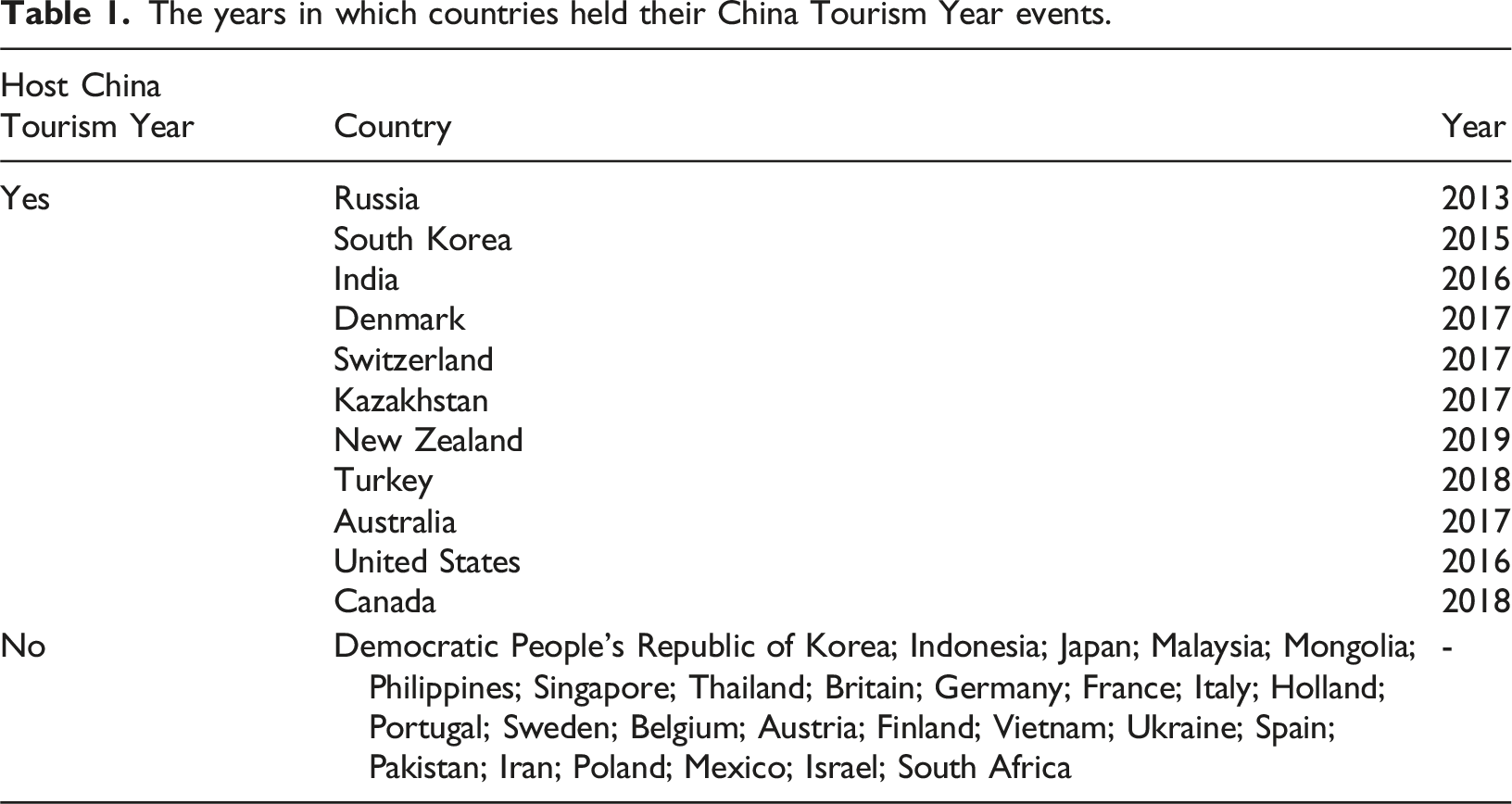
Against this backdrop, our research treats the Tourism Year campaigns implemented since 2012 as a quasi-natural experiment, using tourism arrivals from 38 origin countries to China from 2001 to 2019 to quantify the effects of these policies. Based on whether or not a China Tourism Year campaign was hosted, the origin countries are divided into an experimental group and a control group. Firstly, Propensity Score Matching and the multi-phase Difference-in-Differences regression model were used to analyze the inbound tourism effects of the Tourism Year campaigns. Then, these effects were further identified through two policy transmission paths: public opinion and diplomatic relations.
This research makes three main contributions to the literature. First, to the best of our knowledge, our methodological approach is novel in that no other study has used China’s Tourism Year campaigns as a quasi-natural experiment to investigate how tourism diplomacy influences China’s inbound tourism. Hence, this study provides new theoretical and empirical evidence that can lead to further understanding of the diplomacy programs’ impacts on tourism. Second, by using the Tourism Year campaigns as a quasi-natural experiment, this study investigates the channels through which these policies impact international tourism. Third, based on the research design and data characteristics, this study takes the novel approach of using propensity score matching (PSM) and difference-in-differences (DID) methods to evaluate tourism activities and performs robustness tests, providing a new perspective for evaluation.
The remainder of the paper is organized as follows: Literature review and theoretical framework presents the literature review and our proposed theoretical framework that are the foundations of our research hypotheses; The methods and data are discussed in Methodology and data. The results of the main analysis are presented in Empirical results, and the robustness tests are presented in Robustness tests. Conclusion and implications provide the conclusions and policy implications.
Literature review and theoretical framework
Literature review
Tourism policy and the evaluation of its effects
Governments of most countries play a significant role in tourism management and promotion (Pastras and Bramwell, 2013; Wang and Ap., 2013). The concept of Tourism policy is broad, and encompasses many specific tourism-related measures. The promulgation of a single tourism policy requires the coordinated implementation of other actions to increase its effectiveness. Therefore, the role of public policies has attracted considerable academic interest. For example, Wang and Xi (2023), Schönherr et al. (2023) and Zhang (2019) analyzed the impact of policies such as carbon emission controls, ecological environment protection and sustainable development policies on international tourism. Chi et al. (2022) analyzed the impact of increasing the number of visa-exempt countries aimed at increasing the number of inbound tourists. Chow et al. (2021) experimentally demonstrated the positive effects of airport subsidy policies on local tourism.
Tourist flows are among the core elements of tourism development. Inbound tourism is a complex dynamic system influenced by a variety of factors. Numerous studies have thoroughly investigated the determinants of inbound tourism, covering aspects such as destination environment, cultural factors, marketing strategies infrastructure, and other non-economic or economic factors (Bi and Lehto, 2018; Gao et al., 2019; Geng et al., 2020; Hussain, 2023; Mou et al., 2020; Paniagua et al., 2022; Qiang et al., 2018; Tang et al., 2019, 2021; Zhou et al., 2019). Tourism diplomacy is considered one of the significant pathways for promoting the sustainable development of tourist flows, as it can foster the growth of inbound tourism from multiple dimensions (Bose et al., 2020; Gu et al., 2022). For example, Tourism Year activities enhance inbound tourism by means of cooperation in tourism education, international tourism fairs, service trade exchanges, cultural and sports events, and related publicity efforts. Meanwhile, economic factors such as the economic situation, exchange rate fluctuations, and tourism prices, which also significantly influence tourist flows, have been extensively studied (Chen et al., 2021; Faisal et al., 2021; Huang and Wei, 2018; Kim and Lee, 2016; Marrocu et al., 2015; Song et al., 2010; Pérez-Rodríguez et al., 2015; Senbeto and Hon, 2020; Tang, 2021).
In recent years, there has been an increase in what can be considered tourism diplomacy policies. These actions consist of both government-to-government activities and informal interactions. Tourism diplomacy is a form of public diplomacy aimed at influencing the perception of various international audiences (Bose et al., 2020). It is expected that residents of countries that regularly host public diplomatic activities with China will visit the country more often (Gu et al., 2022). Enhanced tourism diplomacy can thus improve the cultural awareness about China, reduce information asymmetry, and alleviate any antipathy and misunderstandings towards China that the residents of these countries may have. Hence, one objective of public relations programs may be to develop a positive image of the destination to attract tourists and increase the number of visitors (Gil, 2020; Zhou et al., 2023).
Public diplomacy policy involves many activities. A prime example is China’s “panda diplomacy”, which involves sending live giant pandas or their specimens to foreign zoos and institutions (Liu et al., 2022; Okafor et al., 2021). The rarity and appeal of these animals render animal diplomacy an important diplomatic instrument, albeit with a relatively limited scope of application. Additionally, the portrayal of local cuisines and fashion in films or television dramas can generate a “halo effect”, thereby enhancing the motivation to visit the locations as tourist destinations. Chen (2018) estimated that movies, as a means of destination marketing, play a similar role in inbound tourism to tourism policies, and become a powerful driver of tourism motivation. However, the effectiveness of such cultural diplomacy relies heavily on long-term cultural accumulation and dissemination. Gil (2020) claimed that the Sister Cities initiative, implemented between two cities of equal size, is effective in promoting tourism. Fairley et al. (2016), Vierhaus (2018), and Kelly et al. (2019) analyzed the effects of sporting events on tourism and found that sports and diplomacy serve each other (Dichter, 2021). Chen et al. (2022) found that the Belt and Road Initiative has significantly boosted international tourism in member countries and has led to closer interdependence in terms of tourism demand. According to the purpose of our study, we consider the Tourism Year campaigns as an example to investigate the role of tourism policy in inbound tourism.
The Tourism Year has become important for promoting diplomatic relations and fostering people-to-people and cultural exchanges. The objective is to advertise China’s rich national culture and civilization to enhance the image and influence of China. Subsequently, this diplomatic activity seeks to increase international tourist flows (Makkonen et al., 2018; Quer, 2021). At the same time, multinational enterprises view good diplomatic relations between two countries as a source of alternative resources in the process of foreign investment (Cró and Martins, 2020; Song et al., 2022). Mejia et al. (2017) listed the various conferences held during the China–US Tourism Year to promote tourism in both countries. In summary, holding a Chinese Tourism Year can be perceived as a form of diplomatic political support and previous research indicates that it might be effective in encouraging more visitors to China (Bose et al., 2020; Gu et al., 2022).
Theoretical framework
Following our objective to study the impact of Tourism Year campaigns in promoting international tourism development, we propose the theoretical framework presented in Figure 1. Our approach considers three effects (direct, indirect, and lagged) which are explained in the following paragraphs. Subsequently, this section presents the hypotheses derived from our theoretical framework. Theoretical framework of the impact of hosting a Tourism Year on the development of inbound tourism.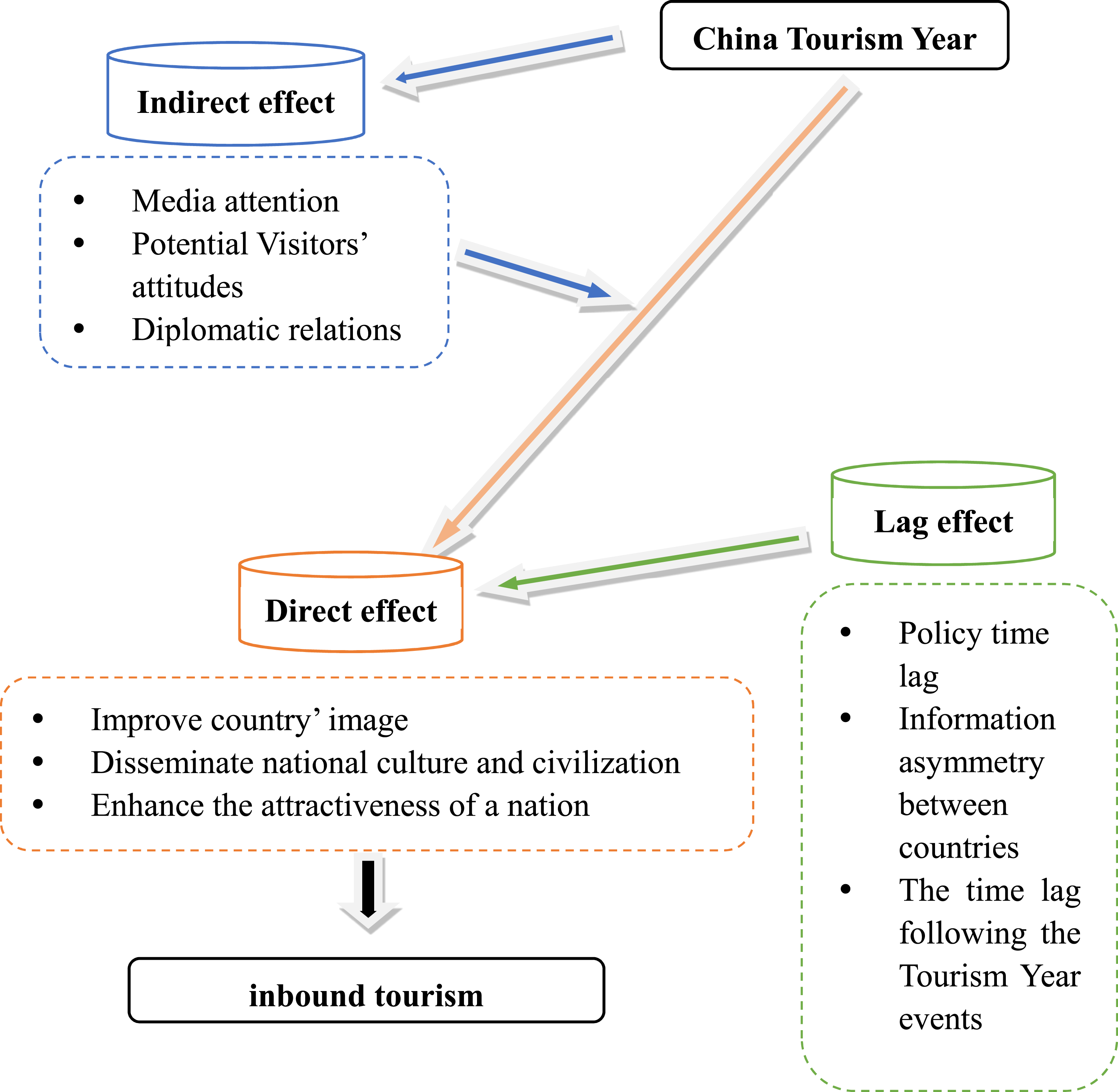
Direct effect
Holding a Tourism Year is expected to directly improve the country’s image and disseminate national culture and civilization, which enhances the attractiveness of the nation and, therefore, increases inbound tourism. An event held over an entire year is likely to have positive promotional effects (Huang et al., 2020; Parajuli and Paudel, 2011). These events often include an opening or closing ceremony usually attended by the presidents of both countries. This was the case with both Russia and the US (Mejia et al., 2017). The typical characteristics of Chinese culture can be showcased to host countries through the Tourism Year initiative. Official tourism publicity images and promotion of products can increase the two countries’ mutual understanding (Chaulagain et al., 2021; Zhou et al., 2023). Such nationwide cultural campaigns are likely to promote tourism growth in China (Makkonen et al., 2018; Tan et al., 2022).
In the tourism literature focusing on destination image, Chaulagain et al. (2021) proposed that increasing the perceived quality of medical tourism can improve the destination image. The media coverage of the COVID-19 pandemic in China has had a negative impact on its image and has reduced demand for inbound tourism (Lu and Atadil, 2021). Thus, China aims to improve its image and increase inbound tourism demand through public diplomacy activities such as the China Tourism Year.
Lag effect
Beyond the direct short-run effects, promotional campaigns are also likely to have a positive effect in the long term. This effect may persist for years after the diplomatic policy is implemented. Tan et al. (2022) used a dynamic model to verify that the positive impact of intangible cultural heritage on tourism lasted for 7 years and then levelled off. Okafor et al. (2021) studied panda diplomacy in which residents from countries that host pandas become more willing to visit China. This effect was higher in the first 3 years, but persisted in time. On the other hand, Fourie and Santana-Gallego (2011) used the hosting of mega-sport events as an example. They found that the number of inbound tourists increased significantly during the competition and 3 years before, but the effect was not large afterwards.
It should be considered that there will be a time interval between the planning of tourism policies, their implementation, and the subsequent effects. For example, it will require some time for the public to learn about the relaxation of visa policies or about improvements in international transportation. Similarly, through a Tourism Year project, the participants will get a preliminary impression of China and, as the activities progress, they will have a better understanding of Chinese culture and national characteristics. Building a better image of a destination takes time. After establishing China’s destination image and raising awareness of China’s inbound tourism policy, the public will have a better chance to choose China for international tourism after the policy is implemented. Therefore, due to policy lag Tourism Year campaigns are likely to have a lagged effect on attracting international visitors.
Indirect effect
Additionally, this paper aims to disentangle the mechanism of influence of the diplomatic campaigns. Therefore, we specifically consider the indirect effects of Tourism Years on inbound tourism that may occur through media campaigns and diplomatic relations. The media can effectively convey information to tourists, thus narrowing the cultural and psychological distance between potential visitors and the destination country (Leung et al., 2013; Zhou et al., 2021). Social media can serve as an electronic form of word-of-mouth, and is commonly used by travelers (Dellarocas, 2003; Gartner, 1994; Leung et al., 2013). Ulvnes and Solberg (2016) claimed that event publicity directly and indirectly attracts people interested in the host country by both direct and indirect means. The effects of COVID-19 have made media communication even more important for tourism marketers (Pachucki et al., 2022). The promotion of a Tourism Year campaign is likely to increase the recognition and popularity of the destination in the cooperating countries. Holding a Tourism Year in origin countries can highlight a positive national image and encourage residents of these countries to have a positive attitude towards China (Ivlevs and Smith, 2024).
When national policies are unstable, tourism products show vulnerability (Clements and Georgiou, 1998). Therefore, holding a Tourism Year to demonstrate good national relations can increase China’s attractiveness. Abundant literature establishes a link between positive destination image, word-of-mouth and tourists’ decision-making (Chaulagain et al., 2021; Zhou et al., 2021). Tourism Year events are also viewed as high-quality events, which are also likely to increase the attractiveness of the country’s image via media campaigns (Mejia et al., 2017). Thus, we can reasonably expect that the impact of the Tourism Year initiative on inbound tourism will be driven partly by media campaigns, which are designed to improve brand recognition and popularity in the cooperating countries.
Based on all the above insights and effects, this paper proposes the theoretical framework presented in Figure 1. From this framework the following research hypotheses will be tested in the empirical section.
Implementing a Tourism Year campaign has a positive effect on Chinese inbound tourism (direct effect).
Implementing a Tourism Year campaign has a lagged effect on promoting Chinese inbound tourism (lag effect).
Implementing a Tourism Year campaign can effectively promote Chinese inbound tourism through media campaigns and improved diplomatic relations (indirect effects).
Potential visitors’ attitudes contribute to the impact of the Tourism Year campaigns year on inbound tourism.
Media attention contributes to the impact of the Tourism Year campaigns on inbound tourism.
Diplomatic relations contribute to the impact of the Tourism Year campaigns on inbound tourism.
Methodology and data
Propensity score matching (PSM) and difference-in-differences (DID)
This study employs the multi-period Propensity Score Matching Difference-in-Differences (PSM-DID) approach to identify causal policy effects. This hybrid method addresses selection bias and time-varying confounders in non-randomized policy evaluations through a two-stage design: First, propensity score matching (PSM) constructs a comparable control group for the treated units based on pre-treatment covariates, mitigating initial differences due to observable heterogeneity. Second, a generalized difference-in-differences (DID) framework is applied to the matched sample, incorporating unit fixed effects, time fixed effects, and event-time dummies to estimate dynamic treatment effects under staggered treatment timing.
Our study considers a Tourism Year campaign as a quasi-natural experiment, from which we can quantify its impact on inbound tourism and consider the effects of potential mediators. Based on the quasi-natural experiment of Tourism Year campaigns held in tourist source countries, this paper constructs the PSM-DID model to empirically estimate the impact of Tourism Year campaigns on China’s inbound tourism (Chen et al., 2022, 2023; Chi et al., 2018, 2022; Li and Song, 2013; Song et al., 2010; Tan et al., 2022). The methodology was thus as follows:


Following the literature, this paper selected four conventional control variables to ensure the robustness of the model and to capture the influence of other factors on the dependent variable.

We then estimated the impact of the Tourism Year on China’s tourist arrivals through a combination of PSM and a DID estimator. PSM was performed in the experimental group and the control group every year during the sample period. The matching results are then evaluated with DID. Generally, the DID method effectively analyses policy effects and has been widely used in policy evaluation. Holding a Chinese Tourism Year may not be a completely random event. Hence, there might be sample selection bias and endogeneity problems. To solve this potential sample selection bias, this paper used the PSM-DID model embedded in a fixed-effects panel data model. This method can account for the characteristics of the Tourism Year and reduce errors caused by inherent national differences between the experimental group and the control group.
Given that the Chinese Tourism Year is not held in the same year in different countries, it is a quasi-natural experiment in different years (Chi et al., 2018; Li et al., 2020). Therefore, our approach is a multi-period PSM-DID method. The sequence of estimation of a PSM-DID requires first, conducting the propensity score matching method by formula (4), and then carrying out the DID analysis. So, the analysis starts with integrating the control variables of each sample into a score, as samples with the same or similar scores have similar characteristics in the distribution of the control variables. Then, we should proceed with finding one or more countries i in the control group that are most similar to j in the experimental group. In other words, in addition to the influence of control variables, the probability of country i and country j holding the Chinese Tourism Year should be equal. Then getting the average treatment effect on the treated (ATT) and reaching formula (1).

The next step is to assess whether the Chinese Tourism Year has really made a difference. In other words, we evaluate if there was no significant difference between the experimental group and the control group before the Tourism Year, but after the beginning of the Tourism Year, the number of tourists from the experimental countries to China has significantly changed.
Data
The years in which countries held their China Tourism Year events.
Dependent variable
The dependent variable is tourism arrivals from each of the 38 origin countries to China. The arrivals data were collected from the China Culture and Tourism Statistical Yearbook, and the Tourism Year information was obtained from the website of the China Central People’s Government.
Control variables
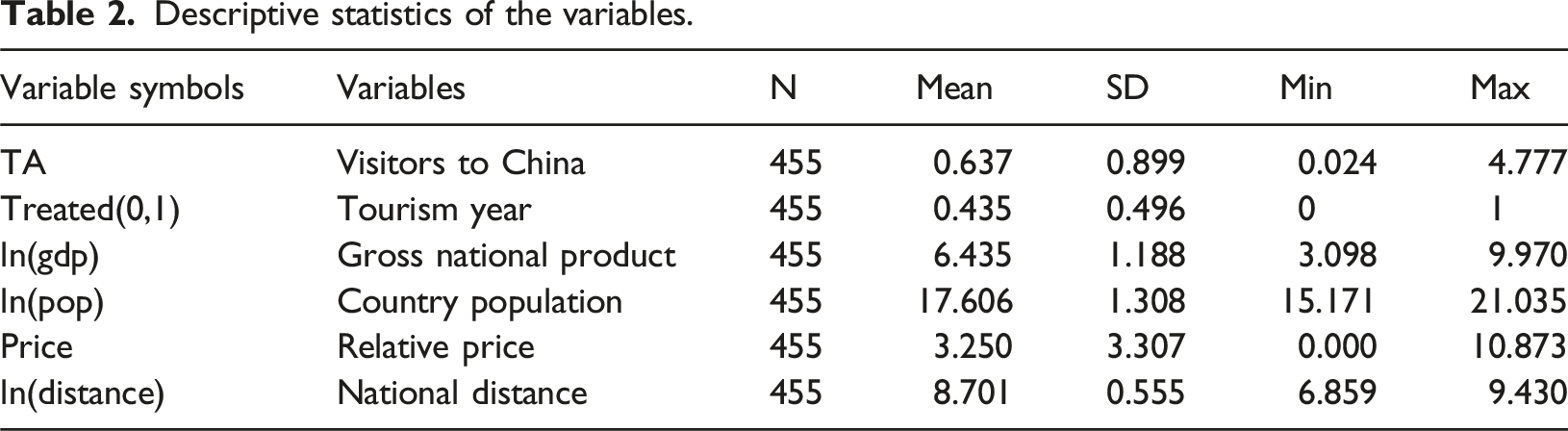
Population statistics were collected to account for the influence of country size. Population, GDP, CPI and exchange rate data were obtained from the World Bank Open DataBank. Data on the distance between two countries were collected from the Centre d’Etudes Prospectives et d’Informations Internationales.
Mediating variables
Descriptive statistics of the variables.
Empirical results
Direct effect
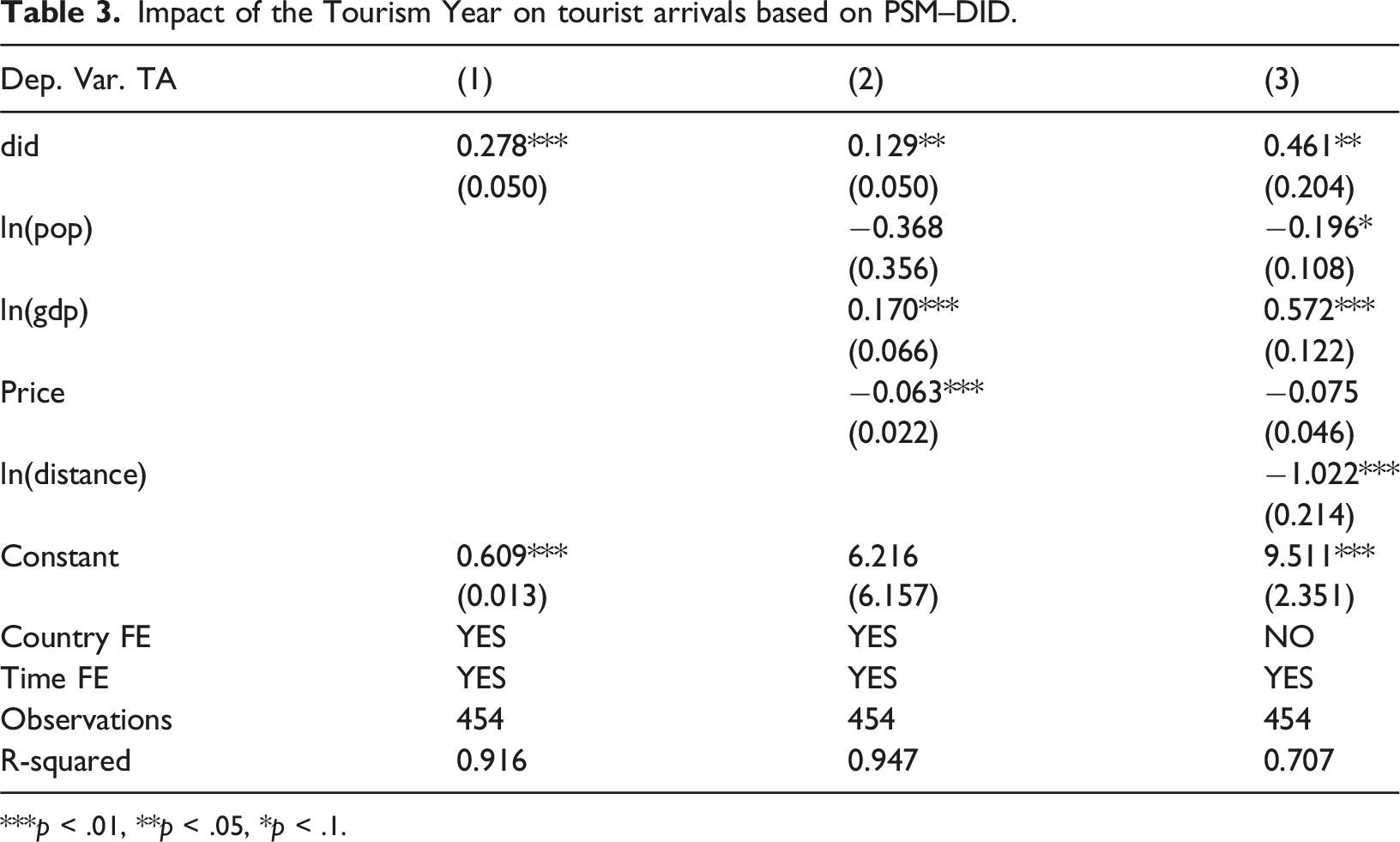
Impact of the Tourism Year on tourist arrivals based on PSM–DID.
***p < .01, **p < .05, *p < .1.
Following the above results, we can conclude that Hypothesis 1 is confirmed. In other words, the Chinese Tourism Year does have a positive impact on China’s inbound tourism. Several factors may help to explain this finding. First, the China Tourism Year campaign increases the influence and popularity of China as a tourist destination, encourages the partner countries to place more trust in China, and increases the likelihood that China will be chosen as an international tourist destination. Second, the promotional campaign represents friendly bilateral tourism cooperation. In this sense, various tourism facilitation policies and cooperation forums are usually implemented to promote international tourism in conjunction with the Tourism Year. The relaxation of visa policies and the strengthening of transportation and other tourism facilitation policies have encouraged people from the origin countries to visit China and have reduced the barriers to tourism (Tang, 2021). In addition, the Tourism Year represents an opportunity to increase cultural exchange between cooperating countries, to improve the perceptions of China among people from the countries of origin, and to increase understanding on both sides.
The coefficient estimates of the control variables presented in Table 3 also align with conventional tourism demand theory. The coefficient of GDP in columns (2) and (3) is significantly positive, as expected. This indicates that the economic situation of the origin country promotes international tourism. Next, the effects of relative price, population, and distance in column (3) are negative. As supported by basic economic theory, the results follow the law of demand, the relative increase in costs reduces the number of tourists. The results also indicate that people prefer to travel to countries that are close to them. Countries that are close to each other have similarities in culture, customs and habits, and the associated travel costs in terms of time and budget are likely to be smaller. However, the coefficient for the population of the origin country is not as expected. One potential reason for this effect is that countries with small populations are likely to have relatively high rates of coverage of information transmission, so China Tourism Year in such countries may have a greater effect.
Lag effect
To better evaluate the time-lagged effect of a China Tourism Year, this paper estimates its dynamic effects on Chinese inbound tourism. The following regression is established:
The dynamic effects of Tourism Years on Chinese inbound tourism.
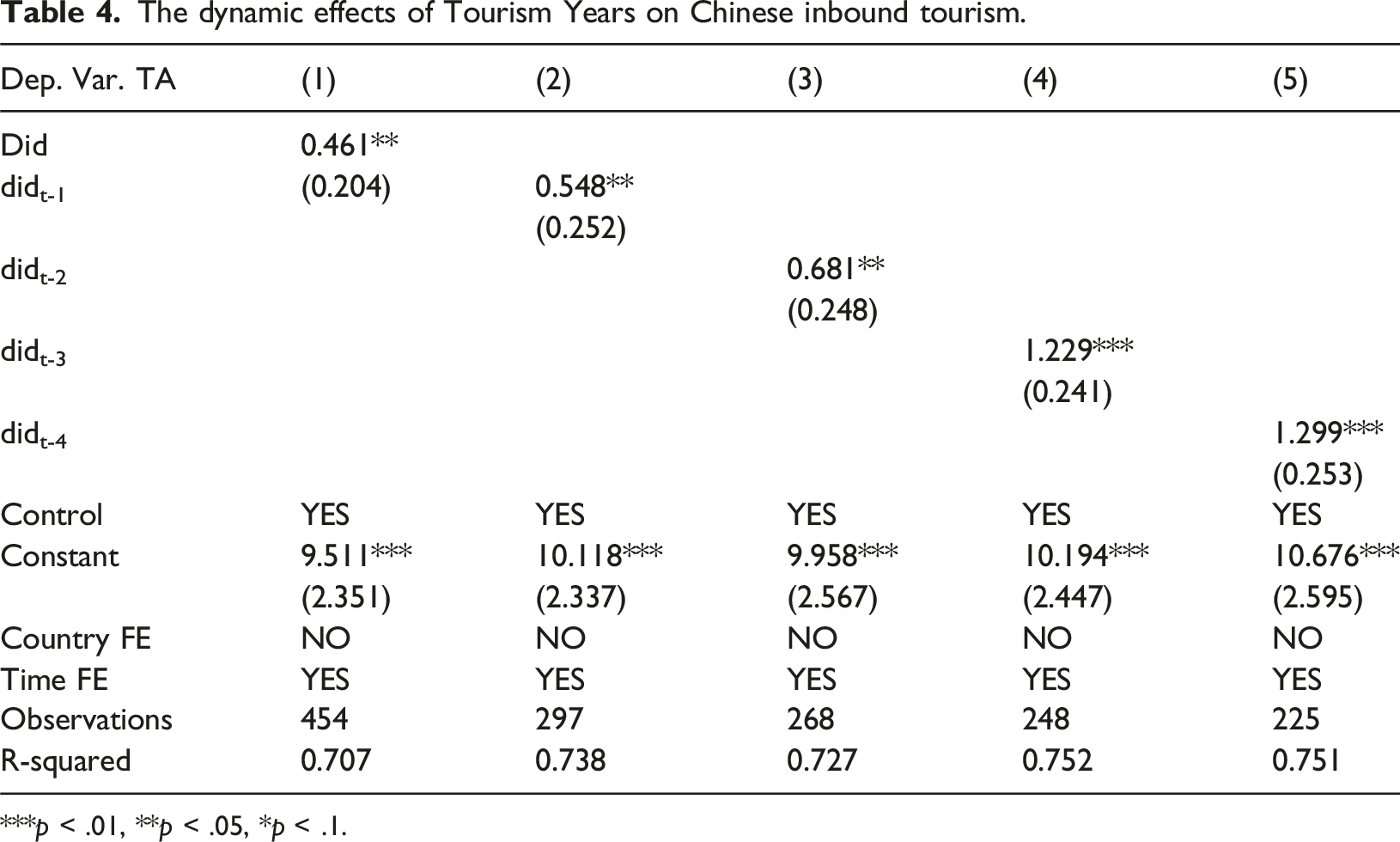
***p < .01, **p < .05, *p < .1.
Hence, the results confirm Hypothesis 2, indicating that the total effect of a Tourism Year on inbound tourism is partially lagged. Holding a Tourism Year in the source area has an information dissemination effect, but its impact on the reputation of the travel destination takes some time (Tavitiyaman et al., 2021).
Indirect effects
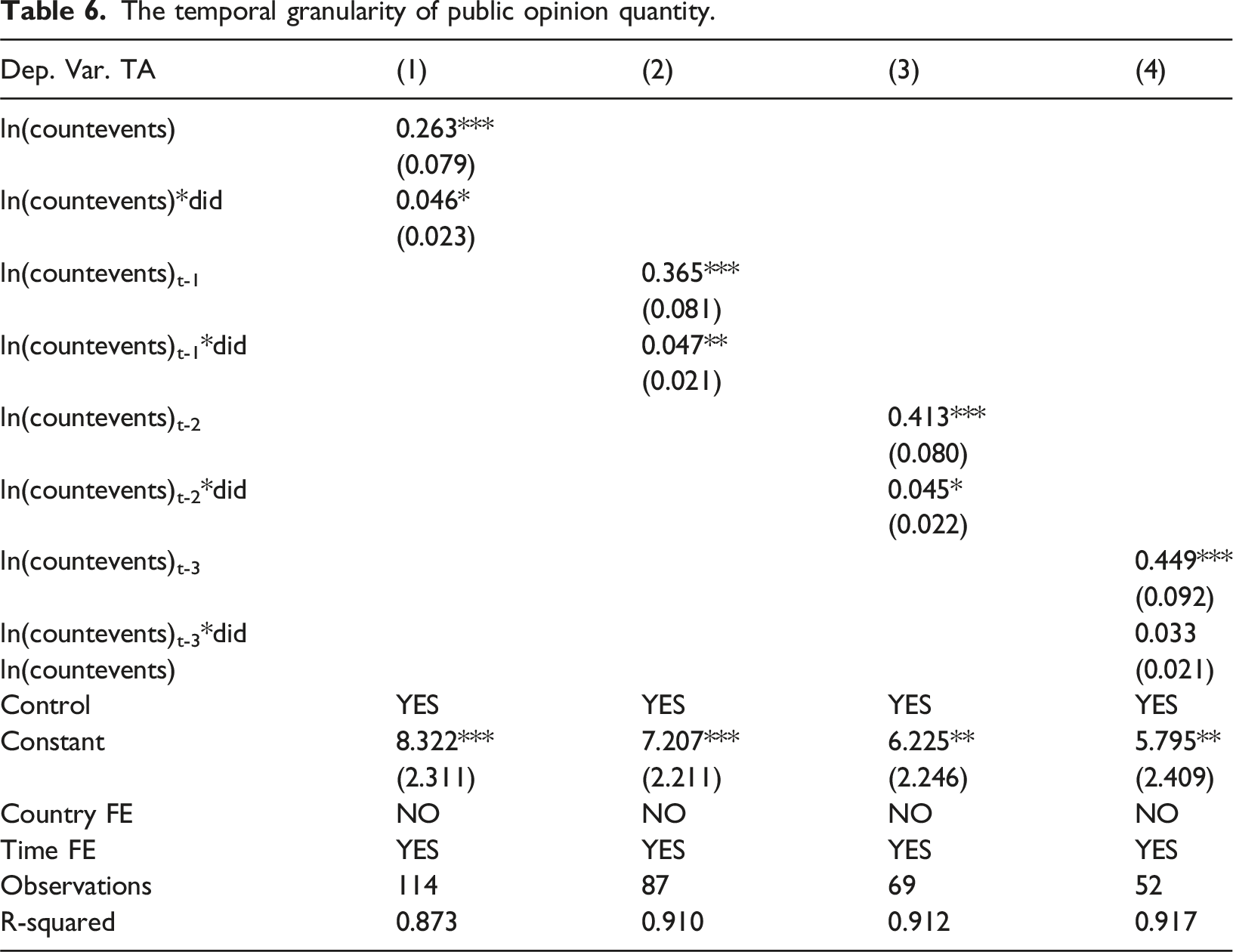
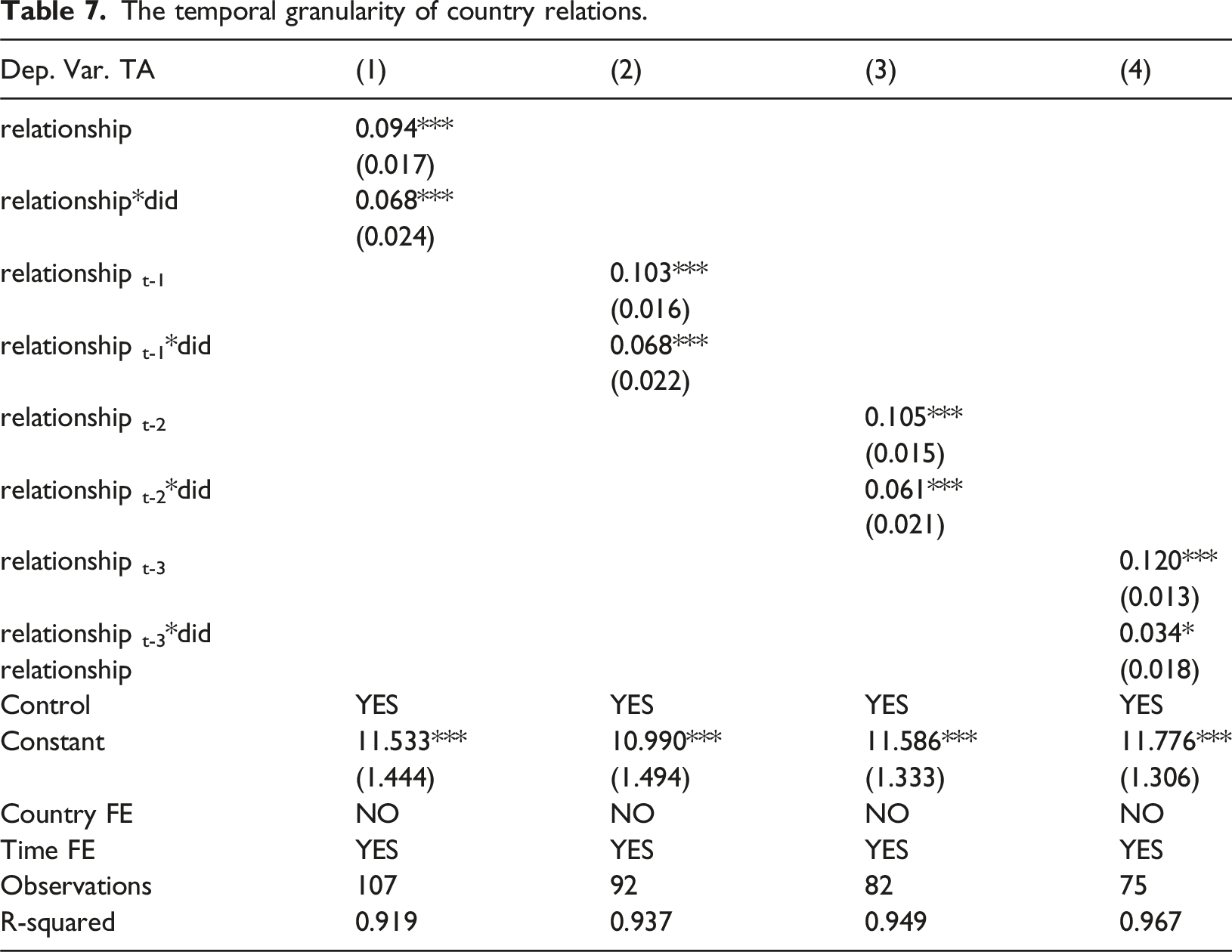
Once we have proved both the direct and lag effects of implementing Tourism Years’ campaigns, this section aims at identifying specifically the mechanism of influence of the diplomatic campaigns. Therefore, we aim to go beyond the direct effect of a Tourism Year in a given country and year, and consider the channels that explain this impact. For that purpose, we distinguish three potential mechanisms: potential visitors’ attitudes, media attention and diplomatic relations.
It is likely that one of the government’s purposes for establishing a Tourism Year is image promotion. Media coverage of the events involved in the campaign increases its reach and exposure. We used the GDLET Project to estimate two dimensions of public opinion. Goldstein Scale from GDELT assigns a score of −10 to 10 to the recorded events, capturing the theoretical potential impact of the event on a country. We use the index of attitudes to China news published in country i as recorded in the Goldstein Scale. The following equations (6) and (7) are proposed to estimate the indirect effect of the Tourism Year on tourist arrivals. So, they are used to test Hypotheses 3.1 and 3.2


Moreover, diplomatic relations between the two countries are used as another mediator variable. Hence, the following equations are proposed to test Hypotheses 3.3:
The temporal granularity of public opinion attitudes.
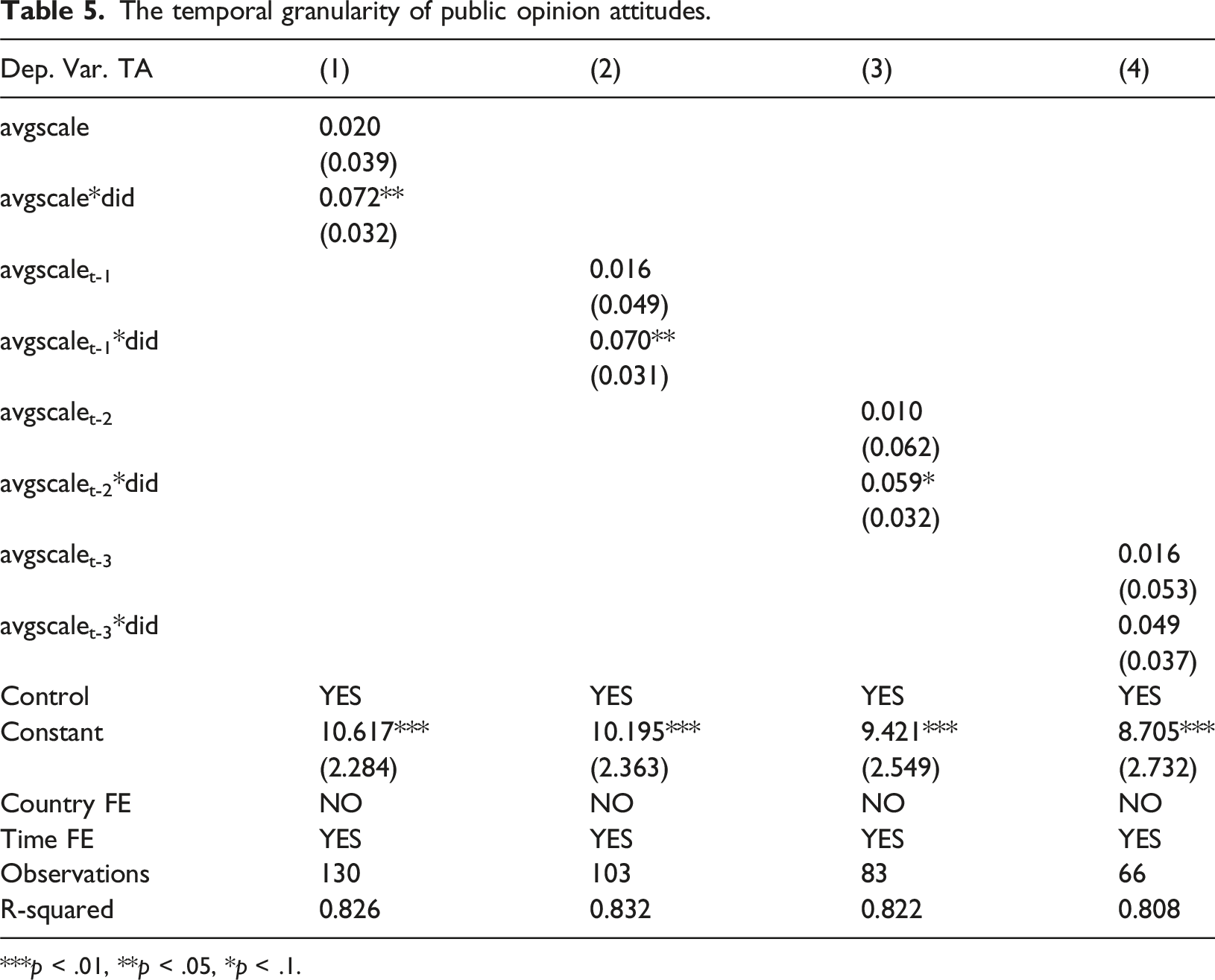
***p < .01, **p < .05, *p < .1.
The temporal granularity of public opinion quantity.
The temporal granularity of country relations.
Robustness tests
Balance tests
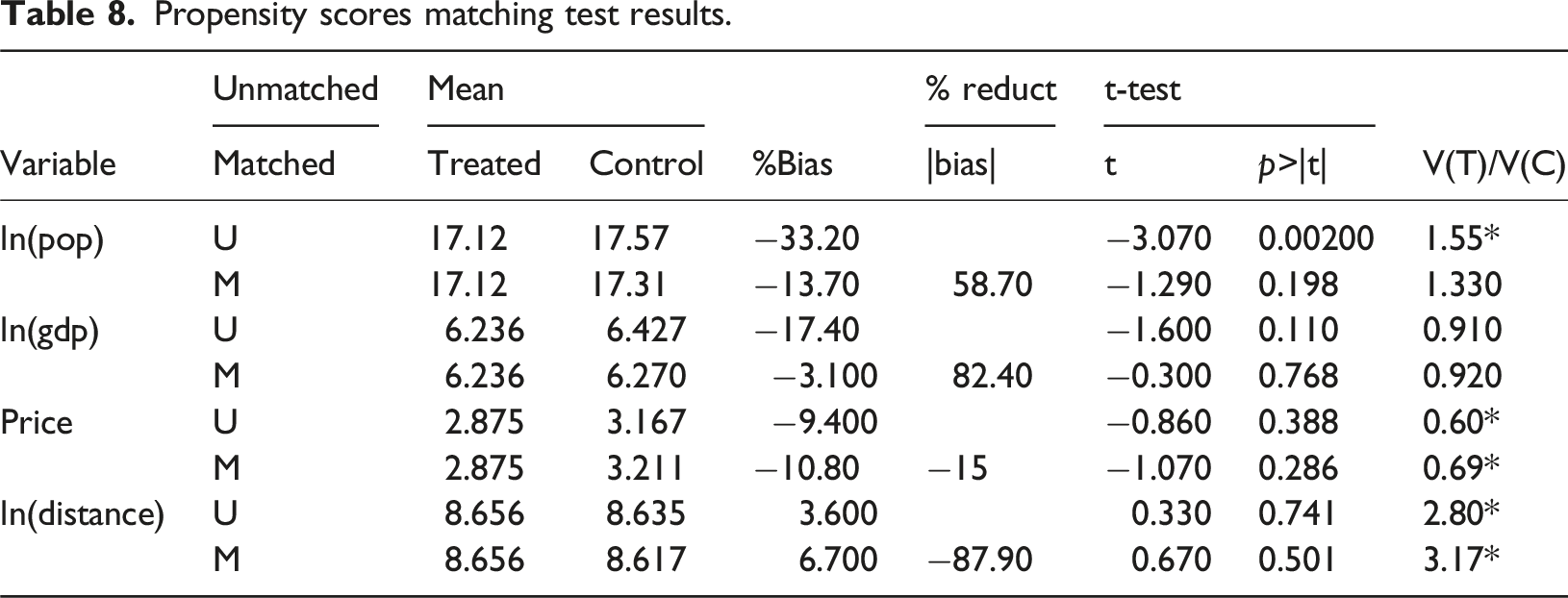
This section presents a balance test to ensure the effectiveness of the PSM results, that is, the experimental group and the control group show a consistent change trend after the data were matched by propensity score before the policy was started. The test is consistent with the equilibrium trend test when there are control variables (Chen et al., 2022). Figure 2 shows that the matched points are clustered around 0. This indicates that after matching, there are no significant systematic differences in the covariates between the control and the treatment groups, except for differences in population, GDP and relative price. It shows that the result of PSM satisfies the precondition of DID after considering the control variables. Balance test.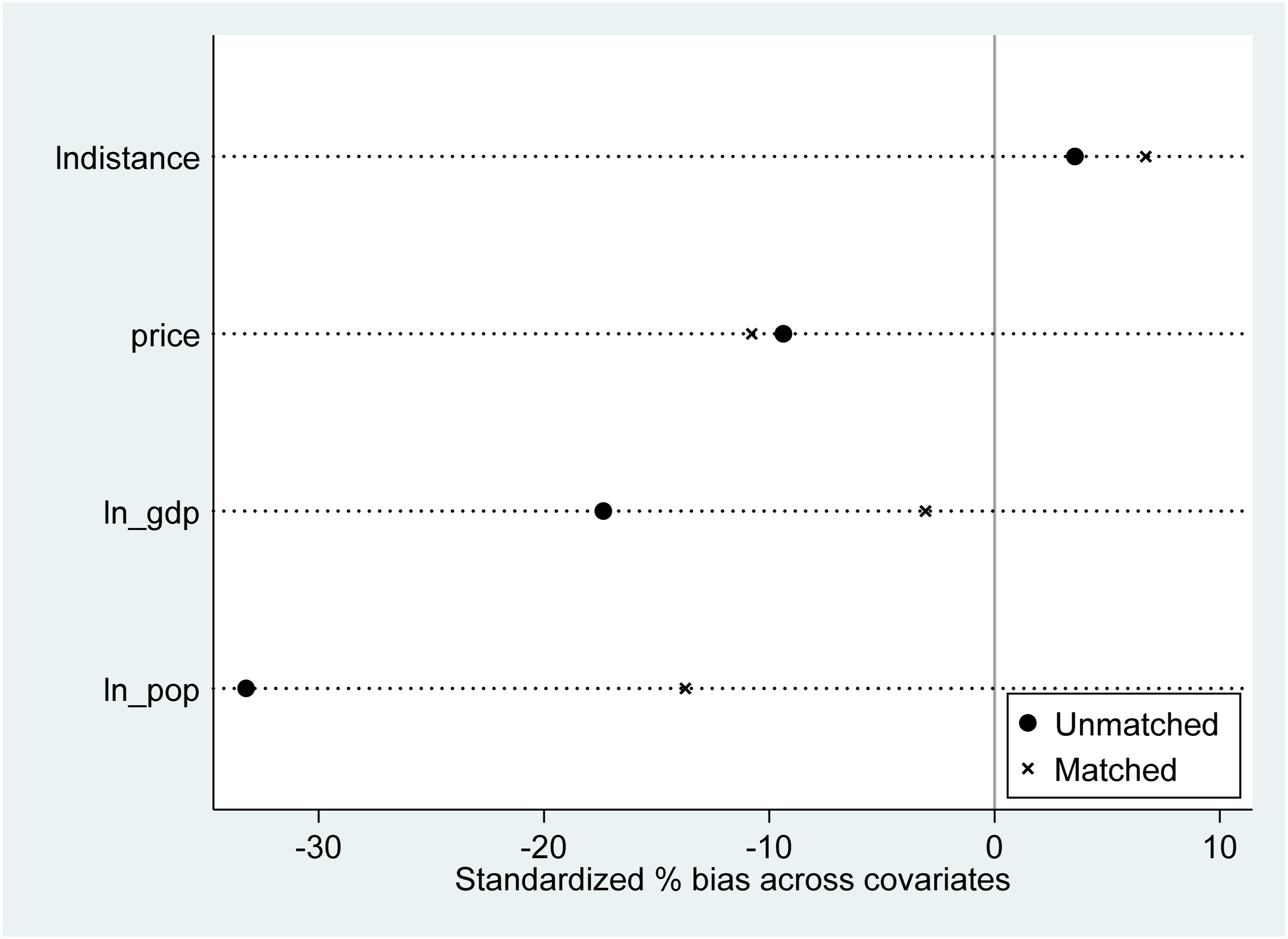
Propensity scores matching test results.
Parallel trends test
The parallel trends test is performed to prove that the PSM-DID results meet the precondition of unbiasedness. In other words, it tests whether the experimental and control groups have the same growth trend before the start of a Tourism Year (Zhang and Zhang, 2020). We chose a period of 5 years before the campaign.
Figure 3 plots the results of the parallel trends test and the 95% confidence intervals, which are adjusted for state-level clustering. It indicates that the coefficient of the experimental group and the control group in the 5 years before each Tourism Year is near to 0 and the result is significant. This indicates that there was no significant difference between the treatment group and the control group before the policy was implemented. The coefficient of the year and the year after the Tourism Year is significantly different from 0. The coefficients of the interaction terms are positive, with the policy effects achieving statistical significance at the 1% level by the third year following policy implementation. Thus, our study conforms to the basic hypothesis of PSM–DID. Time passage relative to hosting the Tourism Year.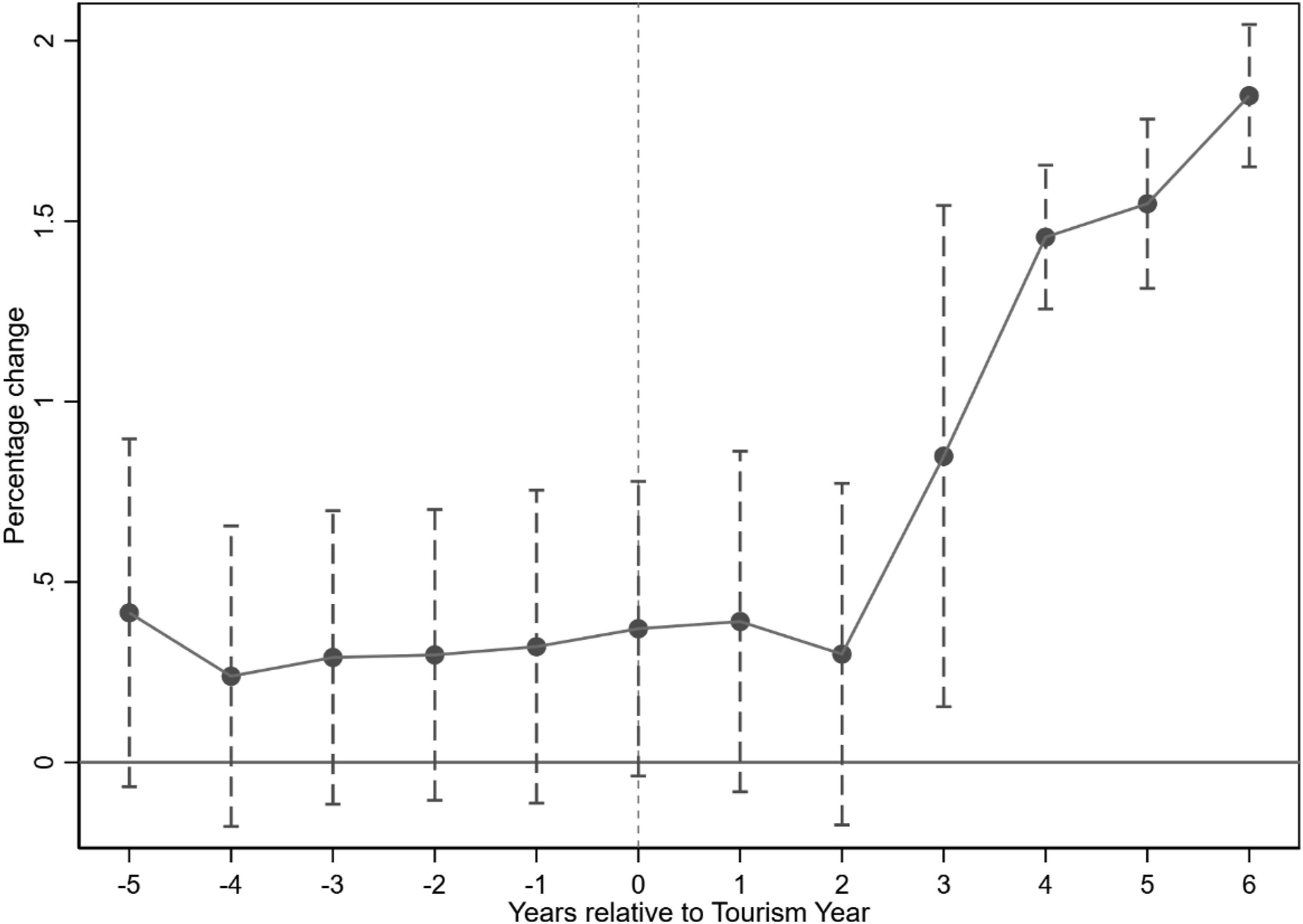
Placebo test
The results presented in Empirical results indicate that Tourism Years have a statistically significant positive impact on tourism, confirming our main hypotheses. To further ensure that our results are robust, we follow the placebo test applied by Liu and Lu (2015) and Tan et al. (2022). This test involves generating random Tourism Years and random countries hosting the event, which replace our main explanatory variable before conducting the DID estimation. This paper generates the random time variable and random country variable 500 times and uses them to estimate the coefficient. If the estimated coefficient of the randomly generated variable is not significant, i.e., concentrated around 0, then the results are considered to be robust.
The density function of the estimated coefficient derived from the placebo test is plotted in Figure 4. The coefficients of the policy variables of the reconfigured experimental group and Tourism Year occurrence show a normal distribution with a zero mean. And the reconfigured policy variable coefficients are significantly different from the results in Table 3. Therefore, we can conclude that our results are reasonably robust. The placebo test of robustness.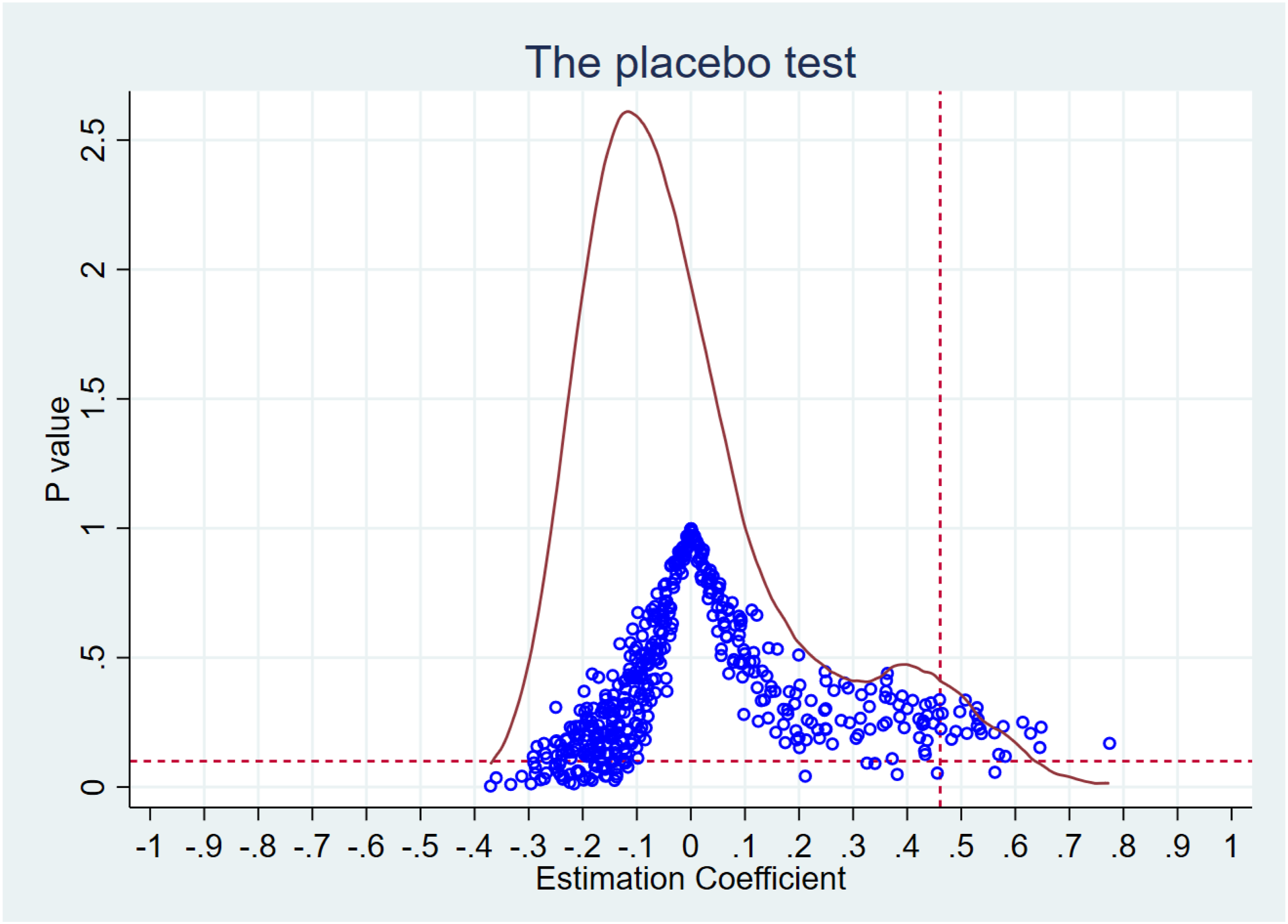
More robustness tests
Although this study selects control variables based on prior research identifying key determinants of inbound tourism, potential omitted variable bias can bias the estimation results. To address this issue, this study rigorously examines the robustness of baseline estimates by incorporating three additional controls: (1) bilateral political relations measured by United Nations General Assembly Voting Data (Bailey et al., 2017), (2) institutional distance calculated using the World Governance Index database (Liu et al., 2020), and (3) trade intensity proxied by exports from various countries to China.
Robustness test with added variables.
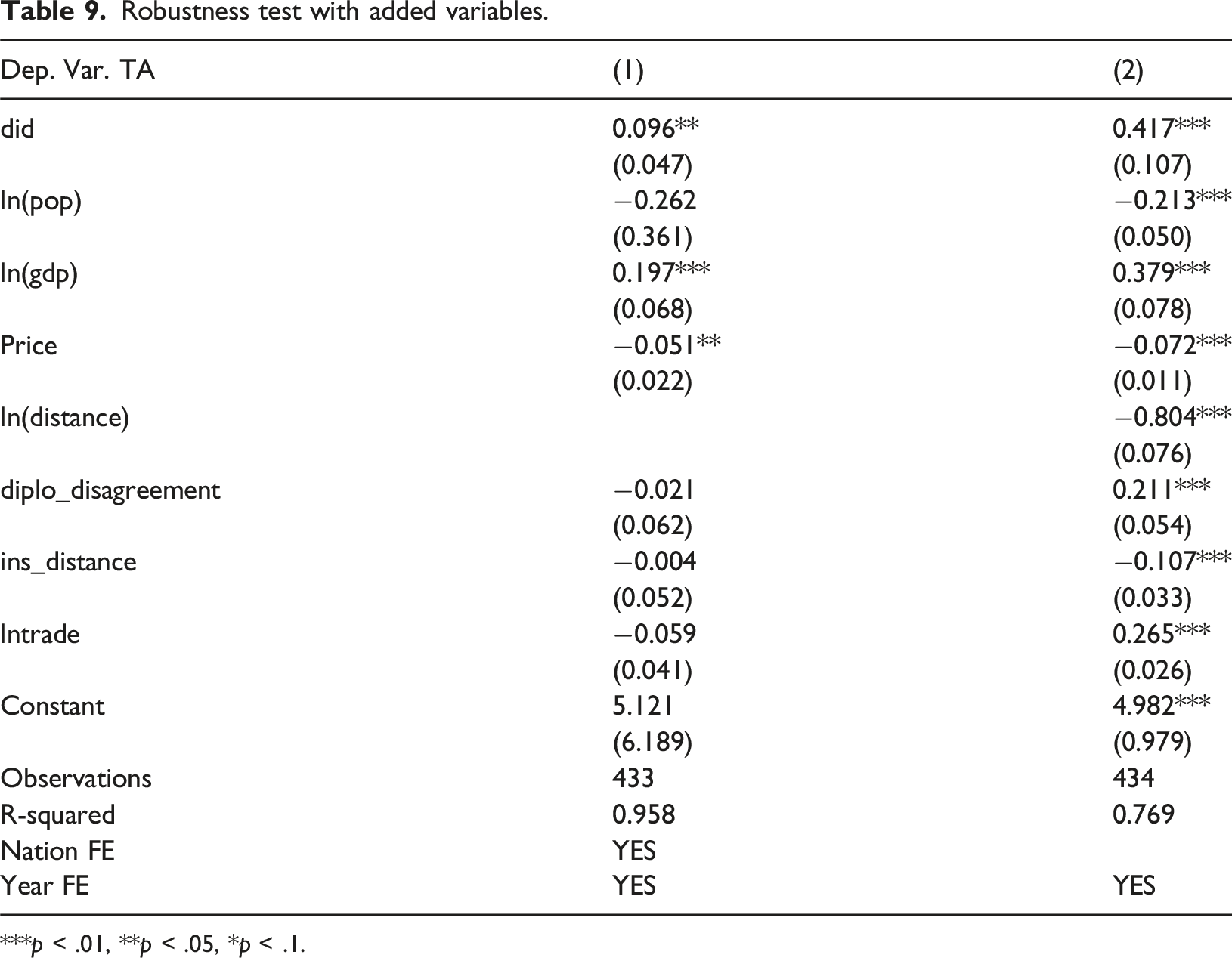
***p < .01, **p < .05, *p < .1.
Conclusion and implications
A Tourism Year is an important diplomatic activity aimed at promoting inbound tourism to China. This study used PSM and a multi-phase DID method to assess the impact of hosting a China Tourism Year on Chinese inbound tourism. This paper examined a dataset of 38 countries from 2001 to 2019. The empirical results showed that hosting a China Tourism Year significantly boosts inbound tourism demand from the cooperating countries to China. The robustness tests by balance test, parallel trend test and placebo test verified the reliability of these conclusions. The dynamic effect estimations also indicated that hosting Tourism Year has a lagged effect. In addition, the Tourism Year’s promotion effect on inbound tourism also occurs through public opinion and diplomacy.
The empirical estimates have indicated that there is a significant positive impact of Tourism Year campaigns on inbound tourism demand. Therefore, the implication is that China should fully acknowledge the positive effect of hosting Tourism Years abroad on inbound tourism and thus further promote national tourism projects. Now that international tourism has nearly recovered from 2020, China’s inbound tourism should be restored to its pre-pandemic levels. First, China should continue to actively cooperate with other countries in organizing Tourism Years and other tourism projects. Additionally, the empirical results presented in Lag effect proved that the positive effects do not only last for one period, but the effects remain active in the following years. Therefore, the benefits can be noticed in subsequent years. This will present opportunities to inform those from outside China about recent developments and the country’s unique culture, which can narrow the perceived distance and avoid any misunderstandings. Second, China should acknowledge the importance of the China Tourism Year to other countries. By ensuring that such programs have a major influence in cooperating countries, it can improve the efficiency of the Tourism Year in attracting tourists. In addition, throughout each Tourism Year China should establish further tourism facilitation policies with the host country, such as visa-free agreements, preferential treatment and subsidies for international flights, and should increase tourist routes. Policies should also be implemented more quickly, to promote inbound tourism and reduce the lag time.
Finally, Indirect effects indicated some of the relevant mechanisms through which Tourism Year campaigns have a positive impact on tourism flows. The corollary of these findings related to the indirect effects is that China should acknowledge the roles of public opinion and diplomacy in the Tourism Year, according to the rational mechanism of the inbound tourism promotion effect. First, the results indicate the importance of public attention on the promotional effect of the Tourism Year. Second, there is a moderating effect of the media attention on inbound tourism Therefore, Chinese embassies or tourism offices should cooperate with the local news media to influence local public opinion and increase knowledge of and participation in the Tourism Year. This will increase the likelihood that China will be chosen when tourists make decisions about international tourism destinations. Third, countries that have good diplomatic relations with China should be given priority as hosts of Tourism Years. China’s influence in cooperating countries can thus be expanded, and in addition to the promoting effects brought by economic and political factors, with the Tourism Year as the ‘icing on the cake’.
Footnotes

Funding
The author(s) disclosed receipt of the following financial support for the research, authorship, and/or publication of this article: This work was supported by the grants Youth Foundation for Humanities and Social Sciences of the Ministry of Education in China (grant number 24YJC790161) and Innovation Team of Philosophy and Society at Kunming University of Science and Technology (grant number KGZSCXTD2025006).
Declaration of conflicting interests
The author(s) declared no potential conflicts of interest with respect to the research, authorship, and/or publication of this article.