







Abstract
The current academic system places strong emphasis on producing an unsustainably large quantity of publications, many of which offer limited novelty. As a result, academics lack the time and the incentives to build meaningful connections with industry. This paper is written as a personal reflection, supported by existing literature. It argues that if academics wish to have a tangible impact on future development, closer and more effective collaboration with stakeholders is essential. The paper focuses primarily on industry as a key stakeholder and provides an overview of research avenues that could help generate relevant knowledge. Overall, the paper calls for a rethinking of the role of academia in shaping future development, with particular emphasis on the social sciences and tourism as a field of inquiry.
Introduction
The gap between academia and industry has been recognized for a long time, with only few individuals successfully navigating both worlds. The relationship between academia and industry has long been characterized by a complex interplay of collaboration and divergence (Scott et al., 2017). While both sectors share a common goal of driving innovation and societal progress, their differing priorities, time horizons, and operational cultures often create barriers to effective partnership. This paper seeks to critically examine these challenges, with a particular focus on the tourism sector, sustainability, and technological advancements. This article is based on subjective observations of authors experience working across academic and industry settings. It also provides practical insights for academics, particularly early career researchers, seeking to pursue socially and industry relevant research topics. Our reflections may be interesting for industry experts as well to better understand the acacemic world.
Academic institutions today increasingly prioritize metrics such as publications, citations, and external grant acquisition. These pressures significantly limit the time and incentive available for engaging and working with industry. According to a Harvard Business Review (2017) study, academics spend approximately 40% of their time on administrative and bureaucratic responsibilities. Similarly, von Hippel and von Hippel (2015) estimate that preparing a single grant proposal requires, on average 116 hours from the principal investigator and 55 hours from co-investigators. Caught between teaching, publishing, and grant writing, many academics find little capacity to initiate or sustain collaborative partnerships with industry.
The paper identifies time constraints and differing priorities as key barriers to academia-industry collaboration. However, it is equally important to examine the structural and systemic factors that perpetuate this divide. For instance, the current academic reward system, which prioritizes publications and citations over practical impact, discourages researchers from engaging in industry-relevant projects. Similarly, industry stakeholders often lack the incentives or frameworks to invest in long-term partnerships with academia. Addressing these systemic issues requires a rethinking of funding models and the development of joint metrics for success that value both academic rigor and practical application.
From the industry’s perspective, there are misleading expectations. Academia is often seen as part of the public sector, expected to provide knowledge as a public good. This expectation includes an implicit assumption that academic insights should be freely accessible, with minimal expectation for financial or collaborative reciprocity. This dynamic can be frustrating for academics, who may feel that their contributions are undervalued and taken for granted. Another significant barrier to collaboration between academia and industry is the difficulty academics face in engaging companies to actively participate in research projects. Many businesses are hesitant to get involved, as they often fail to see the immediate benefits for their operations or fear that the outcomes of academic research may be too theoretical and not directly applicable. To overcome this barrier, academic institutions must better communicate the practical value of their research while emphasizing the importance of long-term, strategic partnerships with industry. This effort could be supported by targeted incentives, such as tax benefits or funding programs, to encourage companies to actively engage in academic research projects.
Another tension between academia and industry lies in their differing time horizons. Industry typically seeks short-term, actionable solutions to immediate challenges, often prioritizing efficiency over the long-term societal change. In contrast, academic research tends to address complex, systemic issues with a future oriented perspective, aiming for transformative impact. These differing orientations frequently lead to mutual misunderstanding: academics may view industry priorities as myopic, while industry observe academic work as overly abstract.
This divide is further reinforced by contrasting worldviews. Academic culture often rewards critical and sceptical analysis, associating it with intellectual rigor. Optimism is viewed within academia as simplistic or even naive approach to solving problems. For example, in tourism there has been a developing pessimism in the last years, where academic literature frequently emphasizes the sector’s negative environmental and social consequences. Industry professionals have noticed this, and are asking “How can academia inspire students to work in tourism when it is so critical of it?” This is a valid question. At the same time, it is valid for academia to critically question industry responses toward developing sustainable and responsible practices.
This paper is both a personal reflection as well as a call for action. If academia is to fulfil its societal mission, it must engage more meaningfully with industry. At the same time, industry must recognize the value of long-term, systemic thinking and commit to reciprocal partnerships. For early-career scholars, the challenge lies in identifying research questions that resonate both within academic discourse and with industry stakeholders. Such work may not always align with traditional academic metrics of success, but it has the potential to create more lasting and impactful contributions. The widening gap between academia and industry is not inevitable. By better understanding the barriers and embracing new models of engagement, both sectors can explore shared priorities, develop mutual respect, and develop a more inclusive knowledge ecosystem. This reflection thus calls for a critical engagement with the role of networks and knowledge and contributes to a better understanding of knowledge transfer and exchange between researchers and practitioners. However, bridging academia and industry especially requires rethinking the global context, aligning research pathways around sustainability and AI, and reforming the processes that govern collaboration.
The following is our response to the divisions stated above: We will first discuss the rationale and context for a fruitful relationship between academia and industry. The subsequent chapter then deals with the key approaches and topics that can help nurture this interaction. Finally, this paper presents structural process-related factors that can significantly influence such a relationship.
Conditions of research and Academic Collaborations
The context: Fragile foundations in an unstable world order
Before examining how we might bridge the divide between academia and industry, it is essential to address the fragile foundations of the current world order, shaped by broader macroeconomic and geopolitical forces that directly influence the tourism industry.
Tourism has historically thrived during periods of economic globalization, characterized by liberalized trade, open borders, technological progress, and rising disposable incomes. These drivers have enabled the rapid growth of international travel, positioning tourism as one of the world’s largest and fastest-growing industries (UNWTO, 2023). However, in recent years, the global macroeconomic landscape has shifted. The world economy is transitioning from globalization to “slowbalisation,” marked by declining trade volumes and protectionist policies (The Economist, 2019). These developments are reshaping tourism, an industry that fundamentally depends on open borders and global economic interdependence.
Trade imbalances, rising public debt, and persistent inflation, exacerbated by post-pandemic recovery efforts and ongoing supply chain disruptions, have heightened global uncertainty and are expected to constrain both consumer spending and investment (IMF, 2024). Tourism inherently vulnerable to global volatility is both affected and reflective of these changes.
Beneath this turbulence lies a deeper architecture of global inequality and structural imbalance. While globalization has served as a catalyst for tourism expansion, it has also amplified inequalities between nations, regions, and social groups. The unequal distribution of wealth and access to global mobility has excluded large segments of the world’s population from participating in or benefiting from growth (Piketty, 2020). For example, according to Eurostat (2024), 85% of residents in France took at least one holiday in 2023, compared to only 30% in Romania. Wang and Tziamalis (2023) also found that tourism growth affects a country’s income inequality differently. It eases income inequality in the lower economic development areas but may worsen income inequality in the upper economic development areas. We also must acknowledge that tourism and travel have never been universally accessible. Much of the sector’s growth has been fueled by a relatively small group of hypermobile individuals, many of whom are part of the academic community, who have disproportionately benefited from open borders, fast transportation, and afordable travel.
Moreover, global migration, driven by conflict, inequality, and climate change, adds another layer of complexity. Large-scale population movements affect the social fabric of host communities, reshape labor markets, and influence national policies. Migrations, in particular, are altering demographics in tourism destinations and prompting nationalistic reactions that risk further destabilizing international travel (IOM, 2024). Simultaneously, the industry faces a demographic paradox: aging populations in developed countries and underemployment in developing regions. Many tourism businesses continue to struggle with finding and retaining skilled workers.
Compounding these structural challenges is the escalating global mental health crisis. The COVID-19 pandemic, along with ongoing socio-political disruptions, has significantly increased mental health distress worldwide, with over one billion individuals now affected by mental health disorders, primarily anxiety and depression (WHO, 2025). On the one hand, this long-term crisis revealed the limitations of crisis management in tourism, both for companies and industry (Schönherr et al., 2023). On the other hand this crisis underscores the growing need for greater attention to mental health and well-being within the tourism workforce (Smith and Puczkó, 2014).
Climate change, arguably the most profound long-term threat, is already reshaping the tourism landscape. Rising sea levels, extreme weather events, and environmental degradation threaten the viability of many destinations and jeopardize the economic sustainability of the sector itself. As a significant contributor to global carbon emissions, particularly through aviation, tourism must confront its environmental footprint (Gössling and Higham, 2021; IPCC, 2023). Forecasts from IPCC and MIT (2023) point to intensifying water stress and enviromental crisis in the years to come. A vivid example are european travel patterns that are shifting from south to north, driven by rising temperatures and climate change. According to the European Travel Commission (ETC), northern and central European destinations such as the Baltics, Scandinavia, and Alpine regions are experiencing increasing tourist demand, due to extreme heatwaves and wildfires in the south of Europe. ETC highlights a growing preference for cooler climates and outdoor nature-based experiences, with countries like Denmark, Austria, and Slovenia outperforming pre-pandemic arrival levels (European Travel Commission, 2024). This geographic rebalancing signals a climate-adaptive shift in travel behavior. Uncertainty surrounding climate policies can have two a major impacts on the demand for tourism activities. First, sustainable policies may increase the cost of travelling and other related tourism activities, making tourism more expensive. Second, climate policies could change travellers’ attitude towards travelling by increasing their environmental awareness and hence, their propensity to travel to long-haul destinations (Apergis et al., 2023)
Finally, the digital transformation presents both opportunities and challenges. Sanju et al. (2025) found that tourism is positively and significantly correlated with digitalisation. Emerging technologies such as artificial intelligence and blockchain hold the potential to enhance efficiency, personalization, and safety in tourism (AI Index Report, 2025). However, without equitable access, these innovations may deepen existing inequalities and excelerate mental health problems (Gretzel et al., 2015; UNWTO, 2021). Furthermore, the sector must navigate growing concerns around data privacy, digital surveillance, and cybersecurity risks.
The challenges outlined above call for deeper collaboration and a renewed focus on education. Only those societies that prioritize and invest in knowledge will be equipped to respond effectively to the complex issues we face. An often-overlooked aspect of academia-industry collaboration is the role of students as future professionals and innovators. Universities have a unique opportunity to prepare students to bridge the gap between research and practice by integrating experiential learning, internships, and industry-led projects into academic curricula. By exposing students to real-world challenges and fostering skills such as critical thinking, problem-solving, and interdisciplinary collaboration, academia can cultivate a new generation of professionals who are well-equipped to navigate the complexities of the world and industry. Furthermore, involving students in collaborative research projects can provide fresh perspectives and innovative ideas, benefiting both academia and industry. Today, knowledge is more accessible than ever, which is both exciting and concerning. The rapid spread of misinformation, and even the rewriting of historical facts, through the internet and social media highlights the urgent need for credible, informed voices. This is where universities and academics must step in, not only to provide reliable knowledge, but also to engage with new generations in meaningful, adaptive ways.
Equally important is our responsibility to bridge the gap between academia and industry. By fostering stronger partnerships and co-developing innovative, forward-thinking solutions, we can support businesses, empower their employees, and contribute meaningfully to local communities. In the sections that follow, we explore potential avenues for bridging these gaps and aligning academic knowledge with industry needs.
The research pathways for strengthening Academia–Industry Collaboration
Broadly speaking, there are two key areas that will be shaping the future of humankind in the years to come: on the one hand the mitigation of climate change and the integration of sustainability as a core principle of development and on the other hand, the advancement of generative artificial intelligence, along with broader developments in artificial intelligence.
These two areas are set to play a pivotal role in shaping our collective future, offering exceptional opportunities for impactful research that can inform policy, drive innovation, and support meaningful societal transformation. At the same time, if not addressed collectively and effectively, they pose significant threats to humanity.
Climate resilience and sustainability
The integration of sustainability into the tourism sector presents a compelling case for collaboration between academia and industry. It is not fair to claim that tourism industry is ignoring sustainability (Bogren and Sörensson, 2021). Most of the tourism companies have incorporated sustainability into their strategic planning. The underlying motivations, however, differ substantially. For some, just follow regulatory frameworks, such as the European Union’s Corporate Sustainability Reporting Directive (CSRD) and the broader Environmental, Social, and Governance (ESG) agenda. Others have responded to market pressures, with consumer demand increasingly favouring sustainable travel options. A third group has pursued sustainability initiatives based on the values and vision of their leadership, particularly top executives committed to long-term sustainable development.
The first group of companies, we can refer to them as Formalist, integrated sustainability into their operations primarily in response to legal and regulatory requirements. While regulatory push has succeeded in prompting many companies to begin integrating sustainability into their decision-making processes, it has also introduced significant challenges. In particular, the complexity of preparing sustainability reports in line with ESRS guidelines has created substantial administrative burdens. This has opened a commercial opportunity for consultancy companies, many of which have responded by offering highly specialized and often costly solutions. As a result, some companies become even more sceptical about sustainability. This situation highlights a critical role for academia. Academic institutions and researchers could contribute by developing more accessible, theoretically sound, and practically applicable frameworks for complying with sustainability legislation. While the regulatory intentions behind CSRD and ESRS are good, the inadequate execution and lack of user-friendly implementation have hindered their effectiveness. An academically informed approach could help realign the implementation process with its original objectives, restoring trust among stakeholders and advancing meaningful progress toward sustainable business practices.
“Formalist organizations” tend to adopt a highly results-oriented approach to sustainability, often emphasizing immediate, measurable outcomes related to resource efficiency and environmental performance. Their strategies typically focus on quantifiable indicators such as the reduction of greenhouse gas emissions, minimization of waste and single-use plastics, promotion of low-carbon transportation options, implementation of sustainable food practices, and improvements in energy efficiency across operations. This opens a substantial avenue for future tourism research focused on developing integrated frameworks for measuring efficiency and mostly enviromental performance across the sector.
The second group are companies that engage in sustainable practices primarily as a market positioning strategy. These companies are highly focused on consumer sentiment and on enhancing their brand image through sustainability narratives. Their approach is largely demand-driven and based on consumer expectations. For instance, Booking.com’s Sustainable Travel Report (2022), which surveyed 30,000 respondents, found that 71% expressed a desire to travel more sustainably. While such figures are frequently cited as evidence of growing demand, they often reflect behavioral intentions rather than actual behaviors. Nonetheless, these studies serve as powerful motivators, prompting companies to further invest in sustainability related initiatives, particularly those centred around communication, marketing, and brand development. Many of these companies pursue environmental certifications and seek sustainability labels or awards, often accumulating multiple credentials as part of their branding strategy. However, this emphasis on image can also result in superficial engagement with sustainability and greenwashing. For this group of companies’ sustainability is not a strategic end, but a means of capitalizing on consumer demand. Key academic research that could support these companies in pursuing more substantive contributions to market transformation and societal impact includes a deeper understanding of pro-environmental and pro-sustainability consumer behavior. In addition, studies focused on market segmentation, sustainable branding, and the strategic construction of image would offer valuable insights, enabling companies to align their sustainability efforts with both consumer expectations and genuine impact.
The third group comprises can be refer to as transformative companies or the true believers in sustainability. These organizations exhibit a deeply embedded, long-term orientation toward transformative change and integrate sustainability into the core of their strategic and operational DNA. A defining characteristic of such companies is their commitment to participation and partnership across the entire value chain. Those companies appreciate the profound of stakeholder engagement, not as a procedural requirement but as a foundational principle of their business philosophy. They actively listen to and incorporate the expectations, values, and insights of diverse stakeholder group, including suppliers, employees, consumers, and local communities, into their operational and strategic decisions. What distinguishes these companies is their willingness to fundamentally transform business models to meet stakeholder needs. For them, partnerships and participatory governance are not peripheral tools but the central mechanisms for achieving sustainable development. They prioritize building consensus over seeking compromise, viewing the latter as a decision making process rooted in power dynamics rather than shared vision. In their perspective, compromise often reflects a short term power based logic that is incompatible with the long term ethos of sustainability. These companies are typically led by executives with strong environmental values and ethical commitments, which they actively communicate and embed into organizational culture. This leadership approach fosters a workplace environment where employees are intrinsically motivated to engage in sustainability initiatives. As such, these transformative companies offer a model of sustainability deeply aligned with participatory principles and systemic change. The research agendas that would most effectively support these transformative companies are anchored in interdisciplinary domains such as degrowth strategies, the creation of sustainable value along the entire value chain, employee well-being and participation, including models of shared ownership. These firms would benefit from academic research on employee engagement in sustainability practices, fostering inclusive and participatory organizational cultures, and building meaningful, reciprocal relationships with local communities. Moreover, identifying broader theoretical and practical understandings of effective strategies for cultivating long-term partnerships with stakeholders would be highly beneficial knowledge for this group of companies.
While these insights are besed on European perspective, it is important to broaden the discussion on the global level. It is crutial to tackle companies in the emerging markets that are operating in high climate-risk environments (Arian et al., 2025). Many regions, particularly in developing countries, face unique challenges in academia-industry collaboration due to differing regulatory environments, resource constraints, and socio-economic conditions. For instance, the lack of robust institutional frameworks in some regions may hinder the adoption of sustainability practices, even when there is a willingness to collaborate. Addressing these disparities and exploring how global best practices can be adapted to diverse contexts would enhance the relevance and applicability of these findings to a wider audience.
Generative and general artificial intelligence
The second key area of development centers on generative artificial intelligence (GAI) and artificial intelligence (AI). Lee et al. (2026) showed that AI applications, such as service robots, chatbots, and predictive analytics, can enhance operational efficiency, improve decision-making, and drive innovation across the industry. Through ongoing dialogue with practitioners, two primary areas of AI application in tourism have emerged. The first is the use of generative AI as a marketing and content creation tool. The second is the integration of AI into health, wellness, and longevity-focused tourism products and services. Both are discussed below.
Recent advances in generative artificial intelligence (GAI) offer potential for the tourism sector, particularly in enhancing personalization, content creation, and service delivery. Central to these developments is natural language processing (NLP), a branch of AI that enables machines to understand, interpret, generate, and transform human language. Those technologies support developments such are: intelligent travel assistants, automated itinerary generation, and multilingual customer service agents that can interact naturally with users across diverse media (Egger, 2026, p. 186; Fouad et al., 2024).
Furthermore, advancements in image, video generation and speech synthesis are enabling tourism providers to create advanced promotional materials, virtual tour guides, and personalized audiovisual content tailored to diverse audiences. AI-generated videos can showcase destinations with high fidelity and narrative coherence, while text-to-speech (TTS) systems support multilingual narration and accessibility for travelers with diverse needs. As these technologies mature, they will likely play an important role in shaping the future of digital tourism experiences. Those are very interesting avenues for future tourism research tacking both development of technology on the supply side and researching the acceptance of those new technologies on the demand side (Egger, 2026).
The second area is intersection of artificial intelligence (AI), health, wellness, and longevity and represents an emerging field of research. As global demographics shift toward aging populations and health-conscious travelers, there is growing demand for tourism experiences that support physical, mental, and emotional well-being. AI technologies offer tools to personalize and optimize such experiences. For instance, AI-driven health diagnostics, wearable technologies, and wellness tracking applications can inform customized wellness retreats, spa programs, and activity planning based on individual health data. Predictive analytics can anticipate travelers’ needs, monitor stress and fatigue levels, and offer real-time recommendations for activities that promote recovery and relaxation. Moreover, AI can contribute to the development of longevity-oriented tourism, a concept that integrates preventive healthcare, nutrition, nature-based therapies, and behavioral science. Destinations renowned for their natural healing environments, such as thermal spa regions and mountain retreats, can harness AI to tailor their offerings to the specific wellness profiles and longevity goals of individual travelers. By analyzing data on lifestyle, preferences, and health indicators, AI can enhance personalization and improve the overall wellness experience. However, the greatest threat to these advancements lies in data privacy and protection, as they involve the processing of sensitive personal health information (Yallop et al., 2023).
The transformative potential of AI in tourism is undeniable, but its implementation also raises significant ethical challenges that require careful consideration. Issues such as data privacy, algorithmic bias, and the potential for digital exclusion must be addressed to ensure equitable outcomes. For example, the use of AI-driven health diagnostics and wellness tracking applications brings concerns about the security and ethical use of sensitive personal data. Collaborative efforts between academia and industry are essential to establish ethical guidelines and best practices for AI deployment (Shoghli et al., 2024). These measures will help ensure that technological advancements are inclusive, transparent, and aligned with societal values.
Interestingly, there is a prevailing belief within the tourism industry that the continued advancement of artificial intelligence (AI) will stimulate tourism demand growth (e.g. Li et al., 2025; Wang et al., 2025). As societies become increasingly immersed in digital environment, characterized by hyper-connectivity, algorithmic interactions, and virtual engagement, tourism will be anticipated as a counterbalance, offering opportunities to disconnect, restrain, and have an authentic human experience. Industry stakeholders suggest that the saturation of digital life will create a desire among individuals to reconnect with nature, spend meaningful time with friends and family, and engage in tangible experiences that cannot be replicated virtually. This perspective reinforces the potential for tourism to serve as a critical domain for fostering well-being, particularly in an era marked by digital fatigue and growing mental health concerns. This all calls for more research connecting AI wellbeing and longevity in tourism based environments that will help to overcome growing mental health problems and improve health conditions of travelers (Carrasco-García et al., 2025).
The structural process related factors
In the following section, we reflect on the challenges and opportunities outlined above and propose several avenues for future development. To establishing a clear research context and pathway, it is essential to address process-related barriers, most notably the administrative burdens that have become increasingly overwhelming for both academia and industry. Cooperation between industry and academia also depends on process characteristics: research funding programmes that aim to involve industry specific procedures (e.g. administrative procedures, reporting, dissemination activities and publicity requirements) and financial participation structures (e.g. own contributions or access to company data). These factors influence the success of these collaborations (Bruneel, D’Este and Salter, 2010).
It is particularly evident that small and medium-sized enterprises are very reluctant to assume any administrative burden. A significant proportion of individuals are engrossed in their operational routines and possess limited resources with which to engage in collaborative endeavours. This has also been reported by Destination Management Organisations (DMOs), which have expressed significant interest in collaborating with academia. However, even the managers of DMOs have encountered difficulties in convincing tourism companies in their respective destinations of the advantages of such projects (Walaszczyk and Belina, 2017).
Furthermore, it is evident that a number of funding programmes offer financial incentives to small and medium-sized enterprises (SMEs) (for instance, the EU’s COSME programme). Conversely, other funding programmes mandate a modest contribution from the enterprises’ own financial resources (a notable example of this is the EU’s Interreg initiative). However, the actual funding from the funding bodies is usually disbursed only after the conclusion of the collaboration and the presentation of the final report, often many months after the project’s completion.
Therefore, to facilitate meaningful academia-industry collaboration, there is a pressing need for policy innovation that incentivizes joint efforts. Governments and funding agencies should consider introducing tax benefits for companies that invest in academic research or participate in collaborative projects. Similarly, public funding programs could prioritize interdisciplinary and cross-sectoral initiatives that address societal challenges, such as climate change and digital transformation. Policymakers should also work to reduce bureaucratic barriers that hinder collaboration, such as overly complex grant application processes or restrictive intellectual property regulations. By creating a supportive policy environment, governments can play a pivotal role in fostering a culture of collaboration and innovation (Burton et al., 2025).
Conclusion
The three conditions for collaboration between research and industry have been subject to change over time, yet they delineate the scope for action in shaping successful and economically relevant research (see Figure 1). The initial steps in establishing scope for action are rooted, firstly, in the conceptualisation of funding initiatives and, secondly, in the dedication and political rationale underpinning the freedom and commitment of academic research. As illustrated in Figure 1, the starting point must be a clearly defined and relevant context, followed by research pathways that address real-world challenges. Beyond this, both academia and industry need to actively engage in and advocate for structural and process-related changes that enable effective collaboration between the two sectors. Conditions of research and academia collaborations.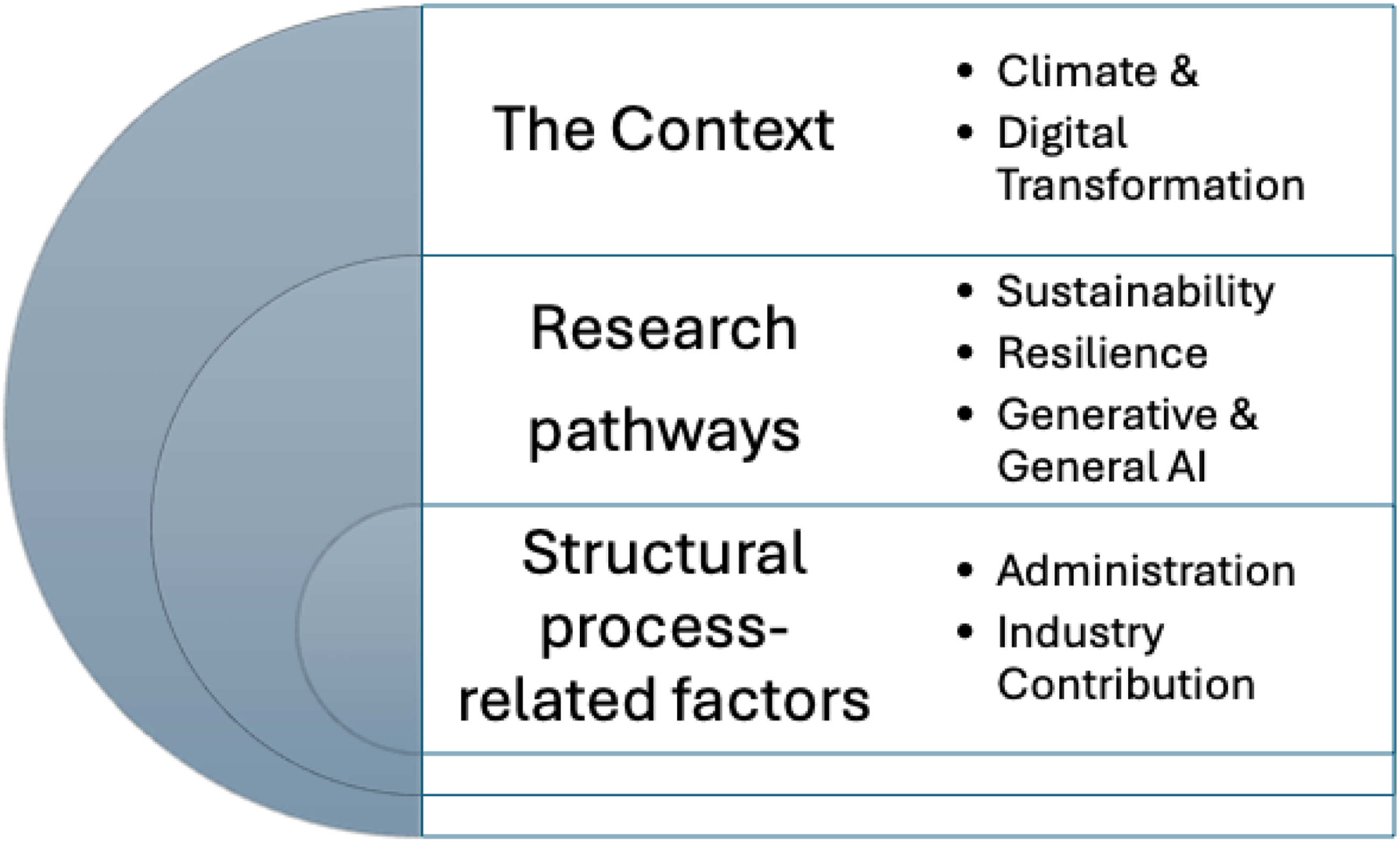
The tourism industry’s and its organizations’ ability to embrace external knowledge depends on the existing knowledge base as well as on the close ties within local and regional networks (Liu and Yan, 2022). In particular, the role of universities and other research institutions as knowledge brokers in such networks should be both encouraged and better understood (Sanz-Ibanez et al., 2019).
To address the complex challenges of our time, we urgently need a more courageous, relevant, and impact-driven academic agenda, a call that other tourism researchers also share (Wan et al., 2026). This begins with forging closer collaboration with industry, not for the industry, ensuring that research remains independent yet grounded in real-world relevance. Too often, academic efforts are diverted into marginal topics with limited societal or environmental impact, driven by institutional incentives.
We should rethink this ecosystem to create an environment that attracts and retains talent, fosters critical reflection, and upholds the integrity of scholarly work. This includes reducing unnecessary bureaucracy and cultivating a culture of openness, collaboration, and knowledge sharing. Above all, academia must have the courage to say no to distractions and yes to transformative, change-making research that truly serves the public good and prepares future generations for the challenges ahead.
Therefore, universities and their researchers must also make clear how they intend to contribute to a sustainable transformation. Researchers should, on the one hand, be encouraged to develop solutions for society and thus conduct fundamental research, and, on the other hand, conduct applied research to help the business sector implement sustainable business models. Therefore, funding policy needs to be reconsidered, because fundamental research related to tourism, however, is rarely supported by funding programs and is therefore not incorporated into university tourism research. In order to achieve the transformative changes required by industry and society, academia must take bolder steps and open itself beyond its traditional boundaries. Knowledge remains the primary force capable of enabling humanity to overcome the complex challenges we face. It is therefore essential to intensify efforts not only in the development of knowledge but also, more importantly, in its dissemination.
Footnotes
Acknowledgments
We acknowledge the financial support and collaboration with companies participating in the COSME project ETSM2030 (European Tourism Sustainability Monitoring) and the COSME project Phoenix4.0 (Transforming European Tourism). We also gratefully acknowledge funding and the companies collaborating within the research programme Regeneration of Economy and Business (0510-0584).
