






Abstract
Integrating scarcity theory and the Tourism Area Life Cycle (TALC) model, this study develops a theoretical framework to investigate how UNESCO Global Geoparks (UGGps) influence domestic and inbound tourism in China. We further analyse their nonlinear (inverted U-shaped) effects and synergistic interactions with other prestigious designations—World Heritage Sites (WHS) and China’s National 5A-level Tourist Attractions. Using panel data from 30 Chinese provinces for the period 2000–2020, we find: (1) UGGps significantly boost both domestic and international tourist arrivals; (2) the impact on total and domestic arrivals follows an inverted U-shaped curve, indicating diminishing returns beyond an optimal level; and (3) co-location with National 5A-level attractions produces strong synergies, especially for domestic tourism. These results advance tourism theory by unravelling the interplay between scarcity and destination life cycles, while providing actionable guidance for geopark sustainability and policy development.
Keywords
Introduction
UNESCO Global Geoparks (UGGps) represent one of UNESCO’s three flagship initiatives for global sustainable development, serving as internationally recognized brands for geo-tourism resources (Li et al., 2021). The Global Geoparks concept originated at the 1991 Digne Convention, with UNESCO formally establishing the Geoparks Programme in 1997. This initiative reached a significant milestone in 2015 when 195 UNESCO member states officially approved the UGGps designation, marking the first new UNESCO brand since the World Heritage designation in 1972 (Han et al., 2017). Currently, 213 UGGps operate across 48 countries, each representing unified geographical areas where internationally significant geological sites are managed through an integrated approach emphasizing protection, education, and sustainable development.
Within tourism research, UGGps are considered rare tourism resource brands comparable in scope to World Heritage Sites (WHS) (Dowling, 2010). Although both programs operate under UNESCO’s umbrella, they serve distinct purposes. WHS primarily aim to identify and protect cultural and natural heritage demonstrating Outstanding Universal Value (OUV), with preservation of integrity and authenticity as core objectives (Ringbeck, 2017). In contrast, UGGps complement the World Heritage List by recognizing geological sites that may not meet strict OUV criteria but still possess significant value (Migoń, 2018). While both programs share conservation goals, UGGps place greater emphasis on balancing protection with sustainable utilization of geological heritage (Catana and Brilha, 2020).
The fundamental operational difference between these programs lies in their priorities. WHS focus primarily on protecting heritage irreplaceability and integrity, employing tourism primarily as a tool for conservation and education. UGGps, however, explicitly integrate economic development with conservation, pursuing threefold goals of protection, education, and sustainable development (Catana and Brilha, 2020). These geoparks actively promote community participation and specifically aim to stimulate local economic growth, particularly through geotourism initiatives that support poverty reduction and employment generation in remote areas (Farsani et al., 2011).
While the relationship between tourism development and regional economic growth is well-established, research has focused predominantly on WHS rather than UGGps (Lin et al., 2020a). Early studies suggested inherent conflicts between heritage conservation and tourism development (Aas et al., 2005), though recent research demonstrates that WHS designation can create mutually beneficial relationships (Yang et al., 2010). Quantitative studies have shown positive, asymmetric relationships between WHS designation and tourism revenue (Lin et al., 2019), following nonlinear patterns (Lin et al., 2020a). Despite these advances in understanding WHS impacts, the relationship between UGGps and tourism development remains understudied, particularly given UGGps’s rapid global expansion and potential as drivers of sustainable tourism.
As foundations for geotourism development (Dowling, 2010), UGGps can generate employment opportunities, stimulate economic activity, and create new income sources in rural areas (Farsani et al., 2011). These benefits help address challenges such as population decline and low resident incomes (Bonachea et al., 2023). Moreover, UGGps provide host communities with prestigious branding opportunities for their rare geological heritage, enabling strategic marketing while fostering local participation in geopark development (Bonachea et al., 2023).
However, UGGps development faces significant challenges. The 2012 delisting of Australia’s Kanawinka Global Geopark and yellow-card warnings issued to three Chinese UGGps in 2013 demonstrate ongoing tensions between conservation goals and development pressures (Lewis, 2023; Luo et al., 2021). These cases reveal critical governance risks, including overemphasis on brand accreditation at the expense of operational management, and potential conflicts between branding objectives and sustainability goals.
Existing research on UGGps’ impacts has primarily employed qualitative methods and case studies, examining micro-level aspects such as resource characteristics (Yahya Sheibani and Zamanian, 2023), promotion strategies (Cai et al., 2023), poverty alleviation effects (Deng and Zou, 2021), and visitor satisfaction (Cai et al., 2023). While valuable, these approaches limit generalisability. At the regional level, robust empirical evidence about UGGps’ effects on tourism development remains scarce.
China’s experience with UGGps, beginning in 2004, provides an ideal research context. With 41 UGGps as of 2023 - the highest number globally - China’s geoparks are predominantly located in rural, economically disadvantaged areas where they serve as important tools for sustainable development (Han et al., 2017). Notably, many Chinese UGGps overlap with other prestigious designations: 12 are also WHS, while 24 hold National 5A-level tourist attraction status (Cai et al., 2023). This unique concentration of high-status tourism brands makes China particularly suitable for examining interactions between scarce tourism resources and development outcomes.
This study addresses three critical gaps in understanding UGGps’ tourism impacts: (1) differential brand effects across domestic versus international markets; (2) potential nonlinear marginal effects on tourism demand; and (3) synergistic interactions with other premium resource brands (particularly WHS and National 5A-level attractions). Leveraging China’s comprehensive UGGp network as an empirical setting, this research provides the first systematic analysis of UGGp–tourism relationships while pioneering investigation into multi-brand synergies. The results advance theoretical understanding of geotourism branding and offer evidence-based policy recommendations for UGGp management.
This study makes several key contributions. First, it integrates Resource Scarcity Theory and the Tourism Area Life Cycle (TALC) model to develop a dynamic framework that explains tourism resource-demand relationships. This theoretical advancement builds upon prior research on scarce tourism resources and economic growth (Lin et al., 2019, 2020a, 2020b; Luo et al., 2021).
Second, panel regression models are applied to provide robust empirical evidence on the linear and nonlinear effects of UGGps, complementing existing qualitative research by offering a quantitative analysis of UGGps’ impact on China’s tourism expansion. Third, analysing the brand synergistic effects between UGGps and other international or national brands—such as WHS and National 5A-level attractions—enhances our understanding of multi-brand destination development mechanisms.
Theoretical framework and research hypotheses
Theoretical foundation
Scarcity is a fundamental concept in economics, stating that the limited availability of a commodity enhances its subjectively perceived value. This principle later gave rise to commodity theory (Brock, 1968), which holds that the value of any good depends on the degree to which it is unavailable. When people perceive something as scarce, they tend to appreciate it more (Gholipour et al., 2014). In other words, higher scarcity leads to greater attractiveness. The influence of scarcity is also evident in the supply–demand dynamics of tourism resources and products (Zeng et al., 2024).
In tourism contexts, scarcity can be classified into three types: supply-driven, demand-driven, and resource scarcity (Hosany and Hosany, 2025). Supply-driven scarcity arises from the objectively limited availability of a resource; demand-driven scarcity refers to perceived scarcity triggered by high demand, herd behavior, or brand awareness (Huang et al., 2020); and resource scarcity denotes limitations caused by time, money, or space (Cannon et al., 2019).
This study argues that UGGps, as representatives of precious geotourism resources and prominent tourism brands under the UNESCO umbrella, derive their attractiveness from both supply-driven and demand-driven scarcity. Moreover, the roles of these two types of scarcity shift dynamically across different stages of destination development, thereby exerting varying influences on tourism growth.
First, UGGps constitute a supply-driven scarce resource. When a province hosts very few UGGps, objective supply scarcity is strong. As an informational frame, supply-driven scarcity may lead consumers to associate a product’s exclusivity with high quality when making purchase decisions (Aguirre et al., 2015; Huang et al., 2020). Consumers who are able to own or consume limited-supply products tend to perceive themselves as enjoying higher social status—a phenomenon known as the snob effect (Amaldoss and Jain, 2005).
Furthermore, compared with ordinary tourism resources, scarce tourism resource brands typically signify unique natural, cultural, or historical value and offer distinctive experiences that are difficult to replicate elsewhere (Wang and Yuan, 2020). Scarce tourism resources can therefore significantly stimulate demand by satisfying the need for exploration, fostering a sense of unique value, and enhancing market awareness (Cuccia et al., 2016). As the number of UGGps within a province grows, destinations can form “geopark clusters,” triggering demand-driven scarcity. At this stage, rising brand awareness, greater social media exposure, and intensified tourist herd behaviour (i.e., Cialdini’s principle of “social proof”) combine to enhance the overall appeal of UGGps (Park et al., 2022).
However, when the number of UGGps in a destination exceeds a certain threshold, two things happen. On the one hand, the supply scarcity of UGGps declines. On the other hand, UGGps with limited spatial capacity attract excessive numbers of tourists, exposing visitors to another form of scarcity that negatively affects destination attractiveness—spatial scarcity, or tourism crowding—which reduces both experience quality and destination appeal (Jacobsen et al., 2019). In summary, the dynamic evolution of tourism resource scarcity is closely intertwined with the life-cycle pattern of tourism destinations (Haywood, 1986; Marsiglio and Tolotti, 2024).
Stage-specific features of UGGps’ impact on tourism
According to the Tourism Area Life Cycle (TALC) theory, a tourist destination, much like an industrial product, progresses from market entry through maturity and eventually toward decline, with the number of tourists replacing product sales volume as the key indicator (Butler, 2008). The evolution of the destination life cycle is shaped by a combination of socio-economic forces, including resource endowment, changes in tourist demand, brand image building, political support or opposition, and the development of new destinations (Agarwal, 2002; Haywood, 1986; Hovinen, 2002). The perceived scarcity of tourism resources likewise changes across different TALC stages under the influence of these factors (Marsiglio and Tolotti, 2024; Zhong et al., 2008).
Therefore, we integrate scarcity theory with TALC theory and, building on the three-stage (Stansfield, 1978) and six-stage (Butler, 2008) TALC models, propose a four-stage theoretical framework to analyse the dynamic relationship between the number of scarce tourism resources (represented by UGGps) and tourism demand.
In the Demand emergence stage, a region possesses very few scarce resources such as UGGps or WHS, so supply scarcity is strong. Destination awareness and reputation have not yet been established, and destination attractiveness relies primarily on the perceived value generated by supply scarcity (Zeng et al., 2024). Meanwhile, following the distance-decay law of tourism, destinations at this stage are more attractive to nearby source markets but have limited appeal to more distant markets, especially international ones (Lee et al., 2012; McKercher, 2021; Nicolau and Mas, 2006). UGGps at this stage also attract some genuine geo-tourists and adventurous backpackers; overall, however, these groups remain relatively small. Tourist arrivals show an increasing trend, but the total volume remains modest.
Subsequently, in the Demand growth stage, due to the lag in information dissemination from the previous stage, the influence of scarce tourism resource brands on more distant international markets only becomes fully evident (Lin et al., 2020a). Considering that we live in the Internet era, the time between the transmission of marketing information and its reception by consumers has shortened considerably compared to the past (Rosado González et al., 2020). The destination enters a new phase in which domestic and international demand grow simultaneously. Tourist arrivals increase notably but have not yet entered a phase of truly rapid expansion.
In the Demand expansion stage, as the concentration of scarce resources increases, brand effects and scale effects begin to emerge (Gnoth, 2002; Huang et al., 2020). Brand effects transmit perceived scarcity to global tourists, enhancing the destination’s international appeal. Simultaneously, destination managers can achieve scale effects through joint marketing and promotion of multiple scarce resource brands (Lee & Jayakumar, 2021; Pásková and Zelenka, 2018). Destination awareness rises accordingly, and tourism demand expands rapidly. Thus, the destination enters a new phase dominated by demand-driven scarcity.
Finally, in the Demand saturation stage, the massive influx of tourists begins to saturate environmental carrying capacity. Managers may introduce measures to control the growth of tourist arrivals for purposes such as resource protection and sustainable utilisation (Chen et al., 2022; Kastenholz, 2004). At the same time, when tourist numbers reach a certain threshold, visitors’ psychological carrying capacity also becomes saturated, and the tourism experience starts to decline (Zhong et al., 2008). The marginal utility brought by an increasing number of UGGps within the same region also begins to diminish at this stage, and tourism demand gradually stabilises and saturates. If this situation persists, as resource scarcity weakens and substitution among similar tourism resource brands takes place, tourists will start to seek out new destinations and alternative tourism products, and total demand will enter a phase of overall saturation (Hassan, 2000). Figure 1 presents the theoretical framework of this study. Based on this framework, we propose Hypotheses 1 and 2. Dynamic relationship between UGGps and tourism demand.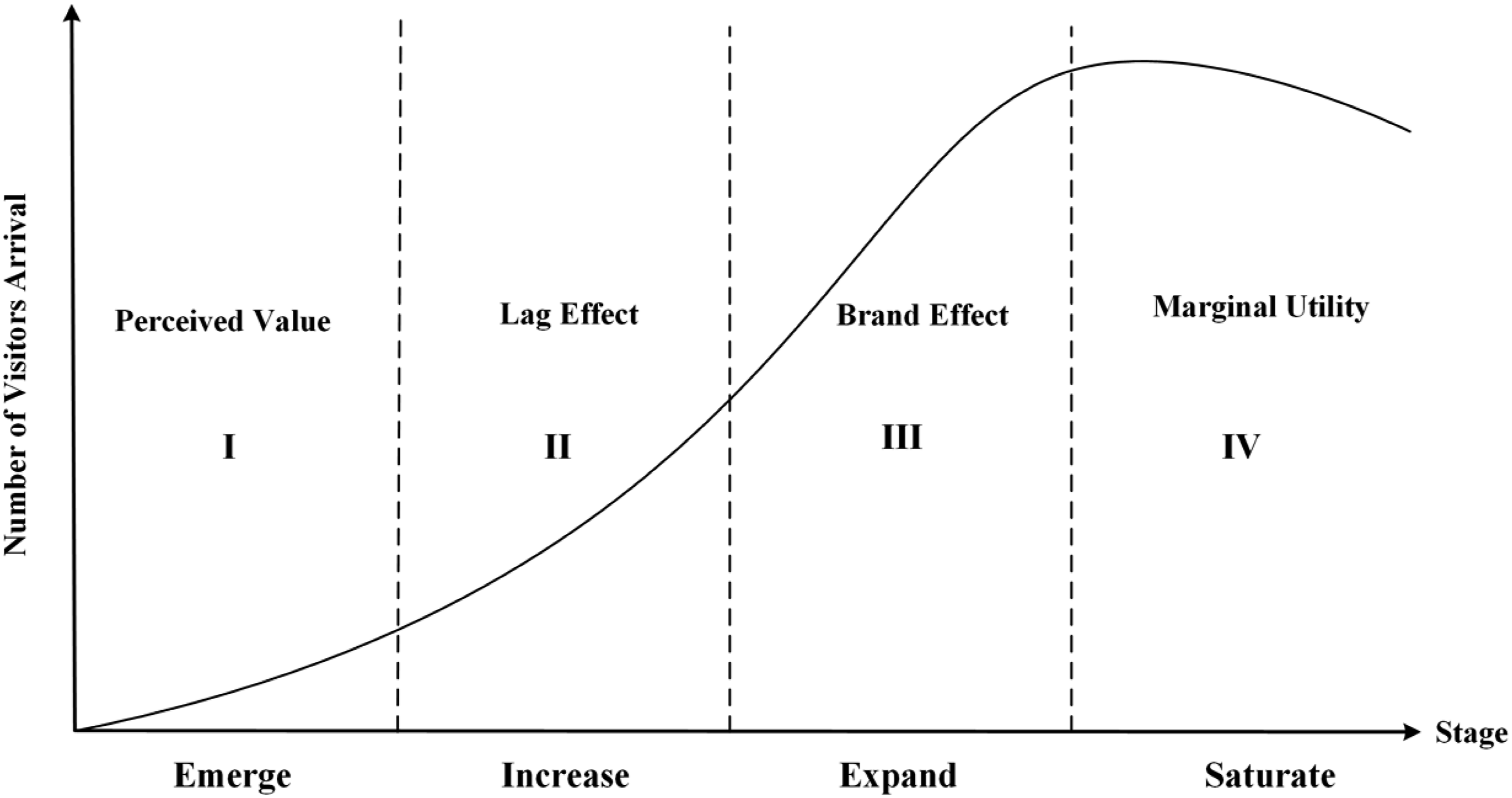
The number of UGGps exhibits a quadratic (inverted U-shaped) effect on tourist arrivals.
The number of UGGps exerts varying effects on tourist arrivals across different development stages.
Differences in the impact of UGGps on domestic and international tourism
UGGps are established on the basis of geological heritage resources that represent 4.6 billion years of Earth’s evolution (Migoń, 2018). These resources possess significant scientific and educational value, attracting both specialised geo-tourists and general tourists drawn by their scarcity (Amaro et al., 2023). Moreover, the prestigious UNESCO designation enhances destination awareness and perceived value. However, the influence of UGGps on tourism demand is moderated by the distance-decay effect (Lee et al., 2012; McKercher, 2021; Nicolau and Mas, 2006), whereby closer markets experience lower travel costs, fewer cultural barriers (Okafor et al., 2018), and stronger destination image perceptions. Consequently, we expect UGGps to demonstrate more immediate effects on domestic tourism markets.
While research indicates that UGGps’ impact on international markets exhibits a temporal lag (Lin et al., 2020a), their UNESCO designation functions as a powerful international branding tool, comparable to that of WHS. This official recognition enhances global visibility and perceived scarcity (Adie et al., 2018). Additionally, clustering multiple UGGps within a region enables cost-sharing through joint promotion and collaborative governance, creating economies of scale that boost market competitiveness (Lee & Jayakumar, 2021; Pásková and Zelenka, 2018). These combined brand and scale effects should positively influence inbound tourism. Thus, we propose:
The number of UGGps demonstrates differential effects on domestic and international tourist arrivals.
Synergistic effects of UGGps with other brands
China’s UGGps frequently overlap with other prestigious tourism brands, including WHS and National 5A-level attractions (Cai et al., 2023). As of 2020, nine UGGps in China were also designated as WHS, while 22 held 5A-level scenic spot status. Branding serves as a critical tool in protected area management, particularly for conserving globally scarce resources (Luo et al., 2021). Moreover, brand awareness significantly influences tourist decision-making, and destinations possessing multiple high-profile brands benefit from enhanced recognition and tourism growth (Wang and Yuan, 2020).
UNESCO explicitly emphasises that UGGps should foster connections between geological heritage and other natural, cultural, and intangible assets. The co-branding of UGGps with National 5A-level attractions or WHS can create a reinforcement mechanism that amplifies a destination’s overall appeal (Luo et al., 2021). While some researchers argue that mature tourism destinations with established market recognition may experience diminishing returns from additional branding (Wang and Yuan, 2020), UGGps—as a relatively recent designation—can synergistically enhance tourism attractiveness and demand when combined with existing high-status brands. This leads to our fourth hypothesis:
UGGps have a positive effect on tourist arrivals when they overlap with WHS or National 5A-level attractions.
Data and variables
This study examines 30 provincial-level administrative divisions in mainland China that had established at least one UNESCO Global Geopark (UGGp) by 2020. The sample was selected on the basis of UGGp presence, with Tibet excluded due to incomplete data availability. As shown in Figure 2, these provinces represent the geographic distribution of UGGps across China. Annual data were collected from provincial statistical yearbooks for the period 2000 to 2020, yielding a balanced panel dataset of 630 observations (30 provincial-level units × 21 years). Distribution of UGGps in China in 2020.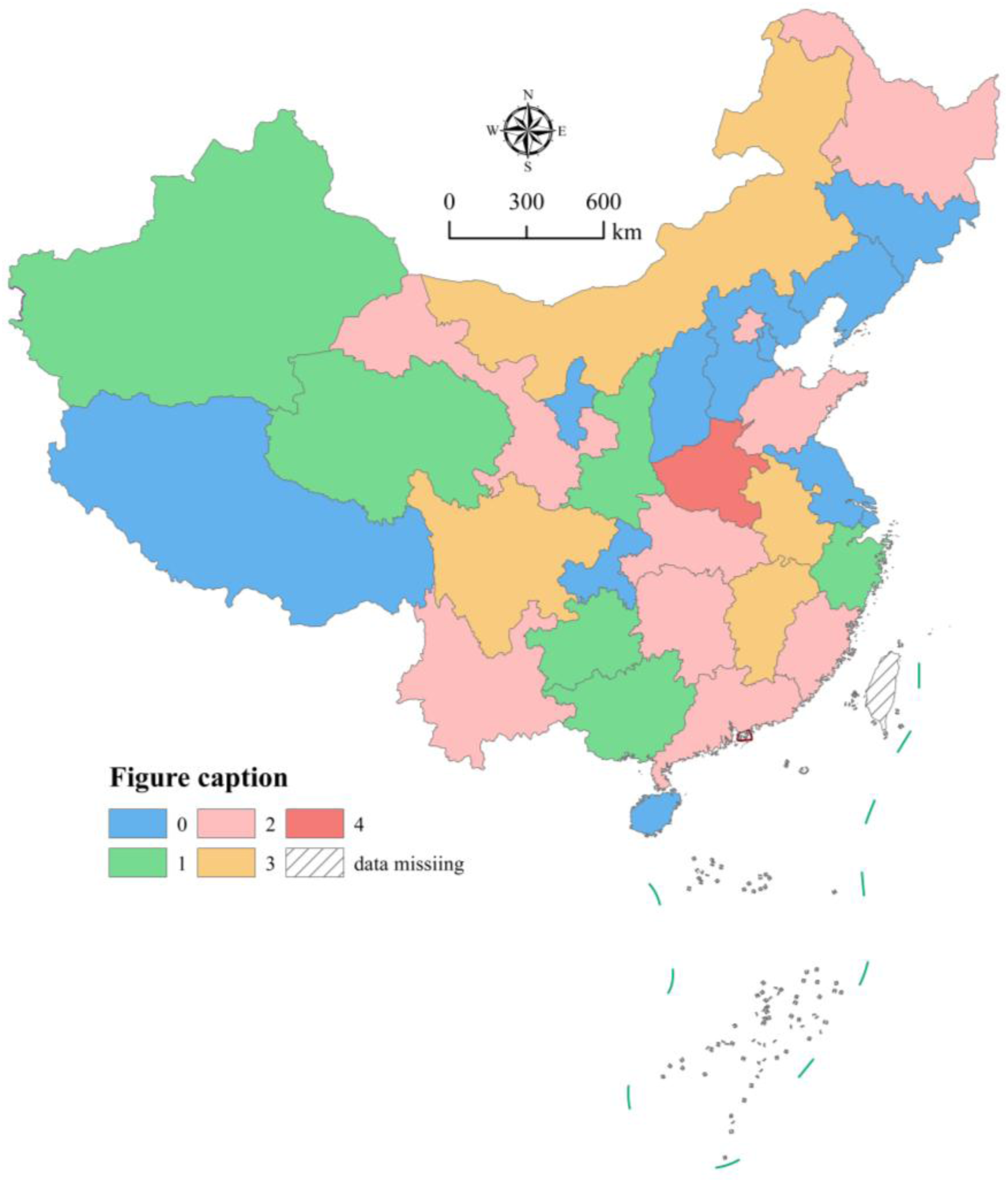
Dependent and independent variables
The key independent variable is the number of UGGps in each province, which serves as a proxy for the UGGp brand and reflects the strength of scarce tourism resources in shaping tourism attractiveness. These data were obtained from the official website of the UNESCO Global Geoparks Network.
To comprehensively assess tourism development, we employ two standard dependent variables widely used in tourism economics research: inbound tourist arrivals (ITA) for international tourism and domestic tourist arrivals (DTA) for domestic tourism (Demir et al., 2020; Kim et al., 2006; Wang and Chen, 2021; Yang et al., 2010).
Control variables
To ensure that the model accurately captures the actual impact of the independent variables on the dependent variables, we include the following control variables based on a review of the existing literature.
Foreign Direct Investment (FDI) is measured as the ratio of FDI to GDP. Business tourists often constitute a significant component of inbound tourist arrivals and are closely related to FDI (Davidson and Sahli, 2015). At the same time, FDI can indirectly promote domestic tourist arrivals by facilitating regional infrastructure construction (Barrowclough, 2007). The number of star-rated hotels (HOTEL) serves as a proxy for regional tourism reception capacity, controlling for the impact of accommodation conditions on tourist arrivals. Better accommodation facilities can enhance tourist comfort and length of stay, thereby potentially increasing both domestic and inbound tourist numbers (Shi et al., 2016).
Urbanization rate (UR) measures the impact of urbanization on tourism development. Higher urbanization levels are generally associated with better transportation, accommodation, catering, and other tourism-related infrastructure (Luo et al., 2015). Car ownership per capita (CAR) reflects residents’ income levels and the prevalence of private vehicles (Yang et al., 2017). Regions with higher economic levels tend to offer better facilities for self-drive tourism, which may attract more domestic tourists (Lin et al., 2020a). Road network density (HRD) acts as a proxy for transportation convenience, controlling for the impact of transport infrastructure on tourist arrivals. Greater road density can reduce travel costs and increase the probability of tourist visits (Lin et al., 2020a).
Variable statistical analysis
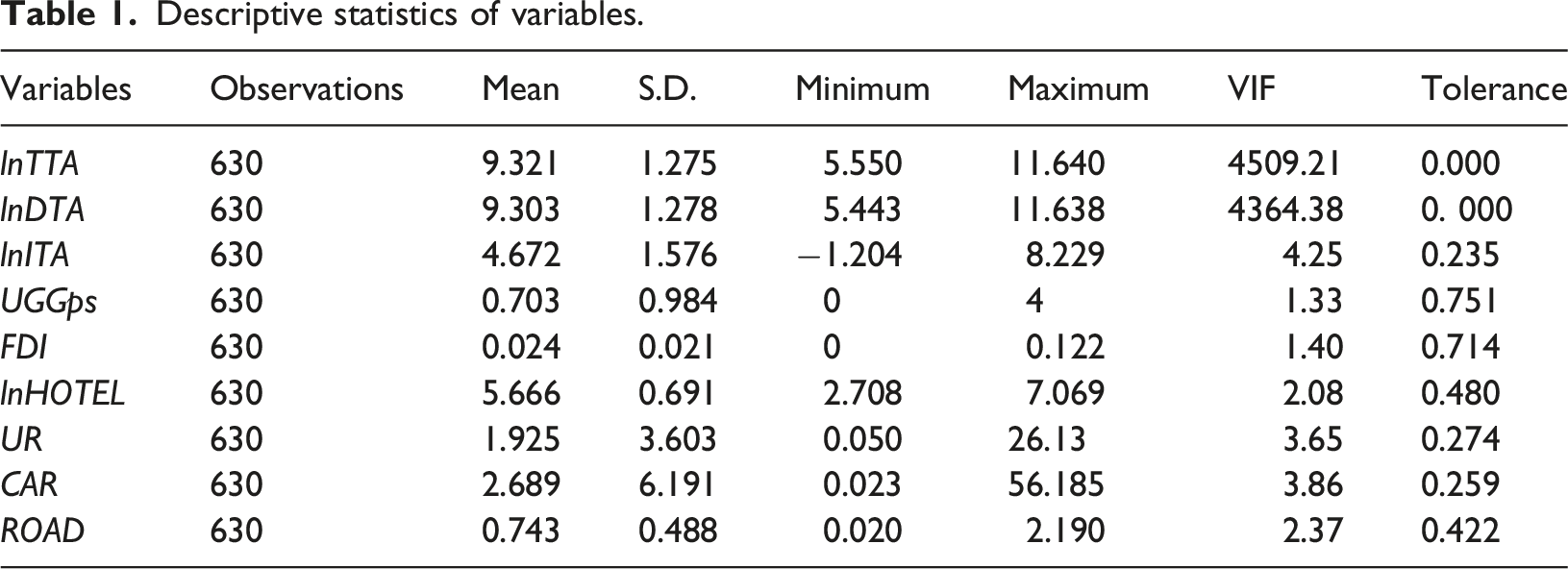
Descriptive statistics of variables.
Summary of data.
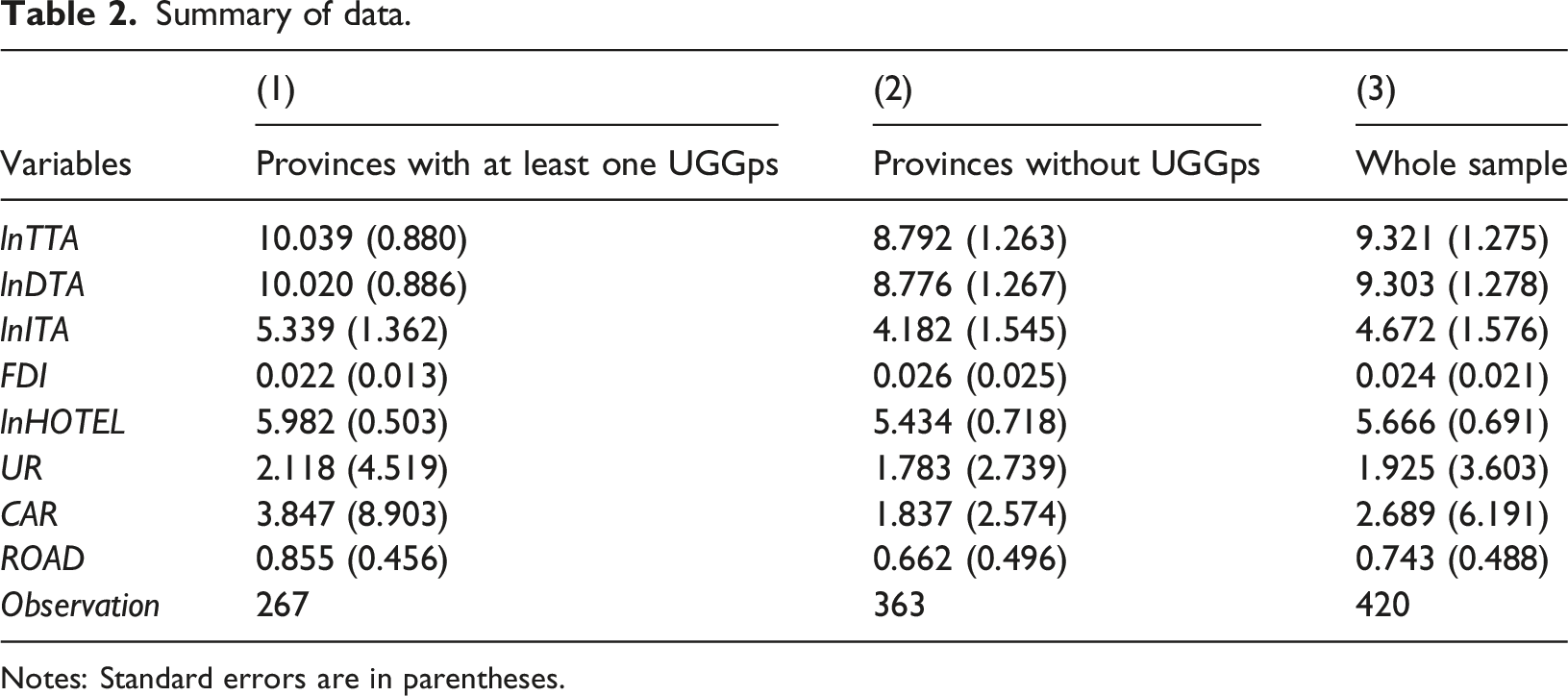
Notes: Standard errors are in parentheses.
Correlation analysis of variables.
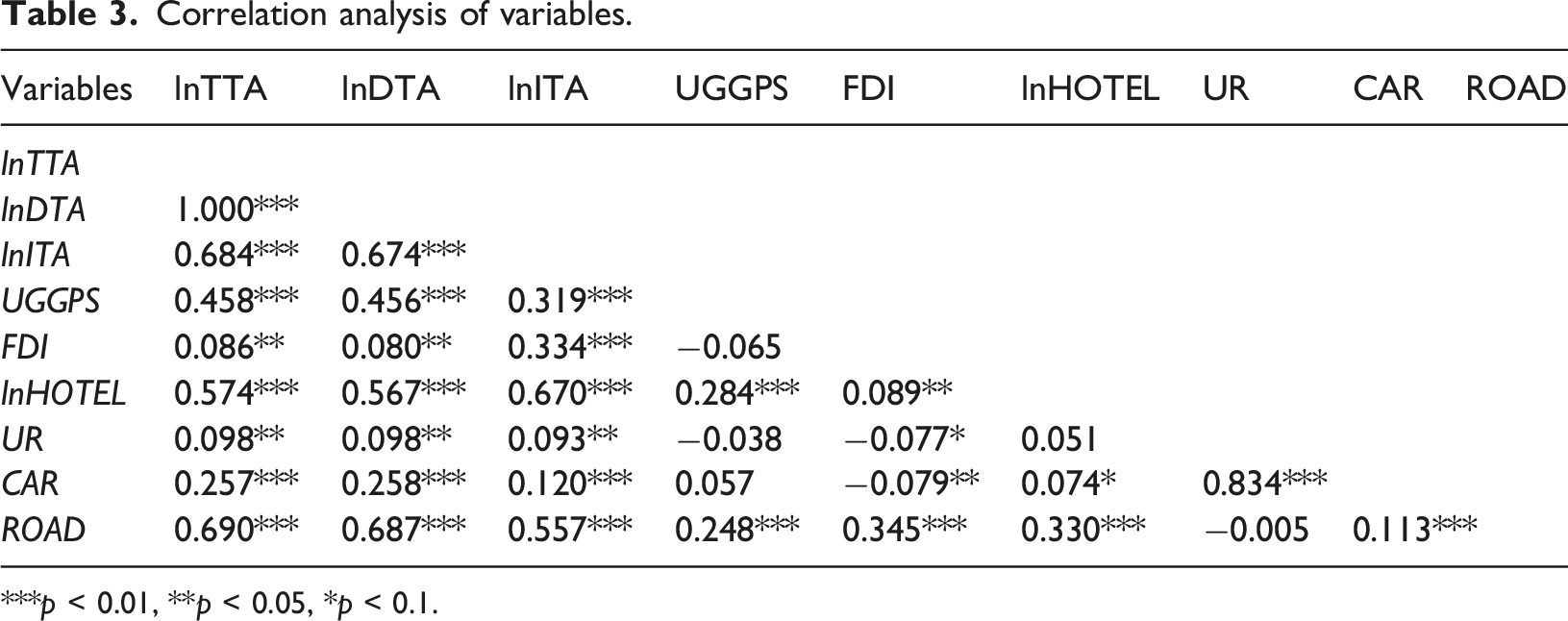
***p < 0.01, **p < 0.05, *p < 0.1.
Methodology
This study employs panel regression analysis to investigate the relationship between UGGps and tourism development across Chinese provinces. Panel data methods are particularly suitable for this research because they offer several advantages over conventional cross-sectional or time-series approaches. First, by combining both cross-sectional and temporal dimensions, panel data provides a larger number of observations, which improves the efficiency and accuracy of parameter estimates (Cortes-Jimenez and Pulina, 2010). Second, panel methods allow us to account for both time-varying effects and persistent differences across provinces, enabling a more nuanced analysis of dynamic relationships (Vuković et al., 2023). Third, these techniques help control for unobserved heterogeneity through fixed or random effects specifications (Hausman and Taylor, 1981), reducing potential omitted variable bias.
To address potential endogeneity concerns arising from simultaneity or measurement error, we implement the System Generalized Method of Moments (SYS-GMM) estimator. This approach uses lagged values of the dependent variables as instruments, which helps mitigate reverse causality problems while maintaining estimation efficiency. Diagnostic tests, including the Hansen test for instrument validity and tests for autocorrelation, confirm the appropriateness of our instrumental variable strategy.
Linear relationship model
We begin by estimating linear specifications to test Hypotheses 1–4 regarding the basic relationship between UGGps and tourism flows. The baseline empirical model takes the following form:
Nonlinear relationship model
For Hypothesis 1, which posits diminishing returns to additional geopark designations, we augment the linear specification with a quadratic term for UGGp count. This allows us to test for potential nonlinearities in the relationship between geoparks and tourism demand.
According to the regression results, if α2 is significantly different from 0, a non-linear relationship exists between UGGps and tourism development. If α2 is significantly negative, an inverted U-shaped relationship exists between UGGps and tourism development.The turning point of this relationship can be calculated from the estimated coefficients to identify the optimal number of geoparks beyond which additional designations provide increasing or decreasing benefits.
To test Hypothesis 2, we adopt a dummy variable grouping approach. The number of UGGps is transformed into four binary variables (UGGps = 1, UGGps = 2, UGGps = 3, UGGps = 4), with provinces having zero UGGps serving as the reference group. The following fixed-effects model is specified:
If the coefficients
Brand synergistic effect model
To test Hypothesis 4 regarding potential complementarities between different tourism designations, we extend the baseline model by incorporating interaction terms between UGGp and other prestigious labels. Specifically, interaction terms between UGGps and dummy variables for National Category 5A Scenic Areas (5A_D) and World Heritage Sites (WHS_D) are introduced to examine the superposition effects of brands on inbound and domestic tourist arrivals. The models are specified as follows:

Empirical results
Relationship between UGGps and tourist arrivals
Relation between UGGps and total tourist arrivals.
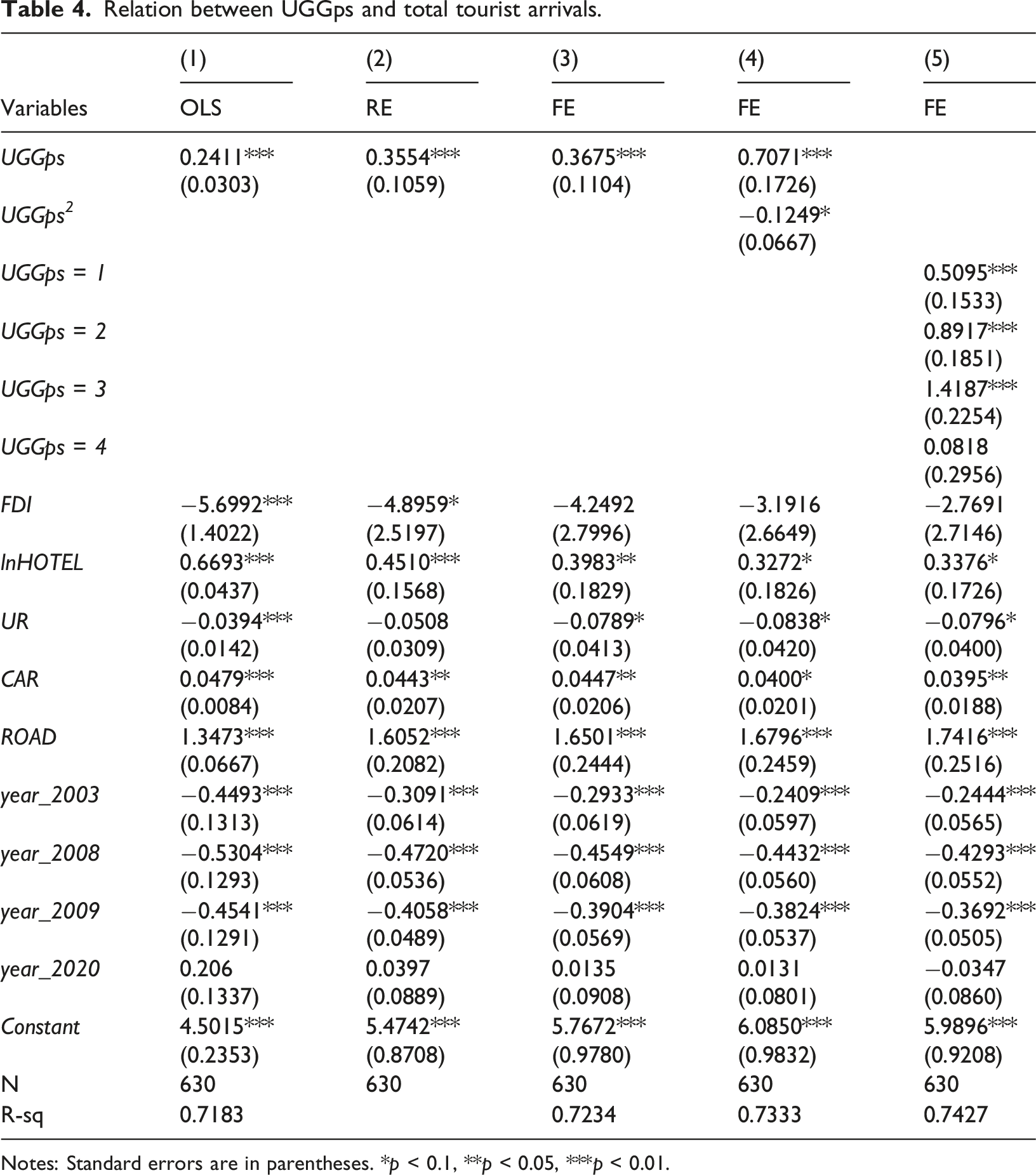
Notes: Standard errors are in parentheses. *p < 0.1, **p < 0.05, ***p < 0.01.
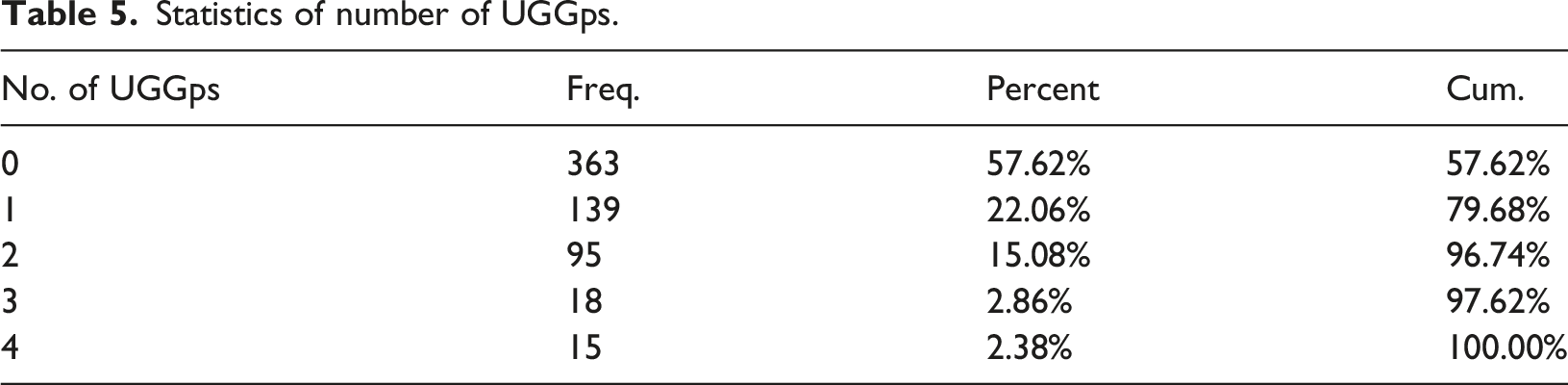
Statistics of number of UGGps.
Difference between domestic and international markets.
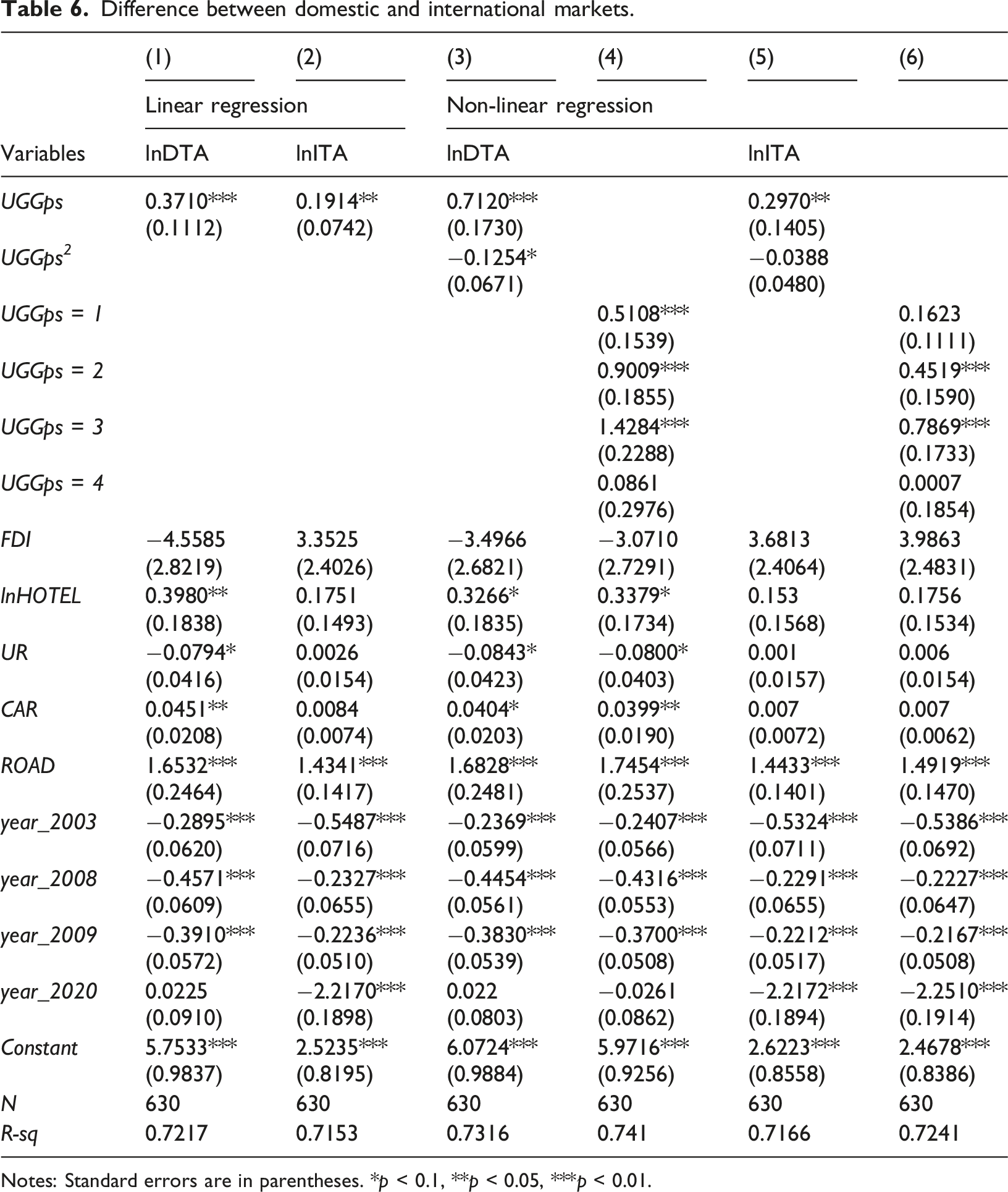
Notes: Standard errors are in parentheses. *p < 0.1, **p < 0.05, ***p < 0.01.
Total visitor arrivals.
Second, to examine Hypothesis 2 (effects across different development stages), we employed stepwise dummy variables (Models 5 in Table 4 and Table 6). The results for total and domestic tourism show a clear non-linear scaling pattern. Provinces with one UGGp experience an increase of approximately 66% in domestic arrivals compared to those without. The marginal effect escalates significantly for provinces with two (β = 0.9009, p < 0.01) and three UGGps (β = 1.4284, p < 0.01). Crucially, when the count reaches four UGGps, the coefficient drops sharply to 0.0861 and loses all statistical significance. This strongly validates Hypothesis 2, pinpointing the third geopark as the inflection point where marginal promotional benefits drastically diminish. In contrast, the stepwise coefficients for inbound tourism are weaker in magnitude and lack the clear progressive escalation seen in the domestic market.
Third, Hypothesis 3 posits different effects between domestic and international arrivals. The data overwhelmingly support this. Comparing the baseline linear models, the coefficient for domestic tourists (β = 0.3710, p < 0.01) is nearly double that for international tourists (β = 0.1914, p < 0.05). This disparity is further magnified when observing the nonlinear stage models: the domestic market’s peak response at the third geopark (β = 1.4284) is substantially higher than the inbound market’s peak (β = 0.7869). This verifies Hypothesis 3, demonstrating that UGGps exert differential effects on domestic and international arrivals.
The control variables in Table 6 further reveal the distinct mechanisms driving these two markets. Accommodation infrastructure (lnHOTEL) significantly boosts domestic arrivals (β = 0.3266, p < 0.1) but has no significant effect on inbound arrivals, suggesting that domestic tourists rely heavily on local service quality. Conversely, Foreign Direct Investment (FDI) shows a significant positive association with inbound tourism (β = 3.6813, p < 0.01) but a negative relationship with domestic tourism. Road network density (ROAD) remains a universally critical driver for both segments. Furthermore, the urbanisation rate (UR) negatively impacts domestic tourism (β = −0.0843, p < 0.1) while having no effect on inbound tourism. Finally, year dummies accurately capture exogenous shocks: the 2003 SARS outbreak and the 2008 Financial Crisis suppressed both markets, while the 2020 pandemic caused a catastrophic drop in inbound tourists (β = −2.2172, p < 0.01) without a significant impact on domestic flows.
Brand synergistic effects between UGGp and WHS/national 5A-level attractions
Regression analysis considering 5A tourist attraction and WHS.
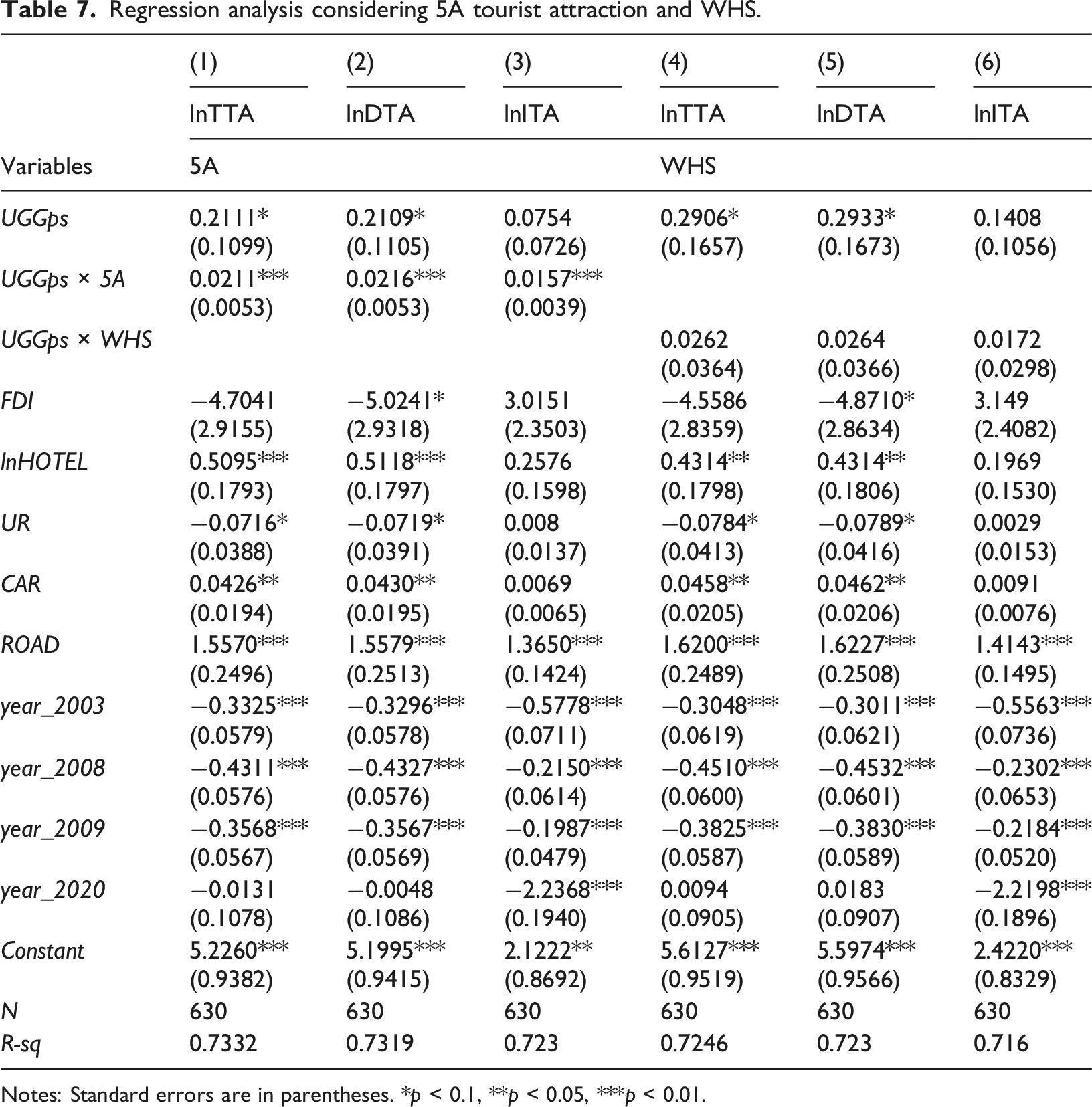
Notes: Standard errors are in parentheses. *p < 0.1, **p < 0.05, ***p < 0.01.
However, the interaction between UGGps and WHS fails to achieve statistical significance in any model specification for total, domestic, or inbound tourism. Furthermore, even when controlling for these interaction effects, the standalone coefficient of UGGps remains positive and statistically significant for total and domestic arrivals, confirming the independent baseline value of the geopark designation in driving regional tourism development.
Endogenous and robustness test
To address potential endogeneity concerns arising from the correlation between explanatory variables and the error term, this study employs the System Generalized Method of Moments (SYS-GMM) estimator to examine the effect of UGGps on tourism flows. The SYS-GMM approach offers a robust solution by exploiting lagged levels and differences of the dependent variable as internal instruments, thereby improving the reliability of coefficient estimates.
Endogenous and robustness test.
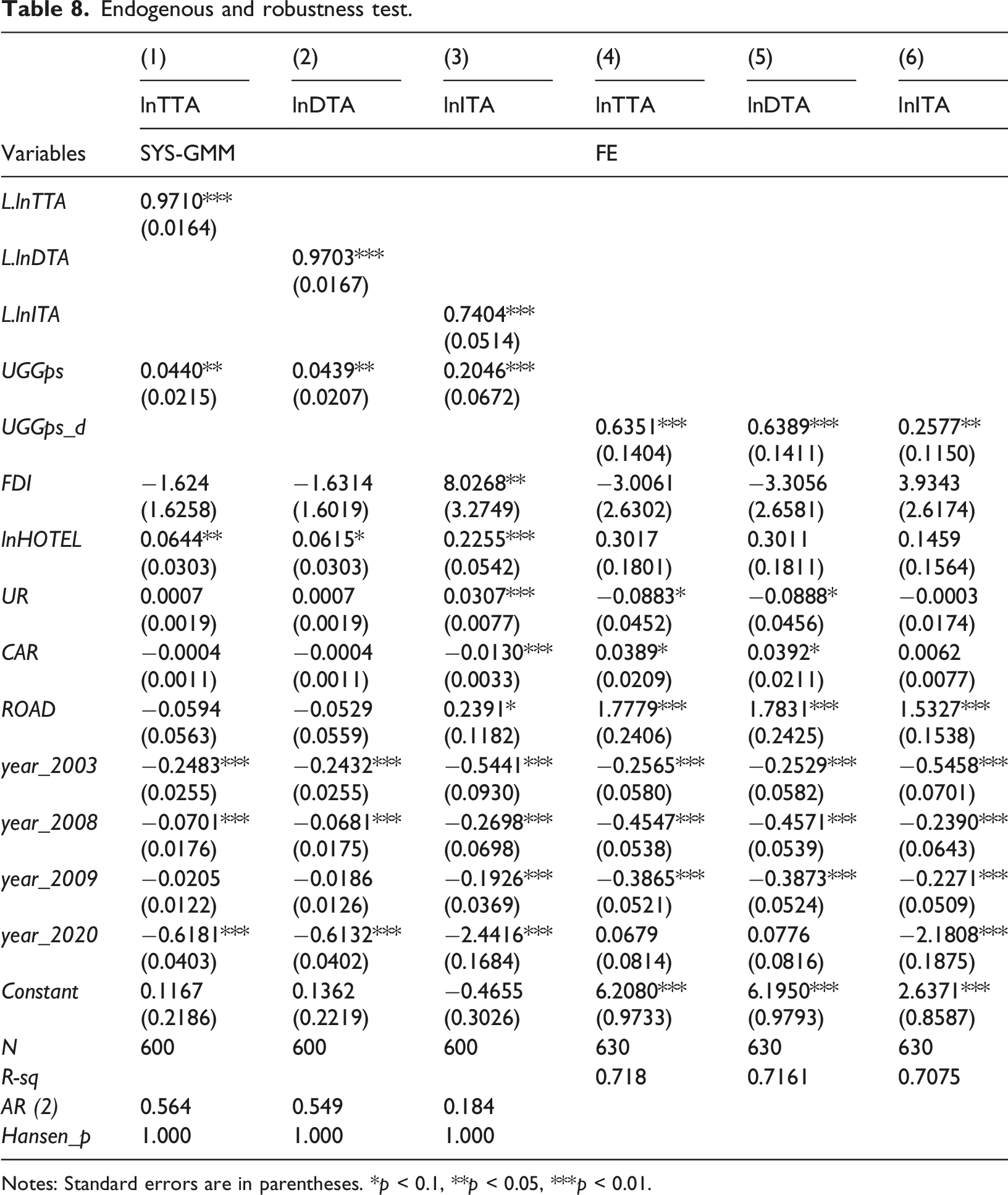
Notes: Standard errors are in parentheses. *p < 0.1, **p < 0.05, ***p < 0.01.
To further evaluate the robustness of the results, alternative model specifications were estimated by replacing the continuous UGGps variable with a dummy variable (UGGps_d), which equals 1 if a province has at least one UNESCO Global Geopark and 0 otherwise. As reported in Table 8, the estimated effects of UGGps on tourism outcomes remain stable. In all cases, the UGGps_d variable demonstrates a consistent positive and statistically significant impact on all three categories of tourist arrivals. More importantly, the results reaffirm the market heterogeneity identified in the baseline models: the positive effect of UGGp designation is substantially larger for domestic tourist arrivals (β = 0.6389, p < 0.01) than for inbound tourist arrivals (β = 0.2577, p < 0.05). This stability enhances the credibility of the main findings regarding differential market responses to geopark development.
Discussion and implications
Discussion
This study confirms that UNESCO Global Geopark (UGGp) designation significantly increases both domestic and inbound tourist arrivals, consistent with prior research (Bonachea et al., 2023; Farsani et al., 2011). However, the panel regression analysis reveals important market-specific nuances. As shown in Tables 4 and 6, the effect on domestic tourist arrivals is substantially stronger than on inbound arrivals, validating our theoretical framework. Influenced by tourism distance decay (McKercher, 2021) and lagged international brand recognition (Lin et al., 2020a), UGGp designation initially stimulates domestic demand, while the impact on international tourism becomes prominent only in the second stage of the lifecycle, shifting the pattern from primarily domestic growth towards synchronized domestic and international expansion.
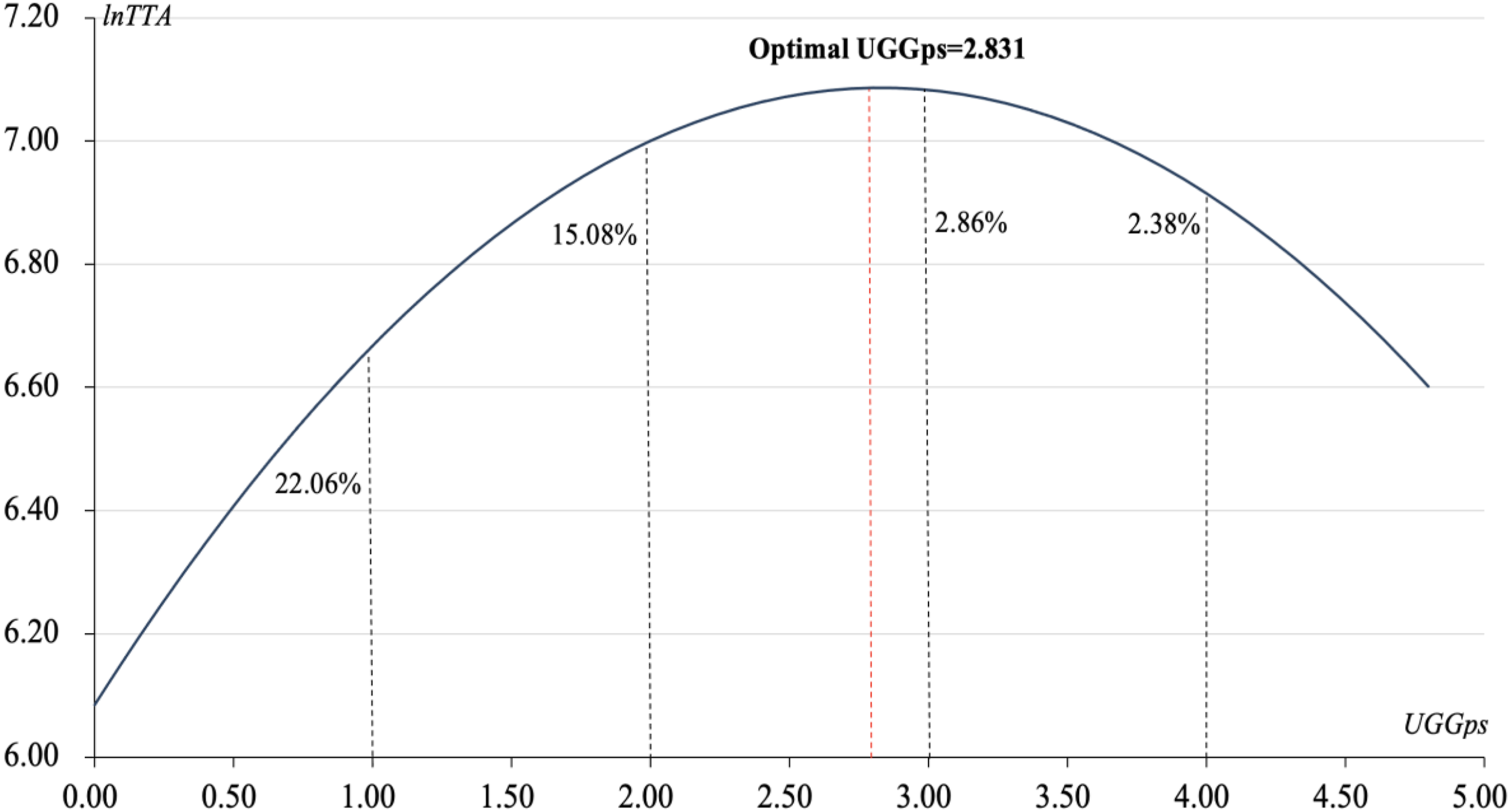
Within the nonlinear models, the positive linear term and negative quadratic term for UGGps unequivocally point to an inverted U-shaped relationship, demonstrating the applicability of diminishing marginal utility to tourism resource supply. This pattern is consistent with Lin et al.’s (2020a) findings concerning World Heritage Sites. Based on the fixed-effects regression for total tourist arrivals (Model 4 in Table 4), the estimated relationship is:
To identify the optimal point, we derive the marginal effect by taking the partial derivative of equation (6) with respect to UGGps:
As illustrated in Figure 3, the turning point is 2.83. This indicates that when a province hosts approximately 2.83 UGGps, the marginal contribution to total tourist arrivals is maximised; beyond this, marginal returns diminish. Notably, as reported in Table 5, 96.74% of the sample observations have three or fewer UGGps, and the turning point of 2.83 falls slightly below three. Consequently, the overall effect of UGGps in China remains in a growth phase of increasing returns, with only a few provinces (those with four UGGps) possibly entering the zone of diminishing returns.
The study further examined synergy effects between UGGps and other designations. A significant positive synergy emerges between UGGps and National 5A-level attractions in the domestic market, whereas it is not statistically significant in the inbound market. Conversely, the interaction between UGGps and World Heritage Sites yields no significant synergy in either market. This helps explain, from another perspective, why the optimal threshold for domestic tourism is higher. The 5A designation is a highly influential domestic brand, and its complementary interaction with UGGps enhances domestic appeal, slows diminishing returns, and delays the turning point. In contrast, both WHS and UGGps fall under the UNESCO heritage umbrella, and their overlapping resource attributes may prevent tourists from perceiving a differentiated experience, thus failing to generate a detectable synergy effect (Wang and Yuan, 2020).
Policy implications
The findings yield several important policy recommendations. First, destination marketers should adopt a strategic approach to UGGp development that accounts for the observed nonlinear effects. The identified optimal number of approximately 2.83 UGGps for total arrivals provides concrete guidance for regional planning. Since most provinces currently remain below this threshold, continued strategic expansion is warranted. However, regions approaching or exceeding it should shift focus from quantity expansion to quality enhancement, emphasising thematic differentiation and functional specialisation to avoid product homogenisation.
Second, carefully designed brand integration strategies are needed to maximise synergies while minimising redundancy. The significant co-branding benefits between UGGps and 5A-rated attractions, particularly for domestic tourism, suggest that tourism authorities should develop coordinated marketing campaigns and unified visual identity systems that highlight complementary strengths. In contrast, the lack of synergy with World Heritage status indicates that simple brand stacking is ineffective; managers should instead develop clear differentiation strategies that emphasize each designation’s unique value proposition.
Third, marketing efforts should employ distinct approaches for domestic and international audiences. For Chinese domestic tourists, digital platforms such as social media and short-video applications are particularly effective for raising awareness. International marketing should leverage UNESCO’s global networks and emphasize the universal scientific significance of geological heritage. Developing specialized products such as geo-tours and scientific expeditions can help attract high-value international niche markets.
Fourth, the governance framework should evolve from an emphasis on accreditation attainment towards long-term performance management. Lessons should be drawn from the delisting of Kanawinka Global Geopark and the yellow-card warnings issued to Zhangjiajie, Lushan, and Wudalianchi in China. We recommend establishing comprehensive monitoring systems that track key indicators including visitor satisfaction, scientific output, educational impact, and community benefits. Introducing independent third-party evaluation mechanisms and robust public participation channels would help ensure that UGGps deliver meaningful sustainable development outcomes rather than merely serving as prestige markers.
Theoretical implications
This study makes three significant contributions to tourism and resource economics theory. First, by employing rigorous panel data methods, we demonstrate that UGGp establishment generates measurable increases in both domestic and international tourist arrivals, with a stronger effect on domestic tourism. These results validate and extend previous work suggesting that geopark development contributes to sustainable regional tourism economies (Bonachea et al., 2023; Dowling, 2010; Farsani et al., 2011). While existing research has predominantly consisted of micro-level qualitative case studies, our macro-scale quantitative approach offers stronger generalizability and more robust evidence.
Second, our research advances theoretical understanding of how scarce tourism resources influence destination development over time. Previous studies have linked prestigious designations such as WHS to tourism growth (Lin et al., 2019, 2020a, 2020b) but lacked a comprehensive framework explaining how these impacts evolve across lifecycle stages. We bridge this gap by integrating Butler’s (2008) Tourism Area Life Cycle model with resource scarcity theory, producing a dynamic four-stage mechanism that explains the evolving attractiveness of UGGps.
The demand emergence stage features limited brand recognition, with appeal stemming mainly from scarcity and attracting nearby domestic visitors. In the demand growth stage, international awareness develops, leading to more balanced growth across market segments. The demand expansion stage sees compounding effects as brand recognition and synergistic relationships accelerate tourism growth (Gnoth, 2002). Finally, the demand saturation stage emerges when diminishing marginal returns and binding carrying capacity constraints lead to stabilized or declining visitation (Marsiglio and Tolotti, 2024). The finding that domestic tourism exhibits an inverted U-shape while inbound tourism remains linear (Table 6) aligns with this framework: domestic demand in some provinces may have entered the saturation stage, whereas international demand remains in the expansion stage.
Third, our investigation of brand synergy effects contributes to destination branding theory. The significant synergy between UGGps and National 5A-level attractions, and its absence between UGGps and WHS, provides empirical support for the concept of brand attribute convergence (Lewis, 2023; Wang and Yuan, 2020). These results imply that successful multi-brand strategies require careful management of brand differentiation to avoid substitutability effects, with implications extending beyond geoparks to destinations holding multiple prestigious designations.
Conclusion, limitations, and future research directions
This study systematically examined the relationship between UGGps and tourism demand using provincial-level data from China. Our analysis confirms that UGGp designation significantly increases tourist arrivals, with particularly strong effects on domestic tourism. The relationship for total arrivals is inverted U-shaped, with the optimal number of UGGps being approximately 2.83. As 96.74% of the sample has three or fewer UGGps—below this turning point—the overall impact of UGGps on Chinese tourism remains in a growth phase of increasing returns. We also identify positive synergistic effects between UGGps and National 5A-level attractions but no significant complementarity with World Heritage status.
Several limitations suggest productive directions for future research. First, our provincial-level analysis cannot capture sub-regional variations or cross-boundary spillover effects. Second, all UGGps are treated as homogeneous, whereas different geopark types (e.g., volcanic, fossil, coastal) may have distinct tourism impacts. Third, reliance on aggregate visitation data leaves room for more nuanced understanding of visitor motivations and experiences. Fourth, although we have included a rich set of control variables, the possibility of omitted variable bias cannot be completely ruled out.
Three particularly promising research directions emerge. Spatial econometric methods such as geographically weighted regression could uncover regional variations and spillover effects. Incorporating big data sources like social media activity or mobile device tracking could provide more granular behavioral insights. Finally, visitor-level research using surveys or experimental methods could yield important insights into how tourists perceive and respond to multiple destination brands.
To conclude, this study advances both theoretical understanding and practical management of UGGps’ impact while identifying important avenues for future investigation. By combining rigorous empirical analysis with innovative theoretical synthesis, it provides a stronger foundation for evidence-based decision-making in geotourism development and destination branding.
Footnotes

Funding
The authors disclosed receipt of the following financial support for the research, authorship, and/or publication of this article: This work was supported by the Yunnan Fundamental Research Projects (202601CI07017).
Declaration of conflicting interests
The authors declared no potential conflicts of interest with respect to the research, authorship, and/or publication of this article.