






Abstract
A comprehensive assessment of extreme weather risks’ impact on tourism provides the scientific basis for climate-resilient tourism, yet research from the tourist-origin perspective remains limited. We establish a conceptual framework based on Protection Motivation Theory and present supporting empirical evidence. Using China Family Panel Studies data and extreme weather risk data, we demonstrate asymmetric effects: extreme high temperature elevates household tourism consumption, while extreme rainfall reduces it. Internet use significantly moderates the effects of extreme high temperature and extreme rainfall, while income moderates the extreme rainfall-consumption relationship. Married households and non-agricultural households demonstrate stronger negative reactions to extreme rainfall. Furthermore, the increase in extreme high temperature-driven consumption stems from additional consumption. This study offers specific tourism management implications in addition to enhancing the knowledge system regarding the extreme weather effects on tourism.
Keywords
Introduction
Tourism is strongly subject to extreme weather (Lin et al., 2023), as its development is significantly determined by the natural environment and climatic conditions (IPCC, 2014). Arguably, weather is crucial for sustainable tourism (López-Dóriga et al., 2019). According to the World Economic Forum, numerous tourist destinations have seen substantial changes owing to extreme weather, and tourism in well-known destinations including Greece, Italy, and the Mediterranean and Caribbean have already been negatively impacted 1 . The World Meteorological Organization predicts that extreme weather risks are expected to increase further throughout the next 5 years 2 , placing a heavy burden on global tourism sustainability. Given that, investigating the relationship between extreme weather risks and tourism is vital for ensuring the long-term sustainable development of tourism.
The threat of extreme weather risks to tourism manifests in various direct and indirect ways (Susanto et al., 2020). Direct impacts include physical damage to tourism infrastructure from extreme events. Intense rainfall and flooding can wash out access roads and damage facilities, causing service disruptions and losses of cultural and natural heritage (Smith and Fitchett, 2020). Direct impacts also encompass ecological shocks to nature-based tourism resources, including national parks, coastal destinations, and ski or glacier resorts, where weather-related disturbances threaten wildlife (Dube and Nhamo, 2018), degrade marine biodiversity (Birchenough, 2017), and reduce snowfall and snow reliability (Steiger et al., 2020). Indirectly, heightened risk perceptions among tourists prompt behavioral adjustments that reduce destination attractiveness and effective hosting capacity, shorten length of stay, and lower visitor spending, thereby reshaping the spatial and temporal distribution of tourist flows (López-Dóriga et al., 2019).
Despite its importance, established studies on the effects of extreme weather risks on tourism are largely limited to the tourist destination perspective (Scott et al., 2019), lacking robust evidence from tourist origins. Exploring the tourist-origin perspective is crucial because a comprehensive assessment from both origins and destinations can strengthen the body of knowledge on the effects of extreme weather on tourism. In light of this, focusing on the tourist origins perspective, this study formulates a conceptual framework based on Protection Motivation Theory (PMT) to elucidate tourists’ travel decisions in the context of extreme weather risks, therefore advancing existing research. Second, we utilize econometric methods to examine the asymmetric effects of extreme weather risks on household tourism consumption. Further, we explore potential moderating mechanisms in two dimensions: Internet use and household income level, aiming to provide universal implications for developing climate-resilient tourism. We also discuss the heterogeneity of the effects and the incremental consumption effect.
This study contributes to the established research on the following three grounds. First, we add to the studies on the effects of extreme weather risks on tourism from a tourist origins perspective, and enrich the body of knowledge in the field. The significance of extreme weather risks to tourism has been examined from the destination perspective extensively (Smith and Fitchett, 2020). Nevertheless, the tourist origins perspective has received little consideration. Thus, this study intends to advance our knowledge of this under-researched area regarding the effects of extreme weather risks on household tourism consumption. We also believe that a comprehensive investigation is crucial for fostering resilient tourism systems, aligning with the urgent imperatives of the Global Goal on Adaptation 3 .
Second, this study develops a PMT-based conceptual framework that provides a systematic perspective for interdisciplinary research on extreme weather risk and household tourism consumption. Residential exposure to extreme weather risk influences households’ threat and coping appraisals, which together drive tourism consumption decisions under risk. We include income level as a moderator to address class-based resource inequities (Alegre et al., 2010). Furthermore, we conceptualize Internet use as an information conduit based on Negative Bias Theory that might influence risk perceptions, thereby affecting tourism consumption.
Third, systematic insights into the impacts of extreme weather risks on tourism from the tourist origins perspective are empirically gained, contributing to the scientific basis for sustainable development policies formulation in tourism that is oriented towards uncertain future weather scenarios. Most established research has been with macro data or selective surveys; we refer to a more representative sample covering 10,339 households from 6 waves of China Family Panel Studies (CFPS) data between 2012 and 2022. This unique, micro large-scale dataset enhances the robustness and validity of the results. We demonstrate the asymmetric effects of extreme weather risks, specifically, extreme high temperature promotes household tourism consumption, while extreme rainfall hinders it.
The framework is displayed in Figure 1. Research framework.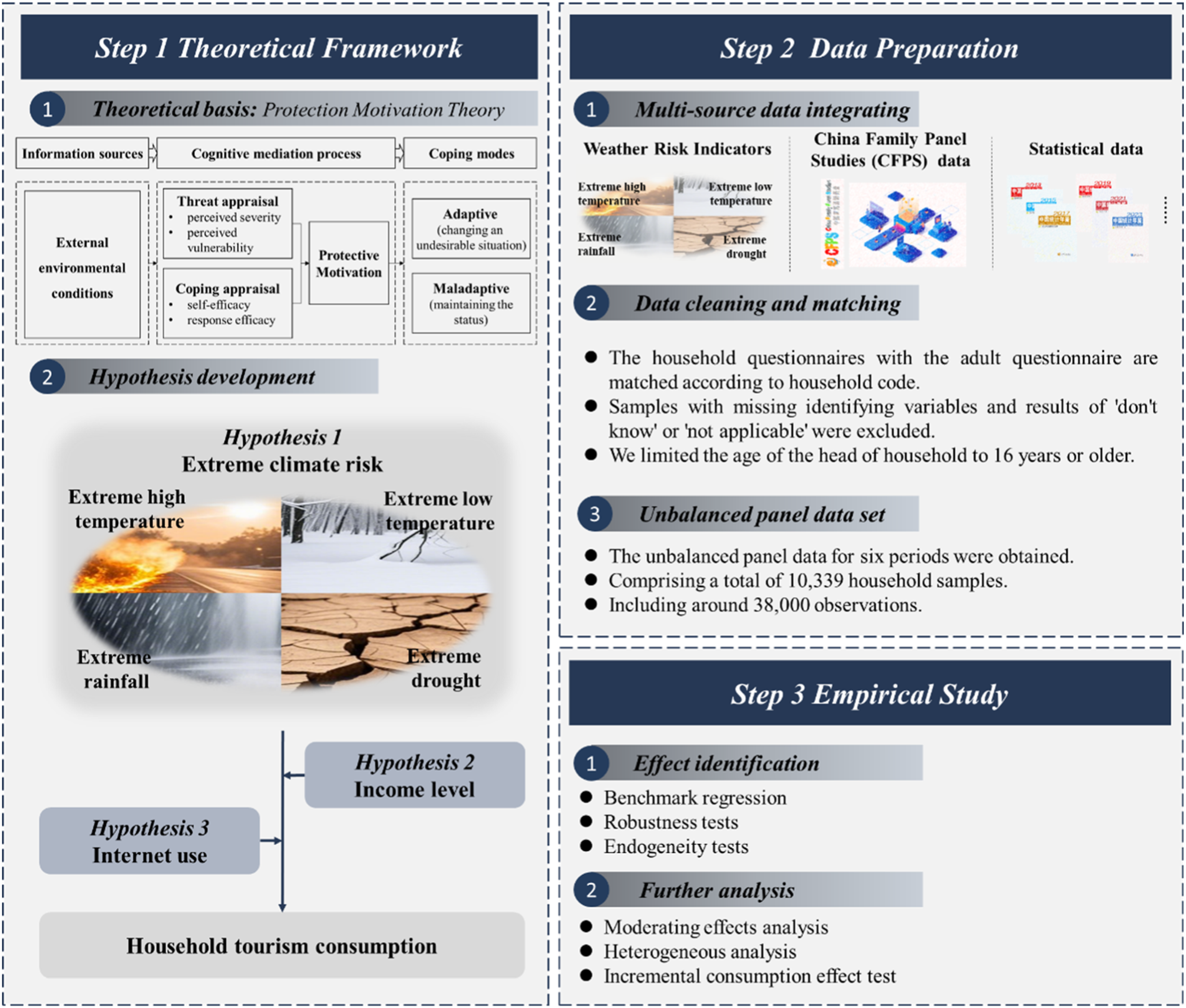
Literature review
Research on determinants of tourism consumption
Scholarly interest in tourism consumption has increased, as evidenced by a growing literature on its determinants. Drawing on the hierarchical leisure-constraints tradition (Crawford et al., 1991), the determinants of tourism consumption are shaped by both structural constraints (time, income, opportunities, destination attributes, weather conditions, family life cycle) and nonstructural constraints (intrapersonal and interpersonal factors such as health, abilities, interests, risk perceptions, and family relationships) (Crawford and Godbey, 1987; Godbey et al., 2017). On the structural side, sociodemographic and economic conditions systematically influence travel decisions and outlays. Income, assets, debt, and labor market and time constraints are especially salient (Jang and Ham, 2009). Indebted or non-home-owning households spend less on tourism (Hung et al., 2013; Lin et al., 2020), car ownership relaxes mobility and budget constraints (Lin et al., 2020), and better health of the household head increases both the likelihood and the level of tourism consumption (Cai and Zhang, 2023). On the nonstructural side, attitudinal and interpersonal factors operate above and beyond structural conditions (Hubbard and Mannell, 2001). For example, generalized social trust raises both the probability and the level of tourism consumption, highlighting the role of psychological dispositions in travel choices (Sun et al., 2022). Although prior research has identified the general determinants of tourism consumption, the role of weather conditions as a key structural determinant remains underexplored, particularly with respect to extreme weather risks, providing the theoretical motivation for our focus on weather risk.
Research on extreme weather and tourism
Given the foundational role of weather conditions in tourism, extreme weather risks have become a prominent focus of tourism research. In general, tourist destinations are exposed to extreme weather risks, such as extreme high temperature, extreme rainfall, and other significant climatic factors, which may diminish the appeal of tourist destinations (Scott et al., 2019). Specifically, sea-level rise may undermine essential sun-sand tourism assets (Karditsa et al., 2024), thus diminishing the economic viability and competitiveness of coastal beach destinations (Spencer et al., 2022). Other forms of nature-based tourism are similarly affected by extreme weather risks. For instance, the glacial melting degrades landscape aesthetics and cultural importance, thereby directly undermining destination value (Wang and Zhou, 2019), while snow scarcity compels market redistribution to higher altitudes, fragmenting the competitiveness of ski tourist destinations (Steiger and Stötter, 2013). Extreme weather risks can also disrupt the associated infrastructure (Smith and Fitchett, 2020), detrimentally affecting tourism (Gössling et al., 2012). The corresponding adaptation strategies primarily encompass technical modifications, including artificial snow production (Elsasser and Bürki, 2002), product diversification (Kaenzig et al., 2016), and spatial relocation (Nunes and Loureiro, 2016), designed to bolster the resilience of tourism on a macro scale.
Some scholars have found that extreme weather events may, under certain conditions, stimulate tourism development. It is important to clarify that this is not a direct benefit of the extreme events themselves. In the short term, such events typically have pronounced negative impacts, for example, heavy rainfall disrupting tourism activities. However, over the longer term, the broader trajectory of climate change (e.g., global warming) may indirectly generate positive effects in certain regions by reshaping the temporal and spatial distribution of tourism flows. For instance, gradual warming may enhance thermal comfort during shoulder seasons at certain destinations (Köberl et al., 2016), thereby improving suitability for outdoor recreation and raising demand and revenues. In addition, climate change is shifting comparative advantages toward higher-latitude and higher-altitude destinations (Hamilton et al., 2005). Locations that were previously less attractive because of low temperatures may become more competitive as warming ameliorates climatic conditions, drawing more visitors.
Research gaps
However, important gaps remain. First, relative to the destination perspective that dominates impact assessment, the origin perspective is underdeveloped. Current research mostly investigates the impact of extreme weather risks on tourism from the perspective of the destination, including damage to tourist resources, diminished destination appeal, and disruption of infrastructure (Hamilton et al., 2005; Rosselló-Nadal et al., 2010; Wei and Huang, 2025). Nonetheless, there is limited knowledge regarding demand-side reactions to extreme weather risks at tourist origins. Tourism is affected by both the conditions at the destination and by environmental risks, perceived discomfort, and coping capacities prior to making travel decisions. Second, existing origin perspective evidence is largely macro aggregated and does not unpack the micro level decision mechanisms governing household tourism consumption. Third, most analyses consider a single risk, limiting comparative assessment of how distinct extremes differentially influence tourism (Sun et al., 2019; Wang et al., 2022).
As extreme weather events become more frequent, understanding demand-side responses is also essential for sustainable tourism planning and climate adaptation. Considering the destination alone cannot fully capture the decision-making mechanism underlying tourism consumption. The destination perspective emphasizes how supply-side risks affect tourists’ on-site experiences and destination operations, whereas the origin perspective highlights how local environmental risks at the tourist origins may shape households perceived risk, coping capacity, and tourism consumption decisions. Because decision-making on the demand side largely occurs before tourists reach the destination, it is difficult to observe from a destination-only viewpoint. Introducing the origin perspective is therefore essential for comprehensively assessing the impact of weather risks on tourism consumption. Given that, we pioneer an investigation into the effects of extreme weather risks on tourism from the tourist origins perspective. A theoretical analytical framework was established based on the PMT. Then, we empirically test the effects of multiple extreme weather risks on tourism consumption with a large-scale unbalanced dataset.
Theoretical analysis
Protection motivation theory
This study establishes a theoretical framework based on Protection Motivation Theory (PMT) to thoroughly investigate the influence of extreme weather risk on household tourism consumption. PMT, a widely utilized psychological model, effectively elucidates behavioral responses to perceived threats and is recognized as one of the most reliable theories for forecasting protective intentions and actions. It has been utilized across various fields, with tourism experts increasingly applying it to analyze the impact of risk on travel decision-making (Sönmez and Graefe, 1998; Zheng et al., 2021).
PMT asserts that humans interpret risk signals and prospective losses via defensive cognitive mechanisms influenced by personal traits and situational conditions, subsequently converting these evaluations into coping behaviors (Rogers, 1983). The framework consists of three components. First, information sources, including personal factors and external environmental conditions. Second, a cognitive mediation process involving threat appraisal and coping appraisal. Threat appraisal denotes an initial assessment of a threat, encompassing perceived severity (the seriousness of the repercussions) and perceived vulnerability (the possibility of being impacted). Coping appraisal encompasses self-efficacy (the conviction in one’s capacity to execute a protective response) and response efficacy (the belief that the response would effectively mitigate harm), together with an implicit evaluation of the necessary resources, including time, finances, and information. As risk appraisal increases and coping appraisal suggests the availability of viable and effective remedies, individuals are more inclined to engage in adaptive behaviors. In contrast, individuals are more prone to exhibit maladaptive behaviors, like avoidance, procrastination, or inaction. Third, coping modes, which can be classified as adaptive, which involves altering an unfavorable condition, or maladaptive, which entails preserving the current state.
In the present study, extreme weather risks at the tourist origin constitute external environmental threat cues. Household tourism consumption is treated as a discretionary consumption decision that can be maintained, increased, postponed, or reduced in response to perceived local weather risk. Threat appraisal captures households’ perceptions of health risk, physical discomfort, mobility constraints, schedule uncertainty, and potential consumption losses caused by local extreme weather. Coping appraisal captures households’ perceived ability to cope with these risks, including time flexibility, financial resources, information access, and the ability to adjust tourism consumption arrangements.
Direct effects of extreme weather risk on household tourism consumption
According to PMT, external environmental risks influence behavior through threat appraisal and coping appraisal, which jointly determine whether households adopt adaptive or avoidance-oriented responses (Rogers, 1975; Verkoeyen and Nepal, 2019). The relevant environmental risks are local extreme weather risks experienced at the household’s place of residence, including extreme high temperature, extreme low temperature, extreme rainfall, and extreme drought. Tourism consumption is a discretionary and optional form of household consumption; therefore, it is likely to be sensitive to perceived risk, expected utility, travel feasibility, time constraints, and coping costs (Juschten et al., 2019). Extreme weather risks may affect household tourism consumption through two competing channels. If households perceive tourism consumption as an effective way to sustain well-being or alleviate discomfort caused by local weather conditions, extreme weather may induce adaptive responses in tourist consumption. Second, if households perceive inclement weather as increasing health risks, mobility constraints, schedule uncertainty, or financial loss, they may reduce tourism consumption through protective avoidance. The direction of the impact of localized extreme weather risk on household tourism consumption is theoretically ambiguous. The direction is contingent upon the nature of weather threats and the equilibrium among perceived threat, coping capacity, and household resources.
Effect of extreme high temperature
Extreme high temperature can strengthen threat appraisal by increasing physical discomfort, heat-related health concerns, psychological stress, and constraints on outdoor activities (Fang et al., 2023). These risks may reduce household tourism consumption when households perceive heat exposure, departure inconvenience, or planning uncertainty as sufficiently severe. In this case, households may adopt protective avoidance by cancelling, postponing, or reducing tourism consumption. From a coping-appraisal perspective, extreme high temperature is typically seasonal and predictable, enabling households to assess their adequacy of time, information, income, and transportation resources for adjusting consumption plans. When households view tourism consumption as a viable strategy to alleviate local heat-induced discomfort, they may sustain or augment their consumption on transportation, accommodation, leisure services, and other tourism-related pursuits (Juschten et al., 2019). The impact of extreme high temperature on household tourism consumption is conceptually uncertain and contingent upon whether protective avoidance or adaptive consumption prevails.
Effect of extreme low temperature
Extreme low temperature may increase perceived severity and vulnerability by raising health concerns, physical discomfort, icy-road risk, and transport uncertainty (Chen et al., 2023). Under these conditions, households may reduce tourism consumption because the expected costs and risks of tourism activities become higher. Nonetheless, extreme low temperature may elevate the demand for comfort-enhancing leisure and tourist activities when households perceive that such consumption can enhance short-term well-being and possess the necessary coping resources. The relative strength of these two mechanisms may vary with infrastructure, household resources, local adaptation capacity, and weather severity (Liu, 2022). Consequently, the direct effect of extreme low temperature on household tourism consumption is theoretically indeterminate.
Effect of extreme rainfall
Extreme rainfall amplifies threat appraisal by creating immediate and localized risks, including flooding, road-safety risks, and transport disruption, which directly diminish the viability and dependability of tourism mobility (Hewer et al., 2015; Hübner and Gössling, 2012; Scott et al., 2012), thus reinforcing threat appraisal. Established studies have demonstrated that weather conditions influence tourism demand (Becken and Wilson, 2013; Wilkins et al., 2018). From the perspective of coping appraisal, tourism consumption is discretionary and more deferrable than essential consumption; households experiencing extreme rainfall are more inclined to engage in protective avoidance by postponing, canceling, or diminishing tourism consumption. Consequently, protective avoidance is expected to dominate the household response to extreme rainfall, suggesting a theoretically adverse direct impact on household tourism consumption.
Effect of extreme drought
Extreme drought is generally persistent and accumulative. From the perspective of PMT, prolonged drought may strengthen threat appraisal by heightening perceived resource scarcity, environmental strain, and uncertainty over local living conditions. These pressures may compel households to save resources, reallocate consumption toward essential coping requirements, and diminish discretionary tourism consumption (Alegre et al., 2010). Drought-induced discomfort, degradation of the local living environment, and compounded psychological stress may elevate the perceived value of tourism consumption as a short-term adaptive reaction (OBrien et al., 2014; Wang et al., 2022). The emergence of this response is contingent upon coping appraisal, particularly for households’ income adequacy, temporal flexibility, information accessibility, and confidence in their capacity to finance and organize tourism consumption. Consequently, the direct impact of severe drought on household tourism consumption is theoretically uncertain.
Moderating effect of internet use
Internet use may influence the correlation between extreme weather risk and household tourism consumption by altering households’ assessments of threat and coping appraisals, functioning as an information-processing and decision-support tool. Increased Internet use allows households to obtain prompt information regarding local weather warnings, transportation disruptions, and other risk-related notifications. This information may enhance risk awareness via the social amplification of risk and negativity bias, thereby reinforcing threat assessment and increasing the probability that households defer, diminish, or eliminate tourism consumption when local weather risks become more pertinent (Fuchs et al., 2024). Simultaneously, Internet use may improve coping evaluation by diminishing information asymmetry, search costs, and transaction frictions in tourism consumption (Xiang and Gretzel, 2010; Zarezadeh et al., 2023). If risk recognition prevails, Internet use may enhance protective avoidance; conversely, it may alleviate adverse weather impacts or facilitate adaptive consumption.
Moderating effect of household income level
Household income may influence the impact of extreme weather risk on tourism consumption by determining the resources available for coping assessment. Tourism consumption is discretionary; thus, lower-income households face liquidity constraints and limited capacity for marginal adjustments, while higher-income households possess greater discretionary spending power and enhanced flexibility in managing consumption shocks (Alegre et al., 2010; Brida and Scuderi, 2013; Ma et al., 2024). This resource advantage can provide two contrasting moderating patterns. When tourism consumption is regarded as a viable adaptive response to local environmental stress, increased income may amplify beneficial impacts. Conversely, when local weather risk diminishes projected utility, comfort, or reliability, higher-income households may exhibit greater willingness and capacity to defer or diminish tourism consumption, so reinforcing protective avoidance. Consequently, income level may either enhance or diminish the consequences of weather, contingent upon whether adaptive consumption or protective avoidance prevails.
Method
Variables
Explained variable: Household tourism consumption
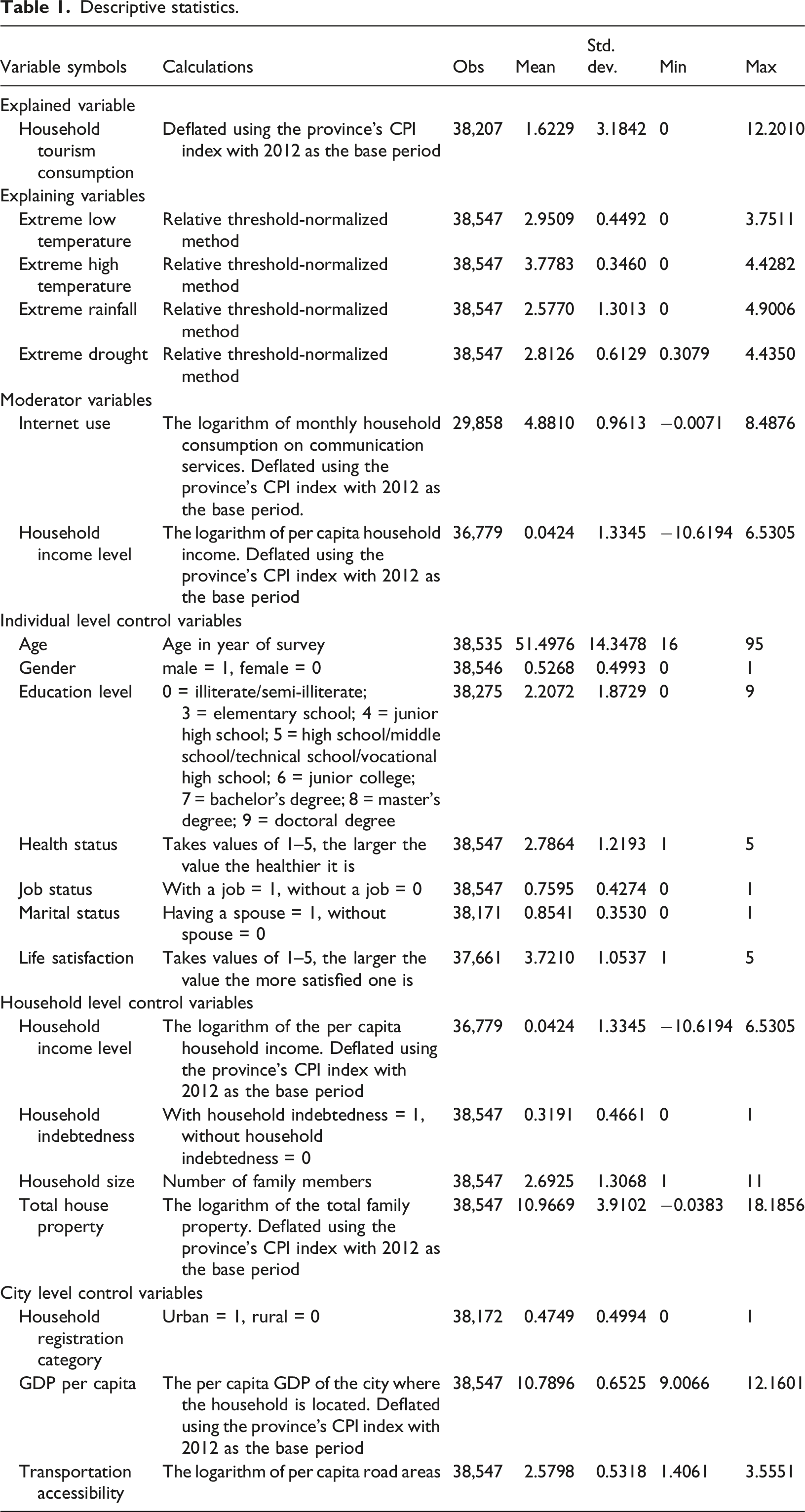
Household tourism consumption (travel) is quantified by total household consumption on tourism during the past year, derived from the CFPS questionnaire item, ‘What was your household’s consumption on tourism in the past year?’. The year 2012 serves as the base period and is deflated using the CPI index of the province in which the household is located before being processed using a logarithmic transformation.
Explaining variable: Extreme weather risks of cities where households reside
Extreme weather risks are measured using four indices: extreme low temperature (ExtrLowTemp), extreme high temperature (ExtrHighTemp), extreme rainfall (ExtrRain), and extreme drought (ExtrDrought). The indices are computed as follows (Guo et al., 2024).





Moderating variables: Internet use and household income level
The theoretical analysis suggests that Internet use and household income level may moderate the effect of extreme weather risks. Utilizing the CFPS questionnaire item ‘Monthly Postal and Telecommunications Consumption (Yuan/Month). What is the average monthly consumption of your household on mailing and communication services, including telephones, cell phones, internet access, and postal services?’, we proxy Internet use by monthly household consumption on communication services (Yang et al., 2023). This statistic encompasses a wider range of communication expenditures beyond just Internet use, potentially including telephone, mobile communication, and postal service elements. Thus, it ought to be viewed as an indirect indicator of Internet-related communication access, rather than a direct assessment of online information retrieval or Internet search behavior. In addition, we utilize the logarithm of per capita household income to represent household income level (Liu et al., 2024).
Control variables
Other than extreme weather risk, many factors are demonstrated to influence household tourism consumption. To mitigate endogeneity problems that may result from omitted variables, inspired by Deng et al. (2022), Dong et al. (2022), Huang et al. (2022), Ma et al. (2022), Chen et al. (2024), Liu et al. (2024) and Wang et al. (2025), we include several control variables to reflect households’ characteristics (namely household income per capita, household indebtedness, household size, and total household property), householders’ characteristics (namely age, gender, education level, health status, working status, marital status, and life satisfaction), and cities’ characteristics (household registration category, GDP per capita, and transportation accessibility).
Descriptive statistics.
Model specification
Based on the following econometric specifications, we examine the effect of diverse extreme weather risks on household tourism consumption:
Referring to Liu et al. (2024), we additionally control for prefecture-level city fixed effects (
To elucidate the moderating effect of Internet use and household income level, we interact these two moderating variables with extreme weather risks in equation (7):
Data sources and descriptive statistics
This study constructs an unbalanced panel for 2012–2022 by matching CFPS household microdata with prefecture-level city data. The dataset covers 10,339 households in 72 prefecture-level cities across diverse climate zones in eastern, central, and western China. The matched panel integrates individual and household attributes from CFPS with prefecture-city macro indicators, including extreme weather risk indices and socioeconomic controls, enabling a systematic assessment of how extreme weather risks affect household tourism consumption. Specifically, we utilized three types of data: (1) Extreme weather risks data are drawn from https://figshare.com/articles/dataset/Climate_Physical_Risk_Index_CPRI_/25562229/1. (2) CFPS data, which originates from the China Family Tracking Survey Project, executed by the China Social Science Survey Centre at Peking University (https://www.isss.pku.edu.cn/cfps/). We selected the survey items from 2012, 2014, 2016, 2018, 2020, and 2022, excluding 2010 due to the absence of the tourism consumption question. Subsequently, we considered the influence of potential factors such as age, marital status, and education level and matched the household questionnaire with the adult questionnaire using household codes to obtain relevant information. Finally, we excluded samples with missing identifying variables and responses of ‘don’t know’ or ‘not applicable,’ and restricted the age of the head of household to 16 years or older to ensure the representativeness of the survey. (3) Statistical data. GDP per capita and road areas are derived from the China City Statistical Yearbooks.
Empirical results
Baseline regression
Baseline regression results.
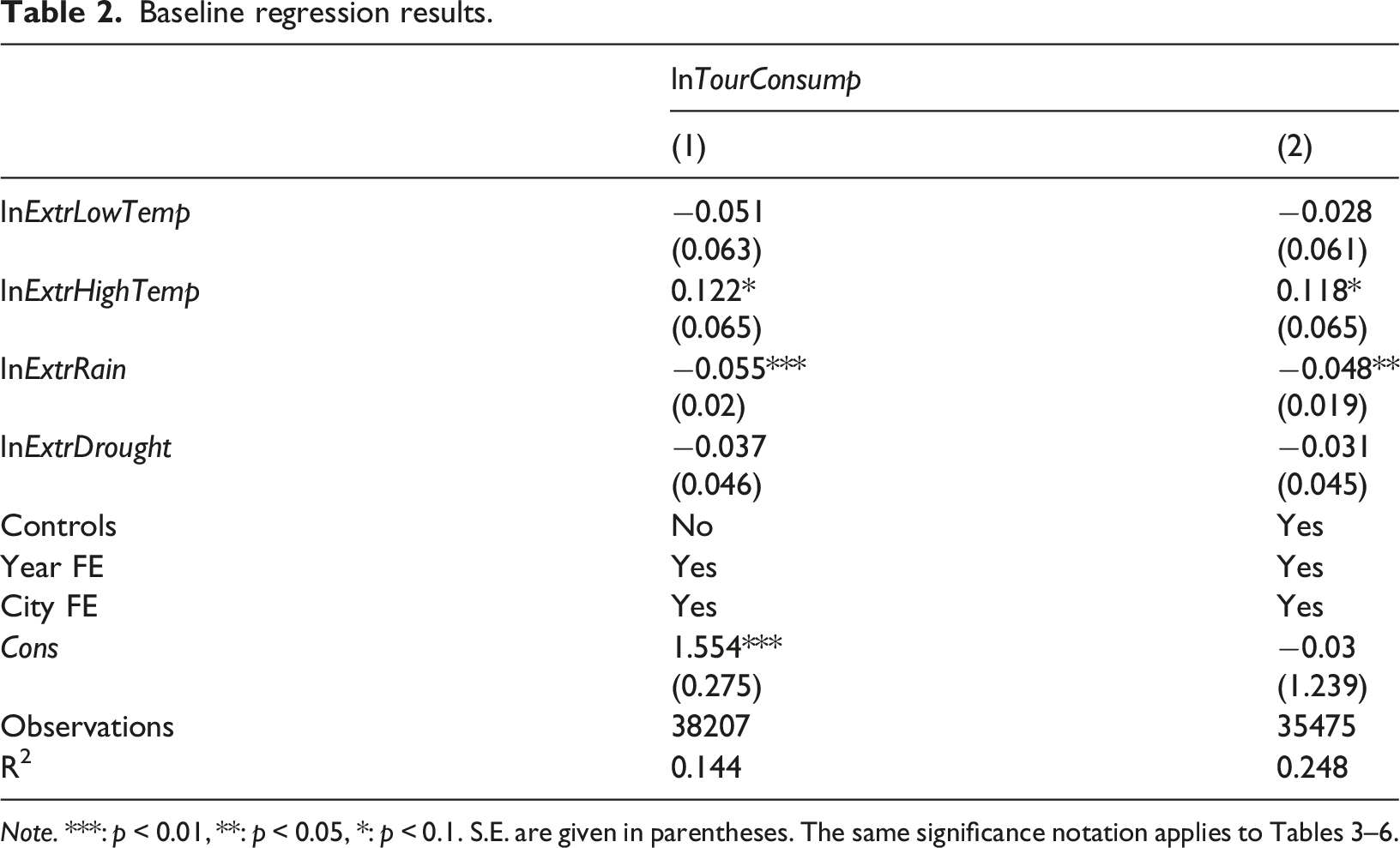
Note. ***: p < 0.01, **: p < 0.05, *: p < 0.1. S.E. are given in parentheses. The same significance notation applies to Tables 3–6.
Robustness tests
Endogeneity test
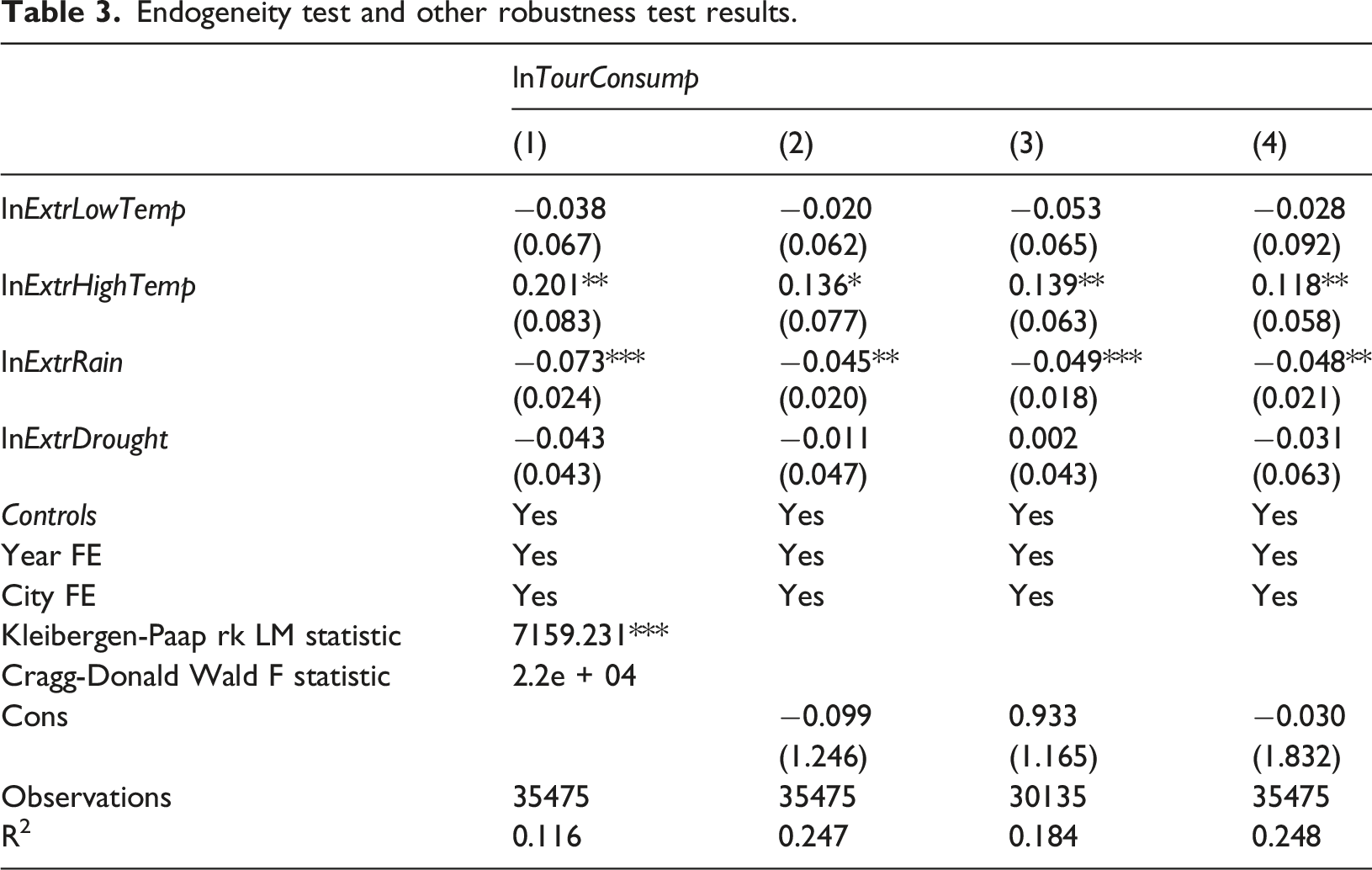
Endogeneity test and other robustness test results.
Other robustness tests
We also perform some other robustness tests. First, following Fiechter et al. (2024), we apply winsorization to the variables to attenuate the impact of outliers on the regression outcomes. The dependent variable and explanatory variables are winsorized at the 1st and 99th percentiles, respectively. The regression results are presented in Column (2) in Table 3. The baseline regression results are evidently valid.
Second, given that the unique characteristics of municipalities may bias the regression results, we optimize sample selection by excluding the samples of Beijing, Tianjin, Shanghai, and Chongqing, and subsequently re-estimate equation (6) for a robustness test. The results are shown in Column (3) of Table 3. The empirical results remain significant after eliminating the influence from the municipality sample, confirming the robustness of the baseline regression results.
Third, we further cluster at the city level to account for within-city correlation in unobserved shocks. Column (4) in Table 3 indicates that the coefficients of lnExtrHighTemp and lnExtrRain remain significantly positive and negative, respectively, therefore confirming the robustness of baseline regression results.
Moderating effects analysis
Moderating effects analysis results.
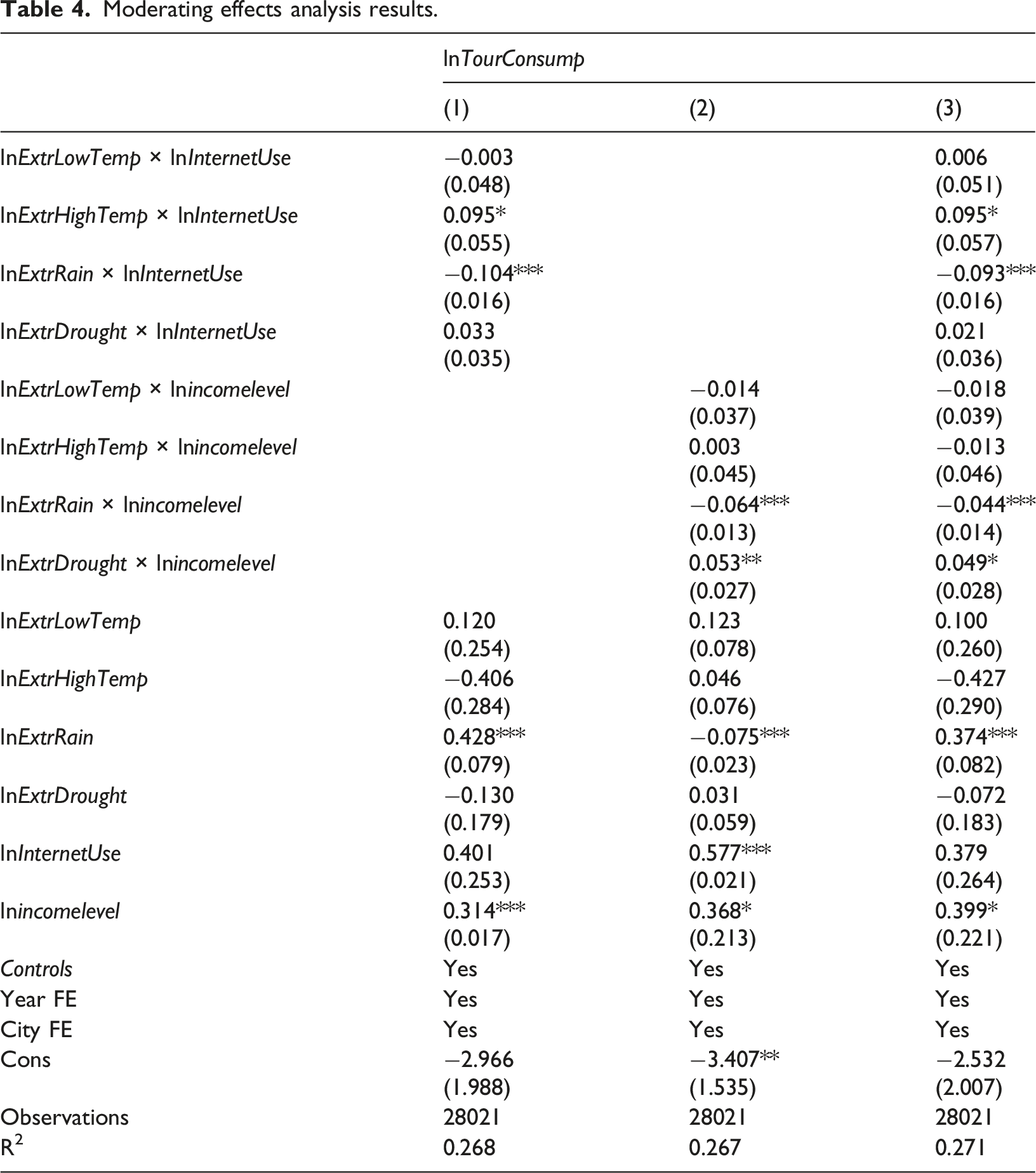
With this interpretive caveat in mind, column (1) shows that the coefficient on extreme high temperature is negative, whereas its interaction with Internet use is positive, indicating that the marginal effect of extreme high temperature increases with Internet use and shifts from negative to positive. By contrast, the coefficient on extreme rainfall is positive, whereas its interaction with Internet use is strongly negative, indicating that the marginal effect of extreme rainfall declines as Internet use increases. Column (2) reports a significantly negative interaction between extreme rainfall and household income, suggesting that the adverse marginal effect of extreme rainfall is more pronounced among higher-income households. The positive drought–income interaction suggests that the conditional association between extreme drought and tourism consumption becomes more positive as income rises. Column (3) further includes all interaction terms simultaneously to assess the stability of these moderating patterns. The lnExtrHighTemp × lnincomelevel is statistically insignificant, even in the fully specified model. Consequently, we do not regard income as a robust moderator of the extreme high temperature effect and instead concentrate on the more consistent association between extreme rainfall and income.
Nonetheless, the interaction coefficients presented in Table 4 should be interpreted with caution, as traditional linear interaction models depend on the assumption of linear interaction effects and sufficient shared support throughout the moderator’s distribution. Hainmueller et al. (2018) underscore that an exclusive reliance on regression coefficients may mask varied moderation patterns and result in model-dependent findings. In accordance with Hainmueller et al. (2018), we utilize the binning estimator, which categorizes the moderator into low, medium, and high intervals to estimate the respective marginal effects within each interval. This method offers a more comprehensive diagnostic evaluation of the stability of the moderating effects presented in Table 4 across various ranges of the moderator and assesses the empirical plausibility of the linear interaction specification.
Figure 2 presents the binning estimates using Internet use as the moderator. At extreme high temperatures, the marginal effect of extreme high temperature increases with Internet use, transitioning from about zero at low Internet use to a significantly positive value at elevated Internet use. Conversely, the marginal effect of extreme rainfall diminishes with increased Internet use, transitioning from a somewhat favorable impact at low Internet use to a negative effect at mid and high levels. Binning estimation results for the moderating effect of Internet use.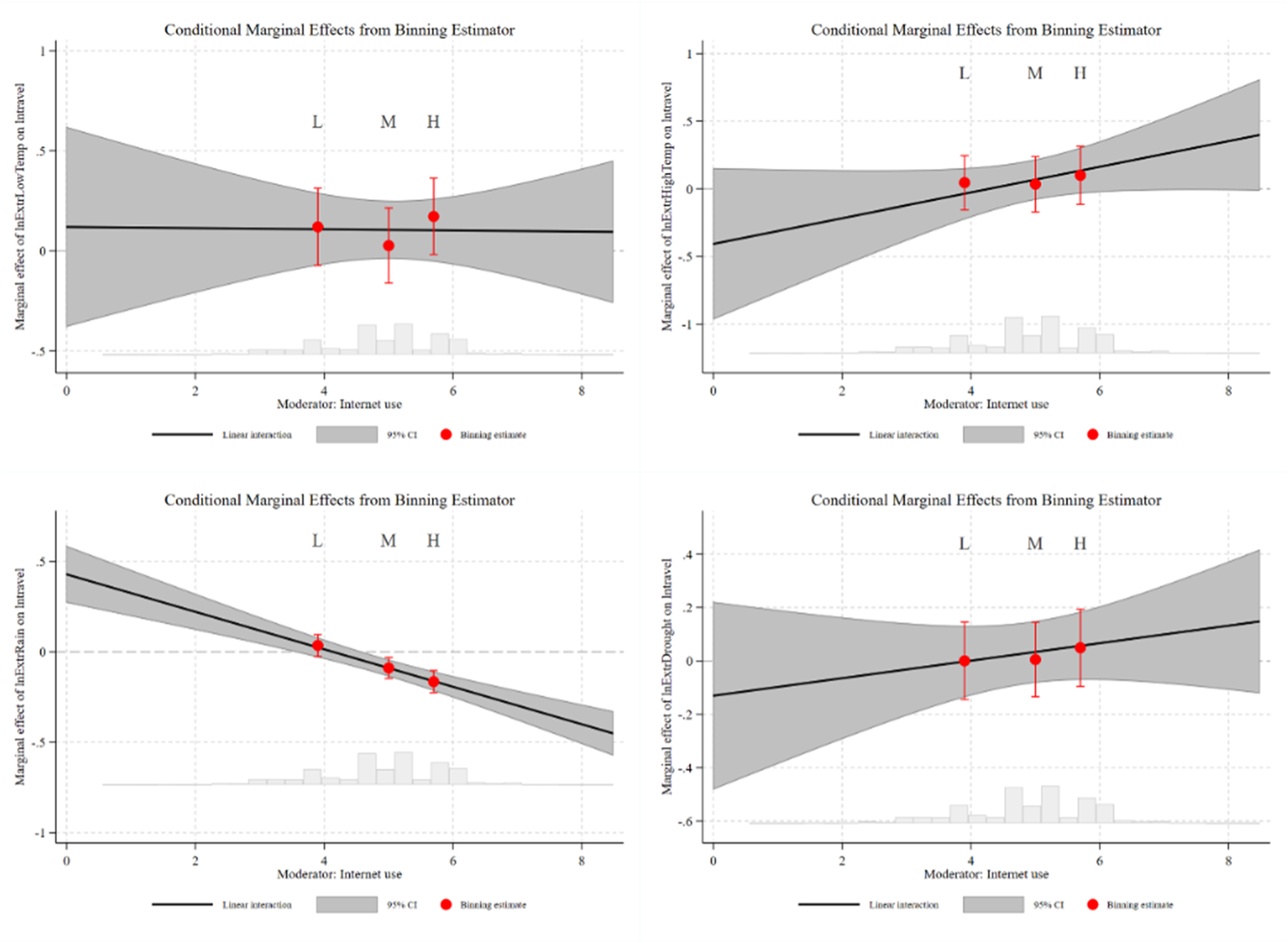
Figure 3 displays the binning estimates with income level serving as the moderator. In accordance with the comprehensive interaction results, we concentrate on the extreme rainfall–income relationship rather than the extreme high temperature–income relationship, as the latter lacks statistical robustness. In the case of extreme rainfall, the marginal effect grows progressively negative with increasing income level, signifying that higher-income households diminish tourism consumption more significantly in the face of extreme rainfall. Binning estimation results for the moderating effect of income level.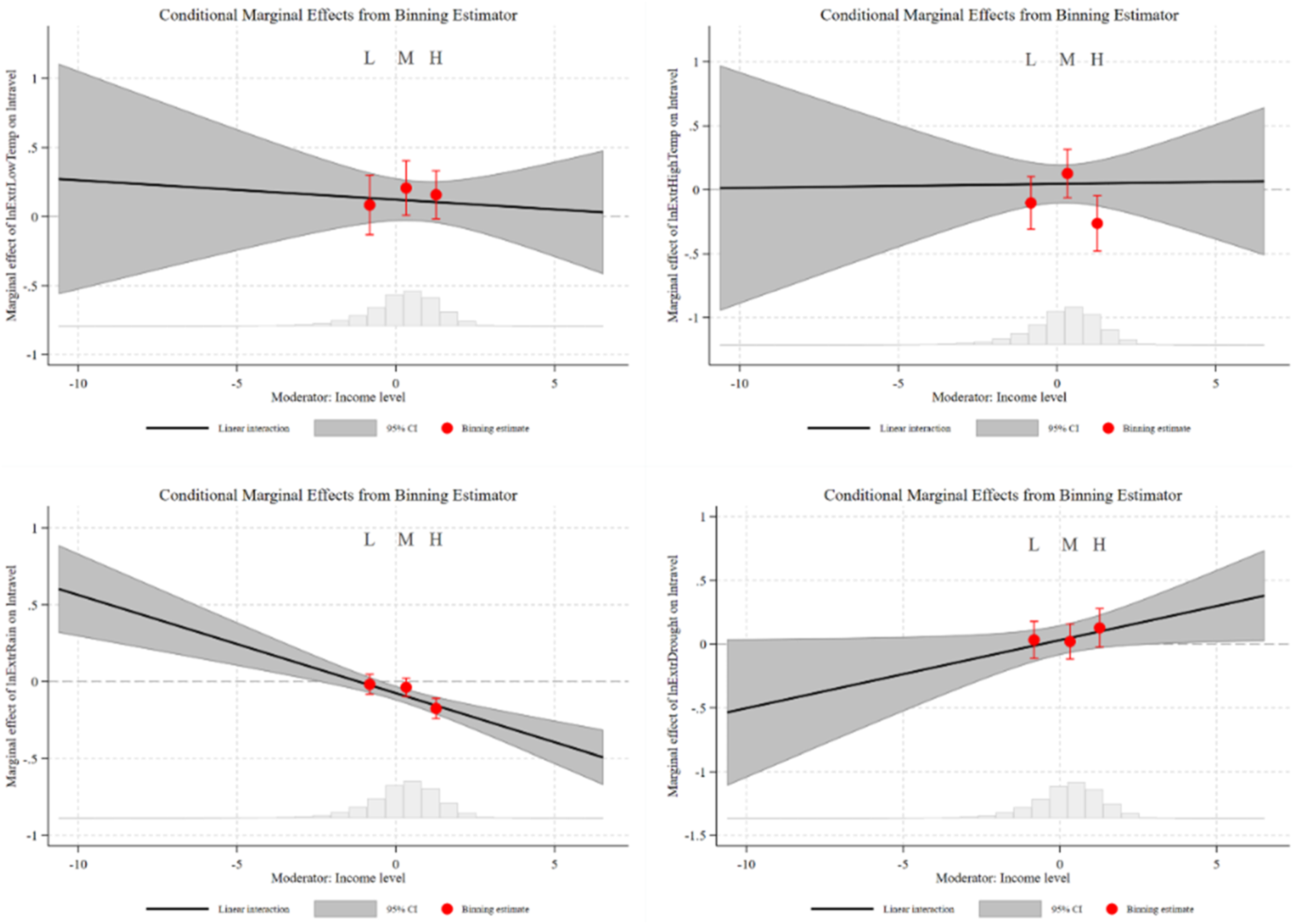
Further analysis
Heterogeneity analysis
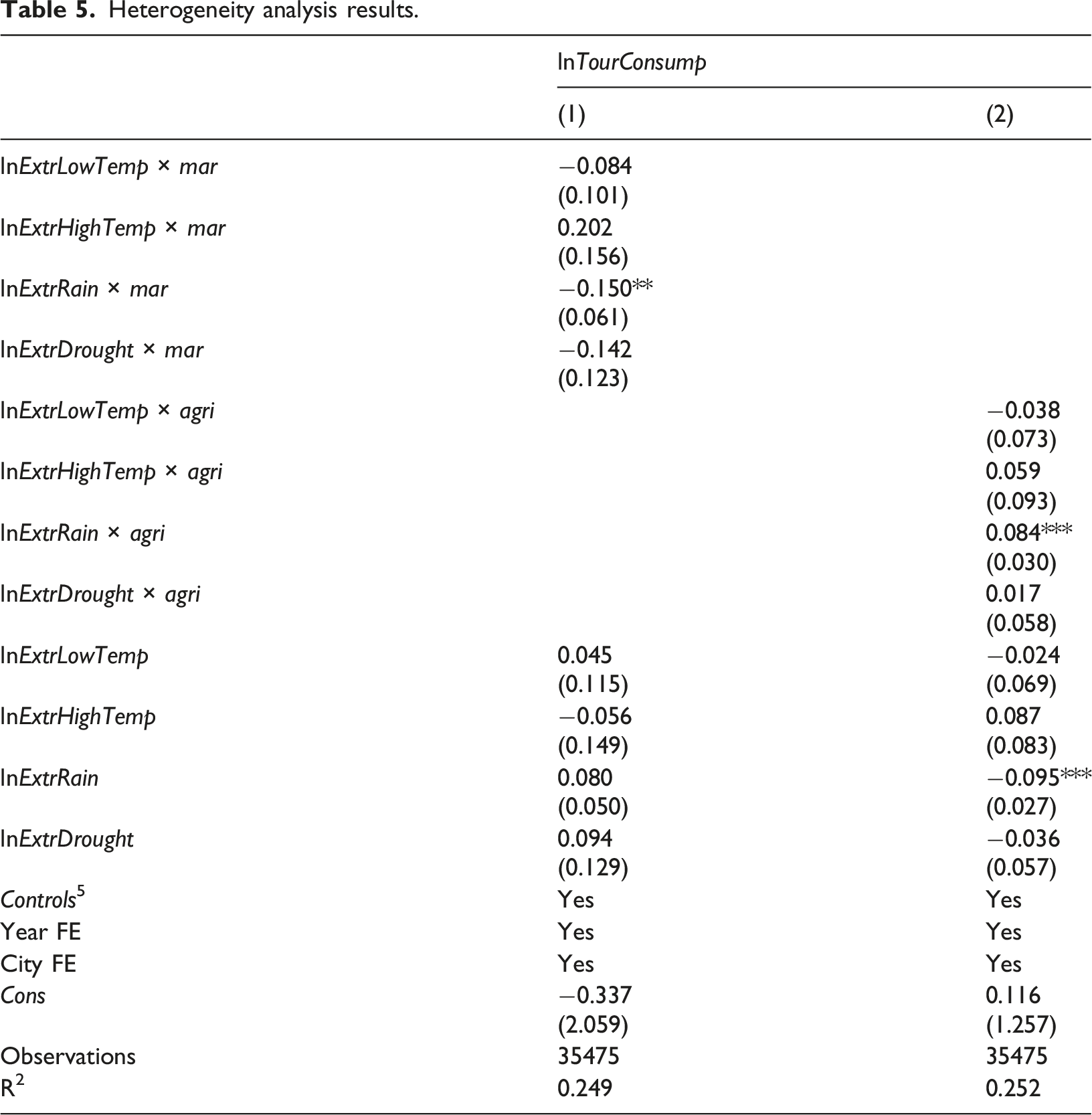
Heterogeneity analysis results.
Incremental consumption effect test
Consumption incremental effect test results.
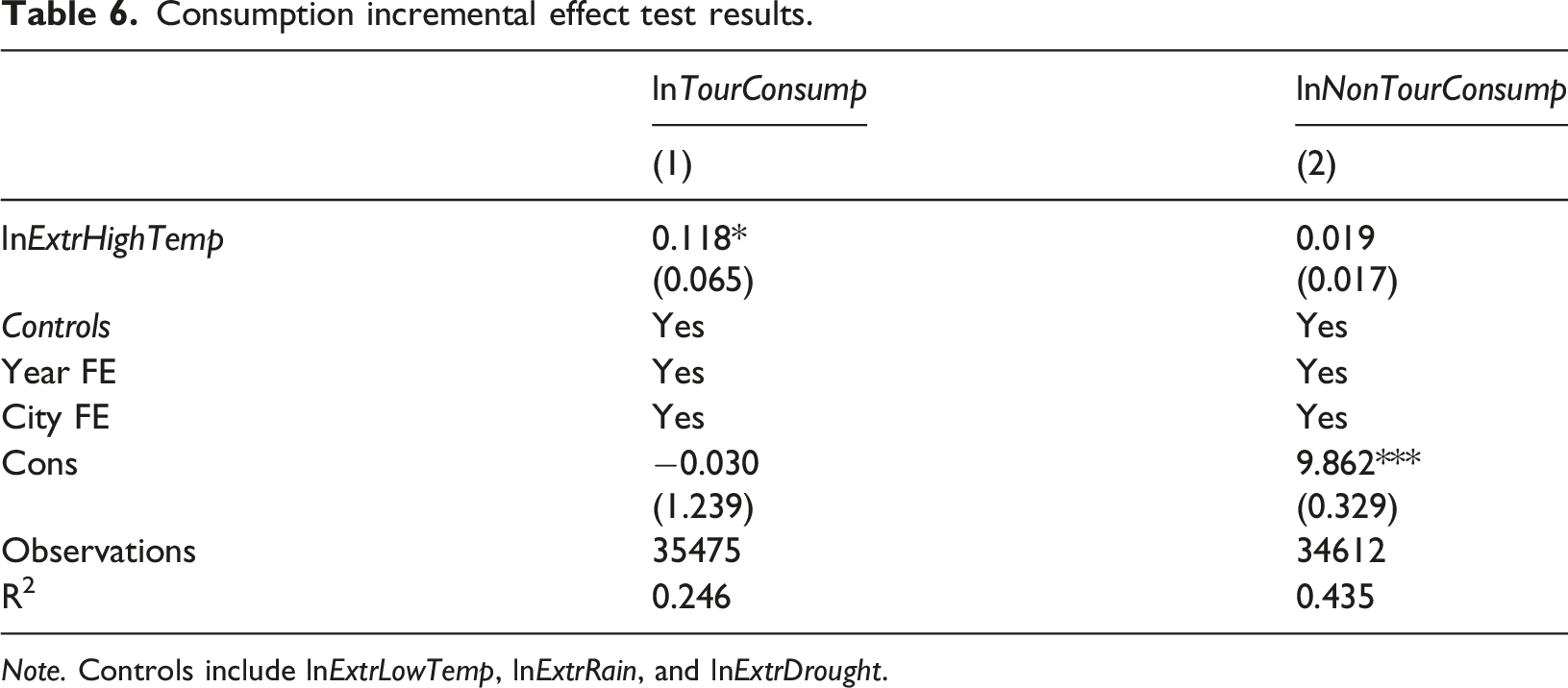
Note. Controls include lnExtrLowTemp, lnExtrRain, and lnExtrDrought.
Discussions
The asymmetric effect of extreme weather risks on household tourism consumption
Departing from established studies on tourist destinations, this paper investigates the impact of extreme weather risks on household tourism consumption from the underexplored perspective of the tourist origins. Our theoretical analysis posits that extreme weather risks influence household tourism consumption in the tourist origins. The baseline regressions empirically demonstrate a significant positive effect of extreme high temperature on household tourism consumption. This finding starkly contrasts with destination-focused studies (Atstāja and Cakrani, 2024), which indicate that extreme high temperature deters visitation by directly diminishing tourist experiences and posing health threats. This disparity highlights the importance of analytical perspective.
Destination-focused research investigates the immediate repercussions of extreme weather risks on tourist experiences. In contrast, this study reveals the decision-making logic of households may maintain or increase tourism consumption as an adaptive consumption response to local heat-related discomfort. Moreover, our results indicate that extreme rainfall inhibits household tourism consumption, as it obstructs transportation, rendering travel physically unfeasible. This corroborates the conclusions of Chen et al. (2024), affirming the detrimental impact of extreme rainfall on tourism.
The effects of extreme low temperature and extreme drought were statistically insignificant. In northern China, central heating significantly mitigates the threat of extreme low temperature to individuals’ bodily and mental well-being (Hu et al., 2022), thereby diminishing the motivation for tourism driven by extreme weather risks. Meanwhile, the persistent nature of extreme drought creates temporal delays that our models do not consider. Moreover, the tourism consumption dataset employed fails to differentiate among indoor and outdoor activities, thus obscuring subtle behavioral responses. Although extreme low temperature may inhibit general tourism, it could promote particular indoor tourism activities, such as hot springs.
The moderating effect of internet use and household income level
The Internet use-extreme high temperature interaction reflects an adaptive-capacity mechanism. At minimal levels of Internet use, extreme high temperature may diminish tourism consumption as households encounter heightened health risks, thermal discomfort, and trip unpredictability, in accordance with PMT (Rogers, 1975). As Internet use increases, households may obtain real-time data on meteorological conditions, transportation, lodging, indoor options, and off-peak arrangements, thereby enhancing response efficacy. Recent evidence indicates that digital infrastructure and Internet-based communication channels can enhance household tourism consumption by mitigating information asymmetry and transaction frictions (Yu et al., 2025).
The extreme rainfall effect turns negative as Internet use increases, reflecting an information-induced risk-recognition mechanism. Households with limited internet connectivity are likely to possess diminished access to prompt and comprehensive risk information, resulting in their tourism decisions being less influenced by real-time alerts regarding traffic disruptions, flooding, site closures, and cancellations of outdoor activities. As Internet use increases, extreme rainfall emerges as a more prominent and actionable risk signal, enhancing households’ risk assessment and prompting them to defer, cancel, or diminish tourism consumption, consistent with PMT and with evidence from Baños-Pino et al. (2023).
The income-based moderation of extreme rainfall can be explained by the transition from quantity-constrained to quality-sensitive tourism consumption. Lower-income households generally have more constrained tourism budgets, so rainfall may not substantially alter already limited tourism consumption. As income rises, however, tourism becomes more discretionary, experience-oriented and sensitive to service quality, comfort and travel reliability. Evidence on Chinese households shows that tourism consumption responds heterogeneously to income (Ma et al., 2024). Higher-income households are more likely to postpone, cancel or substitute tourism consumption when rainfall reduces expected travel utility, consistent with climate-sensitive tourism demand evidence (Zhou et al., 2024).
Drought is a gradual and cumulative environmental stressor. It may diminish local comfort, heighten perceived environmental stress, and induce psychological tension. Previous studies indicate that drought can function as a cumulative stressor affecting mental health and well-being, especially when aridity endures over an extended period (O'Brien et al., 2014). Simultaneously, involvement in tourism is significantly limited by household financial resources, with budgetary constraints serving as a primary obstacle to tourism engagement (Alegre et al., 2010). Consequently, lower-income households may react to drought-related uncertainty by conserving resources and prioritizing essential consumption, while higher-income households possess a stronger discretionary ability to transform drought-induced discomfort into tourism consumption.
Heterogeneous effect of extreme weather risks on household tourism consumption
The civil-status heterogeneity suggests that married households respond more adversely to extreme rainfall than unmarried households. Tourism consumption is closely shaped by household demographic structure and life-cycle stage (Lin et al., 2015), while household holidays often involve joint decision-making and coordination within couples (Mottiar and Quinn, 2004). Extreme rainfall may increase perceived travel risks, mobility constraints, and itinerary uncertainty. According to PMT, stronger threat appraisal and higher response costs can encourage protective avoidance. Thus, married households may be more inclined to postpone or reduce tourism consumption when extreme rainfall rises, which is also consistent with Jeuring (2017).
The employment-sector heterogeneity indicates that the negative tourism-consumption response to extreme rainfall is more evident among non-agricultural households, which is consistent with Aggarwal (2021). Agricultural households are routinely exposed to rainfall variability and often incorporate weather-related adjustment into livelihood management, production timing, and resource allocation. Therefore, extreme rainfall may be partly absorbed through existing coping and adaptation practices (Girard et al., 2021). By contrast, non-agricultural households’ tourism consumption is more likely to depend on scheduled leisure time, transport accessibility, and short-term mobility conditions. Extreme rainfall can therefore operate as a more direct constraint on their tourism consumption (Jeuring, 2017).
Consumption incremental effect
When faced with extreme high temperature, residents tend to spend more on tourism rather than converting their non-tourism consumption to tourism, according to the incremental effect test of consumption, which shows that extreme high temperature increases household tourism consumption. Non-tourism consumption is less vulnerable to extreme high temperature, especially when it comes to necessities (like food and clothes) and long-term investments (like housing, education, and transportation). There is an inherent connection between this varied response and the underlying socio-economic differences. As a result, wealthy households might use travel as a voluntary adaptive strategy to lessen the effects of extreme high temperature. Low-income households, on the other hand, constrained by discretionary cash and essential consumption, are unable to take advantage of this adaptive pathway through tourism consumption. This dynamic effectively redistributes consumption opportunities, disproportionately eroding the adaptive capacity of low-income households through the attrition of resilience (Hallegatte and Rozenberg, 2017).
Conclusions
Main findings
By providing insightful information for sustainable tourism and encouraging interdisciplinary discussion between tourism research and climate change economics, this study contributes to our understanding of temporary mobility under extreme weather risks from the tourist origins perspective. Theoretically, we establish a systematic analytical framework for weather risk-tourism consumption research based on the PMT. Utilizing CFPS and weather risk data from 2012 to 2022, we empirically confirm that extreme high temperature elevates household tourism consumption, extreme rainfall reduces it, while extreme low temperature and drought exert no significant influence. The robustness tests support the baseline findings. These divergent findings provide scientific underpinnings for the development of sustainable tourism in the context of climate uncertainty by exposing the significant asymmetric effects of extreme weather risks. We investigate moderating effects and determine that Internet use significantly moderates the impacts of extreme high temperature and extreme rainfall, while household income significantly moderates the effects of extreme rainfall. Further heterogeneity analyses show that extreme rainfall has a stronger adverse effect on married households and significantly reduces tourism consumption among non-agricultural households. Furthermore, the incremental-consumption test suggests that the positive effect of extreme high temperature on household tourism consumption stems from the incremental effect of tourism consumption.
Implications
In the context of extreme weather risks, the results of this study inform the optimization of resilience management and policy for tourism consumption in tourist origins. Specifically, the unequal impact of extreme weather risks, in particular, emphasizes the significance of developing a resilient tourism consumption system that prioritizes demand-side management at tourist origins in the context of growing climate uncertainty. National and local governments should integrate considerations of extreme weather risks into guidance on tourism consumption and safeguarding policies.
In regions with frequent extreme high-temperature events, strengthening the dissemination of early warnings about the carrying capacity of peak-season destinations is required. This entails enhancing safety and health precautions during periods of high temperature and urging residents to make sensible decisions about when and where to travel. Crucially, governments must address the related climatic inequality in light of the counterintuitive stimulation of tourism consumption by extreme high temperature. Low-income households may be unable to take advantage of these possibilities due to budgetary constraints, whereas wealthy households may freely do so. To guarantee fair participation in this consumption shift, targeted interventions are required, such as programs that provide affordable access to cooler areas or subsidized cooling-oriented tourism vouchers.
In regions with extreme rainfall frequencies, the focus should be on developing and promoting alternative tourism products to stabilize the tourism market and associated employment. Simultaneously, governments ought to emphasize married and non-agricultural households by enhancing their ability to withstand excessive rainfall via weather-related tourism insurance and adaptable leave provisions. Furthermore, it is crucial to leverage Internet platforms for the targeted dissemination of extreme weather risk warnings, alongside sustainable tourism advice and information on alternative products, to foster climate-adaptive consumption habits among residents.
In addition, in order to follow the effects of extreme weather risks and make appropriate adjustments to support policies and marketing plans, relevant tourism authorities and industry associations should set up dynamic monitoring and assessment procedures. As a way to help stakeholders adjust business operations and safeguard livelihoods in the context of extreme weather risks, it can be beneficial to foster interdepartmental collaboration across pertinent ministries, including civil affairs, culture and tourism, and meteorology. The markets for the consumption of origin tourism will remain stable and sustainable as a result.
Limitations
Our study also inevitably bears several limitations. We focus on Chinese households. The empirical results are grounded in China’s traditional social context. In subsequent research, future research could compare China with other countries and offer novel views on advancing the sustainable growth of tourism. In addition, data limitations confine this study to examining household tourism consumption responses to extreme weather risks. The CFPS data do not provide trip-level information on travel destinations, travel frequency, duration of stays, travel distance, or the climate-risk conditions of destinations. Therefore, we cannot identify whether changes in tourism consumption are associated with specific destination choices or spatial adjustments in travel behavior. Future research should link household survey data with trip-level data, such as mobile location traces or booking records, to provide a more detailed understanding of how extreme weather risks affect household tourism consumption. A further limitation concerns the measurement of Internet use. Due to data limitations, we approximate Internet use by monthly household communication expenditures, encompassing costs for telephone services, mobile communication, internet access, and postal services. This metric cannot accurately reflect online information-seeking behavior or the intensity of Internet usage. Subsequent study employing more direct markers, such as Internet accessibility or online search behavior, may yield a more accurate evaluation of the proposed mechanism.
Footnotes

Funding
The authors disclosed receipt of the following financial support for the research, authorship, and/or publication of this article: The Philosophy and Social Sciences Research Project of the Education Department of Hubei Province (24Q088), The National Social Science Fund of China (25BJY153), The Philosophical and Social Sciences Planning Project of Hainan Province (HNSK(ZC)25-186), The Natural Science Foundation of Hainan Province (725RC741), and the Project of Higher Education Scientific Research of Hainan Province (No. Hnky2024-5).
Declaration of conflicting interests
The authors declared no potential conflicts of interest with respect to the research, authorship, and/or publication of this article.