






Abstract
In the digital age, while hospitality and tourism (H&T) firms accelerate digital transformation to stay competitive, the role of tourism trade associations as external resource providers in these firms’ digital transformation process remains underexplored. Drawing on resource-based theory (RBT), this study examines how tourism trade associations influence H&T firms’ digital transformation and explores the moderating effects of marketization and business climate. Using 2,049 firm-year observations of 144 publicly listed H&T firms (2009–2022), this study finds evidence suggesting that tourism trade associations facilitate digital transformation. Crucially, we find that marketization and business climate negatively moderate this relationship, indicating a substitution effect where tourism trade associations play a more vital compensatory role in regions with lower marketization and less favorable business climates. These findings highlight the critical role of firms in leveraging collective industry resources for technological advancement. Accordingly, our research provides theoretical contributions to RBT by extending its traditional firm-centric focus and enriching the digital transformation literature, as well as practical insights for policymakers and industry stakeholders.
Introduction
As digital technologies such as artificial intelligence, robotics, blockchain, cloud computing, and big data have become more prevalent, digital transformation has become increasingly essential for hospitality and tourism (H&T) firms. It enables organizations to boost revenue, enhance competitiveness, improve productivity, enrich consumer experiences, and respond swiftly to emerging challenge (Dogru et al., 2023; Hadjielias et al., 2022; Wang et al., 2025; Zhou et al., 2025). However, owing to complex IT requirements, high capital investment, long payback periods, and significant risks of failure, many H&T firms struggle with digital transformation (Vial, 2019; Wimelius et al., 2021). According to the resource-based theory (RBT), competitive advantage derives from effectively managing unique resources and capabilities (Wernerfelt, 1984), and successfully navigating such transformation requires acquiring and integrating critical resources. Yet, individual firms, especially in the H&T sector, often face severe resource constraints that hinder their digital initiatives (Qureshi and Syed, 2014; J. Wang et al., 2021).
Existing H&T research has confirmed key drivers of digital transformation, including the characteristics of digital technologies (Gössling, 2020; Ozdemir et al., 2023; Yadegaridehkordi et al., 2020), internal organizational resources (Hadjielias et al., 2022; Leoni and Cristofaro, 2022; Lin, 2017), and external market and policy factors (Ezzaouia and Bulchand-Gidumal, 2020; Li and Li, 2024; Q. Liu et al., 2024). Within the framework of RBT, scholars have examined how dynamic capabilities influence the digital transformation of small and medium-sized enterprises (SMEs) (Civelek et al., 2023). Studies have also shown that corporate social responsibility (CSR) practices support digital transformation by enhancing human and technological resources (Nie et al., 2024). However, most studies focus on firm-specific resources and capabilities, and overlook the role of collective industry resources in shaping digital strategies (Civelek et al., 2023; Nie et al., 2024). Even in the broader business literature, the influence of collective industry resources on a firm’s digital transformation remains underexplored. To bridge this gap, an exploration of industry-wide drivers (e.g., tourism trade associations) and their interaction with contextual factors in the digital transformation of H&T firms is crucial. This perspective will deepen the understanding of RBT and expand insights into the external drivers influencing digital transformation.
While previous studies have examined the impact of tourism trade associations on macro-level issues such as local destination marketing and governance (Garrod and Fyall, 2017), tourism policy development (McKercher, 2022), coordination within tourist destinations (Moretti et al., 2024), and the coopetition willingness of tourism destination firms (Chim-Miki et al., 2024), a notable gap remains in understanding the specific influence of tourism trade associations on micro-level strategic decision-making within H&T firms. Specifically, the role of these associations as external resource providers in facilitating the digital transformation of H&T firms has not been adequately investigated. Addressing this gap requires navigating the theoretical intersection of institutional embeddedness and resource acquisition. While trade associations are institutionally embedded organizations offering shared and non-exclusive resources, this study adopts the RBT lens because competitive advantage lies not just in the existence of shared resources, but in a firm’s capability to leverage external networks to access and internalize them (Dyer and Singh, 1998). In this context, trade associations serve as a vital platform for collective resource leveraging, allowing firms to access information, technical expertise, and policy advocacy that would be costly or impossible to obtain individually. Thus, viewing trade associations through an RBT lens, supplemented by an understanding of the institutional environment, offers a novel perspective on how firms internalize external collective resources for digital advancement.
Moreover, the identification of such associations has traditionally relied on qualitative methodologies, such as analyzing textual information and data gathered through interviews (Moretti et al., 2024), emails (McKercher, 2022), and official websites (Garrod and Fyall, 2017) for conceptual discussions. Additionally, the use of questionnaires (Chim-Miki et al., 2024) significantly restricts the sample size, thus limiting the ability to draw causal inferences. The current study manually organizes data on tourism trade associations at the prefecture level from the Chinese Social Organization Government Service Platform, and then matches it with data from H&T-related firms listed on the Shanghai Stock Exchange and Shenzhen Stock Exchanges to generate firm-level panel data. By applying the difference-in-differences (DID) method, this study offers a rigorous empirical assessment of the causal impact of tourism trade associations, moving beyond conceptual discussions to provide granular insights into how leading firms in a rapidly digitizing economy utilize collective resources.
This study bridges the aforementioned research gap by addressing three key objectives: (1) Examining how tourism trade associations support the digital transformation of H&T firms, thus shedding light on overlooked factors, and strengthening the understanding of RBT; (2) Introducing the broader industry and institutional environments as external moderating factors, investigating how marketization and business climate influence the relationship between tourism trade associations and digital transformation; (3) Enhancing methodological rigor by providing a more robust empirical analysis of the impact of tourism trade associations on digital transformation in the H&T sector.
Literature review and hypothesis development
Literature review
Resource-based theory
RBT posits that a firm’s sustainable competitive advantage stems from the effective management of its unique resources and capabilities (Barney, 1991; Wernerfelt, 1984). According to this view, variations in resource endowments directly determine enterprise performance disparities, with the immobility and non-replicability of these resources serving as fundamental sources of competitive superiority (Peteraf and Barney, 2003). By emphasizing the firm-level orchestration of unique resource configurations, RBT traditionally focuses on the ability to identify internal competitive resources, primarily concentrating on self-contained organizational assets (e.g., proprietary knowledge, firm-specific capabilities) rather than externally sourced resources (Kruesi and Bazelmans, 2023). Within the RBT framework, scholars have explored how dynamic capabilities impact the digital transformation of SMEs (Civelek et al., 2023), and have indicated that CSR initiatives facilitate digital transformation by strengthening both human and technological resources (Nie et al., 2024).
Traditionally applied in management and organizational studies, RBT is increasingly used in H&T research. For example, researchers have examined how information technology (IT) capabilities influence organizational performance in hospitality (Mehmood et al., 2023).Studies also highlight how dual-brand synergy strategies create competitive advantages through resource differentiation (Bianco et al., 2023). Additionally, a dynamic capability framework has been developed to help tourism organizations navigate external disruptions (Jiang et al., 2022). Most studies emphasize firm-specific resources and capabilities, ultimately neglecting the impact of collective industry resources on digital strategies (Civelek et al., 2023; Nie et al., 2024). Even in broader business studies, their role in digital transformation remains underexplored. Addressing this gap requires an examination of industry-wide drivers such as tourism trade associations and how they interact with contextual factors to influence digital transformation in H&T firms.
Determinants of digital transformation
Scholars investigating the driving factors of digital transformation have primarily focused on three core dimensions: technology, organization, and environment (Peng et al., 2024). The technological dimension examines how specific technological factors influence digital transformation. Research has highlighted key considerations such as adoption costs (Yadegaridehkordi et al., 2020), relative advantage, compatibility, and complexity (Wang et al., 2016). The organizational dimension has emphasized leadership support (Tangwaragorn et al., 2024; Wang et al., 2016) and available resources (Garcés et al., 2004; Leoni and Cristofaro, 2022). Additionally, firm-specific characteristics, including size, information intensity, and geographical distribution, impact digital adoption (Ezzaouia and Bulchand-Gidumal, 2020; Wang et al., 2016; Yadegaridehkordi et al., 2020). Effective risk and cost management further shapes strategic decisions in digital transformation (Cheng et al., 2023; Lee and Madera, 2019; Maythu et al., 2024).
The environmental dimension considers the external influences that drive digital transformation. Government policies and legal frameworks provide institutional support, particularly through financial market development and data protection regulations (Lee et al., 2024; Li and Wang, 2023; Mei et al., 2024; Nemet, 2009; Zhao et al., 2023). Competitive pressures and rising consumer digital literacy encourage firms to adapt to market demand (Su et al., 2023; Tangwaragorn et al., 2024; Wang et al., 2016). Additionally, shifting consumer preferences, market trends, and evolving customer relationships create further urgency for firms to accelerate their digital transformation efforts (Alrawadieh et al., 2021; Lin, 2017; Tussyadiah and Pesonen, 2016; Zhao, 2024). Unlike traditional drivers such as government policies or market competition, trade associations facilitate cross-organizational collaboration, resource integration, and standardized technical practices. This perspective extends the existing environmental dimension framework and provides new insights into the institutional forces that shape corporate digital strategies.
Impact of tourism trade associations
Trade associations are professional organizations voluntarily formed by firms and relevant stakeholders to represent the interests of a specific industry (Marques, 2017; Meyer and Rowan, 1977; Reveley and Ville, 2010). In the context of China, tourism trade associations are non-profit social organizations composed of tourism enterprises and public institutions. They emerged against the backdrop of the government’s functional transformation and the deepening of the market economy. Such associations serve as institutional intermediaries that uphold professional logic and possess advantages in market resource allocation, including expertise, information, talent, and mechanisms (Watkins et al., 2015).
From an international perspective, the governance functions of tourism trade associations and their proximity to the government vary across different institutional contexts. For instance, tourism trade associations in the United States typically maintain a high degree of independence, with minimal government intervention or financial support. In contrast, European countries, represented by Germany and France, often entrust trade associations with specific administrative and public governance functions. Similarly, tourism trade associations in Japan maintain close ties with the government and exercise strong binding power over member enterprises, highlighting a prominent role in industry self-regulation. Compared to these models, China’s tourism trade associations were historically government-led and characterized by strong administrative overtones. However, with recent institutional reforms, these associations have largely completed the process of “decoupling” from administrative agencies. They are currently transitioning from administrative dependency toward professionalization and self-regulation to meet the demands of market-based governance. For example, the China Tourism Association regularly organizes major events such as the National Tourism Development Conference and the Annual Conference of China Tourism Entrepreneurs. It also publishes industry reports (e.g., 2024 Observation Report on Investment Trends in China’s Cultural and Tourism Industry), thereby providing firms with critical resources such as information, financial channels, and policy insights.
Existing literature suggests that tourism trade associations play a significant role in the development of the tourism industry globally, with their primary impacts categorized into three aspects: (1)
Hypothesis development
Tourism trade associations and digital transformation
Building on RBT, we argue that tourism trade associations drive digital transformation in H&T firms by leveraging internal support and external partnerships.
(1) Internal support
Tourism trade associations play a crucial role in advancing the digital transformation of H&T firms by integrating resources, fostering knowledge sharing, and creating competitive incentives. Given the industry’s fragmented nature (Huang et al., 2010), labor-intensive structure (Hu et al., 2025), and reliance on direct customer interaction (Tumer Kabadayi et al., 2022), H&T firms often adopt a cautious approach to digitalization, depending largely on policy-driven initiatives (Khalid et al., 2021; Memon et al., 2018; Santarsiero et al., 2024). As knowledge hubs, tourism trade associations help firms access essential resources by building industry networks and streamlining access to specific digital solutions, thereby reducing information costs (Rajwani et al., 2015; Watkins et al., 2015).
Additionally, the H&T industry’s emphasis on personalized services often limits firms’ familiarity with DT (Ozdemir et al., 2023). Trade associations bridge this gap by offering professional seminars, forums, and training programs and equipping H&T firms with the necessary digital knowledge while lowering R&D costs and minimizing transformation risks (Watkins et al., 2015). For example, the China Tourism Association organizes specific symposiums on “AI and Cultural Tourism Integration”, actively exploring AI applications and providing H&T firms with tailored technical solutions and networking opportunities for AI adoption.
By nature, tourism requires coordination among various sectors and networks (Zhang et al., 2009). This interdependence fosters a culture of collaboration over competition (Czakon and Czernek-Marszałek, 2021). Tourism trade associations reinforce this cooperative mindset by facilitating resource exchange, knowledge transfer, and information sharing through supervisory oversight and reputation mechanisms, thereby promoting long-term partnerships (Wang et al., 2024; Yao et al., 2022). For instance, facilitated by industry platforms, Guizhou Hotel Management Group leveraged Shiji Group’s advanced digital solutions, including data analysis platforms, Central Reservation Systems, and member management systems, to enhance decision-making efficiency and channel management capabilities.
(2) External linkage
Tourism trade associations play a vital role in supporting the digital transformation of H&T firms by easing financing constraints and reducing information asymmetry. Many H&T firms face challenges in digital transformation because of complex IT requirements, high costs, long payback periods, organizational resistance, and the risk of failure (Vial, 2019; Wimelius et al., 2021). Moreover, digital transformation requires significant investment in research, development, and skilled personnel (Qureshi and Syed, 2014; J. Wang et al., 2021). Trade associations help bridge this financing gap by leveraging reputation, trust, and collective guarantee mechanisms (H. Wang et al., 2024), consequently strengthening H&T firms’ credibility with banks and investors and ensuring the financial resources needed for digital transformation.
In addition to financing, the H&T industry is highly influenced by government policies (Aguinis et al., 2023; Kim et al., 2023; Sakshi et al., 2020). As key intermediaries between businesses and policymakers, tourism trade associations help shape and implement industry policies (McKercher, 2022). Such associations advocate for their members’ interests (Papaioannou et al., 2016) while assisting governments in regulatory oversight and ensuring that firms receive policy benefits such as tax incentives (Yao et al., 2022). For example, Beijing Tukaixin Cultural Tourism Service utilized the association’s promotional platform to expand its influence and successfully applied for government financial subsidies, which were invested in infrastructure upgrades to drive profit growth. With their deep industry expertise, tourism trade associations help firms navigate shifting regulations, thus reducing uncertainty and providing clear direction for digital transformation. This strategic guidance enables firms to set well-defined goals, align themselves with industry trends, and accelerate their digital evolution.
Based on the above, this study formulates the following hypothesis:
The presence of tourism trade associations promotes the digital transformation of H&T firms.
Moderating effect of marketization
As a critical lens for analyzing economic institutional development, marketization originates from sector-specific environmental dynamics characterized by industry structure, competitive patterns, and technological evolution. Marketization reflects the maturity of market mechanisms within an economy, which shapes resource allocation efficiency and firms’ strategic decisions. As marketization advances, competition intensifies, thus increasing market transparency and expanding firms’ access to diverse information channels (Guo et al., 2021). In highly marketized environments, market-based mechanisms efficiently allocate resources, allowing H&T firms to swiftly track market trends, digital advancements, and consumer preferences independently, thus reducing their reliance on trade associations for information. Consequently, greater marketization diminishes the role of tourism trade associations as information intermediaries in facilitating digital transformation.
Moreover, in highly marketized regions, well-developed financial markets offer diverse financing options, thereby reducing costs and barriers for firms. Easier access to external funding ensures steady cash flow (Crespí-Cladera et al., 2021), ultimately enhancing H&T firms’ ability to make strategic investments and capitalize on opportunities (Bates et al., 2009). Essentially, high marketization provides functional substitutes for the resource-provisioning role of trade associations. Consequently, when market mechanisms are mature, the specific value of associations in reducing transaction costs and facilitating resource acquisition diminishes, weakening their impact on digital transformation.
Based on the above, this study puts forward the following hypothesis:
Marketization negatively moderates the impact of tourism trade associations on H&T firms’ digital transformation.
Moderating effect of business climate
Distinct from marketization which focuses on resource allocation efficiency, business climate refers to the broader institutional and regulatory environment shaped by government governance, legal frameworks, and administrative efficiency. According to the World Bank (2019), this encompasses legal and regulatory frameworks, market entry standards, tax policies, and access to financial services, all of which influence a firm’s life cycle. It thus emphasizes the role of government regulations in steering and safeguarding economic activities. Specifically, the business climate not only constrains resource availability (Guo et al., 2024; Zhao et al., 2022), but also shapes the cross-level interactions between trade associations’ collective governance and firms’ strategic decision-making processes.
In the H&T sector, delivering and marketing products and services requires collaboration among multiple stakeholders (Guo and He, 2012; Zhang et al., 2009). A favorable business climate, which is characterized by strong regulatory frameworks and a transparent legal system, fosters cooperation among H&T firms, thereby enabling the development of an efficient, well-integrated industry network. In regions with an unfavorable business climate, characterized by ambiguous regulations, weak property rights protection, or excessive administrative intervention, H&T firms face high institutional uncertainty and legitimacy risks. Under these conditions, the role of tourism trade associations shifts from a mere resource provider to a critical political intermediary. Associations protect firms from predatory rent-seeking, facilitate communication with regulators, and provide strategic guidance on compliance (Buchanan and Marques, 2018; Watkins et al., 2015), which helps firms navigate institutional constraints and advance digital transformation. Based on institutional theory, particularly its emphasis on normative isomorphism (DiMaggio and Powell, 1983), we propose that a weakened business climate positions trade associations as proactive norm-setters and disseminators of digital adoption practices, collectively addressing the adaptive uncertainty faced by firms, thereby strengthening their institutional protection role in driving the digital transformation of H&T firms.
Accordingly, this study proposes the following hypothesis:
Business climate negatively moderates the impact of tourism trade associations on H&T firms’ digital transformation.
Methods
Sample and data
The sample for this study comprises H&T firms listed on China’s Shanghai and Shenzhen A-share markets from 2009 to 2022. We focused on listed companies for three primary reasons. First, particularly for H&T firms, digital transformation represents a resource-intensive endeavor characterized by high technical barriers, substantial capital investment, and the need for specialized talent (Vial, 2019; J. Wang et al., 2021; Wimelius et al., 2021). Given these stringent requirements, listed firms, which typically possess superior resource endowments, act as industry trendsetters and first movers. These firms hold the requisite capital and capabilities to initiate complex digital strategies, making them the most suitable subjects for observing the mechanisms of resource leveraging and transformation processes. Second, within the Chinese institutional context, listed firms play a pivotal role in tourism trade associations, often serving as key members (e.g., council members or presidents). They are the primary active seekers and beneficiaries of the collective resources provided by these associations. Third, based on data availability and reliability, listed firms are subject to strict auditing standards, ensuring the objectivity and accuracy of financial and text-based data required for measuring digital transformation intensity. While we recognize that this focus may limit the direct generalizability of findings to SMEs, understanding the behavior of these leading firms provides a critical benchmark for the broader industry.
To refine the sample, we identified firms in which H&T-related businesses, such as tourism, hospitality, catering, or transportation, ranked among the top five revenue sources; a total of 144 eligible firms were retained. Additionally, for consistency, all monetary data were adjusted using 2009 as the base year. Data on H&T firms were obtained from the China Stock Market & Accounting Research Database and the Wind Economic Database. Additionally, we collected annual reports from the official websites of the Shanghai and Shenzhen Stock Exchanges. Using text mining of digital transformation-related keywords, we developed a composite index to assess the degree of digital transformation in these firms (see Figure 1). Construction of digitalization degree indicators for H&T firms.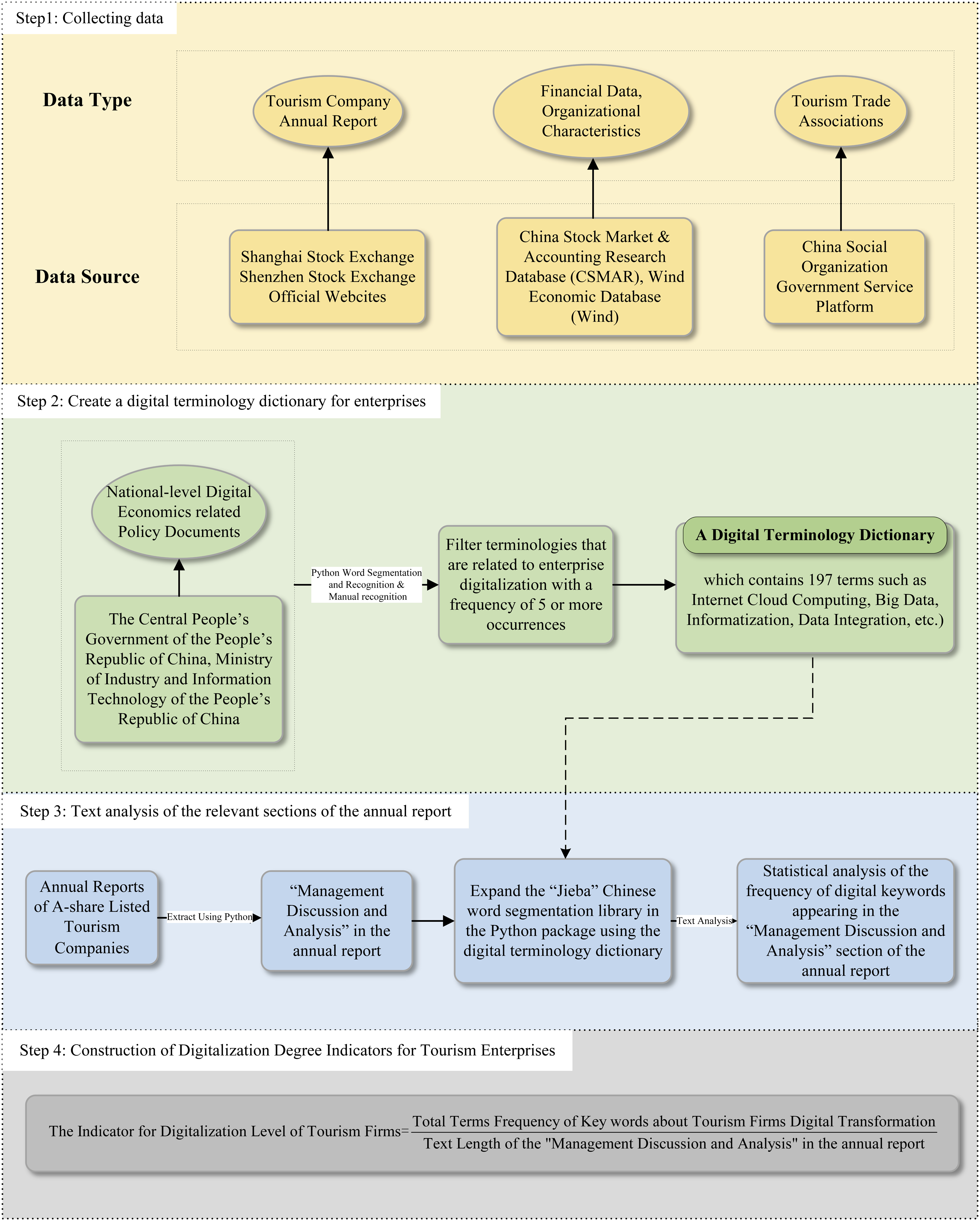
Data on tourism trade associations were collected manually from the China Social Organizations Government Service Platform, which is an official portal managed by the Ministry of Civil Affairs. This platform provides comprehensive information on registered organizations, including their name, social credit code, type, registration date, capital, business scope, and address. According to the Regulations on the Administration of Trade Associations, a social organization’s name must accurately reflect its business scope, membership distribution, and geographical coverage. Additionally, the “one industry, one association per region” policy prohibits the establishment of duplicate or similar trade associations within the same administrative area. These regulations enable the precise identification of each association’s location while preventing duplication issues. Data processing involved two steps: first, selecting tourism trade associations at the prefecture-level city tier; and second, matching these associations with their corresponding codes based on the registered city of H&T firms.
Model
Following Wu et al. (2023), we adopted a multi-period DID model to assess the impact of tourism trade associations. Given that these associations are typically established by governments or institutions in response to industry needs, their formation is exogenous to individual firms. Moreover, their policies apply broadly across the industry rather than targeting specific firms. This exogenous nature allows us to treat their establishment as an external shock, enabling the DID model to identify their effect on digital transformation while controlling for confounding factors.

Variable definitions and descriptions
Independent variable
The independent variable is tourism trade associations (Tourism_Association). We assign a value of one if a tourism trade association was established in the city where a H&T firm is registered during a given year or any subsequent years; otherwise, 0. Based on this classification, firms are divided into treatment and control groups. Importantly, the tourism trade associations considered in this study refer specifically to those at the prefecture-level city, excluding district/county-level associations and subsector associations related to tourism (e.g., tourism attraction, product, and catering associations). This selection is based on two primary considerations: (1) Tourism trade associations in prefecture-level cities have greater advantages in terms of resource integration, organizational structure, policy guidance, and industry self-regulation, consequently making them more effective in promoting the sustainable growth of both the tourism industry and individual firms. (2) The number of district/county-level and other specialized tourism trade associations is too large and obtaining accurate and comprehensive statistical information on them is impractical.
Dependent variable
Following Cheng et al. (2023), we use machine learning techniques to develop a digital transformation index for H&T firms, thus providing a comprehensive measure of their adoption of DT. As a key driver of high-quality corporate growth, digital transformation is frequently highlighted in firms’ annual reports. The language in these reports reflects not only strategic priorities and future outlooks but also broader business philosophies and developmental goals (Neu and Pedwell, 1998). To quantify digital transformation, we analyzed the frequency of digital-related terms in annual reports. Using a data mining-based text recognition approach, we systematically extracted relevant terms to construct a robust measure of firms’ digital transformation levels. The digital transformation index was constructed in three steps (see Figure 1).
Control variables
We incorporated control variables informed by prior research and practical relevance. (1) We used the natural logarithm of total assets (Size) and that of the difference between the current year and the firm’s founding year (Age) as proxy variables. (2) Financial conditions and investment and financing capabilities serve as the foundation for firms’ investment decisions (Akron et al., 2020; Hu et al., 2024; Li and Wei, 2024; Vo, 2019). Therefore, we selected the ratio of employee benefits payable to total assets (Wage), the ratio of market value to total assets (TobinQ), that of net profit to total assets (ROA), and of total liabilities to total assets (Lev) as proxy variables. (3) State-owned enterprises may exhibit distinct decision-making patterns in digital transformation due to government guidance and financial support (Li et al., 2023; G. Liu et al., 2024). Thus, we controlled for firm ownership (Soe), assigning a value of one if the firm is state-owned and 0 otherwise. To address potential issues caused by missing values, we added one to the raw data before taking the logarithm of the Size, Age, and Wage variables. Additionally, we controlled for firm-fixed effects (Firm) and year-fixed effects (Year) to account for firm-specific time-invariant and macroeconomic policy factors associated with specific years.
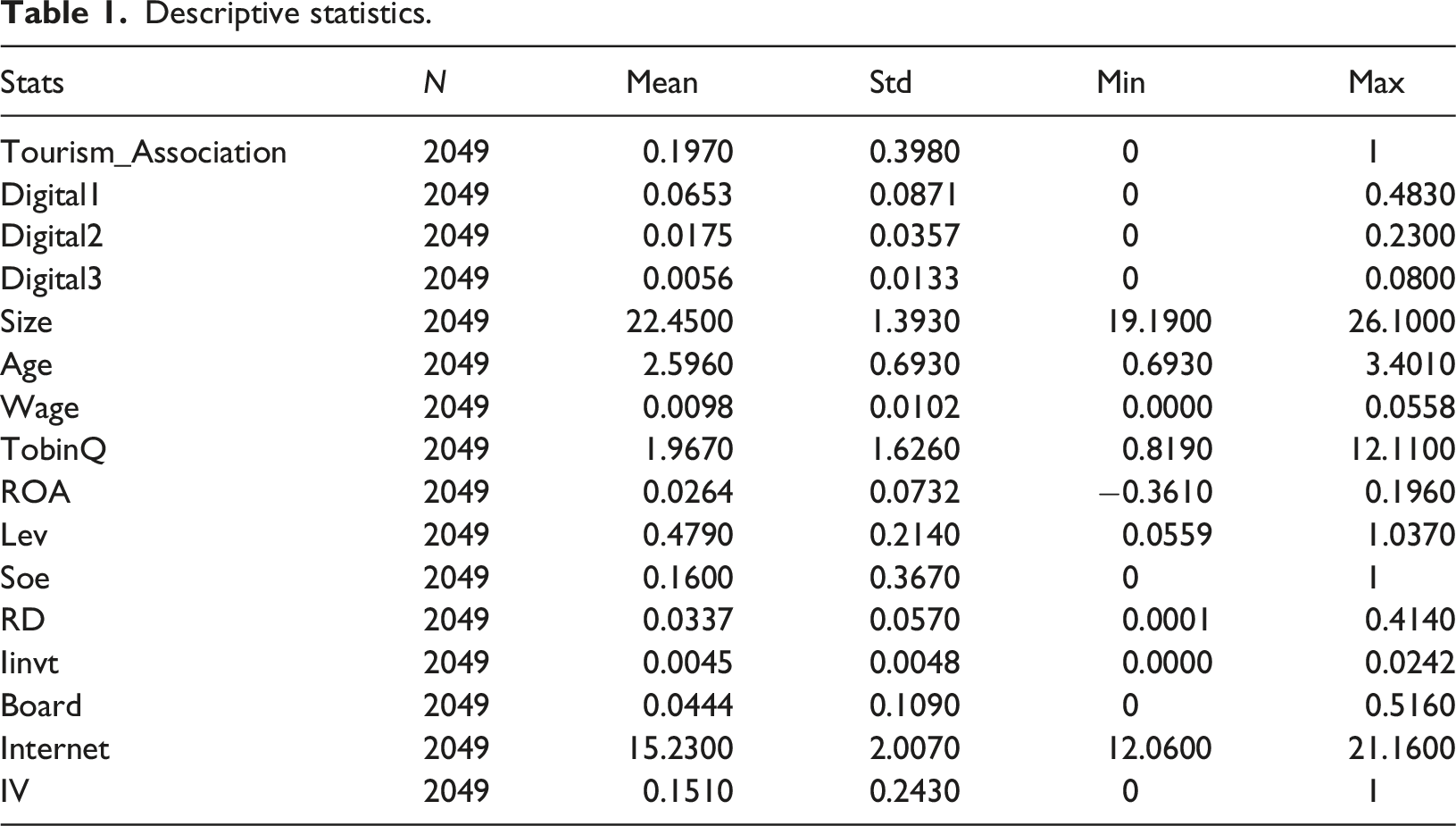
Descriptive statistics
Descriptive statistics.
Results
Baseline results
Regression results.
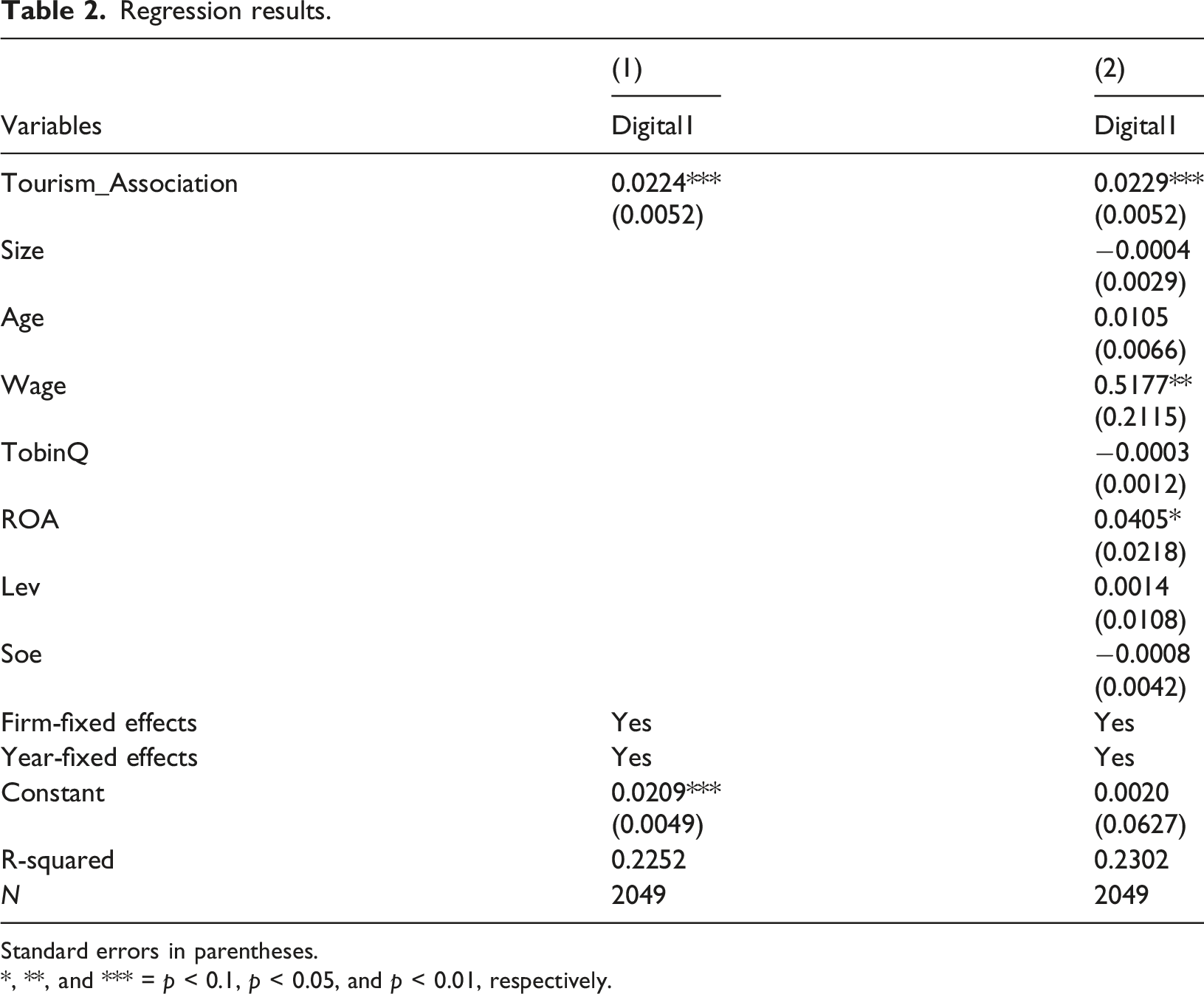
Standard errors in parentheses.
*, **, and *** = p < 0.1, p < 0.05, and p < 0.01, respectively.
Robustness tests
Parallel trend test
To validate the parallel trends assumption required by the DID model, we conducted an event study using dummy variables spanning four years before to 3 years after the establishment of tourism trade associations. The results presented in Figure 2 indicate that before the establishment of trade associations, the 90% confidence intervals of the regression coefficients for the dummy variables (before4, before3, before2, before1) all included 0. This suggests that relative to the baseline year, no significant difference existed between the treatment and control groups before the establishment of trade associations. However, in the year of establishment, the regression coefficients exhibited a noticeable jump and were significantly positive at the 5% level. Moreover, in the post-establishment periods, the regression results remain largely significant, with a general upward trend in the coefficients, thereby indicating that the actual impact of tourism trade associations strengthens progressively over time. Parallel trend test results.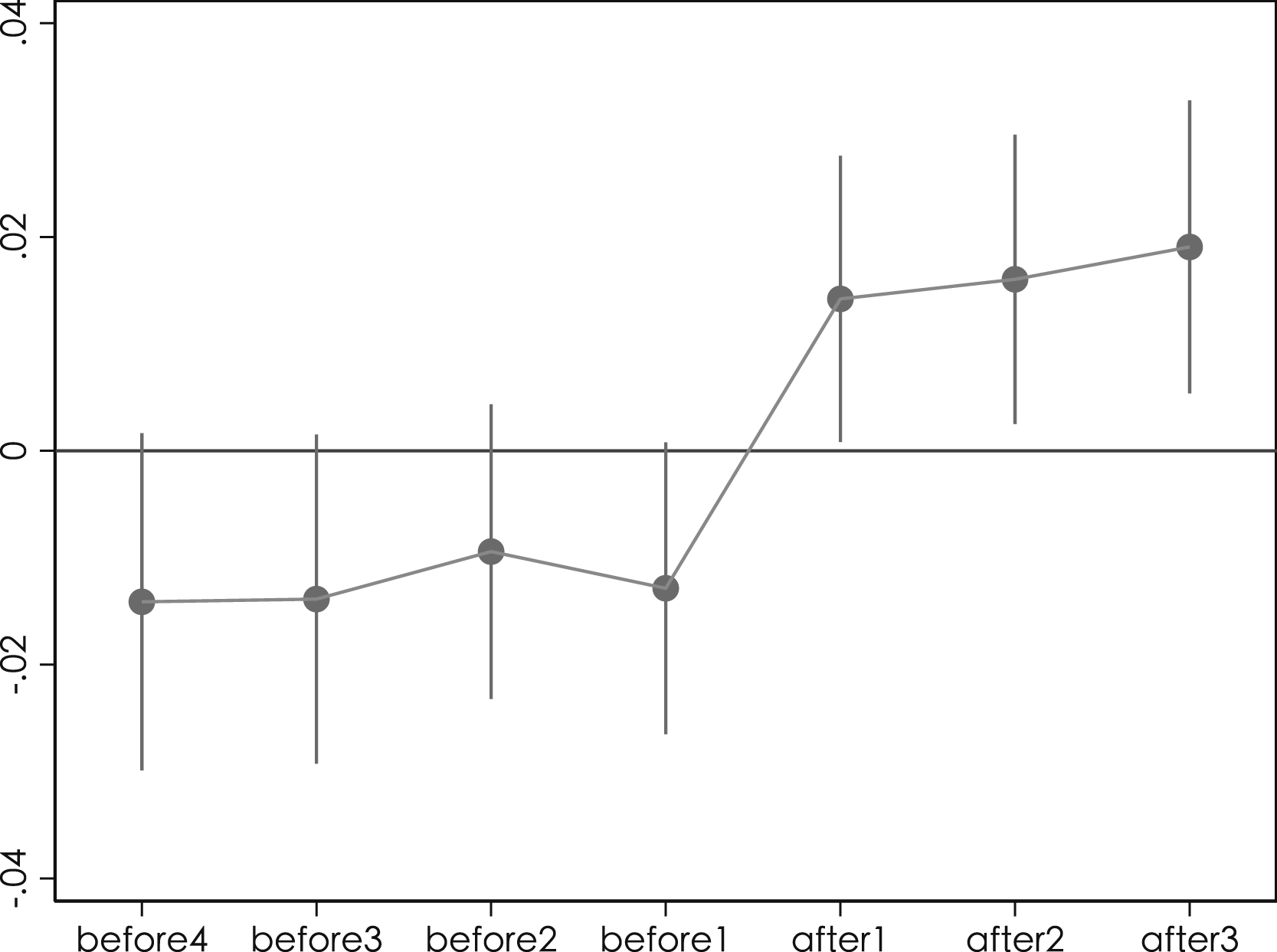
Instrumental variable analysis
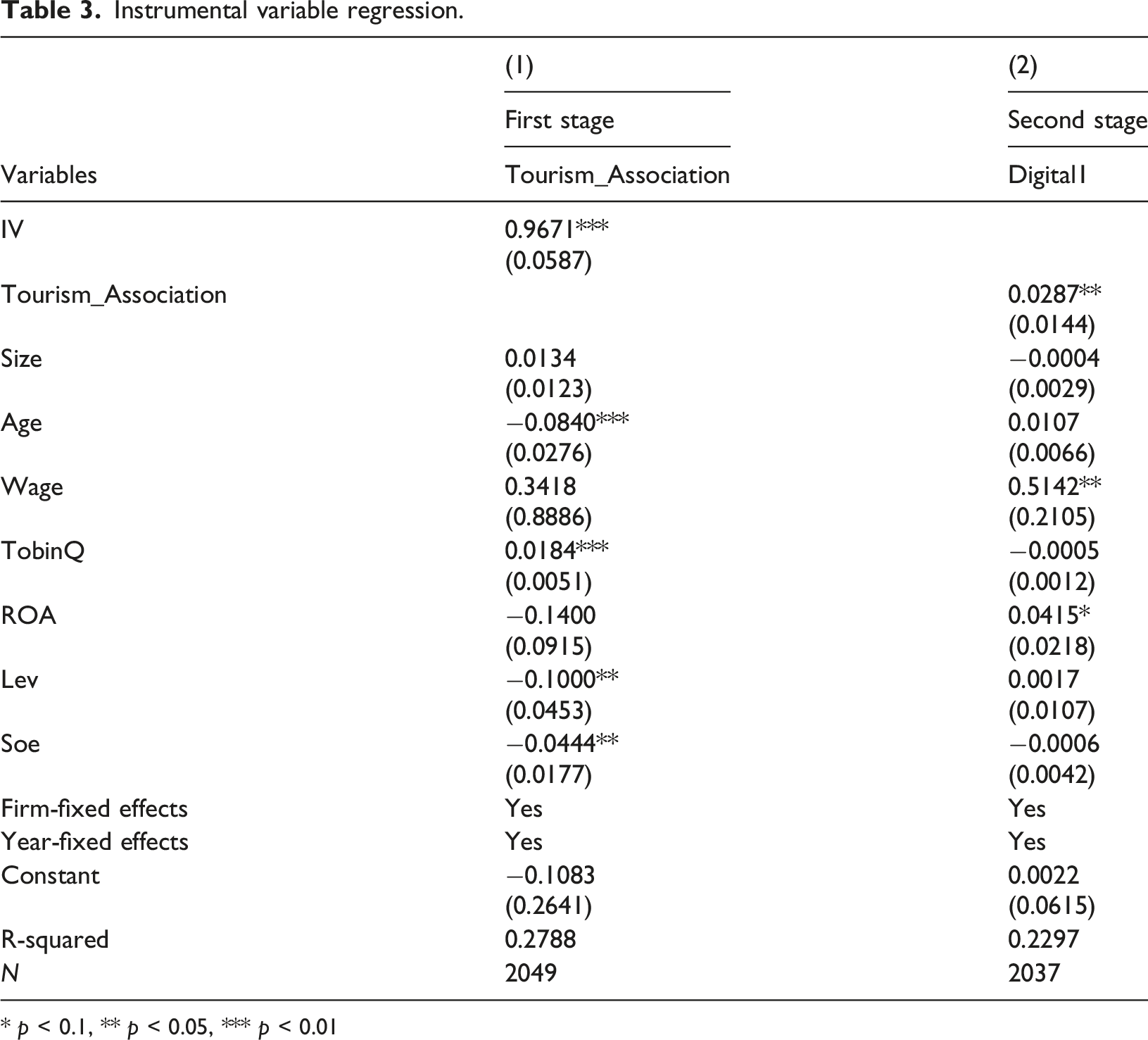
The baseline regression results indicate that the presence of tourism trade associations promotes the digital transformation of H&T firms. However, potential endogeneity issues may bias these estimates. Specifically, as noted, the establishment of trade associations might be endogenous to local industry development; regions with a more vibrant tourism economy or higher digital maturity may be more likely to form associations, creating reverse causality. Additionally, unobserved factors such as regional policy support or local digital infrastructure could simultaneously drive both association formation and firm-level digital transformation. To mitigate these concerns, this study employs a two-stage least squares (2SLS) estimation, using the average number of tourism trade associations in other cities within the same province as the instrumental variable (IV).
This instrument is theoretically valid as it satisfies both relevance and exogeneity conditions. Regarding relevance, institutional environments within the same province often share similar administrative characteristics and policy orientations. The development density of social organizations in neighboring cities reflects the overall regional propensity and policy climate for association formation, which is likely correlated with the association presence in the focal city. This establishes a robust link between the IV and the endogenous variable, Tourism_Association. Regarding exogeneity, after controlling for firm- and city-level characteristics, the number of trade associations in other cities is unlikely to have a direct impact on a specific firm’s digital transformation strategy in the focal city. A firm’s digital decisions are primarily driven by local market conditions and internal resources rather than the organizational landscape of distant cities within the province, thus satisfying the exclusion restriction.
Instrumental variable regression.
* p < 0.1, ** p < 0.05, *** p < 0.01
Placebo test
To address concerns about unobservable factors influencing the results, we conducted a placebo test following Xiao et al. (2024). The fundamental idea of the DID placebo test is to re-estimate the model using artificially assigned treatment and control groups. If the regression results for the “pseudo-treatment group” remain significant, the original estimates may be biased. Specifically, we randomly selected firms equal in number to the actual treatment group each year and designated them as the “pseudo-treatment group,” and repeated this random sampling process 500 times to perform the regression analysis. The distribution of the estimated coefficients across the 500 replications along with the corresponding p-values is presented in Figure 3. The horizontal axis represents the magnitude of the core explanatory variable’s coefficient, while the vertical axis denotes the p-values, with dots illustrating their distribution. The results indicate that for the majority of the estimates, the p-values exceed 0.1 (i.e., above the horizontal dashed line in the figure), thus suggesting that they are not statistically significant. This finding implies that unobservable factors are unlikely to have a significant impact on the estimation results. Placebo test results.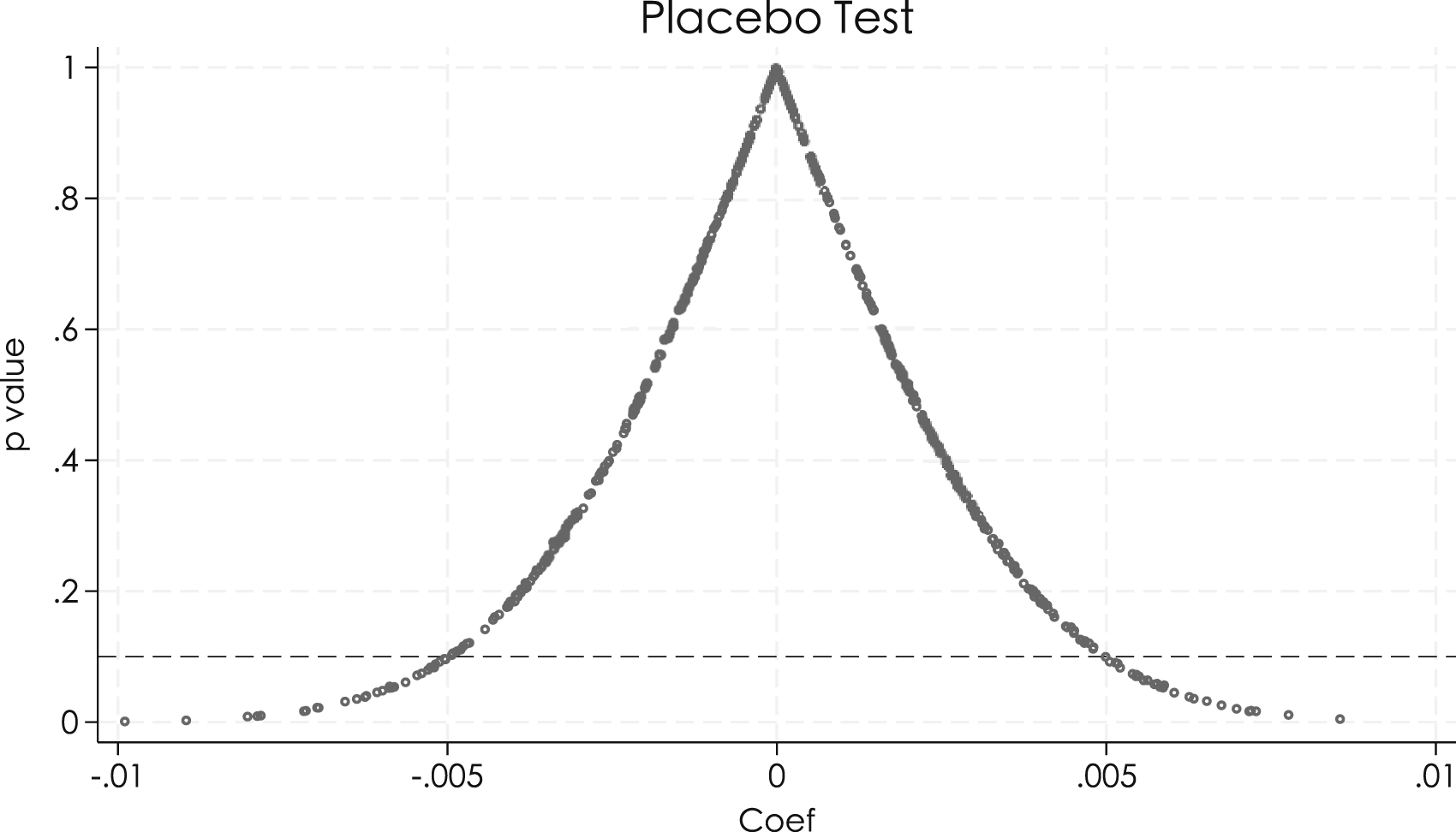
Alternative measures of dependent variable
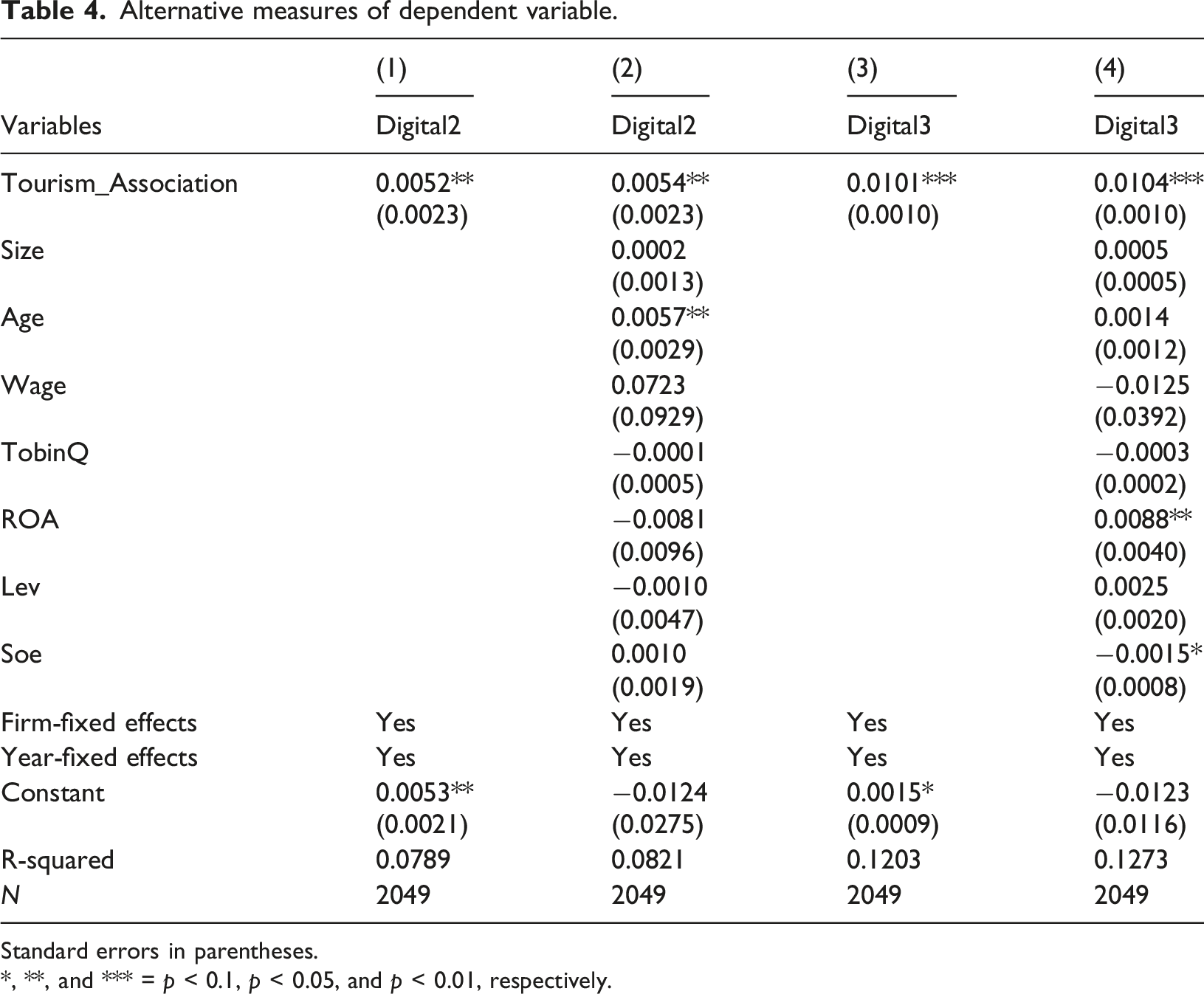
Alternative measures of dependent variable.
Standard errors in parentheses.
*, **, and *** = p < 0.1, p < 0.05, and p < 0.01, respectively.
Furthermore, we adopted the firm-level annual count of digital technology patent applications (scaled per 100 patents) as an alternative measure for digital transformation, denoted as Digital3. This proxy provides three distinct validity advantages. First, patent grants are subject to rigorous substantive examinations by intellectual property authorities. Their technical standards align closely with core digital domains, such as AI algorithms, IoT systems, and blockchain protocols, thereby accurately reflecting genuine innovation activities. Second, the mandatory disclosure of technical details in patent filings mitigates measurement errors often associated with dictionary selection bias or strategic narrative manipulation in textual analysis. Third, patent data is inherently resistant to reporting bias, as firms cannot secure valid patents without tangible research and development inputs.
Regarding the construction of this metric, we followed established literature that identifies digital innovation through patent text analysis (Y. Li et al., 2023; Yang, 2022). Specifically, we extracted and analyzed keywords from the abstracts, specifications, and claims of both invention and utility model patents filed by hospitality and tourism groups. These patents were then categorized as digital technologies in accordance with the Key Digital Technology Patent Classification System released by the China National Intellectual Property Administration (2023). As presented in Column (4) of Table 4, the coefficient for Digital3 remains positive and statistically significant at the 1% level. This result confirms that tourism trade associations bolster the digital innovation output of firms, thereby lending robust support to H1 and reaffirming our main conclusions.
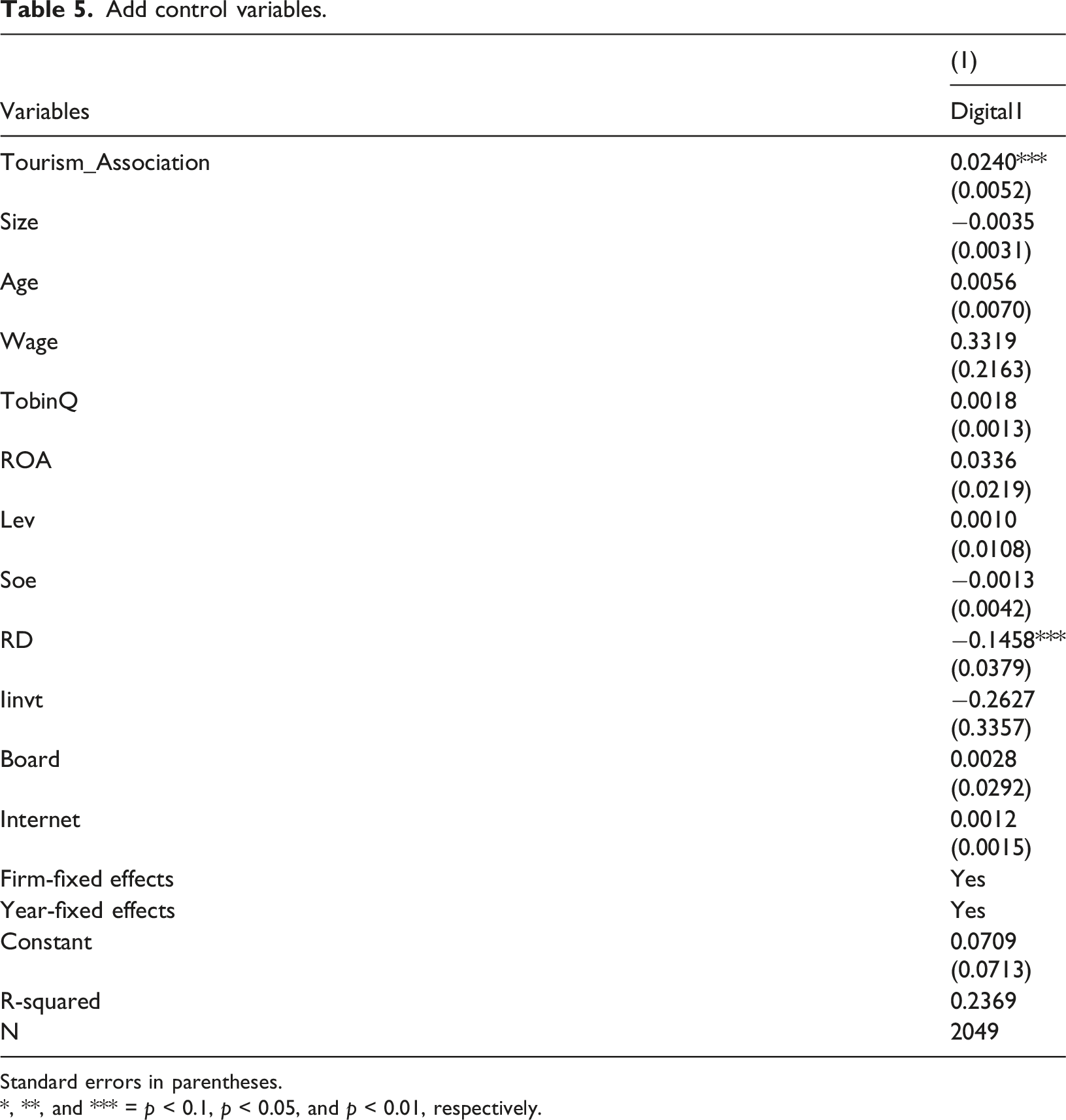
Add control variables
Add control variables.
Standard errors in parentheses.
*, **, and *** = p < 0.1, p < 0.05, and p < 0.01, respectively.
Moderating effect test
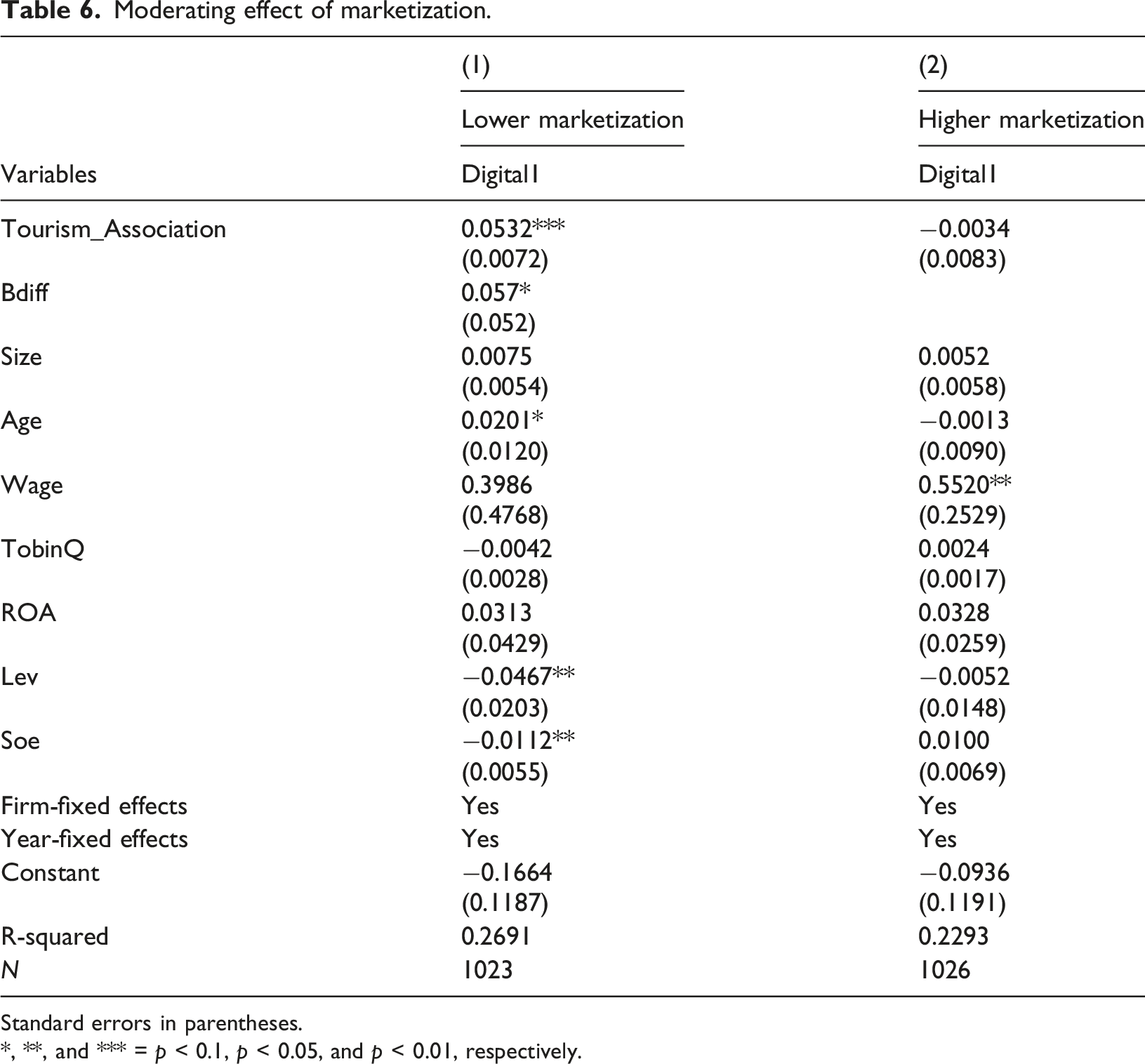
Marketization
Moderating effect of marketization.
Standard errors in parentheses.
*, **, and *** = p < 0.1, p < 0.05, and p < 0.01, respectively.
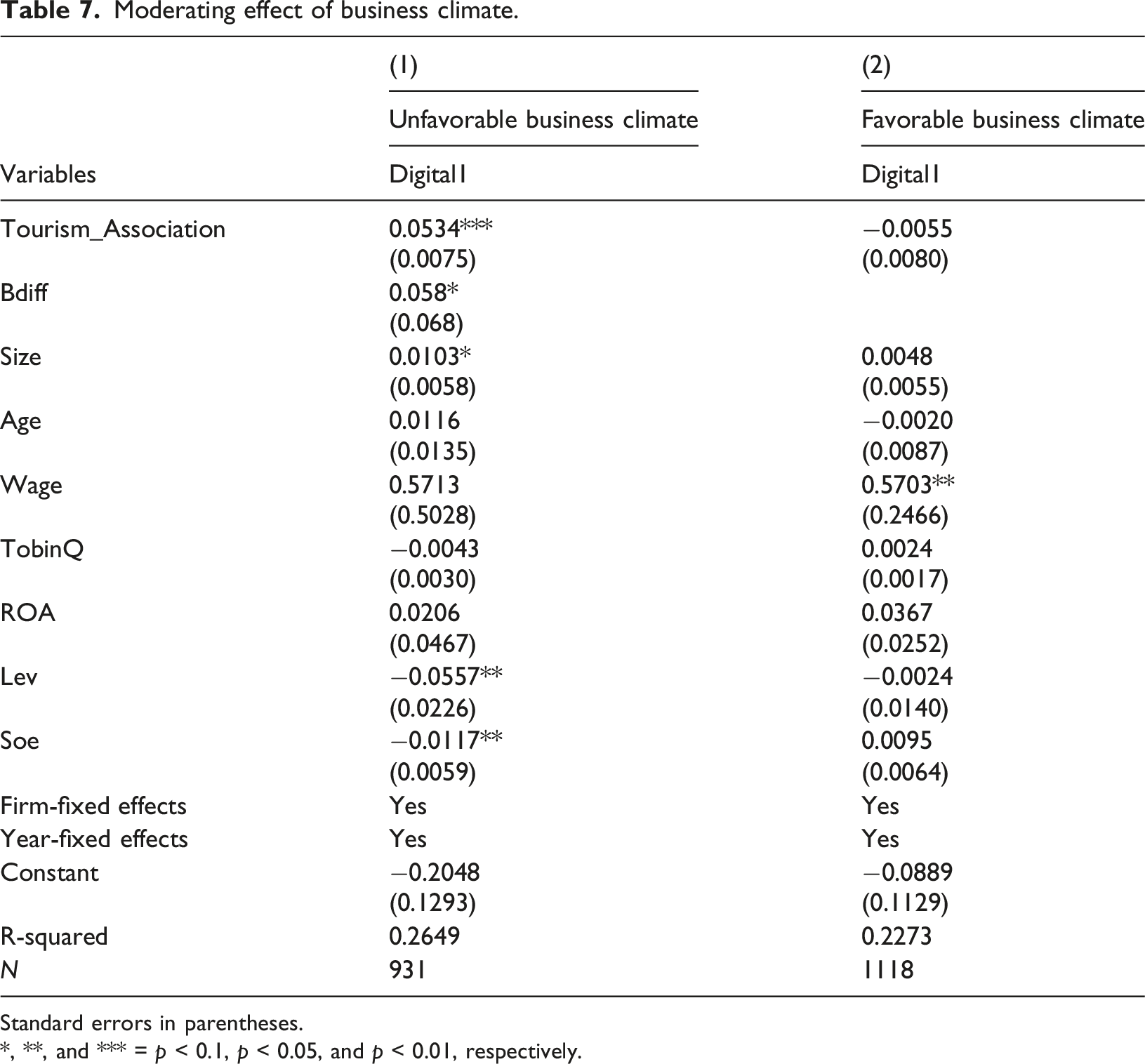
Business climate
Moderating effect of business climate.
Standard errors in parentheses.
*, **, and *** = p < 0.1, p < 0.05, and p < 0.01, respectively.
Discussion and implications
Main conclusions
Using a comprehensive dataset of Chinese H&T firms listed on the A-share market of the Shanghai and Shenzhen Stock Exchanges from 2009 to 2022, this study reveals that tourism trade associations play a significant role in promoting digital transformation. This impact is particularly pronounced among firms located in regions with lower marketization, where information flow channels and financing markets are underdeveloped, and those in regions with unfavorable business climates, characterized by high market entry barriers, expensive financing costs, and difficulties in accessing digital resources. These challenges underscore the unique advantages of tourism trade associations, including information sharing, resource provisioning, strategic guidance, and communication with government bodies, thus strengthening their role in promoting the digital transformation of H&T firms within this institutional context.
Research implications
First, this study advances RBT by highlighting the role of collective industry resources in driving digital transformation, which is an aspect often overlooked in firm-centric analyses. Previous research has primarily examined how firm-specific resources and capabilities, such as dynamic capabilities in SMEs (Civelek et al., 2023) and CSR initiatives that enhance human and technological resources (Nie et al., 2024), influence digital transformation. Our findings demonstrate that tourism trade associations play a crucial role in facilitating the digital transformation of H&T firms, particularly in regions with low marketization and challenging business climates. By emphasizing the significance of inter-organizational resource acquisition in shaping digital strategies, this study broadens the scope of RBT and digital transformation research, thus offering new insights into the external drivers of technological advancement within the context of China.
Second, this study contributes to the literature on the firm-level impact of tourism trade associations. In the H&T industry, while previous studies have examined the impact of tourism trade associations on local destination marketing and governance (Garrod and Fyall, 2017), tourism policy development (McKercher, 2022), coordination within tourist destinations (Moretti et al., 2024), and the coopetition willingness of tourism destination firms (Chim-Miki et al., 2024), the specific influence of such associations on strategic decision-making within H&T firms remains underexplored. Our study addresses this gap by examining how tourism trade associations drive digital transformation in the industry.
Third, by providing a more robust and causally identified analysis, this study strengthens the methodological approach to assessing the impact of tourism trade associations. Previous research has primarily relied on qualitative methods for conceptual discussions (Garrod and Fyall, 2017; McKercher, 2022; Moretti et al., 2024), which limits the empirical depth. Questionnaire-based studies (Chim-Miki et al., 2024) also face constraints in terms of sample size, which reduce the statistical representativeness of their findings. To address these limitations, this study compiled data on tourism trade associations at the prefecture level from the Chinese Social Organization Government Service Platform and matched it with firm-level data from H&T companies listed on the Shanghai and Shenzhen Stock Exchanges. By employing the DID method, this study enhances the methodological rigor, thus offering a more precise empirical analysis of how tourism trade associations influence digital transformation in China’s H&T sector.
Practical implications
The findings offer valuable managerial insights. First, as institutional intermediaries that carry professional logic and possess advantages in market resource allocation, tourism trade associations provide the key resources and strategic guidance required for the digital transformation of H&T firms through both internal support and external connections. Managers, particularly those in China or similar emerging markets, should fully recognize the unique value of such associations and actively engage in the business networks they create. For example, they can become member firms and participate in specialized seminars, forums, and training activities to enhance their teams’ professional capabilities and digital literacy. Furthermore, by strengthening communication and collaboration with peer firms, managers can more effectively identify and resolve the resource bottlenecks and external challenges encountered during the digital transformation process, such as technology selection, data security, and consumer acceptance. This will help accelerate their firms’ digital transformation, ultimately resulting in positive outcomes in areas such as service innovation, operational efficiency improvements, and enhanced market competitiveness.
Second, tourism trade associations should adopt a stronger leadership role in setting industry standards and analyzing market trends. By assessing market dynamics and consumer demand, they can develop practical, forward-looking standards that foster collaboration across the tourism supply chain and enhance industry competitiveness and consumer trust. In addition, they should remain attuned to emerging technologies, ultimately guiding firms in adopting digital tools and innovative business models to improve their service quality and adaptability. Collaboration with government agencies, universities, and research institutions is essential to foster a dynamic innovation ecosystem. Policymakers in transition economies should recognize the value of tourism trade associations in addressing industry needs and provide targeted support to ensure the sector’s long-term growth.
Finally, to maximize the benefits of trade associations, H&T firms should closely monitor market conditions and business environments and adjust their technological advancement and digital strategies accordingly. In highly marketized and favorable business environments, firms have greater access to market information and financing, which enables them to track industry trends and adopt DT independently. Consequently, the role of trade associations in shaping their digital strategies diminishes. Conversely, trade associations provide valuable support in regions with lower marketization and more challenging business conditions. They offer industry insights, policy guidance, funding opportunities, and networking resources that help firms overcome barriers to digital transformation. Strengthening ties with these associations can ease the transition, reduce costs, and enhance digital capabilities. A strategic approach to leveraging trade associations ensures smoother and more cost-effective digital transformation, ultimately improving long-term competitiveness and sustainability.
Limitations and future studies
This study has several limitations that highlight opportunities for future research. First, the sample is restricted to H&T companies listed on the Chinese stock market, which excludes SMEs that are vital to the sector. This limitation could affect the generalizability of the results because SMEs constitute a significant portion of the H&T industry. To enhance the applicability of the findings across the broader industry, future research should include a more diverse set of firms.
Second, this study overlooks the heterogeneity of tourism trade associations and its potential impact on the differential effects they have on driving firms’ digital transformation practices. Future research could consider how variations in the status, authority, and strategic focus of tourism trade associations influence their ability to support firms’ digital transformation.
Footnotes

Author contributions
Funding
The authors disclosed receipt of the following financial support for the research, authorship, and/or publication of this article: This research is supported by the Key Project of the Jiangxi Provincial Social Science Foundation (25ZXQH14) and the Humanities and Social Sciences Youth Foundation of the Ministry of Education of China (22YJC630143).
Declaration of conflicting interests
The authors declared no potential conflicts of interest with respect to the research, authorship, and/or publication of this article.
Data Availability Statement
Data will be made available on request.