






Abstract
This study investigates the nonlinear, inverted U-shaped relationship between wives’ income share within the household and household tourism expenditure. Challenging the assumption of a uniform effect, the research highlights the complexity and evolving nature of intra-household power dynamics in financial decision-making by integrating feminist and rational choice perspectives. The study further develops a household decision-making model, suggesting that tourism expenditure reaches its peak when wives contribute approximately 50% of total household income. Empirical analysis employs a two-step generalized method of moments estimation, which supports the proposed inverted U-shaped relationship and confirms that household tourism expenditure is highest when wives’ income share is close to one-half of total household income. The findings are interpreted as consistent with the theoretical benchmark derived from the household decision-making model. Overall, these results offer important insights into the interaction between gender dynamics and economic decision-making, with meaningful implications for the formulation of sustainable tourism strategies.
Keywords
Introduction
Tourism expenditure is a pivotal subject in tourism research due to its crucial role in analyzing tourism demand and driving economic development (Alegre et al., 2011; Hu et al., 2021; Lin et al., 2022). Understanding tourism expenditure can enhance the effectiveness of strategies and foster holistic tourism growth (Craggs and Schofield, 2009; Mok and Iverson, 2000). While family tourism expenditure has been extensively studied, with a focus on factors such as sociodemographic, household economic, and psychological dimensions (Deng et al., 2023; Lin et al., 2021; Xu and Liu, 2023), the role of wives’ income share within household dynamics remains underexplored.
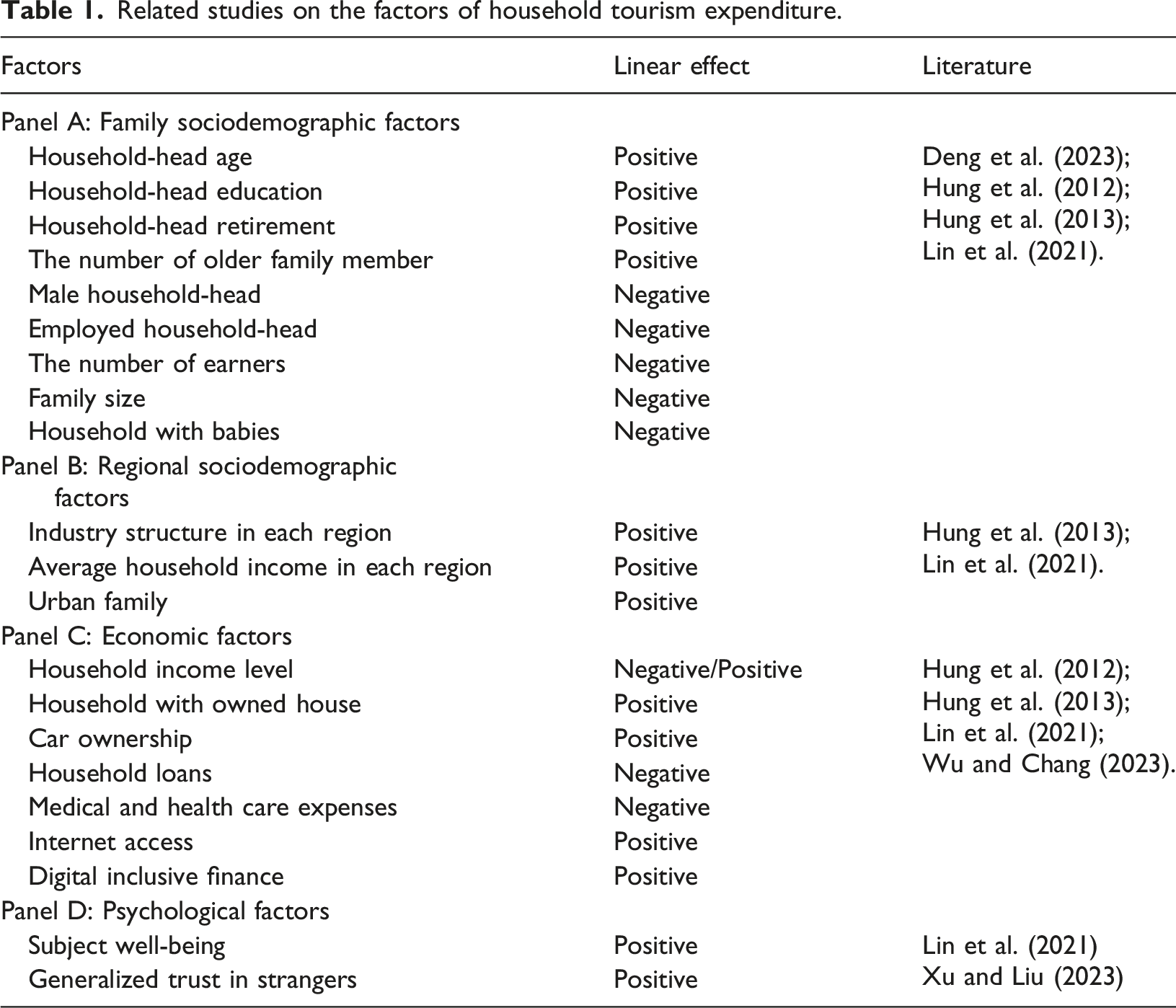
Previous studies identify four main determinants of household tourism expenditure (Table 1): family sociodemographic factors, regional sociodemographic factors, economic factors, and psychological factors (Deng et al., 2023; Hung et al., 2012, 2013; Lin et al., 2021; Wu and Chang, 2023; Xu and Liu, 2023). Family characteristics such as household head gender, age, education, employment, and family size influence tourism spending, while regional economic conditions and access to services also play important roles. Economic factors, including income, assets, debt, and internet access, affect spending capacity, whereas psychological factors such as subjective well-being and trust are associated with higher tourism expenditure. Beyond these factors, intra-household gender bargaining is also important for household decision-making. Prior studies report mixed findings regarding the effect of household head gender on tourism expenditure. Some find that female-headed households spend more on tourism (Fleischer and Rivlin, 2009; Zhang and Feng, 2018), while others report opposite or insignificant effects (Haq et al., 2019). However, most studies rely on a simple male-versus female-headed household distinction, overlooking the bargaining dynamics between spouses.
This study shifts the focus from household headship to wives’ income share within the household. This approach is grounded in bargaining theory, which argues that relative economic resources shape bargaining power and household decision-making outcomes (Doepke and Tertilt, 2019; Hopkins et al., 1994). Although previous research has examined women’s income share in the context of tourism development (Abou-Shouk et al., 2021), limited attention has been paid to how wives’ relative income contribution influences intra-household decision-making and tourism expenditure. By incorporating wives’ income share as an observable indicator of bargaining power, this study develops a theoretically grounded framework to examine whether differences in spouses’ relative economic resources are systematically associated with variations in household tourism expenditure.
Drawing on the work of Danquah et al. (2021) and Dolnicar et al. (2008), this study conceptualizes financial income as a key determinant of intra-household income share, shaping financial interactions and decision-making processes related to discretionary consumption, including tourism. Prior research indicates that women’s income share enhances their participation in household decision-making and contributes to improved household welfare outcomes (Deere and Doss, 2006; Doepke and Tertilt, 2019). Building on this perspective, this study utilizes the wives’ income ratio as a measurable indicator of women’s income share within the household. Rather than treating income distribution as a static attribute, this study conceptualizes the wives’ income ratio as a dynamic indicator reflecting both individual economic capacity and evolving intra-household power relations. By capturing the proportion of total household income contributed by wives, this measure provides a meaningful lens for examining how shifts in spouses’ relative economic power influence household consumption decisions.
The Chinese context provides a particularly relevant setting for examining these dynamics. Despite rapid economic growth and increasing female participation in the labor market, gender disparities in income remain pronounced. On average, women’s income accounts for approximately 30.5% of total household income in China, reflecting persistent inequalities in economic resources and bargaining power within households. At the same time, China’s tourism industry has experienced substantial expansion alongside rising household incomes and growing demand for leisure and travel consumption. These concurrent developments make China an appropriate context for investigating how gendered income distribution, or income share, within households influences tourism expenditure decisions. Using nationally representative household data, this study examines how variations in wives’ income share interact with intra-household decision-making processes to shape household tourism consumption patterns.
Specifically, this study enriches its analytical framework by integrating feminist theory and rational choice theory (England and Kilbourne, 1990; Wollstonecraft, 1792). These frameworks present nuanced implications regarding the impact of wives’ income share on household tourism expenditure. Accordingly, this study makes the following contributions:
First, this study makes a theoretical contribution to the tourism research literature by proposing a nonlinear impact of wives’ income share on household tourism expenditure. Specifically, it proposes a theoretical hypothesis that there is an inverted U-shaped relationship between wives’ income share and household tourism expenditure, capturing the dynamic interplay between feminist and rational choice theories at different levels of wives’ income share. As wives’ income share increases, household tourism expenditure initially rises, reaches a peak, and then begins to decline after surpassing a certain threshold. This suggests an optimal level of wives’ income share that maximizes household tourism expenditure.
Second, this study develops a household decision-making model to derive a theoretical benchmark for the level of wives’ income share associated with the highest level of household tourism expenditure. Within the model, couples maximize household utility subject to household production constraints using a Cobb–Douglas production framework (Cobb and Douglas, 1928; Doepke and Tertilt, 2019). The model predicts that tourism expenditure reaches its theoretical optimum when wives’ final economic power share equals one-half of total household income.
Third, the study provides empirical evidence of the nonlinear relationship between wives’ income share and household tourism expenditure and identifies empirical turning points that are close to the theoretical benchmark derived from the model. The analysis shows that tourism expenditure tends to peak when wives’ income share approaches one-half of total household income. The findings indicate that a relatively balanced distribution of household income is associated with higher levels of tourism expenditure within the estimated reduced-form specification.
Related studies and theoretical hypotheses
Wives’ income share on household tourism expenditure
Wives’ higher income share within the household—reflected in their increased participation in the labor force and growing contribution to total household income—enhances their access to and control over financial resources (Abou-Shouk et al., 2021). This shift not only promotes financial independence but also fundamentally reshapes intra-household bargaining structures, strengthening women’s role in financial decision-making and resource allocation (Arroyo et al., 2019). As wives gain greater influence over the allocation of household income, they assume a more central role in shaping patterns of consumption, saving, and investment, thereby contributing to the household’s overall economic well-being. In particular, their increased decision-making authority has important implications for discretionary expenditures, including tourism-related spending.
The relationship between wives’ income share and household tourism expenditure is inherently complex and cannot be adequately explained through a single theoretical perspective. Nonlinear patterns have been observed in tourism management research, where increasing female participation in decision-making improves outcomes only up to an optimal level before diminishing returns emerge (Zhu et al., 2025). These findings suggest that the influence of women’s economic power may depend on its relative level rather than increase monotonically. This study integrates feminist theory and rational choice theory to capture the dynamic interaction between gendered power relations and economic behavior. Feminist theory emphasizes that increases in wives’ income share transform traditional gender roles, redistribute bargaining power, and enhance women’s agency within the household (Wollstonecraft, 1792). Rational choice theory, in turn, provides a framework for understanding how individuals allocate resources to maximize perceived utility (England and Kilbourne, 1990; Himmelweit et al., 2013). This integration is essential because economic preferences and decision-making processes are not gender-neutral; rather, they are socially embedded and shaped by gender norms, identities, and expectations.
At lower levels of wives’ income share, limited bargaining power constrains women’s influence over household financial decisions. As their income share increases, women experience greater income share, which enhances their ability to assert preferences and participate more actively in consumption decisions (Zhang and Hitchcock, 2017). At this stage, tourism expenditure is likely to increase, as women allocate resources toward activities that promote personal well-being, self-development, and experiential consumption (Wollstonecraft, 1792). This pattern reflects the expansion of individual agency emphasized in feminist theory and the pursuit of utility-enhancing consumption choices central to rational choice theory.
As wives’ income share continues to rise, women’s roles increasingly extend beyond individual empowerment toward shared or primary responsibility for overall household welfare. Empowered wives, acting as rational agents, evaluate discretionary expenditures to ensure alignment with broader household objectives, which may lead to a moderation or reduction in tourism spending (Opata et al., 2020). Decision-making becomes more collectively oriented, with greater emphasis on long-term financial stability, savings, and investment priorities (Himmelweit et al., 2013). Importantly, this does not represent a shift away from feminist dynamics toward purely economic rationality; rather, it reflects a deepening of empowerment, wherein women’s agency encompasses the capacity to balance individual preferences with collective welfare considerations. Thus, rational choice behavior is expressed through a gendered lens, shaped by evolving roles and responsibilities within the household (England and Kilbourne, 1990). Consequently, tourism expenditure may stabilize or decline at higher levels of wives’ income share, as resource allocation becomes increasingly oriented toward optimizing overall household utility.
In summary, at lower levels of income share, wives may utilize tourism expenditure as a means of asserting independence and enhancing self-esteem (Wollstonecraft, 1792). As their income share increases, women are more likely to participate actively in tourism-related decisions and engage in higher levels of discretionary consumption, reflecting their pursuit of autonomy and self-expression (Zhang and Hitchcock, 2017). However, at higher levels of empowerment, wives increasingly prioritize household welfare over individual leisure expenditures, potentially reducing tourism spending as they focus on optimizing overall household utility and efficiency in resource allocation (England and Kilbourne, 1990; Snidal, 2013). Accordingly, this study proposes the following hypothesis:
There is an inverted U-shaped relationship between wives’ income share and household tourism expenditure.
Optimal wives’ income share: A household decision-making model
Considering the theoretically proposed inverted U-shaped relationship between wives’ income share and household tourism expenditure, as posited by feminist and rational choice theories, it is essential to identify the peak expenditure point. Pinpointing this peak is crucial for leveraging household tourism expenditure to enhance tourism development and drive economic growth. This study, therefore, develops an economic theoretical model to analyze the maximization of household tourism expenditure, focusing on gender dynamics within families.
The household decision-making model assumes that household decisions, including tourism expenditure, are influenced by both spouses’ economic power and bargaining power. Tourism, considered a public good within the household, requires contributions from both spouses for its sustenance, providing utility to both. The inherent asymmetry within this dyadic structure arises from disparities in their individual income ratios, influencing their household decision-making authority or bargaining power concerning tourism expenditure (Danquah et al., 2021; Dolnicar et al., 2008).
The decision-making process between spouses operates under the assumption that each spouse’s actions are fixed from the perspective of the other, establishing household allocation as a Nash equilibrium. Based on this premise, the study adopts a household decision-making model to explore the dynamics that are not contingent upon differing preferences between husband and wife (Nash, 1951). To account for bargaining power, the model assumes that each spouse has full control over their own income, as well as any transfers received from the other. Both spouses aim to maximize the overall family utility, while considering the fixed contributions of the other spouse toward tourism-related expenses. In this framework, each spouse’s decision is independent yet interdependent, with decisions reflecting asymmetric power dynamics influenced by income disparities and transfers between spouses (Nash, 1951). The Nash equilibrium assumption highlights how each spouse’s strategic decisions affect the household’s overall tourism expenditure, without requiring preference divergence between them.
Accordingly, this study formulates a household decision-making model to scrutinize the maximization of household tourism expenditure, focusing on the influence of both spouses’ income and mandated transfers. The family utility derived from the household tourism expenditure and all other expenses is modeled as a logarithmic function, reflecting the joint production of tourism goods within the household.

Assuming that the production process has the share parameter α ∈ (0, 1) for the goods input and 1−α for time input, tourism goods within the household can be produced by either spouse. The production process necessitates each spouse to combine their labor with their personal contribution of goods, highlighting that time and goods inputs are often inseparable in household production (Chen, 2006).
In this theoretical framework, each spouse aims to maximize the family utility which is an equilibrium, subject to constraints outlined as follows:


To elucidate,

The sum of
Accordingly, the utility function can be expressed as follows (see Appendix A):

Maximizing utility equates to maximizing C, the tourism goods produced by the household (see Appendix B). Consequently, the issue of utility maximization is transferred to expenditure maximization. By deriving maximum solutions of

Given that
Therefore, within the theoretical framework of the model, household tourism expenditure reaches its highest level when wives’ income share equals one-half of total household income. This result represents a theoretical benchmark derived from the assumptions of the household decision-making model and the Cobb–Douglas production structure, identifying the relative income contribution associated with the model’s predicted expenditure optimum. Based on this model, the study proposes the following hypothesis:
Household tourism expenditure reaches its theoretical maximum when wives’ income share approaches one-half of total household income.
Data and variables
This study utilizes data from the China Household Finance Survey (CHFS), conducted by the China Household Finance Survey and Research Center. The CHFS is a nationally representative survey that collects detailed micro-level information on household finances in China, including demographic characteristics, assets, liabilities, income, consumption, and insurance participation. Conducted biennially from 2011 to 2019, the survey covers the reference years 2010, 2012, 2014, 2016, and 2018. The dataset spans 31 provinces and 337 cities across mainland China, providing substantial geographic and demographic diversity as well as large sample sizes that support reliable population-level inference.
To ensure analytical consistency and maintain a clearly defined household structure, the sample is restricted to households composed of heterosexual couples, with or without children. This restriction facilitates a more focused examination of intra-household bargaining dynamics and expenditure behavior within comparable family units. After sample screening, the final analytical samples consist of 2134 households (2010), 4483 (2012), 9129 (2014), 9073 (2016), and 7684 (2018).
Related studies on the factors of household tourism expenditure.
Dependent variable and independent variable
The dependent variable in this study is Household Tourism Expenditure (HTE), which is derived from the “Expenditure and Income” section of the CHFS dataset. In the CHFS questionnaire, respondents are asked about their family’s annual spending on travel and family visits through the following question: “Last year, how much did your family spend on travel and family visits?” This expenditure encompasses various costs, including transportation, entrance fees, accommodation, and other related expenses incurred during travel.
To quantify the level of tourism expenditure within a household, this analysis follows the methodology proposed by Doepke and Tertilt (2019). HTE is measured as the tourism expenditure share, calculated as the ratio of household tourism expenditure to total household expenditure. This relative index captures the economic significance of tourism spending within the context of the household’s overall financial activities:
The independent variable in this study is wives’ income share within the household. To capture variations in empowerment, the study follows Doepke and Tertilt (2019) by operationalizing it through the wives’ income ratio, which is based on individually controlled income. Individual income is widely recognized as a reliable indicator of personal income share (Danquah et al., 2021), and decision-making authority over tourism-related expenditures is closely associated with the level of discretionary income controlled by individuals (Dolnicar et al., 2008). This measure clearly reflects the economic dimension of women’s influence and bargaining power in household decision-making. Accordingly, wives’ income share (WIS) is measured as the ratio of the wife’s controlled income to the combined income of both spouses:
The wife’s controlled income includes wages, labor remuneration, bonuses, cash benefits, subsidies, income from secondary employment, and any transfers received between spouses. This measure captures the relative share of household income contributed and controlled by the wife, thereby reflecting her economic influence and bargaining power in household decision-making processes.
Control variables
Description of variables.
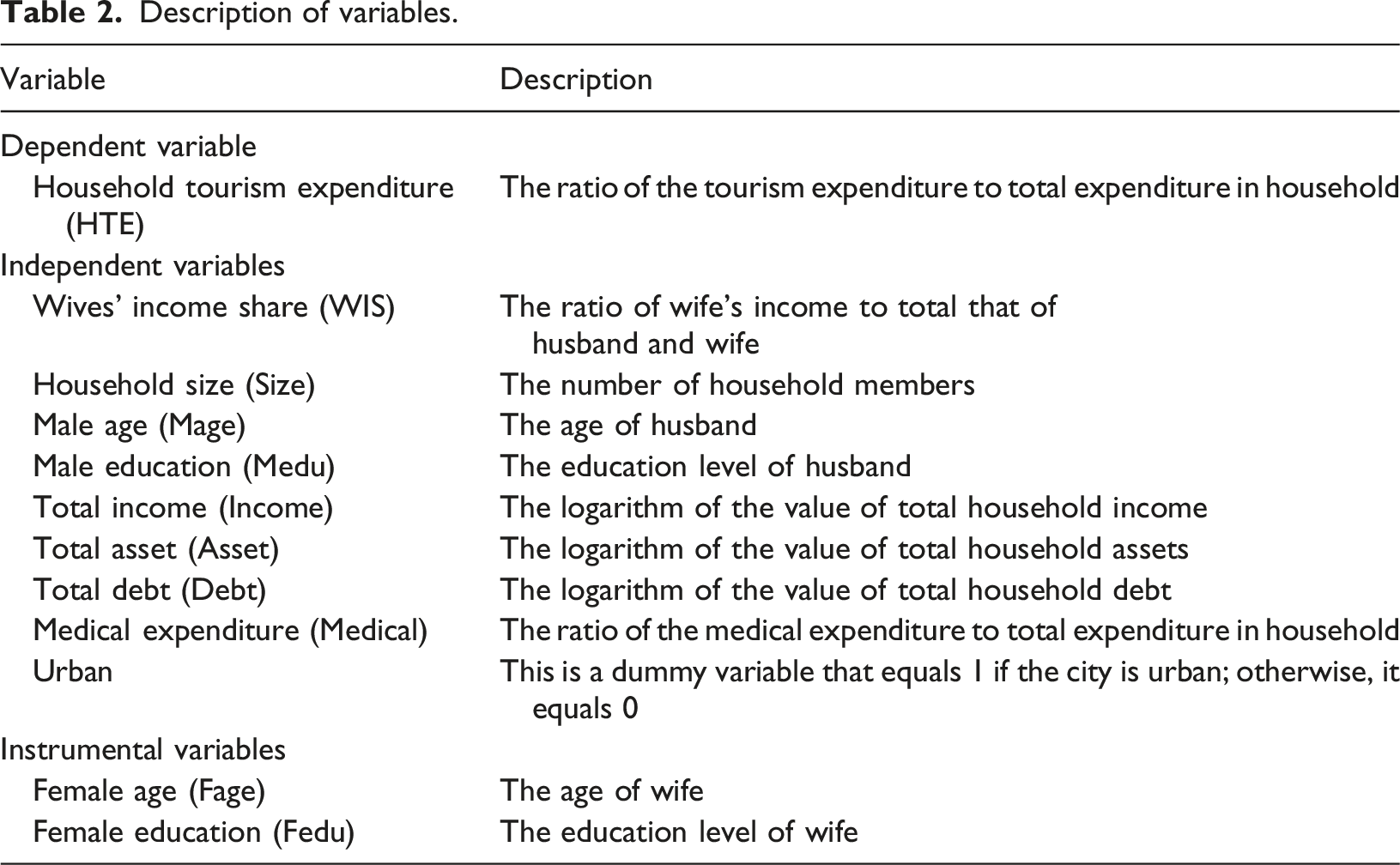
First, our analysis considers family sociodemographic factors such as age and education. Research indicates that older spouses, having accumulated more financial resources and leisure time, are likely to spend more on tourism (Hung et al., 2012; Lin et al., 2021). Moreover, higher educational levels provide spouses with improved access to travel-related information, thereby enhancing their tourism opportunities (Hung et al., 2012). In our study, male age (Mage) and male education (Medu) are included as control variables, while female age (Fage) and female education (Fedu) are treated as instrumental variables, assumed to influence household tourism expenditure through their effects on wives’ income share. Education is categorized into nine levels to allow a nuanced analysis of its impact on household tourism spending.
Additionally, household size (Size) plays a significant role in influencing tourism expenditure. Since this study focuses on households composed of spouses with or without children, a household size greater than two implies the presence of children, with larger sizes suggesting more children. Household size is, therefore, a key factor, as children can significantly affect tourism spending patterns (Wu et al., 2019).
Second, this study considers some economic factors such as total income, total assets, total debt, and medical expenditure as control variables. Specifically, total income (Income) is calculated as the logarithm of the combined total household income, and it is expected to have a positive relationship with tourism spending (Hung et al., 2013; Lin et al., 2021). Similarly, total household assets (Assets) are measured by the logarithm of the total value of household assets, encompassing both financial assets (e.g., house, car) and non-financial assets (e.g., savings, stocks, cash). Higher asset levels typically indicate reduced financial constraints, facilitating greater allocations to tourism expenditure (Hung et al., 2012, 2013; Lin et al., 2021). Conversely, significant household debt can restrict discretionary spending, including leisure activities like tourism.
Total household debt (Debt) is quantified by the logarithm of the total household debt, which includes various obligations such as educational loans, credit card debts, and other loans. Additionally, medical expenditure is expected to inversely affect tourism spending, as households with higher healthcare burdens are less inclined to travel. Medical expenditure (Medical) is represented by the ratio of medical expenses to total expenditure:
Lastly, the study includes the regional sociodemographic factor of urban or rural residence (Urban), represented by a dummy variable where Urban is set to 1 for urban families and 0 for rural families. Research suggests that households in regions with greater wealth and access to services are more likely to engage in tourism (Hung et al., 2013). This aligns with findings indicating that urban families have greater opportunities for tourism compared to rural families (Lin et al., 2021). Therefore, considering regional factors is essential for understanding variations in household tourism expenditure.
Summary statistics
Summary statistics.
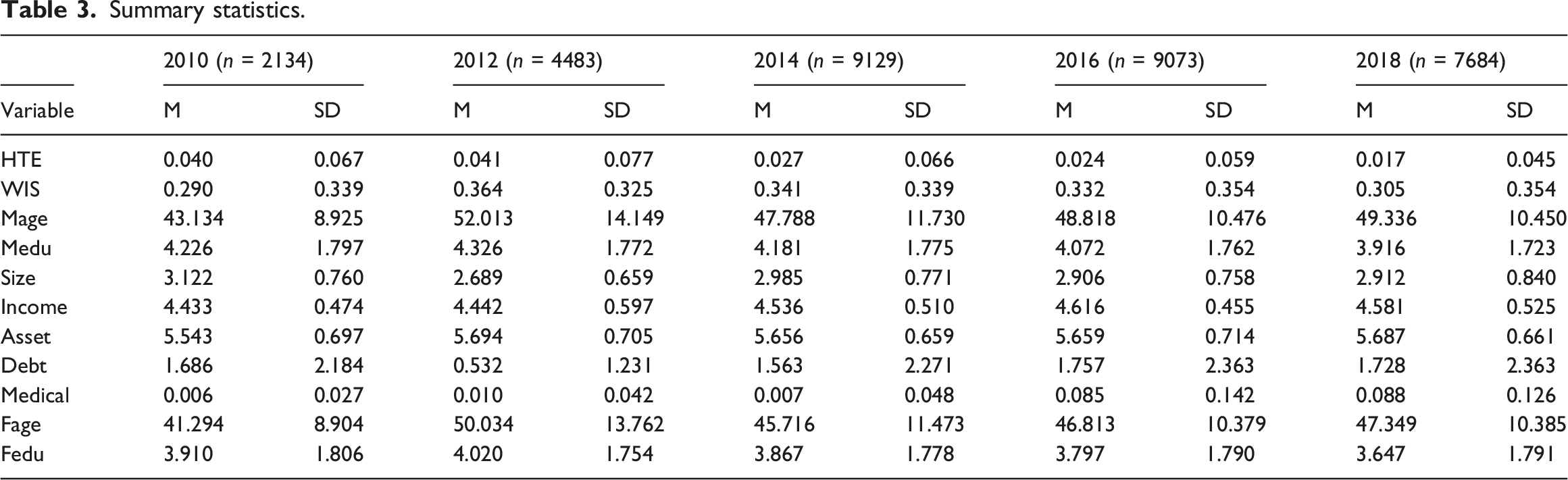
The average age of males ranged from 43.134 to 52.013, while for females, it ranged from 41.294 to 50.034. Notably, men consistently attained higher levels of education compared to women in all surveyed years, which may contribute to the observed disparities in earnings and financial decision-making power. Additionally, the table reports household-level economic indicators, including average household income, assets, and debt. These variables provide insight into the financial stability of households over time and may serve as potential determinants of consumption behavior, including discretionary spending on tourism. Finally, medical expenditure, expressed as a proportion of total household spending, ranged between 0.6% and 1% from 2010 to 2018. This suggests that healthcare costs remain a consistent component of household budgets.
Methodology and results
Research methodology
This study employs a two-step generalized method of moments (GMM) estimator to address potential endogeneity arising from the possible bidirectional relationship between wives’ income share and household tourism expenditure (Mahwish and Nawaz, 2022). To mitigate this issue and strengthen the robustness of the empirical analysis, an instrumental variable (IV) approach is incorporated within the GMM framework. The two-step GMM estimator is particularly appropriate in this context because it effectively accounts for endogeneity without imposing strict assumptions regarding homoscedasticity or the distribution of error terms (Arellano and Bover, 1995; Blundell and Bond, 1998).
In implementing the IV strategy, this study uses female age and female education as instruments, consistent with prior research identifying these variables as important determinants of wives’ income share (Elsayed and Shirshikova, 2023). These instruments are selected because they are closely associated with women’s labor market outcomes and, consequently, strongly predict wives’ relative income contributions within households. Moreover, previous studies suggest that these factors influence household decision-making indirectly through their effect on wives’ income share (Elsayed and Shirshikova, 2023).
To assess the validity of the instrumental variables, several standard econometric tests are conducted. First, instrument relevance is evaluated through first-stage regression results, which confirm a strong correlation between the instruments and wives’ income share. Second, the Kleibergen–Paap rk LM statistic (Kleibergen and Paap, 2006) is employed to test for under-identification, ensuring that the model is properly identified. Third, instrument strength is examined using weak identification diagnostics, including the Stock–Wright LM statistic (Stock and Wright, 2000). Finally, the Hansen J test (Hansen, 1982) for over-identifying restrictions is applied to evaluate the joint exogeneity of the instruments. Collectively, these tests provide evidence supporting the relevance and statistical validity of the instruments used in this study.
Regression models
To explore the potential inverted-U shaped relationship between wives’ income share and household tourism expenditure, the study employs the following regression model with quadratic terms of WIS, as follows:
To determine the optimal level of WIS, this study performed regressions based on equation (10), providing a consistency analysis to precisely calculate the threshold value (Assaf and Tsionas, 2019). The model is as follows:
Test results
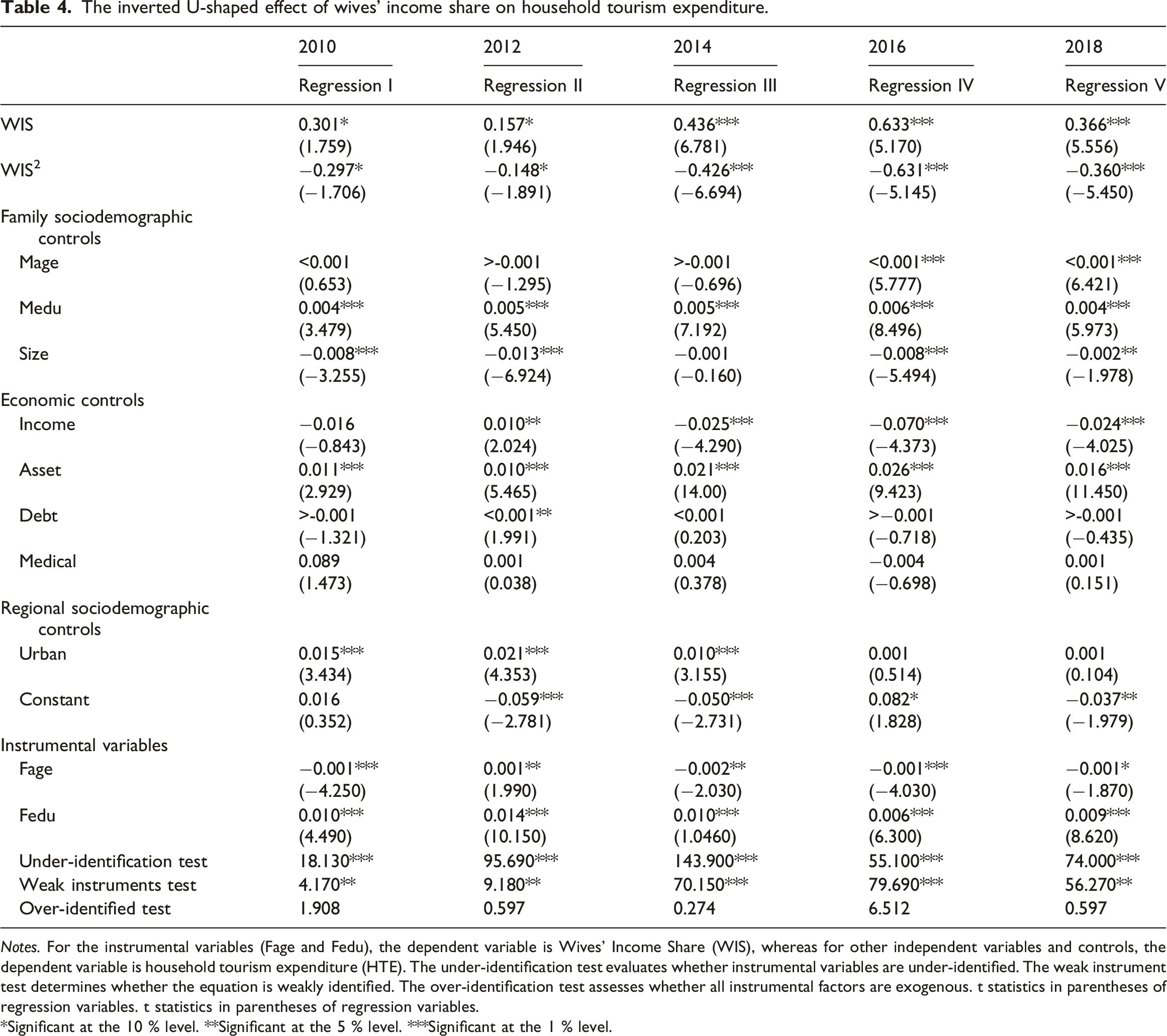
The inverted U-shaped effect of wives’ income share on household tourism expenditure.
Notes. For the instrumental variables (Fage and Fedu), the dependent variable is Wives’ Income Share (WIS), whereas for other independent variables and controls, the dependent variable is household tourism expenditure (HTE). The under-identification test evaluates whether instrumental variables are under-identified. The weak instrument test determines whether the equation is weakly identified. The over-identification test assesses whether all instrumental factors are exogenous. t statistics in parentheses of regression variables. t statistics in parentheses of regression variables.
*Significant at the 10 % level. **Significant at the 5 % level. ***Significant at the 1 % level.
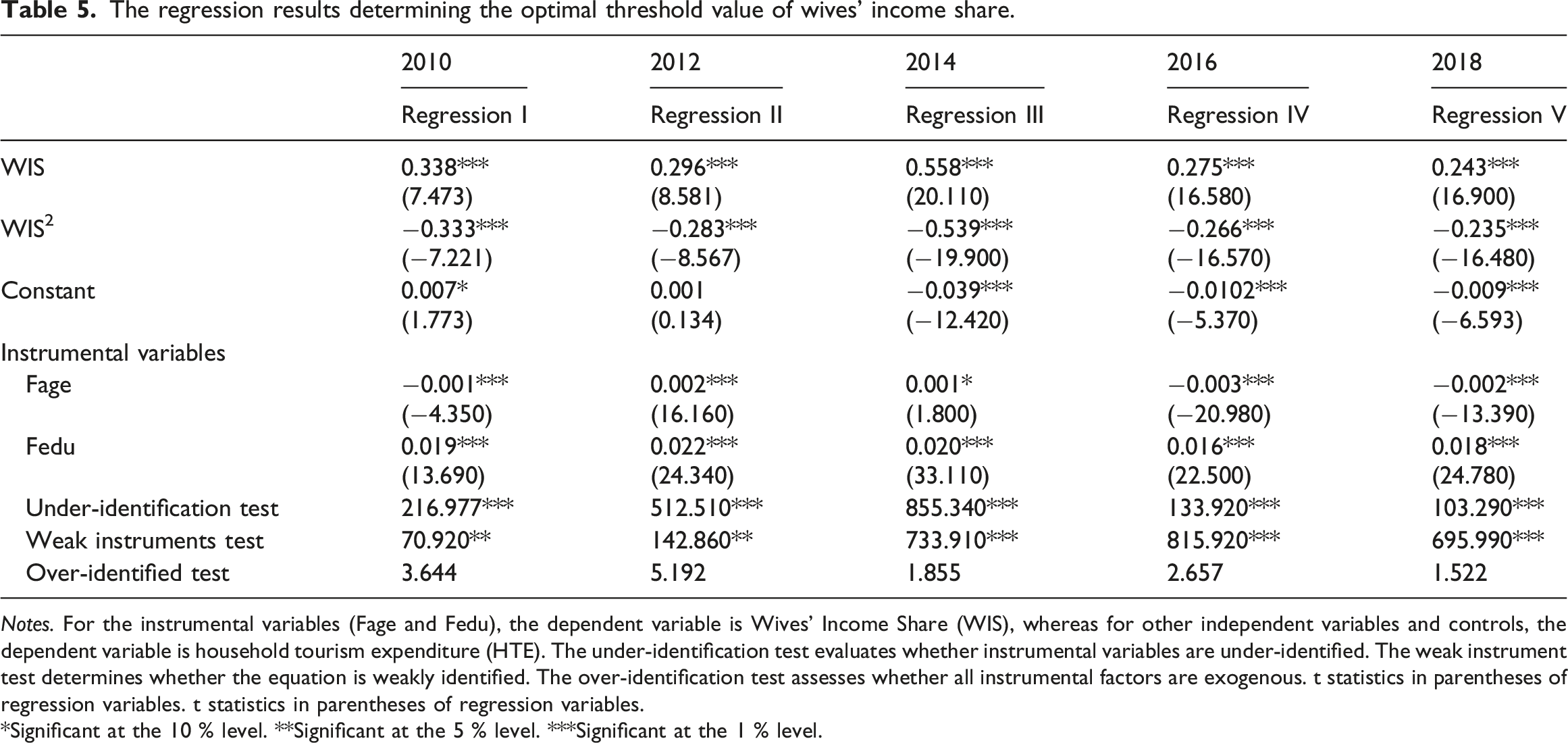
The regression results determining the optimal threshold value of wives’ income share.
Notes. For the instrumental variables (Fage and Fedu), the dependent variable is Wives’ Income Share (WIS), whereas for other independent variables and controls, the dependent variable is household tourism expenditure (HTE). The under-identification test evaluates whether instrumental variables are under-identified. The weak instrument test determines whether the equation is weakly identified. The over-identification test assesses whether all instrumental factors are exogenous. t statistics in parentheses of regression variables. t statistics in parentheses of regression variables.
*Significant at the 10 % level. **Significant at the 5 % level. ***Significant at the 1 % level.
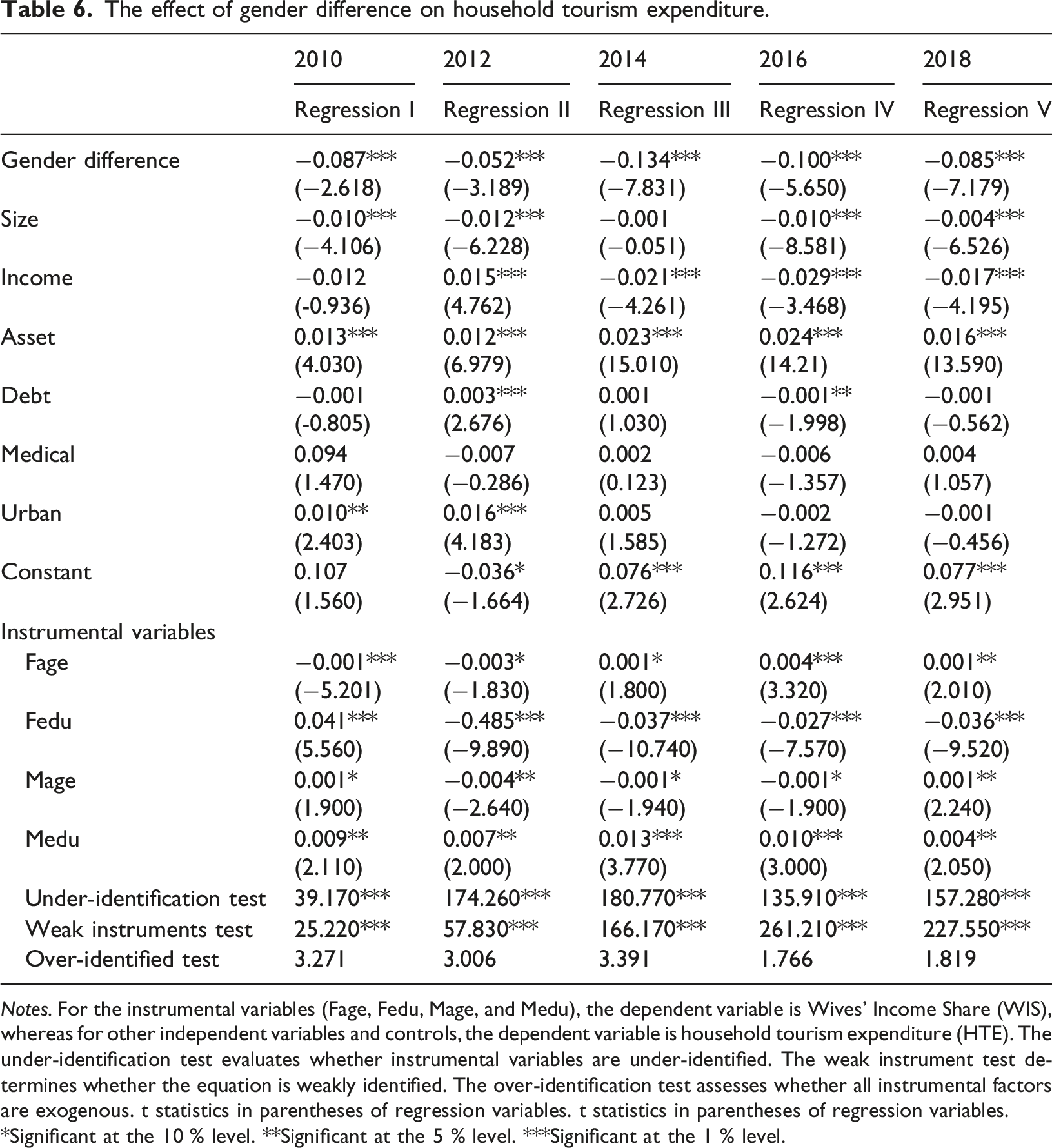
The effect of gender difference on household tourism expenditure.
Notes. For the instrumental variables (Fage, Fedu, Mage, and Medu), the dependent variable is Wives’ Income Share (WIS), whereas for other independent variables and controls, the dependent variable is household tourism expenditure (HTE). The under-identification test evaluates whether instrumental variables are under-identified. The weak instrument test determines whether the equation is weakly identified. The over-identification test assesses whether all instrumental factors are exogenous. t statistics in parentheses of regression variables. t statistics in parentheses of regression variables.
*Significant at the 10 % level. **Significant at the 5 % level. ***Significant at the 1 % level.
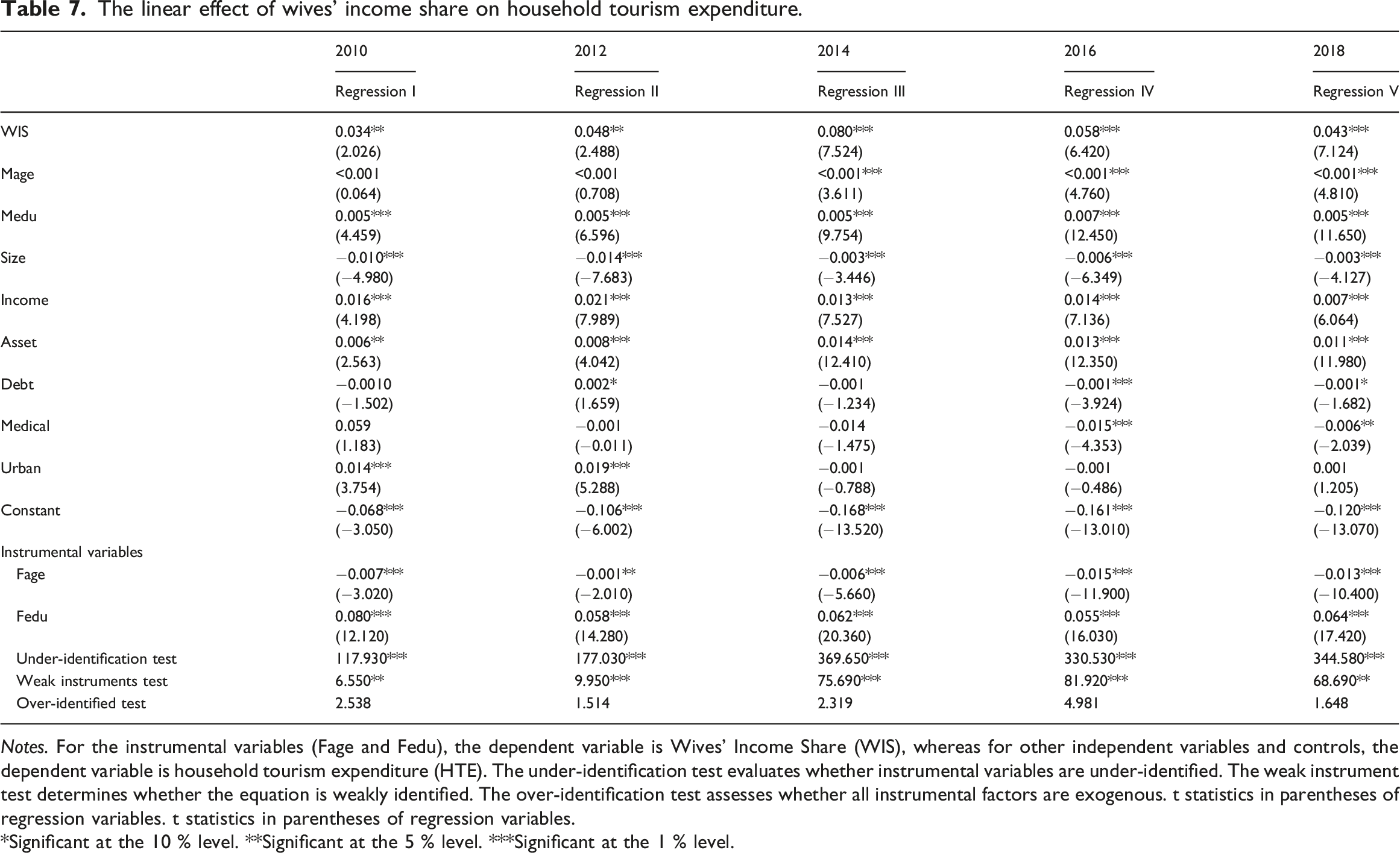
The linear effect of wives’ income share on household tourism expenditure.
Notes. For the instrumental variables (Fage and Fedu), the dependent variable is Wives’ Income Share (WIS), whereas for other independent variables and controls, the dependent variable is household tourism expenditure (HTE). The under-identification test evaluates whether instrumental variables are under-identified. The weak instrument test determines whether the equation is weakly identified. The over-identification test assesses whether all instrumental factors are exogenous. t statistics in parentheses of regression variables. t statistics in parentheses of regression variables.
*Significant at the 10 % level. **Significant at the 5 % level. ***Significant at the 1 % level.
According to the test results in Table 4, there is a statistically significant nonlinear relationship between WIS and THE across multiple years. Specifically, the analysis results consistently show positive coefficients for WIS and negative coefficients for WIS 2 in each observed year. For instance, in 2010, the positive coefficient of WIS is 0.318 (significant at 10% level), and the negative coefficient of WIS 2 is −0.314 (significant at 10% level).
This pattern was consistently observed in subsequent years, 2012, 2014, 2016, and 2018, with coefficients significant primarily at the 1% level and 5% level. These results indicate an inverted-U shaped relationship, where initial increases in WIS positively influence tourism expenditure, but further increases eventually lead to a decline in spending after a turning point, supporting the Hypothesis 1.
As shown in Table 5, the results are consistent with Table 4, revealing an inverted U-shaped effect across all sample years with significant coefficients, implying an optimal level of wives’ income share that maximizes household tourism expenditure. To calculate the threshold value, this study solves the first-order conditions by setting them equal to zero:




Accordingly, the estimated turning point of wives’ income share is approximately 0.5 across all sample years. This result is broadly consistent with the theoretical benchmark derived from the household decision-making model. The findings indicate that household tourism expenditure tends to be highest when wives’ relative income contribution approaches one-half of total household income, supporting Hypothesis 2.
This study identifies distinct links between socio-demographic and economic factors and household tourism expenditure. The initially insignificant effect of male age becomes positive over time, suggesting that older men may have more disposable time and financial resources for family travel, consistent with Hung et al. (2012) and Lin et al. (2021). Education also matters: higher-educated men are better able to access and interpret travel information, thereby expanding tourism participation (Hung et al., 2012). In contrast, larger households spend less on tourism, likely due to higher routine expenses and logistical constraints.
Household income shows heterogeneous effects, negative for light spenders but positive for heavy spenders, reflecting different consumption priorities across income groups. Economic conditions further shape tourism behavior: asset ownership consistently increases expenditure (Hung et al., 2012, 2013; Lin et al., 2021), while the influence of debt varies by debt type and repayment burden. Medical expenses show no significant effect, diverging from earlier studies and possibly indicating improved healthcare coverage or stricter budget compartmentalization. Finally, although urban residence initially predicts higher tourism spending (Lin et al., 2021), China’s rural revitalization efforts appear to be narrowing this gap through improved infrastructure, transportation, and rising rural incomes.
Discussion and implications
This study examines the relationship between wives’ income share and household tourism expenditure using a household decision-making framework informed by feminist theory and rational choice theory. The empirical analysis identifies a consistent inverted U-shaped association between wives’ income share and household tourism expenditure across multiple survey waves. The estimated turning point is close to the theoretical benchmark derived from the household decision-making model, where wives’ income share approaches one-half of total household income. These findings suggest that intra-household income distribution is systematically associated with differences in household tourism expenditure patterns.
Inverted-U shaped effect of WIS on HTE
This study addresses a critical gap in tourism literature by examining the underexplored role of women’s intra-household economic influence on tourism expenditure. While prior research has extensively analyzed sociodemographic (e.g., family and regional characteristics), economic, and psychological determinants of HTE (Deng et al., 2023; Hung et al., 2012, 2013; Lin et al., 2021; Sun et al., 2015; Wu and Chang, 2023; Xu and Liu, 2023), it has largely neglected the nuanced dynamics of women’s decision-making power in household spending. Although Lin et al. (2021) differentiated male-headed households, their approach did not account for the complexities of intra-household power distribution. By incorporating the wives’ income share (WIS) as a proxy for gendered economic agency, this study reveals the nonlinear relationship between women’s relative income and tourism expenditure, a dimension previously overlooked.
Controlling for total household income, children, education, age, assets, debt, and urban-rural location (Table 4), we identify a significant inverted U-shaped effect of wives’ income share on household tourism expenditure. The empirical results indicate that wives’ income share is associated with tourism expenditure in a nonlinear manner. At lower levels of wives’ income share, increases in wives’ relative contribution to household income are associated with higher tourism expenditure. As wives’ income share continues to rise, the positive association gradually weakens and eventually becomes negative beyond the estimated turning point. One possible interpretation is that households with different levels of intra-household income balance may allocate discretionary expenditures differently across tourism, savings, education, healthcare, and other priorities (Boto-García and Baños-Pino, 2024). The theoretical framework developed in this study provides a useful perspective for interpreting these observed expenditure patterns.
Optimal point of household wives’ income share
To determine the optimal level of wives’ income share that maximizes household tourism expenditure, this study empirically examines the turning point using a nonlinear regression model. The results, which are consistent across all sample years, indicate that the turning point is approximately 0.5. This finding suggests that household tourism expenditure reaches its maximum when wives contribute half of the household income. Accordingly, wives’ income share positively influences household tourism expenditure up to the 0.5 threshold, while its effect becomes negative beyond this point.
Furthermore, the turning point of 0.5 reflects a state of income parity in which wives’ income share equals that of husbands. In other words, household tourism utility is maximized when financial contributions and decision-making authority are evenly distributed between spouses. The estimated turning point suggests that household tourism expenditure tends to be highest when spouses contribute relatively similar shares of household income. This finding indicates that a more balanced intra-household income distribution is associated with higher levels of tourism expenditure within the estimated specification. The result is broadly consistent with the theoretical benchmark derived from the household decision-making model, although the empirical analysis does not directly identify the behavioral mechanisms underlying household expenditure decisions.
To further substantiate the argument that gender income equality enhances household tourism expenditure, this study additionally examines the simultaneous effects of women’s and men’s economic power on tourism spending. Specifically, we construct a gender income difference (GD) variable, defined as the absolute difference between women’s and men’s income. Gender equality is achieved when this difference equals zero. We hypothesize that GD negatively affects household tourism expenditure, such that smaller income disparities, particularly those approaching zero, are associated with higher levels of tourism expenditure. This premise is based on the assumption that income parity between spouses facilitates more efficient and mutually beneficial decisions regarding tourism consumption.
This study performs the following regression model based on the two-step GMM estimation:
The instrumental variables chosen for this analysis are female age, female education, male age, and male education, as they reflect socio-economic factors that could influence both male and female income, thereby affecting the GD.
Test results in Table 6 illustrate that gender difference has a significant negative effect on household tourism expenditure, implying that household tourism expenditure reaches its peak when the gender income difference is zero, corroborating the hypothesis that gender equality maximizes household tourism expenditure. Accordingly, it further underscores the importance of initiatives aimed at equalizing economic power between genders, suggesting that policies and practices that promote gender equality can have a beneficial impact on economic activities such as tourism.
Theoretical implications
This study makes a theoretical contribution by extending feminist theory and rational choice theory into the domain of household tourism expenditure analysis. The findings provide a robust theoretical framework that bridges empirical observations with gendered decision-making dynamics within households.
The empirical results are broadly consistent with feminist economics arguments suggesting that greater access to economic resources may increase women’s participation in household consumption decisions. The findings are also compatible with rational choice perspectives emphasizing that household expenditures are allocated across competing priorities under financial constraints. Together, these theoretical perspectives offer a useful framework for interpreting the nonlinear relationship identified in the empirical analysis.
The discovery of an inverted U-shaped relationship between wives’ income share and household tourism expenditure represents a pivotal theoretical advancement. This nonlinear relationship fundamentally challenges conventional linear assumptions in the existing literature and demonstrates the necessity of integrating both feminist and rational choice perspectives to fully comprehend the complex interplay of intra-household power dynamics and consumption behavior.
This study further developed an innovative household decision-making model utilizing a Cobb–Douglas utility function that explicitly incorporates bargaining power dynamics between spouses. This model demonstrates that household tourism expenditure is maximized precisely at the point where wives’ income share equals 0.5, a finding strongly supported by both theoretical equilibrium analysis and empirical data from the Chinese context.
The study identifies two distinct phases in the relationship between wives’ income share and household tourism expenditure, as illustrated in Figure 1. In Phase I, where wives’ income share is below 0.5, increases in wives’ relative income contribution are associated with higher household tourism expenditure. In Phase II, where wives’ income share exceeds 0.5, further increases are associated with lower tourism expenditure. This suggests that different levels of spouses’ relative income contribution may correspond to different patterns of household resource allocation and consumption priorities. The findings therefore extend the literature by showing that intra-household income distribution is related to tourism expenditure in a nonlinear manner. The theoretical framework.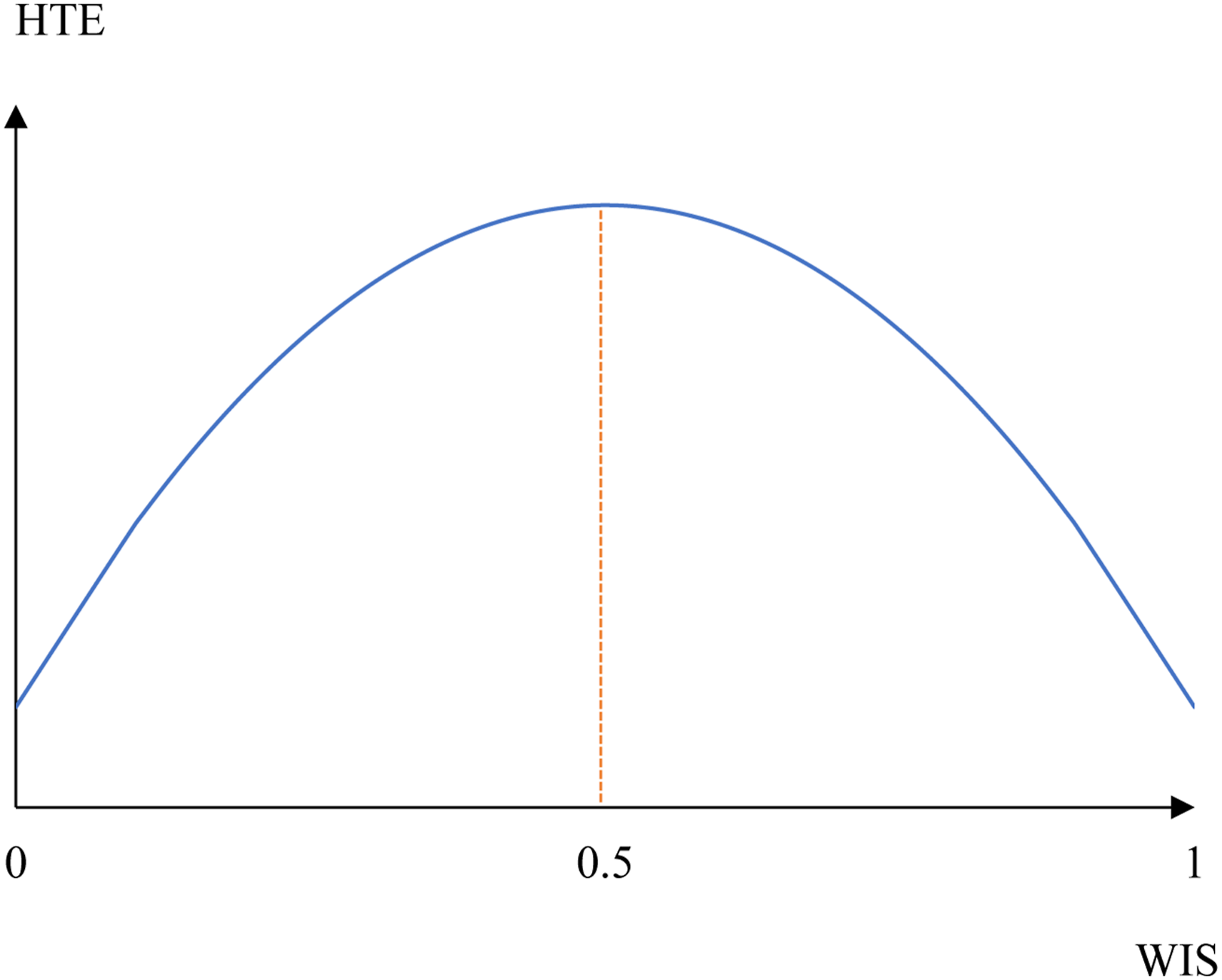
These findings indicate that household tourism expenditure reaches its highest level when wives’ income share approaches parity with that of their husbands (WIS = 0.5). This result suggests that a more balanced distribution of income within the household is associated with higher levels of tourism expenditure. When spouses contribute relatively similar shares of household income, household consumption decisions may more closely reflect shared financial priorities and joint allocation of discretionary expenditures.
The mechanisms underlying this balance point provide important insights into the relationship between intra-household income distribution and household economic behavior. When wives’ income share is relatively low, household expenditure patterns may reflect a more uneven distribution of economic resources between spouses. As wives’ income share increases, households may allocate more resources toward discretionary consumption, including tourism. However, when wives’ income share exceeds parity, household expenditure decisions may increasingly reflect broader financial considerations, such as savings, education, healthcare, and long-term financial stability. These patterns suggest that changes in spouses’ relative income contributions may be associated with shifts in how households prioritize discretionary consumption relative to other financial commitments.
At the point of income parity, the relatively balanced distribution of income between spouses appears to correspond with the highest level of household tourism expenditure. Under such conditions, tourism and other leisure-related expenditures may be considered alongside broader household financial priorities in a more balanced manner. By identifying a nonlinear relationship between wives’ income share and tourism expenditure, this study contributes to a more nuanced understanding of how relative income contributions within households are associated with discretionary consumption patterns.
Practical implications
This study yields significant practical implications for policymakers and tourism industry stakeholders by empirically examining the relationship between wives’ income share and household tourism expenditure in China. Our findings demonstrate substantial potential for increased household tourism expenditure when women’s economic power reaches or exceeds the identified threshold values. As shown in Table 3, the average level of women’s income share in China remains below optimal levels, measuring 0.290, 0.364, 0.341, 0.332, and 0.305 across the respective study years. These figures indicate that Chinese households predominantly remain in Phase I of the wives’ income share spectrum, where increases in female economic power consistently correlate with higher household tourism expenditure, as illustrated in Figure 1.
To validate this relationship, we employed a regression model analyzing the linear effects of wives’ income share on household tourism expenditure:
The findings suggest that changes in household income distribution may be associated with evolving tourism expenditure patterns in Chinese households. As women’s labor force participation and economic contribution continue to increase, tourism demand patterns may shift alongside broader shifts in household financial structure and consumption priorities. As women increasingly emerge as primary decision-makers in travel and leisure activities (Doepke and Tertilt, 2019; Lin and Lehto, 2006), policies addressing the gender pay gap, including equal pay legislation and enhanced maternity leave support (Chen et al., 2021; Greer and Carden, 2021), could yield dual benefits for both gender equality and tourism sector growth.
Specifically, the findings reflect broader changes in women’s economic participation and relative earnings within households. Factors such as reduced wage disparities, greater career advancement opportunities, improved access to childcare, and stronger labor force continuity may contribute to shifts in household income dynamics. Similarly, access to education, professional training, and employment opportunities in higher-paying sectors can increase women’s relative economic contribution within the household.
Second, industry stakeholders can design initiatives that explicitly recognize women as key decision-makers. Marketing strategies can be tailored to female consumers, highlighting safety, convenience, family-friendly services, and experiential value. Tourism businesses can also develop products that appeal to diverse household preferences, such as customizable travel packages, flexible itineraries, and services that accommodate family responsibilities. Partnerships with women-focused organizations and digital platforms may further enhance outreach and engagement.
Third, at the household level, public campaigns and financial literacy programs could promote more balanced intra-household decision-making. Encouraging joint financial planning and shared budgeting practices may help households allocate resources more efficiently, including for leisure and tourism activities. Such initiatives can reinforce the positive relationship between gender equality and consumption quality.
Finally, from a broader economic perspective, integrating gender equality into tourism development strategies can generate long-term benefits. Governments can support inclusive tourism ecosystems by encouraging female entrepreneurship in tourism-related sectors, improving access to financing for women-led businesses, and fostering innovation driven by diverse consumer demands. These measures not only enhance gender equity but also stimulate sustainable tourism growth, strengthen household resilience, and contribute to more inclusive and dynamic local economies.
Conclusion, limitations and directions for future research
This study integrates feminist and rational choice theories to examine how wives’ income share influences household tourism expenditure. Using instrumental variables and a two-step generalized method of moments approach, it identifies an inverted U-shaped relationship: as wives’ income share rises, tourism expenditure initially increases but declines beyond a certain threshold. A household decision-making model based on the Cobb–Douglas utility function shows that tourism expenditure peaks when wives’ income share reaches 0.5, indicating an optimal level of empowerment. Moreover, this study finds that gender inequality reduces tourism spending, reinforcing the notion that gender equality enhances household welfare. Since the average level of wives’ income share in China remains below this optimal threshold, the results suggest that increasing wives’ income share could significantly boost household tourism expenditure.
This study acknowledges several limitations that offer directions for future research. First, the use of cross-sectional data limits the ability to capture how the relationship between wives’ income share and household tourism expenditure evolves over time. Subject to data availability, future research could employ panel datasets to examine this dynamic across different socio-economic and cultural contexts. Longitudinal analyses would enable a more precise assessment of how changes in women’s income share influence intra-household bargaining power and discretionary consumption decisions, including tourism spending.
Second, the empirical analysis is restricted to data up to 2018 due to disruptions associated with the COVID-19 pandemic. Incorporating more recent data would allow future studies to explore how global shocks and post-pandemic socio-economic transformations reshape household tourism behavior and gendered income dynamics. From the perspective of feminist economics, such crises may disproportionately affect women’s employment and income stability, potentially altering intra-household decision-making and patterns of discretionary consumption.
Finally, the Chinese context presents unique institutional and social characteristics, including large-scale rural–urban migration and the phenomenon of “left-behind children,” which may blur the boundary between leisure travel and family-related travel. Future research could examine how intra-household economic power shapes travel decisions when family reunification constitutes a primary motivation. Such work would contribute to bridging tourism economics with insights from household economics and feminist economic theory, offering implications for policies aimed at promoting gender equality, family welfare, and inclusive tourism development.
Supplemental material
Supplemental material - How do wives affect household tourism expenditure?
Supplemental material for How do wives affect household tourism expenditure? by Di (Judy) Zhu, Ming-Hsiang Chen, Zhao Zhang in Tourism Economics
Footnotes

Funding
The authors received no financial support for the research, authorship, and/or publication of this article.
Declaration of conflicting interests
The authors declared no potential conflicts of interest with respect to the research, authorship, and/or publication of this article.
Supplemental material
Supplemental material is available online.
Author biographies
References
Supplementary Material
Please find the following supplemental material available below.
For Open Access articles published under a Creative Commons License, all supplemental material carries the same license as the article it is associated with.
For non-Open Access articles published, all supplemental material carries a non-exclusive license, and permission requests for re-use of supplemental material or any part of supplemental material shall be sent directly to the copyright owner as specified in the copyright notice associated with the article.
