







Abstract
This article focuses on the relation between post 9/11 imaginary and digital entertainment’s audiences. Its aim is to enlighten potential players’ perception of such an influence by exploring game service platforms – that is, online spaces with peculiar functions that are getting a foothold in the sector. By following the leading concepts of ‘premediation’ (Grusin, 2010) and ‘platform’ (Gillespie, 2010), an empirical investigation was directed about the game The Division, which glaringly exploits references to 9/11, in relation with Twitch.tv (live streaming) and Steam (multi-hub with several features, from user-generated content upload to discussion) environments. For the first 20 days from the release, multiple data were gathered daily (e.g. streaming chats, threads and artworks) and framed with a discourse/visual analysis (e.g. Gee, 2010). Results show that connections to 9/11 were perceived in experiencing game mechanics (e.g. multiplayer mode) rather than in discussing setting or plot. A preventive attitude against other players emerged as winning strategy and potential bridge to an ‘interactive premediation’ in media consumption.
The events of September 11, 2001 (from now on, 9/11) have dramatically changed our society from several perspectives spanning security, travel and media discourses. Indeed, that day has strongly affected public and shared discourses, and several scholars have tried to frame such an impact in media reporting and creation (e.g. Grusin, 2010; King, 2005). Video games are a pillar of current popular culture (Crogan, 2011; Kowert and Quandt, 2015), and their role in dealing with the fall of the Twin Towers is a crucial one, especially if we address their communities and related online spaces. The recent The Division (from now on, TD) has provided a significant example of such a thematic focus. This video game is set in a post-apocalyptic New York after a mortal plague that has put the world into chaos. The player is an agent of a federal force aimed to restore order against criminal gangs and villains. It can be considered an action-role-playing game experience – that is, succeeding relies on a combination of physical skills and strategic thinking – with a massive multiplayer online orientation – that is, the gaming experience occurs in an online environment shared with other players. Several critics have noticed clear references to the fall of the Twin Towers, among which the realistic environment reproduces the topography of the Big Apple, the idea of a terroristic attack with biochemical weapons (the reference is to the 2001 anthrax attacks), and the Directive 51, which is a policy signed by George W. Bush in 2007 that in the game legitimates the player’s faction. Developers have denied these influences engendering several debates within the game community and beyond. Aside from these themes, TD seems to stage a premediation effort (Grusin, 2010) in which the worst is already envisioned and made entertaining to anesthetize general anxiety and fear.
This study aims to shed light on if and how TD’s consumers have experienced the reference to what Baudrillard (2002) has defined the (most recent) ‘mother of all events’. The concepts of ‘premediation’ (Grusin, 2010) and ‘platform’ (Gillespie, 2010) informed an empirical investigation of TD-related activities on two popular online spaces: Twitch.tv and Steam. As anticipated, premediation aims to perform the future in order to make it less fearsome. Grusin highlighted this trend in several media processes after 9/11, however, video games have been poorly assessed in these terms and require further efforts to be properly investigated. The use of platform as a key concept enables a further novel focus on the context of playing. Twitch.tv and Steam are two flagship portals in which millions of users debate and generate new meanings and interpretations of games. Their political implications are noteworthy to the extent that the overall significance of a game is strongly affected by their dynamics and structures. However, this lens is rarely adopted, and platform studies related to gaming is still focused on technological and historical considerations. Therefore, this article goes beyond a textual analysis (e.g. Carr, 2014; MacCallum-Stewart, 2014) of the game, which seems to confirm its premediation lens at first glance, and engages with the increasing importance of gaming audiences (Goslin and Crawford, 2011). Indeed, the objective is to ground such a concept by addressing players’ activities and interpretations regarding TD on related platforms rather than detecting an apparently glaring association. From a methodological perspective, forum posts, chat messages, and user-generated contents (UGCs) have been collected and framed within a ‘discourse analysis’ (Gee, 2010) supported by suggestions from disciplines of game design, game studies, and media studies. The objective was to understand if players perceived references to 9/11 in playing and discussing the game aside from its textual features, while the two platforms were selected due to their popularity.
In what follows, the first section introduces the game and explores the relations between culture and gaming and between media and 9/11 in more depth. The second section describes the research design by including methods, time line, and modalities of data collection and analysis. The third illustrates the results according to the two platforms chosen. Finally, the fourth and the fifth sections discuss the findings and present conclusions, which point to a partial perception of the association driven by game mechanics (i.e. an interactive premediation) rather than in-game representations and a crucial role of gaming platforms in interpreting TD.
9/11 Across media and interactivity
Saving a realistic day
TD was published in March 2016 by Ubisoft after 3 years of development by Massive Ubisoft with the support of Red Storm Entertainment. It was well received by specialized press (metascore of 80%) (PlayStation 4 and Xbox ONE) and 79% (PC) (on www.metacritic.com) and players (Sinha, 2016). The game takes place in New York in a not-so-distant future adopting a documentary style to introduce the plot premises: A virus called ‘dollar flu’ or ‘green poison’ spread during Black Friday is decimating the population. Society has collapsed, New York City’s streets are ruled by the law of the jungle, and Manhattan is under quarantine. In order to restore order and fight back the rioters, a governmental unit of soldiers (Strategic Homeland Division, briefly the Division) is deployed according to the aforementioned Directive 51. Players are asked to create their own avatar and join this saving army. Several zones of the city are accurately reproduced and the advanced graphics strengthen the overall realism. The urban environment is covered by trash and abandoned vehicles, while a sophisticated weather simulation alternates different climate conditions. The game play is based on two types of resources: currency and experience points. The former players can buy and improve their equipment (e.g. weapons, gears and medical kits), while the latter allows them to increase their skills and access new abilities. Both can be gathered by completing in-game missions, which can shape the main plot or be secondary stories; tasks usually concern objectives like taking control of a place, rescuing hostages, or finding specific objects in a narration that shed light on the causes of the virus and potential solutions. The resulting game experience, which is viewed via a third-person perspective, is a combination of action (shooting and covering) and planning (from cooperating with mates to building a competitive avatar). Enemies range from rioters to para-military soldiers. Aside from the main storyline, when a high level is reached it is possible to enter the Dark Zone – that is, a game environment designed for player versus player (from now on, PvP) mechanics with its own system of progression and rewards.
Although the game was widely appreciated, its ideology was accused of being authoritarian, too realistic and biased (Bazaar, 2016; Martin, 2016; Todd, 2016). Both in its official and ludic versions, the Directive 51’s rationale is to preserve the government in case of catastrophic disasters with a network of agents who respond only to presidential orders. Therefore, preserving the establishment is actually a leitmotif during the game. Moreover, the reference to a pandemic plague echoes the Anthrax attacks and the general fear of biological weapons potentially in the hands of terrorists. Finally, the realistic environment grounds these reflections in a familiar setting – that is, the Big Apple. Developers stated that the game does not have any political message nor connections to 9/11 (Ehrhardt, 2016). Regardless, such a potential influence would not be surprising: The repercussions of 9/11 attacks in media discourses have been relevant and are still operating, and the relation between games and wider culture is a significant one (Salen and Zimmerman, 2003: 509).
The fall of the Twin Towers on and through media
It can be argued that the fall of the Twin Towers is one of the most iconic events of recent history. Aside from the geopolitical implications (e.g. the military interventions in Afghanistan and Iraq, new policies of immigration and travel), the figurative impact of seeing one of the symbols of the Western power destroyed was indubitable. Baudrillard (2002) argues that 9/11 was the most recent ‘mother of all events’, a groundbreaking event able to put globalization trends and consequent representations in crisis; a turning point from which the entire humankind has to interrogate itself. A similar influence was found in the Shoah and Pearl Harbor attacks despite the obvious differences in terms of medialization (Sterrit, 2004), while the impact on media was deeply analyzed, from news’ agendas and Muslim representation (Alsultany, 2013; Rivera, 2014) to the re-creation of the tragedy in movies (King, 2005; Mokdad, 2013) and consequences for literacy practices (Keniston and Quinn, 2013). Grusin (2010) gave an extended attention to media discourses after 9/11, suggesting the related concept of premediation. According to Grusin, since that day ‘the functioning of governmentality cannot be opposed to the workings of mediality…they both participate in a heterogeneous network composed of political and medial agencies, mutually imbricated in the “proper disposition of things”’ (Grusin, 2010: 75). Media power becomes bidirectional and recursive rather than linear and top-down. This statement echoes the thesis of Couldry (2005, 2012) who argues that media centers are plural and intertwined with political and economic processes. Grusin (2010: 79) observes that after the fall of the Twin Towers media passed from a fidelity/truth focus to a mobilizing orientation. This movement has been characterized by a previsualizing logic, which embeds anticipatory images and mechanics in our media consumption. The main objective of such a previewing tension is to frame and predict future events in order to control and subordinate them (Grusin, 2010: 135). Such a security-related strategy relies on envisioning tools (data-mining, high-tech surveillance) that can prevent dangerous behaviors. In turn, media logics work in order to avoid repetition of the 9/11 trauma by envisioning it recursively – that is, a worst-case scenario that has already happened (via media). This media regime is connected to the Bush doctrine of pre-emption and a new emphasis of ‘the liveness of futurity’. Grusin observes that multiple media are involved in this turning point, not least video games (Grusin, 2010: 120–143). According to a multicentric logic of power, media become fluid and constantly changing in their relation with society and culture. In addressing 9/11, media would re-elaborate that cultural shock for avoiding the immediacy of the disaster via its own premediation – a sort of media vaccination. Grusin refers to the works of Jean Baudrillard and Slavoj Žižek in highlighting the symbolic power of 9/11 and stressing the attractive orientation of Hollywood disasters. In short, a familiarization is staged to keep American anxiety under control. Grusin makes some examples of how media have elaborated the shock experienced with 9/11 according to a premediation tactic, from Project Rebirth and the movie Minority Report to the media coverage of the anthrax attacks and the second Golf War. Such a media liaison between present and future is examined in terms of production of peculiar future scenarios and affective orientation toward technology, which increasingly embrace and then map our reality (Grusin, 2010: 40–48), reassuring us in a sort of colonization of the future. As mentioned, Grusin refers to digital games and especially regarding the latter process, that is, a premediating feedback that they would be able to trigger (102–103). Despite this reflection, which can be extended to any medium, TD seems to embrace specifically the former – that is, a near future in which the worst has already happened.
Actually, in the realm of digital entertainment other games have already used such hypothetical scenarios. For instance, Homeland is set in North America after the invasion of North Korean forces. In addition, several sagas like Battlefield and Call of Duty often recall these suggestions in depicting catastrophic futures in which Western values are put at risk. American and neolibertarian propagandas are often questioned in dealing with these brands (Annandale, 2011; Gagnon, 2010; Hoglund, 2014; Ouellette, 2008). However, TD plays this game differently. From an American perspective, the aforementioned references to 9/11 and the familiar environments transmit a realism never experienced before. Despite the developers’ denials, promotional trailers (e.g. The Division Cinematic Trailer, The Division New Cinematic Trailer 2016), and the related advertising game Collapse (i.e. a plague simulation in which the society eventually falls) stressed this orientation by harnessing a clash between normality and tragedy, a routine that is always about to fall. However, as mentioned above, such a textual analysis tells us just a part of the story. Indeed, this article endeavors to understand what the context – that is, game-related media platforms and their dynamics – reveals about the audience’s experience of premediation.
Contextualizing the play
As cultural products, digital games are not produced in a vacuum. Rather, they are developed and consumed within specific contexts and frames of references. Several game scholars have dedicated relevant efforts in enlightening how contextual factors interact with gaming elements and affect their overall meaning. Consalvo (2007) proposes the concept of ‘gaming capital’, which is the cultural background developed and deployed by gamers through specialized press, websites and acquaintances. Elias, Garfield and Gutschera (2012) refer to ‘metagame’ as the soft culture surrounding a game experience. Finally, with the concept of ‘shell’, Mayra (2008) highlights the symbolic ‘halo’ that surrounds the medium and drives its interpretation. Communities of players, producers’ policies, and shared representations become important variables in outlining the cultural meaning acquired by a digital game.
Among these actors, it could be argued that game service platforms are taking a foothold in the sector. This term refers to online portals in which people debate, re-elaborate, and perform about, but outside, a game. Although this opportunity was already available via online forums and bulletin boards, in recent years structured services have risen with a direct focus on digital entertainment. Among them, Steam and Twitch.tv might be considered the leading drivers in terms of popularity and features (see next section for further details). The former is a streaming platform in which users can see others (i.e. the twitchers) playing in real time. The latter allows the discussion, reviewing, and uploading of UGC about games. Their impact has been so remarkable to the extent that game hardware publishers (e.g. Sony and Microsoft) and other online providers (YouTube) are starting to embed similar functions in their services (e.g. PlayStation Network and YouTube gaming).
The assumption guiding this article is that these environments picture video games not just as products but also as services and community triggers. In other words, they frame and contribute to the cultural meaning achieved by a digital game. Indeed, the concept of platform is not casual. According to Gillespie (2010: 349–350), media might be depicted as computational (i.e. ‘an infrastructure that supports the design and use of particular applications’), figurative (i.e. ‘a metaphysical [platform]…for opportunity, action and insight’), and political (i.e. a tool for political goals and debates) platforms. Media environments become articulated spaces whose features sketch possibilities but also constraints. Content sharing, discourses, and activities are affected by such traits and evolve accordingly. The concept of platform is not new in game studies. Montfort and Bogost (2009) have given much attention to the topic by focusing on how gaming hardware has been developed in recent decades, and Apperely and Parikka (2015) argue that this perspective could be productive in staging a media archeology of the medium. However, as noticed by Svelch (2016), little effort has been devoted to investigating the figurative and political features that gaming technology can currently acquire. In addition, game service platforms are still an overlooked topic in research despite their increasing popularity. The few available studies have addressed themes such as streaming performances on Twitch.tv (Gandolfi, 2016), players’ behaviors via Steam (Sifa et al., 2015) and Facebook (Consalvo and Vazquez, 2015), and debating topics on specialized forums (e.g. Milner, 2013). In fact, more than a decade ago, McGonnighal (2003) conducted an inquiry about 9/11 re-elaboration on a gaming group chat site, but she focused on the appropriateness of the discussion rather than on the topic per se.
Nevertheless, audiences are getting increasingly central to and involved in reformulating media content (Abercrombie and Longhurst, 1998: 68–69). Although power concentrations still affect media agendas (Couldry, 2005), their autonomy in interpretation and consumption has significantly increased (Jenkins et al., 2013; Sandvoss, 2005; Wolf, 2012), along with ‘native celebrities’ (Marwick and boyd, 2011) (e.g. YouTubers with millions of follower) and novel media practices (e.g. Haridakis and Hanson, 2009; Simonsen, 2013). Gamers have become an audience as well and part of the equation in framing what digital entertainment is and could be (Gosling and Crawford, 2011). Therefore, the aim of this article – that is, assessing if and how TD players perceived references to 9/11 in the game – will also allow us to address the critical and scholarly neglect of game service platforms and the relation between premediation and video games.
Research design
Thus, the research question driving the analysis is as follows:
Recording session on Twitch.tv.
Data collection
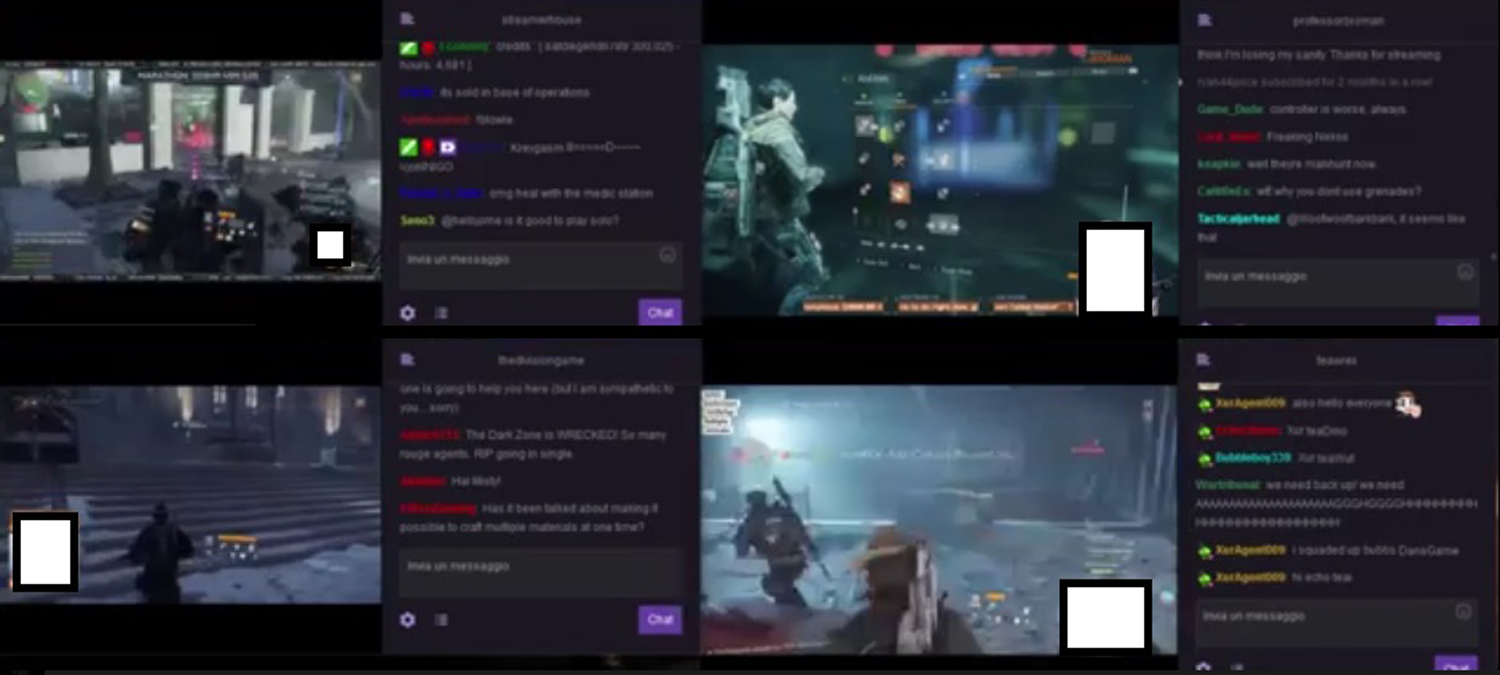
Data were collected from both platforms from March 8 – release date of TD – to March 27, 2016. This first 20-day window is usually the most crucial for a digital game. The sector is characterized by a constant turnover of selling hits, and usually records of numbers of copies sold and players’ activity are set in the first weeks after a game’s launch. At the same time, TD (PC version) was played several times by the author in order to become familiar with its features and mechanics. With regard to Twitch.tv, each day at 12:00 pm (East Coast Time) the five most viewed streaming videos in the TD channel were recorded (2 min each) with the software Camtasia (see Figure 1 for a snapshot of a recording session). Streaming from 6th to 10th positions were gathered in terms of numbers and names of the performers. Therefore, performance (in-game actions, twitcher’s outfit, and comments) and contemporaneous chat discussions were saved. With regard to Steam, each day at 12:30 pm (East Coast Time) the following data were collected: the first 30 threads (and related posts) in the discussion session, five most liked frames in the screenshot section, five most liked images/videos in the art section, and five most helpful reviews in the review sections. Other categories (guides, videos, and transmissions) were disregarded due to their low popularity. This approach is aligned with a player-centered perspective (Fullerton, 2008): Only the first results displayed on the screen were considered. Although this method could entail a loss of information (e.g. less viewed twitch.tv shows, less popular threads), it removes secondary information and supports a more straightforward selection of data.
Data analysis
The main focus of the analysis was on collecting insights, themes, and reactions related to a premediation effect – what Hunicke, LeBlanc, and Zubek (2004: 2) define as ‘the aesthetic’ triggered by the game rules. In order to reach this goal, textual data were processed through nVivo software (version n.10) by deploying a discourse analysis (Gee, 2010) rather than an extended but less explanatory textual one (see Nakandala et al, 2016). Such an approach was applied also in framing visual content with a figurative orientation (Floch, 1995) – that is, looking for familiar associations with real/functional objects. The objective was to uncover references to places, actors, and motives that might be pertinent to the anticipatory attitude triggered by 9/11 (Grusin, 2010) and the critiques reported above. Specifically, the exploration followed a two-step cycle (Saldana, 2016: 234). First, data (sentences and visuals) were labelled in great detail in order to achieve an extended overview. The main reference categories were ‘main theme’ (i.e. what the game is about) (Schell, 2008), rules (i.e. the game mechanics) (Adams and Dormans, 2012), heuristics (best strategies for beating the game or improving the experience) (Elias et al, 2012), narrative (i.e. plot and characters) (Sylvester, 2013), environment (i.e. game spaces and level/art design) (Fullerton, 2008; Schell, 2008), publisher (Ubisoft’s policies and support), community (i.e. other players’ behaviours and positions), and ‘noise’ (spam). For Twitch.tv chats, the ‘streamer’s performance’ was also considered. The categories were then contextualized in relation to the game itself (e.g. the multiplayer mode) and when pertinent tied to three main labels related to premediation: realism (i.e. feeling of proximity with reality), political ideology (i.e. right-wing values and preventive approaches), and catastrophes (i.e. terrorism, natural disaster and bio-chemical weapons).
Along with this thematic focus, a narrative analysis (Bruner, 1991) has been adopted to frame how players deal with each other (e.g. in discussing in chat and forum sections, in responding to a review) on and through the targeted platforms when premediation themes occurred. Hence, the objective was to gather the emerging narratives of the game experience in terms of: Interaction (between users) valorization – ludic (escapist values), critical (critic values), practical (pragmatic values), and utopian (existential values) (taken from the semiotic square by Floch, 1995). Interaction (between users) type – supporting (an aligned mood), debating (a constructive mood), and criticizing (a conflictual mood) (taken from the encoding/decoding model by Hall, 1973).
Such analysis was directed by following three ‘building tasks’: significance – that is, what and who is relevant, practice – what activities are under the spotlight, and connection – which relations are staged between elements (e.g. rules and community, players, and streaming) (Gee, 2010: 102). The unit of analysis for textual data was the ‘stance’ – that is, ‘“clumps” of tone units that deal with a unitary topic or perspective, and which appear (from various linguistic details) to have been planned together’ (112) (e.g. a progressive and correlated exchange of messages on the Twitch.tv chat, a thread on the Steam discussion section), while visual content was examined picture by picture (e.g. each artwork in the top five positions). The research was approved and monitored by the author’s university Institutional Review Board (IRB) committee.
Playing through the fall
Streaming a premediation show
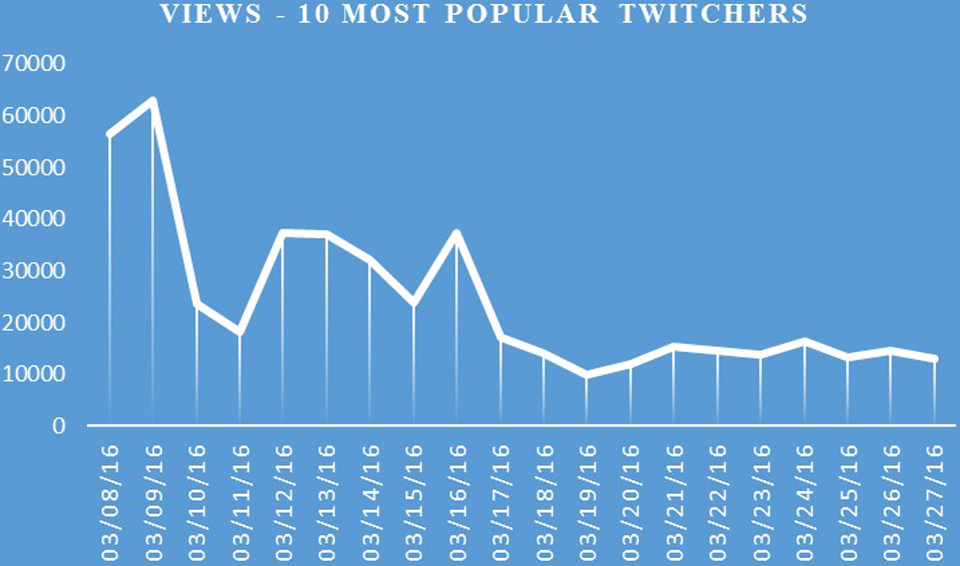
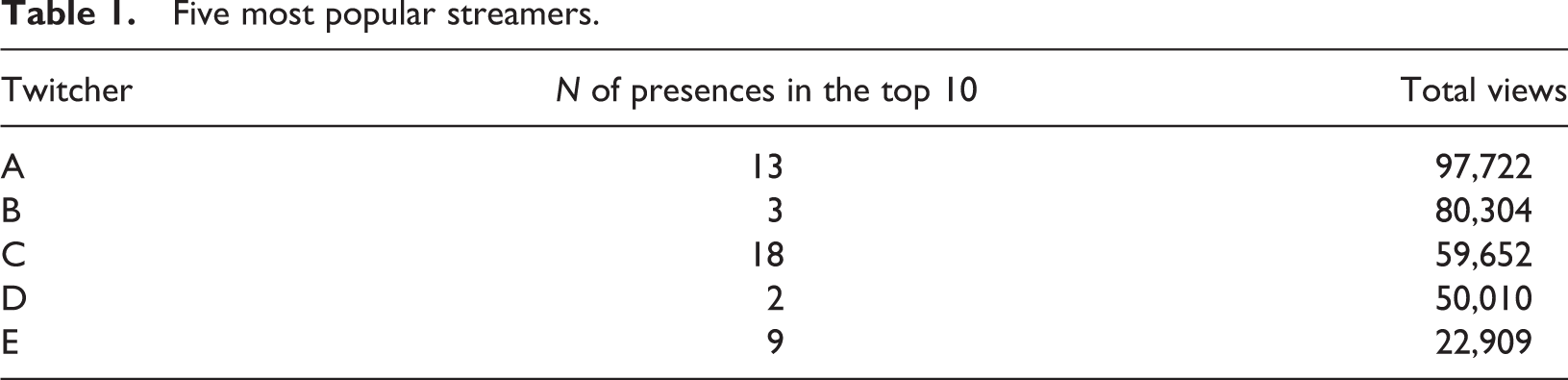
TD streaming on Twitch.tv was categorized via a small number of leading performers who monopolized the viewers’ attention. Figure 2 describes the overall visualizations gathered by the ten most viewed streamers in the first 20 days from the release, and Table 1 reports the most popular twitchers (names are anonymized and replaced with letters for privacy) with related information. It is worth noting that twitchers B and D were especially influential considering their sporadic presence.
The Division’s trends on Twitch.tv.
Five most popular streamers.
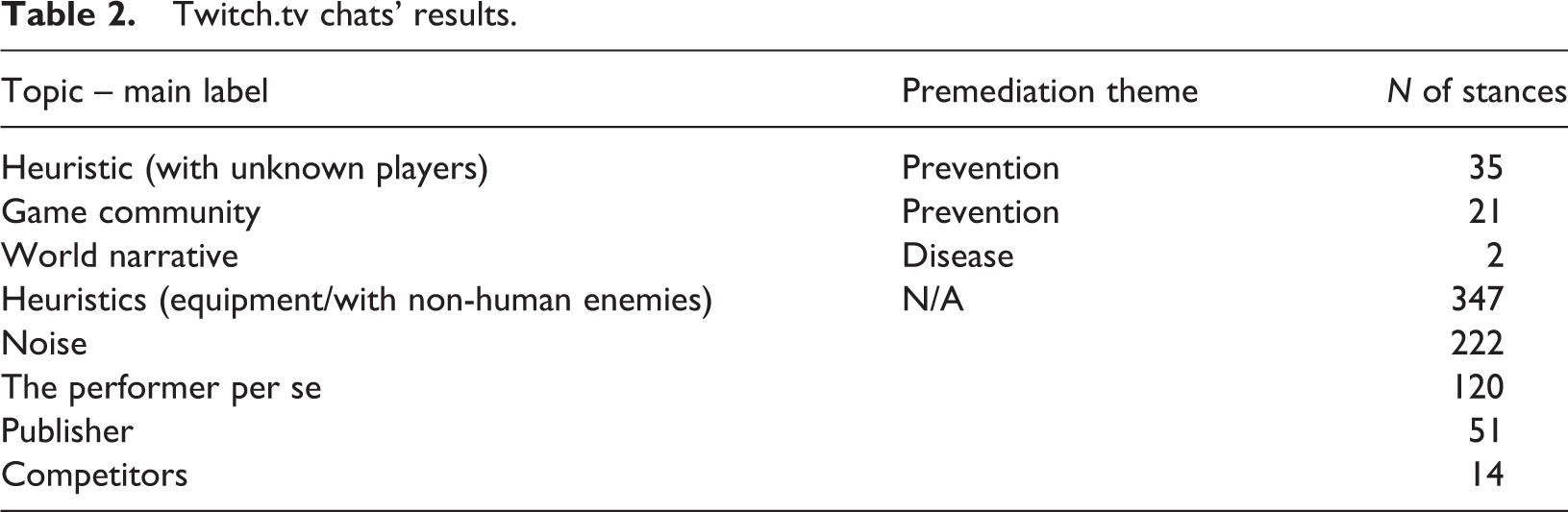
Streaming per se and streamers were poorly associated with premediation issues. All the performers played the game in order to achieve its goals, from finishing a mission to winning a multiplayer session. This attitude on Twitch.tv was already observed in other analyses (Gandolfi, 2016; Gandolfi, 2017) and was strengthened by the specific genre of TD, which facilitates a competitive approach. Twitchers’ outfit was a casual one without any specific peculiarities (mainly shirts and informal ties). Their interaction with viewers was limited (in the 100 short videos collected, in only 16 cases did they respond directly to spectators’ inputs) and mediated by chat bots (e.g. for thanking new subscribers and donators). Conversely, the chat per se provided stances that were pertinent to premediation themes. Eight hundred and twelve stances (average number of messages: 7.2; standard deviation: 1.6) were framed, with a leading attention to game heuristics, the performer per se, and the creation of noise. Table 2 describes leading topics, potential relation with premediation, and related number of stances.
Twitch.tv chats’ results.
Strategies in relation with performers’ activities were the most popular debating topic (e.g. ‘his primary has perks that lessens the cool-down for every headshot’, ‘they just coordinate super well and all take specific roles definitely a strength of Goths’, ‘coordinating groups with roles so they max strengths all across the board’, ‘the AUG is a better riffle based on the RPM’, ‘also the DPS numbers don’t account for crit or headshot’). Heuristics in dealing with other players and game community represented complementary references to a preventive attitude. This trend thrived from March 13 with the increasing presence of Dark Zone challenges. The former referred to how viewers suggested and instigated performers to attack other players as a precaution/winning strategy. These stances were usually dominated by unanimous consent on the effectiveness of such aggressive behavior and celebrated the streamer when he or she followed it (in 26% of the cases) – for example, ‘best way to get DZ exp is to enter on the line of fire of a random person to try to get them rogue and then kill them’; ‘bro you should have given that old nympho a bean flicking at least’, ‘rip’, ‘lol’; ‘I like how you can be a superawesome detective while murdering people’, ‘rektum impalled’, ‘yum!’; ‘burn to death’, ‘death, so many explosions’, ‘lol!!!’). In turn, the latter regards complaints about this practice by providing negative game experiences and criticizing the whole game community – for example, ‘fucking clash of clans’, ‘this game has the worst community. I just finished the daily challenge for the third time and always get kickend in the end’; ‘me and my friend survived a manhunt last night’.
From a narrative perspective, such stances generated two different types of narration. One refers to the first group of debates focused on the streamer and his/her performance. Related stories are characterized by a ludic valorization and a supportive mood, and they consist of an emphatic celebration of the preventive strategy suggested by viewers. This tactic aims to remove the unpredictability within the ‘liveness’ (Auslander, 2008) of the spectacle, which may work as an anti-premediation element. Indeed, media ‘liveness’ – that is, a mediated experience that aims to highlight the ‘here and now’ as on Twitch.tv – entails immediacy and intimacy but also anomalies and misfortunes. Promoting an aggressive approach means trying to reduce such an unpredictability, which is even supported by TD itself (i.e. PvP mechanics). The ludic valorization is highlighted by a crescendo of exclamations and aligned comments in enjoying how a performance is – or should be – made safer. In contrast, the other narrative (discussions about the game itself rather than the streaming) presents a mono-directional critical orientation and reflects on how this element may ruin the game experience. Indeed, these stories were reports of users’ matches and game analyses, stating how TD was weakened by this dynamic. Such an approach tends to preserve the randomness of video games, which is indeed a core feature of this medium (Aarseth, 1997).
The difference between the two is the media experience targeted. The former deals with streaming, which is a linear – although dynamic – show that needs to be controlled and encapsulated (i.e. attacking means to narrow the range of potential experiences in TD). The latter regards the more interactive game playing, where the user is in charge and multiple possibilities and novel situations are recurrent. Such a divergence explains why viewers suggested a preventative behavior to performers and criticized this approach when in their own playing it is adopted by other players. Finally, marginal references emerged in relation with the decadent world setting – for example, ‘it is like a post-apocalyptic snow urban theme. I kinda like it’, ‘storytime’, ‘it seems pretty real, actually’. The related narrations were usually supportive and ludic (the shared pleasure in perceiving the game aesthetics).
Debating, framing, and interpreting a devastated New York
Figure 3 depicts the overall numbers of posts in discussion and positive/negative reviews related to TD on Steam. The former information was collected by the author, while the latter was gathered from www.steamspy.com.

The Division’s trends on Steam.
Discussions (30 threads each day for an overall number of 376 unique threads) were characterized by technical discourses (e.g. ‘Known issues’; ‘What ruins the game for me and others’) (n = 162), requests for help/tips (e.g. ‘Dark Zone questions’; ‘nerf enemies’; ‘Black Market AK-74 vs. Liberator vs. Vector 45 ACP’; ‘some tips for noobs as you are destroying your teammates’ game’) (n = 81), game assessments (e.g. ‘Worth buying?’; ‘The Division Angry Review’) (n = 44), and recruiting (‘No players in DZ?’: ‘grouping’; ‘KonvictGaming.com – Large Gaming Community – Recruiting’) (n = 25). The pinned threads (i.e. the ones in evidence) focused on patches, bugs, seasonal plans, and hacker reports. Regardless, PvP in Dark Zone and related rogue mode were heavily debated (n = 32). Almost all the related threads (n = 31) attacked this system, which would promote aggressive strategies and behaviors. In short, going rogue means attacking previously neutral/friendly players. Although there is a penalty for adopting such a strategy, according to discussions it was frequently used. In addition, the tendency to intercept the line of fire of other players in order to make them go rogue (and become less powerful) was also in evidence. Among the critiques, some indicative examples are reported in Table 3.
Steam discussion about the rogue mechanic.
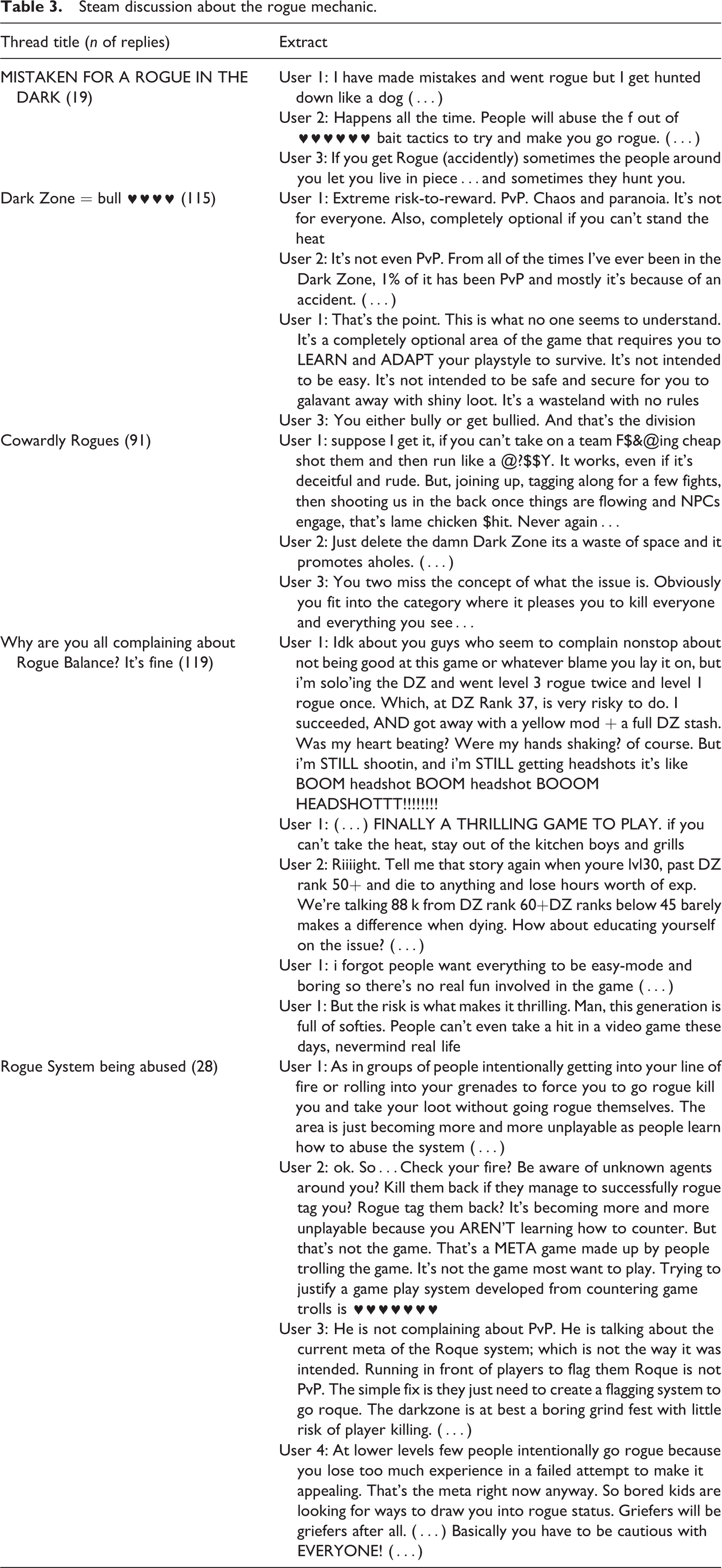
This mechanic can be associated with a preventive act, which suggests being ready to react and even prevent others’ attacks (which is actually suggested by several users on Twitch.tv). It could be argued that users agreed about the fallacy of the system per se and the disrupting presence of trolls and cheaters. However, one thread (i.e. ‘Why are you all complaining about Rogue Balance? It’s fine’, reported in Table 3) and some posts (n = 35) within these discussions defended it because it made the experience more exciting and unpredictable. Moreover, exploiting the game play weaknesses would be justified due to performing values (i.e. winning the game): If people want to play their game 24/7 and max out with the best gear they can get in two weeks…by all means, enjoy. It just means sooner instead of later they’ll be leaving for the next game (in ‘To everyone who kicks people below a certain DPS for challenge missions…’, n = 62 replies).
With regard to other topics in relation to premediation, only one thread referred to terrorism – that is, ‘I have to know: who lives in New York?’ (n = 19 replies). For instance, User 1: ‘I had thought that at first as well, but the building looks identical to the building in New York. But some of the buildings…are pretty much an identical match…I find the whole city map fascinating:)’; User 2: ‘Also a little bit of anti-terrorism since 9/11. I doubt they would let virtual recreation of something valuable look similar to a degree to the real thing. Also a little bit of screw up’; User 1: ‘Oh yeah, that’s a very good point’; User 3: ‘In the age of having ready access to things like satellite imagery from Google I highly doubt potential terrorists would need a video game to get an accurate layout of a major city’. The imperfect realism considered here is a design choice due to possible terrorist menaces, which could benefit from a perfect replica of the Big Apple. However, the discourse is about a potentially risky simulation rather than on TD per se. In another thread – that is, ‘Why all my characters are so angry?!?’ (n = 15 replies) – players noted the pessimistic patina that characterized avatars and setting. Regarding minorities (whose representation was one of the weak points highlighted by critiques of the game), two threads (‘Why is doctor Kandel a lesbian?’ [n = 214 replies], ‘Why 80% of NYC is portrayed as Gay in the game?’ [n = 6 replies]) criticized the homosexual characterization of non-playing character in the game, and another one (‘Why do The Division players hate gay people’) (n = 75 replies) replied back. These discussions emphasized the apparent nonsense of these design choices (in terms of plot and masculine outfits) but were promptly removed by the administrators.
The screenshot section (five per 20 = 100) was dominated by landscapes and game environments (42%), avatars (16%), situations – that is, frames from a gaming activity (12%), lighting effects and cut scenes (each 8%), and weapons (6%). The first category underlined the game’s aesthetic beauty and realism, from the Brooklin Bridge to streets covered by snow. Some screenshots pointed also to the decadency of the city, with graffiti and fires (e.g. Figure 4). Finally, one image (Figure 5) showed clear references to 9/11, with a wall covered by missing persons’ pictures. The other types of screenshot were not pertinent, highlighting technical effects, specific outfits and equipment, and frequent in-game scripts (e.g. waiting for an extraction in the PvP zone).
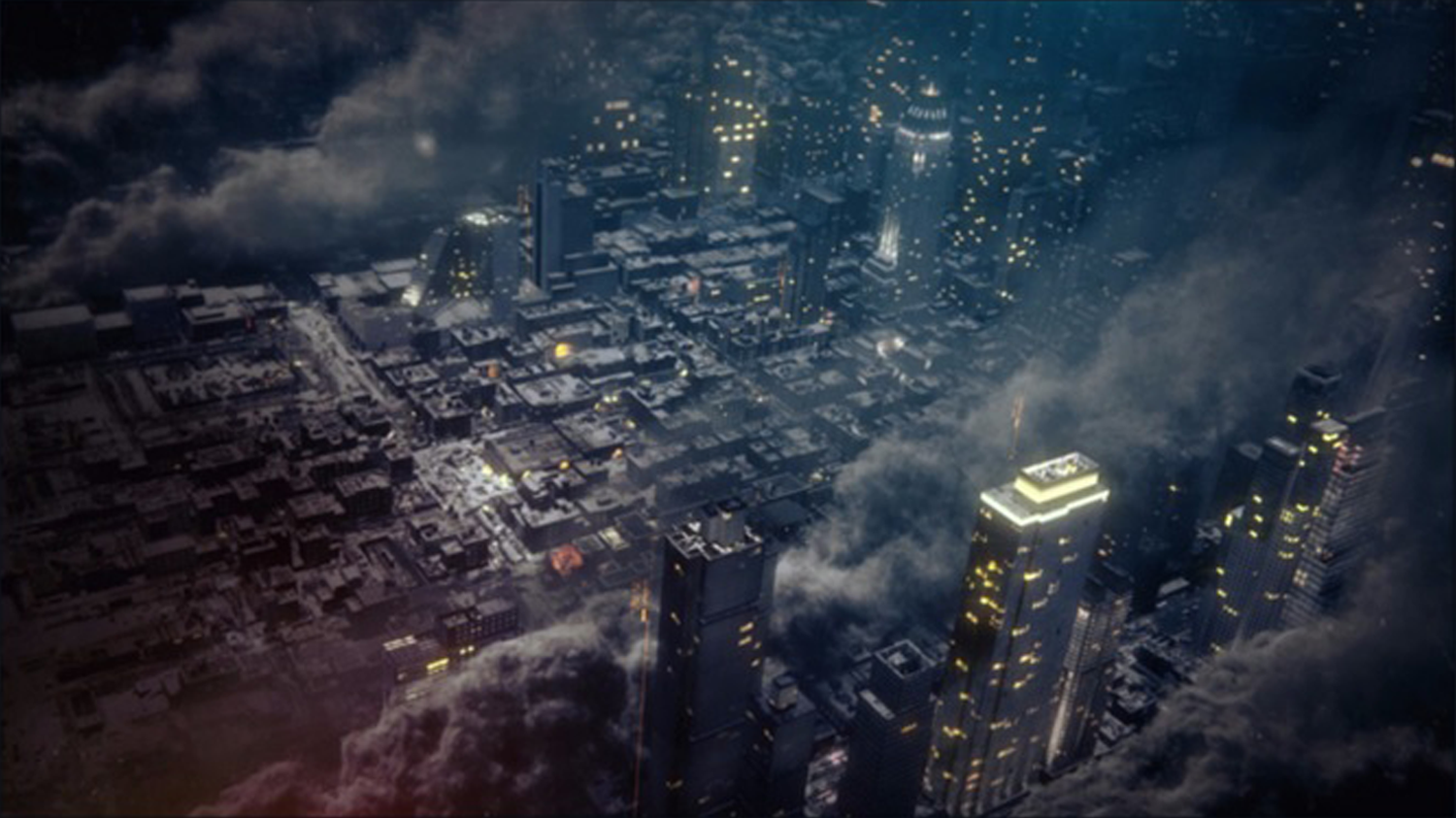
A burning New York (Steam screenshot).
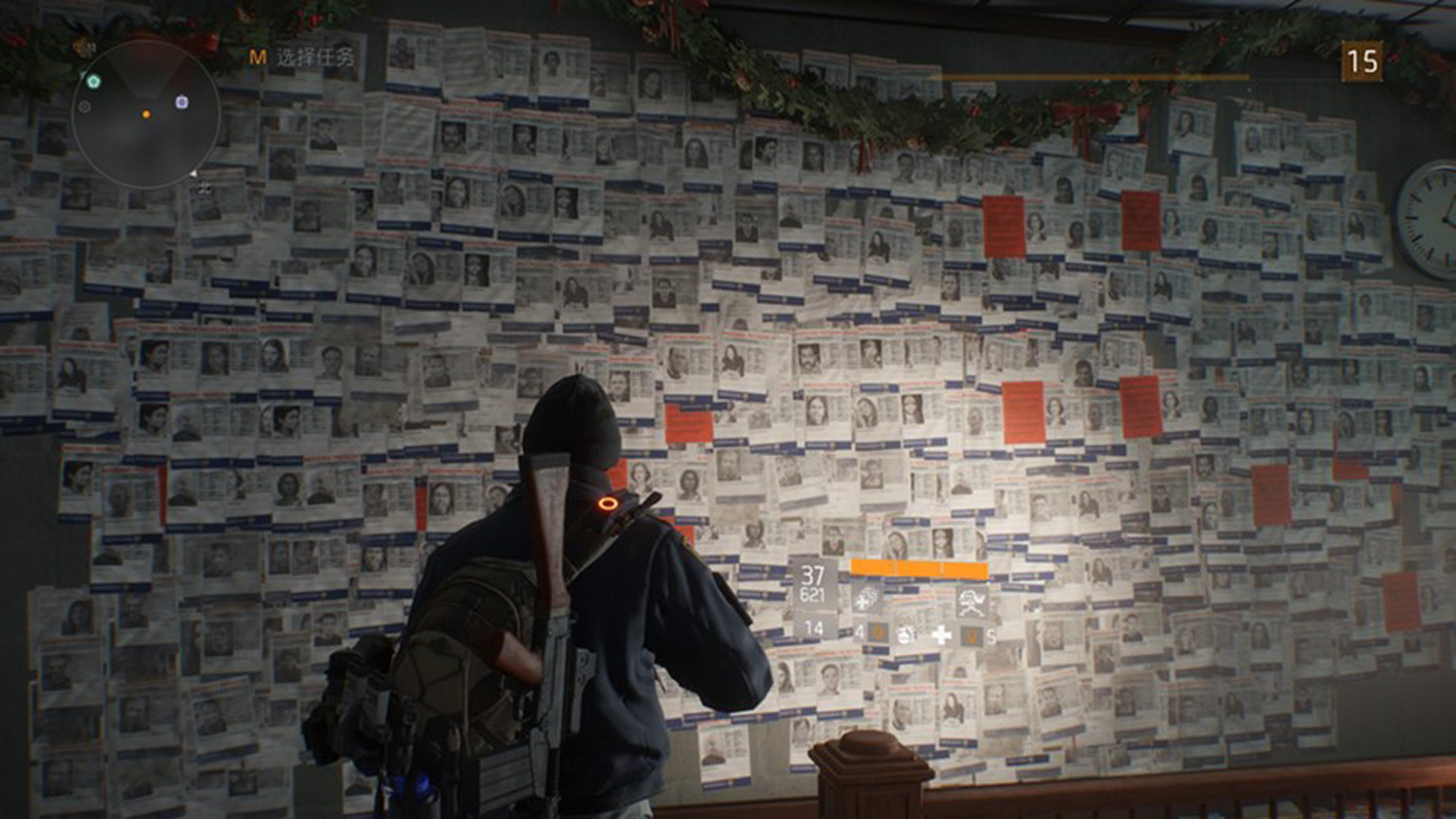
Missing persons in The Division (Steam screenshot).
The artwork section (five per 20 = 100) was characterized by amusing GIFs about escaping from/fighting with other players (32%) (e.g. videos with terrorized cats or from comedy and military movies) and reinterpreting the tensions between players through a Far West lens (9%) (e.g. sequences from the movie The Good, the Bad and the Ugly). This cross-genre reference was already noticed by Takacs (2011) in TV shows as a way to normalize the trauma of 9/11 and making its tragedy more familiar. The rest concerned concept art (18%), scripted actions (e.g. dancing) (7%), and specific in-game situations (6%) (e.g. the line of players waiting in the social hub). Among the other contributions, one artwork (Figure 6) clearly referred to a condition after a catastrophic event.
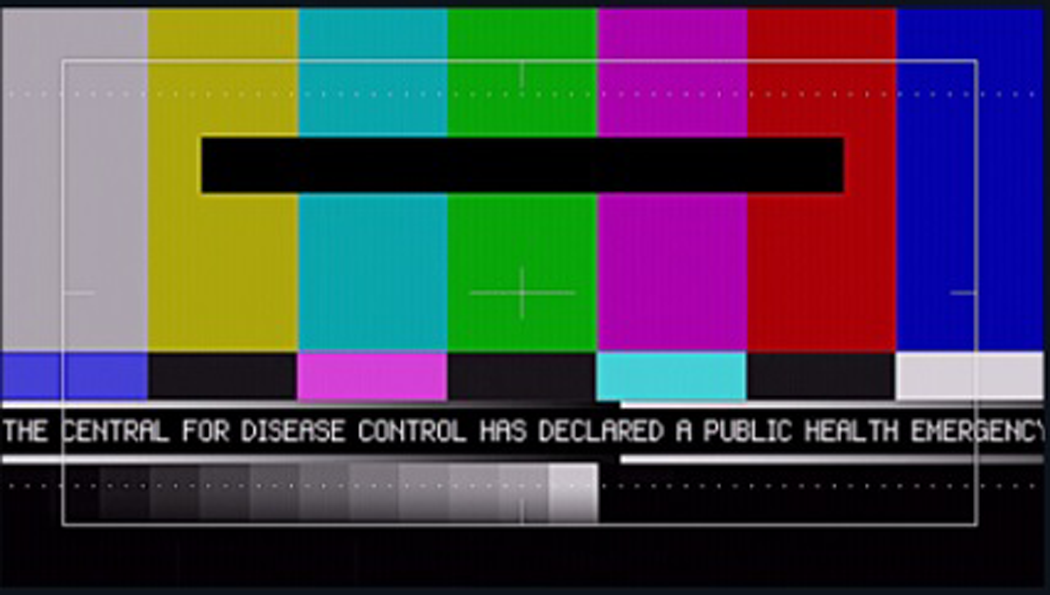
State of Emergency (Steam artwork).
Despite the fact that several reviews (five per 20 = 100) were concise and had only summary assessments, some trending features emerged. Absence of support (13%), technical issues (18%), and repetitive patterns (21%) were the most frequent critiques, while the setting was generally appreciated (reported in 12%) due to its decadent portraying: The world itself is wonderfully constructed. While the graphics are meh, the actual construction of the city is great, and it does feel like Manhattan turned upside down. Trash is everywhere, cars careened in the sides, and hordes of hungry, desperate people try to stay alive. The Dark zone is a fresh idea and very fun and the saving factor for this game for me. I enjoy the pvp aspect and also for taking this route of being a rogue agent that the world will be against me sorta feeling I get out of it. Imagine the intensity of this scenario. You and your other 2 friends have just entered the Dark Zone.…After a few minutes of trying to navigate the blizzard and small alley ways we finally made it to the point of origin of the said noises.…We walk into the middle of what seemed to be an extraction zone when we realized we had just sprung a group of Rogue agents trap.
Emerging narrations changed from section to section. The discussion one was characterized by a debating attitude between critical and practical valorizations focusing on the rogue system and the tendency to attack other players. Both these approaches are analytic (consisting in game reports and analyses as the second narrative from Twitch.tv), and users debated their controversial role within TD’s game play. Deepening the single stances, unpredictability is not criticized per se; conversely, the reaction to it is called into question. Once again, a continuous aggressive style is perceived as a closure of the interactive test because it reduces the options given to players (e.g. strategies, cooperation). However, for some users this manhunt does not break the game but adds a further layer of challenge. Nevertheless, premediation seems to be neutralized. Such a mixed approach is reiterated in reviews (and related comments, which were usually supportive), whose narrations were usually split into critical and practical reports (i.e. list of pros and cons related to the Dark Zone dynamics) when dealing with the PvP mechanics. However, the setting per se was addressed by utopian and ludic valorizations, highlighting the beauty but also the realism of the game world. Narratives from screenshot and artwork sections follow this emphasis, with supporting comment and informing TD with ludic values (an engaging and pleasing environment). However, it is interesting to note how users were confident in creating and responding to UGCs about catastrophic settings, which were deemed familiar because of the media exposure (e.g. movies, TV shows, media coverage) to this type of content.
A familiar imaginary for a preventing interaction
It is quite challenging to summarize the findings of such a multifaceted inquiry. Addressing the core research question, it could be argued that TD has entailed reflections that might address a premediation attempt. The critiques of the game (e.g. Bazaar, 2016; Todd, 2016) pointed to its representations and environments, which were actually a marginal but appreciated topic (especially on Steam) and considered a source of immersion. The realism embedded in the game was highlighted as triggering engagement and astonishment. The screenshot section of Steam was particularly indicative regarding this point by emphasizing the aesthetic beauty of the game. In discussions and reviews, some players stated that they felt they were in a pretty real New York. A possible explanation is that media audiences are now used to these settings and world narratives. Therefore, the game simply harnessed a shared predisposition to a specific media content. However, plot and characters (and a possible right-wing ideology) were poorly assessed. The topic of terrorism per se was overlooked and the lack of power exercised by minorities (one of the biases characterizing the game according to critical articles) received little attention. The only exception was the Lesbian, Gay, Bisexual, Transgender (LGBT) issue, which by the way is currently a widespread theme in the sector (see the debates about the queer characters in Overwatch and the inequalities embedded in the Rimworld’s code).
However, a game feature proved to be pertinent for premediation within the two media platforms explored: the PvP game mode. In the Dark Zone, players are tempted to betray others and/or adopt a cautious strategy against everyone. The attitude enabled by the game play and the related rogue mode is a preventive one, and it is unsurprising that in the Steam discussions section several threads were about recruitment and grouping. This modality was perceived in an ambiguous way because of its innovation (usually, teams and factions are clearly framed in online gaming). Both on Twitch.tv and Steam, some users appreciated it and the suspense triggered by this feature. In commenting on Twitchers’ performances, they suggested an aggressive behavior. In turn, others criticized such a ruthless dynamic and the overall community for abusing it. Nevertheless, this mechanic can be associated with a premediation agency that may support an unscrupulous tactic. In artworks, several UGCs framed it with Far West and military references. Although the orientation was an escapist one, this interpretation tells us about the precarious type of game play staged by the game. Therefore, it can be argued that an interactive premediation is staged by exploiting an aggressive attitude that echoes the Bush doctrine of pre-emption (Grusin, 2010) in the game space.
The narratives generated about these topics were strongly influenced by the platforms’ features, as proven by the general supportive tone of users’ interactions – that is, the tendency to accept and support others’ activities and comments. Twitch.tv’s orientation on the here and now (i.e. live streaming) made users’ activity focus on the performance per se (enjoying the show), with marginal room for other topics. Moreover, they promoted a closure of the media practice itself (the game as a spectacle) by celebrating such an aggressive attitude; the game is cut, and its potential readings/affordances are narrowed. Yet, when viewers address TD per se this argument is overturned. This is especially apparent in analyzing Steam, which indeed focuses on the game as a game depicting a different picture. The widespread tendency for preventive attacks is often criticized here (i.e. discussions and reviews) because it ruins TD’s range of possibilities – it becomes a ‘dominant strategy’ that weakens the status of the medium (Schell, 2008). Discussions are the only section in which there is a debating attitude – although the majority of stances elaborate critiques rather than an appreciation – but it should be noted that it is embedded in its forum-based structure, which aims to facilitate debates and exchanges rather than generic approvals. With regard to the topics of realism and catastrophes, screenshot and artwork narrations (in which the game works as a source material for developing personal creations) demonstrated how a post-apocalyptic setting is familiar and well received by the users in creating and assessing related UGCs.
Therefore, it can be argued that the premediation strategy is attacked (with analytical critical-practical orientations based on personal or analytic reports) when the medium is targeted for saving its own peculiarities – that is, an open environment with multiple paths – while it is celebrated (ludic orientation) when the related spectacular performance on Twitch.tv is assessed. The latter can allow itself a dominant strategy because it is akin to a linear media experience (e.g. movies, YouTube videos), in which the producer’s (i.e. the streamer) control acquires a leading importance in delivering the final product. Nevertheless, it is not the case that the twitchers – who are experiencing TD also as a game – rarely followed spectators’ suggestions. These performers represent indeed a specific category of media performers, which rely on improvisation and transparency rather than harnessing postproduction skills since the reference platform is live (Gandolfi, 2016).
Therefore, studying game service platforms becomes a crucial dimension for better understanding the cultural meaning of a video game. These platforms shape and contribute to the interpretations formulated by players and provide important spaces for reflection and critical analysis. In this case, platforms become crossroads for thinking about premediation processes and digital entertainment peculiarities spanning both mechanics and aesthetics. Indeed, it is interesting that TD’s premediation traits (all referred to game representations) reported by critical articles were partially present and even well perceived on Steam and Twitch.tv. Conversely, the PvP represented a more central theme in both the platforms calling the in-game actions per se into question as a bearer of meaning. This spotlight on the interaction side (e.g. rules and mechanics) rather than on the representation one (e.g. story, graphics and characters) is still rare in game analysis. Given the agential orientation of the medium (Aarseth, 1997), inquires have tended to deploy the latter focus and overlook the former (e.g. Carr, 2014; Lynch et al., 2016). Nevertheless, in examining the platform life of TD (and then its playing audiences) from a premediation perspective, it (and especially the PvP structure) emerged as a significant element for players.
However, this study is characterized by three main deficiencies. First, it framed premediation instances within specific boundaries, those of Twitch.tv and Steam. This peculiarity means that the research findings are limited – although it may well be that a premediation effect could happen and be staged outside these online spaces. Nevertheless, the research lens selected here was a narrow and very particular one, and other angles (e.g. a survey among players) could lead to different results. The accompanying risk is to offer an overinterpretation of a targeted case study (for a similar observation, see Eskelinen, 2001) and read data in a subjective and biased way. Although this critique could be applied to the present study, the analysis was directed with a systematic approach (Saldana, 2016), and, if we adopt a broad perspective, the relevance of premediation topics is secondary indeed. Furthermore, gathering preexisting data partially guaranteed that it had not been skewed by the researcher’s preconceptions (Schmierbach, 2009). Second, Twitch.tv and Steam are not the only game-oriented platforms operating in the sector. For instance, YouTube gaming is another live-streaming platform that could have been studied, and content sharing and official game forums might provide interesting insights as well. In addition, Steam is especially PC oriented, and this is probably the reason why so many threads regard technical/hardware issues. However, these two platforms were chosen for their centrality in current game culture, and their competitors are currently less influential in terms of numbers and members involved. Third, the research provided a snapshot of the first 20 days from TD’s release resulting in a wide but temporally circumscribed picture. Further evidence and debating topics might have emerged in the following weeks, although the initial period on the market is usually the peak of a game’s popularity (see Figures 2 and 3 for indirect confirmation of this trend). Despite these limitations, this inquiry has also three elements of originality with relevant implications. It empirically sheds light on a highly debated topic (i.e. 9/11 and premediation) addressing a medium that was not sufficiently explored in these terms. By uncovering if and how premediation instances are felt by the consumers of a pertinent cultural object, it gives a concrete and tangible picture of its perception among audiences. Moreover, tools and insights for examining game-related platforms are outlined for informing further studies. It is hoped that this research approach will help facilitate a better understanding of different game service platforms and content (e.g. the examples reported below, UGCs shared via home console browsers like PlayStation Network and Xbox Live) and/or products and driving concepts (e.g. Battlefield 1 and revisionism, Watchdogs and privacy issues, Overwatch and queer culture, Persona 5 and Japanese modern society, Final Fantasy XV and tourism, Titanfall 2 and majors’ policies, No Man’s Sky and hype, Mario + Rabbids and intertextual hybridizations, Destiny 2 and game community). Finally, in this article the emphasis on interactive features and game-related platforms is strengthened in order to understand the game meaning in novel but necessary ways. Indeed, mechanics and game media are essential cornerstones of a ludic practice, and they deserve more attention and analytic efforts. This investigation aims to represent a useful step in this direction and realize the potential of multifaceted overviews beyond textual and impressionist outcomes.
Final remarks
In conclusion, TD proved to partially support a premediation message on Twitch.tv and Steam. Especially its multiplayer mode, which was innovative in the sector, is bearer of a preventive approach that can be related to such an anticipatory orientation. However, such a media trend directly targeted digital entertainment as a multiple object, generating two different reactions: a positive one when the game is for the user no longer just a game but a performance to watch and a negative one when the interactive affordances are called into question. A future challenge is to monitor and understand how future products will incorporate this pre-media-ction into their interactive structures and how players will react. The increasing success of survival games set in a realistic post-disaster setting – for example, Rust, Days gone, H1Z1 – suggests that such a direction is thriving and requires more extensive analytic attention. In turn, TD’s realism and setting were aligned with the increasing post 9/11 imaginary affecting cultural productions, from movies to TV shows. TD is probably the first video game that exploits this hypothetical future at its core, structuring a coherent agency. In essence, the Ubisoft’s hit already envisioned a way to act and react in an apocalyptic but somewhat familiar tomorrow. As Grusin (2010: 47) argues, ‘Premediation entails the generation of possible future scenarios or possibilities which may come true or which may not, but which work in any event to guide action (or shape public sentiment) in the present.’ The Dark Zone has a structure of patterns and mechanics that depicts an urban law of the jungle in which the choice is between attack and being attacked. According to the platforms analyzed, players are trained for the worst (gaming) scenario by increasing their preventive skills. Despite the critiques, playing this game means dealing with such a widespread situation.
Platform studies and the emphasis on video games allows the development of a novel perspective on the theme of premediation, which aims to reflect on how different media react to its envisioning orientations. Digital entertainment and its open environments seem to resist such a dynamic, however players’ reaction to their spectacularity on Twitch.tv (i.e. linearization) apparently match premediation drivers, which remove every element of uncertainty and silence the ‘inscriptions’ (Nardi, 2015) provided by the text. The TD example shows how game service platforms can be crucial analytical elements for defining the medium’s boundaries, its cornerstones, and its active audiences (Goslin and Crawford, 2011). It seems that the subjects observed in this study fear unpredictability when they are not directly in charge. It does not matter if the valorization is ludic; they highlight the need to manage the show by the author/streamer. Although noninteractive media addressing tragedies and terrorism stage pessimistic scenarios, they are always postproduced (even videos on YouTube are characterized by this treatment). Twitch.tv’s ‘liveness’ (and especially addressing the TD’s random PvP mechanics) damages such an assuring overview, which users try to restore. Contrarywise, when they act as players (then, in charge) on Steam (and partially on Twitch.tv), surprises and a partial control return to be familiar features because they are embedded in digital entertainment; from spectators, they become committed experts (e.g. personal and analytic reports). In conclusion, video games may function as a stronghold to preserve the unknown, which is the target of any premediation strategy, by entailing personal commitment and autonomy (i.e. ruling the game and be ready to overcome difficulties). Twitchers have made spectacle this approach suggesting its potential translation into other expressive languages and cultural sectors. Although the audience reaction is still controversial, it can be argued that other media may embrace such a proactive orientation and deal with the future without fearing or anesthetizing it.