







Abstract
By considering diverse disciplinary perspectives on the psychological impact, design and regulation of loot boxes, this paper departs from a shared need for a holistic comprehension of the platform ecosystem in which contemporary videogames are played, developed and governed. The rationale of this paper is grounded in the rapid evolution of monetisation in videogames, which has not only generated scientific interest towards digital consumption, but also engendered concerns for player health, particularly in the realm of gambling-like loot boxes. We perform an empirical Walkthrough of FIFA22’s Ultimate Team (FUT) mode to identify four layers in FUT’s platform ecosystem, which constitute different scenarios of use and which, taken together, raise issues of uncertainty and persuasion for players. Although we focus on FIFA22, our study extends to other videogames with microtransactions, revealing implications for media, design and legal frameworks. Our findings underscore the value of a qualitative, interpretative approach to analysing videogame consumption at the intersection of various platforms and business models.
Introduction
The global videogaming market has grown exponentially in recent years, estimates projecting a value of up to $218 billion by 2024. Microtransactions play a significant role in this development, as in-game spending and mobile revenue account for more than half of the global market according to market research agencies (NewZoo, 2022; see also The Business Research Company, 2023). A notable – and increasingly prevalent (Xiao et al., 2022; Zendle et al., 2020) – example of videogame monetisation is the loot box. Loot boxes are virtual items that contain randomised rewards and can often be bought with real money, prompting scholars to consider them as structurally and psychologically similar to gambling.
More than any other form of digital consumption in games, loot boxes have shaped the agenda of scholars and policymakers alike. In an attempt to discern singular, measurable design entities and their effects of particular relevance to the fields of psychology and law, however, most of the academic and societal debate focuses on how players interact with loot boxes as a standalone, gambling-like mechanism within videogames. Drawing from earlier work in the fields of digital media and platform studies, we argue that this viewpoint overlooks how the symptomatic loot box is encountered and interacted with as part of a much broader platform ecosystem. This oversight, in turn, has implications for how such loot boxes are considered in policy and regulation.
The goal of this multidisciplinary paper therefore is to ‘walk through’ such an ecosystem and illuminate the embeddedness of loot boxes therein – the empirical focus resting on FIFA 22’s Ultimate Team (FUT) mode. The contribution of this study is twofold. A first – scientific – contribution is to broaden our understanding of how videogames are experienced across different layers of platforms, leading to new forms of continuous consumption, which may in turn trigger the application and advancement of existing theories in the fields of media and design studies. When applied to a currently widely debated phenomenon in videogames, a second – societal – contribution of this study is to identify implications beyond the confines of the specific FIFA videogame and formulate recommendations for meaningful regulatory action regarding a broad spectrum of microtransactions in contemporary videogames.
Literature
Revenue generation in the videogame environment has changed significantly in recent times. The most profoundly the transition concerns from a one-time transaction at the physical game store all the way to recurring expenditure in the form of smaller online payments, called microtransactions, which emerged alongside the digitisation of distribution and growing influence of game analytics (Drachen et al., 2013). As a service rather than a product, the latter form of monetisation provides players with continuously updated content, while affording developers the opportunity to indefinitely generate revenue (Davidovici-Nora, 2014).
Indicative of an ongoing ‘gambling turn’ (Johnson and Brock, 2020) in the videogame industry, the integration of chance-based microtransactions has caused both academia and policymakers to call into question the blurring boundaries between videogaming and gambling, and more specifically the ethics and legality of loot boxes (e.g. Brooks and Clark, 2019; King and Delfabbro, 2019; UK House of Commons, 2019). Within academia, a variety of disciplines have studied the implications and effects of loot boxes, including game and gambling studies, psychology, sociology, health sciences, cultural studies and law (Kolandai-Matchett and Wenden Abbott, 2021; Schwiddessen and Karius, 2018).
Several empirical studies have investigated the behaviour, attitudes and motivations of players who purchase and are exposed to loot boxes. These studies, having their primary basis in psychology, have pointed to an association between loot box expenditure and problem gambling and videogaming, reduced mental wellbeing and problems in social life (Drummond et al., 2020; Hing et al., 2022; Irie et al., 2022; Zendle and Cairns, 2018; see also Spicer et al., 2022). Further, more theory-driven, qualitative research has shown that players who purchase loot boxes are driven by a broad spectrum of motivations, ranging from excitement and a desire to remain competitive to the accumulation of social capital and the gratification of completing a collection (Close and Lloyd, 2021; Perreault et al., 2021; Puiras et al., 2022; Kelling and Tham, 2021; Zendle et al., 2019). Grounded in Self-Determination Theory, Lemmens’ (2022) study also found that spending in FIFA specifically is motivated by the needs for competence, autonomy and relatedness.
Another approach to studying loot boxes involves shifting the investigative approach away from surveys and interviews about human behaviours, delving instead into close textual readings of the videogames themselves. While generally rooted in a psychology-based attempt to gain deeper insights into how particular structural characteristics might impact player’s behaviour and attitudes, this line of inquiry occasionally ventures into the domain of game and design studies too. Scholars have as such examined the design of loot boxes, for example, by establishing a taxonomy of loot box design features in terms of their potential to alter player behaviour (Ballou et al., 2020). Relatedly, scholars have examined the relationship between videogame design and player experience through the conceptual lenses of ‘dark game design patterns’ and ‘predatory monetisation’ (King and Delfabbro, 2018; Petrovskaya and Zendle, 2021; Zagal et al., 2013), hereby scrutinising how particular videogame features (such as rewards offered at a variable ratio schedule) are intentionally used by a developer to the detriment of player experience.
Beyond the academic debate, loot boxes are also on the agenda of societal stakeholders, with increased mainstream media and regulatory scrutiny (e.g. Hood, 2017; Liu, 2019). Policymakers at different levels have translated legal assessments of loot boxes into (a call for) regulation (Cerulli-Harms et al., 2020; Liu, 2019; Schwiddessen and Karius, 2018). Based on the desire to protect vulnerable players from harm, gambling commissions in several countries such as Belgium, the UK and the Netherlands have assessed whether and when loot boxes should fall under the scope of gambling regulation (Declerck and Feci, 2022). In Belgium, the Gambling Commission favoured a broad interpretation of the legal definition of gambling, suggesting that paid loot boxes may qualify as gambling (Kansspelcommissie, 2018). Whereas the UK Parliament recognised the potentially harmful character of loot boxes in 2020, it was ultimately decided not to regulate them via gambling regulation (House of Lords, 2022). In the Netherlands, a parliamentary motion was tabled to further examine the possibility of regulating loot boxes (Tweede Kamer, 2022).
In each of the above academic and societal fora, most discussions tend to treat the loot box as an autonomous artefact: a ‘singular, problematic element within this or that game’ (Zanescu et al., 2020: 16). Yet, when players are exposed to loot boxes in videogames, they do not experience just loot boxes. This paper puts forward a more comprehensive understanding of loot boxes. Specifically, we argue that answering questions related to the impact, design and regulation of loot boxes requires a broader perspective of the platform ecosystem in which contemporary videogames are played, developed and governed.
Such a comprehensive understanding is largely absent in the current body of research, which seems more concerned with loot boxes’ relationship to gambling rather than how they function and are embedded in the videogame and beyond. While previous research has focused on loot box design and its impact on players, little is for instance known about how loot boxes interact with livestreaming platforms, persuasive advertising strategies and third-party marketplaces. Similarly, legal analyses have focused on whether specific implementations of loot boxes constitute ‘real’ gambling and, as such, have largely failed to recognise the platforms with which they intersect as well as the business models that align with these. These platforms and models, we argue, transcend the boundaries of the videogame itself and may equally fuel player engagement and expenditure.
There are several reasons to argue for a more comprehensive understanding of loot boxes within a broader platform ecosystem. Virtual domains are pivotal and ‘ubiquitous contexts’ in the daily lives of developing adolescents (Navarro and Tudge 2022: 1), signifying an important role for the larger socio-technical environment in which loot boxes are encountered and interacted with. Previous research has indeed demonstrated how videogames are experienced across multiple environments. Thorhauge and Nielsen (2021) have illustrated how Valve’s Steam platform architecture may shape the behaviour and attitudes of Counter-Strike: Global Offensive players, who contribute to the videogame’s economic growth on and beyond the platform through third-party marketplaces and skin-betting websites (see also Greer et al., 2019; Thorhauge, 2023). Similarly, Zanescu et al. (2020: 1) have shown how DOTA2 is ‘ever-more “gamblified” and framed by systems designed to habituate players to a new form of consumption’. Jarrett (2021: 15) has argued that the experience of Riot Games’ League of Legends extends to the game’s digital ecosystem consisting of ‘Reddit threads, Twitch.tv livestreams, YouTube videos, esports broadcasts, live events and other socially enacted spaces’.
One approach to break down these design-platform intricacies and the underlying processes driving them into their constitutive parts, is employing the notion of platform ecosystems as a conceptual handheld. As articulated by Van Dijck et al., a platform ecosystem is ‘an assemblage of networked platforms, governed by a particular set of mechanisms, that shapes everyday practices’ (2018: 4; see also Poell et al., 2021). Under the broader ‘cultural industries’ umbrella, critical media and platform studies have drawn attention to ‘the organisation of labour, creativity, and democracy around [these] platforms’ (Poell et al., 2021: 5), evident in research on content curation, pricing strategies and data-driven design practices in the production of cultural products, including videogames (Nieborg and Poell, 2018; Nieborg, 2015).
The scientific endeavour to examine how platforms affect the creation, distribution, and marketing and monetisation of videogames has predominantly focused on the so-called ‘free-to-play’ (F2P) business model. Drawing from political economy theory, Nieborg argues that F2P games ‘function within the boundaries of connective platforms’ (2015: 2) such as Facebook, leveraging various social features in an attempt to generate revenue. Similarly, Ross and Nieborg contend that the use of free virtual currencies, registration notifications, and leaderboards within social casino apps points to the ‘commodification of social media connectivity’ (2021: 11).
Although a similar critical-historical examination of particular videogame industry segments is beyond our intentions for the purpose of this study, what can be gleaned from the above literature is an argument for a holistic assessment of digital game consumption practices as being subject to techno-commercial mechanisms within surrounding platforms. This sentiment is mirrored in earlier calls for ‘appropriate research into the political economy of [monetisation practices], beyond solely a focus on their effects on players’ (Johnson and Brock, 2020: 157), an effort preferably undertaken from a multidisciplinary viewpoint (Brock and Johnson, 2021). Beyond the scholarly realm, too, contemporary initiatives commissioned by communications regulators such as Ofcom (2023) aim to uncover the platform architecture and backend processes that shape a user’s journey through a game.
Ultimately, a more holistic understanding of the ecosystem in which videogames are played could contribute to a ‘future-proof’ approach regarding loot boxes as well as other monetisation methods in videogames, by enabling researchers to build on ‘what has been learnt researching past technologies of concern’ (Orben, 2020: 1143). This also allows us to revisit such monetisation methods and go beyond the question ‘of whether something is gambling or not’ (Wardle, 2021: 72). Providing new perspectives that are not stuck in the rigidity of gaming-gambling dichotomies, we believe, sets a path for different levels and foci of potential regulation, in particular consumer protection law. In applying the European Union framework of consumer protection, which is based on general principles such as transparency, fairness and vulnerability, we also follow Van Dijck et al.’s assertion that ‘the dynamics of colluding ecosystems prompt us to look beyond the level of national battles’ (2018: 6).
By identifying questions related to loot boxes across different strands of research as well as juxtaposing multiple disciplinary viewpoints, the goal of this paper is to provide such a starting point. Empirically, this goal is rooted in a case study of the Ultimate Team mode in FIFA22 (FUT), a AAA videogame characterised by a substantial (underage) audience and yearly revenue (Clement, 2022; EA, 2022a, 2022b), and subject to media criticism regarding its implementation of paid-for random rewards (e.g. Yin-Poole, 2021). In FUT, players are encouraged to build an ‘Ultimate Team’ of footballers. These can be acquired by purchasing and opening so-called ‘Packs’ that contain a random selection of footballers and other items. Shifting our focus away from the traditionally scrutinised F2P model (see Paul, 2020), we contend that many of the monetisation methods fundamental to modern F2P game design can also be observed within paid videogames such as FIFA.
Positioning our study within the existing body of research, the following research questions (
Method
To address our research questions, we adopted the Walkthrough Method (Light et al., 2018), as it presents an interpretative and step-by-step approach to consider the mechanical components of a digital system (i.e. FIFA22 and its loot boxes) and broader institutional arrangements (i.e. the ecosystem they are a part of) as mutually constitutive. It is in the interplay of both dimensions that the Walkthrough Method allows researchers to establish a digital system’s intended or ideal scenario of use.
Applied to the analysis of videogames (e.g. Joseph, 2021; Ross and Nieborg, 2021; Zanescu et al., 2020), we approached the Walkthrough Method as playing sessions conducted by the researchers in which each prompt or interaction that presented itself was explored, captured and catalogued to facilitate the recollection of specific occurrences. To illustrate, when an in-game notification detailing the arrival of a new batch of collectible footballers included a QR-code, a screenshot was taken and the QR-code was scanned, taking us to EA’s official website. After having saved the website as a PDF-file, a banner was encountered telling us to ‘sign up to receive emails about EA SPORTS FIFA and EA products, news, events and promotions’, which we then did. In addition, a written gameplay log was used to keep track of any emergent findings and reflexive memos. Walkthrough playing sessions were held during July and August 2022.
As playing and analysing videogames means actively shaping and influencing their content, we report that the authors who conducted the playing sessions both had recreational experience with the FIFA series prior to this study. Recognising that personalisation of services may affect the content on display, we opted to collect data using two different accounts: one ‘beginner’ account with no previous data in relation to FIFA or any other product of Electronic Arts (EA), and one ‘expert’ account that was active from FIFA 21 onwards and that was used to supplement the data obtained (e.g. through returning player benefits).
The final dataset consisted of 1108 screenshots, videos and PDF-files. Three phases of data analysis were carried out, which involved the systematic exploration of FIFA’s platform ecosystem along with the documentation of any observations or reflections as we navigated through it. In the first phase, the collected data was descriptively coded by [anonymised] and [anonymised] using a digital spreadsheet. To illustrate: a screenshot showing six menu tabs and two promotional videos of FIFA23 was coded as: ‘Home, EA Sports, Volta Football, Kick Off, Play, Customise, Pre-order FIFA23, FIFA23 gameplay’. In this way, as many elements as possible (ranging from gameplay challenges to marketplace notifications and other promotions) were identified. In the second phase, these elements were clustered to reflect the interface arrangement of FUT and how players may navigate it. For example, if a QR-code on FUT’s main menu screen led to EA’s official Twitch channel, blocks titled ‘Home’, ‘QR code’ and ‘Twitch’ were placed in close proximity to each other. Higher-category labels and colours were also introduced to distinguish functions (e.g. screen-wide loading screens vs temporary pop-ups), currencies (purchasable vs non-purchasable), space (in-game vs out-of-game), and ownership (developer-owned vs third-party). In the final coding phase, we created a ‘layered’ model of FUT’s platform ecosystem. A detailed description of the codebook and gameplay log can be consulted on OSF (https://osf.io/7z85u/?view_only=8ef07b32d6c049cfb4299a654b570ec2). The screenshots and videos we use depict content owned by EA and have been used under the exceptions to copyright law for scientific research purposes. Citations are derived from in-game text, unless otherwise referenced.
Results
We distinguished four layers of FUT’s platform ecosystem: each comprising different mechanics, gameplay modes and platforms related to FUT, and each representing a different scenario of use for its players (Figure 1). BUY represents the in-game store, where players conduct financial transactions to acquire Packs. Delving into the gameplay modes FUT has to offer, EARN details how players may acquire Packs through time-limited events and daily challenges that motivate constant play, as well as reward schemes that are renewed in cycles called ‘seasons’. Beyond the digital boundaries of FIFA22, FOLLOW demonstrates FUT’s integration into out-of-game platforms and services owned by EA that encourage players to keep up with FUT-related news, events and promotions. Finally, EXPLORE highlights user-generated content and third-party media that exist outside of EA’s direct sphere of influence. FUT’s platform ecosystem, consisting of four layers. Each layer represents a different scenario of use.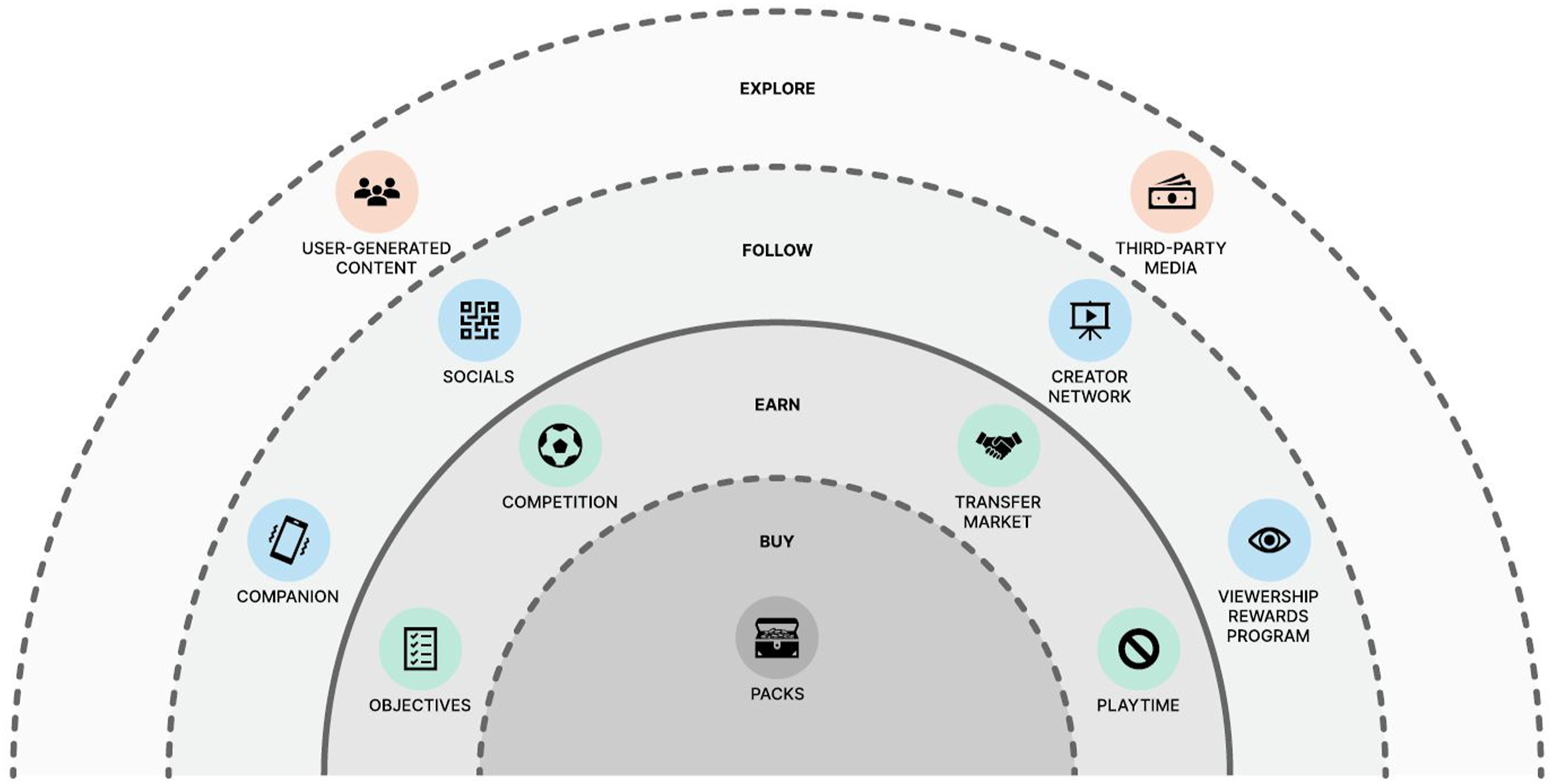
BUY
The BUY layer of FUT’s platform ecosystem establishes a relationship between financial expenditure and the accumulation of virtual possessions. In the Store, real-world currencies are omitted in favour of a virtual currency – FIFA Points – which can be purchased in different amounts and at varying rates, often leaving various amounts of residual waste (i.e. post-purchase remaining currency insufficient for additional purchases). As FUT is continually updated with new footballers, consumables and cosmetic items in the form of Cards, Packs come in a variety of shapes and sizes: some are labelled ‘Standard’ or ‘Premium’ Packs that come with Bronze, Silver and Gold coloured Cards. Other Packs are labelled ‘Promo Packs’ and are restricted in time and/or quantity. The latter often contain footballers with a higher Overall Rating (OVR) as well as specific Classes of footballers. OVR numerically represents footballers’ performance on the pitch. Classes refer to special Cards that are released periodically. In the periodic events called ‘Team of the Week/Season/Year’ (TOTW/S/Y), for example, more powerful (i.e. higher OVR) Classes of outstanding footballers are released.
The Store is where real money is spent and rewards offering gameplay advantages are obtained. The outcome of a Pack opening is ‘dynamically generated’, which implies that it is determined randomly and subject to change. There are, however, three informational measures that diminish the player’s uncertainty when conducting a transactional decision. First, many Packs guarantee at least one footballer of a minimum OVR. Second, upon request, probability disclosures are shown, which are ‘verified using a computational simulation’. Probability disclosures are rather broad and categorical, and hence do not make it possible to infer the precise odds of obtaining a specific footballer (Figure 2). Third, so-called ‘Preview Packs’ show the contents of a Pack before purchase, allowing players to make an informed decision. ‘Previewing’ only applies to Standard Packs, however, and can only be done once every 24 h: that is, before another Pack can be previewed, the first Pack must be purchased or players must wait 24 h for a timer to run out and the feature to become accessible again. ‘Verified’ probabilities (FIFA 22, 2021).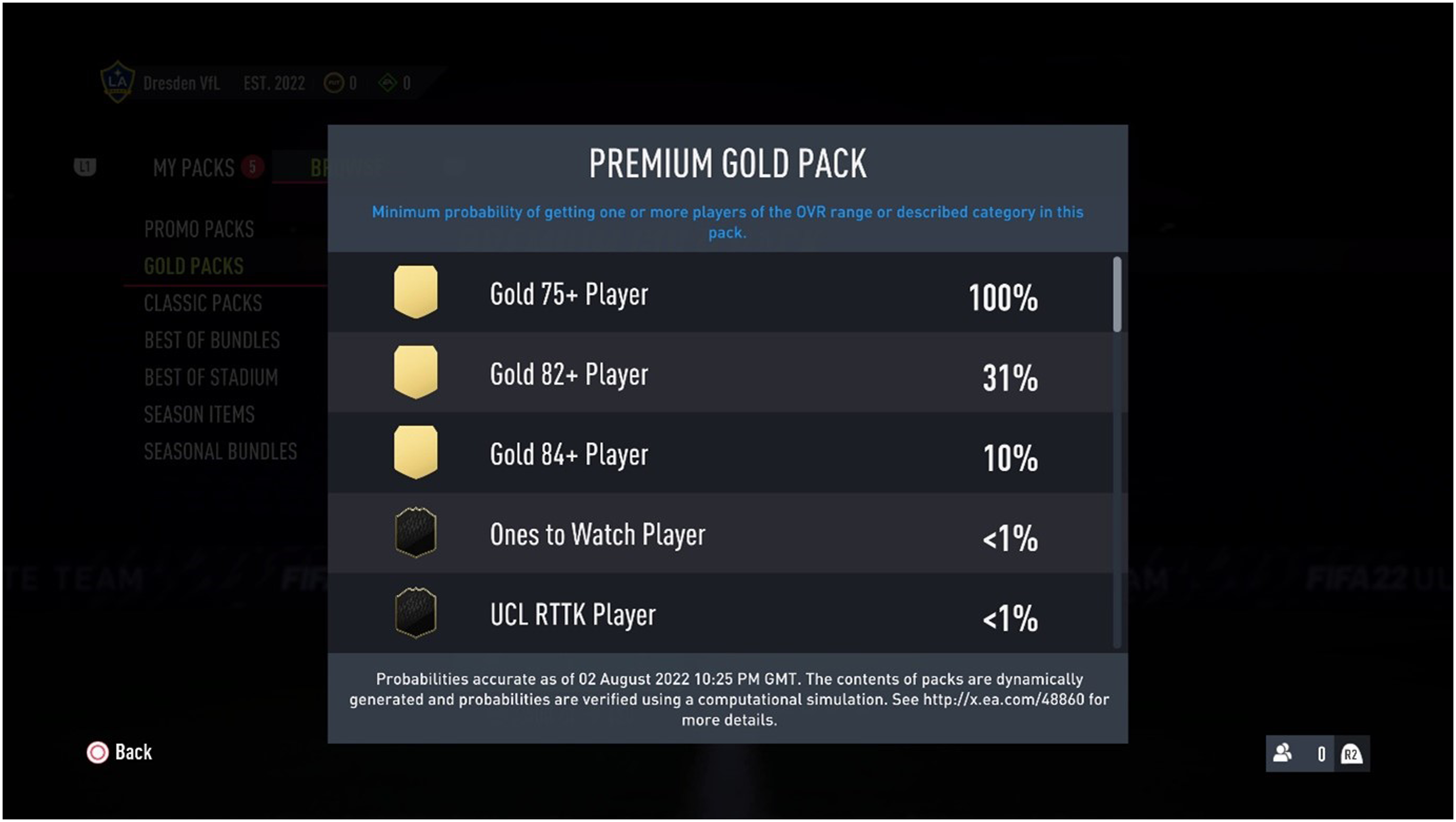
EARN
The EARN layer of FUT’s platform ecosystem provides in-game Objectives linked to transactions of value that do not depend on transactional decisions, but are instead rewarded based on one’s time and effort spent. Central to this layer are FUT Coins, a non-purchasable currency earned in three ways: by completing Objectives and achieving Season Progress, by participating in one of FUT’s competitive gameplay modes, and by using the Transfer Market.
A first way to earn FUT Coins centres around Objectives Daily objectives (FIFA 22, 2021). that are predefined by the system and that include both fixed and time-limited challenges. Fixed Objectives are available throughout FUT’s lifecycle, whereas time-limited Objectives are launched as part of a 6-week seasonal cycle or as part of periodic events. Although the sheer number of Objectives and branching reward scheme make completing them a frequent occurrence, very little offer significant amounts of FUT Coins in return (Figure 3).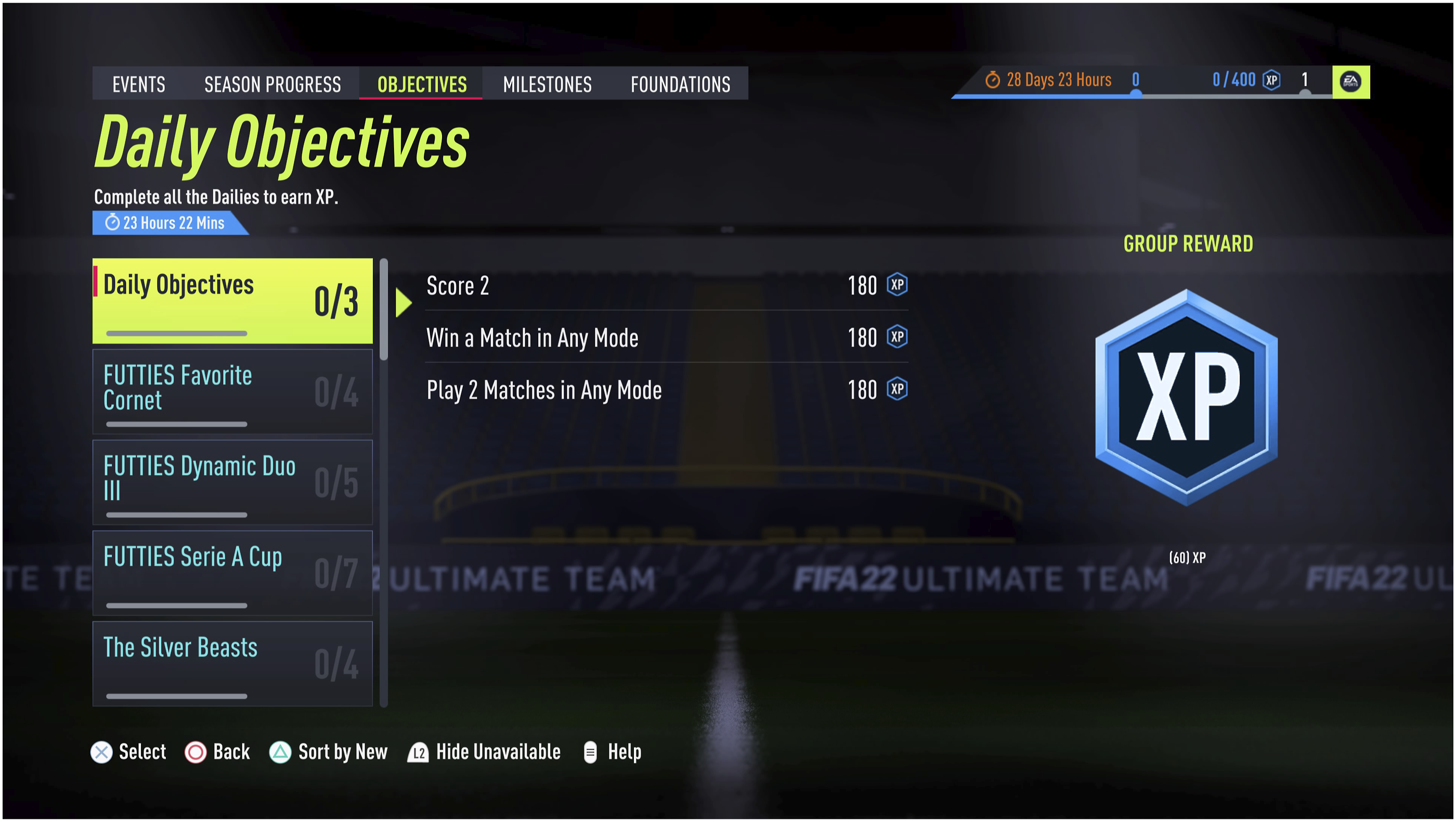
By requiring players to reach a predetermined number of wins or try out particular gameplay modes within the timeperiod of a Season, Objectives also infuse FUT’s competitive format  , which is a second way to earn FUT Coins. Division Rivals and FUT Champions are the main competitive player-versus-player modes. The former revolves around climbing Divisions and earning Weekly Rewards in the form of FUT Coins, Packs and specific player Cards. The latter is only accessible once players have accrued enough Championship Points in Division Rivals to qualify for the Champions Play-offs and subsequent Champions Finals that take place over the weekend and yield ‘some of the biggest rewards in FUT’. A general principle of FUT’s competitive play is that the better the performance (i.e. the more matches players win), the better the rewards. In practice, however, the rise through Divisions and weekly endeavour to qualify for the higher-earning weekend competition hinge on a combination of skill, time-investment and the OVR rating of the teams encountered in rank-based matchmaking.
The only way to earn anything in a non-randomised way and of one’s own choosing, is through the Transfer Market Transfer market. (FIFA 22, 2021) . The Transfer Market, as a third way to obtain FUT Coins, allows players to buy or sell items in their inventory by mutual agreement. Everything FUT has to offer is valued in FUT Coins and is based broadly on supply and demand. Footballers with a higher OVR are generally more desirable because they perform better on the pitch, and are therefore priced higher (Figure 4). There are limitations to trading, however. Specifically, Cards acquired through Objectives receive an ‘Untradeable’ label, meaning that they are not eligible to circulate in the Transfer Market and thus cannot be exchanged for FUT Coins. Untradeables impose significant trading limitations at best and are contextually worthless at worst (e.g. when obtaining a duplicate Untradeable Card).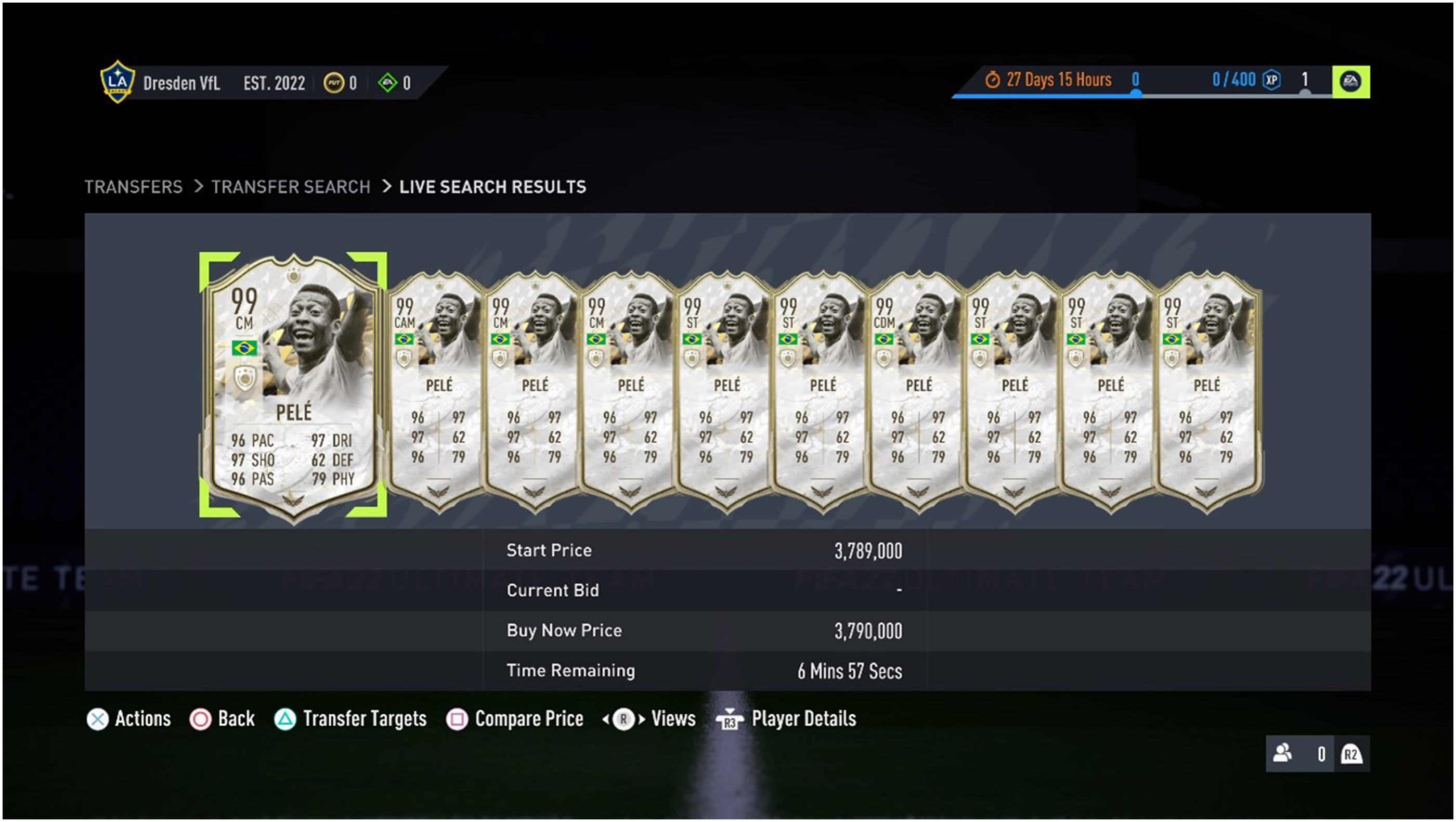
The co-existence of non-purchasable FUT Coins and the previously discussed purchasable FIFA Points across different layers raises two issues. First, the blurring of real and virtual currencies can not only make it difficult for players to gauge their financial outlay and costs of gameplay (Leahy, 2022), it is also complicated through the Transfer Market, as the content of Packs bought with FIFA Points can be exchanged for FUT Coins. Second, engaging in any of the above earning opportunities requires frequent play due to a lack of profitability in completing Objectives, fierce competition and limitations to player-trading. For non-paying players in particular, this may mean considerable time-investment. To this end, FUT provides a limit-setting program called Playtime Playtime (FIFA 22, 2021). to help ‘understand and take control of how you play’. Playtime enables players to ‘set their own limits that work for their playstyle’ by restricting both time spent playing and purchases made (Figure 5). Whenever a threshold is reached, players are notified through a pop-up. Restrictions are easily circumventable, however, as any pop-up message can be adjusted or simply ignored, while the lack of any password functionalities significantly hampers Playtime’s usability for parents.
FOLLOW
The third layer of FUT’s platform ecosystem reaches beyond the digital boundaries of the videogame and points to several platforms and services either owned or governed by EA. These come with persuasive discourses – or rhetorics – that present incentives for following the latest activities, news, promotions and events. Examples of these persuasive invitations are reflected in several of FUT’s loading screens and messages with QR-codes, such as ‘be sure to follow @EAFIFADIRECT on Twitter’ or ‘scan the QR-code to find out what the FIFA Development team is working on!’. These messages lead to various networks for social networking, content creation and livestreaming, including the EA official website, a Trello board ‘designed to give players visibility’, and social networking sites such as Twitter, Instagram and Facebook  . Together, the multitude of discourses expressed at and across the different layers of FUT’s platform ecosystem results in an increasing exposure to developer updates, notifications and other persuasive messages to ‘get more from your game’ even when not actually playing the game.
The way FUT’s user interface is arranged draws attention to these different messages and FOLLOW opportunities, which are interconnected and strongly incentivised by means of Packs. For instance, EA has its own Twitch channel called ‘EASPORTSFIFA’ (2.8 million followers), which is prominently referenced via a QR-code and accompanying message that a ‘#TOPBINSLIVE livestream is taking place every Friday 5:30 GMT’. Through the Live Viewership Rewards Program Main menu screen (FIFA 22, 2021). , players are encouraged to link their Twitch account and watch 60 min of an eligible event to acquire a FIFA Global Series Player Token, which can then be redeemed for an Untradeable Pack Reward. Another example of the interconnected web of services and platforms, and the incentives for a network of followers, is the EA Creator Network
  , an exclusive program for content creators who ‘have channels with a substantial community following’ (EA, 2021a). At the time of playing, most of the content provided by EA Creators is geared towards the launch of FIFA23 and specifically FUT, voicing personal impressions and opinions on which particular footballers will be most sought-after and thus expensive on the Transfer Market (Figure 6).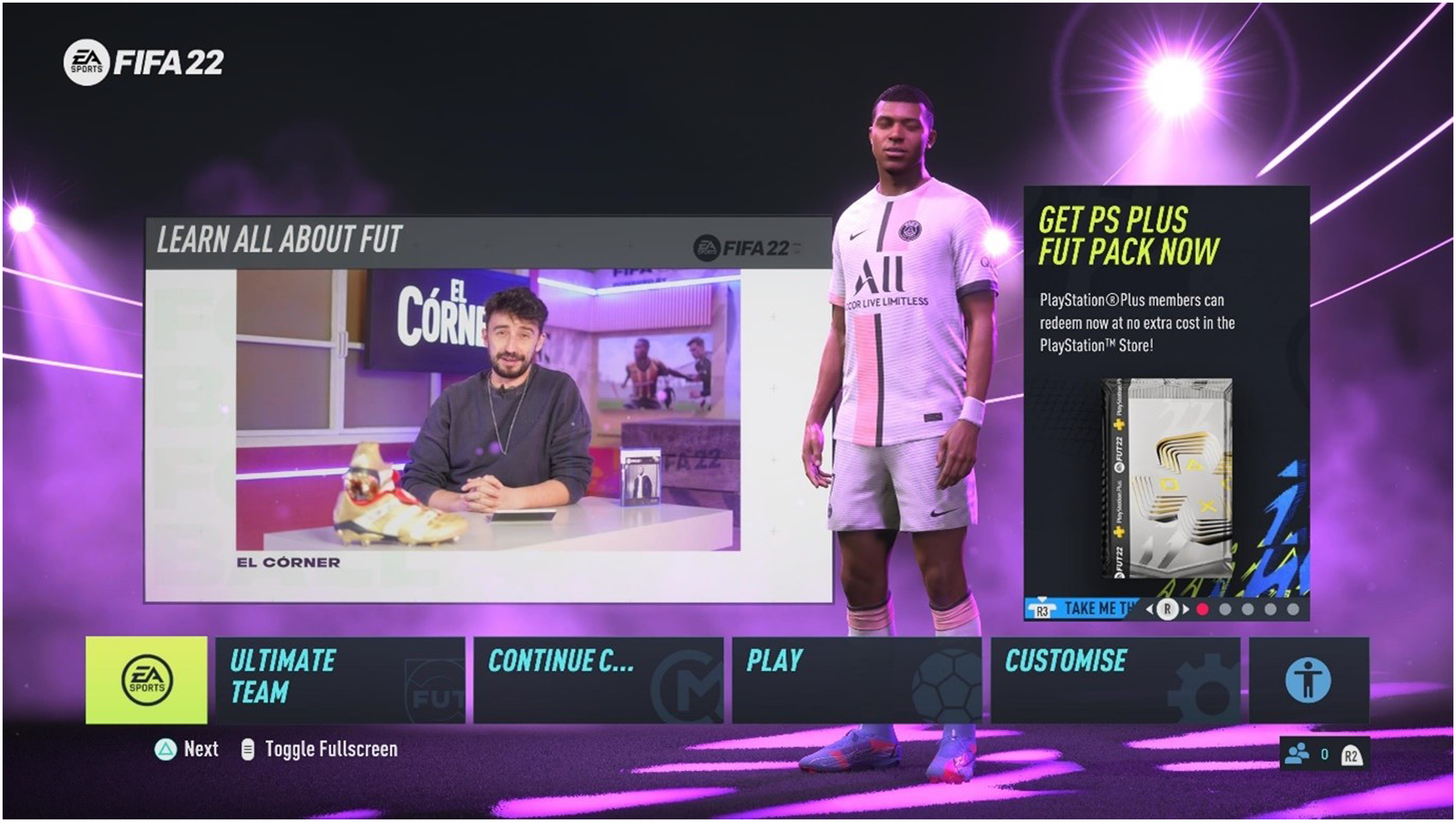
Acting as a central node between these platforms and services is the Companion App Companion app and web (FIFA 22, 2021). , which is envisaged as an extension of the FUT gameplay experience (Figure 7). Whether installed on smartphone, tablet or accessed via the web, the Companion App is designed to ‘deliver the best gaming experience’. On the one hand, the Companion App informs players of pending Marketplace promotions and related news (e.g. whenever a new batch of TOTW footballers is released). To this end, Companion may also collect data provided by players’ activities across EA’s services, by activities on other platforms used for EA’s services, and by third-parties when players ‘use these services with our games’ (EA, 2023). On the other hand, it invites players to take matters into their own hand and actively use the app to ‘Get total control of your FUT Club on the go’, ‘show off your dream squad to your mates’, and to complete Squad Building Challenges by earning rewards ‘wherever you go!’ (EA, 2021b). The textual tone and content of these messages go hand in hand with the continuous release of new content and limited duration of challenges or events, responsibilising players by implying that they cannot ignore this convenient pocket-size tool in their quest for optimal performance.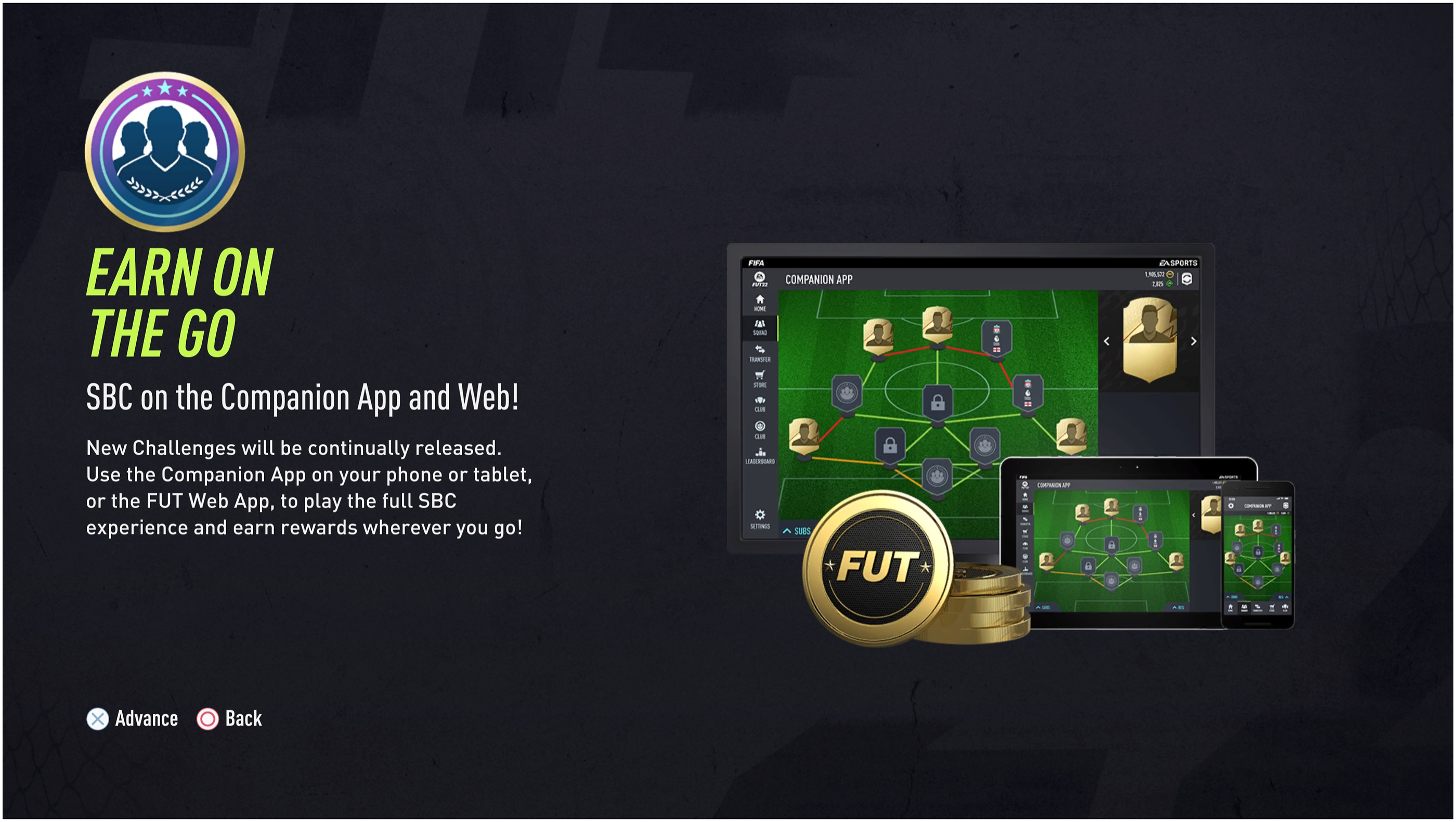
EXPLORE
Beyond EA’s direct sphere of influence, there is a fourth layer related to FUT’s platform ecosystem that players easily encounter in their quest for optimal performance, enjoyment, sociability or any other motivation. This fourth layer reveals how players may be incentivised to explore user-generated content and third-party media content, including marketplaces, boosting services and webinars.
The exploration of user-generated content  occurs naturally when following the social media accounts of @EASPORTFIFA or any of the other channels governed by EA. On Twitter, the ‘Who to follow’ tab recommends well-known FIFA players and other FUT content creators. YouTube presents a mix of recommended football and FUT Draft videos while watching the ‘FIFA23|Official Gameplay Deep Dive’. Twitch informs viewers that ‘people who watch EASPORTSFIFA also watch’ four other streamers. Following only nine accounts on Twitter (including official EA accounts as well as other well-known content creators), we received smartphone notifications such as ‘So… who is the best player you have Packed so far in FIFA22?’ or ‘We all doing the 86+ × 15 Pack at 6 p.m. today?’ on a daily basis. On FIFA23’s launch day, we catch a Twitch stream titled: ‘FULL GAME IN HERE!|Socials: @[anonymised] !Prime #PresentedByCreatorNetwork’, in which the streamer spends nearly 100.000 FIFA Points opening Packs for 5 h on end.
Our results show that pack-opening videos and livestreams are particularly prevalent and arguably the most-watched of all FIFA user-generated content, the all-caps titles and shocked faces on thumbnails capitalising on the celebratory experience as portrayed in-game. A quick search (keywords: ‘FIFA23’) on YouTube at the time of writing demonstrates this: out of the first 10 results, four are pack-opening videos (three of which contain a 5% off coupon code to a third-party marketplace; discussed hereafter), 1 is a review from a major outlet, 1 covers an eSports tournament, 1 is an official soundtrack playlist, and 3 discuss new TOTW arrivals, market rumours and gameplay tips ‘to become a better FUT player now’. Next to (re)living Pack-opening excitement, another substantial component therefore relates to making the most of FUT’s competitive format, as better play should lead to better rewards and vice versa.
Central within the exploration of the third-party media  are strategies to become a better player/trader. During our playing sessions, the following third-parties were referred to us by sponsored posts or coupon codes on Facebook, Twitter and YouTube: GamerzClass, FUT Gamer, U7buy and OGEdge. GamerzClass prides itself on providing expert classes to ‘start generating enough coins to build a solid team’. It is stated that you ‘can’t rely solely on your weekly rewards’, leaving two options: purchase FIFA Points with real money (which is not recommended, because according to the website players would ‘probably need A LOT of Points to build a solid team’ (GamerzClass, 2021), or learn how to use the Transfer Market for a monthly price. U7buy and FUT Gamer equally revolve around the Transfer Market, as both websites reappropriate its player-trading functionalities to stage a variety of out-of-game transactions. Finally, OGEdge states that it ‘improves your FIFA account in a fast, safe and anonymous way’ by helping you unlock and complete Objectives in a timely manner, thus ‘skipping the grind and sweaty players’ (OGEdge, nd). All of the above platforms identify and draw from the lack of profitability in FUT’s in-game economy (i.e. the difficulty of earning FUT Coins through gameplay alone, as described in Layer 2), and subsequently make an out-of-game business out of it for players who want to perform at the highest level but do not want to overspend on FIFA Points.
Discussion
The monetisation of videogames has shaped both academic and policy agendas in recent years, giving rise to research on the impact, design and legal classification of loot boxes in particular. Rather than treating the symptomatic loot box as an isolated gambling-like mechanism, we set out to demonstrate its integration in a broader platform ecosystem. Using FIFA22’s Ultimate Team mode as the empirical focus of this study, we illuminated the embeddedness of Packs in FUT’s platform ecosystem (
Admittedly, our playing sessions do not reflect every player’s experience with FUT – just our own. Players may navigate these layers differently depending on what motivates them most, just as individual elements may serve different needs of different people. We do, however, believe that the steps we have taken over the course of approximately 2 months reflect the ‘intended procedures or pathways’ other players – beginner, moderately engaged or highly dedicated – might also encounter (Light et al., 2018: 886). Such pathways we find engrained in the design of ‘service-based’ videogames, facilitated by in-game elements that refer to out-of-game elements and vice versa. The logic of this back-and-forth is built on an iterative and engagement-driven platform architecture (see also Nieborg, 2015; Poell et al., 2021), as shown in our layered model.
Unravelling the platform ecosystem surrounding loot boxes carries dual, mutually reinforcing implications. First, loot boxes represent a pivotal shift in games monetisation history by incorporating chance-based mechanisms (Johnson and Brock, 2020), the uncertainty of which we find reinforced across the outer layers of our model due to lacking informational disclosures. Second, loot boxes represent an evolution rather than a revolutionary departure from the trend of service-based business models, as they – similar to in-app purchases in social media apps (Nieborg, 2015; Ross and Nieborg, 2021) – relate to persuasive discourses or rhetorics of connectedness and sociability, which encourage players to spend money, time and effort anytime and anywhere. By extension, we do not consider FUT as an idiosyncratic case of how videogames are monetised. In an attempt to transcend the boundaries of EA’s flagship series – or any videogame for that matter – we now discuss synergies across the different layers of our model, and what these may mean for the scientific study and regulatory treatment of loot boxes, and monetisation more broadly, in videogames. From this holistic viewpoint, a number of implications from a media, design and legal perspective emerge (
The uncertainty in the variable and ‘dynamically generated’ reward schedule found within our first layer (BUY) is what triggered regulatory scrutiny in the first place. Under the EU’s Unfair Commercial Practices Directive (UCPD) – an important instrument in consumer protection law, commercial practices that omit, or unclearly, unintelligibly or ambiguously provide necessary information which causes consumers to take transactional decisions they would otherwise not take are prohibited. Here, the European Commission has clarified that: (1) the presence of paid random content such as loot boxes should be clearly disclosed to consumers, including an explanation of the probabilities of receiving different random items and; (2) that transparency regarding virtual currencies is crucial to enable consumers to make informed decisions about in-game purchases (European Commission, 2021: 104). FUT’s informational measures to counter the opacity about how random rewards are determined appear insufficient, as players looking to optimise their gameplay and bypass constraints caused by randomisation are left in the dark about how random rewards are determined.
The resulting uncertainty is then amplified by user-generated content (e.g. Pack-opening videos and livestreams) and third-party marketplaces, which seize upon the lingering uncertainty to advance their own commercial interests. In communal spaces for players such as forums and livestream chats, this opacity leads to discussions on the nature of chance, luck and randomness. Previous research has alluded to this phenomenon under the monikers of theorycrafting (Karlsen, 2011) and conspiracy theories in the context of FIFA specifically (Siuda and Johnson, 2022). Although randomness may render experiences of serendipity (Costikyan, 2013), players may also feel misled by the system or the developers behind it. This is evidenced by FIFA players’ perceptions of odds being ‘stacked against them’, even going as far as to accuse FIFA content creators of conveying distorted odds of winning (Hodge et al., 2022: 9; Siuda and Johnson, 2022). This is particularly salient in the context of videogames, which are interactive by nature, and loot boxes, which have been linked to gambling-related cognitions (Zendle et al., 2020). Such beliefs – whether irrational or simply suspicious of how algorithms work – are likely exacerbated by FUT’s cryptic disclaimer stating that the contents of Packs are ‘dynamically generated’.
Irrespective of the technical veracity of Pack opening’s randomness (see also Norwegian Consumer Council, 2022), various content creators and third-party media commercially exploit the enduring ambiguity. Reflective of this trend are the widely popular and prevalent Pack-opening videos and livestreams we found, sometimes promoted through the Creator Network, which add to the excitement and speculation surrounding opening Packs. These crossmedial endeavours could be supposed to serve the financial interests of EA and FUT, who see existing and potentially new customers engage with their content. Conversely, the outermost (EXPLORE) third-parties we identified latch onto the (pseudo-) randomness of FUTs reward schedule beyond EA’s sphere of influence. Players who have no clear idea of how much time or money they need to invest to obtain a particular desired item, may as such resort to third-party marketplaces to acquire it directly. As a form of ‘participatory culture’ in which players themselves become producers and new consumption practices are being created (Jenkins, 2006), the rise of such third-party media, and specifically marketplaces, raises questions about the valuation of virtual items, prolonged engagement by adding a financial incentive to playing videogames, and creators’ responsibility in all this, who suffer loss of revenue and infringement of copyrighted material. Despite publishers – including EA (EA, 2022b) – monitoring and banning offending accounts, these questions will likely only become more salient in the future.
Much like the uncertainty inherent in the inner layers of our model and the subsequent actions of external economic actors, the acts of persuasion elicited in the first and second layer become more salient as they extend outwards. From a design perspective, persuasion may therefore occur on multiple levels. Following work in the realm of game and media studies on the inherent persuasive nature of videogames and the rhetorics underneath them (Albarrán-Torres, 2018; Bogost, 2010), FUT seems procedurally designed to encourage spending as a convenient means of progression, avoiding possibly laborious daily play at fixed times and otherwise excessive time-investment, also called ‘grinding’. While this is in line with past research on motivations – which posits that players may choose to spend money on loot boxes to progress quickly (Close and Lloyd, 2021; Zendle et al., 2019) – and the underlying needs of competence and autonomy that drive these motivations (Lemmens, 2022), rewards acting as ‘shortcuts’ for players with more money than time on their hands have also been the subject of ethical discussions about fairness in videogames (Johnson and Brock, 2020; Macey and Bujić, 2022). These discussions further correlate with research on temporal dark design patterns that drive spending (Zagal et al., 2013), which, similar to the current study, offer close textual readings of gameplay mechanisms.
While the evaluation of mechanisms decried as unethical or exploitative – such as the ‘time-money trade-off’ (Woods, 2022: 7–8) that is grinding, can be addressed through player interviews (e.g. Petrovskaya and Zendle 2022), it is equally instructive to consider their integration in relation to business models that are strengthened by the use of player data and that rely on player acquisition and prolonged play duration (Davidovici-Nora, 2014; King and Delfabbro, 2019). In the context of the current study, we find that FUT’s integration into various out-of-game platforms and services offers players extensive opportunities for engagement, potentially making the aforementioned trade-off more tangible and likely to convert non-paying players.
From a media psychology perspective, this integration means that particular player emotions and motivations are likely to be reinforced not only by playing a videogame, but also by following and exploring out-of-game content that circulates within its broader ecosystem. Rhetorics found both in and around a videogame may as such trigger impulsive expenditure, for example, by reinforcing the need to spend real money to be able to keep up among competitive players (particularly if rewards become increasingly powerful throughout the lifecycle of a videogame, as is the case with FIFA22’s TOTW releases), or by reinforcing fear-of-missing out and a sense of urgency (see also Close and Lloyd, 2021). Previous research on persuasive communication in games has indeed examined consumer interpretations of FIFA loot box advertising, highlighting the relationships between gamer roles, gameplay experiences and the perceived value of advertised content (Kelling and Tham, 2021). Our study adds to this body of knowledge by investigating in what form and how persuasive messages and other promotions manifest themselves to players.
The frequency with which players are presented with rhetorics pointing to opportunities to elevate their experience by clicking, liking or watching recommended content further attests to the platformisation of contemporary videogames, and the flows of ‘datafied user feedback’ that inform it (Nieborg and Poell, 2018: 4275). It is fair to say that at least some of the sponsored content we encountered is a direct result of the likes, follows and purchases we engaged in (e.g. Facebook, 2013). Players may consequently be exposed to targeted advertising, including smartphone notifications and sponsored ads on social media, and to relatively covert ways of persuasion such as influencers and dedicated content creators praising a particular game and spending vast amounts of money on it.
The cumulative effect of rhetorics in and across layers exemplifies the breadth and depth of how players become engaged in contemporary videogames, ultimately nudging players towards ‘ubiquitous and habituated consumption’ as previously argued by Zanescu et al. (2020: 17; see also Van Dijck et al., 2018). Current discourses surrounding player responsibility stand in sharp contrast with said effect. There have been repeated calls by both academics and lawmakers for harm minimisation measures – such as limit-setting tools, self-exclusion measures and odds disclosures – as a self-regulatory alternative to government regulation (e.g. King and Delfabbro, 2019; UK Government, 2022). Limit-setting tools such as FUT’s Playtime instruct the player to understand and take control of their engagement. In doing so, we argue that they put the burden of responsibility for intervening in over-excessive engagement on players or their parents. Moreover, we find that this contrast is only further exacerbated by the lacklustre implementation of many of these harm minimisation measures. Accordingly, the smaller subset of more vulnerable players who may feel compelled to spend or to continue playing will likely benefit little from them. Based on our findings, we therefore urge caution: if policymakers opt for industry-led protections, their usability needs to be significantly improved from current standards.
Returning to transparency, fairness and vulnerability principles as established in consumer protection law, the rhetorics in and across all layers of a videogame’s platform ecosystem raise a number of issues. A recent report from the European Commission stated that manipulative practices in the digital environment can lead to financial harm, loss of autonomy and privacy, mental harm and have detrimental effect on price transparency and trust in the market (Lupiáñez-Villanueva et al., 2022). Many videogame players are children, who are considered vulnerable consumers in the videogame environment due to their age and credulity (European Commission, 2021: 103). Consequently in consumer protection law, children are ascribed a higher threshold of protection, which in practice means that in deciding whether commercial practices in the videogame environment are unfair, misleading or aggressive, the evaluation will be done from the perspective of the average child.
In the videogame context, commercial practices include acts connected to the sale, supply or promotion of loot boxes. When these practices are contrary to ‘professional diligence’ and are likely to ‘distort the economic behaviour’ of consumers, they are seen as unfair and therefore prohibited under the UCPD. Here, distorting the economic behaviour of the consumer means that the commercial practice impairs the consumer’s ability to make an informed decision and thereby causes or is likely to cause the consumer to take a ‘transactional decision’ (e.g. buy a loot box) that they would not have taken otherwise (article 5 UCPD). Professional diligence refers to good faith or honest market practices in the videogame industry. The inclusion of manipulative practices in the videogame may violate the professional diligence criterium if it distorts the consumer’s behaviour (European Commission, 2021: 101).
Moreover, when children are involved, the rhetorics in and across all layers of the platform ecosystem that nudge them into spending money may impair their freedom of choice or conduct through ‘undue influence’. These practices could therefore constitute a prohibited aggressive commercial practice if they cause or are likely to cause the child to take a transactional decision they would have otherwise not taken (articles 8–9 UCPD). Undue influence includes situations where a videogame company is aware of ‘any specific misfortune or circumstance of such gravity as to impair the consumer’s judgment’ and consequently exploits it to influence the consumer’s decision. An example is if the company is aware of a child-consumer’s higher likelihood of engaging with randomised content in a videogame (based on constructed data profiles) and subsequently exploits this knowledge to target them with personalised offers (European Commission, 2021: 100). Further, according to the Court of Justice of the European Union, undue influence includes putting pressure on the consumer such that their freedom of choice is significantly impaired, or such that their thinking is confused in relation to the transactional decision to be taken (CJEU, 2019 C-628/17, paras. 46–47). To illustrate, scholars have argued that loot boxes in itself are already aggressive commercial practices based on their design features, which constitute undue influence or a form of ‘virtual coercion’ in which players are pressured to buy loot boxes (Cartwright and Hyde, 2022). By taking into account how ‘platform mechanics are deployed in relation to user practices’ (Van Dijck et al., 2018: 158), we moreover argue that the layering of persuasive practices in the platform ecosystem could have a reinforcing or even aggressive effect on how child-consumers may experience undue influence when playing videogames. Further exploration of this area is warranted to comprehensively understand the dynamics of loot box consumption. By considering FUT’s platform ecosystem and applying consumer protection principles across its layers – instead of solely focussing on gambling regulation, the current study has sought to contribute to this understanding.
Conclusion
By demonstrating how loot boxes are embedded in a layered platform ecosystem, our goal was to uncover media, design and legal implications with regard to the monetisation of videogames more broadly. Using Packs in FIFA22’s Ultimate Team mode as the empirical focus of our Walkthrough, we identified and investigated the synergies between elements and their overarching layers: BUY, EARN, FOLLOW, and EXPLORE, which taken together raise issues of transparency, fairness and persuasion in and across all layers of our proposed model. The analysis provided in this paper is intended to complement the increasing attention of academics and policymakers to monetisation in videogames by providing a multidisciplinary juxtaposition of viewpoints as well as a qualitative, interpretative account of how a videogame featuring loot boxes may be experienced by its players. Such an approach may lead researchers and policymakers to come closer to a holistic assessment of what constitutes (in)transparent and (un)fair practices in the many digital environments that surround any one particular videogame. Even though this paper specifically analysed FUT and its loot boxes, it is our hope that the provided discussion is applied more broadly to the many environments in which contemporary videogames are experienced, and where similar monetisation strategies exist.
