






Abstract
Generative artificial intelligence (GAI) is rapidly transforming creative industries, reshaping not only production practices but also the foundations of creativity, authorship, and professional identity. While prior research has largely focused on consumer evaluations or technology adoption, and from a labor perspective emphasized structural changes, these approaches only partially capture how creators themselves experience these transformations. Addressing this gap, this study examines digital artists’ perspectives on GAI and identifying the factors shaping their emotions and coping behaviors through an exploratory sequential mixed-methods design. Study 1 interviewed digital artists to capture GAI discourses and key variables. Study 2 used an online survey to test relationships among individual innovativeness, perceived legal infrastructure, GAI appraisals, emotions, and coping strategies. Drawing on the transactional stress and coping model, the findings show that innovativeness positively predicted perceived GAI utility, while weak legal infrastructure heightened job threat. These appraisals shaped emotions (anger, helplessness, and hope), which in turn mediated coping responses: approach, avoidance, and confrontation. This study advances understanding of GAI’s psychological impact on creative labor by extending transactional stress–coping theory and offering insights into how creators cope with AI-driven disruptions.
Keywords
Introduction
Generative artificial intelligence (GAI), broadly defined as “an unsupervised or partially supervised machine learning framework, which generates manmade relics via the use of statistics, probabilities” (Baidoo-Anu and Owusu Ansah, 2023: 53), encompasses systems that can create human-like text, images, audio, video, and even 3D models (Chiu, 2023; Hacker et al., 2023; Vartiainen and Tedre, 2023). In recent years, GAI has moved beyond an experimental phase to become a transformative force in creative industries (Amankwah-Amoah et al., 2024; Hong and Curran, 2019). Image-based GAI models, once constrained by distorted figures and awkward expressions, now generate outputs indistinguishable from human-made art. Beyond these technical advances, its capabilities in content generation, curation, and automation are fundamentally reshaping the creative industry (Amankwah-Amoah et al., 2024).
Initial research has primarily focused on whether consumers can distinguish between human- and AI-generated artworks, often restricted to the purchasing stage (Demmer et al., 2023; Gu and Li, 2022; Hong and Curran, 2019; Oksanen et al., 2023). At the same time, research has examined AI adoption through technology acceptance models, reflecting a pro-innovation bias (Du et al., 2023; Xu et al., 2023). However, these approaches provide only a partial understanding of GAI in creative industry.
Recent research has begun to address creative labor, but remains focused on structural changes, particularly job displacement. Yet these visible impacts capture only part of the transformation. GAI not only alters labor conditions but reconfigures the nature of creativity itself. As creative work shifts from direct production to meta-creation, creators’ roles and required skills are redefined, redistributing control over the production process (Tsao et al., 2025). In this process, the boundaries between human and machine creativity blur, raising fundamental questions about authorship, originality, and creative identity. This shift contributes to what has been termed “creative precarity,” where uncertainty extends beyond employment to encompass authorship, ownership, and recognition (H-K Lee, 2024b). GAI, therefore, does not simply replace labor but reorganizes the nature of creativity.
While GAI has been widely examined in fine arts, such as visual art, literature, and music (Cetinic and She, 2022; Oksanen et al., 2023), its implications for digital and entertainment sectors remain underexplored. This gap does not reflect current patterns of GAI adoption, where commercially oriented and technical fields increasingly integrate GAI for efficiency and output (Tsao et al., 2025). Existing research also tends to focus on experts such as educators, brands, and journalists (Are et al., 2025), paying relatively limited attention to visual artists. Given that graphic design and visual art are among the occupations most exposed to AI automation (Alderson, 2025) and among the most polarized in their responses (Tsao et al., 2025), it is critical to examine how visual artists navigate these changes in practice.
These transformations are not merely structural but are experienced by artists as psychological and emotional challenges. Recent studies suggest that artists face not only labor-related precarity but also “creative displacement anxiety,” characterized by identity loss, imposter syndrome, and decreased motivation (Caporusso, 2023, p.3). These uncertainties shape how artists respond to AI, underscoring the need to examine creators lived experiences as GAI evolves. However, limited attention has been paid to how creators systematically appraise GAI. To address this gap, this study examines digital artists’ perceptions of GAI through a stress–coping framework.
South Korea provides a critical context for examining responses to GAI, because its AI ecosystem is shaped by distinct industrial structures, labor conditions, and regulatory and policy environments. Its 2D digital art sectors, including webtoons, gaming, and character intellectual property, constitute a major share of the creative economy, with the webtoon market exceeding 2 trillion KRW in 2025 (Park, 2025). These industries are characterized by a platform-driven production system, freelance-based labor structures, and revenue-sharing models that often entail high workloads and income instability (Faraoun, 2023). In this context, South Korea’s national AI strategy emphasizes trust and ethical development (Kim, 2025), yet adopts a more industry-driven, technology-push approach than Japan (Maliphol et al., 2025) and France (Kim, 2023). In South Korea, AI is framed in terms of urgency and global competition (Kim, 2023). As a latecomer economy pursuing a catch-up strategy, South Korea maintains relatively weak copyright protection and an ambiguous legal stance toward AI-generated content, facilitating technological diffusion while leaving questions of authorship and ownership unresolved (Yoon, 2022). In the absence of clear regulatory guidance during the study period, controversies surrounding AI-generated content (D Lee, 2024a), including boycotts of AI-generated webtoon illustrations, intensified uncertainty. Together, these conditions position GAI as simultaneously institutionally promoted, risky, competitive, and legally uncertain, making South Korea a particularly suitable context for examining how such tensions shape individuals’ emotional responses and coping strategies.
This study adopted an exploratory sequential design comprising two studies. Study 1 used semi-structured interviews with digital artists to explore current discourses on GAI and identify key variables. Drawing on these findings, Study 2 employed an online survey to empirically examine the factors shaping artists’ responses and coping strategies.
Theoretical-methodological framework
Artificial intelligence and creative industry
GAI is transforming creative industries not only at the level of creative products, but also in how creative work is structured. While GAI echoes historical patterns observed in earlier technological disruptions, such as technological anxiety (Nathan and Ahmed, 2018) and innovation resistance (Yonggang et al., 2024), it also introduces distinct dynamics across three dimensions: creative processes, labor visibility, and labor conditions. First, GAI shifts creative work from direct production to processes of curation, selection, and meta-creation (Tsao et al., 2025). By producing outputs independent of human creators, it introduces new forms of expertise while intensifying questions of creativity, authorship, and human agency (Lee, 2022). Second, AI redistributes tasks and makes human work less visible in final outputs (Erickson, 2024). This invisible labor challenges how authorship, attribution, and value are understood. Third, GAI transforms labor conditions. It alters job quality by intensifying technological control and monitoring (De Stefano, 2018). All these introduce heightened uncertainty in roles, rights, and recognition, which has been conceptualized as creative precarity (H-K Lee, 2024b) and creative displacement anxiety (Caporusso, 2023). GAI does not simply eliminate creative labor but reorganizes how it is produced, made visible, and governed.
From this perspective, GAI is not merely a tool, but a structural condition that challenges human creativity. Unlike earlier technologies centered on labor substitution, GAI redefines the boundaries of creativity itself and is experienced as both threat and opportunity. As a result, responses extend beyond adoption or resistance and are better understood as ongoing coping processes under structural pressure. Accordingly, this study examines how creators appraise these changes and how such appraisals shape their emotional and behavioral responses through a stress–coping framework.
Lazarus and Folkman’s transactional theory of stress and coping
This research adopts the transactional theory of stress and coping proposed by Lazarus and Folkman (1987), which is a widely used process-oriented framework in stress research. Stress is defined as “exposure to stimuli appraised as harmful, threatening, or challenging that exceeds the individual’s capacity to cope” (Biggs et al., 2017: 352). In this framework, an individual’s appraisal of a situation is central to whether it is perceived as stressful. Given the tensions between digital artists and GAI services, fueled by technological change, regulatory uncertainty, and conditions of creative precarity, GAI can be seen as a complex and potentially stressful phenomenon.
This theory encompasses three key components: primary appraisal, secondary appraisal, and coping (Carver et al., 1989). Primary appraisal refers to how individuals evaluate a particular person–environment interaction to determine whether it is stressful. This process accounts for both individual factors such as values and beliefs, and environmental factors such as demands, resources, and constraints (Lazarus and Folkman, 1987). Stressful situations are typically appraised as either threats/harms or challenges (Miller and McCool, 2003); threats imply potential loss or harm, while challenges suggest opportunities for growth or gain. Secondary appraisal involves evaluating one’s ability to manage the situation—defined as “a judgement concerning what might and can be done” (Lazarus and Folkman, 1987 as cited in Miller and McCool, 2003: p. 4). It considers both potential responses and available coping resources (Carver et al., 1989). Subsequently, coping strategies are adopted, which Lazarus and Folkman (1987) define as “constantly changing cognitive and behavioral efforts to manage specific external and/or internal demands that are appraised as taxing or exceeding the resources of the person” (p. 141). They represent the response process as individuals attempt to deal with the demands identified during appraisal (Carver et al., 1989).
Frameworks such as diffusion of innovation (Rogers, 2003) and innovation resistance theory (Ram and Sheth, 1989) have long guided research on consumer responses to new technologies. However, as most AI-related studies remain consumer-focused, creators’ perspectives on GAI are underexplored (Jain et al., 2024). For digital artists, GAI extends beyond individual preferences, posing both threats and opportunities under conditions of precarity and displacement anxiety (Caporusso, 2023; H-K Lee, 2024b). In this context, Lazarus and Folkman’s (1987) transactional theory of stress and coping is more suitable as it explains how individuals respond to stressful situations by incorporating both cognitive and emotional appraisals. It explains how artists respond through diverse coping strategies beyond a binary of adoption or resistance, aligning with this study’s aim.
Exploratory sequential design
This study adopted the exploratory sequential design proposed by Creswell and Clark (2010). Study 1 employed semi-structured interviews with digital artists of varying experience with GAI services. This approach captured digital artists’ current discussions of GAI and addressed the research question: How do they understand and navigate the impact of generative AI in their professional and creative practices? These qualitative results defined key variables and guided Study 2’s quantitative survey with a larger sample. Figure 1 presents an overview of research design. The following section presents the qualitative study (Study 1), which explores digital artists’ perceptions and experiences with GAI. Visual model of the sequential exploratory mixed method design.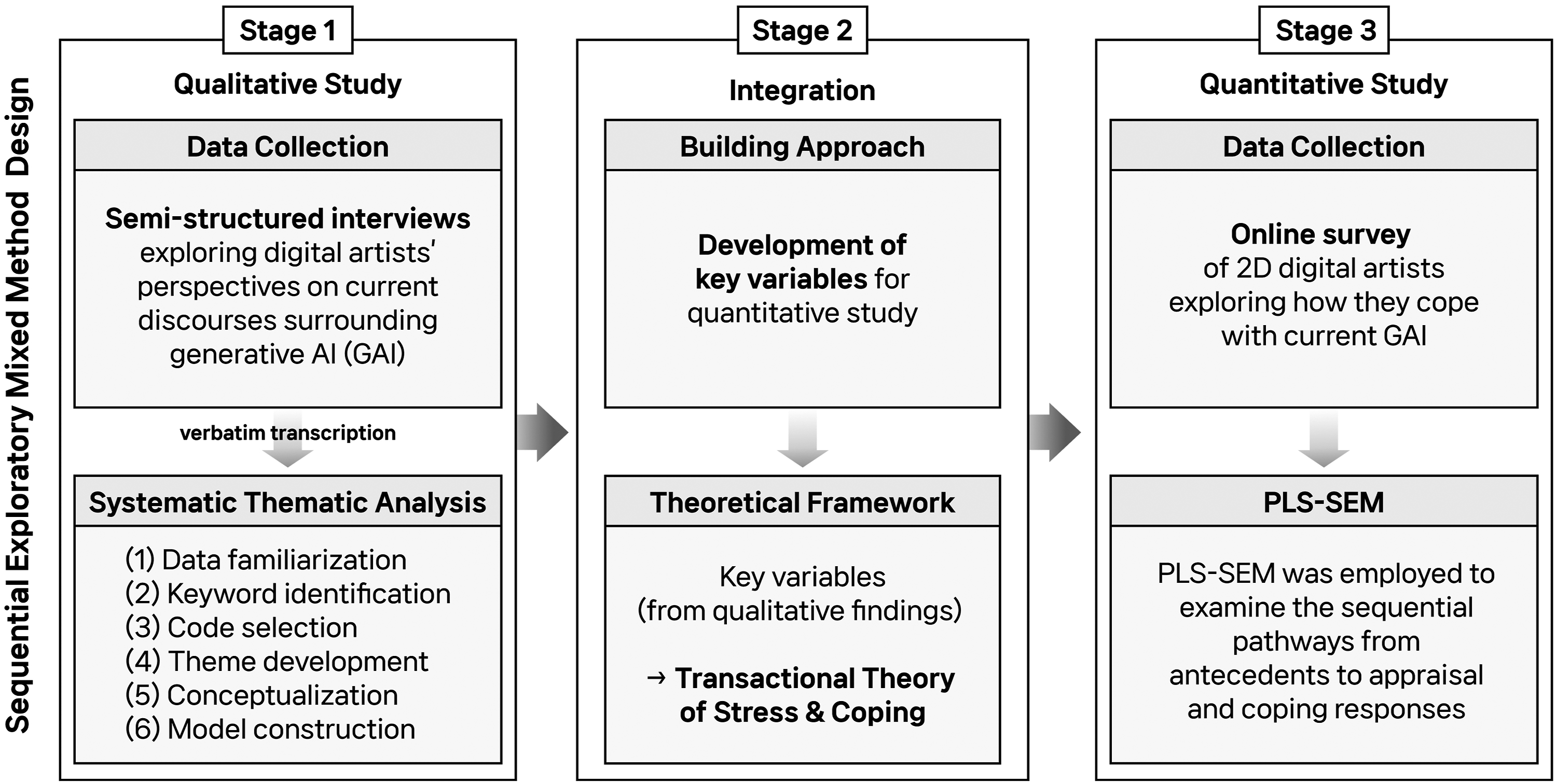
Study 1. Qualitative study
Data collection
Digital art generally refers to artworks created using digital technology. However, extant definitions vary. For example, Adobe adopts an extensive view that includes not only digital creation but also enhancement and exhibition processes. Similarly, Thomson-Jones and Moser (2022) describe digital art as inherently relying on digital tools, blurring strict boundaries of usage. In South Korea, the Ministry of Culture, Sports and Tourism (2023) defines an artist as someone who earns income from artistic activities, contributes to culture, society, economy, or politics, and can substantiate their work in creation, performance, or technical support. Building on these definitions, this study conceptualizes digital artists as individuals working in cultural and artistic fields who self-identify as artists and create or present works that rely significantly on digital technology.
Sociodemographic information of the interview participants.
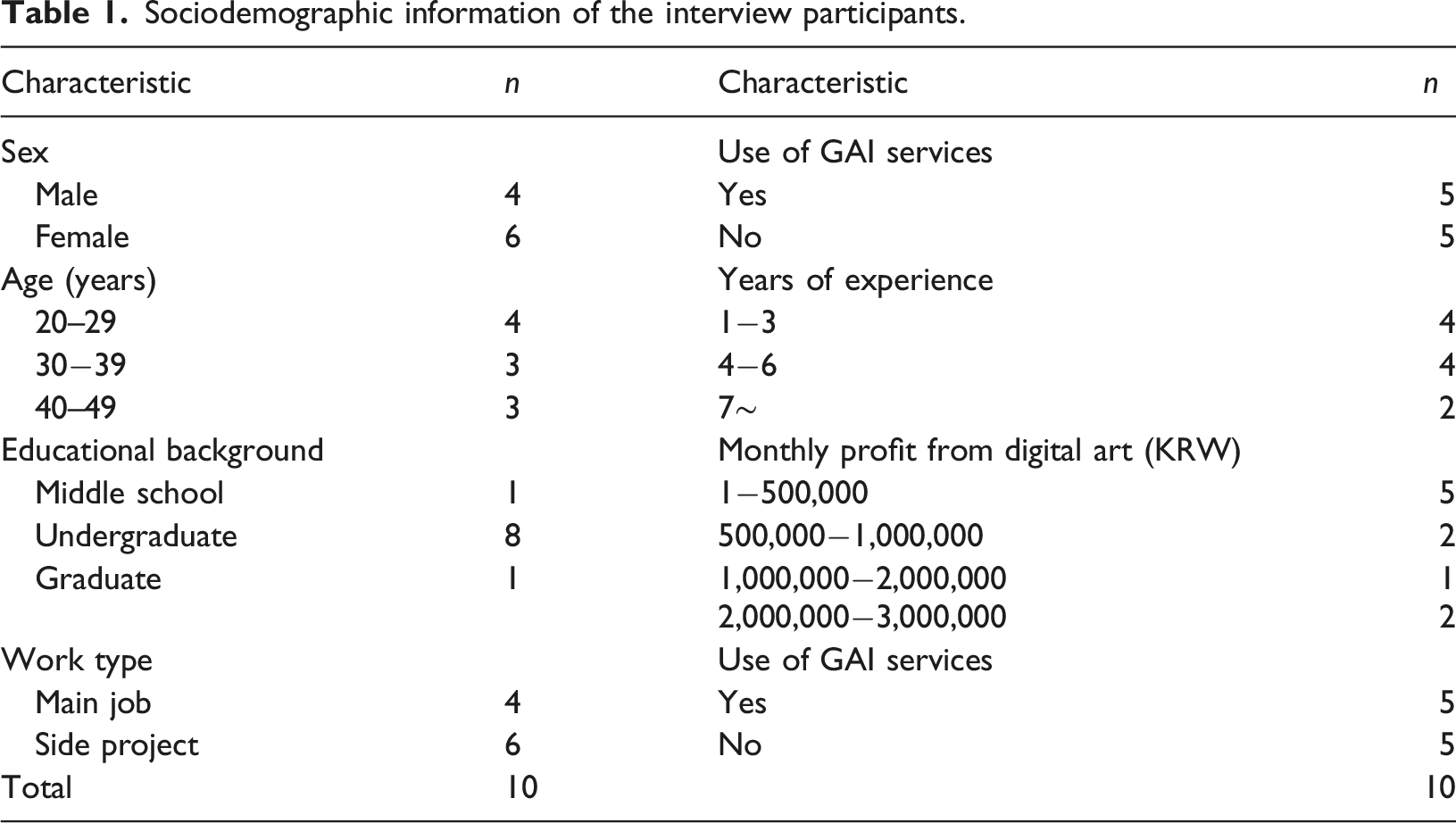
The interviews explored digital artists’ perspectives on current GAI discourse, focusing on seven key areas: (1) experience as a digital artist, (2) understanding of GAI services, (3) perceptions of GAI services, (4) views on GAI image training, (5) perceptions of GAI within the community, (6) opinions on GAI use by platform providers, and (7) actions toward GAI services. The full list of interview questions is presented in Appendix A. The interviews, lasting 60–90 min, were conducted at locations chosen by the participants. Each participant received an average reward of KRW 25,000 for their participation. The interviews were conducted after the study received approval from the Institutional Review Board of Korea University, in accordance with relevant ethical guidelines.
Systematic thematic analysis
To analyze how digital artists cope with GAI services, Study 1 employed a systematic thematic analysis grounded in Braun and Clarke’s (2006) framework and extended by Naeem et al. (2023). This approach combines inductive and deductive strategies to support the development of a conceptual model. The original procedure consists of six stages: (1) data familiarization, (2) keyword identification, (3) code selection, (4) theme development, and (5) conceptualization and (6) model construction. In this process, the last two steps were integrated into a single conceptualization and model refinement phase, given that conceptual meaning-making and model construction occurred iteratively and inseparably throughout analysis. To ensure analytical rigor, Study 1 applied Naeem and Ozuem’s (2022) quality criteria: 6 Rs for keyword selection (realness, richness, repetition, rationale, repartee, regal), 6 Rs for coding (robust, reflective, resplendent, relevant, radical, righteous), and 4 Rs for theming (reciprocal, recognizable, responsive, resourceful).
First, 10 interview transcripts (174 pages) were imported into ATLAS.ti, a qualitative data analysis software designed to support systematic coding of large text datasets. Each transcript was read repeatedly to immerse the researchers in the data and identify recurring narratives and emerging patterns.
Second, drawing on the 6 Rs criteria, keywords were extracted to capture core perceptions, emotions, and behaviors related to GAI. These keywords served as building blocks for subsequent coding.
Third, keywords were systematically grouped and abstracted into codes representing broader patterns. This process involved iterative refinement to ensure codes were conceptually robust and aligned with research objectives. A total of 109 preliminary codes emerged from this process and were refined into a final set of 54 focused codes (see Appendix B).
Fourth, these codes were organized into six overarching themes: technological attitudes (individuals’ attitudes, understandings, and perceptions regarding GAI), sociocultural contexts of GAI engagement (environmental, cultural, and structural factors shaping creators’ engagement with GAI), perceived negative impacts of GAI (concerns and criticisms about its harmful consequences), perceived positive impacts of GAI (recognition of its potential benefits for creative work and content production), emotional responses to GAI (diverse emotional reactions expressed by creators), and coping strategies related to GAI advancements (diverse ways creators respond to the rise of GAI). Each of these themes was developed to be both empirically grounded and theoretically meaningful.
Finally, for conceptualization and model construction, the themes were conceptually integrated using Lazarus and Folkman’s (1987) transactional theory of stress and coping. This deductive step involved mapping the empirically derived themes onto theoretical constructs to build a model for quantitative testing in Study 2. Figure 2 illustrates this systematic thematic analysis process. Partial example of the systematic thematic analysis process. Note. The figure presents only a partial example of the systematic thematic analysis, illustrating how keywords, codes, and themes were developed.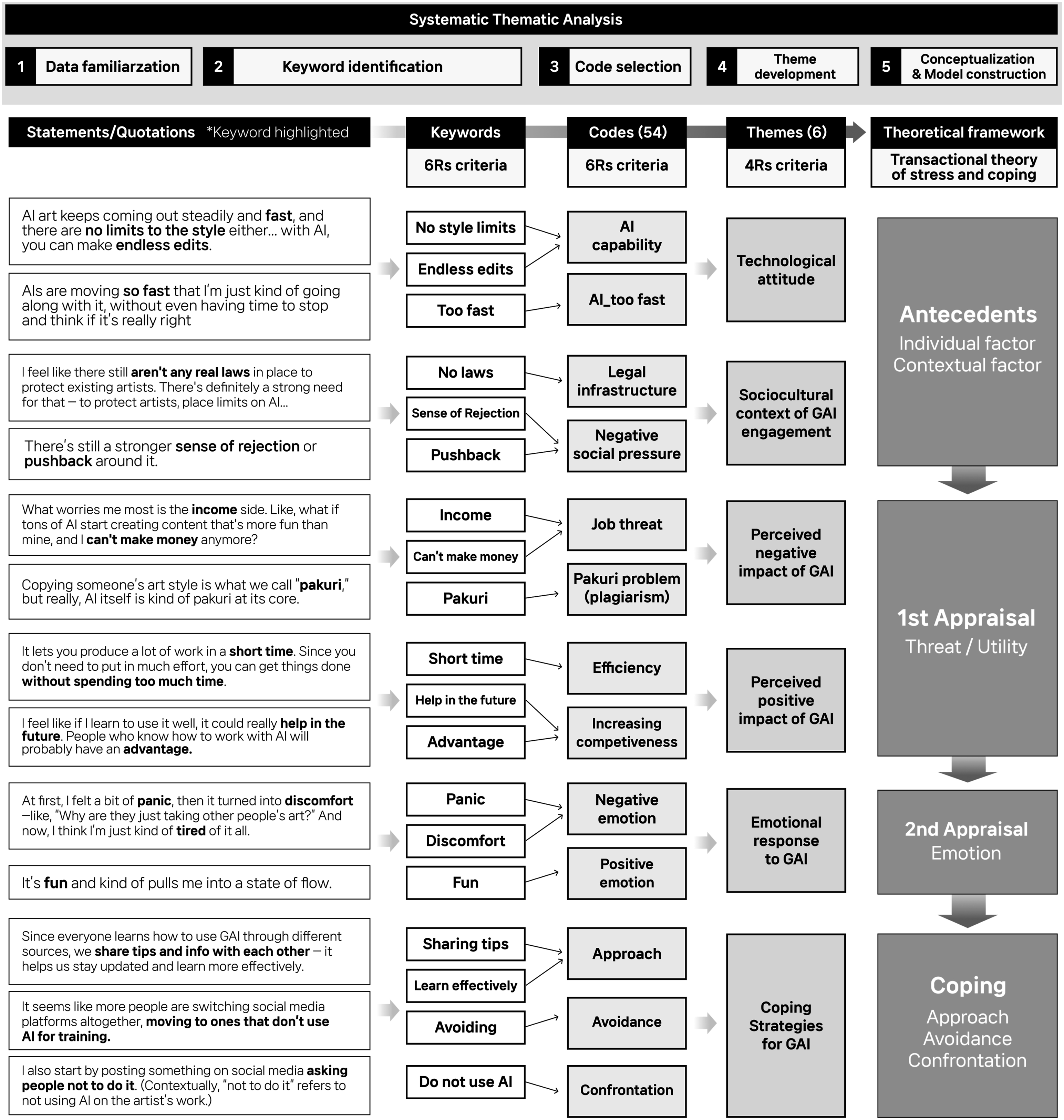
Results: Main themes
The thematic analysis reveals how digital artists navigate GAI. Below, the main themes are organized according to the transactional stress and coping framework: antecedents, appraisals, emotions, and coping strategies.
Antecedents: Technological attitudes and sociocultural context
Two key factors were identified as antecedents of digital artists’ emotional and behavioral responses to GAI services: (1) individual attitudes toward technology and (2) contextual conditions.
First, participants’ openness to technology varied widely. Some expressed disinterest in or reluctance toward GAI, regardless of its potential. For example, Interviewee B stated, “I’m not really interested in new technologies or AI, so… I don’t see the need, really.” By contrast, others were eager to explore GAI as part of their creative processes, as Interviewee I explained, “In my case, I’ve always really enjoyed learning and trying out new things. You could say I’m a bit of a professional hobbyist…” These differences indicate that individual innovativeness may shape whether creators see GAI as valuable to their practices.
Second, both users and non-users of GAI raised concerns about the lack of clear legal protection. Interviewee B noted, “I think there should be clearer legal standards. Since this technology is still relatively new, it feels like there aren’t any trustworthy policies or guidelines that people can rely on.” Similarly, Interviewee J remarked, “To be honest, I’m currently using AI… but since there are no legal guidelines right now, that is quite scary for me, I really think such guidelines are necessary.” These antecedents show that artists’ responses to GAI are shaped by both individual predispositions and broader structural uncertainties, underscoring the need to examine both dimensions together.
Appraisals: Perceived negative and positive impacts of GAI
GAI was portrayed ambivalently by participants, seen simultaneously as a source of risk and of potential value. Common concerns included job threat, copyright issues, market distrust, difficulty using GAI, reduced opportunities, the Pakuri problem (plagiarism), low content quality, and decreasing creativity. For instance, interviewee D questioned the sustainability of their career: “If things like this—the growth of GAI services—keep happening, can I really continue working as an artist? This is only going to grow… it will expand even further, and when that happens, will there be no place left for artists?” Similarly, Interviewee C described current GAI developments as threatening: “From the artist’s standpoint, it’s extremely dangerous… it becomes a threat.”
At the same time, many participants recognized tangible benefits of GAI, such as increased efficiency, better financial income, competitiveness, provider advantages, the rise of one-person businesses, improved accessibility, and support for reference, ideation, and high-quality output. Interviewee I noted, “Using AI has been great. It saves time, and I feel like I can push myself to the fullest potential.” Interviewee H similarly observed, “For those who haven’t had access to design before, I think it’s a great tool that helps them unlock their potential and try something new.” These mixed perceptions reflect how individuals appraise the same technological shift in different ways, highlighting that a single innovation can simultaneously bring both risks and opportunities.
Emotional responses
These appraisals were closely tied to participants’ emotional responses, which were among the most vivid and frequently described aspects of their experiences. Artists expressed a wide range of emotions toward GAI, including resistance, discomfort, fear, grief, anxiety, anger, distress, concern, indifference, helplessness, pity, hope, curiosity, and joy.
Most prominently, artists expressed anger that their work was used to train AI models without consent or compensation. Some called GAI services “stealing” and their operators “thieves,” reflecting the perceived unfairness of the practice (Interviewees A, C). Interviewee D explicitly described feeling anger, noting: “I get angry. I feel like it’s more of anger, and then I’m like… I might have to let go of the pen” (Interviewee D).
Helplessness was also evident among both GAI users and non-users. For example, one interviewee noted, “I feel exhausted… I still must upload my artwork, but even if someone feeds it into an AI model, I can’t find who did it or legally punish them.” Another commented, “I think it’s a change we can’t avoid anymore.” The intensity of these emotions suggests that the issue is not merely a matter of innovation adoption based on cognitive preferences or perceived benefits, but one deeply tied to personal and existential concerns.
Alongside these negative emotions, positive emotions such as hope, curiosity, joy, and interest were coded together as hope due to their future-oriented and motivational qualities. As Interviewee H noted, “Some people find it really fascinating and fun, with the belief that they can succeed and thrive.” This emotional complexity, encompassing both negative and positive appraisals, underscores the profound significance many digital artists attach to the rise of GAI.
Coping strategies
In response to these emotions, artists adopted varied coping strategies. Resistance ranged from passive disengagement, such as avoiding GAI tools or ignoring their development, to active opposition, including open criticism, platform migration, and protective measures like tagging or watermarking. For instance, Interviewee B discussed their avoidance of GAI, “I’m just thinking, ‘Well, people who are going to use it are going to use it, and people who aren’t going to use it aren’t going to use it, so I’m not going to use it’.” On the other hand, Interviewee A described confrontation behaviors, “I’ve seen posts that outright say things like ‘Let’s denounce AI’ or ‘Anyone using AI should leave’.” Similarly, Interviewee C noted, “It seems that many people are also moving to platforms that don’t use AI for training.”
By contrast, pro-AI behaviors involved learning how to use GAI effectively and sharing tips to integrate it into workflows. For instance, Interviewee H reflected, “(When I joined chatrooms where people share information about AI,) there were lots of tutorials, and some of the members inside would explain everything and help each other out—so I received a lot of support.” These responses show that creators react to the same technological change along a spectrum from resistance to adaptation, while striving to preserve control over their work and professional identity.
Conceptualization and model construction
For conceptualization, Study 1 followed the building approach, where data from semi-structured interviews were thematically analyzed to identify key variables for survey design (Creswell and Clark, 2010; Fetters et al., 2013). This strategy has been used in previous studies to translate interview-derived insights into quantitative instruments (Hidalgo et al., 2020; Jafer et al., 2021; Mihas, 2019; Shiyanbola et al., 2021; Younas et al., 2023). Variables were selected based on the frequency and relevance of themes from the qualitative study. Not all themes mapped directly onto existing constructs but were conceptually translated into measurable variables. For instance, the technological attitude theme—how individuals interpret GAI—was operationalized as individual innovativeness, reflecting openness to adopting new technologies. The theme of sociocultural context of GAI engagement, emphasizing concerns over the lack of protection for human creators and the need for regulation, was defined as perceived lack of legal infrastructure. The perceived negative impacts of GAI theme, capturing income instability and reduced opportunities for artists, was translated into perceived job threat. In contrast, the perceived positive impacts of GAI theme, highlighting artists’ willingness to use AI for creative or entrepreneurial growth, was translated into perceived utility. The emotional response to GAI theme included anger, helplessness, and hope, representing mixed emotional reactions to GAI. While helplessness has received limited attention in prior emotion literature, it was consistently and prominently expressed by participants in Study 1 and was therefore included as a key variable. Lastly, the coping strategies for GAI theme comprised three responses—approach, avoidance, and confrontation—indicating how artists manage the emotional and professional challenges posed by AI. Although these mappings are not perfectly aligned, they preserve the thematic essence and enable empirical testing within a structured framework.
For the final step of the systematic thematic analysis, model construction was guided by Lazarus and Folkman’s (1987) transactional theory of stress and coping. This theory emphasizes how individuals’ appraisals of an event shape their emotional and behavioral responses. The qualitative findings suggest that artists appraise GAI as either a threat or a challenge, depending on personal and contextual factors such as technological attitude and sociocultural context. These appraisals, in turn, shape distinct emotional reactions and coping strategies. Therefore, in the context of GAI, participants’ personal traits, perceived impacts, and emotional reactions were deeply intertwined with how they evaluated and coped with GAI services. Figure 3 illustrates the integration process by comparing the transaction model of stress and coping (top) with the themes extracted from the qualitative analysis (bottom). It shows how the data-driven variables correspond to the following theoretical constructs: antecedents, primary appraisal, secondary appraisal, and coping. Integrative framework: Theoretical model and empirical themes. Note. Elements highlighted in red are those included in Study 2.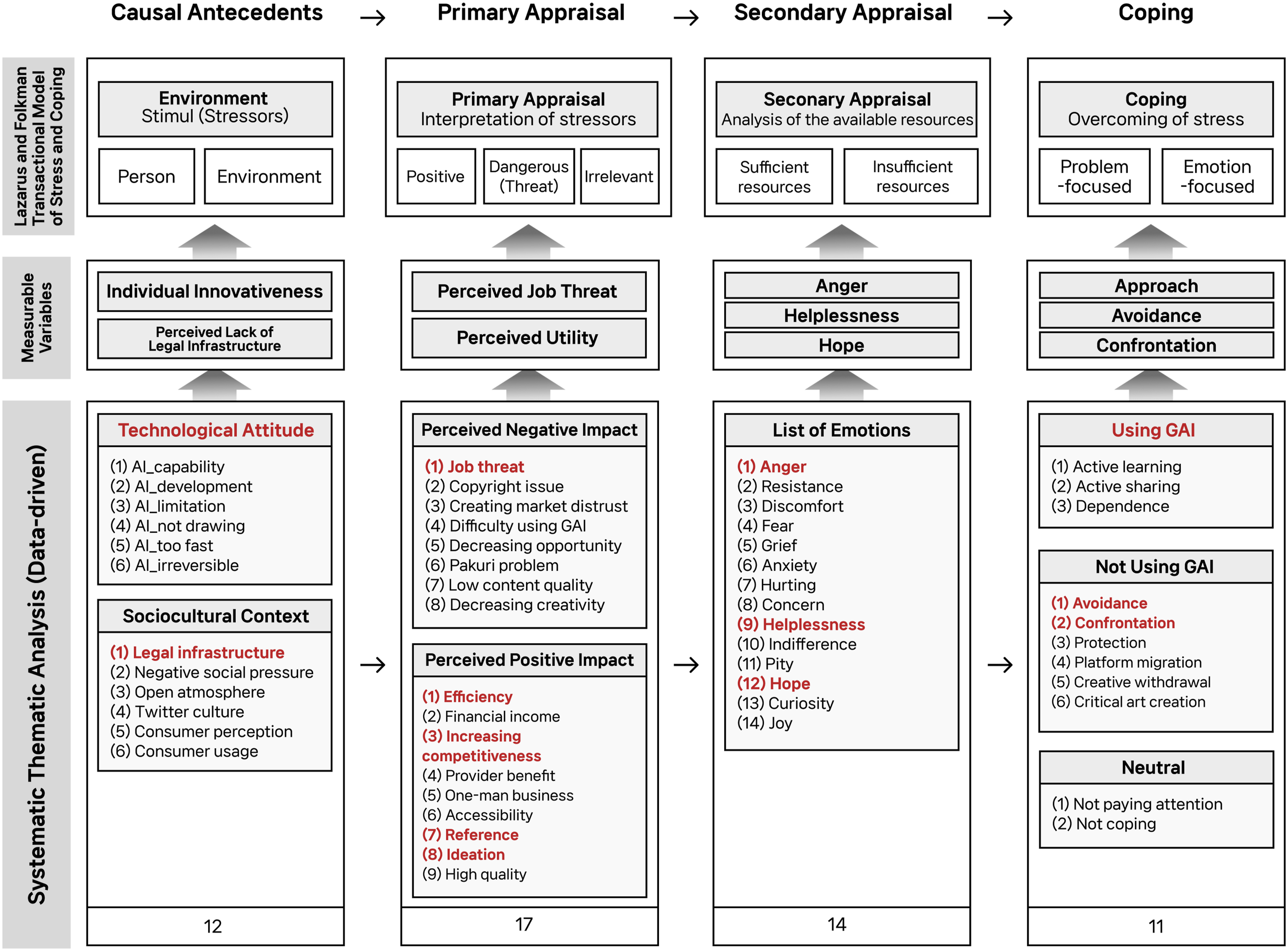
Study 2. Quantitative survey
Study 2 tested the conceptual model developed in Study 1 through an online survey with digital artists. Figure 4 illustrates the proposed research framework and hypothesized pathways. This section presents the development of hypotheses in detail. Research framework.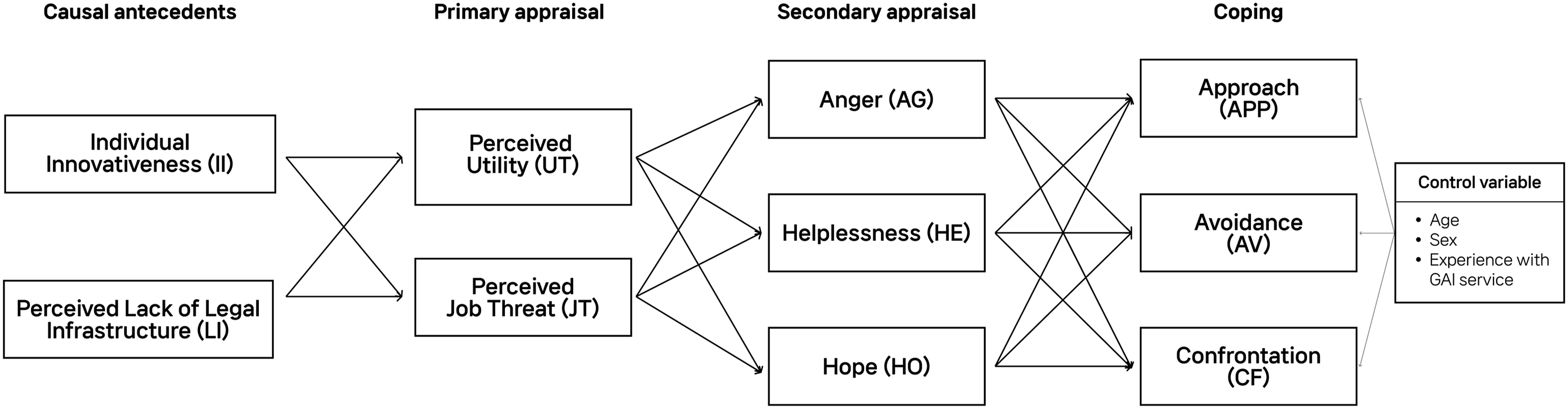
Hypotheses
Causal antecedents
According to Lazarus and Folkman’s transactional theory, “person” and “environment” constitute two basic subsystems of causal antecedents. Person variables include values; commitments; and general beliefs such as self-esteem, mastery, sense of control, and existential beliefs (Lazarus and Folkman, 1987). Environmental variables include contextual resources and constraints. Based on the results of Study 1, individual innovativeness was considered a personal variable and the perceived lack of legal infrastructure an environmental factor.
Individual innovativeness defined as “the willingness of an individual to try out any new information technology” (Agarwal and Prasad, 1998: 206), has been widely recognized as a key antecedent of technology adoption (Alamri, 2025; Turan et al., 2015). It reflects traits such as personal innovativeness and self-efficacy (Schlesinger and Waelde, 2012; Towse, 1999). Prior research shows that individuals high in innovativeness are more likely to view emerging technologies as useful, easy to use, and compatible with existing practices (Yi et al., 2006). Although GAI services differ from conventional technologies in terms of their impact and the level of human input required, individual tendencies toward adopting innovative technologies may still influence responses to GAI. Accordingly, individuals with higher innovativeness are expected to perceive GAI services as more useful.
Individual innovativeness is positively related to the perceived utility of GAI services.
Prior research suggests that individual innovativeness can mitigate perceived risks when adopting new technologies. For instance, Aldás-Manzano et al. (2009) found that consumer innovativeness lowered perceived risk in the context of e-banking while Thakur and Srivastava (2015) reported similar effects in online retail. The relationship between job threat and innovativeness is often discussed under threat-rigidity theory, suggesting that perceived job threat reduces innovative behavior (Staw et al., 1981; Van Hootegem et al., 2019). The present study adopts the reverse perspective, proposing that individual innovativeness may instead act as a buffer against job threat perceptions. In this context, innovativeness may reduce the perceived job threat associated with GAI services.
Individual innovativeness is negatively related to the perceived job threat associated with GAI services.
A perceived lack of legal infrastructure is another factor shaping how users evaluate the utility of GAI services. Legal infrastructure such as copyright protections, data security standards, and regulatory clarity provides societal support for innovation and adoption. In the case of GAI, ongoing copyright infringement and the unauthorized use of artists’ work to train AI models have amplified concerns about fairness and security (Verma, 2023). Prior studies similarly show that regulatory clarity strengthens perceptions of technology’s usefulness: Alzebda and Matar (2024) found that government regulations enhanced the role of perceived usefulness in AI adoption, and Shatta et al. (2020) showed that legal frameworks indirectly promote e-procurement adoption by increasing performance expectations. These findings suggest that in the absence of a clear legal infrastructure, users may place less emphasis on the perceived utility of GAI services, informing H2a.
A perceived lack of legal infrastructure is negatively related to the perceived utility of GAI services.
At the same time, a lack of legal infrastructure can heighten the perceived job threat. Prior research has shown that copyright laws play a significant role in shaping artists’ perceptions of job risk and insecurity (Schlesinger and Waelde, 2012; Towse, 1999). Vivarelli (2015) argues that when technological innovation is not supported by adequate legal and institutional frameworks, it can exacerbate job insecurity, particularly in creative sectors, where GAI automates the production process. Similarly, Iskandar and Rahmat (2023) highlight the importance of legal protections in determining perceived job stability. These studies suggest that in the absence of clear legal safeguards, individuals are more likely to view GAI as a threat to their jobs, informing H2b.
A perceived lack of legal infrastructure is positively related to the perceived job threat associated with GAI services.
Primary appraisal
Primary appraisal refers to how individuals evaluate situations in terms of threat, harm, or challenge (Lazarus and Folkman, 1987). Instead of viewing events solely as stressors, Study 2 draws on variables identified in Study 1 to capture the dual nature of appraisal (Lazarus and Folkman, 1987; Schuster et al., 2006). Appraisal encompasses both threat as perceptions of potential harm or loss and challenge as perceptions of potential growth or competence (Lazarus and Folkman, 1987 as cited in Ellsworth and Smith, 1988). Therefore, perceived utility is conceptualized as challenge appraisal, and perceived job threat as threat appraisal.
Perceived utility refers to how GAI supports digital artists’ creative work, rather than its general usefulness to the public. When users regard a technology as unhelpful or ineffective, they are more likely to experience negative emotions (Gelbrich, 2009; Jean Harrison-Walker, 2012; Tronvoll, 2011). For instance, Gelbrich (2009) showed that service failures in self-service technologies triggered anger when attributed to external causes, and helplessness when linked to a lack of control, both of which intensify when the system is perceived as low in utility. By contrast, hope, a future-focused positive emotion, emerges when the system is appraised as enabling important but uncertain outcomes (MacInnis and De Mello, 2005; Winterich and Haws, 2011). According to MacInnis and De Mello (2005), hope is more likely to result when a product is considered instrumental in achieving valued goals, and prior work links hope with personal growth (Shorey et al., 2007). Thus, higher perceived utility is expected to reduce anger and helplessness and increase hope toward GAI services.
Perceived utility is negatively related to anger toward GAI services.
Perceived utility is negatively related to helplessness toward GAI services.
Perceived utility is positively related to hope toward GAI services.
GAI could trigger job threat, which is defined as the “subjectively perceived likelihood of involuntary job loss” (Helsten, 2019; Van Hootegem et al., 2019: 1). Such a threat evokes strong negative emotions such as anger and helplessness. According to appraisal theory, anger stems from attributing threats to external sources (e.g., GAI developers), whereas helplessness arises from a perceived lack of control (Gelbrich, 2009). Empirical evidence supports this link: Alessandro et al. (2025) found that exposure to GAI heightened anxiety, fear, and discomfort related to realistic (e.g., job loss) and symbolic threats (e.g., devaluation of human contribution). Similarly, Zheng and Zhang (2025) showed that AI-related job insecurity increases emotional exhaustion and Glavin (2013) found that perceived job insecurity is strongly associated with reduced decision-making and personal control. Meanwhile, the relationship between job threat and hope has not been extensively studied. However, prior research suggests that the threat and anticipation of job loss may erode hope by undermining self-concept and limiting perceptions of future pathways (Bouzari and Karatepe, 2018; Glavin, 2013). Chirumbolo et al. (2021) further demonstrated that job insecurity is significantly related to life uncertainty, reinforcing the idea that insecurity disrupts future-oriented coping. Taken together, these findings indicate that job threat in the context of GAI is likely to heighten anger and helplessness while diminishing hope.
Perceived job threat is positively related to anger toward GAI services.
Perceived job threat is positively related to helplessness toward GAI services.
Perceived job threat is negatively related to hope toward GAI services.
Secondary appraisal and coping
In Lazarus’s transactional theory of stress and coping, emotion is viewed as an adaptive response embedded in the appraisal of stressful situations (Perrewé and Zellars, 1999). Study 2 focused on three discrete emotions: anger, helplessness, and hope. While previous studies have examined emotions such as anger and anxiety in technology adoption (Kim and Yoon, 2020; Liu et al., 2023; Wang and Kim, 2022), few have explored both negative and positive emotions in the context of GAI. The current study addresses this gap by incorporating hope, a key positive emotion recognized in transactional theory (Ellsworth and Smith, 1988; Folkman, 2008). Consistent with transactional theory, these emotions are closely connected to the coping strategies of approach, avoidance, and confrontation. Skinner et al. (2003) criticized binary coping frameworks (e.g., problem vs emotion-focused, approach vs avoidance), arguing that such categories are too simplistic and that coping should be measured using more multidimensional approaches. Therefore, instead of limiting the scope of coping behaviors to avoidance and confrontation, Study 2 included approach coping, which involves engagement with stressors (Finset et al., 2002; Greenglass et al., 1999; Roth and Cohen, 1986). Meanwhile, avoidance refers to behaviors aimed at distancing oneself from the stressor (Liang et al., 2021: 2), while confrontation refers to “behavior that seeks to change the situation and thus eliminate the source of stress” (Liang et al., 2021: 2).
Regarding the emotions mentioned above, first, anger is an outward-directed negative emotion, although its role in coping behavior remains mixed across the literature (Youngstrom and Green, 2003). In the transactional model of stress and coping, anger is associated with poor coping outcomes and heightened stress levels (Maan et al., 2005). Accordingly, anger is typically unrelated—or even negatively associated—with approach coping, which emphasizes constructive, solution-oriented strategies (Perchtold-Stefan et al., 2023). However, when individuals experience psychological discomfort or low perceived control, anger may instead lead to avoidance coping (Izard, 1977; Perchtold-Stefan et al., 2023). Indeed, Yin et al. (2024) found that emotions including anger, frustration, and disappointment, were negatively related to approach-oriented coping and positively associated with avoidance-oriented coping. Also, anger often functions as a confrontational response in the context of information technology innovation, where it predicts behaviors such as venting, which may intensify emotional distress (Zheng and Montargot, 2021). This emotion typically arises when goals are obstructed or expectations are violated, triggering confrontive coping efforts aimed at addressing perceived injustice (Abe and Izard, 1999; Perchtold-Stefan et al., 2023). Taken together, prior research suggests that anger in response to GAI is unlikely to foster approach-oriented coping, but is instead more likely to drive avoidance or confrontational behaviors.
Digital artists’ anger toward GAI services is negatively related to approach coping behavior.
Digital artists’ anger toward GAI services is positively related to avoidance coping behavior.
Digital artists’ anger toward GAI services is positively related to confrontational coping behavior.
In Study 2, helplessness is defined as a situational emotional state characterized by the belief that one’s actions cannot influence outcomes (Rayce et al., 2018). Helplessness reflects powerlessness and lack of control, which constrains problem-solving and reduces the likelihood of approach or confrontational coping. For instance, Gelbrich (2009) found that helplessness, unlike anger, does not foster vindictive coping responses. Instead, it is typically associated with withdrawal. Research in health contexts shows that helplessness is strongly linked to social withdrawal and avoidance (Silva and Fernandes, 2025). Similarly, in the domain of technology use, helplessness lowers expectations and fosters passivity and resistance, thereby reducing approach coping and reinforcing avoidance (Henry, 1992). Therefore, in the context of GAI, digital artists’ helplessness is expected to decrease approach and confrontational coping while increasing avoidance.
Digital artists’ helplessness toward GAI services is negatively related to approach coping behavior.
Digital artists’ helplessness toward GAI services is positively related to avoidance coping behavior.
Digital artists’ helplessness toward GAI services is negatively related to confrontational coping behavior.
Study 2 conceptualizes hope as a goal-directed motivational state characterized by the active desire for a positive outcome (Eliott and Olver, 2002; Folkman, 2010). Previous research shows that hope fosters engagement under uncertainty, predicting continuance and exploratory use of mobile applications (Shanahan et al., 2020), consistent with the concept of “achievement emotions” proposed by Yin et al. (2024) that frame technological demands as opportunities. These emotions are positively associated with approach-oriented coping. Moreover, hopeful individuals are less likely to disengage or withdraw, since hope maintains motivation even in uncertain conditions (Snyder, 2002). Finally, because confrontation is typically rooted in frustration and perceived injustice (Abe and Izard, 1999), hope is unlikely to produce confrontational behavior and instead supports approach coping.
Digital artists’ hope regarding GAI services is positively related to approach coping behavior.
Digital artists’ hope regarding GAI services is negatively related to avoidance coping behavior.
Digital artists’ hope regarding GAI services is negatively related to confrontational coping behavior.
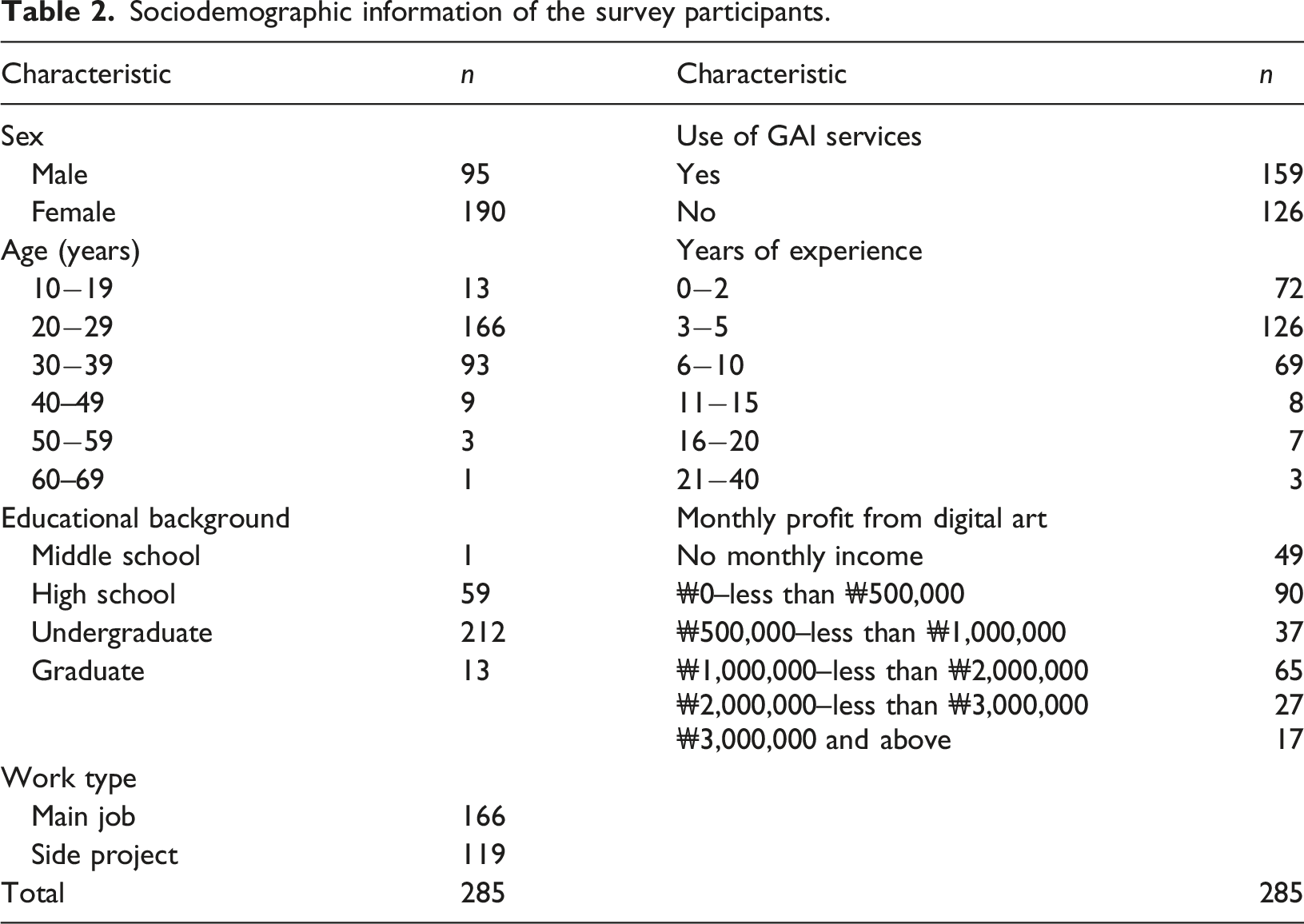
Data collection
Sociodemographic information of the survey participants.
Results: Partial least squares structural equation modeling
Given the exploratory nature of this study and the inclusion of multiple constructs with numerous indicators, partial least squares structural equation modeling (PLS-SEM) was selected to handle complex models with relatively small sample sizes and for its flexibility regarding data normality (Hair et al., 2017). The model was designed to examine the relationships between key variables associated with digital artists’ coping behaviors in response to GAI services.
Evaluation results summary.
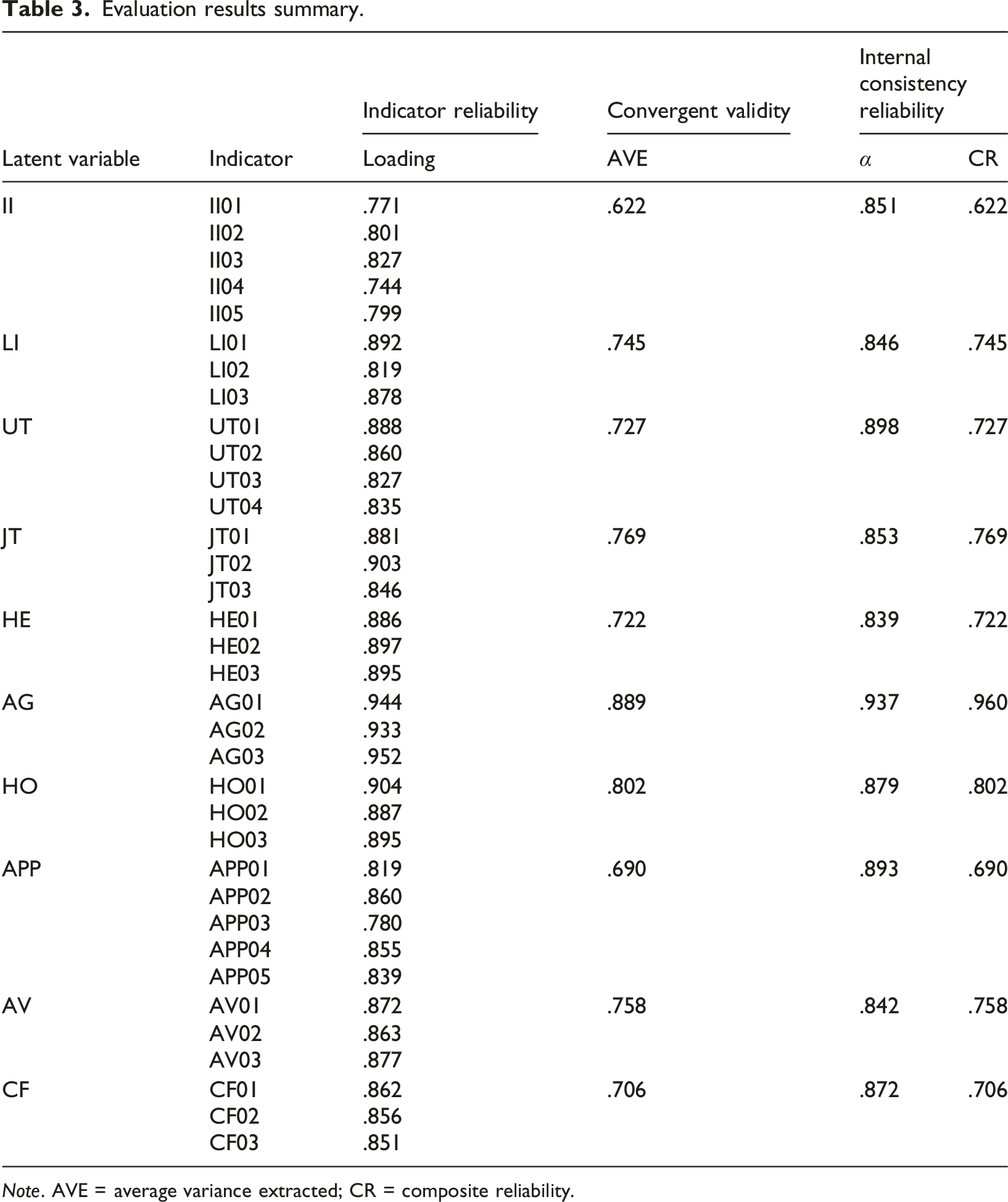
Note. AVE = average variance extracted; CR = composite reliability.
Heterotrait–monotrait (HTMT) ratios.
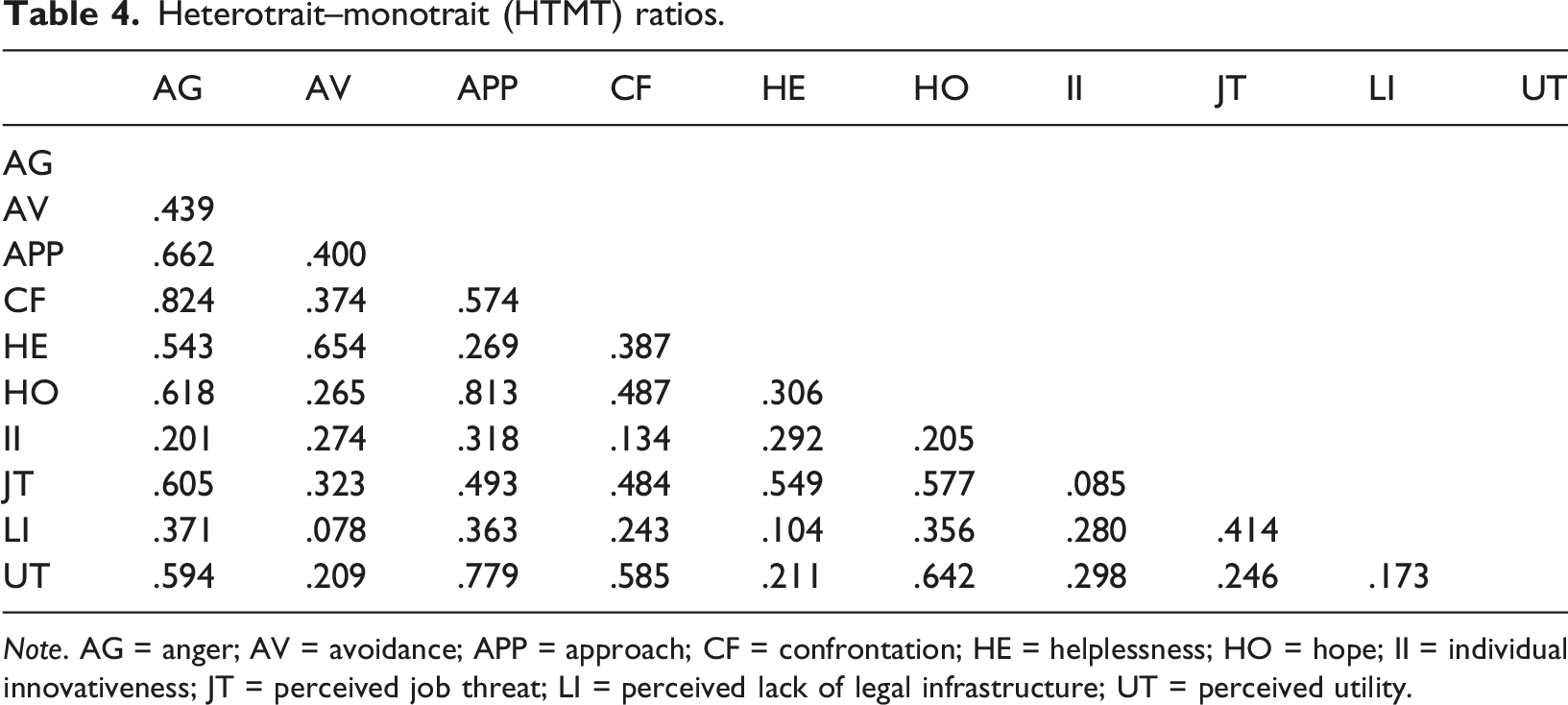
Note. AG = anger; AV = avoidance; APP = approach; CF = confrontation; HE = helplessness; HO = hope; II = individual innovativeness; JT = perceived job threat; LI = perceived lack of legal infrastructure; UT = perceived utility.
The structural model was assessed to examine the hypothesized relationships. First, individual innovativeness was positively related to perceived utility (β = .315, t = 4.705, 95% CI [.196, .415], f2 = 0.106), suggesting that more innovative artists perceived GAI as more useful. Its negative relationship with perceived job threat was not significant (β = −.146, t = 1.729, 95% CI [–.276, .003], f2 = 0.024). By contrast, perceived lack of legal infrastructure significantly reduced perceived utility (β = −.229, t = 3.335, 95% CI [–.332, −.105], f2 = 0.056) and increased perceived job threat (β = .398, t = 5.183, 95% CI [.268, .520], f2 = 0.177), showing that weak legal protection lowers the perceived usefulness of GAI, and makes artists feel more threatened.
Next, the emotional responses of artists were predicted based on their perceptions of GAI. Perceived utility had a strong negative relationship with anger (β = −.448, t = 8.310, 95% CI [–.533, −.355], f2 = 0.367) and a strong positive relationship with hope (β = .496, t = 10.535, 95% CI [.415, .570], f2 = 0.450), indicating that artists who saw more utilitarian value in GAI felt less anger and more hope. By contrast, perceived job threat significantly increased both anger (β = .439, t = 7.242, 95% CI [.333, .532], f2 = 0.352) and helplessness (β = .441, t = 8.135, 95% CI [.346, .525], f2 = 0.237), while decreasing hope (β = −.384, t = 6.939, 95% CI [–.474, −.291], f2 = 0.270). These results suggest that the perceived utility and threat associated with GAI have opposite emotional impacts on artists.
Structural path estimates and effect sizes.
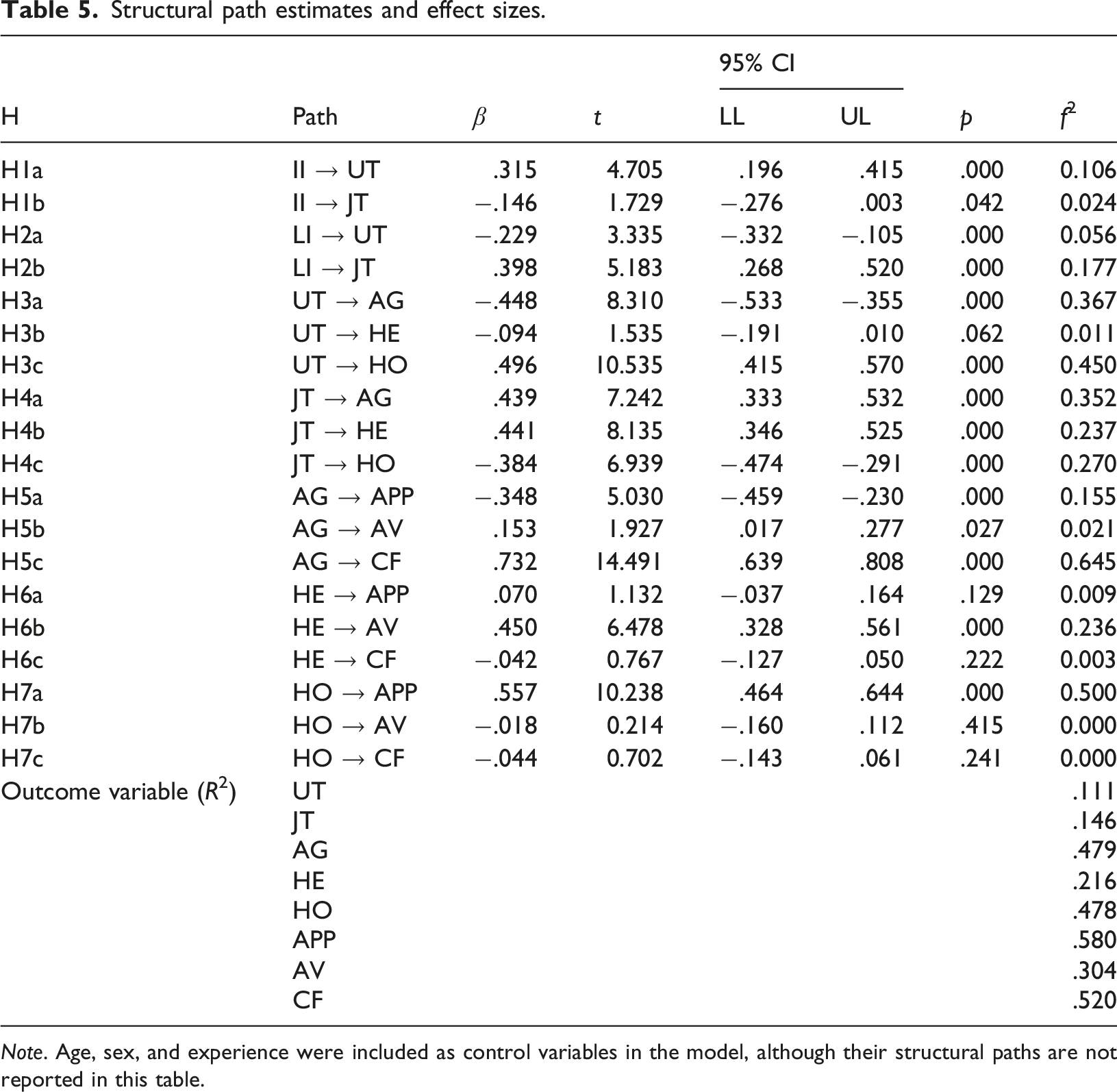
Note. Age, sex, and experience were included as control variables in the model, although their structural paths are not reported in this table.
The coefficient of determination (R2) indicates how much variance in a variable is explained by the predictors in the model. The model explained 11.1% of the variance in perceived utility and 14.6% in perceived job threat, both reflecting weak explanatory power. It showed moderate explanatory power for anger (47.9%), helplessness (21.6%), and hope (47.8%). For coping responses, the model demonstrated substantial explanatory power for approach coping (58.0%) and confrontational coping (52.0%), and moderate power for avoidance coping (30.4%); Figure 5 presents a visualization of these results. Results of the PLS-SEM analysis. Note. ***p < .001. **p < .01. *p < .05.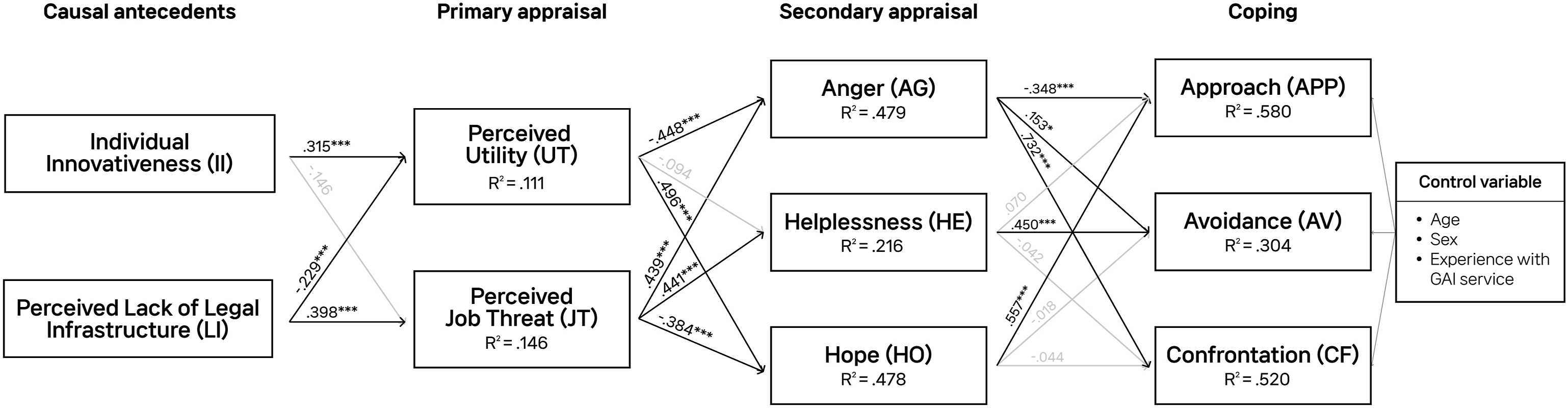
Discussion and implications
Discussion
This study examines how digital artists perceive and respond to the disruptive rise of GAI. Moving beyond prior research, it shows how these transformations are experienced and interpreted by creators. Integrating qualitative insights with quantitative analysis, the findings reveal a diverse range of strategies shaped by individual traits and contextual factors. Conducted during the early stages of GAI adoption in creative industries, this study captures a critical moment when digital artists are actively negotiating what AI means for their work and professional identity. Study 1 revealed that artists’ coping behaviors ranged from resistance to adaptation. These responses were driven by complex emotions of anger, helplessness, and hope, closely linked to concerns about job threat as well as perceived utility. Study 2 supported and extended these insights, while also producing non-intuitive findings that depart from conventional technology adoption models.
Two findings warrant particular attention. First, individual innovativeness predicted perceived utility but did not reduce perceived job threat, suggesting that openness to innovation does not necessarily alleviate perceived risks associated with GAI. This challenges the assumption in innovation and adoption literature that positive orientations toward new technologies reduce perceived risk, implying that the threat GAI poses to creative labor is of a structurally distinct nature that individual disposition alone cannot buffer. Second, perceived utility did not reduce helplessness. Even when creators recognized the value of GAI, feelings of threat and loss of control persisted. This can be understood in relation to the structural conditions GAI introduces, particularly the redistribution of creative labor and the resulting loss of visibility and agency (De Stefano, 2018; H-K Lee, 2024b; Lee, 2022; Tsao et al., 2025). These dynamics may be further intensified in the South Korean context, where platform-driven production, precarious labor conditions, and regulatory ambiguity surrounding AI amplify structural uncertainty. As a result, helplessness reflects not merely an individual emotional response but a structurally grounded condition that utility recognition alone cannot resolve. This finding suggests that meaningful engagement with GAI may require addressing this structural constraint, rather than simply enhancing perceived utility.
At the same time, findings consistent with existing theory clarify the broader context of these results. A perceived lack of legal infrastructure reduced perceived utility and heightened perceived threat, suggesting that institutional conditions shape not only how risky GAI is perceived to be, but also how useful it is. The value of GAI, in other words, is not determined by its technical capabilities alone but by its institutional context. This pattern is particularly pronounced in South Korea, where regulatory ambiguity surrounding AI coexists with strong industry-driven urgency (Kim, 2023; Yoon, 2022). Together, these conditions create a central tension: creators simultaneously recognize GAI’s utility and experience heightened threat, reflecting an ambivalence shaped by competing value systems between productivity and creative integrity, efficiency and authenticity (Tsao et al., 2025).
This study offers several academic implications. First, it reconceptualizes GAI in creative industries not as a discrete technology to be adopted or resisted, but as a structural condition that destabilizes the notion of creativity itself. These findings challenge three deterministic narratives surrounding AI: that GAI leads to inevitable job displacement, that responses follow a binary of adoption or resistance, and that such responses are primarily rational. Against these assumptions, the evidence reveals a more complex reality; creators simultaneously appraise GAI as both threat and opportunity, navigate a spectrum of emotionally differentiated coping strategies, and are driven by emotions that powerfully mediate between structural conditions and behavior. Second, this study extends the transactional model of stress and coping to the context of GAI from the producer’s perspective. By identifying emotions such as fear, grief, helplessness, hope, and curiosity, it shows how creators cognitively appraise technological change and translate these appraisals into coping strategies. In doing so, it highlights the psychological impact of GAI on creative labor, demonstrating that artists are not passive recipients of technological change but active agents who continuously cope with structurally induced pressures.
Beyond these empirical insights, the findings are also consistent with existing coping theories while extending them in the context of GAI. They can be interpreted through the threat-rigidity and flexibility effect, whereby individuals respond defensively under perceived threat but remain open under perceived opportunity (Barnett and Pratt, 2000; Staw et al., 1981). They also support approach–avoidance coping frameworks (Roth and Cohen, 1986), particularly in showing how perceived controllability shapes creators’ responses to technological disruption. In line with prior research suggesting that avoidance coping can be adaptive in uncontrollable contexts (Friedman, 2011; Roth and Cohen, 1986; Suls and Fletcher, 1985), avoidance coping in this study emerges not merely as a passive or maladaptive response, but as a strategy shaped by structurally constrained conditions in which creators experience limited agency over their work. Finally, by employing an exploratory sequential mixed-methods design, this study provides a grounded and empirically rich understanding of how digital artists respond to GAI, integrating qualitative insights with quantitative validation.
From a practical perspective, this study offers actionable insights for key stakeholders. For policymakers, the findings highlight that legal uncertainty, particularly regarding copyright and ownership, not only increases perceived threat but also diminishes perceived utility. This suggests that clearer regulatory frameworks are essential, not only to mitigate risk but also to enable its meaningful adoption. Policies should therefore move beyond risk control to support creators’ sense of security and agency. For service providers, the results underscore the importance of supporting creators’ emotional experience. As creators simultaneously perceive GAI as both an opportunity and a threat, platform design should go beyond efficiency-oriented tools to enhance transparency, clarify authorship and contribution, and provide users with greater control over the creative process. Such interventions may help reduce feelings of uncertainty and helplessness, thereby encouraging more constructive engagement with GAI. For creative organizations, the findings point to the need for support structures that address not only skill adaptation but also emotional and professional challenges. Training programs and guidelines should acknowledge the ambivalence creators experience and provide resources that help them navigate tensions between productivity and creative integrity. For researchers, this study suggests the importance of moving beyond adoption-centered frameworks toward research designs that capture ongoing coping processes under structural conditions. Future research should incorporate longitudinal and context-sensitive approaches to better understand how emotional responses and coping strategies evolve as GAI becomes further embedded in creative work.
Limitations
This study had several limitations. First, the interviews did not capture the full spectrum of digital artists. Artists’ experiences and coping strategies may vary significantly depending on their area of specialization, employment status, and income. Future research should clearly delineate subgroups within the digital art community. For example, differentiating between narrative-driven creators (e.g., webtoon artists) and non-narrative creators (e.g., emoticon or character designers) could reveal meaningful differences in their responses to GAI. Second, not all themes identified in Study 1 could be fully incorporated into the quantitative analysis. For instance, negative social pressure, while evident in the interview data, was excluded from the survey because of its relatively low frequency compared with other contextual variables, such as the lack of legal infrastructure. However, considering that community dynamics can act as both barriers and facilitators to GAI adoption, this theme warrants further exploration in future studies. Third, the study was limited to South Korea, which may affect its generalizability. Additionally, the data was collected prior to several viral phenomena involving GAI-generated content (e.g., ChatGPT’s Ghibli-style image outputs), which may have since shifted public discourse and artists’ perceptions. A longitudinal or cross-cultural study could help capture the evolving nature of attitudes toward GAI and provide more generalizable insights.
Footnotes

Funding
The authors disclosed receipt of the following financial support for the research, authorship, and/or publication of this article: This work was supported by the BK21 FOUR (Fostering Outstanding Universities for Research, Grant No. 4199990614266) funded by the Ministry of Education of the Republic of Korea and National Research Foundation of Korea; the Humanities & Social Sciences Institute Program funded by the Ministry of Education of the Republic of Korea and National Research Foundation of Korea [NRF2023S1A5C2A03095169]; and the Institute of Information & Communications Technology Planning & Evaluation (IITP)-ITRC (Information Technology Research Center) grant funded by the Korean government (MSIT) [IITP-2026-RS-2020-II201749].
Declaration of conflicting interests
The authors declared no potential conflicts of interest with respect to the research, authorship, and/or publication of this article.
Declaration of generative AI and AI-assisted technologies in the writing process
During the preparation of this work, the authors used GPT-5 and Claude Sonnet 4 in order to improve the readability and language of the manuscript. After using these tools, the authors carefully reviewed and edited the content as needed and take full responsibility for the content of the publication.