







Abstract
The purpose of this study was to examine the impact of a hybrid Sport Education–Invasion Games Competence Model (SE-IGCM) unit application on students’ improvements in decision making, skill execution and overall game performance, during a soccer season. Twenty-six fifth-grade students from a Portuguese public elementary school participated in a 22-lesson season, in which pre-test, post-test and retention test measures were analyzed through the instrument developed by Blomqvist et al. (2005). Results showed that teaching a soccer unit in a SE environment sustained by the learning tasks structure provided by the IGCM offered students a chance to improve skill execution, as well their tactical decision making. The overall results showed a strong impact on students’ learning, especially for girls and low skill-level students, fostered by the equitable participation. The retention test was particularly important to assess gains of students of all skill levels, particularly the low-skilled students.
Introduction
It is broadly recognized that both the Sport Education (SE) model and Teaching Games for Understanding (TGfU) are crucial in conceptual and methodological support to more effective and appealing learning environments in physical education classes (Kirk, 2005; Metzler, 2000). SE is a model aimed at producing competent, literate and enthusiastic sport players. A primary concern of SE is to promote a more democratic and inclusive pedagogy in order to provide richer and authentic sports experiences for boys and girls in the context of physical education (Siedentop, 1994). Thus, within SE classes, children have opportunities to socialize, to make decisions and enjoy themselves in competitive situations where levels of effort are strongly valued (Carlson and Hastie, 1997).
These issues related to the social and affective outcomes have been the focus of research on SE with respect to students’ personal/social development, attitudes, values and motivational responses (see Hastie et al., 2011, and Wallhead and O’Sullivan, 2005, for reviews). Less research has concerned the impact of the model on students’ motor performance, although positive results have been found. Skills’ improvements have been reported by Brown et al. (2004) and by Pritchard et al. (2008) that also showed positive effects of the SE on students’ overall game performance and decision-making ability. In addition, Hastie et al. (2009) reported students’ increments in the ability to select more appropriate tactical solutions.
Although the SE and the TGfU approaches share quite a few concepts in terms of objectives and pedagogy (Hastie and Curtner-Smith, 2006), TGfU research has paid more attention towards developing learners’ abilities to play games, emphasizing the need to extend students’ game appreciation and tactical awareness in order to play the games successfully (Metzler, 2000). Therefore, research on TGfU has centered almost exclusively on psychomotor and cognitive learning. Indeed, research has shown that TGfU can improve both students’ decision making and skill execution (e.g. Allison and Thorpe, 1997; Harrison et al., 2004; Turner, 2003; Turner and Martinek, 1999).
While SE and TGfU are drawn from similar cognitive and constructivist concepts, there are differences between the two models, and it has been advocated that each model has its own limitations if applied exclusively and in an isolated way (Curtner-Smith, 2004; Hastie and Curtner-Smith, 2006). While games in SE are played in small-sided and modified form, SE has an ‘outward-focus on contextualizing the activities in the sport social processes’, and TGfU has an ‘inward focus on players’ game competence’ (Hastie and Curtner-Smith, 2006: 3). Consequently, research has been forthcoming that shows an interest in hybrid models in which the teacher serves as a facilitator of learning within a student-centered environment. As noted by Curtner-Smith (2004) and Hastie and Curtner-Smith (2006), hybrid teaching models that combine SE and TGfU have the potential to promote in students the ability to understand holistically the games, while still accomplishing affective goals. Research has stated that this hybrid teaching approach does not undermine any of the advantages of each model. In fact, the particular strengths of each of the models seem to fulfill the gaps specific to each of them. Moreover, the main goal of research on hybrid teaching units (SE and TGfU) has been to provide a description of the teacher’s experiences and the students’ reactions towards the structure and organization of that unit as to the teaching behaviors and styles (Hastie and Curtner-Smith, 2006).
Despite these calls, the specificity of tactics within team sports (namely the differentiation between invasion and non-invasion games) makes it necessary to build models that could attend to this specificity, which is not taken into consideration by TGfU. The Invasion Games Competence Model (IGCM) is conceptually structured closely to TGfU, but it also resembles a goal of SE, namely, to create authentic sport contexts (Musch et al., 2002). The IGCM is considered an innovative approach, since the specific nature of invasion games and the importance of specialized teaching is considered (Belka, 2004). At the same time, the ICGM fills the gaps of the TGfU’s standard procedures that do not differ according to the individual strategic features of each game, whether they are invasion games, net/wall games, target games or striking and fielding games. Therefore, the IGCM takes into consideration the fact that learning tasks should be aligned with the situational demands related to the play of basic forms of invasion games. Moreover, the developmental competence of the players is structured on chained Basic Game Forms (BGFs) and supported by Partial Game Forms (PGFs) and Game Like Tasks (GLTs) (Graça et al., 2003) according to the didactic principles of continuity, progression and increasing complexity suggested by Rink (1993). Some studies have shown the IGCM to be effective in improving students’ game performance (skill execution efficiency and efficacy and decision making) in invasion games (Tallir et al., 2007), in particular for girls and low skill-level students (Ricardo and Graça, 2008). For that reason a hybrid Sport Education–Invasion Games Competence Model (SE-IGCM) unit might have the potential to target the affective and social teaching goals advantage of SE’s broad structural and cultural appeal, taking simultaneously into account the invasion games situational demands. Consequently, the purpose of this study was to examine the impact of the application of a hybrid SE-IGCM on students’ improvements in decision making, skill execution and overall game performance during a soccer unit. The key role of soccer as a nuclear social, cultural and sporting content of Physical Education, particularly in Portugal, justifies the study of the impact of a hybrid SE-IGCM unit on students’ soccer performance, taking into account their gender and skill level.
Method
Participants
The participants in this study were 26 fifth-grade students (17 girls and 9 boys) aged between 10 and 12 years from one intact class in an elementary school located in the north of Portugal. Most of the boys selected soccer as their favorite sport (78%) in contrast to only 25% of the girls, and significantly more boys than girls had previous soccer experience, although only two of them were involved in extra-school sports. The parents of the students, as well as the school board, provided consent for the students’ participation in the study.
The SE-IGCM soccer unit
A 22-lesson soccer unit was designed in a similar way as that described in the hybrid work of Curtner-Smith (2004) and Hastie and Curtner-Smith (2006). That is, the lesson tasks followed the didactical framework of the IGCM, while the structural features (persisting teams, formal competition and student roles) were those found in SE. The complete unit plan is shown in Table 1.
The SE processes.The students were placed on three teams and participated in a series of practices and formal competitions leading to a culminating event. Students took at least one other role than player, such as captain-coach, equipment manager, statistician, referee, time controller or scorekeeper.
Season plan for the hybrid unit, Sport Education–Invasion Games Competence Model (SE-IGCM).

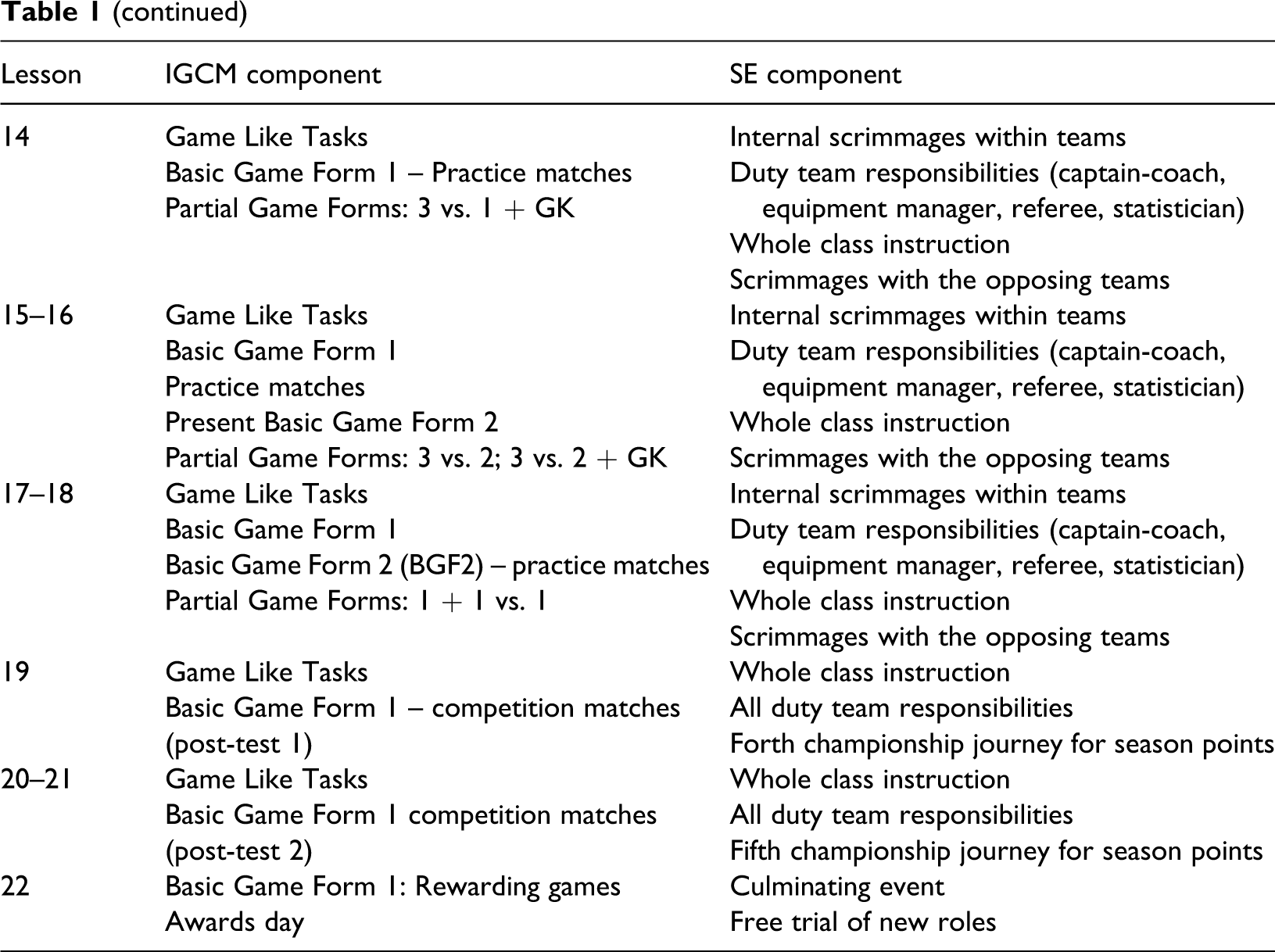
In addition to regular physical education classes, students participated occasionally in extra academic activities to prepare for their managerial role performance, as well as for understanding the unit structure. Informal meetings within teams outside the context of classes were conducted whenever captain-coaches found it necessary, in order to assist them to play their roles. Students’ preparation was supplemented as homework assignments via material provided by the teacher related to the player’s handbook and captain-coach’s handbook.
Unit tasks
The tasks designed were inspired on the tasks framework proposed by Musch et al. (2002) and are from three types: BGFs, PGFs and GLTs. The BGFs are modified versions of the formal game and their aim is to facilitate players’ responses to the particular problems related to the structure of the invasion games. These include (i) shooting and preventing shooting, (ii) creating and preventing shooting opportunities, and (iii) setting up and preventing the set up of an attack. Each basic form of the game provides the context to determine the learning needs to consolidate, implement and evaluate learning, offering the possibility to move to a new and more complex game form (Musch et al., 2002).
Two types of BGF were considered. BGF 1 consisted of a ‘3 × 2 + goalkeeper’ setup. Once a team gained possession of the ball, the goalkeeper became an attacker, thereby outnumbering the opposing team. Defensive actions of all players were restricted to each team’s defensive zones. BGF 2 also consisted of a 3 × 2 + goalkeeper setup and was introduced when students had already mastered some specific tactical procedures. The BGF 2 differed from BGF 1 in that it allowed one of the defenders the possibility of gaining possession of the ball in the opponents’ safety zone.
Before the unit, students were engaged in pre-season scrimmages to test the applicability of BGF 1 and BGF 2 designed for this study. The soccer drills were videotaped and after analysis by the teacher and the main researcher it was decided that students did not have enough initial skills to enable them to perform fluently in BGF 2. Consequently, practice was initially centered on BGF 1.
The PGFs were designed to solve specific strategic problems by imposing conditions, rule changes and equipment modifications on the game. They included games scenarios to address different tactical content in order to solve the tactical problems related to scoring (good scoring attempt), to create shooting opportunities (penetration, overlap), or to set up an attack (pass to open teammate, offensive cover), as well as the inherent defensive tactical content. When at the most simple PGFs students were not able to solve the identified game problems; GLTs were introduced to improve certain specific skill aspects, preserving the PGFs’ situational demands. In this way, the performance of game skills were improved, but integrated with other components of the game.
Data collection
Blomqvist et al. (2005) have developed a coding instrument designed to evaluate students’ game performance in soccer. Focusing on decision making, on- and off-the-ball, and skill execution, each playing move is divided into decision-making units (DMUs). The DMU begins the moment when a player gains control of the ball, and ends when that player passes the ball, it goes out of bounds or an opponent steals the ball (Blomqvist et al., 2005). Consequently, the next DMU will involve a different player in possession and other students in off-the-ball situations.
Within each DMU, each student’s tactical decision (offensive or defensive) is judged as good or poor at the start and at the end of each DMU. In addition, the level of skill execution of the student with the ball is judged as successful or unsuccessful. The on-the-ball decision score is calculated by summing the number of appropriate on-the-ball decisions (passing, holding the ball and scoring attempt) to the total off-the-ball decisions. In turn, the total off-the-ball decisions is calculated by summing the appropriate defensive off-the-ball decisions (moving defensively as the flow of the game, trying to win the ball, marking, defensive cover and defending the goal) to the appropriate offensive off-the-ball decisions (moving offensively as the flow of the game, movement to receive a pass and no movement needed). The overall skill execution is calculated by summing the amount of successful offensive skill executions (receiving, passing, dribbling and shooting) to the successful defensive skill executions (duel and interception).
The students’ overall game performance was assessed following the Game Performance Assessment Instrument (GPAI; Oslin et al., 1998). The decision-making index (appropriate decisions/inappropriate decisions) was summed to the skill execution index (successful skill executions/unsuccessful skill executions) and divided by two.
Data of the play performance were gathered from systematic observation of video records of students’ behaviors while playing BGF 1 at the entry of the programme, the pre-test (PrT) and at the exit, the post-test 1 (PoT-1) and the post-test 2 (PoT-2). The exit assessment took place on two occasions, spaced by eight days (PoT-1 and PoT-2) in order to ascertain the level of learning retention. Each student was individually assessed for their play participation. In addition, based on the PrT scores in overall play performance, students were divided into three skill-level groups (lower, medium and higher).
Reliability
The objectivity of the observations was enhanced by means of inter-observer agreement over 660 decisions and skill executions (16%) applying to 35% of the students. These values exceed the 10% value recommended by Tabachnick and Fidell (2001). Values of Cohen Kappa for agreement of two independent observers ranged from 0.82 to 0.90 and intra-observer consistency ranged from 0.84 to 0.91. Fleiss (1981) asserts that scores greater than 0.75 indicate strong agreement.
Data analysis
Descriptive analysis (means and standard deviations) were performed, and exploratory data analysis revealed non-normality in the distribution of the data. Therefore, non-parametric statistics (Mann–Whitney test) for two independent samples (gender and skill level) was used in order to test the differences between groups in the three different assessment moments. These differences were measured between girls and boys and between the skill-level groups of students.
To test intra-group differences from the entry moment to the two final assessment stages, non-parametric statistics for two related samples were also applied in the form of the Wilcoxon test. Gain scores were assessed from PrT to PoT-1, from PrT to PoT-2 and from PoT-1 to PoT-2. This test was applied to each gender and skill level. Data analysis was achieved with the use of the SPSS for Windows 17.0 software. In order to prevent an inflated error rate, given the considerable number of dependent and independent tests, a multiple-group comparison (Bonferroni Correction) was made in order to adjust the alpha value that was initially set at 0.05.
Results
Descriptive statistics by gender
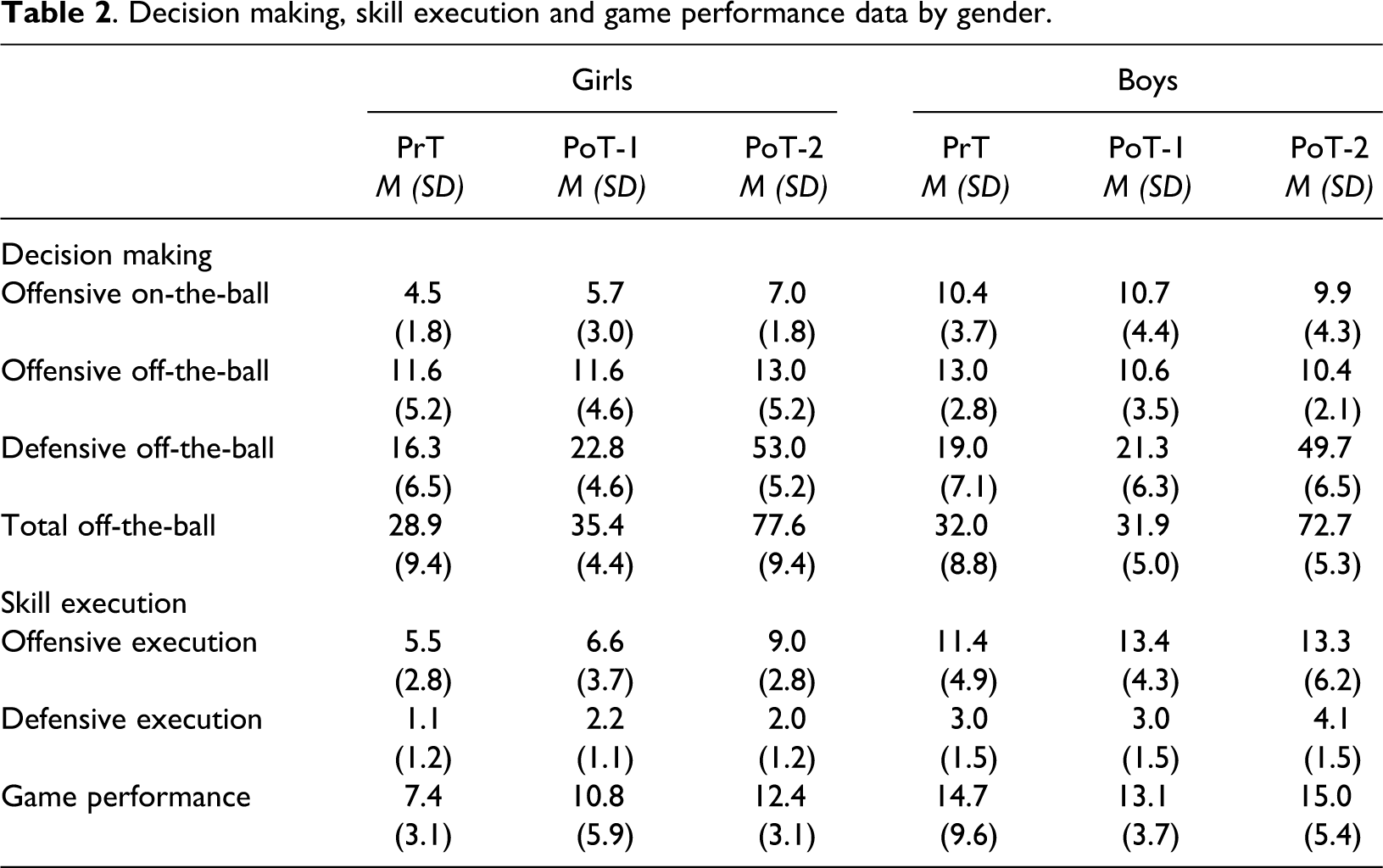
Table 2 shows the descriptive statistics of the three assessment moments, PrT, PoT-1 and PoT-2, for girls and boys in defensive and offensive categories of decision making, skill execution and overall game performance.
Decision making, skill execution and game performance data by gender.
Analysis by gender
Game play performance
In PrT, boys were significantly better than girls in skill execution (U = 17.00; p = 0.004). These significant differences persisted at PoT-1 (U = 11.50, p = 0.001) but faded away at PoT-2. From PrT to PoT-1, girls’ scores did not increase significantly in the main categories. From PrT to PoT-2 and from PoT-1 to PoT-2, girls improved their scores in decision making (W = –3.70, p < 0.001 and W = –2.86, p = 0.004, respectively), improving also in skill execution (W = –3.03; p = 0.002) from PoT-1to PoT-2. Boys improved significantly in decision making from PrT to PoT-2 (W = –3.55, p = 0.001) and from PoT-1 to PoT-2 (W = –2.75, p = 0.004).
Decision making and skill execution
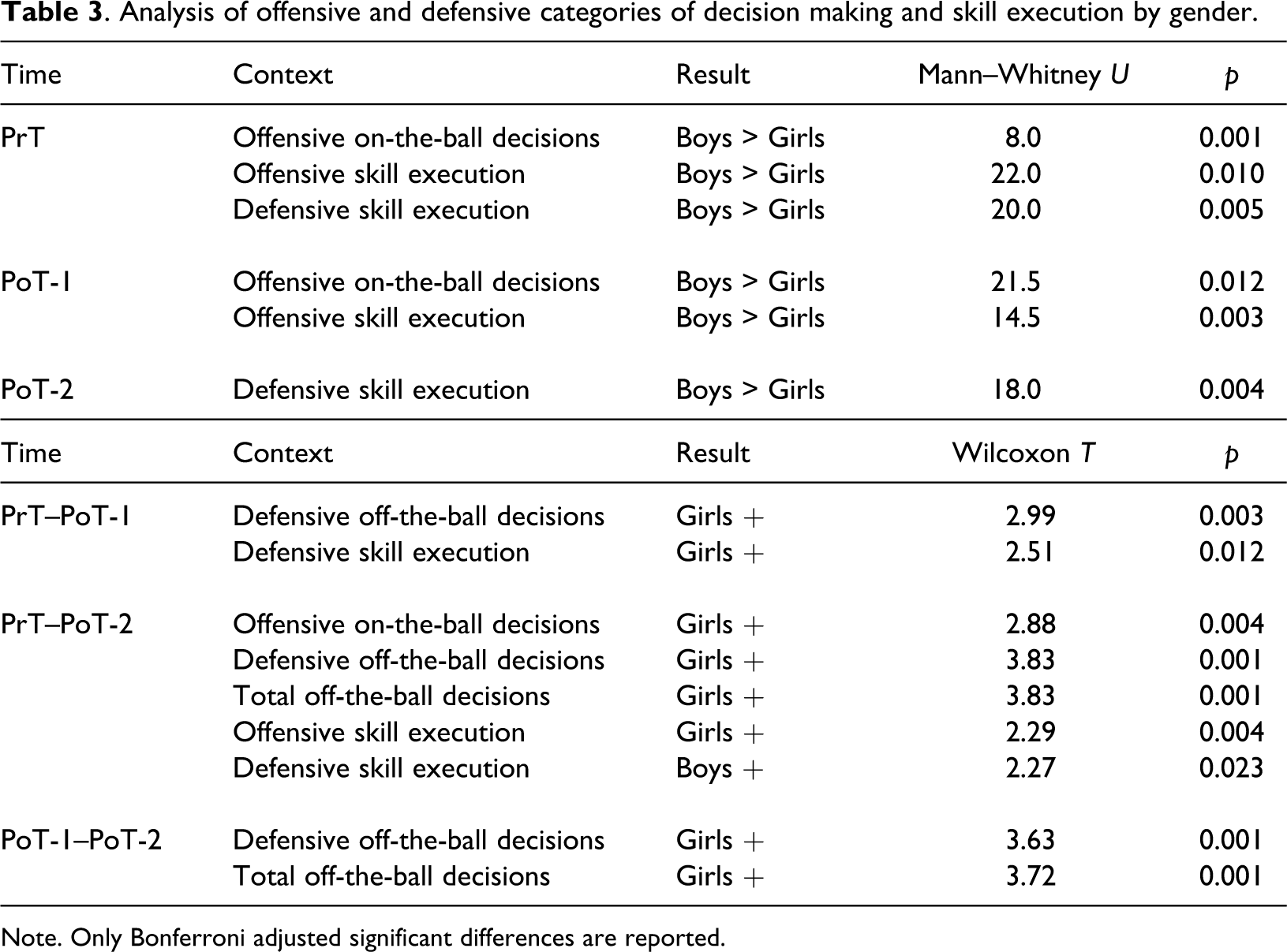
Table 3 provides the significant differences between boys and girls in terms of their decision making and skill execution for the various offensive and defensive contexts of game play as well as the improvements of both groups throughout the unit. At PrT, boys significantly outperformed girls in offensive on-the-ball decisions and in both offensive and defensive skill execution. At PoT-1 boys continued to perform significantly higher than girls, but only in offensive on-the-ball decisions and in offensive skill execution. At PoT-2 boys restored their entry higher scores in defensive skill execution but the differences ceased in the remaining categories.
From PrT to PoT-1 girls increased scores in defensive off-the-ball decisions and in defensive skill execution. From PrT to PoT-2 girls improved significantly in offensive on-the-ball decisions, in total off-the-ball decisions, in defensive off-the-ball decisions and in offensive skill execution. From PoT-1 to PoT-2 increments were again found for girls in defensive off-the-ball decisions and in total off-the-ball decisions. Boys improved significantly from PrT to PoT-2 in defensive skill execution.
Analysis of offensive and defensive categories of decision making and skill execution by gender.
Note. Only Bonferroni adjusted significant differences are reported.
Descriptive statistics by skill level
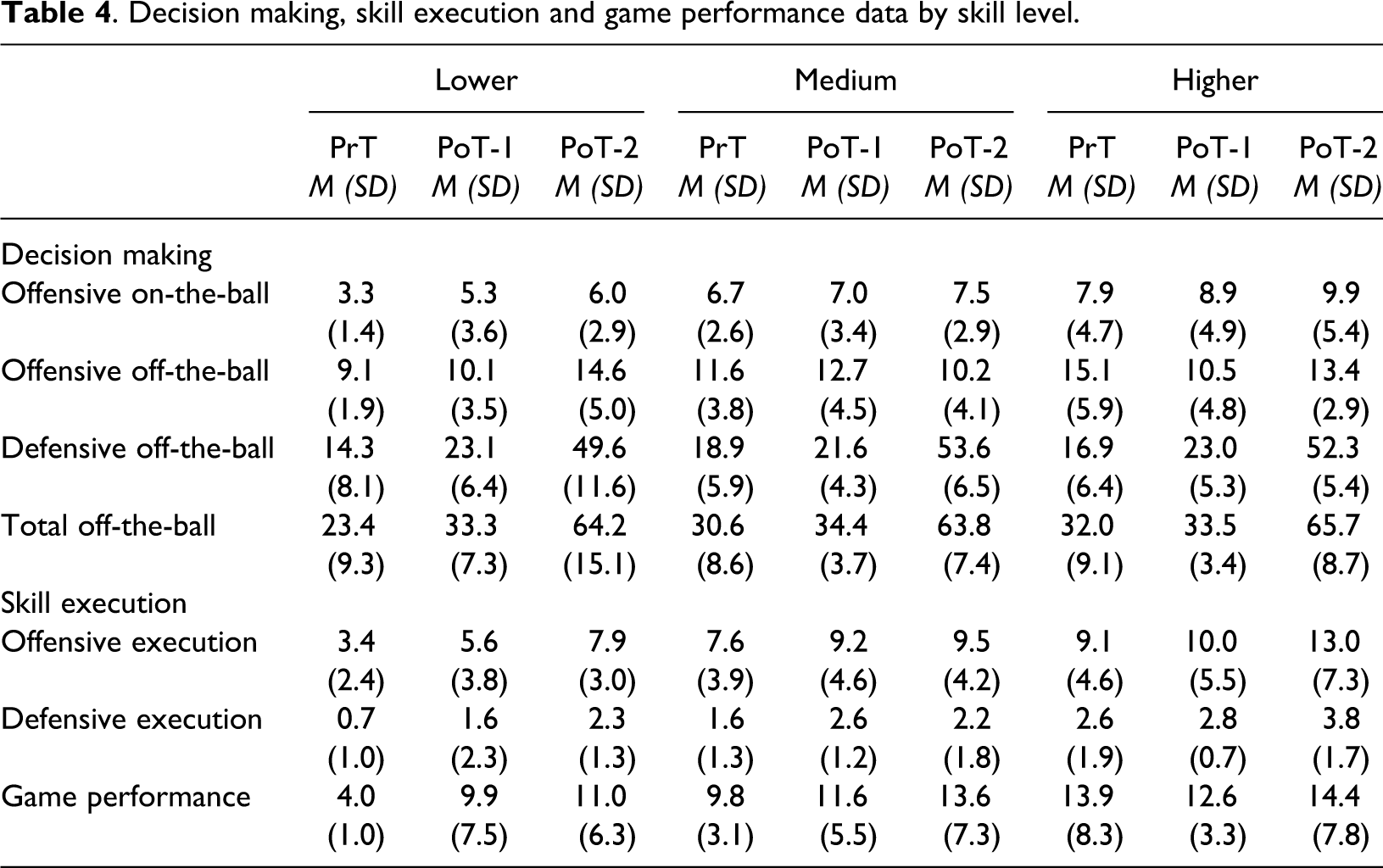
Table 4 shows the descriptive statistics of the three assessment moments, PrT, PoT-1 and PoT-2, for students of differing skill levels in defensive and offensive categories of decision making, skill execution and overall game performance.
Decision making, skill execution and game performance data by skill level.
Analysis by skill level
Game play performance at PrT, the scores of the medium skill-level students were significantly higher than the scores of the lower skill-level students in game performance (U = 0.000, p < 0.001), whilst no differences were found in decision making or in skill execution. These differences did not remain at the exit of the unit (PoT-1or PoT-2). At PrT, the higher skill-level students performed significantly higher than the lower skilled students in skill execution (U = 7.00, p = 0.008) and in game performance (U = 0.001, p < 0.001). These performance differences ceased completely at PoT-1and at PoT-2. No differences were found between the higher skill-level students and the medium skill-level students, at none of the assessment moments. In addition, regardless of students’ skill level, there were no improvements on their performances in the main categories.
Decision making and skill execution
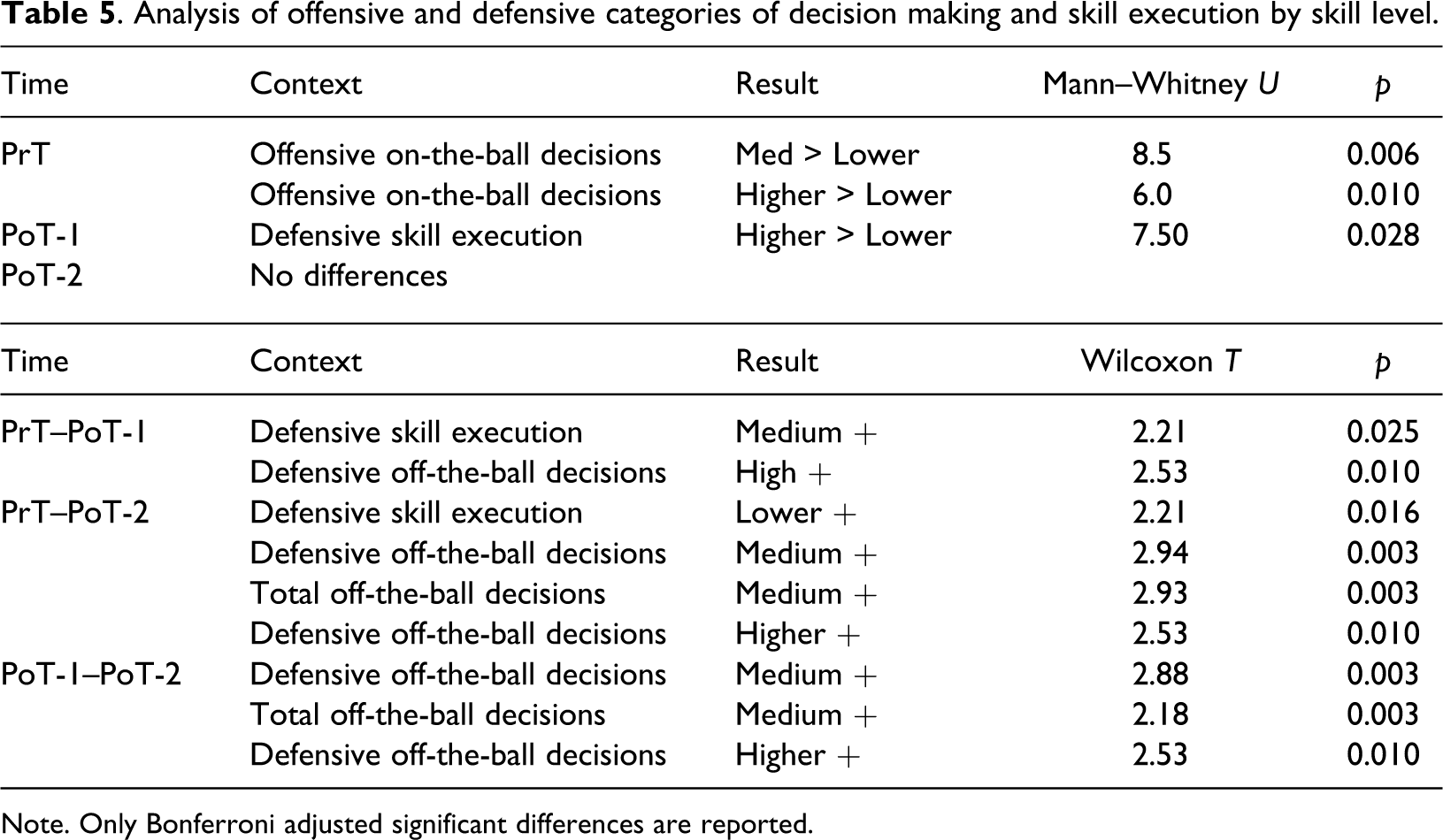
Table 5 shows the significant differences between students’ skill levels in terms of their decision making and skill execution for the various offensive and defensive contexts of game play as well as the improvements of all groups throughout the unit. At PrT, both the medium skill-level and the higher skill-level students scored significantly better than the lower skill-level students in offensive on-the-ball decisions. At PoT-1, the higher skill-level students scored higher than the lower skill-level students in defensive skill execution. All these differences disappeared at PoT-2.
Analysis of offensive and defensive categories of decision making and skill execution by skill level.
Note. Only Bonferroni adjusted significant differences are reported.
The lower skill-level students improved significantly in defensive skill execution from PrT to PoT-2. The medium skill-level students showed significant improvements from PrT to PoT-2 and from PoT-1 to PoT-2 in total off-the-ball decisions and in defensive off-the-ball decisions, improving also from PrT to PoT-1 in defensive skill execution. The higher skill-level students improved significantly from PrT to PoT-1 and PoT-2 in defensive off-the-ball decisions.
Discussion
This study examined the effect of a hybrid SE-IGCM unit of soccer on students’ play performance, measured by the tactical decision performance (decision making), the efficacy of skills execution and the quality of game performance.
Overall outcomes
As noted, research conducted on SE seasons, despite not always distinguishing students’ gender or skill level, has shown significant performance enhancements of students in decision making and in game performance. In the same way, the IGCM was also shown to be effective in promoting students' gains in all game components. Nonetheless, until now no research has been carried out involving the simultaneous application of both models. In this study, a comparison of the developmental profile of students’ scores in the three assessment moments highlighted that this hybrid (SE-IGCM) unit also had a strong impact on students’ learning, especially for girls and lower skilled students, since at the exit of the unit they leveled performances with the remaining groups. Nevertheless, nearly all students improved their scores in offensive and defensive categories of decision making and skill performance.
In this case, the specific structure of the hybrid unit may account for some of the improvements in the components related with tactical decision and skill execution, specifically the on-the-ball decisions, the total off-the-ball decisions, the defensive off-the-ball decisions and the defensive skill execution. Indeed, from the beginning of the hybrid unit application the students were presented with a number of pedagogies that could be hypothesized as improving performance. These included (a) having strategic problems to solve, (b) skill practice within game-like situations, (c) an extended length of time, (d) students had always performed alongside with teammates, (e) time and space to think about the game, and (f) an encouragement of the systemization of defensive positioning. In addition, the task structures of the IGCM encouraged the transferability of the skills to the game, allowing skill improvements without losing the focus on game problem solving (Tallir et al., 2007).
Despite these findings, it must be remembered that the students’ improvements in offensive off-the-ball decisions were sparse. This further supports the claim that offensive off-the-ball decisions in young players are difficult to develop (Blomqvist et al., 2005). Moreover, the offensive decisions (i.e. deceiving an opponent or moving for an open space to receive a pass) were more difficult to learn by students and apply in game play than the defensive actions (i.e. closing the goal or trying to win the ball). Therefore, the outcomes provided in this study suggest that teachers should pay particular attention to the off-the-ball game when planning teaching units (Blomqvist et al., 2005; McPherson and Kernodle, 2003; Mitchell et al., 2006). Indeed, these results also reinforce the notion that decision making is as important as skill execution and can determine performance improvements in sport (Blomqvist et al., 2005; Thomas and Thomas, 1994).
Additionally in this study, the use of two post-test evaluations was particularly valuable when evaluating the impact of the hybrid SE-IGCM unit applied. In fact, the retention test (PoT-2) was crucial for a more accurate assessment of all students' performance improvements. The highest students' improvements were found in the PoT-2 (60% of all improvements, while only 20% took place at the PoT-1) and students kept improving from PoT-1 to PoT-2 (20% of all improvements occurred at this point). Therefore, the application of the hybrid SE-IGCM unit resulted in an increase in efficiency of the learning process, taking into account not just the short-term outcomes but also eight days later. This outcome shows that a certain time may be needed to reach a better impact level. It also suggests that teachers should evaluate the impact of the teaching–learning process not just at the end of the units, but also at a later date, as the time effect may have a significant influence on learning gains.
Nonetheless, some inconsistency still exists about the period of the time effect relative to improvement in learning outcomes. For example, in the study of Tallir et al. (2007), students did not improve from post-test to the retention test. That may have happened because the retention test was administered five weeks from the post-test, whereas in the current study the delay was only one week. Further research is needed using different spacing between the post-test and retention test in order to obtain a more complete understanding of this phenomenon.
Improvements related to students’ gender
In pre-testing, boys performed significantly better than girls, namely in on-the-ball decisions and in skill execution (overall and offensive). The two groups were similar in the off-the-ball decisions at the entry of the unit. The retention test was capital to mitigate gender differences, particularly in on-the-ball decisions and in offensive skill execution, where the boys’ PrT scores were particularly higher. After the SE-IGCM unit application the differences only persisted in defensive skill execution, as girls increased their scores more than boys in the other categories. Therefore, the results of this study suggest that girls took more advantage from the unit than boys. Girls improved scores in the composite measures of decision making and skill execution, which is aligned with the study of Mesquita et al. (2005) in volleyball through the application of a hybrid model composed by the foundations of SE, TGfU and the Developmental Model (DM) (Rink, 1993).
In fact, both studies allowed rich learning opportunities by the combination of the authentic learning environments promoted by the SE and the learning tasks structure defined by the didactical models, such as the IGCM and DM. In this study, it might be suggested that the specific features of the game forms may have been responsible in particular for the girls’ offensive improvements on-the-ball and in skill execution, as the game forms often encouraged ball possession. In addition, girls may have benefited from a closer monitoring and scaffolding from the teacher, who insistently tried to ensure a more balanced and equitable share of task involvement, and improved in all offensive and defensive categories of decision making and skill execution, with the exception of offensive off-the-ball decisions. As advocated by Hastie (1998) and Hastie et al. (2009), the use of the game forms encourages equitable participation and, thereby, girls are not confined to secondary roles as they have opportunities to increase their game involvement.
Nevertheless, another variable that could have affected the less expressive improvements of boys may have been their higher entry performance (Mesquita et al., 2005). Thus, the learning curve of boys could have been bounded by a ceiling effect due to their high performance at the entrance of the unit, especially in on-the-ball decisions, in overall skill execution and in overall game performance. Actually, when boys and girls lacked previous experience (for instance in badminton, Hastie et al., 2009) they improved extensively their performance with regard to skill execution, decision making and overall game performance, and boys surpassed the girls. As a result, in contrast to our study, the boys in badminton had a larger scope to improve and overcome the girls, which may explain the different outcomes of the two studies. On the other hand, as the current study applied a hybrid model, which considered the didactical content treatment through the application of the IGCM’s principles, this could have made the difference by creating better conditions for learning improvements either for boys and girls. Indeed, all students raised their scores in overall skill execution, in defensive off-the-ball decisions and in total off-the-ball decisions, and improved significantly in decision making and in defensive skill execution. Nevertheless, with regard to boys’ improvements in overall decision making, one possible explanation is that they probably were already in transition to a more competitive and strategically more complex form of playing.
Improvements related to students’ skill level
At the entry point of the unit it was shown that higher skill-level students (medium and higher level) outperformed the lower skilled students, particularly in overall game performance and in on-the-ball decisions, while at retention, all differences between groups had vanished. This suggests that the programme had a particularly positive impact on the lower skill-level students.
This outcomes profile is consistent to that found in the volleyball study of Mesquita et al. (2005). At the PrT the different skill-level groups were distinguished significantly in all components. However, at the end of the volleyball unit the contrasts between students in decision making and skill execution faded away. Conversely, differences in overall game performance persisted, possibly, as authors claimed, due to the short length of the unit (12 lessons). Notwithstanding, the hybrid SE-IGCM soccer unit provided to all students sufficient opportunities to play and to improve their tactical ability to play the game, since even the higher skill-level students improved significantly in defensive off-the-ball decisions and all students increased their scores in on- and off-the-ball decisions. The widespread score increase of students in off-the-ball decision making further reinforces the idea that off-the-ball game is an important aspect of team sports, especially in soccer, determining successful performance when time ‘on-the-ball’ is limited (Light, 2005). Moreover the overall improvement in skill execution reinforces the belief that the technical ability can also be improved while playing game-like forms.
The tasks structures applied, mainly using game forms, were determinant to these outcomes. So, a main explanation may be the fact that in the game forms, students partially played in safety zones that facilitated a more secure ball exchange, therefore providing students (particularly the less able) with more time and space for deciding and executing on- and off-the-ball, while at the same time the opponents were systematically engaged in defensive behaviors.
The improvements of students of all skill levels through the application of the hybrid SE-IGCM soccer unit contrasts with the results of Mesquita’s et al. (2005) study, which found that programme to be more effective in promoting performance improvements on lower skill-level students. The larger extension of the present unit (22 lessons) can probably explain why all students, no matter their skill level, had a chance to improve.
For that reason, the tasks designed for this hybrid SE-IGCM soccer unit seem to have taken into account the learning needs of all players, regardless of their skill level and therefore being truly inclusive, given that the teaching units should promote a broader participation of students.
Conclusions
Teaching a soccer unit in a SE environment sustained by the learning tasks structure of IGCM offered students a chance to improve skill execution and tactical decision making. Moreover, the belief that research should focus more often on the learning tasks structure of the SE units is firmly sustained by this study, given that the unit’s tasks structure was capital to promote performance increments in students. The application of a hybrid model provided significant improvements on the students’ learning outcomes, as equitable participation was fostered. However, the overall results showed that gender and skill levels interfered in the learning outcomes. For instance, only girls improved at the overall skill execution, showing that their lower entry performance has given them more scope for progress in that field. When students already have a high technical background, the skills improvement seems to be bounded by a ceiling effect.
This study strongly reinforces the idea that in physical education classes, the previous experiences of students in a particular sport can influence the learning process (Blomqvist et al., 2005; Hastie et al., 2009). Also supported is the idea that in order to promote a truly inclusive pedagogy, teachers should take into account the previous sporting experiences of all students, both more and less skilled students, when they plan their learning tasks (Blomqvist et al., 2005; Placek and Griffin, 2001). Further research must consider the entry level of the students adjusting the tasks structure to all students’ skill levels, providing all potential conditions to improve their performance.
Finally, a retention test was found to be crucial in assessing the students’ outcomes as they improved mostly at this assessment point. This echoes the importance of considering time effects in future research. With regard to implications for professional practice, this study has shown the value of evaluating student learning outcomes at times beyond the end of the instructional period. This strategy may provide a more valid and valuable measurement of the effectiveness of the teaching–learning process.
In short, the hybrid SE-IGCM has proven to be efficient in promoting the students’ game play competence, suggesting that students acquire sufficient skills to participate enthusiastically in games, understanding and applying appropriate strategies to the complexity of the game. The challenge now is to replicate this single sample study across a number of different settings, and potentially with different invasion game-type activities, where on- and off-the-ball movements are critical. Rather than comparing these data with control group formats, an increasing sample size should provide support (or lack of) for the findings in this study. Furthermore, in order to establish the impact of the hybrid SE-IGCM unit, a more holistic approach is needed, examining its impact on students’ social, cultural and affective outcomes.