







Abstract
The aim of the study was to investigate the relationships of classmate and teacher support during physical education (PE) lessons on moderate-to-vigorous physical activity of 14–16 year-old students whom were underweight, normal weight and overweight. The cross-sectional sample for the study concerned data from 1702 girls and 1547 boys, recruited from 12 junior high schools in Poznan, Poland. Based on their body mass index (BMI) values, the participants were assigned to weight categories: underweight, normal weight and overweight. We determined the levels of physical activity, and teacher and classmate support, by means of a questionnaire-based survey. The 3-way interaction effect of gender, weight and support from teachers was statistically significant (p ≤ .05); the 3-way interaction effect of gender, weight status and support from classmates approached significance (p = .0526). This research concluded that supporting students during the PE process may play an important role in determining one’s level of physical activity.
Keywords
Introduction
Adolescence is an important period during which physical activity (PA) levels might contribute to a physically active lifestyle lasting into adulthood (Malina, 2001). The decreased level of PA and fitness among children, and prevalence of childhood obesity, are reported in various studies (Jarosz and Rychlik, 2008; Smith and Biddle, 2008; Tremblay and Willms, 2003). Additionally, results of European studies suggest that being underweight is not a marginal problem (Antal et al., 2009; Lazzeri et al., 2008; Mikolajczyk and Richter 2008; Öner et al., 2004). Underweight and overweight have been connected with negative patterns of daily activity (extensive television viewing, computer-game playing and a low level of PA) and problems with inadequate dietary consumption (snacking and irregular meals) (Springer et al., 2006). Indeed, the problem of a reduced amount of daily moderate-to-vigorous physical activity (MVPA) is seen as one of the major risk factors related to potential cardiovascular and other health-related diseases in adolescents (Dietz, 1999). In Poland, 90.4% of 15–16 year old girls and 77% of 15–16 year old boys did not meet European Union (EU) and World Health Organization (WHO) PA recommendations (Mazur and Małkowska-Szkutnik, 2011). It is important to identify potential mediators of health and PA behaviours in youth (Baranowski and Jago, 2005). Some patterns of behaviour originate (are developed) in school and are reinforced through social support. Evidence exists (Hohepa et al., 2007) for the influence of encouragement on PA participation, with different sources of support (parents, peers, school and media). Health-related behaviours are developed in the process of schooling, through physical/health education.
The role of social support for PA level is shown to be a determinant of a number of healthy behaviours, and the positive association of social support and PA has been observed in adults and adolescents (Ford et al., 2000). In various research studies, different types and sources of support were examined (Sallis et al., 2000; Van der Horst et al., 2007); however, the role of classmate and teacher support in physical education (PE) still needs to be assessed, especially in early adolescents. The influence of family members on the level of PA decreases during puberty, whereas that of peers increases (Eccles, 1999). In the study of Vihjalmsson and Thorlindsson (1998) it was emotional support from a friend, and in the study of Anderssen and Wold (1992) it was PA levels of a best friend, which mattered the most. Adolescents who did not receive encouragement from significant others pointed to the following items as barriers to PA: have no time to exercise, have no place to exercise, do not know how to exercise, have no interest, do not enjoy exercising, want other things to do with their time, do not think exercise is important, have no motivation and have no safe environment (King et al., 2000).
Increasing PA, thus enhancing health in young adolescents, is a key role of school PE (Green, 2004; Johns and Ha, 1999; Sallis et al., 2000). PE is also shown to be an important mediator of PA outside school (Barr-Anderson et al., 2007; Sallis et al., 1999). Schools can reach all adolescents, promote PA and have a strong potential effect on children’s and adolescents’ behaviours (Edmunds et al., 2001; Wechsler and Devereaux, 2001). Therefore, based on this literature, we designed a study to investigate the relationships with classmates and teachers whom might give support during PE lessons on the MVPA of 14–16 year old students categorised as being underweight, normal weight and overweight.
Methods
Participants
Our cross-sectional sample for this study included data from 1702 girls (including 520 girls aged 14 years, 572 aged 15 years and 610 aged 16 years old) and 1547 boys (including 459 aged 14 years, 501 aged 15 years and 587 aged 16 years old). We recruited the participants from 12 out of 61 junior high schools in Poznan, Poland, a major city with approximately 550,000 inhabitants. We selected the schools randomly.
We determined body height and weight for all participants and calculated body mass index (BMI). Based on their BMI values, the participants were assigned to the following categories: (a) underweight; (b) normal weight and (c) overweight, including individuals recognised as obese. Classification into these categories was based on age- and gender-adjusted cut-off values of BMI for children and adolescents, as determined by Cole et al. (2000, 2007). The final number of participants, stratified by gender and the frequency of underweight, normal weight and overweight are presented in Table 1.
Number of girls and boys, stratified by their occurrence of underweight, normal weight and overweight.
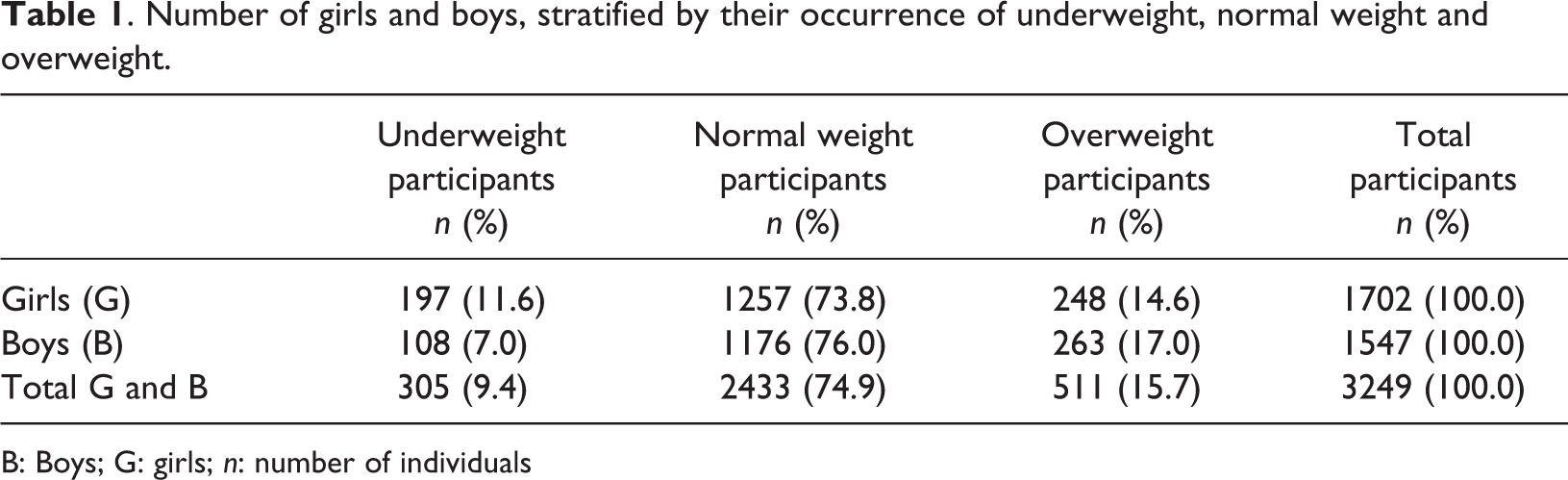
B: Boys; G: girls; n: number of individuals
Our study protocol was approved by the local Bioethics Committee of The Karol Marcinkowski University of Medical Sciences in Poznan (decision no. 1068/07).
Physical activity measurements
The level of PA was determined with the Physical Activity Screening Measure (Prochaska et al., 2001). This measurement corresponds to the average number of days per week in which at least 60 minutes were spent in various forms of PA, during which, in the participants’ subjective opinion, their heart rates increased and they experienced a feeling of shortness of breath (higher breathing frequency). Students were asked to answer two questions:
P1: Over the past 7 days, on how many days were you physically active for a total of atleast 60 minutes per day?

P2: Over a typical or usual week, on how many days are you physically active for a total of at least 60 minutes per day?

We calculated the MVPA index, based on the following formula (Equation (1)):

Where: MVPA is the PA index; P1 is the number of physically active days during the past 7 days; and P2 is the number of physically active days during a typical (usual) week.
Classmates and teachers support measure
In the case of external support, we designed two scales containing five questions each, to assess classmate and teacher support during PE lessons. These scales were based upon the Classmate and Teacher Support Scale (Torsheim et al., 2000) that is used in the Health Behaviour in School-aged Children (HBSC) study as well as in Poland (Woynarowska et al., 2004). We used two items from the Teacher Support Scale and three items from the Classmate Support Scale. We also designed three extra items to assess teacher support during PE and two extra items to assess classmate support during PE. Finally, the items on our classmate support scale concerned: Other students accept me as I am; Most of the students in my class are kind and helpful; I am often picked on various teams for playing; I get positive feedback from my peers when I play; and The students in my class enjoy being together.
The items on the teacher support scale concerned: Our teacher treats us fairly; When I need extra help, I can get it; I get positive feedback from my teacher when I play; Our teacher makes sure we all treat one another fairly; and Our teacher lets us express our opinions.
The internal consistency of our scales was established with the Cronbach’s Alpha test. For the teacher support scale, it was α = 0.91; and for the classmate support, it gave α = 0.87. Examined individuals had to assess, on a 5-point Likert scale, whether they agreed (strongly agree) or disagreed (strongly disagree). The total score could amount to up to 25 points in each of the scales.
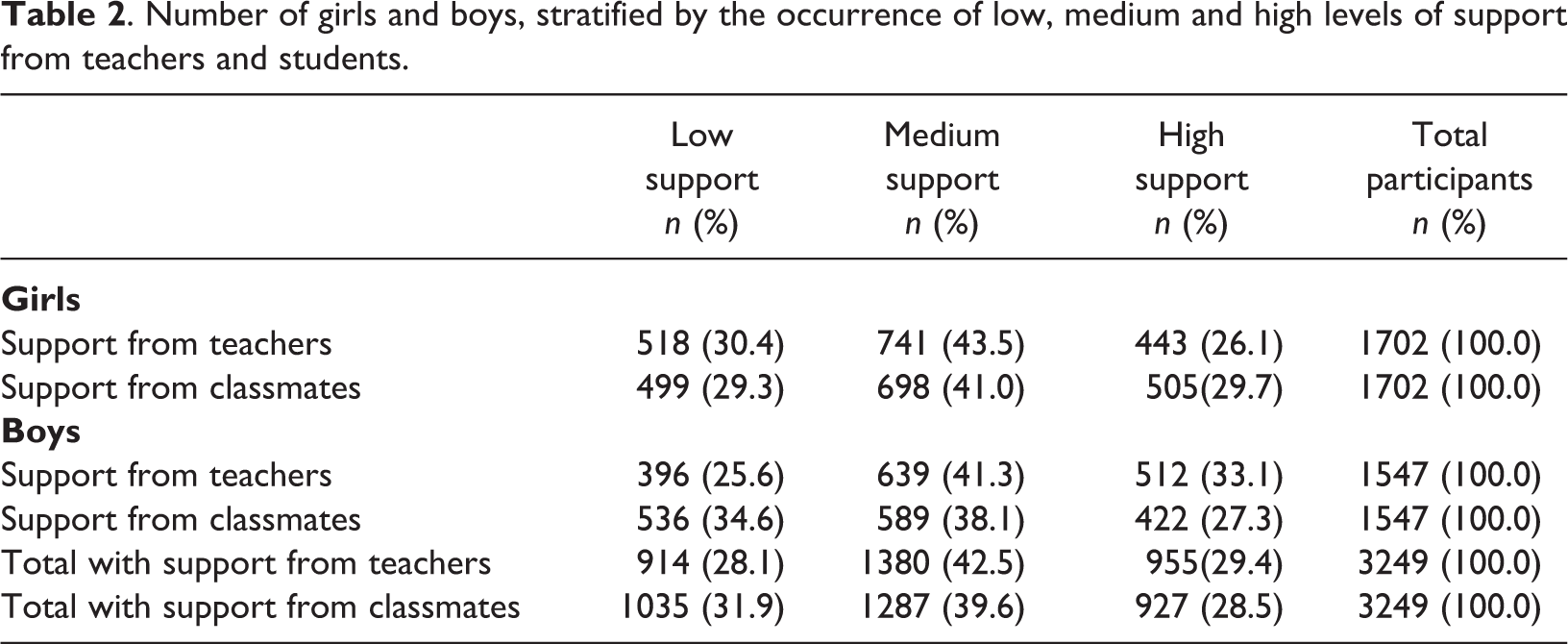
We categorised the support from teachers and classmates with the use of individual scores, normalised to a sten scale (Cattell, 1965), where individuals with 1–4 sten scores were classified as exhibiting a low level of support, while those with 5–6 scores as having a medium level of support, and individuals with 7–10 sten scores as receiving high support (Table 2).
Number of girls and boys, stratified by the occurrence of low, medium and high levels of support from teachers and students.
Statistical methods
We examined whether the level of support from teachers, support from classmates and various weight statuses were associated with the level of MVPA among girls and boys. To compare the individuals’ MVPA level with different levels of support they receive from others (low, medium and high), with different levels of body weight (underweight, normal weight and overweight) in groups of girls and boys, a 3-way (support times weight times gender) analysis of variance (ANOVA) was used. To conduct detailed multiple comparisons the Tuckey’s honestly significant difference (HSD) post-hoc test was employed. To determine the effect size for particular effects eta-squared was calculated. Eta-squared (η2) indicates the percentages of variance explained by a particular effect. We carried out statistical analyses using software Statistica 10.0.
Results
The level of MVPA (girls and boys together) in Table 3 is presented according to the levels of support from PE teachers, classmates and body weight status. We report that the main effect of support from teachers in PE was significant (F = 8.34; df = 2; df = 3231; p ≤ .001). The students receiving high support are more physically active, as compared with those receiving medium (p ≤ .001) and lower support (p ≤ .001); however, this effect explained only about 0.5% of variance in the MVPA level.
Descriptive statistics of MVPA for pupils (all boys and girls) with different levels of support from teachers and classmates in PE and their different weight status.
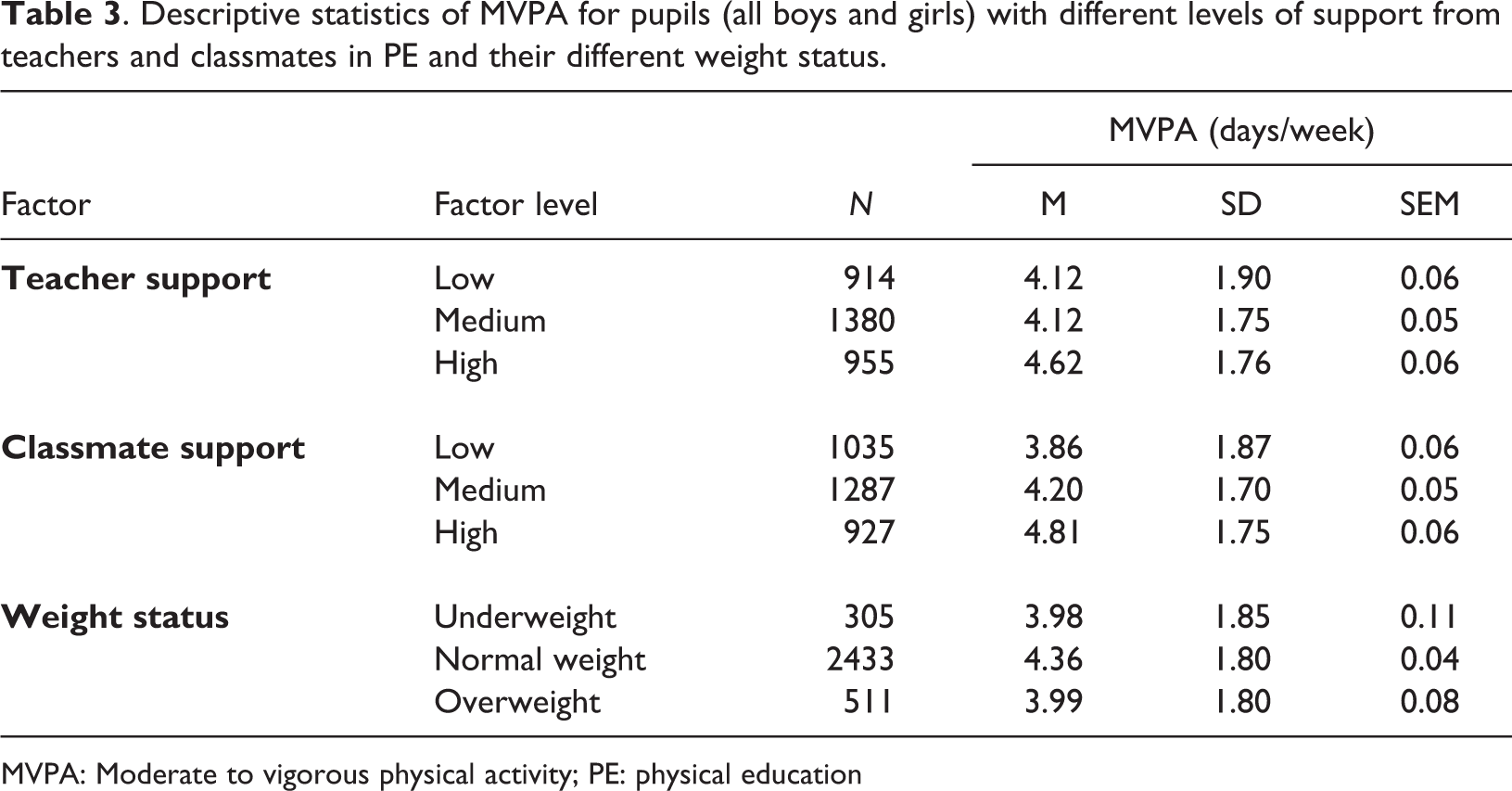
MVPA: Moderate to vigorous physical activity; PE: physical education
We report that the main effect of support from classmates in PE on MVPA was significant (F = 35.66; df = 2; df = 3231; p ≤ .001). The students receiving high support are more physically active, compared with those who received medium support (p ≤ .001) and lower support (p ≤ .001). The students receiving medium support were more physically active than students receiving lower support (p ≤ .001); however, this effect explained only about 2% of variance in MVPA level.
Also, there was a statistically significant main effect of body weight on MVPA (F = 15.77; df = 2; df = 3231; p ≤ .001). Students in the range of normal body weight were more physically active, compared with those who were underweight (p ≤ .05) and the overweight (p ≤ .01); however, the effect of body weight explained less than 1% of MVPA level variance.
We found that the 3-way interaction effect of gender, body weight and support from teachers in PE on MVPA was statistically significant (F = 2.46; df = 4; df = 3231; p ≤ .05) (Figure 1). This effect explained only about 0.3% of variance.
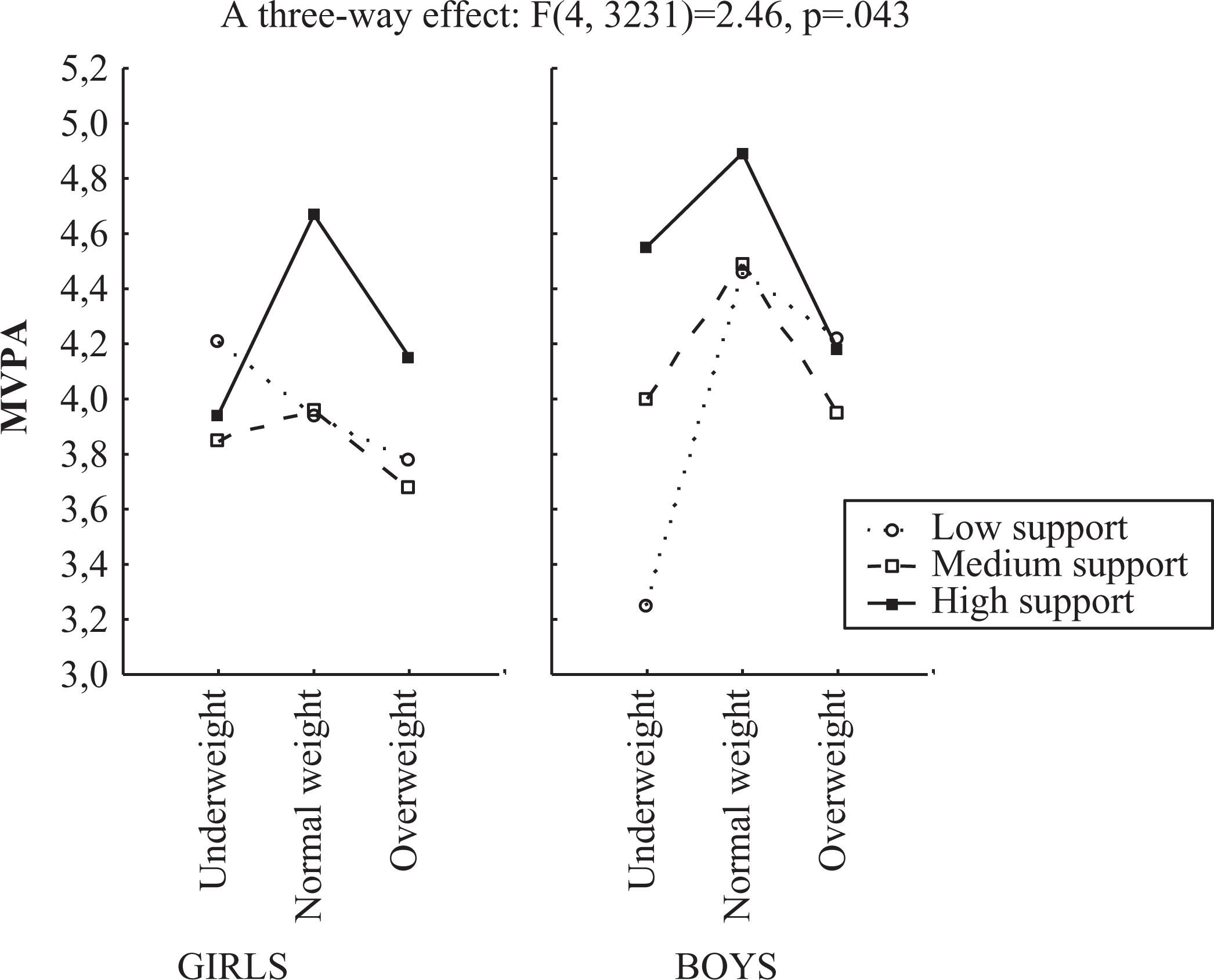
Relationship between support from teachers in PE, weight status and MVPA level in groups of Polish junior high school girls and boys.
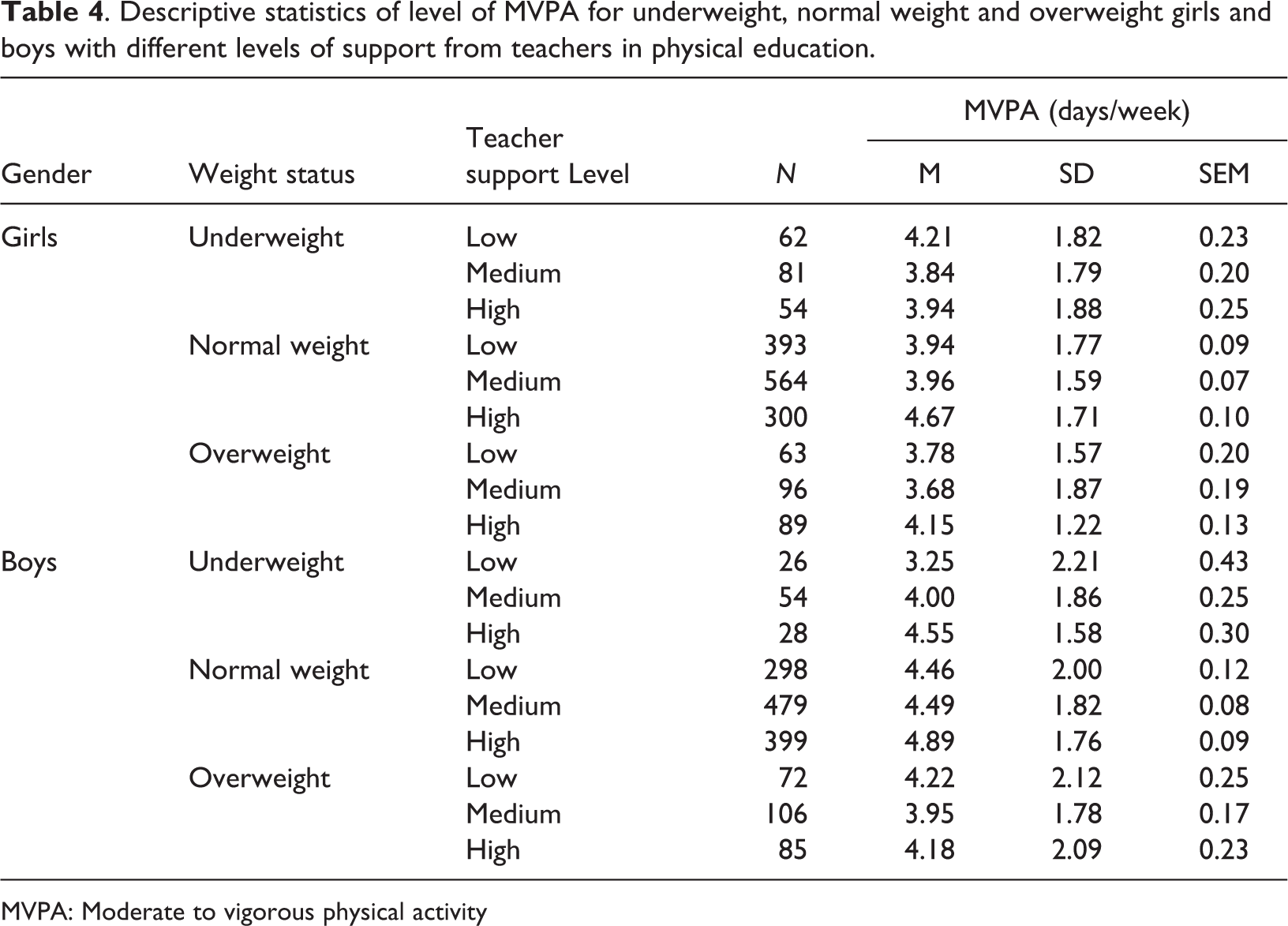
The significance of the 3-way interaction effect (gender, body weight and support from teachers in PE) on MVPA indicated a different 2-way relationship between support from teachers in PE and body weight on MVPA in the groups of girls and boys. Descriptive statistics of the level of MVPA for underweight, normal weight and overweight girls and boys with different levels of support from teachers are presented in Table 4.
Descriptive statistics of level of MVPA for underweight, normal weight and overweight girls and boys with different levels of support from teachers in physical education.
MVPA: Moderate to vigorous physical activity
The two-way interaction effect of body weight and support from teachers in PE on MVPA approached significance for the group of girls (F = 2.29; df = 4; df = 1693; p = .058). This interaction effect explained only about 0.5% of variance of level of MVPA. Within the normal weight range, girls who received a high level of support were more physically active than girls with a medium (p ≤ .001) or low level of support (p ≤ .001). In groups with the underweight and the overweight, the differences were not significant, at p ≤ .05.
The 2-way interaction effect of body weight and support from teachers in PE on MVPA was not reported to be significant in the group of boys (F = 1.49; df = 4; df = 1538; p >.05). This indicated that there was a relatively similar relationship of body weight status and MVPA for each level of support (high, medium, low); however, there were some significant differences regarding the level of MVPA in the groups with different body weight status. The underweight students with high levels of support from teachers were more physically active than the underweight students who received a low level of support from teachers (p ≤ .05). Students in the normal weight range with a high level of support from teachers were also more active than students with a medium (p ≤ .05) or low level of support (p ≤ .05) (Table 4). The differences in the overweight students were not significant (p ≤ 0.05); however, these differences of simple effects should be treated with caution, because the aforementioned 2-way interaction effect of body weight status and support from teachers was not significant at the p ≤ .05 (Table 4).
The 3-way interaction effect of gender, body weight and support from classmates in PE on MVPA approached significance (F = 2.34; df = 4, df = 3231; p = .053). This effect explained about 0.2% of MVPA level change (Figure 2).
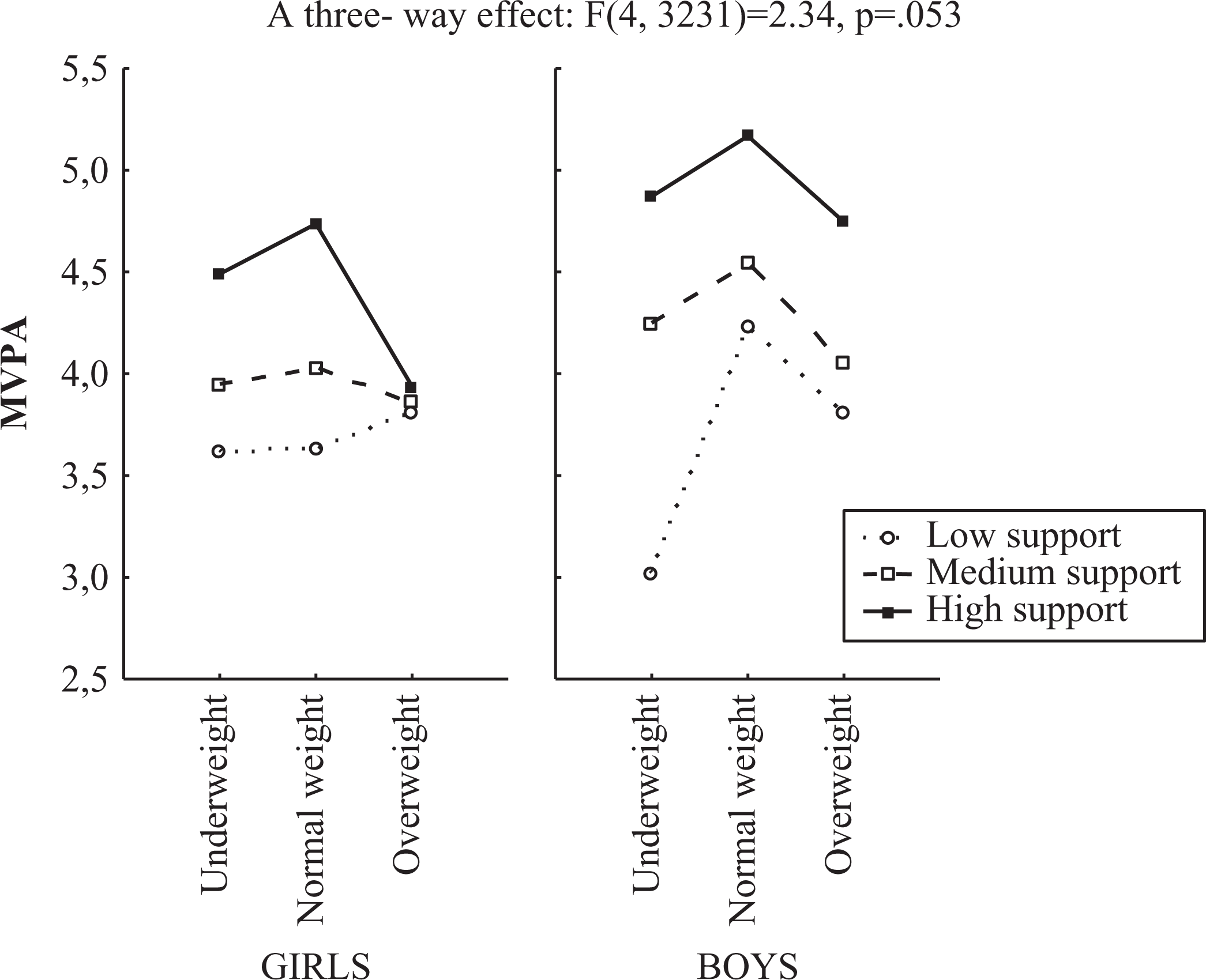
Relationship between support from classmates in physical education, weight status and MVPA level in groups of Polish junior high school girls and boys.
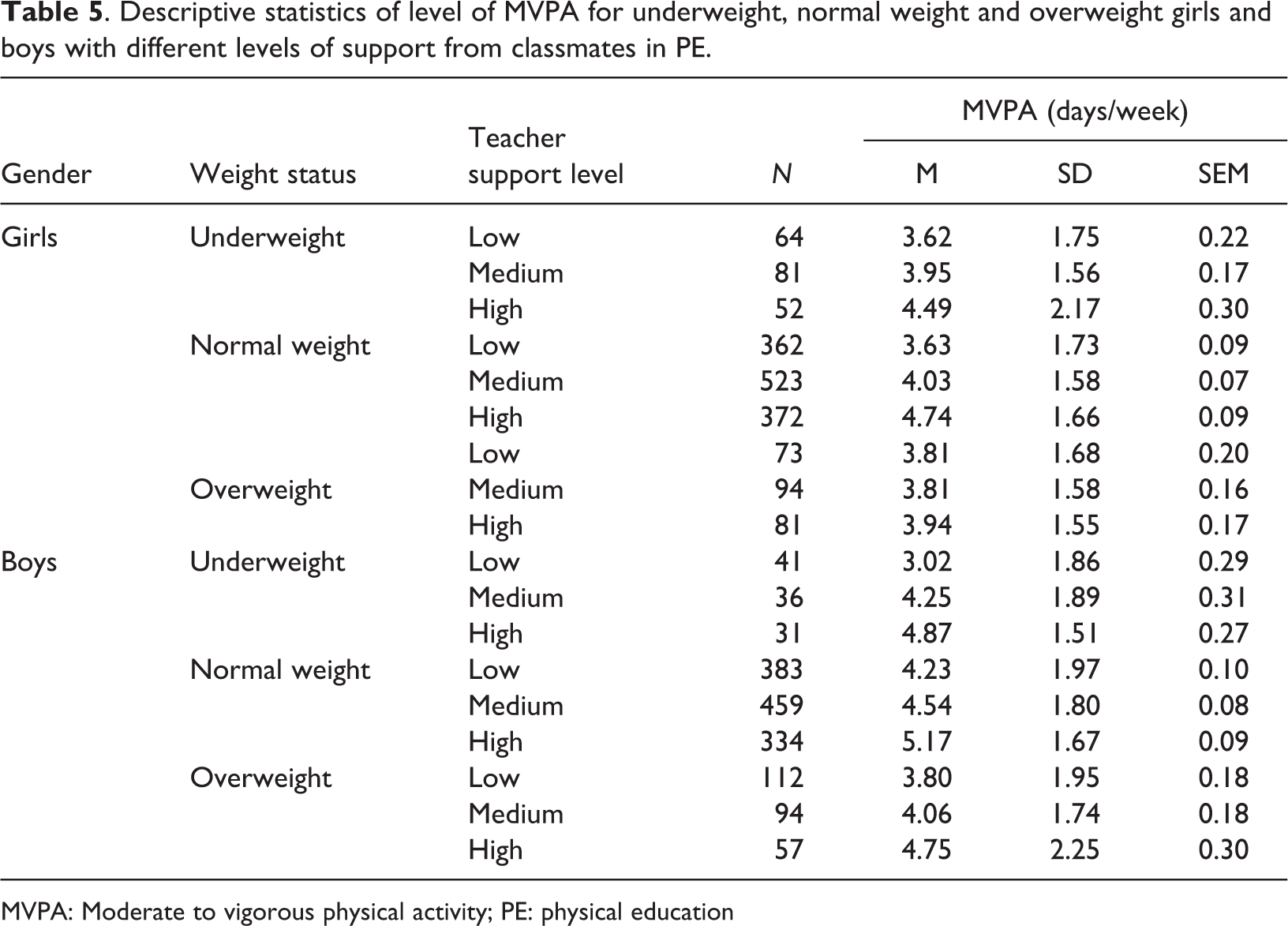
The 3-way interaction effect (gender, body weight and support from classmates in PE) on MVPA indicated a different 2-way relationship of support from classmates in PE and weight status, in the groups of girls and boys. Descriptive statistics of the MVPA level for underweight, normal weight and overweight girls and boys with different levels of support from classmates are presented in Table 5.
Descriptive statistics of level of MVPA for underweight, normal weight and overweight girls and boys with different levels of support from classmates in PE.
MVPA: Moderate to vigorous physical activity; PE: physical education
The 2-way interaction effect of body weight status and support from classmates in PE on MVPA was found to be significant in the group of girls (F = 2.89; df = 4; df = 1693; p ≤ .05). This interaction effect explained only about 0.07% of MVPA level changes. In the normal weight range, girls who obtained a high level of support from classmates were more physically active than girls with a medium (p ≤ .001) or low level of support (p ≤ 0.001). In the group of the underweight, the girls who received high support from classmates were more physically active than girls receiving low support (p ≤ .05). In the group of the overweight, differences did not reach statistical significance, at p ≤ .05. Furthermore, in the group with a high level of support from their classmates, the overweight girls had a lower level of MVPA than girls in the normal weight range (p ≤ .01). In the groups with a medium and low level of support from classmates, differences between girls with different body weight status did not reach statistical significance. The 2-way interaction effect of body weight status and support from classmates in PE on MVPA was not significant in the group of boys (F = 1.47; df = 4; df = 1538; p >.05). This indicated there was a relatively similar relationship of body weight status and MVPA level, for each level of support from classmates. Furthermore, the relationship of differences in the level of MVPA between students with different levels of support from classmates are relatively similar, in the groups with different weight status.
The underweight boys receiving high support from classmates were more physically active than students receiving medium (p ≤ .05) or low support (p ≤ .001) (Table 5). Similarly, boys in the normal weight range with a high level of support from classmates were more physically active than boys with a medium or low level of support (respectively, p ≤ .001 and p ≤ .001). We found that the group of overweight students with high levels of support from classmates in PE was more physically active than the group of students receiving a low level of support (p ≤ .05) (Table 5).
Discussion
The school environment is a key element determining health awareness of young people. In Poland, the total number of PE lessons is among the highest in Europe. Between years 10–16 of age, pupils spend 180 minutes (4 lessons of 45 minutes) a week in PE classes. Despite this relatively large load of PA, Polish youth is still behind many European countries (Currie et al., 2008). Also, research studies (Fenczyn and Szmigiel, 2006; Oblacińska and Jodkowska, 2007) prove that overweight Polish teenagers are less active in both school and extracurricular PA, and the obese girls avoid PE lessons twice as much as their peers with normal weight status.
Our study examined the importance of teacher and classmate support in PE, for the level of MVPA of the underweight, normal weight and overweight students. Generally, there was a positive link between the level of classmate and teacher support in PE and MVPA; however, the interactive effect of body weight status and classmate and teacher support in PE explained a low percentage of MVPA. The reason for this might be the presence of other determinants of daily PA. For instance, Sallis et al. (2000) analysed the following groups of factors: demographic and biological; psychological, cognitive and emotional; behavioral attributes and skills; and physical environment.
With a little caution, it could be said that the classmates’ support plays an important role in the PA of girls with different weight status (as the 2-way interaction effect was approaching significance). Our analysis indicated that a higher level of classmate support in PE lessons correlated to a higher MVPA among the underweight and normal weight girls, and the underweight and normal weight boys.
The study of Mikolajczyk and Richter (2008) indicates the importance of classmate support, which had significantly stronger meaning in the underweight, rather than overweight German youth, in relation to their PA. Peer support is the strongest mediator in the case of children with the status of normal weight. Similar correlations have subsequently been confirmed by Sallis et al. (2000).
Springer et al. (2006), in their research on 10–14 year-old girls, indicate a correlation between the source of support (peers and parents) and their undertaking of PA. It was observed that BMI is not associated with the changes in social support; however, both peer and parental support significantly and positively influence the level of PA. Peer support, as a strong mediator of PA of youth, is reported also in the study of Sallis et al. (2002). Prochaska et al. (2002) conclude in their research that social support from peers and parents is related to the PA of teenagers (peer support was a stronger factor). Also, Duncan et al. (2005) notice that peers’ social support is an important factor, stronger than family support in that case.
Our data indicated that the level of the teachers’ support in PE lessons was important for the MVPA of girls with different weight status; however, this needs to be treated with caution, as the 2-way interaction effect was only approaching significance. On the other hand, an analysis of the level of support from the teacher in PE, in various weight status groups, showed that a higher level of support from the teachers correlates with a higher level of MVPA among normal-weight girls, and underweight and normal-weight boys. Interestingly, the level of MVPA in both overweight girls and boys was not differentiated by the level of teacher support in PE.
It seemed that PE teachers play an important role in determining the level of MVPA, supporting students during the PE process, although not in the case of the overweight girls and boys. Hagger et al. (2009) assumes that the increase of support from PE teachers, parents and peers would also increase the motivation for undertaking PA in their leisure time. This hypothesis was confirmed only in relation to PE teachers. Interestingly, De Bourdeaudhuij et al. (2005) report higher levels of peer support for teenagers with normal weight status than those for the under- and overweight, though no such correlation is found in relation to PE teachers’ support. PE teachers may play a crucial role in reducing overweight and obesity among young people, by developing a positive mind-set (Stelzer, 2005). Irwin et al. (2003) indicate that PE teachers should display the right attitude and behaviour towards their students' body weight. General support from PE teachers, or support for both PA and towards obtaining an optimal body mass (underweight or overweight prevention), are among the fundamental duties of the PE teacher in the teaching/learning process.
Although support from the two sources examined (teacher and classmates) may be considered significant, an analysis of their levels and MVPA in adolescents with different weight status showed that it is classmate support that seems to be more related to the MVPA. It might be supposed, then, that a better class climate during PE lessons (due also to the support) increased participation in PE and thus the level of PA.
This study has several limitations and strengths. Cross-sectional studies restrict inferences about the direction of effects. It is also possible that the students who were already known for being more active generated more positive comments from the teachers and the peers. BMI is a weight-for-height measure, so it does not assess adiposity. Students with increased muscle mass may also have increased BMI. Additionally, the MVPA level was calculated using the self-assessment method, which relies on the subjective interpretation of the questions being asked. The research was conducted only in one city, which could be a limitation, although randomised sampling allowed some generalisation, which might be considered a strength. This study is one of the first to examine the association of classmate and teacher support in PE and students' MVPA in Poland. Another strength of the study was the direct measure of height and weight, which allowed correct calculation of BMI. Future research should examine the relationship between the long-term effects of increased social support (by teachers and classmates) and an active style over the subject’s life-span.
Conclusions
This data, along with an increased prevalence of overweight (but also underweight) among young Poles, calls for separate, more detailed studies. The results obtained through our research can be helpful in the further development of the process of increasing health awareness of young pupils and in the selection of the most appropriate teaching/learning strategies in PE. Support from both teachers and classmates during PE lessons may be one of the key factors determining the level of pupils’ PA.
Footnotes
Funding
This work was supported by the Polish Ministry of Science and Education (grant number N N404 028035).