







Abstract
Despite the temperate climate, surrounded by pristine oceans, children in the Maldives do not meet the minimum daily physical activity (PA) requirements. Maldives is a resource inhibited country within the Indian rim. Generalist teachers are required to deliver primary physical education (PE). There is a paucity of information about Maldivian PE, and comprehensive studies of children's engagement in PA levels in this, and similar contexts are limited. Therefore, this study examined PA levels of fifth-grade students (N = 30 classes) during PE lessons from four schools in the capital city of Male’. The Health Optimising PE model conceptually framed the work. Teachers’ (N = 20) perceptions of implementation barriers were reported during semi-structured interviews. Students’ PA levels, lesson context and PA promotion were assessed during PE lessons with the System for Observing Fitness Instruction Time. The students averaged 31.05% (7.95 min) of PE time in moderate to vigorous PA. During 26.56% of lesson time teachers focused on skill and knowledge development, while for 10.31% of PE lesson time children were encouraged to be active during and outside of class. Programme implementation, according to the teachers, was impacted by a lack of teacher knowledge and confidence, teacher attire and perceived lack of infrastructure, resources and equipment. Recommendations to improve PE outcomes include interventions and continuous professional development aimed at enhancing teachers’ knowledge and confidence towards PE, in conjunction with promotion of effective teaching strategies. Maldivian PE programmes and student health-related outcomes could be improved by addressing these barriers.
Keywords
Introduction
The necessity and universal benefits of quality physical education (PE) and children's moderate to vigorous physical activity (MVPA) have been well expounded (Foley et al., 2020). MVPA provides numerous physiological and cognitive benefits to children and adolescents (Sallis et al., 2012); however, 81.9% of adolescents in the Maldives undertake insufficient physical activity (PA) (Guthold et al., 2020). Furthermore, a global school-based student health survey completed in 2014 reported 15.8% of adolescents in the Maldives are overweight and 4.9% are obese (World Health Organization, 2019). PA is vital for health promotion and assists in managing and preventing obesity (Sallis et al., 2012; Yuksel et al., 2020). School-based intervention programmes can improve the declining rate of PA and help reduce obesity levels among adolescents (Buru et al., 2020). Specifically, PE has been recognized as an effective avenue to enhance PA among children that can carry over into adulthood (Cheung, 2019). Therefore, well-designed PE intervention programmes can be implemented in many schools to reach almost all children at an important time of their lives and increase PA levels (Blanksby and Whipp, 2004; Yuksel et al., 2020).
In the Maldives, PE classes are mandatory from kindergarten (foundation stage – 4–5 years of age), through to grades 1–10 (key stages 1–4 – 6–15 years of age). The Maldives Ministry of Education (MoE) regulates the PE curriculum and provides the syllabi and teachers’ guides. Although pivotal in supporting recommendations for 60 min of PA per day (World Health Organization, 2020; Yuksel et al., 2020), a 35 min health lesson and a 35 min PE lesson are programmed, respectively, per week. The PE syllabus comprises four main strands: (1) personality and social development, (2) growth development and health awareness, (3) health of individual and community and (4) physical fitness. The physical fitness strand aims to inculcate the value of PA throughout the life span with involvement in exercise and games (Ministry of Education, 2014). The physical fitness strand constitutes four sub-strands: educational gymnastics, fundamental movement skills, health and skill-related fitness, and swimming. Through this strand, children learn the basic concepts and skills necessary to lay a strong foundation for daily activities, intramural games and leisure-time physical activities. There is no recommendation for PA levels specified in the Maldives PE curriculum. However, 35 min per week for PE is lower than the global average of 103 min per week (Hardman et al., 2014) and significantly lower than the Society of Health and Physical Educators America (SHAPE America – Society of Health and Physical Educators, 2015) recommendation for 150 min of PE per week for elementary school children. Maldivian PE is delivered in a relatively unique context, including a small landmass, almost exclusively taught by generalist female teachers, a comprehensive Muslim community with dress-related standards, and teaching in under-resourced school environments.
Regarding school PE globally, several lines of evidence suggest that children's MVPA in primary school is below the recommended level. A systematic review of PE conducted by Hollis et al. (2016) reported 44.8% of MVPA, with a 10.6% increment from the previous decade (34.2% MVPA; Fairclough and Stratton, 2006). Consistent with these data, a recent study by Powell et al. (2019) reported 42.4% MVPA for PE in a sample of English primary schools. However, children in Vietnamese elementary schools (taught by generalist teachers) spent 15.5% of PE time engaging in MVPA (To et al., 2020). Nevertheless, as the evidence suggests, many children and adolescents engage in relatively low levels of MVPA, and a small proportion of children meet daily PA requirements (Guthold et al., 2020; Hardman et al., 2014).
Engaging in PA is associated with numerous positive health outcomes and reduced rates of diseases such as type 2 diabetes, obesity, cardiovascular disease and some cancers (Buru et al., 2020). The Health Optimising Physical Education (HOPE) curriculum model (Sallis et al., 2012) has an overarching goal to help students attain knowledge and skills for lifelong participation in PA for optimal health benefits. Therefore, it conceptually frames this study. For children, school settings have been identified as an ideal place to be physically active as they spend most of their waking hours at school (Blanksby and Whipp, 2004). For some children, PE is the only opportunity to engage in MVPA to become physically fit, and learn the movement and behavioural skills needed for a lifetime of active and healthy living (Metzler et al., 2013a). The HOPE model uses strategies in multiple bands that focus directly on school children and their surrounding social (interpersonal) and physical (organizational, community and public policy) environments to increase PA participation and improve health-enhancing behaviours (Metzler et al., 2013b). The HOPE model is underpinned by provision of engaging PE lessons for all students, regardless of physical ability. Finally, HOPE promotes student PA for at least 50% of PE lesson time (Sallis et al., 2012). This approach advocates objective measures to assess MVPA during PE lessons, assessing teacher behaviours in PE, curriculum evaluation, teacher preparation, facilities and equipment (Sallis et al., 2012). The utility of HOPE to frame this research is reinforced by the alignment of the key elements of HOPE and the Maldivian PE curriculum.
When aspiring to meet the HOPE goals, teachers are recommended to possess the knowledge to effectively plan, implement and assess PE programmes (Metzler et al., 2013b). Moreover, teachers should be equipped with suitable content knowledge (CK) and pedagogical CK (PCK) to successfully facilitate HOPE curriculum goals (Metzler et al., 2013b). As such, professional development (PD) is an integral component of the HOPE model. To be effective, PD for in-service teachers must include CK and PCK embedded in various ways and must be predominantly teacher-initiated and offered on the school site (Metzler et al., 2013b). A recent study by Abdulla et al. (2021b) reported that Maldivian generalist teachers had difficulty implementing PE lessons. The barriers identified corroborate previous findings in other countries and include low teacher confidence levels, lack of knowledge, and attitudes and behaviour of generalist teachers delivering PE (Hyndman, 2017; Morgan and Bourke, 2008; Powell et al., 2019). Previously reported barriers to quality PE also include institutional blocks, for example, lack of support from school administrators, infrastructure, resources, equipment, funding and PD opportunities (Hyndman, 2017; Powell et al., 2019). Moreover, Maldivian teachers who have participated in PD reported higher confidence and motivation to teach PE (Abdulla et al., 2021b). They also expressed the need for continuous PD (CPD) programmes to increase PE-specific knowledge (Abdulla et al., 2021b). To date, there has been no systematic evaluation of the implementation of PE programmes in the Maldives and similar contexts, and therefore, no conclusions can be drawn. Consequently, the purpose of this study was: (1) to measure children's PA, lesson context and teacher promotion of PA during fifth-grade PE lessons in urban schools of Maldives using the HOPE framework; and (2) to explore the teacher perceived challenges and barriers influencing the implementation of quality PE lessons.
Methods
Participants and setting
All 10 public primary schools that use English as the main teaching medium in the city of Male’ were invited to participate in the study, and four schools agreed. The four participating schools each had an enrolled population of 800–2000 students. The schools had restrictive space and limited resources for PE. Generally, the area allocated to PE was the size of a basketball court. This area also served as a common playground shared by the whole school for a range of activities. All the fifth-grade classes were included in the study and there was a total of 30 classes taught by the classroom teachers (29 were female and one was male) in the four schools. Twenty teachers (experience range = 1–26 years, mean age = 32.55 years) who taught fifth-grade classes participated in face-to-face semi-structured interviews. Prior to conducting the study, ethical approval was obtained from the authors’ University Human Research Ethics Committee. MoE of Maldives and participating schools also provided written approvals. Consent was obtained from school principals, teachers, parents and their children to participate in the study.
Data collection and instruments
To measure the characteristics of PE lessons the System for Observing Fitness Instruction Time (SOFIT) was employed. This tool aids in assessing one of the primary objectives of HOPE, that is, the students spending at least 50% of the time in MVPA during PE and assessing teacher behaviours in PE. Teacher interviews explored the barriers and challenges teachers encountered when delivering PE.
PE lesson observations
SOFIT is a comprehensive, validated instrument to measure PA level, lesson context and teacher behaviour simultaneously during PE lessons (McKenzie, 2015). The comprehensive SOFIT protocol is available elsewhere (McKenzie, 2015). From each of the observed classes, four students were randomly selected to represent the class. To assist identification of the participant students, coloured ribbons were attached to their wrist. The observation procedure began when the class started. The first student was observed for four consecutive minutes. After 4 min, the second student was observed for a 4 min period and so on until the end of the lesson. Each 4 min period included 12 observations and 12 recording intervals with 10 s for each observation interval and another 10 s for each recording interval. At the end of each observation interval, student PA was coded (see Table 1). Concurrently, lesson context was coded (see Table 1) by observing the entire class and based on what the majority of students were doing during each observation. Furthermore, teacher behaviours were coded (see Table 1). Real-time coding was conducted for all the lessons. Each of the 30 classes was observed twice (N = 60 observations), and an average was obtained for each of the SOFIT categories.
Lesson profile.
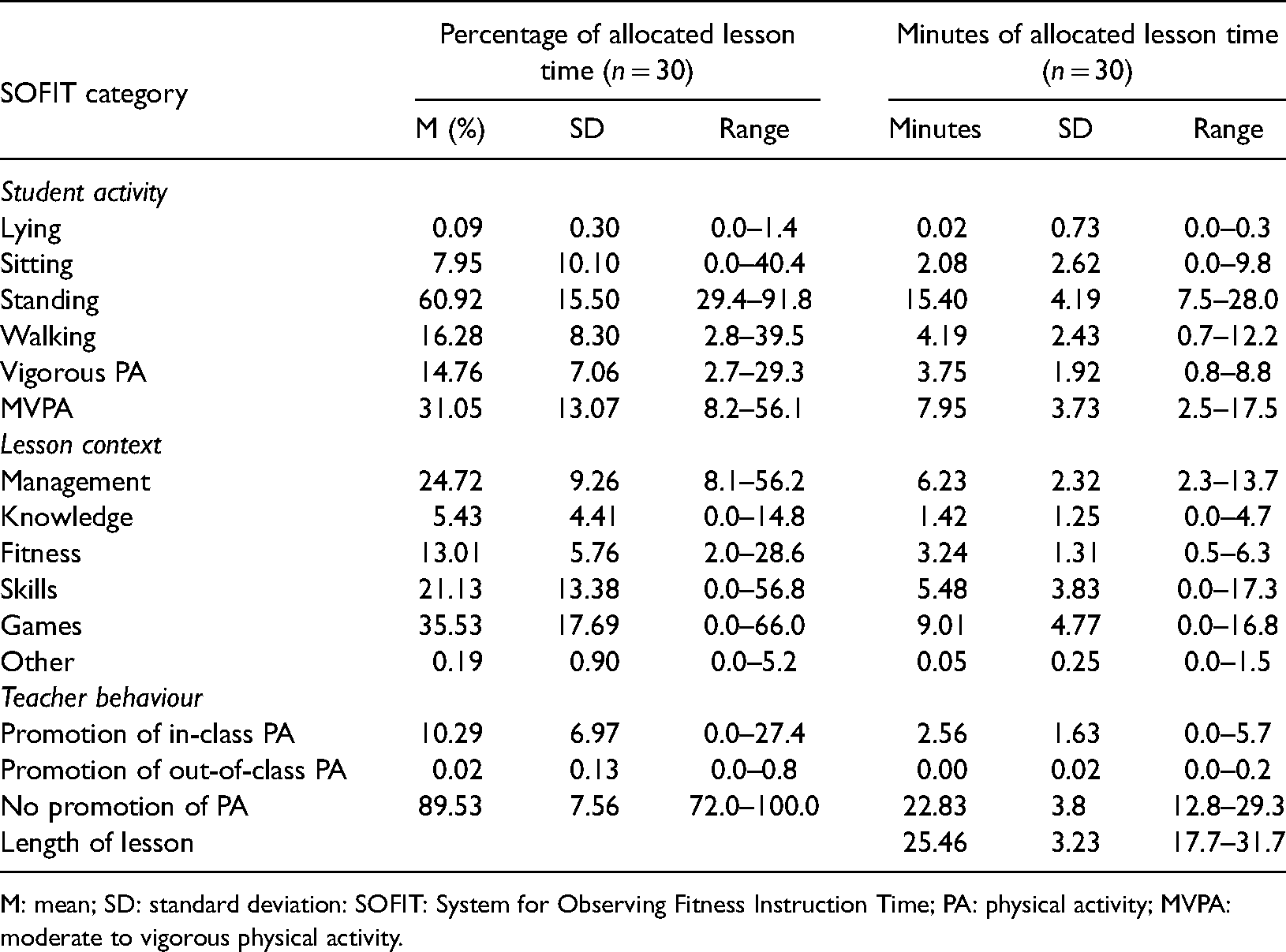
M: mean; SD: standard deviation: SOFIT: System for Observing Fitness Instruction Time; PA: physical activity; MVPA: moderate to vigorous physical activity.
The training material available for SOFIT (McKenzie, 2015) was used to prepare the team responsible for observing the PE lessons. The percentage of agreement between the research assistants was calculated during practice to assess the inter-rater reliability as described by the SOFIT protocol. The research assistants undertook additional practice and engagement with the training materials until the agreement level was >80%. To confirm inter-rater reliability, two experienced independent observers coded two lessons simultaneously with the lead researcher in each of the four schools. An average inter-rater reliability of 88.2% for student activity, 97.3% for lesson context and 98% for PA promotion was achieved.
Interviews
The lead researcher conducted face-to-face semi-structured interviews with the participants individually and each interview lasted between 30 and 40 min. The interview guide (see Morgan and Hansen, 2008) explored teachers’ personal perceptions of PE, school support for PE and perceived barriers to deliver the PE programmes. A pilot interview was conducted prior to data collection, with additional questions developed: ‘How do you find teaching PE?’, ‘How would you describe the school management's support for the PE programmes?’ and ‘Are there teacher-related, institution-related, student-related barriers to teaching PE – if so what are these?’ All interviews were conducted in the participants’ school in a quiet and private space. All the interviews were audio-recorded.
Data analysis
System for observing fitness instruction time
A quantitative analysis was completed using the Statistical Package for the Social Sciences v.24, with the alpha level set at p < 0.05. For analysis, the data were considered as continuous as the ordinal data were treated as interval data and converted to percentages (Harwell and Gatti, 2001). For each of the SOFIT categories of student activity, lesson context, and PA promotion percentages and minutes of lesson time (mean, range and standard deviation) were calculated. MVPA was calculated by combining the sum of the time spent in walking and vigorous activity. To examine the association between the SOFIT variables, Pearson product-moment correlations were conducted. Lastly, multiple regression was conducted using children's PA behaviour as the dependent variable. Six regression models with each model including the predictor (independent) variables of ‘management’, ‘knowledge’, ‘fitness’, ‘skills’, ‘games’, ‘other’ and ‘in-class promotion of PA’, and the confounding variables of school were applied across the SOFIT outcome (dependent) variables ‘lying’, ‘sitting’, ‘standing’, ‘walking’, ‘vigorous PA’ and ‘MVPA’. A backward selection of regression model enabled model refinement as the SOFIT instrument produces a range of predictor variables (Powell et al., 2019). Non-statistically significant variables with the outcome variables that were least associated were eliminated and statistically significant predictor variables were retained. In the linear regression analysis, each PE lesson observed was treated as a case (e.g. a case = observed lesson/class), with 30 cases being measured as a satisfactory sample size for the number of predictor variables (Austin and Steyerberg, 2015).
The reliability of the data was determined using the following assumptions: (1) correlations between the predictor variables through the presence of multicollinearity; (2) homoscedasticity of errors through plotting predicted values of Y with standardized residuals; (3) application of Cook's distance diagnostics to find the outliers; and (4) linearity of the outcomes and predictor variables (Williams et al., 2013).
Interviews
A framework method is a thematic analysis approach used to identify commonalities and differences in qualitative data in a matrix and viewing data case-by-case or comparing across participants to draw descriptive and explanatory conclusions clustered around themes (Gale et al., 2013). Initially, recorded interviews were transcribed verbatim into Word files and administered in NVivo software v12 (NVivo, 2018). The lead researcher read and re-read the transcripts numerous times to generate familiarity with the data. Next, codes were categorized into clusters around interrelated concepts and arranged in an analytical framework tree (Gale et al., 2013). Amendments were applied to the initial analytical framework by a discussion with the other researchers to add categories beyond the ones identified by the lead researcher. Through this process, the analytical framework was refined and finalized through coding and recoding of transcripts. Finally, the refined framework was applied to all transcripts and data summarized in a matrix structure with rows for participants and columns for the codes. Themes were produced by linking categories within and between participants. Frequency counts for each sub-theme are provided.
To maintain the trustworthiness of the qualitative data, Shenton (2004) described four concepts: credibility, transferability, dependability and confirmability. The credibility of respondent validation was achieved through member checking processes. The transcribed interviews were returned to participants to check for accuracy and resonance with their experiences. Further, the credibility of the data was enhanced through a peer-review process. Using the identified themes, the first and second authors independently examined and coded all meaning units from the 20 interviews. If disagreement about the content/relevance of meaning units arose, they were identified and discussed. A consensus was achieved through the continuous debate between the investigators regarding the title and definition of themes, inter-theme distinctiveness and intra-theme similarity. Additionally, the credibility was increased due to the systematic approach used for analysis and the direct quotations extracted in the results section. The transferability of data is manifest through the context detail and the clear communication of the study process and its boundaries. The dependability of the data is maintained through the explanation of research methods and design. The confirmability of the data is evident through the journal recordings of the data collection process, notes and initial ideas that occurred during research. Lastly, to support the trustworthiness of the findings, triangulation of data sources from SOFIT and teacher interviews were used.
Results
Features of the fifth-grade PE programme
The average length of the PE lessons, type of activity and average MVPA during lessons are presented in Table 2. The average duration of PE lessons was 25.6 min. Of the 30 classes (N = 60 observations), only four lessons met the >50% MVPA recommendation in the HOPE framework.
An overview of the individual lessons.
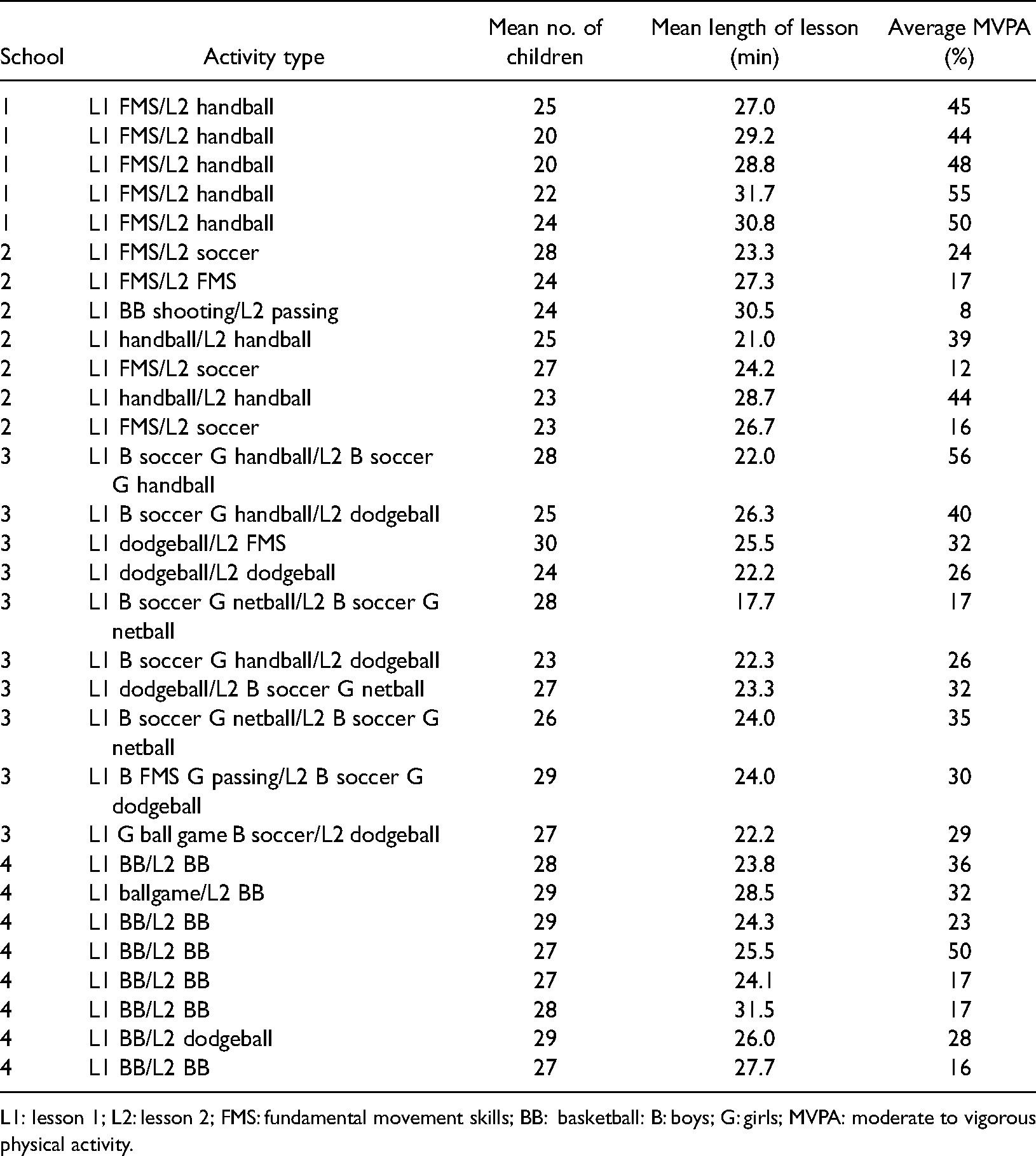
L1: lesson 1; L2: lesson 2; FMS: fundamental movement skills; BB: basketball: B: boys; G: girls; MVPA: moderate to vigorous physical activity.
The SOFIT categories of student activity, lesson context and promotion of PA are presented in Table 1. For student activity, 60.92% of lesson time was spent ‘standing’ and 31.05% in MVPA (walking 16.28% + vigorous PA 14.76%) with a mean value of 7.95 min. On average, 8.04% of the lesson time was spent ‘lying’ and ‘sitting’. In relation to lesson context, an average of 35.53% lesson time was allocated to game play, with 24.72% spent managing lessons. A mean of 39.57% lesson time was focused on knowledge, fitness and skill practice. The least amount of time spent was on other tasks (0.19%). In terms of promotion of PA, 10.29% of lesson time was allocated to the promotion of in-class PA and 0.02% of lesson time was allocated to the promotion of out-of-class PA. The significant majority of the lesson time (89.53%) did not promote PA.
A positive correlation was found between lesson context, skills and standing (r (30) = 0.55, p ≤ 0.01, r2 = 0.30); lesson context game play and MVPA (r(30) = 0.77, p ≤ 0.01, r2 = 0.59) at 95% confidence interval (0.349, 0.448) (Table 3). A multiple regression analysis confirmed lesson context-independent variables of ‘management’, ‘fitness’, ‘skills’ and ‘games’ were negative predictors of children's standing behaviour but were positive predictors of children's MVPA, vigorous PA, walking, lying and sitting behaviour during PE lessons (Table 4). Furthermore, lesson context ‘other’ was a negative predictor of children's activity behaviour of lying and walking but was a positive predictor of sitting, standing, vigorous PA and MVPA. In-class promotion of PA was a negative predictor of walking but was a positive predictor of sitting and vigorous PA. Out-of-class promotion of PA was a negative predictor of sitting, walking, vigorous PA and MVPA but was a positive predictor of standing. No promotion of PA was a negative predictor of lying, walking and MVPA, but was a positive predictor of sitting. The confounding variable of ‘school’ was a positive predictor of lying, sitting, and vigorous PA but was a negative predictor of standing, walking and MVPA. For all of the SOFIT activity category variables, the two-way analysis of variance (ANOVA) results revealed a non-statistically significant interaction effect between ‘school’ and ‘gender’. Furthermore, no statistically significant main effects for ‘gender’ were revealed for lying, sitting, standing, walking, vigorous PA and MVPA. The mean percentage of MVPA for each school was: school one = 48.5%; school two = 22.6%; school three = 32.4%; and school four = 27.4%. The ANOVA revealed significant main effects of ‘school’ on all SOFIT categories: %MVPA F(3,7) = 154.71, p = 0.000, η2 = 0.38; %Standing F(3,7) = 182.53, p = 0.000, η2 = 0.42; %Sitting F(3,7) = 452.77, p = 0.000, η2 = 0.64; and %Lying F(3,7) = 33.74, p = 0.000, η2 = 0.12.
Correlation matrix for SOFIT categories.
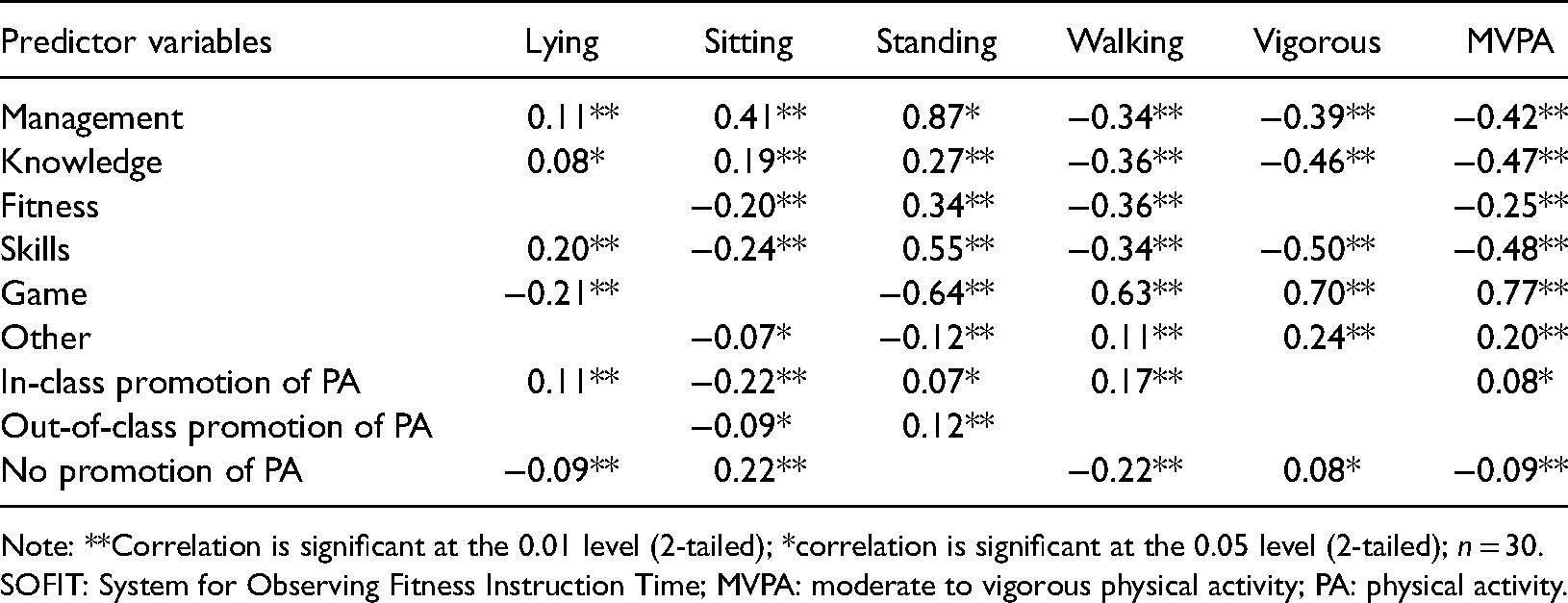
Note: **Correlation is significant at the 0.01 level (2-tailed); *correlation is significant at the 0.05 level (2-tailed); n = 30.
SOFIT: System for Observing Fitness Instruction Time; MVPA: moderate to vigorous physical activity; PA: physical activity.
Predictors of children's activity behaviours during primary PE.
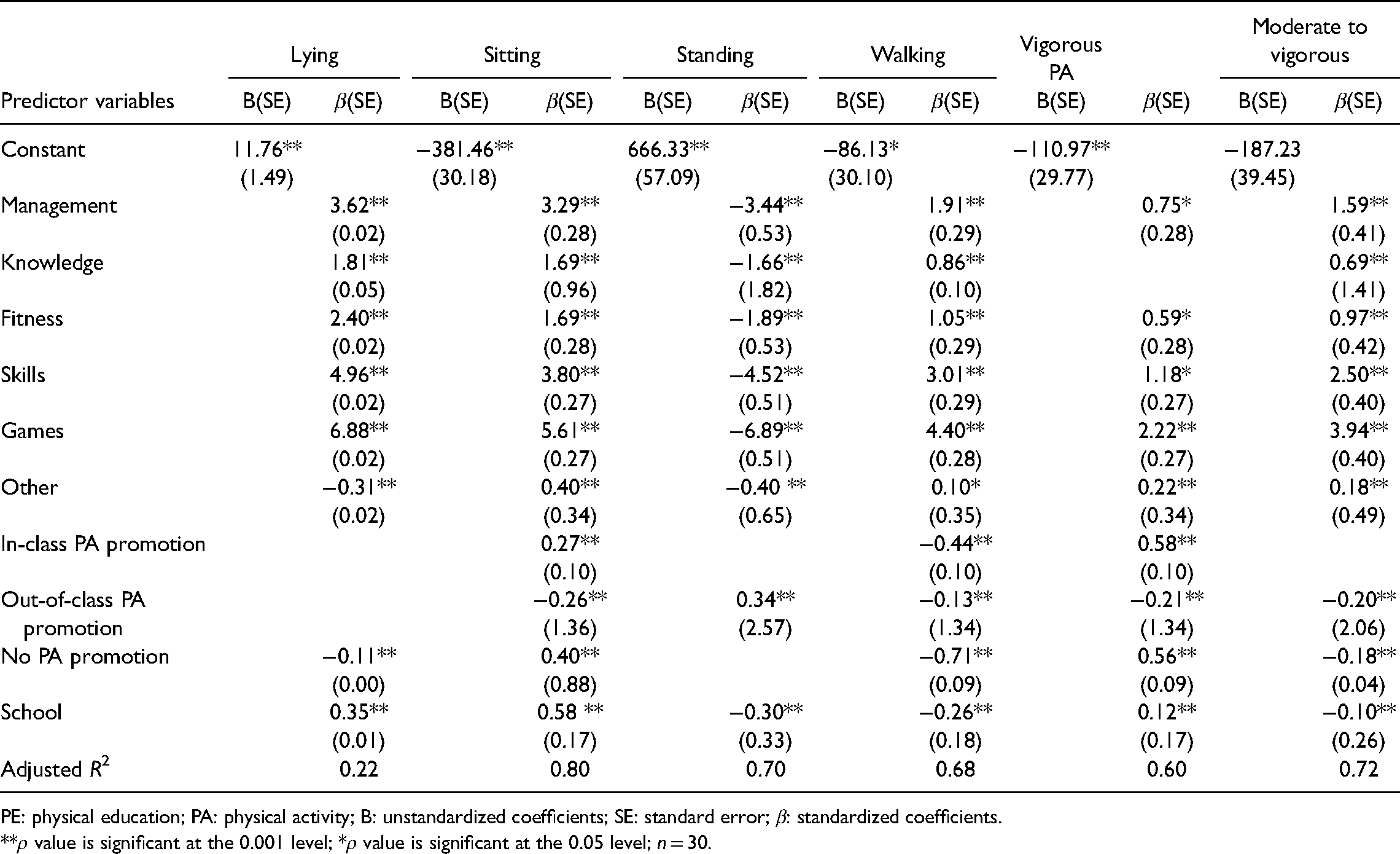
PE: physical education; PA: physical activity; B: unstandardized coefficients; SE: standard error; β: standardized coefficients.
**ρ value is significant at the 0.001 level; *ρ value is significant at the 0.05 level; n = 30.
Barriers to implementation of PE
Qualitative data included interviews from grade five generalist classroom teachers (n = 20) who were required to deliver PE. The main themes, sub-themes (with frequency counts) and exemplar meaning units are presented in Table 5. The three main themes from the data were: teacher-related barriers; student-related barriers; and school/institution-related barriers.
Teacher perceived challenges and barriers to physical education (PE) delivery.
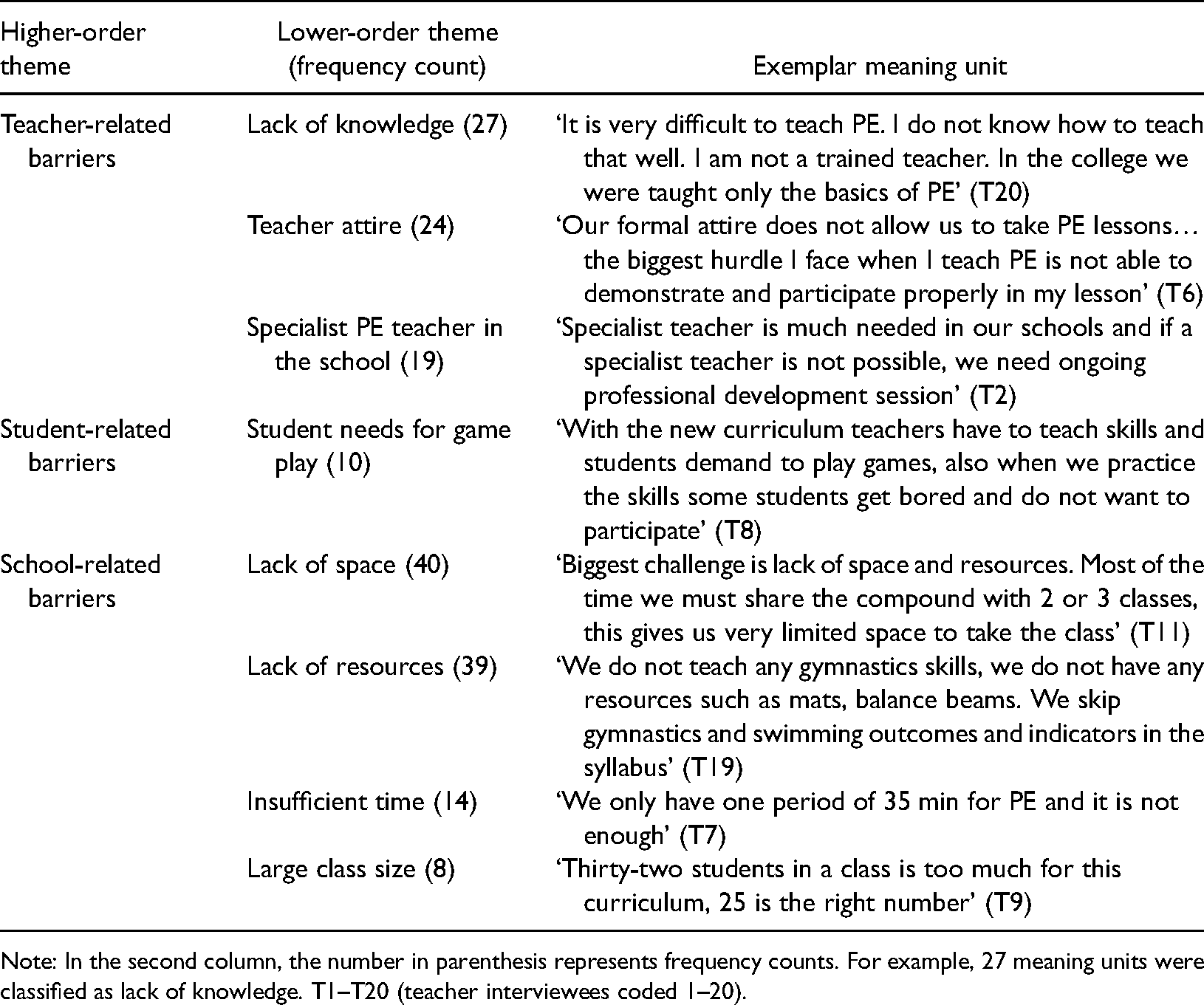
Note: In the second column, the number in parenthesis represents frequency counts. For example, 27 meaning units were classified as lack of knowledge. T1–T20 (teacher interviewees coded 1–20).
Teacher-related barriers
From the first higher-order theme (see Table 5; teacher-related barriers), three distinct lower-order themes are reported. These sub-themes reflected: (1) teachers’ lack of knowledge (low confidence and ability to teach PE); (2) teachers’ attire (formal attire hinders the delivery of PE lessons); and (3) teachers’ requests to have specialized teachers to teach PE.
Lack of knowledge
All the teachers interviewed expressed concern for lack of knowledge to teach PE and an associated low confidence level. Teachers feared that the students know more than them. This resulted in uncertainty in their aptitude to teach PE and questioning their effectiveness. For example, one teacher expressed: ‘I am not comfortable to teach PE without knowing the content, and I always fear I might teach something incorrectly’ (T12). Another teacher highlighted: ‘students know more than me when I teach soccer skills, and I always fear I might teach something wrong’ (T16). The outcome of these perceived inadequacies was highlighted by a teacher confirming: ‘when I do not have the knowledge, I feel students would take advantage of us and it is very difficult’ (T9).
Teacher attire
Meaning units in this sub-theme reflected teachers’ discomfort and ineffectiveness of delivering the PE lesson in formal classroom attire. For instance, one teacher commented: ‘I cannot properly conduct the lesson in the formal attire’ (T13). Another teacher described: ‘taking PE classes in our normal school dress code makes us very uncomfortable and sweaty’ (T5). The perceived importance of this issue was identified: ‘… we have requested from the school management that if we could come in a comfortable shoe and a shirt to take PE lessons or wear a sports attire on the days’ (T20).
Specialist PE teacher in the school
Most teachers preferred a specialist PE teacher to deliver PE. While the majority wanted specialists to deliver lessons, others would seek mentoring to enhance their own PE outcomes. For example, ‘I believe we need at least one specialist PE teacher in school, so that we can obtain guidance and clarify the doubts we have when taking lessons’ (T3). Another teacher highlighted: ‘students will get the real benefit of PE by having a trained specialist teacher in the school’ (T15). Similarly, another teacher commented: ‘the classroom teachers who are teaching are not knowledgeable, so it is important to have specialist teachers in the schools’ (T4).
Student-related barriers
The distinct theme of ‘game play’ emerged in the teacher perceived student-related barriers to delivering quality PE. While students are highly motivated and enjoy PE, some perceive PE as for game play as opposed to learning skills and following curriculum content. Such perceptions have potentially been facilitated by some classroom teachers consistently delivering game-based lessons ‘for years’ in response to an inability or unwillingness to specifically focus on skill and knowledge development.
Student needs for game play
Despite a mandated PE curriculum, some students consistently demand game play (especially soccer for boys and netball/handball for girls). Teachers perceive pressure to accommodate all dimensions: ‘we have to practice skills, give time to play games during 35-minute periods, and if there is no game play, students will be very unhappy’ (T16). Another teacher commented: ‘students do not realise that we have a curriculum to follow and content to teach like other subjects’ (T8). In the absence of games, teachers suggested: ‘some students do not want to participate’ (T18). Additionally, another teacher highlighted: ‘students always want to play vigorous sports. We do not have time to play sports and practice skills as it takes time to come to the playground from the fourth-floor classroom. We only get 15–20 minutes to teach skills, and there is no time to play games or vigorous sports’ (T1).
School-related barriers
Four distinct themes are reported with respect to school-related challenges teachers perceive when delivering PE lessons. These indicators broadly reflected: (1) lack of space; (2) lack of resources; (3) insufficient time allocated for PE periods; and (4) large class sizes.
Lack of space
The schools in the capital of Male’ have a relatively small sand-based area or artificial turf, no larger than the dimensions of a basketball court to be shared for all school activities. One teacher commented: ‘due to lack of space in schools, or sometimes sharing the compound with multiple classes, teachers cannot conduct the activities they want in a lesson’ (T3). Emphasizing the lack of space, one teacher lamented: ‘…sometimes I have to take basketball dribbling lessons in the school corridor’ (T7).
Lack of resources
Meaning units related to insufficient resources impacting learning outcomes included: ‘if we take a lesson on skipping, we have to share the skipping ropes with students and cannot maximise the time students spent on practising the skills’ (T7). Another teacher also commented: ‘it is challenging to teach PE, we do not get the resources we need, sometimes we have to share a few balls with the whole class, and there is a longer wait time to practice skills’ (T1). Not only is the volume of equipment an issue, so is the quality: ‘most of the time balls are worn out, and it does not hold enough air, or sometimes the equipment is broken’ (T4).
Insufficient time
The teachers agreed allocating one period of 35 min per week for PE impacts the learning experience: ‘… not enough (time) to develop skill or fitness improvement in children’ (T8) and ‘… is insufficient to practice skills and cover the curriculum content’ (T2). Teachers were also concerned about logistical inefficiencies: ‘from a 35-minute period we lose time to come to the playground as our classes are on the 4th floor’ (T16).
Large class size
The final sub-theme was related to large class sizes. Generally, classes comprised 32 students with this considered: ‘… too much for this curriculum and I feel 25 is the right number’ (T15). The need for differentiation was also noted: ‘having 3–4 special needs students in the class with 32 students in total, it is difficult to manage by one teacher alone’ (T9). Meeting the curriculum requirement and continuous assessment for students was perceived by teachers of large and diverse classes to be particularly challenging.
Discussion
Maldives primary school children were allocated 35 min of PE every week. The average MVPA (31.05%; 7.95 min) did not meet the HOPE framework target: MVPA >50% during PE lessons (Sallis et al., 2012); 60 min of PA per day (World Health Organization, 2020); and was significantly below recommendations of 150 min per week (SHAPE America – Society of Health and Physical Educators, 2015). The level of MVPA is below that of English primary schools (Powell et al., 2019). When compared to the Maldives (games = 35.53%; knowledge = 5.43%), generalist teachers in English primary school PE allocated less time to games (29.2%) and more time focused on developing knowledge (20.7%; Powell et al., 2019). Interestingly, generalist teachers in Vietnamese elementary schools allocated half the time of Maldives schools to engaging in MVPA (15.5%; To et al., 2020). Potentially, Vietnamese generalist teachers accessing relatively low MVPA is in accord with PE classes adhering to a teacher-centred military format (To et al., 2020). Maldivian generalist teachers spent the least time providing knowledge to students when compared to generalist teachers in England and Vietnam. This may reflect teachers’ concern for a lack of knowledge. Nevertheless, when MVPA is compared in the three countries, it appears that generalist teachers elicit lower levels of MVPA than that recommended (MVPA >50%; Sallis et al., 2012). When compared with PE and school-based PA recommendations, Maldivian children who undertake insufficient leisure-time PA (81.9%; Guthold et al., 2020) and are potentially overweight (15.8%; World Health Organization, 2019), are provided inadequate opportunity to garner significant health benefits from PE. Moreover, the lack of PA promotion in PE lessons further heightens concern and does not meet the overarching goal of MVPA >50% during PE lessons prescribed in the HOPE model. Physical inactivity affects at least 20 of the most deadly chronic disorders and exercise is considered an easily accessible and cost-effective antidote (Buru et al., 2020). In sum, the evidence detailed in this study does not support an optimistic activity-related healthy future for Maldivian youth.
By analysing quantitative and qualitative data, this study provides insights into barriers Maldivian primary school teachers encounter when aiming to meet MVPA recommendations during PE. The challenges are discussed according to the three main higher-order themes: teacher-related barriers, student-related barriers, and school-related barriers.
Teacher-related barriers
As highlighted in the qualitative data, teachers perceived their lack of confidence and knowledge were barriers to optimising children's MVPA levels. These findings support previous research, reporting that generalist primary school teachers have low confidence to teach PE (Morgan and Bourke, 2008). Additionally, if a teacher declared confidence to teach PE, their confidence was limited to a small selection of activities (Dyson et al., 2018). The teachers’ lack of confidence is the underpinning for their desire to have PE specialists in the schools to teach PE. Most of the teachers were uncertain if they were delivering the content correctly or agreed that PE trained specialists would teach the lesson more effectively than classroom teachers. However, previous research has identified that a specialist does not always guarantee a quality developmentally based programme (Morgan and Hansen, 2007). There is considerable debate regarding PE specialist versus non-specialist teachers in primary schools, confirming that a specialist is not an answer to all concerns (Telford et al., 2016). Nonetheless, Curry (2012) argues that specialist PE teachers have the knowledge and skills to provide positive and worthwhile experiences and ensure all children are exposed to quality PE programmes. In a recent study by Abdulla et al. (2021b) reporting Maldivian primary school generalist teachers’ confidence and motivation, teachers acknowledged the role of CPD to enhance their capacity to deliver quality PE lessons. With an appetite for CPD, there appears scope to alleviate concerns for the unilateral employment of PE specialists and to upskill extant teachers with PE-specific knowledge and enhance confidence to deliver PE. PD is an essential part of the HOPE curriculum and it must also involve extended time and focused engagement (Metzler et al., 2013b).
In contrast to PE in other countries, Maldivian primary school teachers are not permitted to wear activewear. Not only is it perceived as culturally unacceptable, but the schools also detail a strict dress code for teachers, requiring them to wear formal attire at all times. While it is proposed that teacher clothing supports the PE learning environment (Rink and Hall, 2008), in this study, most teachers raised teacher attire as a barrier to teaching effective PE lessons. Additionally, Maldives’ primary school teachers are almost exclusively Muslim females. Therefore, the majority of the female teachers’ dress code includes full-length dresses, veils or head scarfs and high heels or formal shoes. Bradford and Hickson (2017) reported that when teachers wear non-activewear, students perceive them as unable to demonstrate skills, uncaring about the subject area and teaching in an unsafe environment. In this study, the teachers have raised concerns about the difficulty of demonstrating the skills and inability to participate in the lessons. Worthy of note, primary school teachers may not have the time to change into activewear during their school day. With teachers expressing a need for policy review, it would appear prudent for school management and the MoE to consider strategies to support teachers to mitigate this PE-attire barrier. These are essential considerations to potentially enhance the children's PA level and teacher participation during PE lessons.
Student-related barriers
According to the teachers, some students perceived PE as a game play period as opposed to an opportunity to practice skills and gain knowledge for lifelong PA (an objective of the MoE curriculum and HOPE). Potentially, children are motivated to play games as they only get the opportunity to be physically active in a single PE period. Primary schools in Male’ are generally overcrowded with a student population ranging from 800 to 2000 students, and school sessions occur twice daily. Schools do not provide recess or lunchtime breaks for students to engage in any form of PA. Having only 35 min of PE per week, according to the teachers, students look forward to engaging in their activity of choice.
Research suggests that students have a positive attitude towards PE if it is fun, enjoyable and if they like the activity offered (Linda Rikard and Banville, 2006). Due to limitations, including both human and environmental, PE offered in the Maldives may not be fostering the promotion of an active lifestyle (Guthold et al., 2020) and positive attitudes towards activity (Foley et al., 2020). For an inactive community (Guthold et al., 2020), there appears an opportunity for PE practices offered in Male’ schools to further influence children's attitudes, which could successively affect PA behaviour (Kretschmann, 2015; Linda Rikard and Banville, 2006; Sparks et al., 2015). The time children actually spend in Maldives PE (25.46 min) represents <20% of global recommendations (Hardman et al., 2014). It appears paramount to not only increase the number of PE periods offered in primary schools, but to also support teachers to enhance the PE-related outcomes to facilitate children's motivation and attitudes for lifelong health.
School-related barriers
The third central theme was lack of space and resources, insufficient time for PE, and larger class sizes. Schools in Male’ operate in a unique context, even when compared with the schools in the rest of the Maldives. The land area in the capital of Male’ is 1.8 km in length and is occupied by more than 100,000 people or one-third of the Maldives population (Ali, 2017). Lack of physical and intellectual resources and a demanding population have resulted in double-session schools (Mohamed, 2013). The four schools involved in this study offered double-sessions, potentially reflecting overcrowding. Compared to single-shift schools, the duration of each teaching period in double-session schools is shorter (Sidhu, 1996). Therefore, to provide curricular and co-curricular activities, double-session schools are restricted with time and space. Regardless of the shorter work hours for double-session schools, Yadav (2005) describes the curriculum and syllabi to be covered as the same for both single- and double-session schools. Hence, additional infrastructure is required to overcome the space challenge teachers experience when delivering PE lessons. Under the Holistic Education Policy, the current government policy pledges that all schools will be changed to single-session schools (Ministry of Education and Ministry of Higher Education, 2019).
Teachers have raised concern for unavailability of resources and/or equipment to teach PE lessons. It is essential for the teachers to be creative and improvise with equipment. For example, using similarly shaped or sized pieces of equipment if appropriate quantities of resources are not available (Mowling et al., 2004). The school administrators are encouraged to prioritize PE equally to other academic subjects and support teachers to prepare for PE lessons with equity to all subjects. Additionally, schools could develop partnerships with local PA clubs and create opportunities for students to be active inside and outside of schools (Faber et al., 2007). The current curriculum recommends 25 children (Ministry of Education, 2014) to be allocated to a class and therefore student distribution could be assigned accordingly. PA aids in children's psychomotor, cognitive and social development (Sallis et al., 2012). Therefore, an increase in the time children engage in PA inside and outside the school will not only assist to combat rising overweight and obesity issues among children in the Maldives (Guthold et al., 2020) but access multiple personal and social outcomes.
The HOPE curriculum model emphasizes the significance of the surrounding environment for promoting PA and other health-enhancing behaviours among school-aged children (Metzler et al., 2013a). Consistent with this goal, a community-based approach is recommended. That is, parents, teachers, administrators, allied professionals and organizations in the local community should work collaboratively to achieve the HOPE defined targets (Metzler et al., 2013b). Currently, 35 min of PE per week in the Maldives curriculum is insufficient. Therefore, it is recommended that the MoE considers increasing the number of periods and the number of minutes per week (>150 min) for PE. Additionally, children's MVPA in PE periods is significantly below the recommended HOPE model. In response, teachers need to be supported to increase MVPA in PE classes through CPD programmes to enhance CK and PCK.
Limitations
It is acknowledged that assessing four primary schools, and year five classes only, in the capital of Male’ may not provide a comprehensive picture of PA levels in Maldives PE. Also, potential seasonal PE variations were not assessed. An additional limitation is the potential for reactive non-standard behaviour of both children and teachers in response to the researcher observing the lessons. Furthermore, one of the limitations of the SOFIT protocol is the focal child is observed for 10 s, followed by 10 s allocated to the researcher recording. Therefore, activity levels were captured for half of the lesson and this could potentially influence the estimate of MVPA.
Conclusion
The fifth-grade PE programme offered in the Maldives primary schools provides little MVPA. Furthermore, the physical fitness objective, which aims to lay a strong foundation for participation in daily activities through games and skill development provided in the syllabus, is not met. The programme's implementation is negatively affected by teachers’ lack of knowledge and confidence, attire and lack of space and resources.
Suggestions for future studies include incorporating views from policymakers, parents, students and having diverse schools (e.g. international/private) to provide a more comprehensive picture of PE. It is also vital to examine student motivation and engagement within PE classes in the Maldives. Despite the benefits of long-term PA participation, many young Maldivian people lead inactive lifestyles (Watson et al., 2017). Recommendations based on the findings of this study include: (1) provision of CPD and intervention programmes for teachers to enhance their confidence, motivation and effectiveness in teaching PE; (2) permission for teachers to change into activewear on the days they have PE; and (3) increase the number of periods for PE per week. In sum, to facilitate healthy active lifestyles for primary school students on this relatively resource-limited city of Male’, additional quality PE for all is critical.
Footnotes
Acknowledgement
We sincerely thank all the students and schools who took part in the study.
Declaration of conflicting interests
The authors declared no potential conflicts of interest with respect to the research, authorship and/or publication of this article.
Funding
The authors received no financial support for the research, authorship and/or publication of this article.
