






Abstract
The purpose of this paper was to examine Irish Physical Education teachers' views on curriculum change at the beginning of its implementation stage, with a particular focus on revision to the Physical Education curriculum and the new Wellbeing programme. In the light of these revisions, teachers were asked to make considerable changes to their beliefs and pedagogical approaches. Teacher change theory provided a lens through which to examine teachers' views. We reimaged the three aspects of teacher change as a triangle or ‘three-legged stool' where the three elements of curriculum materials/resources, pedagogy, and beliefs combine to offer a sense of security to sustain the impending changes. A survey and a series of semi-structured interviews provided data and in total 119 second level Physical Education teachers participated. Analysis was conducted using descriptive statistics of quantitative data and inductive and deductive analysis of qualitative data. Three themes were developed: A Learning Focus, Embracing Change, and Curriculum Enactment. Contrary to recent findings in the change literature, the teachers in this study welcomed curriculum changes as their beliefs aligned with the purpose of the reform of Physical Education. The results indicated that the new curriculum was catching up with teachers’ core beliefs about the purpose of Physical Education. However, in line with recent research, teachers were sceptical about ongoing support for resourcing and continued professional development. In conclusion, the ‘three-legged stool of sustained change has the potential to be unbalanced thereby maintaining teacher buy-in to the new reforms is potentially fragile.
Introduction
Curriculum change is a necessary part of all education systems to ensure they stay alive, relevant, and responsive to evolving national and international contexts and cultural developments (Wallace and Priestley, 2017). While these are positive reasons for change, the reality can be more complex and problematic in terms of teacher buy-in and enactment of curricular changes. In adapting education systems for a new generation of learners and changing local and global contexts, the past decade has seen renewed focus on school level curriculum change worldwide. Teachers are viewed to have the opportunity and agency for translating curriculum policy documents into teachable experiences in the classroom (Wallace and Priestley, 2017). In the Republic of Ireland, a number of educational policy developments have helped to reframe teaching and curricular reform in Irish schools in the last decade; two were of particular importance in this context. First, in response to poor learning outcomes among children, as measured in the Programme of International Student Assessment (PISA) 2009 (Perkins et al., 2010), there was a ‘heightened and more urgent interest in curriculum and teacher education policy in Ireland’ (Conway and Murphy, 2013: 28). The government implemented a National Literacy and Numeracy Strategy through the Department of Education and Skills (DES, 2011) and extended teacher education preparation from three to four years for undergraduate primary teacher education programmes, and from one to two years for completion of primary and secondary Professional Masters in Education teacher education programmes. The timing of these ministerial decisions, announced in the middle of a national austerity crisis, meant limited resources were available to support the implementation of new programme and staffing demands. Second, following the 2009 PISA scores, government directives to the National Council for Curriculum and Assessment (NCCA) led to the approval of major curricular revisions at primary and post-primary grades 1 which had significant implications for teachers and teacher education programmes. Teachers and teacher educators found themselves responding to a plethora of curricular reforms including the introduction of guidelines to support schools in planning and developing a coherent Wellbeing programme (WP) 2 at Junior Cycle level but with limited funding by the government to resource these strategic priorities or supports for teachers and teacher educators (Gleeson et al., 2017).
The purpose of this paper was to examine Irish Physical Education teachers’ views on curriculum change initiatives at the beginning of its implementation stage, with a particular focus on revision to the Physical Education curriculum within the new WP. These initiatives were timely in the specific context of Physical Education as this was the first curriculum change for 13 years and brought Physical Education from the margins of the curriculum (MacPhail et al., 2008) to be positioned as a central curricular component of a school's WP within the students’ Junior Cycle experience. We wanted to capture the thoughts and perceptions of teachers as they embarked on the first stages of professional development in preparation for enactment of the new curriculum.
Post-primary school Physical Education in Ireland
Irish post-primary school Physical Education underwent, and continues to undergo, significant redesign as part of an active educational reform context. The focus in the Irish system on ‘more nuanced and less-formulaic’ learning (MacPhail et al., 2018: 177) and developmental experiences in Physical Education was realised with a new Framework for Junior Cycle (DES, 2015). It sought to provide a quality, inclusive, and relevant education to meet the needs of all Junior Cycle (JC) students. The Framework for Junior Cycle placed students at the centre of the learning process, enabling them to participate actively in their communities and in society, and supporting them to be resourceful and confident students in all aspects and stages of their lives. Learning in all subject areas (including Physical Education) is set out in terms of statements of learning, which describe understandings, skills, and values students should be able to demonstrate at the completion of this three-year cycle of education.
In terms of curricular options for Physical Education within the WP, schools had the option at that time of using the Junior Cycle Physical Education (JCPE) syllabus (DES, 2003) or undertaking the recently developed short course in Physical Education (NCCA, 2016) as the basis of their PE programming. The introduction of wellbeing as a curricular area of learning at JC (NCCA, 2017a) placed a strong emphasis on Physical Education's role in supporting
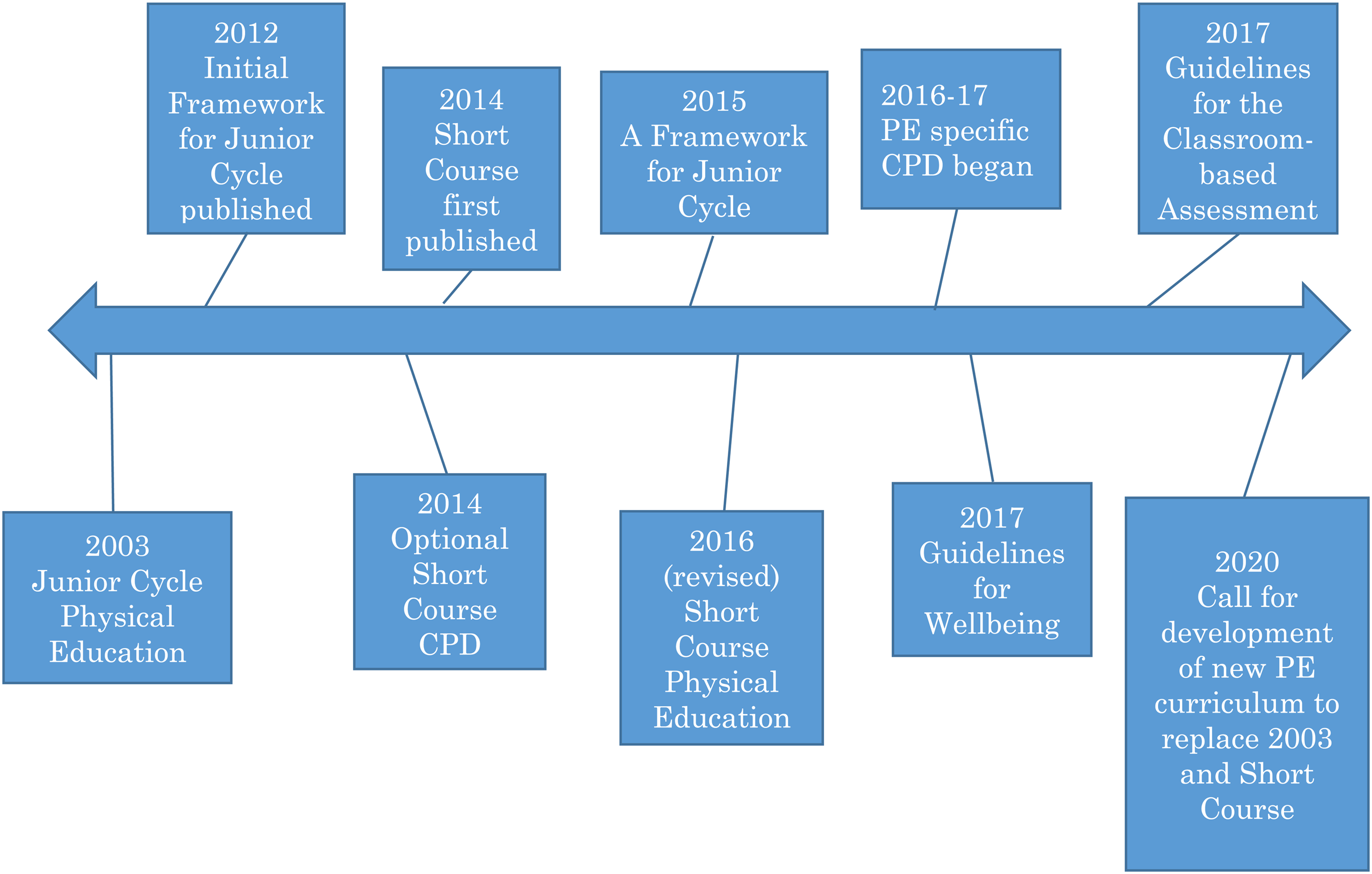
JC Physical Education curriculum timeline.
Role of teachers in enacting curricular change
Curriculum enactment is a dynamic and on-going process that involves teachers navigating policy frameworks to provide success for individual pupils (Simmons and MacLean, 2018). There is considerable literature on curriculum reform in Physical Education and the findings suggest strong potential for slippage (Curtner-Smith, 1999; Penney and Evans, 1999) between what curricular documents intend and how different schools enact the curriculum. According to Curtner-Smith (1999), the factors which influence teachers’ knowledge and interpretations, and enactment of new curriculum are: (a) personal perceptions and interpretations of the new curriculum, (b) personal experience, (c) gender, (d) personal participation in sport and physical activity, (e) experiences during Physical Education and school sport, (f) initial teacher education, (g) other teachers, and (h) situational constraints. A key conclusion of his analysis was that the introduction of a new curriculum did not necessarily result in a transformation of the values and beliefs guiding teachers’ practices. Most teachers tend to interpret curriculum conservatively and adapt it to be congruent with their existing perspectives and ideologies (Curtner-Smith, 1999).
This policy slippage is evidenced in studies internationally. MacPhail (2007) found this slippage when she examined teachers’ views towards a curriculum innovation in Scottish secondary school Physical Education (i.e. Higher Grade Physical Education, HGPE). More recently, Thorburn et al. (2011) and MacLean et al. (2015) noted a similar concern based on their analysis of the potential contribution of Physical Education to the new Scottish ‘health and wellbeing’ curriculum. These were examples of how policy is enacted by PE teachers in high stakes assessment contexts. In Australia, Macdonald (2013) interrogated the strengths and weaknesses of curricular change in the acceptance and enactment of a new Australian Health and Physical Education (HPE) curriculum. Policy work by Chan (2012) introduced the concept of ‘soft policy’ that denotes a less formal/compliance approach to curricular reform with the ‘use of non-binding instruments such as guidelines, informational devices’ (p. 372). Lambert et al. (2020) highlighted the importance of artefacts (production of guidelines and resources for assessment and curriculum planning, often web-based) as a key factor in how policy is enacted by teachers in their local contexts. These were similar to factors at work in the Irish context with the development of teacher decision-making among local learning communities and investment in such resources generated for and by teachers.
The evidence suggests teachers are key facilitators in curriculum change and thereby make an invaluable contribution to the reform process through the adaptation of curricular materials to fit their beliefs (Curtner-Smith, 1999) and local contexts (Kirk and MacDonald, 2001; Simmons and MacLean, 2018). Their professionalism, dedication, and desire to work for the benefit of their pupils, was key in enacting the principles of any new curriculum (Simmons and MacLean, 2018). Cothran's (2001) study of US Physical Education teachers showed that when teachers are provided with opportunities to meet regularly with others, gain new knowledge, and reflect on their programme and the needs of their students, teachers can make change. One facilitator of curricular change, which proved refreshingly ubiquitous, was the values and beliefs that underpinned teachers’ understanding of their job. Teachers highlighted the importance of collaborative approaches when working under a new policy framework, proposing that discussion and collegiality with teaching colleagues were key factors in refining the course to suit their local contexts. In general, the research suggests that Physical Education teachers are presented in these studies as agents with power to enact (or not) new curriculum and change their daily teaching practice.
Embracing curriculum reform and making it work in the classroom hinges on teachers’ understandings and capacities to embrace those changes and it is widely acknowledged that those beliefs play a critical role in the successful enactment of teaching practices (Tsangaridou, 2006). Transformational change may be the aim of educational policy designers and professional development facilitators, but while Physical Education teachers act as agents of change, translating and adapting curricula to fit within the unique contextual school settings, there is a need for leadership and guidance to buttress teacher decision-making and we need to know much more about how this happens (MacLean et al., 2015).
Teachers as change agents?
The change necessitated by the JC curriculum reforms in Ireland represented system level changes at the school level. Yet, changing a school's learning environment is a complex process and does not happen rapidly (Fullan, 2007; Martin et al., 2014). Several factors exacerbate this complexity (Spillane et al., 2002) including teachers’ understanding of the changes required, the knowledge they have of the changes, and the perceived potential value of the changes. The Framework for Junior Cycle reflects a prime example of these complexities requiring a fundamental shift in teachers’ conceptions of learning, teaching, assessment and reporting, and instruction including the aims of Physical Education. This re-conception requires teachers to change, but while some teachers embrace change, teachers also can and do resist the kinds of changes presented in policy documents to reflect their own sense of values and what they consider feasible and appropriate in their local contexts (Curtner-Smith, 1999; Richardson, 1998).
The curriculum revisions for Physical Education in Ireland followed a phased process with various forms of consultation preceding enactment of the curricular changes and continuing professional development (CPD) during enactment. While there was widespread teacher consultation around the changes to the curriculum, not all teachers or principals could or did engage with the process. The NCCA development groups prepare curriculum frameworks and specifications and membership of these groups is made up primarily of teachers who represent various professional entities (e.g. teacher unions, school governance, parent organisations, and teacher education departments). The NCCA Education Officers who lead the development groups are former teachers, who conduct various forms of consultation with cohorts of students, teachers, the Physical Education teachers’ professional association, and facilitate enactment of pilot aspects of the curriculum with schools to ensure authenticity and appropriateness of the changes (e.g. assessment strategies, new curriculum activities, pedagogical strategies). The process is expensive, time consuming, and not always viewed as transparent as some stakeholders are not able or willing to engage in the process (MacPhail, 2015).
The Framework for Junior Cycle required teachers to employ new teaching practices, and adopt collective approaches to assessment and reporting, which required a shift in beliefs for many teachers about the role of Physical Education. Despite consultation with teachers in multiple workshops across the country, overall changes to the JC curriculum represented an initiative of government to address what were viewed as shortcomings in the Irish education system. Top-down models of curricular change have been highly criticised by scholars as imposing change that lacks teacher involvement (Curtner-Smith, 1999; Darling-Hammond, 1990; Kirk, 1990). Some scholars contend such an approach may prevent real change from occurring as teachers adopt innovations to survive, while resisting the new changes in which they do not believe (Sparkes, 1990). In studies of the enactment of the top-down National Curriculum Physical Education (NCPE) in England and Wales, teachers adapted, recreated, or modified curriculum to fit their beliefs and values while limited changes in pedagogical practices were noted (Curtner-Smith, 1999; Evans and Penney, 1995). In the Irish context, there were important differences. Teachers made up the membership of the NCCA leading on the curricular reforms. They were also informed by international research on educational change, engaged in extensive consultations with the education partners (i.e. teacher unions, teachers, teacher educators, and school leaders), and piloted aspects of the work in schools throughout the curriculum development phases.
Teacher change theory (Fullan, 2007; Sparkes, 1990) provides a useful framework to examine the enactment of the JCPE curricular changes. Fullan (2007) indicated improvement (or change) occurs when teachers gain new ‘meaning’ in relation to curriculum materials, teaching and assessment practices, and/or beliefs and understandings. Similarly, in Physical Education, Sparkes (1990) noted teacher responses to curricular reform occur on three levels. First, teacher responses may include the use of new or revised materials such as curriculum materials or technologies. Second, changes can involve teacher enactment of new pedagogical skills and teaching approaches (i.e. new teaching or assessment strategies or new curricular content). Finally, changes may include the alteration of teacher beliefs (changes effecting beliefs and understandings about their role in the proposed change). The latter change involves ‘real’ change as it has the potential to challenge core values held by education professionals regarding the purpose of education (Curtner-Smith, 1999; Fullan, 2007; Rovegno and Bandhauer, 1997). Sparkes (1990) suggests movement toward deeper levels of change is extremely difficult. Yet, unless there is significant movement on all three levels (materials, teaching approaches, and beliefs), change may be superficial and/or not sustainable.
This argument supposes that an alteration of teacher beliefs represents the most difficult element of curricular change and exemplifies what has been referred to as fundamental (Fullan, 2007) or ‘real change’ (Sparkes, 1990). Parker et al. (2015) suggested this type of teacher change is most effective when teachers have a voice and ownership in the change process and in return may result in a change in teacher beliefs. In the case of this project, teacher change theory provided a lens to understanding current changes within Irish Physical Education at the JC.
Methods
Participants and setting
After Institutional Ethics and Junior Cycle for Teachers (JCT) 4 approval were received, the data were collected in two phases: a national survey followed by one-to-one interviews. Phase one occurred in late 2017 and consisted of an online survey sent to electronic mailing lists of the: (a) JCT for Physical Education teachers who had participated in or were registered for JCT professional development sessions regarding the revised curriculum and (b) the post-primary teachers’ Physical Education subject association of Ireland. It was impossible to know the extent of the duplication of names within and between the mailing lists or the accuracy of; therefore, the exact number of viable respondents is not known. In the end, 107 unique responses to the survey were received. Fifty-seven percent of the respondents were female and 43% were male. Respondents held different and often multiple roles within the Irish education system. Eighty-seven percent described their current role as a practicing Physical Education teacher, 42% held the role of Physical Education Coordinators, 29% were members of their school Wellbeing team, while 10% hoped to be a member of the Wellbeing team. Three percent of the respondents were school deputy principals or associates 5 for the JCT. Thirty-six percent had five or fewer years teaching experience, 22% had 6–10 years teaching, and 40% had 11 or more years teaching experience. Of note was that the large minority (40%) of these respondents had been teaching for less than two years in their current school while 27% were in their current school for 11 or more years and 33% were in their current school between 2–10 years.
Phase two followed in the Autumn of 2018 and was a series of one-to-one semi-structured interviews conducted by trained undergraduate researchers. Convenience sampling was used to recruit the 12 participants from the post-primary preservice teachers’ practicum placement schools with a spread across the country. At the time of the interviews all participants were teaching Physical Education and teaching another subject as is typical in the Irish educational system. There were seven male and five female teachers and all had been teaching for more than three years. Four teachers had attended one or more of the JCT professional development sessions on the curricular change.
Data collection
Phase one, a survey, designed by university teacher educators and JCT Physical Education leaders in the professional development support service was administered through a free online survey software. The survey sought physical education teachers’ views on JC curriculum changes with a particular emphasis on Physical Education and the new WP. We sought to determine what teachers knew about these changes and the degree to which they had engaged in the consultation and implementation processes. Quantitative and qualitative data were generated through questions designed to ascertain teachers’ knowledge and views of the changes at JC. The survey consisted of six sections designed to gather demographic information, views about Physical Education and implementing change, and the teachers’ knowledge of JC Curricular Framework and Physical Education short course. Questions were on a five-point Likert scale from ‘strongly agree/support’ to ‘do not agree/support’. A few open-ended questions on these topics, such as ‘In your opinion, what are the main goals of the short course in Physical Education within the Wellbeing Learning Area?’ and ‘In your opinion, what are the main strengths of the Framework for Junior Cycle?’, were included.
Phase Two built upon the survey findings. The interviews entailed a series of questions relating to participants’ perceptions of the JCPE reform. Similar to the survey questions, interview topics sought demographic information, teachers’ views about Physical Education and implementing change, knowledge of JC Curricular Framework and Physical Education short course, and professional development opportunities of which the teachers had availed on the reform agenda. An interview script (Patton, 2015) guided all interviews enabling participants the opportunities to explore their perceptions and experiences of the Physical Education curriculum reform. For example, questions about teachers’ opinions on the advantages/disadvantages of the reform, ‘Do you feel there are any advantages for PE of the new Junior Cycle reform, or are there any disadvantages that you perceive?’ were asked. Other questions focused on specific aspects of the reform, ‘Can you talk specifically about your opinions on assessment in PE? How much do you use assessment processes when teaching PE to Junior Cycle?’. Individual interviews lasted between 25 and 40 min, were taped, anonymised, and transcribed verbatim.
Data analysis
Quantitative data from the survey were analysed using descriptive statistics that provided general summaries and trends used to contextualise the qualitative data. Qualitative data were analysed inductively using open, axial, and selective coding (Corbin and Strauss, 2008), A deductive analysis was also completed using a priori codes sourced from the literature and an analysis of the survey data. After the researchers familiarised themselves with the data, each read specific sections and brought their findings to the entire group where patterns and themes were identified. Trustworthiness was established through methodological and investigator triangulation (Denzin, 2017). In the results, teachers’ quotes from the survey are indicated by T followed by a number (i.e. T3) with pseudonyms used for quotes from the one-to-one interviews.
Results
Three themes, Learning Focus, Embracing Change, and Curriculum Enactment, were constructed to reflect the teachers’ views on JC change with a particular focus on Physical Education and the new WP.
Learning focus
The new Junior Cycle Physical Education curriculum moved from organising student learning through seven physical activity areas to a focus on statements of student learning. Further, the Physical Education programme was now mapped to Wellbeing indicators (NCCA, 2017a: 78–80) and ‘statements of learning’ and ‘key skills’ in the JC Curriculum Framework. Significantly, this new learning focus was a key theme in the teachers’ data. Three subthemes reflected what teachers knew and valued about the focus on student learning outcomes in the revised Physical Education curriculum.
A move from content to learning
A key shift for teachers with this new curriculum framework was away from a focus on content to a focus on planning for key learnings in Physical Education. This move ‘from a content to learning focus’ reflects teachers’ acknowledgement that learning is now the most important goal for teachers. More than 80% of the teachers surveyed agreed that a learning outcomes approach allowed the Physical Education curriculum to better support the WP and the JC Curricular Framework. Teachers noted the need for reform, as the new framework sought to move away from rote learning to active learning. They acknowledged as positive the shift to a more student-centred approach with assessment and reporting providing opportunities for students to ‘recognise their own capabilities [and develop] … awareness of their own learning and wellbeing’ (T30). Across the data, teachers acknowledged the centrality of student reflection, increased student responsibility for their own learning, and a focus on students’ health and wellbeing rather than on sports and games technique and strategy.
Choice
A second subtheme acknowledged more choice for both students and teachers in support of student learning. For these teachers, student learning gained more prominence in the new curriculum in Physical Education with more ‘freedom for teachers and students to participate in unusual [non-traditional] subjects/strands of learning’ and allowed ‘schools to personalise the JC to the needs and uniqueness of their school’ (T15). Teachers saw the new curriculum design as a strength, noting the ‘flexibility offered to schools in planning a programme’ (T41) and such ‘diverse options allow for [teacher] interpretation and tailoring to local needs’ (T53). More than 88% of teachers surveyed strongly agreed that giving students opportunities to make informed choices about how to include physical activity as part of a healthy lifestyle was an important element of a quality Physical Education experience. Talking about her views on the choices and flexibility provided by the new curriculum Amy said ‘…just see the importance of healthy choices and healthy lifestyle. It's not just about just doing P.E. It's about preparing yourself for when you get to my age’.
Nature of learning and assessment
A third subtheme reflected the teachers’ perspectives on a new focus on the social and emotional nature of student learning and would contribute very well to the learning objectives of WP. As one surveyed teacher noted: I think Physical Education, as the pillar [of the WP], will help break the stigma of Physical Education as sports and bring to the foreground the other qualities: a broad balanced curriculum can give to students’ learning, enhancing the choices and coping mechanisms for life. (T10)
The changed approaches to both formative and summative assessment highlighted the focus on student learning with attention to the alignment between learning outcomes, learning intentions, and assessments that reflected the students’ learning interests, needs, and achievements. Most teachers supported the formal reporting of student learning achievements; yet, there were some concerns about assessment in Physical Education. Teachers felt that too much attention to assessment of learning would take away from physical activity engagements of students and thus had the potential to negatively impact on their experiences in Physical Education. In addition, teachers noted concerns with their capacity to assess student learning fairly and accurately. Although teachers were allocated professional time (22 h a year) to engage in collective practices including review of student work with a cohort of teachers teaching the same subject, known as Subject Learning and Review (SLAR) meetings, they voiced concerns about their capacity to do their best for their students. As Mary said, ‘I don't even know if people doing it at the minute know what they're looking for. So that, there are huge [teacher learning] challenges in that’.
Embracing change
The second theme reflects how teachers accepted and embraced curriculum changes. The background and context to the introduction of the curriculum reform to JCPE in Ireland impacts on this theme, but broadly the results are positive. Two subthemes reveal what teachers recognised about the relationship between new approaches to student learning, assessment, and the impact these might have on the purpose of Physical Education.
Alignment
The curriculum changes represented an alignment with teachers’ goals and values. There was a sense of agreement with the revised goals of Physical Education. Resoundingly (>90%), the survey respondents indicated the most important purpose of Physical Education was for students to appreciate the health enhancing capacity of physical activity across the lifespan, thus providing opportunities to make informed choices about how to include physical activity as part of a healthy lifestyle. In a nutshell, teachers saw their main aim was ‘To encourage all students to part take in physical activity. It is to help them understand the benefits of undertaking physical activity, motivate them to continue it and provide them with the opportunity to try new activities out’ (T14). Ian connected this belief with his desire to account for the needs of all students: For me, I think my philosophy is to make sure that the students are comfortable and confident with physical activity. So, to get them skilled and then to try and look for different areas for each student, that they potentially might be interested in. There is a need or there was a need to kind of counteract the image of PE as being just games, or being just competitive, or being very team-oriented and [now] having more of a look at the more individual kind of skills that can be developed outside of just a sport.
Status
Teachers noted the potential for the improvement of Physical Education's status in the school as part of the revised Framework for Junior Cycle. They commented that Physical Education would now play a central role in the delivery on the new features of the curriculum like the WP. One teacher summarised the positive approach with, ‘[It will give Physical Education a] higher subject status. It gives the subject a stronger link to the overall aims of the Junior Cycle.’ (T4). They felt the marginalisation they had experienced as Physical Education teachers would change and, ‘[Force] management to support Physical Education as a central to pupil and school wellbeing’ (T39).
Teachers linked more formal assessment (i.e. the inclusion of Physical Education on the Junior Cycle Profile of Achievement (JCPA) 6 for all subjects) with the potential to further improve the status for Physical Education. Ninety percent agreed it was a positive move to have Physical Education included in the JCPA, allowing formal reporting of students’ learning in Physical Education to parents along with all other subjects on the curriculum. Thus, although teachers shared a lack of confidence about conducting assessments, they were confident the introduction of formal assessment would contribute to raising the status of Physical Education in post-primary schools.
Curriculum enactment
The third theme reflecting teachers’ views of the JC Physical Education curriculum changes focuses on teachers’ perceived challenges with enactment of the curriculum reforms. Teachers were sceptical about the logistics of enacting the new curricular framework, lacked confidence as to the necessary supports being available, and admitted not having considered their practice through the lens of the principles of new reforms. While teachers understood the need for change and the benefits for their students, they could not envisage what the changes would look like in lesson planning, classroom practice, or assessment design. Two subthemes reveal the impact of the changes for teachers: 1) personal preparation and 2) local institutional and national support.
Personal preparation
The first subtheme represents the extent to which teachers felt personally prepared for enacting the new curriculum reforms. In the survey more than 78% of those who had engaged with the relevant professional development workshops said they had gained clarity about the key messages regarding Physical Education within the curriculum reform. A significant concern for teachers was around assessment and reporting, and what actions they would need to take to effect change.
While teachers welcomed the principle of assessment in Physical Education, 55% claimed they had not yet developed their assessment and reporting practices for Physical Education. Teachers were concerned about availability of assessment resources especially adequate assessment criteria
7
, and with the practicalities of managing the new formal assessment procedures. They felt least confident about making accurate judgements of student work using the new Physical Education assessment guidelines (NCCA, 2017b). As Caolán indicated: To become confident enough to be able to say definitely when giving feedback to students whether something is good enough or not, or if more is required, and then how to guide them in that way. Ah, so there will be a challenge in confidence, definitely!
Finding adequate time to institute the changes necessary to introduce these curricular reforms was a widely held view among the teachers in what was perceived as an already crowded school day. Despite dedicated professional time for planning and development, teachers who were committed to after school extra-curricular activities such as sports teams and clubs, noted that this would suffer if they needed to ‘place more attention on students completing [formal assessment]’ (T5). Teachers raised the potential for the erosion of physical activity time as a result of more formal assessments in Physical Education. In the survey, teacher 12 captured this concern noting: ‘Students have so little Physical Education time; I would hate to see activity time lost to stationary discussion and analysis’.
Local and national
The second subtheme reflects the extent to which teachers felt supported in the enactment of changes to the Physical Education Curriculum at the local and national levels. In short, the feeling was ‘There had to be changes but I just think it hasn’t been brought in in the right way’ (Shannon). Resourcing was a recurring concern for teachers. They identified gaps in resource provision that would compromise the quality of students’ learning experiences. The following short quotes reflect the teachers’ concerns: ‘Teachers/schools are not being given time to plan appropriately.’ ‘Time, class timetabling issues. Having the pe classroom.’ ‘Facilities - not always having access to your gym or if the weather is bad so you can perform your assessment.’ ‘Depending on the circumstances, being under the wellbeing umbrella could lead to a reduction in time if facilities are not available.’ ‘Lack of knowledge for teachers. Lack of facilities/equipment to provide PE appropriately.’ My concerns would be the facilities, that there are huge facilities and resources, really needed for PE. We have one hall here… ICT is massive; it is a massive part of both senior and junior cycle PE. My fear is that schools won’t have enough ICT resources and materials available to deliver the course.
A lack of time was a reoccurring concern for these teachers. While teachers saw the flexibility of the new framework as a strength, concerns were raised that they had not been ‘given time to plan appropriately’ (T2), and they were unconvinced school leadership would adhere to the newly prescribed hours for Physical Education
8
. At national level, few believed that the Department of Education would reinforce these timetable allocations in any serious way, indicating that ‘schools [were] not adhering to the [currently] prescribed hours and Department [was] not reinforcing it’ (T3). Teachers noted a lack of confidence in the ‘system’ (at school and national levels) to protect recommended hours or provide relevant resources to ensure success. Jack noted ‘the course description and instruction provided have been too vague’. A teacher described the implementation of the reforms: The rollout has been chaotic. Not enough support from unions. Concerns in many cases are legitimate, but have been steam-rolled. Teachers feel alienated from the reform. Not enough resources in place in many schools to support the requirements of new subjects and assessment strategies. Lack of CPD for teachers (depending on union directive for participation in CPD) and ‘teaching in an information vacuum’. In some cases, exemplars of work or assessment guidelines not available in subjects that are currently being rolled out. (T39) I went to the CPD cluster day in […] where I learnt about different teaching, learning, and assessment tools that I can integrate into my teaching. I think with the new short course ICT has the potential to enhance my teaching and students’ learning, we were introduced to various different apps that I can use while teaching and to track student progress throughout the learning experience.
Discussion and conclusion
The purpose of this paper was to examine Irish Physical Education teachers’ views on curriculum change at the beginning of its implementation stage, with a particular focus on revision to the Physical Education curriculum and the new Wellbeing programme. This new Physical Education curriculum represented extensive revision, with major implications for how teachers planned, taught, assessed, and reported student learning. The changes reflected a reorientation of the post-primary school experiences to better support young people. The teachers responded positively to the curriculum revisions embracing a more student-centred focus in curriculum planning and enactment. Supporting such a revision of Physical Education is a major shift for Physical Education teachers from how they have worked and how they were prepared to teach.
For these teachers, the changes to Physical Education represented a new conception of Physical Education and the potential for a more central role in the educational system. This new framework embodied a shift from coverage of a broad range of physical activities to a focus on student learning and ways for students to evidence their learning while enhancing their knowledge and motivation to be physically active for a lifetime. Adhering to teacher change theory (Fullan, 2007; Sparkes, 1990), these changes related collectively to: curriculum materials, equipment and resources, and pedagogical approaches and skills; all requiring changes to teacher beliefs and understandings. Both Fullan (2007) and Sparkes (1990) indicated that true change will not occur until there is ‘movement’ in teachers’ work across all three ‘levels’ of the system (curriculum materials, instructional approaches, and beliefs). In this study the significant ideological change to learning outcomes was welcomed by most teachers and seemed to align with a value system already held by them. While teachers noted support for the student-centred focus of the new specification, there were fewer signals as to their intent to change their instructional practices to meet this changed focus other than their intent to include student choice around curricular content decisions. There was even less evidence they accepted the need for or the validity of the new assessment procedures to demonstrate student learning. New school reporting structures would require that teachers engage with these new assessment procedures and perhaps as they gain these experiences, their capacity and confidence in these issues (e.g. SLARs) will improve.
The literature implies that levels of teacher change are somewhat hierarchical with changes in curriculum materials preceding changes in practice and changes in practice preceding changes in teacher beliefs. In this study, however, the three aspects of change formed more of a triangle or ‘three-legged stool’ (see Figure 2) where all three elements provided a stability to sustain the impending changes. As with a three-legged stool, for these teachers, the JC changes represented the seat of the stool (the foundation for the revision/adoption) with the three legs of the stool representing curricular materials, pedagogical skills and knowledge, and teacher beliefs. The changes in materials, pedagogy, and beliefs were almost simultaneously necessary, but none of the aspects was sufficient alone to support and sustain change. For these teachers if adjustments to one of the elements without the other (i.e. materials, pedagogy, and beliefs) occurred, the ‘stool’ would become unbalanced, or in this case, the curriculum would collapse.
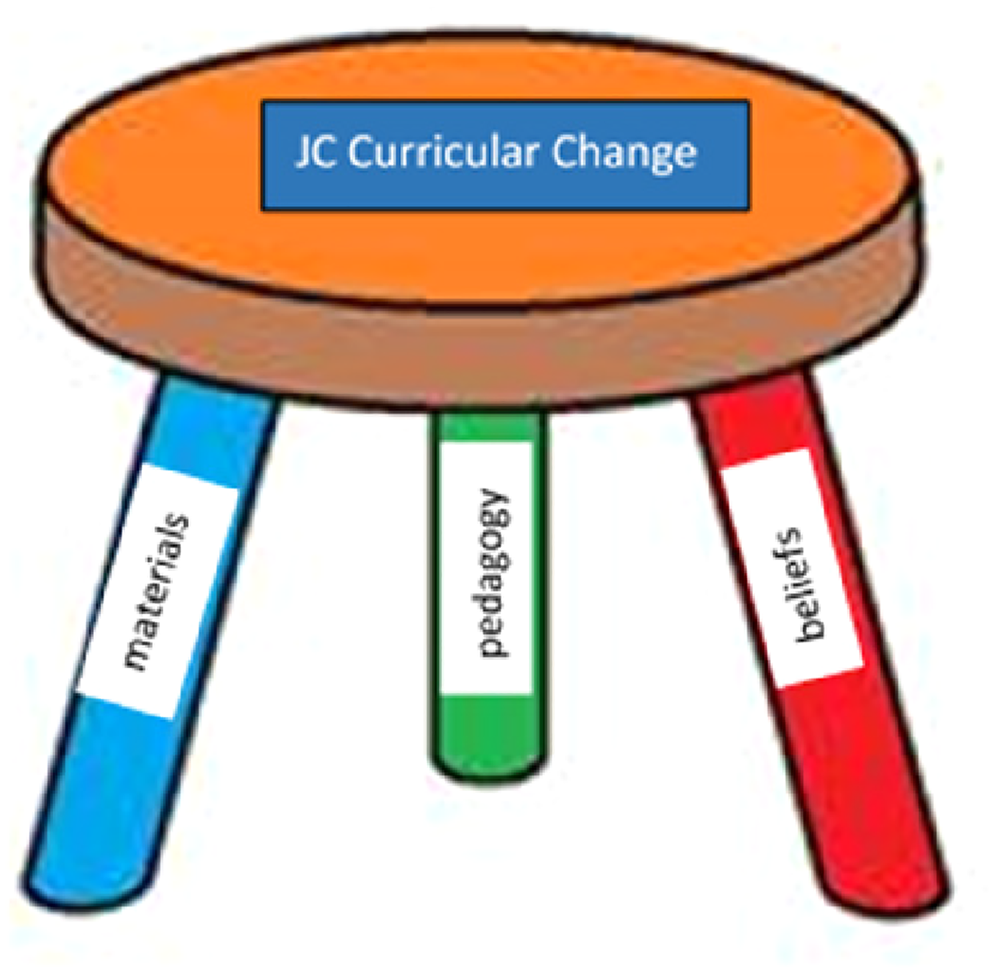
Aspects of teacher change.
While some of the obstacles to the successful enactment of curriculum innovation are the educational beliefs and personal theories that teachers hold regarding teaching and learning, the evidence from this study suggests that conceptually, these teachers did not appear to be encountering the barriers to curriculum change traditionally cited on the subject of teacher change. There seems greater alignment between the participating teachers’ core values and beliefs about Physical Education and the curriculum reforms. The outcomes here are not typical of earlier research findings (Curtner-Smith, 1999; Evans and Penney, 1995; Fullan, 2007), but do mirror those found by Dyment et al. (2014) where Tasmanian teachers welcomed changes to the Outdoor Education curriculum. Consistent with the goals of the Irish Physical Education curriculum, teachers were motivated to encourage students into a lifetime pursuit of physical activity, improving their health and wellbeing through active engagement and a desire to put their students at the centre of learning. The centrality and relevance of teachers’ personal goals sheds some light on the relationship between the teachers’ beliefs about Physical Education and enacting curriculum change. These were still relatively early days in the new Irish JC curriculum framework rollout and the teachers’ apparent buy-in to the changes was yet to be evidenced through any research on curriculum planning and delivery.
The teachers in this study were receptive to the curricular reform efforts. A possible rationale is that the JC reform was actually catching up with teachers’ educational values and beliefs (Wallace and Priestley, 2011). Additionally, teachers were inspired by the belief that Physical Education's position in the system now recognises the value of Physical Education as part of a young person's holistic education. The alignment of Irish Physical Education teachers’ beliefs with the new curriculum reform could however be described as potentially fragile if teachers are not supported in the enactment of these reforms. This has the potential to result in disillusion and even anger as evidenced internationally with the rollout of the Scottish secondary PE curriculum (MacLean et al., 2015).
Consequently, what we have with these findings is more the opposite of recent findings in the literature. We have a cohort of teachers who accepted the reorientation and alignment of their subject to focus on contributing to the education of young people that can only be addressed by Physical Education. They saw this focus as relevant for young people and also an opportunity to position Physical Education as a meaningful and equal contributor to young people's education. The literature (Fullan, 2007; Sparkes, 1990) indicates that authentic and lasting change is more likely to occur if teachers’ beliefs align with the priorities of the curricular reform. If actions follow beliefs, it is reasonable to suggest that the views of the teachers surveyed align with curricular changes recently implemented at post-primary level in Ireland. Thus, in terms of teacher change theory, this most challenging of levels has been achieved. What is at stake now is the need for the government and other stakeholders to provide the necessary materials to support teachers in enacting the curricular reforms.
The real concern for the system is that while seeing real change in teachers’ beliefs, any failure to support teachers’ pedagogical and assessment capacities via access to relevant resources in support of their curricular reform efforts has the potential to derail the initiative and develop a deep cynicism among teachers. The challenge for the system is to ensure it can provide a robust infrastructure and sustained support for teachers as they embed these changes in their daily practices. The Irish government has devoted a significant initial financial investment to support teachers, but significant aspects of this infrastructure need to be sustained over time. The challenge is not just to create curricular resources by and for teachers but to support teacher networks where the values and beliefs of teachers and curricular documents are key sources for discussion and debate. This approach aligns with Biesta's (2010) view that beliefs and values of teachers are very much at the heart of the relationship of teachers to new curricular initiatives. Engagement in such discussions supports Dewey's (1929) notion of transactional epistemology where we take what has been known from experimentation in the past while recognising that it may not work in the future. This type of teacher engagement informs what Biesta calls ‘intelligent decision making’ (p. 496).
In the end, what is extraordinary about these findings is that most of the teachers embraced this new approach to JC Physical Education programming all the while recognising the significant demands on their teaching practices if the goals of the reform are to be achieved. These teachers were similar in some ways to those studied by Cothran (2001) as they acknowledged the necessity to learn and in particular to build new capacities around assessment of student learning. As teachers, they were ready but needed and demanded an embedded professional development infrastructure to enact the curriculum. To paraphrase Abbott et al. (2011), will Ireland ‘just add a couple of CPD days and stir’ (p. 1) or will it go beyond to establish a teacher-centred sustainable professional development infrastructure? Fracturing the fragile stability of teachers’ beliefs could have catastrophic effects on teacher morale, beliefs and capacity to effectively sustain the curriculum reforms in the coming decade.
Footnotes
Acknowledgements
We would like to thankfully acknowledge the support of the senior management of Junior Cycle for Teachers and the Executive Committee of Physical Education Association of Ireland for supporting communication with teachers of Physical Education nationally.
Declaration of Conflicting Interests
The author(s) declared no potential conflicts of interest with respect to the research, authorship, and/or publication of this article.
Funding
The author(s) received no financial support for the research, authorship and/or publication of this article.
