







Abstract
Stakeholders’ perceptions may shape the direction of physical education practice and policy. However, there is a lack of comprehensive investigation into the perceptions of K-12 physical education from diverse groups of stakeholders within a single study. Therefore, the purpose of this study was to explore the perceptions of students, classroom teachers, administrators, and parents on the purpose and impact of physical education. Using the social ecological model as a theoretical framework, this study included 28 participants from three schools in the Mountain West United States, consisting of students (n = 8), classroom teachers (n = 9), parents (n = 8), and administrators (n = 3). Paired/group interviews were conducted with students, classroom teachers, and parents, while individual interviews were held with administrators. Each group of stakeholders’ responses to interview questions were analyzed inductively using thematic analysis. The results of this study are presented based on the perceptions of the four groups of stakeholders, focusing on two aspects: the purpose of physical education (the “what”) and its perceived impact on children and youth (the “why”). The results indicated that stakeholders’ understanding of the purpose of physical education is closely tied to the concept of health, while their perceptions of its impact vary. This study highlights the dynamic relationships between physical education and various layers of the social ecological model, including students, classroom teachers, school administrators, and parents. By exploring these interactions, the study provides insights into enhancing the implementation and advocacy of physical education.
Introduction
The United Nations Educational, Scientific, and Cultural Organization (2015) defined physical education as planned, progressive, active, inclusive, peer-led learning designed for children in kindergarten, elementary, and secondary schools, establishing the foundation for lifelong engagement in physical activity and sport. The goal of physical education varies across different countries, influenced by distinct cultural, societal, and governmental factors (Evans and Penney, 2002). In England, for instance, physical education programs aim to develop children's success, confidence, and character in sport and fitness through competitive and health-promoting activities that reinforce values such as fairness and respect (National Curriculum in England, 2013). Physical education in Australia aims to enhance children's health and well-being, promoting holistic development (Australian Curriculum, 2019). New Zealand emphasizes the role of physical education in enhancing the well-being of children and society, integrating community values into its physical education (New Zealand Ministry of Education, 2014). In response to rising health concerns among children and youth, China has shifted the focus of physical education from a sports performance-oriented curriculum to one centered on health (The State Council, 2016).
Physical education in the United States is promoted as striving to provide “a planned, sequential, K-12 standards-based program of curricula and instruction designed to develop motor skills, knowledge, and behaviors” (Society of Health and Physical Educators [SHAPE America], 2014). The SHAPE America (2024) national standards emphasize that the purpose of physical education is to develop physically literate individuals through enhancing their competence and confidence in an instructional climate focused on mastery. The physical education programs address three key learning domains: psychomotor, cognitive, and affective. Research shows physical education can play a vital role in students’ health, physically active lifestyle, academic learning, positive behaviors, and social emotional well-being (Bott and Mitchell, 2015; Coledam and Ferraiol, 2017; Ericsson, 2008; Schmidt et al., 2013). Additionally, physical education is considered part of a well-rounded education in the United States, with most states requiring the subject in schools (SHAPE America, 2016). However, there is no nationwide policy or curriculum for physical education.
Stakeholders’ perceptions may shape the direction of physical education practice and policy, influencing the development of physical education programs, resource allocation, and policy decisions. These insights can inform curriculum design and guide instructional approaches to align with educational goals and school mission (Lazdowski, 2015). Stakeholder beliefs regarding the impact of physical education on children and youth lead to decisions related to the distribution of funds for physical education (Willis et al., 2019). Education policies strive to address the needs of students, with stakeholders’ voices being important considerations for policy makers during the policymaking process (Houlihan and Green, 2006; Lawson, 2017). Therefore, it is crucial to gain a comprehensive understanding of diverse perceptions regarding physical education, serving as insights to inform decisions for physical education teachers, schools, school districts, and policy makers.
While students generally perceive physical education as essential for their overall education and well-being, many also view it as a break during their school day (Bibik et al., 2007; Georgakis, 2018; Nugraha et al., 2022; Phillips et al., 2019; Ramos and Mccullick, 2015). Classroom teachers and parents hold positive views regarding the importance of physical education for children and youth (Deng and Legge, 2024; Earley and Fleet, 2021; Yaldız and Özbek, 2018). Similarly, administrators demonstrate positive attitudes toward the value of physical education and express satisfaction with the outcomes of the physical education program in their school (Lounsbery et al., 2011; Zeng and Wang, 2015). While there is ample research on students’ voices in physical education, there is a noticeable gap in research related to the perceptions of classroom teachers, administrators, and parents (Haga et al., 2024; Nicaise et al., 2006; Nugraha et al., 2022; Zalech, 2021). Further research is therefore warranted to explore their understanding of physical education.
Most research focuses on one or two stakeholder groups (Sheehy, 2006; Subramaniam and Silverman, 2007; Yaldız and Özbek, 2018; Zeng and Wang, 2015); however, few studies explore the perceptions of multiple stakeholder groups on the same physical education program. This study attempted to fill this gap by exploring and comparing the perceptions held by multiple stakeholder groups regarding the same physical education program. Analyzing the “what” and “why” of physical education from the perceptions of multiple stakeholders allows for comparisons among these groups. Furthermore, this study sought to explore the dynamic interactions between physical education and other layers (i.e. individual, family and school). A social ecological perspective allows for a comprehensive view of physical education, which enhances the understanding of its role and impact across these stakeholders. This comprehensive exploration provides insights into the stakeholders’ views on the role of physical education in a child's education.
Theoretical framework
The social ecological model was adopted as a theoretical framework to guide this study. This model of child development underscores that children do not exist in isolation; rather, they are situated within a web of relationships that encompasses five levels of systems shaping their development (Bronfenbrenner, 1992). In this model, children are positioned at the center, surrounded by five external systems: micro-, meso-, exo-, macro-, and chronosystem (Bronfenbrenner, 1992). The microsystem involves children's direct interactions with other groups such as parents, peers, and teachers. The mesosystem comprises interconnection between microsystems, such as between parents and physical education teachers and between principals and classroom teachers. The exosystem encompasses connections between social settings that do not involve the child but indirectly affect them, such as parents’ workplaces. The macrosystem refers to the overarching culture that impacts the micro-, meso-, and exosystems, such as socioeconomic status and ethnicity. Finally, the chronosystem consists of the environmental changes that influence development over a lifetime, including life transitions and historical events.
Employing the social ecological model as a framework, research has focused on the implementation of physical education programs, public and school health and wellness promotion, and physical activity initiatives (Dahlberg and Krug, 2002; Langille and Rodgers, 2010; Li and Rukavina, 2012). Li and Rukavina (2012) integrated the social ecological model into health promotion, positioning individuals at the center, with physical education, family and school, community, and policy as outlying factors (see Figure 1). This model emphasizes the interactions between students and physical education, as well as the interplay between physical education and other layers (i.e. family and school, community, and policy). The social ecological model illustrates the multilayered complexity inherent in the field of physical education. Among these elements, students, family, and school exert direct influence on the implementation of physical education. For instance, when teachers provide enjoyable classrooms that enable students to acquire knowledge and skills, these positive experiences, in turn, result in a higher level of student engagement in class (Chen and Ennis, 2004; Shen et al., 2007; Subramaniam, 2009). Additionally, the support of classroom teachers and administrators has the potential to facilitate the implementation of physical education at school (Banville et al., 2020).
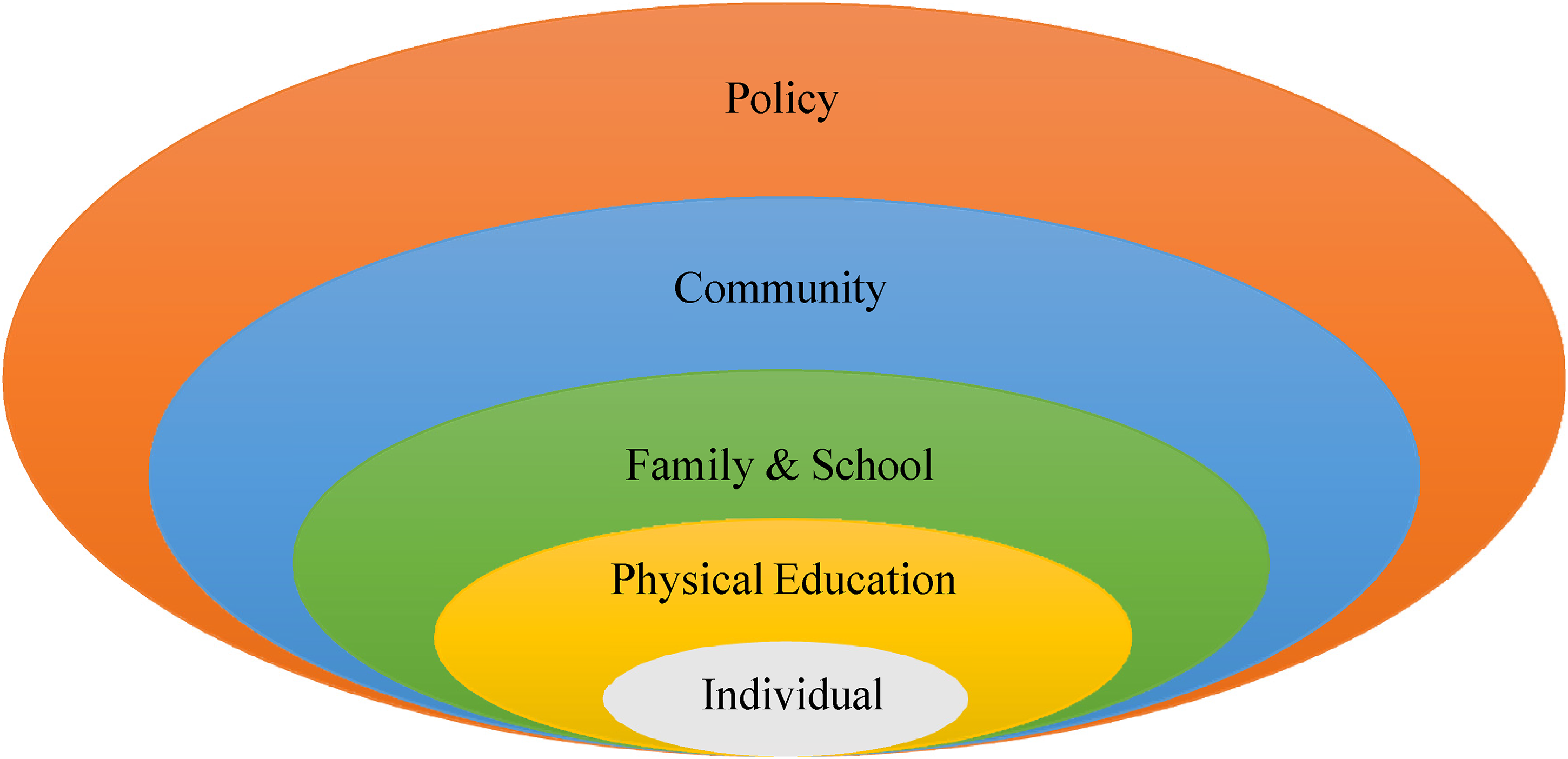
Social ecological model for health promotion (Li and Rukavina, 2012).
Langille and Rodgers's (2010) study examined the upstream social-structural conditions that impact downstream health behaviors. The study underscores the interaction between policy, community, and schools and their impact on school-based physical activity. Furthermore, physical education teachers have identified key barriers to implementing high-quality physical education programs, including marginalization within schools and inadequate funding and support from school districts (McLoughlin et al., 2020). McLoughlin et al.'s (2020) study examined the relationship between the physical education and school layers. The findings indicate that there are minimal significant associations between physical education policies and their actual implementation. This lack of strong correlations highlights a nuanced interplay between policy and practice in physical education, indicating that the impact of such policies is indirect and not immediately apparent.
In the social ecological model, each system interacts with the other systems directly or indirectly (Bronfenbrenner, 1992; Li and Rukavina, 2012). Given the direct relationship between physical education and other layers (i.e. individual, family and school), this study focused on the interaction between the physical education program and four key stakeholders: students, classroom teachers, administrators, and parents. There is a lack of comprehensive investigation into the perceptions of multiple stakeholder groups with respect to K-12 physical education programs within a single study, and this study attempted to fill this gap using a multifaceted approach. Therefore, the purpose of this study was to explore the perceptions of students, classroom teachers, administrators, and parents on the purpose and impact of physical education.
Method
This study employed an interpretive qualitative research design to explore stakeholders’ perceptions of physical education (Merriam and Tisdell, 2016). The interpretive qualitative research approach involves analyzing collected data to develop constructs that illustrate the phenomenon of interest, enabling researchers to view the world through the perceptions and experiences of participants (Elliott and Timulak, 2005; Thanh and Thanh, 2015). This study aimed to explore stakeholders’ perceptions of physical education based on their participation in and/or observation of the physical education program at their (or their child's) school. The researchers comprised the lead researcher, a graduate student completing their dissertation studies, and their supervisor, a researcher experienced in using qualitative research methods. The graduate student has gained diverse teaching experience as a guest physical education teacher in local schools during their graduate studies. The supervisor was a high school physical education teacher and a state resource teacher for physical education prior to entering higher education in physical education teacher education. Prior to this study, the research team had no direct interactions with the participants at the three selected schools.
Participants and contexts
The snowballing method of convenience sampling was used to recruit participants (Naderifar et al., 2017; Streeton et al., 2004). Following approval from the institutional review board, the researchers contacted three physical education teachers to identify whether other stakeholders (i.e. students, classroom teachers, administrators, and parents) from their schools might be interested in participating in this study. Next, the researchers requested permission to conduct this study within each school from the school principal and/or the school district office. Once approval was received, the researchers approached the physical education teachers to identify and recruit three to five participants from each stakeholder group at their school. These teachers provided a list of potential participants, who were then contacted by the researchers via email with introductory information about the study and an invitation to participate. Parents were recruited through communication that included details about their possible participation and their child’s potential involvement in the study. After participants expressed interest in the study, the researchers collected consent forms and scheduled interviews.
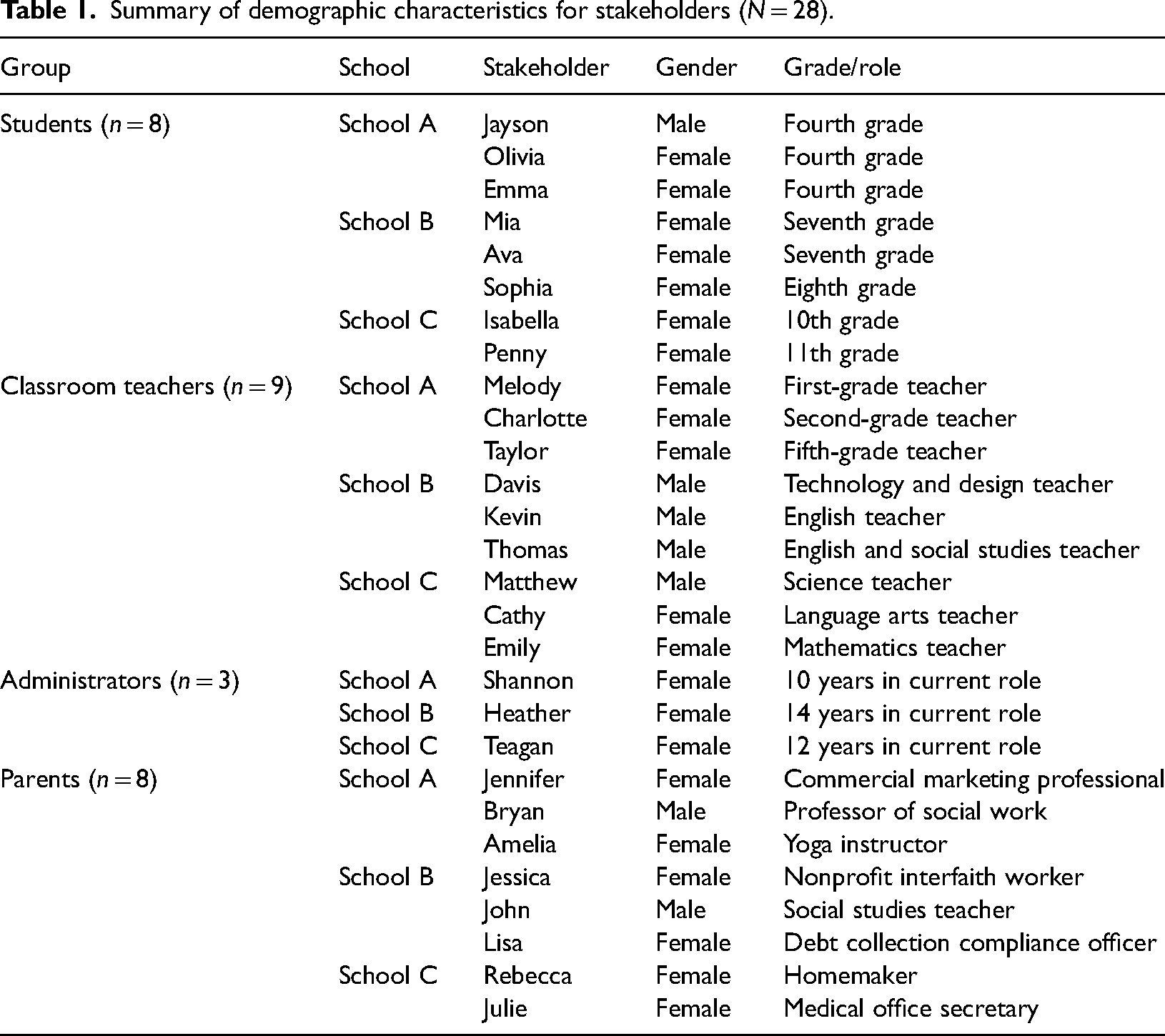
Participants (N = 28) included students (n = 8), classroom teachers (n = 9), administrators (n = 3), and parents (n = 8; see Table 1 for additional demographics). Participants were recruited from three schools located in one state in the Western United States, representing one elementary school, one middle school, and one high school in urban, suburban, and rural areas (see Table 2). It is noteworthy that the physical education program at the high school (i.e. School C) encompasses both physical education and health education.
Summary of demographic characteristics for stakeholders (N = 28).
Summary of demographic characteristics for schools (N = 3).
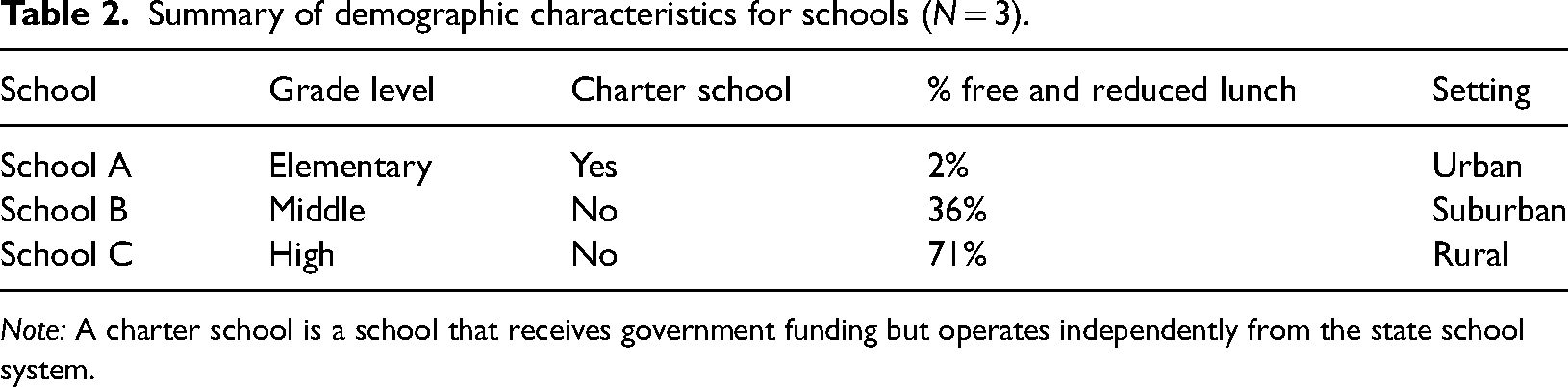
Note: A charter school is a school that receives government funding but operates independently from the state school system.
Data collection
A total of 12 interviews were conducted, three with students, three with classroom teachers, three with parents, and three with administrators. Of these, nine were paired/group interviews, with each school hosting three sessions: one with students, one with classroom teachers, and one with parents. Additionally, individual interviews were conducted with administrators from each school. Each principal/assistant principal provided their insights with respect to physical education at their respective schools.
Paired/group interviews involved a pair or group of people and explored attitudes, perceptions, feelings, and ideas on a given topic, facilitating interactive discussion that yielded unique data unattainable through individual interviews (Denscombe, 2007; Hennink, 2014). Beyond sharing their own perceptions of physical education, participants listened to others, which potentially sparked new insights into the topic. This method enables researchers to simultaneously gather diverse perceptions, enriching the data pool (Merriam and Tisdell, 2016). All interviews were carried out virtually using Zoom. Given the constraints of a virtual paired/group interview, where only one person can speak at a time and adding to the discussion is more challenging, the researchers limited the number of participants to between two and three for each group. Students, classroom teachers, and parents from the same school formed the groups for the paired/group interviews so that they could talk about physical education at their specific school. Each interview lasted between 45 and 60 minutes and was audio recorded. The lead researcher was responsible for conducting these interviews.
The interview guides focused on stakeholders’ perceptions of physical education, with a specific focus on the purpose and impact of physical education. While the interview questions remained consistent across all participants, the wording varied based on the stakeholder group. For instance, when addressing the impact of physical education on children and youth, students were asked, “How does participating in physical education make you feel?” whereas classroom teachers were prompted with the question, “How do you think participation in physical education influences children?” Additional sample questions were: “What do you think is the purpose of physical education?” and “Briefly describe the physical education at your school.” The interviews employed a semi-structured and open-ended format, enabling the researchers to probe into participant responses and follow up on new topics of interest (Creswell and Poth, 2018). Participants were given pseudonyms, and their schools were assigned codes (e.g. School A, School B, and School C). All information collected from interviews was kept confidential and accessible only to the researchers.
Data analysis
To understand each group of stakeholders’ insights on physical education, the researchers analyzed the data separately for each group (i.e. students, classroom teachers, administrators, and parents). Each group of stakeholders’ responses was analyzed inductively using open and axial coding and thematic analysis (Corbin and Strauss, 2008). First, the transcripts were read multiple times, significant phrases or sentences that pertained directly to stakeholders’ perceptions regarding the purpose and impact of physical education were identified, and preliminary codes were noted in the margins of the transcripts. Next, the researchers finalized a list of codes and created brief descriptions using a codebook (Creswell and Poth, 2018). Within the codebook, the researchers developed categories by identifying patterns among the codes to interpret stakeholders’ perceptions concerning physical education (i.e. its purpose and impact). These categories were discrete from each other and served as the foundation for data interpretation (Corbin and Strauss, 2008). Finally, the themes were developed to capture stakeholders’ perceptions of the “what” and “why” of physical education.
Trustworthiness
Trustworthiness was established using a variety of techniques, including the use of a researcher journal and peer debriefing (Merriam and Tisdell, 2016). Throughout the study, a researcher journal was kept, documenting personal reflections, methodological decisions, questions raised, theoretical propositions, and the evolving perceptions of the first author. The first author maintained the journal from the beginning to the completion of the study. This journal allowed the author to maintain a transparent and detailed record of the research journey, including all reflections, thoughts, questions, and decisions. Furthermore, peer debriefing was adopted to validate the appropriateness of data collection, analysis, and interpretation (Creswell and Poth, 2018; Merriam and Tisdell, 2016). This technique involved engaging in discussions with the second author, who served as a debriefer, to assess the research process, ensure the congruency of emerging findings with the data, and evaluate tentative interpretations (Creswell and Poth, 2018; Pitney, 2004). As a result, several quotes related to students’ and parents’ perceptions were replaced to align with the findings. This technique ensured the analysis accurately reflected the interactions between physical education and other layers within the social ecological model.
Results
The results of this study are presented with perceptions of four stakeholder groups: students, classroom teachers, administrators, and parents. Their viewpoints are categorized into two primary aspects: the purpose of physical education (the “what”) and the impact of physical education on children and youth (the “why”).
Students’ perceptions
All students in the study reported that they had positive learning experiences in their physical education classes and highlighted the beneficial impact of participating in physical education. Below are their perceptions of the purpose and impact of physical education based on their experiences.
Keeping healthy. Students indicated that the purpose of physical education was to promote health and well-being; yet, their understanding of its focus varied by grade level. Elementary school students believed that they gained knowledge and skills in physical education to help them remain physically active and healthy. As one student shared, “Physical education helps people know how to exercise, move their bodies, and stay active” (Jayson, elementary school). Middle school students reported that physical education helped “make you stronger both mentally and physically” (Sophia, middle school). High school students emphasized that physical education “helps us get in shape and keep fit” and ensures that “when we are older, it's not hard for us to do things” (Isabella, high school). Overall, students believed that the purpose of physical education was to keep them healthy, with a varied focus among students across different grade levels.
Enhancing vitality and social emotional well-being. Students reported that their engagement in physical education boosted their energy levels, enhanced their happiness, and improved social interactions with their peers. Most students reported feeling more energetic after physical education classes. For instance, one student stated: When I get back to class, I’m more hyped. I feel like it gets you more energetic. I feel like it keeps my eyes open instead of like almost falling asleep. It makes me feel energized and ready for today. (Olivia, elementary school)
Students shared that they felt happy due to their engagement in a variety of physical activities during physical education classes. As one student said, “It [physical education] makes me feel good. I mean it takes your mind off everything” (Rebecca, high school). Additionally, some secondary students disclosed that physical education enhanced their social interactions by providing unique opportunities to connect with new peers. One middle school student explained: I have met a lot of new people who I wouldn't normally hang out with, and that just brings everyone together, and I just started hanging out with new people, because they were in our PE [physical education] class. They're really cool. It's really a fun time to get to know each other in PE because sometimes people normally wouldn't hang out outside of school or even in school. (Sophia, middle school)
Classroom teachers’ perceptions
Classroom teachers’ perceptions of physical education were usually grounded in their firsthand observations. These observations occurred when they brought students to or from physical education, when their classrooms were situated adjacent to the gymnasium, when they were advised to observe physical education classes by the principal, or simply as a result of their professional affiliation as colleagues in the same school.
Cultivating a healthy lifestyle and social skills. First, classroom teachers perceived that the purpose of physical education was to cultivate a healthy lifestyle among students so that they could take care of themselves. These teachers believed that students should be exposed to a variety of physical activities, sports, and games to keep them physically active for their health. For example, one teacher reported, “It is a chance for students to learn how to take care of their bodies, to learn how to be active, to learn some of those physical things about themselves” (Kevin, middle school). Another teacher also reported: Kids get an introduction to a huge variety of different activities. And so it sort of teaches kids at a young age that there are so many ways to be active and take care of yourself. And what one person might do and enjoy might look very different than the next person. (Melody, elementary school)
The physical education department at the high school offered both physical and health education. Consequently, classroom teachers at this school emphasized nutrition as an integral component of healthy living. One teacher shared: It [physical education] helps kids live a healthier lifestyle … teach them how to live a healthier diet and how to have lifelong exercise skills so they can keep themselves healthy … The purpose of physical education was to keep everybody healthy and teach them healthy habits as they grow up. (Matthew, high school)
Furthermore, classroom teachers reported that another critical purpose of physical education was to provide students with opportunities to enhance their social skills. Many classroom teachers highlighted that physical education should serve as a platform for students to foster teamwork with peers, thereby developing their communication, problem solving, leadership, and collaboration skills. As one teacher noted, “also how to collaborate, how to be a teammate, how to be a leader and a follower, how to be part of a team” (Kevin, middle school). Similarly, Taylor (elementary school) explained: I think there is a social aspect to it as well with teamwork, how they have to work through any problems or things that might arise in a team sport. So, I think that it's not just about moving their bodies, learning how to play volleyball, I think a lot of it is actually the social aspect as well.
Promoting holistic health and work ethic. Classroom teachers addressed why physical education was needed in school, indicating that it played a critical role in fostering physical, mental, and social health among children and youth. One teacher said, “It [physical education] definitely physically and mentally impacts on students. It is so beneficial to them and influential, and they just need it” (Charlotte, elementary school). Other teachers added, “It's just like the long-term benefit of collaborating with others” (Kevin, middle school) and “It helps students how to navigate emotions when things are not very easy” (Taylor, elementary school). As a result, teachers perceived that students were better equipped to “take care of themselves” (Cathy, high school).
Classroom teachers further articulated that physical education contributed to students’ work ethic, enhancing heightened attention, increased effort, and the demonstration of appropriate behaviors in the classroom following their participation in physical education classes. One teacher reported, “If kids are willing to work hard in physical education, then they would be willing to work hard in other aspects of their life” (Emily, high school). Another teacher added: I think they (students) are running around and getting energy out. Also, it [physical education] allows them to be able to sit down and focus on the class. So, it gets some of that energy out. And the more that they exercise, the less of a discipline problem. (Cathy, high school)
Administrators’ perceptions
The administrators in this study had all been at their current school for 10 years or more. They expressed satisfaction with their physical education programs, as they perceived the programs as beneficial for both students and the school.
Being physically active. The administrators stated that the purpose of physical education was to enable students to be physically active both inside and outside the classroom by providing students opportunities to participate in activities during classes and to obtain competence for lifetime physical activities and sports. The elementary school principal highlighted the importance of acquiring skills and fostering students' understanding of the connection between physical activity and their overall well-being. As she noted: The goal of physical education is to kind of teach students lifelong habits of like being healthy and staying active and fit. There are just different ways to think about living a physically active lifestyle and having that connection and understanding between what they are doing and how it benefits their body long term. (Shannon, elementary school)
The middle school assistant principal stressed that the essence of physical education extended beyond movement, saying, “It is definitely beyond the sports and movement. It's so much more of those soft skills that they are learning that they will carry on no matter where they are. So that is what I think the purpose is” (Heather, middle school). The high school principal emphasized the significance of physical education in facilitating a physically active lifestyle for students, as she reported: I see physical education is important, regardless of whether you are a student or you are out of school, physical education has the ability to get your body in motion … I wanted the kids to get physical education and be active every single day. (Teagan, high school)
Improving academic learning, behavior, and social emotional well-being. The administrators indicated that physical education contributed to enhancing students’ academic learning, positive behaviors, and social emotional well-being. These administrators said they had observed this positive influence on their students and expressed a desire to have more physical education at their school. As the middle school assistant principal at School B noted, “Students need the movement … Their attitude is better. They can function better. I wish we could do more of that for our kids” (Heather, middle school). Similarly, the elementary school principal reported: We do try to increase the number of times students get to have those movements throughout their regular learning day for their core content, because we know that if we get the blood moving, then they'll be able to do a better job with whatever it is they're learning. (Shannon, elementary school)
The administrators believed that participation in physical education led to more effective brain functioning in their students, leading to improved cognitive functions, increased concentration in the classroom, and more positive attitudes toward academics. For instance, the assistant principal at the middle school (i.e. School B) stated, “It [physical education participation] is reflected in their classroom grades and classroom attitude” (Heather, middle school).
In addition to its perceived impact on academic learning, the secondary school administrators highlighted that physical education played a critical role in fostering students’ positive behaviors at school. They reported that students who did not participate in physical education tended to exhibit more behavioral problems during the school day. Considering this perceived impact, the school specifically scheduled physical education for these students. The high school principal elucidated: Especially with the junior high boys, if they do not get PE during the day, there are more behavior problems. I'm serious … I don't have the data that shows these eighth-grade boys that got in trouble didn't have physical education. I just have that organic observation. (Teagan, high school)
Social emotional well-being emerged as another perceived benefit associated with participation in physical education, as administrators claimed that students gained social skills and experienced improved emotions. The administrators pointed out that students acquired and applied social skills through team activities and sports, such as “how to take turns, how to follow the rules, and how to show good sportsmanship” (Shannon, elementary school). Likewise, the assistant principal at School B reported, “Physical education is not sports; it is about learning to move your body. Moving your body is going to help your social emotional well-being and your mind” (Heather, middle school).
Parents’ perceptions
Parents shared their perceptions based on their child's experiences in physical education. These parents reported that they had occasional conversations with their children about physical education and received report cards from physical education teachers. Most parents believed that their children were active in physical education classes at school.
Gaining competence and confidence. Parents in this study indicated that the purpose of physical education was to empower children and youth with the competence and confidence necessary for them to be physically active for a lifetime. They illustrated that physical education should serve as a platform for students to gain the skills and knowledge required for their engagement in physical activities and sports. As one parent reported: The part of physical education is to teach how to play basketball, how to play baseball, how to play volleyball, how to play soccer. And the knowledge of team sports, just to give the base knowledge. I think that is important. (Rebecca, high school)
Furthermore, parents highlighted the importance of introducing a variety of lifetime physical activities to ensure that students could remain physically active in different ways. Some parents reported that it was crucial to expose students to a broad spectrum of physical activities instead of exclusively focusing on certain sports in physical education. Parents argued that this inclusive approach provided all students with opportunities for participation, especially for those with limited skills. As one parent shared, “The kids are afraid to participate because they are not as athletic as others. I just worry about some of those kids who are not getting a chance to participate, because others dominate because of their athletic ability” (Bryan, elementary school). Parents argued that physical education should not only expose students to various activities but also facilitate participation for students across a range of abilities, thereby enhancing their competence. Parents also emphasized that students’ competence in physical activity and sports would contribute to their confidence. One parent noted: As you grow older you have got that base of how to do things. I feel like there is confidence that comes with being involved in physical education and learning the skills. It is important to have it in your life, and then just be healthy, knowing health should be a priority, and knowing what to do to be healthy. (Jessica, middle school)
Increasing focus and reducing stress. Parents in this study believed that physical education had the potential to increase children's concentration and reduce academic stress. Parents emphasized that children spent a substantial portion of their school day sitting in classrooms, and they believed that physical education classes provided a break for their child's brain, resulting in increased attentiveness afterward. One parent stated, “Kids are more energized for schoolwork when they had physical education during the day” (Lisa, middle school). Similarly, another parent shared: I think it just helps so much with focus. It is hard for kids to sit in their seats, listening to teachers for six hours a day, which is a long time for kids to be in school. I think physical education gets them up and active. It helps their mind take a break and focus on something else, and something physical can always help kids focus a lot more. (Amelia, elementary school)
Furthermore, parents expressed that nowadays children often experienced academic stress, and they perceived participation in physical education as an effective means to alleviate this academic pressure. One parent remarked, “I think, especially now with academics and how stressful it is for kids, I think we expect a lot academically from kids. I think using different things physically can really help kids with those kinds of stressful situations” (Amelia, elementary school). Another parent stated, “It (physical education) is a good stress reliever for kids” (Julie, high school).
Discussion
The purpose of this study was to explore the perceptions of students, classroom teachers, administrators, and parents on the purpose and impact of physical education. The social ecological model highlights that there is a mutual interaction between physical education and other layers, such as students, and families and schools (Li and Rukavina, 2012). Physical education has been positively viewed by its stakeholders with regard to its role in whole child development and well-being (Colquitt et al., 2012; Georgakis, 2018; Kadir and Özkurt, 2016). The stakeholders in this study shared their perceptions of the purpose (the “what”) and impact (the “why”) of physical education. The following discussion presents the insights gathered from each stakeholder group, as well as the overarching perceptions that emerged across these groups.
Interactions between physical education and students
The microsystem within the social ecological model demonstrates students’ interpersonal relationships within physical education (Bronfenbrenner, 1992; Li and Rukavina, 2012). Physical education in K-12 emphasizes three learning domains: psychomotor, cognitive, and affective. Through their engagement in physical education, students in this study emphasized that physical education aimed to promote their holistic well-being (i.e. physical, mental, and social aspects), which aligns with the findings of Nugraha et al. (2022). The students’ perceptions of physical education's purpose varied across different grade levels, which can be attributed to disparities in the curricula of elementary, middle, and high school physical education. In the United States, elementary physical education primarily focuses on developing fundamental motor skills, while secondary school physical education emphasizes sports and lifetime physical activities to promote a physically active lifestyle. Positive experiences in physical education reinforce students’ recognition of its benefits, as supported by previous studies (Walseth et al., 2018; Woodson-Smith et al., 2015). As a result, these experiences shape how students perceive physical education, impacting their attitudes toward it. Emphasizing student learning experiences in physical education is crucial to promoting physical education. This bidirectional interaction exemplifies the mutual relationship between physical education and students, as described in the social ecological model, highlighting how positive educational experiences shape students’ attitudes toward physical education.
Interactions between physical education and classroom teachers
Classroom teachers in this study acknowledged the importance of exposing students to various physical activities in physical education, recognizing its potential role in promoting a healthy lifestyle among students, aligning with previous research findings (Barney and Deutsch, 2009; Morgan and Hansen, 2008). Furthermore, existing research demonstrates that classroom teachers place a high value on physical education due to its potentially vital role in enhancing various aspects of students’ lives, including physical health, social emotional wellness, academic learning, and the cultivation of positive behaviors (Barney and Deutsch, 2009; Deng and Legge, 2024; Layson et al., 2016; Morgan and Hansen, 2008). Classroom teachers in this study highlighted the broader impact of physical education beyond health, including work ethic among students. Their perceptions of physical education were informed by their direct observation of physical education classes and the discernible outcomes they produced for students (e.g. increased attention). This highlights the importance of observable changes in students, which can reinforce classroom teachers’ appreciation for physical education. The perceived changes in students play a vital role in bridging the interaction between physical education and classroom teachers. Therefore, one way to advocate for physical education is to provide quality physical education for students that can facilitate their development. Physical education teachers could focus on enhancing student learning across the three learning domains, allowing the potential for the skills and dispositions developed in physical education to be visible and transferable to other academic settings. Cultivating skills such as teamwork, communication, and problem solving in physical education enables students to apply these skills in other classrooms. For instance, students may develop teamwork skills through collaborative physical activities and team sports, and then utilize these skills during their classroom projects.
Interactions between physical education and administrators
Consistent with the results of previous studies (Lounsbery et al., 2011; Zeng and Wang, 2015), administrators in this study demonstrated positive perceptions of physical education. They typically held favorable attitudes toward the positive influence of physical education on students and expressed satisfaction with the outcomes achieved through the physical education program at their school (Lounsbery et al., 2011; Zeng and Wang, 2015). Administrators’ heightened interest could have implications for their decisions regarding the allocation of resources and budgets for physical education programs (Perez, 2022). Therefore, the interconnection between physical education and administrators is defined by physical education's contribution to student holistic development, wherein administrators perceive these changes in students; consequently, they may be more inclined to support physical education. However, despite perceiving these benefits, administrators often face external pressures such as standardized test scores and academic priorities, which can overshadow their support for physical education (Lounsbery et al., 2013). This mismatch underscores the need for advocacy and policy changes to bridge the gap between the value placed on physical education and the support it receives in schools.
Interactions between physical education and parents
The results of this study reveal that parents engaged in occasional conversations with their children about physical education, corroborating a study that highlighted the lack of consistent communication regarding physical education classes between these two groups of stakeholders (Brewer and Burgeson, 2019). Consequently, the exchange of information between these two layers within the social ecological model may influence parents’ comprehension of physical education. To facilitate parents’ understanding of physical education, physical education teachers could employ various strategies to increase communication with parents, including sharing information about student learning, assigning family homework, organizing events such as family fitness open houses, and posting student success stories on social media (Ku et al., 2021; Paulson et al., 2022).
Research spanning several decades shows evolving perceptions among parents about the role of physical education (Earley and Fleet, 2021; Graham, 2008; Sheehy, 2006; Stewart and Green, 1987; Yaldız and Özbek, 2018). Initially, Stewart and Green (1987) found that, while only 35% of parents considered physical education to be as crucial as other subjects, 82% supported its inclusion in the educational curriculum. A more recent shift was observed by Earley and Fleet (2021), where 50% of parents regarded physical education as equally important as other subjects, though only 39% supported its full integration into the curriculum. These findings suggest that while recognition of physical education's value is growing, it is often still seen primarily as a supplemental activity rather than an integral part of academic learning. In this study, parents perceived the positive impact of physical education on their children; yet, they often perceived it as a break from the traditional classroom setting during the school day. This discrepancy highlights a gap between how parents perceive physical education as a break and its role as a school subject. This underscores the urgent need for continued efforts to advocate for physical education as an integral component of children's education.
Interactions among physical education, students, and other stakeholders
The varied perceptions from students, classroom teachers, administrators, and parents reveal the complex nature of the role of physical education in K-12 settings. These perspectives indicate the perceived benefits of physical education for student development and well-being. Some stakeholders focused on the holistic aspects of health, including physical, mental, and social well-being, while others emphasized fostering a physically active lifestyle. The majority of these stakeholders believed that physical education was meant to provide opportunities for students to gain skills and knowledge necessary for their participation in various activities and sports, ultimately contributing to their overall health and physically active lifestyles. This viewpoint aligns with the definition of physical education outlined in the American national standards, which states that physical education aims to develop individuals’ competence and confidence for a lifetime of healthful physical activity (SHAPE America, 2024). Interestingly, the ways these groups perceived the impact of physical education on children and youth varied. Students primarily centered their focus on their personal experiences during class, while the other stakeholders tended to emphasize academic performance and behaviors. The distinct roles and relationships these groups have with students contribute to the differences in their perceptions and priorities regarding the impact of physical education.
The findings of this study indicate the dynamic interaction between physical education and its surrounding layers (i.e. students, and families and schools) within the social ecological model. The direct interactions between physical education and these layers include student participation in physical education and the observation of these lessons by administrators, teachers, and parents. Additionally, families and schools acknowledged the perceived impact of physical education on the holistic development of children and youth. Throughout this process, students serve as a bridge to link physical education with other stakeholders (e.g. classroom teachers, administrators, and parents), highlighting their central role in the social ecological model. The observable changes in students are noted by these stakeholders, thereby shaping their perceptions of physical education. Therefore, it is essential to emphasize student learning experiences in physical education to enhance its status in schools. This entails considering internal factors within physical education itself (e.g. curriculum, instruction, assessments, and learning environment), as well as external factors (e.g. student backgrounds, school support, policy), all within the framework of the social ecological model.
This study encountered several limitations. First, there may be some selection bias given that the physical education teachers identified the participants, which could have meant that individuals were chosen to participate based on the perception that they would have more favorable views of physical education. This could skew the results that were provided, which is a challenge within any research that considers self-report of perceptions. Second, the participant pool predominantly consisted of female students, administrators, and parents, which could potentially have skewed the findings toward a gender-specific perspective on physical education. This demographic imbalance may raise questions about the applicability of the findings to male students, administrators, and parents. Finally, this study collected stakeholders’ perceptions of the impact of physical education instead of examining the actual outcomes due to physical education. Future studies could aim to address these limitations by incorporating a more diverse participant pool and focusing on tangible outcomes to provide a comprehensive evaluation of physical education programs.
Conclusions
Guided by the social ecological model, this study aimed to comprehensively explore the perceptions of students, classroom teachers, administrators, and parents on the “what” and “why” of physical education at three schools. These stakeholders’ perceptions can offer insights for schools and physical education teachers when designing and developing programs, as well as serve as valuable resources to inform the decision-making process related to physical education policies. The results of this study emphasize the intricate interaction between physical education and various factors while also highlighting the central role of student learning outcomes. The dynamics between physical education and the other layers provide insights and ideas for advocating for physical education. Future research can explore the interplay between physical education and the other two layers (i.e. communities and policies) to facilitate its implementation.
Footnotes
Acknowledgements
The authors would like to express sincere gratitude for the time and valuable feedback provided by the European Physical Education Review reviewers and editor.
Declaration of conflicting interests
The authors declared no potential conflicts of interest with respect to the research, authorship, and/or publication of this article.
Funding
The authors received no financial support for the research, authorship, and/or publication of this article.
