







Abstract
This study adopts a generational perspective to understand the shift in domestic and international travel motivations of Australians. In consideration of the largest and most dominant travel consumers at present, the Baby Boomer, Generation X and Generation Y cohorts, the study reveals significant differences between the cohorts’ value perceptions, attitude and intention associated with domestic holidays. However, the findings revealed no significant differences between the cohorts in Australians’ value perceptions and attitude towards international holidays. The study offers important insights for destination marketers seeking ways to address changes in tourism demand from a generational perspective, particularly those seeking to target the Australian tourism market.
Introduction
Generational differences in consumer travel demands are affecting travel consumption (Gardiner et al., 2013; Glover and Prideaux, 2008; Patterson and Pegg, 2009). Thus, understanding generational differences in travel beliefs, attitudes and intentions is critical to ensure destinations are attractive to each new generation of travellers. Since the end of World War II, major generational changes have occurred in the tourism industry. For instance, during the post-war period in Australia, holidays were mostly car oriented, focused on seaside and other destinations within driving distance from the person’s principal place of residence (Andreck et al., 2012). The advent of long-range aircraft, increased airline routes and ports and the affordability of travel has made international travel attainable to more people around the world, not just a luxury of the wealthy elite. Today, travellers easily and more frequently visit exotic and remote places that were difficult to access in the past. The breadth of destination choice has led to considerable competition within the tourism marketplace (Crouch, 2011). The Internet has made people more aware of world events and destinations and provides a convenient and easy-to-use platform to research and book travel. These technology advancements have eroded geographic boundaries, thus affording tourists the opportunity to seek out and travel to remote foreign locations with ease. As a consequence, the consumption of tourism has been highly revolutionized (Minghetti and Buhalis, 2010). Yet not all destinations have triumphed from increased outbound travel. In countries such as Australia, the United Kingdom, New Zealand, Canada and Japan, domestic travel has declined (Voigt et al., 2010). Consequently, some tourism economies, such as Australia, are now in deficit, with more residents travelling overseas than international visitors visiting the country.
In response, destination-marketing organizations, like Tourism Australia, have adopted a generational viewpoint to understand this trend (Australian Government, 2008). Academic researchers have also adopted a generational perspective to explain changes in travel demand (Cleaver and Muller, 2002; Gardiner et al., 2013, 2014; Glover and Prideaux, 2008). Generational cohort analysis assigns group membership based on year of birth, proposing that the unique life experience of each cohort shapes its members’ lifelong beliefs, values and attitudes (Arsenault, 2004; Wuest et al., 2008). That is, growing up and experiencing each life stage within a particular historical and social milieu results in a ‘generation gap’ between members of different generational cohorts (Oppewal et al., 2010). Such a deeper and wider understanding of consumer behaviour is considered important for managing and planning the changing tourism market described above.
In seeking to contribute insight with respect to contemporary tourist behaviour, this study draws upon value-expectancy theory to reveal similarities and differences between Baby Boomer, Generation X and Generation Y travellers. The objective is to uncover generational differences in holiday value expectations, attitudes and intentions. Specifically, this study explores generational views on domestic and international holidays by Australians to reveal the reasons for generational shifts in travel demand in this population. As the Australian tourism industry has experienced a significant decline in domestic travel (by Australians) over the past decade, the research context of this study is particularly appropriate.
The article begins by establishing the background and context of the study. The literature on generational cohort analysis and value-expectancy theory is then reviewed to provide a foundation for understanding similarities and differences in the travel behaviour of generational cohorts. Subsequent sections present the methodology and the results of data collection. Finally, the article concludes with a discussion of the findings and associated implications for policy and management, prior to outlining the research limitations and directions for future research in this important area.
Study background and context
Most studies on tourist behaviour tend to focus on inbound international visitors because these visitors bring export income into an economy. Yet domestic tourism provides the foundation for the tourism industry in most countries, representing approximately 70% of total world demand for commercial tourist accommodation (Hall, 2007). Although domestic tourists far outnumber international tourists both globally and within most countries, domestic travel is understudied, principally the result of a lack of government investment in domestic tourism marketing and research. Governments perceive domestic tourism as merely distributing wealth from one location to another within the home country, instead of bringing money into the national economy as international tourism does (Weaver and Lawton, 2006). However, domestic travel has the advantage of preventing money from leaking out of the national economy. Further, domestic tourism is important for regional economic development because domestic tourists tend to travel beyond the main cities typically frequented by international travellers (Hall, 2007). For these reasons, understanding consumers’ differences in perceptions, attitudes and intentions with respect to domestic and international holidays is particularly important to countries seeking to promote domestic travel among their residents.
The setting of this research is the Australian leisure travel market. Similar to the tourism situation in other countries (Hall, 2007), domestic tourism is the mainstay of the Australian tourism industry – worth AU$48.3 billion to Australia’s economy and generates over 71 million overnight trips and 161 million day trips annually (Australian Government, 2012a). Nonetheless, Australians are travelling and spending less on domestic travel than in the past. Figure 1 shows the downturn in domestic trips by Australians between 2001 and 2011. Domestic day trips declined by 3.6% and overnight trips declined by 6.6% over this period (Australian Government, 2012b). Furthermore, the portion tourism contributed to household consumption has decreased from 14.3% to 12.3% between 1998 and 2005 (Australian Government, 2007). New Zealand and the United Kingdom have seen similar declines in domestic travel (Australian Government, 2007). Domestic visitation recovered slightly from 2010 onwards, with domestic overnight trips by Australian residents growing by 2.7% between 2011 and 2013, from 4.17 million to 4.29 million trips (Australian Government, 2014). Yet domestic tourism activity, as a percentage of Australia’s gross domestic product and expenditure share, has fallen relative to the rest of the Australian economy, evoking concern that the tradition of an annual domestic holiday will be lost by younger Australians (Australian Government, 2009). This decline in domestic travel has occurred during a period (2003/04–2009/10) when both household consumption and net wealth in Australia have increased (Australian Government, 2010, 2011a).
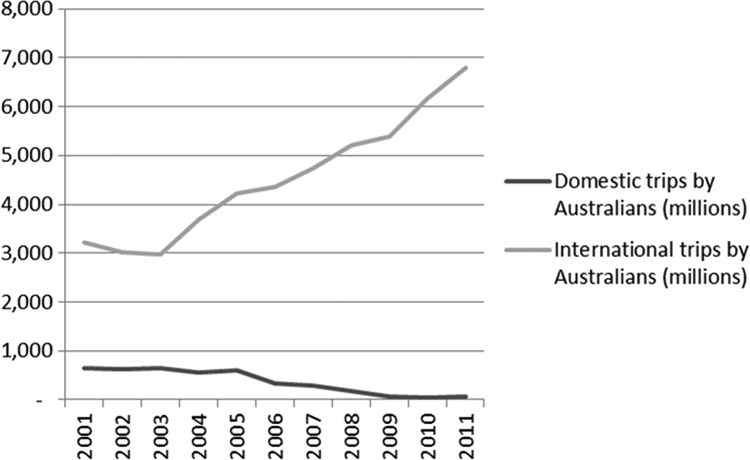
Domestic and international trips by Australians. Source: Australian Government (2012b; 2012c).
Tourism Australia suggests that the primary reasons for the decline in domestic travel in Australia are that Australians are travelling less frequently and for shorter periods, allocating a smaller portion of household consumption to tourism activity and increasing travel overseas (Australian Government, 2010). Outbound travel by Australians has grown dramatically over the past decade, increasing from 3.2 million outbound trips in 2001 to 6.8 million outbound trips in 2011 (Australian Government, 2012c). Figure 1 contrasts the growth in international travel by Australians with the decline in domestic travel over this period.
Given the observed shift in Australian travel consumption between domestic and international travel, this study aims to explore generational views on domestic and international holidays to provide insight as to whether generational differences are a contributing factor. The study has particular reference to the Australian tourism industry. However, the findings are relevant to other countries that are experiencing similar declines in domestic tourism, such as the United Kingdom, New Zealand, Canada and Japan (Voigt et al., 2010). As a result, the findings inform the development of marketing strategy across broader international markets and have implications for domestic and international tourism.
Generational cohort analysis and travel
This study concentrates on the Baby Boomers (born 1946 to 1964), Generation X (born 1965 to 1976) and Generation Y (born 1977 to 1994). These cohorts were selected for this study because they represent the largest adult consumer groups at present, ranging in age from 20 to 68 years. These cohorts and their time frames are also the most frequently cited in the generational literature (e.g. Norum, 2003; Wuest et al., 2008).
Some pioneering research has investigated the travel behaviour of particular cohorts. Examples include studies of Generation Y’s preferences regarding online travel retailers (Nusair et al., 2011), perceptions of green restaurants (Janga et al., 2011), tourism experience authenticity (Chhabra, 2010), future travel demands (Trembath, 2008) and interest in backpacker travel (Sparks et al., 2005). Benckendorff et al. (2010) also recently published a book on ‘Tourism and Generation Y’. However, whilst these investigations provide some initial insights into Generation Y travel decision-making, many are based on student samples and do not reflect the full age or demographic range of the Generation Y cohort. The literature seems to contain no single-generation studies of Generation X tourism, and the broader consumer behaviour literature also reflects light attention to Generation X consumers. Indeed this group is often referred to as the ‘lost generation’ (Heaney, 2007: 198).
In contrast, the generational tourism literature contains extensive research and commentary on Baby Boomers (Lehto et al., 2008), not only describing these consumers but also exploring their propensity to travel (Severt et al., 2009). Studies also characterize the market potential of the Baby Boomer segment, including the possibility of developing ecotourism/adventure experiences (Cleaver et al., 2000; Muller and Cleaver, 2000). Results from these studies drive tourism product development (Prideaux et al., 2001) as well as the need to reposition destinations (Prideaux, 2007) and tourist experiences (Lehto et al., 2008) to meet Baby Boomers’ consumer demands. Baby Boomers have been the focus of most generational travel research principally because of the cohort’s size, economic influence and potential impact on the future of the tourism industry, as its members retire from the paid workforce over the next decade.
From a cross-generational perspective, several studies demonstrate differences in the travel preferences and behaviour across cohorts. For example, a cross-generational study found differences between Generation X, Baby Boomer and other older generational cohorts in preferences for tourist experiences such as national parks, accommodations and shopping (Pennington-Gray et al., 2003). Other investigations found differences between Baby Boomer, Generation X and Generation Y travellers in the source of information and preferred activities and destination attributes (Australian Government, 2011b) and their travel decision-making (Gardiner et al., 2013). However, other tourism studies could not find differences between the generational cohorts. For example, across all cohorts, word of mouth was the most useful communication tactic (Fall, 2004). Similarly, both Baby Boomer and Generation X cohort members increased their use of online information search behaviour between 1995 and 2000 (Beldona, 2005). Another study explored motivations and inhibitors related to conference attendance across Generation X and Baby Boomer cohorts (Severt et al., 2009).
As the above studies demonstrate, evidence of cross-generational differences remains inconclusive. Nevertheless, looking at travel consumption through a generational lens is widely accepted, supporting further investigation of cross-generational similarities and differences in beliefs about travel consumption. With this in mind, this study aims to extend the generational tourism literature to include previously under-researched Baby Boomer, Generation X and Generation Y consumers’ beliefs, attitudes and intentions regarding travel. To do this, this study draws on the well-established consumer behaviour theory of value expectations to unpack similarities and differences between the generations.
Conceptual framework and research questions
The value-expectancy theory underpins the theory of reasoned action (Ajzen and Fishbein, 1980) and theory of planned behaviour (Ajzen, 1988), which have been used extensively in the tourism literature to explain tourist behaviour (e.g. Lam and Hsu, 2006; Sparks and Wen Pan, 2009). Value expectancy posits that behaviour is a function of one’s expectations and the value of the goal that they seek from consumption. Thus, consumers form expectations about what they might experience on their trip before departing as they dream and fantasize about their holiday. As shown in Figure 2, these expectations affect their attitude towards the experience and intention to purchase it (Ajzen, 1991). Travel is perceived to offer opportunities to arouse positive feelings or affective states, such as happiness, excitement and tranquillity, thus, can offer emotional value (EV) (Sheth et al., 1991; Sweeney and Soutar, 2001). The opportunity to engage in new and unfamiliar experiences on a trip may also afford novelty value (NV) (Assaker et al., 2010; Lee and Crompton, 1992; Sheth et al., 1991). Consumers also evaluate the cost and expected performance or benefit of the trip, thus considering its value for money and quality (Sweeney and Soutar, 2001; Zeithaml, 1988). Consideration of generational differences in these value perceptions, as well as attitudes and intentions with respect to domestic and international leisure holidays, is the focus of this study, thereby addressing the following research questions:
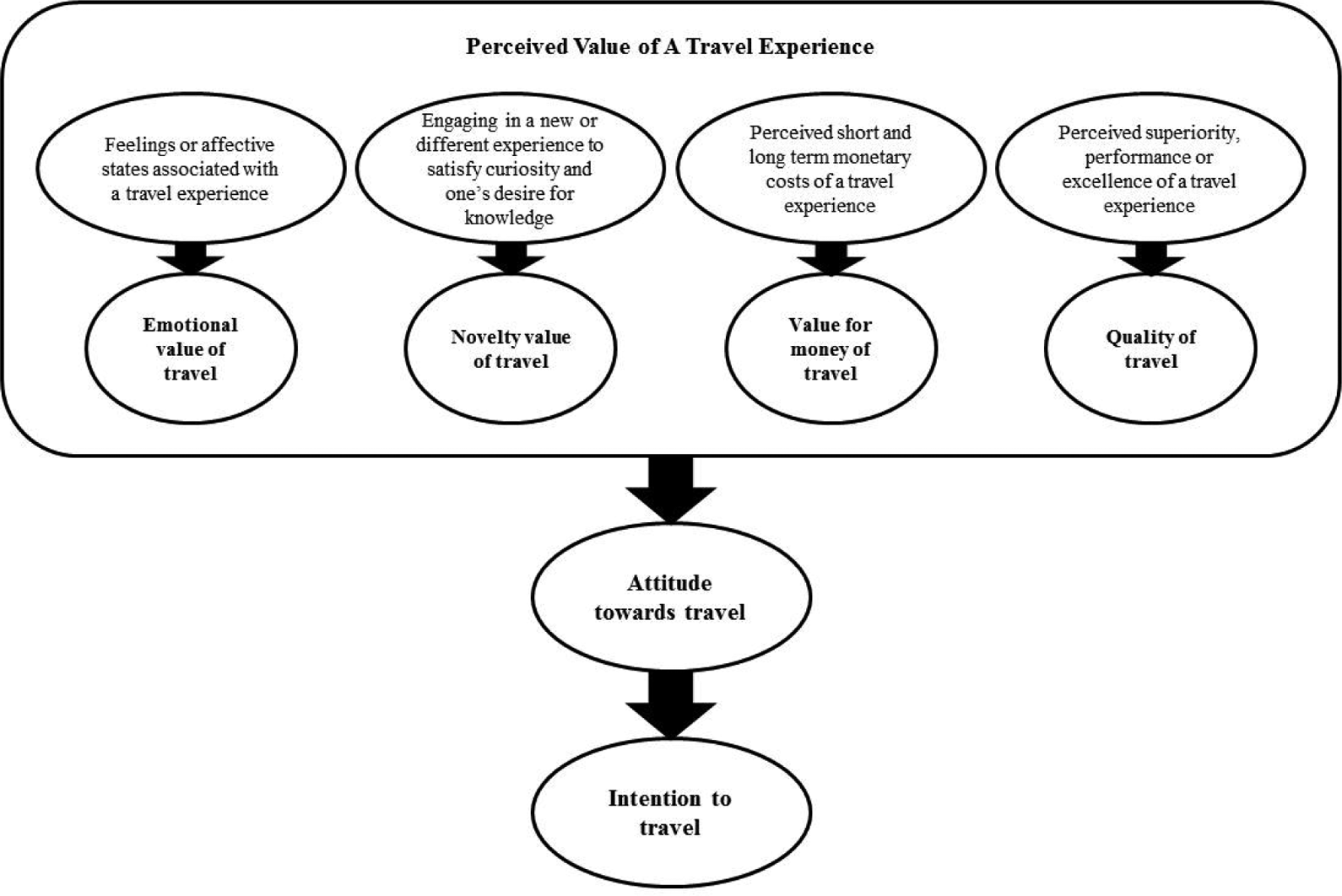
Motivational factors that influence the perceived value, attitude and intention to travel.
An online survey of Australian Baby Boomer, Generation X and Generation Y consumers was undertaken to address these research questions.
Method
This study measures six constructs presented in Figure 2 – emotional value (EV), novelty value (NV), value for money or price value (PV), quality value (QV), attitude towards travel (AT) and intention to travel (IN) – to answer the three research questions. The following sections present the scale used to measure each construct. Discussion of the format of the online questionnaire, the sample frame and the approach to data analysis then follows.
Survey instrument
Questionnaire items used to measure the six constructs were adapted from existing scales. Each item was tested in both a domestic and an international context, as shown in Tables 1 and 2. The PERVAL scale (Sweeney and Soutar, 2001) was adapted to a tourism context to measure EV, PV and QV in this study. Since the PERVAL scale measures value beliefs about durable goods, it does not include NV, which is a feature of a tourism product. Accordingly, items were adapted from the scale of tourism NV (Assaker et al., 2010). Items to measure AT and IN were adapted from scales in previous tourism studies (Sparks and Wen Pan, 2009; Williams and Soutar, 2009). All items were measured using a 7-point Likert level of agreement scale, consistent with the recommendations of Malhotra (2010).
Domestic travel survey items and factor analysis for the full study.
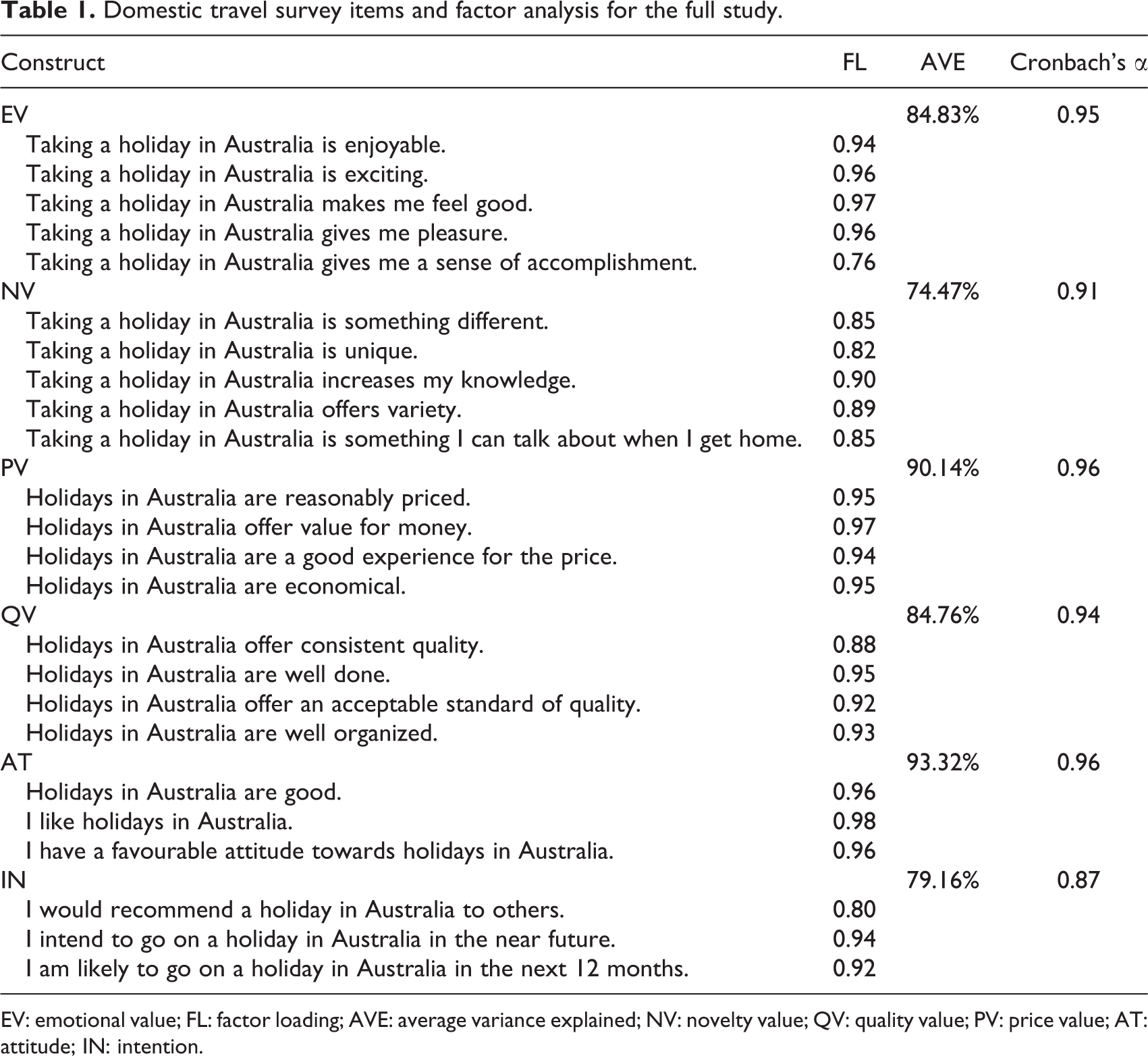
EV: emotional value; FL: factor loading; AVE: average variance explained; NV: novelty value; QV: quality value; PV: price value; AT: attitude; IN: intention.
International travel survey items and factor analysis for the full study.
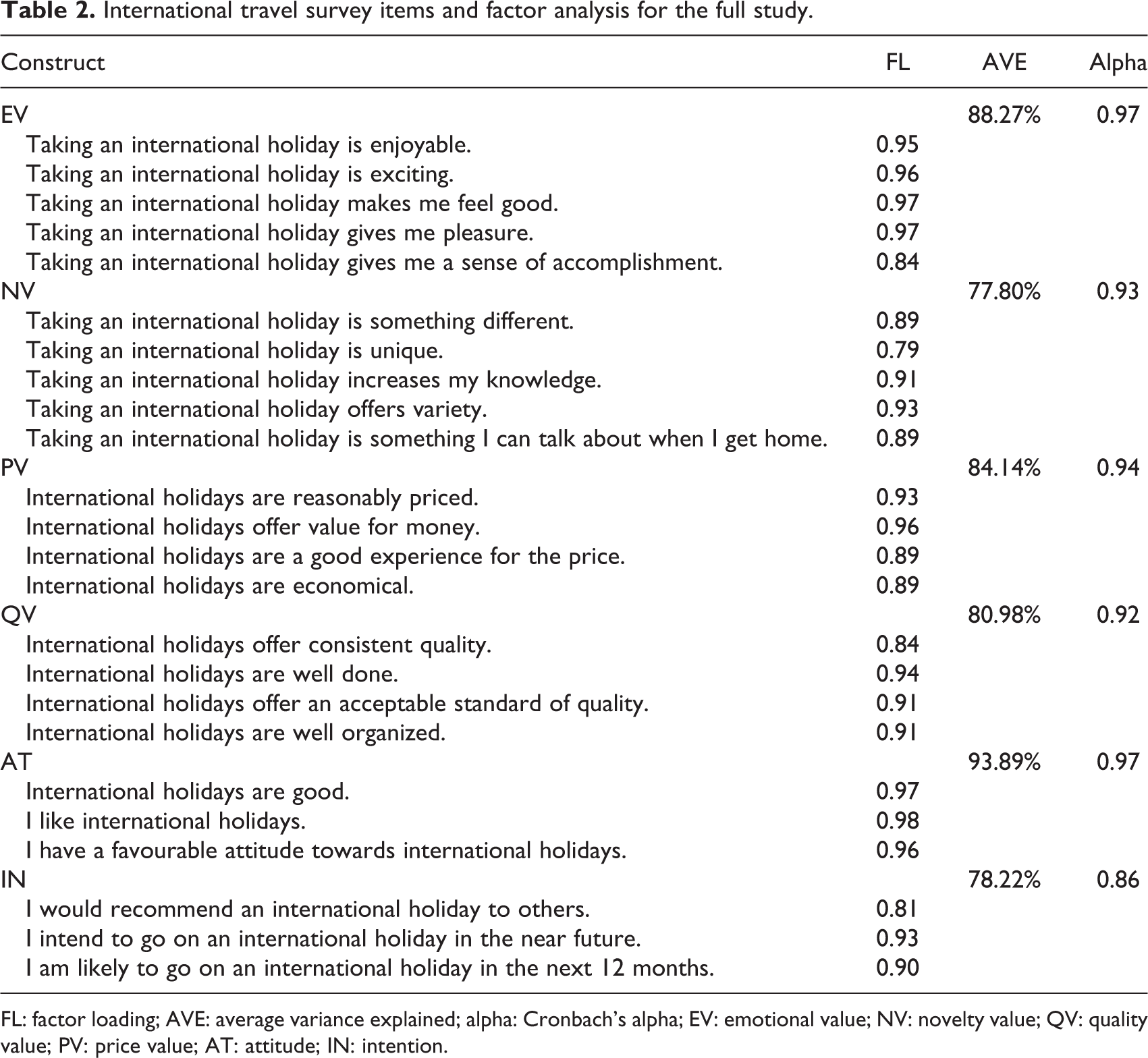
FL: factor loading; AVE: average variance explained; alpha: Cronbach’s alpha; EV: emotional value; NV: novelty value; QV: quality value; PV: price value; AT: attitude; IN: intention.
A pilot study (N = 50) was conducted to purify the scale measures. The pilot study data show that each factor is a unidimensional and reliable measure of that construct, resulting in factor loadings of 0.81 or greater, average variance explained of 0.57 or greater and Cronbach’s α values of 0.89 or greater. These results are above acceptable limits (Malhotra, 2010). Further, feedback solicited from study participants suggested that item wording presented no clarity problems. For these reasons, no changes were made to the scales following the pilot study.
Sampling and data analysis
This study adopts an age-stratified quota sample for each generational cohort to ensure that the early, middle and late aged members of each cohort were represented. A stratified sample method ensured that all subgroups, or strata, of the population are adequately represented (Bouma, 2000). As a result, each year of birth represented at least 3.1% and not more than 10.7% of the total sample of each cohort, as shown in Appendix 1. A 50/50 gender split was also incorporated into the quota sampling criteria.
Through a third-party professional marketing listing company, 14,300 potential participants who were born between 1946 and 1994 in Australia and were currently living in Australia were sent an email invitation to participate in the study. A total of 964 respondents commenced the survey before the quota limits were achieved and the survey was closed, yielding 727 fully completed questionnaires. Cases with missing data appeared random and were removed from analysis (Tabachnick and Fidell, 2007). In addition, 95 cases who indicated they were not born and/or currently living in Australia were removed from the analysis. Statistical Program for Social Sciences software was employed for data analysis, providing descriptive statistics, factor analysis to test the reliability and validity of the constructs, comparison of means using analyses of variance (with Scheffe’s post hoc comparisons) and t-tests to investigate differences between cohort groups.
Results
Respondents’ profile
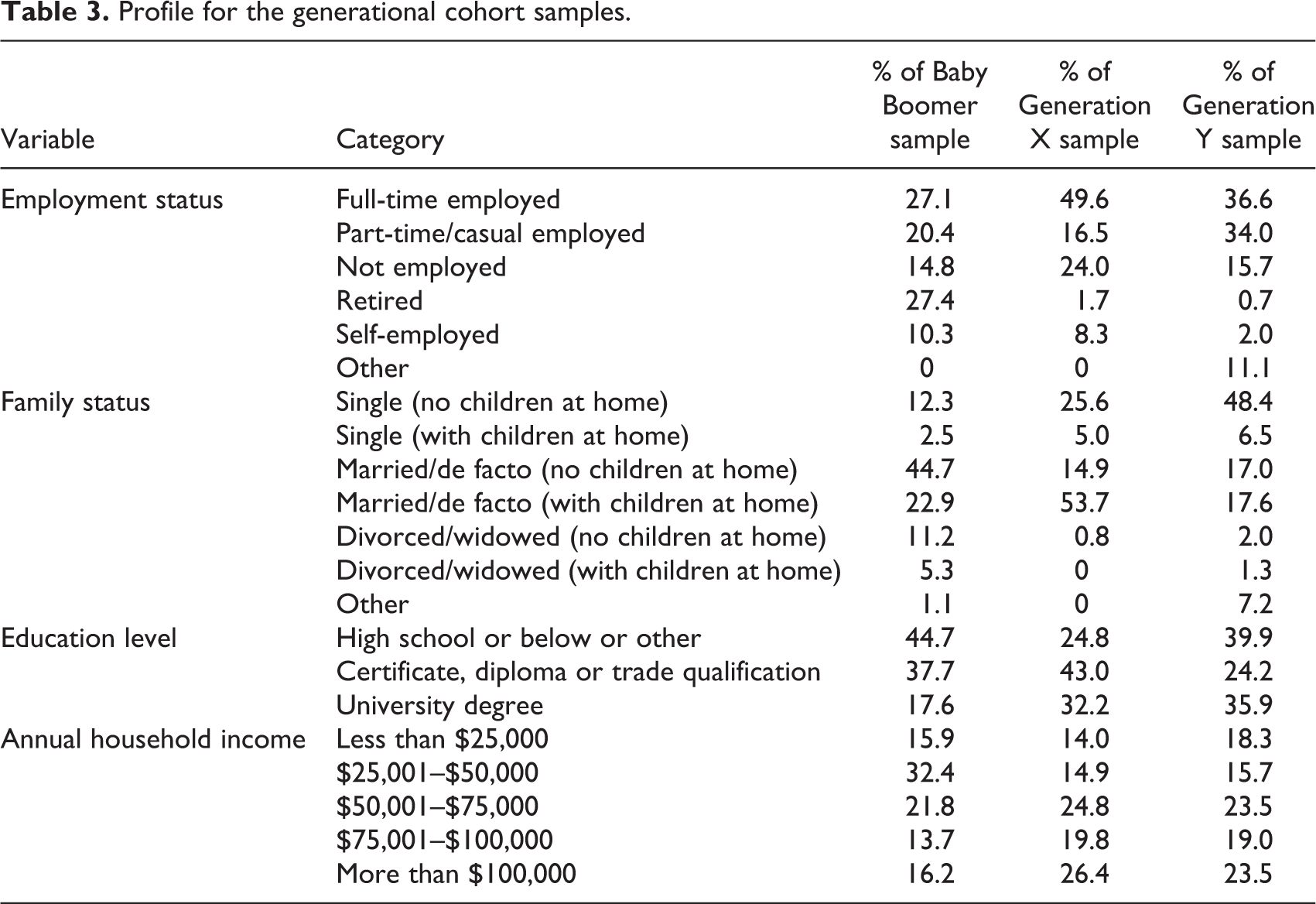
Table 3 presents the demographic profile for each generational sample. As would be expected, demographic differences were evident across the cohorts. For example, given the age of each cohort, it is not unexpected that Generation X (49.6%) had the highest proportion of full-time employed respondents, Generation Y (34.0%) had the highest proportion of part-time/casual employed respondents and the Baby Boomers had the highest proportion of retired respondents (27.4%). Similarly, the sample profile reflects the typical life stage of each cohort. Almost half of Generation Y were single with no children at home (48.4%), Generation X were married/de facto with children at home (53.7%) and Baby Boomers were married/de facto with no children at home (44.7%). Overall, the Generations X and Y samples were better educated than the Baby Boomer sample, as 32.2% of Generation X and 35.9% Generation Y had a university degree compared with 17.6% of Baby Boomer respondents. This result reflects access to tertiary education afforded by the younger generations. Annual household income varied across all three cohorts, with most respondents in the middle income range. However, it is important to note that, whilst differences between the cohorts occur in the mix of employment and family status, education levels and annual household incomes, no single category dominates the sample for each cohort. That is, the samples are suitably diverse.
Profile for the generational cohort samples.
Factor analysis
Factor analysis (N = 632) was conducted to ensure the items in each scale were reliable and valid measures of the underlying construct. Overall, the factor loadings ranged from 0.76 to 0.98, the average variance explained ranged from 0.73 to 0.94 and the reliability of constructs ranged from 0.87 to 0.97. These results are within acceptable ranges (Malhotra, 2010). Tables 1 and 2 present the factor analysis results for full study data.
RQ1 and RQ2: Generational views on domestic and international holidays
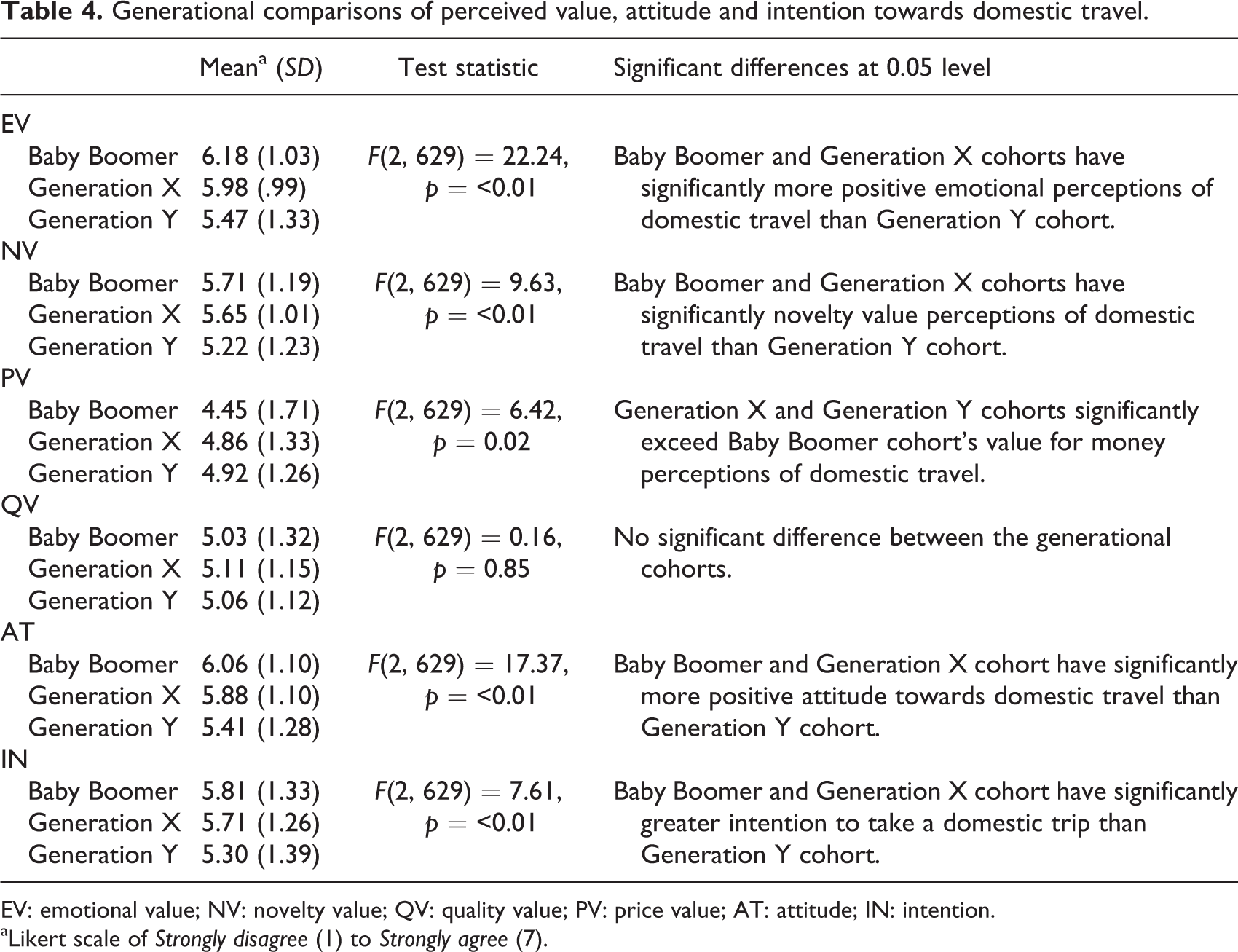
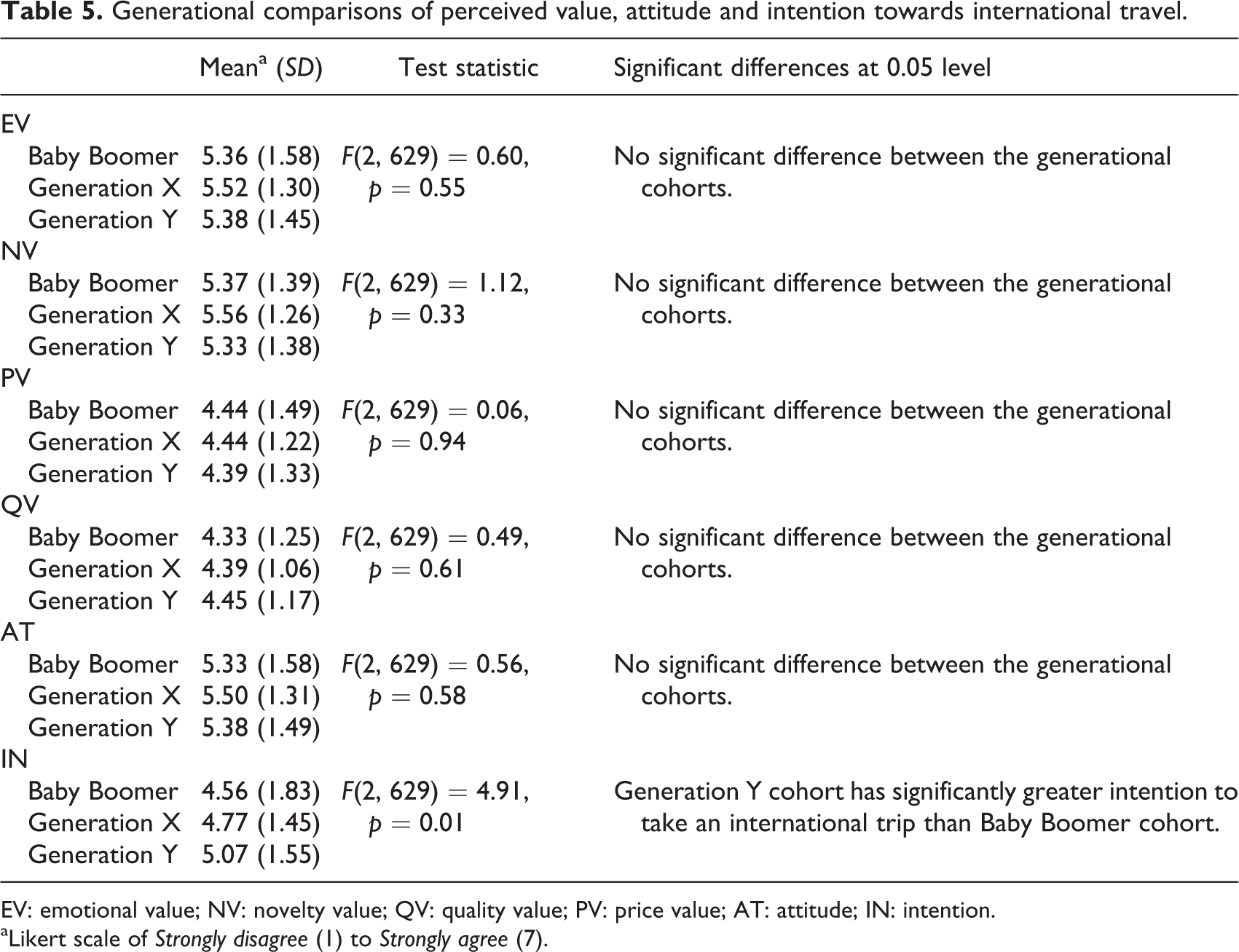
Respondents were assigned to one of the three cohorts based on their year of birth to compare cross-generational value perceptions, attitude and intention. Of the 632 respondents, there were 358 Baby Boomer, 121 Generation X and 153 Generation Y members. These weightings reflect the quotas imposed on the sample. Tables 4 and 5 report the results of this analysis. The findings show that all three cohorts have positive value perceptions, attitudes and intentions towards domestic and international holidays, with means of 4.45 or greater on items relating to domestic holidays and 4.33 or greater on items relating to international holidays on a 7-point scale.
Generational comparisons of perceived value, attitude and intention towards domestic travel.
EV: emotional value; NV: novelty value; QV: quality value; PV: price value; AT: attitude; IN: intention.
aLikert scale of Strongly disagree (1) to Strongly agree (7).
Generational comparisons of perceived value, attitude and intention towards international travel.
EV: emotional value; NV: novelty value; QV: quality value; PV: price value; AT: attitude; IN: intention.
aLikert scale of Strongly disagree (1) to Strongly agree (7).
With respect to RQ1, the domestic data show several significant differences between the cohorts. These differences were significant for EV, F(2, 629) = 22.24, p = <0.01, NV, F(2, 629) = 9.63, p = <0.01 and value for money, F(2, 629) = 6.42, p = 0.02, associated with domestic holidays. However, we found no significant difference between the cohorts in terms of the perceived quality (performance) value of a domestic trip, F(2, 629) = 0.16, p = 0.85. The Baby Boomer (M EV = 6.18, SD = 1.03; M NV = 5.71, SD = 1.19) and Generation X (M EV = 5.98, SD = 0.99; M NV = 5.65, SD = 1.01) cohorts perceived domestic holidays as offering significantly more EV and NV than did the Generation Y cohort (M EV = 5.47, SD = 1.33; M NV = 5.22, SD = 1.23).
The Generation X (M = 4.86, SD = 1.33) and Generation Y (M = 4.92, SD = 1.26) cohorts report significantly better value for money associations with domestic holidays compared to the Baby Boomer (M = 4.45, SD = 1.71) cohort. The Baby Boomer (M AT = 6.06, SD = 1.10; M IN = 5.81, SD = 1.10) and Generation X (M AT = 5.88, SD = 1.10; M IN = 5.71, SD = 1.26) cohorts have a significantly more positive attitude, F(2, 629) = 17.37, p = <0.01, and intention, F(2, 629) = 7.61, p = <0.01, towards domestic holidays than does the Generation Y cohort (M AT = 5.41, SD = 1.28; M IN = 5.30, SD = 1.39).
In contrast, analysis with respect to RQ2, which addresses international holidays, shows no significant differences between the cohorts n their value perceptions (EV: F(2, 629) = 0.60, p = 0.55; NV: F(2, 629) = 1.12, p = 0.33; value for money: F(2, 629) = 0.06, p = 0.94; quality: F(2, 629) = 0.49, p = 0.61) or attitude (F(2, 629) = 0.56, p = 0.58) towards international holidays. However, the Generation Y cohort (M IN = 4.56, SD = 1.83) has a significantly greater IN overseas than the Baby Boomer cohort (M IN = 4.56, SD = 1.83, F(2, 629) = 4.91, p = 0.01).
In summary, the results reveal some significant differences between the generational cohorts in perceptions of value associated with domestic holidays as well as differences in their attitude towards, and intention to have, this experience. However, we found no significant differences between the cohorts in their value perceptions or attitude towards international holidays. The Baby Boomer and Generation X cohorts have a more positive attitude and intention towards domestic holidays than does the Generation Y cohort, but the Generation Y cohort has a significantly greater intention to take an international trip than does the Baby Boomer cohort. Thus, this study reports some differences in the factors that motivate travel between the generational cohort groupings.
RQ3: Each generation’s views on domestic versus international holidays
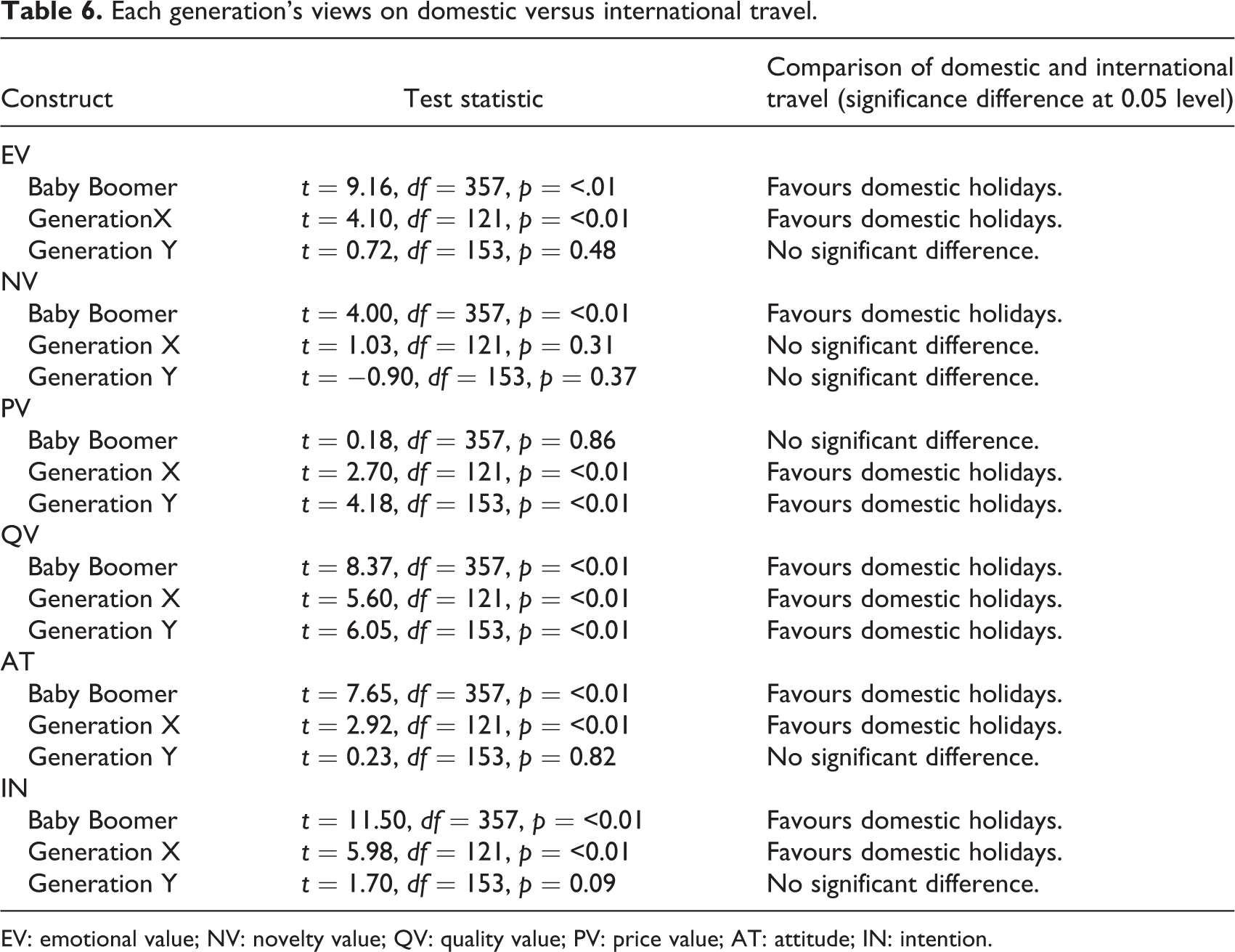
RQ3 sought to explore each generational cohort’s comparison of domestic versus international holidays for each generational cohort. Accordingly, a pairwise t-test was conducted for each construct. In doing so, each cohort’s response to domestic and international holidays was paired and then tested against the others to compare each cohort’s views on holiday type. The results, presented in Table 6, show that all cohorts believe that domestic holidays offer better quality than international holidays (Baby Boomers: t = 8.37, df = 357, p = <0.01; Generation X: t = 5.60, df = 121, p = <0.01; Generation Y: t = 6.05, df = 153, p = <0.01). Both the Baby Boomers (t = 9.16, df = 357, p = <0.01) and Generation X (t = 4.10, df = 121, p = <0.01) favour domestic holidays over international holidays with respect to delivering EV. The Generation Y cohort reported no significant difference in EV between domestic and international holidays (t = 0.72, df = 153, p = <0.01).
Each generation’s views on domestic versus international travel.
EV: emotional value; NV: novelty value; QV: quality value; PV: price value; AT: attitude; IN: intention.
Furthermore, Baby Boomers (t = 4.00, df = 357, p = <0.01) are more likely to associate novelty with domestic holidays than international holidays. Comparison of domestic and international holidays revealed no significant difference in NV perceptions for Generation X (t = 1.03, df = 121, p = 0.31) and Generation Y (t = −0.90, df = 153, p = 0.37). The Generation X (t = 2.70, df = 121, p = <0.01) and Generation Y (t = 4.18, df = 153, p = <0.01) cohorts believe that domestic holidays offer better value for money than international holidays. The Baby Boomer cohort, however, does not perceive any significant difference in value for money between these holiday types (t = 0.18, df = 357, p = 0.86). Both Baby Boomers (attitude: t = 7.65, df = 357, p = <0.01; intention: t = 11.50, df = 357, p = <0.01) and Generation X (attitude: t = 2.92, df = 121, p = <0.01; intention: t = 5.98, df = 121, p = <0.01) have a significantly more positive attitude and intention to holiday domestically than internationally. Analysis revealed no significant difference in attitude or intention for domestic and international holidays for Generation Y (attitude: t = 0.23, df = 153, p = 0.82; intention: t = 1.70, df = 153, p = 0.09).
In summary, the results show that Baby Boomers and Generation X favour domestic holidays, with both of these cohorts reporting a more positive EV perception, attitude (AT) and intention (IN) towards domestic holidays compared to international holidays. Baby Boomers also thought domestic holidays provided more NV, and Generation X and Generation Y thought domestic holidays provided better value for money (PV) than international holidays. All three cohorts believed that domestic holidays offered better quality (QV) than international holidays. The Generation Y cohort was neutral on EV, NV, attitude and intention when comparing domestic and international holidays. Likewise, the Generation X cohort did not perceive any difference in NV between domestic and international holidays. Thus, whilst some generational differences appeared between the two holiday types, these differences tended to favour domestic holidays and did not favour international holidays in any instance.
Discussion
This study sought to enrich theoretical understanding of travel behaviour through adopting a generational perspective to explore value expectations towards travel. As a result, generational differences in value perceptions of domestic and international holidays that motivate Baby Boomer, Generation X and Generation Y Australian consumers were uncovered. Prior value-based research in tourism (e.g. Assaker et al., 2010; Sparks and Wen Pan, 2009) and, more broadly, consumer behaviour (e.g. Sweeney and Soutar, 2001) considers consumers as a homogenous group. This study extends this literature by highlighting the importance of accounting for generational heterogeneity, which manifests itself in variations in value expectations and, by extension, attitude and intention to travel between cohorts.
The findings also build on tourism studies that have employed a generational lens to investigate changes in travel demand (e.g. Cleaver and Muller, 2002; Glover and Prideaux, 2008; Patterson and Pegg, 2009). That is, this study’s contribution resides in the integration and extension of established concepts in travel consumption with generational theory and, as a result, a more comprehensive understanding of similarities and differences between generational cohorts in perceived value, attitudes and intention associated with travel is realized. Advancing this knowledge is fundamental to embracing generational changes in consumer demand for travel, thus providing opportunities for tourism academics and practitioners to better account for these changes in developing tourism marketing research and strategy.
The findings also contribute to the understanding of domestic holidays by revealing generational differences in travel beliefs, attitudes and intentions with respect to domestic holidays in Australia. The results show that Australian Baby Boomer, Generation X and Generation Y consumers have positive associations with domestic holidays and are more predisposed to take a domestic trip rather than an international trip. In light of these results, the decline in domestic visitation suggests that Australian destinations are not competing effectively with international destinations and other consumer options, most notably tangible products (Australian Government, 2007). The study’s findings challenge a generic approach to understanding the Australian consumer travel marketplace and domestic tourism more specifically. Therefore, we propose that to rejuvenate domestic travel, marketers must consider generational cohort membership as a way to understand travel motivations.
These findings have a number of managerial implications. The Australian tourism industry should capitalize on the strong emotional and novelty value perceptions associated with domestic holidays among the Baby Boomer and Generation X cohorts. Further, the industry should work to build stronger associations between domestic holidays and achieving positive emotional and novelty outcomes for Generation Y consumers. Additionally, the study results indicate opportunities to better leverage the perceived value for money of a domestic trip over an international trip among Generation X and Generation Y, as well as, to improve value for money associations for domestic holidays among Baby Boomer consumers.
The uniformity of value perceptions among cohorts in relation to international holidays suggests that destinations need to be less mindful of generational cohort membership in their international marketing strategy compared with their domestic marketing strategy. Consistent with the conceptual basis of generational cohort analysis, this finding suggests that generational differences in value perceptions associated with domestic holidays may be linked with memories of domestic trips in the cohort’s formative years. Thus, tapping into the nostalgia of each generational cohort and exploring how the cohort perceives value may also lead to further insights into the generational mindset and result in more effective marketing strategies. The findings of this study indicate that the future for domestic tourism in Australia holds promise and adopting a generational perspective to unleash this potential may prove advantageous.
Limitations and future research
The main limitation of this study relates to sampling, as data were collected solely from the Australian population. Australia has distinctive geography, social trends and market forces that may have influenced how findings of this study can be generalized to other countries. However, similar trends in domestic travel are being experienced in other nations, such as the United Kingdom, New Zealand, Canada and Japan (Voigt et al., 2010), suggesting that the findings of this study may have application to destinations other than Australia. Future research employing the conceptual framework of this study could further extend generational value-expectancy theory, whilst also providing practical insights into tourism marketing, particularly for destinations that principally target the domestic market. Further generational research in other countries is warranted. Most notably, replication of this study in those countries, such as the United Kingdom, New Zealand, Canada and Japan that are also experiencing a downturn in domestic tourism, could extend understanding of generational effects on travel behaviour and, accordingly, revitalize interest in domestic travel within these countries. As highlighted by generational research, recognizing the unique psychographic and social milieu of particular countries and cultures, particularly during the formative years, is important to understand each generation’s mindset (Gardiner et al., 2013). Therefore, it is vital to appreciate generational differences in each country-specific market. Of particular interest is grasping generational influences of Western versus Eastern cultures on travel behaviour. For instance, employing generational theory, it is suggested that the formative years of Chinese Generation Y may be dramatically different to their Australian counterparts (e.g. one child policy, growing up in the communist system, Chinese cultural values etc.) and these differences will influence their future travel behaviour. Future research on the generational effect in particular markets is imperative to understand their underlying motives for travel.
Another limitation of this study was the generational cohorts selected for the sample. The results may not apply to generational cohorts that are older than the Baby Boomer cohort or younger than the Generation Y cohort. Research to gain a contemporary understanding of the over-65 and under-18 travel markets could be important because older consumers have accumulated wealth and so have a high capacity to travel and younger consumers will drive travel demand in the future.
In addition to extending the sampling frame, future studies could focus on conceptualizing generational perceptions of value, thereby revealing underlying reasons for generational differences in value perceptions, attitudes and intentions. For example, research is needed into how Generation Y consumers conceptualize value for money and how Baby Boomers conceptualize emotional and novel travel experiences, given the demonstrated importance of these factors in this study. Initial exploratory research using qualitative methods, such as personal narratives, might yield these insights, allowing for better understanding of the underlying nature of these constructs than quantitative approaches (Churchill and Iacobucci, 2005; Malhotra, 2010). Similarly, consideration of generational views on geographic proximity (or distance) may be insightful. This study investigated perceptions of domestic and international travel, however, given the size and location of Australia, perhaps considering long-haul versus short-haul holidays in addition to domestic versus international may extend understanding of generational views on various types of trips. Overall, greater awareness of generational value beliefs and travel behaviour are more generally warranted to ensure the tourism industry’s cognizance of societal trends and the changing demographic profile of consumers – an understanding particularly important to tourist destinations seeking to appeal to the evolving mindset of each generation of consumers.
In summary, this survey research found that Australian Baby Boomer, Generation X and Generation Y consumers have different views of domestic holidays, but not of international holidays, and that Baby Boomer and Generation X consumers prefer domestic holidays. Generational cohorts in fact hold different views about types of holidays, and the understanding provided by this study should be incorporated into tourism planning and marketing.
Footnotes
Appendix 1
Acknowledgements
The authors would like to acknowledge the Queensland Government Smart Future PhD Scholarship Program, Griffith Institute for Tourism and Tourism Australia for their financial support of this project. We would also like to thank Dr Chad Perry for his academic advice in preparing this manuscript.
Funding
The author(s) received no financial support for the research, authorship, and/or publication of this article.