







Abstract
Emotions are crucial to explaining consumer behavior. Following an in-depth review of the literature, we identified three types of emotional stimuli affecting consumers: emotions produced by the item being purchased, emotions related to various aspects of the evaluation process, and emotions stemming from factors unrelated to the purchase itself. Previous studies have identified two approaches to analyzing emotions, namely, a categorical approach, which looks at basic emotions, and a dimensional one, which studies the dimensions of the emotions. Although these approaches are thought to be complementary, very few studies have been conducted on the subject, and none have specifically examined it in the context of the tourism industry. We have thus conducted a detailed and empirical study measuring the basic emotions and emotional dimensions elicited by hotels in 841 tourists. We demonstrate the existence of differences in both basic emotions and emotional dimensions among tourists and the additional benefit of using both approaches to study them. The results of this research will facilitate the design of appropriate marketing strategies, thereby helping hospitality managers adapt to the different established tourism segments defined by emotions.
Introduction
Over the past few decades, a number of studies on consumer behavior have shown that both cognitive and affective factors have a strong impact on people’s evaluations and behavior(Bagozzi, 1982; Campbell, 2007; Dean et al., 2008; Hirschman and Holbrook, 1982). Specifically in relation to the tourism industry, various authors have shown the importance of emotions and the strong influence they can have on consumers’ assessments of the tourism offer (Decrop and Snelders, Gnoth, 1997, 2004; Kim et al., 2011). In this regard, it has been shown that the formation of a destination’s image in tourists’ minds is affected by both cognitive and affective factors (Baloglu and McCleary, 1999; Bigné et al., 2001; Chen and Uysal, 2002; Moutinho, 1987; Pike and Ryan, 2004; San Martín and Rodríguez, 2008).
Indeed, emotions have been found to explain consumer behaviors in the evaluation of hotel chains that cannot be predicted from the study of just cognitive factors (Mattila, 2006). Thus within the context of consumer evaluations of tourism products, emotions are thought to play an important and essential role in the choice of supplier (Barsky and Nash, 2002; Decrop and Snelders, 2004; Gnoth, 1997; Goossens, 2000; Gountas and Gountas, 2007; Pike and Ryan, 2004). The motivation to purchase tourism services and choose a given destination is influenced by the tourist’s perceived affective feelings (Gnoth, 1997; Goossens, 2000; Jang et al., 2009; Pomfret, 2006). Likewise, in the context of leisure tourism, the highest motivation has been found to come from exciting emotions (Decrop and Snelders, 2004). Galloway et al. (2008) have determined that one of the most important dimensions in the choice of a wine tourism destination is the ability to have experiences and feel emotions.
Previous studies have identified two approaches to determining how people experience emotions (Esses and Maio, 2002; Mano, 1991; Richins, 1997; Russell, 2003; Russell and Barrett, 1999; Wirtz and Bateson, 1999; ): a categorical approach, which studies basic emotions, and a dimensional one, which examines the different dimensions of emotions and the degree to which the customer feels them. While these two approaches are currently widely believed to be complementary (Dean et al., 2008; Esses and Maio, 2002; Russell, 2003), there is a dearth of research on how they might apply to service evaluation. Likewise, to date, no studies have been conducted on tourism that not only use both approaches but also evaluate the pros and cons of doing so.
This study aims to examine the complementarity of these approaches in relation to the tourism industry. To this end, we conducted an empirical study measuring, in a complementary manner, both the basic emotions and the emotional dimensions evoked in tourists by hotels.
The concept of emotion
The concept of emotion has been widely discussed in the scientific literature. Kleinginna and Kleinginna (1981) identified 101 definitions, while Cohen et al. (2006) established the use of 175 different terms referring to emotions felt by consumers in the product evaluation research. However, despite such research in the field, there is no single clear definition accepted by the majority of the scientific community (Scherer, 2005).
Although emotion has been defined in many ways (Kleinginna and Kleinginna, 1981;Richins, 1997; Scherer, 2005), these definitions share certain similarities, which make it possible to establish minimum prototypical components that can be used to establish a general definition of the concept (Richins, 1997).
The componential theory of emotion is based on the idea that emotions are not exclusively cognitive, but rather consist of multiple components, which collectively support the definition of emotion as a whole (Ortony and Turner, 1990; Russell, 2003; Scherer, 2001, 2005). According to this theory, the following minimum prototypical factors can be considered emotional components: Stimulus: This refers to the need for there to be an intentional object or stimulus. Cognitive assessment: The literature has described the need for there to be a cognitive assessment in order to have emotions. Our definition includes cognitive assessment as a component of emotions in order to distinguish them from visceral responses that do not require such an assessment. Attribution: This component refers to the identification of the emotional object or stimulus generating the emotion. Physiological expressions: The triggering of physiological reactions is an essential feature of emotions. Feeling of pleasure–displeasure: This feature refers to an individual’s perception of an emotional experience as being pleasant or unpleasant. Qualitative sense: Humans experience emotions as being qualitatively unique, as if each were a different hue. Action tendency: Emotions generate a tendency or willingness to perform an action. Short-term process: Emotions are felt for a short period of time.
We will now use this definition of emotion to narrow down the types of emotions to be studied.
Influence of emotions on consumer evaluations of competing offers
The importance of studying emotions is due to the direct influence they have on consumers’ evaluations of offers (Bagozzi, 1997; Han et al., 2007; Hirschman and Stern, 1999). To understand how emotions influence consumer assessments, it is necessary to consider three different types of emotional influences (Garg et al., 2005; Han et al., 2007; Penz and Hogg, 2011). These three types of emotional influences are discussed in detail below.
Emotional influence produced by the product being evaluated
A product’s influence is grounded in its ability to create a symbolic representation in the mind, which then generates an emotional influence on the product evaluation strategy (Elliott, 1998; Laverie et al., 2002; Mittal, 1994).
From the perspective of evaluating purchase alternatives, it has been demonstrated that positive emotions toward a product usually increase the likelihood of a positive evaluation (Bagozzi, 1997; Oliver et al., 1997; Shiv and Fedorikhin, 1999).
Product symbolism is related to the cognitive–affective selection process (Laverie et al., 2002). It has been observed that the more important the symbolic component of a brand, the more likely customers are to choose an affective selection strategy, rather than a purely rational or cognitive one (Mittal, 1994). Moreover, product appreciation based on symbolic meaning has been shown to be the main reason for emotion-driven consumer choice (Elliott, 1998).
A distinction has been drawn in the literature between hedonic and utilitarian products (Hirschman and Holbrook, 1982; Moe and Fader, 2001). Affective components have been proven to have a greater influence in the purchase of hedonic products (Yeung and Wyer, 2004).
Separately, it has been observed that the quality–price ratio (Zielke, 2011) and the perception of the price paid (Gelbrich, 2011) lead to the formation of emotions toward a product. The influence of emotions on the perception of price has likewise been established (Gupta and Kim, 2010; Zielke, 2011).
The level of pleasure produced by the purchase of material products as opposed to experiential ones has also been compared, with experiences, such as going on a trip, outstripping the material. In this regard, Nicolao et al. (2009) showed that products involving significant experiences tend to produce more pleasure and displeasure than material ones.
With regard to tourism, it has been shown that, in order to effectively evaluate a destination, tourists must experience positive, negative, and neutral emotional associations (Pike and Ryan, 2004; Woodside and Lysonski, 1989; Yüksel and Yüksel, 2007) and that they use these affective associations to classify the destinations (Woodside and Lysonski, 1989). Destinations considered to be possibilities are affectively associated in a positive manner, while rejected destinations have negative affective associations (Jang et al., 2009; Woodside and Lysonski, 1989; Yüksel and Yüksel, 2007).
Several studies have looked at the influence of emotions on tourist satisfaction and loyalty. The degree of pleasure tourists feel as a result of a tourism service positively affects their loyalty to it (Bigné and Andreu, 2004; Bigné et al., 2005, 2008; De Rojas and Camarero, 2008; San Martín and Rodríguez, 2008). In the same vein, Yuan et al. (2008) found that the positive feelings generated in tourists by wine tourism services affect their satisfaction and that, in turn, this mix of satisfaction and positive feelings positively affects their intention to visit wineries, purchase wine, and return to the same destination. Charters et al. (2009) studied trips to wineries and found that the type of satisfying or unsatisfying experience can generate positive emotions that mitigate or completely offset the impact of negative emotions caused by the feeling that they must purchase wine.
Specifically with regard to tourism accommodations, Barsky and Nash (2002) showed that the emotions generated in tourists by hotels affect both their propensity to pay more and their loyalty to the establishment. Similarly, Mattila (2006) described how customers’ affective commitment to a hotel positively influences their loyalty to it. Han and Back (2006, 2008) conducted several studies establishing that positive emotions generated in tourists during their stay at a hotel positively affect customer loyalty. Ladhari (2009) described how emotions generated by satisfaction with a hotel significantly influence loyalty to the hotel. Likewise, in their investigation of hotel guests’ behavior, Han et al. (2011) found that service quality and perceived value affect the generation of positive and negative emotions in tourists, which, in turn, impact tourist satisfaction, while positive emotions have a positive effect on tourists’ loyalty. Additionally, Brunner-Sperdin and Peters (2009) demonstrated that tourists’ emotional state when staying at a hotel depends on their assessment of it, and Ladhari (2009) found that tourists’ perceptions of the quality of service provided by a hotel generate emotions.
Emotional influence produced by the evaluation process
The stress of choosing between products generates emotions that are not directly related to the item being purchased (Novemsky et al., 2007). In this regard, various factors have been shown to influence the importance of different attributes in purchase decision making, and consumers will sometimes trade a given amount of one attribute for a bit more of another (Drolet and Luce, 2004; Luce et al., 1999).
In relation to the above, some customers experience mixed (a blend of basic emotions) and opposing (both pleasant and unpleasant) emotions, when evaluating competing products (Chitturi et al., 2007; White and Yu, 2005) or when indulging in the consumption of products considered inappropriate but nevertheless consumed (Ramanathan and Williams, 2007; Xu and Schwarz, 2009).
It has been established that consumers avoid attribute trade-offs when the trade-off produces negative emotions (Drolet and Luce, 2004; Luce et al., 1999) and that difficulty in the decision-making stage generates negative emotions for consumers, affecting their product evaluation (Garbarino and Edell, 1997; Garg et al., 2005; Novemsky et al., 2007).
Other external aspects (i.e. unrelated to the product or purchasing process) influencing product evaluation include the environment and the purchasing situation (Mattila and Wirtz, 2000; Penz and Hogg, 2011; Wang et al., 2011). In addition, negative emotions due to a lack of stock have been shown to damage brand image (Kim and Lennon, 2011).
Emotions produced by stimuli other than the tourism product itself have also been shown to affect purchase option appraisals. Gnoth et al. (2000) found that emotions caused by problems at work can influence decisions to engage in tourism as an escape mechanism. Similarly, Labroo and Rucker (2010) induced emotions by having potential tourists recall sad events, generating anxiety and embarrassment in them, and showing how emotions unrelated to the product affect how people evaluate their feelings toward an advertisement for a tourist destination. Miao et al. (2011) found that customers’ emotional response to the behavior of other customers in a restaurant affected their evaluation of its service.
With regard to hotels, Mattila (1999) showed that ads developed by hotel chains generate emotions that influence the generation of a positive attitude and purchase intent.
Emotional influence generated by factors unrelated to product evaluation
A number of emotions unrelated to product evaluation, but that nevertheless affect it, have been described in the literature. For example, emotions caused by the weather have been shown to affect the purchasing process (Han et al., 2007).
People’s state of mind and emotions prior to the purchasing action can also impact their decision (Garg et al., 2005; Mano, 1999). Likewise, unrelated induced emotions have also been shown to affect customers’ evaluation process (Griskevicius et al., 2010; Kahn and Isen, 1993).
Another main aspect of offer evaluation is emotions produced by personal issues unrelated to the purchase, such as a divorce or the birth of a child (Hirschman and Stern, 1999; Noble and Walker, 1997).
Similarly, personality affects emotions and, thus, evaluation (Baker and Meyer, 2011; Faullant et al., 2011; Shiv and Fedorikhin, 1999).
Finally, certain demographic characteristics have been found to have a moderating influence on how emotions affect the evaluation process (Aaker and Williams, 1998; Albers-Miller and Stafford, 1999; Valenzuela et al., 2010).
Specifically with regard to tourism, in their study of airline customers, Gountas and Gountas (2007) demonstrated how personality is related to emotional mood states and how these, in turn, influence customer loyalty.
In our study, we will focus on emotions produced by the item being purchased, specifically, on emotions evoked in tourists by hotels.
Empirical study of basic emotions and emotional dimensions evoked in tourists by hotels
There are two main theoretical approaches to measuring emotional subjective experience (Richins, 1997; Russell and Barrett, 1999; Wirtz and Bateson, 1999): the categorical approach, which studies basic emotions, and the dimensional one, which looks at emotional dimensions and the degree to which these dimensions are perceived. ‘One approach views emotions in terms of continuous underlying dimensions that distinguish among emotional states, while the other views all emotions as stemming from a relatively small number of basic emotional categories’ (Havlena and Holbrook, 1986: 395). Thus, within the dimensional approach, some researchers believe that the emotional state can be determined exclusively based on the levels of arousal and pleasure. In contrast, researchers who use a categorical approach seek to determine which of a given set of basic emotions (e.g. fear, anger, joy, sadness, acceptance, disgust, expectancy, and surprise) a subject is feeling.
Each of these approaches has led to a different way of measuring emotions (Scherer, 2001). While the categorical approach measures the basic emotions within the emotional event, the dimensional approach measures the degree to which the emotional dimensions are felt.
Several studies have attempted to compare these two ways of measuring emotions from both a theoretical (Wirtz and Bateson, 1999) and an empirical (Havlena and Holbrook, 1986) viewpoint, but a clear conclusion has yet to be reached on which of the two approaches is preferable.
In this regard, Russell (2003) holds that the ‘dimensional perspective must be integrated with the categorical perspective’. Indeed, several studies on goods have used both models – categorical and dimensional – at the same time (Dean et al., 2008; Esses and Maio2002;). This idea of complementarity and the resulting joint use of the two methodologies has the advantage of enhancing the information obtained on emotions (Scherer, 2005). ‘For example, one can infer more about an experience when one knows that the consumer felt angry or ashamed than when one only has information on his level of arousal and displeasure’ (Wirtz and Bateson, 1999: 56).
In contrast, the use of just one methodology to measure emotions has the following drawbacks: If only the emotional dimensions are measured, we might mistakenly consider two people to be feeling different emotions when they are actually feeling the same one (Russell and Barrett, 1999) or believe that they are feeling the same emotion when they are in fact feeling different ones (Russell and Barrett, 1999; Scherer, 2005) with different effects (Han et al., 2007). For example, sadness can generate different levels of activation and pleasure depending on the person and the moment in which it is taking place, while two different emotions, such as sadness and disgust, can cause the same level of activation and pleasure in two different people, yet result in different behaviors; for example, sadness might make consumers feel a need to buy to mitigate the negative emotion, while disgust is associated with the rejection of purchases. If only a categorical approach is used, the distinctions that make two emotions with similar verbal labels (e.g. grief and sadness) different in each person may be missed. Measuring the levels of pleasure and activation generated allows us to appreciate the differences between them (Russell, 1980; Russell and Barrett, 1999; Wirtz and Bateson, 1999). Including emotional dimensions in basic emotions enables the identification of both similarities and differences (Wirtz and Bateson, 1999) and the level of intensity (Russell and Barrett, 1999) with which the emotions are felt.
Once the decision was made to use both the dimensional and categorical approach, it was necessary to decide on the scale of basic emotions to be used and the appropriate emotional dimensions.
Our argument took into account Richins’s (1997) recommendations, namely: The statistical mean must include the range of emotions experienced most often in the various specific consumption situations. In order to be used in surveys, the scale should be brief. The scale must include words that are familiar and easy for consumers to understand.
Although, in contrast to these recommendations, some investigators recommend the use of open-ended questions to determine the range of emotions frequently experienced in a specific consumption situation (Esses and Maio, 2002), we ruled this option out due to the difficulty people have finding verbal labels to describe emotional situations. Moreover, people might use such a wide range of labels, or the frequency with which each one was used might be so low, as to render statistical treatment impossible (Scherer, 2005). We therefore applied Richins’s recommendations.
We then decided to use an existing scale of basic emotions used in science.
The decision to use the Positive and Negative Affect Schedule (PANAS) scale, developed by Watson et al. (1988), was based on the study of the most commonly used scales of basic emotions. The PANAS scale was used 19 times in 2010 and 2011 in the following journals dedicated to study of the role of emotions in consumer behavior: the Journal of Consumer Research, the Journal of Marketing Research, Marketing Science, Marketing Letters, Psychology and Marketing, Motivation and Emotion, and the Journal of the Academy of Marketing Science. In contrast, the Consumption Emotion Set (CES) scale (Richins, 1997) was used five times, and the Differential Emotions Scale (DES) (Izard, 1977) was used twice.
We then qualitatively adapted the PANAS scale to ensure that completion of the questionnaire would comply with Richins’s (1997) recommendations. To this end, we translated the emotions to Spanish, seeking equivalences that were both as faithful as possible to the original English and well suited to the context of hotel services. The emotions we included were interest, anguish, excitement (impatience), disgust, self-confidence, guilt, scared, antipathy, enthusiasm, pride, irritation, attentiveness, shame, creativity, inspiration, nervousness, decisiveness, affection, restlessness, activeness, liveliness, and afraid. Each emotion was measured with one item within a sentence designed to facilitate comprehension (e.g. ‘I felt enthusiastic about the chosen hotel’).
With regard to the emotional dimensions, an analysis of the various scales used by investigators and the different numbers of emotional dimensions they included revealed a broad consensus on the use of two dimensions (Chhetri et al., 2004; Fontaine et al., 2007), most often, the level of pleasure and the level of activation or excitement (Bigné et al., 2008; Oliver et al., 1997; Russell, 1980, 2003, 2005; Russell and Barrett, 1999; Scherer, 2001). In this regard, Bigné and Andreu (2004, 2005) have demonstrated the influence of the degree of pleasure and the degree of activation as segmentation criteria for tourists’ emotional dimensions. Likewise, Bigné and Andreu (2004) and Yüksel and Yüksel (2007) have shown that the degree of pleasure and activation felt by tourists positively affects their loyalty.
Drawing on these findings, we looked for a scale that had been used in tourism studies. Ultimately, we selected the scale developed and tested by Bigné et al. (2005, 2008). We chose this scale because the authors based it on Russell’s (1980) work on emotional dimensions and validated it in the context of tourism. The scale consisted of 12 items, representing the dimensions of arousal and pleasure. Arousal was measured on a 10-point semantic differential scale with 6 items, namely, depressed–cheerful, quiet–anxious, calm–enthusiastic, relaxed–nervous, passive–active, and indifferent–surprised. Six items were likewise used to measure pleasure, namely, angry–content, unhappy–happy, dissatisfied–very pleased, sad–joyful, disappointed–delighted, and bored–entertained.
Data collection
In the first stage, we identified and characterized the different competitive groups of hotels in the wine tourism destination of the Spanish wine region DOC Rioja (Rioja Designation of Origin). We then measured the emotions felt by tourists staying at these hotels.
Competitive groups were defined as groups of companies that are direct rivals for different target audiences (Bigné and Vila, 2001). From a demand perspective, they are the selection of providers perceived as similar by the customer.
To identify the competitive groups of hotels in the analysis, we developed a database by administering a questionnaire, via a telephone interview, to all hotel managers at establishments located at the destination. In order to obtain reliable data, all data would refer to the same ordinary 2-day weekend (i.e. with no bank holiday) of the 2011–2012 winter season and to the rate for a standard double room, including tax.
Because the formation of competitive groups in the customer’s mind is conditioned by the information the customer receives (Shapiro et al., 1997), we decided to include information easily available to customers on three different aspects, namely, the basic benefits customers seek in a hotel, in this case defined by the wine tourism services offered; the quality of the hotel’s service, using the hotel’s star rating and size as quality cues; and the price of an overnight stay at each establishment.
The decision to use a hotel’s star rating and size as proxy measures for the quality of its services was based on Zeithaml’s (1988) consideration of size as an intrinsic indicator of service quality. Likewise, Fernández Barcala et al. (2009) found that star ratings influence quality expectations and, thus, are indicators of quality. Similarly, López and Serrano (2004) showed that, while a hotel’s star rating is not an exact proxy for consumers’ expectations of it, there are nevertheless statistically significant differences in the quality offered by hotels with different numbers of stars.
Through the telephone interviews, we obtained 74 census sheets for statistical analysis. To create the competitive groups of hotels, we applied a sequential cluster analysis, followed by a discriminant analysis to classify and reassign the solution. Specifically, to classify the hotels into groups, we first applied a hierarchical cluster analysis, defining each element or object to be classified (i.e. the hotels) by means of the four aforementioned variables.
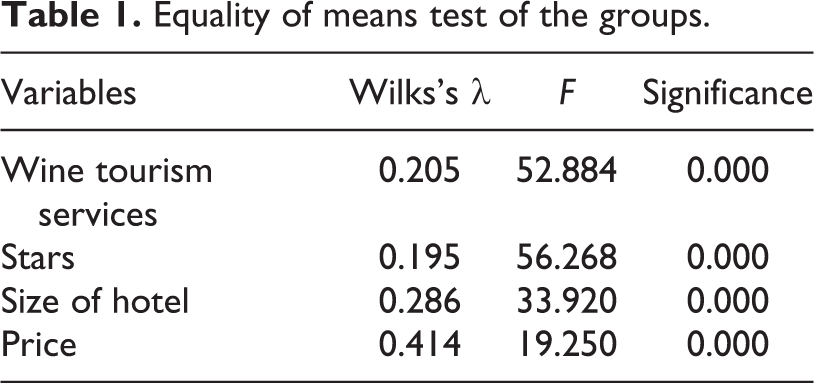
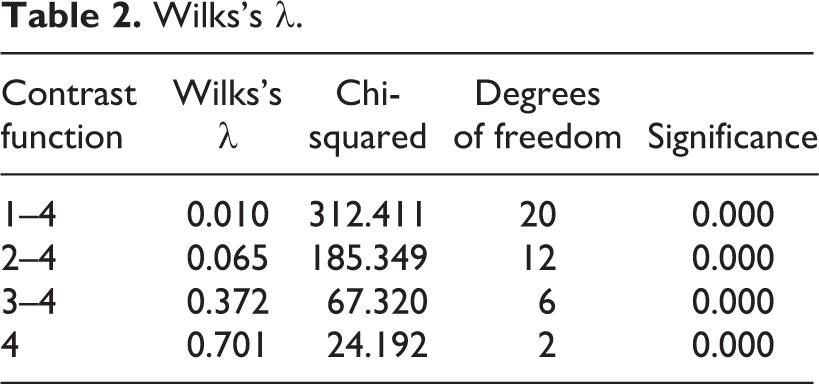
As a proximity measure, we used the squared Euclidean distance, and as a classifying algorithm, we used Ward’s method. We thus obtained a dendrogram, which allowed us to establish clusters and centroids in order to apply the K-means method. The resulting six clusters were validated using the following two methods: analysis of variance (ANOVA) and discriminant analysis. The ANOVA 1 results reflected the existence of inequality of means between the competitive groups for all included variables. The multiple discriminant analysis showed, through the test of equality of means (F), the existence of inequality of means within the competitive groups of hotels (see Table 1); we moreover observed low values on Wilks’s λ and significant χ 2 values associated with Wilks’s λ, which allowed us to accept the hypothesis of differences in the ratings given to the independent variables within the established competitive group of hotels (see Table 2). Box’s M test revealed an F-statistic of 90.961, with a level of significance of 0.001, allowing us to reject the null hypothesis of a variance–covariance matrix, not presenting significant statistical difference within the competitive group of hotels. Finally, the confusion matrix showed that 98.6% of the original group of cases had been classified correctly. All of the above confirmed that the clusters obtained were distinct and properly identified.
Equality of means test of the groups.
Wilks’s λ.
Having confirmed the sustainability of the statistical instrument, we will now proceed to discuss the results. We assigned names to the six clusters obtained according to their characteristics: Group 1. Prestigious wine tourism hotels: This group includes 3- and 4-star hotels in Spain, mostly located at or near wineries, with the highest nightly rate (€134.68). Their main competitive advantage is their focus on wine tourism (they offer an average of 5.3 wine tourism services of the 7 analyzed) and their status. Because they are smaller (36.5 rooms on average), they are able to offer personalized service. Group 2. Mid-to-low-end wine tourism hotels: The hotels in this group are similar to those in the previous group, but have only 1 or 2 stars and charge an average nightly rate of €85.35). They are also located at or near wineries. Their competitive advantage lies in their wine tourism services (4.7 services on average) and smaller size (24.87 rooms), which allows them to offer a more personalized service. Group 3. Charming, non-wine tourism hotels: This group basically includes a mix of hotels whose main competitive advantage is their charm (housed in a unique or historic building, innovative decor, own spa, etc.) rather than the offer of wine tourism services (0.33 services). They charge the second highest nightly rate (€106.66). Group 4. 4-Star urban hotels: This group is composed of large hotels whose competitive advantages are their central location in the city and prestigious brand reputation (usually 4 stars). They may also further enhance their image by offering wine tourism services. Their size (117.35 rooms) allows them to offer reasonable rates (€86.28) in relation to their star rating. Group 5. Midrange budget hotels: These are medium-sized, 3-star hotels charging modest nightly rates (€68.40) and offering virtually no wine tourism services (0.62 services). Their advantage is their low rate for a 3-star hotel. Group 6. Low-end budget hotels: Small 1-star hotels charging the lowest nightly rates (€57.93). They barely offer any wine tourism services (0.42).
In the second phase, which lasted approximately 4 months, we surveyed tourists staying at six different hotels, one from each of the six competitive groups. We chose to use one hotel per group to prevent the peculiarities of any one hotel from affecting the overall results for its competitive group. The chosen hotels largely conformed to the average characteristics of their competitive group. A stratified random sampling based on the size of the hotel was applied, yielding l00 valid surveys for the smallest hotel. Tourists were surveyed near the hotel’s reception upon their arrival at the hotel.
We thus obtained 841 valid surveys of a total of 865. Due to the presence of a group of tourists on a business trip, 61.47% of the respondents were men. This fact masks a certain equality among leisure tourists, among whom the percentage of men (48%) and women (52%) is generally very similar. In terms of age, a small percentage of the respondents were under 25 (1.55%) or over 64 (6.06%), while the brunt were between the ages of 25 and 54 years (78.48%). The majority of the respondents held a college degree (54.85%) and had a household income of over €2400 a month (40.78%). This may be because people with higher incomes have more disposable income for leisure and are thus more likely to be able to afford to stay in hotels.
Results
Once we had this information, we compared the emotional dimensions the tourists felt toward the hotel they had chosen for their overnight stay. We then used the categorical approach to analyze the basic emotions evoked by these hotels.
The analysis of the emotional dimensions consisted of several stages. First, we performed an exploratory factor analysis to check for the existence of two emotional dimensions, one related to the level of pleasure and the other to the level of activation. Second, we performed a confirmatory factor analysis to examine the underlying structure and to study the reliability and validity of the scale. Third, and finally, we used structural equations to create the level-of-pleasure and level-of-activation emotional dimensions as well as a variable to integrate the two related to the degree of emotion produced by the hotel in the customer.
The results of the exploratory factor analysis demonstrated the existence of two dimensions that, together, accounted for 80.794% of the variance. The first dimension encompasses variables associated with the level of activation or excitement felt by the tourist as a result of the particular hotel, while the second dimension includes variables related to the level of pleasure evoked in the tourist by spending the night in the hotel. The loading factor for all observed variables was over 0.4. The statistical instrument was found to work correctly; that is, the determinant was very small (1.62 × 10⁻⁶), the Kaiser–Meyer–Olkin measure showed good results (0.935), and Bartlett’s test for sphericity reflected a level of significance lower than 0.001. Finally, Cronbach’s α was 0.949.
We then performed a partially amended confirmatory factor analysis, allowing us to apply the Lagrange multiplier test and the Wald statistical test, which evaluates the effect of releasing (or not) a set of parameters simultaneously. Parametric convergence of the factors was also taken into account in the re-specification of the model. In this case, it was deemed sufficient to remove the parameters with a λ < 0.6, as they contributed little to their respective factors (indifferent–surprised, dissatisfied–very pleased, and bored–entertained).
The results of the convergent validity analysis, shown in Table 3, allowed us to confirm that the indicators converge with the assigned factors, as the λ parameters were greater than 0.5 and significant. Furthermore, the average variance extracted was found to be greater than 0.5 for all factors, and the compound coefficient of reliability showed values well above 0.7 with very good results (equal to or greater than 0.8).
Convergent validity and reliability analysis.
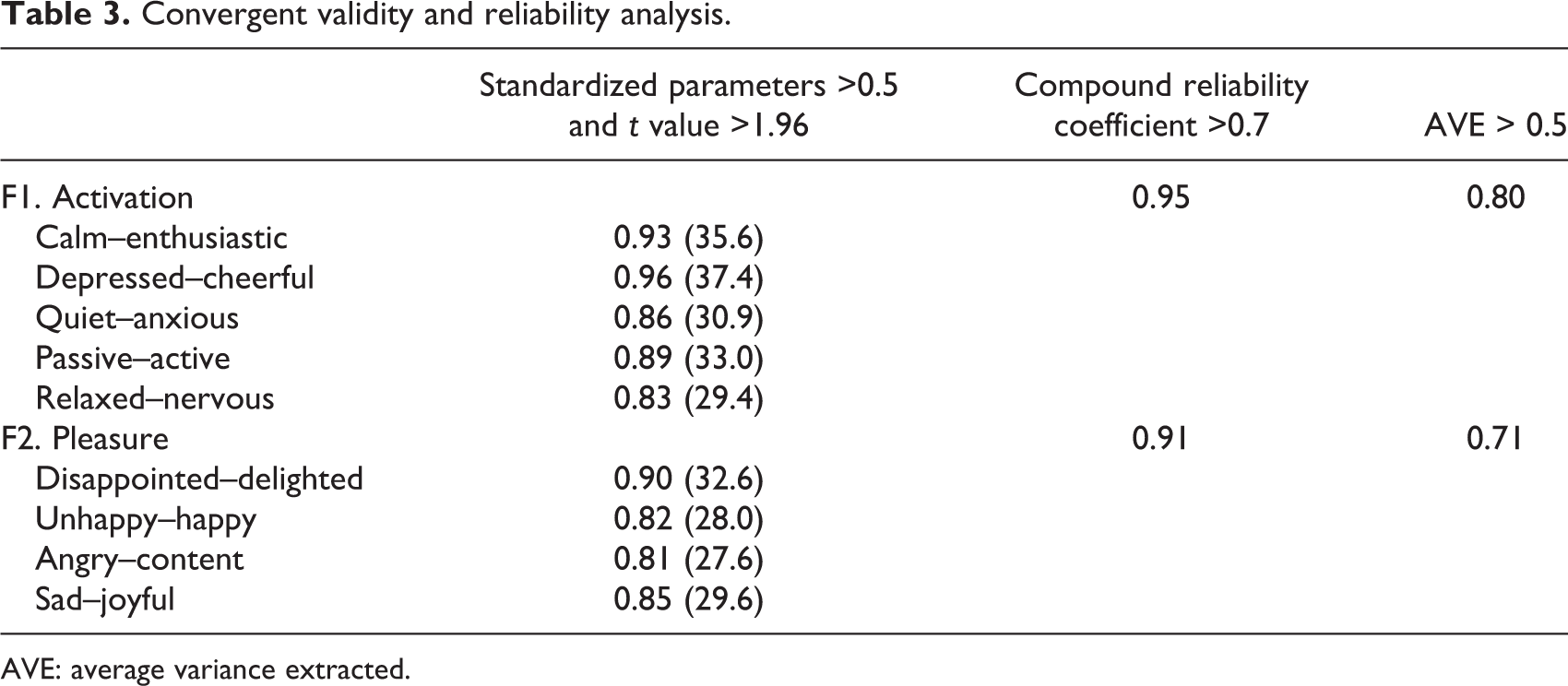
AVE: average variance extracted.
As for the discriminant validity, Table 4 shows the differences found between the factors. Thus, we demonstrated that the confidence interval near the covariance value did not include value 1 and, therefore, there was no issue in the covariance of the factors involved and, moreover, we had complied with the discriminant validity requirements.
Discriminant validity analysis.

Tables 5 and 6 below show the results of our factor analysis of the level of emotion generated by the hotel and the goodness of fit.
Factor analysis of the level of emotion generated by the hotel.

Goodness of fit indices.
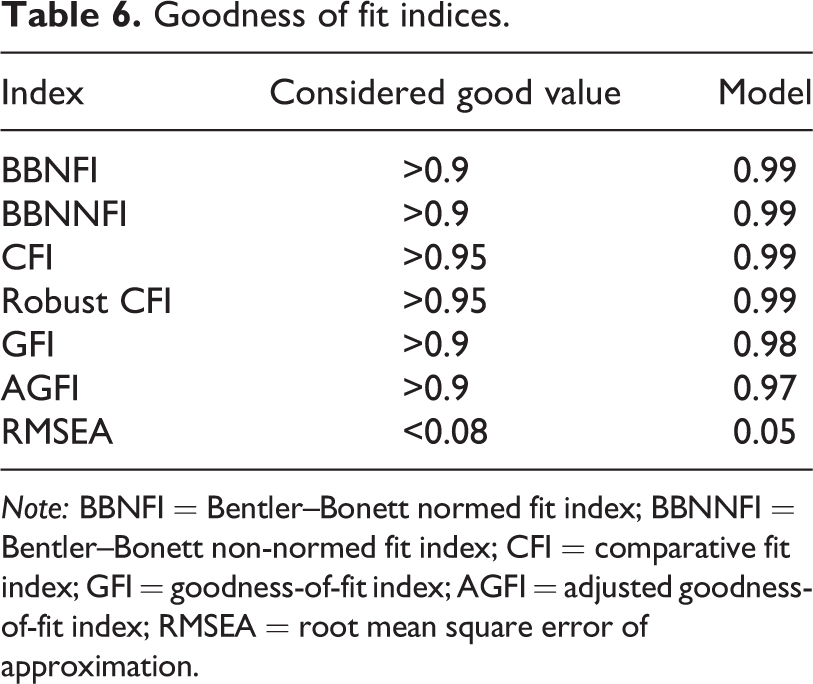
Note: BBNFI = Bentler–Bonett normed fit index; BBNNFI = Bentler–Bonett non-normed fit index; CFI = comparative fit index; GFI = goodness-of-fit index; AGFI = adjusted goodness-of-fit index; RMSEA = root mean square error of approximation.
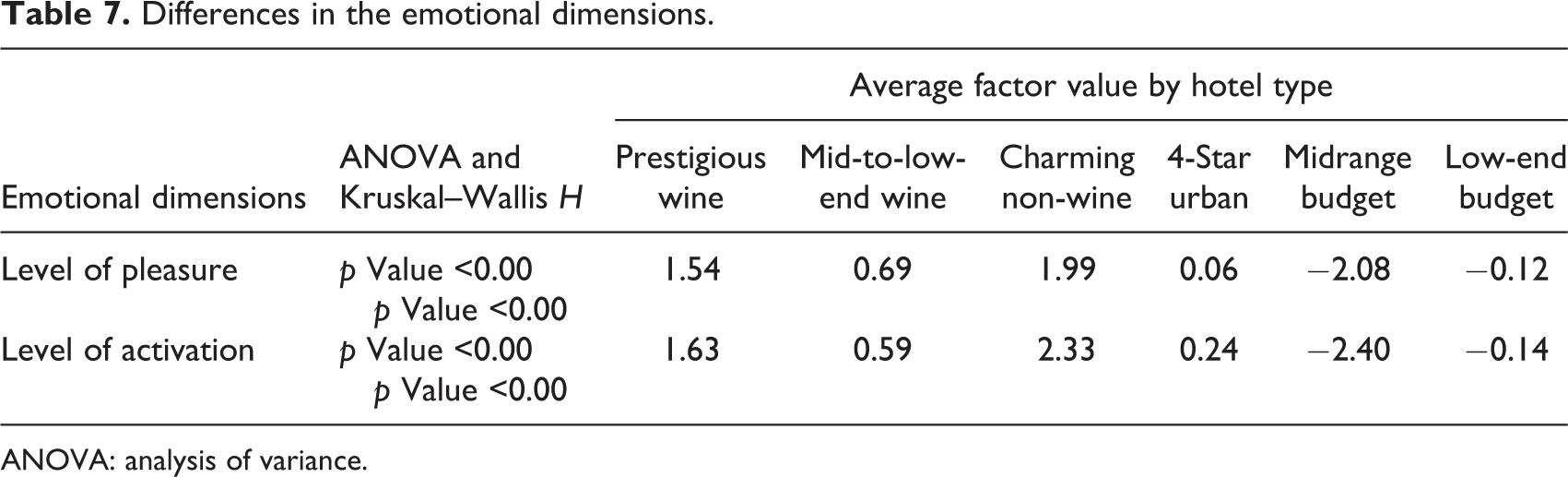
The results reported in Table 7 show the differences in the emotional dimensions.
Differences in the emotional dimensions.
ANOVA: analysis of variance.
Although this information is useful for understanding the intensity of the emotions generated by the hotels, it does not tell us which emotions are responsible for that intensity. To determine that, an analysis of basic emotions must be conducted.
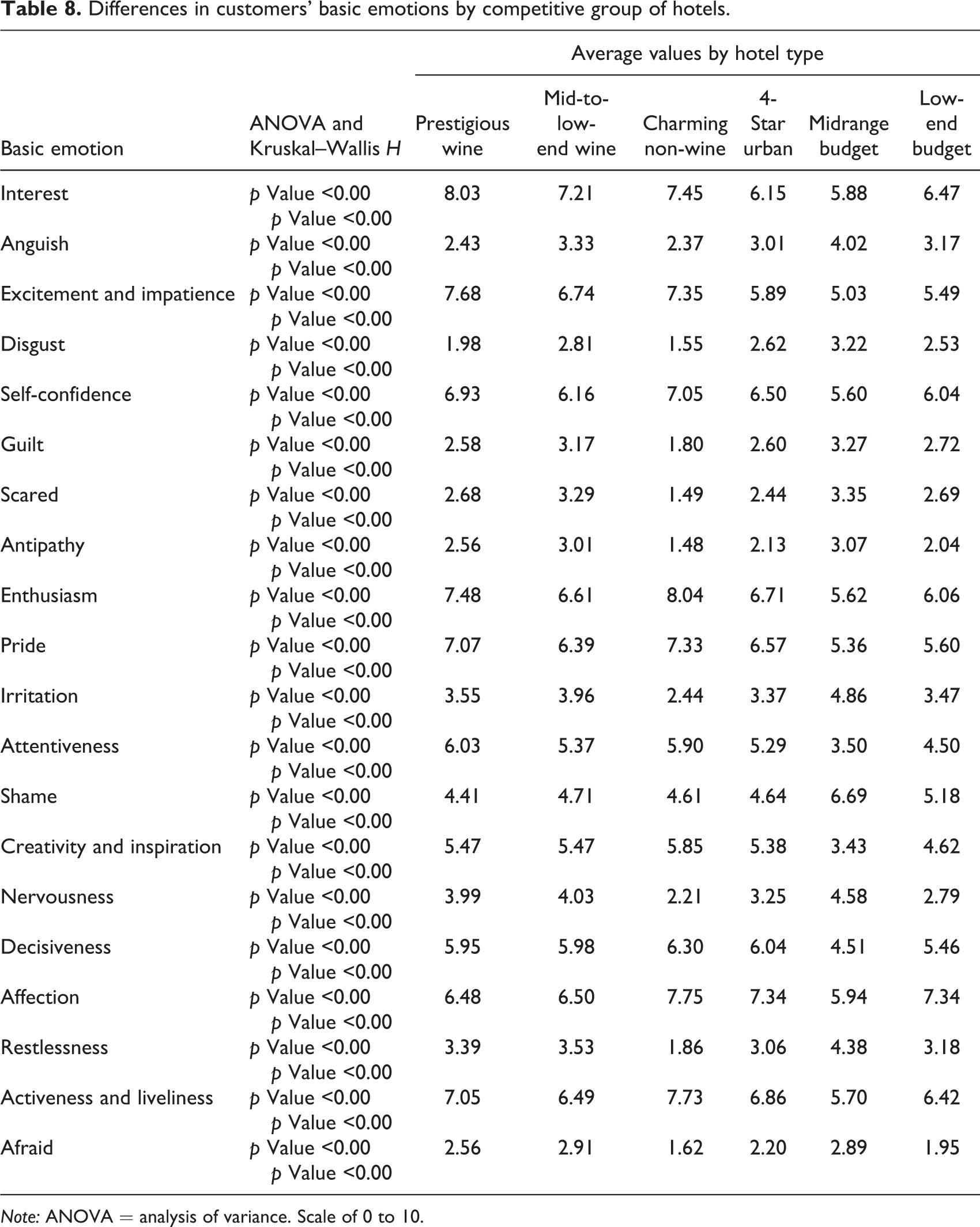
To this end, we next examined the existence of significant statistical differences between the basic emotions generated by the hotels. The results reported in Table 8 reveal the existence of profound differences among the customers of the different competitive groups for all the basic emotions analyzed.
Differences in customers’ basic emotions by competitive group of hotels.
Note: ANOVA = analysis of variance. Scale of 0 to 10.
Conclusions
This study analyzes the emotions evoked in tourists by hotels. There are two theoretical approaches for measuring this: the categorical approach, which studies basic emotions, and the dimensional one, which studies the emotional dimensions.
We have shown that in the hotel sector, both the dimensional and categorical approach should be used, as Russell (2003) has proposed. The use of both approaches enhances the information obtained, as other researchers have described (Scherer, 2005; Wirtz and Bateson, 1999).
The emotional dimensions approach allowed us to observe the intensity of the pleasure and activation triggered by hotels. The basic emotions approach complemented this measurement and allowed us to identify which emotions were responsible for the varying degrees of the emotional dimensions. Specifically, we found that the highest degree of pleasure and emotional activation was generated in tourists by the charming, non-wine tourism hotel. We also found that the basic emotions these tourists felt most intensely were excitement, impatience, enthusiasm, pride, attentiveness, creativity, inspiration, decisiveness, affection, and activeness. This finding is in keeping with Wirtz and Bateson’s (1999) observation that knowing the type of emotion makes it possible to understand the emotional experience much more thoroughly than knowing only the emotional dimensions’ levels of activation and pleasure.
In keeping with the findings of Russell and Barrett (1999) and Scherer (2005), the use of both approaches enabled us to determine whether tourists feeling a similar degree of pleasure or activation were also feeling the same basic emotions (categories of emotions). Our research showed that tourists staying at both 4-star urban and medium-to-low-end wine tourism hotels felt similar levels of arousal. However, it also showed, with regard to basic emotions, that, tourists at medium-to-low-end wine tourism hotels felt more interested, excited, impatient, and nervous than tourists staying at 4-star urban hotels. Despite these difference, tourists at both types of hotels felt similar levels of enthusiasm. Thus, although they experienced similar levels of arousal, some of the basic emotions they felt were different.
Likewise, we observed that tourists who feel similar basic emotions, for example tourists at medium-to-low-end wine tourism hotels and midrange budget hotels who feel scared or afraid, feel different levels of pleasure and activation, in keeping with the findings of Russell (1980), Russell and Barrett (1999), and Wirtz and Bateson (1999). This finding shows that these same feelings of being scared or afraid can generate different levels of pleasure and arousal.
Considerable differences were found among tourists with regard to both emotional dimensions and basic emotions. This conclusion testifies to the power of these affective variables in tourism market segmentation.
Emotional dimensions: The tourists whose hotels evoked the highest levels of emotion with regard to both the pleasure and activation dimensions were those staying at charming non-wine tourism hotels and prestigious wine tourism hotels. Tourists staying at midrange budget hotels and low-end budget hotels showed the lowest levels of intensity with regard to these emotions.
Basic emotions: Certain emotions occur with greater intensity at certain types of establishments. In general, customers at more prestigious establishments (prestigious wine tourism hotels and charming non-wine hotels) feel positive emotions more intensely, while customers at lower end establishments (midrange budget hotels and low-end budget hotels) feel negative emotions more intensely. However, some basic emotions are subject to specific considerations, which we discuss below.
Customers at prestigious wine tourism hotels and charming non-wine hotels are the most impatient and eager to enjoy the hotel; in addition, these customers are usually more attentive, take greater emotional pride, and have higher self-esteem. Conversely, customers at budget hotels feel these emotions less intensely.
With regard to guilt, antipathy, and afraid, our results show that customers at midrange hotels (medium-to-low-end wine tourism hotels and midrange budget hotels) feel these emotions most intensely. This may be because customers at these intermediate-category hotels are unsure of their choice. It is worth noting that customers at charming non-wine tourism hotels, the most expensive ones, feel these emotions least intensely of all, indicating that paying more is not associated with feelings of guilt or afraid of the selected hotel.
The most inspired, determined, active, and affectionate customers were those at charming, non-wine tourism hotels, while the customers who felt these emotions least intensely were usually those staying at mid-to-low-range budget hotels.
In contrast, customers at midrange budget hotels felt anguish, disgust, and irritation most intensely, while customers at charming, non-wine tourism hotels felt these emotions least intensely.
Finally, customers at prestigious wine tourism hotels showed greater interest in the hotel itself than those at midrange budget hotels, whereas customers at midrange budget hotels felt shame more intensely than those at prestigious wine tourism hotels.
In short, compared to customers at charming, non-wine tourism hotels, and prestigious wine tourism hotels, the emotions of customers at midrange budget hotels showed that, although they had chosen the hotel they were staying at, they were not happy with their choice and would have preferred to be staying elsewhere. Their ability to do so, that is, to stay at a more prestigious hotel, may have been limited by financial constraints.
As a future line of investigation, the applicability of these conclusions to different markets and tourism products should be considered in order to determine the generalizability of our conclusions.
Business involvement
The conclusions drawn from this study are particularly relevant for managers in the hospitality industry. They show that higher priced, more prestigious establishments with distinguishing features (wine tourism services or charming hotels) produce both more intense emotions in terms of their level of pleasure and activation and more positive basic emotions. In contrast, lower end hotels produce the most negative emotions. Also certain basic emotions occur with greater intensity at certain types of hotels. For instance, feelings of guilt, afraid, or distaste occur more frequently in customers at midrange hotels.
In keeping with these findings, hotels can generate more positive emotions by offering distinguishing features. Managers should thus design their offers to highlight these notable features. Managers at lower end hotels should take special care with regard to the negative emotions their hotel can elicit in their customers, while managers at midrange hotels should try to generate confidence in their customers with regard to the adequacy of their decision. To this end, they could design advertising or loyalty campaigns, among other commercial activities. Managers seeking to use the influence of emotions to draw potential tourists to their hotel must analyze the level-of-pleasure and level-of-activation dimensions as well as the basic emotions the establishment evokes. Analyses using just one approach could lead to a myopic view of the reality of what customers feel and, thus, to policies that could result in poor communication and product design or misleading offers.
Footnotes
Funding
The author(s) received no financial support for the research, authorship, and/or publication of this article.