







Abstract
This research analysed tourist experiences on beaches and suggested appropriate brand positioning for Thai beach destinations. A new destination positioning method was proposed involving a topic modelling algorithm, hierarchical clustering and textual analysis using data from 75,500 TripAdvisor reviews. Eleven tourist experiences and five clusters of distinctive beach destinations were identified. Findings suggested that the Tourism Authority of Thailand should replace their current “all-in-one” message with strategic and relevant communications to strengthen brand positioning by reinforcing the positive experiences and improving the negative aspects of beach tourism. Experiential brand positioning can assist DMOs to differentiate destinations as multi-faceted and dynamic.
Keywords
Introduction
Beach tourism, also referred to as sun, sea and sand tourism has been a symbol of mass tourism for decades (Bujosa et al., 2015). The COVID-19 pandemic shifted the narrative of global tourism from “over-tourism” to “no tourism” in a matter of weeks. Tourism in Thailand, with beach resources along 2600 kilometres of coastlines and islands (Piriyapada and Wang, 2015), has been devastated by the pandemic. Despite the near obliteration of the industry, UNWTO projected that the number of international tourists may return to normal (the 2019 level) by 2024. However, beach tourism in Thailand has eminent challenges such as crowding and unsustainability (Taecharungroj and Tansitpong, 2017). One proposed approach to curb crowding is the diversion of tourists from popular places to less famous areas (Piriyapada and Wang, 2015). As such, the Tourism Authority of Thailand (TAT) has implemented several strategies to promote and divert tourists to 55 “secondary destinations” (TAT News, 2018). Despite abundant beautiful attractions at secondary destinations, promotion of these areas has not been successful due to marketing limitations (Keitpiriya et al., 2020).
Notwithstanding detailed investment plans and growth forecasts compiled by the TAT and the Ministry of Tourism and Sports, the strategy of diverting tourist revenue to secondary destinations has been largely unsuccessful, with limited benefits (Manager Online, 2020). The main cause of failure is the inability to distinguish the benefits of secondary destinations from the perspectives of tourists. Marketing promotions of beaches on official TAT channels still focus on “one-size-fits-all” messages. Indeed, the key pillar for success of secondary destinations tourism strategy is to differentiate their uniqueness, distinction and strengths (Yangngam and Wanna, 2020). These destinations need aspirational positioning in order to create strong emotional bonds with the target audience.
A major challenge of beaches is that they predominantly have similar offerings/characteristics (Pike, 2012). It is difficult for TAT to find distinct positioning for relatively similar destinations; thus, the “one-size-fits-all” messages were often used. Limited literature has attempted to differentiate such destinations with few studies (e.g. Phillips and House, 2009; Pike et al., 2018) that compared and contrasted beach destinations using some salient attributes. The lack of method that can help destination marketing organisations (DMOs) differentiate relatively similar destinations is the research gap that this study aimed to fill.
One marketing construct that can help to differentiate beach destinations is experience because experiences are multi-faceted and include several sensations, feelings, cognitions and behaviours (Barnes et al., 2014; Brakus et al., 2009). To identify and understand tourist experiences, online information — online reviews in particular — is now increasingly used as a source of information (see Schuckert et al., 2015). Emerging studies on this valuable data source have analysed destinations in many facets but research utilising online reviews to develop destination positioning, especially for destinations that possess relatively similar characteristics and are difficult to differentiate (i.e. beaches) is lacking.
This research proposed a new three-step method to differentiate destination brand positioning for beach destinations in Thailand and answer the following research questions.
RQ1: What are the experiences of tourists at beach destinations in Thailand? RQ2: Can beach destinations be grouped based on tourist experiences? RQ3: What are the valuable (salient and positive) characteristics of each group?
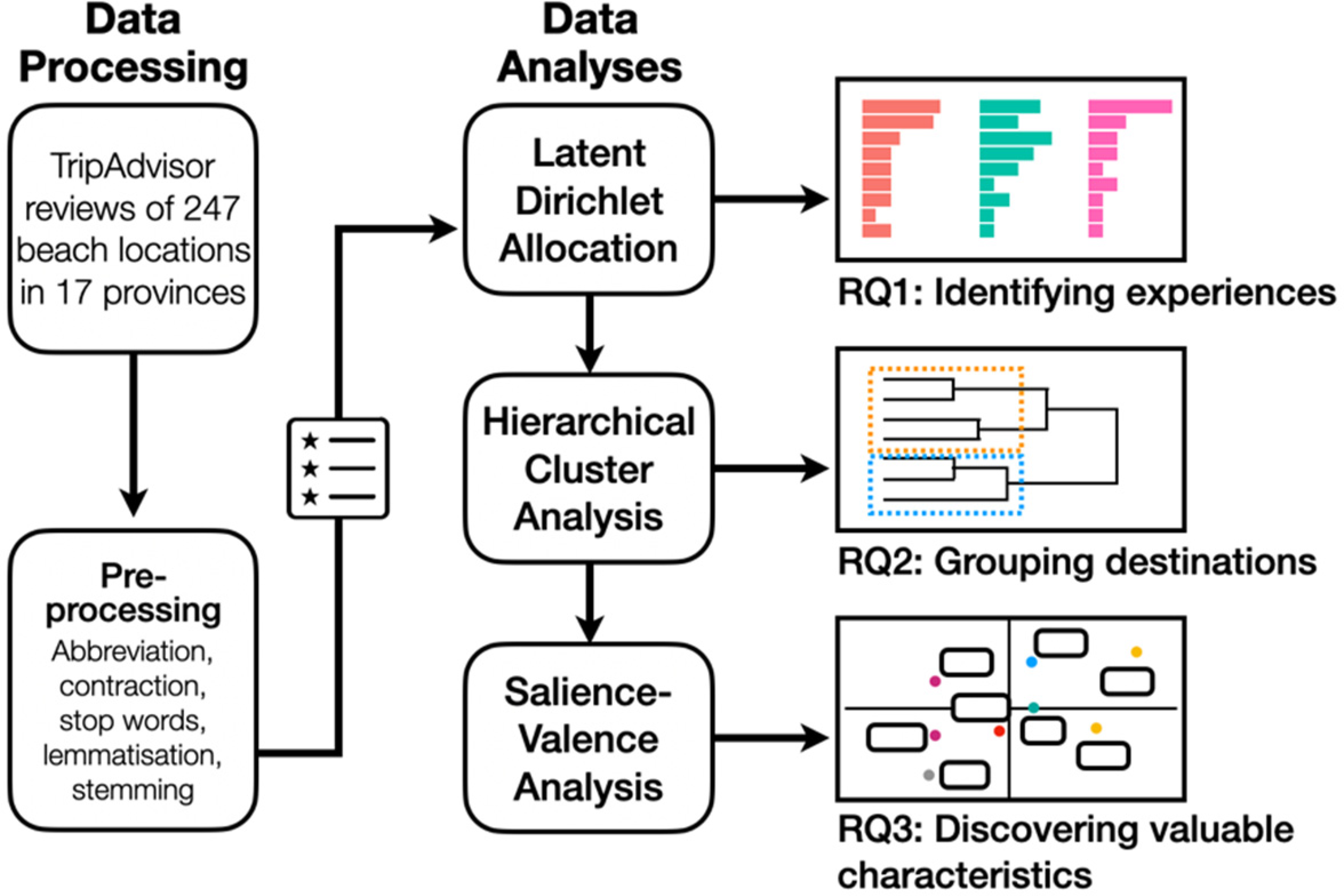
First, tourist experiences at beach destinations in Thailand were investigated by analysing reviews posted on TripAdvisor as suitable data for research on tourist experiences. An unsupervised machine learning algorithm, latent Dirichlet allocation (LDA), was used to identify different types of tourist experiences on beaches. Subsequently, hierarchical cluster analysis was performed to group beach destinations, while salience-valence analyses were conducted to assess experiences and suggest brand positioning. The research scope covered 75,500 TripAdvisor reviews in English from 247 beaches in 73 areas (districts or subdistricts) comprising 17 provincial-level beach destinations in Thailand.
This research contributes to the body of knowledge by introducing the novel experience brand positioning approach which utilised the digital Big Data in the form of online reviews. This method can both discover the experiential insights of a destination and differentiate destinations among relatively homogeneous counterparts. Strategic marketing actions are suggested for TAT to reinforce the positive and improve the negative experiences of beach destinations in Thailand.
Background
Beach tourism — A symbol of mass tourism
Despite being one of the engines boosting tourism income and economic growth, tourism at beaches and coastal areas often leads to complaints from the locals (Phillips and House, 2009). The major concern arising from excessive beach tourism is environmental degradation that negatively impacts the ecological status of the destination, the recreational experiences of tourists and the well-being of the host communities (Chen and Teng, 2016). In Thailand, the unsustainability of beach tourism has been widely reported over the past few decades (e.g. Taecharungroj and Mathayomchan, 2019). Another eminent type of unsustainable beach tourism — crowding — occurs when the number of tourists continually exceeds the carrying capacity, defined as the maximum number of visitors that can be accommodated without causing destruction to the physical, economic and socio-cultural environment with an unacceptable decrease of visitors’ satisfaction (Chen and Teng, 2016).
When the number of visitors exceeded this capacity, average spending and average length of stay decreased (Bujosa et al., 2015). Therefore, it is imperative to tackle this issue immediately during the pandemic before beach tourism in Thailand regains its attractiveness. The Tourism Authority of Thailand (TAT) has implemented plans and policies to divert tourists from unsustainable places to 55 sary destinations (TAT News, 2018). However, the strategy has been unsuccessful (Manager Online, 2020); this research attempted to suggest brand positioning for beach destinations in Thailand based on an analysis of tourist experiences on those beaches.
Beach positioning — A challenge for homogenous destinations
Brand positioning is a concept that involves the creation and ownership of a credible, valuable and distinctive position in the minds of the stakeholders (Gwin and Gwin, 2003). Its goal is to design and shape offerings and images to occupy a position in the mind of customers in relation to competitors (Fuchs and Diamantopoulos, 2010). Positioning is important for destinations because skilful positioning can help achieve cohesive and consistent identity and communications (Insch, 2014). Typically, a position is built from a combination of salient and important tangible and intangible attributes of the brand (Evren and Kozak, 2018).
Some previous studies have highlighted important beach attributes and components as cleanliness, safety, information, crowding, climate, price, hotel, nightlife, transport, peacefulness, scenery, local culture, food, service, activities, wildlife and physical characteristics (Chen and Teng, 2016; Phillips and House, 2009; Taecharungroj and Mathayomchan, 2019; Carvache-Franco et al., 2020). Despite the plethora of beach attributes, a successful positioning requires only few striking attributes of the destination and a succinct, focused and consistent message (Rodríguez-Molina et al., 2019).
The current body of knowledge offers several approaches to develop destination brand positioning. For example, Pike et al. (2018) compared brand positions among beach destinations using attributes such as suitable accommodation and good value for money. Pyo (2015) used motivational push-pull factors to indicate positioning, while Rodríguez-Molina et al. (2019) posited the use of benefits. Larsen (2018) analysed discourses about city constructs and suggested elements for a brand positioning strategy, while Claveria and Poluzzi (2017) used dimension reduction to identify destination positioning based on key tourism statistics such as expenditure and occupancy.
However, one of the main challenges is to find the right positioning for destinations that are at the same competitive level and offer the similar characteristics (Pike, 2012). Beaches are tourist destinations that face such a challenge; characteristics of beaches are relatively similar. Some previous studies have compared and contrasted beach destinations. Phillips and House (2009) focused primarily on physical characteristics, while Pike et al. (2018) identified positioning using only few common attributes such as “lots to see/do”, “value for money” and “not touristy”. We contend that more nuanced features are required to convincingly differentiate relatively homogeneous destinations like beaches. One important marketing construct that has not been used as a basis for destination positioning is the experience of tourists.
Beach experiences from online reviews — A new frontier for destination positioning
The study of experience originated in the field of marketing and can be defined as subjective internal emotions (sensations, feelings, cognitions) and behavioural responses evoked by brand-related stimuli (Brakus et al., 2009). Unlike other general evaluative constructs such as brand attitudes, involvement, attachment and personality, brand experiences are multi-faceted and include specific sensations, feelings, cognitions and behavioural responses (Barnes et al., 2014; Brakus et al., 2009).
In tourism, destinations are inherently experiential. Brand experience is both cognitive and emotional as personal encounters between tourists and a place (Barnes et al., 2014) including multiple service providers in multiple locations (Gopalan and Narayan, 2010). Such experiences influence tourists’ perceptions and attitudes towards the place e.g., brand equity, love, image, word-of-mouth and loyalty (Gopalan and Narayan, 2010; Hanna and Rowley, 2013; Huang, 2017).
Experiences are not homogeneous and vary in intensity and valence. Some brand experiences are more intense than others; likewise, some experiences are highly positive whereas others may be negative (Brakus et al., 2009). As such, the responsibility of a destination manager is to actively manage both positive and negative experiences to good effect (Hanna and Rowley, 2013). The more that a brand evokes multiple positive experiences, the higher experiential value it can offer to tourists, resulting in better attitude and high satisfaction (Liao et al., 2021). Tourists want a destination that engages their senses, evokes positive feelings and excites or intrigues.
Tourists also expect experiences to be distinct; however, the existing literature has neither comprehensively explored tourist beach experiences nor viewed them for brand positioning. Although some studies have segmented and categorised “beach-goers” based on their motivations (e.g. Carvache-Franco et al., 2020), research on their comprehensive experience is limited due to the limitation of data collection.
In recent years, a new stream of research on tourist experiences emerged from trustworthy user-generated content (UGC) data such as online reviews (see Schuckert et al., 2015). Online reviews are tourists’ spontaneous and insightful feedback that is publicly available and accessible on review platforms such as TripAdvisor or Google Maps (Guo et al., 2017). These reviews contain a mixture of facts, opinions, impressions and sentiments that real travellers post and broadcast to others (Ye et al., 2014). Online reviews were analysed to elucidate experiences in tourism and hospitality contexts in a variety of settings such as retail (Taecharungroj et al., 2020), sports stadia (Edensor et al., 2021) and tourist streets (Song et al., 2021).
As such, this research utilises the rich information about tourist experiences in online reviews to develop destination positioning. Previous literature considered several facets of online reviews; Wong and Qi (2017) analysed the evolution of Macau's image, while Taecharungroj and Mathayomchan (2019) identified the attributes and positive/negative factors of attractions in Phuket, Thailand. Kirilenko et al. (2019) categorised tourists in Florida using network and spatial analyses, while an insightful study by Toral et al. (2018) compared the unique attributes of Barcelona, Dublin, Paris and Rome. However, notwithstanding the positive contributions of these studies, none utilised online reviews for the purpose of destination positioning. Therefore, here, we propose a new systematic method for brand destination positioning, based on tourists’ experiences detailed in their online reviews.
Method
Figure 1 illustrates the research method for destination positioning of Thai beaches.
Research method.
Reviews were collected during April 2021 covering all searchable beaches in Thailand on TripAdvisor, comprising 247 beach locations in 73 areas (districts or subdistricts) of 17 provinces using a Python script. The earliest review of the dataset was published in December 2004 and the latest one was published at the end of April 2021.
The reviews were pre-processed using R language and the body and title of each review were combined. Abbreviations and contractions were replaced by full words. Reviews were converted to lowercase and numbers were removed. Finally, stop words were removed from the reviews. Stop words included (1) generic words from the “tidytext” package, (2) common words across all beaches such as “beach”, “bay” and “visit” and (3) beach and province names. Before LDA analysis, the reviews were lemmatised and stemmed. After the pre-processing steps, 75,500 reviews remained for further analyses. Reviews of beaches in Thailand were posted by both domestic and international tourists; 4996 reviews (6.6%) were posted by TripAdvisor users from Thailand, while 18,756 reviews (24.8%) had no identifiable location of residence. The majority as 51,748 reviews or 68.5% were posted by international tourists.
Latent Dirichlet allocation (LDA)
This study used LDA, an unsupervised machine learning, topic modelling algorithm to reveal the experiences of beachgoers, using the co-occurrence of words to assume the existence of a hidden structure in the whole corpus of reviews (Blei et al., 2003; Tirunillai and Tellis, 2014). LDA creates a three-level Bayesian probability model, where each review represents a probability distribution over topic and each topic represents a probability distribution over words. Topics modelled from LDA were used to infer tourist experiences and answer RQ1.
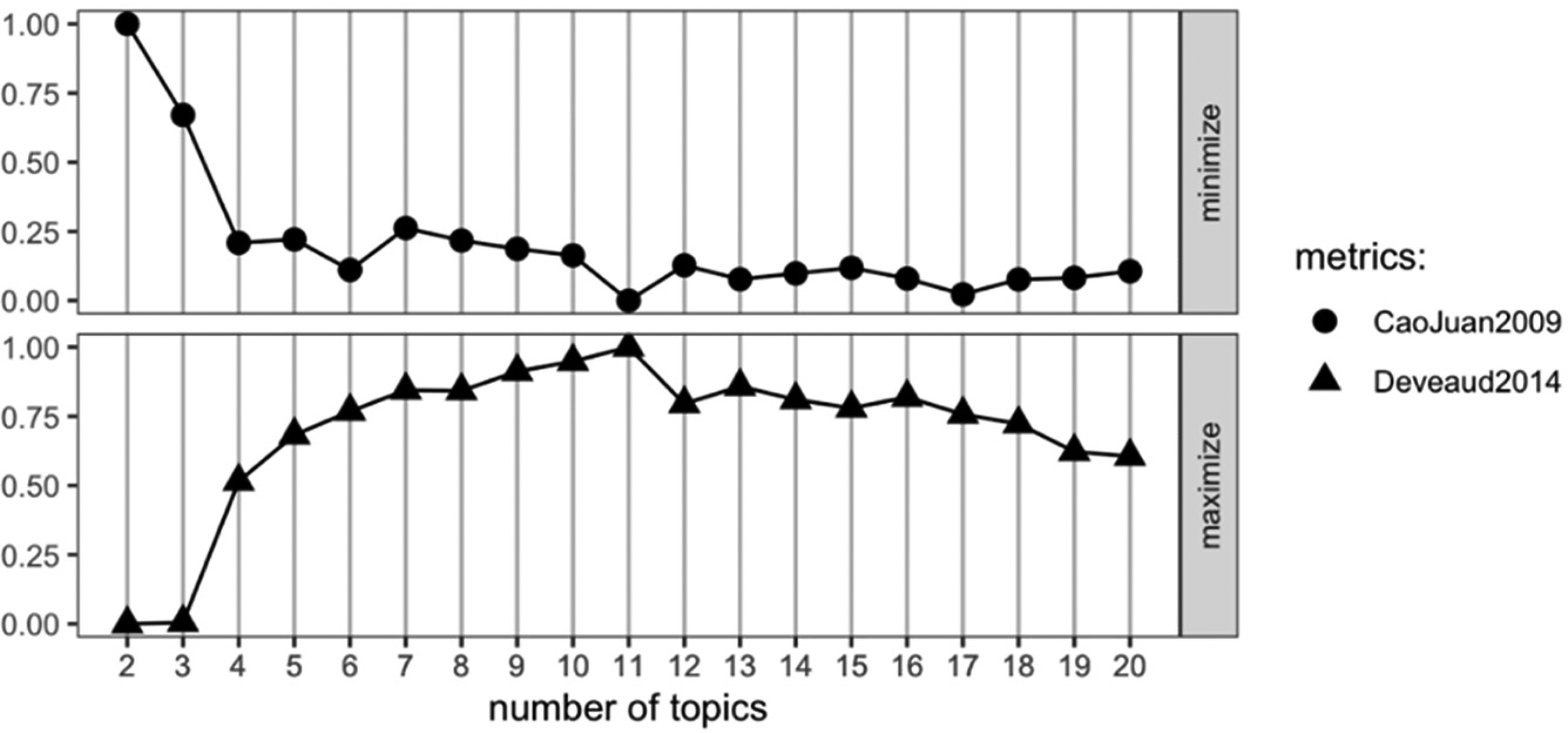
Before performing LDA, the number of topics and corpus-level hyperparameters must be specified. To determine the optimal number of topics in the corpus of photos, this study used two techniques in the “LDATuning” R package. Results in Figure 2 indicated eleven as the most suitable number of topics because it produced the minimal value according to Cao et al. (2009) and the maximal value according to an algorithm by Deveaud et al. (2014).
Optimal number of topics.
Hyperparameter tuning and the LDA algorithm were performed using the “topicmodels” package in R. Two levels of alpha (1 and 0.1) and three levels of beta (0.1, 0.01 and 0.001) were tested to indicate the model with the lowest perplexity score, implying better generalisation performance (Blei et al., 2003). From six combinations, the model alpha = 0.1 and beta = 0.001 was selected. LDA was performed using the Gibbs sampling method with five random starts and the best model was selected based on the highest posterior likelihood (Tirunillai and Tellis, 2014). The topics (experiences) were then extracted, with each attribute containing 15 labels for interpretation and naming.
This research used hierarchical clustering to group 17 provinces (beach destinations) into relatively homogeneous groups and answer RQ2. A cluster analysis revealed patterns of experience across many beach destinations in Thailand and identified clusters of beach destinations that were distinctive. Beach destinations with fewer reviews can benefit from attaching themselves with more established and stable destinations in the same cluster. As a result, clustering helps to transfer the positive experiences and attractive qualities from established beach destinations to secondary ones.
In this research, destinations were clustered based on salience of experience from beach reviews in each province. The reviews were assigned probabilities (or gamma values, γ, as a product of LDA) signifying the likely classification in each type of experience. Average gamma values for each experience implied the salience (see Song et al., 2021). Hierarchical clustering was performed by the “stats” package in R using the “ward.D2” method.
Salience-valence analysis to suggest brand positioning
As well as identifying distinctive clusters of beach destinations, TAT and other related tourism agencies must make the proposed positions valuable by pursuing positive experiences. This can be done using a diagnostic “salience-valence analysis” (Taecharungroj and Mathayomchan, 2019) that assesses the degrees of intensity (or salience) and the valence as the affective quality of the experiences. Salience represents the average probability or the average gamma value of each experience. A highly salient experience implies that tourists often wrote about this particular experience at the beach. Valence of experience is the logistic regression coefficient between each experience and the ratings (for detail, see Song et al., 2021). Binary logistic regression between the gamma values and whether the review is positive (4- and 5-star) or negative (1–3 star) produce coefficients. Highly salient and/or positive experiences of each cluster were used to further explain the experiential brand position of that cluster and answer RQ3.
Findings
Step 1 Identifying beach experiences
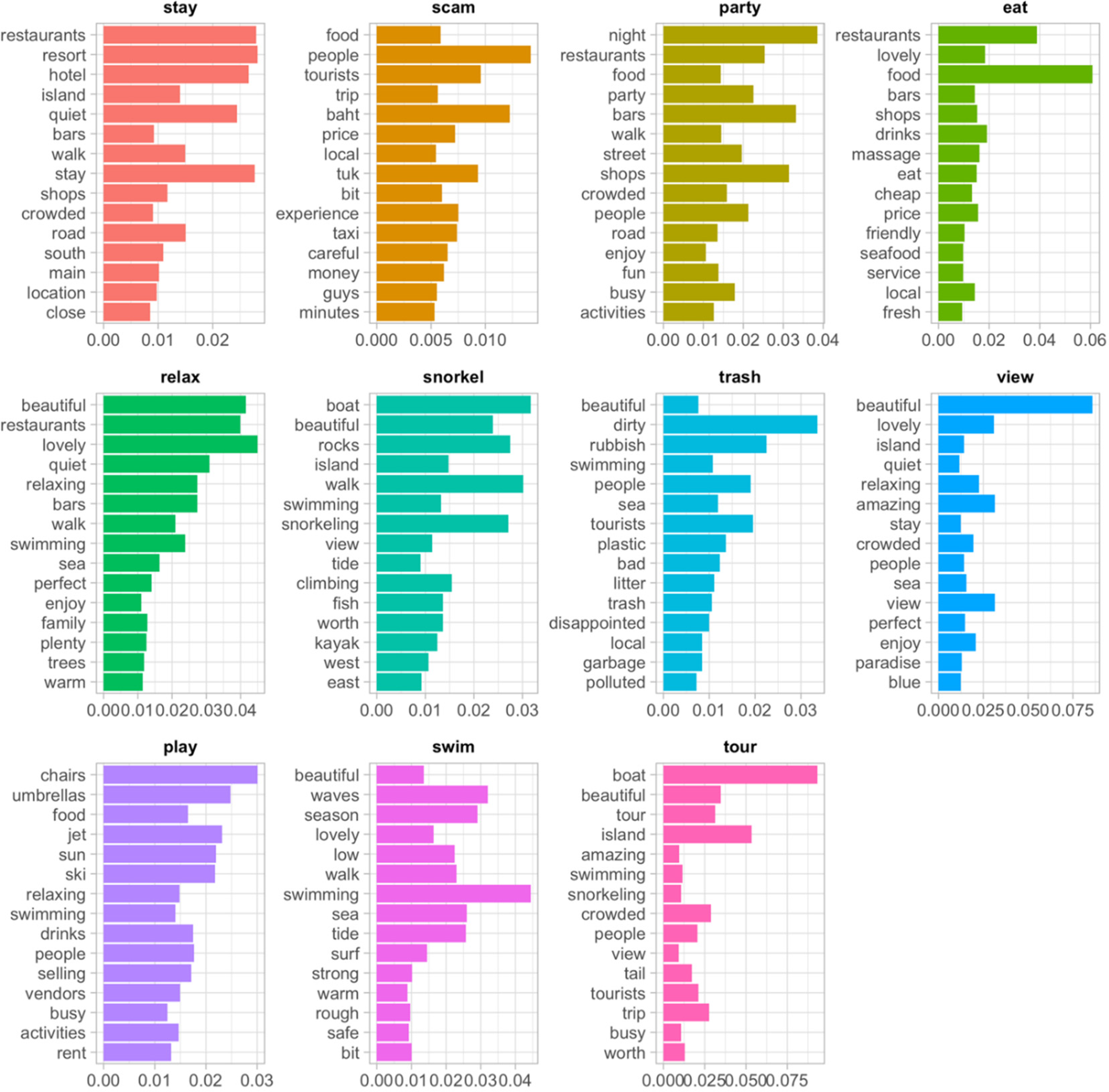
The LDA algorithm identified 11 experiences of beachgoers from the TripAdvisor reviews. The 15 most representative words for each experience are presented in Figure 3. The X-axis portrays the beta (β) or per-topic word distribution. Higher beta values indicate that the word has greater significance in topic representation. The naming of each experience was conducted by analysing (1) highly representative words, (2) unique words and (3) the meaning and context of highly representative reviews (examples shown later). The meaning of each experiential dimension is briefly explained.
The 11 Topics with the most representative words (beta).
Stay: The stay experience primarily concerns accommodation in hotels or resorts. Tourists wrote about the characteristics of accommodation using resort, hotel and stay as highly representative words; e.g., “You got your resorts there, but mainly for locals coming on the weekends, not many foreigners there” (Chao Lao Beach, Chanthaburi, April 2017). As well as accommodation, this experience also encompasses other services and retail outlets using words such as shop and restaurant.
Scam: This typically negative experience involves the commercialism of service providers; e.g., “Went to Pattaya Beach for the day and couldn’t walk 10 metres without someone trying to sell you knocked-off products that I didn’t want” (Pattaya Beach, Chonburi, December 2015). Tourists often complained about services that overcharged fees and reported perceived scams and fraudulent activities by officials: “The police just take out tourists and will give you a fine for 1000 baht!” (Patong Beach, Phuket, February 2017).
Party: Nightlife is a salient factor of beaches in Thailand (Taecharungroj and Mathayomchan, 2019). Many tourists wrote about the nightlife scene with night, bar, party and street as highly representative words; e.g., “A great location to enjoy nightlife, lots of bars, pubs & nightlife areas. Best time to go between 10 pm and midnight. Just in front of Bangla Road or walking street” (Patong Beach, Phuket, March 2019).
Eat: Using highly representations words as food, drink, restaurant and eat, tourists described the eating and dining experiences on/near beaches e.g., “Had an excellent meal and enjoyed the ocean breeze. They serve food from the restaurant kitchens across the road” (Saeng Chan Beach, Rayong, July 2017). As well as the restaurants, some tourists also wrote about the eating areas on the beach e.g., “There's a good-sized picnic area for a weekend lunch or dinner” (Chao Samran Beach, Phetchaburi, May 2015).
Relax: One of the very positive experiences that tourists reported on was the quiet and peaceful relaxation on the beach with love, quiet, relax and walk as highly representative words. Tourists wrote about how they enjoyed the relaxing atmosphere on the beach. Quiet relaxation makes beaches suitable for families and couples; e.g., “Peaceful Beach. If you are looking to relax for a few days, Lamai Beach is a lovely peaceful place, perfect for families and couples” (Ko Samui, Surat Thani, January 2018).
Snorkel: Many tourists like to go snorkelling and encounter beautiful fish and corals; e.g., “Excellent beach with fantastic snorkelling. A great place for snorkelling with corals and plenty of fish just a few metres inside the water” (Ko Lipe, Satun, January 2018). Tourists also wrote about walking, climbing and hiking as adventurous activities that often go together with snorkelling; e.g., “be prepared to swim from the boat and climb a rope ladder to access this beach, great for snorkelling, fish in every colour you could imagine!!” (Maya Bay, Ko Phi Satan Lee, Krabi, August 2014).
Trash: Environmental degradation and ecological destruction were explicitly described in this experience using dirty, plastic, litter, trash and garbage as highly representative words. These descriptions often indicate the intention of not to visit again. “The beach is not what I expected broken glass, bottles, dog waste and bags of rubbish. Will not be revisiting this part of Phuket again” (Karon Beach, Phuket, March 2017), or a warning to other tourists.
View: Tourists often described the amazing views of the sea in this experience. This resonates with the ideal paradise image of the tropical beach portrayed in the film “The Beach” where one of the characters warned the other that the beach is “too beautiful” and brings “too much sensation” (Law et al., 2007). Many tourists used otherworldly phrases to describe many beaches and islands in Thailand; e.g., “Beyond world. Beyond words… I believe this one of the most exotic beaches - a heaven on this earth, crystal clear water, absolutely clean beach with cliff views” (Railay Beach, Krabi, July 2015).
Play: This experience covers several activities of beachgoers such as renting deck chairs and umbrellas, sunbathing and jet skiing. They often described the variety of activities available on the beach; e.g., “Many options! You can swim, hire a jet ski, stroll, sit under the umbrellas, have food, drinks and hawkers come to your seat” (Jomtien Beach, Chonburi, January 2012) and “Long walks in any direction, white soft sand well kept. Little horses offered for riding and local ladies offer manicures and massage” (Hua Hin Beach, Prachuab Khiri Khan, August 2013). For many tourists, various beach activities and commerce bring them excitement and joy.
Swim: Swimming is another salient experience on many beaches. Tourists often described the experience of swimming; e.g., “We really enjoyed swimming at this beach. The water is very shallow for a long way, maybe 100 metres so it's safe for swimming when the weather conditions are good” (Hua Hin Beach, Prachuab Khiri Khan, October 2020). Notwithstanding the quality, many tourists also warn others of the potential hazards that they may face with strong, rough, wave, tide and safe as highly representative words. Apart from swimming, surfing is also another activity that was often mentioned in this experience.
Tour: This experience occurs on remote islands that require a boat tour/trip to access. Tourists often described mixed experiences with both joy and some concerns; e.g., “Nice beach, but jammed with long tails, speedboats and high-speed ferries. The beach would be very nice, the sands white but super noisy” (Ko Lipe, Satun, February 2018). Do not forget to negotiate the costs as the quoted prices are always higher” (Ko Kradan, Trang, May 2018). A mixture of positive and negative feelings is a ubiquitous feature of this experience.
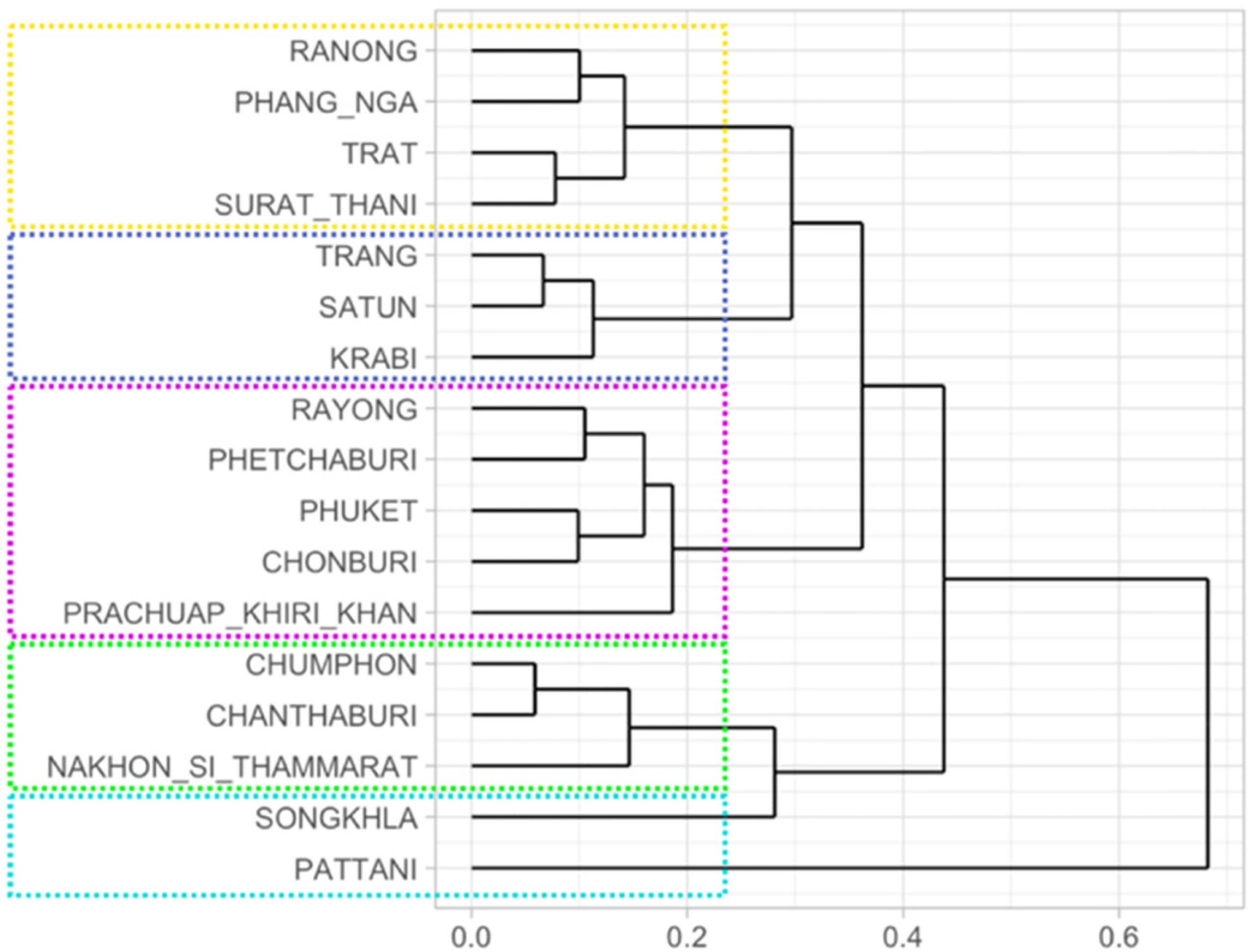
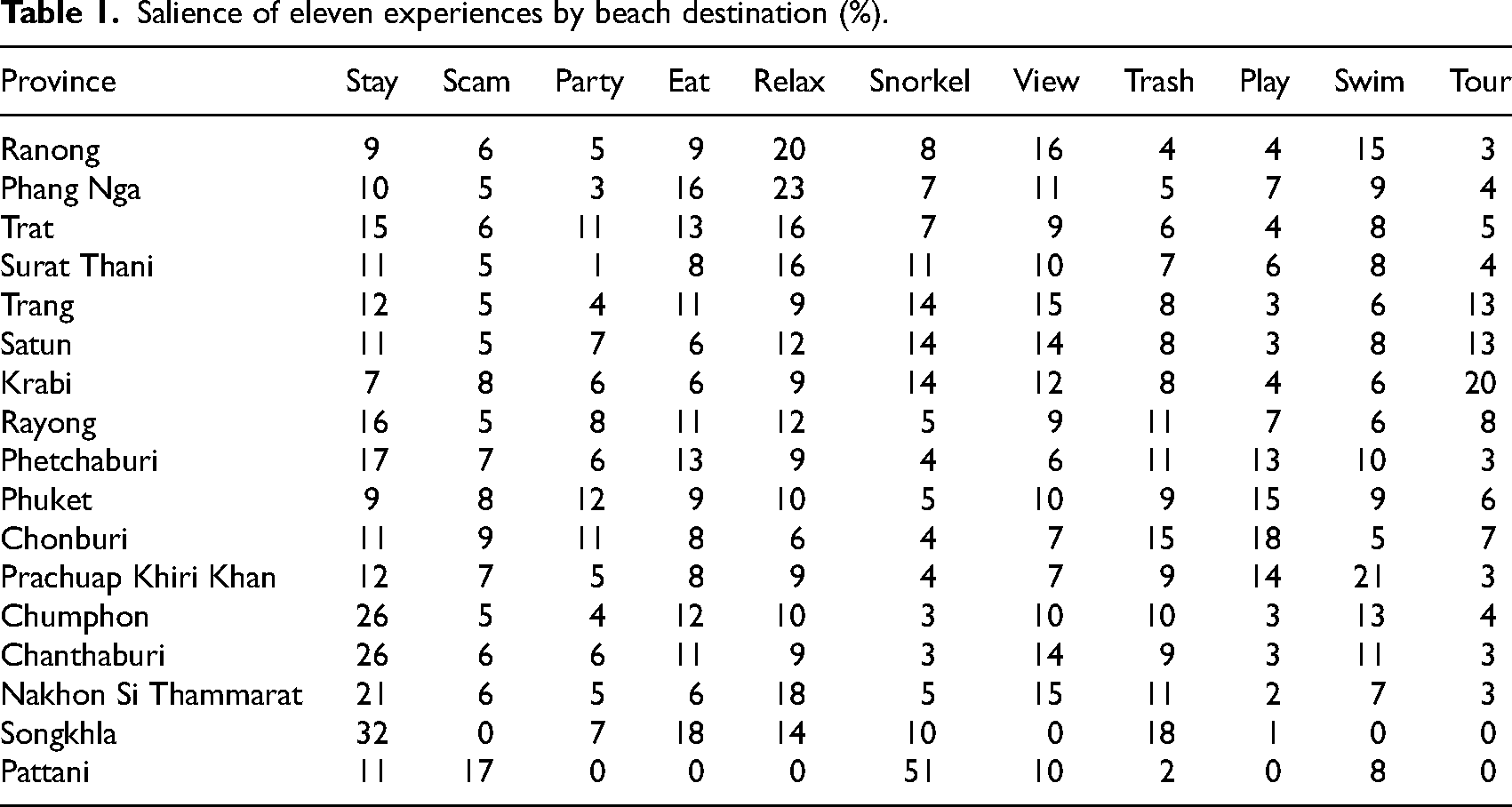
The LDA model also computed a probability distribution over the experience of each review. All the reviews were computed for salience (calculated from the average probabilities or average gamma values) of the eleven experiences of each province. In Table 1, beach destinations have varying levels of salient experiences. Ranong, Phang Nga, Trat and Surat Thani have relax as the most salient experience. This implies that, on average, a review of a beach in Ranong, for example, has a 20% probability of being a relax experience. By contrast, Trang, Satun and Krabi have strongly salient tour, view and snorkel experiences. Rayong, Phetchaburi, Phuket, Chonburi and Prachuab Khiri Khan are known for their play experience, whereas Chumphon, Chanthaburi and Nakhon Si Thammarat all have high salience for the stay experience. Beaches were further categorised in groups of relative homogenous destination using hierarchical clustering and appropriate brand positioning for each group was suggested. Figure 4 illustrates the results of hierarchical cluster analysis. Beach destinations were grouped into five clusters. that shared common experiential characteristics.
Hierarchical cluster analysis of beach destinations.
Salience of eleven experiences by beach destination (%).
Subsequent salience-valence analyses were performed to explain the characteristics of each cluster and suggest the brand position. Figures 5–8 display analyses of the four clusters of beach destinations. The Y-axis is salience while the X-axis is valence (the logistic regression coefficient of each experience on positive reviews). Highly positive valence implies that the experience is likely to generate good reviews, whereas experiences with highly negative valence usually led to bad reviews. A credible and valuable position incorporates a highly salient and positive brand experience in the top-right corner, while relatively negative experiences on the left side need to be improved.
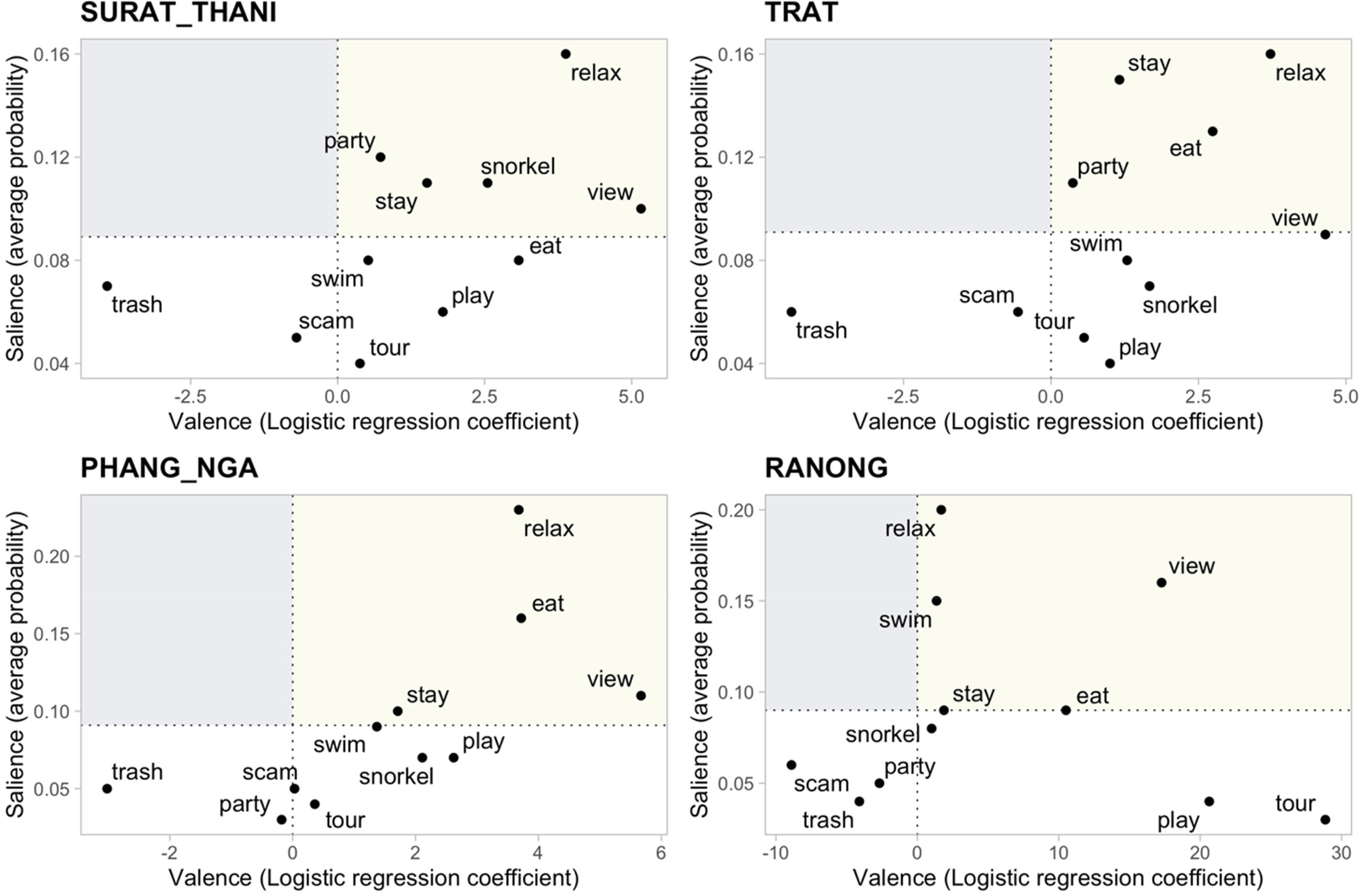
Salience-valence analyses of relaxing seas.
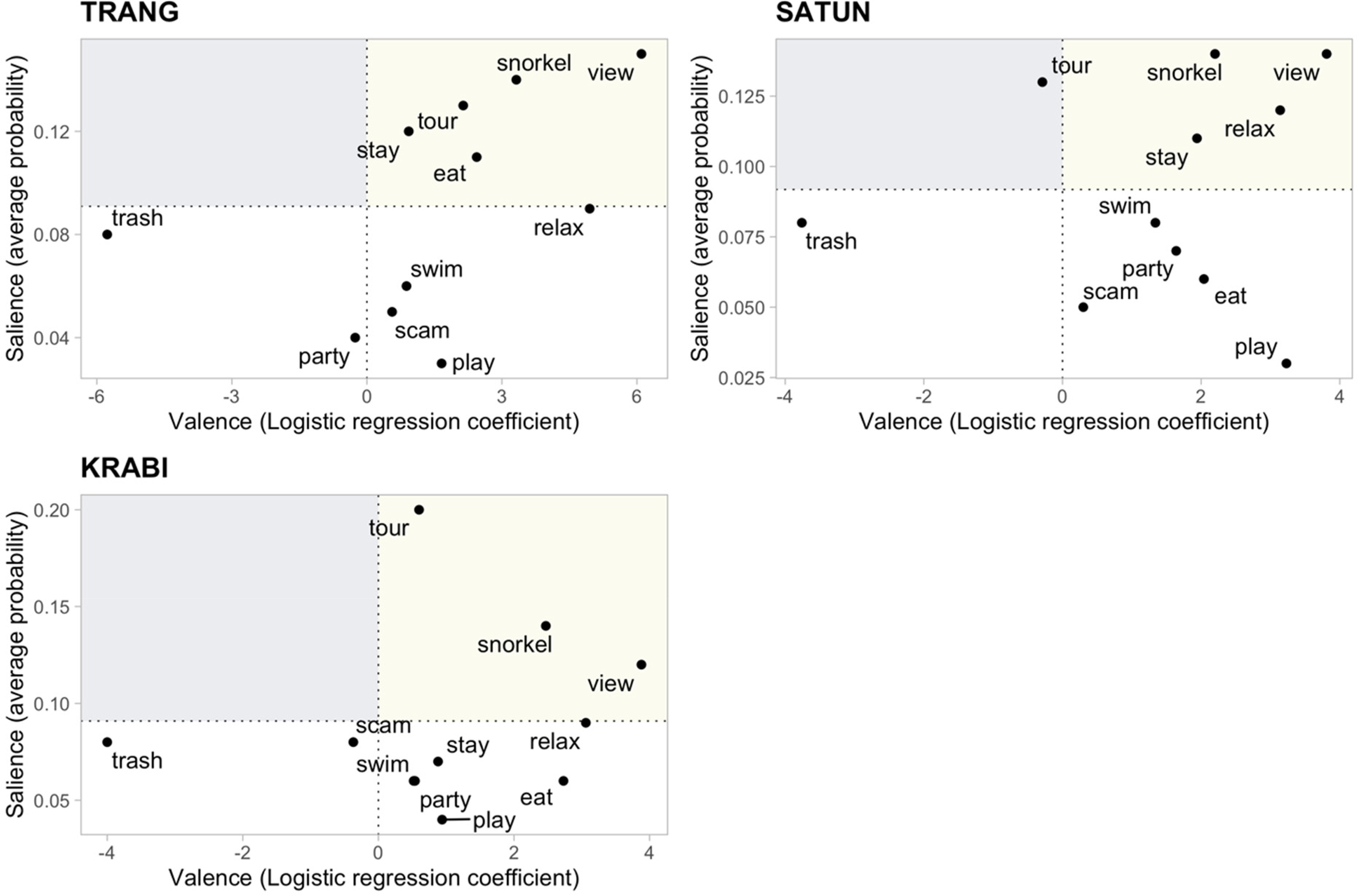
Salience-valence analyses of sensational islands.
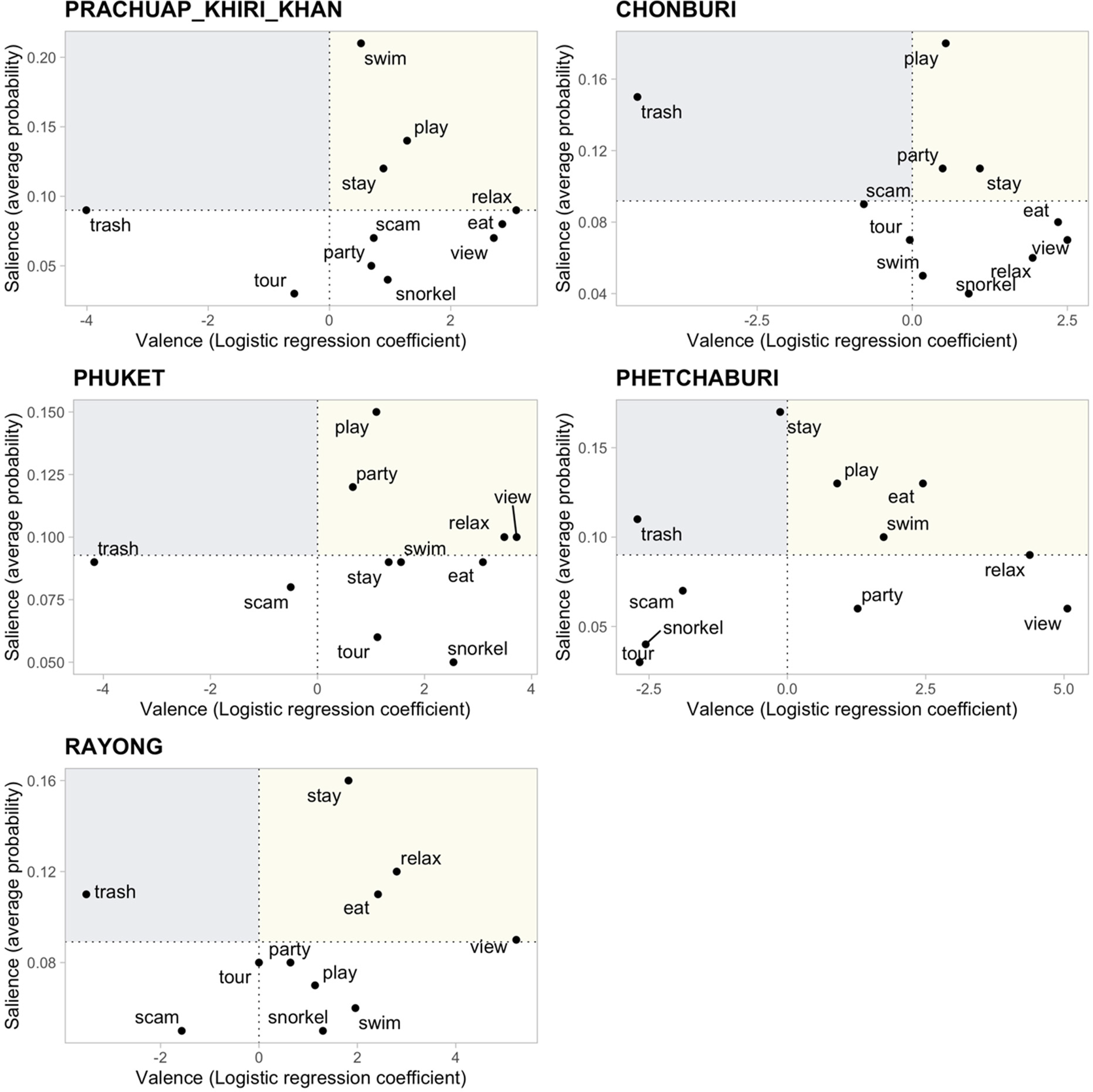
Salience-valence analyses of active beaches.
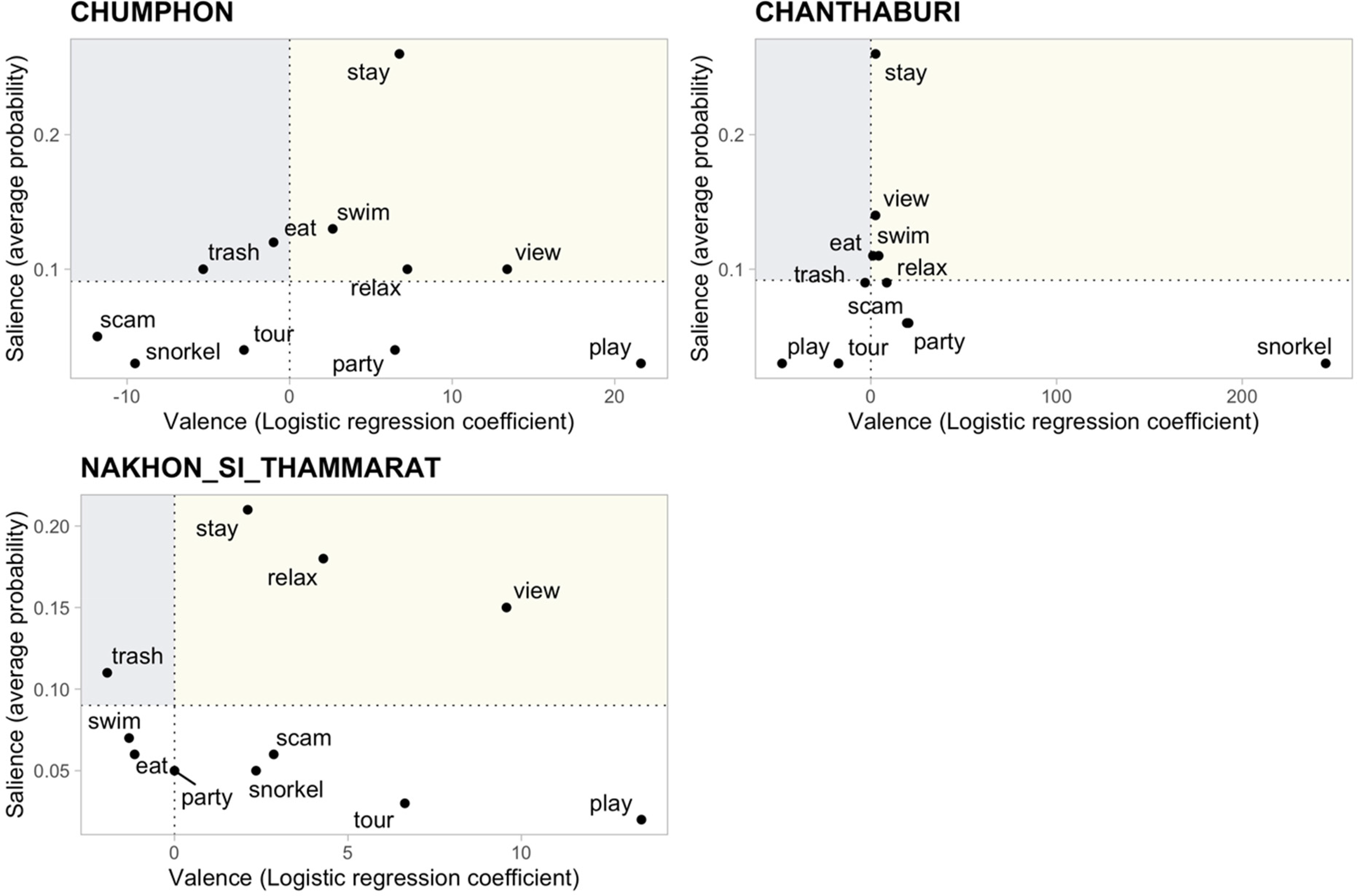
Salience-valence analyses of lifestyle bays.
Surat Thani, Phang Nga, Trat and Ranong were grouped into a cluster that is known for relax, view and eat experiences (Figure 5). Relax, view and eat experiences are also distinctly positive making them suitable elements of a brand position. As such, we called this cluster the “relaxing seas” to signify its distinct characteristics. Other slightly positive issues that should be explored are the party experiences in Surat Thani (Ko Samui) and Trat and the swim experience in Ranong.
Krabi, Satun and Trang, located in the southwest region of Thailand along the Andaman Sea, were grouped in the cluster called “sensational islands” from the three salient experiences: tour, snorkel and view (Figure 6). In particular, the snorkel and view experiences are both highly salient and positive, making them suitable experiences for a brand position. Tourists often wrote about adventurous trips and pristine remote Andaman Islands such as Ko Phi Phi (Krabi), Ko Lipe (Satun) and Ko Kradan (Trang). Notwithstanding its salience, the tour experience is slightly negative in Satun; the quality of the boat tour/trip needs to be improved.
Play is the most salient experience of the largest cluster that comprises Phuket, Chonburi, Prachuab Khiri Khan, Rayong and Phetchaburi (Figure 7). Tourists typically wrote about various beach activities; therefore, this cluster was named the “active beaches”. In addition to play, each destination has differing strengths such as swim experience in Prachuab Khiri Khan, stay in Phetchaburi and Rayong and party in Phuket and Chonburi. However, the valences of these experiences are not strongly positive. Unfortunately, activities on the beaches also resulted in negative trash experiences in these destinations.
The last cluster, called “lifestyle bays”, contains less explored beach destinations, with fewer reviews compared to the other clusters as Nakhon Si Thammarat (136 reviews), Chumphon (68) and Chanthaburi (36) (Figure 8). All these are secondary destinations according to the TAT. Tourists at these beach destinations often wrote about accommodation as the stay experience. The last two clusters, Songkhla and Pattani, were grouped together manually in a cluster called the “hidden gems” because they had very few reviews at 2 and 1 respectively.
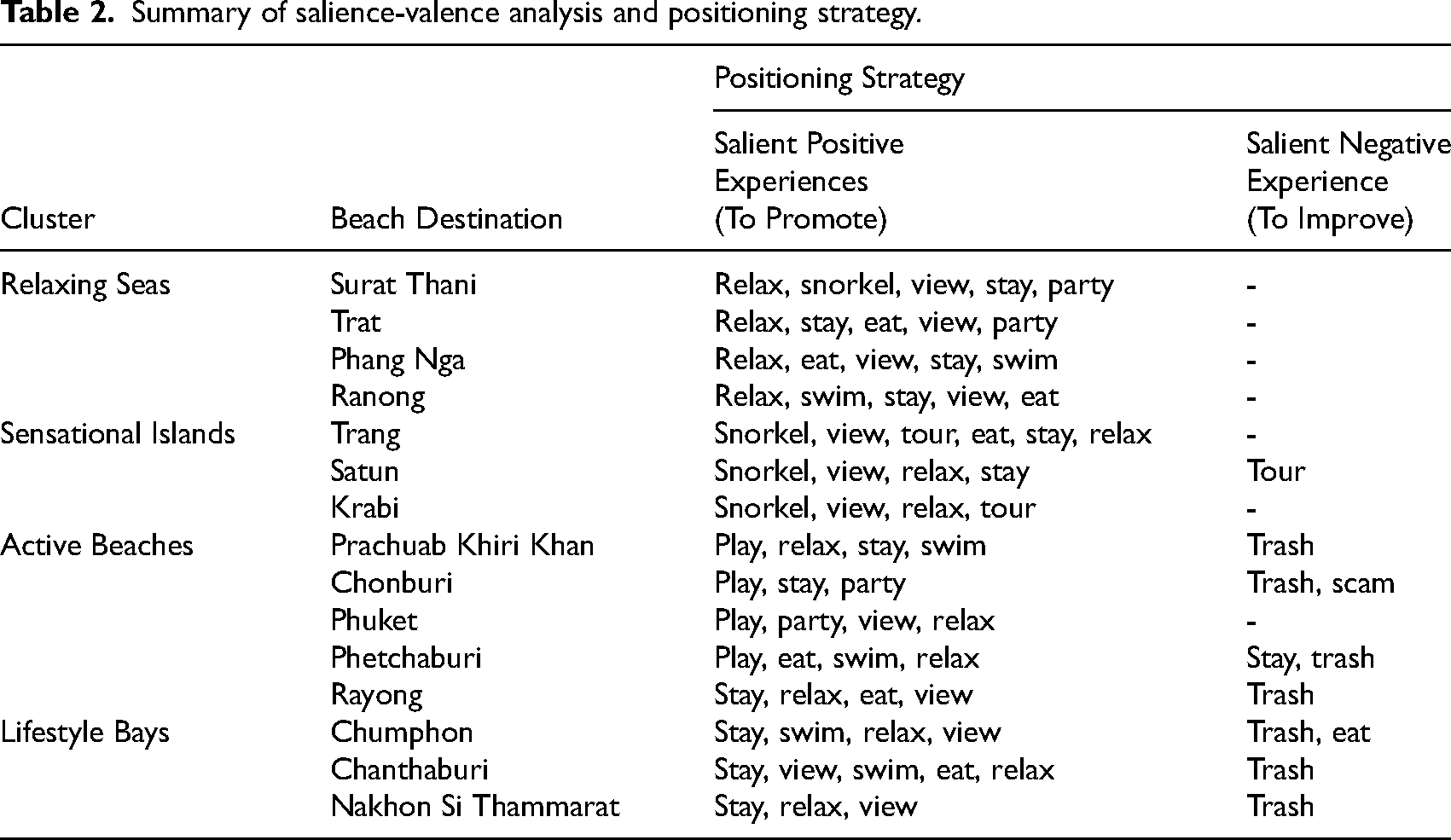
Table 2 summarises positioning strategy derived from the positive and negative salience of each destination/cluster, while Figure 9 displays the 17 beach destinations on the map of Thailand.
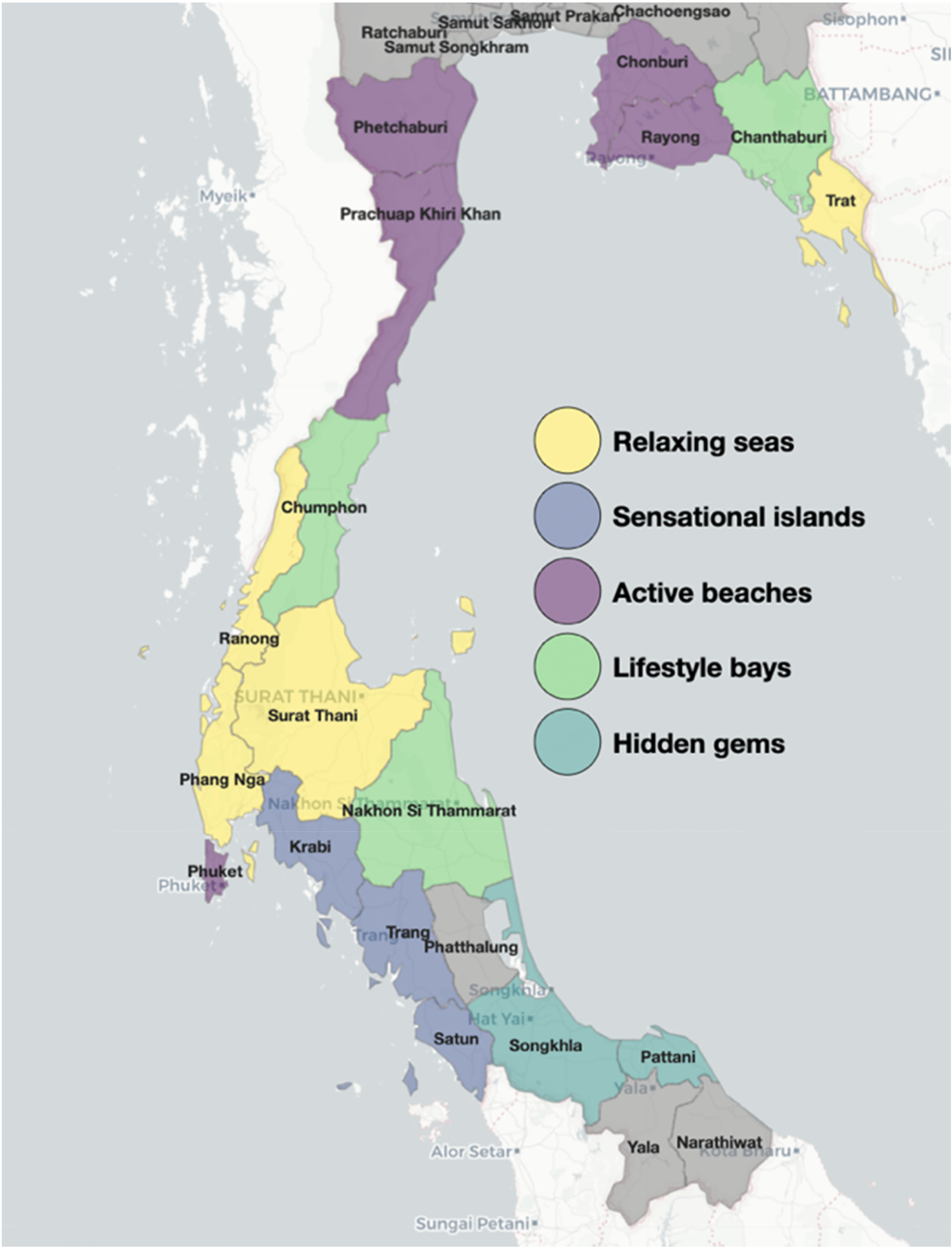
Map of five clusters of Thai beach destinations (source: author's own graphics on the Carto's open-sourced map).
Summary of salience-valence analysis and positioning strategy.
Eleven tourist experiences were identified from an analysis of 75,500 TripAdvisor reviews of 247 beaches in Thailand. Online reviews of Thai beaches were analysed to identify eleven common tourist experiences as stay, scam, party, eat, relax, snorkel, trash, view, play, swim and tour. One key benefit of this method is that, unlike traditional quantitative surveys, this inductive analysis of rich, comprehensive and self-reported experiences revealed previously undetected insights. The analysis of so-called Big Data is faster, broader and larger than traditional methods (Yaqoob et al., 2016), allowing the capture of a large set of online reviews from wide-ranging places.
This research grouped beach destinations using hierarchical clustering. Five clusters were identified as relaxing seas, active beaches, lifestyle bays, sensational islands and hidden gems together with their salient positive experiences as brand positioning for the TAT to develop and promote. As an alternative to other destination positioning approaches, the proposed method — experiential brand positioning — analysed the Big Data in a form of online reviews. LDA, hierarchical clustering and salient-valence analyses were conducted to capture comprehensive tourist experiences and suggest brand positioning based on their distinction.
Theoretical contribution
This research offers a new approach to brand positioning by creating a distinctive image in the minds of potential tourists. Effective differentiated destination positioning can lead to better performance (Rodríguez-Molina et al., 2019). The conventional positioning approach adopts a set of attributes, motivational push-pull factors, benefits, constructs and key tourism statistics. This research proposes experiential brand positioning that can differentiate beach destinations by discovering unique tourist experiences.
Experiential brand positioning is an alternative method that can be adopted by DMOs to manage relatively similar attractions (e.g. parks, churches and temples). The benefits of using experiences as elements for brand positioning are threefold. First, experiences are multi-faceted compared with benefits and attributes. Experiences combine internal emotions, feelings, sensations, cognitions and behavioural responses (Barnes et al., 2014; Brakus et al., 2009). For example, the swim experience is not only a beach activity but also encompasses the water condition, other related activities, potential hazards and information. These multi-faceted characteristics of the swim experience could lead to creative storytelling and a different projected image of the destination in the media. Second, experiences are dynamic. As places, the meaning of a destination is neither individualistic nor static; it is continually and naturally co-created by a number of stakeholders (Florek and Insch, 2020). Experiences on beaches are co-created by several direct and indirect influences. As such, DMOs can leverage dynamism and currency of experiences to differentiate the destination in a meaningful way. Third, experiences are all-encompassing; they are both memorable and ordinary (Florek and Insch, 2020) or spectacular and mundane (Edensor et al., 2021). Despite the attention given to create memorable and spectacular tourist experiences (e.g. Melón et al., 2021; Wang et al., 2021), ordinary/mundane experiences have strong relevance to places as they portray simpler and more contemplative consumption of the destination (Florek and Insch, 2020). These are often ignored in the literature (Edensor et al., 2021). For example, the play experience includes mundane scenes such as having a manicure and riding on little horses, while the stay experience includes the nearby shops and finding the direction to the hotel. Together with memorable experiences, ordinary happenings could help DMOs to enhance destination positioning and elaborate on full-scale experiences of the destination to potential tourists. Utilising experiences for destination brand positioning could strengthen the depth and breadth of destination positioning by exploring multi-faceted sensations and behaviours of tourists, leveraging the distinct meaning and changes over time and discovering the simpler aspects that might be overshadowed by the grandiose tourism characteristics.
Managerial implications
Replace the “all-in-one” message with strategic communications
Ultimately, the goal of this research is to prepare Thailand's beach destinations for tourism recovery after the pandemic. A common communication theme that the TAT uses to promote beaches is through the “all-in-one” message by combining a variety of experiences to show that Thai beaches have every experience you seek (Figure 10). Although these videos present amazing views of the beaches, the presentations are indistinguishable. Distinct experiences of each destination were not presented strategically.
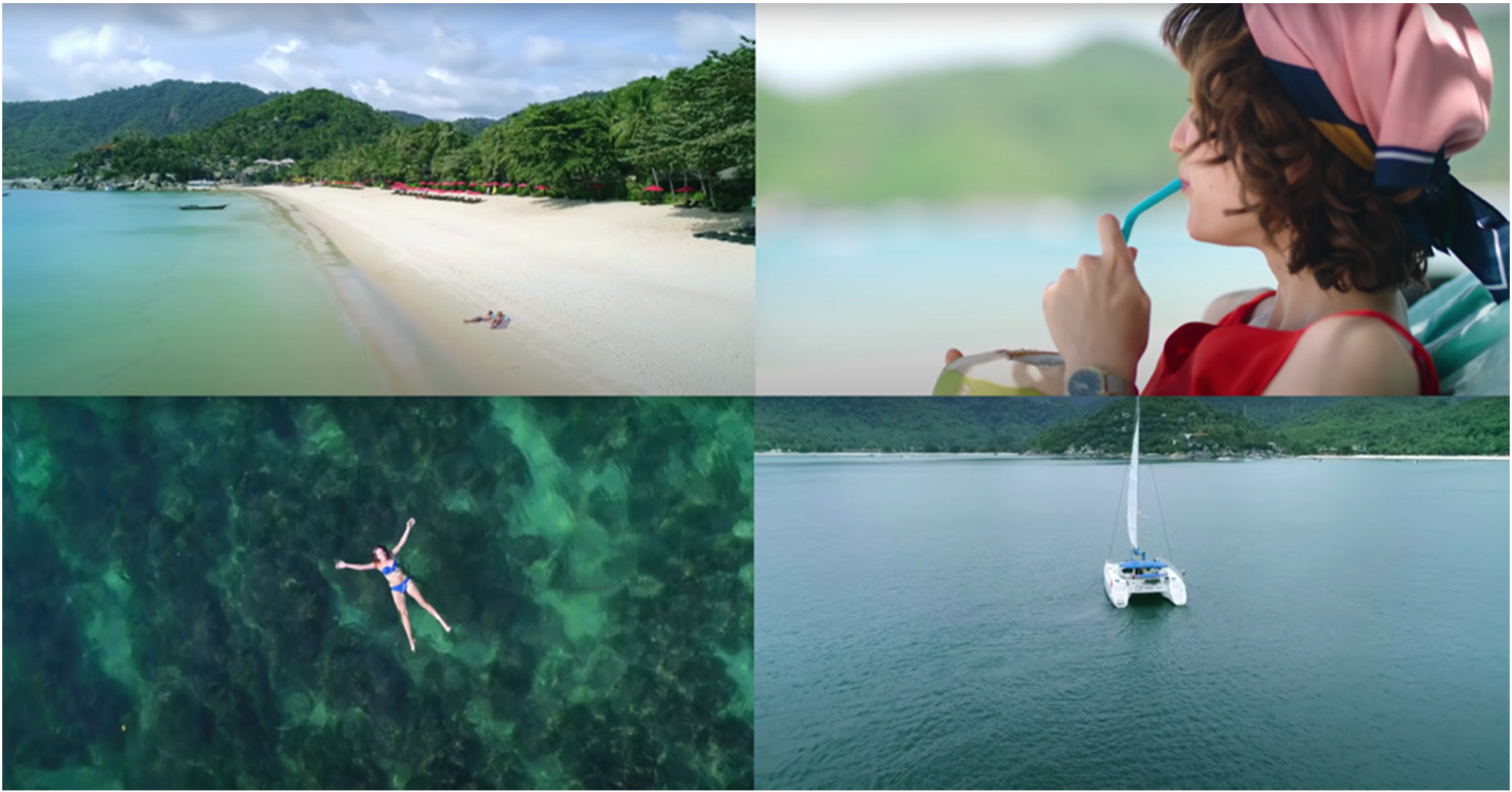
A montage of beach shots from the video “dear See seekers” by the TAT. (source: https://www.youtube.com/watch?v=V0zOTfColFc).
Differentiation is the key to destination marketing and branding; however, the current “all-in-one” message fails to differentiate destinations. Instead, the TAT should strategically communicate the clear brand position of each cluster. Some promotional materials used by the TAT attempt to differentiate destinations. For example, the “Peak of Krabi” video (Figure 11) portrays the down-to-earth aspect of the destination. This resonates well with the “sensational islands” position that emphasises adventurous experiences. The TAT should further plan and execute strategic differentiation.
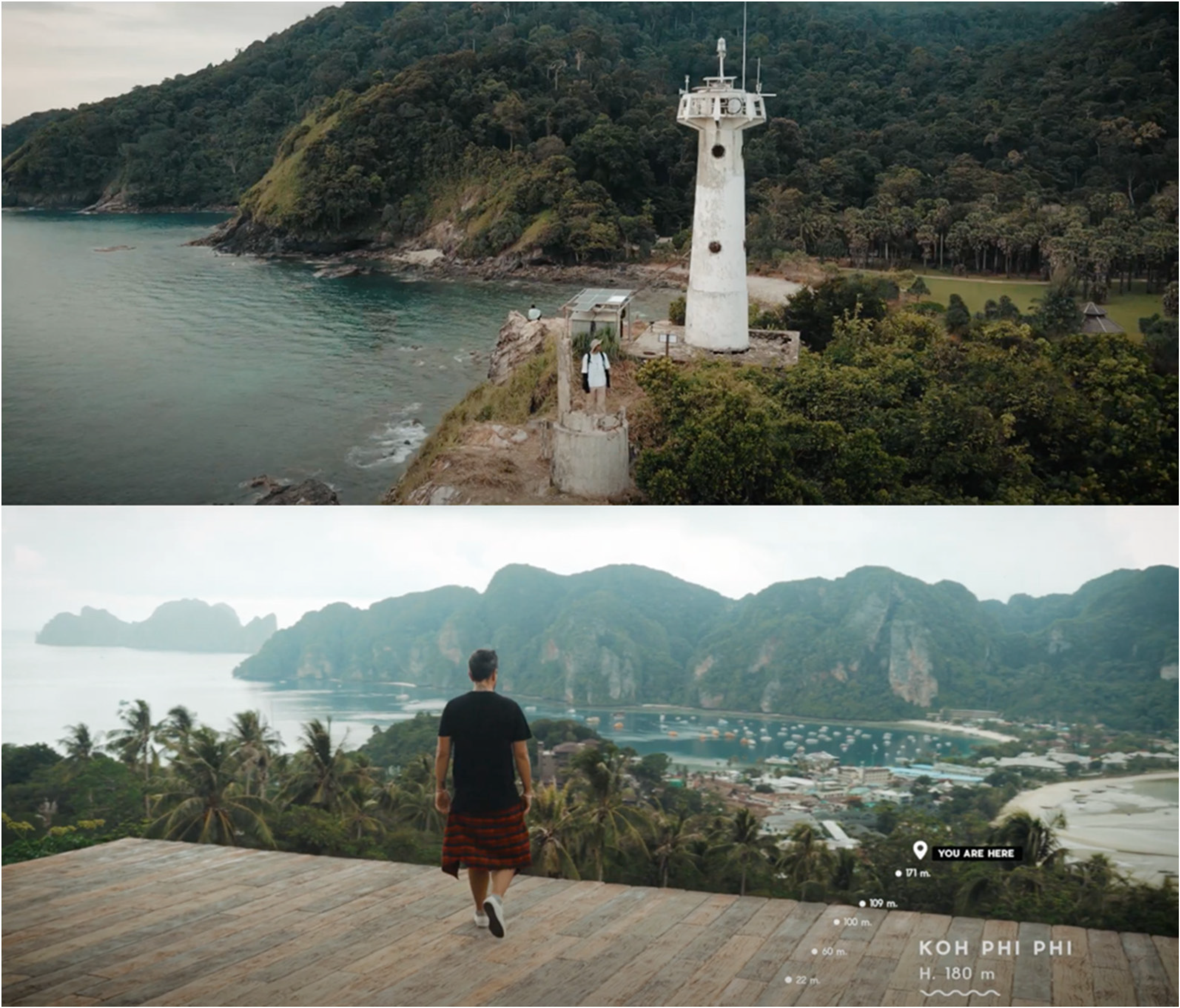
Two hiking scenes from the video “Peak of Krabi” by the TAT (source: https://www.youtube.com/watch?v=ZzPWZlLt3Do).
According to the salience-valence analyses, beach destinations need to continually maintain and promote their highly salient and positive experiences as the backbone of their brand positioning. Simultaneously, these beach destinations need to improve inherently negative issues such as trash and scam experiences to make them more attractive. Destinations should further investigate and improve salient experiences that are not yet positive. The TAT can highlight positivity at these destinations, recognise what makes beach experiences special — either mundane or spectacular — and promote them accordingly.
For example, instead of simply showing mundane beach activities (the play experience) in Chonburi (Figure 12), TAT should explore opportunities to enrich such an experience by promoting practical tips, stories, suggested prices or factual information. Likewise, the stay experience is important for the lifestyle bays. The TAT can leverage other qualities of the province to promote the beaches along with cultural aspects that might attract tourists. For example, Chanthaburi was called “a foodie town” by the TAT (Figure 13). The TAT can promote the beaches of Chanthaburi together with its rich food culture to interestingly differentiate this beach destination.

Beach activities on Ko Lan, Chonburi in a video “#ThailandToday Ko Lan, Pattaya” by the TAT (source: https://www.youtube.com/watch?v=3CLbn76l8L4).

Seafood noodles in Chanthaburi in a video “CHANTABURI 2020” by the TAT (source: https://www.youtube.com/watch?v=63h6VR0Yav0).
First, despite the increasing number of online reviews, one limitation of this type of research is that it does not take into consideration those who do not use the platform, the so-called “platform bias”. Second, the proposed brand positioning does not consider the voices of the residents who are one of the most important stakeholders of the beaches. Third, although the experiences of domestic travellers were included, the percentage (6.6%) is small considering that domestic tourists have become increasingly important during the pandemic. Therefore, the TAT should also consider potential international tourists who do not post on TripAdvisor, local residents and domestic tourists to discover more insights that might complement or modify the proposed positions. Despite the proliferation of online reviews analyses in the past decade, there are more opportunities to mine valuable insights from such textual data. Future research could explore other ways to analyse other brand constructs such as brand identity and image.
Footnotes
Acknowledgement
The author thanks JS Perry Hobson, Gabby Walters, Julie Glass and the two anonymous reviewers whose comments helped improve the manuscript.
Declaration of Conflicting Interests
The author(s) declared no potential conflicts of interest with respect to the research, authorship, and/or publication of this article.
Funding
The author(s) received no financial support for the research, authorship, and/or publication of this article.
