







Abstract
Although short-form videos are treated as an effective marketing tool for destinations to attract potential tourists’ attention, what characteristics of short travel videos stimulate potential tourists to involve in destinations and the influence of users’ inertia behavior of viewing short travel videos on its promotion efficiency remains poorly studied. Thus, this study put forward a conceptual model to investigate the power of content novelty of short travel videos and parasocial relationships on users’ involvement behavior and explored the moderating role of inertia between involvement and users’ travel intentions. Partial least squares (PLS) path modeling was applied to evaluate the linkage between variables, in which 212 valid questionnaires were collected via private messages to users who commented on or posted relevant short travel videos. Data results revealed that content novelty and parasocial relationships significantly influence users’ involvement behavior, further predicting travel intention and electronic word-of-mouth. Inertia behavior negatively moderates users’ intention to travel; their browsing behavior primarily serves as a means of passing time, but they do nothing significant. The findings provided a novel viewpoint on the existing destination marketing literature in short travel videos by testing the interactive role of inertia with involvement. Further implications will be discussed below.
Introduction
Short-form videos have become increasingly popular due to the growth of mobile internet communication and the promotion of emerging 5G technologies (Xie et al., 2019; Wu et al., 2021), which carry massive traffic and surpass game apps to become the first “time killer” (Iresearch, 2020). It has also significantly changed how destination information is disseminated and has become an efficient promotion channel for tourism marketing (Cao et al., 2021;
He (2019) argued that the interaction between short-form video users includes not only the interaction of video content but also the emotional contact with other video content creators (e.g., social media influencers or celebrities) (Abbasi et al., 2024; Lim et al., 2012). Video content in short-form video platforms is overabundant and rapidly spread. The content novelty serves as an effective mechanism to steer and capture attention (Song et al., 2023), which frequently stems from the disparity between individuals’ perception of the content and their previous experience or cognition, thereby engendering a sense of surprise (Feng and Xie, 2019; Jang and Feng, 2007; Joëlle and Dirk, 2001), which is effective in enhancing their information processing and recall (Sheinin et al., 2011) and promoting their involvement, further to foretell individuals’ future behaviors. Chen et al. (2014) correlated various attributes unique to tourists’ blog content and verified content novelty has a more significant effect on visit intentions. Moreover, within the context of short travel video marketing, Cao et al. (2021) identified one of the characteristics (narrative travel story) of short-form videos that can effectively influence the attitudes of potential tourists towards destinations. They also proposed a suggestion for future studies: it's necessary to examine the influence of the novel style of short-form videos on the efficacy of tourism marketing strategies because users’ preferences differ significantly. Thus, drawing upon previous studies, this study aims to examine whether the content novelty of short travel videos has the potential to enhance users’ inclination towards travel.
For the emotive connection to the video's content creators, the technical accessibility and intimate means of communication on social media platforms can offer an appropriate setting for users to establish close and meaningful parasocial relationships between users and media celebrities (Breves et al., 2021; Hwang and Zhang, 2018; Rosaen and Dibble, 2016; Yuan and Lou, 2020). Intimate and reciprocal parasocial relationships between users and their favorite travel celebrities can lower their skepticism of the message, resulting in stronger persuasion and good results relating to attitudes, knowledge, and behaviors (Dibble et al., 2016; Slater et al., 2018; Yuan et al., 2016), such as affecting the mechanism of travel live streaming (Deng et al., 2022), promoting destination brand love (Zhang et al., 2020), and online sharing intention (Zhao et al., 2022). However, despite an increasing scholarly interest in the impact of parasocial phenomenon in tourism fields, studies on parasocial relationships in short travel video marketing remain under-researched. Furthermore, Zhu et al. (2023) found that a strong attachment to celebrities in short travel videos was positively associated with users’ experience of presence and telepresence, which increased tourist enjoyment and travel intent. Although they identified celebrity attachment in short travel videos on tourism marketing, the diversity of user-celebrity relationship is critical for academic investigation of the consequential impacts of parasocial relationships to promote a destination (Pradhan et al., 2023; Zhao et al., 2022). Hence, in this study, the strategies for promoting short travel videos can be approached from the perspective of “the interaction of content characteristics” and “emotional contact with content creators.” Accordingly, the second objective of this study is to explore whether parasocial relationships motivate potential tourists to be involved in short travel videos.
In addition, existing research on customers’ behavioral intentions revealed that, regardless of whether they are perusing intriguing messages or forming close relationships with celebrities, they always become accustomed to particular service providers based on their previous consumption experiences, maintaining the status quo with their service providers (Leppäniemi et al., 2017; Yap and Sweeney, 2007). Inertia can account for the phenomenon being observed (Cui et al., 2021). Researchers frequently use the term “customer inertia” to describe this attitudinal propensity to stick with the same service providers out of passivity or inaction (Lee and Neale, 2012; Gray et al., 2017). Customer inertia is also marked by unconscious repetition, lack of desire, and goal-directed activities, which are indifferent to modest performance gains or declines (Yanamandram and White, 2010). Inertia prevents users from switching to new services and products; it implies that users will be loyal if the marketing goal is consistent with the commitment formed by the user's inertial behavior; otherwise, the marketing efforts to persuade or alter behavior may be ineffective to such high-inertia users (Han et al., 2011; Leppäniemi et al., 2017). Prior studies have demonstrated that the distinctive attributes of short-form videos make them particularly attractive to users, leading to addictive tendencies that are closely aligned with the inertia rationale (Zhang et al., 2019). High-inertia users, when faced with a plethora of options, may intuitively refer to their browsing records to satisfy their desire for entertainment or pass the time, which cannot be strengthened into in-depth involvement behavior, thereby failing to achieve the desired marketing effect. However, there is a lack of empirical studies investigating the moderating effect of inertia on user behavior in viewing short travel videos. We postulate that the high browsing or viewing levels of spurious marketing effects may be explained by inertia behavior. Thus, the third objective of this study is to examine the moderating effect of user inertia on users’ travel intentions.
In summary, a conceptual framework is constructed by drawing upon previous studies to describe the relationship between content novelty, parasocial relationships, and users’ travel intention, with particular attention to the moderating effect of inertia, as shown in Figure 1. The significance of this study can be understood from the following aspects. Firstly, this study establishes a correlation between the novelty feature of short travel videos and user behavior, thereby contributing to the existing research on short travel video marketing. Secondly, this study investigates how parasocial relationships can be an effective marketing tool in short travel videos, expanding the research fields of parasocial relationship marketing. Finally, inertia may yield adverse marketing consequences, providing critical practical implications for destination managers to design effective strategies.
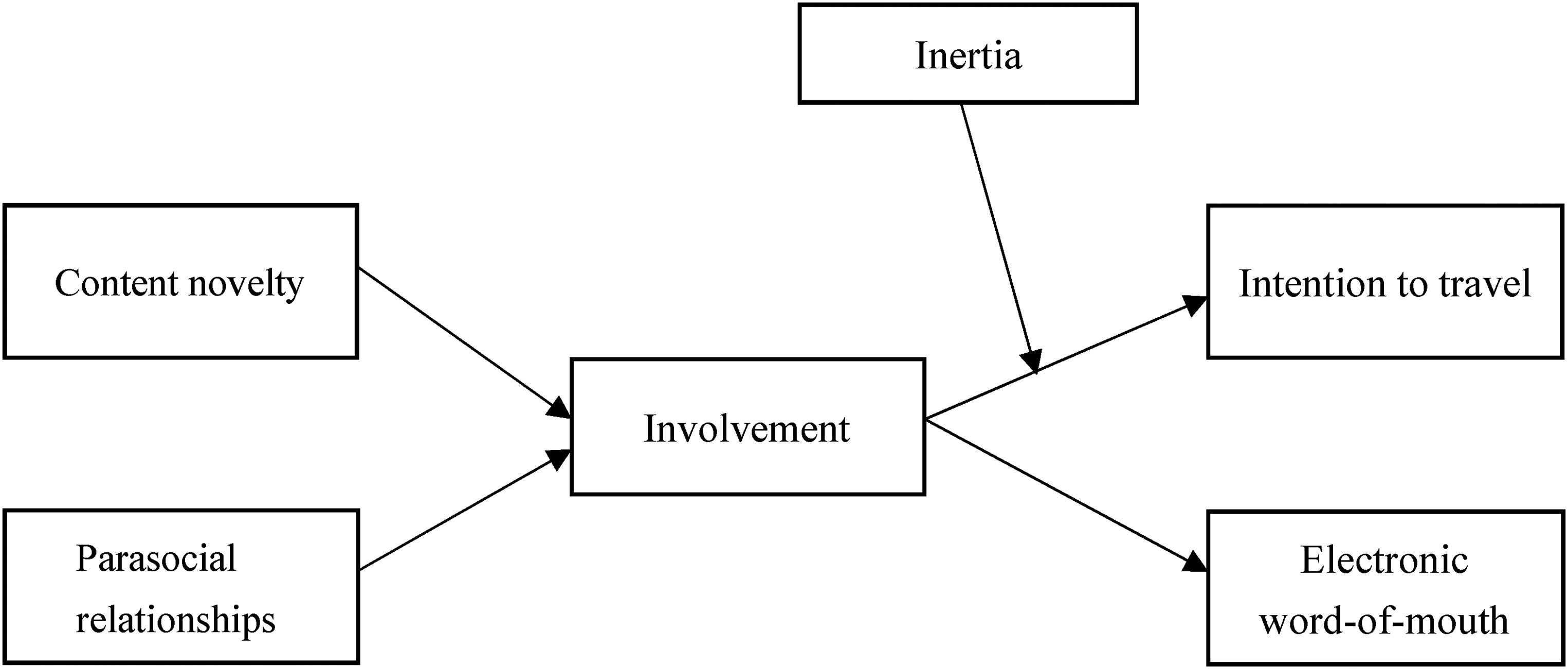
Conceptual framework.
Literature review and hypothesis development
Novelty characteristic of short-form video content
Novelty characteristic of content is conceptualized as how information is considered new, relative to previous life experiences (Ebrahim, 2020; Xu and Chen, 2006). Feng and Xie (2019) indicated that novelty strongly influences the user's long-term or short-term impression. Novelty-seeking is also the core of travel motivation and is contrary to familiarity (Chen et al., 2014); an obvious contrast between the new and prior experiences may stimulate behavioral intention (e.g., intention to revisit) (Jang and Feng, 2007). The travel experience of the same destination varies greatly (Cao et al., 2021), and tourists may be astonished by hidden product knowledge and unique sightseeing viewpoints (e.g., delving deeply into the local culture and cuisine). In addition, content novelty can also be explained in terms of time, which refers to the extent to which content is updated, encompassing the latest information about destinations and catching up with current events. Ebrahim (2020) examined that users participate in the platform's online activities to get the latest news. The recency of information sources can capture greater attention and involve users in short travel videos (Xie et al., 2019). Thus, we assume that content novelty may be closely related to the user's browsing behavior, ultimately influencing their involvement behavior. The following hypothesis is proposed:
H1: Novelty characteristics of short travel video content positively impact users’ involvement behavior.
Parasocial relationships and involvement behavior
The term “celebrity” pertains to individuals who have gained public recognition for their accomplishments in fields other than identified product categories (Rai and Sharma, 2013). In this study, content creators in short travel videos are known as digital celebrities; they can be ordinary individuals and typical consumers (Filieri et al., 2023; Hwang and Zhang, 2018; Lim et al., 2012) and cultivate substantial online fans by publicly sharing their travel experiences and destination information in various ways, such as texts, pictures, and videos (Pradhan et al., 2023; Zhang et al., 2020). Users have a greater familiarity and are more likely to resonate with these digital celebrities in short travel videos, and they perceive them as more approachable than traditional celebrities due to shared backgrounds (Hwang and Zhang, 2018; Yuan et al., 2016). Users also tend to establish significant connections with celebrities in short travel videos, performing parasocial interactions (PSIs) and parasocial relationships (PSRs), which are closely associated yet distinct constructs (Deng et al., 2022; Dibble et al., 2016). The former mainly pertains to the feeling of interacting with celebrities in the process of media exposure, involving timely two-way communication. The latter relates primarily to the intimacy and psychological connection that users can continue to experience outside of specific media exposure instances (Rubin and Step, 2000; Tukachinsky et al., 2020). Although the two terms are often used interchangeably in tourism marketing (Choi et al., 2019; Zhao et al., 2022), we mainly examined the impact of parasocial relationships on users’ involvement behavior after viewing short travel videos (Slater et al., 2018), in which users experience strong parasocial relationships with celebrities even without timely interaction on-site.
Even if parasocial relationships are a virtual intimacy phenomenon, users can feel a personal emotional bond of friendship, similar to how they do in real-life relationships (Rosaen and Dibble, 2016; Yuan et al., 2021). Tukachinsky et al. (2020) demonstrated that parasocial relationships are a more powerful predictor of media involvement, such as guiding audiences to consciously and frequently follow the programs of their favorite celebrities and recommend programs to others. Famous online celebrities can leverage their charisma, unique narrative, and rich content to immerse users in fascinating plots through imaginative interaction (Slater et al., 2018). Therefore, we postulate that close parasocial relationships between users and celebrities in short travel videos enable users to consciously imagine themselves experiencing the same travel experience and engage in subsequent involvement behavior. For example, arousing the user's interest in seeking more information regarding the destination. The following hypothesis is proposed:
H2: Parasocial relationships are positively associated with users’ involvement behavior in short travel videos.
The consequences of involvement behavior
Involvement refers to a person's perceived relevance to things based on internal needs, values, and interests (Zaichkowsky, 1985). In tourism, involvement has received greater attention in understanding individuals’ behavioral intentions (Fu et al., 2016; Huang et al., 2012; Kim and Kim, 2018; Rahimizhian et al., 2020). Prebensen et al. (2013) claimed that increased tourist involvement in the tourism experience strengthens their ability to recall future memories (Huang et al., 2010) and maintain long-term loyalty to destinations (Di-Clemente et al., 2020). According to Wu and Liang (2020), involving potential tourists in wine products can significantly boost destination image and positively impact the intention to travel (Huang et al., 2012). Fu et al. (2016) stated that individual involvement indicates a favorable destination attitude, which can lead to positive word-of-mouth and behavioral intentions. Therefore, in this study, users actively involved with short travel videos are more prone to understand and remember the information presented and are more inclined to engage in discussions with those who have recently visited destinations. Involvement is predicted to result in subsequent behavioral intentions (Rahimizhian et al., 2020), such as e-WOM and visit intents; the following hypotheses are proposed:
H3: Involvement has a positive effect on the intention to travel. H4: Involvement has a positive effect on electronic word-of-mouth.
The moderating effect of inertia
Inertia is a paradigm in which individuals unconsciously patronize the same services with a minimal potential commitment to services (Cui et al., 2021; Wang et al., 2018); it's also described as a preference for status quo behaviors because they entail less cognitive load and decision-making overhead (Yanamandram and White, 2010). Prior researchers have found that inertia is not caused by emotion or functional convenience (Gounaris and Stathakopoulos, 2004) and is a long-term condition resulting from past events and influences present intents and future conduct (Leppäniemi et al., 2017). Cui et al. (2021) also defined inertia as two different types: first, the repeated behavior of current service providers is primarily attributable to a deficiency in both desire and motivation to alter; second, inertia is a “tendency” based on previous buying experience, rather than a “behavior.” In this study, inertia is defined as an unconscious behavior consisting of repetitive browsing behavior without genuine commitment and a reluctance to exert energy to change.
The significance of inertia as a moderator has been well documented (Dogra et al., 2023; Han et al., 2011). Lee and Neale (2012) segmented customers into low-inertia, high-inertia/satisfied, and high-inertia/indifferent. Satisfied customers with high switching costs are less likely to switch and give more positive word-of-mouth. Gray et al. (2017) found that inertia moderately reduces provider switching, and lower-inertia customers are more affected by operating service levels. In the field of tech-innovation adaptation, Wang et al. (2018) discovered that inertia moderates the relationship between perceived needs and intention to upgrade; the greater inertia, the smaller the positive link between perceived need and upgrading behavior intention. For this study, when tourism services or products are marketed through short travel videos, users with high inertia lack the enthusiasm to explore other factors carefully, and their unconscious actions rarely prompt the intention to take further behaviors. Thus, the marketing role of involvement with short travel videos (e.g., searching for destination information, following online comments, and communicating with other tourists) is limited, and the influence of involvement on intentions to travel is weakened. Therefore, this study assumes that:
H5: When inertia is higher, the positive relationship between involvement and intention to travel is weaker.
Research methodology
Measurement scales
The questionnaire used in this study was derived from existing measurement scales. Content novelty was evaluated with four items adapted from Chen et al. (2014) and Feng and Xie (2019), including “There was a substantial amount of information in short travel videos.” Parasocial relationships were assessed using eight items from Rosaen and Dibble's (2016) and Yuan and Lou's (2020) studies, such as “The short travel video celebrity I follow makes me feel comfortable as if I am with a friend.” Involvement was derived from Rahimizhian et al. (2020), including “I would like to read articles and news concerning the destination on the internet after watching short travel videos.” To test behavior intention, such as intention to travel and electronic word-of-mouth, items were derived from Liao et al. (2020) and Rahimizhian et al. (2020), respectively. The items used to measure inertia were from Yanamandram and White (2010): “I will access the short travel video content I follow very intuitively when I need to browse short-form videos.” Respondents were required to evaluate each item using a 5-point Likert scale that ranges from 1 (strongly disagree) to 5 (strongly agree). In addition, the questionnaire was designed in both Chinese and English and reviewed by two tourism professors and several graduate students to help respondents comprehend it. In the process, we recognized and modified items that were confusing and challenging to understand and assess the clarity of wording and the ordering of items.
Data collection
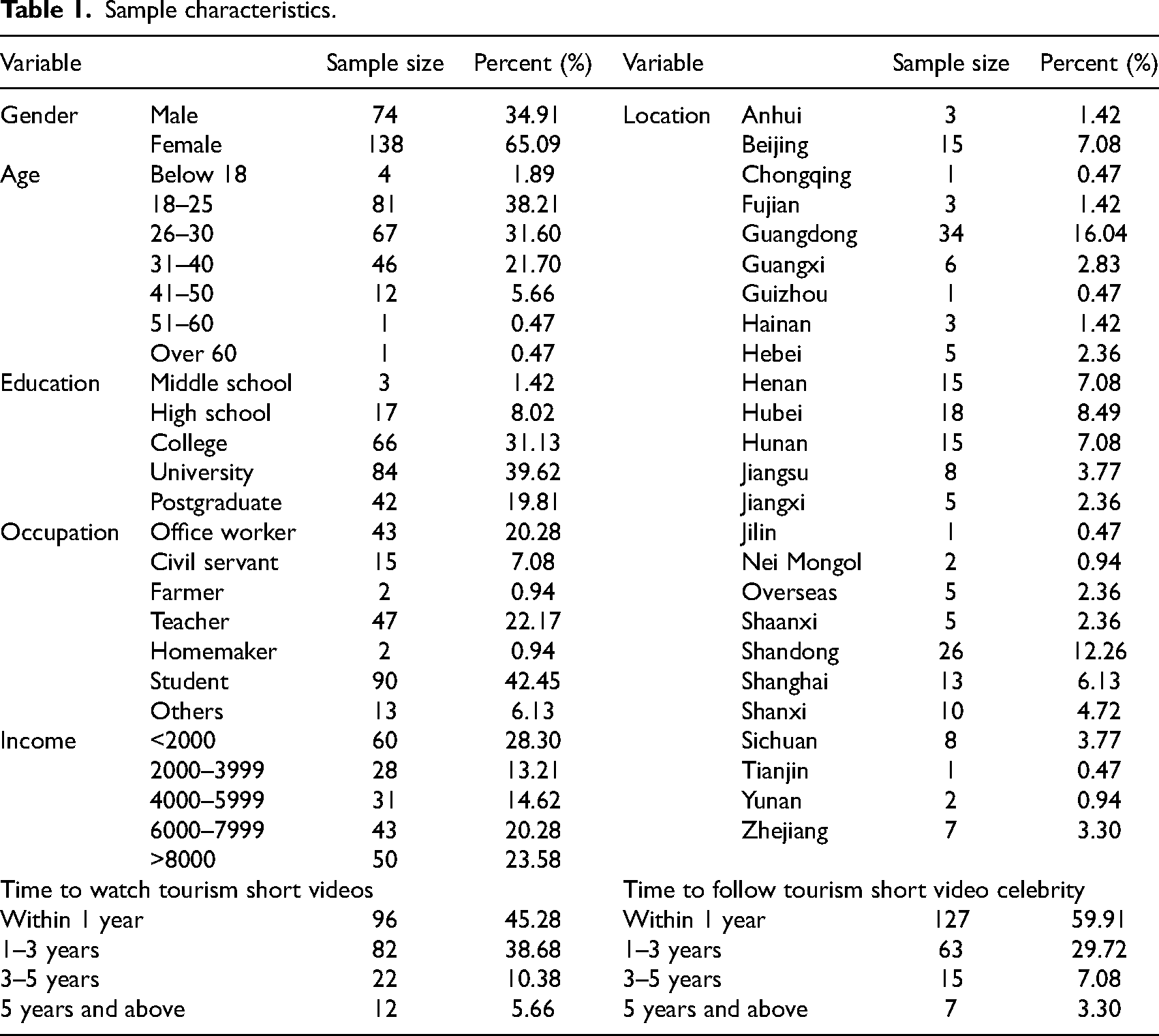
The survey was carried out from 8 August 2022 to 15 September 2022 (38 days), which employed a convenience sampling strategy to gather data from respondents who commented on a short travel video or posted relevant short travel videos in the last six months. They were randomly selected from the comment part of four social media platforms (TikTok, Weibo, Bilibili, and Xiaohongshu), the leading distribution channels for short travel videos. To effectively assess the influence of parasocial relationships, we asked users the screening question: “Do you follow any celebrities in short travel videos?”. If respondents have never paid attention to celebrities in short travel videos, parasocial relationships cannot be accurately measured. Thus, only those who satisfy the screening question were the target respondents of this study. A total of 800 questionnaires were sent to users via private messages. Since many respondents were reluctant to respond to private messages, we also recruited respondents on campus via posters and emails from 1 September to 15 September. No incentives were provided to the respondents; they could stop the survey at any time. As of 15 September, 236 questionnaires were collected; 212 valid samples were finally left after excluding invalid questionnaires. The descriptive statistics profile of the respondents to the 212 usable surveys is presented in Table 1.
Sample characteristics.
Statistical analysis
In this study, the hypothesis model was estimated using the PLS-SEM method, and data analysis was performed using Smart PLS 3.2.9 software (Sarstedt et al., 2014). PLS-SEM, a structural equation model based on regression analysis, was chosen as it is widely employed in various fields such as information, management, and tourism (Sarstedt et al., 2014; Tian et al., 2021). PLS-SEM was applied to evaluate research models due to its ability to handle limited sample sizes effectively and its reduced reliance on assumptions regarding the normality of data (Hair et al., 2017). In this research, a two-step analysis approach was employed. Following the path modeling analysis, the goodness-of-fit measures were assessed using bootstrapping with 5000 resamples.
Results
Assessment of the measurement model
We employed confirmatory factor analysis (CFA) to evaluate the measurement scales’ reliability, convergent validity, and discriminant validity. As indicated in Table 2, (1) all PLS factor loadings achieved values greater than 0.70 (p < 0.001); (2) Composite Reliability (CR) surpassed the threshold of 0.70 for all constructs; (3) Cronbach's alpha and Average Variance Extracted (AVE) also satisfied the requirements of 0.70 and 0.50, respectively. In the discriminant validity test shown in Table 3, all Heterotrait-Monotrait Ratio of Correlations (HTMT) of reflective constructs is lower than 0.9. The discriminant validity is, therefore, acceptable (Gold et al., 2001).
Results of the measurement model.
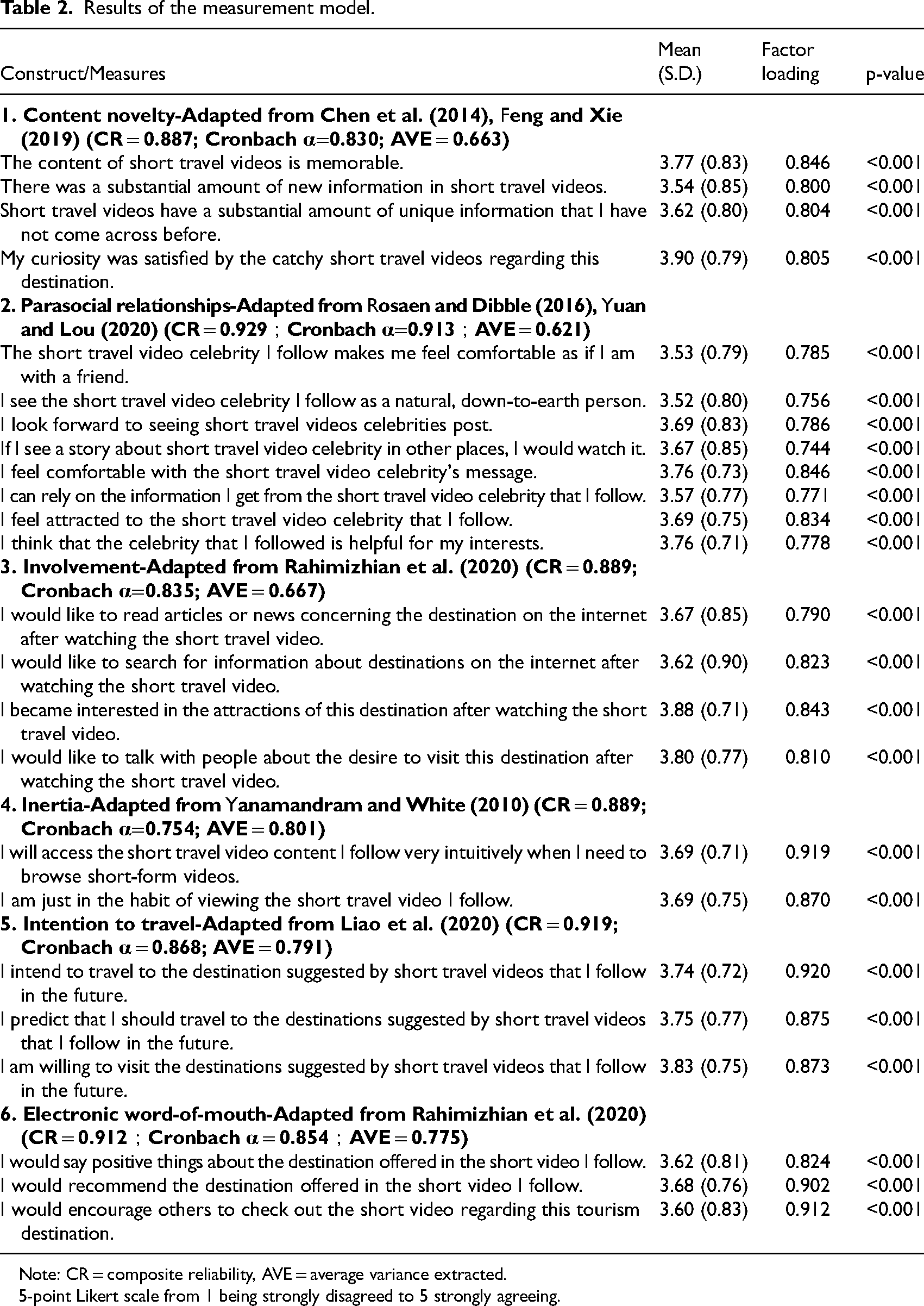
Note: CR = composite reliability, AVE = average variance extracted.
5-point Likert scale from 1 being strongly disagreed to 5 strongly agreeing.
Assessment of discriminant validity using HTMT.
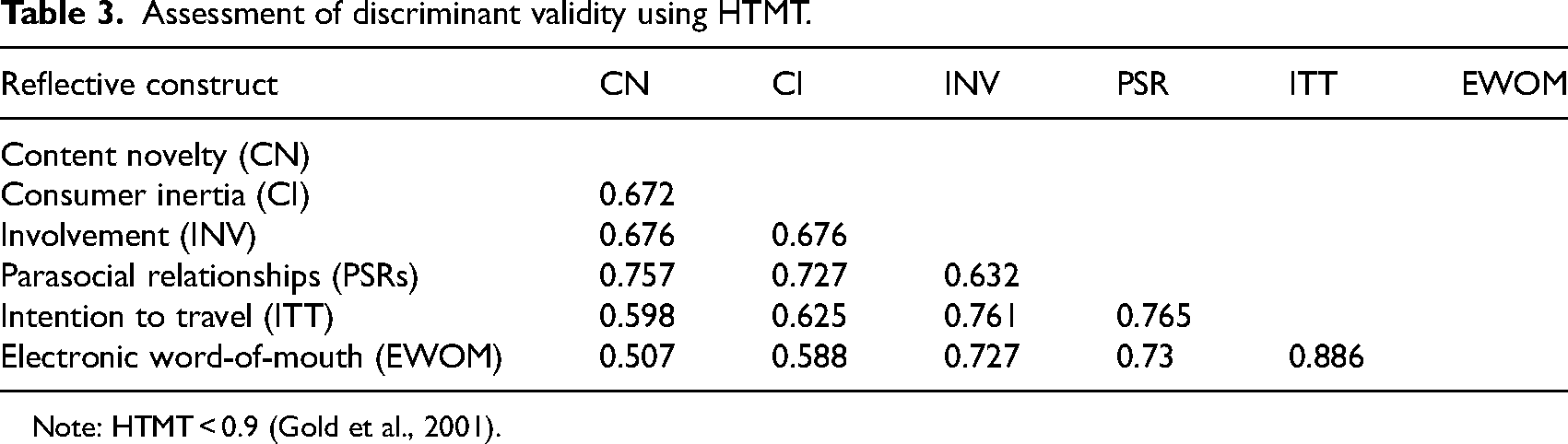
Note: HTMT < 0.9 (Gold et al., 2001).
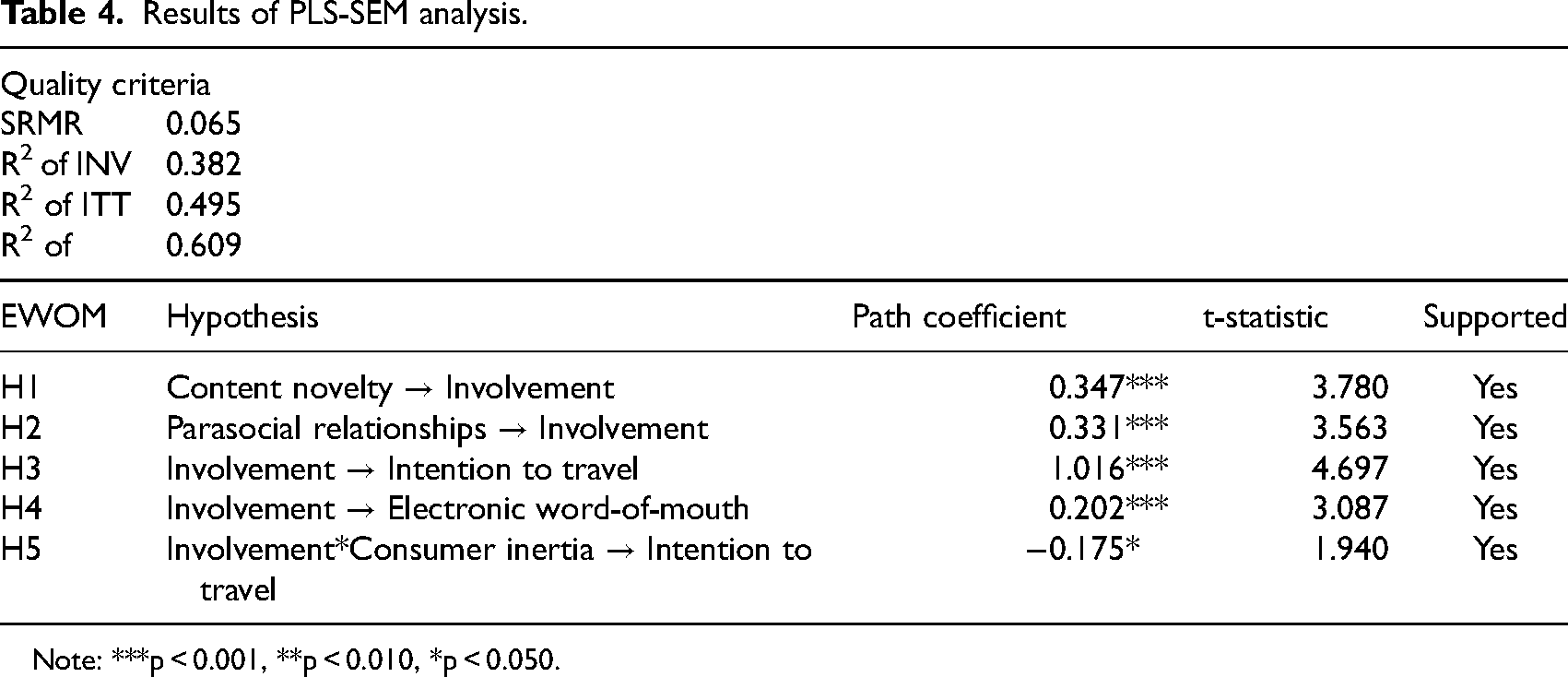
The coefficient of determination (R2) was calculated to measure the model's predictive power to evaluate endogenous latent variables. This study utilized the guidelines proposed by Chin (1998) as a reference: R2 values of 0.67, 0.33, and 0.19 indicate substantial, moderate, and weak models, respectively. Data results found that the coefficient of determination (R2) was 0.382 for involvement, 0.495 for intention to travel, and 0.609 for electronic word-of-mouth (see Table 4); all three constructs had a modest level of predictive ability. Furthermore, during the evaluation of model fit, the Standardized Root Mean Square Residual (SRMR) for the measurement model was calculated to be 0.065. It is worth noting that a value below 0.10 or 0.08 is typically regarded as indicative of a favorable fit, ensuring the absence of model misspecification (Cegarra-Navarro and Martelo-Landroguez, 2020; Henseler et al., 2014). Based on these outcomes, the measurement model exhibited satisfactory results and demonstrated high quality.
Results of PLS-SEM analysis.
Note: ***p < 0.001, **p < 0.010, *p < 0.050.
Evaluation of the structural model
The results of the structural model are presented in Table 4 and Figure 2. The statistical results showed that all five proposed hypotheses were supported and validated. Results indicated that content novelty and parasocial relationships significantly impact users’ involvement in the short travel video (H1: β = 0.347, P < 0.001; H2: β = 0.331, P < 0.001). Therefore, hypothesis 1 and hypothesis 2 are supported. Moreover, involvement is positively associated with intention to travel (H3: β = 1.016, p < 0.001) and electronic word-of-mouth (H4: β = 0.202, p < 0.001), which hypothesis 3 and hypothesis 4 are supported. Furthermore, in the test of a moderating relationship, inertia negatively moderates the effect of involvement on intention to travel (H5: β = -0.175, p < 0.050); hypothesis 5 is supported.
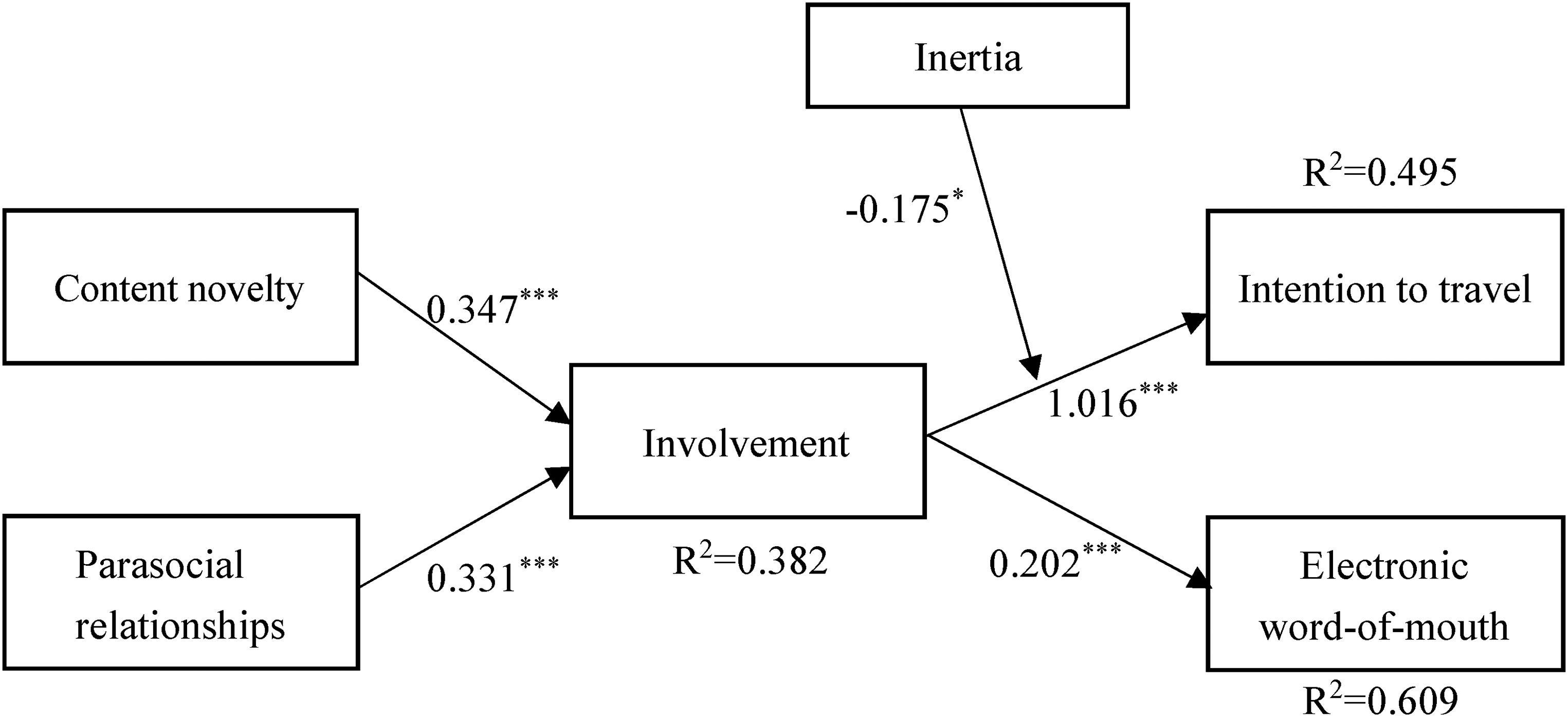
Research framework with smart PLS results.
Conclusion
Discussion of findings
Short travel videos have become a prominent means by which individuals gather travel-related information while formulating their travel itineraries. A lack of understanding of the underlying mechanisms by which short travel videos stimulate travel intentions may lead to missed prospects for creating effective marketing tactics (Du et al., 2022; Liao et al., 2020; Wengel et al., 2022). Thus, considering factors affecting short travel videos to obtain better promotion effects has become the focus of researchers and marketers (Zhu et al., 2023). This study conducted a conceptual framework to examine content novelty and parasocial relationships on users’ behavioral intentions and the moderating effects of inertia, thereby discovering factors behind the varying degrees of impact that specific short travel videos have on users’ intention to visit.
The results of this study indicated a positive correlation between content novelty and involvement behavior. When the content is sufficiently creative, users will enjoy them and take follow-up involvement behaviors, such as viewing comments and finding scenic spot information. As supported by the study of Chen et al. (2014), users’ interest in visiting a destination is influenced mainly by the novelty of travel blogs. Users’ exposure to novel content can be seen as an unforeseen occurrence, wherein contact with atypical and new information is anticipated to elicit positive feelings, fostering a desire to be involved in sharing activities. For this study, content novelty is mainly analyzed from two aspects, such as unexpected experiences and topicality or the latest information. Users who view short travel videos distinct from their past experiences may be involved in the creative process and strongly desire to include this experience in their travel plans (Jang and Feng, 2007). Compared with other video modes, short travel video content gets directly to the core point with a compact narrative structure, which displays the most appealing landscape of the destination in just tens of seconds or minutes and allows users to obtain the most meaningful information in the shortest amount of time (Cao et al., 2021; Liao et al., 2020); compared with traditional media, short travel video contents come from the casual recording and sharing of tourists during travel. It shows more heartwarming details and daily life experiences from the ordinary person's perspective. These “small things” are more conducive to arousing the resonance of others. In addition, this study also evaluated the degree of novelty from the dimensions of fresh content updates and the relevance of current events. When users choose travel information acquisition channels, the timeliness of the content is the most crucial factor in the personal evaluation of short travel videos, such as catching a hot spot or emergency for dissemination and employing advanced technology to timely update short travel videos according to the potential needs and preferences of tourists.
The findings also found that parasocial relationships positively impact users’ involvement behavior. The close and intimate relationship established through frequent attention, positive interaction, and in-depth communication can influence users’ evaluation of the destination information spread by celebrities (Zhu et al., 2023). The result is consistent with prior research of Yuan et al. (2016), who explored that the more robust parasocial relationships users perceive with media celebrities, the more their attitudes and behavioral intentions tend to be aligned with celebrity endorsement (Deng et al., 2022; Yuan et al., 2021). To some extent, as typical tourists, digital celebrities in short travel videos use platforms to share their itineraries, gradually attracting large numbers of fans due to their experiences and knowledge of the destination they visit (Lim et al., 2012). For example, celebrities can provide precise and timely features of hidden or unnoticeable destinations, and they are perceived to be more approachable and high-quality signals related to users’ daily lives, affirming these short travel videos as a reliable source of tourism-related information. In addition, this result can also be explained by the principle of the doppelganger effect, demonstrating that individuals purposefully emulate the consumption patterns of others when they show a favorable attitude towards others (Ki and Kim, 2019). The close parasocial relationships between users and celebrities directly influence the willingness of users to mimic and the likelihood of adopting the celebrities’ travel itineraries, as seen by their expressed plans to delve meticulously into detailed information about destinations. Thus, users get involved in short travel videos, such as imitating similar travel experiences when formulating their travel itineraries after watching celebrities’ short travel videos. Next, the results indicated that involvement typically positively impacts electronic word-of-mouth and intention to travel after viewing short travel videos, consistent with existing research (Kim and Kim, 2018; Xiao et al., 2020). Tourists typically surf social media content to collect relevant information for their decision-making process (Chen et al., 2014) because travel-related products or services are somewhat pricey and described as highly involved activities.
Finally, data analysis revealed the negative moderating effect of user inertia between involvement and intention to travel. The user exhibits inertial behavior characterized by a lack of motivation or a passive attitude, failing to motivate deep involvement. As per Wu et al. (2021), how users view a social network for short-form films relies on how they utilize the platform (active or passive). The term “passive user” describes someone who merely consumes information without engaging in social interaction or producing their material, such as just reading posts without leaving comments or likes. Previous research also focused on the negative consequences of inertia on users behavior (Dogra et al., 2023; Gray et al., 2017; Leppäniemi et al., 2017), such as interpreting and measuring the concept of inertia from the perspective of maintaining the status quo of the current system due to an inaction attitude (Wang et al., 2018). The reason for this study's conclusion is that inertia is a long-term passive state that may influence future behavior intentions. Higher-inertia users would resist learning new service routines, comparing prices, and choosing alternative products due to unconscious views (Pitta et al., 2006). So, the relative importance of involvement will likely decrease, and its effects on travel intentions may be reduced. In addition, as Han et al. (2011) recommended, user inertia can shield users from counter-marketing endeavors or competition efforts. Short-form video platforms are chosen as sources of information primarily due to users’ motives of fun or enjoyment, given their hedonic characteristics (Xie et al., 2019; Zhang et al., 2019). The marketing effectiveness of short travel videos is partially offset by users’ intuitive and unconscious inertial involvement behavior, primarily driven by the desire for enjoyment. Thus, the relationship between involvement and intention to travel is weakened when inertia weakens the user's intent to gain insight into the destination.
Theoretical contributions
One of the theoretical contributions is that users’ travel behaviors are influenced by content novelty in short travel videos, unexpected experiences, and topical or the latest information, which tend to invoke a greater level of user involvement in the destination advertising displayed in short travel videos. Most prior research on novelty-seeking has primarily concentrated on tourists’ actual experience during and after travel (Feng and Xie, 2019). However, this study analyzed the impact of content novelty on the travel intention of users who view short travel videos, which typically occurred before the actual visit. In this process, even if users may have no intention of traveling before being exposed to these animated and immersive short travel videos, they may end up having completely new and unexpected mental imagery or emotional connection to destinations after watching (Zhu et al., 2023). Moreover, we further extended the study of Cao et al. (2021); even if the narrative style of short travel videos can boost the propaganda effect, the novelty of the content is also a significant element affecting tourist behavior. In addition, novelty features enable future researchers to explore the impact of other particular factors in short travel video marketing or other fields.
Second, this study verified that parasocial relationships are a powerful influencer of users’ behavioral intentions. This study expanded the study of Tukachinsky et al. (2020) by broadening the consequences of parasocial relationships to be more specific in short travel video marketing, which has not been fully proven in the literature. Deng et al. (2022) highlighted the mechanism of parasocial relationships in the context of travel live streaming. Zhu et al. (2023) underlined the power of celebrity attachment in strengthening users’ immersion in tourism experiences. However, neither has investigated the behavioral response (intention to travel) brought by the parasocial relationships between users and celebrities. Results of this study indicated the critical role of parasocial relationships, which encourages users to interact with travel celebrities through “likes, subscriptions, favorites, comments, and rewets and consult celebrities or others who have visited destinations. These behaviors mean that users gradually participate in formulating travel strategies. In addition, travel celebrities can spread short travel videos across different social media due to the social attributes of short-form video platforms. Users may repeat viewing of these short travel videos because users subscribe to multiple channels of a travel celebrity, further reinforcing users’ image of the destination (Xiao et al., 2020; Du et al., 2022) and significantly improving the probability that users visit that destination.
Furthermore, the current findings complemented the existing tourism marketing literature (Liao et al., 2020; Wengel et al., 2022) by demonstrating the moderating effect of inertia on user behavior. Additionally, this study extended the research of Cui et al. (2021) by proving the role of two types of inertia in the field of short travel video marketing. One type of inertia is a state of inactivity that maintains the general state of things because of a lack of consciousness or the absence of goal-directed. Even if the user is involved in short travel videos, they do not respond significantly to marketing content or lack the motivation to consider the underlying point conveyed in short travel videos, ultimately failing to stimulate users’ travel intention effectively. Another type of inertia is partly based on previous experience (e.g., seeking entertainment, stress relief, or just passing time) without other factors to break this status quo behavior. Short travel videos are not evaluated for their promotional value; they are evaluated as entertainment and a means of passing the time, which is discordant with the intended purpose of tourism marketing. Combined with the study of Lee and Neale (2012), users’ satisfaction with service providers is a significant source of inertia, which can also be used to explain the results of this study. High-inertia users with a satisfactory are more likely to maintain the status quo, which will not give full play to the benefits of advertising; low-inertia users may be actively switching to other attractive alternatives and searching for destination information. So, whether the user's inertial behavior is based on a lack of desire to change the status quo or an absence of a more potent stimulus to disrupt the previous choice, the relationship between the two is not mutually exclusive, and both play negative moderating roles between the user's short travel video involvement behavior and travel intentions.
In addition, this study discovered the positive effect of content novelty and parasocial relationships on users’ involvement behavior, but inertia dampens the subsequent behavioral outcomes of involvement. Leppäniemi et al. (2017) pointed out that the existence of inertia requires two components: attitude and behavior. Individuals who are emotionally attached (attitudinal component) to the service will have distinct intentions than those who are habitually attached (behavioral component). So, only a high relative attitude with high repetitive browsing behavior of short travel videos may promote actual action tendencies. In contrast, a low relative attitude with high browsing behavior may cause spurious marketing effects.
Finally, the result revealed the relationship between involvement behavior, intention to travel, and electronic word-of-mouth in the background of short travel video marketing. Tourists who are highly involved in short travel videos have a greater probability of talking with the content publisher by posting comments and sending private messages, further communicating with travel celebrities or other tourists who have already visited destinations, friends, and family. According to another post-viewing behavior, intention to travel, users exposed to short travel videos will not promptly decide to visit destinations but refine the virtual feelings conveyed by the media into feasible travel plans through participating behaviors. The deeper the involvement behavior with media content, the stronger the travel intention (Kim and Kim, 2018).
Practical contributions
The conclusion has several practical contributions. First, the importance of content novelty means that organizers must implement strategies such as judging by the number of subscribers and the degree of “like,” rewarding excellent new content, and increasing traffic push to encourage creators to use their creative thinking to create unique video content that will attract others attention. Content providers must form their content style and constantly update their information to harmonize hot current events and user interests. In addition, as users are impressed with exotic, novelty, and unique experiences, destination marketers should consider what aspects of their destination differ from others, aimed at their advantages. For example, Cao et al. (2021) demonstrated that a destination's promotional short videos could use narrative to stand out and be more appealing. Promoting the created content becomes a part of public discussion. If enough people use this hashtag, it becomes a trend, attracting more individuals to the conversations. They can also take advantage of the platform to create high-quality content.
Second, one of the findings highlights the significant influence of travel celebrities on involvement behavior. Celebrities with a considerable number of devoted fans can occasionally outperform official channels in terms of promotional benefits, implying that we should take full advantage of the power of celebrities to shape the image of the destination and explore the bright spots. At the same time, when celebrities’ images are well-matched with tourists’ self-perception or destination characteristics (Pradhan et al., 2023), celebrities’ persuasiveness can be maximized and influence fans’ follow-up behaviors. Destination marketers who utilize short travel videos for tourism marketing should be aware of the great potential of involvement behavior. They should consider how to design storylines or conceptualize copywriting to evoke memories and sentiments, stimulating the desire to visit even if users know it is fictional. Finally, user inertia will affect users’ behavioral intentions. Considering the negative moderating effect of user inertia, practitioners should avoid spurious users and habitually loyal users. Managers can use innovative content, price concessions, more excellent service knowledge, or effective interaction to break the conversion of passive inertial behavior into in-depth participation, converting spurious loyalty into actual loyalty.
Limitation and future research
There are still several limitations in this study. Firstly, we primarily measured the effect of novelty characteristics on short travel video content, but different types of content influenced individuals’ behavioral preferences. Future research may focus on other factors, such as authenticity and nostalgia of content, and consider the moderating effect of viewing frequency and duration variables. Secondly, we examined parasocial relationships between users and content creators – digital celebrities who can be typical consumers with many fans. However, short travel videos may have different effects and motivations from professional-generated (e.g., created by destination marketers) to user-generated content (e.g., created by ordinary users without numerous fans) (Lim et al., 2012). Thus, future studies can investigate the role of other content creators (e.g., organization-generated or user-generated content) (Abbasi et al., 2024). Thirdly, we defined involvement behavior as a global aspect to measure, but previous studies have shown that involvement behavior is multidimensional, including emotional and behavioral involvement. Future studies can measure the linkage between parasocial relationships and multidimensional involvement and the antecedents or consequences of multiple dimensions of involvement.
Footnotes
Author's note
Rongteng (Renata) Zhang, School of Hospitality, Tourism & Events, Taylor's University, Subang Jaya, Malaysia.
Declaration of conflicting interests
The authors declared no potential conflicts of interest with respect to the research, authorship, and/or publication of this article.
Funding
The authors received no financial support for the research, authorship, and/or publication of this article.
